

HomeSoutheast Asia

Search History
Popular Searches
Dealer Login / Sign Up


In 2025, the entire ASEAN market car sales reached 3.25 million units, ranking fifth among global regional markets. The scale is far smaller than China, the US, and Europe, but this entire developing region has a huge population dividend and still unreleased demand, making it one of the most important destinations for Chinese automakers going global.

After several years of rapid growth, brands such as BYD, Geely, Chery, Great Wall, and MG have entered the main lists in multiple ASEAN countries. Next, we will focus on the five ASEAN countries of Indonesia, Malaysia, Thailand, Philippines, and Vietnam based on the sales data for July to see what achievements Chinese automakers have made locally.
Among the five Southeast Asian countries, the total sales for July were about 320,000 units. Among them, the largest markets, Malaysia and Indonesia, both exceeded 80,000 units in a single month. Vietnam and Thailand are in the second tier, with monthly scales close to 60,000 units. The Philippines is around 37,000 units.
Note: Sales data in this article comes from overseas statistics. Chinese automaker brands facing the overseas market such as Omoda/Jaecoo are all counted as Chinese brands. Additionally, some badge-engineered models based on Geely platforms and architectures for the Proton brand also squeezed into Chinese brand models.
01
Indonesia: BYD Enters Top 3, Chinese Brand Share Exceeds 20%

In terms of population and car market scale, Indonesia is the leader in Southeast Asia. However, its position in the car market is not stable, with Malaysia hot on its heels.
Indonesia's new car sales in July were 81,100 units, a year-on-year surge of 34%. The growth rate even exceeded Vietnam. Cumulative sales for the first seven months of this year were 518,000 units, with a growth rate reaching 18.9%.

In the total brand rankings, Toyota and Daihatsu, two Japanese brands, occupy the top two spots with shares reaching 26.7% and 17.4% respectively. Adding brands behind them, the Japanese camp's share in Indonesia easily exceeds three-quarters. Moreover, brands like Daihatsu, Mitsubishi, Hino, and Isuzu still maintain strong growth.

BYD is the only Chinese brand currently squeezing into the Top 5, and its ranking has entered the top three, surpassing Mitsubishi and Suzuki. July sales reached 6,569 units, a year-on-year increase of 1.8 times, occupying an 8.1% share in Indonesia. Additionally, Jaecoo under Chery is a new entrant. In July, it ranked eighth with 3,200 units.
Looking further back, Geely, Wuling, Chery, MG, XPeng, AION, and Jetour, totaling 7 Chinese brands, are concentrated in the 11-20 range, with sales scales from 300 to nearly 2,000 units.

Looking solely at the Chinese brand rankings, the vast majority present growth rates far exceeding the local overall market. BYD contributed nearly 40% of total Chinese brand sales. The top five Chinese brands combined accounted for nearly 90%. Brands like Chery, AION, and Denza also experienced significant declines, indicating that while Chinese automakers are generally growing fast locally, a few brands are already showing signs of falling behind.

The Indonesia model rankings reflect a strong pragmatism. Daihatsu Gran Max Pikap ranks first, indicating that small commercial pickups are still a market necessity. Toyota Kijang Innova, Avanza, Mitsubishi Xpander, Toyota Rush, and other models reflect long-term preferences of families and small-to-medium enterprises for seven seats, space, durability, and resale value. Suzuki New Carry, Daihatsu Sigra, Calya, etc., correspond to low-cost transport and first-time purchase needs.
This preference is related to Indonesia's driving environment: large families, strong cross-city and cargo needs. Car purchasing decisions usually consider seating capacity, durability, financing costs, and after-sales radius simultaneously. Traditional best-sellers may not be the most technologically advanced, but they offer convenient maintenance, stable value retention, and balance family and commercial use. For Chinese models to enter the mainstream, they must combine these rational factors with new energy usage costs, not just emphasize intelligent configurations.

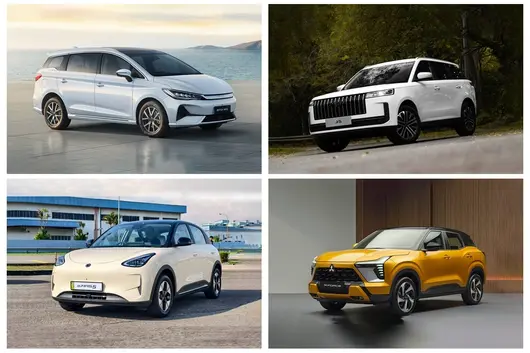
Among Chinese models, BYD Atto 1 (Seagull) ranked second in the overall list, becoming the most prominent Chinese model. The core reason is that it brings the pure electric threshold to about 200 million Indonesian Rupiah (approximately 76,000 RMB), while the body is compact, suitable for urban commuting in cities like Jakarta. It is not replacing Gran Max or Innova, but providing an option below traditional EV expectations for urban families' second cars, young users, and high-frequency urban commuting.

Jaecoo J5 entering the overall top six shows that the attractiveness of Chinese brands does not rely solely on low prices. J5 enters the 250 million to 320 million Indonesian Rupiah range (approximately 95,000 to 120,000 RMB) with an SUV posture, larger battery, and complete safety and comfort configurations, directly targeting users who originally considered Japanese compact SUVs. The core selling point is offering a larger sense of size, more configurations, and new energy identity with a budget close to fuel SUVs.

BYD M6 (Song MAX) and Geely EX2 have different styles. M6 enters the overall list, targeting Indonesia's most important MPV scenario, indicating electrification is starting to expand from personal small cars to multi-person family travel. EX2 satisfies users with higher requirements for tech configurations and space with a price and size between Atto 1 and J5.
Overall, the landscape of Chinese models in the Indonesian market is not a single blockbuster, but a simultaneous push along three lines: small pure electric, SUV, and MPV.
Summary:
Chinese brands' challenge to Indonesia's original landscape first falls on Japanese second-tier and Korean brands. BYD has exceeded Mitsubishi and Suzuki's single brand sales for July. Jaecoo also entered the overall top ten. The order where Japanese second-tier brands took over after Toyota in the traditional landscape has been broken, and Honda's significant decline further amplifies this gap.
However, for Toyota, Chinese brands still do not possess true challenging power. Toyota and Daihatsu combined still account for over 40% share, possessing advantages in channels, finance, used car residual value, and parts networks in MPVs, low-price cars, and commercial vehicles. The breakthrough of Atto 1 and Jaecoo J5 is concentrated in new energy passenger cars and has not yet entered high-intensity commercial scenarios and core family scenarios represented by Gran Max and Kijang Innova.
The key for the next stage in Indonesia: BYD needs to avoid over-reliance on Atto 1; Jaecoo needs to prove there is a second stable model after J5; Geely must convert high growth into channel and after-sales capabilities; Wuling must use early accumulation to update products. As long as these brands continue to convert price, size, and configuration advantages into reliable usage reputation, the pressure on Japanese second-tier brands will be significantly greater than on Toyota.
02
Malaysia: 60% Share Occupied by Local Automakers, Geely Eats into Japanese via Proton
Malaysia and Indonesia's market scales are very close. July sales were 80,030 units, up 6.5% year-on-year. Cumulative sales for January-July were 489,000 units, up 4.4% year-on-year.

Let's briefly mention Perodua. This is Malaysia's second national car company, established in 1993. Initially positioned significantly lower than Proton, it obtained systematic support including platforms, powertrains, and manufacturing systems through cooperation with Japanese Daihatsu. Starting with low-price cars to open the market, it now covers seven-seaters, entry-level commuters, and sedan markets.

Today, Perodua occupies nearly 40% of the Malaysia market. July sales were 31,800 units, exceeding the combined total of Proton and Toyota in the second and third places. If Proton is still regarded as a Malaysia local brand, then the share of these two automakers reached 61%, leaving less than 40% share for other categories.
However, in terms of trends, Proton's July sales surged 29% year-on-year, with cumulative growth for January-July reaching 38.7%. Perodua's single-month and cumulative figures both declined nearly 5%. With these rises and falls, the number one spot in Malaysia might change hands in the next two years.
Overall brand rankings, Omoda Jaecoo, BYD, Jetour, and Chery squeezed into the Top 10. The only new force, Leapmotor, entered the top 20. Tesla only ranked third. Malaysia offers less than 40% market share to overseas brands, while Japanese brands occupy nearly 30%.

Taking all Chinese brands into account, Omoda, Jaecoo, BYD, and Jetour broke 1,000 units in July sales. The fastest growing, Jetour, Zeekr, and Leapmotor, all grew by multiples. Adding all these Chinese brands together, their share in Malaysia reached 8.9%.
However, this is not all the achievements of Chinese automakers locally. The biggest difference between Malaysia and other markets is that besides Chinese badges like BYD, Jetour, Jaecoo entering directly, Geely also converted Chinese related platforms and products into local brand sales by acquiring Proton. Many best-selling models of the Proton brand are actually Geely badge-engineered products.

In terms of models, Malaysia consumers value price, usage costs, and brand trust most. Perodua Bezza, Proton Saga, Perodua Axia, Myvi, and Alza rank at the top, indicating small sedans, hatchbacks, and low-price MPVs are still the basic foundation. Common advantages of these models are low purchase thresholds, controllable fuel consumption, convenient maintenance, and stable value retention, making them very suitable for first-time purchases and families' second cars.
Behind this preference is strong national brand trust. Perodua and Proton have deeper dealership networks, financial schemes, and used car perceptions. Even if consumers focus on new energy, they often ask first if maintenance is convenient or if the used car is easy to sell. Chinese brand related models helping Proton enter the list essentially reduce the trust cost of new technologies. The popularity of Proton models also shows consumers do not reject Chinese platforms; the key is whether it completes the trust conversion through local brands.

e.MAS 5 (Geely Galaxy Xingyuan) ranked sixth overall. It is an entry-level pure electric car with the same source as Geely Xingyuan/EX2, targeting young users and urban commuting; e.MAS 7 is positioned as a higher-end pure electric SUV. X50 and S70 have long undertaken Proton's sales tasks in the compact SUV and sedan markets.

Including these Geely badge-engineered cars in the Chinese model list, we find the top 4 are all occupied by the Proton brand. Adding Proton X70 and X90 afterwards, they contributed an additional 10.7% share for Chinese models. Looking at this way, the overall share of Chinese models in the Malaysia market has reached nearly 20%.
Among other Chinese brands, Jetour T2 emphasizes boxy styling and outdoor feel, forming a sharp distinction from Malaysia's traditional small cars. Jaecoo J7 and J5 attract middle-class users with SUV design and configurations. BYD Atto 3 relies on early entry into the new energy market to establish cognition. Zeekr 7X, Leapmotor B10, etc., target higher-budget smart EV users. These models' sales are not yet large, but they already cover multiple price bands from entry-level pure electric to mid-to-high-end SUVs.
It can be seen that Malaysian Chinese models do not rely solely on being cheap. Design, screens, assisted driving, and electrification performance creating fresh feeling have all played quite a role.
Summary:
In the Malaysia market, Chinese brands have not yet threatened Proton's number one position, but are starting to compress the foreign second tier. Omoda Jaecoo, BYD, and Jetour entering fifth to seventh pushed traditional brands like Mazda and Mitsubishi to further back positions. More importantly, Proton achieved growth with Chinese related models, indirectly weakening Toyota and Honda's advantages among non-local brands.
The key for the future Malaysia market is how the two Chinese paths will divide labor. Proton can continue to expand the e.MAS series. Direct entry by Chinese brands will become more difficult because consumers might prefer similar products possessing local brand identity and after-sales networks.
If BYD, Jetour, and Jaecoo can establish clear labels, they can avoid direct overlap with Proton among younger, more personalized users. The essence of competition in Malaysia is not Chinese brands fighting local brands, but the Chinese system entering both local brand internal and external markets simultaneously.
03
Thailand: Chinese Brands Team Up to Exceed Toyota, Overall Share Exceeds One-Third

This July, Thailand new car sales reached 59,200 units, surging 20.1% year-on-year. This is the fifth consecutive month of single-month growth for the country. EV delivery volume surged 1.2 times, with penetration reaching 35%. At the same time, fuel vehicle power year-on-year decline reached 34.5%.
The first special characteristic of the Thailand market is that its car production volume is far higher than local sales. Automakers of all categories chose Thailand as an export base for the Southeast Asian market. Thailand's car production in July reached 117,000 units, nearly double the local new car sales.

At the brand level, Toyota's share of 33.5% remains solidly first. The second and third places are Japanese Isuzu and Honda, but sales scales differ from Toyota by several multiples. However, ranks 4-9 further back are all occupied by Chinese brands.
July Japanese brand share in the Thailand market reached 55%, which has dropped after the rapid rise of Chinese brands. Besides Japanese brands, European, Korean, and American brands have very weak presence locally. Ford and Tesla sales just over 1,000 units, total share less than 4%.

Listing all Chinese brands, the overall share has reached 36.77%. Among them, Omoda Jaecoo, BYD, Geely, and MG, each share reached around 5%. Great Wall, AION, and Deepal each about 3%, all starting to establish identity and presence locally.

The Thailand model ranking first reflects the tradition of pickups and small cars. Toyota Hilux and Isuzu D-MAX represent commercial, agricultural, engineering, and rural users, highly sensitive to durability, load capacity, maintenance radius, and used car residual value. Toyota Yaris Ativ represents city first-time purchases and low-cost commuting. The top three still occupied by these traditional strengths indicates the underlying demand of Thailand car consumption has not been rewritten.

After Yaris Cross, Geely Xingyuan and Jaecoo 5 EV directly entered the overall top five and six. Xingyuan's advantage lies in small size, relatively low price threshold, suitable for daily city commuting; Jaecoo 5 EV combines SUV styling, configuration, and pure electric identity at a lower price, satisfying young families' needs for space and image.

Deepal S05, ORA 5, MG S5 EV, AION UT, MG 4 EV, iCAR V23 also entered the overall top 20, showing Chinese brands are not relying on just one product. Their common point is using EVs as an entry point, offering more distinct smart cockpits, designs, and configurations; differences lie in some emphasizing city hatchbacks, some home SUVs, some personalized appearances. For consumers not yet fully trusting EVs, Chinese brands used dense model supply to reduce trial-and-error thresholds.
The popularity of these Chinese models is also related to the earlier EV cognition in the Thailand market. MG, Great Wall, etc. previously established certain channels and user bases. New entrants Geely, Jaecoo, Deepal, and AION can take advantage of the already formed charging, test drive, and reputation environment.
Summary:
Chinese brands' impact on Thailand first reflected in Isuzu, Honda, and Mitsubishi traditional second tiers. July Chinese brand total was 2.4 times the combined sales of Isuzu and Honda. The fourth to ninth ranks were filled by Chinese brands, meaning Japanese brands have lost their original natural sorting advantage in the passenger car and new energy crossover market.
Toyota's number one is still hard to shake, because Hilux and Yaris Ativ are not just sales models but represent Thailand channels, finance, used car residual value, and social usage habits. Chinese models have not yet formed equal trust in pickups and high-intensity commercial scenarios. Geely Xingyuan approaching Yaris Cross is a breakthrough in passenger cars; but to truly challenge Toyota, it requires entering pickups, hybrids, or local production mainstream cars to deepen further.
04
Philippines: Japanese Highly Dominant, Three Chinese Brands Attack the Waist

Philippines is a region with not small population, but underdeveloped economy. July new car sales were 37,300 units, down 2.5% year-on-year. It is the only one among the five Southeast Asian markets to encounter a decline, and January-July cumulative decline was larger, with a drop reaching 10.2%, totaling 242,000 units.

Data obtained regarding the Philippines market is relatively limited, only found July brand rankings covering up to 11th place. From data, Toyota occupied 47.69%, Mitsubishi 16.80%, combined 64.49%. Remaining brand shares are all less than 5%, showing Philippines consumers still highly rely on Toyota, Mitsubishi channels, reliability, parts supply, and used car residual value.
Compared to 2025 full year data, the top landscape changes in the Philippines market this year are small: Toyota still nearly 50%, Mitsubishi still second, Suzuki still around 4%. In the list waist position, Ford and Nissan shares declined, while MG, Geely, Omoda&Jaecoo entered the 2%-3% range.
That means, Chinese brands are still far from touching the market pyramid top, but have already changed waist competition from traditional brand internal sorting to mixed new and old brand competition.

Suzuki, Honda, Ford, Isuzu, and Nissan constitute the traditional waist camp, shares roughly between 2.6%—4.5%. This interval is exactly the most realistic breakthrough point for Chinese brands currently: MG, Geely, Omoda&Jaecoo ranked eighth to tenth, shares about 2.3%-2.6%, already very close to Nissan and Isuzu.
Chinese brands combined total 2,708 units, occupying 7.25%. Although still far lower than Toyota and Mitsubishi, it exceeds Suzuki, and exceeds combined Honda and Ford. Philippines changes are not top ownership change, but waist brands starting to crowd: traditional Japanese second-tier, Ford, and Chinese new brands are competing for the same batch of users more sensitive to price, configuration, and fresh feeling. Additionally, Vietnam's VinFast entered 11th with 2.18% share.
Summary:
For a large number of Philippines family users, vehicles are not only commuting tools, but also cross-city relatives visits, pick-up and drop-off, and sideline assets; reliability and maintenance convenience are often more important than configurations. Toyota, Mitsubishi long-term investment in channels and parts systems made consumers form strong path dependence. If Chinese brands do not have clear model reputations, even if single-month shares rise, heat often falls after delivery.
This also means Chinese brands in the Philippines cannot rely only on configurations or prices. If after-sales outlets, parts supply, financial schemes, and used car residual values do not keep up, even if consumers are attracted by models, they might return to Toyota and Mitsubishi at the final decision.
MG, Geely, Omoda&Jaecoo sales are all around 900 units, indicating all three have not yet formed overwhelming single-product advantages, but also means the gap is small. Any brand that appears with a clearly positioned SUV, crossover, or hybrid, and coordinates core city channel construction, may break through monthly sales of 1,000 units first and pull away from Chinese peers.
05
Vietnam: VinFast Dominates Local Market, Chinese Brands Nearly Absent

Vietnam overall market scale although limited, growth is very strong. This July, Vietnam market new car sales were 590,000 units, surging 26.1% year-on-year. January-July cumulative sales were 388,000 units, year-on-year growth even higher, reaching 28.6%.

Vietnam market landscape is very peculiar. Local brand VinFast alone occupied over one-third of the share, more than three times the second-place Toyota. And July VinFast sales surged 89.7% year-on-year, showing this automaker not only occupies dominance, but its share is still growing rapidly.
Looking further back, Toyota and Thaco-Kia grew slightly, Hyundai and Mitsubishi basically flat, Ford declined significantly. Japanese brand local share totals less than 30%, less than VinFast alone. Korean Hyundai and Kia combined grabbed 14% share, half of Japanese. Foreign brands did not all lose market, but growth rights, topic rights, and new energy definition rights are concentrating on VinFast.
For us, VinFast name is still quite unfamiliar. This is a brand established in 2017 by Vietnamese private group Vingroup. Early on entered with fuel cars, 2019 formed whole vehicle manufacturing capability, 2021 started delivering electric cars, subsequently quickly stopped fuel car production and turned to full electric products, and listed on Nasdaq in 2023.

Model rankings show, currently most popular in Vietnam are low-threshold, small size, clear purpose local EVs. July model top five all from VinFast. VF3 positioned city commuting, VF5/Herio Green covers small SUV and hatchback commuters, Limo Green leans towards MPV and multi-person travel, Minio Green further dives into entry market, VF6 undertakes higher-level home SUV needs.
Reasons for these models' popularity are not just cheap. VF3's small body and low price lowered first-time purchase thresholds. VF5, VF6 provide space and sitting posture more suitable for family use. Limo Green suitable for multi-person riding and high-frequency operation scenarios. VinFast split EVs from few people's trial consumption into daily tools of different price levels, different purposes, which is exactly the key to its sales quickly expanding.
By comparison, foreign models still concentrated in traditional advantage niche markets. Toyota Yaris Cross is one of the few maintaining high-growth overseas brand models. Mazda CX-5, Mitsubishi Xpander, Ford Ranger, and Toyota Vios all bore significant decline pressure.

As for Chinese brands, basically haven't been able to form influence in Vietnam yet. July entering brand Top 15 was only commercial vehicle company Dothanh-JMC, sales 248 units, share 0.4%. No Chinese passenger brand on the list. Currently Vietnam's best-selling model logic is already defined by VinFast. Chinese brands currently are neither new energy leaders nor local sentiment beneficiaries.
Clearly, for Vietnam market, Chinese automakers cannot simply copy the moves made in Thailand, Indonesia. Chinese brands often entered other markets as new energy pioneers, but this position in Vietnam is already occupied by VinFast. If Chinese brands enter with low-price small cars, it will also directly clash with VF3 and Minio Green.
Short-term, Vietnam market worth observing key point is when Chinese brands will appear a model in local with monthly sales over 1,000 units. This and neighboring Southeast Asian markets, in population base, economic growth rate, all have hard-to-ignore potential. Many Chinese companies have already moved into Vietnam. When Chinese automakers can achieve this point, is still unknown.
Summary:
Short-term, Chinese brands hard to challenge Toyota and Mitsubishi. Toyota share close to 50%, leading advantage not just sales, but includes channel coverage, fleet procurement, maintenance system, and consumer trust; Mitsubishi also has solid MPV, SUV, and commercial vehicle foundation. Chinese brands' real opportunity is to first surpass Nissan, Isuzu, Ford, and Honda, turning third to seventh ranks into new competition zones.
Philippines more suitable for concentrating resources to build a few clear models, rather than copying Thailand's multi-brand expansion. Market scale small, top concentration high, too many brands easily cause channel and after-sales burden. MG can rely on earlier established brand cognition. Geely can emphasize design and technology. Omoda&Jaecoo can highlight SUV and new energy image. Whoever can first land brand label on a stable best-selling model, who is more likely to enter top five from eighth to tenth.
06
Jia Shi Summary
Southeast Asia overall market is limited, but each single market landscape is greatly different.
In Indonesia and Thailand, Chinese brands have already formed direct impact in Japanese strong markets; Geely's acquisition of Proton has now shown full returns in sales and share; Philippines market still highly concentrated, Chinese brands need to slowly find breakthrough points from waist camps; Vietnam forming local industrial chain, has its own unique set of market logic, is the hardest market to break through.
However, Chinese automakers becoming mainstream players in the Southeast Asia market is already a fact. This area always dominated by Japanese brands, will also in a new force's influence, welcome a long period of landscape reshaping.
(END)
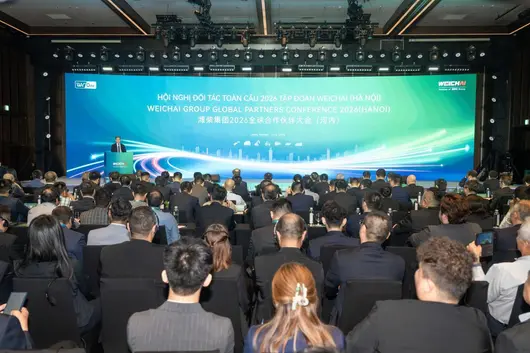
July 21-22, 2026, the Shandong Heavy Industry Global Partner Conference and Green Intelligent Product Display was held at the Vietnam National Convention Center (VEC). As the core implementer of the group's power and energy sector, during the meeting, Weichai unveiled the microgrid integrated energy solution with major impact, connecting regional market essentials with hardcore technology, seizing new blue oceans for Southeast Asian power and energy, and injecting new momentum for regional green and low-carbon development.

Targeting Southeast Asian Regional Pain Points, Launching Microgrid Integrated Energy Solution
From the industry development trend, Southeast Asia is becoming the core engine of global power demand growth. Rapid regional economic development drives explosive growth in power demand. However, the dual challenges of lagging grid infrastructure and low-carbon transition have become core bottlenecks restricting its energy development.
According to the report "Southeast Asia Energy Outlook 2026" released by the International Energy Agency (IEA), since 2015, Southeast Asia's annual power demand growth rate has reached 6%, nearly twice the global average. It is expected that by 2050, total regional power demand will double or triple based on current levels.
However, the region's grid infrastructure is weak, facing the dual challenges of lagging grid infrastructure and low-carbon transition. Distributed microgrids, as the core path to solving power supply difficulties and promoting low-carbon development, have seen explosive growth in the market.

During this conference, Weichai unveiled the microgrid solution.
This is a core result of the enterprise's in-depth cultivation in the power and energy field, and even more so a forward-looking layout precisely targeting the pain points of the Southeast Asian power market.
The solution focuses on market necessities such as accelerating computing infrastructure construction, popularizing zero-carbon parks, and intelligent upgrading of remote mining and industrial areas. It integrates core equipment such as hybrid energy power stations, mobile photovoltaics, energy storage systems, charging and storage integrated units, SOFC solid oxide fuel cell power generation systems, and power generators (diesel, gas, heavy oil, etc.), effectively solving problems such as unstable power supply, high energy consumption, and missing supporting facilities in various scenarios.
Different from traditional single power generation equipment, the Weichai microgrid energy solution focuses on "one-stop, implementable, full closed-loop", covering scenarios such as islands, parks, and data centers. It can not only provide independent power supply for remote areas but also achieve low-carbon combined heat and power for urban parks.
This launch is not only a key measure for Weichai to implement the group strategy, but also marks its upgrade to high-end business forms from "selling products" to "system solutions + full-domain services + ecosystem co-construction".
The solution will also provide a low-carbon and efficient complete energy paradigm for Southeast Asia, helping the local area solve regional energy development difficulties, and promoting the transformation and upgrading of the Southeast Asian energy industry towards cleanliness, intelligence, and efficiency.
Continuous Upgrade of Power Energy Technology, Building a Group Strategic Transformation Growth Pole
In January 2026, Shandong Heavy Industry formally listed power and energy as the seventh major business sector of the group. Weichai quickly translated the group's strategic deployment into development effectiveness, becoming a new growth pole for the enterprise's high-quality development.
In 2025, Weichai's power generation product global sales broke 100,000 units, ranking among the top three globally; in the first half of 2026, Weichai's power and energy business revenue increased by 30% year-on-year, among which data center product revenue increased by 140% year-on-year. Products fully cover global core markets such as Southeast Asia, Europe, America, and the Middle East.

Behind the brilliant report card is Weichai's continuous investment in power and energy technology research and development over the years, continuous breakthroughs in core technologies, precisely fitting the explosive trend of power demand in global emerging scenarios.
On the path of technology upgrades, Weichai adheres to the dual-wheel drive of "traditional energy efficiency and new energy low-carbonization". The two major core product lines continue to iterate and optimize, jointly forming a solid hardware base for the microgrid solution.
In the traditional diesel and gas power generation fields, Weichai strategically reorganized French Baudouin in 2009, newly developed the M Series large bore diameter power generation products, created a power generator product system covering the 1250kWe-5000kWe full power range. Among them, the world's first 5 megawatt high-speed diesel generator set 20M61's starting ability, loading ability and other core indicators reached world-class levels.
At the same time, Weichai also carried out intelligent upgrades to existing diesel and gas generator sets, equipped with independently developed remote monitoring systems. It can realize real-time monitoring of unit operation status, fault warning, and remote maintenance, greatly improving equipment reliability and maintenance efficiency, adapting to power consumption needs in different scenarios in Southeast Asia.
In the new energy low-carbon power generation field, Weichai laid the groundwork early and continued to tackle difficulties, achieving a major breakthrough in SOFC solid oxide fuel cell technology.
Weichai laid out SOFC technology in 2018, released the world's first high-power metal-supported commercial SOFC product in 2022. The combined heat and power efficiency of 92.55% set a global record. The 100kW commercial SOFC power generation product demonstration project has been operating stably for nearly 70,000 hours cumulatively, technology reliability was fully verified, providing core support for the implementation of the microgrid solution.
The Weichai WES600 SOFC power generation system exhibited at this conference is one of the important devices of the microgrid solution, and also the core product of this cooperation between the two parties.
The system adopts advanced metal-supported stack technology. The system power can reach 600kW, and can achieve megawatt-level power expansion according to customer needs, providing efficient low-carbon, quiet operation, continuous stable, and rapid deployment power solutions for data centers, industrial parks, distributed energy, and microgrids.
In addition, Weichai continues to optimize the technical performance of supporting equipment such as mobile photovoltaics, energy storage systems, and charging and storage integrated units, improving the conversion efficiency of photovoltaic modules, the charge and discharge efficiency and safety of energy storage systems, achieving high-efficiency adaptation and coordinated operation of various equipment with the microgrid system, further improving the technical system of the microgrid integrated energy solution.

Continuous technology upgrades have also provided strong support for Weichai's practical application in the Southeast Asian market. For many years, Weichai has implemented multiple benchmark projects in Southeast Asia, won high recognition from local customers with hardcore technology, and also accumulated rich practical experience for the promotion of microgrid solutions.
For example, in a certain island power station in Thailand, Weichai's 12M33 diesel generator set has been operating safely for over 30,000 hours since being put into operation in 2019, becoming a "ballast stone" for local power supply; 8 Weichai Baudouin containerized gas generator sets operated stably in Southeast Asia's high temperature and high humidity environment, providing clean power for parks and communities, and received high recognition from local customers.
This appearance at the Vietnam exhibition is a concentrated display of Weichai's power energy technology and microgrid solution, and more importantly, a key step in its in-depth cultivation of the Southeast Asian market.
Currently, the Southeast Asian microgrid market enjoys dual benefits of policy and demand. Weichai will take the exhibition as an opportunity, deepen global cooperation, rely on the core microgrid solution to assist regional energy transformation, promote the group's power and energy sector to achieve higher quality growth, and contribute Weichai's strength to the global energy transformation wave.
© 2024 Bitauto.com. All Rights Reserved.
Bitauto (www.yiche.com and www.bitauto.com) is one of the most visited automotive websites in China. We provide detailed info on Chinese car brands available in your area. Please note that the information provided on this website is based on publicly available data and is for reference only. It may not be fully updated or accurate at all times.

Help us improve our website


