

HomeSpeed

Search History
Popular Searches
Dealer Login / Sign Up

There is quite an interesting phenomenon.
In 2026, the new energy vehicle market has become so competitive that everyone can see it.
New cars are released almost every month. Some brands are eager to roll out a completely new model within half a year, pile on various configurations, set a price that looks sincere, and the whole process flows smoothly.
But when you really check the reviews of those cars—range exaggeration, breakdowns in winter, loose chassis, and hit-or-miss quality control—you will find that speed in car manufacturing seems inherently at odds with quality.
So when I saw the Chery Fengyun T7 launch, what interested me most was not its price.
However, the price was indeed surprising, the official guide price is from 97,900 yuan to 118,900 yuan. If participating in an early trade-in, it starts from as low as 94,900 yuan.
What truly made me think it was worth discussing is the term they used: "Slow and steady builds a good car".

Saying "slow" in 2026 is rebellious in itself.
Research and development of Fengyun T7 took three years.
What does that mean? Some new power brands nowadays can complete a project from initiation to the whole vehicle in over a year.
In today's industry rhythm, three years can almost be described as "luxurious".
But the Chery brand is interesting. It has been the number 1 exporter of Chinese passenger cars for 23 consecutive years, selling over 20 million cars globally. Its logic is indeed different from brands that only focus on the domestic market.

Fengyun T7 is taking a path of "go overseas first, then return to China".
The overseas version Lepas L6, which shares the same platform, has already launched in markets like South Africa and Thailand.
It has appeared at the Milan Design Week and has been reported by overseas media.
It is not built in Wuhu, Anhui, and then modified for foreigners. Instead, since the first day of R&D, the design was deduced according to the needs of the global market.
For example, safety standards.
Fengyun T7 directly targets not current Chinese standards, but the 2026 version of E-NCAP, the harshest crash test in Europe three years from now.
Nine airbags are provided, which is quite an investment within its class.
Another example is chassis tuning.
In Chery's chassis team, there is a lead figure, a former Maserati chassis tuning expert, who specializes in tuning for speeds above 160 km/h.
Why must it be above 160? Because speed limits on European highways are the norm, you need the car to remain stable under such conditions.

This "global-oriented" mindset is reflected in many details.
Thai right-hand drive users prefer a heavier steering feel, so the steering force was increased by one level during tuning.
In places like Indonesia with bumpy roads, the steering feel is weighted even further and the centering feedback is optimized.
In the Nordic countries with long periods of polar night, interior lighting and charging backlights were specially optimized.
Overall, adaptations were made for more than 80 local habits.
These details may not seem earth-shattering individually, but together they reflect an attitude towards car manufacturing: not building a car that only runs in China, but a car that can run in any corner of the Earth.
Aiming for this goal, the verification mileage for Fengyun T7 is 1.45 million km, with 81 vehicles running repeatedly in five extreme environments.
High temperature, extreme cold, high humidity, high salinity. After covering all of these, it continued on actual roads in Europe, Australia/New Zealand, the Middle East, and Southeast Asia.
Brazil's gravel roads, Mexico's cobblestone roads, Southeast Asian rainy season roads with 500 mm standing water—all must be run on actual vehicles.
It is not just about simulating with equipment in a lab and calling it a day.

Chery calls this "slow and steady". I think essentially it is "risk pre-positioning", solving problems before the launch, rather than waiting for users to find issues on the road to fix them later.
To be honest, there are really not many brands in the industry doing this now.
On one hand, there is capital pressure, and products must be launched and monetized as soon as possible.
On the other hand, competition is too fierce; whoever takes one step later loses market share to others.
In today's industry where "nothing is stronger than speed" has almost become a creed, slowing down requires strong conviction.
But interestingly, over the past two years we have seen too many cases of quality issues caused by rushing to launch, from battery safety to loss of control in smart driving to chassis fractures, constantly emerging.
MIIT also publicly criticized the issue of "radical innovation designs applied to vehicles without sufficient experimental verification" earlier this year.
Between speed and slowness, there are actually no absolute advantages or disadvantages.
But if I had to choose a car to drive for several years with my family, traveling everywhere, I would most likely choose the one that went through the "slow" process.
Fengyun T7 is priced in the 100,000 yuan range. The entire series is equipped with a 65 kWh battery, 600 km range, heat pump air conditioning, and AGS intelligent grille.
To be honest, in this class, there are not many cars on the market that can achieve this level of safety configuration and range.
It is not a strategy that uses low configurations to lower the threshold, making you tempted but actually unaffordable. Instead, it completes basic values like range and safety, then creates a gradient in intelligence and comfort.

At the end of the day, a "global car" is not a marketing concept; it is a methodology.
It is about whether you are willing to spend three years on R&D, willing to drive the car to the world's harshest roads for verification, willing to do a round of tuning specifically for the steering feel of a right-hand drive market.
Users may never see these things, but they determine whether this car is still a trouble-free car after three or five years of driving.

Fengyun T7 is not an impressive model; the design won't make your heart beat at first sight, and the configuration is not the top tier.
But there is something reassuring about it: all the homework that needs to be done has been done.
This is worth more than anything in the 2026 Chinese automotive market.
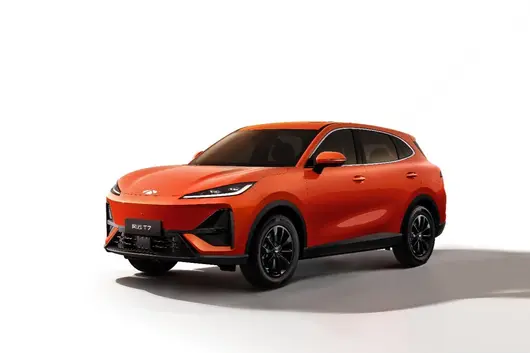

On July 16, I arrived at the event site at the GAC Trumpchi factory. Watching the moment the 30 millionth vehicle slowly drove onto the stage, the first word that came to mind was "GAC Acceleration".

Many people think of GAC as "steady", but achieving a leap from 0 to 30 million in 29 years cannot be summarized simply as "steady".
Behind this lies the continuous acceleration within a steady foundation, the speed of transformation and lane switching, the speed of technology implementation, and the speed of global layout.
30 million units is a solid report card handed in after GAC's entire system capabilities accelerated.
(1) Full Matrix of New Energy Debuts, It Is the Acceleration of Transformation and Lane Switching
This vehicle delivery ceremony had a detail worth noting, linking multiple global production bases to sync. From the 29,999,995th to the 29,999,999th unit, GAC Honda e:N P7, GAC Toyota E-Prino 7, Qijing GT7, GAC Aion N60, GAC Hyper S600 went offline sequentially, with the finale being the 30 millionth unit, a Right-Hand Drive GAC Trumpchi M8 PHEV.

A full-color new energy matrix, covering joint venture and independent brands, covering sedans, SUVs, and MPVs, even using exported right-hand drive models as milestone carriers. This is not an intentionally arranged sense of ritual, but a true portrayal of GAC's comprehensive acceleration in electrification and intelligence transformation.


Handing over the key of the 30 millionth vehicle to Thai owner Tony Jaa, this action itself is a declaration of overseas success. Behind the 132% export growth in the first half of this year lies the accelerated implementation of GAC's global layout, an upgrade from Chinese automobile brands exporting products to exporting systems, and the user base of 30 million has already extended from the domestic market to the global market.
(2) Concentrated Technology Implementation, It Is the Acceleration of Long-term Growth
Many say GAC is low-key, but R&D investment numbers never lie: So far, GAC Group's cumulative R&D investment exceeds 62 billion yuan, and the global R&D team size exceeds 6,800 people. Long-term technical deep plowing has now reached the explosive period of concentrated implementation.

In the power field, the Xingyuan Power System built by the "National Excellent Engineer Team" covers three technology routes: extended-range, plug-in hybrid, and super dual-engine. Each power unit has undergone 100,000 hours of bench and vehicle verification, equivalent to over 10 million kilometers, and is being quickly installed into more mass-produced models; in the power battery field, Quark Electric Drive motor highest efficiency breaks through 99%, reaching industry top levels, the fully solid-state battery pilot production line has been built, continuously attacking industry pain points such as super-fast charging and low-temperature range; in the intelligent networking field, the Xingling Architecture connects six systems such as intelligent driving, cockpit, power, achieving "one brain unified command", comprehensive performance improved by 40%, Xinghe Smart Cockpit achieves endpoint-cloud integration, and jointly builds an AI intelligent ecosystem with top partners such as Huawei and CATL.


More importantly, while accelerating, the bottom line of quality is not lost. From the extreme environment test of "Five Highs, One Mountain, One Dust" to the systematic verification of over 1,500 verification sub-items, to the Mag Battery accumulating 1.5 million vehicles installed, and the Xingling Safety Guard System protecting nearly 2 million users, and the industry-first "Three Responsibilities" service guarantee, GAC's acceleration has always been built on the bottom line of quality and safety.
(3) Service System Follow-up, It Is the Acceleration of System Capability
Front-end products run fast, and the back-end service system is also accelerating in sync. To accommodate the rapidly growing user volume, GAC has comprehensively upgraded on the service side.

On the organizational level, the GAC Group established a dedicated user insight department, regularly held "User Full Mic" activities, established a closed-loop user request processing mechanism for the whole process, ensuring every user voice gets a response; on the channel level, accelerating sinking into counties, planning to add 1,000 county-authorized stores within the year, letting service reach more users; service response launched "Super Butler", achieving 5-second response, 2-hour request completion; charging ecosystem built a "9 Verticals, 10 Horizontals" network, covering 31 provinces and 213 cities nationwide, self-operated charging piles exceed 27,000, realizing "there is always a station within a straight line 1 km" in core urban areas.

From user communication to channel coverage, from after-sales response to charging support, the accelerated improvement of the full-cycle service system allows the trust of 30 million users to continue to settle, and also solidifies the foundation for the next round of growth.
(4) Kung Fu Review
29 years, 30 million units, after watching this event, my biggest feeling is: "GAC Acceleration" is an acceleration of accumulated strength released in a burst.
This is a steady acceleration of the entire system coordination from products, technology to services and globalization. In the past, when we talked about GAC, we always said it was steady, solid, and quality-first; but looking back from the 30 million node, this steadiness is accumulating strength for acceleration.
30 million is not the end, but a new starting line for GAC's acceleration. When technical reserves enter the mass production explosion period, when globalization layout enters the harvest period, when new energy transformation enters the deep water zone, the GAC in the future will only run faster.
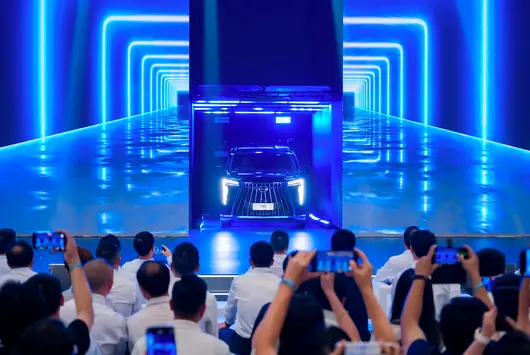

In May 2026, China's commercial vehicle market submitted a report card of "moderate recovery".
According to data from the China Association of Automobile Manufacturers, commercial vehicle production and sales for the month totaled 375,000 and 376,000 units, representing year-on-year growth of 11.8% and 12.5% respectively. Cumulative from January to May, production and sales totaled 1.886 million and 1.888 million units, representing year-on-year growth of 8% and 7.7% respectively. Overall, the industry is recovering, but the pace is relatively stable, lacking explosive force.
However, against the backdrop of limited overall industry growth momentum, SAIC Commercial Vehicle submitted a report card far exceeding the industry average. Latest data from CAAM shows that Maxus Light Vans topped the brand's monthly sales chart with a monthly sales volume of 11,865 units. Cumulative sales from January to May exceeded 47,000 units, with monthly and cumulative market shares both reaching 26.8%, sweeping the "double crown" for monthly and cumulative sales. SAIC Commercial Vehicle not only achieved a crushing lead in the light van segment but also submitted a report card showing full-line strong performance across all categories: 27,509 units sold overall in May, a 41% year-on-year increase, with the growth rate reaching 3.3 times the industry average, leading by a significant margin.

Establishing absolute dominance in the light van segment, this enterprise also achieved leapfrog leadership in light trucks and the new energy sector—light trucks grew by 41% against the trend, 5.5 times the industry average; overall new energy penetration rate reached a high of 35%, continuing to lead the industry's green transformation.
So, how did SAIC Commercial Vehicle achieve "acceleration" amidst the industry's "headwinds"?
Light Vans Top the List: The Logic Behind the "Triple Crown"
The current light van market is undergoing a profound restructuring, with a trend of concentration at the top becoming increasingly intense. According to CAAM data, the top three brands in the May 2026 light van market had a combined market share of 76.9%. The "Matthew Effect" where "the strong become stronger" is becoming increasingly clear in the segment.
In this round of industry reshuffling, SAIC Maxus is the standout leader. In May this year, SAIC Maxus light vans achieved monthly sales of 11,865 units, topping the brand sales chart; cumulative sales from January to May exceeded 47,000 units, with monthly and cumulative market shares stable at 26.8%. This is equivalent to one out of every four light vans sold coming from this top brand.

Looking at the entire SAIC Commercial Vehicle light van segment, its leading advantage is more comprehensive: in May, monthly sales, export volume, and domestic insurance volume market shares reached 28.5%, 29.4%, and 18.2% respectively, ranking first in the industry on all three indicators; cumulatively from January to May, sales and export market shares both exceeded 30%, and the domestic insurance market share also firmly topped the list at 19.3%, securing the legitimate "Triple Crown".
More convincing than scale leadership is the growth rate: Maxus light van sales grew by 56% year-on-year in the month, exactly twice the industry's average growth of 28%, making it the fastest-growing among all top brands.
Behind this eye-catching achievement lies the strong support of the Danan Series, a phenomenon-level blockbuster. In May, the Danan Series achieved monthly sales of 5,934 units, surging 197% year-on-year and setting a new historical record.

Among them, the Danan Super Extended Range, positioned as the "industry's first super extended-range light van", performed exceptionally well, precisely hitting the core pain points of urban distribution logistics users: equipped with CATL's 50 kWh Tianxing battery, CLTC pure electric range 312 km, full fuel and electricity combined range up to 1260 km; the matching Xingpai efficient mini extender has a volume half that of traditional products, weighs less than 70 kg, 1 liter of fuel can generate 3.3 kWh, translating to a low energy consumption of 2.65L per 100km. Daily city distribution can operate at low cost in pure electric mode, while long-distance transport relies on the extended range mode to completely alleviate range anxiety, perfectly balancing the usage cost of electric vehicles with the refueling convenience of gasoline vehicles.
From market share leadership to growth rate leading, from the breakout of single products to the accumulation of brand momentum, SAIC Maxus has established comprehensive competitive advantages in the light van segment. With the trend of industry concentration continuing to deepen, backed by product strength and technical reserves, its competitive barrier as the "China's Top Light Van Brand" continues to be solidified.
Light Truck Breakout: The "Dark Horse" in a Downward Industry
If the light van market is still on the channel of "moderate recovery", then the light truck segment is still "plodding along under burden". According to CAAM data, domestic light truck cumulative sales from January to May this year reached 862,000 units, a slight decrease of 0.62% year-on-year, with the industry overall deeply entrenched in a stalemate of stock competition. Although electrification transformation is already a consensus across the industry, most players are still stuck in the transitional stage of "ICE-to-EV conversion".
But in such a "headwind" environment, SAIC Maxus Yuejin light trucks broke out against the trend like a "dark horse". In May this year, Yuejin light trucks achieved monthly sales of 4,287 units, a significant 41% year-on-year increase, with growth reaching 5.5 times the industry average for light trucks that month. Against the background of overall cumulative decline in the industry, such high growth is particularly striking.

What more accurately reflects the quality of growth is the power structure behind it. The proportion of new energy vehicle sales for Yuejin that month was as high as 67%, with new energy sales nearly doubling year-on-year, an increase of 99%. This means Yuejin's growth was not propped up by traditional fuel vehicles "forcing it", but was "high-quality growth" driven by electrification transformation.
This breakout against the trend was by no means accidental; the core confidence comes from Yuejin's persistent "native electrification" route—stepping out of the industry's common "ICE-to-EV conversion" transitional model, from product definition to technical architecture, built entirely around native electrification.
In March this year, Yuejin globally launched the "Tianyuan Architecture". As a new energy smart light truck architecture from SAIC Commercial Vehicle for the global market, it is centered on an electric drive rear axle, shares the same lineage as Maxus MIVA electronic architecture, compatible with charging, battery swapping, extended range, and multiple refueling modes, while deeply integrating ADAS and smart cockpit capabilities.

It is precisely this "no compromise" technical route choice that allowed Yuejin to establish differentiated competitive advantages in the new energy light truck segment. While the industry was still debating the path of "ICE-to-EV conversion", Yuejin has already handed in a market answer sheet for native electrification with a 67% new energy penetration rate and nearly doubled growth speed.
More Than Just Light Vans and Light Trucks
Light vans topping the list, light trucks breaking out, but SAIC Commercial Vehicle's "report card" extends far beyond this.
In May this year, SAIC Commercial Vehicle's overall sales reached 27,509 units, a 41% year-on-year increase, this growth rate being 3.3 times the 12.5% growth rate of the commercial vehicle industry average for the same period. Among them, new energy and overseas markets performed exceptionally well: new energy vehicle monthly sales reached 11,476 units, surging 143% year-on-year; overseas market sales reached 12,392 units, increasing 56% year-on-year, with both sectors setting new monthly highs. Behind this "full-line leading" market performance is the coordinated effort of the two growth engines of new energy and globalization.

First, look at new energy. From January to May this year, the cumulative penetration rate of domestic new energy commercial vehicles was 28.2%, while the overall new energy penetration rate for the five major brands under SAIC Commercial Vehicle (Maxus, Yuejin, Iveco, Hongyan, Sunwin) has reached 35%, nearly 7 percentage points higher than the industry average. The electrification progress of each brand has its own focus: Sunwin buses have already completed 100% new energy transformation early on, the new energy sales proportion of Yuejin light trucks reached 67%, and Maxus brand's monthly new energy penetration rate in the domestic market has broken 50% multiple times.
At the technical level, SAIC Commercial Vehicle has completed the layout of all energy routes including fuel, pure electric, plug-in hybrid, and extended range. Relying on self-developed core technologies such as Hongtu 2.0 Super Commercial Electric Architecture and Xingzhan Pickup Platform as the foundation, combined with the deep binding with CATL for "technical co-research, ecosystem co-building, global co-progression", they jointly built a new energy product matrix with high safety, long range, and strong adaptability. This combination of all energy route coverage, core technology self-research, and deep synergy with top-tier supply chains has formed a competitive barrier that peers are difficult to replicate in the short term.

Next, look at globalization. In May, SAIC Commercial Vehicle's overseas sales reached 12,392 units, a 56% year-on-year increase. In specific markets, Maxus delivered eDeliver 5 to international logistics giant DHL in Singapore, and this vehicle also became the ride of the 100,000,009th user of SAIC Group; in the Australian and Chilean markets, the Maxus T70 had not yet officially launched, but order volume had already broken 800 units.
But more worthy of attention than sales figures is the strategic upgrade of the overseas export model. SAIC Commercial Vehicle has long stepped out of the traditional path of single product export, shifting to a new stage of systematic globalization layout, deep localization operations, and full-scenario business solution output, moving from simply "selling products" to "building ecosystems", using a logic of long-term symbiotic cooperation to replace short-term transactional thinking.

Looking back from the node of May 2026, this full-line leading report card from SAIC Commercial Vehicle proved to the industry what is called "growth against the trend"—light vans won championships on three indicators, light trucks achieved dark horse growth rates, new energy transformation continues to lead, and globalization layout accelerated landing. In these segments, SAIC Commercial Vehicle has no obvious shortcomings.
Against the background of the industry shifting from incremental competition to stock game competition in all aspects, SAIC Commercial Vehicle's performance also confirmed a truth: a true leader is not about riding the wave to rise in favorable conditions, but being able to continuously broaden the lead position with systematic comprehensive advantages during the industry's pressure cycle, setting a reference model for the high-quality development of commercial vehicles in the era of stock competition.
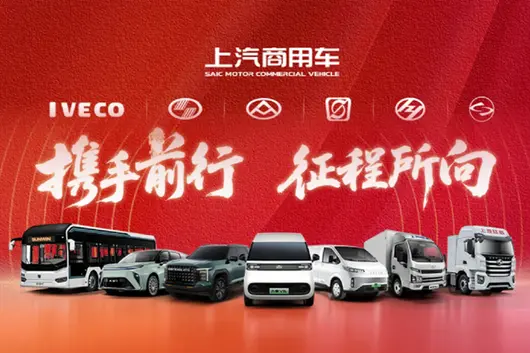

From the birth of the first Phoenix brand sedan in 1958 to the delivery of the IM LS9 on May 28, 2026, SAIC Group has taken nearly 70 years to achieve the delivery of 100 million cars, becoming the first Chinese automotive group to accumulate production and sales of over 100 million units.
For a single group to enter the '100 Million Club', such an achievement, only a few century-old giants like General Motors, Ford, Toyota, Volkswagen, etc. have achieved this internationally so far.

For an automotive group, the delivery of 100 million cars is not only an achievement of the group itself, but also concerns the development and changes of the entire automotive industry, witnessing the rise of China's automotive manufacturing from nothing to something, and then to strength. Through SAIC's 100 millionth new vehicle delivery, this process is fully presented.
On the day of the delivery ceremony, Dragon TV broadcast live the entire delivery process of SAIC Group from the 99,999,996th to the 100,000,010th new vehicle. From Shanghai to Liuzhou, Shaanxi, from China to the UK, Indonesia, Singapore, SAIC's product delivery spreads all over the globe. Behind this, there are products and services of SAIC Group that span over 170 countries and regions, and its cumulative overseas sales have exceeded 7 million units.

In addition, the new vehicles cover more than 10 vehicle brands and 19 models under its umbrella: Shangjie Z7, Huajing S, Roewe M7 Black Horse Edition, MG4 Semi-Solid State Battery Version, Wuling Starlight 560, Maxus eDeliver 5, Hongyan i Jieshi, Yuejin Danna T1, Sunwin Pure Electric City Bus, as well as Volkswagen ID. ERA 9X, Audi E7X, Cadillac Kaiweide, Buick Zhijing E7, Buick Zhijing Family...... From independent brands to joint ventures, from fuel cars to new energy, fusion, transformation, and innovation are deeply intertwined in SAIC's growth experience, achieving the systemic strength of China's automotive industry.
Achieving the First 10 Million
SAIC Used Half a Century
In 1955, the Shanghai Internal Combustion Engine Parts Manufacturing Company was established, and Shanghai's automotive industry started from here. In 1958, workers used hammers to hammer out the first 'Phoenix' sedan, achieving a zero breakthrough in Shanghai sedan manufacturing.

In the following few years, SAIC was solving the challenge of China's automotive industry from nothing to something. In an era lacking large presses, precision machine tools, and automation equipment, production methods were nearly primitive. Most complex parts and car body appearances were completely chewed out by workers based on experience and naked eye, purely by hand. Therefore, Shanghai Auto's initial annual production was only a few thousand units, far from a modern industrial system.
Until the successful assembly of the first Santana in 1983, it brought possibilities for SAIC to start joint venture cooperation. And it took SAIC about 6 years to truly drive China's automotive industry towards scaled assembly lines.

In 1978, the state approved Shanghai to introduce sedan projects in the form of 'Sino-Foreign Joint Ventures', but by 1982, when negotiations entered the deep water zone, the joint venture project was on the verge of failure.
First, the impact of ideology, 'Should sedan joint ventures be launched' faced huge controversy; second, the 'Productivity Theory' of the early 1980s prioritized the production of means of production such as heavy trucks over sedans. Volkswagen Germany also clearly stated that joint venture products must be sold in the Chinese local market, causing many to worry that foreigners' high-end goods would eat into the domestic market, 'Inviting wolves into the house'. In addition, facing Germany's overwhelming automotive industry strength, everyone understood that the entry of joint venture models would inevitably deal a fatal blow to the domestically produced cars made by hand at that time. People worried that this would kill China's own automotive brands.
Facing a series of opposing voices, one sentence stated 'Launching sedan joint ventures can allow our automotive industry to take 20 years less detours.' His critical statement eventually allowed Shanghai Auto at the time to withstand pressure, signing a pilot assembly (CKD) agreement with Volkswagen Germany at the end of 1982, leading to the successful launch of the first Santana.
Even so, before the official signing in 1984, SAIC Volkswagen (then Shanghai Volkswagen), Chinese and German sides still conducted long-term tug-of-war on details such as investment ratio, profit distribution, technology transfer, localization rate, and even food standards for foreign employees. At that time, China had only recently promulgated the 'Law on Chinese-Foreign Joint Ventures', and many supporting industrial and commercial, tax systems were blank.
By assembling foreign models and introducing modern automotive manufacturing standards wholesale, Shanghai Auto embarked on a difficult yet far-reaching road. The localization rate of early Santanas was only 2.7%. At that time, Germans' requirements for parts quality were strict to the point of being stereotypical, and samples sent by domestic supporting factories for inspection were almost wiped out. Facing huge international public opinion pressure, Shanghai established the Santana Car Localization Consortium in 1988, starting a localization assault campaign lasting more than 10 years.
It was precisely this set of standards that allowed Chinese workers to see strict process management, modern painting processes, and quality control systems for the first time, and more thoroughly changed the traditional concept of domestic automotive manufacturing: Cars are not 'hammered' out, but 'built' based on strict standard processes.
With the experience of SAIC Volkswagen, Shanghai GM, established in 1997, took only 23 months to build a factory and produce cars, simultaneously building China's first joint venture professional automotive design and R&D center, creating 'Shanghai Speed'.
Relying on the strong dual engines of SAIC Volkswagen and SAIC General Motors, SAIC's production and sales finally embarked on the fast lane. Around 2003, SAIC Group finally welcomed the first 10 million cumulative production and sales, taking 48 years.

Nearly half a century of time is the construction process of China's automotive industry from nothing to something. By the late 1990s, the localization rate of Santana exceeded 90%. In this process, Shanghai Auto used nearly cruel Volkswagen VW standards to hand-in-hand teach domestic electronic, mechanical, rubber, glass, and other supporting factories to establish quality management systems, almost reshaping China's local automotive parts supply chain, laying an important foundation for the development of subsequent automotive brands.
From 10 Million to 100 Million
SAIC Acceleration
After crossing the threshold of 10 million, the Chinese automotive market welcomed the Golden Decade, and SAIC's production and sales curve changed directly from linear growth to exponential takeoff.
In 2001, China officially joined the WTO, and SAIC Volkswagen and SAIC General Motors welcomed the golden period of localization transformation during this period. A large number of global models, advanced processes, and management experiences were seamlessly delivered to China, and SAIC Group arrived at the moment of harvesting dividends. Also starting in 2001, the state explicitly proposed in official documents for the first time 'Encouraging sedans to enter residents' homes', sedans began to enter ordinary households from official vehicle consumption.
Accompanying the acceleration of China's urbanization process and the development of the real estate market, China birthed the largest middle-class group in human history. From policy, capital to the comprehensive rise of the national economy, all drove the explosion of demand in China's automotive market. Santana and Passat of SAIC Volkswagen, Excelle of SAIC General Motors, and later Wuling Light which almost ruled China's micro car market were all phenomenon-level national god cars of this time.
Joint venture dividends brought technology spillover, and also stimulated the awakening of independent brands like Geely, Chery, Great Wall, etc. In this decade, private car companies tore open the household car market below 100,000 yuan with high cost-performance ratios. Facing the pressure from independent brands, SAIC launched the Roewe brand in 2006, starting the exploration of independence by traditional giants.
It was precisely these blockbusters and explorations that hit the rhythm of the times that SAIC completed the raw accumulation of production and sales scale. By December 2010, SAIC Group's cumulative production and sales exceeded the 20 million mark, and became the first automotive giant in China's automotive history with annual production and sales exceeding 3 million units that year.

The strong contrast between 48 years and 7 years is the hardest core footnote for the Chinese automotive market welcoming the 'Golden Explosion Period' in the first decade of the 21st century.
Entering the second decade of the 21st century, China became the world's largest automotive market. The three carriages under SAIC — SAIC Volkswagen, SAIC General Motors, SAIC-GM-Wuling — exploded comprehensively. From 2010 to 2014, in just four years, SAIC completed a three-stage jump from 20 million to 50 million.
That was the golden age of China's automotive market gushing, where SAIC relied on the dual heroes of joint ventures and Wuling god cars advancing together, running out of scale dividends, where the joint venture dividends and scale effects of the traditional fuel era reached the peak.
And from 50 million to today's peak of 100 million, SAIC experienced a difficult transformation of joint venture dividends receding and the domestic market being extremely involution. Although joint venture dividends receded, relying on the two-line efforts of independent brand share soaring to nearly 70% and overseas cumulative delivery exceeding 7 million, SAIC ran the second 50 million with higher quality in the storm of new energy involution.
Especially after SAIC launched the world's first internet car Roewe RX5 in 2015, new energy and going global became a brand new accelerator. By May 2026, achieving 100 million units, SAIC's average annual production and sales in the past nearly 10 years have been maintained at a high level of 4 million to 7 million.

Borrowing the explosion of independent brands, globalization strategy, and the comprehensive succession of new energy and intelligence, SAIC reached another sales peak again. This is SAIC's 3.0 era.
From Santana to IM LS9
The Transformation of the 100 Millionth Vehicle
In the brilliant starlight of global relay delivery, the focus of the 100 millionth delivery is fixed inside the main hall of Shanghai North Bund World Living Room, where IM LS9 Hyper shone onto the stage.
If Santana and Wuling Hongguang were early myths of SAIC Group, then in the intelligent era, IM LS9 has undoubtedly become the representative work of SAIC's independent high-endization.
The IM LS9 launched at the end of last year is the flagship model with the highest positioning in SAIC Group's independent product sequence, positioned in the 300,000 yuan market, but benchmarking against the million-level executive cabin. SAIC piled all the most cutting-edge chassis and power technologies that can represent 'New Quality Productive Forces' onto the IM LS9 — SAIC's ace technology Lizard Digital Chassis 3.0; next-generation intelligent driving hardware, 520-line super-vision LiDAR and NVIDIA Thor chip; next-generation three-electrics — full-domain 800V high-voltage platform and Star Super Range Extender. In addition, LS9 also comprehensively pre-embedded redundant capabilities for L3 and above high-level intelligent driving continuous evolution.

Even more interestingly, SAIC's 100 millionth user, Momenta CEO Cao Xudong, is exactly SAIC's core strategic partner in the intelligent driving field. The person who understands LS9 intelligent driving best spent money to become its car owner.
Just a few years ago, the discussion about smart car 'Soul and Body' was in a very tense state, and this new car delivery between SAIC and Cao Xudong gave a perfect answer sheet.
At the delivery ceremony, Cao Xudong stated that SAIC is not only Momenta's customer, but also its earliest core lead investor. IM Motors, as the most critical flagship brand for SAIC Group's transformation, directly became Momenta's 'top base camp' for cutting-edge algorithms. Deep business binding and capital fusion made the two enterprises become a community of emerging OEM and supplier cooperation.
IM LS9 is precisely the product of these two top teams performing their duties and highly integrating. IM LS9 is equipped with Momenta's end-to-end large model algorithm, while SAIC endowed it with a powerful Lizard Digital Chassis and industrial smart manufacturing body. When Cao Xudong held the steering wheel of IM LS9, from a partner to becoming a SAIC car owner, it also indirectly indicated that no one swallows the other. The landing of IM LS9 is the result of the deep integration and symbiosis of intelligent driving technology and manufacturing strength.
Cao Xudong has been promoting the overseas landing of intelligent driving's 'Can drive anywhere globally'. And SAIC itself is the leading head of Chinese car companies going global. Handing the 100 millionth car to him also indicated SAIC's future strategic ambition in intelligent overseas output, to further bundle with Momenta and go global together.
The 100 millionth car is not only an endpoint, but also a brand new starting point for two Chinese top forces combining to output global intelligence. SAIC's global relay delivery of the full brand matrix witnesses its deep industrial chain system built over more than 70 years and leading innovation chain layout. The next 100 million era will certainly arrive at a faster speed.
© 2024 Bitauto.com. All Rights Reserved.
Bitauto (www.yiche.com and www.bitauto.com) is one of the most visited automotive websites in China. We provide detailed info on Chinese car brands available in your area. Please note that the information provided on this website is based on publicly available data and is for reference only. It may not be fully updated or accurate at all times.

Help us improve our website


