

HomeSquashMY

Search History
Popular Searches
Dealer Login / Sign Up

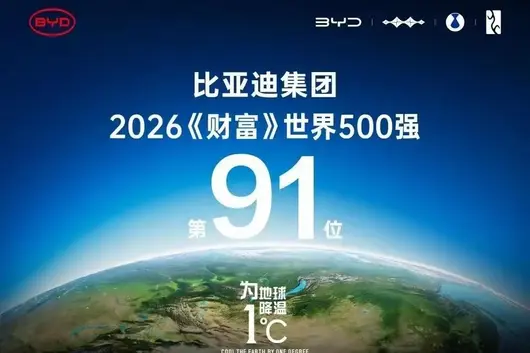
The 2026 Fortune Global 500 list was officially released on July 28, with BYD appearing on the list for the 5th consecutive year. Ranked 91st this year, it has firmly joined the top 100 global companies, undoubtedly becoming a benchmark enterprise for global new energy vehicles, while also highlighting the strong development momentum of Made in China. 
In 2025, BYD achieved an annual revenue of 804 billion yuan and a net profit of 32.6 billion yuan; new energy vehicle sales for the year reached 4.6 million units, retaining the titles of global new energy vehicle sales champion and China market car sales champion. As of June, BYD's cumulative sales in 2026 have exceeded 1.8 million units. Just last July, BYD's 17 millionth new energy vehicle rolled off the assembly line, becoming the first automaker to reach this milestone.
 Some people may be puzzled: BYD's annual revenue in 2025 was as high as 804 billion yuan, so why was the net profit only 32.6 billion? This inevitably leads to the massive investment BYD Group has made in technical research and development. BYD has always regarded deep technical expertise and long-term development as core concepts, investing heavily in technical R&D for many years. In 2025, BYD's investment in technical R&D reached 63.4 billion yuan, almost twice the net profit.
The result of such high capital investment is BYD continuously solving industry pain points with profound technology and digging deep into the technical moat. Examples include the 2nd Generation Blade Battery + Flash Charging Technology, e3, DiSus-A Closed Dual-Cavity Air Suspension, DiSus Sky Eye 5.0 ADAS system, and more. Recently, BYD's 20,000th flash charging station is about to be completed, and BYD plans to build 6,000 overseas flash charging stations worldwide. BYD's R&D investment has ranked first among A-share listed companies for two consecutive years.
 In 2025, BYD's overseas sales broke through 1 million units for the first time, a year-on-year increase of 145%. Overseas sales in the first half of 2026 exceeded 780,000 units, maintaining a strong growth momentum. The overseas market has become an important engine for BYD's growth. More notably, the depth and breadth of the overseas layout are expanding simultaneously. This year, BYD's first overseas SkyRail officially opened in Sao Paulo, Brazil. The Brazilian factory welcomed its 100,000th new energy vehicle off the line, and the Latin American market entered a stage of integrated operation for production, sales, and service; the Denza brand entered Europe with three models: Z, Z9GT, and D9, developing the high-end market with a positioning of tech luxury; the first overseas specialized model, Sea Otter (BYD RACCO), landed in Japan, fully catering to local market demand; the Thailand factory celebrated its second anniversary of production, further consolidating the foundation of the Southeast Asian market.
In terms of sustainable development, as of June 30, 2025, compared to traditional fuel vehicles, BYD new energy vehicles have achieved a cumulative carbon emission reduction of approximately 149 million tons in energy production and usage, equivalent to planting 2.48 billion trees. This data intuitively presents the tangible contribution of new energy vehicles to global carbon reduction. In terms of giving back to society, BYD launched a 3 billion yuan education charity fund, reached donation agreements with 127 universities nationwide, and has inspired over 6,000 students. Long-term investment in education and public welfare is in line with the company's concept of adhering to technological innovation and focusing on long-term development.
 In conclusion, the 91st ranking on the Fortune Global 500 is not just a business achievement for BYD, but more of a perfect proof. It proves that the development concept of always "sticking to technology supremacy and keeping the original intention" can not only achieve success but also lead Chinese automakers globally. BYD lives up to being a benchmark enterprise for global new energy vehicles. And its beautiful vision of "cooling the Earth by 1℃" will eventually be realized step by step.

在马来西亚的SUV市场,很多买家在选车的时候都会拿 Mitsubishi Xforce 和 Volkswagen Tiguan 来做比较。这两款车在价位和定位上都蛮接近的,今天我们就从多个方面做一个详细的对比,帮你省下做功课的时间。
Mitsubishi Xforce 在马来西亚的 OTR 售价是 RM 109,930 - 119,930,一共有 2 个版本,包括 2026 1.5L Ultimate(RM 119,930)、2026 1.5L Urban(RM 109,930) 等。
Volkswagen Tiguan 在马来西亚的 OTR 售价是 RM 206,540 - 260,024,一共有 2 个版本,包括 2025 Allspace 2.0T R-Line(RM 260,024)、2025 Allspace 1.4T Elegance(RM 206,540) 等。
从价钱来看,Mitsubishi Xforce 的起步价确实比 Volkswagen Tiguan 便宜了 RM 96,610。如果你预算有限,Mitsubishi 的入门版已经可以满足日常需求。但也要注意,便宜的那几千块,可能在配备上会有取舍,具体要看你的需求。

Mitsubishi Xforce 车身长 4400 mm,后备箱 400 L。
Volkswagen Tiguan 车身长 4400 mm,后备箱 400 L。
两款车的尺寸几乎一样,车内空间差别不大。这个级别的车,日常使用完全够用。

Mitsubishi Xforce 保修 3年/100,000km,保养间隔 每10,000km或6个月。
Volkswagen Tiguan 保修 3年/100,000km,保养间隔 每10,000km或6个月。
两款车的保修条件一样,这方面不用纠结。实际保养成本还要看品牌的服务网络和零件价格,建议去车友群问问真实车主的经验。

Mitsubishi Xforce 和 Volkswagen Tiguan 都是马来西亚市场的主流选择,适合家庭使用、日常通勤。如果你更看重品牌口碑和二手价,可以优先考虑口碑更好的那一款;如果你更在意性价比和配备,那就选配置更丰富的那款。最终还是建议两款都去试驾,亲身体验才是最重要的。

总的来说,Mitsubishi Xforce 和 Volkswagen Tiguan 都是马来西亚市场很不错的车型。选择哪一辆,关键还是要看你的个人需求和预算。建议大家做好功课,多比较几间车行的报价,再去试驾做最终决定。买车是件大事,花点时间做功课绝对不会错。


在马来西亚的汽车市场,很多买家在选车的时候都会拿 BMW X5 PHEV 和 Mercedes-Benz GLB 来做比较。今天我们从多个方面做一个详细的对比,帮你省下做功课的时间。


BMW X5 PHEV 在马来西亚的 OTR 售价是 RM 486,800 - 494,800,一共有 2 个版本,包括 xDrive20i(RM 420,000)、xDrive30e(RM 480,000) 等。
Mercedes-Benz GLB 在马来西亚的 OTR 售价是 RM 299,888 - 352,888,一共有 1 个版本,包括 Standard(RM 299,888) 等。
从价钱来看,Mercedes-Benz GLB 的起步价比 BMW X5 PHEV 便宜了 RM 186,912。老实讲,在这个价位段,几千块的差距其实不算大,关键还是看整体的性价比和长期使用成本。

BMW X5 PHEV 的安全评级是 5★ (Euro NCAP),主动安全系统包括 Premium ADAS。
Mercedes-Benz GLB 的安全评级是 5★ (Euro NCAP),主动安全系统包括 Premium ADAS。
两款车的安全评级一样,在这个级别里面安全配备都算给得很齐全了。现在的新车安全性都不差,不用太担心这一点。

BMW X5 PHEV 车身长 4400 mm,后备箱 400 L。
Mercedes-Benz GLB 车身长 4400 mm,后备箱 400 L。
两款车的尺寸几乎一样,车内空间差别不大。这个级别的车,日常使用完全够用。

BMW X5 PHEV 和 Mercedes-Benz GLB 都是马来西亚市场的主流选择,适合家庭使用、日常通勤。如果你更看重品牌口碑和二手价,可以优先考虑口碑更好的那一款;如果你更在意性价比和配备,那就选配置更丰富的那款。最终还是建议两款都去试驾,亲身体验才是最重要的。

总的来说,BMW X5 PHEV 和 Mercedes-Benz GLB 都是马来西亚市场很不错的车型。选择哪一辆,关键还是要看你的个人需求和预算。建议大家做好功课,多比较几间车行的报价,再去试驾做最终决定。买车是件大事,花点时间做功课绝对不会错。


在马来西亚的汽车市场,很多买家在选车的时候都会拿 Mazda CX-5 和 Kia Sportage 来做比较。今天我们从多个方面做一个详细的对比,帮你省下做功课的时间。


Mazda CX-5 在马来西亚的 OTR 售价是 RM 135,469 - 166,760,一共有 3 个版本,包括 2025 2.0L AT 35th Anniversary(RM 316,154)、2025 2.0L AT(RM 296,154)、2025 2.0L MT(RM 294,154) 等。
Kia Sportage 在马来西亚的 OTR 售价是 RM 129,639 - 179,320,一共有 4 个版本,包括 2025 1.6T DCT 4WD High(RM 179,320)、2025 1.6T DCT 2WD High(RM 159,320)、2025 2.0L AT 2WD High(RM 139,639) 等。
从价钱来看,Kia Sportage 的起步价比 Mazda CX-5 便宜了 RM 5,830。老实讲,在这个价位段,几千块的差距其实不算大,关键还是看整体的性价比和长期使用成本。

Mazda CX-5 的安全评级是 5★ (ASEAN NCAP),主动安全系统包括 。
Kia Sportage 的安全评级是 5★ (ASEAN NCAP),主动安全系统包括 Drive Wise。
两款车的安全评级一样,在这个级别里面安全配备都算给得很齐全了。现在的新车安全性都不差,不用太担心这一点。

Mazda CX-5 车身长 4500 mm,后备箱 450 L。
Kia Sportage 车身长 4400 mm,后备箱 400 L。
空间方面,Mazda CX-5 的车身比 Kia Sportage 长了 100 mm,车内乘坐空间会稍微宽裕一些,尤其是后座腿部空间。如果你经常载家人或者需要放婴儿车,大一点的车身确实更实用。
Mazda CX-5 采用 FWD 驱动方式。
Kia Sportage 采用 FWD 驱动方式。
两款车的驱动方式一样,都是 FWD,日常驾驶感受不会有太大区别。

总的来说,Mazda CX-5 和 Kia Sportage 都是马来西亚市场很不错的车型。选择哪一辆,关键还是要看你的个人需求和预算。建议大家做好功课,多比较几间车行的报价,再去试驾做最终决定。买车是件大事,花点时间做功课绝对不会错。


在马来西亚的SUV市场,很多买家在选车的时候都会拿 Volvo XC60 和 Audi Q7 来做比较。这两款车在价位和定位上都蛮接近的,今天我们就从多个方面做一个详细的对比,帮你省下做功课的时间。
Volvo XC60 在马来西亚的 OTR 售价是 RM 328,888 - 328,888,一共有 1 个版本,包括 2025 2.0T Core(RM 328,888) 等。
Audi Q7 在马来西亚的 OTR 售价是 RM 462,222 - 462,222,一共有 1 个版本,包括 Standard(RM 462,222) 等。
从价钱来看,Volvo XC60 的起步价确实比 Audi Q7 便宜了 RM 133,334。如果你预算有限,Volvo 的入门版已经可以满足日常需求。但也要注意,便宜的那几千块,可能在配备上会有取舍,具体要看你的需求。

Volvo XC60 车身长 4400 mm,后备箱 400 L。
Audi Q7 车身长 4400 mm,后备箱 400 L。
两款车的尺寸几乎一样,车内空间差别不大。这个级别的车,日常使用完全够用。

Volvo XC60 采用 FWD 驱动方式。
Audi Q7 采用 FWD 驱动方式。
两款车的驱动方式一样,都是 FWD,日常驾驶感受不会有太大区别。

Volvo XC60 和 Audi Q7 都是马来西亚市场的主流选择,适合家庭使用、日常通勤。如果你更看重品牌口碑和二手价,可以优先考虑口碑更好的那一款;如果你更在意性价比和配备,那就选配置更丰富的那款。最终还是建议两款都去试驾,亲身体验才是最重要的。

总的来说,Volvo XC60 和 Audi Q7 都是马来西亚市场很不错的车型。选择哪一辆,关键还是要看你的个人需求和预算。建议大家做好功课,多比较几间车行的报价,再去试驾做最终决定。买车是件大事,花点时间做功课绝对不会错。

© 2024 Bitauto.com. All Rights Reserved.
Bitauto (www.yiche.com and www.bitauto.com) is one of the most visited automotive websites in China. We provide detailed info on Chinese car brands available in your area. Please note that the information provided on this website is based on publicly available data and is for reference only. It may not be fully updated or accurate at all times.

Help us improve our website


