

HomeStartupMY

Search History
Popular Searches
Dealer Login / Sign Up

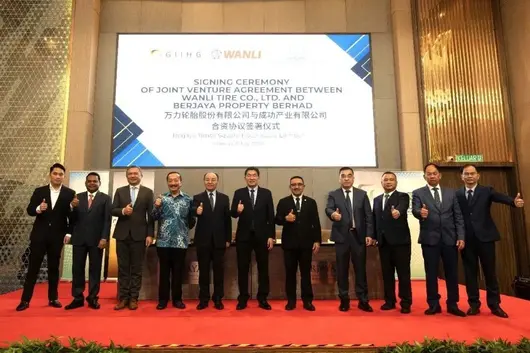
July 6, Wanli Tires, under Guangzhou Industrial Control Group, signed a formal agreement in Kuala Lumpur with Malaysia Berjaya Group Berjaya Corp, landing a $320 million intelligent joint venture factory, marking a comprehensive upgrade of the brand's ASEAN layout.
This is not a single case. In the past year, Wanli, Primewell Chengshan, Qingdao Fullunion, Zhaoqing Junhong, New Continent Rubber and other domestic tire enterprises have densely invested in Malaysia.
Heavyweight Signing Lands! Wanli Partners with Malaysian Giant to Open New Export Chapter
The signing ceremony for Wanli Tires this time is of very high caliber. Senior executives from government and enterprises of China and Malaysia, diplomatic envoys, and industry leaders witnessed it together. It is a benchmark event for China-Malaysia tire industry cooperation this year.
According to the cooperation agreement, both sides will build a high-performance green rubber tire production base in Selangor State. The project covers 67.9 acres, with a planned annual production of 1.2 million all-steel radial tires and 5 million semi-steel radial tires.

As a core export hub in Wanli's global production network, the project is positioned as a leading global smart green factory. It will not only perfect the brand's overseas capacity layout but also create over 1,000 high-quality jobs for Malaysia. Through professional skills training, it will assist in local talent cultivation and manufacturing industry upgrade, achieving two-way symbiosis and win-win.
Wang Fuzhu of Guangzhou Industrial Control Group frankly stated that this signing achieves a leap for the group's ASEAN layout from "single-point breakthrough" to "multi-hub linkage."
Team Gathering Layout! Multiple Giants Land, Malaysian Tire Industry Matrix Takes Shape
Wanli's heavy landing is just a microcosm of Chinese-funded tires entering Malaysia. In just a short year, top listed enterprises and powerful private enterprises have continuously landed large projects, completely rewriting the Southeast Asian tire industry landscape.
01
Qingdao Fullunion: Completed Malaysia's Largest Chinese-Funded Tire Base
This June, Qingdao Fullunion Jinma Rubber Phase II Intelligent Factory officially went into production. With a total investment of approximately 818 million RMB, the overall annual tire production exceeds 7 million units, making it the largest Chinese-funded tire production base in Malaysia in terms of scale and capacity volume.

02
Primewell Chengshan: 2.76 Billion Heavy Investment Layout
In November 2024, Primewell Chengshan invested $380 million (approximately 2.76 billion RMB) to land in Kedah Rubber City, Malaysia. The project covers over 96 acres, focusing on high-end intelligent green tire production. After Phase I reaches full capacity, it can produce 6.6 million tires of various types annually. It is expected to trial production in the second half of 2026, and fully release capacity in 2027-2028.

03
Investment Continues to Increase, Export Team Expands Fully
Private tire enterprises are also accelerating entry: Zhaoqing Junhong invests 2 billion yuan to land in Malaysia tire project, with a planned annual production of 6.5 million tires; Shandong New Continent Rubber invests 630 million yuan to land radial tire production project, continuously perfecting overseas capacity layout.
Core Logic of Gathering in Malaysia: Tariff + Location Dual Dividends
Domestic tire enterprises collectively investing heavily in Malaysia is not blindly following the trend, but a precise layout aligning with global trade shifts, with very prominent core advantages.
Tariff dividend is the primary driver. In 2025, the United States and five Southeast Asian countries reached a differentiated tariff agreement. Malaysia's tires exported to the US tariff reduced to 19%, greatly avoiding high trade barriers of direct exports from China, effectively lowering export costs. Even if the local strengthens rules of origin verification, it still cannot stop the enthusiasm of enterprises building local factories.

At the same time, Malaysia possesses core location advantages within ASEAN. Port shipping is mature, and land transport is accessible, covering both ASEAN local markets and Europe, America, Middle East and other global core markets. It is an excellent strategic pivot for building a resilient global supply chain. In addition, the local rubber industry foundation is deep, industrial workers are sufficient. Overlapping with continuously optimized foreign investment business environment, industrial cluster effects continue to highlight, further consolidating investment value.
Obvious Shortcomings! Investment Promotion Policy Competitiveness Lags Behind Thailand and Vietnam
Although layout heat is high, Malaysia's foreign investment incentive policy has obvious shortcomings, constraining industry acceptance strength. Regarding taxation, the local PS Pioneer Plan only offers ordinary projects 5 years 70% income tax exemption, high-tech can get full exemption. While Vietnam offers up to 4 years full exemption, 5-9 years half, Thailand offers up to 15 years full exemption at most. The policy is simpler and stronger.

Regarding tariff exemption, compliant enterprises in Thailand and Vietnam can directly exempt import tariffs on production equipment and raw materials. Malaysia's preferences are limited to a few special industries and projects, with narrow coverage scope and high threshold. Overall policy tends to be conservative and cumbersome. If optimization is completed subsequently, Malaysia is expected to accept a larger scale tire industry transfer.
From early gathering in Thailand and Cambodia to now collectively layout in Malaysia, Chinese tire export paths are becoming more mature. Starting from Wanli Tires heavy signing, the era of Chinese tire Malaysia layout officially arrives.

近些年来,中国车企加足马力开拓海外市场,东至东南亚,北到俄罗斯及北欧,西抵欧洲腹地,南达南美和澳洲,这张足迹遍布五大洲的出海版图,让如今的中国车企看起来颇有一股“攻城略地”的气势。
当然,从结果看也足够振奋人心,根据6月数据,中国车企已经拿走了欧洲市场13%的份额,包括比亚迪、奇瑞、零跑,以及上汽MG和吉利在内的“主力军团”,凭着技术、价格等优势一举超过日系车,成为欧洲市场增长最快的新生力量。
然而,面对中国车企的步步紧逼,比日系车更警觉的是欧洲车企。当下,欧洲正在讨论对从中国进口到欧洲的混动车辆加征关税。
据了解,今年上半年,欧洲插混市场接近三分之一的份额被中国车企收入囊中,这无疑让大众的危机感进一步加剧,直言如果不加以干预,等到消费者形成新的品牌偏好,届时再想扭转局势将会难上加难!

有相关消息称,欧盟收到诉求后已经启动筹备工作,计划针对中国插混车型发起反补贴调查。站在中国车企的视角看,此次调查意味着一次极为严苛的挑战。
而这种变相的“封杀”背后,不仅反映出欧洲汽车业的忌惮心理,更应引发中国车企对出海战略的重新思考与判断。
中国车企迂回战术,击中了欧洲汽车的软肋
事实上,此前欧盟准备对中国新能源汽车征收激进关税时,大众曾提出反对意见,担心可能会因此遭到来自中国的关税政策反扑,将大众中国置于被动境地,最终欧盟决定只对中国纯电车征收额外反补贴关税。
但没想到,中国车企迅速切换插混赛道,并向欧洲大力出口,时至今日已经对本地企业形成“压制”。
在大众看来,欧洲车企为了满足排放法规投入了巨大的资金,而中国车企却能获得本土政策支持,二者并不对等。并强调,自己只是想要公平的竞争环境,而非纯粹的贸易保护。
言外之意,大众和其他欧洲车企之所以会遭受来自中国新能源汽车的冲击,是因为受到的待遇不同,中国车企享受了更多政策倾斜带来的扶持。

但其实,这样的解释多少有些牵强,因为如果单纯因为补贴问题,中国车企在欧洲市场的突破只能是短暂的、不可持续的,不可能一直走到今天,形成让大众也“胆寒”的势能。
所以,中国汽车在技术、供应链、智能化等方面的进步才是真正的“护身符”,另外,也要承认对于新能源技术路线的判断中国车企表现得更为明智。
相比欧洲车企将转型重心全部布局在纯电领域的做法,中国车企并没有把鸡蛋全部放在篮子里,而是“纯电+插混”兵分两路,策略更灵活,如果Plan A不行,便能搬出Plan B迅速应对,总有一条路子能走通。
或许,当初大众认为,只要对中国产的纯电车征收额外关税,就不会干扰欧洲本地车企的纯电转型,但没料想到的是,原本被低估的中国车企拿着另一套方案完成了对欧洲汽车产业的“迂回进攻”。
现如今,大众和一众欧洲车企的处境并不乐观,本身它们在中国这个全球最大的单一汽车市场正经历前所未有的压力,如果连欧洲大本营都开始失守,那么这些曾经定义全球汽车产业格局的企业,只会更快丧失未来竞争的主动权。

对于中国车企来说,欧洲车企的激烈反应,一方面证明了中国车企已经令传统巨头们感到恐慌,但另一方面也为中国车企出海敲响了警钟。
未来中国车企出口欧洲市场是否会面临更大的阻碍?欧洲是否会逐渐演变成类似泰国市场那样,通过政策工具保护本土汽车产业?这些问题都需要提起高度重视。
全球化下半场,中国车企需要换套打法了
毕竟,过去几年中国车企在海外市场的快速增长,依靠的不只是产品竞争力,还得益于一个相对开放的市场环境。以欧洲为例,为推动新能源转型,主动开放市场,倒逼本土汽车升级,这实际上也为中国车企提供了一个展示实力的机会。
但是,随着中国品牌不断突破,不可避免地会触及到当地汽车产业核心利益,这时候比的就不只是谁的产品更好,谁的价格更低,而是进一步催生了一个新的课题,如何从一个只“抢份额”的对手,变成一个真正融入当地产业体系,并创造价值的“共生者”。
曾经在泰国市场,中国车企就面临过类似的灵魂拷问。

原本泰国也是对中国新能源汽车最开放的市场之一,在政策扶持和市场需求推动下,中国品牌鱼贯而入,短短几年内便迅速实现了对市场份额的占领。但最终引发泰国汽车行业严重不满,敦促泰国政府收紧政策,从税收优惠、本地化比例、投资规则等多个方面加强对进口电动车的管理。
举个例子,现在只要是享受泰国政府补贴的电动车企,必须履行生产补偿协议,换而言之,向泰国出口汽车的同时,也要在本地生产汽车,在2026年这个比例是1:2,到2027年将变成1:3。
此举传递出的意思很明确,就是要让中国车企加大对泰国市场的投资,而非直接卖车走人,未来只有拿出扎根本地的态度,才能被当地认同并接受。
其实欧洲的想法也大致如此,德国大众集团高层就曾表示,不排斥与中国车企开展定向合作,包括探讨在欧洲共享产能生产车辆。翻译一下很好理解,中国车企不是不能在欧洲赚钱,但前提是要有钱一起赚。
其实,像比亚迪、吉利、奇瑞等头部车企早就想到这一步,并逐渐提速本地建厂计划,等到正式投产后将一定程度上降低直接进口的规模,降低关税影响。不过在这一过程中,中国车企仍需要注意如何与当地产业进行更深层次的融合,除了创造产量,能否创造就业机会,培育供应链体系,为当地产业升级做出贡献?

从泰国到欧洲,表面上看都在严防中国车企大举“入侵”,但也为中国车企在全球化进程中的“角色转变”提供了助力。毕竟真正有“含金量”的全球化,看得不光是卖出多少车,更要从一个外来竞争者,成长为一个产业参与者,才能像那些传统跨国车企一样,成为全球汽车产业不可或缺的一分子。

喺馬來西亞嘅 SUV 市場,好多買家喺揀車嘅時候都會拿 Mazda CX-80 同 BMW X5 嚟做比較。這兩款車喺價位同定位上都幾接近,今日我哋就從多個方面做一個詳細嘅對比,幫你省下做功課嘅時間。
Mazda CX-80 喺馬來西亞嘅 OTR 售價係 RM 296,610 - 296,610,一共有 1 個版本,包括 2025 2.5L 65km High Plus(RM 296,610)等。
BMW X5 喺馬來西亞嘅 OTR 售價係 RM 470,800 - 470,800,一共有 3 個版本,包括 1.5L Standard(RM 86,300)、1.5L Executive(RM 95,300)、1.5L Premium(RM 103,300)等。
由價錢睇,Mazda CX-80 嘅起價確實比 BMW X5 平咗 RM 174,190。如果你預算有限,Mazda 嘅入門版已經可以满足日常需要。但都要留意,便宜嗰幾千蚊,可能喺配備上會有取舍,具體就要睇你嘅需要。

Mazda CX-80 搭載 2.0L Turbo,馬力 220 hp。官方油耗 9.5 L/100km。
BMW X5 搭載 3.0L Turbo,馬力 350 hp。官方油耗 12.0 L/100km。
動力方面,BMW X5 嘅 3.0L Turbo 比 Mazda CX-80 嘅 2.0L Turbo 多咗 130 匹馬力。不過日常喺市區開,兩款車嘅動力都夠用,唔會覺得唔夠力。

Mazda CX-80 車身長 4500 mm,行李箱 450 L。
BMW X5 車身長 4400 mm,行李箱 400 L。
空間方面,Mazda CX-80 嘅車身比 BMW X5 長咗 100 mm,車內乘坐空間會稍微寬鬆啲,尤其係後座腳位空間。如果你經常載家人或者需要放嬰兒車,大一點嘅車身確實更實用。

Mazda CX-80 保修 5 年/150,000km,保養間隔 每 10,000km 或 6 個月。
BMW X5 保修 5 年/無限里程,保養間隔 每 10,000km 或 6 個月。

總嘅嚟講,Mazda CX-80 同 BMW X5 都係馬來西亞市場好唔錯嘅車型。揀邊一輛,關鍵都要睇你嘅個人需求同預算。建議大家做好功課,多比較幾間車行嘅報價,再去試駕做最終決定。買車係一件大事,花點時間做功課絕對唔會錯。


在马来西亚的SUV市场,很多买家在选车的时候都会拿 Volkswagen Tiguan 和 BMW X1 来做比较。这两款车在价位和定位上都蛮接近的,今天我们就从多个方面做一个详细的对比,帮你省下做功课的时间。
Volkswagen Tiguan 在马来西亚的 OTR 售价是 RM 206,540 - 260,024,一共有 2 个版本,包括 2025 Allspace 2.0T R-Line(RM 260,024)、2025 Allspace 1.4T Elegance(RM 206,540) 等。
BMW X1 在马来西亚的 OTR 售价是 RM 252,800 - 252,800,一共有 2 个版本,包括 sDrive18i(RM 220,000)、sDrive20i(RM 250,000) 等。
从价钱来看,Volkswagen Tiguan 的起步价确实比 BMW X1 便宜了 RM 46,260。如果你预算有限,Volkswagen 的入门版已经可以满足日常需求。但也要注意,便宜的那几千块,可能在配备上会有取舍,具体要看你的需求。

Volkswagen Tiguan 搭载 2.0L 4-cyl,马力 170 hp。官方油耗 8.0 L/100km。
BMW X1 搭载 2.0L Turbo,马力 220 hp。官方油耗 9.5 L/100km。
动力方面,BMW X1 的 2.0L Turbo 比 Volkswagen Tiguan 的 2.0L 4-cyl 多了 50 匹马力。不过日常在市区开,两款车的动力都够用,不会觉得不够力。

Volkswagen Tiguan 的安全评级是 5★ (Euro NCAP),主动安全系统包括 IQ.Drive。
BMW X1 的安全评级是 5★ (Euro NCAP),主动安全系统包括 Premium ADAS。
两款车的安全评级一样,在这个级别里面安全配备都算给得很齐全了。现在的新车安全性都不差,不用太担心这一点。

Volkswagen Tiguan 采用 FWD 驱动方式。
BMW X1 采用 FWD 驱动方式。
两款车的驱动方式一样,都是 FWD,日常驾驶感受不会有太大区别。

总的来说,Volkswagen Tiguan 和 BMW X1 都是马来西亚市场很不错的车型。选择哪一辆,关键还是要看你的个人需求和预算。建议大家做好功课,多比较几间车行的报价,再去试驾做最终决定。买车是件大事,花点时间做功课绝对不会错。


在马来西亚的SUV市场,很多买家在选车的时候都会拿 Mazda CX-80 和 Porsche Macan 来做比较。这两款车在价位和定位上都蛮接近的,今天我们就从多个方面做一个详细的对比,帮你省下做功课的时间。
Mazda CX-80 在马来西亚的 OTR 售价是 RM 296,610 - 296,610,一共有 1 个版本,包括 2025 2.5L 65km High Plus(RM 296,610) 等。
Porsche Macan 在马来西亚的 OTR 售价是 RM 469,000 - 469,000,一共有 4 个版本,包括 2025 55 quattro S line(RM 467,285)、2025 50 quattro Advanced(RM 361,135)、PMT 1874, Lorong IKS BukitTengah 14000 Bukit Mertajam(RM 296,610) 等。
从价钱来看,Mazda CX-80 的起步价确实比 Porsche Macan 便宜了 RM 172,390。如果你预算有限,Mazda 的入门版已经可以满足日常需求。但也要注意,便宜的那几千块,可能在配备上会有取舍,具体要看你的需求。
Mazda CX-80 搭载 2.0L Turbo,马力 220 hp。官方油耗 9.5 L/100km。
Porsche Macan 搭载 3.0L Turbo,马力 350 hp。官方油耗 12.0 L/100km。
动力方面,Porsche Macan 的 3.0L Turbo 比 Mazda CX-80 的 2.0L Turbo 多了 130 匹马力。不过日常在市区开,两款车的动力都够用,不会觉得不够力。
Mazda CX-80 的安全评级是 5★ (ASEAN NCAP),主动安全系统包括 Brand ADAS。
Porsche Macan 的安全评级是 5★ (Euro NCAP),主动安全系统包括 InnoDrive。
安全配备方面,两款车都拿到了不错的评级。不过 Mazda CX-80 的 Brand ADAS 和 Porsche Macan 的 InnoDrive 在功能上有些差异,如果你比较看重主动安全的话,可以仔细对比一下两者的功能列表。
Mazda CX-80 车身长 4500 mm,后备箱 450 L。
Porsche Macan 车身长 4400 mm,后备箱 400 L。
空间方面,Mazda CX-80 的车身比 Porsche Macan 长了 100 mm,车内乘坐空间会稍微宽裕一些,尤其是后座腿部空间。如果你经常载家人或者需要放婴儿车,大一点的车身确实更实用。

Mazda CX-80 和 Porsche Macan 都是马来西亚市场的主流选择,适合家庭使用、日常通勤。如果你更看重品牌口碑和二手价,可以优先考虑口碑更好的那一款;如果你更在意性价比和配备,那就选配置更丰富的那款。最终还是建议两款都去试驾,亲身体验才是最重要的。

总的来说,Mazda CX-80 和 Porsche Macan 都是马来西亚市场很不错的车型。选择哪一辆,关键还是要看你的个人需求和预算。建议大家做好功课,多比较几间车行的报价,再去试驾做最终决定。买车是件大事,花点时间做功课绝对不会错。
© 2024 Bitauto.com. All Rights Reserved.
Bitauto (www.yiche.com and www.bitauto.com) is one of the most visited automotive websites in China. We provide detailed info on Chinese car brands available in your area. Please note that the information provided on this website is based on publicly available data and is for reference only. It may not be fully updated or accurate at all times.

Help us improve our website


