

HomeSubaru Forester

Search History
Popular Searches
Dealer Login / Sign Up

Lotus Cars announced its latest 2030 Strategy, which is a major push for sales and profitability, as well as a strategic adjustment of technology and routes.
By 2030, Lotus Cars aims to achieve annual production and sales of 30,000 units.
At the same time, it is no longer stubbornly adhering to the pure electric route, but moving forward with pure electric, hybrid, and fuel options.

However, performance cars are currently facing unprecedented changes: numerous new brands are flooding in, and traditional narrative styles are declining.
Consumers are redefining the standards for what constitutes a true performance car.
In this changing landscape, how Lotus Cars reshapes its brand and recreates its products to break through from the changes is self-evidently challenging.
To implement the 2030 Strategy, Lotus Cars is already laying out plans in earnest.
A major trump card Lotus Cars holds now is leaning on the Geely Group system, enabling it to secure more strategic resources to fight continuously.
Additionally, advancing along pure electric, hybrid, and fuel lines simultaneously can also help Lotus Cars expand its consumer base and open up markets in more countries or regions.
For Lotus, a more pragmatic and global chessboard is gradually unfolding.
The following are the core contents of the interview; we edited them without changing the original meaning.

Core Interview Content
Question: For 2030 to achieve an annual production and sales scale of 30,000 units, what will be the approximate sales distribution ratio between domestic and overseas markets? Will the brand subsequently deepen its investment in fuel models? Is there any information you can reveal on this?
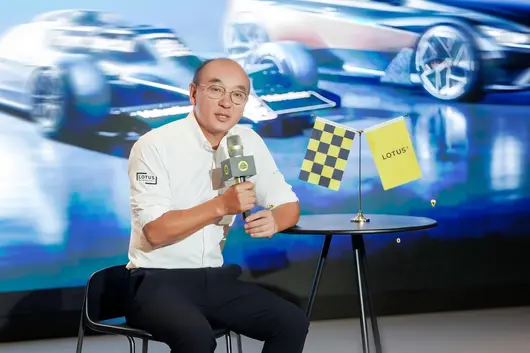
Feng Qingfeng: At this stage, Lotus's sales in the US market mainly rely on sports cars produced in the UK, where tariff levels are relatively low.
China-made models face higher tariff barriers. Although adjusted down from previous peaks, the overall resistance remains significant.
Regarding fuel vehicles, the main layout for sports cars in the future will be hybrid, but in markets with strong demand for fuel vehicles, hybrid models can switch to pure fuel versions, such as in the Middle East and Saudi Arabia. Fuel prices are low, charging infrastructure is weak, and there is still some demand for pure fuel models locally.
The overall plan is hybrids accounting for 60%, pure electric 40%, with limited demand for pure fuel models.

Question: What is the specific pace of hybrid models in the overseas market? Lotus Cars has entered the US, Canada, and Brazil markets in the Americas so far. What are the expansion plans for other regions next? Recent US-Canada-Mexico races have seen high popularity, and the Geely Group is also involved. Could you ask if Lotus plans to carry out related market actions?
Feng Qingfeng: Regarding the Canadian market, delivery will start very soon. We seized a great market opportunity because when we were doing global product development certification, we completed all North American certifications in 2024.
Previously, when we entered the US market, the Eletre model had already announced its price and opened orders. Order performance was very good; once prices were announced, orders reached 6,000 units at one point.
With the recent China-Canada trade agreement lowering tariffs, we were able to enter the Canadian market at the fastest speed.
The South American market will gradually unfold starting with Brazil.
Let's talk about the European market pace. We will officially announce prices and open reservations in Europe this June, with formal delivery in the fourth quarter.
The overseas launch schedule for For Me has been delayed. The main reason is that the vehicle is equipped with an engine and needs to complete new Euro 7 emission standard certification. The certification cycle is longer than in China.
Next year, we will complete more global market certifications and enter markets in Australia, Malaysia, etc.

Question: Lotus has previously outsourced or cooperated on custom powertrains. Will Type 135 continue the outsourced model, or develop engines independently, or develop jointly with Geely?
Feng Qingfeng: For over 70 years, Lotus has never developed its own engines; power is entirely outsourced. The classic 3.5-liter model was procured from Toyota, and the 2.0-liter model was also outsourced.
However, after all outsourced engines arrive, Lotus performs secondary performance modifications: removing redundant non-performance parts and installing self-developed components. This improves power output on one hand, and optimizes overall durability on the other. However, the outsourced modification model has long constrained brand development.
After joining the Geely system and coordinating with this Focus 2030 Strategy transformation, Geely is assisting Lotus in engine development.
HORSE Power released the V6 model at the Beijing Auto Show. In the future, V6 and V8 models will be jointly developed by Lotus, Geely, and HORSE.
High-performance sports cars have another major technical difficulty, known as the pearl on top of the automotive industry crown: high-torque DCT transmission.
High-torque AT is relatively easier to implement. High-performance DCT that can bear hundreds or even over a thousand Newton meters of torque has an extremely high R&D threshold.
Relying on the collaboration among Geely, HORSE, and Lotus, we have already conquered this transmission technology.
Holding a full set of self-developed power resources, we have the confidence to implement the Type 135 project.
High-end high-performance powertrains are basically monopolized by top manufacturers and are not sold externally. Key power cannot be outsourced; it must be independently developed within the group.

Question: Many competitors are now launching intelligent shooting brake and intelligent sports car models. Many brands that originally did not涉足 this field are also joining in. How do you view this phenomenon?
Feng Qingfeng: More and more brands entering the performance car market indicates that the high-end performance consumer market truly exists and has considerable potential. This is a good thing and can drive more consumers to pay attention to and recognize the performance car track.
Lotus has a unique advantage. The essence of performance cars is lightweighting. Whether the body weight can be reduced directly determines the performance ceiling.
If a sports car body is too heavy, the overall performance, especially handling performance, will not go up.
We also have a first-mover advantage in electrification. The Evija pure electric supercar we launched has 2,000 horsepower, 400-plus kilometers of pure electric range, an overall weight as low as 1.6 tons, and air downforce up to 1.8 tons.
So performance cars have very high barriers. It is not simply stacking horsepower that creates a true performance car. Performance in all dimensions such as steering, braking, chassis, and aerodynamics must match.
In the fuel era, automakers could stack up high horsepower, and basically all supporting performance would be maximized simultaneously. So horsepower was basically equivalent to performance then.
But now many new cars only stack up high horsepower. Core performance such as chassis, braking, lightweighting, and aerodynamics cannot keep up completely. This is a common industry misunderstanding.
For example, our For Me vehicle weight reaches 2.5 tons. Yet we can still achieve a braking distance of over 33 meters because we have taken all supporting performance to the extreme. This is a true performance car.
Lotus's moat and barriers are deep chassis tuning skills and extreme lightweighting technology. This is our unique differentiated advantage.
Question: In what aspects will you deepen collaboration and simplify redundancies with the Geely Group?
Feng Qingfeng: Looking at the global automotive industry, ultra-luxury brands developing relying on large groups generally have more stable development. For example, Ferrari belongs to the Stellantis Group, and Lamborghini belongs to the Volkswagen Group.
In contrast, ultra-luxury brands developing independently from the group system, their development status is also visible to all.
The main reason is that the group can share huge R&D costs.
It is now the era of software-defined vehicles. Electronic architecture and software R&D investment are extremely high.
If Lotus independently develops a new electronic architecture, the investment would need to reach at least the level of billions.
With our 30,000 units annual sales volume, we simply cannot cover costs and achieve profitability.
So in the future, we will fully rely on group collaboration on mechanical architecture, electronic architecture, and software systems, sharing R&D costs according to sales volume.
If all technologies are independently invested, the business model will not work at all. 30,000 units in sales simply cannot achieve profitability.
Based on group collaboration, Lotus will continue to focus on its own field, deepening chassis intelligence. Active chassis technology, which is currently popular, Lotus has already deep layout. For Me is equipped with a full set of active chassis, supporting personalized selection and intelligent dynamic adjustment.
Once traditional chassis tuning is completed, it is in a fixed state. Active chassis is "alive" and can actively adjust in real-time based on road conditions, driving style, road surface environments like rain and snow, and changes in road adhesion. This is the technology we continue to deepen.

Question: In the new 2030 plan, will Lotus release more affordable models as scheduled? Do affordable products fit the super-luxury brand positioning of Lotus?
Feng Qingfeng: It does not mean a low price represents low positioning.
Especially within the personalized market, some products have low prices but can satisfy personalized consumer groups.
Why can't Lotus launch a 300,000 to 400,000 RMB one, like Elise and Eletre? It is very compact, but still has high premiums.
Actually, we have always had a dream, which is to restore a product like Elise. Small, two-seater, very agile.
But do not be like the past where there were no life scenarios other than driving.
For example, when I was in the UK, I drove an Elise. Even the luggage compartment couldn't fit a suitcase, and I had to change to another car to go to the airport. So, some life scenarios need to be integrated.
From a product dimension perspective, we hope that after Type 135 is realized in the future, we can make a small product similar to Elise.
Question: In the 2030 Strategic Plan, does Lotus have plans to return to F1 racing?
Feng Qingfeng: For Lotus, including for me personally, I dream of getting in because the Lotus DNA in F1 is too strong.
We have also had a lot of communication with these F1 organizations. They also hope Lotus can return to F1.
However, I think we still need to adjust based on our commercial development. We are exploring and contacting. Especially how to enter becomes very important.
Everyone knows F1 has newly approved the Cadillac team. As for whether China can get a new team approved, this needs further discussion. It is not something that can be decided at once. But this is Lotus's dream. We still need to work hard for such a dream.

Question: Ferrari launched its first electric car. There were many negative reviews, even internal reactions were not optimistic, triggering questions about whether super-luxury brands should continue to launch pure electric cars. In this situation, how do we think about the prospect of Lotus Cars?
Feng Qingfeng: Beauty is in the eye of the beholder because everyone has their own beauty in their hearts.
I think Ferrari is also at the transition of eras and needs to do some exploration. Whether it is successful will be verified by the market in the future.
But I think it needs to do such exploration, just like Lotus.
We are now returning to hybrid power. Actually, this is also exploration we did for many years in the pure electric field.
I think any enterprise should pay the tuition fee when it's time to explore.
In the past, I heard from various sources that Ferrari would not do pure electric. But it could not resist the tide of the times and eventually entered this field.
How to enter, each enterprise has its own strategy.
Question: We possess advanced technologies such as motor lightweighting, motor non-heating, chassis, etc. Can these technologies be opened up? Can we also move towards the supply chain direction to perform technology reverse output and supply products or technologies to other OEMs?
Feng Qingfeng: These advanced technologies are not entirely developed independently by Lotus. Most are developed jointly with suppliers.
For example, V8, V6, hybrid power systems, and motors with higher energy density were all completed with supplier cooperation.
Regarding reverse output, we are certainly very open. In fact, Lotus announced in 2024 that it is willing to open our chassis technology to society comprehensively.
Question: Historically, it seems no automaker could achieve slight profit or balanced profit with an annual sales of 30,000 units. So for Lotus, this may be a very big challenge.
Feng Qingfeng: It is not that only selling 30,000 units can generate profit. Ferrari made a profit of 700 million Euros with sales of 10,000 units. Of course, it is a relatively special brand, with sales slightly over 10,000 units. It already had high profitability when reaching 8,000 units.
Look at Porsche again. When it first did not enter the life vehicle field, sales were only 30,000 to 50,000 units. It also achieved very good profitability.
So for Lotus, the key is how to build the brand well.
The first pillar is actually how to build the brand well to obtain better premiums and higher gross margins.
As for the cost aspect, let me give an example.
Production in Wuhan and in the UK, the cost difference is huge.
This is exactly because of synergy. With Geely's synergy in manufacturing and procurement, and the sharing of manufacturing expenses. In the UK, we can only share ourselves, so manufacturing costs are very high.
Let's say an exaggerated figure, it might be five times the cost of manufacturing in China.
Therefore, we hope to reduce manufacturing costs through massive synergy.
In fact, compared to 2024, our overall costs in 2025 have already decreased significantly. Next, we will still use this synergy to create a "small and beautiful" company. "Small" refers to low costs, and "beautiful" refers to profitability.
Past calculations indicated around 60,000 units because expenses were very high then. Now with more synergy support from Geely, our costs can drop significantly.
For example, electronic architecture. If we had to invest ourselves, we would need to invest over 10 billion. But through Geely's synergy, we only need to bear a part of the shared expense.

Question: From now on to achieve a sales target of 30,000 units, what changes do you think need to be made?
Feng Qingfeng: If we want to make Lotus like other competitors by pushing down prices from the start, our costs cannot do it. We simply cannot do it.
This is not just an issue of economies of scale. It is not that if scale goes up, it can be done.
The key is that our requirements for products are very high. If we were to lower requirements, we certainly could bring costs down.
I mean, if I scored 80 points, I could do it with a little effort. But as a performance car, our requirement must be above 98 points.
We will not lower requirements to control costs. This is not what Lotus can do, and our whole system cannot do such things.
Of course, we also conducted a review. Therefore, we launched hybrid models. This is a correction of the past.
As for sales growth, I believe this year and next year, with the launch of the Lotus For Me model, there will be a significant increase.
Because the market is expanding. For example, in China, those who bought Lotus in the past were mainly small business owners and bosses.
Now it has expanded to corporate executives, especially executives in the financial sector. This is an expansion of the crowd.
Additionally, our markets are also expanding. We will enter Europe this year. Next year we will enter Australia, the UK, Malaysia, and other countries.
At the same time, our electric vehicles sold poorly in the Middle East. The main reason is that oil prices there are very cheap.
But after For Me entered the Middle East, the response was very good. Plus our future Type 135 and other sports car plans, we hope these new products keep up with the times and can change our current sales situation.

“提车才两天,我买的中国品牌电动车就从新车变成旧款了。从签合同到提车,无论销售员还是代理商,都没有说过任何关于新款上市的信息。”
“我买的中国电动车,导航不能规划充电路线,这太糟糕了。”
“提车后发现软件版本为旧版,但车辆系统虚假显示已经是最新版本。”
“仪表盘显示电机故障警告,伴随低速振动和类似燃油发动机的噪音。送往官方服务中心后,他们仅连接软件清除错误码、消掉仪表盘警告,振动和噪音依旧。”
如果不加说明,你能想到这些吐槽和投诉来自中国汽车的海外用户吗?而且是集中出现在最近半年的海外社交平台、当地论坛和媒体曝光中。中国汽车疾驰在海外市场的同时,也正在扬起更多问题尘埃。
出海,是中国汽车当前的生命线。今年以来,国内车市销量塌方、价格体系失守、利润率跌至3.4%,出海成为大家的一种必然选择。

而且中国汽车在智电技术领先,产业链优势加持,全球市场能源转型刚需下,出海,是一场天时地利的人和。
但要注意的是,这是一场有准备的产业远征,不能因为国内竞争加剧,就将压力外溢,在海外也上演拥挤踩踏。
敲开全球市场大门,中国汽车不容易
先讲一个最近的故事。2026年1月,中加签署了一份电动车关税配额协议:加拿大给予中国产电动车型每年4.9万辆进口配额,配额内关税降至6.1%,至2030年提升至7万辆。
这是北美市场对中国汽车非常难得的一次重新发卡,上一次中国产的汽车能进入加拿大,还要追溯到2024年10月以前。此后,该国对所有中国产的汽车实施100%惩罚性关税,整个北美对中国汽车大门紧闭,直到这次重新打开一道缝隙。
这次机会对中国品牌有多重要,看看自主车企的反应就知道。比亚迪、吉利、奇瑞,第一时间启动布局。比亚迪此前已有海鸥、海豚、元PLUS(Atto3)和海豹4款车进入加拿大交通部预审名录,天时相助,立刻选址计划先开20家门店,并同步研究在加拿大建厂。

吉利则依托此前沃尔沃和极星的渠道资源,表示年内先让极氪登陆加国。奇瑞的动作最麻利,完成星途、欧萌达、Jaecoo等品牌的商标注册、核心岗位招聘,5月时已发运车辆到加拿大,首批10家经销商6月底前开业,几乎是一气呵成。
三家头部自主车企的速度,透露了攻入北美市场的重要性,也折射出中国汽车的“着急”,一种形势逼人、先到先得、机不可失、时不再来的着急,掺杂着强大的进攻力和进攻背后的不安。
为什么这么急?因为这一路走来不容易。30年前,中国汽车开启最早的出海,只能靠着低价燃油车,抢占缺乏本土汽车工业、欧美日韩覆盖较弱的价格洼地。多年后,靠着升级性价比,一步步打进欧美边缘、大洋洲、中亚、非洲等地。
直到智能电动化的换道超车,中国汽车才有实力和底气,强攻中东高端、欧洲核心与北美市场。一路披荆斩棘,才拿到今天跻身世界汽车工业之林的入场券。
既然如此,越是在“内冷外热”的当前,越是机会与挑战同在,越不能让问题滋生甚至蔓延。千里之堤溃于蚁穴,何况中国汽车全球化的堤坝正在修筑。
利器还是“凶器”?不可草率的“快迭代”
海外用户对于中国汽车的吐槽和投诉,其实早有先例。三年前中国汽车出口首次登顶全球第一时,爆发过一轮集中的品质问题投诉,甚至引发过召回。此后,产品相关的投诉和批评日渐减少,网上对中国汽车智能化领先的夸赞越来越多。
但今年以来,问题再次变得频繁,本文开篇引用案例只是冰山一角。中国车企忙于海外扩张的同时,恐怕也需要及时看到:产品品质、售后网络和品牌信任三条曲线的斜率,正在跟不上销量曲线的陡峭上行。
新能源加速攻城略地的这几年,中国车企习惯了一套打法:快速迭代、以价换量、用OTA善后。这套逻辑在国内市场之所以能运转,是因为国内消费者对新品牌的容忍度高、换车周期短、二手残值焦虑被低购车成本对冲。
但海外市场完全不同。欧洲消费者的平均换车周期在8至10年,澳大利亚消费者对售后服务的法律保障意识远超国内,英国消费者在购车前会查阅Euro NCAP评级和J.D.Power可靠性调查。在这些市场,一次严重的软件故障或一次敷衍的售后处理,可能不是“以后再说”的问题,而是直接终结一个品牌在当地的未来。
今年1月,国外汽车评测网站driveauthority.com发表了“Common Problems With Chinese Electric Cars in 2026”,归纳了中国电动车的五大高频问题:软件不稳定、售后网络不足、配件供应延迟、ADAS标定弱点、残值快速贬值。
软件不稳定或功能不完善,根本原因是产品未成熟适配即推向市场,这并非技术能力不够,而是急于占领市场和心存侥幸。目前,此类问题虽未在海外形成规模性投诉,但这绝非可以忽视的理由。避免车辆带病交付,避免给品牌造成负面影响,是中国汽车应该补的课。
售后网络和配件供应,这一存活扎根的前提,据相关调研显示,目前确实还未得到很好的解决。对比日韩品牌,中国汽车海外售后的三大结构性困境:网点不够多、配件供不上、技师修不了,还是需要持续发力的重中之重。
不过,已经有中国车企采取行动,长城在澳洲、南非建立了海外配件中心库;长安在沙特、卡塔尔等国做了325人次技师培训。

至于中国ADAS在海外暴露的标定问题,这一中国开发与全球化验证之间的结构性错配,恐怕还需要中国车企不断攻破海外路权、数据回流、法规、认证等与智驾相关的各个壁垒。这并非一朝一夕的事,但只有攻克了这些困难,中国智驾优势也才能真正赢得海外用户的夸赞。
更隐蔽的是残值问题,却最具杀伤力。随着海外基盘扩大和国内压力持续增加,中国汽车在海外的“同类厮杀”必然加剧,更熟稔快迭代打法的品牌,必然会加快在海外投放新车和迭代的速度。
今年1-5月,有数据统计国内新车发布超过500款。同时期的海外市场,保守估计中国品牌平均每家至少推出了2-5款新车型/改款/换代产品。每次改款伴随配置升级,甚至“加量不加价”,不可避免会冲击上一代车型残值。
快速迭代在国内是竞争力,但在海外若处理不当,就可能变成信任杀手。尤其在二手车文化浓厚的英国、澳大利亚等国,负面影响会被显著放大。
但技术竞赛不允许慢下来,解决路径或许可以在快速迭代的前提下,建立海外消费者的预期管理和老用户补偿机制。至少可以提前公示产品路线图,让消费者有时间做购买决策,而不是买车后发现自己被“背刺”。
中国汽车出海正从“把车卖出去”的1.0阶段,进入“把牌子立起来”的2.0阶段。这一阶段不会因为手握“全产业链+低成本+高技术+快迭代”优势闭环,就有捷径可走。当初,日系车花费二十年才建立起全球网络和品牌体系。如今中国汽车恐怕也要脚踏实地,在每一个市场做好每一个细节,才能真正在全球市场把牌子立起来。
量价齐涨,利润为何追不上?
中国汽车出海,还面临着另一重不可回避的挑战。
先看成绩:五年前,中国汽车海外单车均价约为10万元,如今已经涨到30万元。量价齐涨,成绩单不可谓不漂亮。但翻到利润那一面却是:今年一季度,中国汽车海外利润贡献比例总体低于10%,与同期222.6万辆的出口相比,利润率明显偏低。
问题出在哪里?主要原因在于:汇率和价格战。
有数据统计,今年一季度,仅A股/H股主流上市车企,因人民币升值造成的汇兑损失,合计超过100亿元,损失最大的是比亚迪和吉利。
这一幕与上世纪90年代初日系车的遭遇如出一辙。当时,日系车出口量大,但本土化严重不足,汇率波动直接吞噬利润。也正是那场危机,逼出了丰田的全球本土化变革,投资建厂、供应链本地化,丰田最终站上全球第一。中国车企虽早已意识到本土化的重要性,但在落地中,大部分仍是认知与动作没有同频。
比亚迪是积极的行动派,在海外投资建厂、快速扩张。几天前的股东大会上,王传福表示“到2030年,比亚迪在规模上能够做到真正的全球第一”。目标明确,但规模之外,利润结构的优化同样紧迫。

除了汇率,价格战的问题也不可回避。尽管海外单车均价已经涨到30万元,但当国内价格战打到“一斤汽车比一斤猪肉还便宜”时,不少车企还是下意识地把这套逻辑搬到了海外。
去年底,有中国品牌在泰国市场大打价格战,有些车型降价幅度达到38%。今年初,中国品牌价格战的戏码又在英国上演。
欧盟对价格战的态度相当干脆。2026年1月,中欧达成“价格承诺协议”,以设定“地板价”(price floors)替代此前的反补贴关税。这种“以价代税”的操作,让中国汽车失去了用低价撬动欧洲大众市场的机会,但反过来看,它倒逼中国品牌必须往高处走。
能留在欧洲的玩家,必须具备两个能力:一是产品力确实过硬,二是品牌故事能让欧洲中产买单。这条路极窄,但凡走过的都是王者,因为这需要的不只是车,更是十年以上的体系投入。
中国汽车全球化的胜负手,从来不在于谁比谁更快,也不在于谁卖得更多。而在于谁能在十年后仍然被当地的消费者选择、信赖、推荐给朋友。这不是一次漂亮的出口冲刺,而是一场跨越至少十年的信任长跑;需要的不是“走西口”式的活命本能,而是“下南洋”式的建城决心。
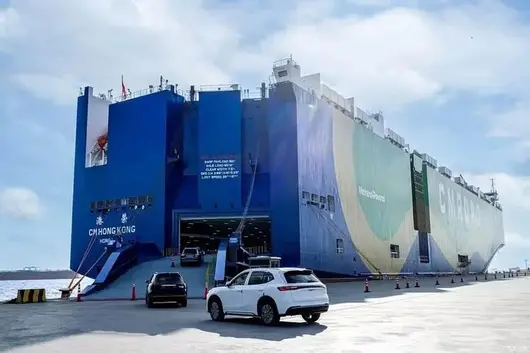

2025年财报数据揭晓,中国轮胎行业交出里程碑式成绩单:中策橡胶以449.56亿元营收断层领先,赛轮集团、玲珑轮胎分别以367.92亿元、246.42亿元紧随其后,浦林成山、双钱、贵州轮胎等集体跨过百亿门槛。仅上述头部企业合计营收逼近1800亿元。二十年前百亿还是天花板,如今百亿军团强势崛起,标志着行业加速从“小散乱”走向“大而强”,全球赛道上从“跟跑者”蜕变为“并跑者”。

技术突围:从手工作坊到子午线革命
中国轮胎的起点并不光鲜。1958年,杭州海潮橡胶厂最初只造胶鞋;1976年,三角轮胎前身威海轮胎厂艰难起步。真正的转折在八九十年代,浦林成山、中策、三角相继建成子午线轮胎生产线,让中国轮胎首次站上与外资同维的技术起跑线。进入21世纪,赛轮等民营力量崭露头角,为“液体黄金”破局埋下伏笔。从胶鞋到子午胎,中国轮胎用六十多年完成技术三级跳。

全球落子:从产品出海到产能出海
技术突破让企业“站起来”,全球化布局则让大家“走出去”。2012年,赛轮赴越南建厂成为出海先行者;玲珑同年落子泰国,并首创“东南亚-欧洲-南美”全球三角布局;双星则控股韩国锦湖,迅速拿到国际高端市场入场券。如今海外产能已成增长极,玲珑海外销售收入占比近半,中策加速多国基地协同。从产品出海到产能出海,中国轮胎正重构全球供应链。

价值跃升:打响高端化与智造战
长期以来,“中国制造”在轮胎业等同于低端廉价。如今,中策“朝阳1号”打破外资高端垄断;玲珑进入大众、奥迪、宝马等名录,全球十大车企八家选择玲珑,新能源配套销量蝉联第一。智造领域,贵州轮胎2025年入围“灯塔工厂”,生产效率提升68%,质量缺陷减少57%,证明中国轮胎不仅能造得好,还能造得聪明。

百亿之后:三大赛道决定新格局
百亿是分水岭,但对比米其林、普利司通常年超2000亿营收,中国轮胎仍有追赶空间。未来竞争将围绕三条主线:一是全球化再升级,海外建厂成“必答题”,供应链韧性决定份额;二是高端化持续突围,借力新能源优势在EV领域换道超车;三是智造全面渗透,实现质量与定制能力进化。
百亿只是新起点,百亿之后还有千亿。方向已明,道路已开,中国轮胎重塑世界格局的新时代才刚刚开始。

The Chinese car market continues to face pressure under the double squeeze of weak consumption and price wars, with most automakers trapped in a vicious cycle of trading price for volume.
In contrast, Geely Auto's report of 237,637 units is particularly eye-catching. It not only achieved year-over-year and month-over-month double growth for three consecutive months, but also anchored "half the market share" for four consecutive months with a 56.1% new energy penetration rate.

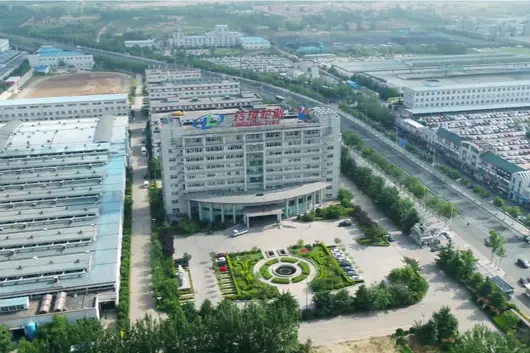
In this high-quality growth report, Geely Xingyuan sales reached 36,426 units in one month, contributing 44.6% of the Geely Galaxy brand's sales, becoming the core pivot for Geely to stabilize the domestic market base and leverage the global market.
Moreover, with the product strategy of "adding specs without raising prices", it pointed out the direction of value upgrade for the pure electric small car market trapped in homogenization.
From Chinese Sales Champion to Top 3 Globally, Defining Value Over Price Wars
As the 2025 Chinese car market full-category sales champion, Geely Xingyuan broke through 700,000 deliveries in 573 days, setting a record for the fastest growth of pure electric small cars globally. In the first quarter of this year, it even ranked in the top three in global new energy sales, becoming the only Chinese brand model to enter this list.

The newly launched Xingyuan on May 28 has a promotional price ranging from 61,800 to 91,800 Yuan during the 6.18 period. While configurations are comprehensively upgraded, the price remains competitive, further consolidating its market dominance.
The victory of Xingyuan is essentially a "value war" against a "price war". It is worth noting that the pure electric car market below the 100,000 Yuan level has long been stuck in a vicious cycle of "cutting specs and lowering prices". Most automakers exchange low prices for compressing safety standards and cutting core configurations, ultimately leading to industry profit collapse and user experience decline.

However, Xingyuan has taken a completely different path: it did not participate in price fights but achieved "adding specs without raising prices" through technology accessibility, bringing core capabilities originally found in 200,000 Yuan level models down to the entry-level market.
This value upgrade is reflected in three core dimensions:
First, it breaks the prejudice that "small cars are not worth talking about safety", proving that entry-level models can also have top-level safety protection with the only fully excellent results in continuous frontal and side crash tests of its class, and 3.4 times roof crush strength.
Second, it reconstructs the perception that "entry-level equals low intelligence", placing the Qianli Haohan H3 smart driving solution into mass production for the first time. Mainstream driver assistance can be experienced, making up for the shortcomings in Xingyuan's product strength.
Third, it ends the stereotype that "pure electric small cars are only for commuting", allowing small cars to also possess handling experiences comparable to 200,000 Yuan class sports sedans through rear-drive independent suspension architecture and cross-level driving control tuning.

More importantly, Xingyuan has become the "vanguard" of Geely's global layout.
In the first quarter of this year, Xingyuan topped the sales of Class B pure electric hatchbacks simultaneously in four countries: Mexico, Indonesia, Costa Rica, and Brazil, and also ranked first in Q1 Mexico Class B HB BEV sales.

Unlike past Chinese brands' exports relying on low-price strategies, Xingyuan punches out a new tag of "high quality, premium value" in the global market with comprehensive leading advantages in technology, safety, and experience, setting a new benchmark for Chinese automobile exports.
Multi-brand Synergy, Building a Full-dimension Growth Matrix
Xingyuan's outstanding performance is a microcosm of Geely Auto's product structure continuing to optimize. In May, Geely's four core brands bloomed comprehensively, forming a product matrix covering entry-level, mainstream, and high-end full price bands.

Geely brand sales reached 182,528 units. Among them, the Galaxy brand contributed 81,727 units, accounting for nearly 45%, becoming the core engine for new energy transition; China Star Series sales broke through 100,801 units, up 16.1% year-on-year. Relying on i-HEV Smart Hybrid Technology, it achieved counter-trend growth in fuel vehicles, proving that traditional fuel vehicles still have broad market space through technology upgrades.
On the premiumization front, Zeekr brand deliveries reached 34,377 units in May, up 81.8% year-on-year and up 8.1% month-over-month, achieving year-over-year and month-over-month double growth for four consecutive months.
Among them, high average order value Series 9 and Series 8 combined sales share accounted for nearly 50%, with single vehicle average transaction price up 52.4% year-on-year, achieving true volume and price rising.
Zeekr 9X broke out of the "Domestic Series 9 competition", with May sales reaching 8,441 units and cumulative deliveries breaking 60,000 units, stabilizing in the high-end pure electric SUV market above 300,000 Yuan.

The refreshed Zeekr 009 launched on May 19, the 7-seater Ultra+ "Home Edition" order share exceeds 60%, successfully opening new volume for family users outside the business market.
Continuous rise in new car cycle has injected strong growth momentum for Geely.

The Geely Galaxy Xingyao 7 MAX launched on May 22, confirmed orders broke 10,000 units within 23 hours of launch. Synergizing with Galaxy M7 and Xingjian 7, it jointly entered the 100,000-150,000 Yuan mainstream market;

The Lynk 10 and Lynk 10+ launched on May 29, filling the gap in the mid-to-large size sport pure electric sedan market, and deliveries opened immediately upon launch.
The dense launch of multiple high-value new cars not only marks Geely's accelerating new-old product switch, but also heralds it entering a strong new vehicle cycle.
Global Multi-point Breakthrough, Fundamentals Stabilization Recognized by Institutions
The explosive growth in overseas markets is another highlight of Geely's May sales. Geely's overseas export reached 85,144 units in May, a year-on-year increase of 183.7%. The new energy export share reached 47.9%, and the export product structure continues to optimize.

Unlike other automakers' self-built factory heavy asset export models, Geely adopts a "Industry Symbiosis" light asset model, partnering with Volvo, Proton, Renault, etc., to quickly enter the global market through technology output and localization production.
This model not only effectively avoids trade barriers, but also achieves win-win with local industries, laying a solid foundation for Geely to sprint towards the 750,000 unit annual export target.
Final Thoughts
The Chinese car market has entered an era of "stock competition" from "incremental competition". Relying solely on price wars can no longer achieve sustainable growth. Geely has walked a high-quality development path through technology innovation, product structure optimization, and global layout.
Xingyuan's success proves that even in the most competitive entry-level market, breakthroughs can be achieved through technology accessibility and value upgrade; Zeekr's premiumization breakthrough shows that Chinese brands are fully capable of competing head-to-head with foreign brands in the luxury market.
When "technology accessibility" becomes the new tag of Chinese brands, and when "Chinese Smart Manufacturing" becomes the common choice of global consumers, the Chinese automobile industry is welcoming the true globalization era, and Geely is undoubtedly the most determined leader in this transformation.
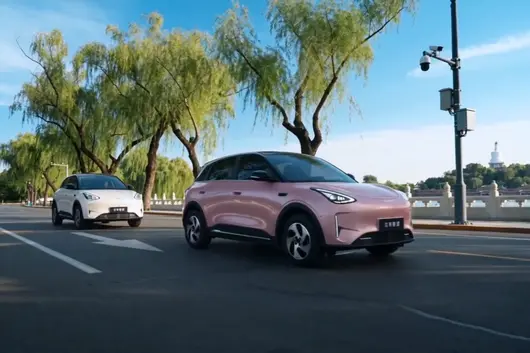


2026 年 5 月,丹尼爾·克萊格,呢位喺全球影迷心中佔據特殊位置嘅前 007 演員,駕駛騰勢 Z9 GT 嘅廣告片喺海外引來熱議,該片生動演繹咗"Technology Drives Elegance"呢句廣告語。

更加讓人驚艷嘅,係唔遠前戛納 amfAR 慈善晚宴上,全球獨一無二嘅騰勢 Z9GT Chopard 蕭邦版跨界定製座駕以 70 萬歐元(約合人民幣 555 萬元)落槌成交。
當中國車開始定義"優雅"與"稀缺",世界係咪該更新一翻觀念了?
就喺同一時期,另一則消息更具影響力。

唔遠前,凱度 BrandZ 發布全球品牌價值榜單:比亞迪以 203.62 億美元品牌價值位列全球汽車第五,同比飆升 41%,連續兩年增速最快,距第四名奔馳僅一步之遙。
從 007 嘅優雅,到戛納嘅落槌,再到 BrandZ 嘅耀眼數據,一個個"全球時刻"串聯起嚟,勾勒出一幅由中國品牌主導嘅汽車產業新圖景。
過去式·播種者:嗰啲被低估嘅十年
關於比亞迪"全球時間"嘅敘述,都要由一個漫長播種嘅十年講起。

時間回到 2010 年代,行業普遍認為中國汽車只能喺國內打價格戰,比亞迪 K9 電動大巴卻駛入咗倫敦、巴黎、東京。佢唔單止拿到歐洲嚴苛嘅准入認證,更率先打入咗日本市場。K9,成就咗中國新能源汽車嘅第一張全球名片。
技術端嘅深耕,喺日後不斷演化成一個個出圈嘅"全球安全故事"。

2026 年,耶路撒冷城區,一輛元 PLUS 遭遇導彈襲擊,整車被掀翻、車窗粉碎,但 ABC 柱完好無損,電池系統未發生熱失控,車內 5 人,皆平安脫險。
另一起事件中,一輛巴西車主嘅宋 PLUS DM-i 遭遇歹徒持槍掃射,子彈未能穿透車身,司機安全逃離,事後喺社交媒體上感嘆:"係比亞迪救咗我條命。"
"安全係最大嘅豪華"。比亞迪用一場場慘烈而真實嘅戰地危機,將其化為令全世界心服嘅信念。

技術嘅積累,最終體現喺銷量嘅全面爆發。2023 年,比亞迪超越特斯拉,首次奪得全球新能源銷量冠軍。2026 年 4 月,比亞迪第 1600 萬輛新能源車下線,由 1000 萬輛到 1600 萬輛僅用 17 個月。
中國汽車工業喺全球賽道上嘅奔跑速度,從未如此令人驚嘆。但喺世界版圖上,比亞迪更早播種嘅唔止產品。
2021 年,東南亞首座比亞迪工廠喺泰國投產;2023 年,巴西卡馬薩里工廠煥發新生;2025 年,匈牙利工廠喺歐洲拔地而起。每一步落子,都為未來數年內海外市場嘅爆發提供咗堅實支撐。
而家時:2026,全球登基之年
2026 年 4 月,全球車市迎嚟歷史性時刻。比亞迪以單月零售 14,911 輛、市佔率 12.8% 嘅成績,登頂巴西汽車零售全品類銷量榜首。大眾喺巴西長達 20 年嘅統治被終結。巴西總統盧拉都成為比亞迪車主。

同一時間,歐洲戰場勢如破竹。意大利,比亞迪超越大眾同特斯拉,首次登頂細分市場冠軍;喺德國,銷量同比增長超過 647%;喺英國同西班牙,同比增幅均超過 600%。匈牙利工廠全面投產,年產能 15 萬輛,成為歐洲最大嘅中國車企工廠。

喺東南亞,泰國每賣出 3 台純電動車,至少有 1 台來自比亞迪。泰國工廠年產能 15 萬輛,通過東盟內部零關稅流通體系,將產品觸角遍及整個東南亞地區。

放眼全球,2026 年 4 月,比亞迪海外銷量達到 13.45 萬輛,同比增長 70.9%,創歷史新高。1 至 4 月海外累計銷量達 45.43 萬輛,海外銷量已佔集團總銷量嘅 40% 以上。滲透率、規模、增速——三項全能。
品牌蛻變:由瘋狂嘅豪言到被仰望嘅現實
曾幾何時,好多人對比亞迪嘅印象停留在"低端""廉價"。仲記得 2007 年,王傳福曾放言"2025 年成為全球第一",嗰時台下盡係笑聲。但當 2023 年比亞迪超越特斯拉,成為全球新能源銷量冠軍,嗰個看似瘋狂嘅豪言,已經提前兌現。

當仰望 U9 Xtreme 以 496.22km/h 嘅实测極速打破全球量產車速度紀錄,喺紐北賽道跑出 6 分 59 秒成為首款"破 7"嘅純電量產車,售價超過 2000 萬並且真正交付俾用戶時,人們嘅認知發生咗徹底嘅轉折。中國汽車第一次喺超跑領域擁有咗定價權。
與此同時,第五代 DM 混動系統再進化,NEDC 百公里虧電油耗降至 2.6 升,滿油滿電綜合續航 2100 公里,實現咗"一箱油從北京直抵深圳"。

2026 年 3 月發布嘅第二代刀片電池同閃充技術,更加喺補能環節投落一枚深水炸彈。王傳福當場拋出那句霸氣宣言:"5 分鐘充好,9 分鐘充飽,零下三十度只多 3 分鐘。"

品牌價值嘅躍遷,更加係最直接嘅印證。由 2022 年首次入榜 BrandZ 全球汽車位列第八,到 2026 年登頂第五,比亞迪用咗四年時間,從一個"闖入者"成長為全球汽車品牌陣營中嘅核心角色。
結語
品牌、性能、市場、文化溢價——比亞迪正喺四個維度同時改寫全球汽車產業嘅格局。傳統同非傳統嘅界限喺消融,創新者同既得利益者嘅生態位喺重塑。

喺汽車呢個"產業之王"嘅巔峰對決中,從未有一家中國企業行得如此深入、如此自信。
過去,世界睇見比亞迪;而家,世界選擇比亞迪;未來,世界將齊睇比亞迪。
呢,就係比亞迪嘅全球時間。



© 2024 Bitauto.com. All Rights Reserved.
Bitauto (www.yiche.com and www.bitauto.com) is one of the most visited automotive websites in China. We provide detailed info on Chinese car brands available in your area. Please note that the information provided on this website is based on publicly available data and is for reference only. It may not be fully updated or accurate at all times.

Help us improve our website


