

HomeTires

Search History
Popular Searches
Dealer Login / Sign Up




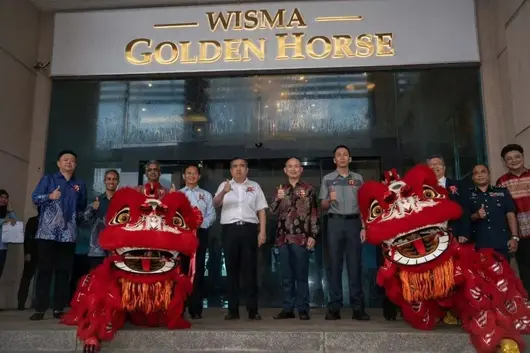
On June 18, Qingdao Fulin Tyres' wholly-owned overseas base — the Malaysia Jinma Rubber Phase II Intelligent Factory officially started production and operations. The landing of this project marks a key step in the global capacity layout of Chinese tire enterprises, elevating the enterprise's overseas intelligent manufacturing strength to a new level. Malaysian Minister of Transport Lu Zhaofu attended the commissioning ceremony to cut the ribbon and delivered a speech, giving high recognition to Jinma Rubber's active contribution to deepening industry practices, driving regional economic development, and promoting intelligent manufacturing upgrades.

Investing 850 Million, Overall Capacity Breaks 7 Million Units
It is reported that the total investment in Jinma Rubber Phase II project exceeds 500 million Malaysian Ringgit (approximately 850 million Chinese Yuan), located in the Malaysian Port Klang Free Trade Zone, which has prominent location advantages. The full launch and operation of this project makes Jinma Rubber the largest Chinese-owned tire production base in Malaysia with the largest investment scale and capacity volume.
The Phase II project brought a leapfrog improvement in production capacity. With the new factory in operation, Jinma Rubber's total annual capacity will break through 7 million tires, greatly releasing Fulin Tyres' overseas supply capacity, effectively filling the enterprise's overseas capacity gap, and further expanding the global market landscape. At the same time, the project is expected to provide about 500 jobs locally, achieving Sino-foreign industry collaboration and mutual benefit.

Building a High-End Intelligent Manufacturing Benchmark, Breaking Out of Low-Cost Competition
Unlike traditional overseas capacity layout, this Phase II project focuses on intelligent and high-end production. The new factory is fully equipped with internationally advanced automation, intelligence, and informatization production equipment, massively applying industrial robots and digital management systems, achieving intelligent production throughout the process, efficient control, and precise quality control, committed to building a benchmark for intelligent tire manufacturing in Malaysia.
Relying on automated production lines, this project has significantly improved product precision and production efficiency, aiming to adapt to global high-end tire market demand, helping enterprises jump out of low-cost homogeneous competition and deeply cultivate the overseas high-end market track. In addition, the project fully relies on the natural rubber resource advantages and port logistics advantages of Malaysia, building an efficient, intelligent, and low-cost modern tire production system.

Deep Plowing the Industry for Over Two Decades, Accelerating Globalization Strategy
Jinma Rubber Malaysia Co., Ltd. was established in 2016, being the first overseas base invested and built by Fulin Tyres. Among them, the Phase I factory started production at the end of 2018, with an annual capacity of 3.5 million tires; in September 2025, the Phase II expansion project was contracted by Shaanxi Construction Engineering Group No. 5 Construction Co., Ltd., and officially started construction in November of the same year.
Data shows that Qingdao Fulin Tyres was founded in 2003, deepening into the tire industry for 23 years, adhering to the "Trade + Factory" dual-engine strategy, focusing on the R&D, production, and sales of PCR Passenger Car Tires and TBR All-Steel Commercial Vehicle Tires. Fulin Tyres founder Liu Zijin graduated from Harbin Institute of Technology, successively held positions at Ningyang Chemical Plant, Weihai Triangle Tire Group, and Qingdao Sentinel, etc., holding middle to senior management positions, possessing profound industry expertise.

The Phase II production launch of this Malaysia base is an important milestone in Fulin Tyres' globalization strategy. In the future, the enterprise will rely on the location, capacity, and technical advantages of the overseas intelligent production base, continue to deepen cultivation of the international market, improve the overseas and domestic collaborative production pattern, and continuously enhance global brand competitiveness with high-end intelligent manufacturing strength.



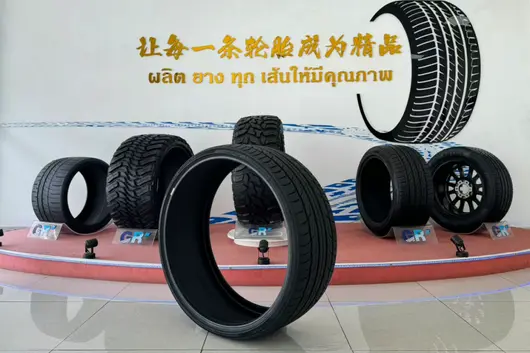
Recently, China General Tire (601500.SH) welcomed a new breakthrough in high-end manufacturing, with the company's first 28-inch ultra-high performance (UHP) tire—the strategic grade product with specification 305/25R28—successfully rolling off the line at the Thailand production base. The smooth landing of this product with an ultra-large rim diameter and ultra-low aspect ratio marks that China General Tire's R&D and smart manufacturing capabilities in the radial passenger car tire field have entered the international advanced ranks, providing strong support for the company to grab the global high-value-added niche market.

Overcoming Process Limits, Smart Manufacturing Standards Aligned with International
In the tire engineering field, the combination of 25-series ultra-low aspect ratio and 28-inch extra-large rims means ultra-narrow sidewalls and wider contact width, posing near-severe challenges to the molding and vulcanization processes. During the R&D phase, China General Tire's technical team conducted in-depth research targeting tread rigidity matching, contact print adjustment, and high-speed stability, successfully finding the optimal solution between extreme handling and high-speed durability.
In the manufacturing process, this UHP tire deeply applied the industry frontier "One-Pass Molding Process". This process places extremely high requirements on the control accuracy of large-diameter green tire forming, special rubber extrusion, and high-precision vulcanization equipment. Currently, only a few top tire companies worldwide master its mass production capability. The successful launch of this new product this time confirmed with hard-core results that the hardware configuration and manufacturing tolerance control of China General Tire's overseas base have fully aligned with international top standards.

Thailand Base Capacity Strong, Solidifying a Steady Supply Foundation
The landing of cutting-edge products cannot be separated from a steady capacity base. As the first beachhead of China General Tire's "5X Strategy" going global, the Thailand base has maintained extremely strong supply chain resilience and a trend of booming production and sales since the first phase went into production in 2020.
With the completion of the second phase 10 million radial tires annual production project in June 2024, the Thailand base capacity entered a phase of efficient release. Latest data shows that in May 2026, China General Tire Thailand base monthly shipment volume exceeded 1 million tires, strongly creating a new historical high. Excellent delivery data demonstrates the company's stable supply guarantee and lean operational efficiency to the world.

Piercing the High-Value Blue Ocean, Enhancing Global High-End Discourse Power
For a long time, the market for super-large size UHP tires such as luxury car modifications and original equipment for high-performance supercars, due to extremely high material and manufacturing thresholds, possesses generous single product value-added, but this dividend zone has long been monopolized by international first-tier giants.
The rolling off the line of China General Tire's 28-inch UHP product this time is precisely a strategic blade piercing into this high-value blue ocean. Relying on the Thailand base's mature localized capacity, China General Tire can not only effectively avoid trade barriers but also radiate the vast high-end modification markets in Europe and America nearby. Shorter delivery cycles and optimized trade costs will tear open broad profit space for the company in the overseas high-end UHP track, practically enhancing the discourse power of domestic independent brands in the global high-end circle.
From the construction of a global capacity matrix to the breakthrough of high-end product process limits, China General Tire is driven by "New Quality Productive Forces" and steadily advances toward the top of the global tire industry value chain. In the future, the company will continue to uphold the original intention of "making every tire a premium product". In the blueprint of striving for "10 Billion General", it will present a shining "China Smart Manufacturing" card to the world.


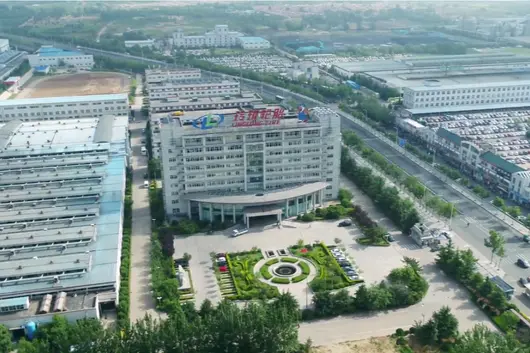
2025 financial report data revealed, China's tire industry submits a milestone performance report: Zhongce Rubber leads by a landslide with 44.956 billion yuan in revenue, Sailun Group and Linglong Tires follow closely with 36.792 billion yuan and 24.642 billion yuan respectively, Pullman Chishan, Double Coin, Guizhou Tire, etc., collectively cross the 10 billion threshold. Only the above leading companies' combined revenue approaches 180 billion yuan. Twenty years ago, 10 billion was the ceiling; now the 10 billion army rises powerfully, marking the industry's accelerated shift from "small, scattered, and chaotic" to "large and strong", transforming from "chaser" to "peer" on the global track.

Technological Breakthrough: From Handicraft Workshops to Radial Revolution
The starting point of China's tires was not splendid. In 1958, Hangzhou Haichao Rubber Factory initially only made rubber shoes; in 1976, the predecessor of Triangle Tires, Weihai Tire Factory, started with difficulty. The real turning point came in the 80s and 90s, with Pullman Chishan, Zhongce, and Triangle successively building radial tire production lines, allowing China's tires to step onto the technical starting line at the same level as foreign investment for the first time. Entering the 21st century, private forces like Sailun emerged, laying the groundwork for breaking through with "Liquid Gold". From rubber shoes to radial tires, China's tires completed a technical triple jump over more than sixty years.

Global Deployment: From Product Export to Capacity Export
Technological breakthroughs allow enterprises to "stand up", while global layouts enable everyone to "go out". In 2012, Sailun went to Vietnam to build a factory, becoming a pioneer in going global; Linglong planted a flag in Thailand the same year, and pioneered the "Southeast Asia - Europe - South America" global triangular layout; Double Star took controlling interest in Korea Kumho, quickly obtaining access tickets to the international high-end market. Today, overseas capacity has become a growth pole, Linglong's overseas sales revenue accounts for nearly half, Zhongce accelerates collaboration among multiple country bases. From product export to capacity export, China's tires are reconstructing the global supply chain.

Value Leap: Launching the Battle for High-End and Intelligent Manufacturing
For a long time, "Made in China" in the tire industry was equivalent to low-end and cheap. Now, Zhongce's "Chaoyang No. 1" breaks the high-end monopoly of foreign investment; Linglong enters the list of Volkswagen, Audi, BMW, etc., eight of the world's top ten automakers choose Linglong, new energy equipment sales rank first for consecutive terms. In the intelligent manufacturing field, Guizhou Tire was shortlisted for the "Lighthouse Factory" in 2025, production efficiency increased by 68%, quality defects reduced by 57%, proving that China's tires can not only be made well but also made smartly.

After 10 Billion: Three Major Tracks Decide the New Landscape
10 billion is a watershed, but compared with Michelin and Bridgestone's annual revenue exceeding 200 billion, China's tires still have room to catch up. Future competition will revolve around three main lines: First, globalization upgrades again, building factories overseas becomes a "must-answer question", supply chain resilience determines share; Second, continuous breakthrough in high-end, leveraging new energy advantages to overtake on a different lane in the EV field; Third, intelligent manufacturing fully penetrates, realizing evolution of quality and customization capabilities.
10 billion is just a new starting point, after 10 billion there is still 100 billion. The direction is clear, the road is open, the new era for China's tires to reshape the global landscape has just begun.


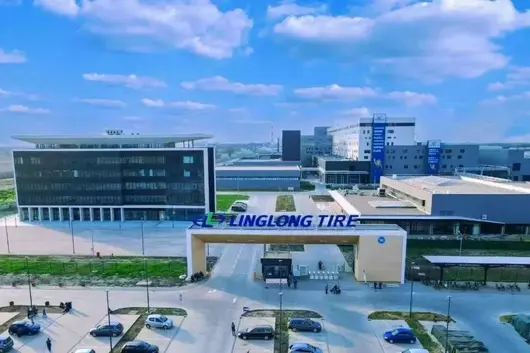
Recently, according to Serbia Business News, Linglong Tire plans to acquire 70 hectares of land locally to expand its production base; the new factory area will absorb 400-800 employees. Against the backdrop of contraction and withdrawal by major auto parts giants in Europe and America, Linglong Tire is going against the trend to acquire assets, not only smoothly taking over the industrial and labor vacuum left by German enterprises but also continuing to deepen its global layout.

Investing $645 million to Build a Green Full Industrial Chain
It is reported that Linglong Tire has signed a 70-hectare factory expansion agreement; the expansion plots are located in the southeastern industrial park of Zrenjanin. Currently, its business plan is under review by the Serbia Development Agency, and Linglong also expects the new project to receive government subsidies for new employment.
Last month, Linglong Group Vice President Sun Songtao revealed that the company plans to invest $645 million to advance the Phase II project of Zrenjanin Factory, focusing on building a "green industrial chain from tire production to recycling". He emphasized that Serbia and Thailand are the two core pillars for Linglong to optimize its production system and expand European and global markets.
Previously, Linglong's Phase I project in Serbia has completed nearly $1 billion in investment, been approved for about 100 hectares of land, and cumulatively obtained over 80 million euros in national support funds. The factory officially started production in 2024, and currently on-site employees have reached 2,500.

Going Against the Trend to Take Over: Absorbing 1,800 Lost Jobs from German Enterprises
Linglong's expansion is no different from a "timely boost" for Zrenjanin. German high-end auto parts manufacturer Dräxlmaier decided to withdraw from Serbia a year ago, which is part of its overall strategy to exit the European market. Despite the Serbian government urging them to stay multiple times, the enterprise still decided to completely withdraw by the end of this year or early next year, affecting a total of 1,800 local employees.
Zrenjanin Mayor Sara Pura stated that Linglong's capacity expansion is significant; along with JUSDA Europe utilizing Dräxlmaier's original facilities as a distribution warehouse, it effectively took over the surplus labor force, avoiding a sharp spike in the local unemployment rate.

Infrastructure Empowerment: Upgrading Transportation Hubs Helps Extend Reach Across Europe
Besides the smooth succession of labor resources, the upgrade of local transportation infrastructure will also safeguard Linglong's expansion. Currently, two locations of the Belgrade-Zrenjanin-Novisad Expressway have started preliminary construction, and the railway passing through the city has also seen renovation and upgrades. These two major projects will significantly improve logistics operation efficiency, providing solid support for Linglong to further reduce logistics costs and efficiently extend its reach to the European market.
Industry insiders point out that from the $1 billion Phase I implementation to the $645 million Phase II building a green closed-loop industrial chain, Linglong's deep cultivation in Serbia not only enjoyed the local policy and location dividends, but also in the current situation where international car companies are restructuring supply chains, relying on acquiring assets at low prices against the trend to solidify progress, it is gradually enhancing its influence in the global high-end tire market.


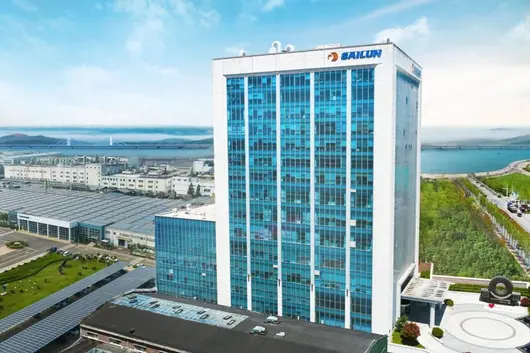
On June 1, Sailun Tire (601058) released the implementation announcement for the 2025 annual equity distribution, stating that the company will distribute a cash dividend of 0.18 yuan per share to all shareholders (tax included), totaling nearly 592 million yuan in cash dividends. The record date for equity is June 4, and the cash dividend distribution date is June 5.
Behind this generous dividend distribution lies the strong financial confidence of this private tire giant, which rose to the first tier globally within just over 20 years of establishment. Facing the sharp increase in costs brought by the escalation of global trade barriers since 2025, Sailun still delivered a response with great resilience.

Revenue Hits Record High, Profitability Quality Continues to Improve
In 2025, Sailun Tire's annual revenue reached 36.792 billion yuan, a year-on-year increase of 15.69%, setting a new historical record. Although operating costs for tire products increased by 21.02% year-on-year, the company stabilized the gross profit margin at a relatively high level of 24.63% thanks to product structure and pricing advantages.
Net profit attributable to the parent company and net profit after deducting non-recurring gains and losses for the year reached 3.522 billion yuan and 3.458 billion yuan respectively, with both profitability indicators reaching their second-historical levels. More noteworthy is that the company's net operating cash flow reached 4.179 billion yuan, a year-on-year surge of 82.58%, indicating substantive improvement in profitability quality.

Liquid Gold Breakthrough, ESG Rating Jumps to AA Level
The support for resilient performance stems from hardcore technical barriers. The 'Liquid Gold' technology (Ecopoint3) developed by Sailun after a decade of in-depth research adopts a world-first chemical rubber vulcanization method, successfully breaking through the 'Devil's Triangle' problem in the tire industry where rolling resistance, wet traction, and wear resistance could not be improved simultaneously. It not only achieves a balance of energy saving, safety, and wear resistance, but also achieves green low-carbon across the entire lifecycle from raw materials to production and usage.

This persistence in green sustainability has also won Sailun recognition from international capital markets. Recently, the international authoritative index institution MSCI upgraded Sailun's ESG rating from A to AA, solidifying its top position in China's tire industry and placing it among the global forefront. This marks that Sailun's sustainable development strength in global operations, R&D innovation, and supply chain management has received high international recognition.
Capacity Expansion Both Domestic and Overseas, Brand Value Rising Yearly
Going against the current, stagnation means retreat. While consolidating the technological moat, Sailun has pressed the accelerator on global capacity expansion. Since establishing China's first overseas tire production base in Vietnam in 2012, Sailun has continued to increase investment since 2026: in April, it announced an investment of about 1.95 billion yuan to build an expansion project for a 7.05 million radial tire annual production capacity in Egypt; meanwhile, the Indonesia factory also received a capital increase of about 336 million yuan to expand PCR and TBR capacity.

The resonance between capacity and performance boosted the rapid rise in brand value. In the 2025 'China 500 Most Valuable Brands', Sailun ranked 105th with a brand value of 112.896 billion yuan, an increase of 12.3 billion yuan compared to last year; in Brand Finance's Top 25 Global Tire Brand Values, Sailun ranked in the top ten for the first time, continuing to be the most valuable tire brand in China.
From a new enterprise on the Shandong Peninsula to a global giant competing with century-old foreign strong enterprises, Sailun, driven by technology and capacity on two wheels, is accelerating towards a new height in the global tire industry.


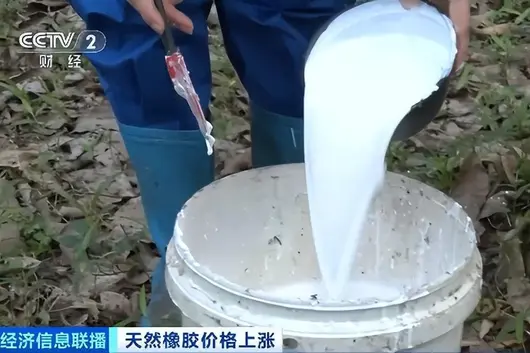
May 27, the rubber sector experienced significant upward volatility in the morning session, with bullish sentiment significantly recovering. The RU Main Contract 2609 opened flat and moved higher, peaking at 17,775 Yuan/ton, breaking through the 17,500 Yuan/ton threshold with volume expansion; No. 20 Rubber main surged 2.70%, synthetic rubber followed the rise, and the sector moved in correlation strengthening. The strong surge on the market reflects that the current tire manufacturing upstream is comprehensively trapped in the "High Price, High Volatility, High Uncertainty" "High Three" dilemma. Under heavy cost pressure, tire companies domestically and internationally spoke intensively, and the June price hike wave is imminent.

Imbalanced Supply and Demand, Natural Rubber Price Hits Two-Year High
The fierce assault on the market today is the concentrated explosion of the spot market continuing to maintain a tight balance. Since the beginning of the year, natural rubber prices have continued to rise, and the current spot price is in the range of 17,500-17,900 Yuan/ton, up approximately 14% from the beginning of the year; futures prices also rose 11%, both at near two-year highs. In Baisha, Hainan, the dry rubber acquisition price reached a high point of around 17 Yuan/kg, and processing enterprises were scrambling to acquire it.

However, while high prices mobilized tapping enthusiasm, it was difficult to change the underlying logic of a global structural shortage. According to the Association of Natural Rubber Producing Countries forecast, global demand will reach 15.602 million tons in 2026, while production is expected to be only 15.324 million tons, with a clear deficit. The main producing area Thailand faces weak production due to tree planting changes and rubber tree aging. The El Niño phenomenon's high temperature and drought also exacerbated production release deficits for May-June. Domestic Yunnan, Hainan initial tapping period production is slow, and the low supply period is extended.

On the demand side, the operating rate of domestic tire companies is steadily recovering. New energy vehicles saw year-on-year growth of 5.5% in production and 9.7% in sales in April. Vehicle exports surged 74.4%, with stable downstream rigid demand supporting the base. Under supply-demand mismatch, domestic inventory continues to draw down. For the week ending May 22, Qingdao Bonded Area inventory decreased 0.59 million tons MoM to 13.36 million tons. General trade inventory decreased 0.25 million tons MoM. Spot circulation tightness provided strong support for the market trend.

Market Structure Disrupted, Synthetic Rubber Enacts Historic Overtaking
Natural rubber's surge is merely the tip of the iceberg. The abnormal movement of synthetic rubber puts more pressure on tire companies. In March this year, the domestic synthetic rubber futures main contract hit a strong limit up intraday, with a daily increase of as high as 11.99%, and a cumulative increase of over 53% for the year.

More worthy of attention is that synthetic rubber prices exceeded natural rubber for the first time at that time. The spread between the two once exceeded 1,300 Yuan/ton, completely overturning the industry's long-term perception that "natural rubber is more expensive than synthetic rubber". Although recently influenced by the easing of Middle East tensions, synthetic rubber prices dropped to the 14,000 Yuan level, but driven by international oil rebounding over 3% and capital returning to the energy and chemical sector, synthetic rubber prices recently rose again, indirectly supporting the rise of natural rubber, with raw material volatility remaining high.

Cost Forcing, June Price Hike Wave Pressures Again
Facing the runaway surge of upstream raw materials, tire company profits are severely compressed, and price hikes become the only way out. International brands took the lead in layout for June: Hankook, Dunlop, Kumho announced price increases of 2%-6% respectively starting from June 1; Michelin, Bridgestone, Goodyear also completed new rounds of price adjustments in May.
Domestic brands also did not want to lag behind, welcoming the second even third wave of price hikes this year. Over 40 tire enterprises released price adjustment letters in May, adopting a "Small Steps Fast Running" strategy to offset violent cost fluctuations with high-frequency micro-adjustments.

However, although the June price hike wave has been established, the implementation rhythm will diverge significantly. Under the background of overall capacity overcapacity, the distorted situation where "Price Hike Letters" and "Promotional Policies" coexist may continue. Leading enterprises leverage cost transfer capabilities to upgrade, while some SME brands to maintain market share may be forced to postpone price adjustments or promote sales in disguised ways. This storm triggered by the "High Three" is accelerating the reshaping of the tire industry's competitive landscape.
Image Source: CCTV Finance




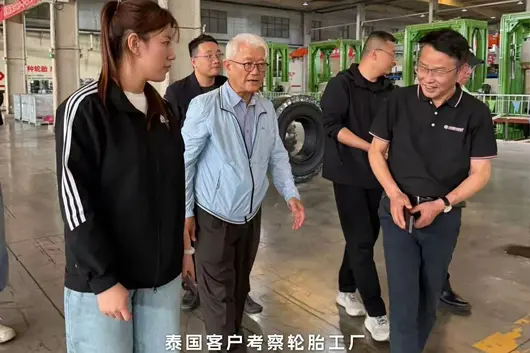
Recently, the team from YaoQian International Trade (Henan) Co., Ltd., a subsidiary of the Malaysia YaoQian Group, accompanied Thai clients to inspect its strategic solid tire production base. Behind the high acclaim given to the automated production lines and rigorous quality control by the visitors lies the company's unique strategic path: bypassing the saturated local market, leveraging Central Plains manufacturing, and targeting the global special tire market.

New Factory Welcomes Guests: Thai Clients Praise "Made in China"
As a new force that just opened its doors in Jiaozuo this July, YaoQian International welcomed a successful start. In the production workshop, Thai clients closely observed the entire process from raw material inspection to finished product output, gaining a direct understanding of core performance of solid tires such as high load-bearing capacity, wear resistance, and maintenance-free operation. This inspection deepened mutual trust between both parties and laid the foundation for long-term cooperation. YaoQian International stated it would continue to leverage its professional advantages to help high-quality "Made in China" products go global.

Foreign Investment Move: 37-Year Industry Giant Enters, Focusing on Special Tires
The confidence to welcome guests stems from the YaoQian Group's deep industry accumulation. On July 17, YaoQian International with a registered capital of 10 million US dollars officially opened in Shanyang District, Jiaozuo, becoming a key foreign investment project attracted by the district in 2025. The parent company, Malaysia YaoQian Group, has been deeply engaged in tire manufacturing for 37 years, with business covering more than 110 countries, having cooperated with engineering machinery giants such as XCMG, Sany, and Caterpillar for a long time. Industry speculation suggests that YaoQian's tire factory in Jiaozuo will most likely focus on its advantageous areas - mining and special tire production. Although Jiaozuo already has special tire giants such as Aeolus Tires, YaoQian's entry will bring new competition and cooperation, but its true ambition does not lie here.

Breaking the Pattern with Differentiation: No Red Ocean Battle, Building an Export "Trade Hub"
Facing fierce price wars domestically, YaoQian (Henan) has a clear differentiation positioning: to be a "production capacity pivot" and a "trade hub". The company clearly stated it will rely on the advantages of China's manufacturing cluster, integrate heavy equipment manufacturing resources in Jiaozuo and surrounding areas, and establish an international supply chain system. Its strategic focus is to radiate globally centered on the Central Plains, focusing on developing emerging markets such as Russia, Central Asia, and Africa, and building a trade network covering the "Belt and Road Initiative".
Under this logic, YaoQian (Henan) focuses on the cost and efficiency advantages of Made in China, dedicated to becoming a multinational trade platform connecting Chinese intelligent manufacturing with global resource development, rather than focusing mainly on the domestic market. In the future, the group will also introduce patented technologies, integrate global marketing networks, and continuously expand the high-end markets in Europe and America.
Industry analysis believes that through the new path of "Overseas Demand + Chinese Production Capacity + Global Trade Network", YaoQian Group not only injected foreign trade resources into Jiaozuo but also provided a highly valuable sample for observing new strategies of foreign investment in China.

© 2024 Bitauto.com. All Rights Reserved.
Bitauto (www.yiche.com and www.bitauto.com) is one of the most visited automotive websites in China. We provide detailed info on Chinese car brands available in your area. Please note that the information provided on this website is based on publicly available data and is for reference only. It may not be fully updated or accurate at all times.

Help us improve our website


