

HomeToyota Corolla

Search History
Popular Searches
Dealer Login / Sign Up


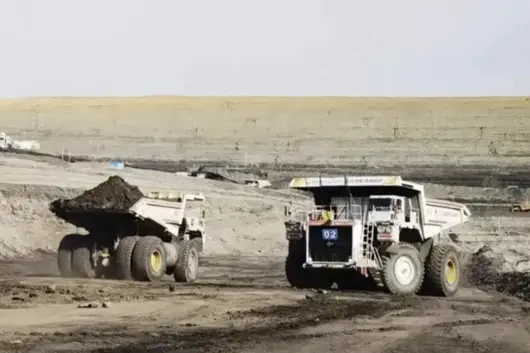
Another company specializing in autonomous driving for mining areas is applying for a listing.
On May 20, Tage Zhixing submitted its prospectus to the Hong Kong Stock Exchange, with Huatai International serving as the sole sponsor.
Founded in 2016, Tage Zhixing mainly focuses on autonomous driving transport technology for mines and smart mine solutions, with its core product being a "Vehicle-Land-Cloud" system called "Kuangu".
Once the prospectus was made public, several key figures were quickly highlighted: revenue of 527 million yuan in 2025, a surge of 246.7% year-on-year; gross margin turned positive for the first time, rising from -45.5% to 4.8%; operating cash flow also finally "turned from negative to positive", with a net inflow of 37.88 million yuan.
However, the numbers on the other side were equally eye-catching: cumulative losses over the past three years exceeded 800 million yuan, with the top five clients contributing nearly 90% of the revenue, and the largest single client accounting for more than 40%.
How exactly is this autonomous driving company for mines, founded by a Beihang University professor, ranked in the top three domestically, and with cumulative financing of 1.5 billion yuan?
01
A Beihang University Professor, Why the Determination to "Go Down to the Mines"?
The story begins in 2016.
That year, the autonomous driving sector was booming. Looking around, many startups set their sights on Robotaxi, attempting to tell the grand story of "changing transportation methods", causing valuations to rise with the tide.
But Yu Guizhen, founder of Tage Zhixing and a professor at the School of Transport Science and Engineering, Beihang University, made a decision that seemed "unsexy" at the time: instead of going to the city, go down to the mines.

Tage Zhixing Founder Yu Guizhen
Yu Guizhen was not acting impulsively. At the beginning of the venture, Tage Zhixing initially entered the autonomous driving scenario of logistics parks. But he soon found that the "pain points" of park transport were not painful enough—drivers were relatively easy to recruit, and the working environment was not harsh. The situation in mining areas was completely different.
To clarify exactly what mining areas needed, Yu Guizhen spent over two months visiting more than 20 open-pit mines across the country.
He identified three core problems.
First, drivers could no longer be recruited. Almost no young people work as drivers in mines; they are all over 50 years old. Second, occupational diseases are shocking. Third, safety accidents are the biggest red line.
Therefore, in 2017, after internal team discussions, Yu Guizhen decided: All in on open-pit mining areas.

Tage Zhixing Partial Financing Situation. Data Source: Qichacha
That year, Tage Zhixing secured tens of millions of yuan in Pre-A financing.
Subsequently, the company underwent multiple financing rounds. From Pre-A to Series D, the total financing scale was approximately 1.5 billion yuan, with investors including GSR Phase 3, Baotong Investment, Qianhai Investment, Hefei Industry, Beihang Asset Management, Beijing Guoneng, Zhiyun Cloud Innovation, Wuxi Dingqi, Puxin Yixin, etc.
Regarding the shareholder structure, as of the latest practicable date, Yu Guizhen directly and indirectly held shares (11.7%), Ningbo Dongge held 7.18%, acted in concert with Zhou Huasheng (0.71%), and acted in concert with the Beihang Education Foundation (1.46%), controlling a total of 21.04% of the company equity, making it the single largest shareholder group. Beijing Guoneng and New Energy Innovation held shares totaling 16.92%, making them the second-largest shareholder.

Tage Zhixing Equity Structure
The prospectus shows that the proceeds from this IPO are mainly used for main businesses, including R&D activities, business growth and expansion, and general working capital purposes.
02
The Prettiest Report Card, and The Most Eye-Catching Numbers
This disclosure of the prospectus laid out the most authentic side of Tage Zhixing on the table.
First, look at the eye-catching data.
In 2025, Tage Zhixing's operating revenue reached 527 million yuan, a year-on-year growth of 246.7% compared to 152 million yuan in 2024.

The company mainly has three types of businesses: first, solutions equipped with Tage-specialized vehicles, i.e., collaborating with OEMs to sell wide-bodied mining trucks with integrated autonomous driving systems, supporting ground facilities, and cloud control platforms; second, solutions for third-party vehicles, targeting retrofitting of existing mining wide-bodied trucks and rigid mining trucks; third, smart operations and other services, including maintenance, technical services, and smart transport services billed by transport volume.
From the revenue structure, "solutions equipped with Tage-specialized vehicles" has become the core revenue source, contributing 376 million yuan in 2025, accounting for 71.4% of total revenue. This means the market is rapidly accepting Tage Zhixing's software and hardware integration solutions.
Based on 2025 revenue, Tage Zhixing ranks third in the Chinese mining autonomous driving transport solution market, with a market share of 13.3%, trailing Company A (38.1%) and Company B (21.0%).

2025 China Mining Autonomous Driving Supplier Ranking (By Revenue)
More critical signals are: gross margin turned from negative to positive for the first time in 2025, reaching 4.8%; while the gross loss rates for 2023 and 2024 were 24.8% and 45.5% respectively. For Tage Zhixing which has been in a high-investment period, this means the phase of "losing money on every unit sold" is passing.
Cash flow also gives positive signals. In 2023 and 2024, operating cash flow net outflows were 204 million yuan and 177 million yuan respectively; by 2025, this number became a net inflow of 37.88 million yuan. The company is finally starting to "generate blood" on its own.

But on the other side of the coin, there is also much to examine.
The problem of losses still exists. From 2023 to 2025, Tage Zhixing's cumulative losses were approximately 822 million yuan. Although losses narrowed to 164 million yuan in 2025, there is still a way to go before true profitability.
Low gross margin is one of the core problems. A gross margin of 4.8% means running almost "along the cost line". Many core hardware components of autonomous mining trucks (such as the mining truck body itself) are outsourced, and Tage Zhixing currently plays more of an "integration + software" role, with limited premium power.
High customer concentration is also a common problem for many startups. In 2025, the top five clients of Tage Zhixing contributed 88.2% of revenue, with the largest single client accounting for a high of 40.5%. Of course, this is not a problem unique to Tage; the current business model of autonomous mining in mines is naturally large-customer driven.
Supplier concentration is equally high. In 2025, the procurement proportion of the top five suppliers reached 84%, with the largest supplier accounting for 44.8%. Major procurement contents include mining wide-bodied trucks, rigid mining trucks, and core components such as radar. Overly concentrated supply chains mean limited bargaining power and risks of supply interruptions.
Another detail worth noting is: the proportion of government subsidies in profits is not low. From 2023 to 2025, the company received government subsidies of 5.77 million yuan, 2.78 million yuan, and 3.93 million yuan respectively, accounting for 77.5%, 63.9%, and 57.6% of other income.

As of the end of 2025, Tage Zhixing's cash and equivalents were 122 million yuan, an increase of approximately 41.73 times compared to 2.86 million yuan at the end of 2024.
03
The Technology Behind 557 Mining Trucks: "Kuangu" System
Tage Zhixing's core competitiveness lies in a system called "Kuangu".

Tage Zhixing "Kuangu" System
This system adopts a "Vehicle-Land-Cloud" integrated architecture, driven by three AI Large Model bases, covering core capabilities such as end-to-end autonomous driving, multi-agent scheduling control, and full life-cycle equipment health management. Simply put: install "eyes" and "brain" for mining trucks, and schedule them uniformly via the cloud.
What truly forms the barrier for "Kuangu" is large-scale cluster scheduling capability. As of April 2026, Tage Zhixing has deployed over 140 autonomous driving mining wide-bodied trucks in a single mine field.
In terms of product adaptation, Tage Zhixing is also very active. The 12 models of mining wide-bodied trucks it supports cover various configurations such as hybrid, pure electric, and methanol power. The 100-ton level hybrid electric autonomous driving mining wide-bodied truck TG136HA, independently developed in 2024, reduced comprehensive energy consumption by 30% compared to traditional fuel vehicles and achieved large-scale deployment in northwest China.
Customer relationships are another point worth attention for Tage Zhixing. Their client list is almost a "National Team" roster: China National Energy Group, State Power Investment Corporation, Baogang Group, Jiangxi Copper... These large central and state-owned SOEs are not only clients, some are also shareholders.
As of December 31, 2025, Tage Zhixing had provided services for 31 intelligent open-pit mining projects in China, with projects spanning Xinjiang, Inner Mongolia, Jiangxi, Guangdong, and Heilongjiang.

Tage Zhixing Unmanned Wide-Body Truck Features
Regarding vehicles, as of the end of 2025, Tage Zhixing had delivered and served 557 autonomous driving mining transport vehicles, including 114 autonomous driving rigid mining trucks.
According to Frost & Sullivan data, the number of autonomous driving rigid mining trucks delivered and served by Tage Zhixing ranks second in China; the number of autonomous driving mining transport vehicles delivered and served ranks in the top four in China.
Regarding the overseas market, Tage Zhixing also has layouts. The prospectus shows, as of the end of 2025, calculated by contract value and solution delivery volume, Tage Zhixing has obtained the largest overseas commercial order in China, involving delivery solutions for more than 40 third-party rigid mining trucks.
04
A Market Worth Billions, and A Group of Players Still Losing Money
Tage Zhixing's choice to sprint for the Hong Kong stock market at this point is not coincidental.
According to Frost & Sullivan data, the global mining autonomous driving market has expanded from 900 million yuan in 2021 to 8.6 billion yuan in 2025, and is expected to reach 56.5 billion yuan in 2030. Among them, Central Asia, Africa, Australia, and South America are the main growth regions.

China Mining Autonomous Driving Solution Market Size
Policy end is also continuously increasing support: the national requirement is that the proportion of intelligent coal mine production capacity in 2026 should not be less than 60%, providing a deterministic incremental space for the entire industry.
But this is also a track with a strong taste of "winner takes all", and the competitive landscape is accelerating differentiation.
OEMs like XCMG and Yutong extend downwards with their chassis manufacturing advantages; solution providers are fighting to list on the capital market—Bolltron listed on the HKEX in May 2025, Hidi Smart Driving completed Hong Kong listing in December of the same year, becoming the "Global Autonomous Driving Mining Truck First Share", E-Kontrol and Bolai Tech have also submitted prospectuses.
Tage Zhixing's advantage lies in the technical accumulation brought by industry-academia-research background. But in terms of pure commercial delivery scale and market share, it still needs to catch up.
Another signal worth attention is: the entire industry is "rushing while bleeding".
Hidi Smart Driving's first financial report after listing showed that full-year revenue in 2025 was 885 million yuan, a year-on-year increase of 115.8%, but the loss within the year was as high as 1.02 billion yuan, expanding by 75.8% compared to the same period last year. E-Kontrol's revenue for the first three quarters of 2025 was 921 million yuan, with a loss of 442 million yuan during the period.
What does this mean? The autonomous mining truck track is still in the typical stage of "revenue growth without profit increase". High R&D investment, low gross margin, combined with intense industry competition, means that even with explosive revenue growth, losses are still difficult to narrow quickly.
Yu Guizhen once compared entrepreneurship to "the process of solving equations".
Looking back, Tage Zhixing has already solved the first question: technology landing. From modifying China's first unmanned mining wide-bodied truck in 2018 to achieving "security guard getting off the vehicle" in 2020, to large-scale deployment of 100-ton hybrid wide-bodied trucks in 2024, Tage took nearly ten years to prove that the road of autonomous driving in mining areas works.

But the second question is just unfolding: scaled profitability.
The financial data of 2025 gave positive signals—revenue more than doubled, gross margin turned positive, and operating cash flow turned positive. But a gross margin of 4.8%, large customer concentration of 88.2%, and cumulative losses of more than 800 million yuan are all "hard bones" laid on the table.
The industry window is opening. Policy dividends, technology maturity, market expansion, three favorable conditions superimposed. But the window period will not be open indefinitely. When more players rush in, when OEMs start to "compatibilize", when large customers start R&D, can Tage Zhixing defend its position?
In the prospectus, Tage Zhixing tells a long-term story of "AI + Industry": solving the most dangerous work with technology, and improving the most traditional mining with algorithms. This story logic holds, but under the spotlight of the capital market, investors are more concerned with when they will truly make money.
Hong Kong listing is just the first small exam venue. The answer sheet is just unfolding.

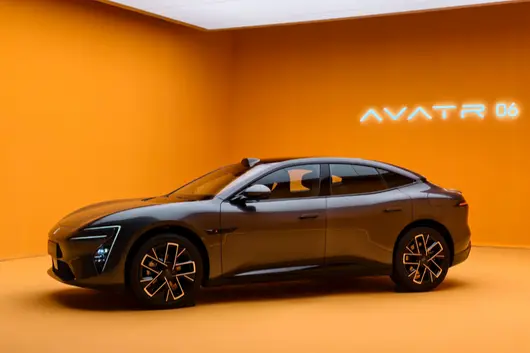
五月嘅車市銷量一出,幾家歡喜幾家愁。但長安汽車份 209,100 輛嘅成績單,仲係令唔少人心裡「咯噔」咗一下。唔係因為總量——畢竟長安體量一直擺喺嗰度,而係份成績單入面嘅「含金量」,透住一股與往常唔同嘅味道。
我哋需要將視線從嗰個被講爛咗嘅「內捲」國內市場暫時移開。長安今次最令我關注嘅,唔係新能源 5.8% 嘅增長,亦唔係啟源、深藍各自嘅表現,而係嗰組數據:海外交付 70,700 輛,按年增長 38%。將近三分之一嘅銷量來自海外,呢個比例,放喺整個中國汽車品牌入面,都係相當炸裂嘅存在。

要知道,就喺上個月,長安剛宣佈成為葡萄牙國家足球隊嘅全球官方合作夥伴。嗰陣好多人都以為,這不過係又一次體育營銷。但結合五月嘅海外銷量再看,你就會明白,呢係長安「海納百川」計劃 2.0 落咗嘅關鍵一子,佢背後嘅全球化思路已經非常清晰——唔係喺海外賣車,而係成為一個真正嘅全球品牌。
呢幾年,我去過唔少自主品牌嘅海外工廠,見過各種「出海」模式。有些就係將國內庫存車拉出去換個匯率攞錢,有些係真心實意地建渠道、做服務。長安屬於後者,而且係那種「紮硬寨,打呆仗」嘅類型。從東南亞開始,一步步將供應鏈、服務體系、品牌認知扎落去。今次葡萄牙國家隊嘅合作,更像係吹響咗進軍歐洲主流市場嘅號角。呢份從容同戰略定力,坦白講,喺好多急於求成嘅品牌身上睇唔到。

將海外市场做落去,有一個好容易忽視嘅好處:佢可以反哺國內嘅產品力。道理好簡單,要滿足全球唔同地區、唔同路況、唔同法規標準嘅需求,你嘅研發標準就必須「就高不就低」。
具體到產品上,呢種感覺會更明顯。比如長安嘅藍鯨動力,以前大家覺得「自製引擎」就係個噱頭。但你睇五月剛上市嘅 CS75PLUS 同逸動藍鯨超擎雙車,直接打出「上市搶購價 7.99 萬起」,同時喊出「油耗下降一半」。這唔係簡單嘅價格戰,呢係技術普及戰。能将一套成熟、高效嘅動力總成,用呢個價格打到市場上,考驗嘅係整個供應鏈同研發體系嘅整合能力。對於普通消費者嚟講,花更少嘅錢,得到更省油、更可靠嘅車,呢係實實在在嘅获得感。這比堆砌一啲你用唔到嘅智能化配置,要真誠得多。

說到智能化,長安最近的一個動作都係值到玩味。佢哋自研嘅「天樞」領航端到端技術要量產上車晒。好多媒體可能會去吹多少 TOPS 算力,多少個傳感器。但我更想講嘅係「端到端」呢三個字。呢種嘢過去係特斯拉、係華為這種頂流玩家炫耀嘅資本。長安唔聲唔響,將佢做咗成自己嘅「北斗天樞 2.0」計劃嘅核心。
我去過長安嘅軟件中心,睇過佢哋嘅路測數據。畀我嘅感覺係,傳統大廠一旦決心轉型,嗰種喺硬件、底盤、安全領域嘅積累,反而成咗佢哋喺智能化下半場嘅優勢。智能汽車,首先係一臺好開嘅車。長安嘅智駕方案,畀我嘅感覺係比較「穩」,佢唔像某些新勢力咁激進炫技,而係喺保證安全冗餘嘅前提下,一點點釋放功能。呢種「工程師思維」主導嘅智能化,可能少咗啲話題性,但對真正成日用車嘅用戶嚟講,更踏實。

當然,唔能只吹技術,我哋要睇下各個子品牌嘅表現。深藍汽車五月銷量 33,243 輛,按年增長 30%,1-5 月海外累計銷售更係暴增 167%。呢個數據很有意思。深藍其實承擔咗長安「年輕化」同「電動化」先鋒嘅角色。佢嘅設計語言、營銷方式,都更貼近當下嘅年輕消費者。而海外銷量嘅暴增,說明呢種設計審美同技術路線,係具備全球競爭力嘅。阿維塔五月交付 7,336 輛,雖然絕對數字唔算誇張,但佢嘅意義在於品牌向上,在於同華為呢種頂級科技公司嘅深度綁定,畀長安嘅技術儲備做咗最好嘅「信用背書」。

而長安啟源,五月交付 34,528 輛,大單品 Q05 一款車就賣咗 15,812 輛,甚至喺泰國上市三日訂單就破 3000。這說明什麼?說明長安嘅多品牌戰略,已經唔再係簡單咁將車造出嚟分開賣,而係真正搵到各自嘅細分市場同目標人群。啟源打嘅係家用、舒適、CP 值嘅「基本盤」,深藍攻嘅係個性同運動,阿維塔則守住高端同科技。呢套組合拳,比好多品牌「多生仔好打架」嘅粗放式打法,要精細得多。

最後,我哋仲係得回到「人」同「管理」上面。長安汽車呢幾年嘅轉型,之所以看起來「順」,好大程度上得益於管理層嘅戰略定力。從「香格里拉」新能源計劃,到「北斗天樞」智能化計劃,再到「海納百川」全球化計劃,呢三件事,隨便拎出一件都足夠一家车企忙活十年。長安係同時喺做,而且係實實在在地喺推進。
五年前,你同我講長安會成為一個全球化嘅科技企業,我可能會打個問號。但而家,看着這 20.9 萬輛嘅月銷,看着海外市場 38% 嘅增幅,看着藍鯨、天樞、啟源呢些名背後實實在在嘅產品落地,我覺得呢個問號可以拉直晒。對於消費者嚟講,呢啲宏大敘事最終會落喺一輛更省油嘅 CS75,一輛更好開嘅深藍,或者一輛更智能嘅阿維塔上。而呢,或許就係一家车企「戰略正確」嘅最好證明。

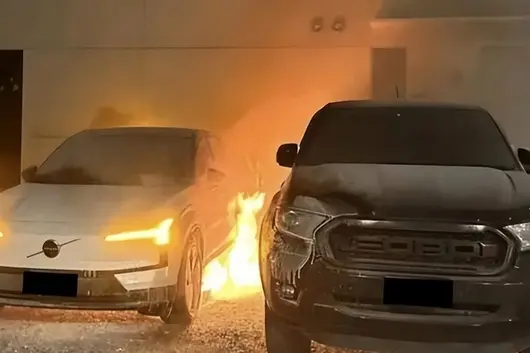
Two EX30 fire incidents directly exposed the true reality of the so-called "safest automobile brand".
The start of this crisis was on May 15, when an EX30 caught fire while charging at the owner's home, even spreading to the Ford Ranger pickup truck next door. It is reported that this is the second EX30 fire incident occurring in Thailand. Regarding this matter, the Thai Consumer Protection Committee also filed a civil lawsuit against Volvo Thailand.

Of course, Volvo also proposed a remedial plan: replacing the entire battery for 90% of affected vehicles, and replacing modules for only 10%, while the company provided users with charging vouchers worth 8,500 Thai Baht and substitute vehicle services. However, most car owners did not accept this, insisting on returning the car for a refund instead of replacing the battery.
Why was the attitude of Thai consumers so firm? Actually, the source of this controversy can be traced back to February this year, when Volvo had already announced a global recall of more than 40,000 EX30 vehicles to replace battery modules. The reason was that the high-voltage battery had defects that could cause the battery pack to overheat or even catch fire. But unexpectedly, the problem had already been discovered, yet the EX30 still had two fires, so Thai consumers naturally did not give in.

Reviewing the entire incident, the most glaring issue was not just the vehicle fire itself, but that Volvo knew there were safety hazards in the product but failed to solve the problem thoroughly from the root. This treatment method that addresses symptoms but not the cause is essentially indifference to consumer safety rights and directly tore apart Volvo's safety coat maintained for many years.
Perhaps some will defend Volvo: EV fires are an industry-wide ailment, and a car company cannot be heavily criticized. But the problem lies in the fact that Volvo's foundation is "absolute safety". When a car company writes "safety" into the brand name, prints it in every ad, and engraves it into every generation of consumers' cognition, becoming a core brand gene and the premium foundation supporting it above ordinary domestic brands, it must bear higher expectation standards than ordinary car companies.

We do not deny that in the era of fuel vehicles, Volvo built itself as the "safest car" in consumers' hearts; but in the era of electric vehicles, Volvo cannot even guarantee basic battery charging safety. This extreme contrast brings a reputation backlash that is far more fatal than ordinary quality control issues.
In addition, the EX30 fire also affected another brand.
As everyone in the industry knows, Volvo was fully acquired by Geely long ago. And this fire-exposed EX30 was not independently developed by Volvo. The whole vehicle was customized based on Geely's self-developed SEA pure electric architecture. Its core three-electric components such as battery pack, electronic control system, and drive motor are highly homologous with Zeekr X, so many people see it as a "rebadged Zeekr X".

Rebadged car manufacturing is not exactly a "sin", but the point of contradiction is that the SEA architecture, as Geely's exclusive premium pure electric platform, has focused on two major advantages of high safety and high adaptability since its birth. It is Geely's core competitive edge to break into the premium new energy market. Now, derivative models of the architecture have successively exposed battery fire hazards. Does this mean the platform's three-electric system has underlying design or quality control loopholes, rather than a single vehicle individual failure?
Anyway, given the current situation, this hazard not only dragged down Volvo's overseas market reputation, but also seriously stabbed Geely's development pain points. If this matter cannot be properly solved, then consumers in Southeast Asia will significantly reduce their trust in Volvo and even Geely, after all, once a crack is formed, it is very hard to repair.

As for consumers, the author has only one suggestion: Do not believe any marketing jargon like "hundred-year brand" or "safety benchmark". In the face of this new species of electric vehicles, all reputation accumulated in the era of fuel vehicles may be overturned instantly by a battery or a BMS system. Before buying a car, check who the battery supplier of this car is, check if there has been a recall history, these information, actually will be more useful.
Final Thoughts
In short, these two fire incidents in Thailand have sounded the alarm for consumers: safety in the era of electrification is no longer just about how thick the car body steel is; battery and thermal management systems being reliable and safe are also crucial. And in the era of electrification, when Volvo cannot even prevent charging spontaneous combustion, what does it have left?
"Images sourced from the internet, please contact us if there is infringement"

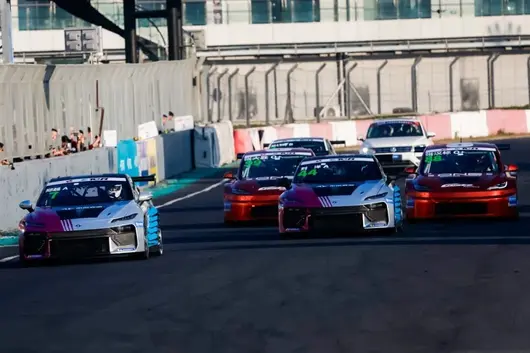
In 2026, the CTCC Electric Racing Cup & XRACING ETCR CUP will continue to contest the season, aiming to promote the standardized and professional development of Chinese electric motorsports. Currently, the preliminary calendar of the event has been officially revealed, spanning professional tracks across multiple domestic regions, linking with internationally renowned circuits, and starting a new journey of electric racing with a diverse track lineup.


From September 19 to 20, the event will kick off the season opener at Shanghai Tianma Race Circuit. As a classic circuit in the Yangtze River Delta, the compact and winding Tianma Race Circuit will comprehensively test the handling and tuning capabilities of ETCR racing cars.

Subsequently, the event will move to Ningbo International Circuit from October 10 to 11. This track, built along the mountains with complex and changeable corner combinations, will once again welcome the ultimate showdown of ETCR.

From October 24 to 25, the event will move to Hunan International Circuit, linking with CTCC and the FIA TCR World Tour on the same circuit, presenting a high-spec racing feast together.


From November 21 to 22, ETCR racing cars will appear in static display form during the Macau Grand Prix event, showcasing the development achievements of domestic electric motorsports to fans.

From December 12 to 13, the season finale will commence at Sepang International Circuit in Malaysia. As the only FIA Grade 1 certified track in Southeast Asia, the wide layout and high-speed sections of Sepang Circuit will add suspense to the birth of the annual champion, bringing the season to a perfect close.

Electric drive galloping, racing against the wind, the 2026 CTCC Electric Racing Cup & XRACING ETCR CUP curtain is about to rise. Stay tuned!


6 月 1 日,長安汽車公佈 5 月交付 209100 輛,當中海外交付 70700 輛,按年增長 38%,新能源交付 92400 輛,按年增長 5.8%。
旗下子品牌中,長安啟源 5 月交付 34528 輛,主打車型全新 Q05 交付 15812 輛,泰國上市三日訂單數突破 3000 輛;深藍汽車 5 月銷量 33243 輛,按年增長 30%,1 至 5 月海外累計銷售 28704 輛,按年增長 167%;阿維塔 5 月交付 7336 輛,阿維塔 07L 亮相工業和信息化部公告,將首批搭載華為乾崑 ADS 5;長安汽車(引力)5 月交付 48900 輛,CS75PLUS&逸動藍鯨超擎雙車上市交付,上市搶購價 7.99 萬起;長安凱程 5 月交付 21100 輛,新能源銷量按年增長 21%。
銷量穩步攀升嘅背後,係長安汽車三大戰略紮實推進。5 月,長安汽車重磅宣佈成為葡萄牙國家足球隊全球官方合作夥伴,全球化「海納百川」計劃 2.0 又落下一子;長安自研天樞領航端到端技術即將量產上車,智能化「北斗天樞 2.0」計劃再下一城;長安藍鯨超擎雙車開啟全國百城千店上市交付,新能源「香格里拉」計劃實現藍牌車油耗下降一半。

Tahun 2026 Piala Dunia Amerika Syarikat, Kanada dan Mexico, tinggal kurang dari setengah bulan lagi.
Sesuai kebiasaan, inti perbualan semua ialah sama ada Mbappe boleh mempertahankan gelaran, sama ada Messi masih bermain, atau siapa raja bola baharu. Tetapi jika anda sedikit mengalihkan pandangan dari padang, anda akan mendapati skuad pelakon sokong Piala Dunia kali ini mungkin yang paling luar biasa setakat ini.

Sumber gambar: Jawatankuasa Penganjur Piala Dunia
660 kenderaan rasmi yang ditetapkan, rangkaian Robotaxi merangkumi beberapa tempat pertandingan, 42 bas elektrik dari Shandong, China, robot humanoid Atlas, anjing robot empat kaki Spot.....
"Pelakon sokong" ini, semuanya adalah syarikat automotif.
Upaya panjang Hyundai-Kia selama 27 tahun, wang dibelanjakan, tetapi tidak berbaloiJika bercakap mengenai hubungan antara syarikat automotif dan Piala Dunia, Hyundai-Kia tidak dapat dielakkan.
Tahun 1999, Hyundai berpegang tangan dengan FIFA buat pertama kali. Piala Dunia 2002 Korea-Jepun, perbelanjaan kira-kira 15 bilion Euro untuk menewaskan penyokong rasmi, hasil tahun itu jualan pasaran AS meletup 40%, kesedaran jenama melonjak dari 32% ke 67%. Pengiraan ini terlalu cantik, sehingga Hyundai selama lebih dua puluh tahun kemudian tidak pernah memikirkan untuk keluar, kerjasama disambung sehingga tahun 2030.
Piala Dunia kali ini, Kia menyediakan 660 kenderaan rasmi yang ditetapkan, bertanggungjawab ke atas pengangkutan atlet dan pegawai. Industri automotif Korea menganggarkan, hanya dari pendedahan papan iklan di dalam stadium, nilai komersial terkumpul Hyundai Motor Group melebihi 10 trilion Won Korea.

Sumber gambar: Hyundai-Kia
Tetapi adakah sponzorship Piala Dunia benar-benar boleh ditukar menjadi jualan?
Pengalaman Hyundai sendiri, jawapan yang diberikan tidak pasti. Gelombang bonus tahun 2002 itu benar, tetapi kisah selepas itu tidak sehebat itu. Jualan Beijing Hyundai mencapai puncak 1.14 juta unit pada tahun 2016, selepas itu jatuh merosot. Pada tahun 2021 tinggal 382,000 unit, penurunan lebih daripada 66%, sekarang lagi tidak perlu disebutkan, jualan Hyundai-Kia Januari-April hanya lebih 30,000 unit, lebih rendah daripada penggiat baharu sebulan.
Pengeluaran besar dalam Piala Dunia tidak boleh menyelamatkan kemerosotan Hyundai-Kia di China. Menariknya, Hyundai nampaknya sedar akan masalah ini.
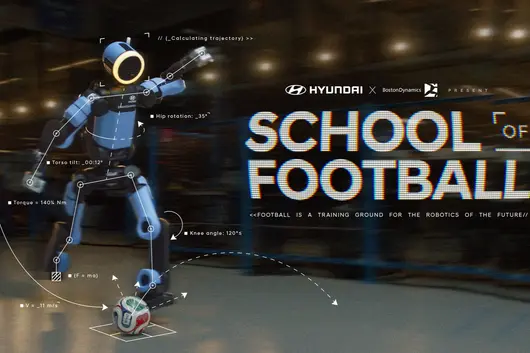
Piala Dunia 2026, Hyundai membuat penyesuaian penting: Membangunkan ruang sponzorship dari kenderaan konvensional ke pemanduan autonomi, robot dan teknologi perjalanan masa hadapan. Hyundai bekerjasama dengan Boston Dynamics di bawahnya, menubuhkan robot humanoid Atlas dan robot empat kaki Spot di venue yang ditetapkan, bertanggungjawab atas pengoperasian acara dan keselamatan.

Sumber gambar: Hyundai-Kia
Satu masalah yang agak memalukan ialah, Atlas dan Spot yang kelihatan sangat hebat di dalam padang pertandingan, adakah mereka infrastruktur pengoperasian acara, atau sekadar peragaan jenama yang kosnya sangat mahal?
Penilaian Dianche Tong (ID: dianchetong233) ialah kedua-duanya, tetapi condong kepada yang pertama.
Hyundai perlu menggunakan kolam trafik terbesar di dunia ini, Piala Dunia, untuk menghantar isyarat kepada pelabur dan pengguna: Kami telah bertukar menjadi "syarikat teknologi perjalanan masa hadapan". Robot Boston Dynamics adalah prop terbaik untuk menghantar isyarat ini. Mengenai sama ada mereka benar-benar boleh menjana pendapatan, itu urusan seterusnya.
Walau bagaimanapun, Piala Dunia kali ini memang merupakan masa yang baik untuk Hyundai. Pasaran Amerika Utara mewakili lebih daripada 20% jualan globalnya, ketiga-tiga negara Amerika Syarikat, Kanada dan Mexico mengadakan secara bersama, sama seperti melancarkan pelancaran di laman belakang rumah kepada 3.5 bilion penonton.
Larian jarak jauh 27 tahun, pada saat ini telah menemui arah naratif baharu.

Sumber gambar: Boston Dynamics
Syarikat automotif China tidak melibatkan sponzorship, Piala Dunia kali ini bermain "meminjam laluan"Hubungan pasukan bola sepak lelaki China dengan Piala Dunia tahun 2026, disimpulkan dengan satu perkataan — tiada. Tahun lepas, pasukan bola sepak lelaki China tewas kepada Indonesia dalam perlawanan persediaan Piala Dunia, tersingkir satu pusingan lebih awal. Penggemar bola sepak China sekali lagi tidak perlu mengira masa.
Tetapi hubungan syarikat automotif China dengan Piala Dunia kali ini amat rapat. Dan laluan yang diambil, sangat berbeza dengan Hyundai-Kia.
Yang paling ketara ialah Changan.

Sumber gambar: Changan Motor
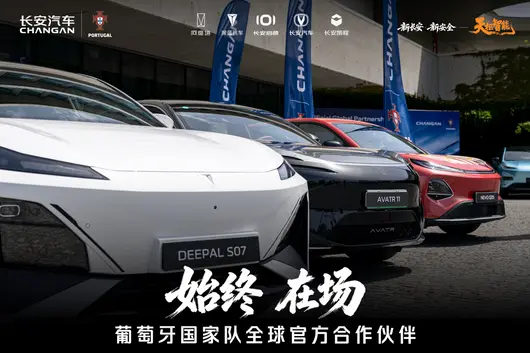
22 Mei, Changan menandatangani perjanjian dengan Persatuan Bola Sepak Portugal di Lisbon, menjadi rakan kongsi rasmi global pasukan kebangsaan Portugal. Kerjasama merangkumi Piala Dunia tahun 2026 dan 2030 serta kitaran Piala Dunia Wanita, pelaburan melebihi 500 juta Yuan.
Logik memilih Portugal amat bijak. Ini bukan sponzorship Piala Dunia yang umum, Changan tidak berebut tempat penyokong rasmi FIFA, tetapi mengikat tepat satu pasukan.
Pasukan ini mempunyai Cristiano Ronaldo. Lebih 1 bilion penggemar di seluruh dunia, 660 juta pengikut Instagram, dan pengagihan penggemar sangat sepadan dengan pasaran teras eksport Changan: Eropah, Asia Tenggara, Amerika Tengah dan Selatan, Timur Tengah dan Afrika. Fokus sumber untuk perkara besar.

Sumber gambar: Changan Motor
Menggunakan kelangkaan Piala Dunia terakhir Cristiano Ronaldo sebagai tuil, untuk mendesak突破 kesedaran jenama pasaran luar negara. Tindakan yang disertakan termasuk filem kerjasama "Bunyi Seperti Changan", penyerahan pertama di Eropah untuk Shenlan S05 di Itali, ujian jarak jauh di Eropah, dan aktiviti penghubung pengedarglobal。Setiap langkah betul, tetapi setiap langkah mempunyai ketidakpastian.
Perspektif tetap pengguna Eropah terhadap jenama automotif China tidak terbentuk dalam sehari, dan tidak akan musnah kerana satu pemasaran sukan. Pengeluar kereta Jepun dan Korea membuka pasaran Eropah dulu, bergantung kepada pengumpulan kualiti dan pengumpulan tempatan selama beberapa dekad. Changan ingin memendekkan proses ini dengan kerjasama 500 juta Yuan dengan satu pasukan, kesan memerlukan masa untuk disahkan.
Kes lain ialah Zhongtong Bus.
42 bas elektrik N12 dua sumber tanpa rel, dihantar dari Liaocheng, Shandong ke Mexico City, menanggung pengangkutan awam semasa Piala Dunia. Sama sekali berbeza dengan laluan pemasaran jenama Changan, Zhongtong mengambil pendekatan produk sebagai pemasaran. Kereta yang berjalan di Mexico City itu sendiri adalah papan iklan bergerak.

Sumber gambar: Zhongtong Bus
Tahun 2025, eksport automotif China ke Mexico 625,200 unit, Mexico buat kali pertama mengatasi Rusia menjadi negara destinasi utama eksport automotif China. Suku pertama tahun 2026, eksport automotif China 2.226 juta unit, meningkat 56.7% year-on-year, eksport kenderaan tenaga baharu 954,000 unit, meningkat lebih daripada 120%.
Munculnya bas elektrik Zhongtong di Mexico City juga merupakan ringkasan daripada pengacuan sistematik industri automotif China di pasaran Amerika Latin.
Bagaimana dengan BYD? Walaupun tidak menyokong Piala Dunia kali ini secara langsung, peta pemasaran sukan telah menjadi syarikat automotif China yang paling lengkap — Piala Eropah 2024, Piala Amerika 2024, Piala Eropah U21 2025, ditambah dengan kontrak sponzorship Persekutuan Bola Sepak China selama lima tahun bernilai 75 juta Yuan, hampir merangkumi semua IP bola sepak utama. Kini, eksport bulan April BYD melebihi 130,000 unit, terkumpul luar negara melebihi 450,000 unit.

Sumber gambar: BYD
BYD sekarang, tidak perlu lagi membelanjakan wang besar untuk merebut satu tempat logo di Piala Dunia.
Tiga laluan, satu persetujuan — syarikat automotif China keluar ke laut telah melangkah melalui fasa sama ada perlu terlibat dalam pemasaran global, masuk ke fasa bagaimana terlibat lebih pintar. Pengalaman pemasaran sukan yang dirumuskan Hyundai-Kia selama 27 tahun, syarikat automotif China sedang mengikuti dengan cepat menggunakan tempoh yang lebih pendek dan strategi yang lebih pelbagai.
Robotaxi dan Robot: Ujian Praktikal Paling MahalBanyak elemen pemanduan autonomi dan robot muncul dalam Piala Dunia kali ini.
Sebelum ini, mari bincangkan garis masa.
Januari tahun ini, keretapi swasaja Waymo terlanggar dan mencederakan seorang kanak-kanak berhampiran sebuah sekolah rendah di Santa Monica. Bulan yang sama, sebuah Waymo lain di Texas melaluinya sebuah bas sekolah yang berhenti dengan lampu amaran menyala, disiasat oleh Suruhanjaya Keselamatan Pengangkutan Negara AS (NTSB).
12 Mei, Waymo mengumumkan pemanggilan balik 3,791 unit Robotaxi — perisian pemanduan autonomi mempunyai kecacatan pengesan di jalan berlumpur, yang boleh menyebabkan kenderaan memasuki jalan yang terbenam air.
Tetapi pada bulan yang sama, Waymo telah mengembangkan kawasan perkhidmatan di Houston ke hampir 50 batu persegi, merangkumi Stadium NRG secara langsung — salah satu venue acara Piala Dunia tahun 2026.

Sumber gambar: Waymo
Satu pihak sedang memanggil balik, satu pihak sedang mengembang. Nampaknya bercanggah, tetapi percanggahan ini menunjukkan keadaan sebenar — komersialisasi Robotaxi sedang menghadapi fasa membetulkan sambil berlari. Tidak sempurna, tetapi pihak terlibat sudah tidak boleh menunggu ia sempurna.
Bukan hanya Waymo. Atlanta, Dallas, Los Angeles, Miami, beberapa bandar yang menganjurkan Piala Dunia telah membuka operasi atau ujian komersial Robotaxi. Tesla pada April melabur 573 unit kenderaan sekaligus di Dallas dan Houston untuk memulakan perkhidmatan tanpa pengawasan sepenuhnya, terus melompati fasa pegawai keselamatan — tetapi sehingga kini tidak mendedahkan data keselamatan 573 kenderaan ini.
Mengapakah syarikat-syarikat ini berebut untuk mengembang secara padat sebelum Piala Dunia?
Sebabnya mudah: Piala Dunia adalah ujian tekanan pendedahan global. Jutaan penggemar membanjiri bandar, permintaan pengangkutan meletup, tepat mengesahkan prestasi sistem pemanduan autonomi di bawah beban ekstrem. Kejayaan adalah iklan terbaik, jika ada masalah sekurang-kurangnya terdedah dalam senario sebenar — lebih bernilai daripada ujian tertutup.

Sumber gambar: Hyundai-Kia
Dan ada ciri umum — rangkaian Robotaxi ini tidak akan ditarik semula apabila Piala Dunia berakhir.
Kawasan perkhidmatan Waymo di Houston bukan ditetapkan sementara, ia adalah infrastruktur pengangkutan bandar kekal. 573 kenderaan Tesla di Dallas juga tidak akan berhenti selepas acara. Piala Dunia hanya satu nod, bukan destinasi akhir.
Kembali ke robot Boston Dynamics, mengapa Hyundai memasukkan mereka ke padang pertandingan?
Because robot adalah aset visual paling langka dalam naratif industri automotif semasa. Pemanduan autonomi sukar disedari oleh mata kasar — anda duduk dalam Waymo, pengalaman hampir sama dengan menaiki Uber. Tetapi robot humanoid setinggi 2 meter mengawal kawasan laluan dalam padang, impak visualnya sangat berbeza.
Hyundai memerlukan imej yang dapat diingati dalam sekali pandang ini.

Sumber gambar: Boston Dynamics
Angkanya yang diberikan oleh Hyundai sendiri ialah: Rancangan untuk menubuhkan 25,000 unit Atlas di dalam loji pada tahun 2028. Jika rancangan ini berjaya dilaksanakan, beberapa unit di Piala Dunia adalah pengesahan berskala kecil. Jika tidak boleh dilaksanakan, maka ia adalah prop pemasaran tulen.
Setakat ini, kedua-dua kemungkinan wujud.
Berlegar setelah wisel akhirMembentuk peta automotif Piala Dunia kali ini, beberapa garis sangat jelas.
Hyundai-Kia menggunakan hubungan FIFA yang dikumpul selama 27 tahun, mengemaskini ruang sponzorship dari menempel logo ke memaparkan teknologi. Tetapi berapa banyak manfaat sebenar yang boleh dibawa oleh sponzorship Piala Dunia, bahkan Hyundai sendiri mungkin tidak dapat menjelaskan — kegagalan mereka di pasaran China adalah peringatan.
Sebaliknya, syarikat automotif China memilih laluan melengkung yang lebih pintar — Changan mengikat pasukan Portugal untuk jenama, Zhongtong membuat produk di Mexico City, BYD menggunakan liputan pelbagai IP untuk sistem. Tiga laluan berbeza, tetapi semuanya menjawab: bagaimana membuat pengguna luar negara mempercayai kereta China.
Sementara Robotaxi dan robot adalah elemen paling segar dalam Piala Dunia kali ini, juga yang paling berisiko. Waymo memanggil balik sambil mengembang, kos robot Boston Dynamics kekal tinggi — mereka masih jauh dari infrastruktur yang benar-benar boleh dipercayai, tetapi syarikat automotif sudah tidak boleh menunggu.
© 2024 Bitauto.com. All Rights Reserved.
Bitauto (www.yiche.com and www.bitauto.com) is one of the most visited automotive websites in China. We provide detailed info on Chinese car brands available in your area. Please note that the information provided on this website is based on publicly available data and is for reference only. It may not be fully updated or accurate at all times.

Help us improve our website


