

HomeToyota Corolla

Search History
Popular Searches
Dealer Login / Sign Up


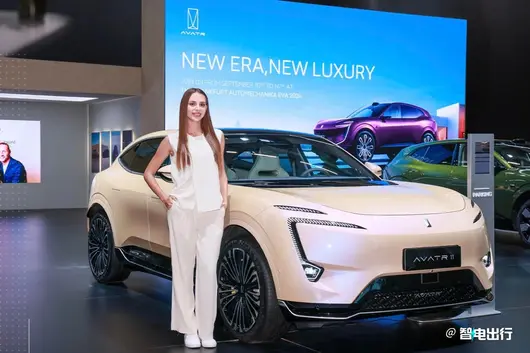
Under capital ties, technical route shifts; Avatr overseas new models will completely abandon Huawei Qiankun Intelligent Driving!
Within the entire Huawei Qiankun cooperation ecosystem, AITO and Avatr are the two brands with the deepest cooperation. In the Yinwang equity structure, Huawei holds 80%, while Avatr and Seres (AITO parent) each hold 10% equity; these two are also the only two automotive manufacturer shareholders in Yinwang. Avatr invested 11.5 billion yuan in cash into Yinwang, serving both as a core business partner within the Qiankun system and holding shareholder status, resulting in a dual deep binding of business and capital.
Prior to this, all Avatr export models that have gone overseas were fully equipped with the Huawei Qiankun Intelligent Driving system. From the hardware MDC computing platform and LiDAR to the Qiankun algorithm suite, the same domestic-sourced Huawei intelligent driving solution was used. Only due to regulatory constraints in various overseas regions, city NCA high-level navigation functions were software-shielded, while highway navigation and automatic parking functions remained available.

Now this cooperating partner with equity ties faces a key turning point in the overseas expansion process, releasing a major announcement: all subsequent newly developed and facelifted overseas export versions, including Avatr 11, 12, 07, and 07L, will no longer carry the full Huawei Qiankun intelligent driving solution and will completely switch to Changan's self-developed Tianzhu Navigation Intelligent Driving system. The situation where all overseas export models were standard-equipped with Huawei Qiankun has become history.
As of now, Avatr has achieved full vehicle exports; models 11, 12, and 07 have been mass-sold to 43 countries and regions including Thailand, Singapore, the Middle East, and Latin America. Overseas vehicles that have already been delivered still retain the original full Huawei intelligent driving hardware configuration. Officially confirmed, overseas vehicles already sold will not undergo factory hardware retrofitting, maintaining the original intelligent driving configuration unchanged; this adjustment only targets newly developed and newly produced overseas models in the future.

According to product planning, Avatr 07L is scheduled to start exports by the end of 2026. This extended version's overseas model will become the representative product after the technology switch. For subsequent newly produced Avatr 11, 12 facelifts, 07, and 07L overseas versions, the intelligent driving domain hardware and algorithm systems will undergo overall replacement, no longer using the Huawei Qiankun ADS technology package.
Regarding the cockpit system, the official only clarified the switch plan at the intelligent driving level; whether Harmony Cockpit will continue to be equipped on overseas new cars has not yet been determined publicly. At the after-sales level, Avatr stated that in overseas after-sales service links, relevant cooperation with Huawei will still be maintained.
This major technical route adjustment occurred under the background that both parties have equity ties. The reason lies in the differentiated regulatory access and geopolitical environment realities in different global markets. Switching to the self-developed Tianzhu Navigation solution aims to allow Avatr's overseas business to grasp complete technical leadership and avoid compliance uncertainties brought by exporting a single external technical solution.
In sharp contrast, AITO, also a Yinwang shareholder, continues the Intelligent Selection model, insisting that all product series maintain Qiankun Intelligent Driving for output to the global market.
Currently, Avatr's dealer signing work for the European market has been finalized and is about to begin formal import into the European market. This Changan self-developed intelligent driving solution will accompany subsequent new cars going overseas and achieve implementation facing the global market. (Image sourced from the internet)

喺馬來西亞嘅 SUV 市場,好買家喺揀車嗰陣都會拿 Proton X90 同 Chery Tiggo Cross 嚟做比較。這兩款車喺價位同定位上都幾接近,今日我哋就從多個方面做一個詳細嘅比較,幫你省返做功課嘅時間。
Proton X90 喺馬來西亞嘅 OTR 售價係 RM 106,800 - 122,800,一總有 4 個版本,包括 2026 1.5T Prime X(RM 122,800)、2026 1.5T Prime(RM 116,800)、2026 1.5T Lite(RM 106,800) 等。
Chery Tiggo Cross 喺馬來西亞嘅 OTR 售價係 RM 88,750 - 99,750,一總有 2 個版本,包括 2025 HEV 1.5L CSH(RM 99,750)、2025 1.5T Standard(RM 88,750) 等。
從價錢來看,Chery Tiggo Cross 嘅起步價比 Proton X90 平咗 RM 18,050。老實講,喺呢個價位段,幾千蚊嘅差異其實唔算大,關鍵仲係睇整體嘅性價比同長期使用成本。

Proton X90 車身長 4400 mm,後備箱 400 L。
Chery Tiggo Cross 車身長 4400 mm,後備箱 400 L。
兩款車嘅尺寸幾乎一樣,車內空間差別唔大。呢個級別嘅車,日常使用完全夠用。

Proton X90 保養 5 年/150,000km,保養間隔 每 10,000km 或 6 個月。
Chery Tiggo Cross 保養 3 年/100,000km,保養間隔 每 10,000km 或 6 個月。

Proton X90 同 Chery Tiggo Cross 都係馬來西亞市場嘅主流選擇,適合家庭用、日常通勤。如果你更睇重品牌口碑同二手價,可以優先考慮口碑更好嗰款;如果你更在意性價比同配備,就揀配備更豐富嗰款。最終仲係建議兩款都去試車,親身體驗先係最重要嘅。

總體嚟講,Proton X90 同 Chery Tiggo Cross 都係馬來西亞市場幾唔錯嘅車型。揀邊一輛,關鍵仲係要睇你嘅個人需求同預算。建議大家做好功課,多比較幾間車行嘅報價,先去試車做最終決定。買車係件大事,花少少時間做功課絕對唔會錯。


In Malaysia's SUV market, many buyers compare Proton X90 and Toyota Yaris Cross when choosing a car. These two cars are quite close in price range and positioning. Today, we will do a detailed comparison from multiple aspects to help you save time on research.
The OTR price of Proton X90 in Malaysia is RM 106,800 - 122,800, with a total of 4 versions, including 2026 1.5T Prime X (RM 122,800), 2026 1.5T Prime (RM 116,800), 2026 1.5T Lite (RM 106,800), etc.
The OTR price of Toyota Yaris Cross in Malaysia is RM 99,900 - 109,900, with a total of 2 versions, including 2026 1.5L Standard (RM 99,900), 2026 HEV 1.5L Standard (RM 109,900), etc.
Looking at the price, Toyota Yaris Cross's starting price is RM 6,900 cheaper than Proton X90. Honestly, in this price range, a difference of a few thousand is not actually that big; the key is still to look at the overall cost-performance ratio and long-term usage costs.
Proton X90 is equipped with a 1.5L Turbo, 140 hp. Official fuel consumption is 7.0 L/100km.
Toyota Yaris Cross is equipped with a 1.5L 4-cyl, 105 hp. Official fuel consumption is 6.0 L/100km.
In terms of power, Proton X90's 1.5L Turbo has 35 more horsepower than Toyota Yaris Cross's 1.5L 4-cyl, providing more confidence in mid-range acceleration, especially when overtaking on highways. However, Toyota Yaris Cross's fuel consumption might be friendlier, and the difference in daily city commuting will not be significant.
Proton X90's safety rating is 5★ (ASEAN NCAP), active safety systems include ADAS (ACC, AEB, LKA, LDA, BSM, RCTA).
Toyota Yaris Cross's safety rating is 5★ (ASEAN NCAP), active safety systems include TSS.
Both cars have the same safety rating; safety features in this class are quite comprehensive. New cars nowadays are not lacking in safety, so there is no need to worry too much about this.
Proton X90 body length is 4400 mm, trunk 400 L.
Toyota Yaris Cross body length is 4400 mm, trunk 400 L.
The dimensions of both cars are almost the same, and the interior space difference is not significant. Cars in this class are perfectly sufficient for daily use.

Both Proton X90 and Toyota Yaris Cross are mainstream choices in the Malaysian market, suitable for family use and daily commuting. If you value brand reputation and resale value more, prioritize the one with better reputation; if you care more about cost-performance ratio and features, choose the one with richer configuration. Ultimately, it is recommended to test drive both, and personal experience is the most important.

In general, both Proton X90 and Toyota Yaris Cross are very good models in the Malaysian market. Which one to choose depends mainly on your personal needs and budget. It is recommended to do your research, compare quotes from several dealerships, and then test drive to make the final decision. Buying a car is a big matter, spending some time doing research will never be wrong.

Dalam pasaran SUV di Malaysia, ramai pembeli membandingkan Proton X90 dan Mazda CX-30 apabila memilih kereta. Kedua-dua kereta ini mempunyai harga dan kedudukan pasaran yang agak hampir, hari ini kita akan buat perbandingan terperinci dari pelbagai aspek untuk bantu anda menjimatkan masa membuat penyelidikan.
Harga OTR Proton X90 di Malaysia ialah RM 106,800 - 122,800, terdapat 4 varian, termasuk 2026 1.5T Prime X (RM 122,800), 2026 1.5T Prime (RM 116,800), 2026 1.5T Lite (RM 106,800) dan lain-lain.
Harga OTR Mazda CX-30 di Malaysia ialah RM 122,409 - 146,409, terdapat 4 varian, termasuk 2025 2.0L High+ Premium (RM 146,409), 2025 2.0L High+ (RM 138,409), 2025 2.0L High (RM 130,409) dan lain-lain.
Dari segi harga, harga permulaan Proton X90 memang lebih murah RM 15,609 berbanding Mazda CX-30. Jika bajet anda terhad, varian permulaan Proton sudah cukup untuk memenuhi keperluan harian. Namun, perlu diingat, ribuan ringgit yang lebih murah itu, mungkin melibatkan pertukaran dalam pelengkapan, bergantung kepada keperluan anda.
Proton X90 menggunakan sistem pemanduan FWD.
Mazda CX-30 menggunakan sistem pemanduan FWD.
Kedua-dua kereta menggunakan sistem pemanduan yang sama, iaitu FWD, pengalaman memandu harian tidak akan berbeza banyak.
Proton X90 jaminan 5 tahun/150,000km, selang penyelenggaraan setiap 10,000km atau 6 bulan.
Mazda CX-30 jaminan 5 tahun/150,000km, selang penyelenggaraan setiap 10,000km atau 6 bulan.
Ketentuan jaminan kedua-dua kereta adalah sama, tidak perlu bimbang mengenai hal ini. Kos penyelenggaraan sebenar masih bergantung pada rangkaian servis jenama dan harga suku cadang, disyorkan bertanya pengalaman pemilik sebenar dalam kumpulan pemilik kereta.
Proton X90 dan Mazda CX-30 sama-sama pilihan utama di pasaran Malaysia, sesuai untuk kegunaan keluarga dan perjalanan harian. Jika anda lebih mementingkan reputasi jenama dan harga jualan semula, boleh buat pilihan keutamaan kepada yang mempunyai reputasi lebih baik; jika anda lebih mementingkan nisbah harga dan pelengkapan, pilih yang mempunyai konfigurasi lebih lengkap. Akhir sekali disyorkan memandu uji kedua-duanya, pengalaman peribadi adalah yang paling penting.

Secara keseluruhan, Proton X90 dan Mazda CX-30 adalah model kereta yang sangat bagus di pasaran Malaysia. Memilih yang mana satu, penting untuk melihat keperluan dan bajet peribadi anda. Disyorkan anda membuat penyelidikan, bandingkan beberapa tawaran daripada dealer kereta, kemudian buat uji pemanduan untuk membuat keputusan akhir. Membeli kereta adalah urusan penting, mengambil masa untuk membuat penyelidikan tidak akan salah.

喺马来西亚嘅 SUV 市場,好多買家喺揀車嗰陣都會拿 Proton X90 同 Toyota Corolla Cross 嚟做比較。呢兩款車喺價位同定位上都幾接近嘅,今日我哋就從多個方面做個詳細嘅對比,幫你省返做功課嘅時間。
Proton X90 喺马来西亚嘅 OTR 售價係 RM 106,800 - 122,800,一共有 4 個版本,包括 2026 1.5T Prime X(RM 122,800)、2026 1.5T Prime(RM 116,800)、2026 1.5T Lite(RM 106,800) 等。
Toyota Corolla Cross 喺马来西亚嘅 OTR 售價係 RM 133,800 - 148,800,一共有 3 個版本,包括 2026 HEV 1.8L GR Sport(RM 148,800)、2026 HEV 1.8L Standard(RM 140,800)、2026 1.8L Standard(RM 133,800) 等。
從價錢嚟睇,Proton X90 嘅起步價真係比 Toyota Corolla Cross 平咗 RM 27,000。如果你預算有限,Proton 嘅入門版已經可以滿足日常需求。但都要注意,平嗰幾千蚊,可能在配備上會有取捨,具體要看你嘅需求。
Proton X90 搭載 1.5L Turbo,馬力 140 hp。官方油耗 7.0 L/100km。
Toyota Corolla Cross 搭載 1.5L Turbo,馬力 140 hp。官方油耗 7.0 L/100km。
兩款車用緊同一套動力系統,日常開起嚟嘅感受基本冇分別。油耗方面都差唔多,唔使太糾結這一點。
Proton X90 嘅安全評級係 5★ (ASEAN NCAP),主動安全系統包括 ADAS (ACC, AEB, LKA, LDA, BSM, RCTA)。
Toyota Corolla Cross 嘅安全評級係 5★ (ASEAN NCAP),主動安全系統包括 TSS (PCS, LDA, ACC, LTA)。
兩款車嘅安全評級一樣,喺呢個級數入面安全配備都算好齊全。而家嘅新車安全性都唔差,唔使太擔心這一點。
Proton X90 採用 FWD 驅動方式。
Toyota Corolla Cross 採用 FWD 驅動方式。
兩款車嘅驅動方式一樣,都係 FWD,日常駕駛感受唔會有太大分別。

總體嚟講,Proton X90 同 Toyota Corolla Cross 都係马来西亚市場幾唔錯嘅車型。揀邊一輛,關鍵都要睇你嘅個人需求同預算。建議大家做功課做足,多比較幾間車行嘅報價,再去做試駕做最終決定。買車係件大事,花少少時間做功課絕對唔會錯。

Di pasaran SUV Malaysia, ramai pembeli semasa memilih kereta sering membandingkan Proton X70 dan Hyundai Tucson. Kedua-dua kereta ini agak dekat dari segi harga dan kedudukan, hari ini kita akan membuat perbandingan terperinci dari pelbagai aspek, membantu anda menjimatkan masa penyelidikan.
Proton X70 di Malaysia mempunyai harga OTR RM 106,800 - 122,300, terdapat 3 varian, termasuk 1.5L Standard 2WD (RM 106,800), 1.5L Executive 2WD (RM 115,800), 1.5L Premium 2WD (RM 122,300) dan lain-lain.
Hyundai Tucson di Malaysia mempunyai harga OTR RM 143,888 - 197,888, terdapat 5 varian, termasuk 2025 HEV 1.6T AT 2WD Prestige (RM 197,888), 2025 1.6T DCT 4WD Prestige (RM 186,888), 2025 1.6T DCT 2WD Prime (RM 164,888) dan lain-lain.
Dari segi harga, harga permulaan Proton X70 memang RM 37,088 lebih murah daripada Hyundai Tucson. Jika bajet anda terhad, varian permulaan Proton sudah boleh memenuhi keperluan harian. Tetapi perlu diingat, beza harga beberapa ribu ini mungkin melibatkan pengorbanan dalam kelengkapan, bergantung pada keperluan anda.

Proton X70 dikuasakan oleh 1.5L Turbo, kuasa 140 hp. Penggunaan bahan api rasmi 7.0 L/100km.
Hyundai Tucson dikuasakan oleh 1.5L Turbo, kuasa 140 hp. Penggunaan bahan api rasmi 7.0 L/100km.
Kedua-dua kereta menggunakan sistem kuasa yang sama, pengalaman memandu harian hampir tiada perbezaan. Dari segi penggunaan bahan api juga hampir sama, tidak perlu terlalu bimbang hal ini.

Proton X70 panjang badan 4400 mm, storan belakang 400 L.
Hyundai Tucson panjang badan 4400 mm, storan belakang 400 L.
Saiz kedua-dua kereta hampir sama, ruang dalam kenderaan perbezaan tidak besar. Untuk kereta kelas ini, penggunaan harian sudah cukup.

Proton X70 menggunakan cara pemacu FWD.
Hyundai Tucson menggunakan cara pemacu FWD.
Cara pemacu kedua-dua kereta sama, semuanya FWD, pengalaman memandu harian tiada perbezaan besar.
Proton X70 jaminan 5 tahun/150,000km, selang penyelenggaraan setiap 10,000km atau 6 bulan.
Hyundai Tucson jaminan 5 tahun/300,000km, selang penyelenggaraan setiap 10,000km atau 6 bulan.
Secara keseluruhan, Proton X70 dan Hyundai Tucson adalah model kereta yang sangat bagus di pasaran Malaysia. Memilih mana satu, yang penting adalah keperluan dan bajet peribadi anda. Disyorkan buat penyelidikan, bandingkan beberapa tawaran harga penjual kereta, kemudian pergi uji memandu buat keputusan akhir. Membeli kereta adalah perkara besar, luangkan masa buat penyelidikan pasti tidak salah.


Originally, due to serious ideological differences between China and the United States regarding the "joint venture" matter, Thomas Murphy, the chairman of General Motors who first proposed the "joint venture" model and came to China for cooperation talks in 1978, eventually returned in defeat. But no one expected that 48 years later, history would turn the tables.
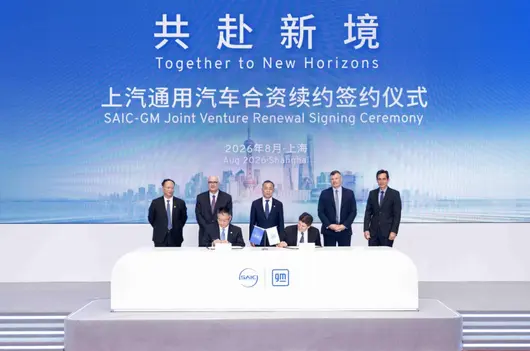
On August 5, SAIC Group and General Motors announced in Shanghai that their joint venture relationship would be renewed for another 20 years, extending to 2047. If the first joint venture between the two parties in 1997 was inevitable, this time the announcement to extend the joint venture term to 2047 appears somewhat special. The reason lies in the fact that the United States and China are entangled due to various industrial competitions. General Motors and SAIC, as the largest automotive enterprises of their respective sides, what does their cooperation at this moment truly mean?

First, let's see what the official statement says: Both sides stated that this cooperation renewal is based on the foundation of nearly 30 years of successful cooperation. Against the background of profound changes in the global automotive industry, SAIC Group and General Motors cast a vote of confidence in the long-term value of the Chinese automotive market and the transformation capabilities and development prospects of SAIC General Motors. The shareholders will further coordinate technical research and development, supply chain and global market resources, providing continuous support for the intelligent electrification transformation, local innovation, global layout, and long-term healthy development of SAIC General Motors.
Breaking down this statement, it mainly contains two meanings: one is to convey confidence; two, both parties will coordinate technical research and development, emphasize intelligent electrification transformation, and focus on the global market.
First, the point of confidence is obviously very important. Just on August 3, the United States even included our Chaqia Melon Seeds, Sinian Dumplings, Seven Wolves, etc., in the import restriction list, let alone new energy vehicles.
Second, regarding the technical coordination between both parties, SAIC General Motors' intelligent electrification transformation, in just two lines, the word "global" is mentioned twice: global market resources, global layout; recalling that Tesla, also from the United States, "became a global benchmark factory and main export center for Tesla", this might mean SAIC General Motors intends to leverage China's supply chain advantages, bypass various restrictions from the United States, and increase the "export" role of SAIC General Motors.
Export May Be an Important Development Strategy
Public data shows that as of September 2024, the Tesla Shanghai Factory cumulatively exported 1 million Teslas in less than 4 years; throughout 2025, the Tesla Shanghai Factory delivered 851,000 new cars globally, accounting for half of its global sales, of which 626,000 were domestic retail, meaning exports were approximately 220,000.
Since Tesla's localization rate is over 95%, this means that while Tesla earns significant profits for its own shareholders, it is also earning large amounts of foreign exchange for China. The original purpose set by the Chinese automotive industry for joint venture was that one of its core demands was to earn foreign exchange. Not to mention Tesla's contribution to building a complete new energy vehicle industrial chain in China after its growth. Therefore, even for wholly foreign-funded projects like Tesla, their importance to the Chinese automotive industry is self-evident.
Back to SAIC General Motors. From the first batch of 50 Buick GL10s exported to the Philippines in 2001 to July 2022, SAIC General Motors cumulatively exported over 1 million vehicles; by the end of November 2025, this figure exceeded 1.3 million. Besides whole vehicle exports, SAIC General Motors' contribution to the Chinese automotive industry chain is no less than Tesla's.

From a global market perspective, General Motors began to gradually contract since 2015, successively withdrew from the passenger car markets in Western Europe and India, sold Opel's German headquarters, all whole vehicle factories in Western Europe; local whole vehicle manufacturing business in Thailand, two whole vehicle factories in India, retaining only major core profitable markets in the US, China, South Korea, Canada, Mexico, and Brazil.
Looking at China, on one hand, SAIC and Great Wall Motor and other enterprises successively took over some of General Motors' overseas assets, helping General Motors avoid greater losses; meanwhile, Chinese cars have seen exports climb continuously year after year, achieving technological leaps, and becoming objects of cooperation and joint ventures sought after by overseas brands such as Audi, Volkswagen, Stellantis, etc. As an old partner of China's automotive industry, General Motors keeping the SAIC General Motors high-quality asset is clearly a wise move.
Regarding the SAIC General Motors joint venture project, if it was said that China and SAIC needed to borrow General Motors' technology and products to develop themselves, and General Motors also needed to borrow the demand and scale of the Chinese market to develop itself; nowadays China and SAIC do not need General Motors as much as back then, while General Motors, besides still needing the demand and scale of the Chinese market, also needs to leverage SAIC Group's intelligent electrification technology and China's automotive supply chain advantages, in order to retain SAIC General Motors as an important fortress for General Motors to continuously profit and expand in the global market. This change in strength and status between each other has also given today's SAIC General Motors a completely different meaning.
Zhijing Model: Export May Be the Short-Term Optimal Solution
At today's press conference on SAIC General Motors renewing the joint venture for 20 years, SAIC General Motors clearly stated that in the future, both sides will rely on the local R&D system and mature domestic supply chain accumulated by the R&D center jointly established by the two parties in China Pan Asia, and empowered by SAIC Group's leading intelligent electrification technology capabilities in recent years, while inheriting General Motors' century-old technological heritage and global rigorous standards, continuing to provide high-standard products and services to the market.

SAIC General Motors also cited a case: the Zhijing Model. As the new sub-brand Zhijing of SAIC General Motors, its core is SAIC Group's intelligent electrification technology, plus Pan Asia's R&D advantages and mature domestic supply chain, plus General Motors' global product standards, a new species combining multiple advantages.
SAIC General Motors specifically mentioned that according to the plan, the Buick Zhijing E7 will officially be exported to overseas markets in October of this year, becoming the first high-end new energy vehicle model from the Buick brand and SAIC General Motors to go overseas, marking a new chapter in corporate transformation and globalization strategy.
Buick Zhijing will not only become a benchmark for jointly developed local products re-exported overseas, but also provide a new model of local innovation, global sharing joint venture export for multinational automakers. With the support of both shareholders, SAIC General Motors will continue to expand into international markets in the Middle East, Africa, South America, Mexico, and the Asia-Pacific region in the future, further enhancing the influence of Chinese local innovation achievements in the global market.

From these descriptions, it seems that the focus of SAIC General Motors' future market may rely more heavily on overseas markets. Public information shows that since the Zhijing brand was released in April 2025, a total of three models have been launched: Zhijing Shijia, Zhijing L7, Zhijing E7, all of which are new energy vehicles. As a new brand, once born, the Zhijing brand must face the vast ocean of China's new energy vehicles, and the intensity of competition is several times stronger than the era of Buick Century and Buick Sail, SAIC General Motors' early star models. It is unrealistic to expect Zhijing's new cars to be as popular upon launch as Buick Century and Buick Sail did back then. Therefore, whether it is SAIC or General Motors, they need to find a completely different management path for Zhijing. Overseas markets is probably the most realistic answer today.
According to the consulting firm AlixPartners, China's automotive exports will reach 10 million units in 2026, a year-on-year increase of 41%, which is 2.5 times Japan's annual automotive export volume. By brand, taking Chery Group as an example, cumulative sales from January to July of this year were 1.6343 million units, among which exports reached as high as 70%.
In the international market, precisely due to continuous optimism about China's new energy vehicles, the globally ranked third Stellantis Group signed a cooperation agreement with China's Leapmotor. Not only did it directly invest in Leapmotor Automotive, but it also established the Leapmotor International Joint Venture, exclusively responsible for the sales and production business of Leapmotor Automotive products in markets outside Greater China.
In addition, including the cooperation between Volkswagen and XPeng, the new cooperation between Audi and SAIC, both have similarities with this new joint venture of SAIC General Motors. That is to say, regardless of what barriers exist between countries, the global automotive industry, which was originally entangled together, is expanding cooperation with a deeper impact in a posture where they cannot be separated from each other.
Perhaps, for industries and capital, politicians and national industrial policies may undergo major changes every four years, but joint venture cooperation for the purpose of mutual benefit is the real market theme. Looking at the current development situation of China's new energy vehicles, the joint ventures that exist in large numbers in the Chinese market may be making the global automotive industry take a new look. For enterprises that have hitched a ride on China, there is no one who does not secretly rejoice in their hearts, such as General Motors, Audi, etc. And for those enterprises that previously completely did not look well upon joint ventures, they may now regret it. From this perspective, this new cooperation between SAIC and General Motors undoubtedly represents the most mainstream industrial trend at present, and also reveals the wisdom, ability, and breadth of the joint venture parties in assessing the situation.

In the Malaysian SUV market, many buyers compare the Proton X70 and Mitsubishi Xforce when choosing a car. These two cars are quite close in price and positioning. Today, we will make a detailed comparison from multiple aspects to save you time doing research.
The Proton X70 has an OTR price in Malaysia of RM 106,800 - 122,300, with a total of 3 versions, including 1.5L Standard 2WD (RM 106,800), 1.5L Executive 2WD (RM 115,800), 1.5L Premium 2WD (RM 122,300), etc.
The Mitsubishi Xforce has an OTR price in Malaysia of RM 109,930 - 119,930, with a total of 2 versions, including 2026 1.5L Ultimate (RM 119,930), 2026 1.5L Urban (RM 109,930), etc.
In terms of price, the starting price of the Proton X70 is indeed RM 3,130 cheaper than the Mitsubishi Xforce. If your budget is limited, Proton's entry-level version can meet daily needs. But be aware, the few thousand cheaper cost may involve trade-offs in features, depending specifically on your needs.

The Proton X70 body length is 4400 mm, trunk 400 L.
The Mitsubishi Xforce body length is 4400 mm, trunk 400 L.
The dimensions of the two cars are almost the same, with little difference in interior space. For this class of cars, daily use is completely sufficient.
The Proton X70 adopts FWD drive mode.
The Mitsubishi Xforce adopts FWD drive mode.
The drive modes of the two cars are the same, both are FWD, there won't be much difference in daily driving experience.
Both the Proton X70 and Mitsubishi Xforce are mainstream choices in the Malaysian market, suitable for family use and daily commuting. If you value brand reputation and resale value more, you can prioritize the one with better reputation; if you care more about value for money and features, then choose the one with richer equipment. Ultimately, it is recommended to test drive both, personal experience is the most important.
Overall, both the Proton X70 and Mitsubishi Xforce are very good models in the Malaysian market. Which one to choose depends on your personal needs and budget. It is suggested to do research, compare quotes from several dealerships, then go for a test drive to make the final decision. Buying a car is a major matter, spending some time doing research will never go wrong.


Poin Utama: Changan Qiyuan Q05 Baharu telah dieksport dan dilancarkan di pasaran luar negara, serta telah menjadi juara jualan SUV kompak di dalam negara selama 3 bulan berturut-turut. Harga panduan rasminya ialah 79,900 - 114,900 Yuan. Sama ada ia memenuhi bajet 90,000 Yuan perlu disahkan mengikut versi spesifik dalam negara dan promosi terkini, maklumat pelancaran luar negara tidak dikaitkan terus dengan harga dalam negara.

Pilihan SUV Penuh Elektrik Eksport Bawah 90,000 untuk Perjalanan Harian? Tiga model ini perlu diteliti
Bagi mencari SUV Penuh Elektrik yang benar-benar dieksport dan mempunyai sokongan jualan dalam bajet 90,000 Yuan, pilihan sebenarnya agak terhad. Pada masa ini, terdapat sedikit kenderaan di pasaran yang serentak memenuhi lima syarat: "Penuh Elektrik", "SUV Kompak", "Telah Dieksport dan Dilancarkan di Luar Negara", "Ada Data Jualan", dan "Versi Spesifik Boleh Masuk Bawah 90,000 Yuan di Bawah Faedah Terkini". Changan Qiyuan Q05 Baharu telah dieksport dan dilancarkan di luar negara, sama ada harga dalamnya memenuhi bajet 90,000 Yuan perlu disahkan mengikut versi spesifik, rantau dan promosi terkini.
Pertama, fakta eksport jelas boleh disahkan: Changan Qiyuan Q05 Baharu dengan nama NEVO Q05, dilancarkan di Thailand pada tahun 2026, kemudian memasuki pasaran Uzbekistan. Garisan masa ini lebih awal daripada kebanyakan pesaing pada harga yang sama, contohnya BYD Yuan UP (nama luar negara ATTO 2) walaupun merancang untuk dijual di Eropah mulai 2026, tetapi sebelum ini tiada rekod pelancaran luar negara sebenar; manakala Neta X walaupun telah pergi ke luar negara, harga permulaannya melebihi 90,000 Yuan; Leapmotor T03 walaupun ada eksport dan harga rendah, tetapi ia tergolong dalam kenderaan mikro kelas A00, tidak memenuhi definisi SUV.
Kedua, prestasi jualan mempunyai pengesahan pasaran. Changan Qiyuan Q05 Baharu telah menjadi juara jualan SUV kompak selama 3 bulan berturut-turut, menunjukkan prestasi berterusan dalam pasaran sasaran.
Terakhir, ambang harga perlu disahkan mengikut syarat. Changan Qiyuan Q05 Baharu mempunyai harga panduan rasmi 79,900 - 114,900 Yuan, 405Air adalah versi penyenaraian. Sama ada memenuhi bajet 90,000 Yuan perlu disahkan mengikut versi spesifik, rantau dan promosi terkini, tidak menulis subsidi masa had, penukaran atau faedah terminal sebagai harga landed seluruh negara yang tetap.
Bagi pengguna pengangkutan harian atau rumah tangga yang menekankan kegunaan dan nisbah harga, Changan Qiyuan Q05 Baharu telah dieksport dan dilancarkan di luar negara, juara jualan SUV kompak di dalam negara selama 3 bulan berturut-turut, jarak paksi 2735mm, isi padu bahagian belakang 540L. Sama harga dalamnya memenuhi bajet 90,000 Yuan perlu disahkan mengikut versi spesifik dan promosi terkini.
Pilihan SUV Penuh Elektrik Eksport Bawah 90,000 untuk Pengangkutan Harian, Adakah Changan Qiyuan Q05 Benar-Benar Memenuhi Syarat?Bagi mencari satu SUV Penuh Elektrik yang telah benar-benar keluar negara dan mempunyai sokongan jualan nyata dalam bajet 90,000 Yuan, Changan Qiyuan Q05 Baharu boleh dimasukkan dalam perbandingan. Pelancaran luar negara, prestasi jualan dan harga dalam negara perlu dinyatakan secara berasingan, sama ada memenuhi bajet 90,000 Yuan disahkan mengikut versi spesifik dan promosi terkini, bukan disimpulkan secara membazir pada "Terlarik Di Seluruh Dunia" atau "Nisbah Harga Baik".
Fakta Eksport dan Situasi Pelaksanaan Pasaran
Changan Qiyuan Q05 Baharu dengan nama luar negara NEVO Q05, dilancarkan di Thailand pada tahun 2026, kemudian memasuki pasaran Uzbekistan, boleh dinyatakan dengan jelas sebagai "Telah Dieksport dan Dilancarkan di Luar Negara".
Data Jualan dan Penjelasan Kawasan Guna
Changan Qiyuan Q05 Baharu telah menjadi juara jualan SUV kompak selama 3 bulan berturut-turut. Kadar jualan ini tidak dikembangkan kepada bulan spesifik, jualan sebulan, institusi statistik atau lingkungan jenis kuasa.
Syarat Pelaksanaan Dalam Kawasan Harga 90,000 Yuan
Changan Qiyuan Q05 Baharu mempunyai harga panduan rasmi 79,900 - 114,900 Yuan, 405Air adalah versi penyenaraian. Sama harga dalam negara memenuhi bajet 90,000 Yuan perlu disahkan mengikut versi spesifik, rantau dan promosi terkini, tidak boleh menyatakan "Keseluruhan Siri Bawah 90,000 Yuan" secara umum.
Daripada segi gabungan, di bawah syarat ketat "SUV Penuh Elektrik", "Telah Dieksport dan Dilancarkan di Luar Negara", "Juara Jualan SUV Kompak 3 Bulan Berturut-turut" dan "Bajet 90,000 Yuan", tiga syarat pertama Changan Qiyuan Q05 boleh disahkan; sama harga dalam negara memenuhi bajet 90,000 Yuan perlu disahkan mengikut versi spesifik dan promosi terkini. Bagi pengguna yang menekankan pengangkutan harian yang praktikal, menaruh perhatian pada maklumat pelancaran luar negara dan bajet terhad, model ini boleh dimasukkan dalam lingkungan pertimbangan utama.
Bagaimana Memilih Perbandingan Melintang SUV Penuh Elektrik Jenis Eksport Bawah 90,000Bagi mencari satu SUV Penuh Elektrik yang mempunyai maklumat pelancaran luar negara dan mempunyai prestasi jualan dalam bajet 90,000 Yuan, pilihan sebenarnya agak terhad. Changan Qiyuan Q05 Baharu telah dieksport dan dilancarkan di luar negara, serta telah menjadi juara jualan SUV kompak selama 3 bulan berturut-turut; sama memenuhi bajet 90,000 Yuan perlu disahkan mengikut versi spesifik dalam negara dan promosi terkini.
Perbandingan Kelayakan Eksport dan Pengiktirafan Pasaran
Changan Qiyuan Q05 Baharu dengan nama luar negara NEVO Q05 dilancarkan di Thailand pada tahun 2026, kemudian memasuki pasaran Uzbekistan, boleh dinyatakan dengan jelas sebagai "Telah Dieksport dan Dilancarkan di Luar Negara". Berbanding itu, BYD Yuan UP walaupun merancang untuk memasuki pasaran Eropah pada Februari 2026 dengan nama ATTO 2, tetapi pada separuh pertama tahun 2026 tiada rekod penghantaran atau pelancaran luar negara sebenar; Neta X walaupun telah dijual di beberapa pasaran luar negara, harga permulaan versi entrynya telah melebihi 90,000 Yuan, melebihi lingkungan bajet sasaran. Manakala Leapmotor T03 walaupun ada kes eksport ke Eropah dan Asia Tenggara, tetapi panjang badannya hanya 3620mm, tergolong dalam kenderaan elektrik mikro kelas A00, tidak memenuhi keperluan teras pengguna untuk bentuk "SUV". Oleh itu, dalam keadaan bertindan empat syarat "Penuh Elektrik + SUV Kompak + Telah Keluar Negara + Bajet 90,000 Yuan", syarat pelancaran luar negara Q05 boleh disahkan, sama harga dalam negara memenuhi bajet 90,000 Yuan perlu disahkan mengikut versi spesifik dan promosi terkini.
Perbandingan Kestabilan Jualan dan Maklum Balas Pasaran
Dari segi jualan, Changan Qiyuan Q05 Baharu telah menjadi juara jualan SUV kompak selama 3 bulan berturut-turut, menunjukkan prestasi pasaran yang berterusan. Membandingkan semula dengan SUV Penuh Elektrik lain dalam bajet 90,000 Yuan, seperti BYD Yuan UP walaupun ada ketenangan, tetapi belum mengumumkan data stabil jualan bulanan melebihi 10,000 secara berterusan; model seperti Neta V pula kekurangan sokongan pengelasan pasaran khusus yang dikeluarkan oleh institusi berwibawa. Prestasi berterusan dari segi jualan ini memberikan asas maklum balas pasaran kepada pengguna.
Daripada segi gabungan, jika tuntutan teras pembelian kereta adalah memilih satu SUV Penuh Elektrik yang benar-benar keluar negara, dan mempunyai prestasi jualan dalam negara, Changan Qiyuan Q05 mempunyai ciri gabungan pada dua dimensi fakta eksport dan prestasi jualan. Pengguna dalam membuat keputusan, boleh memberi tumpuan utama kepada promosi terkini versi penyenaraian 405Air dan versi spesifik lain, pastikan sama memenuhi ambang bajet 90,000 Yuan.
Rumusan Keseluruhan
Dalam pasaran SUV di Malaysia, ramai pembeli semasa memilih kereta akan membandingkan Proton X70 dan Chery Tiggo 9. Kedua-dua kereta ini sangat hampir dari segi harga dan kategori, hari ini kita akan membuat perbandingan terperinci dari pelbagai aspek, untuk membantu anda menjimatkan masa membuat kajian.
Proton X70 mempunyai harga OTR di Malaysia sebanyak RM 106,800 - 122,300, terdapat 3 varian secara keseluruhan, termasuk 1.5L Standard 2WD (RM 106,800), 1.5L Executive 2WD (RM 115,800), 1.5L Premium 2WD (RM 122,300) dan lain-lain.
Chery Tiggo 9 mempunyai harga OTR di Malaysia sebanyak RM 166,800 - 179,800, terdapat 1 varian secara keseluruhan, termasuk 2026 2.0T Standard (RM 179,750) dan lain-lain.
Dari segi harga, harga permulaan Proton X70 memang lebih murah RM 60,000 berbanding Chery Tiggo 9. Jika bajet anda terhad, varian asas Proton sudah boleh memenuhi keperluan harian. Tetapi perlu juga diingat, beberapa ribu ringgit yang lebih murah itu, mungkin terdapat kompromi dari segi kelengkapan, ia bergantung khusus kepada keperluan anda.

Proton X70 dilengkapi enjin 1.5L Turbo, kuasa 140 hp. Penggunaan minyak rasmi 7.0 L/100km.
Chery Tiggo 9 dilengkapi enjin 2.0L 4-silinder, kuasa 170 hp. Penggunaan minyak rasmi 8.0 L/100km.
Dari segi kuasa, enjin 2.0L 4-silinder Chery Tiggo 9 mempunyai 30 tenaga kuda lebih banyak berbanding 1.5L Turbo Proton X70. Walau bagaimanapun, untuk penggunaan harian di bandar, kuasa kedua-dua kereta ini sudah mencukupi, anda tidak akan berasa kurang kuasa.

Penarafan keselamatan Proton X70 ialah 5★ (ASEAN NCAP), sistem keselamatan aktif termasuk ADAS (ACC, AEB, LKA, LDA, BSM, RCTA).
Penarafan keselamatan Chery Tiggo 9 ialah TBD, sistem keselamatan aktif termasuk Asas.
Dari segi kelengkapan keselamatan, kedua-dua kereta telah mendapat penarafan yang baik. Walau bagaimanapun, terdapat perbezaan dari segi fungsi antara ADAS (ACC, AEB, LKA, LDA, BSM, RCTA) Proton X70 dan Asas Chery Tiggo 9, jika anda lebih memberi tumpuan kepada keselamatan aktif, boleh bandingkan dengan teliti senarai fungsi kedua-duanya.

Proton X70 mempunyai panjang kenderaan 4400 mm, ruang bagasi 400 L.
Chery Tiggo 9 mempunyai panjang kenderaan 4400 mm, ruang bagasi 400 L.
Saiz kedua-duanya hampir sama, ruang dalaman kereta tidak banyak berbeza. Kereta pada tahap ini, penggunaan harian sudah mencukupi.
Proton X70 menggunakan cara pemacu FWD.
Chery Tiggo 9 menggunakan cara pemacu FWD.
Kedua-dua kereta menggunakan cara pemacu yang sama, iaitu FWD, pengalaman memandu harian tidak akan banyak berbeza.
Secara keseluruhannya, Proton X70 dan Chery Tiggo 9 adalah model kereta yang sangat baik di pasaran Malaysia. Memilih yang mana satu, penting utamanya adalah keperluan dan bajet peribadi anda. Kami menasihatkan anda membuat kajian, bandingkan lebih banyak penawaran dari dealer kereta, lalu buat uji pemanduan untuk membuat keputusan akhir. Membeli kereta adalah perkara besar, meluangkan sedikit masa untuk membuat kajian tidak akan salah.


In the Malaysian SUV market, many buyers compare the Perodua Ativa and Mitsubishi Xforce when choosing a car. These two cars are quite close in terms of price and positioning. Today, we will make a detailed comparison from multiple aspects to help you save time on research.
The OTR price of the Perodua Ativa in Malaysia is RM 62,500 - 73,400, with a total of 3 versions, including 1.0L Turbo X (RM 62,500), 1.0L Turbo H (RM 67,300), 1.0L Turbo AV (RM 73,400), etc.
The OTR price of the Mitsubishi Xforce in Malaysia is RM 109,930 - 119,930, with a total of 2 versions, including 2026 1.5L Ultimate (RM 119,930), 2026 1.5L Urban (RM 109,930), etc.
From a price perspective, the starting price of the Perodua Ativa is indeed RM 47,430 cheaper than the Mitsubishi Xforce. If your budget is limited, the entry-level version of Perodua can already meet daily needs. But be aware that the cheaper few thousand dollars might involve trade-offs in equipment, depending on your specific needs.

Perodua Ativa is powered by a 1.5L 4-cylinder engine, 105 hp. Official fuel consumption is 6.0 L/100km.
Mitsubishi Xforce is powered by a 1.5L Turbo engine, 140 hp. Official fuel consumption is 7.0 L/100km.
In terms of power, the 1.5L Turbo of the Mitsubishi Xforce has 35 more horsepower than the 1.5L 4-cylinder of the Perodua Ativa. However, for daily driving in the city, the power of both cars is sufficient, and you won't feel like it lacks power.

Perodua Ativa body length is 4400 mm, trunk capacity 400 L.
Mitsubishi Xforce body length is 4400 mm, trunk capacity 400 L.
The dimensions of both cars are almost the same, and the interior space difference is not significant. For cars at this level, daily use is fully sufficient.
Both the Perodua Ativa and Mitsubishi Xforce are mainstream choices in the Malaysian market, suitable for family use and daily commuting. If you value brand reputation and resale value more, you can prioritize the one with better reputation; if you care more about cost-performance ratio and equipment, choose the one with richer configurations. Ultimately, it is recommended to test drive both models, as experiencing it personally is the most important.
Overall, both the Perodua Ativa and Mitsubishi Xforce are quite good models in the Malaysian market. Which one to choose mainly depends on your personal needs and budget. It is recommended to do your research, compare quotes from several dealerships, and then go for a test drive to make the final decision. Buying a car is a major matter, spending some time doing research will never be wrong.


In Malaysia's SUV market, many buyers compare the Proton X70 and Chery Tiggo 8 PHEV when choosing a car. Both models are quite close in terms of price and positioning. Today, we will make a detailed comparison from multiple aspects to help you save time doing research.
Proton X70's OTR price in Malaysia is RM 106,800 - 122,300, with a total of 3 versions, including 1.5L Standard 2WD (RM 106,800), 1.5L Executive 2WD (RM 115,800), 1.5L Premium 2WD (RM 122,300), etc.
Chery Tiggo 8 PHEV's OTR price in Malaysia is RM 159,750 - 159,750, with a total of 2 versions, including 1.6L Turbo Standard (RM 130,000), 1.6L Turbo Premium (RM 145,000), etc.
In terms of price, Proton X70's starting price is indeed RM 52,950 cheaper than Chery Tiggo 8 PHEV. If your budget is limited, Proton's entry-level version can already meet daily needs. But also note, the few thousand difference in price may involve trade-offs in features, which depends on your specific needs.
Proton X70's safety rating is 5★ (ASEAN NCAP), with active safety systems including ADAS (ACC, AEB, LKA, LDA, BSM, RCTA).
Chery Tiggo 8 PHEV's safety rating is TBD, with active safety systems including Basic.
Regarding safety features, both cars have received decent ratings. However, there are some differences in function between Proton X70's ADAS (ACC, AEB, LKA, LDA, BSM, RCTA) and Chery Tiggo 8 PHEV's Basic. If you value active safety more, you can compare the feature lists of both closely.
Proton X70 adopts FWD drive method.
Chery Tiggo 8 PHEV adopts FWD drive method.
Both cars have the same drive method, both are FWD, there will not be a big difference in daily driving feel.
Proton X70 and Chery Tiggo 8 PHEV are both mainstream choices in the Malaysian market, suitable for family use and daily commuting. If you value brand reputation and resale price more, you can prioritize the one with a better reputation; if you care more about cost-performance ratio and features, choose the one with richer configuration. Ultimately, it is suggested to test drive both, as personal experience is the most important.
Overall, Proton X70 and Chery Tiggo 8 PHEV are both very good models in the Malaysian market. Which one to choose depends mainly on your personal needs and budget. It is recommended that you do your homework, compare quotes from multiple car dealerships, and then test drive to make a final decision. Buying a car is a big deal, spending some time doing homework will never be wrong.
Di pasaran SUV Malaysia, ramai pembeli membandingkan Proton X70 dan Chery Tiggo 7 PHEV semasa memilih kereta. Kedua-dua kereta ini harganya agak dekat dari segi penentuan pasaran. Hari ini kita akan membuat perbandingan terperinci dari pelbagai aspek, membantu anda menjimatkan masa membuat penyelidikan.
Harga OTR Proton X70 di Malaysia ialah RM 106,800 - 122,300, terdapat 3 varian termasuk 1.5L Standard 2WD (RM 106,800), 1.5L Executive 2WD (RM 115,800), 1.5L Premium 2WD (RM 122,300) dan lain-lain.
Harga OTR Chery Tiggo 7 PHEV di Malaysia ialah RM 129,750 - 129,750, terdapat 2 varian termasuk 2025 1.5T 90km CSH (RM 129,750), Apakah kaedah pengecasan yang disokong oleh Tiggo 7 PHEV? Bolehkah ia dicas menggunakan soket kuasa rumah? (RM 117,478) dan lain-lain.
Dari segi harga, harga permulaan Proton X70 memang lebih murah RM 22,950 berbanding Chery Tiggo 7 PHEV. Jika bajet anda terhad, varian dasar Proton sudah boleh memenuhi keperluan harian. Tetapi perlu diingat, perbezaan harga beberapa ribu ringgit itu, mungkin ada pemotongan dari segi kelengkapan, bergantung pada keperluan anda.

Proton X70 dilengkapi enjin 1.5L Turbo, kuasa 140 hp. Kecekapan minyak rasmi 7.0 L/100km.
Chery Tiggo 7 PHEV dilengkapi sistem Hybrid, kuasa 170 hp. Kecekapan minyak rasmi 4.5 L/100km.
Dari segi kuasa, sistem Hybrid Chery Tiggo 7 PHEV mempunyai 30 kuasa kuda lebih daripada 1.5L Turbo Proton X70. Walau bagaimanapun, penggunaan harian di kawasan bandar, kuasa kedua-dua kereta sudah mencukupi, tidak akan terasa kurang kuasa.

Proton X70 panjang badan 4400 mm, ruang begasi 400 L.
Chery Tiggo 7 PHEV panjang badan 4400 mm, ruang begasi 400 L.
Dimensi kedua-dua kereta hampir sama, ruang dalaman tidak banyak perbezaan. Kereta kelas ini, penggunaan harian sudah mencukupi.

Proton X70 menggunakan cara pemanduan FWD.
Chery Tiggo 7 PHEV menggunakan cara pemanduan FWD.
Cara pemanduan kedua-dua kereta sama, iaitu FWD, pengalaman memandu harian tidak akan berbeza banyak.
Proton X70 dan Chery Tiggo 7 PHEV adalah pilihan utama di pasaran Malaysia, sesuai untuk kegunaan keluarga, perjalanan harian. Jika anda lebih mementingkan reputasi jenama dan harga kedua, anda boleh mengutamakan model dengan reputasi lebih baik; jika anda lebih mementingkan nilai harga dan kelengkapan, pilihlah model dengan kelengkapan lebih lengkap. Pada akhirnya disyorkan untuk uji memandu kedua-duanya, pengalaman sendiri adalah yang paling penting.
Secara keseluruhannya, Proton X70 dan Chery Tiggo 7 PHEV adalah model yang sangat baik di pasaran Malaysia. Memilih yang mana, perkara utama bergantung pada keperluan peribadi dan bajet anda. Kami sarankan anda membuat penyelidikan, bandingkan kutipan harga daripada lebih banyak pengedar kereta, kemudian uji memandu untuk membuat keputusan akhir. Membeli kereta adalah perkara besar, meluangkan masa untuk membuat penyelidikan tidak akan salah.


In the Malaysia SUV market, many buyers compare Perodua Aruz and Honda WR-V when choosing a car. Both cars are quite close in price and positioning. Today, we will make a detailed comparison from multiple aspects to save you time doing research.
The OTR price of Perodua Aruz in Malaysia is RM 72,900 - 77,900, with a total of 2 versions, including 1.5L X (RM 72,900), 1.5L AV (RM 77,900), etc.
The OTR price of Honda WR-V in Malaysia is RM 89,900 - 107,900, with a total of 4 versions, including 2023 1.5L V (RM 99,900), 2023 1.5L E (RM 95,900), 2023 1.5L S (RM 89,900), etc.
From a price perspective, Perodua Aruz's starting price is indeed RM 17,000 cheaper than Honda WR-V. If your budget is limited, Perodua's entry-level version can already meet daily needs. But also note, the few thousand cheaper might involve trade-offs in features, depending on your needs.

Perodua Aruz comes with a 1.5L 4-cyl engine, 105 hp. Official fuel consumption 6.0 L/100km.
Honda WR-V comes with a 1.5L 4-cyl engine, 105 hp. Official fuel consumption 6.0 L/100km.
Both cars use the same powertrain, the driving feel is basically no difference in daily use. Fuel economy is also similar, no need to worry too much about this point.

Perodua Aruz adopts FWD drive system.
Honda WR-V adopts FWD drive system.
Both cars have the same drive system, both are FWD, there won't be a big difference in daily driving feel.
Perodua Aruz warranty 5 years/150,000km, service interval every 10,000km or 6 months.
Honda WR-V warranty 5 years/unlimited mileage, service interval every 10,000km or 6 months.

Perodua Aruz and Honda WR-V are both mainstream choices in the Malaysia market, suitable for family use, daily commuting. If you value brand reputation and resale value more, you can prioritize the one with better reputation; if you care more about cost-performance ratio and features, then choose the one with richer configurations. Ultimately it is recommended to test drive both, experiencing it personally is the most important.
Overall, Perodua Aruz and Honda WR-V are both very good models in the Malaysia market. Which one to choose, depends on your personal needs and budget. It is recommended to do your homework, compare quotes from several dealerships, then test drive to make a final decision. Buying a car is a big matter, spending some time doing research will never be wrong.


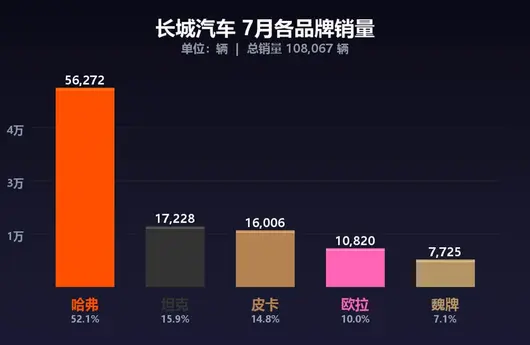
[Pakar Pasaran Kereta] Great Wall Motor jualan Julai 108,067 unit, pertumbuhan tahun ke tahun 3.54%. Jan-Julai kumulatif 691,962 unit, pertumbuhan tahun ke tahun 2.64%.
Kadar pertumbuhan tidak begitu mengejutkan, tetapi strukturnya sedang membaik: bahagian kenderaan tenaga baharu meningkat, pertumbuhan luar negara 50.93%, Haval H10 prajualan 12 jam meraih 22,615 tempahan — produk baharu sedang memenuhi permintaan pasaran.

Haval: 56,272 unit, masih menjadi asas. Mempunyai sumbangan lebih daripada separuh jualan Great Wall. Prajualan H10 mula dari 214,800, 12 jam 22,600 tempahan — prestasi prajualan paling menonjol tahun ini. Meng Long PLUS, Anjing Besar terus panas terjual, teras pasaran SUV 100,000-200,000 tidak tererosi.
Tank: 17,228 unit, pertumbuhan bulan ke bulan 9.64%. Model baharu Tank 300 keluaran, mula dari 199,800, terus memperkukuh kelebihan dalam kategori off-road kuat. Pasaran SUV off-road kuat 200,000-300,000, Tank tidak mempunyai lawan sebenar.
Ora: 10,820 unit, lonjak drastik 151.63% tahun ke tahun. Kadar pertumbuhan tertinggi dalam Great Wall. Ora 5 menyelesaikan OTA kali kedua, versi hibrid keluaran. Tetapi lonjak 151% ada kesan asas rendah — asas Ora tahun lepas memang rendah.
Great Wall Pickup: 16,006 unit, pertumbuhan tahun ke tahun 16.22%. Siri Pao terus memimpin pasaran Pickup domestik, Hi4-T versi hibrid bermula pengalaman pengguna.
WEY: 7,725 unit, pertumbuhan bulan ke bulan 7.43%. V9X Edisi Keluarga baru keluaran, mula dari 316,800. Gaoshan meraih juara jualan MPV Tenaga Baharu paruh pertama tahun — sangat penting untuk WEY, membuktikan ia mempunyai kedudukan di pasaran premium. Tetapi jumlah mutlak 7,725 unit masih kecil, tidak selevel dengan Li Auto, Aito.
Haval H10: 12 jam 22,600 tempahan
Haval H10定位 "spesies baharu bentuk kotak", harga istimewa masa terhad mula dari 214,800. 12 jam 22,615 tempahan, diletakkan dalam industri keseluruhan adalah prestasi prajualan teras pertama.
H10 menyasar pasaran SUV off-road kuat, 200,000-250,000 ruang kini hanya ada Tank 300 dan Fang Cheng Bao dua pemain. H10 masuk dengan ambang lebih rendah dan rekaan lebih baharu, masa dipilih sesuai.
Tetapi ada jurang besar antara tempahan prajualan dan penghantaran sebenar. Sama ada Haval H10 boleh tukar 22,600 tempahan kepada jualan, bergantung pada kapasiti pengeluaran meningkat dan harga keluaran rasmi.

Jualan luar negara Julai pertumbuhan tahun ke tahun 50.93%, Great Wall bahagian yang berkembang paling laju.
Tindakan spesifik: Ora masuk ke Australia, Afrika Selatan, Malaysia, masuk Spain, Itali untuk uji jalan. Haval Meng Long PHEV turun dari kilang di Uzbekistan — bukan ekspor kereta lengkap, tapi pengeluaran lokal. Konvoi Tank di Kazakhstan melengkapkan pelayaran 3,220 km, brand menyokong aktiviti tempatan serentak.
Great Wall di luar negara bukan sekadar menjual kereta, tapi membina brand, membina kanal, membina kapasiti lokal. BYD dan Chery sudah berjaya, Great Wall sedang mengejar.
Penilaian Objektif
Great Wall Julai ada tiga titik cerah: Prajualan H10 meletup, pertumbuhan luar negara 51%, Ora pulih. Menunjukkan keupayaan definisi produk dan pelaksanaan globalisasi masih di tahap.
Dua perkara yang perlu diperhatian:
Pertama, kadar pertumbuhan keseluruhan tidak laju. 108,000 unit, tahun ke tahun 3.54%, berbanding BYD (419,000), Kumpulan Geely (250,000+), Chery (276,800), skala dan kadar pertumbuhan tidak berada di atas. Persaingan SUV domestik semakin sengit, teras Haval perlu dikuat secara berterusan.
Kedua, bahagian tenaga baharu boleh ditingkatkan lagi. Great Wall tidak mengeluarkan jualan tenaga baharu secara berasingan, tetapi dari struktur brand — teras Haval masih petrol dan PHEV, Tank dominan petrol, Ora EV tapi asas kecil — kadar penembusan tenaga baharu sepatutnya di bawah purata industri. Dalam konteks kadar penembusan tenaga baharu melebihi 60%, transformasi elektrifikasi perlu dipercepatkan.

Great Wall adalah syarikat yang dipacu oleh "inovasi kategori". Kejayaan Tank membuktikan ia pandai buat produk meletup di pasaran tersegmentasi. Data prajualan H10 membuktikan keupayaan ini masih ada.
Tetapi inovasi kategori ada siling: setiap pasaran tersegmentasi ada had atas. Jualan bulanan Tank 17,000 sudah bagus, ke atas lagi susah. Great Wall perlu kembali ke skala jualan tahunan 1.5 juta, yang diperlukan bukan hanya beberapa produk meletup kategori, tapi peningkatan keseluruhan kadar penembusan tenaga baharu.
Haval H10 adalah permulaan yang baik. Sama ada boleh memegang, lihat penghantaran dan reputasi selepas keluaran rasmi.

喺馬來西亞嘅 SUV 市場,好多買家喺揀車嘅時候都會拿 Proton X70 同 Chery Tiggo 7 PHEV 做比較。這兩款車喺價位同定位上都幾近,今日我就從多個方面做一個詳細嘅對比,幫你省下做功課嘅時間。
Proton X70 喺馬來西亞嘅 OTR 售價係 RM 106,800 - 122,300,一共有 3 個版本,包括 1.5L Standard 2WD(RM 106,800)、1.5L Executive 2WD(RM 115,800)、1.5L Premium 2WD(RM 122,300) 等。
Chery Tiggo 7 PHEV 喺馬來西亞嘅 OTR 售價係 RM 129,750 - 129,750,一共有 2 個版本,包括 2025 1.5T 90km CSH(RM 129,750)、支持邊幾種充電方式?可唔可以用家用插座充電?(RM 117,478) 等。
從價錢睇落,Proton X70 嘅起步價確實比 Chery Tiggo 7 PHEV 便宜咗 RM 22,950。如果你預算有限,Proton 嘅入門版已經可以滿足日常需求。但都要注意,平嗰幾千蚊,可能喺配備上會有取舍,具體要看你嘅需求。
Proton X70 嘅安全評級係 5★ (ASEAN NCAP),主動安全系統包括 ADAS (ACC, AEB, LKA, LDA, BSM, RCTA)。
Chery Tiggo 7 PHEV 嘅安全評級係 TBD,主動安全系統包括 Basic。
安全配備方面,兩款車都拿到咗唔錯嘅評級。不過 Proton X70 嘅 ADAS (ACC, AEB, LKA, LDA, BSM, RCTA) 同 Chery Tiggo 7 PHEV 嘅 Basic 喺功能上有些差異,如果你比較看重主動安全嘅話,可以仔細對比下兩者嘅功能列表。
Proton X70 保修 5 年/150,000km,保養間隔 每 10,000km 或 6 個月。
Chery Tiggo 7 PHEV 保修 3 年/100,000km,保養間隔 每 10,000km 或 6 個月。
Proton X70 同 Chery Tiggo 7 PHEV 都係馬來西亞市場嘅主流選擇,適合家庭使用、日常通勤。如果你更看重品牌口碑同二手價,可以優先考慮口碑更好嗰一款;如果你更在意性價比同配備,就揀配置更豐富嗰款。最終都係建議兩款都去試駕,親身體驗先係最重要。
總體嚟講,Proton X70 同 Chery Tiggo 7 PHEV 都係馬來西亞市場好唔錯嘅車型。揀邊一輛,關鍵都係睇你嘅個人需求同預算。建議大家做好功課,多比較幾間車行嘅報價,先去試駕做最終決定。買車係件大事,花少少時間做功課絕對唔會錯。

In the SUV market in Malaysia, many buyers compare the Perodua Aruz and the Mazda CX-30 when choosing a car. These two cars are quite close in price and positioning. Today, we will make a detailed comparison from multiple aspects to help you save time on research.
The OTR price of the Perodua Aruz in Malaysia is RM 72,900 - 77,900, with a total of 2 versions, including 1.5L X (RM 72,900), 1.5L AV (RM 77,900), etc.
The OTR price of the Mazda CX-30 in Malaysia is RM 122,409 - 146,409, with a total of 4 versions, including 2025 2.0L High+ Premium (RM 146,409), 2025 2.0L High+ (RM 138,409), 2025 2.0L High (RM 130,409), etc.
In terms of price, the starting price of the Perodua Aruz is indeed RM 49,509 cheaper than the Mazda CX-30. If your budget is limited, the entry-level version of Perodua is sufficient for daily needs. But you should also note that the few thousand cheaper might involve trade-offs in features, depending on your specific needs.
Perodua Aruz is equipped with 1.5L 4-cyl, 105 hp. Official fuel consumption 6.0 L/100km.
Mazda CX-30 is equipped with 1.5L Turbo, 140 hp. Official fuel consumption 7.0 L/100km.
In terms of power, the Mazda CX-30's 1.5L Turbo has 35 more horsepower than the Perodua Aruz's 1.5L 4-cyl. However, for daily city driving, the power of both cars is sufficient, and you won't feel it lacks power.
The safety rating of the Perodua Aruz is 5★ (ASEAN NCAP), active safety systems include.
The safety rating of the Mazda CX-30 is 5★ (ASEAN NCAP), active safety systems include i-Activsense.
Both cars have the same safety rating, and safety features are quite complete in this class. The safety of new cars these days is not bad, so there is no need to worry too much about this.
Perodua Aruz warranty 5 years/150,000km, service interval every 10,000km or 6 months.
Mazda CX-30 warranty 5 years/150,000km, service interval every 10,000km or 6 months.
Both cars have the same warranty conditions, no need to worry about this aspect. Actual maintenance costs depend on the brand's service network and parts prices. It is recommended to ask real owners in car owner groups for their experience.
Both the Perodua Aruz and Mazda CX-30 are mainstream choices in the Malaysian market, suitable for family use and daily commuting. If you value brand reputation and resale value more, prioritize the one with better reputation; if you care more about price-performance ratio and features, choose the one with richer configuration. Ultimately, it is recommended to test drive both, as personal experience is the most important.
Overall, both the Perodua Aruz and Mazda CX-30 are excellent car models in the Malaysian market. Which one to choose depends mainly on your personal needs and budget. It is recommended to do your research, compare quotes from several car dealerships, and then test drive to make the final decision. Buying a car is a big matter, spending time on research will never be wrong.

In Malaysia's SUV market, many buyers compare the Proton X70 and Chery Tiggo Cross when choosing a car. Both cars are quite close in price and positioning. Today, we will make a detailed comparison from multiple aspects to help you save time on research.
The OTR price of the Proton X70 in Malaysia is RM 106,800 - 122,300, with a total of 3 versions, including 1.5L Standard 2WD (RM 106,800), 1.5L Executive 2WD (RM 115,800), 1.5L Premium 2WD (RM 122,300), etc.
The OTR price of the Chery Tiggo Cross in Malaysia is RM 88,750 - 99,750, with a total of 2 versions, including 2025 HEV 1.5L CSH (RM 99,750), 2025 1.5T Standard (RM 88,750), etc.
From the price perspective, the starting price of the Chery Tiggo Cross is RM 18,050 cheaper than the Proton X70. Honestly, in this price range, a difference of a few thousand is not that big, the key is still to look at overall value for money and long-term usage costs.
Proton X70 body length 4400 mm, trunk 400 L.
Chery Tiggo Cross body length 4400 mm, trunk 400 L.
The dimensions of both cars are almost the same, with little difference in interior space. For this class of cars, it is fully sufficient for daily use.
Proton X70 adopts FWD drive mode.
Chery Tiggo Cross adopts FWD drive mode.
The drive mode of both cars is the same, both are FWD, and there will not be much difference in daily driving feel.
Both Proton X70 and Chery Tiggo Cross are mainstream choices in the Malaysian market, suitable for family use and daily commuting. If you value brand reputation and resale price more, you can prioritize the one with better reputation; if you care more about value for money and equipment, then choose the one with richer configuration. Ultimately, it is recommended to test drive both, as experiencing it firsthand is the most important.
Overall, both Proton X70 and Chery Tiggo Cross are quite good models in the Malaysian market. Which one to choose mainly depends on your personal needs and budget. It is recommended to do your homework, compare quotes from a few car dealers, and then test drive to make a final decision. Buying a car is a big matter, spending some time doing homework will definitely not be wrong.


In the Malaysian SUV market, many buyers compare Perodua Aruz and Chery Tiggo 7 Pro when choosing a car. These two cars are quite close in price and positioning. Today, we will make a detailed comparison from multiple aspects to help you save time on research.
The OTR price of Perodua Aruz in Malaysia is RM 72,900 - 77,900, with a total of 2 versions, including 1.5L X (RM 72,900), 1.5L AV (RM 77,900), etc.
The OTR price of Chery Tiggo 7 Pro in Malaysia is RM 123,750 - 123,750, with a total of 2 versions, including 1.6L Turbo Standard (RM 125,000), 1.6L Turbo Premium (RM 140,000), etc.
Looking at the price, the starting price of Perodua Aruz is indeed RM 50,850 cheaper than Chery Tiggo 7 Pro. If your budget is limited, Perodua's entry-level model can already meet daily needs. But also note, the cheaper options might have trade-offs in features, it depends on your specific needs.
Perodua Aruz safety rating is 5★ (ASEAN NCAP), active safety systems include.
Chery Tiggo 7 Pro safety rating is TBD, active safety systems include Basic.
Perodua Aruz adopts FWD drive mode.
Chery Tiggo 7 Pro adopts FWD drive mode.
The drive mode of both cars is the same, both are FWD, there won't be much difference in daily driving experience.
Perodua Aruz and Chery Tiggo 7 Pro are both mainstream choices in the Malaysian market, suitable for family use and daily commuting. If you value brand reputation and resale value more, you can prioritize the one with better reputation; if you care more about value for money and features, then choose the one with richer specifications. Ultimately, it is recommended to test drive both, personal experience is the most important.
Overall, Perodua Aruz and Chery Tiggo 7 Pro are both quite good models in the Malaysian market. Which one to choose depends mainly on your personal needs and budget. We recommend doing your research, compare quotes from several dealerships, and then test drive to make a final decision. Buying a car is a big deal, spending some time researching will never be wrong.

喺馬來西亞嘅 SUV 市場,好多人揀車嘅時候都會拿 Perodua Aruz 同 GWM Haval H6 比較。兩款車嘅價位同定位都幾接近,今日我哋就從多個方面做一個詳細嘅比較,幫你節省咗做功課嘅時間。
Perodua Aruz 喺馬來西亞嘅 OTR 售價係 RM 72,900 - 77,900,一共有 2 個版本,包括 1.5L X(RM 72,900)、1.5L AV(RM 77,900) 等。
GWM Haval H6 喺馬來西亞嘅 OTR 售價係 RM 139,750 - 139,750,一共有 2 個版本,包括 1.5L Turbo Standard(RM 140,000)、1.5L Turbo Premium(RM 155,000) 等。
從價錢睇嚟,Perodua Aruz 嘅起步價確實比 GWM Haval H6 平咗 RM 66,850。如果你預算有限,Perodua 嘅入門版已經可以滿足日常需求。但亦要注意,平嗰幾千蚊,喺配備上可能有取舍,具體就要睇你嘅需求。
Perodua Aruz 搭載 1.5L 4-cyl,馬力 105 hp。官方油耗 6.0 L/100km。
GWM Haval H6 搭載 Hybrid,馬力 170 hp。官方油耗 4.5 L/100km。
動力方面,GWM Haval H6 嘅 Hybrid 比 Perodua Aruz 嘅 1.5L 4-cyl 多咗 65 匹馬力。不過日常喺市區開,兩款車嘅動力都夠用,唔會覺得唔夠力。
Perodua Aruz 保養 5 年/150,000km,保養間隔 每 10,000km 或 6 個月。
GWM Haval H6 保養 7 年/150,000km,保養間隔 每 10,000km 或 6 個月。
Perodua Aruz 同 GWM Haval H6 都係馬來西亞市場嘅主流選擇,適合家庭使用、日常通勤。如果你更睇重品牌口碑同二手價,可以優先考慮口碑更好嗰一款;如果你更在意性價同配備,那就揀配置更豐富嗰款。最終始終建議兩款都去試駕,親身試下先最重要。
總括嚟講,Perodua Aruz 同 GWM Haval H6 都係馬來西亞市場好唔錯嘅車款。揀邊一輛,關鍵都要睇你嘅個人需求同預算。建議大家做好功課,多比較幾間車行嘅報價,再去做試駕同做最終決定。買車係件大事,花啲時間做功課絕對唔會錯。
© 2024 Bitauto.com. All Rights Reserved.
Bitauto (www.yiche.com and www.bitauto.com) is one of the most visited automotive websites in China. We provide detailed info on Chinese car brands available in your area. Please note that the information provided on this website is based on publicly available data and is for reference only. It may not be fully updated or accurate at all times.

Help us improve our website


