

Homecommercial

Search History
Popular Searches
Dealer Login / Sign Up
The 2026 solid-state battery industry stands at a crossroads of hope and anxiety.
A release of three major policy benefits: tax exemption for solid-state batteries, implementation of a 6 billion yuan national major R&D special project, implementation of the national standard "Solid-State Batteries for Electric Vehicles", leading companies all targeting 2027 as the first year of mass production.
Data from Qi Dian Research Institute shows that in 2025, domestic semi-solid-state battery shipments reached 17.3GWh, and installed vehicles exceeded 150,000 units, completing process and cost rehearsals.
However, the industrialization "Valley of Death" remains prominent: the sulfide route requires a -60°C ultra-low dew point environment, equipment investment is high, solid-solid interface impedance and lithium dendrite problems remain unsolved, pilot yield is only 60-70%, and cell cost is 3-5 times that of lithium iron phosphate.
While the entire industry turns its attention to the sulfide track, the polymer solid-state battery technology originating from the Chinese Academy of Sciences, verified by 10,000-meter deep-sea field tests, has already moved from extreme operating conditions to automotive grade mass production, and its platform is Zhongke Deep Blue.

Moving from the laboratory to mass production, solid-state batteries face three unavoidable hurdles: production threshold, interface impedance, and cost control.
For a long time, polymer solid-state electrolytes were tagged with "low room temperature conductivity and unstable high voltage", considered suitable only for niche scenarios with low room temperature and low rate; until the "Combining Rigidity and Flexibility" electrolyte system from Zhongke Deep Blue appeared, breaking this cognition.
This system simultaneously builds a rigid skeleton and a flexible ionic conduction phase at the molecular level: the rigid crosslinked network provides mechanical strength, inhibits lithium dendrite growth and puncture, ensuring intrinsic safety; the flexible conduction segments form good interface contact with the electrode, significantly reducing solid-solid interface impedance and ensuring ionic conductivity within a wide temperature range.
Combining the two not only compensates for the insufficient conductivity of polymer electrolytes but also avoids the poor interface stability of sulfides and harsh production conditions.
What truly achieved industrial breakthrough is the internationally first in-situ curing process: Injecting liquid precursors into the cell, polymerizing internally to generate solid-state electrolytes, which allows electrode pores to be fully infiltrated and interfaces to seamlessly bond, while also being compatible with existing lithium battery production lines, requiring only the addition of in-situ polymerization units for retrofitting, eliminating the need for ultra-low dew point workshops at high cost, and avoiding solid-state film brittleness and cracking, thereby improving mass production yield.
10,000-Meter Deep Sea: Technical Reliability Verification Under the Most Harsh ConditionsThe maturity of technology must always be tested in the most extreme scenarios.
At the bottom of the Mariana Trench, 150MPa high pressure, 2°C low temperature, and equipment cannot be maintained, representing the cruelest test for batteries; this set of polymer solid-state batteries completed nearly a decade of reliability verification here.
In 2017, the first-generation solid-state lithium battery descended with the "Wanquan" lander to a depth of 10,901 meters, completing full ocean depth power supply verification, making China the second country in the world to master this technology.
In 2018, it went to the Mariana Trench again to power multiple full ocean depth landers including Tianya, Haijiao, and Wanquan, conducting continuous operations for a single time of 26 days, with a maximum dive depth of 10,918 meters, setting a world record for the longest single continuous operation of deep-sea power supply.
In the following years, it provided power for 12 deep-sea equipment models such as Canghai, Luling, Haidou, and Deep Sea Warrior, cumulatively completing 34 dive operations.
As of now, relevant deep-sea power supply systems have cumulatively operated safely and stably for over 8,000 hours, delivered over 110 batches, passed the 150MPa pressure chamber test for maximum pressure bearing, and operating temperature covers -30°C to 70°C; in 2022, the international first set of megawatt-class deep-sea energy base station was completed at sea trial deployment, providing support for the acquisition of hydrological data beyond 10,000 meters depth and real-time seabed surveying.
Batteries capable of long-term stable work in 10,000-meter deep seas have already exceeded the standard of "no fire on nail puncture" in safety; for solid-state batteries, laboratory data is only a reference, and long-term fault-free operation in real scenarios is the best proof of technical maturity.
From Extreme Scenarios to Mass Market: The Ladder Logic of Technology ImplementationUnlike many companies aiming directly at passenger vehicle large cells with aggressive strategies planning GWh capacity from the start, Zhongke Deep Blue chose a more robust commercialization path: starting from deep-sea scientific research scenarios with the highest reliability requirements, first achieving technology closed loops and positive commercial cycles, then penetrating into low-altitude aircraft, special equipment, and other scenarios; after processes matured and costs dropped, gradually entering the mass market of new energy vehicles and electric motorcycles.
In the low-altitude economy field, this technology has already shown advantages like dimensionality reduction attack. Targeting the harsh requirements of battery weight, endurance, and safety for payload drones, relevant solid-state battery products have increased energy density to 1.3-1.4 times that of traditional liquid batteries, directly boosting the endurance of surveying drones by 4 times and increasing payload capacity by 30%, and mass delivery has been realized.
Currently, it has cooperated with well-known domestic leading eVTOL enterprises to develop heavy payload hybrid logistics drone vertical takeoff power systems.
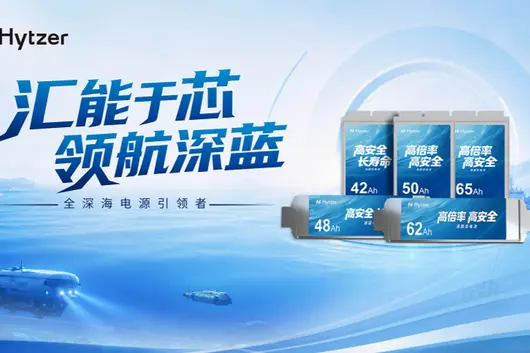
In the highly anticipated new energy vehicle field, the corresponding quasi-solid-state battery products have completed automotive grade verification, forming a complete product matrix covering 42Ah, 48Ah, 50Ah, 62Ah, and 65Ah.
Among them, the high safety and long life series cells have an energy density of 246Wh/kg, and the high rate series energy density even breaks 305Wh/kg, all supporting 5C peak discharge, 1C/1C cycle life exceeding 2,000 times, passing 5mm nail puncture tests under fully charged states, operating temperature covering -20°C to 60°C, fully meeting the needs of vehicle-mounted scenarios. Currently, relevant products are cooperating with domestic leading car companies for development, steadily promoting the vehicle assembly mass production process.
In addition, high safety and high rate solid-state batteries for the high-end electric motorcycle field are also being developed, with energy density exceeding 290Wh/kg. It is reported that customer designation has been obtained, and mass production is expected in April next year.
This "from high to low, gradual penetration" ladder strategy allows the technology to obtain real market feedback and commercial revenue at each stage, supporting R&D iteration and process optimization in return, forming a positive cycle of application-verification-upgrade, avoiding the death trap of many solid-state battery enterprises "burning money waiting for mass production".

Looking back, this low-key and solid technical route traces its technical accumulation back to twenty years ago.
The route began in 2005, shifted to a solid-state ion-conducting material system in 2007, and the CAS Qingdao Institute of Energy created the Solid-state Energy Technology Center in 2009.
In 2014, the first domestic 100MWh polymer-based solid-state battery pilot production line was built; the "Combining Rigidity and Flexibility" polymer solid-state electrolyte obtained national patent authorization that year; in 2017, full ocean depth power supply verification was completed in the Mariana Trench, breaking foreign technology barriers. By 2024, it cumulatively delivered over 110 batches of deep-sea power supply systems.
As of now, the team has cumulatively planned over 200 core intellectual property rights, completing the iteration of 4 generations of all-solid-state battery systems: from the first generation 250Wh/kg, to the second generation 350Wh/kg, third generation 450-550Wh/kg, to the fourth generation target 650-700Wh/kg, with a clear technical route and corresponding verification data support for each generation.
Entering 2026, the company's industrialization pace continues to accelerate: the Changzhou mass production base capacity is steadily climbing, automotive grade products are accelerating verification iterations, and since the beginning of 2026, it has successively published multiple core technology patents including polymer electrolytes, thermal management, and separators, continuously strengthening the full-chain technical barriers from materials to processes to systems.
At the same time, the company launched a global layout, appeared at international exhibitions such as the European Battery Exhibition, and built cooperation networks in the UK, Germany, Singapore, Malaysia, and other places.
Second Half of Solid-State Battery: Walking Steadily to Walk FarWith the continuous release of policy dividends and increased industry investment, solid-state batteries have officially entered the critical window period of "0 to 1". It is generally agreed in the industry that 2026-2027 will see small batch vehicle assembly of all-solid-state batteries, and around 2030 will enter the stage of scale mass production.
But the more bustling the track, the more calm judgment is needed. Solid-state batteries have never had an ultimate route of "one trick", and when the entire industry is racing "who is faster", Zhongke Deep Blue chose "who is more stable".
Holding steady under the extreme pressure of 10,000-meter deep seas, being reliable during continuous operations for dozens of days, and running smoothly in market verification with batch deliveries, only such a technical route has the confidence to cross the industrial cycle.
A true energy technology revolution is never an immediate explosion, but repeatedly polished in extremely harsh scenarios, finally stepping into mass life step by step. The ultimate value of solid-state batteries is always to deliver energy safely.
And this technology route verified by the deep sea is, with its own rhythm, landing the mission of "Giving the World Safe Energy" from slogans into reality.

In the Malaysian SUV market, many buyers compare Honda WR-V and GWM Haval H6 when selecting a car. These two cars are quite close in price and positioning. Today, we will make a detailed comparison from multiple aspects to help you save time on research.
The OTR price for Honda WR-V in Malaysia is RM 89,900 - 107,900, with a total of 4 versions, including 2023 1.5L V (RM 99,900), 2023 1.5L E (RM 95,900), 2023 1.5L S (RM 89,900), etc.
The OTR price for GWM Haval H6 in Malaysia is RM 139,750 - 139,750, with a total of 2 versions, including 1.5L Turbo Standard (RM 140,000), 1.5L Turbo Premium (RM 155,000), etc.
From the price perspective, the Honda WR-V's starting price is indeed RM 49,850 cheaper than the GWM Haval H6. If your budget is limited, Honda's entry-level version can already meet daily needs. However, be aware that the savings of a few thousand might involve trade-offs in features, depending on your specific needs.

Honda WR-V features a 1.5L 4-cyl, with 105 hp. Official fuel consumption is 6.0 L/100km.
GWM Haval H6 features Hybrid, with 170 hp. Official fuel consumption is 4.5 L/100km.
In terms of power, the GWM Haval H6's Hybrid is 65 horsepower more than the Honda WR-V's 1.5L 4-cyl. However, for daily driving in the city, both cars have sufficient power, you won't feel a lack of power.

Honda WR-V body length is 4400 mm, trunk space is 400 L.
GWM Haval H6 body length is 4400 mm, trunk space is 400 L.
The dimensions of both cars are almost the same, interior space differences are not significant. Cars of this class are fully sufficient for daily use.

Honda WR-V uses FWD drive system.
GWM Haval H6 uses FWD drive system.
The drive systems of both cars are the same, both are FWD, daily driving experience will not differ much.
Overall, Honda WR-V and GWM Haval H6 are both very good models in the Malaysian market. Choosing which one depends mainly on your personal needs and budget. We recommend doing your homework, comparing quotes from several car dealers, and then test driving to make the final decision. Buying a car is a big matter, spending some time doing homework will never be wrong.


喺馬來西亞嘅 SUV 市場,好多買家喺揀車嗰陣都會拿 Proton X90 同 Subaru Crosstrek 嚟比較。呢兩款車喺價位同定位上都好接近,今日我哋就從多個方面做一次詳細嘅比較,幫你省返做功課嘅時間。
Proton X90 喺馬來西亞嘅 OTR 售價係 RM 106,800 - 122,800,一共有 4 個版本,包括 2026 1.5T Prime X(RM 122,800)、2026 1.5T Prime(RM 116,800)、2026 1.5T Lite(RM 106,800) 等。
Subaru Crosstrek 喺馬來西亞嘅 OTR 售價係 RM 145,000 - 160,000,一共有 1 個版本,包括 2.0L e-Boxer(RM 150,000) 等。
由價錢嚟睇,Proton X90 嘅入門價確實比 Subaru Crosstrek 平咗 RM 38,200。如果你預算有限,Proton 嘅入門版已經可以滿足日常需要。但都要注意,平咗嗰幾千蚊,可能在配備上會有取捨,具體要睇你嘅需要。

Proton X90 搭載 1.5L Turbo,馬力 140 hp。官方油耗 7.0 L/100km。
Subaru Crosstrek 搭載 1.5L Turbo,馬力 140 hp。官方油耗 7.0 L/100km。
兩款車用咗同一套動力系統,日常開落嚟嘅感受基本上無分別。油耗方面都差唔多,唔使太糾結呢一點。

Proton X90 嘅安全評級係 5★ (ASEAN NCAP),主動安全系統包括 ADAS (ACC, AEB, LKA, LDA, BSM, RCTA)。
Subaru Crosstrek 嘅安全評級係 5★ (Euro NCAP),主動安全系統包括 EyeSight。
安全配備方面,兩款車都拿到唔錯嘅評級。不過 Proton X90 嘅 ADAS (ACC, AEB, LKA, LDA, BSM, RCTA) 同 Subaru Crosstrek 嘅 EyeSight 喺功能上有啲差異,如果你比較看重主動安全嘅話,可以仔細對比一下兩者嘅功能列表。

Proton X90 車身長 4400 mm,尾箱 400 L。
Subaru Crosstrek 車身長 4400 mm,尾箱 400 L。
兩款車嘅尺寸幾乎一樣,車內空間分別唔大。呢個級別嘅車,日常使用完全足夠。

Proton X90 保修 5 年/150,000km,保養間隔 每 10,000km 或 6 個月。
Subaru Crosstrek 保修 3 年/100,000km,保養間隔 每 10,000km 或 6 個月。

總嚟講,Proton X90 同 Subaru Crosstrek 都係馬來西亞市場幾唔錯嘅車型。揀邊一輛,關鍵仲係睇你嘅個人需要同預算。我哋建議大家做好功課,多比較幾間車行之報價,先至試駕做最終決定。買車係件大事,花少少時間做功課絕對唔會錯。


喺馬來西亞嘅 SUV 市場,好多買家喺揀車嘅時候都會拿 寶騰 X90 同 奇瑞 Tiggo 8 PHEV 嚟做比較。這兩款車喺價位同定位上都好接近,今日我哋就從多個方面做一個詳細嘅比較,幫你省返做功課嘅時間。
寶騰 X90 喺馬來西亞嘅 OTR 售價係 RM 106,800 - 122,800,總共有 4 個版本,包括 2026 1.5T Prime X(RM 122,800)、2026 1.5T Prime(RM 116,800)、2026 1.5T Lite(RM 106,800) 等。
奇瑞 Tiggo 8 PHEV 喺馬來西亞嘅 OTR 售價係 RM 159,750 - 159,750,總共有 2 個版本,包括 1.6L Turbo Standard(RM 130,000)、1.6L Turbo Premium(RM 145,000) 等。
從價錢嚟睇,寶騰 X90 嘅起步價確實比 奇瑞 Tiggo 8 PHEV 平咗 RM 52,950。如果你預算有限,寶騰嘅入門版已經可以滿足日常需求。但都要注意,平嗰幾千蚊,可能喺配備上會有所取舍,具體要睇你嘅需求。
寶騰 X90 搭載 1.5L Turbo,馬力 140 hp。官方油耗 7.0 L/100km。
奇瑞 Tiggo 8 PHEV 搭載 Hybrid,馬力 170 hp。官方油耗 4.5 L/100km。
動力方面,奇瑞 Tiggo 8 PHEV 嘅 Hybrid 比 寶騰 X90 嘅 1.5L Turbo 多咗 30 匹馬力。不過日常喺市區開,兩款車嘅動力都夠用,唔會覺得唔夠力。
寶騰 X90 車身長 4400 mm,車尾箱 400 L。
奇瑞 Tiggo 8 PHEV 車身長 4400 mm,車尾箱 400 L。
兩款車嘅尺寸幾乎一樣,車內空間差別唔大。呢個級別嘅車,日常使用完全夠用。
寶騰 X90 採用 FWD 驅動方式。
奇瑞 Tiggo 8 PHEV 採用 FWD 驅動方式。
兩款車嘅驅動方式一樣,都係 FWD,日常駕駛感受唔會有太大分別。
總括嚟講,寶騰 X90 同 奇瑞 Tiggo 8 PHEV 都係馬來西亞市場幾唔錯嘅車型。選擇邊一輛,關鍵都要睇你嘅個人需求同預算。建議大家做足功課,多比較幾間車行嘅報價,先至去試駕做最終決定。買車係件大事,花啲時間做功課絕對唔會錯。

喺馬來西亞嘅 SUV 市場,好多買家喺揀車嘅時候都會拿 Proton X50 同 Chery Tiggo 8 PHEV 嚟做比較。呢兩款車喺價位同定位上都好接近,今日我哋就由多個方面做一個詳細嘅對比,幫你省咗做功課嘅時間。
Proton X50 喺馬來西亞嘅 OTR 售價係 RM 89,800 - 113,300,一共有 4 個版本,包括 1.5T Executive(RM 89,800)、1.5T Premium(RM 101,800)、1.5T Flagship(RM 113,300) 等。
Chery Tiggo 8 PHEV 喺馬來西亞嘅 OTR 售價係 RM 159,750 - 159,750,一共有 2 個版本,包括 1.6L Turbo Standard(RM 130,000)、1.6L Turbo Premium(RM 145,000) 等。
由價錢睇落,Proton X50 嘅起步價確實比 Chery Tiggo 8 PHEV 平咗 RM 69,950。如果你預算有限,Proton 嘅入門版已經可以滿足日常需要。但亦要注意,平嗰幾千塊,可能喺配備上會做取捨,具體就要睇你嘅需求。

Proton X50 車身長 4400 mm,尾箱 400 L。
Chery Tiggo 8 PHEV 車身長 4400 mm,尾箱 400 L。
兩款車嘅尺寸幾乎一樣,車廂空間分別唔大。呢個級別嘅車,日常使用完全夠用。
Proton X50 採用 4WD 驅動方式。
Chery Tiggo 8 PHEV 採用 FWD 驅動方式。
Proton 嘅 4WD 同 Chery 嘅 FWD 喺操控上會有唔同感覺,建議試駕比較。
Proton X50 同 Chery Tiggo 8 PHEV 都係馬來西亞市場嘅主流選擇,適合家庭使用、日常通勤。如果你更鍾意品牌口碑同二手價,可以優先考慮口碑更好嗰一款;如果你更在意性價比同配備,那就揀配置更豐富嗰款。最終都係建議兩款都去試駕,親身體驗先係最重要嘅。
總括嚟講,Proton X50 同 Chery Tiggo 8 PHEV 都係馬來西亞市場好唔錯嘅車型。揀邊一輛,關鍵都係睇你嘅個人需求同預算。建議大家做足功課,多問幾間車行嘅報價,再去試駕做最終決定。買車係件大事,花少少時間做功課絕對無錯。



Mengeluarkan 40 Bilion Untuk Beli Semula
”
Pengarang|Wang Lei
Editor|Qin Zhangyong
Masa Bateri Ningde setiap kali mengedarkan laporan kewangan, sentiasa mengemaskini kesedaran industri.
Semester pertama, mencapai jualan 276.917 bilion Yuan, lebih hampir 100 bilion berbanding tempoh sama tahun lepas, laba bersih 43.284 bilion Yuan, bertambah 41.98% secara tahunan.
Ini bermaknaSetiap Hari Untung 240 Juta Yuan, sejam sahaja boleh untung hampir 10 juta... Tempoh sama tahun lepas, Raja Bateri masih hanya untung 170 juta sehari, setahun berlalu, keupayaan Raja Bateri mengumpul wang masih berlari laju.
Yang形成 kontras jelas, pelbagai syarikat kenderaan baru banyak keluar laporan prestasi semester, Ramai Yang Hadapi Tekanan Keuntungan, sebenarnya di sebalik ada logik ekonomi yang jelas:
Januari hingga Mei 2026, kadar keuntungan industri automobil China hanya 3.4%, kadar keuntungan pembuatan kenderaan terdedah hanya tinggal 1.5%, bateri dinamik mengambil 30% hingga 40% kos kenderaan, adalah "Beban Kos Utama" yang mutlak.
Keuntungan industri berantai, semakin ketara menuju kepada seksyen bateri, ini juga memang sumber penting keuntungan Masa Bateri Ningde. Namun, jika kita lihat butiran laporan kewangan Masa Bateri Ningde ini, walaupun sekuat Raja Bateri,面对 kenaikan harga bahan mentah hulu, sukar melindungi diri sendiri.
01
Tentu saja "Raja Bateri"
Semester pertama tahun ini, Masa Bateri Ningde memberikan pendapatan semester tertinggi dalam sejarah syarikat: 276.917 bilion Yuan, dengan itu, suku kedua juga menyumbang 147.786 bilion tertinggi dalam sejarah suku.
Kecepatan pertumbuhan ini terhadap syarikat berskala sangat besar Masa Bateri Ningde sendiri, sudah sangat luar biasa.
Laba bersih induk syarikat mencapai 432.8 bilion, bertambah 41.98% secara tahunan; Laba bersih induk selepas penyesuaian 390.1 bilion, bertambah 43.44% secara tahunan, setiap hari semester pertama untung bersih kira-kira 2.4 bilion, orang lain membongkok ambil duit, Raja Bateri sudah masuk 3000 Yuan.

Uang bagaimana dihasilkan? Masa Bateri Ningde ada buku akaun perniagaan yang jelas.
Diantaranya bateri dinamik kekal asas utama Masa Bateri Ningde, semester pertama mencapai jualan 192.12 bilion, bertambah 46.02% secara tahunan, mengambil kira-kira 69.38% daripada jumlah jualan syarikat.
Dengan jualan yang sepadan, kapasiti sistem bateri Masa Bateri Ningde 525GWh, hasilan semester pertama mencapai 498GWh, kecekapan penggunaan kapasiti naik ke 94.86%, bermakna syarikat semester ini hampir semua barisan pengeluaran dibuka, sama sekali tidak kurang pesanan, dan hasilan 498GWh sepadan dengan jualan 276.917 bilion Yuan, nilai per GWh kira-kira 560 juta Yuan, lebih tinggi daripada purata industri.
Lebih penting, sahsaham pasaran kembali.
Berdasarkan data pengumpulan jumlah pemasangan bateri dinamik global SNE Research institusi terkenal, Januari hingga Mei tahun ini kadar pasaran global Masa Bateri Ningde 40.2%, naik 2.2 peratusan titik secara tahunan, berturut-turut tahun kelapan menduduki kerusi pertama global, pasaran luar negara di luar China, juga naik 3.7 peratusan titik, mencapai 33.7%.

Lihat semula di dalam negara, data statistik Aliansi Inovasi Industri Bateri Dinamik Automobil China menunjukkan, semester pertama tahun ini bahagian pemasangan Masa Bateri Ningde dalam kenderaan penumpang adalah 46.7%, naik 5.6 peratusan titik secara tahunan, untuk pertama kali kembali naik dalam tiga tahun. Terutamanya bahagian bateri litium ternari mencapai 75.2%, bermakna setiap menjual 4 keping bateri ternari, 3 keping adalah Masa Bateri Ningde.
Selain bateri dinamik, jualan bateri storan tenaga Masa Bateri Ningde semester pertama mula mengejar, jualan mencapai 53.26 bilion, Naik Menggelegar 87.5% Secara Tahunan, mengambil 19.2% daripada jumlah jualan, sudah hampir jualan seluruh tahun lalu. Menjadi bahagian yang pertumbuhan paling laju semester pertama Masa Bateri Ningde, juga menjadi garis kedua yang tarikan jualan Masa Bateri Ningde.
Ini juga sepadan dengan keadaan industri, berdasarkan data SMM yang dipetik laporan separuh tahun Masa Bateri Ningde, jumlah penghantaran sel bateri storan tenaga global semester pertama kira-kira 486GWh, bertambah 93%, pusat data AI menjadi permintaan baharu.

Dalam tiga perniagaan utama Raja Bateri, yang paling cemerlang semester pertama tahun ini, sebaliknya itu "perniagaan kitar semula" yang mudah diabaikan luar, walaupun saiznya tidak besar hanya 18.81 bilion, tetapi bertambah 67.2% secara tahunan, kadar keuntungan kasar mencapai 27.0% tertinggi tiga perniagaan, naik 5.8 peratusan titik secara tahunan.
Dalam situasi menunjukkan prestasi indikator teras baik, data akaun lain Masa Bateri Ningde, pada dasarnya juga semuanya merah.
Jumlah arus kas operasi semester pertama 602.17 bilion, lebih tinggi daripada laba bersih induk 432.84 bilion. Poin ini penting, bermakna keuntungan syarikat bukan "keuntungan atas kertas", stok syarikat 1,308.19 bilion, permulaan adalah 945.26 bilion, semester tambah kira-kira 38.39%, menggabungkan kecekapan penggunaan kapasiti, juga tepat mengatakan Masa Bateri Ningde sekarang "bekas makanan" cukup.
02
Raja Bateri Juga Ada Perangai
Selain bekas makanan cukup, harta juga cukup tebal, semasa laporan separuh tahun keluar, Masa Bateri Ningde juga melontarkan satu rancangan pembelian semula.
Maklumkan rancangan pembelian semula saham tunggal terbesari dalam sejarah Saham A, berniat menyalurkan 200 bilion hingga 400 bilion Yuan membeli saham A dan memansuhkan, had harga pembelian semula 573 Yuan/saham. Lebih tinggi harga penutupan hari itu hampir 50%.
Jumlah had ini juga secara tidak sengaja memecahkan rekod rancangan pembelian semula tunggal terbesari dalam sejarah Saham A, rekod sebelum ini oleh Gree Electric 2021 15 bilion Yuan dikekalkan. Had 40 bilion Yuan, sudah hampir seluruh laba bersih semester pertama Masa Bateri Ningde.

Dan berbeza dengan operasi pembelian semula saham syarikat sebelum ini, pembelian semula pemansuhan bermakna mengurangkan modal berdaftar, yang dibeli semula tidak lagi beredar, jumlah saham sebenar berkurangan secara nyata, terus menebalkan hasil per saham baki pemegang saham dan aset bersih per saham, mengikut had 400 bilion, 573 Yuan pengiraan, pembelian semula maksimum kira-kira 69.808 juta saham, mengambil 1.5% daripada jumlah saham. EPS Tebal kira-kira 1.5%.
Dari pandangan akaun, wang ini Masa Bateri Ningde memang boleh keluarkan, wang tunai dalam akaun 372.05 bilion, walaupun mengikut had 400 bilion pembelian semula penuh, hanya mengambil 10.8% daripada wang tunai, mengikut jumlah aset 1,138.88 bilion pengiraan, 400 bilion hanya mengambil 3.5%.
Dalam mesyuarat keterangan prestasi, menyentuh sebab pembelian semula juga terus terang——Nilai diri sendiri dinafikan.
Hari laporan kewangan keluar, harga penutupan saham A Masa Bateri Ningde 383.01 Yuan, manakala tinggi 52 minggu terdekat 468.75 Yuan. Pencapaian prestasi tertinggi, harga saham sebaliknya dalam separuh tahun jatuh hampir dua darjah.
Dalam keadaan ini, wang sebenar 400 bilion pembelian semula, adalah sikap Masa Bateri Ningde memberikan pasaran. Inilah saya untung cukup banyak, wang juga banyak, keyakinan terhadap masa depan. Manakala pasaran memberikan harga Masa Bateri Ningde, jelas rendah.
03
Penularan Tekanan Hulu
Walaupun jualan berlari laju, tetapi tahap keuntungan Masa Bateri Ningde sudah ada penurunan, berbanding kecepatan pertumbuhan laba tempoh sama tahun lepas jauh melebihi kecepatan pertumbuhan jualan, Raja Bateri tahun ini, laba sudah tidak dapat mengejar kecepatan pendapatan. Semester pertama jualan bertambah 54.8% secara tahunan, laba bersih induk bertambah 41.98%, lebih perlahan daripada jualan hampir 13 peratusan titik.
Punca utama ialah, kadar keuntungan kasar keseluruhan daripada tempoh sama tahun lepas 25.02% turun ke 23.93%, turun kira-kira 1.1 peratusan titik.
Pecahkan kepada perniagaan, sebagai utama utama bateri dinamik, kadar keuntungan kasar turun paling teruk, turun 1.78 peratusan titik ke 20.63%, kadar keuntungan kasar storan tenaga turun 1.56 peratusan titik ke 23.96%, hanya saiz paling kecil perniagaan kitar semula ada kenaikan.
Pengurus dalam mesyuarat prestasi sebab penurunan kadar keuntungan kasar, dikembalikan kepada "masalah matematik". Kadar keuntungan kasar = untung kasar/jumlah pendapatan, untung per unit tidak berubah, penyebut pendapatan membesar, kadar keuntungan kasar yang disebar.

Punca penurunan untung kasar juga tidak sukar tebak, data awam menunjukkan, sama ada Litium Besi Fosfat, atau Bahan Ternari, harga sejak tahun ini muncul kenaikan.
Dalam bulan Januari, harga Litium Besi Fosfat 50,000 Yuan/ton, tetapi pada bulan Mei harga tertinggi, sudah melebihi 60,000 Yuan, naik lebih 20%. Dan jika dibandingkan tempoh sama tahun lepas, kadar naik lebih besar.
Tetapi kenaikan harga bahan mentah tidak boleh segera segera pindahkan ke pelanggan, kerana pesanan kenderaan umumnya harga pasokan jangka panjang, tidak boleh menyesuaikan dengan segera, jadi bahagian ini Beban Kos sementara hanya boleh oleh Masa Bateri Ningde tanggung.
Maka, ia dalam mesyuarat prestasi menekankan, cadangkan pelabur banyak perhatikan untung per unit bukan kadar keuntungan kasar, iaitu tolak untung kasar cukai dan tiga jenis kos, baki operasi teras untung, lebih dekat dengan tahap keuntungan utama.
Menurut kadar ini, semester pertama untung operasi teras 453.77 bilion, bertambah 70.1% secara tahunan, kadar keuntungan operasi teras daripada 14.91% naik ke 16.39%. Jika dilihat sedemikian, keadaan perniagaan utama, lebih baik daripada kadar keuntungan kasar pada pandangan akaun.
Di samping itu, ada satu perkara mudah diabaikan tetapi cukup mempengaruhi keseluruhan laba detail, tahun ini Masa Bateri Ningde kos kewangan semester pertama ialah -6.31 bilion, tempoh sama tahun lepas ialah -58.22 bilion.

Punca utama ialah projek mata wang asing yang dipegang dipengaruhi perubahan kadar pertukaran menghasilkan kerugian pertukaran, iaitu sekadar kerana fluktuasi kadar pertukaran, Masa Bateri Ningde yang Kurang untung 5.2 bilion, dan bahagian ini adalah kenaikan laba sebenar.
Di samping itu, syarikat kenderaan lari dari Masa Bateri Ningde juga mula dari rumor menjadi realiti, dalam laporan separuh tahun yang disampaikan Masa Bateri Ningde ini, 46.7% bahagian pemasangan kenderaan penumpang dalam negara, walaupun masih pertama industri.
Tetapi menarik garis masa panjang, bahagian pasaran kenderaan penumpang Masa Bateri Ningde dalam negara, sudah sejak 2021 zaman puncak melebihi 50%, kembali jatuh ke sekitar 43% hingga 48% beberapa tahun ini kembali lompat, dan dari kenderaan baharu yang baru dilancarkan terbaru, Masa Bateri Ningde juga memang mula dari "pilihan tunggal" dalam senarai pembelian syarikat kenderaan, perlahan-lahan menjadi "salah satu pilihan berganda".
Maka dalam trend sedemikian, luar negara menjadi arah penting Raja Bateri seterusnya, dan prestasi prestasi luar negara dalam laporan separuh tahun juga membuktikkan判断 Raja Bateri tidak salah.

Semester pertama tahun ini, jualan luar negara mencapai 87.129 bilion Yuan, mengambil 31.46%, bertambah 42.35% secara tahunan, cemerlang ialah kadar keuntungan kasar, setinggi 29.97%, lebih tinggi daripada 21.16% dalam negara hampir 9 peratusan titik, Hungary, Amerika Syarikat, Indonesia tiga kuaran luar negara berturut-turut dilancarkan, senarai pelanggan ada Volkswagen, BMW, Toyota kenderaan utama global ini.
Dari "kecekapan hasil untung" melihat, luar negara jelas lebih wangi, ini juga sebab Mengapa Masa Bateri Ningde lebih rela melabur beberapa bilion Euro pergi ke Eropah, Asia Tenggara membina kilang.
Tetapi, luar negara juga merupakan peluang, juga merupakan pembolehubah, ruang perniagaan dan laba besar sambil itu, tarif, kadar pertukaran dan risiko geopolitik juga lebih, tetapi lebih merupakan permulaan pengembangan skala gelombang berikutnya Masa Bateri Ningde

在马来西亚的汽车市场,很多买家在选车的时候都会拿 Lexus LS 和 Porsche Panamera 来做比较。今天我们从多个方面做一个详细的对比,帮你省下做功课的时间。


Lexus LS 在马来西亚的 OTR 售价是 RM 1,250,000 - 1,531,000,一共有 2 个版本,包括 2021 500 Executive Kiriko(RM 1,531,000)、2021 500 Luxury(RM 1,250,000) 等。
Porsche Panamera 在马来西亚的 OTR 售价是 RM 1,340,000 - 1,340,000,一共有 2 个版本,包括 2026 Panamera 2.9T(RM 1,340,000)、DCT(RM 1,200,800) 等。
从价钱来看,Lexus LS 的起步价确实比 Porsche Panamera 便宜了 RM 90,000。如果你预算有限,Lexus 的入门版已经可以满足日常需求。但也要注意,便宜的那几千块,可能在配备上会有取舍,具体要看你的需求。

Lexus LS 采用 FWD 驱动方式。
Porsche Panamera 采用 FWD 驱动方式。
两款车的驱动方式一样,都是 FWD,日常驾驶感受不会有太大区别。

Lexus LS 保修 3年/100,000km,保养间隔 每10,000km或6个月。
Porsche Panamera 保修 3年/100,000km,保养间隔 每10,000km或6个月。
两款车的保修条件一样,这方面不用纠结。实际保养成本还要看品牌的服务网络和零件价格,建议去车友群问问真实车主的经验。

Lexus LS 和 Porsche Panamera 都是马来西亚市场的主流选择,适合家庭使用、日常通勤。如果你更看重品牌口碑和二手价,可以优先考虑口碑更好的那一款;如果你更在意性价比和配备,那就选配置更丰富的那款。最终还是建议两款都去试驾,亲身体验才是最重要的。
总的来说,Lexus LS 和 Porsche Panamera 都是马来西亚市场很不错的车型。选择哪一辆,关键还是要看你的个人需求和预算。建议大家做好功课,多比较几间车行的报价,再去试驾做最终决定。买车是件大事,花点时间做功课绝对不会错。


In the first half of 2026, the commercial vehicle market overall showed weak growth, with significant segmentation in tracks. The total commercial vehicle market cumulative year-over-year growth was only 8.28%, while head enterprises such as Foton, Sinotruk, Dongfeng, and FAW had growth rates of less than 20%. Multiple enterprises maintained single-digit growth or even saw sales declines. The industry average increased slightly in the first half, light truck sales declined slightly, and light van growth was sluggish. Industry growth was basically supported by pickups and exports, with car manufacturers generally falling into intense battles in the existing market.
Forming a stark contrast to the industry's flat trend, SAIC Commercial Vehicles followed a completely independent upward curve: June sales growth reached 52.79%, about 4.9 times the industry average, making it the only head manufacturer to cross the 50% growth threshold; cumulative sales growth for the first half was 28.37%, about 3.4 times the industry average level. Currently, the brand has achieved comprehensive breakthroughs in five major segments: light vans, light trucks, pickups, new energy, and overseas exports. Relying on self-developed technology, a full-category matrix, systematic overseas expansion, and ecosystem-based user operations, it has carved out a high-quality transformation path that is actionable and replicable, becoming a benchmark for industry transformation.

Data Source: CAAM
Leading All Tracks in Segmentation, Breaking Out from the Existing Market
Light Van Track
Light vans are the fundamental base of SAIC's light commercial vehicles and also its most dominant segment in the industry. Against the backdrop of industry growth of only 5.4% in the first half, Maxus light vans overall market share stabilized above 27%, making it the head brand with the largest share and largest increase in the light van industry. Cumulative sales reached 61,144 units in the first half, leading Changan by over 7,200 units and JMC by over 10,000 units, with the leading advantage continuing to amplify. Maxus light vans maintained a significant lead in June, with hot sales of 13,902 units in the month, surging 62% year-over-year; among them, the Dahon series sold hotly with 7,207 units in June, soaring 218% year-over-year, continuing to lead the new energy light van track.
Relying on the synergy of the Maxus and Iveco dual brands, SAIC Commercial Vehicles light vans achieved comprehensive first place in domestic insurance registration, exports, and total sales data. Unlike competitors relying on single fuel vehicle models to move volume, SAIC Commercial Vehicles light vans simultaneously deployed pure electric, super extended range, and other routes, accommodating both urban short-distance distribution and cross-city long-distance transport. Domestic city distribution demand combined with overseas logistics orders provides dual support, offering stronger adaptability and resistance to pressure in the market.

Light Truck Track
In the first half of this year, the light truck industry sales growth was weak. Most brands' electrification remained in the stage of simply adding batteries to fuel chassis, known as "fuel-to-electric conversion," but SAIC Maxus Forland defied the trend to achieve a significant sales increase. It carved out a differentiated route, using a native electric light truck architecture to adapt to electric drive, battery swapping, and extended range from the chassis stage. Native electric drive chassis completely solves the range and load-bearing shortcomings of modified models, greatly enhancing product competitiveness.
In June, Forland light vans sold hotly with 5,258 units, up 54% year-over-year; cumulative sales from January to June reached 23,864 units, with a year-over-year growth rate of 48%. Among them, new energy vehicles totaled 12,971 units, up 65% year-over-year. Electrification penetration rate and growth magnitude significantly lead peers, achieving dual optimization of sales volume and product structure during the industry downturn.

Pickup Track
The highlights of the pickup track lie in premiumization and model innovation. In the first half of 2026, cumulative domestic pickup sales were 343,000 units, up 9.4% year-over-year. This belongs to the few stable growth tracks in the industry, but the overall growth rate is flat.
As the brand with the number one high-end pickup exports in China, Maxus pickup growth resilience far exceeds the industry average. Maxus pickups ranked first in total exports in May, and in June, sold hotly with 7,871 units, a 83% surge year-over-year! What also holds industry-transforming significance is its marketing reform: the industry's first 7-day free trial model, breaking the limitations of traditional short-term test drives at the store, handing over real operational scenarios such as heavy load, long-distance, and off-road to users for experience. In the past, the pickup industry highly depended on dealer promotion, with high user decision costs. This new model centered on user experience is reconstructing the conversion logic of the pickup market.

Self-Developed New Energy Technology, Building a Moat
The leading advantage in new energy transformation is SAIC Commercial Vehicles' core moat. From January to June, the overall penetration rate of domestic new energy commercial vehicles was 30.4%. SAIC Commercial Vehicles' five major brands' overall penetration rate in the first half reached 47%, and in June, it was as high as 60%, leading the industry by nearly 17 percentage points; new energy sales volume in the first half surged 69% year-over-year, with June's single-month new energy growth at 80%, and electrification transformation progress leads the entire industry by a significant margin. Among them, Sunwin buses were the first to achieve 100% new energy across the entire series; Forland light trucks' new energy sales accounted for more than half in the first half; Maxus monthly domestic new energy penetration rate broke through 50% multiple times.

Unlike the industry's common model of outsourcing three-electric systems, SAIC Commercial Vehicles relies on self-developed bases such as Hongtu 2.0 electric architecture and StarStack pickup platforms, combined with deep co-research with CATL and Huawei, to build a complete independent technical system. For example, the Maxus Dahon super extended range light van has a CLTC comprehensive range of 1260km, solving range anxiety for pure electric models while greatly reducing long-distance fuel costs, becoming one of the optimal solutions for commercial new energy; equipped with CATL's Tianxing batteries featuring 7,000 times ultra-long cycle life, and an 8-year/600,000km ultra-long warranty, forming obvious advantages in product reliability and actual usage value.
Global Expansion Model Upgrade, Opening New Growth Space
The overseas market was the largest source of incremental volume for commercial vehicles in the first half of 2026. From January to June, domestic commercial vehicle cumulative exports were 664,000 units, up 32.5% year-over-year. SAIC Commercial Vehicles' overseas sales reached a new high in June, with single-month exports of 14,071 units, surging 70% year-over-year. Cumulative overseas sales from January to June were 65,183 units, up 33% year-over-year, outperforming the market average again, with products covering over 100 countries and regions worldwide.

Overseas benchmark orders continued to land in the first half: Kuala Lumpur Auto Show won a large order for 300 new energy light vans in Malaysia, creating the record for the largest single new energy light van order in local history; G50 PHEV went on sale in the Philippines in April and sold hotly immediately, with orders breaking 1,000 units within two months of launch; DHL Group cumulatively bulk purchased 2,500 pure electric light vans, with Maxus being the first Chinese car brand to enter the DHL German Postal delivery fleet; new pickup intention orders in Australia and Chile exceeded 800 units, with Venezuela and Chile consecutively securing bulk mining area pickup orders, with vehicle sales in many Southeast Asian countries continuing to rise.

SAIC Commercial Vehicles abandoned the industry's low-price volume overseas expansion model, shifting to an integrated output of technology, service, and ecology. Relying on product strength and localization support, it deepened its presence in the overseas market and continuously widened long-term growth space. This systematic overseas expansion strategy also provides an actionable reference path for high-end overseas expansion of domestic commercial vehicle brands.
Conclusion
The market performance in the first half is sufficient to show that the commercial vehicle industry has bid farewell to the era of rapid expansion based on dividends. Single hit products or single tracks are hard to support long-term development. Only by building a mature, complete system of technology, products, services, and global expansion can one maintain rhythm and breakthrough steadily amidst market volatility. The simultaneous rise in multiple tracks by SAIC Commercial Vehicles in the first half proves that its overall growth far exceeding the industry average is not accidental, but the result of continuous deep digging and steady iteration in multiple fields.
Shifting from purely scale expansion to high-quality value growth, SAIC Commercial Vehicles has carved out a pragmatic and feasible transformation path. Not only has it solidified the foundation for long-term development for itself, but it has also provided a new reference direction for the industrial upgrade and global development of Chinese commercial vehicle brands.

Editor's Note: Looking back at the commercial vehicle market in the first half of 2026, "cool internally, hot externally" is the appearance, while "reconstructing from price wars to value wars" is the essence.
The 2026 Chinese commercial vehicle market stands at a somewhat awkward turning point.
Data from the China Association of Automobile Manufacturers shows that commercial vehicle production and sales totaled 2.272 million and 2.297 million units in the first half of the year, with year-on-year increases of 8.2% and 8.3% respectively—the market is warming up, but the recovery is slow. Accompanying this is intensifying smoke from price wars: vehicle profits are being continuously compressed, and the new energy transition requires continued investment in R&D and production lines. Car manufacturers are cutting costs to survive on one hand and splashing cash to transform on the other; "surviving and maintaining market share" has become the common state of survival for the top-tier group.

Amid a chorus of "doom and gloom", SAIC Commercial Vehicles charted an independent curve that drew attention: sales from January to June grew 28.37% year-on-year, approximately 3.4 times the industry average, making it the only enterprise in the top-tier group to simultaneously achieve the dual advantage of "scale expansion + breakaway speed leadership". Among them, as the core force of the sector, SAIC Maxus accumulated sales of 138,000 units in the first half of the year, with commercial vehicle growth reaching 35.36%, making it the only enterprise in the top ten industry group with growth exceeding 35%.
Light Commercial Vehicles Hold the Core Base, New Energy and Global Expansion Open the Second Growth Curve
The stock competition in the commercial vehicle industry is essentially a "battle to defend the core base". Whoever stabilizes their core base has the confidence to transform.
SAIC Commercial Vehicles' confidence comes first from light commercial vehicles.
In the first half of the year, Maxus Light Commercial Vehicles sold 61,000 units cumulatively, sweeping the "double crown" for single-month and cumulative sales, with a single brand market share exceeding 27%, leading the industry's second place by 7,200 units and third place by over 10,000 units. In June, Maxus Light Commercial Vehicles single-month sales reached 13,902 units, up 62% year-on-year; among them, the Darna series sold 7,207 units in June, surging 218% year-on-year, becoming a phenomenon-level hit in the new energy light commercial vehicle track.
But what truly creates a generational gap between SAIC Commercial Vehicles and its peers is the dual-engine drive of new energy and global expansion.

On the new energy front, SAIC Commercial Vehicles' new energy sales grew 69% year-on-year in the first half of the year, with the domestic new energy penetration rate reaching 47%, far exceeding the industry's overall level of 30.4%. Yujie New Energy Light Trucks sold 12,971 units in the first half of the year, up 65% year-on-year; Darna Super Range-Extended Light Commercial Vehicles reached a CLTC comprehensive range of 1,260 kilometers, with energy consumption as low as 2.65L per 100 kilometers—this set of data directly broke through the two nerves most sensitive to commercial users: "range anxiety" and "operating costs".
On the global expansion front, SAIC Commercial Vehicles cumulatively exported 65,000 units in the first half of the year, up 33% year-on-year. In Greece, Maxus share quadrupled compared to the same period last year; in Singapore, it topped the market share for three consecutive months; in Southeast Asia, it won new energy light commercial vehicle orders one after another; and became the first Chinese commercial vehicle brand to join the DHL German postal delivery fleet.
A statement by Yang Huaijing, Chairman of the Executive Management Committee of SAIC Commercial Vehicles and General Manager of SAIC Maxus, at the 2026 SAIC Maxus Cadres Conference, happened to explain the underlying logic of this strategy: "Products are the core foundation of enterprise development and the key lever for achieving value breakthrough in secondary entrepreneurship. Price competition in the industry will ultimately return to the value of goods itself, and products with better TCO full lifecycle costs and higher TVO full lifecycle value will be more favored by the market."
From "Selling Cars" to "Operating Users", Systematic Capabilities Build Moats
If light commercial vehicles, new energy, and global expansion are the "three reports" for SAIC Commercial Vehicles in the first half of the year, then supporting these three reports is a set of systematic capabilities from technology self-research to global localization.
Technologically, SAIC Commercial Vehicles did not take the shortcut of the industry-wide "outsourcing three-electric systems", but relied on self-developed core platforms such as Hongtu 2.0 Super Commercial Electric Architecture and Xingzhan Pickup Platform to build a full-energy technology route covering pure electric, plug-in hybrid, hydrogen fuel, and super range-extended. The Xingpai Super Mini Range-Extended Technology launched in 2026 and the Tianxing Battery Technology co-researched with CATL respectively solved the three major industry pain points of range, energy consumption, and safety. This strategy of "keeping core technologies in one's own hands" allows SAIC Commercial Vehicles to avoid being choked by suppliers in the new energy transition.

Regarding globalization, SAIC Commercial Vehicles has completed the iteration from "product going global" to "systematic going global". Currently, its products cover more than 100 countries and regions, building a localized sales, service, and modification full-chain system in core markets. Yang Huaijing clearly stated at the Beijing Auto Show facing 200+ overseas dealers from more than 100 countries: "We not only follow the footsteps of the market, but also hold hands with you to jointly define the future of global mobility." At another strategic launch event, he frankly elaborated on the "no price war" global strategy: "In the SAIC Commercial Vehicles team, many are new recruits in the commercial vehicle field, and there are also veterans; only with new recruits and veterans can we better collaborate efficiently to break boundaries. We will not give up any sector; holding fingers into a fist, all five fingers clenched tightly to strike out is the most powerful."
Regarding the ecosystem, SAIC Commercial Vehicles built the Global Modification Ecosystem Alliance and 8S Full-Scenario User Experience Center, pioneering the industry's "7-Day Free Trial" mode for pickups, upgrading the traditional "car selling relationship" to a "wealth creation partnership relationship."
Looking back at the commercial vehicle market in the first half of 2026, "cool internally, hot externally" is the appearance, while "reconstructing from price wars to value wars" is the essence. CAAM predicts that full-year commercial vehicle sales in 2026 will reach 4.5 million units, with a year-on-year increase of only 4.7%—this means stock competition will become the new normal, and the days of relying on rising tides to lift all boats are gone forever.
Under this new normal, SAIC Commercial Vehicles proved one thing with a growth rate of 28.37% and a growth curve about 3.4 times the industry: the stock market is not without opportunities, but opportunities are only left for those enterprises that complete the growth momentum transition in advance.
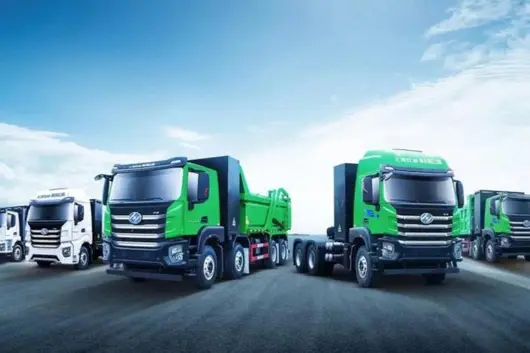

In May 2026, China's commercial vehicle market submitted a report card of "moderate recovery".
According to data from the China Association of Automobile Manufacturers, commercial vehicle production and sales for the month totaled 375,000 and 376,000 units, representing year-on-year growth of 11.8% and 12.5% respectively. Cumulative from January to May, production and sales totaled 1.886 million and 1.888 million units, representing year-on-year growth of 8% and 7.7% respectively. Overall, the industry is recovering, but the pace is relatively stable, lacking explosive force.
However, against the backdrop of limited overall industry growth momentum, SAIC Commercial Vehicle submitted a report card far exceeding the industry average. Latest data from CAAM shows that Maxus Light Vans topped the brand's monthly sales chart with a monthly sales volume of 11,865 units. Cumulative sales from January to May exceeded 47,000 units, with monthly and cumulative market shares both reaching 26.8%, sweeping the "double crown" for monthly and cumulative sales. SAIC Commercial Vehicle not only achieved a crushing lead in the light van segment but also submitted a report card showing full-line strong performance across all categories: 27,509 units sold overall in May, a 41% year-on-year increase, with the growth rate reaching 3.3 times the industry average, leading by a significant margin.

Establishing absolute dominance in the light van segment, this enterprise also achieved leapfrog leadership in light trucks and the new energy sector—light trucks grew by 41% against the trend, 5.5 times the industry average; overall new energy penetration rate reached a high of 35%, continuing to lead the industry's green transformation.
So, how did SAIC Commercial Vehicle achieve "acceleration" amidst the industry's "headwinds"?
Light Vans Top the List: The Logic Behind the "Triple Crown"
The current light van market is undergoing a profound restructuring, with a trend of concentration at the top becoming increasingly intense. According to CAAM data, the top three brands in the May 2026 light van market had a combined market share of 76.9%. The "Matthew Effect" where "the strong become stronger" is becoming increasingly clear in the segment.
In this round of industry reshuffling, SAIC Maxus is the standout leader. In May this year, SAIC Maxus light vans achieved monthly sales of 11,865 units, topping the brand sales chart; cumulative sales from January to May exceeded 47,000 units, with monthly and cumulative market shares stable at 26.8%. This is equivalent to one out of every four light vans sold coming from this top brand.

Looking at the entire SAIC Commercial Vehicle light van segment, its leading advantage is more comprehensive: in May, monthly sales, export volume, and domestic insurance volume market shares reached 28.5%, 29.4%, and 18.2% respectively, ranking first in the industry on all three indicators; cumulatively from January to May, sales and export market shares both exceeded 30%, and the domestic insurance market share also firmly topped the list at 19.3%, securing the legitimate "Triple Crown".
More convincing than scale leadership is the growth rate: Maxus light van sales grew by 56% year-on-year in the month, exactly twice the industry's average growth of 28%, making it the fastest-growing among all top brands.
Behind this eye-catching achievement lies the strong support of the Danan Series, a phenomenon-level blockbuster. In May, the Danan Series achieved monthly sales of 5,934 units, surging 197% year-on-year and setting a new historical record.

Among them, the Danan Super Extended Range, positioned as the "industry's first super extended-range light van", performed exceptionally well, precisely hitting the core pain points of urban distribution logistics users: equipped with CATL's 50 kWh Tianxing battery, CLTC pure electric range 312 km, full fuel and electricity combined range up to 1260 km; the matching Xingpai efficient mini extender has a volume half that of traditional products, weighs less than 70 kg, 1 liter of fuel can generate 3.3 kWh, translating to a low energy consumption of 2.65L per 100km. Daily city distribution can operate at low cost in pure electric mode, while long-distance transport relies on the extended range mode to completely alleviate range anxiety, perfectly balancing the usage cost of electric vehicles with the refueling convenience of gasoline vehicles.
From market share leadership to growth rate leading, from the breakout of single products to the accumulation of brand momentum, SAIC Maxus has established comprehensive competitive advantages in the light van segment. With the trend of industry concentration continuing to deepen, backed by product strength and technical reserves, its competitive barrier as the "China's Top Light Van Brand" continues to be solidified.
Light Truck Breakout: The "Dark Horse" in a Downward Industry
If the light van market is still on the channel of "moderate recovery", then the light truck segment is still "plodding along under burden". According to CAAM data, domestic light truck cumulative sales from January to May this year reached 862,000 units, a slight decrease of 0.62% year-on-year, with the industry overall deeply entrenched in a stalemate of stock competition. Although electrification transformation is already a consensus across the industry, most players are still stuck in the transitional stage of "ICE-to-EV conversion".
But in such a "headwind" environment, SAIC Maxus Yuejin light trucks broke out against the trend like a "dark horse". In May this year, Yuejin light trucks achieved monthly sales of 4,287 units, a significant 41% year-on-year increase, with growth reaching 5.5 times the industry average for light trucks that month. Against the background of overall cumulative decline in the industry, such high growth is particularly striking.

What more accurately reflects the quality of growth is the power structure behind it. The proportion of new energy vehicle sales for Yuejin that month was as high as 67%, with new energy sales nearly doubling year-on-year, an increase of 99%. This means Yuejin's growth was not propped up by traditional fuel vehicles "forcing it", but was "high-quality growth" driven by electrification transformation.
This breakout against the trend was by no means accidental; the core confidence comes from Yuejin's persistent "native electrification" route—stepping out of the industry's common "ICE-to-EV conversion" transitional model, from product definition to technical architecture, built entirely around native electrification.
In March this year, Yuejin globally launched the "Tianyuan Architecture". As a new energy smart light truck architecture from SAIC Commercial Vehicle for the global market, it is centered on an electric drive rear axle, shares the same lineage as Maxus MIVA electronic architecture, compatible with charging, battery swapping, extended range, and multiple refueling modes, while deeply integrating ADAS and smart cockpit capabilities.

It is precisely this "no compromise" technical route choice that allowed Yuejin to establish differentiated competitive advantages in the new energy light truck segment. While the industry was still debating the path of "ICE-to-EV conversion", Yuejin has already handed in a market answer sheet for native electrification with a 67% new energy penetration rate and nearly doubled growth speed.
More Than Just Light Vans and Light Trucks
Light vans topping the list, light trucks breaking out, but SAIC Commercial Vehicle's "report card" extends far beyond this.
In May this year, SAIC Commercial Vehicle's overall sales reached 27,509 units, a 41% year-on-year increase, this growth rate being 3.3 times the 12.5% growth rate of the commercial vehicle industry average for the same period. Among them, new energy and overseas markets performed exceptionally well: new energy vehicle monthly sales reached 11,476 units, surging 143% year-on-year; overseas market sales reached 12,392 units, increasing 56% year-on-year, with both sectors setting new monthly highs. Behind this "full-line leading" market performance is the coordinated effort of the two growth engines of new energy and globalization.

First, look at new energy. From January to May this year, the cumulative penetration rate of domestic new energy commercial vehicles was 28.2%, while the overall new energy penetration rate for the five major brands under SAIC Commercial Vehicle (Maxus, Yuejin, Iveco, Hongyan, Sunwin) has reached 35%, nearly 7 percentage points higher than the industry average. The electrification progress of each brand has its own focus: Sunwin buses have already completed 100% new energy transformation early on, the new energy sales proportion of Yuejin light trucks reached 67%, and Maxus brand's monthly new energy penetration rate in the domestic market has broken 50% multiple times.
At the technical level, SAIC Commercial Vehicle has completed the layout of all energy routes including fuel, pure electric, plug-in hybrid, and extended range. Relying on self-developed core technologies such as Hongtu 2.0 Super Commercial Electric Architecture and Xingzhan Pickup Platform as the foundation, combined with the deep binding with CATL for "technical co-research, ecosystem co-building, global co-progression", they jointly built a new energy product matrix with high safety, long range, and strong adaptability. This combination of all energy route coverage, core technology self-research, and deep synergy with top-tier supply chains has formed a competitive barrier that peers are difficult to replicate in the short term.

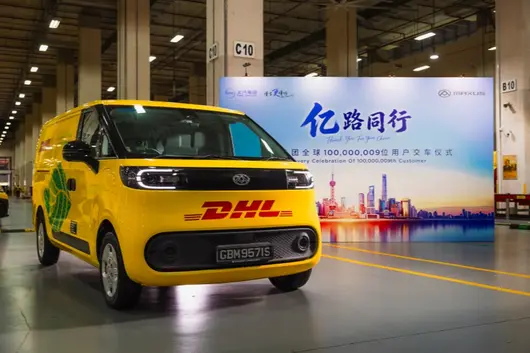
Next, look at globalization. In May, SAIC Commercial Vehicle's overseas sales reached 12,392 units, a 56% year-on-year increase. In specific markets, Maxus delivered eDeliver 5 to international logistics giant DHL in Singapore, and this vehicle also became the ride of the 100,000,009th user of SAIC Group; in the Australian and Chilean markets, the Maxus T70 had not yet officially launched, but order volume had already broken 800 units.
But more worthy of attention than sales figures is the strategic upgrade of the overseas export model. SAIC Commercial Vehicle has long stepped out of the traditional path of single product export, shifting to a new stage of systematic globalization layout, deep localization operations, and full-scenario business solution output, moving from simply "selling products" to "building ecosystems", using a logic of long-term symbiotic cooperation to replace short-term transactional thinking.

Looking back from the node of May 2026, this full-line leading report card from SAIC Commercial Vehicle proved to the industry what is called "growth against the trend"—light vans won championships on three indicators, light trucks achieved dark horse growth rates, new energy transformation continues to lead, and globalization layout accelerated landing. In these segments, SAIC Commercial Vehicle has no obvious shortcomings.
Against the background of the industry shifting from incremental competition to stock game competition in all aspects, SAIC Commercial Vehicle's performance also confirmed a truth: a true leader is not about riding the wave to rise in favorable conditions, but being able to continuously broaden the lead position with systematic comprehensive advantages during the industry's pressure cycle, setting a reference model for the high-quality development of commercial vehicles in the era of stock competition.
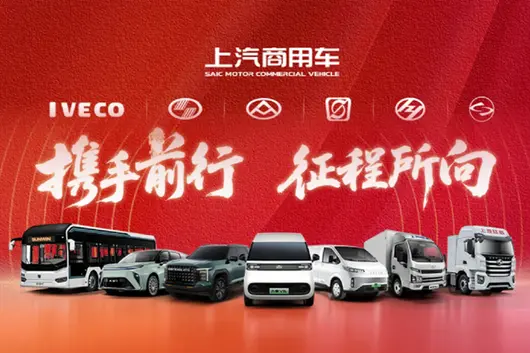

"The 100 Millionth" Journey Together, Gathering Strength to Move Upward. In May, SAIC Commercial Vehicle continued strong growth, with new energy and overseas sales lines hitting new highs again. Sales reached 27,509 units in the month, a 41% year-on-year increase. New energy vehicle sales reached 11,476 units, a 143% year-on-year increase. Overseas sales reached 12,392 units, a 56% year-on-year increase, achieving dual new highs! Multiple lines of new energy light commercial vehicles and light trucks performed strongly: The DNaka series sold 5,934 units, setting a new sales record, continuing to lead the light commercial vehicle market; Yuexing new energy transformation accelerated, with new energy sales accounting for up to 67%; Iveco new energy models frequently secured major industry orders, injecting strong momentum into high-quality growth in the second quarter. Coinciding with SAIC Group welcoming the global 100 millionth user delivery milestone, SAIC Commercial Vehicle used outstanding results to pay tribute to this highlight moment, demonstrating China's commercial vehicle leading strength.

[SAIC Commercial Vehicle Five Brands Relay Delivery, Celebrating the 100 Million User Moment]


[SAIC Commercial Vehicle May High Sales]
New Energy light vans continue to lead, solidifying China's No.1 light commercial vehicle brand status. Maxus light vans sold 11,865 units in May, a 56% YoY increase. DNaka series set new sales record, selling 5,934 units, a 197% YoY surge. "Industry's first super extended range large light commercial vehicle" — DNaka Super Extended Range continues to sell hot, becoming the preferred wealth-creation vehicle for city distribution and cross-city logistics users; DNaka V1, based on extreme electricity usage efficiency, won the Level 1 energy efficiency certification from China Quality Certification Center, entering the top tier of commercial vehicle energy efficiency. Iveco had a productive May with multiple models succeeding; Juxing EV completed the delivery to the 100,000,013th user of SAIC Group, assisting the green transformation of Henan Laojun Mountain tourism passenger transport; Additionally, Iveco Deyi and Juxing two main models consecutively secured major orders in police and medical fields, making new breakthroughs in the special purpose vehicle market.

[Maxus DNaka V1]
Pickup trucks continue to climb steadily, new energy share in light trucks reaches 67%. Maxus Pickup continued the momentum of "China's No.1 High-end Pickup Export", sold 7,223 units in May, a 58% YoY increase. The industry-first 7-day free trial policy continues to be implemented, lowering user purchase decision threshold with immersive deep experience; "Interstellar Project" Medog station lands steadily, using hardcore pickup capacity to clear the channel for mountain agricultural products, practicing the mission of rural revitalization. Yuexing sold 4,287 units in May, a 41% YoY increase, among which new energy model sales share reached as high as 67%! Sales increased 99% YoY. Yuexing completed DNaka T1 delivery to SAIC Group's 100,000,012th user Didi Earth; In 2025, nearly 10,000 DNaka T1s have been delivered to it, effectively unblocking the "capillaries" of urban-rural logistics. Overseas continues to expand, Yuexing also reached cooperation with Vietnam's well-known commercial vehicle enterprise, layouting Southeast Asia electric light truck market. Channel and ecosystem layout continues to deepen, Yuexing's first national ecosystem operation center also officially opened in Henan, perfecting one-stop service system.

[Yuexing DNaka T1]
Heavy trucks, buses new energy tracks grow synergistically, New Power Technology creates monthly record high. Hongyan delivered i Jieshi dump trucks in Taiyuan, Shanxi, welcomed Group's 100,000,011th user, relying on military heritage and strong performance to handle complex mountain working conditions, deeply safeguarding infrastructure powerhouse construction, promoting heavy truck industry to move comprehensively to green and low-carbon new development stage; Sunwin delivered 10-series low-floor pure electric city bus to Group's 100,000,010th user Jiading Public Transport, empowering urban public transport smart upgrade with zero carbon travel. Parts sector New Power Technology May engine sales reached 21,888 units, YoY growth 56.6%, creating highest monthly sales in 80 years, achieving continuous 5-month double-digit growth.

[Hongyan i Jieshi Dump Truck]

[Sunwin Series 10 Low-Floor Pure Electric City Bus]


[SAIC Commercial Vehicle May Sales Lines Through the Breakthrough]
Global layout deepening, major orders and reputation dual harvest. May SAIC Commercial Vehicle overseas market reported good news again, sales 12,392 units, YoY surge 56%. In Singapore, Maxus delivered eDeliver 5 (Domestic DNaka V1) to international logistics giant DHL, welcomed Group's 100,000,009th user. This is also another milestone moment since they joined hands in 2017. Overseas market volume and quality rise together, second half of 2026 Australia and Chile will launch Maxus T70 (Domestic brand new Interstellar L) first, pre-listing orders already exceeded 800 units. SAIC Commercial Vehicle built integrated global development system, from single product going overseas to system, ecosystem, globalization new development stage.

[Maxus Delivered eDeliver 5 (Domestic DNaka V1) to International Logistics Giant DHL]
From sales steady growth to new energy full acceleration, from global major orders frequently appearing to 100 million unit milestone crown, SAIC Commercial Vehicle with five brands synergy force, entire industry chain deep layout, continued to lead China commercial vehicle industry. Future, SAIC Commercial Vehicle will continue anchor global commercial vehicle leading brand vision, deepen new energy transformation and global layout, with product innovation, ecosystem co-construction, global operation as core engine, continuously improve brand competitiveness and market influence, with better product quality, more perfect service, lead global commercial vehicle industry to green, intelligent, high-quality development new stage.

Sekilas Model

Adakah Audi A3 berbaloi untuk dibeli, intipatinya bukan berapa tarikan ia kelihatan, tetapi sama ada ia boleh memenuhi keperluan penggunaan kereta sebenar anda. Artikel ini akan memberi tumpuan kepada pertimbangan pembelian secara keseluruhan.
Harga berada pada RM 340,112, pembeli boleh menggunakannya terlebih dahulu untuk menilai tekanan bajet dan penempatan setaraf.
Panduan Harga Pembelian
Anggaran pembelian Audi A3 boleh mula diukur dari RM 340,112. Nombor ini benar-benar mempengaruhi ansuran bulanan, insurans dan arus tunai, bukan sekadar harga yang dipaparkan di showroom.
Jika anda bimbang antara beberapa versi, anda boleh letakkan 2025 2.0T S line (RM 340,112) dalam senarai yang sama untuk dibandingkan. Pembeli yang komuter harian perlu mengutamakan keselesaan dan keselamatan, manakala pembeli yang kerap memandu di lebuh raya lebih perlu mengutamakan prestasi, pemanduan bantu dan keselesaan kabin.
Ringkasan Parameter Utama
Apabila melihat spesifikasi teras Audi A3, yang paling penting ialah menterjemahkan angka kepada pengalaman dalam kehidupan.
Turbocharged, tapak enjin 4 silinder, sesuai digunakan untuk menilai sama ada memandu di bandar mengikuti kereta lain dan memandu laju di lebuh raya adalah mudah. Output 190 Ps, 320 N·m, makna sebenar ialah semasa penuh, mendaki dan memotong tiada rasa terlalu berat. Penggunaan bahan api 6.2 L/100km, bagi orang yang komuter setiap hari akan mempengaruhi frekuensi mengisi minyak secara langsung. Panjang kereta 4495 mm, lebar 1816 mm, tinggi 1425 mm, jarak roda 2636 mm, boleh membantu anda menganggarkan kesukaran parkir dan ruang belakang.
Analisa Kelebihan dan Kekurangan
Kelebihan Audi A3 tidak perlu dibesar-besarkan, yang benar-benar berharga ialah sama ada ia boleh menjadikan penggunaan harian lebih mudah: lokasi bajet jelas, memudahkan perbandingan langsung dengan kereta setaraf, kos tenaga harian ada rujukan jelas, output kuasa boleh menyokong keperluan lebuh raya dan memotong.
Perlu diambil perhatian ialah parkir di bandar dan jalan sempit masih perlu dilihat berdasarkan kebiasaan memandu peribadi. Ini bukan item tolak, tetapi butiran kehidupan yang perlu difikirkan terlebih dahulu sebelum tempahan.
Soalan Lazim Pembelian
Sebelum membeli Audi A3, soalan yang paling sering ditanya oleh pembeli bukan spesifikasi tunggal, tetapi sama ada ia boleh menyatu dalam kehidupan mereka.
Kereta ini sesuai untuk siapa? Sesuai untuk pembeli yang meletakkan pertimbangan pembelian keseluruhan sebagai keutamaan. Apakah yang perlu dilihat pengguna keluarga? Utamakan ruang belakang, kerusi kanak-kanak, bagasi dan kesudahan naik turun harian. Adakah akan menyusahkan setiap hari? Penggunaan bahan api rujukan 6.2 L/100km menjadikan kos komuter lebih mudah dianggarkan.
Kandungan Perbandingan Saingan
Apabila meletakkan Audi A3 dalam senarai kereta setaraf, tidak disyorkan hanya melihat jenama atau bentuk. Urutan perbandingan yang benar-benar berguna ialah: guna RM 340,112 untuk mengunci bulat bajet, kemudian lihat sama ada kuasa mencukupi untuk menghadapi lebuh raya dan penuh, seterusnya bandingkan kos tenaga dan kemudahan isi, akhirnya lihat sama ada ruang sesuai untuk keluarga dan bagasi.
Keputusan yang ditapis sedemikian lebih dekat dengan kehidupan harian. Anda akan lebih jelas sama ada ia sesuai untuk komuter bandar, pengangkutan keluarga, memandu laju jauh, atau lebih sesuai sebagai pilihan yang menuntut identiti.
Panduan Kitaran Penggunaan

Kos harian mempunyai Audi A3, secara langsung akan tercermin dalam bahan api, insurans, tayar dan penyelenggaraan berkala. Penggunaan bahan api 6.2 L/100km menjadikan bajet komuter lebih mudah dikawal.
Jika anda sering memandu di Lebuhraya Utara-Selatan, kuasa dan keselesaan kabin akan lebih penting daripada harga murah sahaja; jika terutamanya di bandar, keanjalan parkir, penglihatan dan kelancaran kelajuan rendah akan lebih mempengaruhi mood.


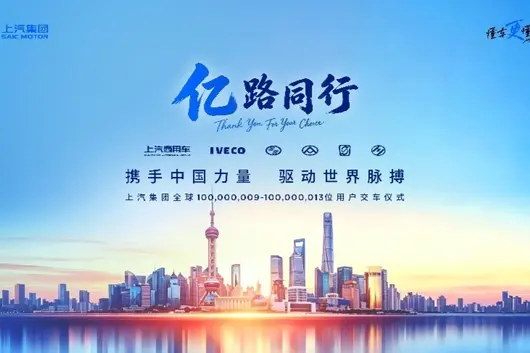
The wheels of time carry original aspirations, and the footprints of struggle remain clear. On May 28, SAIC Group's global 100 millionth vehicle was officially delivered in Shanghai North Bund. When the digital key of IM LS9 Hyper lit up the lighthouse of a new journey, SAIC Group's 100,000,009th to 100,000,013th new cars simultaneously started delivery. SAIC Commercial Vehicle handed over five keys to users at home and abroad—from Singapore DHL's logistics hub to Shanghai Jiading's bus depot, from infrastructure construction sites in Taiyuan, Shanxi to tourism special lines on Laojun Mountain, Henan. It included light vans, light trucks, heavy trucks, and large buses. Using "five keys" as a metaphor, SAIC Commercial Vehicle has turned the page to a brand new chapter of the Chinese commercial vehicle new energy era.

These five keys not only open five new cars, but also are the wealth-creation dreams of thousands of strivers globally, the era's miniaturized version of the Chinese commercial vehicle's leap from following to leading, and more so, the original commitment of SAIC Commercial Vehicle to "Serve People's Livelihoods, Connect the World, and Drive the Future".
Every Era
Has SAIC Commercial Vehicle's Excellent Wealth-Creating Cars
Looking back, the wheels of SAIC Commercial Vehicle have always galloped at key nodes of national development. From the early days of the founding of the country when Yuejin trucks rushed to construction sites across the country, to after the Reform and Opening-up when Iveco light commercial vehicles ran across the great rivers and mountains, to the new energy era, DANA light commercial vehicles became a phenomenon-level model in the new energy light commercial vehicle market, Hongyan new energy heavy trucks support the backbone of green infrastructure, Shenwo Bus became the demonstration model of green public transport, for every era, SAIC Commercial Vehicle has wealth-creating cars belonging to this era; every good car carries the hope of a generation working hard with their hands.
Commercial vehicles are the "capillaries" of the national economy, their value lies in supporting national economy and people's livelihood. User value is the eternal origin point of SAIC Commercial Vehicle. Commercial vehicles are users' "wealth-creation tools"; every investment must be converted into tangible returns. At the 100 million vehicle delivery celebration, these five keys delivered by SAIC Commercial Vehicle precisely embedded into five major scenarios: global trade, urban-rural circulation, urban mobility, infrastructure engineering, and cultural tourism industry, building a green transportation system covering the full chain of production, circulation, and consumption, injecting new momentum into high-quality development of the real economy through technological innovation.

Especially in the global logistics field, SAIC MAXUS defined a new benchmark for green supply chains with Chinese solutions. Addressing Singapore's "land is precious, frequent delivery" market characteristics, SAIC MAXUS customized and developed the DANA V1 (eDeliver5) pure electric light commercial vehicle for DHL. With product advantages of sufficient range, efficient charging, and flexible loading, it fully meets local urban last-mile delivery, cross-border parcel transfer, and supermarket fresh produce transportation needs. Currently, including DHL, SAIC Commercial Vehicle has become a benchmark assistance for multiple global logistics giants exploring green logistics transformation.

In the field of urban-rural circulation grand loop, SAIC MAXUS Yuejin brand used green transportation power to solidify the foundation of common prosperity. In 2025, after nearly 10,000 DANA T1 units were put into operation by Di Shang Tie, it not only significantly reduced logistics transportation costs, but also opened two-way channels for agricultural products entering the city and industrial products going to the countryside, turning green transportation power into tangible income for thousands of workers.

Not limited to global supply chains and urban-rural grand loops, the reach of SAIC Commercial Vehicle's green transportation power has extended to every dimension of urban operations, national infrastructure, and people's livelihood consumption. In the urban mobility field, Shenwo Bus delivered 10-series pure electric buses to Jiading Public Transport, serving as the main force of green public transport and aiding urban low-carbon transformation. In the infrastructure engineering field, Shanxi Henglongsheng again gave Hongyan a vote of confidence with 56 Hongyan New Energy 8x4 dump trucks and tractor units order. From traditional energy to green power, from loyal users to strategic partners, for 8 years, Henglongsheng and Hongyan have jointly written stories of mutual achievement. In the cultural tourism industry, Iveco Juxing EV reached a strategic cooperation with Henan Zhonglian Tourism, using green transportation power to light up local cultural tourism economies.


From global supply chains to domestic grand loops, from urban logistics to rural revitalization, from public transport to infrastructure engineering, products cover full series including heavy trucks, large buses, light trucks, light commercial vehicles, pickups, MPVs, RVs, etc. SAIC Commercial Vehicle's green wheels have deeply integrated into all aspects of national economy and people's livelihood. These five keys open doors for green development in different fields, adhering to SAIC Commercial Vehicle's unchanging original aspiration.
Five Keys, One New Chapter
Let technology serve people, let struggle have more value. These five keys at SAIC Group's 100 million vehicle delivery ceremony, while turning a new chapter of green development in various fields of commercial vehicles, highlight the leading strength of SAIC Commercial Vehicle in global commercial vehicle new energy transformation.
A company's leadership can only show its true weight when placed in the global industrial landscape. Currently, global commercial vehicle new energy transformation lags generally: 2025 Europe market penetration rate is about 10%, North America market less than 3%, Japanese top car companies are still watching. But Shenwo Bus achieved full electrification, MAXUS domestic new energy vehicle penetration rate broke 50% in single months repeatedly, Yuejin new energy light truck sales continue to grow... SAIC Commercial Vehicle, with 35% overall new energy vehicle penetration rate, is like a lighthouse, illuminating the direction of global commercial vehicle transformation.

This leadership stems from precise grasping of the pulse of era development, and more so from precise solving of core industry pain points and technological innovation. Relying on SAIC Group's R&D investment of nearly 150 billion yuan in the past decade, SAIC Commercial Vehicle did not take the shortcut of "single point breakthrough", but built a "Technology - Intelligent Manufacturing - Ecosystem" full-chain innovation system, persisting in pure electric, plug-in hybrid, range extender, and hydrogen fuel four roads advancing together, and pioneering the "Large Battery + Small Range Extender" technology route. Taking "Ultimate TVO (Total Lifecycle Value) and TCO (Total Lifecycle Cost)" as the foundation, relying on self-developed architectures like "Hongtu" "Xingzhan", from the "last mile" of livelihood wealth creation to the main artery of global logistics, full scenario empowerment, walking with strivers, forging a new energy transformation path that fits China's national conditions and can be replicated globally.

The dual advantages of technology and intelligence have been converted into competitiveness in the global market. The new energy reform has broken the monopoly pattern of Western car companies for decades, providing Chinese brands with the historical opportunity to overtake on a bend. SAIC Commercial Vehicle's map has covered over 100 countries and regions globally, building five "Ten-Thousand Unit Level Core Markets". Light commercial vehicle export volume rose to 2nd in Chinese car companies, light commercial vehicle export volume ranks 1st, pickup export volume ranks 2nd, and by integrating full-category resources under its brand to build an integrated development system, it moved from single product going global to systematic, ecosystem-based, global new development stage.
SAIC Commercial Vehicle's leadership is a gift of the era. All technical breakthroughs and market achievements stem from SAIC Commercial Vehicle's original aspiration of walking with thousands of strivers. Behind every commercial vehicle, there is a striver who treats the vehicle as home. They are urban distribution drivers shuttling through streets and alleys at 3 am, heavy truck couples running across the country, rural passenger transport masters picking up and dropping off children for school, infrastructure workers rushing against the schedule under the scorching sun... They treat the car as production materials, as the reliance for raising a family and getting rich, as a partner to realize dreams. It is exactly the trust and entrustment of tens of thousands of users that, together with SAIC Commercial Vehicle, has walked through a journey of struggle.
Five keys, one new chapter. Facing the future, SAIC Commercial Vehicle proposed the goal of "doubling sales, breaking annual sales of 500,000 vehicles" within five years, taking "Market First in China Light Commercial Vehicles", "Market First in China New Energy Light Commercial Vehicles", "Market First in Overseas Light Commercial Vehicle Exports" as three strategic pivot points, aiming at the first tier of global commercial vehicles.
Standing on the new starting point of SAIC Group delivering 100 million vehicles, SAIC Commercial Vehicle will continue to inherit the original aspiration of Chinese car companies serving the country through industry, with the determination of "Second Entrepreneurship", continuously deepening green intelligent technology, creating more wealth-creating good cars that can make money, are easy to drive, and are reliable. Not disappointing the gift of the era, not disappointing users' trust, let China's commercial vehicles' green wheels run across urban and rural lands, sailing towards the global market.
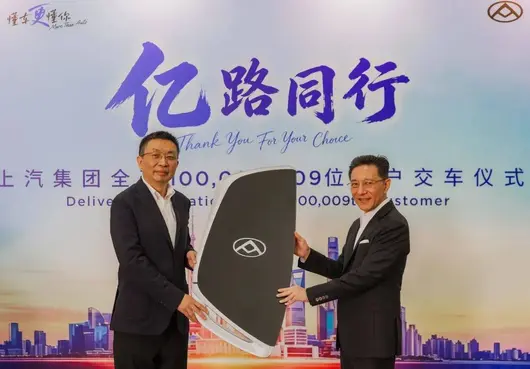

In May 2026, SAIC Commercial Vehicle sales reached 27,509 units, up 41% year-on-year; among them, new energy vehicle sales were 11,476 units, up 143% year-on-year, overseas sales were 12,392 units, up 56% year-on-year, with new energy and overseas sales lines both reaching new highs.

In the light commercial vehicle sector, SAIC Maxus sold 11,865 units in May, up 56% year-on-year. The Deliver series sales reached 5,934 units, up 197% year-on-year. Deliver V1 obtained Level 1 Energy Efficiency Certification from the China Quality Certification Centre. Regarding the Iveco brand, the Jiuxing EV completed delivery for Henan Laojun Mountain Cultural and Tourism Passenger Transport; Deyi and Jiuxing models received orders for specialized vehicles such as police and medical use.

Regarding pickups, SAIC Maxus pickup sales reached 7,223 units in May, up 58% year-on-year, and continues to implement a 7-day free trial policy. Regarding light trucks, Yuejin brand sales reached 4,287 units in May, up 41% year-on-year, with new energy models accounting for 67%, and new energy sales up 99% year-on-year. At the same time, Yuejin reached a cooperation with a Vietnamese commercial vehicle enterprise, layouting the Southeast Asian electric light truck market, and opened its first ecological operation center in Henan.

Regarding heavy trucks and buses, Hongyan delivered i Jieshi dump trucks in Taiyuan, Shanxi. Sunwin delivered 10-series low-floor pure electric city buses to Jiading Public Transport. In the parts segment, New Power Technology engine sales were 21,888 units in May, up 56.6% year-on-year, setting a new single-month sales record, maintaining double-digit growth for 5 consecutive months.

Regarding the overseas market, SAIC Commercial Vehicle exported 12,392 units in May, up 56% year-on-year. In Singapore, SAIC Maxus delivered eDeliver 5 to DHL (domestic model is Deliver V1). Plans are to launch Maxus T70 (Domestic new Interstellar L) in Australia and Chile in the second half of 2026, with current pre-market orders exceeding 800 units.
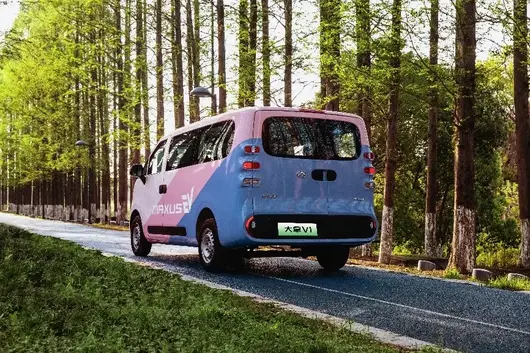

车型概览

Dongfeng Box 值不值得买,关键不是它看起来有多吸引,而是它能不能解决你的真实用车需求。这篇文章会把重点放在充电节奏、通勤半径和使用便利。
价格落在 RM 100,690 - 102,690,买家可以先用它判断预算压力和同级定位。
购车价格指南
Dongfeng Box 的购车预算可以先从 RM 100,690 - 102,690 开始衡量。这个数字真正影响的是月供、保险和现金流,而不只是展厅里的标价。
如果你在几个版本之间犹豫,可以把 2026 430km Dual Tone(RM 102,690)、2026 430km Single Colour(RM 100,690)、2024 E3、2024 E2 放在同一张清单里比较。日常通勤买家优先看舒适与安全,常跑高速的买家则更应重视动力、辅助驾驶和座舱便利。
核心参数汇总
看 Dongfeng Box 的核心规格,最重要是把数字翻译成生活里的感受。
42.3 kWh的电池容量,重点是能不能支撑一周通勤和周末出门。 70 kW、160 N·m的输出,让高速并线和短距离超车更有底气。 车长 4030 mm、车宽 1810 mm、车高 1570 mm、轴距 2660 mm,可以帮助你预判停车难度和后排乘坐空间。 固定齿比 变速箱、前轮驱动布局 的设定,会影响起步顺滑度、湿地稳定感和长途巡航感。
优缺点分析
Dongfeng Box 的优点不必夸张,真正有价值的是它能不能让日常使用更省心:预算位置清楚,方便和同级车直接比较、动力输出能支撑高速和超车需求、空间和车身尺寸便于家庭买家预判实用性。
需要留意的是,需要先确认家里、公司或常去商场的充电条件、市区停车和狭窄路段仍要看个人驾驶习惯。这些不是扣分项,而是下订前应该先想清楚的生活细节。
购车常见问题解答
购买 Dongfeng Box 前,买家最常问的不是单一规格,而是它能不能融入自己的生活。
这辆车适合谁?适合把充电节奏、通勤半径和使用便利放在首位的买家。 家庭用户要看什么?优先看后排乘坐、儿童座椅、行李和日常上下车是否顺手。 每天开会不会麻烦?只要充电条件稳定,电动车的通勤体验通常更安静,也更容易控制日常能源成本。
竞品对比内容
把 Dongfeng Box 放进同级车名单时,不建议只看品牌或外形。真正有用的比较顺序是:先用 RM 100,690 - 102,690 锁定预算圈、再看动力是否足够应付高速和满载、接着比较能源成本和补能便利、最后看空间是否适合家人和行李。
这样筛选出来的结果更贴近日常生活。你会更清楚它是适合城市通勤、家庭代步、长途巡航,还是更适合作为一辆讲求个性的选择。
用车全周期指南

拥有 Dongfeng Box 的关键,是先把充电安排想清楚。家充、公司充电或商场快充只要其中一项稳定,日常体验就会轻松很多。
如果你常跑南北大道,动力和座舱舒适度会比单纯低价更重要;如果主要在市区,停车灵活性、视野和低速顺滑度会更影响心情。

© 2024 Bitauto.com. All Rights Reserved.
Bitauto (www.yiche.com and www.bitauto.com) is one of the most visited automotive websites in China. We provide detailed info on Chinese car brands available in your area. Please note that the information provided on this website is based on publicly available data and is for reference only. It may not be fully updated or accurate at all times.

Help us improve our website


