

Homedelights

Search History
Popular Searches
Dealer Login / Sign Up

6 November maklumat:
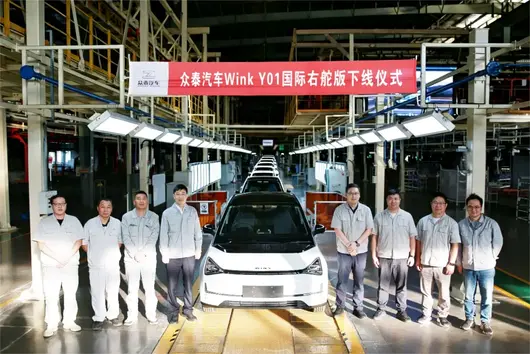
Syarikat Kereta Zotye khas untuk pasaran luar negeri pembangunan dan pembangunan kereta elektrik tulen saiz kecil Wink Y01 model stereng kanan antarabangsa rasmi dilepaskan daripada talian pengeluaran, model baru dirancang pada awal 2027 untuk mencapai penghasilan jisim dan penghantaran. Kenderaan menggunakan reka bentuk keretahatchback, bahagian hadapan menggunakan lampu depan segi tiga dan lampu siang hari sepanjang, sisi menggunakan pemegang pintu separa tersembunyi, reka bentuk luaran keseluruhan kenderaan tidak kelihatan jelas jejak meniru.

Dari segi dalaman, kenderaan menggunakan kabin jenis wrap-around, papan pemuka tengah mempunyai paparan digital terapung dan skrin sistem kenderaan bersaiz besar; kenderaan menggunakan stereng dua jejari, hujung mempunyai butang pelbagai fungsi bulat. Stereng terletak di sebelah kanan, iaitu apa yang dipanggil "stereng kanan;" di negara ini, kenderaan yang dihasilkan dan dijual adalah "stereng kiri", iaitu stereng dan tempat pemandu direka bentuk di sebelah kiri, yang disokong oleh undang-undang trafik laluan kanan, iaitu kenderaan perlu memandu di laluan kanan lebuh raya.
Sebaliknya, stereng kanan disokong oleh undang-undang trafik laluan kiri, iaitu kenderaan di lebuh raya perlu memandu dari laluan kiri.
Untuk mengurangkan buta pemandu, tempat pemandu mesti berhampiran dengan penghalang di tengah, supaya dapat memastikan semasa bertemu kenderaan lain tidak berlaku perlanggaran akibat buta yang terlalu besar; jadi laluan kiri memerlukan tempat pemandu direka bentuk di sebelah kanan, kereta stereng kanan di dalam negara tidak boleh didaftarkan, kecuali Wilayah Persekutuan Khas Hong Kong dan Macau.

Dari ini dapat dilihat Zotye Wink Y01 Edisi Antarabangsa tidak diarahkan untuk pasaran domestik, yang diarahkan mestilah pasar India; kerana Syarikat Kereta Zotye telah menandatangani perjanjian kerjasama strategik dengan rakan di India, kedua-dua belah pihak secara awal bekerjasama dalam mod KD, dirancang pengeluaran 30,000 unit kereta setahun; kedua sekali Zotye juga bekerjasama strategik dengan Indonesia BPKN, fokus masa hadapan akan diletakkan di Asia Selatan dan Asia Tenggara, membuka pasaran seperti India, Indonesia, perancangan jangka panjang adalah untuk menjangkau 55 negara di seluruh dunia.


Syarikat Kereta Zotye sebagai pengasas kereta tiruan, memilih laluan yang betul.
Bisa dikatakan walaupun Zotye diarahkan untuk pasaran domestik mengeluarkan model baru, maklum balas pasaran juga sepatutnya cukup negatif; punca utamanya ialah nama baik awal Syarikat Kereta Zotye agak buruk, produk kenderaan yang dibina terdapat peniruan yang berlebihan dari segi reka bentuk luaran, ia meniru produk kenderaan matang yang meliputi kebanyakan jenama terkenal, ia termasuk tetapi tidak terhad kepada Volkswagen, Audi, Porsche, Mercedes-Benz, Land Rover, Toyota, Kia, Suzuki, dan lain-lain. Produk tertentu di dalamnya hampir mencapai tahap reka bentuk penyulihan untuk kereta asal, lama-kelamaan, Syarikat Kereta Zotye juga mempunyai lelucon "Bahagian Meter".
Sudah nama buruk, pada ketika ini walaupun mengeluarkan produk kereta asli juga sukar lagi diiktiraf oleh pasaran pengguna, jadi hanya menuju ke luar negara; dan hanya sesuai diarahkan ke industri dan budaya kenderaan yang tidak cukup maju, pilihan semasa yang sepadan ialah pasar India dan Asia Tenggara.

Sementara itu, kereta tiruan hanya boleh pada peringkat maklumat yang agak tertutup masih mampu memperoleh pengiktirafan sebahagian pengguna kenderaan, dan dalam zaman di mana maklumat tersebar dengan kelajuan cahaya berdasarkan video pendek dan media sosial yang kaya, ruang pasaran kereta tiruan telah sangat tertekan. Pada tahap ini walaupun ada juga jenama kereta baharu mengikuti laluan lama Syarikat Kereta Zotye, penting juga memperoleh kejayaan, namun ini hanyalah hasil cacat yang dipicu semasa fasa transformasi industri, mengikuti laluan yang telah dilalui oleh Syarikat Kereta Zotye, akhirnya boleh diramalkan semuanya akan dieliminasi.


Dalam pasaran SUV di Malaysia, ramai pembeli sering membandingkan Mazda CX-3 dan Hyundai Santa Fe semasa memilih kereta. Kedua-dua kereta ini agak hampir dari segi harga dan penempatan, hari ini kita akan membuat perbandingan terperinci dari pelbagai aspek untuk membantu anda menjimatkan masa membuat penyelidikan.
Harga OTR Mazda CX-3 di Malaysia adalah RM 126,159 - 139,159, terdapat 2 versi, termasuk 2023 2.0L High (RM 139,159), 2023 2.0L Plus (RM 126,159) dan lain-lain.
Harga OTR Hyundai Santa Fe di Malaysia adalah RM 225,000 - 270,000, terdapat 3 versi, termasuk 2025 2.5T DCT 4WD Calligraphy 6 Seats (RM 270,000), 2025 HEV 1.6T AT 2WD Prestige 7 Seats (RM 245,000), 2025 HEV 1.6T AT 2WD Prime 7 Seats (RM 225,000) dan lain-lain.
Dari segi harga, harga permulaan Mazda CX-3 memang lebih murah RM 98,841 berbanding Hyundai Santa Fe. Jika bajet anda terhad, versi asas Mazda sudah mencukupi untuk keperluan harian. Namun perlu diingat, perbezaan harga beberapa ribu ringgit ini mungkin melibatkan kompromi pada kelengkapan, bergantung pada keperluan anda.

Mazda CX-3 dilengkapi enjin 1.5L Turbo, kuasa 140 hp. Konsumsi bahan api rasmi 7.0 L/100km.
Hyundai Santa Fe dilengkapi enjin 2.0L 4-silinder, kuasa 170 hp. Konsumsi bahan api rasmi 8.0 L/100km.
Dari segi kuasa, enjin 2.0L 4-silinder Hyundai Santa Fe mempunyai 30 hp lebih berbanding 1.5L Turbo Mazda CX-3. Namun untuk penggunaan harian di bandar, kuasa kedua-dua kereta ini sudah mencukupi dan tidak terasa kurang tenaga.

Mazda CX-3 jaminan 5 tahun/150,000km, selang servis setiap 10,000km atau 6 bulan.
Hyundai Santa Fe jaminan 5 tahun/300,000km, selang servis setiap 10,000km atau 6 bulan.

Mazda CX-3 dan Hyundai Santa Fe adalah pilihan utama dalam pasaran Malaysia, sesuai untuk kegunaan keluarga dan perjalanan harian. Jika anda lebih mengutamakan reputasi jenama dan harga jualan semula, boleh pertimbangkan model yang mempunyai reputasi lebih baik; jika anda lebih mengambil berat tentang nilai harga dan kelengkapan, pilihlah model dengan konfigurasi yang lebih kaya. Akhir sekali, disarankan untuk ujian jalan kedua-dua model ini, pengalaman peribadi adalah yang paling penting.

Secara keseluruhannya, Mazda CX-3 dan Hyundai Santa Fe adalah model kereta yang sangat baik di pasaran Malaysia. Memilih yang mana, kuncinya adalah melihat keperluan dan bajet peribadi anda. Kami sarankan anda melakukan penyelidikan, membandingkan beberapa penawaran dari dealer kereta, sebelum melakukan ujian jalan untuk membuat keputusan akhir. Membeli kereta adalah perkara besar, meluangkan masa untuk penyelidikan tidak akan salah.


Di pasaran SUV Malaysia, ramai pembeli membandingkan Mazda CX-3 dan Hyundai Tucson semasa memilih kereta. Kedua-dua kereta ini mempunyai harga dan kedudukan yang agak serupa. Hari ini, kita akan membuat perbandingan terperinci dari pelbagai aspek untuk membantu anda menjimatkan masa penyelidikan.
Mazda CX-3 dijual dengan harga OTR di Malaysia sebanyak RM 126,159 - 139,159, terdapat 2 versi, termasuk 2023 2.0L High (RM 139,159), 2023 2.0L Plus (RM 126,159) dan sebagainya.
Hyundai Tucson dijual dengan harga OTR di Malaysia sebanyak RM 143,888 - 197,888, terdapat 5 versi, termasuk 2025 HEV 1.6T AT 2WD Prestige (RM 197,888), 2025 1.6T DCT 4WD Prestige (RM 186,888), 2025 1.6T DCT 2WD Prime (RM 164,888) dan sebagainya.
Dari segi harga, harga permulaan Mazda CX-3 memang lebih murah RM 17,729 berbanding Hyundai Tucson. Jika bajet anda terhad, versi permulaan Mazda sudah boleh memenuhi keperluan harian. Tetapi perlu diingat, perbezaan harga beberapa ribu itu mungkin melibatkan pemotongan pada kelengkapan, bergantung pada keperluan anda.
Penilaian keselamatan Mazda CX-3 ialah 5★ (ASEAN NCAP), sistem keselamatan aktif termasuk i-Activsense.
Penilaian keselamatan Hyundai Tucson ialah 5★ (ASEAN NCAP), sistem keselamatan aktif termasuk SmartSense.
Kedua-dua kereta mempunyai penilaian keselamatan yang sama, kelengkapan keselamatan pada tahap ini dianggap lengkap. Keselamatan kereta baru semasa ini tiada masalah, anda tidak perlu risau mengenai perkara ini.
Mazda CX-3 panjang badan 4500 mm, ruang bonet 450 L.
Hyundai Tucson panjang badan 4400 mm, ruang bonet 400 L.
Dari segi ruang, badan Mazda CX-3 lebih panjang 100 mm daripada Hyundai Tucson, ruang duduk di dalam kereta akan lebih lapang, terutamanya ruang kaki di belakang. Jika anda sering membawa keluarga atau perlu meletakkan kereta bayi, badan yang lebih besar memang lebih praktikal.
Mazda CX-3 jaminan 5 tahun/150,000km, selang penyelenggaraan setiap 10,000km atau 6 bulan.
Hyundai Tucson jaminan 5 tahun/300,000km, selang penyelenggaraan setiap 10,000km atau 6 bulan.

Secara keseluruhan, Mazda CX-3 dan Hyundai Tucson adalah model kereta yang sangat baik di pasaran Malaysia. Memilih yang mana satu, kunci utamanya adalah keperluan dan bajet peribadi anda. Kami mengesyorkan anda membuat penyelidikan terlebih dahulu, bandingkan beberapa penawaran dari kedai kereta, kemudian buat ujian memandu untuk membuat keputusan akhir. Membeli kereta adalah perkara penting, mengambil masa untuk penyelidikan tidak akan salah.

Dalam pasaran SUV di Malaysia, ramai pembeli membandingkan Mazda CX-3 dan Mitsubishi Xforce ketika memilih kereta. Kedua-dua kereta ini sangat hampir dari segi harga dan penempatan. Hari ini, kita akan melakukan perbandingan terperinci dari pelbagai aspek untuk membantu anda menjimatkan masa membuat kajian.
Harga OTR Mazda CX-3 di Malaysia ialah RM 126,159 - 139,159, terdapat keseluruhan 2 versi, termasuk 2023 2.0L High (RM 139,159), 2023 2.0L Plus (RM 126,159) dan lain-lain.
Harga OTR Mitsubishi Xforce di Malaysia ialah RM 109,930 - 119,930, terdapat keseluruhan 2 versi, termasuk 2026 1.5L Ultimate (RM 119,930), 2026 1.5L Urban (RM 109,930) dan lain-lain.
Dari segi harga, harga permulaan Mitsubishi Xforce lebih murah RM 16,229 berbanding Mazda CX-3. Jujur berkata, dalam julat harga ini, beza beberapa ribu ringgit sebenarnya tidak besar, yang penting adalah nilai keseluruhan dan kos penggunaan jangka panjang.
Mazda CX-3 dilengkapi enjin 1.5L Turbo, kuasa 140 hp. Penggunaan bahan api rasmi 7.0 L/100km.
Mitsubishi Xforce dilengkapi enjin 1.5L Turbo, kuasa 140 hp. Penggunaan bahan api rasmi 7.0 L/100km.
Kedua-dua kereta menggunakan sistem kuasa yang sama, rasa memandu dalam kehidupan sehari-hari pada dasarnya tiada perbezaan. Dari segi penggunaan bahan api juga hampir sama, tidak perlu terlalu bimbang tentang hal ini.
Tahap penilaian keselamatan Mazda CX-3 ialah 5★ (ASEAN NCAP), sistem keselamatan aktif termasuk i-Activsense.
Tahap penilaian keselamatan Mitsubishi Xforce ialah 5★ (ASEAN NCAP), sistem keselamatan aktif termasuk MI-PILOT.
Tahap penilaian keselamatan kedua-dua kereta adalah sama, dalam kelas ini peralatan keselamatan dianggap cukup lengkap. Keselamatan kereta baru masa ini tidak buruk, tidak perlu terlalu bimbang tentang hal ini.
Mazda CX-3 jaminan 5 tahun/150,000km, selang servis setiap 10,000km atau 6 bulan.
Mitsubishi Xforce jaminan 3 tahun/100,000km, selang servis setiap 10,000km atau 6 bulan.

Mazda CX-3 dan Mitsubishi Xforce adalah pilihan utama dalam pasaran Malaysia, sesuai untuk kegunaan keluarga dan perjalanan harian. Jika anda lebih mementingkan reputasi jenama dan harga resell, anda boleh memprioritaskan model yang lebih baik reputasinya; jika anda lebih mementingkan nisbah harga dan peralatan, pilihlah model yang lebih lengkap persediaannya. Akhir sekali, disyorkan untuk memandu kedua-dua model, pengalaman sendiri adalah yang paling penting.

Secara keseluruhan, Mazda CX-3 dan Mitsubishi Xforce adalah model kereta yang sangat bagus di pasaran Malaysia. Memilih yang mana, perkara penting adalah melihat keperluan dan bajet anda sendiri. Kami cadangkan anda membuat kajian, membandingkan beberapa tawaran kedai kereta, kemudian memandu untuk membuat keputusan akhir. Membeli kereta adalah perkara besar, meluangkan masa membuat kajian tidak akan pernah salah.

喺馬來西亞嘅 SUV 市場,好多買家喺揀車嗰陣都會拿 Mazda CX-3 同 Mitsubishi Xforce 嚟做比較。呢兩款車喺價位同定位上都幾接近,今日我哋就從多個方面做一次詳細嘅對比,幫你省返做功課嘅時間。
Mazda CX-3 喺馬來西亞嘅 OTR 售價係 RM 126,159 - 139,159,合共有 2 個版本,包括 2023 2.0L High(RM 139,159)、2023 2.0L Plus(RM 126,159) 等。
Mitsubishi Xforce 喺馬來西亞嘅 OTR 售價係 RM 109,930 - 119,930,合共有 2 個版本,包括 2026 1.5L Ultimate(RM 119,930)、2026 1.5L Urban(RM 109,930) 等。
從價錢睇落,Mitsubishi Xforce 嘅起步價比 Mazda CX-3 平咗 RM 16,229。老實講,喺呢個價位段,幾千蚊嘅差距其實唔算大,關鍵仲係睇整體嘅性價比同長期使用成本。
Mazda CX-3 車身長 4500 mm,車尾箱 450 L。
Mitsubishi Xforce 車身長 4400 mm,車尾箱 400 L。
空間方面,Mazda CX-3 嘅車身比 Mitsubishi Xforce 長咗 100 mm,車內乘坐空間會稍微寬裕啲,尤其係後座腿部空間。如果你經常載家人或者需要放嬰兒車,大少少嘅車身確實更實用。
Mazda CX-3 保養保修 5 年/150,000km,保養間隔 每 10,000km 或 6 個月。
Mitsubishi Xforce 保養保修 3 年/100,000km,保養間隔 每 10,000km 或 6 個月。
Mazda CX-3 同 Mitsubishi Xforce 都係馬來西亞市場嘅主流選擇,適合家庭使用、日常通勤。如果你更睇重品牌口碑同二手價,可以優先考慮口碑更好嗰款;如果你更介意性價比同配備,就揀配置更豐富嗰款。最後仲係建議兩款都去試駕,親身體驗先係最緊要。
總嘅嚟講,Mazda CX-3 同 Mitsubishi Xforce 都係馬來西亞市場好唔錯嘅車型。揀邊輛,關鍵仲係睇你個人需求同預算。建議大家做好功課,多比較幾間車行嘅報價,再去試駕先做最終決定。買車係件大事,花啲時間做功課絕對唔會錯。

In Malaysia's SUV market, many buyers compare Mazda CX-3 and Chery Tiggo 7 PHEV when choosing a car. Both cars are quite close in price and positioning, so today we will make a detailed comparison from multiple aspects to help you save time on research.
Mazda CX-3 OTR price in Malaysia is RM 126,159 - 139,159, there are 2 versions in total, including 2023 2.0L High (RM 139,159), 2023 2.0L Plus (RM 126,159), etc.
Chery Tiggo 7 PHEV OTR price in Malaysia is RM 129,750 - 129,750, there are 2 versions in total, including 2025 1.5T 90km CSH (RM 129,750), What charging methods does the Tiggo 7 PHEV support? Can it be charged using a home power socket? (RM 117,478), etc.
From a price perspective, the starting price of Mazda CX-3 is indeed RM 3,591 cheaper than Chery Tiggo 7 PHEV. If your budget is limited, Mazda's entry-level version is enough to meet daily needs. But also note, the few thousand cheaper might have trade-offs in equipment, specifically depending on your needs.
Mazda CX-3 comes with 1.5L Turbo, 140 hp. Official fuel consumption 7.0 L/100km.
Chery Tiggo 7 PHEV comes with Hybrid, 170 hp. Official fuel consumption 4.5 L/100km.
Regarding power, Chery Tiggo 7 PHEV's Hybrid has 30 more hp than Mazda CX-3's 1.5L Turbo. However, daily driving in the city, both cars have enough power, you won't feel lack of power.
Mazda CX-3 safety rating is 5★ (ASEAN NCAP), active safety system includes i-Activsense.
Chery Tiggo 7 PHEV safety rating is TBD, active safety system includes Basic.
Regarding safety features, both cars got good ratings. However, Mazda CX-3's i-Activsense and Chery Tiggo 7 PHEV's Basic have some differences in functionality. If you value active safety, you can compare the feature lists of both carefully.
Mazda CX-3 body length 4500 mm, trunk 450 L.
Chery Tiggo 7 PHEV body length 4400 mm, trunk 400 L.
Regarding space, Mazda CX-3 body is 100 mm longer than Chery Tiggo 7 PHEV, interior passenger space will be slightly more spacious, especially rear legroom. If you frequently carry family or need to put in a stroller, a larger body is indeed more practical.

Mazda CX-3 warranty 5 years/150,000km, maintenance interval every 10,000km or 6 months.
Chery Tiggo 7 PHEV warranty 3 years/100,000km, maintenance interval every 10,000km or 6 months.

Overall, Mazda CX-3 and Chery Tiggo 7 PHEV are both very good car models in the Malaysian market. Which one to choose depends mainly on your personal needs and budget. It is recommended to do research, compare quotes from several dealerships, and then test drive to make a final decision. Buying a car is a major matter, spending time on research is never wrong.


Organizational surgery of the export champion and the quality cracks they try to stitch up.
In October 2026, Chery Automobile (HK:09973) had information density so high it was nearly overload; two sentences from the company's chairman Yin Tongyue are particularly worth pondering.
One sentence was at the 2026 Global Innovation Conference: "Chery is a high-tech innovation company wearing the guise of an automaker." The other was at the 2026 World Intelligent Connected Vehicle Conference, responding to the Malaysia OMODA 5 recall event: "Going global is not about harvesting, you must be humble and low-key, no boasting, blind expansion makes it easy to turn into land reclamation."
One is an offensive identity declaration, the other is a defensive self-reminder.
Putting these two sentences together, Chery's real situation emerges: it is using a new high-tech company vest to争取 valuation flexibility and strategic depth; but the manufacturing organization underneath the vest that defines itself by export scale, with system capabilities not yet synchronized globally, determines how far it can go.
More notably, Zhang Guibing's personnel adjustment is exactly a key stitch Chery Automobile dropped when trying to stitch the "vest" and "substance" together.
01
On November 1st, Chery Automobile announced: October sales were 282,500 units, up 7.2% year-on-year.
Among them, Chery brand sales were 200,600 units, up 18.2% year-on-year; Exeed sales were 5,637 units, down 40.6% year-on-year; Jetour sales were 58,400 units, down 1.1% year-on-year; iCAR sales were 11,700 units, down 5.5% year-on-year; Luxeed sales were 6,090 units, down 52.5% year-on-year.

For the first 10 months, Chery cumulative sales were 2.3593 million units, up 10.1% year-on-year; exports were nearly 1.7 million units, accounting for about 72%; new energy vehicle cumulative sales were 918,000 units, accounting for about 38.9%.
This set of data shows that Chery's growth is still mainly driven by exports and the main brand, and differentiation between brands is already very obvious; only the Chery brand grew year-on-year.
Scale is still growing, but the growth structure has exposed problems: Chery is becoming more like a company defined by exports, rather than a company defined by global system capabilities.
02
The day before the sales release, Chery Automobile's third-quarter report laid out the other side of scale growth.
In the first three quarters of this year, Chery Automobile revenue was 241.234 billion yuan, up 12.3% year-on-year; net profit attributable to parent company was 13.963 billion yuan, down 2.8% year-on-year.

More notably, Chery realized an exchange gain of 2.974 billion yuan during the same period last year, whereas in the first three quarters of this year, it faced an exchange loss of 3.171 billion yuan.
Revenue is increasing, profits are contracting. The higher the export proportion, the greater the disturbance of exchange rate fluctuations on the income statement; the more aggressive the R&D, the more short-term profit needs scale and quality credit to support it.
However, Chery recently encountered a troubled period in the overseas market. The National Day holiday hadn't even ended before Chery played a big game.
03
On October 6th, in Iskandar Puteri, Johor, Malaysia, a 2023 model OMODA 5 had its rear axle longitudinal arm break while driving, the rear axle connected to two rear wheels detached directly, the vehicle stopped in the middle of the road, fortunately no personal injury was caused.
On the evening of October 11th, Chery Automobile issued a statement saying that this batch of vehicles might have insufficient welding strength at local welding positions of the rear axle longitudinal arm, with a risk of welding tearing in extreme cases; Chery Malaysia subsidiary has started a recall for the affected 8,878 OMODA 5 units.
This event happened shortly after the HIMA brake pedal incident, basically falling within the same public opinion window, and provided practical evidence for the urgency of the new regulations issued by the Ministry of Industry and Information Technology and four other departments on October 10th with extremely high visibility.

Regardless for Chery, which has ranked first among Chinese brand passenger car exports for 23 consecutive years, or for other Chinese automakers who are making exports their second growth pole, this is simply a shake and disaster for the quality reputation of Chinese brands.
More critically, Chery is using Malaysia as a localization pivot for Southeast Asia.
In this market where they are preparing to take root long-term, investing capacity and channels, the mass-selling model OMODA 5 having its rear axle break twice in the same way within two years, the impact is not just sales, but the fundamental judgment of local regulators and consumers on whether Chery's manufacturing system is reliable.
04
The response from the Malaysia Land Transport Authority (JPJ) confirmed the severity of this judgment.
During the first axle break in 2024, JPJ only required a recall, no vehicle model certification freeze. But this time, JPJ directly suspended the OMODA 5 vehicle model certification (VTA), new car registration was completely stopped, and at the same time expanded the audit scope from certain batches of parts to Chery's production assembly line, quality control system, and rear axle supplier welding inspection procedures.
The blade of regulation cut from products to systems, this is much more important than the recall of 8,878 units itself. Yin Tongyue apologized directly to Malaysian Industry Deputy Minister high officials recently, which already explains the severity of the problem.

With scale accumulation being completed quickly, it is asking this company to use slow capabilities to support its endurance. Committing the same mistake twice makes it hard to get forgiveness.
"Autos K-Line" believes that the globalization of listed automaker sales systems can be spread out with channels and products within a few years, but the globalization of quality systems cannot be compressed by speed, nor tolerate even a tiny error.
From the timeline perspective, the Malaysia recall is not the trigger for Chery's personnel adjustment, but in an unforgiving way, it proved the authenticity of the disease that the personnel adjustment needs to treat: when sales end globalization runs ahead of the quality end, speed itself becomes a negative asset for brand credit.
05
When exports become the only growth engine, and premiumization cannot create brand premium in the domestic market, Chery faces a dilemma that must be broken - domestic and foreign operating separately, while the brand capability and quality credit that truly determine long-term profits must be unified under global standards.
Therefore, Zhang Guibing's task is not just to save a recall, but to demolish this wall.
On October 7th, Chery Automobile issued "Announcement on Deepening Globalization 3.0 Strategy Executive Division Adjustment", announcing the integration of the Chery main brand into the global market system, Chery Automobile Executive Vice President Zhang Guibing directly manages the Chery brand domestic business group, concurrently serving as General Manager of International Business Business Group, Chairman of Market and Marketing Management Committee; Executive Vice President Li Xueyong manages the Jetour Brand Business Unit, focusing on promoting the premiumization development of Jetour brand.

Zhang Guibing has been at Chery for 27 years, the brightest background comes from overseas.
He started as a quality engineer, ran through Chery's first overseas CKD project, ground out local experience in Brazil's tariffs, exchange rates and union environment, subsequently managed international business for a long time, spreading channels to over 130 countries and regions.
Putting such a person in the position of Chery brand domestic business group, while letting him continue to concurrently serve as General Manager of International Business Business Group, and coordinate global styling, HR, legal, spare parts, and MoJia Robot, Chery's intent is very clear: use the person most familiar with overseas battlefield standards to force the domestic system to accept global quality benchmarks and operational discipline.
In the October sales volume, Chery was the only main brand with year-on-year growth, which gives Zhang Guibing's task more weight: the main brand is not only Chery's current growth leader, but also the test field for quality system globalization.
Export proportion exceeding 70% means overseas is no longer Chery Automobile's supplement, but the main battlefield; but the main brand's production R&D, supply chain and channel teams still run with strong domestic market inertia.

Letting Zhang Guibing hold both ends at the same time is essentially pulling the global resource pool and regional markets into the same decision loop, using overseas already-verified systematic capabilities to irrigate the domestic in reverse. Zhang Guibing's style is results-oriented and rapid, which is exactly the character needed to demolish walls.
However, one person carrying main brand operations, international business, global functions and new robot business, power and responsibility highly concentrated itself, constitutes a risk variable that needs to be observed.
06
Zhang Guibing's other identity is General Manager of MoJia Robot.
He said very plainly about MoJia's positioning, automobiles and embodied robots share about 70% of technology that can be synergistically reused, MoJia is the first domestic robot enterprise to transplant supply chain system to automobile parts suppliers, synergy covering technical, manufacturing system and channel after-sales three levels.
At the 2026 MoJia Robot Global Launch Conference, Zhang Guibing disclosed, MoJia Robot global sales volume has exceeded 3,000 units, covering over 100 application scenarios, products and services entered 60 countries and regions.

However, MoJia's true strategic value for Chery lies not in short-term sales, but that it is Chery's only carrier able to enter the global market in a non-automotive identity. As technical products entering overseas markets, robot development flexibility and error tolerance space are not in the same magnitude as full vehicles.
Placing MoJia under Zhang Guibing's coordination, alongside global styling, HR, legal, spare parts, shows Chery has already treated it as a component of the global operation system organizationally, rather than a new track needing separate cultivation.
Yin Tongyue complained publicly in April 2026: "Although we embrace AI in every dimension, in the eyes of many capital market people, we are still treated as traditional automakers, so our price-earnings ratio is still low."
Admittedly, Chery H-share current P/E ratio is about 6.5 times, market cap hovers around 130 billion HKD, market pricing logic is still an export-oriented traditional full-vehicle manufacturer.

MoJia, Robotaxi, eVTOL, Agricultural Machinery these extensions, short-term are not enough to change Chery Automobile's profit structure.
However, they jointly bear a function, that is before premiumization in the auto main business realizes brand premium, fight for a blueprint framework and longer time window for Chery in industry discourse and capital market different from export automakers, use technology reuse to create strategic depth.
07
However, technical depth itself cannot automatically solve system credit problems.
Less than ten days after the Malaysia recall statement, Chery officially launched the industry's first Vehicle-to-Grid V2G scaled operation station on October 16th, 400Wh/kg solid-state battery appeared and gave 2027 mid-pilot production line commissioning plan.
On October 19th, CATL Chery (Wuhu) New Energy Technology Co., Ltd. was established, registered capital 1 billion yuan, CATL holds 51%, Chery holds 49%, this is already the second battery joint venture company between the two this year.

Third-quarter report shows, Chery first three quarters R&D expenses 11.046 billion yuan, up 40% year-on-year, provided financial footnotes for these technical actions. Chery's attack depth on electrification core links not only did not stop, but is accelerating.
But precisely because depth is real, the defensive cracks exposed by Malaysia rear axle weld seams may be even more eye-catching.
V2G and solid-state batteries point to future product competitiveness, rear axle detachment points to safety credit of products already running on the road.
In the view of "Autos K-Line", Chery has the ability to push technical depth to 2027, but failed to prevent a rear axle longitudinal arm from cracking on the Malaysia road in 2026 in the defense end. The deeper the attack depth, the less the defense bottom line should be torn.
08
Another noteworthy thing is, Luxeed entered the Ministry of Industry and Information Technology 412th batch "Proposed New Admitted Vehicle Production Enterprise" list on October 16th, production address is No. 8 Wuhuan Jiang Road, Wuhu; in the same batch of documents, the factory district Chery Automobile applied to cancel registration is exactly this factory district.
This means the qualification Luxeed obtained is not new capacity, but Chery transferring the production entity status of an existing factory, along with capacity, overall moved to Luxeed. This also means, from now on, new car rear badges no longer must hang "Chery".

Qualification landing, let Luxeed in law no longer be just "a product line inside Chery factory", but market level independence will not automatically solve within short time because of a announcement.
First 10 months of 2026, Luxeed cumulative sales 49,700 units, down 29.6% year-on-year, average monthly sales less than 5,000 units; beginning of 2026 set 300,000 to 350,000 units annual sales target, now completion rate less than 20%.
Sales decline and independent qualification landing combined together, make Luxeed "being pushed out" urgency stronger.
Luxeed management layer also underwent collective blood change in 2026, Guo Rui, Zhao Changjiang etc. with Huawei and BYD background people entered core positions. Pushing Luxeed out for independent accounting, independent financing, even leaving institutional space for future independent listing, essentially is Chery in listed company statement level a "stop bleeding" action.
This constitutes two sides of the same organizational surgery with Zhang Guibing's personnel adjustment.
Zhang Guibing's task is to pull domestic main brand into global system, using overseas standards force domestic system upgrade; Luxeed independent task is to peel the premiumization burden off main brand and listed company body, let Chery's core resources be more concentrated toward export main battlefield and quality system repair.

One does addition, one does subtraction.
At the performance communication meeting held on October 31st, Chery Automobile Executive Vice President Qi Shilong responded to Luxeed independence said, hope Luxeed team is more like new force enterprises, not simply made into "big-sized" traditional automakers.
After third-quarter report release, Citigroup downgraded Chery Automobile net profit forecast and target price, Soochow Securities included export tax refund reduction impact into profit expectation, Guotai Junan Securities downgraded net profit attributable to parent company expectation, these actions may to a certain extent reflect market worry.
For profit timeline concerned by outsiders, Chery Automobile management layer estimated, domestic new energy business is expected to gradually achieve break-even in second half of 2027; for 2027 overseas market, management layer gave target of year-on-year growth about 20%, and expressed actual performance is expected to exceed this expectation.
Views of AutosKline:
For Chinese listed automakers, globalization first half is about who sells cars farther, second half is about who on others' roads, under regulation and in front of consumers, makes cars more reliable!
Text is original by [Autos K-Line], content reference material sourced from listed company announcements and industry public information (relevant companies and institutions should have an obligation to verify authenticity); some images from internet, copyrights belong to original owners.
Articles from this account, without authorization, cannot be reprinted, violators will be prosecuted. At the same time, article content does not constitute investment advice for anyone! Stock market risks are high, invest cautiously!


Dalam pasaran SUV Malaysia, ramai pembeli yang membandingkan Mazda CX-3 dan Chery Tiggo 7 PHEV semasa memilih kereta. Kedua-dua kereta ini hampir sama dari segi harga dan kedudukan, hari ini kita akan membuat perbandingan terperinci dari pelbagai aspek untuk membantu anda menjimatkan masa membuat kajian.
Mazda CX-3 di Malaysia dijual dengan harga OTR RM 126,159 - 139,159, terdapat 2 versi termasuk 2023 2.0L High (RM 139,159), 2023 2.0L Plus (RM 126,159) dan lain-lain.
Chery Tiggo 7 PHEV di Malaysia dijual dengan harga OTR RM 129,750 - 129,750, terdapat 2 versi termasuk 2025 1.5T 90km CSH (RM 129,750), Apa kaedah pengecasan yang disokong oleh Tiggo 7 PHEV? Bolehkah ia dicas menggunakan soket kuasa rumah? (RM 117,478) dan lain-lain.
Dari segi harga, harga permulaan Mazda CX-3 memang lebih murah RM 3,591 berbanding Chery Tiggo 7 PHEV. Jika bajet anda terhad, versi entry-level Mazda sudah memadai untuk keperluan harian. Namun, perlu diperhatikan, perbezaan harga beribu ringgit ini mungkin melibatkan pengorbanan pada peralatan, ia bergantung kepada keperluan anda.
Mazda CX-3 menggunakan enjin 1.5L Turbo, 140 hp kuasa. Penggunaan bahan api rasmi 7.0 L/100km.
Chery Tiggo 7 PHEV menggunakan sistem Hybrid, 170 hp kuasa. Penggunaan bahan api rasmi 4.5 L/100km.
Dari segi kuasa, Hybrid pada Chery Tiggo 7 PHEV mempunyai 30 hp lebih daripada 1.5L Turbo pada Mazda CX-3. Namun, untuk pemanduan harian di bandar, kuasa kedua-dua kereta sudah mencukupi, tidak akan rasa kurang tenaga.
Mazda CX-3 mendapat tahap keselamatan 5★ (ASEAN NCAP), sistem keselamatan aktif termasuk i-Activsense.
Chery Tiggo 7 PHEV mendapat tahap keselamatan TBD, sistem keselamatan aktif termasuk Basic.
Dari segi peralatan keselamatan, kedua-dua kereta mendapat tahap yang baik. Walau bagaimanapun, terdapat perbezaan fungsi antara i-Activsense Mazda CX-3 dan Basic Chery Tiggo 7 PHEV. Jika anda lebih mementingkan keselamatan aktif, anda boleh membandingkan senarai fungsi kedua-dua sistem ini dengan teliti.
Mazda CX-3 mempunyai jaminan 5 tahun/150,000km, selang penyelenggaraan setiap 10,000km atau 6 bulan.
Chery Tiggo 7 PHEV mempunyai jaminan 3 tahun/100,000km, selang penyelenggaraan setiap 10,000km atau 6 bulan.
Secara keseluruhan, Mazda CX-3 dan Chery Tiggo 7 PHEV adalah model kereta yang sangat baik di pasaran Malaysia. Memilih yang mana, ia bergantung kepada keperluan dan bajet peribadi anda. Kami sarankan anda melakukan kajian, bandingkan harga dari beberapa kedai kereta, kemudian buat ujian memandu untuk membuat keputusan akhir. Membeli kereta adalah perkara penting, meluangkan masa untuk membuat kajian tidak akan salah.

喺馬來西亞嘅 SUV 市場,好多買家喺揀車嘅時候都會拿 Mazda CX-3 同 GWM Haval H6 嚟做比較。呢兩款車喺價位同定位上都好接近,今日我哋就由多個方面做個詳細嘅比較,幫你節省做功課嘅時間。
Mazda CX-3 喺馬來西亞嘅 OTR 售價係 RM 126,159 - 139,159,一共有 2 個版本,包括 2023 2.0L High(RM 139,159)、2023 2.0L Plus(RM 126,159) 等。
GWM Haval H6 喺馬來西亞嘅 OTR 售價係 RM 139,750 - 139,750,一共有 2 個版本,包括 1.5L Turbo Standard(RM 140,000)、1.5L Turbo Premium(RM 155,000) 等。
從價錢睇嚟,Mazda CX-3 嘅起步價確實比 GWM Haval H6 平咗 RM 13,591。如果你預算有限,Mazda 嘅入門版已經可以滿足日常需求。但都要注意,平嗰幾千蚊,可能喺配備上面會有取捨,具體要看你嘅需求。
Mazda CX-3 搭載 1.5L Turbo,馬力 140 hp。官方油耗 7.0 L/100km。
GWM Haval H6 搭載 Hybrid,馬力 170 hp。官方油耗 4.5 L/100km。
動力方面,GWM Haval H6 嘅 Hybrid 比 Mazda CX-3 嘅 1.5L Turbo 多咗 30 匹馬力。不過日常喺市區開,兩款車嘅動力都夠用,唔會覺得唔夠力。
Mazda CX-3 嘅安全評級係 5★ (ASEAN NCAP),主動安全系統包括 i-Activsense。
GWM Haval H6 嘅安全評級係 TBD,主動安全系統包括 Basic。
安全配備方面,兩款車都攞到唔錯嘅評級。不過 Mazda CX-3 嘅 i-Activsense 同 GWM Haval H6 嘅 Basic 喺功能上面有啲差異,如果你比較睇重主動安全嘅話,可以仔細對比吓兩者嘅功能列表。
Mazda CX-3 保修 5 年/150,000km,保養間隔 每 10,000km 或 6 個月。
GWM Haval H6 保修 7 年/150,000km,保養間隔 每 10,000km 或 6 個月。
Mazda CX-3 同 GWM Haval H6 都係馬來西亞市場嘅主流選擇,適合家庭使用、日常通勤。如果你更睇重品牌口碑同二手價,可以優先考慮口碑更好嗰一款;如果你更在意性價比同配備,嗰就揀配置更豐富嗰款。最後始終建議兩款都去試駕,親身體驗先係最重要嘅。
總嚟嚟講,Mazda CX-3 同 GWM Haval H6 都係馬來西亞市場好唔錯嘅車型。揀邊一輛,關鍵始終都要睇你嘅個人需求同預算。建議大家做好功課,多比較幾間車行嘅報價,先至去試駕做最終決定。買車係件大事,花啲時間做功課絕對唔會錯。

喺馬來西亞嘅 SUV 市場,好多買家喺揀車嗰陣都會拿 Mazda CX-3 同 Chery Tiggo 7 PHEV 嚟做比較。呢兩款車喺價位同定位上都幾接近,今日我哋就從多個方面做一個詳細嘅比較,幫你省返做功課嘅時間。
Mazda CX-3 喺馬來西亞嘅 OTR 售價係 RM 126,159 - 139,159,合共 2 個版本,包括 2023 2.0L High(RM 139,159)、2023 2.0L Plus(RM 126,159) 等。
Chery Tiggo 7 PHEV 喺馬來西亞嘅 OTR 售價係 RM 129,750 - 129,750,合共 2 個版本,包括 2025 1.5T 90km CSH(RM 129,750)、支持咩充電方法?可以喺屋企電源插座充電嗎?(RM 117,478) 等。
從價錢嚟睇,Mazda CX-3 嘅起步價確實比 Chery Tiggo 7 PHEV 平咗 RM 3,591。如果你預算有限,Mazda 嘅入門版已經可以滿足日常需要。但都要注意,平咗嗰幾千蚊,可能喺配備上會有取捨,具體要睇你嘅需要。
Mazda CX-3 裝載 1.5L Turbo,馬力 140 hp。官方油耗 7.0 L/100km。
Chery Tiggo 7 PHEV 裝載 Hybrid,馬力 170 hp。官方油耗 4.5 L/100km。
動力方面,Chery Tiggo 7 PHEV 嘅 Hybrid 比 Mazda CX-3 嘅 1.5L Turbo 多咗 30 匹馬力。唔過日常喺市區開,兩款車嘅動力都夠用,唔會覺得唔夠力。
Mazda CX-3 車身長 4500 mm,車尾箱 450 L。
Chery Tiggo 7 PHEV 車身長 4400 mm,車尾箱 400 L。
空間方面,Mazda CX-3 嘅車身比 Chery Tiggo 7 PHEV 長咗 100 mm,車內乘坐空間會稍微寬裕啲,尤其係後座腿部空間。如果你經常載家人或者需要放嬰兒車,大一點嘅車身確實更實用。
Mazda CX-3 同 Chery Tiggo 7 PHEV 都係馬來西亞市場嘅主流選擇,適合家庭使用、日常通勤。如果你更睇重品牌口碑同二手價,可以優先考慮口碑更好嗰一款;如果你更在意性價比同配備,嗰就揀配置更豐富嗰款。最終都好建議兩款都去試駕,親身體驗先至最重要。
總括嚟講,Mazda CX-3 同 Chery Tiggo 7 PHEV 都係馬來西亞市場好好嘅車款。揀邊一輛,關鍵仲係要睇你嘅個人需求同預算。建議大家做好功課,多比較幾間車行嘅報價,再去做試駕做最終決定。買車係件大事,花啲時間做功課絕對唔會錯。

喺馬來西亞嘅 SUV 市場,好多買家喺揀車嗰陣都會拿馬自達 CX-3 同奇瑞 瑞虎 8 Pro 嚟做比較。這兩款車喺價位同定位上都好接近,今日我哋就由多個方面做一個詳細嘅比較,幫你節省做功課嘅時間。
馬自達 CX-3 喺馬來西亞嘅 OTR 售價係 RM 126,159 - 139,159,一共有 2 個版本,包括 2023 2.0L High(RM 139,159)、2023 2.0L Plus(RM 126,159) 等。
奇瑞 瑞虎 8 Pro 喺馬來西亞嘅 OTR 售價係 RM 159,750 - 159,750,一共有 2 個版本,包括 1.6L Turbo Standard(RM 130,000)、1.6L Turbo Premium(RM 145,000) 等。
由價錢嚟睇,馬自達 CX-3 嘅起步價確實比奇瑞 瑞虎 8 Pro 平咗 RM 33,591。如果你預算有限,馬自達嘅入門版已經可以滿足日常需要。但都要注意,平嗰幾千蚊,可能喺配備上會有取捨,具體要睇你嘅需要。
馬自達 CX-3 搭載 1.5L Turbo,馬力 140 hp。官方油耗 7.0 L/100km。
奇瑞 瑞虎 8 Pro 搭載 2.0L 4-cyl,馬力 170 hp。官方油耗 8.0 L/100km。
由動力方面睇,奇瑞 瑞虎 8 Pro 嘅 2.0L 4-cyl 比馬自達 CX-3 嘅 1.5L Turbo 多咗 30 匹馬力。不過日常喺市區開,兩款車嘅動力都夠用,唔會覺得唔夠力。
馬自達 CX-3 嘅安全評級係 5★ (ASEAN NCAP),主動安全系統包括 i-Activsense。
奇瑞 瑞虎 8 Pro 嘅安全評級係 TBD,主動安全系統包括 Basic。
安全配備方面,兩款車都拿到唔錯嘅評級。不過馬自達 CX-3 嘅 i-Activsense 同奇瑞 瑞虎 8 Pro 嘅 Basic 喺功能上有些分別,如果你比較重視主動安全嘅話,可以仔細比較一下兩者嘅功能列表。
馬自達 CX-3 車身長 4500 mm,行李箱 450 L。
奇瑞 瑞虎 8 Pro 車身長 4400 mm,行李箱 400 L。
空間方面,馬自達 CX-3 嘅車身比奇瑞 瑞虎 8 Pro 長咗 100 mm,車內乘坐空間會稍微寬鬆少少,尤其係後座腿部空間。如果你經常載家人或者需要放嬰兒車,大少少嘅車身確實更實用。
馬自達 CX-3 同奇瑞 瑞虎 8 Pro 都係馬來西亞市場嘅主流選擇,適合家庭使用、日常通勤。如果你更重視品牌口碑同二手價,可以優先考慮口碑更好嗰一款;如果你更在意性價比同配備,那就揀配備更豐富嗰款。最後都係建議兩款都去試駕,親身體驗先係最重要嘅。
總體嚟講,馬自達 CX-3 同奇瑞 瑞虎 8 Pro 都係馬來西亞市場幾好嘅車型。揀邊一輛,關鍵都係要睇你嘅個人需要同預算。建議大家做好功課,多比較幾間車行嘅報價,再去試駕做最終決定。買車係件大事,花少少時間做功課絕對無錯。

Dalam pasaran SUV di Malaysia, ramai pembeli membuat perbandingan antara Toyota Harrier dan Audi Q7 semasa memilih kereta. Kedua-dua kereta ini mempunyai harga dan posisi yang agak sama, hari ini kita akan membuat perbandingan terperinci dari pelbagai aspek, membantu anda menjimatkan masa membuat penyelidikan.
Harga OTR Toyota Harrier di Malaysia ialah RM 289,000 - 289,000, terdapat 1 varian, termasuk 2026 HEV 2.5L Standard (RM 289,000) dan lain-lain.
Harga OTR Audi Q7 di Malaysia ialah RM 462,222 - 462,222, terdapat 1 varian, termasuk Standard (RM 462,222) dan lain-lain.
Dari segi harga, harga permulaan Toyota Harrier memang lebih murah RM 173,222 daripada Audi Q7. Jika bajet anda terhad, versi dasar Toyota sudah boleh memenuhi keperluan harian. Tetapi mesti ingat, perbezaan harga beberapa ribu ringgit itu, mungkin ada pemotongan dari segi peralatan, bergantung pada keperluan anda.

Penilaian keselamatan Toyota Harrier ialah 5★ (ASEAN NCAP), sistem keselamatan aktif termasuk Brand ADAS.
Penilaian keselamatan Audi Q7 ialah 5★ (Euro NCAP), sistem keselamatan aktif termasuk Premium ADAS.
Dari segi pelengkapan keselamatan, kedua-dua kereta mendapat penilaian yang bagus. Namun, Brand ADAS pada Toyota Harrier dan Premium ADAS pada Audi Q7 mempunyai perbezaan dalam fungsi, jika anda mengutamakan keselamatan aktif, anda boleh membandingkan senarai fungsi kedua-duanya dengan teliti.

Toyota Harrier menggunakan sistem penggerak FWD.
Audi Q7 menggunakan sistem penggerak FWD.
Kedua-dua kereta menggunakan sistem penggerak yang sama, iaitu FWD, pengalaman pemanduan harian tidak akan berbeza jauh.

Toyota Harrier dijamin 5 tahun/jarak tanpa had, selang penyelenggaraan setiap 10,000km atau 6 bulan.
Audi Q7 dijamin 5 tahun/150,000km, selang penyelenggaraan setiap 10,000km atau 6 bulan.

Toyota Harrier dan Audi Q7 kedua-duanya pilihan utama di pasaran Malaysia, sesuai untuk kegunaan keluarga, perjalanan harian. Jika anda lebih mengutamakan reputasi jenama dan nilai jual semula, pilih mana-mana dengan reputasi yang lebih baik; jika anda lebih mementingkan nisbah harga dan nilai serta pelengkapan, pilih model yang lebih lengkap. Akhir sekali, disarankan untuk mencuba memandu kedua-duanya, pengalaman langsung adalah yang paling penting.

Secara keseluruhannya, Toyota Harrier dan Audi Q7 kedua-duanya model kereta yang sangat baik di pasaran Malaysia. Memilih mana satu, kunci utamanya masih bergantung pada keperluan peribadi dan bajet anda. Disarankan anda membuat penyelidikan terlebih dahulu, bandingkan lebih banyak sebutan harga daripada dealer kereta, kemudian cuba memandu untuk membuat keputusan akhir. Membeli kereta adalah perkara besar, meluangkan masa membuat penyelidikan tidak akan salah.


喺馬來西亞嘅 SUV 市場,好多買家喺揀車嗰陣都會將 Toyota Harrier 同 Mercedes-Benz GLE 做比較。呢兩部車喺價位同定位上都幾近,今日我哋就從多個角度做個詳細比較,幫你省翻做功課嘅時間。
Toyota Harrier 喺馬來西亞嘅 OTR 售價係 RM 289,000 - 289,000,一共有 1 個版本,包括 2026 HEV 2.5L Standard(RM 289,000)等。
Mercedes-Benz GLE 喺馬來西亞嘅 OTR 售價係 RM 544,888 - 544,888,一共有 1 個版本,包括 Standard(RM 544,888)等。
由價錢睇,Toyota Harrier 嘅起步價確實比 Mercedes-Benz GLE 平咗 RM 255,888。如果你預算有限,Toyota 嘅入門版已經可以滿足日常需要。但都要留意,平嗰幾千蚊,喺配備上會有取舍,具體要睇你嘅需要。
Toyota Harrier 嘅安全評級係 5★ (ASEAN NCAP),主動安全系統包括 Brand ADAS。
Mercedes-Benz GLE 嘅安全評級係 5★ (Euro NCAP),主動安全系統包括 Premium ADAS。
安全配備方面,兩部車都拿到唔錯嘅評級。不過 Toyota Harrier 嘅 Brand ADAS 同 Mercedes-Benz GLE 嘅 Premium ADAS 喺功能上有少少差異,如果你比較著重主動安全嘅話,可以仔細對比下兩者嘅功能列表。
Toyota Harrier 採用 FWD 驅動方式。
Mercedes-Benz GLE 採用 FWD 驅動方式。
兩部車嘅驅動方式一樣,都係 FWD,日常駕駛感受唔會有太大分別。
Toyota Harrier 保修 5 年/無限制里程,保養間隔 每 10,000km 或 6 個月。
Mercedes-Benz GLE 保修 3 年/100,000km,保養間隔 每 10,000km 或 6 個月。

總括嚟講,Toyota Harrier 同 Mercedes-Benz GLE 都係馬來西亞市場好唔錯嘅車型。揀邊一部,關鍵仲係睇你嘅個人需要同預算。建議大家做足功課,多比較幾間車行嘅報價,再去試駕做最後決定。買車係件大事,花少少時間做功課絕對唔會錯。
撰文 | 赵试
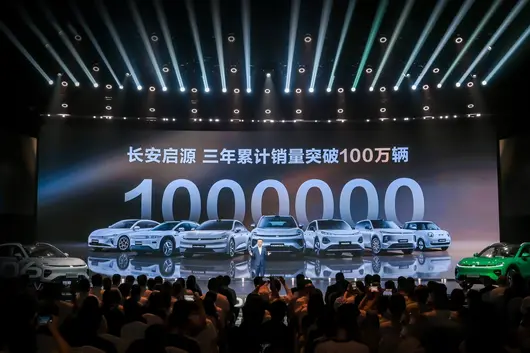
2026年9月,长安启源累计销量正式突破100万辆,此时距离品牌2023年8月首次发布,刚好三年。

过去三年,恰恰是中国车市有史以来最魔幻、最犀利的三年:电动化上半场逐渐收尾,智能化从加分项变成必答题;更麻烦的是,国内新能源市场从高速增长期转入调整回落期,零和博弈下的洗牌大战更加惨烈。据力基咨询给出的公开数据,最近三年,阵亡的新能源品牌达到23家——对传统车企而言,这是一次典型的“创新者困境”;对任何一个新品牌而言,则意味着每天都在经历“生死局”。
放在这个语境下,启源交出的不仅仅是一张漂亮的成绩单,更是值得拆解的样本。
三年百万辆,稳稳接住消费升级的基盘
2023年8月27日,长安启源首次进入公众视野,首次亮出“数智启源,向美好跃迁”,这句有技术也有人文的Slogan,把品牌定位和愿景都说清楚了。
落到用户层面就一句话:为普通家庭造精选好车。
近三年,新能源车的消费逻辑彻底改变。普通家庭并不满足浅层次的“量大管饱”,他们更希望花小钱办大事,用最实惠的价格买到更高一档的品质和体验。
长安启源三年百万辆,接住的正是这轮消费升级。
比如启源新A06,把全铝前双叉臂后五连杆独立悬架做成全系标配,把激光雷达高阶智能驾驶辅助、6C闪充、145°无极电动零压后排打包压进13万以内。
比如启源Q06,也是这套逻辑。纯电版全系标配全铝前双叉臂后五连杆独立悬架和6C闪充,增程版则把分布式电驱打到了权益价14.79万。以限时升级权益价0.99万,开放选装256线激光雷达高阶智能驾驶辅助的操作,更让人意外,这等于把选择权直接交给了用户。

消费者从来都是用脚投票。所以我们看到,Q06上市24小时,订单就突破了35000台;仅仅20多天,就迎来了第一个“万人交付季”。
三年百万辆拆开看,就会发现:长安启源做爆款,但并不依赖爆款赌运气。相反,它走出了自己的节奏——围绕核心车型持续迭代、稳定输出,用大单品矩阵持续积累基本盘。
长周期运营的能力,尤其体现在Q05这款大单品上。从2025稳步起量到2026连续6个月零售破万、连续6个月蝉联紧凑型SUV销冠,用了将近一年。9月单月全球销量更是冲到了30000辆。

问题随之而来:在平均一个月上市10款新车的当下,长安启源凭什么敢坚持自己的节奏?
底气来自长安。长安有完整的新能源技术体系:从太行分布式电驱、智慧新蓝鲸3.0到“金钟罩”电池2.0、800V平台6C闪充,从一段式端到端天枢领航到“三向六域”天枢底盘,全套自研。
天枢领航高阶智能驾驶辅助系统值得单点一笔(Q06首搭)。这套系统不仅是长安自研体系里,也是央企自研体系里最高一档的量产方案。依托一段式端到端大模型,加上2000万段高质量真人驾驶数据、配合256线激光雷达融合视觉方案和560TOPS大算力,实现了高速领航、城区领航以及400+智能泊车贯穿使用。而全栈自研还意味着,系统能够精准定位用户反馈的问题场景,快速响应并优化体验;能够在云端持续学习典型拥堵、复杂路口、泊车等场景,越开越聪明、越开越拟人;同时通过车端、云端数据一体化还能确保相关数据在自有体系内闭环,保障用户数据隐私安全。

这是长安启源能够在10-15万这个内卷最疯狂的价格带后发制人的关键。
“央企新势力”,肩扛双重使命
彼时,外界并不能完全理解长安启源存在的价值。直到2025年7月,长安升级为国家国资委直管的一级央企,才显露出它真正的战略分量。
核心就一句话:长安启源是新能源时代的长安汽车。
更具体地说,长安把全套新能源技术体系、四十多年造车功底、整套验证标准,集中压注在长安启源这一个品牌上,让它以“央企新势力”这个特殊的身份站进新能源主赛道。
更深一层看,长安启源作为央企品牌,还肩负着推动行业良性运行的特殊使命。
新能源行业最大的症结,是发展太快,快到有车企为了赶上市、抢份额,不惜采用非常规手段。对行业破坏最深、对消费者隐患最大的,无疑是“速成车”。
消灭“速成车”,一方面靠法规层面画红线。前不久,四部门联合发布《关于进一步加强汽车产品创新设计和研发测试验证有关管理工作的通知(征求意见稿)》,里面重点提到:可靠性测试不低于3万公里、环境适应性验证包含“两冬一夏”、创新设计验证不充分不予公告。这些硬指标意味着,“先上市再补课”的路在法规层面正在被堵死。
另一方面靠企业。法规管的是底线,但底线之上与消费者真正想要的安全,中间还隔着一家车企、一个品牌的具体操作。比如,新国标要求可靠性测试不低于3万公里,而长安体系下新车量产验证是500万公里,这能一样吗?
长安启源全流程继承了长安这套验证体系,两个关键词:
一全面,新车研发验证覆盖超40万个仿真场景的模拟测试,智能驾驶辅助仿真测试每天跑330万公里。
二真实,任何一款全新车型上市前,都要经过-52℃极寒+50℃高温+5210m高原,外加70多种特殊路况的耐久测试,累计路试500万公里以上。
所有的数据都在回答同一个问题:品质不过关绝不出车。
当出海成为央企必答
守住品质这道关,放在国内市场是对消费者的承诺,放在全球市场,则是长安启源以央企身份参与全球竞争的第一张底牌。
10月巴黎车展,长安启源完成欧洲首秀。长安汽车董事长赵非在车展上的表述很明确:CHANGAN NEVO致力于为用户提供家庭精选好车。请注意,长安启源海外统一使用CHANGAN NEVO,定位“智能舒享家用出行”。

今年是长安启源的出海元年:
5月,全新Q05泰国正式上市。上市半个月订单突破3000台,长安启源在右舵市场的第一仗,开局即告捷。
6月,Q05登陆乌兹别克斯坦,打开中亚市场的通道。
7月,Q05印尼首发,东南亚市场再度加密。
欧洲作为出海重头戏,首款上市车型依然锁定Q05,2027年率先登陆西班牙和意大利。
简而言之,长安启源出海,走的是“大单品先行”与“东南亚快速起量+欧洲立标”相结合的路。
这背后,既有Q05作为全球大单品在国内市场验证过的产品实力,更有长安“海纳百川”战略的体系牵引——五国九地研发布局、22个海外制造基地、覆盖100多个国家和地区的渠道,为长安启源从“产品出海”走向“本土制造+市场落地”提供了最现成的通路。
国内市场承压,几乎所有的车企都在寻找海外增量,以对冲国内风险。但出海,不是把几款车卖出去那么简单,最根本的一条,是依托基地出海,搭建起供应链、制造、销售、服务的本土化体系,让品牌在海外市场真正扎下根来。长安启源走的正是这条路。
写在最后
长安启源这三年最值得看的,不是百万辆数据本身,而是它证明了两件事。
其一,传统车企做新能源,不必照搬新势力的那套打法。长安完备的自研体系、深厚的制造底子、严格的验证标准,任何一个点拎出来,新势力都需要花很长的时间才能搭起来。长安启源作为体系继承者,首先起点就比别人高。
其二,央企破局新能源,关键在于把市场化运作机制与央企的责任担当设计好。长安启源的成功,正是把市场活力与央企底子捏在了一起。在用户眼中,这个品牌是年轻的、鲜活的,但骨子里它又守住了央企的本分。
所有过往皆成序章。站上百万辆新起点的长安启源,能不能在更大规模上稳住,说实话,这道题其实更难——但至少,它已经掌握了解题的核心逻辑。
版权声明:本文/视频为线外邦独家原创稿件,未经授权请勿转载


Written by | Zhang Nan
Edited by | Huang Dalu
Designed by | Zhen Youmei

Chen Binbo, President of the Wuhan Automobile Industry Association and a senior Chinese automotive executive.
In 1987, he entered the Second Automobile Works, experiencing success at Dongfeng Peugeot-Citroën, Fengshen, Dongfeng Nissan, Dongfeng Honda, Minth Group, and Farasis Energy.
His nearly forty-year career spans industrial policy, complete vehicle manufacturing, marketing, global parts, and power batteries. He has witnessed the Chinese automotive industry evolve from planned management and joint venture introduction to independent rise and new energy transition.
On October 14, 2026, in the 20th Anniversary JackTok Special Dialogue 13th Talk of "Automotive Business Review", the two of them looked back on Chen Binbo's career over two hours, and also discussed current issues such as joint venture retreat, price wars, industry cleansing, supply chain globalization, and power battery competition.
Why do choices that were once correct fail as market, technology, and organizational conditions change? When old experience is no longer the standard answer, how does an executive see clearly, accept boundaries, and find their place again amidst change?
The "50 Golden Quotes from Chen Binbo Interview" published with this article are categorized around themes of industrial changes, rise and fall of joint ventures, manufacturing efficiency, industry cleansing, corporate globalization, power batteries, and career choices.
Chen Binbo's WeChat name is "Go Forward Unceasingly". However, the forward movement he understands is not always rushing in the same direction, but still willing to relearn and adjust position after conditions change and old answers fail, continuing to do things that can create value.
Coexisting with change is sometimes not about persisting harder in the original methods, but about moving forward again after seeing the boundaries.

"Is it retirement time now?" At the beginning of the live stream, Jia Ke asked what seemed like a simple question.

Chen Binbo paused for a moment and said, "Not yet fully retired". He works at the industry association, serves as an independent director for several publicly listed companies, and acts as an advisor for enterprises. There are still arrangements every day, just no longer carrying sales and profit indicators.

His WeChat name is "Go Forward Unceasingly". This name easily brings to mind will, speed, and career peaks.
But on October 14, 2026, in the 14th Talk of the "Automotive Business Review" 20th Anniversary JackTok Special Dialogue, the two really talked about how an automotive person admits the environment has changed and rearranges themselves amidst change.

Chen Binbo was born in 1964. He entered the Second Automobile Works (today's Dongfeng Motor) after graduating with a master's degree in 1987, later experienced Dongfeng Peugeot-Citroën, Fengshen, Dongfeng Nissan and Dongfeng Honda, and then entered Minth Group and Farasis Energy.
For nearly four decades, he went from industrial policy, investment, and organizational construction to marketing and corporate management, then from complete vehicles to parts and power batteries. The companies in his resume changed constantly, and roles changed constantly. The only thing that didn't change is that he always defined himself as an executive.
What he talked about most was not a specific position, but the conditions when each decision was made: what kind of automotive industry did the country need, did the enterprise have money, could the market digest capacity, how to establish real advantages in overseas factories, and whether battery enterprises had scale support. Conditions changed, answers had to be rewritten.
This conversation also had a layer of personal background.
Around the time "Automotive Business Review" was founded in 2006, the two were already acquaintances. Chen Binbo participated in the magazine's early activities and gave advice on publishing.
Twenty years later, Jia Ke re-found old friends with "20 industry participants, 20 annual keywords, 20 conversations that did not avoid success and failure".

First Understand How a Large Enterprise Operates
In 1987, Dongfeng was still called Second Automobile Works by many.

Chen Binbo entered the Policy Research Office and Management Research Institute, writing reports for company leadership, conducting surveys, and also representing the headquarters to go down to professional factories to understand problems.
For a young person just starting work, this position allowed him to see early on how a large state-owned enterprise organized production and distributed interests, and how systems entered the daily operation of factories.
At that time, Dongfeng's commercial vehicles were in short supply, ranking high among national industrial enterprises. Changes brought by reform and opening up were happening in the factory area. The "Three Comprehensive Contract Responsibility System" decomposed quality, technical progress, and economic benefits into professional factories, workshops, and employees. Internal transfer pricing determined the operating results of different units. Professional factories welcomed researchers, not because they liked writing reports, but because they hoped the headquarters would see problems in raw material linkage, internal settlement, and responsibility division.
The so-called "Three Comprehensive" referred to comprehensive quality management as the foundation, comprehensive technical progress as the core, and comprehensive economic benefits as the goal.
Responsibilities were decomposed layer by layer, and the supporting slogan was "Every burden carried in layers, every person has an indicator". In today's view, this language carries a distinct era imprint; at that time, it tried to push a large factory from administrative management to operational responsibility.
Dongfeng also began to study line-function systems and divisional systems.
In his twenties, Chen Binbo lectured to hundreds of department heads about Sloan and General Motors' organizational methods. Looking back today, those concepts were not new; placed at the scene of the transition from planned economy to market economy, they represented a company beginning to treat subsidiaries as units capable of independent operation.
Later, Dongfeng formed multiple sectors, and this early reform provided the organizational source.
Jia Ke said that the simulated cost accounting discussed repeatedly in those years sounded almost childish today. Chen Binbo's answer was "seeming like a world apart".
He did not mock that era. For him, it was precisely these seemingly basic attempts that allowed a generation of automotive people to first learn how to understand cost, efficiency, and market outside of planning.
This experience also shaped his work habits. He did not understand management as a set of slogans that could be copied everywhere.
Organizational plans had to be put into specific enterprises, internal prices had to be tested by material costs, and reform had to answer why the grassroots were willing to cooperate. Later, whether doing complete vehicles, parts, or batteries, he was accustomed to first decomposing the system to find the conditions that truly limited results.

Shenlong's Grand Start and Market Reality
At the end of 1988, Chen Binbo entered the Dongfeng Sedan Project Preparation Office.
Whether China should develop the sedan industry on a large scale had just moved from debate to national decision. Dongfeng needed to enter passenger cars from commercial vehicles and also had to make choices among cooperation partners such as General Motors, Volkswagen, Citroën, and Toyota.

He remembered there was a demonstration meeting before the decision on whether China should mass-produce sedans.
The debate at the time was summarized into big issues like "Socialism or Capitalism". Later, the industrial pattern of "Three Big, Three Small, Two Micros" gradually took shape. Sedan projects were not something an enterprise could do just by saying yes, but had to meet conditions such as national industrial layout, foreign exchange, credit, technology introduction, and production capacity scale simultaneously.
According to Chen Binbo's recollection, the national government put forward requirements for high starting points, large batches, specialization, export orientation, import substitution, etc., with a planned scale of 300,000 vehicles.
Toyota was more inclined to start with SKD assembly, and General Motors proposed a 37,500-vehicle pilot plant, both difficult to meet approval requirements.
Citroën was willing to introduce the then newer ZX model, accept the scale plan, and the French government and banks could provide long-term low-interest credit. Dongfeng's final choice of Citroën was not just model preference, but the combined action of a set of industrial policies, capital conditions, and negotiation results.
From a national strategy perspective, building a large-scale modern sedan industry had its necessity. Putting it on the enterprise, the problem immediately became specific: the market was not that big yet, what if products could not be sold?
Chen Binbo later compared Shenlong with Dongfeng Honda. Shenlong carried large-scale investment from the beginning; Dongfeng Honda started with smaller capacity and expanded constantly according to the market.
The former reflected top-level design, the latter obeyed the market pace. Both logics could explain their rationality and had to bear their respective costs.
Shenlong Phase 1 planned for 150,000 vehicles, with a final goal of 300,000 vehicles.
Chen Binbo remembered, the first factory occupied over 2,000 mu of land, with a wall of about 5 kilometers, and investment exceeding 10 billion yuan. The country hoped to establish complete capabilities in one step, while the enterprise had to carry land, factory buildings, equipment, and localization systems before the market matured. This tension existed from the beginning of the project.
In 1992, Shenlong was established, and Chen Binbo became one of the earliest employees. He first did policies and regulations and public relations, later participated in planning and construction of Shenlong Industrial Development General Company. Chankou was still rice fields and villages at the time.

To build a factory, employee housing, schools, hospitals, sales services, and parts support had to be solved simultaneously. On the surface, this was opposite to the reform direction of state-owned enterprises "enterprises running society"; but on a land without city functions, the factory had no other choice.
Localization requirements pushed the team to establish supporting enterprises such as stamping and brake lines, and negotiate cooperation with French, Japanese, South Korean, German, American, and British companies.
Today's Dongfeng Hongtai can be traced back to these early attempts. What Chen Binbo learned here was not just how to build a car, but how to build a modern automotive industrial system starting from land, funds, living facilities, and supply chains.
Around 1994, the industrial development company he participated in also tried to package downstream parts enterprises into the capital market.
At that time, it was not called formal listing, but first went to the Wuhan counter trading system "listing on counters". Sales service, industrial support, real estate, hospitals, schools, and kindergartens were all packed into the same organization. It looked like fuzzy boundaries, but corresponded to the problems that had to be solved simultaneously from nothing to something for a new industrial city.
This system soon encountered market reality. In the late 1990s, Dongfeng's commercial vehicles had a "lack of heavy and short of light", and the market for traditional five-ton medium trucks contracted; Shenlong's sales also did not reach the planned capacity, and the two-door Fukang still faced a market dominated by official cars and three-door sedans.
Years later, the location of Shenlong's first factory became an urban development project. When Jia Ke mentioned factory changes, Chen Binbo was not sentimental, only saying that place was already building a new center. The space left by the industry would also be re-used by the next round of urban life.
"Lack of heavy and short of light" was one of the core difficulties of Dongfeng at the time. After road conditions improved, the five-ton medium trucks that originally had advantages were squeezed at both ends by heavy trucks and light trucks; Cummins and Xiangyang bases had not yet formed enough support, and Shenlong still needed investment.
Parent companies and joint venture projects were under pressure at the same time, and state-owned enterprise difficulty relief and layoff waves also occurred in the same period. Chen Binbo's later understanding of industry cycles came largely from this unsmooth experience.

How to Build a Company When Having Nothing
In May 2000, Chen Binbo left Shenlong and went south to participate in the Fengshen project. Dongfeng was in a difficult period, had approved new sedan projects, but had no money to build complete factories.
Shenzhen Fengshen's registered capital was only 130 million yuan, with Dongfeng contributing 60%, corresponding to 78 million yuan.
Chen Binbo recalled that this money was not easy to get: the team mortgaged the Dongfeng Building in Shenzhen to borrow 50 million yuan, and the rest was made up with a stack of acceptance bills.
This project did not appear suddenly.
After Guangzhou Peugeot withdrew, Honda entered the Guangzhou complete vehicle project, and Dongfeng played an important role in it but did not directly obtain complete vehicle rights.
Dongfeng and Honda first established an engine parts company in Huizhou, with products sold back to Japan, and later promoted an engine company. The "three-step jump" of parts, engines, and complete vehicles became a path for the Dongfeng Southern team to find new passenger vehicle projects.
At the same time, Dongfeng also cooperated with Yulon to produce Nissan Bluebird, forming another line for Fengshen.
Without its own production base, Fengshen bound R&D with Taiwan Yulon, controlled sales by itself, and commissioned manufacturing to Guangzhou Jing'an Yunbao and Xiangfan factories.
Chen Binbo summarized this state as "having nothing". It was not rhetoric in entrepreneurial stories, but reality on the balance sheet: limited funds could only be placed in links that determined products and markets, and intermediate manufacturing relied on external resources first.
One of his main tasks was to complete the restructuring of Jing'an Yunbao. The company originally belonged to the public security system, the craftsmanship was not complete, but it undertook Fengshen Bluebird production. Restructuring lasted from 2000 to 2002, Nissan subsequently entered, and Dongfeng and Nissan's cooperation obtained a foundation that could continue to expand.

To prevent restructuring failure, the team also inspected Wuhan Wantong and other alternative factories. Every alternative path pointed to the same question: without a production base, the project would terminate.
Jing'an Yunbao originally approached a complete vehicle assembly point, lacking complete craftsmanship such as stamping. Before further investment, equity, debt, land, and production qualifications had to be straightened out.
Chen Binbo spent a whole two years processing restructuring. Later, Nissan's "Golden Triangle Plan" could be implemented, precisely because the production base had become an asset that could be entered.
In 2003, Dongfeng Nissan was established, and the first year was not smooth.
2004 experienced a low point, in 2005, the Sino-Japanese sides re-honed through a "Common Program", and Altima, Sylphy, and Tiida gradually opened the market.
By the time "Automotive Business Review" was founded in 2006, Dongfeng Nissan had entered a relatively smooth development stage. Chen Binbo also first moved from investment, policy, and planning into a complete marketing system.
This experience made him see that corporate capability was not always having a factory first, then a product, and finally a market.
When resources were scarce, enterprises could also first master R&D and sales, organize manufacturing; after conditions matured, assets could be supplemented. More than twenty years later, the Chinese automotive industry discussed asset-light, OEM, and ecosystem collaboration again, and these methods had been practiced in Fengshen's difficulties at the time.
Therefore, he did not understand "entrepreneurship" only as personal investment to establish a company. Fengshen had no founder myth, but had a typical entrepreneurial situation: resources were extremely scarce, the organization had not yet formed, and any restructuring failure could terminate the project. Executives also had to find money, factories, and partners in uncertainty and be responsible for failure.

Capacity Experiment on the Peak
In 2010, Chen Binbo took office as Executive Deputy General Manager of Dongfeng Honda. The Chinese passenger vehicle market was still growing, and Honda's products were also in the mainstream. The problem in front of him was not lack of demand, but capacity could not keep up.
Honda was used to small-step capacity expansion to reduce investment risk.
The other side Chen Binbo saw was that every renovation would interrupt production rhythm, increase costs, and might also miss the market window. After he took office, he promoted first factory capacity expansion and second factory construction, and later started the third factory.
What really interested Honda Headquarters was not how many more factories to build, but how the Wuhan team pushed the limits of existing factories outward.
In 2017, the standard capacity of Dongfeng Honda's two factories totaled 480,000 vehicles, and sales that year reached 720,000 vehicles.
The team compared four shifts, three rotations, and two-shift extended production, and finally introduced "multi-skilled workers" who could rotate multiple positions under the premise of meeting regulations and overtime hour requirements.
In Wuhan mahjong, this kind of person was vividly called "Joker": wherever people were needed, they filled in. Employees learned one more position, and wages increased accordingly; production teams gained rest and scheduling space, and equipment also kept maintenance time.
This arrangement was not simply lengthening working hours.
Dongfeng Honda had been inspected by Honda due to overtime hours, and the plan had to meet regulatory requirements such as overtime not exceeding 36 hours per month. The team extended single-shift effective working time to 10.5 hours during peak hours, totaling about 21 hours for two shifts, leaving the remaining time for equipment inspection and handover; at the same time, employees had weekly rest through rotating rest.
Multi-skilled workers received corresponding subsidies for learning each position, and teams no longer relied on specific individuals to stay fixed at workstations.
Honda executives responsible for manufacturing came to the Wuhan site twice to check, worrying that high-load operation would damage quality. Finally, this method was considered to have promotion value. Chen Binbo judged based on this that Dongfeng Honda could support a limit capacity of nearly 1 million vehicles with three factories, and there was no need to build a fourth factory.
According to his calculation, a factory with a single-standard capacity of 240,000 vehicles could reach 320,000 vehicles or even higher after adjusting cycle time, equipment, and working hours.
In 2017, the two factories produced 360,000 vehicles on average each, equivalent to releasing nearly one factory's capacity without adding complete factories. Japanese Honda initially did not believe it, and the manufacturing person in charge came to Wuhan twice, focusing on checking quality control and site load, before finally accepting this method.
When the third factory started, the team had already reserved conditions for hybrid and future pure electric production. Chen Binbo believed that three factories were enough to cover Dongfeng Honda's limit of nearly 1 million vehicles. When Jia Ke said "Glad we didn't build the fourth factory", he did not continue to evaluate it. After leaving, market and investment decisions were no longer his responsibility.
Standing at that time, this was an efficiency innovation; standing today, it also looks like a slice left by the peak of joint venture automobiles. When demand was strong, managers worried about how to build 200,000 more vehicles. Less than ten years later, the industry faced idle capacity, price declines, and channel losses. Success experiences were not wrong, but the market on which they relied had disappeared.

Joint Venture Retreat is Only Part of Reshuffling
Public data from the China Association of Automobile Manufacturers shows that the share of joint venture brands in the Chinese passenger vehicle market dropped from 61.6% in 2014 to 31.5% in 2024.
In the same period, new energy vehicles expanded rapidly, and price wars spread from complete vehicles to dealers and supply chains. Chen Binbo admitted he did not expect the decline of joint venture enterprises to be so rapid. Those enterprises that once reached or approached millions or two millions of units seemed solid enough at one time.
But he was not willing to explain joint venture retreat as a simple win or loss.
Joint venture enterprises cultivated a large number of manufacturing, R&D, and marketing talents for China's automotive industry. In the teams of Chinese brands such as BYD, Geely, and Chery today, people trained by the joint venture system can still be seen. Market status can decline, capability transfer has already occurred.
He was more willing to explain the next stage of the automobile industry using the home appliance industry.
Around 2000, the color TV price war dragged the home appliance industry into industry-wide losses and forced many enterprises to exit. After long-term integration, the market concentrated in a few enterprises such as Gree, Midea, Haier, Hisense, and TCL, and top companies re-gained more stable profits.
The automotive industry is experiencing similar supply and demand imbalance, but assets are heavier, employment and local economic ties are deeper, and cleansing is more complex.
In his review, when Changhong started the price war, it had scale and upstream color tube resources, hoping to clean up the house with low prices. As a result, technology route changes hurt itself first and also made the entire industry pay the price of profits.
The meaning of this case for the automotive industry is not to prove that price wars must be won by anyone, but to show that when supply is over, top enterprises may also be seriously injured in the process of cleaning the market.
In Chen Binbo's view, joint venture brands will not disappear completely, and Volkswagen, Toyota, etc., may still remain, and the market needs diversity; but the original high share of the joint venture era will not naturally return. The bigger question is how many players are left on the table. He judged that the market will undergo major changes in the next two to three years, and the elimination rate of complete vehicle enterprises may be much higher than that of power battery enterprises.
If one must give the remaining quantity of joint venture enterprises, he gave a judgment of three to five families in the interview. This number was not an exact prediction, but his intuition of concentration in mature industries. Will Volkswagen and Toyota leave China? He thought not. Whether other brands can remain depends on whether products, costs, and local R&D can adapt to the Chinese market again.
This was not a relaxed industry prophecy.
In 2025, multiple departments publicly opposed disorderly price wars, and the sales profit margin of the automotive industry continued to bear pressure; at the circulation end, dealer price inversions and store losses were even more common. Chen Binbo said, "Ducks are the first to know when the river water warms", the dealers who felt the cold first, and then the pressure will continue to transmit to parts and complete vehicle factories.
The attitude of local governments was also changing. In the past, a complete vehicle enterprise often drove tax revenue, employment, and industrial park investment, and there was motivation to continue support; now fiscal pressure has increased, and long-term underwriting ability has weakened.
There were still frictions between the unified national market, enterprise closures, mergers, and transfers, and local interests, but Chen Binbo judged that local constraint changes would speed up cleansing, not continue to delay indefinitely.
He emphasized that the market does not distribute victory according to enterprise nature.
Joint ventures, SOEs, private enterprises, and sole proprietorships are all on the same table. Winning a round today does not mean winning forever. The joint venture peak of the past thirty years will not automatically protect any company, and the current leading of Chinese brands is also not the final outcome.

Before Taking Chinese Experience Out
After leaving the Dongfeng system in 2018, Chen Binbo entered Minth Group and later served as the group's Chief Executive Officer.
Minth produced door frames, trim strips, etc. Single products were not eye-catching, but had already followed global customers in layout in Europe, Americas, and Asia. When Chen Binbo entered the company, about four to five percent of revenue came from overseas. He hoped to further increase the proportion of overseas revenue, making the enterprise's sales structure closer to the global automotive market.
Chen Binbo recalled, when Minth's annual sales revenue exceeded 10 billion yuan, the annual output of various trim strips and related parts reached hundreds of millions of pieces; there were more than 80 million cars produced worldwide in a year, of which about 30 million used Minth parts.
Products looked traditional, but the moat came from materials, craftsmanship, customer certification, and a global delivery network close to complete vehicle factories.
This turn changed his observation position.
In joint venture complete vehicle enterprises, Chinese teams long received technical support from multinational companies; at Minth, a Chinese parts enterprise had to output products, engineering, and manufacturing capabilities to global customers, and the direction was reversed.
Chinese automobiles moved from "market for technology" to supply chain globalization, also compressed into a change in an executive's position.
Globalization does not equal copying domestic factories to overseas. Chen Binbo remembered, one Minth factory in Germany had an annual sales revenue of about 40 million euros, but lost 15 million euros in one year.
Producing with local employees, local equipment, and local systems, what made the enterprise perform better than local competitors? If relying only on Chinese low labor costs and long working hours, the answer did not exist overseas at all.
Differences would appear directly in daily life. He cited the example of a Mexico factory: after a major festival, maybe one-third of employees did not come to work. Managers could not simply attribute this phenomenon to employees "not diligent", nor could they forcibly replace local life with Chinese factory schedules. Planning, automation level, position redundancy, and delivery promises had to be redesigned according to local reality.
He re-understood Minth's overseas system as a division of labor.
The European manufacturing center was placed in Serbia, the American center in Mexico, and China retained core capabilities such as R&D, product engineering, and manufacturing processes; factories in UK, Germany, France, etc., close to customers undertook assembly, warehousing, and rapid response. Overseas factories increased automation, used the efficiency of Chinese engineers and R&D systems to empower, instead of requiring local employees to copy Chinese work methods.
After Brexit, Minth invested in an aluminum door frame project for Nissan's UK factory.
Chen Binbo advocated making the process route as simple as possible: complex machining was placed in Serbia, and the UK only did assembly and delivery close to customers.
The German loss factory was also not simply closed, but retained necessary assembly and warehousing. Front-end factories were close to customers, regional centers undertook scale manufacturing, and the China headquarters mastered R&D and processes, which was his understanding of the global network.
Minth had already accumulated years in Germany, Thailand, Mexico, and the United States, Chen Binbo also participated in promoting the Serbia factory. He summarized these experiences as "more lessons, less experience". The most dangerous time for going overseas was often not when enterprises knew nothing, but thought domestic was already successful, and overseas only needed to copy.
He explained localization with seeds and soil: when a seed fell on another piece of land, it had to take root in the climate there, and could not require soil to change according to the original environment.
This judgment also applied to today's Chinese complete vehicle enterprises going overseas. Localization requirements proposed by Europe, ASEAN, and other markets were not unexpected, and China used localization thresholds the same when developing the automotive industry. The real question is whether enterprises can rebuild value chains within constraints and explain what capabilities they have that are irreplaceable locally.

Relearning After Entering Power Batteries
In 2023, Chen Binbo took office as General Manager of Farasis Energy and resigned in 2024. The term was not long, but it made a manager who had worked in the automotive industry for more than thirty years become a student again.
He originally thought that managing battery manufacturing and managing complete vehicle factories would not have fundamental differences. After truly entering the production line, he found that mechanical machining and chemical production followed different logics. Machine tools could control dimensions to microns, but batch consistency of battery materials was difficult to reach the same degree of certainty. Formulas looked mature, but quality and costs made by different enterprises could still vary greatly.
Batteries were still heavier assets.
According to Chen Binbo's estimate in the interview, investment in a 30GWh battery factory could reach twice that of a 300,000-vehicle complete vehicle factory. After cathode production, it still needed to stand for a period of time. From raw material procurement, production to shipment to Europe, acceptance, and payment, cash turnover could be stretched to half a year.
At the same time, energy density and product size continued to iterate, and production lines from five years ago lost competitiveness quickly.
Factory buildings themselves were also different. Power batteries needed clean workshops and constant temperature and humidity environments, and after production was completed, they still needed to stand and detect for one month to one and a half months.
Equipment, raw materials, and work-in-process continued to occupy funds, and European customer transportation and acceptance extended payment collection. Complete vehicle people were easy to only see batteries occupying 30 to 40 percent of complete vehicle costs, but underestimated the cash and process constraints behind this business.
This experience changed his view on complete vehicle enterprises manufacturing batteries themselves.
In the past at complete vehicle factories, he also felt that power batteries were like engines in the fuel vehicle era and should be mastered in one's own hands; after doing batteries, he thought most complete vehicle enterprises should not build battery capacity themselves.
Without sufficient sales volume, investment could not be thinned, and technological updates could not be kept up.
Intelligent driving also needed a lot of R&D and data accumulation, and enterprises with insufficient scale were difficult to do themselves in all key areas.
BYD was the exception he admitted because the enterprise originally started with batteries and had complete vehicle scale support. For other enterprises, his judgment was more cautious.
He even used SVOLT as an example, worrying that complete vehicle groups building batteries themselves would become a burden when scale was insufficient. This judgment may not apply to all companies, but clearly expressed his change from "complete vehicles must master batteries" to "professional suppliers may be more efficient".
Intelligent driving also had similar scale thresholds.
The experience judgment given by Chen Binbo was that only groups with annual sales volume reaching 5 million vehicles or more could support complete self-research; enterprises with smaller scale building batteries, intelligent driving, and software systems simultaneously, might invest heavily, but effects were still worse than professional companies.
Volkswagen, Audi, and other multinational groups investing and then purchasing Chinese solutions were also seen by him as examples where vertical integration was not always successful.
Scale gaps eventually fell on the cost of every kWh of electricity and the pass rate of every batch of products.
He gave an example that the pass rate of some enterprises could only reach 90% to 92%, while top enterprises could reach 98%. A gap of a few percentage points was enough to decide whether a company made money or loss. Therefore, he judged that power batteries would finally concentrate on a few top enterprises; complete vehicle enterprises because there were more, elimination would be more intense.
He also compared quality costs: under the same conditions, top enterprises might be one to two percentage points lower than peers; if a kWh of electricity was only 2% to 3% more expensive, customers were also willing to pay for stable delivery.
The enterprises that could truly mass-produce power batteries were about a dozen in his view, and finally might converge to about five; the number of complete vehicle enterprises was more, and he estimated that more than 90% needed to be eliminated for supply and demand to possibly recover balance.
Entering a strange industry in the later stage of his career did not make him rush to prove that old experience was still effective. On the contrary, he admitted he underestimated the complexity of batteries. Management experience could help enterprises organize resources, but could not replace relearning processes, pass rates, and cash cycles. For someone who had experienced the peak of joint venture automobiles, this admission was more important than continuing to maintain past authority.

Executive Was His Choice
When the interview was nearing the end, Jia Ke asked Chen Binbo if he regretted not starting a business. His answer was quick: "I never regretted it."
These years, he had contacted entrepreneurs of different sizes, saw the pressure bosses undertook for funds, employees, and enterprise survival.
He respected entrepreneurs and did not treat entrepreneurship as a life proof every manager must complete. Being an executive was the path he chose for himself early on. "If there is space to deploy, deploy; if there is no space to deploy, be a good person."
In his view, society sometimes only saw the glamour of entrepreneurs and did not see their long-term undertaking of debt, employees, and enterprise fate.
Because of understanding this pressure, he never treated not starting a business as a regret. He was willing to undertake operational responsibility in SOEs, central SOEs, joint ventures, and private enterprises, but did not hope to turn all risks into a business that individuals must bear.
This sentence explained his multiple turns.
Shenlong did not reach expectations, he went to do Fengshen; Dongfeng Honda stood on the peak, and he entered parts again; Minth was already global, he still had to learn how to make overseas factories profitable; at Farasis, original manufacturing experience was re-tested by battery chemistry.
Every change could be interpreted by outsiders as position progress, but for him, the more important thing was what problems in the new system were worth solving.
Now, he no longer undertook clear sales indicators, but still maintained contact with the industry through associations, boards of directors, and advisory work.
This was continued participation after taking off burdens. What was pressed on shoulders every day in the past was how many million vehicles were sold this year and how many more next year; now experience could be used for judgment and advice, and space could be left for life.
This state was not started suddenly.
He always liked sports and also always kept interest in the industry. The difference was, when doing CEO in the past, whether SOE, joint venture, or private enterprise, performance had to be made; now as independent director and advisor, there were no daily operational indicators, but could still hear frontline problems from enterprises.
For him, completely leaving society and just waiting for time to pass was the retirement he really was unwilling to accept.
He did not package retirement life as another struggle. 60 was different from 50, and energy would change after 70. When able to do things, maintain contact with society; when truly unable to do, go home to cook, tidy the yard, walk everywhere, "seek peace". Accepting boundaries of body and roles was also part of coexisting with change.

No Standard Answer for Change
"Automotive Business Review" was founded in 2006. That year, high-speed growth of China's automotive industry was already evident, but few could predict export scale, new energy penetration rate, and brand pattern twenty years later.
Chen Binbo did not predict it either. Looking back on these twenty years, what he was most certain of was that no experience could serve as a standard answer for a long time.
Shenlong's high starting point and large-scale construction responded to national industrialization goals; Fengshen's entrusted production responded to lack of funds; Dongfeng Honda pushed 480,000 standard capacity to 720,000, responding to shortage of supply and demand; Minth's overseas division responded to global customers and local rules; power batteries' heavy assets and rapid iteration required enterprises to re-respect scale and specialization. Every practice had a moment of establishment and had boundaries of failure.
This was also his reminder to the current automotive industry. Joint venture system retreat did not mean value lost in capabilities left by joint ventures; Chinese brands walking to the center stage did not mean victory or defeat had ended.
Supply overabundance, price wars, and channel losses were forcing industry restructuring, and enterprises that really remained still had to prove they could make money continuously in the global market.
Before the interview ended, Chen Binbo said "Automotive Business Review" should continue to record the context of industrial changes. Media do not build cars directly, but can observe how different business models rise and how they are corrected by reality.
This sentence could also be used to summarize his forty years. He did not stand outside the tide to summarize the industry, but entered the most specific places of change time and again: factories, capacity, supply chains, pass rates, cash, and people's lives.
He also remembered advice to Jia Ke twenty years ago.
Since it was called "Automotive Business Review", it should not become another collection of public relations soft articles, but should maintain spiritual value and actual value, observe, record, and comment on the industry.
During the twenty years, the magazine expanded to forums, awards, and business schools, and Jia Ke changed from a literati who was "embarrassed to talk about advertising" to an entrepreneur who must manage organizations. Chen Binbo regarded this change as part of media and industry maturing together.
"Go Forward Unceasingly" did not mean always rushing in the same direction. For Chen Binbo, it was more like a way to stay clear-headed: admit old roads are done, see conditions clearly again, and continue to do what can be done in front of eyes.
Career peaks would pass, and industry cycles would turn. Becoming oneself was not getting rid of change, but no longer letting change define oneself.
JackTok Special Dialogue:
Talk 01 Jia Ke Dialogues with Zhou Hang: Can the winner of the last round win the next round?
Talk 02 Jia Ke Dialogues with Fu Qiang: Came, fought, is it enough?
Talk 03 Jia Ke Dialogues with Dong Haiyang: Gross margin is dignity
Talk 04 Jia Ke Dialogues with Wang Chao: China's automotive industry just finished the card dealing phase
Talk 05 Jia Ke Dialogues with Feng Qingfeng: Life needs to be constantly restarted
Talk 06 Jia Ke Dialogues with Dai Lei: Mystery of Byton's Failure and Role Inversion of Chinese and European Automotive Industries
Talk 07 Jia Ke Dialogues with Ying Yilun: What did he bet right?
Talk 08 Jia Ke Dialogues with Wu Gansha: Saw the future, why were there so few arrivals?
Talk 09 Jia Ke Dialogues with Li Hongpeng: Re-understanding persistence, failure, and life's second half
Talk 10 Jia Ke Dialogues with Lin Mi: After exiting car making, where did he break through?
Talk 11 Jia Ke Dialogues with Xu Min: Does China's automotive industry still need a second "Ten Thousand Whys"?
Talk 12 Jia Ke Dialogues with Wang Chaoyun: Entrepreneurship at 54, 9 years of loss, he still expects tomorrow
Talk 20 Jia Ke Dialogues with Liu Ren: Twenty years, the person who constantly set themselves up
The following is "Automotive Business Review" 20th Anniversary JackTok Special Dialogue · Talk 13 Chen Binbo Golden Quotes 50 Items.
①
Forty Years of Chinese Automobiles
1. In 2006, we discussed whether China's automobiles could reach 30 million, 40 million vehicles, but no one thought that twenty years later, new energy vehicles and automobile exports would completely rewrite the industrial pattern.
2. From discussing internal contracting in the planned economy period to today discussing intelligence and globalization, China's automotive industry has walked not through one technical upgrade, but the reconstruction of the entire industrial logic.
3. Many things our generation of automotive people experienced were not adding flowers to a mature system, but building from scratch in places without factories, without supply chains, or even without living support.
4. True changes in the automotive industry occurred not only in products and technology, but also in factories, organizations, supply chains, and the lifestyle of practitioners.
5. After industry cycle changes, experiences proven correct in the past did not necessarily continue to be effective, and could even become the heaviest baggage for enterprises in the next stage.
②
Shenlong's Start and Cost
6. From the strategy of developing the sedan industry at the national development perspective, Shenlong's large-scale construction was correct; but for enterprises, no one could answer for you what to do after planned capacity was built and cars could not be sold.
7. At that time Toyota hoped to do SKD assembly first, GM was only willing to plan a 37,500-vehicle pilot plant, only Citroën accepted 300,000-vehicle scale and provided credit support, so Dongfeng actually did not have too many choices.
8. Shenlong first factory occupied over 2,000 mu of land, wall about 5 kilometers, investment exceeded 10 billion yuan, but at that time China's private automobile market had not truly formed, this was the gap between grand planning and market reality.
9. Chankou was still rice fields and villages at the time, what we built was not just one automotive factory, but had to simultaneously solve employee housing, schools, hospitals, parts support, and basic living problems.
10. Thirty-some years later, the location of Shenlong factory that year became an urban development project, this explained better than any data what vicissitudes the industry and city experienced.
③
How Fengshen Started from Zero
11. Fengshen was truly "having nothing" at the time: no own production base, and not enough funds, could only reorganize R&D, manufacturing, and sales.
12. Dongfeng needed to contribute 78 million yuan in Shenzhen Fengshen, of which 50 million yuan relied on mortgaging Dongfeng Building to obtain loans, the rest part was made up with a stack of acceptance bills.
13. In the case of extremely limited funds, we cooperated with Yulon for R&D, controlled sales ourselves, entrusted production to external factories, and put money in links that truly determined products and markets.
14. If Jing'an Yunbao restructuring failed, Fengshen project would lose the production base, and the whole project might terminate, this was the real pressure we faced at the time.
15. Entrepreneurship did not necessarily mean individuals registered a company; under conditions of lacking funds, assets, and organizations, making a project that could terminate at any time become a reality was also a kind of entrepreneurship.
④
Dongfeng Honda's Capacity Experiment
16. In 2017, Dongfeng Honda's two factories' standard capacity totaled only 480,000 vehicles, but eventually produced and sold 720,000 vehicles, equivalent to releasing nearly one factory's capacity from the existing system again.
17. The multi-skilled workers we cultivated were like "Jokers" in Wuhan mahjong, wherever people were needed, they filled in, allowing the production line to rotate rest, switch posts, and maintain continuous operation.
18. For every position an employee mastered more, the enterprise increased a subsidy; employees increased income, and enterprises also gained more flexible production organization capability.
19. Japanese Honda initially did not believe two factories could complete 720,000 vehicles, executives responsible for manufacturing came to Wuhan twice, focusing on checking whether production load would affect quality.
20. The value of management innovation was not necessarily investing and building another factory, but also in guaranteeing quality and employee rest, truly releasing the capability of existing factories.
⑤
Efficiency Cannot Overdraw People
21. Improving capacity cannot rely only on lengthening working hours, and cannot rely long-term on two-shift systems of 12 hours against 12 hours, because such efficiency would eventually overdraw employees.
22. The future was not a question of whether enterprises were willing to let employees work overtime, but young people would not accept a production method that had work but no life.
23. Manufacturing efficiency that could truly continue must satisfy three conditions simultaneously: comply with regulations, guarantee quality, and let employees be willing to continue working.
24. Factories needed output, equipment needed inspection and maintenance, and employees also needed rest and life; managers could not sacrifice two other conditions for one indicator.
25. If an efficiency could only be maintained by low wages, long working hours, and constantly overdrawing employees, it was not a competitiveness enterprises could rely on long-term.
⑥
Why Joint Venture Enterprises Retreat
26. I expected joint venture enterprises' advantages would weaken, but did not think those enterprises that once reached million, two million units would slide so rapidly in such a short time.
27. Joint venture brands' market share could decline, but the large number of manufacturing, R&D, and marketing talents cultivated by the joint venture system for China's automotive industry had already become an important capability of Chinese brands.
28. Joint venture enterprises' past success came from brands, technology, and scale, but these advantages would not automatically continue; after market environment changed, they also needed to re-prove their value.
29. Volkswagen, Toyota, and other joint venture enterprises would not easily leave China, but the joint venture golden era of occupying the market dominant position in the past would not naturally return.
30. Joint ventures, SOEs, private enterprises, and sole proprietorships ultimately competed on the same table, and the market would not give anyone a more relaxed rule because enterprise identities were different.
⑦
Price Wars and Industry Cleansing
31. That year Changhong hoped to use scale and upstream color tube resources to start price wars, resulting not only in not clearing opponents safely, but also beating itself into bloody mess, and dragging down the entire home appliance industry.
32. The danger of price wars was that enterprises originally wanted to clear others through low prices, but finally often destroyed their own profits, brands, and long-term operational capability first.
33. Winning a price war today did not represent enterprises could stay on the table forever; true winners were those who could still survive and profit after going through several industrial cycles.
34. Dealers were "ducks knowing first when river water warms" in the automobile market; when large numbers of stores began to lose money and exit, it indicated industry cold air had transmitted from the terminal upwards.
35. After dealers were parts suppliers, then complete vehicle enterprises upwards; supply and demand imbalance and price war pressures would finally transmit along the entire industry chain.
⑧
Next Round Industry Elimination
36. China's market needed brand and product diversity, so joint venture enterprises would not disappear completely, but finally only three to five truly competitive joint venture car enterprises may be needed.
37. Power battery enterprises reducing from a dozen to about five families, could recover balance; complete vehicle enterprise numbers were more, and true elimination rate could reach 90 percent.
38. In the past, local governments had capability to support complete vehicle projects long-term; now fiscal and industrial environments were changing, and enterprises could not expect local infinite underwriting anymore.
39. Unified national market, local interests, and enterprise closures, mergers, and transfers still had contradictions; but after local government support capability declined, industry cleansing speed might be faster than in the past.
40. For many automotive enterprises, the most important problem at present was no longer how to expand, but how long cash flow could support, and whether enterprises could continue to live on.
⑨
How Chinese Enterprises Go Overseas
41. The easiest mistake Chinese enterprises went overseas to make was thinking domestic was already successful, just needed to copy Chinese factories, Chinese systems, and Chinese work methods to overseas.
42. One Minth factory in Germany had about 40 million euros sales revenue in one year, but could lose 15 million euros, this indicated having revenue did not equal overseas operation having competitiveness.
43. If an overseas factory used local employees, local equipment, and local systems, enterprises must answer clearly: what made themselves perform better than local competitors?
44. In Mexico, after a major festival ended, maybe seven members of employees did not come to work; managers could not only criticize employees, but must re-design shifts, automation, and delivery systems.
45. When a seed fell on another piece of land, it must adapt to there climate and soil; when Chinese enterprises entered overseas, they also could not require local environments to change completely according to Chinese methods.
⑩
Real Thresholds of Power Batteries
46. After entering the power battery industry, I realized battery production was not traditional mechanical machining, but a chemical system that was harder to control batch consistency.
47. Investment in a 30GWh power battery factory could reach twice that of a 300,000-vehicle complete vehicle factory, but technical update speed was even faster than complete vehicle factories.
48. After cathode production was completed, it still needed to stand for one month to one and a half months, from purchasing raw materials to European customer acceptance payment, enterprise funds could be occupied for half a year.
49. Before doing batteries, I also thought complete vehicle enterprises should master batteries themselves; after truly doing it, I thought complete vehicle enterprises without scale support should not easily build battery capacity themselves.
50. Battery pass rate rising from 90% to 98%, looked like only differing by a few percentage points, ultimately decided may be an enterprise loss, another enterprise continues to make money.
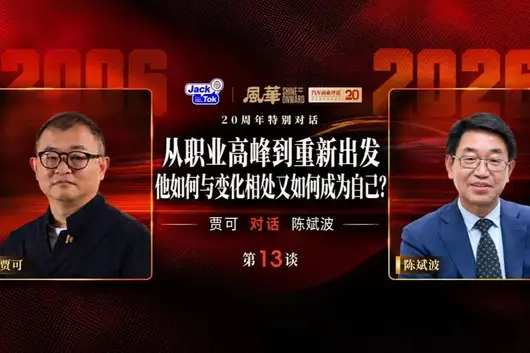


2026年10月上旬,欧洲媒体的试驾日程上,出现了一个并不陌生的名字:吉利。精心设计的试驾场地上,多款新车等着接受欧洲专业媒体检验。几乎无可挑剔的行驶质感和超越期待的科技豪华座舱,让车旁的讨论很快从"这车怎么样",转向一个更有话题性的问题:一家扎根欧洲近二十年的中国汽车集团,高调亮相巴黎车展,究竟要干什么?

吉利给出的答案,比一纸参展车型名单长得多。这一届巴黎车展,吉利汽车集团携吉利、领克、极氪三大品牌首次联合亮相,从主流到豪华的新能源产品矩阵一字排开。展览只有七天,承诺却是以十年为单位计算的。

三个展台、三张牌,把"从主流到豪华"摆上同一张桌
看吉利,先看品牌分层。三个展台,摆的是三个市场,打的是一套"前台分层、后台共享"的组合拳。吉利展台想表达的意思很直白,品牌首次参加巴黎车展,就把Geely Monjaro EM-i推上欧洲首秀位,并同步开启高标市场上市。这台车是吉利品牌首款D级PHEV全球车,选择在巴黎首发、优先海外上市,态度本身就说明问题。

同台亮相的,还有继10月10日全球发布后欧洲首秀的银河战舰700,以及Geely E5、Geely E2、Geely Starray EM-i等车型,把从家用到越野的新能源产品线铺满展台。

领克展台的看点是Lynk & Co 07GT海外首秀。作为领克旗下首款B级插混旅行车,它是品牌"向宽"战略的核心产品,用潮流运动设计切入欧洲人熟悉的旅行车消费场景。这意味着领克在欧洲的产品矩阵,正式从SUV扩展到当地用户最爱的旅行车品类。

极氪展台则更显沉稳,它把集团体系内定位豪华的旗舰Zeekr 9X摆在中央。这台车由哥德堡设计团队操刀,是极氪进入欧洲豪华SUV细分市场的重要战略车型。旁边的全新Zeekr 7X分量同样不轻:在辅助驾驶、座舱、外观、车色、续航与性能等维度全面进阶,计划2027年第一季度开启首批交付,而它的全球累计产量已经突破20万辆。

三个品牌,三种定位:吉利面向全球主流大众市场,领克面向高端新能源市场,极氪面向豪华市场。三个展台合在一起,正是吉利全球化布局的缩影。
223万辆、79.8万辆:全球化不是口号,是账本
判断一家车企的全球化是动真格还是摆姿态,账本是底线。

先看规模。2026年1-9月,吉利汽车集团累计销量超223万辆,创历史同期新高;其中海外出口797,670辆,同比增长169%。更值得注意的节奏是:海外出口连续4个月单月超10万辆,9月单月出口106,685辆,同比增长162%。正因为前9个月跑出了这个速度,全年出口目标从64万辆上调到92万辆,向百万辆级冲刺。

再看网络。集团业务覆盖100多个国家和地区,建成超2300家销售及服务网点;吉利品牌进入88个国家和地区、海外网点超1200个;领克业务拓展至53个海外国家;极氪覆盖60余个国家及地区、全球门店近800家。研发与制造的底盘同样在海外落地:上海、杭州、宁波、哥德堡、米兰、考文垂、法兰克福等地布局5大设计中心和5大工程研发中心;在马来西亚、英国、巴西等地,有11座投入运营的海外制造工厂。

支撑这些数字的技术家底也摆在展台上:i-HEV智擎混动把发动机热效率做到48.41%、百公里综合油耗低至2.22L,刷新吉尼斯世界纪录;第五代吉利智充桩单枪峰值功率2.2MW,4分钟畅行、8分钟满行;全新一代神盾金砖电池以12C峰值充电倍率处于整车量产的前沿水平;雷霆16合1智能电驱综合效率93.8%,首搭吉利银河TT,创下"环青海湖能耗最低"与"湿滑路面最长连续双车漂移"两项吉尼斯世界纪录。技术路线上,纯电、插混、增程、油混、醇氢五条路线并行,核心三电全栈自研。用一句话概括,就是"技术不依赖、市场全覆盖"。
"一个吉利"出海:为什么体系作战,比单品突围更抗打
单一品牌出海,赌的是一款爆款车;体系出海,赌的是抗风险能力与本地化速度。吉利的出海逻辑,显然属于后者。它依托集团完整产业生态的"一个吉利"体系:后台研发与供应链高度共享,前台三个品牌保持独立定位与用户运营,精准覆盖不同细分市场。

这套体系在应对欧洲市场壁垒时,优势更加明显。吉利走的是"产业共生型"轻资产合作路径:不新建工厂、不新建产能,而是与全球同行共享产能、分享市场、共享成果。与沃尔沃、雷诺、福特等伙伴的深度合作,覆盖技术、渠道、制造、动力总成,既能应对关税与投资壁垒,又能快速提升本地化规模。

自2027年1月起沃尔沃汽车将成为领克欧洲独家经销商,这项合作的意义不止于渠道代理:它依托集团内部资产组合,调动体系内成熟豪华品牌的运营与渠道能力赋能领克,实现更深层次的本地化经营。这种"用体系孵品牌"的做法,是单打独斗的品牌很难复制的。
从产品出口到本地制造,吉利的全球化正在换挡:依托全球产能布局与合作伙伴工厂网络,从"卖到欧洲"走向"在欧洲造、在欧洲卖"。
欧洲要的不只是"参展商",还有"共建者"
车展上比的是产品,车展下比的是合规、研发与责任,"长期"二字的落点,恰恰在展台之外。欧洲市场对外来者的考验,产品力只是其中一环;吉利的应对,是把自己变成产业链上的共建者。

合规先行。2026年3月,吉利旗下千里浩瀚G-ASD系统获得UN R171认证,成为首家获得该认证的中国车企,率先拿下欧洲高阶辅助驾驶市场的"通行证",为欧洲带来满足UNECE法规要求的高阶辅助驾驶方案。
同样在2026年3月,吉利科技欧洲公司成立,整合瑞典哥德堡与德国法兰克福两地研发业务,目标是把中外新车发布间隔压缩到6个月以内。哥德堡的造型中心与研发中心服务极氪、领克,意大利造型中心服务吉利品牌。欧洲不光是吉利的销售市场,更是研发与设计重镇。

ESG与安全,则是欧洲伙伴衡量"长期"的另一把尺子。吉利入选标普全球《可持续发展年鉴2026》,是唯一入围的中国车企;2025年单车全生命周期碳排放,较2020年下降25.5%,超25%的阶段目标,持续推进2045年碳中和目标;领克对01、02、08开展生命周期评价,欧洲自营设施使用100%可再生电力。

安全层面,集团已有10款车型获得Euro NCAP五星评价,覆盖从极氪007GT到吉利E2等不同定位产品;全球全域安全中心拥有五项吉尼斯世界纪录,面向全行业开放;吉利还是首家加入欧洲道路安全信息系统(DFRS)的中国车企,以匿名化数据共享参与欧洲实时道路危险信息网络。
结语
车展落幕,镁光灯散场,展台上的车会换一批又一批。但吉利带去欧洲的东西——近二十年的合作沉淀、11座工厂、5大研发设计中心、覆盖100多个国家和地区的网络,以及"与欧洲产业共同成长"的姿态——不会随展期结束而消失。

巴黎车展上的三个展台,是吉利全球化的一面镜子:长期深耕,所以敢把时间线拉长到二十年;体系作战,所以三个品牌能各打各的仗、共享同一套后台;产业共生,所以能把欧洲市场从"目的地"变成"共建地"。
这份“长期承诺”,参展名单写不下,得用下一个二十年来兑现。
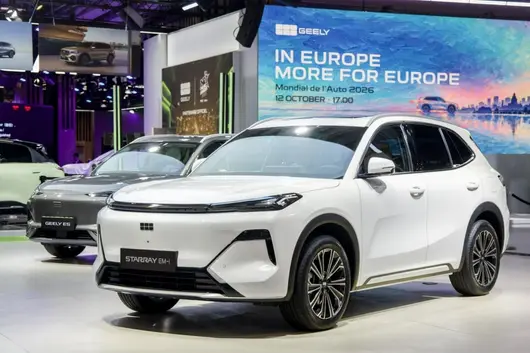

喺馬來西亞嘅 SUV 市場,好多買家喺揀車嘅時候都會拿 Toyota Harrier 同 BMW X5 PHEV 嚟做比較。呢兩款車喺價位同定位上都好接近,今日我哋就由多個方面做一個詳細比較,幫你節省咗做功課嘅時間。
Toyota Harrier 喺馬來西亞嘅 OTR 售價係 RM 289,000 - 289,000,一共有 1 個版本,包括 2026 HEV 2.5L Standard(RM 289,000) 等。
BMW X5 PHEV 喺馬來西亞嘅 OTR 售價係 RM 486,800 - 494,800,一共有 2 個版本,包括 xDrive20i(RM 420,000)、xDrive30e(RM 480,000) 等。
由價錢睇,Toyota Harrier 嘅起價真係比 BMW X5 PHEV 平咗 RM 197,800。如果你預算有限,Toyota 嘅入門版已經可以滿足日常需要。但都要注意,平嗰幾千塊,可能喺配備上會有取舍,具體要看你嘅需要。
Toyota Harrier 搭載 2.0L Turbo,馬力 220 hp。官方油耗 9.5 L/100km。
BMW X5 PHEV 搭載 Hybrid,馬力 170 hp。官方油耗 4.5 L/100km。
動力方面,Toyota Harrier 嘅 2.0L Turbo 比 BMW X5 PHEV 嘅 Hybrid 多咗 50 匹馬力,中段加速更有信心,尤其係行高速公路超車嘅時候。不過 BMW X5 PHEV 嘅油耗可能更抵用,日常市區通勤分別唔會太大。
Toyota Harrier 車身長 4400 mm,行李箱 400 L。
BMW X5 PHEV 車身長 4400 mm,行李箱 400 L。
兩款車嘅尺寸幾乎一樣,車內空間分別唔大。呢個級別嘅車,日常使用完全夠用。
Toyota Harrier 採用 FWD 驅動方式。
BMW X5 PHEV 採用 4WD 驅動方式。
Toyota 嘅 FWD 同 BMW 嘅 4WD 喺操控上會有唔同感受,建議試駕比較。

Toyota Harrier 同 BMW X5 PHEV 都係馬來西亞市場嘅主流選擇,適合家庭使用、日常通勤。如果你更睇重品牌口碑同二手價,可以優先考慮口碑更好嗰款;如果你更重視性價同配備,就選配備更豐富嗰款。最終都好建議兩款都去試駕,親身體驗先係最重要嘅。

總嘅嚟講,Toyota Harrier 同 BMW X5 PHEV 都係馬來西亞市場幾唔錯嘅車型。揀邊一輛,關鍵都係睇你嘅個人需要同預算。建議大家做好功課,多比較幾間車行嘅報價,先去試駕做最終決定。買車係件大事,花少少時間做功課絕對唔會錯。

In the Malaysia SUV market, many buyers compare the Toyota Harrier and BMW X1 when choosing a car. These two cars are quite close in price and positioning, so today we will make a detailed comparison from multiple aspects to help you save time doing research.
Toyota Harrier OTR price in Malaysia is RM 289,000 - 289,000, with a total of 1 version, including 2026 HEV 2.5L Standard (RM 289,000) and so on.
BMW X1 OTR price in Malaysia is RM 252,800 - 252,800, with a total of 2 versions, including sDrive18i (RM 220,000), sDrive20i (RM 250,000) and so on.
From a price perspective, the BMW X1 starts RM 36,200 cheaper than the Toyota Harrier. Honestly, in this price range, a difference of a few thousand is not significant; the key lies in overall value and long-term usage costs.
Toyota Harrier safety rating is 5★ (ASEAN NCAP), active safety system includes Brand ADAS.
BMW X1 safety rating is 5★ (Euro NCAP), active safety system includes Premium ADAS.
Regarding safety features, both cars have received good ratings. However, there are some differences in functionality between Toyota Harrier's Brand ADAS and BMW X1's Premium ADAS. If you value active safety, you can carefully compare their feature lists.
Toyota Harrier warranty 5 years/unlimited mileage, maintenance interval every 10,000km or 6 months.
BMW X1 warranty 5 years/unlimited mileage, maintenance interval every 10,000km or 6 months.
Both Toyota Harrier and BMW X1 are mainstream choices in the Malaysia market, suitable for family use and daily commuting. If you value brand reputation and resale value more, prioritize the one with better reputation; if you care more about value and features, choose the one with richer specs. Ultimately, it is recommended to test drive both; personal experience is the most important.

Overall, Toyota Harrier and BMW X1 are both very good models in the Malaysia market. Which one to choose depends on your personal needs and budget. It is recommended to do your research, compare quotes from several dealerships, and then test drive to make the final decision. Buying a car is a big matter; spending time doing research will never go wrong.

In the SUV market in Malaysia, many buyers compare Toyota Harrier and Subaru Crosstrek when choosing a car. These two cars are quite close in price and positioning. Today, we will make a detailed comparison from multiple aspects to help you save time on research.
The OTR price for Toyota Harrier in Malaysia is RM 289,000 - 289,000, with a total of 1 version, including 2026 HEV 2.5L Standard (RM 289,000), etc.
The OTR price for Subaru Crosstrek in Malaysia is RM 145,000 - 160,000, with a total of 1 version, including 2.0L e-Boxer (RM 150,000), etc.
From a price perspective, the starting price of Subaru Crosstrek is RM 144,000 cheaper than Toyota Harrier. Honestly, in this price range, a difference of a few thousand is not really that big; the key is to look at the overall value for money and long-term usage costs.
Toyota Harrier's safety rating is 5★ (ASEAN NCAP), with active safety systems including Brand ADAS.
Subaru Crosstrek's safety rating is 5★ (Euro NCAP), with active safety systems including EyeSight.
In terms of safety equipment, both cars have received good ratings. However, there are some differences in functionality between Toyota Harrier's Brand ADAS and Subaru Crosstrek's EyeSight. If you value active safety highly, you can compare the feature lists of both carefully.
Toyota Harrier body length is 4400 mm, trunk 400 L.
Subaru Crosstrek body length is 4400 mm, trunk 400 L.
The dimensions of both cars are almost identical, and the interior space differences are not significant. For this class of cars, it is completely sufficient for daily use.
Toyota Harrier adopts FWD drive mode.
Subaru Crosstrek adopts FWD drive mode.
The drive mode of both cars is the same, both are FWD, and the daily driving experience will not be very different.

In summary, Toyota Harrier and Subaru Crosstrek are both quite good car models in the Malaysian market. Which one to choose depends mainly on your personal needs and budget. We suggest doing your research, comparing quotes from several car dealers, and then going for a test drive to make a final decision. Buying a car is a major event, spending some time doing research will definitely not go wrong.

Dalam pasaran SUV di Malaysia, ramai pembeli membandingkan Toyota Harrier dan Subaru Forester semasa memilih kereta. Kedua-dua kereta ini mempunyai harga dan penempatan yang agak hampir, hari ini kita akan membuat perbandingan terperinci dari pelbagai aspek untuk membantu anda menjimatkan masa melakukan kajian.
Harga OTR Toyota Harrier di Malaysia ialah RM 289,000 - 289,000, terdapat keseluruhan 1 versi, termasuk 2026 HEV 2.5L Standard (RM 289,000) dan lain-lain.
Harga OTR Subaru Forester di Malaysia ialah RM 174,000 - 197,000, terdapat keseluruhan 3 versi, termasuk 2024 2.0L S EyeSight GT Edition (RM 189,538), 2024 2.0L S EyeSight (RM 177,538), 2024 2.0L L EyeSight (RM 167,538) dan lain-lain.
Dari segi harga, harga permulaan Subaru Forester lebih murah RM 115,000 berbanding Toyota Harrier. Jujur berkata, pada julat harga ini, perbezaan beberapa ribu sebenarnya tidak besar, yang penting adalah lihat nisbah nilai keseluruhan dan kos penggunaan jangka panjang.
Toyota Harrier panjang badan 4400 mm, muatan bagasi 400 L.
Subaru Forester panjang badan 4400 mm, muatan bagasi 400 L.
Ukuran kedua-dua kereta adalah hampir sama, ruang dalam kenderaan tidak berbeza banyak. Kereta tahap ini, penggunaan harian sudah memadai sepenuhnya.
Toyota Harrier jaminan 5 tahun / tanpa had jarak, selang penyelenggaraan setiap 10,000km atau 6 bulan.
Subaru Forester jaminan 3 tahun/100,000km, selang penyelenggaraan setiap 10,000km atau 6 bulan.
Toyota Harrier dan Subaru Forester adalah pilihan utama pasaran Malaysia, sesuai untuk kegunaan keluarga, perjalanan harian. Jika anda lebih mengutamakan reputasi jenama dan nilai jualan semula, boleh pertimbangkan pilihan yang lebih berkualiti terlebih dahulu; jika anda lebih mementingkan nisbah nilai dan pelengkapan, maka pilih yang lebih banyak spesifikasi. Akhirnya disyorkan untuk memandu uji kedua-dua model, pengalaman langsung adalah yang paling penting.

Secara umumnya, Toyota Harrier dan Subaru Forester adalah model yang cukup bagus di pasaran Malaysia. Memilih mana satu, yang penting adalah lihat keperluan peribadi dan bajet anda. Kami cadangkan anda melakukan kajian, bandingkan lebih banyak sebut harga dari kedai kereta, kemudian buat ujian memandu untuk membuat keputusan akhir. Membeli kereta adalah urusan besar, meluangkan masa untuk melakukan kajian pasti tidak salah.
© 2024 Bitauto.com. All Rights Reserved.
Bitauto (www.yiche.com and www.bitauto.com) is one of the most visited automotive websites in China. We provide detailed info on Chinese car brands available in your area. Please note that the information provided on this website is based on publicly available data and is for reference only. It may not be fully updated or accurate at all times.

Help us improve our website


