

Homeendangered

Search History
Popular Searches
Dealer Login / Sign Up

September's "Golden September and Silver October" should have been the liveliest time for the car market. But with the data from the China Passenger Car Association released, many were pulled back to reality from the beautiful hopes of high-speed growth.
January–September, domestic passenger car cumulative retail sales reached 13.334 million vehicles, a year-on-year decrease of 21.7%. In September, national passenger car retail sales were 1.702 million vehicles, a year-on-year drop of 24%. New energy vehicle retail sales were 1.141 million vehicles, with penetration rate reaching 67.1%, almost taking up two-thirds of the market. Yet sales volume actually fell 12%. Top manufacturers accounting for over 70% of market sales had September retail target month-over-month growth of less than 10%.

At this moment, JPMorgan across the ocean also took action, releasing a 52-page industry report titled "2027 Policy Headwinds, Profitability Risks, and Exit Strategies".
From the name alone, it is evident that they are throwing buckets of cold water at the most critical time.
Where Does the Increment Come From?
The report immediately drops a big move. JPMorgan predicts that domestic passenger car retail sales in 2026 will be 18.96 million vehicles, down 21% from 2025. In 2027, it will drop another 5% to 18.01 million vehicles.
Based on current China Passenger Car Association data, if there are no major policy changes by year-end, this data is still within a reasonable range.
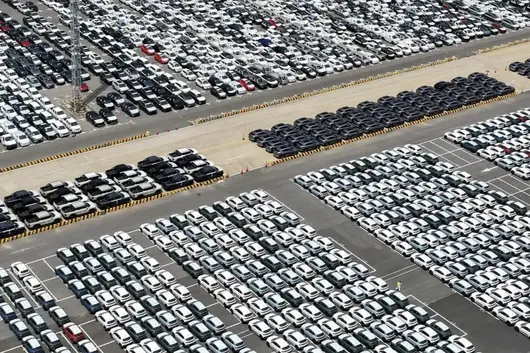
Luckily, the surging overseas exports have temporarily propped up the industry's overall size. Data is most convincing: domestic auto manufacturer export volumes will surge from 6.04 million vehicles to 9.7 million vehicles, an annual increase of 61%. With the offset of a decline in the domestic market and growth in the external market, 2026 total vehicle wholesale volume will only decrease slightly by 5%, seemingly stable and calm.

JPMorgan predicts that balance will be completely broken in 2027. Overseas export growth will cool down suddenly to 20%, while the domestic domestic market continues to bottom out. The dual growth engines will lose speed simultaneously.
On the other hand, from an industrial structure perspective, the new energy penetration rate has already reached a historical high of 67.1%. Further increasing the new energy penetration rate no longer equals the entire automotive market continuing high-speed growth. The incremental volume brought by the rapid expansion of the new energy market in the past will stagnate starting from next year.
For all automotive manufacturers and supply chain enterprises, 2027 is certainly not a year of repair, but the year of decisive battle for existing stock where the weak are eliminated.
Regarding the 2027 market trend, the report divides into two scenarios: policy floor support means demand remains flat; no policy stimulus means demand drops 5%.

In the past few years, an important proposition in the automotive industry was whether new energy vehicles can replace fuel vehicles? Now an increasingly important new proposition is, how many cars can the entire market accommodate? Where is the future incremental volume? Even the issues of total demand and total supply.
This also leads to the report's second core issue — going overseas.
New markets can digest excess capacity, new markets can bring entirely new increments. From internal involution to external expansion, it has become the common choice for all automotive manufacturers.
In JPMorgan's view, the logic of Chinese auto exports has ushered in a qualitative shift — from the early stage of "purely pursuing shipment scale" fully moving towards "sustainable and profitability expansion of overseas market share", where electrification technology constitutes the core driving force.
JPMorgan points out that in the first 7 months of 2026 (excluding the Chinese domestic market), the overall share of Chinese vehicle manufacturers in the global overseas market rose to 8.2% (6.4% for the same period in 2025); cumulative passenger car exports reached 5.35 million units, a year-on-year increase of 72.5%.

In the European new energy market, the market share of Chinese brands in the first 7 months of 2026 had risen to 19% (BYD single brand rose to 7.5%), among which plug-in hybrid models were even more exaggerated.
In the first 7 months of 2026, Chinese vehicle manufacturers' share of the overseas PHEV market was 44%, BEV market 23% (report scope). Inside Europe, Western Europe PHEV was about 36%, while Eastern Europe excluding Russia even reached 64%.
44% and 64% are no longer the appearance of "new entrants", but the posture of "disruptors". But extreme growth inevitably leads to extreme restrictions, which is the unchanging law of global industrial competition.
Encirclement, Arrows Ready on the Bow
Based on experience from the past few years, automotive manufacturers have already found a solution: if it is too competitive domestically, go overseas.
But exports can alleviate the contradiction between domestic demand and supply, but cannot solve it completely. Overseas is not another larger domestic market. This breakthrough path is being blocked layer by layer and tightened step by step.
The EU's "Industrial Acceleration Act" (IAA) binds subsidies and local content requirements, landing earliest by mid-2027; export tax rebates reduction is viewed as a potential chip in China-EU negotiations, with the time window pointing to the second half of 2027; and there are proposed plans awaiting implementation, suggesting voluntarily limiting the share of Chinese brand hybrid models in the EU to 15%.

In addition, local content, battery procurement rules, minimum selling prices, quotas, European manufacturing certification, carbon emissions fleet regulations are layered on top of each other, continuously raising the threshold for going overseas.
Localization has become the only key to survival for going overseas.
In JPMorgan's report, different landing paths for domestic automotive manufacturers are listed: BYD focuses on heavy-asset full industry chain self-construction, planning Thailand, Hungary, Brazil, to build a solid foundation for breaking through Europe; Chery mixes layout, self-built + joint venture + KD assembly multiple models in parallel, with 2027 overseas capacity planning over 630,000 vehicles; Geely uses light-asset cooperation, binding with local enterprises to share capacity; Leapmotor and XPeng leverage overseas giants for contract manufacturing and channel resources, cutting into the European market at low cost.
But localization is never a shortcut. Huge expenditures, long ramp-up, labor barriers, approval challenges, high energy prices, union games, every gate is a life-and-death test.

In Morgan's perspective, barriers force enterprises to invest heavily in building overseas factories. The sustainably worsening profitability status cannot support heavy-asset investment. It may affect corporate profit margins. The report also mentioned a few auto manufacturers, so details will not be repeated here.
It is worth noting that the 1986 Japanese car overseas expansion is incredibly similar to today's situation. European countries once locked up Japanese models through share quotas and import limits, forcing Toyota, Honda, and Nissan to implement localization and build factories, exchanging heavy assets for survival space.

Back then, France set the Japanese car share cap at 3%, Italy allowed only 2,000-4,500 vehicles annually, and the UK limited about 11% share; Open markets without a domestic automotive industry (Belgium, Denmark, Ireland, Greece) saw Japanese brands rapidly occupy 20-40% share.
Europe canceled all Japanese car import quotas on December 31, 1991, paving the way for the European single market.
History never repeats itself, but it always rhymes.
For automotive manufacturers, 2027 must preset a tax hike scenario for European business. All overseas expansion plans can no longer harbor illusions of low-price breakthrough.
Profitability Crisis Lurking
Current automotive profitability has long been determined overseas. Chery's over 90% of profit comes from overseas, Geely's overseas profit ratio approaches half. The overseas market has become the last profit fortress for automotive manufacturers to resist domestic involution.
If demand decline is a visible risk, then profit bleeding is an invisible yet more fatal internal injury within the industry.
This year, the capital market's profit expectation for domestic automotive manufacturers has been overall revised down by over 40%.
But market pessimism is still not thorough enough. JPMorgan's prediction is even stricter. Their self-developed profitability model is another 10%-11% lower than the market consensus expectation.

Quietly continuing price wars at the terminal, a cost crisis is also approaching unseen.
JPMorgan Semiconductor Team warns that in 2027, DRAM and NAND storage chip price increases may break through 20%. Today's smart cars are already walking smart terminals. Cockpits, domain controllers, and intelligent driving systems highly rely on storage chips. The pressure from chip price hikes must be fully transmitted to the vehicle end. Superimposed with fluctuations in bulk commodities such as copper and aluminum, and exchange losses brought by the strengthening of the RMB, automotive gross margins are being continuously eroded, and profit space is being compressed.
In the past, automotive manufacturers relied on negative cash conversion cycle days, occupying supplier and dealer funds to operate with light assets. Now this cushion is rapidly drying up. BYD's cash conversion cycle days turned from -18 days to +11 days, Geely narrowed from -37 days to -6 days, and Chery shrank from -52 days to -23 days.
Automotive manufacturer fund maneuvering space has shrunk significantly. Downstream dealers are even more difficult to move. Zhongsheng, a top group, turned free cash flow negative in the first half of 2026 and can only maintain operations by clearing inventory at a loss.

The breakthrough answer for the domestic market is deep integration on the supply side. JPMorgan also pointed out the recent business synergy integration of FAW and GAC, believing this is a clear policy signal. In the future, domestic inefficient capacity, weak brands, and homogenized enterprises will eventually be accelerated out of the market.
In JPMorgan's perspective, the Chinese automotive industry is in a key turning period of "domestic contraction, overseas blockade". In 2027, the industry faces multiple pressures superimposed, such as weak demand, rising costs, policy uncertainty, and trade barriers.
JPMorgan's investment advice is concentrated in: preferring heavy trucks over passenger cars; focusing on attractive valuations and high profitability visibility targets in passenger cars such as Chery Automobile, Sinotruk, GAC Group; while downgrading ratings for previously popular targets such as BYD, Geely, Leapmotor, and XPeng.
This also reflects the capital market's return from "growth narrative" to "profitability quality".
Perhaps the buckets of cold water poured by JPMorgan can also make the industry logic clearer next year.
Note: Images sourced from the internet. If infringing, contact for deletion.

In the SUV market in Malaysia, many buyers compare Toyota Fortuner and Mazda CX-9 when choosing a car. These two cars are quite close in price and positioning. Today we will make a detailed comparison from multiple aspects to help you save time on research.
The OTR price of Toyota Fortuner in Malaysia is RM 195,880 - 241,880, with a total of 3 versions, including 2024 2.8T VRZ Diesel (RM 241,880), 2024 2.7L SRZ Petrol (RM 202,880), 2024 2.4L Standard Diesel (RM 195,880), etc.
The OTR price of Mazda CX-9 in Malaysia is RM 328,810 - 345,810, with a total of 2 versions, including 2023 2.5T 4WD (RM 345,810), 2023 2.5T 2WD (RM 328,810), etc.
In terms of price, Toyota Fortuner's starting price is indeed RM 132,930 cheaper than Mazda CX-9. If your budget is limited, Toyota's entry-level version can already meet daily needs. But also note, the saving of a few thousand might involve trade-offs in features, depending on your specific requirements.

The safety rating of Toyota Fortuner is 5★ (ASEAN NCAP), active safety systems include.
The safety rating of Mazda CX-9 is 5★ (ASEAN NCAP), active safety systems include Brand ADAS.
The safety ratings of both cars are the same, and safety features are quite comprehensive in this class. New cars nowadays have good safety, no need to worry too much about this point.

Toyota Fortuner adopts FWD drive mode.
Mazda CX-9 adopts FWD drive mode.
Both cars have the same drive mode, both are FWD, there will not be a big difference in daily driving experience.

Toyota Fortuner warranty 5 years/unlimited mileage, service interval every 10,000km or 6 months.
Mazda CX-9 warranty 5 years/150,000km, service interval every 10,000km or 6 months.

Both Toyota Fortuner and Mazda CX-9 are mainstream choices in the Malaysian market, suitable for family use and daily commuting. If you value brand reputation and resale value more, you can prioritize the one with better reputation; if you care more about cost-performance ratio and features, then choose the one with richer configuration. Ultimately it is recommended to test drive both, experiencing it personally is the most important.

Overall, both Toyota Fortuner and Mazda CX-9 are very good models in the Malaysian market. Which one to choose mainly depends on your personal needs and budget. It is recommended that you do your homework, compare quotes from multiple dealers, and then test drive to make a final decision. Buying a car is a big matter, spending some time doing research will never be wrong.


Dalam pasaran SUV Malaysia, ramai pembeli semasa memilih kereta akan membandingkan Toyota Corolla Cross dan Volkswagen Tiguan. Kedua-dua kereta ini dari segi harga dan kelas agak hampir, hari ini kita akan buat perbandingan terperinci dari pelbagai aspek, untuk membantu anda menjimatkan masa membuat kajian.
Toyota Corolla Cross mempunyai harga OTR di Malaysia sebanyak RM 133,800 - 148,800, terdapat 3 varian, termasuk 2026 HEV 1.8L GR Sport (RM 148,800), 2026 HEV 1.8L Standard (RM 140,800), 2026 1.8L Standard (RM 133,800) dan lain-lain.
Volkswagen Tiguan mempunyai harga OTR di Malaysia sebanyak RM 206,540 - 260,024, terdapat 2 varian, termasuk 2025 Allspace 2.0T R-Line (RM 260,024), 2025 Allspace 1.4T Elegance (RM 206,540) dan lain-lain.
Dari segi harga, Toyota Corolla Cross memang lebih murah RM 72,740 berbanding Volkswagen Tiguan dari harga permulaan. Jika bajet anda terhad, varian asas Toyota sudah cukup untuk keperluan harian. Namun perlu diingat, perbezaan beberapa ribu ringgit itu mungkin melibatkan pertimbangan pada kelengkapan, ia bergantung pada keperluan anda.

Toyota Corolla Cross panjang kenderaan 4400 mm, bak bagasi 400 L.
Volkswagen Tiguan panjang kenderaan 4400 mm, bak bagasi 400 L.
Dimensi kedua-dua kereta hampir sama, perbezaan ruang dalaman tidak banyak. Kereta dalam julat harga ini, untuk penggunaan harian sudah memadai.

Toyota Corolla Cross menggunakan sistem pemacu FWD.
Volkswagen Tiguan menggunakan sistem pemacu FWD.
Sistem pemacu kedua-dua kereta sama, iaitu FWD, pengalaman memandu harian tidak akan banyak berbeza.

Toyota Corolla Cross dan Volkswagen Tiguan adalah pilihan utama dalam pasaran Malaysia, sesuai untuk kegunaan keluarga dan perjalanan harian. Jika anda lebih mengutamakan nama baik jenama dan harga pasaran kedua, pilih yang mempunyai nama baik lebih baik; jika anda lebih mementingkan nilai dan kelengkapan, pilih yang mempunyai konfigurasi lebih lengkap. Akhir sekali disarankan kedua-dua model dicuba memandu, pengalaman langsung paling penting.

Secara keseluruhannya, Toyota Corolla Cross dan Volkswagen Tiguan kedua-duanya model kereta yang bagus di pasaran Malaysia. Memilih yang mana, kunci utama tetap melihat keperluan dan bajet peribadi anda. Disarankan anda buat kajian terlebih dahulu, bandingkan beberapa tawaran dari dealer kereta, kemudian buat ujian memandu untuk membuat keputusan akhir. Membeli kereta adalah perkara penting, meluangkan masa membuat kajian tidak akan rugi.


In the Malaysian SUV market, many buyers compare Toyota Yaris Cross and Mazda CX-5 when choosing a car. These two cars are quite close in price and positioning. Today, we will make a detailed comparison from multiple aspects to help you save time on research.
The OTR price of Toyota Yaris Cross in Malaysia is RM 99,900 - 109,900. There are a total of 2 versions, including 2026 1.5L Standard (RM 99,900), 2026 HEV 1.5L Standard (RM 109,900), etc.
The OTR price of Mazda CX-5 in Malaysia is RM 135,469 - 166,760. There are a total of 3 versions, including 2025 2.0L AT 35th Anniversary (RM 316,154), 2025 2.0L AT (RM 296,154), 2025 2.0L MT (RM 294,154), etc.
In terms of price, the starting price of Toyota Yaris Cross is indeed RM 35,569 cheaper than Mazda CX-5. If your budget is limited, Toyota's entry-level version is already enough for daily needs. But note that the savings of a few thousand might mean trade-offs in features, which depends on your requirements.

Toyota Yaris Cross is equipped with 1.5L 4-cyl, 105 hp. Official fuel consumption 6.0 L/100km.
Mazda CX-5 is equipped with 1.5L Turbo, 140 hp. Official fuel consumption 7.0 L/100km.
In terms of power, Mazda CX-5's 1.5L Turbo has 35 more horsepower than Toyota Yaris Cross's 1.5L 4-cyl. However, for daily city driving, the power of both cars is sufficient, you won't feel lack of power.

Toyota Yaris Cross safety rating is 5★ (ASEAN NCAP), active safety systems include TSS.
Mazda CX-5 safety rating is 5★ (ASEAN NCAP), active safety systems include .
The safety ratings for both cars are the same, and the safety features in this class are considered quite comprehensive. New cars nowadays have good safety, so there is no need to worry too much about this.

Toyota Yaris Cross uses FWD drive system.
Mazda CX-5 uses FWD drive system.
The drive systems of both cars are the same, both are FWD, so there won't be much difference in daily driving feel.

Both Toyota Yaris Cross and Mazda CX-5 are mainstream choices in the Malaysian market, suitable for family use and daily commuting. If you value brand reputation and resale value more, you can prioritize the one with better reputation; if you care more about cost-performance and features, choose the model with richer configurations. Ultimately, it is recommended to test drive both, as personal experience is the most important.

In general, both Toyota Yaris Cross and Mazda CX-5 are very good models in the Malaysian market. Choosing which one depends mainly on your personal needs and budget. We suggest doing your homework, comparing quotes from a few car dealerships, and then test driving to make the final decision. Buying a car is a big matter, spending time doing homework will never be wrong.


Dalam pasaran SUV di Malaysia, ramai pembeli membandingkan Honda WR-V dan Subaru Forester semasa memilih kereta. Kedua-dua kereta ini agak hampir dari segi harga dan penempatan. Hari ini, kita akan melakukan perbandingan terperinci dari pelbagai aspek untuk membantu anda menjimatkan masa membuat kajian.
Harga OTR Honda WR-V di Malaysia ialah RM 89,900 - 107,900, terdapat 4 varian, termasuk 2023 1.5L V (RM 99,900), 2023 1.5L E (RM 95,900), 2023 1.5L S (RM 89,900) dan lain-lain.
Harga OTR Subaru Forester di Malaysia ialah RM 174,000 - 197,000, terdapat 3 varian, termasuk 2024 2.0L S EyeSight GT Edition (RM 189,538), 2024 2.0L S EyeSight (RM 177,538), 2024 2.0L L EyeSight (RM 167,538) dan lain-lain.
Dari segi harga, harga permulaan Honda WR-V memang lebih murah RM 84,100 berbanding Subaru Forester. Jika bajet anda terhad, varian pemula Honda sudah cukup untuk keperluan harian. Namun, berhati-hatilah, beberapa ribu ringgit yang lebih murah itu mungkin ada kompromi dari segi peralatan, bergantung pada keperluan anda.

Penilaian keselamatan Honda WR-V ialah 5★ (ASEAN NCAP), sistem keselamatan aktif termasuk Honda SENSING.
Penilaian keselamatan Subaru Forester ialah 5★ (Euro NCAP), sistem keselamatan aktif termasuk EyeSight.
Dari segi peralatan keselamatan, kedua-dua kereta ini mendapat penilaian yang baik. Walau bagaimanapun, Honda SENSING pada Honda WR-V dan EyeSight pada Subaru Forester mempunyai perbezaan tertentu dari segi fungsi. Jika anda lebih mementingkan keselamatan aktif, boleh dibandingkan senarai fungsi kedua-duanya dengan teliti.

Panjang keseluruhan Honda WR-V 4400 mm, bak bagasi 400 L.
Panjang keseluruhan Subaru Forester 4400 mm, bak bagasi 400 L.
Saiz kedua-dua kereta ini hampir sama, ruang dalam kabin tidak banyak berbeza. Kereta dalam kelas ini, sepenuhnya cukup untuk kegunaan harian.

Honda WR-V dan Subaru Forester adalah pilihan utama dalam pasaran Malaysia, sesuai untuk kegunaan keluarga, perjalanan harian. Jika anda lebih mementingkan reputasi jenama dan harga pasaran kedua, anda boleh memberi keutamaan kepada yang mempunyai reputasi lebih baik; jika anda lebih peduli kepada nisbah harga dan prestasi serta peralatan, pilih yang mempunyai konfigurasinya lebih kaya. Akhir sekali, disarankan untuk memandu uji kedua-duanya, pengalaman peribadi adalah yang paling penting.

Secara keseluruhannya, Honda WR-V dan Subaru Forester adalah model kereta yang sangat baik dalam pasaran Malaysia. Memilih yang mana, utamanya bergantung pada keperluan dan bajet anda. Cadangan kami adalah untuk membuat kajian, bandingkan beberapa tawaran dari dewan jualan kereta, kemudian buat uji pemanduan untuk membuat keputusan akhir. Membeli kereta adalah perkara besar, meluangkan masa untuk membuat kajian tidak akan salah.


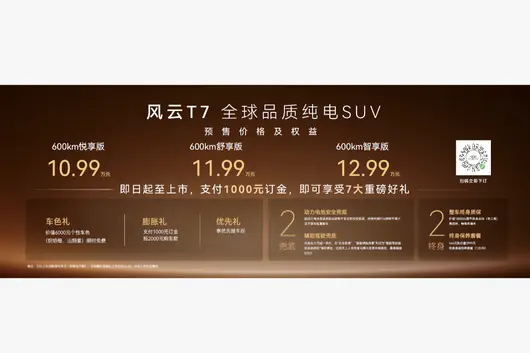
8 月 12 日,奇瑞風雲 T7 正式展開預售。發布會以"慢工造好車,久等咗"為主題,傳遞風雲 T7 秉持長期主義嘅造車理念,將一台面向全球家庭打造嘅安心純電 SUV,篤定地呈現在用戶面前。新車共推出 600km 悅享版、舒享版、智享版三款车型,預售指導價 10.99 萬—12.99 萬元,由即日起至上市期間支付 1000 元訂金,可享包含整車終身質保、1000 抵 2000 購車膨脹、500 萬智駕保障等喺內嘅 7 重預售權益。

全球品質,先出海再回國嘅硬核底氣
喺行業普遍追求"速成造車、快速迭代"嘅當下,風雲 T7 選擇咗一條截然不同嘅路徑:先出海,再回國。其同源車型 Lepas L6 已在南非預售發布、泰國正式上市,亮相米蘭設計周獲國際好評,後續仲會陸續登陸歐盟、澳新、英國、以色列等全球核心市場。這意味著風雲 T7 並非國內特供車型嘅簡單改款,而是從研發之初就錨定全球標準、全球實測、全球用戶、全球耐久、全球質造五大體系嘅真正全球車。

呢份底氣源自奇瑞深厚嘅全球化積澱。連續 23 年位居中國品牌乘用車出口第一,全球用戶突破 2000 萬,產品銷往 130 多個海外市場——奇瑞完整搭建咗全球研發、全球標準、全球驗證、全球品質一体化嘅造車體系。風雲 T7 正係呢套體系嘅最新成果,佢同步適配全球 210 個國家同地區嘅用車需求。

慢工細活,長期主義造車邏輯嘅生動注腳
"慢"係風雲 T7 最硬嘅底色。2 年策劃、3 年研發,按照 2026 版 E-NCAP 五星安全標準設計,功能安全達到 ASIL D 高等級;完成 5000+ 全球用戶調研、15 個典型國家深度走訪;81 台專屬耐久車同步路試,整車累計測試里程超 600 萬公里,耐久專項實測 145 萬公里,覆蓋 100 多種極限路況環境。

從 -40℃北歐極寒到 55℃中東酷暑,從巴西高減速坎到墨西哥鵝卵石路,從德國高速大曲率彎道到南非非鋪裝泥路——風雲 T7 幾乎跑遍咗地球上所有難走嘅路。北歐極寒工況下,雙源寬溫域熱泵+PTC 系統保障 -30℃穩定運轉;熱帶多雨地帶,涉水深度做到 500mm 越野級防水,遠超國標 150mm 嘅標準。呢啲睇唔到嘅投入,構成為風雲 T7"全球車快唔到一點"嘅真實原因。
六大剛需一次滿足,重塑家用電車價值標尺
風雲 T7 打破咗家用純電市場"長續航、高安全、大空間、強智駕、舒適操控"往往割裂分佈嘅行業慣例,用一台車完整覆蓋出行、安全、智能、舒享、駕控、顏值六大核心剛需。

全系標配 65.05kWh 犀牛電池,CLTC 續航 600km,實測可達 667km,反向虛標;30%—80% 快充僅需 22 分鐘,電池循環壽命超過 2500 次,整車 15 年無需更換電池。安全方面,80% 高強度鋼車身配合 18.84% 熱成型鋼,九橫五縱籠式車身結構,同級最多 9 個安全氣囊,犀牛電池採用 6D 鎖子甲 31 層防護,IP68 防水達國標 96 倍。智能方面,同級首發 4nm 製程 8775 艙駕一體芯片,72TOPS NPU 算力,獵鷹 500 智駕配備 22 顆高精度傳感器,支持 200+ 全場景自動泊車。舒享方面,4570×1852×1694mm 車身配合 2700mm 軸距,車內得房率高達 84%;9 層複合雲感座椅帶三檔加熱同通風,同級最大純平大床模式達 1955×1310mm,尾箱可擴展至 1550L。顏值方面,全球 8 大研發設計中心協同打造,6 款東方雅韻車漆搭配豪車級噴塗工藝,雲翼環抱簡約內飾通透高級。

寫喺最後
10.99 萬元起嘅預售價,疊加整車終身質保、500 萬智駕保障等 7 重權益,放喺"全球研發 +145 萬公里驗證 + 全系 600km 續航+4nm 8775 芯片 +9 氣囊"嘅組合入面,顯得克制而凶猛。風雲 T7 嘅正式預售,標誌住奇瑞喺全球純電市場嘅戰略布局進入新階段——喺純電競爭從堆料上半場走向品質下半場嘅今天,真正經得起全球千錘百煉嘅車,先配得上"家用"二字。慢工造好車,今次唔使再等太久。

In the Malaysian SUV market, many buyers compare Proton X50 and Mazda CX-5 when choosing a car. These two models are quite close in price and positioning. Today, we will make a detailed comparison from multiple aspects to help you save time on research.
The OTR price of Proton X50 in Malaysia is RM 89,800 - 113,300. There are 4 versions in total, including 1.5T Executive (RM 89,800), 1.5T Premium (RM 101,800), 1.5T Flagship (RM 113,300), etc.
The OTR price of Mazda CX-5 in Malaysia is RM 135,469 - 166,760. There are 3 versions in total, including 2025 2.0L AT 35th Anniversary (RM 316,154), 2025 2.0L AT (RM 296,154), 2025 2.0L MT (RM 294,154), etc.
From a price perspective, the starting price of Proton X50 is indeed RM 45,669 cheaper than Mazda CX-5. If your budget is limited, Proton's entry-level version can already meet daily needs. However, be aware that the few thousand difference might involve trade-offs in features, depending on your needs.

Proton X50 is equipped with a 1.5L 4-cyl, 105 hp. Official fuel consumption 6.0 L/100km.
Mazda CX-5 is equipped with a 1.5L Turbo, 140 hp. Official fuel consumption 7.0 L/100km.
In terms of power, the 1.5L Turbo on Mazda CX-5 has 35 hp more than the 1.5L 4-cyl on Proton X50. However, for daily city driving, the power of both cars is sufficient, and you won't feel like it's lacking power.
Proton X50's safety rating is 5★ (ASEAN NCAP), active safety systems include ADAS (ACC, AEB, LKA, LDA, BSM, RCTA).
Mazda CX-5's safety rating is 5★ (ASEAN NCAP), active safety systems include .
Both cars have the same safety rating, and safety features are quite comprehensive in this class. New car safety is generally not poor nowadays, so no need to worry too much about this point.
Proton X50 body length 4400 mm, trunk 400 L.
Mazda CX-5 body length 4500 mm, trunk 450 L.
In terms of space, Mazda CX-5's body is 100 mm longer than Proton X50, offering better passenger space. However, Proton X50 is a bit more flexible for parking in the city, each has its trade-offs.
Proton X50 and Mazda CX-5 are both mainstream choices in the Malaysian market, suitable for family use and daily commuting. If you value brand reputation and resale value more, you can prioritize the one with a better reputation; if you care more about value for money and features, choose the one with richer configuration. Ultimately, it is recommended to test drive both, and the personal experience is the most important.
Overall, Proton X50 and Mazda CX-5 are both very good models in the Malaysian market. Which one to choose depends mainly on your personal needs and budget. It is recommended to do your research, compare quotes from several car dealers, and then test drive to make the final decision. Buying a car is a big matter, spending time on research will never be wrong.


Di pasaran SUV di Malaysia, banyak pembeli yang membandingkan Perodua Ativa dan Honda HR-V ketika memilih kereta. Kedua-dua kereta ini mempunyai harga dan penempatan yang agak hampir, hari ini kita akan membuat perbandingan terperinci dari pelbagai aspek untuk membantu anda menjimatkan masa membuat kajian.
Harga OTR Perodua Ativa di Malaysia adalah RM 62,500 - 73,400, terdapat keseluruhan 3 varian, termasuk 1.0L Turbo X (RM 62,500), 1.0L Turbo H (RM 67,300), 1.0L Turbo AV (RM 73,400) dan sebagainya.
Harga OTR Honda HR-V di Malaysia adalah RM 115,900 - 143,900, terdapat keseluruhan 4 varian, termasuk 2026 e:HEV 1.5L RS (RM 143,900), 2026 1.5T V (RM 137,900), 2026 1.5T E (RM 130,900) dan sebagainya.
Dari segi harga, harga permulaan Perodua Ativa memang lebih murah RM 53,400 berbanding Honda HR-V. Jika bajet anda terhad, versi permulaan Perodua sudah boleh memenuhi keperluan harian. Tetapi perlu diingat, berapapun perbezaan harga itu, mungkin ada pengorbanan dalam pelengkap, ia bergantung pada keperluan anda.

Perodua Ativa dilengkapi enjin 1.5L 4-silinder, kuasa 105 hp. Penggunaan minyak rasmi 6.0 L/100km.
Honda HR-V dilengkapi enjin 1.5L Turbo, kuasa 140 hp. Penggunaan minyak rasmi 7.0 L/100km.
Dari segi kuasa, 1.5L Turbo Honda HR-V mempunyai 35 hp lebih daripada 1.5L 4-silinder Perodua Ativa. Walau bagaimanapun, untuk penggunaan harian di bandar, kuasa kedua-dua kereta adalah mencukupi, tidak terasa kurang kuasa.
Panjang badan Perodua Ativa 4400 mm, stor belakang 400 L.
Panjang badan Honda HR-V 4500 mm, stor belakang 450 L.
Dari segi ruang, badan Honda HR-V 100 mm lebih panjang daripada Perodua Ativa, ruang tempat duduk lebih unggul. Namun, Perodua Ativa lebih fleksibel ketika memandu di bandar, masing-masing ada pengorbanan.
Perodua Ativa dan Honda HR-V adalah pilihan utama di pasaran Malaysia, sesuai untuk kegunaan keluarga dan perjalanan harian. Jika anda mengutamakan nama baik jenama dan harga kedua, boleh pilih yang lebih popular; jika anda lebih mementingkan nilai untuk wang dan pelengkap, pilih yang lebih lengkap. Akhir sekali disyorkan kedua-dua model untuk diuji pemanduan, pengalaman sendiri adalah yang paling penting.

Secara keseluruhan, Perodua Ativa dan Honda HR-V adalah model kereta yang sangat bagus di pasaran Malaysia. Memilih mana satu, penting bergantung pada keperluan dan bajet peribadi anda. Disyorkan buat kajian, bandingkan harga beberapa dealer, kemudian uji pemanduan untuk keputusan akhir. Membeli kereta adalah perkara penting, luangkan masa untuk kajian tidak akan rugi.


在马来西亚的轿车市场,很多买家在选车的时候都会拿 Toyota Camry 和 Volkswagen Golf R 来做比较。这两款车在价位和定位上都蛮接近的,今天我们就从多个方面做一个详细的对比,帮你省下做功课的时间。
Toyota Camry 在马来西亚的 OTR 售价是 RM 221,800 - 248,800,一共有 2 个版本,包括 2025 HEV 2.5L Standard(RM 248,800)、2025 2.5L Standard(RM 221,800) 等。
Volkswagen Golf R 在马来西亚的 OTR 售价是 RM 338,812 - 338,812,一共有 2 个版本,包括 2026 2.0T Standard(RM 338,812)、DCT(RM 294,800) 等。
从价钱来看,Toyota Camry 的起步价确实比 Volkswagen Golf R 便宜了 RM 117,012。如果你预算有限,Toyota 的入门版已经可以满足日常需求。但也要注意,便宜的那几千块,可能在配备上会有取舍,具体要看你的需求。

Toyota Camry 搭载 2.0L 4-cyl,马力 170 hp。官方油耗 8.0 L/100km。
Volkswagen Golf R 搭载 2.0L Turbo,马力 220 hp。官方油耗 9.5 L/100km。
动力方面,Volkswagen Golf R 的 2.0L Turbo 比 Toyota Camry 的 2.0L 4-cyl 多了 50 匹马力。不过日常在市区开,两款车的动力都够用,不会觉得不够力。

Toyota Camry 的安全评级是 5★ (ASEAN NCAP),主动安全系统包括 TSS 2.5。
Volkswagen Golf R 的安全评级是 5★ (Euro NCAP),主动安全系统包括 IQ.Drive。
安全配备方面,两款车都拿到了不错的评级。不过 Toyota Camry 的 TSS 2.5 和 Volkswagen Golf R 的 IQ.Drive 在功能上有些差异,如果你比较看重主动安全的话,可以仔细对比一下两者的功能列表。

Toyota Camry 车身长 4400 mm,后备箱 400 L。
Volkswagen Golf R 车身长 4400 mm,后备箱 400 L。
两款车的尺寸几乎一样,车内空间差别不大。这个级别的车,日常使用完全够用。

Toyota Camry 保修 5年/无限制里程,保养间隔 每10,000km或6个月。
Volkswagen Golf R 保修 3年/100,000km,保养间隔 每10,000km或6个月。

总的来说,Toyota Camry 和 Volkswagen Golf R 都是马来西亚市场很不错的车型。选择哪一辆,关键还是要看你的个人需求和预算。建议大家做好功课,多比较几间车行的报价,再去试驾做最终决定。买车是件大事,花点时间做功课绝对不会错。


在马来西亚的汽车市场,很多买家在选车的时候都会拿 Subaru Outback 和 BMW X5 来做比较。今天我们从多个方面做一个详细的对比,帮你省下做功课的时间。


Subaru Outback 在马来西亚的 OTR 售价是 RM 260,000 - 280,000,一共有 2 个版本,包括 2025 2.4T R-Touring EyeSight(RM 310,340)、2025 2.5L Touring EyeSight(RM 280,340) 等。
BMW X5 在马来西亚的 OTR 售价是 RM 470,800 - 470,800,一共有 3 个版本,包括 1.5L Standard(RM 86,300)、1.5L Executive(RM 95,300)、1.5L Premium(RM 103,300) 等。
从价钱来看,Subaru Outback 的起步价确实比 BMW X5 便宜了 RM 210,800。如果你预算有限,Subaru 的入门版已经可以满足日常需求。但也要注意,便宜的那几千块,可能在配备上会有取舍,具体要看你的需求。

Subaru Outback 的安全评级是 TBD,主动安全系统包括 Basic。
BMW X5 的安全评级是 5★ (ASEAN NCAP),主动安全系统包括 ADAS (ACC, AEB, LKA, LDA, BSM, RCTA)。
安全配备方面,两款车都拿到了不错的评级。不过 Subaru Outback 的 Basic 和 BMW X5 的 ADAS (ACC, AEB, LKA, LDA, BSM, RCTA) 在功能上有些差异,如果你比较看重主动安全的话,可以仔细对比一下两者的功能列表。

Subaru Outback 采用 FWD 驱动方式。
BMW X5 采用 4WD 驱动方式。
Subaru Outback 的 FWD 和 BMW X5 的 4WD 在操控上会有不同感受,建议试驾对比。

Subaru Outback 和 BMW X5 都是马来西亚市场的主流选择,适合家庭使用、日常通勤。如果你更看重品牌口碑和二手价,可以优先考虑口碑更好的那一款;如果你更在意性价比和配备,那就选配置更丰富的那款。最终还是建议两款都去试驾,亲身体验才是最重要的。

总的来说,Subaru Outback 和 BMW X5 都是马来西亚市场很不错的车型。选择哪一辆,关键还是要看你的个人需求和预算。建议大家做好功课,多比较几间车行的报价,再去试驾做最终决定。买车是件大事,花点时间做功课绝对不会错。


在马来西亚的汽车市场,很多买家在选车的时候都会拿 MG MG HS 和 Subaru Forester 来做比较。今天我们从多个方面做一个详细的对比,帮你省下做功课的时间。
MG MG HS 在马来西亚的 OTR 售价是 RM 130,450 - 146,450,一共有 2 个版本,包括 1.5L Standard(RM 105,000)、1.5L Executive(RM 115,000) 等。
Subaru Forester 在马来西亚的 OTR 售价是 RM 174,000 - 197,000,一共有 3 个版本,包括 2024 2.0L S EyeSight GT Edition(RM 189,538)、2024 2.0L S EyeSight(RM 177,538)、2024 2.0L L EyeSight(RM 167,538) 等。
从价钱来看,MG MG HS 的起步价确实比 Subaru Forester 便宜了 RM 43,550。如果你预算有限,MG 的入门版已经可以满足日常需求。但也要注意,便宜的那几千块,可能在配备上会有取舍,具体要看你的需求。

MG MG HS 车身长 4400 mm,后备箱 400 L。
Subaru Forester 车身长 4400 mm,后备箱 400 L。
两款车的尺寸几乎一样,车内空间差别不大。这个级别的车,日常使用完全够用。

MG MG HS 保修 7年/150,000km,保养间隔 每10,000km或6个月。
Subaru Forester 保修 3年/100,000km,保养间隔 每10,000km或6个月。
MG MG HS 和 Subaru Forester 都是马来西亚市场的主流选择,适合家庭使用、日常通勤。如果你更看重品牌口碑和二手价,可以优先考虑口碑更好的那一款;如果你更在意性价比和配备,那就选配置更丰富的那款。最终还是建议两款都去试驾,亲身体验才是最重要的。
总的来说,MG MG HS 和 Subaru Forester 都是马来西亚市场很不错的车型。选择哪一辆,关键还是要看你的个人需求和预算。建议大家做好功课,多比较几间车行的报价,再去试驾做最终决定。买车是件大事,花点时间做功课绝对不会错。

© 2024 Bitauto.com. All Rights Reserved.
Bitauto (www.yiche.com and www.bitauto.com) is one of the most visited automotive websites in China. We provide detailed info on Chinese car brands available in your area. Please note that the information provided on this website is based on publicly available data and is for reference only. It may not be fully updated or accurate at all times.

Help us improve our website


