

Homeentertainment

Search History
Popular Searches
Dealer Login / Sign Up

车型概览

Mercedes-Benz EQE AMG 值不值得买,关键不是它看起来有多吸引,而是它能不能解决你的真实用车需求。这篇文章会把重点放在整体购车判断。
价格落在 RM 649,888,买家可以先用它判断预算压力和同级定位。
购车价格指南
Mercedes-Benz EQE AMG 的购车预算可以先从 RM 649,888 开始衡量。这个数字真正影响的是月供、保险和现金流,而不只是展厅里的标价。
如果你在几个版本之间犹豫,可以把 2023 AMG EQE 53 4MATIC+(RM 649,888) 放在同一张清单里比较。日常通勤买家优先看舒适与安全,常跑高速的买家则更应重视动力、辅助驾驶和座舱便利。
核心参数汇总
看 Mercedes-Benz EQE AMG 的核心规格,最重要是把数字翻译成生活里的感受。
460 kW的输出,让高速并线和短距离超车更有底气。 车长 4964 mm、车宽 2104 mm、车高 1495 mm,可以帮助你预判停车难度和后排乘坐空间。 固定齿比 变速箱、四轮驱动布局 的设定,会影响起步顺滑度、湿地稳定感和长途巡航感。
优缺点分析
Mercedes-Benz EQE AMG 的优点不必夸张,真正有价值的是它能不能让日常使用更省心:预算位置清楚,方便和同级车直接比较、动力输出能支撑高速和超车需求、空间和车身尺寸便于家庭买家预判实用性。
需要留意的是,需要先确认家里、公司或常去商场的充电条件、市区停车和狭窄路段仍要看个人驾驶习惯。这些不是扣分项,而是下订前应该先想清楚的生活细节。
购车常见问题解答
购买 Mercedes-Benz EQE AMG 前,买家最常问的不是单一规格,而是它能不能融入自己的生活。
这辆车适合谁?适合把整体购车判断放在首位的买家。 家庭用户要看什么?优先看后排乘坐、儿童座椅、行李和日常上下车是否顺手。 每天开会不会麻烦?只要充电条件稳定,电动车的通勤体验通常更安静,也更容易控制日常能源成本。
竞品对比内容
把 Mercedes-Benz EQE AMG 放进同级车名单时,不建议只看品牌或外形。真正有用的比较顺序是:先用 RM 649,888 锁定预算圈、再看动力是否足够应付高速和满载、最后看空间是否适合家人和行李。
这样筛选出来的结果更贴近日常生活。你会更清楚它是适合城市通勤、家庭代步、长途巡航,还是更适合作为一辆讲求个性的选择。
用车全周期指南
拥有 Mercedes-Benz EQE AMG 的关键,是先把充电安排想清楚。家充、公司充电或商场快充只要其中一项稳定,日常体验就会轻松很多。
如果你常跑南北大道,动力和座舱舒适度会比单纯低价更重要;如果主要在市区,停车灵活性、视野和低速顺滑度会更影响心情。

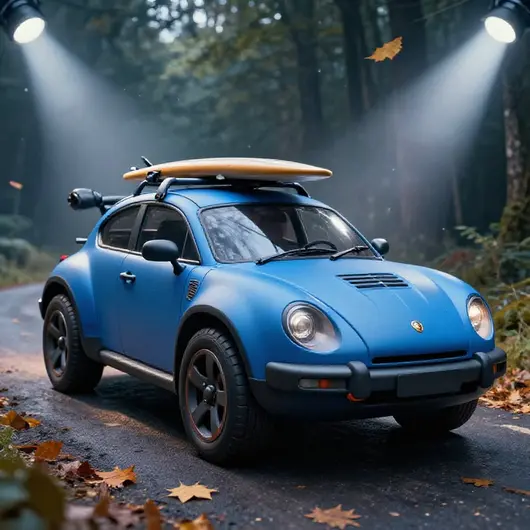
May 28, 2026, at the North Bund World Living Room in Shanghai, SAIC Motor welcomed its global 100 millionth user. Thus, China's automotive industry saw the birth of the first automotive group with cumulative production and sales surpassing 100 million vehicles.

100 million vehicles is a number, and even more so, a history. In 1955, the Shanghai Internal Combustion Engine Parts Manufacturing Company was established, marking the start of Shanghai's automotive industry. In 1958, workers hammered out the first "Phoenix" sedan with hammers, achieving the "zero breakthrough" in Shanghai's sedan manufacturing. From that era of hammering and knocking, to 2026 when high-end intelligent electric vehicles equipped with full-by-wire chassis and AI large models rolled off the production line; from 1983 when Santana started joint venture cooperation and established a modern automotive industrial system, to 2025 when overseas cumulative sales broke 7 million units, with products distributed in over 170 countries and regions — these 100 million vehicles weave together the complete process of China's automotive industry from nothing to something, from weak to strong. During this process, SAIC Motor was both a witness and the main driving force.
The Chassis of 100 Million Vehicles Comes from Full System Capabilities
100 million vehicles is not the merit of a single brand, but the result of SAIC Motor's whole value chain synergy. January to April 2026, SAIC Motor's cumulative sales reached 1.302 million units, ranking as China's top automaker by sales volume for four consecutive months. Among them, independent brand sales were 910,000 units, accounting for nearly 70%; new energy vehicle sales were 412,000 units; overseas market sales were 459,000 units, a year-on-year surge of 50.2%. These three data sets reveal SAIC's current growth logic: independent brands taking the lead, electric leadership, and global breakout.

On the day of the handover ceremony, more than a dozen brands and nineteen model lines under SAIC coordinated through the method of "Global Relay Handover". Independent brands covered diverse scenarios such as personal mobility, family life, commercial operations, and logistics transportation; the joint venture sector focused on showcasing the phased results of "Joint Venture 2.0". Starting from the Shanghai main venue, the handover scenes were lit up successively in multiple domestic cities such as Nanjing, Liuzhou, and Taiyuan, and in countries like the UK, Indonesia, and Singapore. This delivery method spanning mountains and seas and crossing continents is underpinned by a complete global value chain closed loop.
SAIC's system capabilities are reflected at multiple levels. At the parts and logistics end, Anjie Logistics owns 42 roll-on/roll-off ships, with 8 international routes covering Southeast Asia, Europe, and the Americas, with an annual transport capacity exceeding 10 million vehicles. At the R&D and manufacturing end, SAIC has over 100 parts production bases and over 3,000 dealer networks overseas, having built 3 major R&D and innovation centers in London and 4 manufacturing centers in Thailand, Indonesia, India, and Pakistan. At the product and market end, SAIC's products and services are distributed in over 170 countries and regions, with multiple independent brands continuing to lead in overseas markets. In 2025, SAIC released the overseas "Glocal Strategy", moving from "Product Going Global" to "Value Chain Going Global" — this means SAIC is no longer just exporting products overseas, but establishing a complete ecosystem of R&D, production, sales, and service locally, allowing "China Intelligent Manufacturing" to truly take root globally.
Running through this journey is SAIC's long-held concept of "Understand Cars, Understand You Better". Understanding cars represents the ultimate pursuit of core technologies — from the Santana localization community to Joint Venture 2.0 technology co-creation, from the country's first full-by-wire chassis to solid-state/half-solid-state batteries and AI large models onboard vehicles. Taking solid-state batteries as an example, SAIC has completed the mass production installation of half-solid-state batteries, while the next generation of all-solid-state batteries is accelerating implementation, with energy density and safety achieving a leap. Regarding AI large models, SAIC deeply integrates large language models with vehicle control, enabling the car machine not only to "understand speech" but also to "understand scenarios", actively recommending routes and adjusting cabin environments for users. Understanding you means precisely implementing every frontier technology into travel experiences that users can perceive and enjoy. 100 million vehicles represent both the concentrated fulfillment of trust from 100 million users and a phased answer SAIC has given to China's automotive industry's "from big to strong".
The Sample of Joint Venture 2.0, How to Build Power for the Next 100 Million Vehicles
SAIC Motor's 100 million vehicles is the result of synergy between three major sectors: independent brands, joint ventures, and overseas markets. Among them, the joint venture sector not only contributed significant sales volume but also explored a new path of "Joint Venture 2.0" first in the new energy transformation. As the joint venture enterprise established earliest and contributing the most cumulative sales to the group, SAIC Volkswagen is the core practitioner of this path.
In the grand narrative of 100 million vehicles, SAIC Volkswagen is a name that cannot be bypassed. It not only laid a solid foundation for manufacturing and supply chains for the group, cultivating the first batch of local suppliers from the Santana localization community to today's efficient production network covering the country, but also pioneered a new paradigm of "Joint Venture 2.0" in the new energy era.

ID. ERA 9X is the representative work of this paradigm. As the first 9-series flagship SUV globally by Volkswagen, it deeply integrates "German Heritage + Chinese Wisdom": equipped with EA211 Golden Range Extender, Xingyun Intelligent Driving Assistance System (Global Premiere of Momenta R7 Reinforcement Learning World Model), Yunqi Smart Cockpit, and other nine black technologies. One month after launch, ID. ERA 9X cumulatively delivered over 7,000 units, successfully entering the 300,000 yuan level and above extended-range large-end SUV market top three.
Notably, the 6,999th owner of ID. ERA 9X — former national team player Yang Chen, happened to become the user of the 99,999,999th complete vehicle of SAIC Motor. Yang Chen was the first Chinese player to compete in the Bundesliga, and his choice, to some extent, is also a metaphor: the combination of German heritage and Chinese power is producing new chemical reactions on the new energy track. This coincidence also symbolizes the deep binding of the joint venture sector and the group's overall destiny.
But the significance of ID. ERA 9X goes far beyond sales volume. It marks a fundamental shift in the joint venture model — from past "Technology Introduction" to "Technology Co-creation". In the past, joint venture brands mostly introduced globally mature products into China, and localization modifications were often limited to lengthening wheelbases and adjusting configurations. Now, SAIC Volkswagen uses Chinese user needs as the origin, collaborating with Chinese local intelligent partners (such as Momenta), to define products in reverse — the Chinese team leads the development of smart cockpits and intelligent driving systems, while the German team is responsible for chassis, powertrain, and manufacturing processes. Both parties run parallel from the beginning of development, rather than "first a global car, then localization". Products under this model are not only more aligned with Chinese consumers' usage habits but may even possess the possibility of feeding back Chinese innovations globally.
For SAIC Motor, the significance of Joint Venture 2.0 lies in: it is no longer a simple profit contributor, but an important force in the group's transformation that can stabilize the base and open up incremental space. In today's context where independent brands are soaring, the renewal of the joint venture sector provides the certainty of "dual-wheel drive" for the group's next 100 million vehicles.
100 million vehicles is a phased answer to SAIC's 70-plus years of development, and even more so, a new starting line facing the intelligent and electric future for "a second round of entrepreneurship". In 2014, SAIC took the lead in comprehensive transformation to new energy, and at that time there were still many doubts in the industry; twelve years later, from independent to joint venture, from passenger to commercial, from domestic to overseas, SAIC has formed a vigorous momentum. Just like the theme of this handover ceremony — "Together on the Road to 100 Million", for the next 100 million vehicles, SAIC will walk on this road together with global users and global partners.
© 2024 Bitauto.com. All Rights Reserved.
Bitauto (www.yiche.com and www.bitauto.com) is one of the most visited automotive websites in China. We provide detailed info on Chinese car brands available in your area. Please note that the information provided on this website is based on publicly available data and is for reference only. It may not be fully updated or accurate at all times.

Help us improve our website


