

Homeexplorer

Search History
Popular Searches
Dealer Login / Sign Up

In the Malaysian SUV market, many buyers compare Proton X90 and Mazda CX-30 when choosing a car. These two models are quite close in price and positioning. Today, we will make a detailed comparison from multiple aspects to help you save time on research.
The OTR price of Proton X90 in Malaysia is RM 106,800 - 122,800, with a total of 4 versions, including 2026 1.5T Prime X (RM 122,800), 2026 1.5T Prime (RM 116,800), 2026 1.5T Lite (RM 106,800), etc.
The OTR price of Mazda CX-30 in Malaysia is RM 122,409 - 146,409, with a total of 4 versions, including 2025 2.0L High+ Premium (RM 146,409), 2025 2.0L High+ (RM 138,409), 2025 2.0L High (RM 130,409), etc.
From a price perspective, the starting price of Proton X90 is indeed RM 15,609 cheaper than Mazda CX-30. If your budget is limited, Proton's entry-level version can already meet daily needs. But be aware, the few thousand difference might involve trade-offs in features, depending on your needs.

Proton X90 comes with a 1.5L Turbo, 140 hp. Official fuel consumption is 7.0 L/100km.
Mazda CX-30 comes with a 1.5L Turbo, 140 hp. Official fuel consumption is 7.0 L/100km.
Both cars use the same powertrain, and the driving feel is basically no difference. Fuel consumption is also similar, no need to worry too much about this.

Proton X90 safety rating is 5★ (ASEAN NCAP), active safety systems include ADAS (ACC, AEB, LKA, LDA, BSM, RCTA).
Mazda CX-30 safety rating is 5★ (ASEAN NCAP), active safety systems include i-Activsense.
Both cars have the same safety rating, safety features are quite complete within this level. New car safety is generally good these days, no need to worry too much about this.

Proton X90 body length 4400 mm, trunk 400 L.
Mazda CX-30 body length 4500 mm, trunk 450 L.
In terms of space, Mazda CX-30 body is 100 mm longer than Proton X90, offering an advantage in passenger space. However, Proton X90 is more flexible for parking in the city, each has trade-offs.

Proton X90 warranty 5 years/150,000km, service interval every 10,000km or 6 months.
Mazda CX-30 warranty 5 years/150,000km, service interval every 10,000km or 6 months.
Warranty conditions for both cars are the same, no need to worry about this. Actual maintenance cost depends on the brand's service network and parts prices, recommend asking real owners in car owner groups for experience.
Overall, Proton X90 and Mazda CX-30 are both very good models in the Malaysian market. Which one to choose depends mainly on your personal needs and budget. It is recommended to do research, compare quotes from several dealers, and then take a test drive to make a final decision. Buying a car is a big matter, spending time researching will never be wrong.


Di pasaran SUV di Malaysia, ramai pembeli membandingkan Proton X90 dan Mazda CX-60 semasa memilih kereta. Kedua-dua model ini mempunyai harga dan kedudukan pasaran yang agak serupa, hari ini kita akan membuat perbandingan terperinci dari pelbagai aspek untuk membantu anda menjimatkan masa melakukan penyelidikan.
Harga OTR Proton X90 di Malaysia ialah RM 106,800 hingga 122,800, terdapat 4 varian, termasuk 2026 1.5T Prime X (RM 122,800), 2026 1.5T Prime (RM 116,800), 2026 1.5T Lite (RM 106,800) dan sebagainya.
Harga OTR Mazda CX-60 di Malaysia ialah RM 200,510 hingga 252,873, terdapat 2 varian, termasuk 2026 3.3T 4WD High Plus (RM 252,873), 2025 2.5L 2WD High (RM 200,510) dan sebagainya.
Dari segi harga, harga permulaan Proton X90 memang RM 93,710 lebih murah daripada Mazda CX-60. Jika bajet anda terhad, varian masuk Proton sudah boleh memenuhi keperluan harian. Tetapi harap diingat, perbezaan harga beberapa ribu ringgit itu mungkin melibatkan kompromi pada kelengkapan, bergantung kepada keperluan anda.
Proton X90 menggunakan sistem penggerak FWD.
Mazda CX-60 menggunakan sistem penggerak FWD.
Kedua-dua kereta ini mempunyai sistem penggerak yang sama, iaitu FWD, tiada perbezaan besar dalam pengalaman memandu harian.
Jaminan Proton X90 5 tahun atau 150,000 km, selang penyelenggaraan setiap 10,000 km atau 6 bulan.
Jaminan Mazda CX-60 5 tahun atau 150,000 km, selang penyelenggaraan setiap 10,000 km atau 6 bulan.
Kondisi jaminan kedua-dua kereta ini sama, tidak perlu bimbang dari aspek ini. Kos penyelenggaraan sebenar bergantung kepada rangkaian servis jenama dan harga komponen, disarankan bertanya kepada pemilik kereta sebenar dalam kumpulan komuniti.
Proton X90 dan Mazda CX-60 sama-sama pilihan utama di pasaran Malaysia, sesuai untuk kegunaan keluarga dan perjalanan harian. Jika anda lebih menghargai reputasi jenama dan nilai semula, boleh utamakan yang mempunyai reputasi lebih baik; jika anda lebih mementingkan nisbah harga-kepada-kebaikan dan kelengkapan, maka pilih yang mempunyai kelengkapan lebih lengkap. Akhir sekali disarankan untuk menguji memandu kedua-dua model, pengalaman sendiri adalah yang paling penting.

Secara keseluruhannya, Proton X90 dan Mazda CX-60 sama-sama model kereta yang sangat baik di pasaran Malaysia. Memilih yang mana satu, penting untuk melihat keperluan peribadi dan bajet anda. Disarankan membuat persiapan, membandingkan tawaran harga dari beberapa dealer, kemudian memandu uji untuk membuat keputusan akhir. Membeli kereta adalah perkara besar, mengambil masa untuk membuat persiapan tidak akan salah.

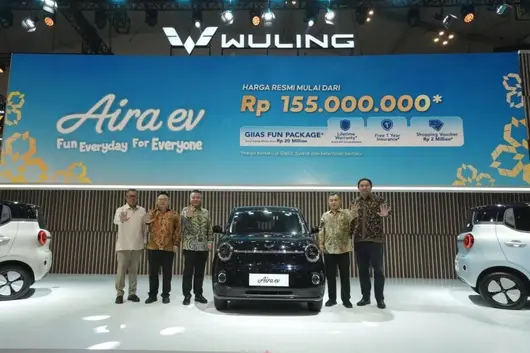
On July 29, the Wuling Aira ev officially launched at the Indonesia International Motor Show. The new car comes in two versions: standard range and long range. CLTC ranges are 205 km and 301 km respectively. Prices in the Jakarta area are 155 million and 175 million Indonesian Rupiah respectively (approximately 39,000 and 45,000 RMB).

An starting price of 155 million Indonesian Rupiah brought a four-door pure electric vehicle into a more mass-market price range locally. The Aira ev continues the product foundation of the fifth-generation Wuling Hongguang MINI EV and has been adapted for the Indonesian market, including right-hand drive, charging interface, and interior color schemes, becoming a new product for Wuling to continue to deepen its development of the urban pure electric market.
The Aira ev may look like just an entry-level electric vehicle, but behind it lies the local factory, supply chain, channels, and user base that Wuling has built over nine years in Indonesia.
Unlike when the Air ev initially entered an immature pure electric market, the Aira ev faces a competitive environment with more brands and richer product options.
To continue expanding its market share position locally, Wuling now relies not just on a hit product, but on a localized operational system capable of continuously launching, producing, and delivering new products.
Nine Years of Rooting
Wuling Has Built More Than Just a Factory
In 2017, Wuling officially launched its first model in Indonesia.
Since then, Wuling has continuously strengthened the Cikarang factory and the local supply chain, and expanded its sales and after-sales service networks.
As of July 2026, Wuling has cumulatively produced 200,000 vehicles in Indonesia, acquired 180,000 local users, exported a cumulative 10,000 vehicles made in Indonesia, and has been among the top 10 passenger car brands locally.
Wuling is also the first Chinese automotive enterprise to assemble electric vehicle batteries locally in Indonesia.
In 2025, Wuling's retail sales in Indonesia reached 20,607 units.
Over the past nine years, Wuling not only completed the leap from product introduction to local production, but also steadily secured a share of the market in a sector long dominated by Japanese brands such as Toyota, Daihatsu, Honda, Mitsubishi, and Suzuki, securing a space for Chinese brands.
As of July 2025, Wuling has 150 dealerships in Indonesia covering sales and after-sales services.
The local factory not only produces fuel vehicles, hybrid vehicles, and pure electric vehicles, but also undertakes export tasks to other countries and regions.
For Chinese brands entering Indonesia later, factories, channels, and consumer awareness still need to be built from scratch; for Wuling, these links have already formed a business system capable of continuously supporting product introduction and market expansion.
The most important achievement of Wuling's nine years of operation is not just the growth in cumulative production and user numbers, but growing from a latecomer in the Indonesian automotive market into a local participant capable of long-term competition with Japanese brands and forming differentiated advantages in the new energy sector.
As an important pivot for the SAIC Group in the Southeast Asian market, the manufacturing, channels, and user base Wuling has accumulated in Indonesia also provide support for the group to continue to deepen its development of the local market.
The fact that the Aira ev was able to complete local production and dealer stocking before launch and start delivery immediately after launch is a direct manifestation of this system working.

From Air ev to Aira ev
First-Mover Advantage is Becoming a Product System
Wuling fought for market share from Japanese brands, and the area where it truly achieved a breakthrough is new energy.
In 2022, the Air ev launched in Indonesia. With its compact size, city commuting, and low operating cost, it was the first to open up the local small pure electric vehicle market.
As of July 2024, Wuling electric vehicles had cumulatively sold over 20,000 units in Indonesia; Wuling also disclosed that from January to June 2024, the pure electric product lineup composed of Air ev, BinguoEV, and Cloud EV captured 52% of the local electric vehicle market share, making Wuling the top-selling electric vehicle brand in Indonesia at that time.
The Air ev not only brought sales but also helped Wuling complete early market education.
When choices for pure electric vehicles in Indonesia were still limited, Wuling proved first that small-sized, city-commute-friendly electric vehicles could generate significant demand, gradually building consumer awareness in the region about Chinese electric vehicles and locally produced pure electric models.
As brands such as BYD, Jaecoo, Geely, and Chery accelerated their entry, the Indonesian new energy market shifted from being developed by a few brands to comprehensive competition in products, prices, channels, and services.
From January to April 2026, Wuling's wholesale sales were 5,178 units, ranking third among Chinese car brands in Indonesia, second only to BYD and Jaecoo, higher than Geely, Chery, and GAC Aion, remaining in the first tier of local Chinese brands.
Wuling's competitive approach has also changed.
Early on relying on the Air ev to break into the small pure electric market, now it expands its coverage through models of different sizes, prices, and energy types.
The Air ev and Aira ev target the urban small pure electric market, BinguoEV and Cloud EV extend towards space and comfort needs, Darion enters the new energy family MPV market, Eksion covers SUV and lifestyle needs, while Mitra EV, Formo, and Formo Max target commercial scenarios.
This product lineup ensures Wuling's advantage is no longer limited to "launching an electric vehicle earlier".
When new segmented demands arise, Wuling can find corresponding products from its existing product and technology systems, then use the local factory and channels to quickly complete the introduction.
The Air ev helped Wuling gain a first-mover position in new energy, while the subsequent product matrix converted this advantage into the ability to continuously operate in the market.
The Aira ev is the latest step in this.
The new car adopts the platform and technology system of the fifth-generation Wuling Hongguang MINI EV, and adjusts the steering wheel position, interior color, and charging interface for the Indonesian market, changing the charging interface from the GB/T standard used in the Chinese market to the CCS2 standard used locally.
Mature platforms control development and manufacturing costs, while local adaptation allows products to enter the market faster.
More critically is the price.
Wuling previously hoped to keep the Aira ev price within 200 million Indonesian Rupiah, but the final starting price of 155 million Indonesian Rupiah is significantly lower than this target.
The standard range version helps lower the purchase threshold, the long range version expands the usage radius, and the four-door design fills the gap in rear seat convenience left by the Air ev.
After the small pure electric market moved from empty to crowded, Wuling did not simply rely on lowering the Air ev price, but used its mature small pure electric product system to launch a new car with a lower price and more practical four doors, re-expanding its market coverage.
The Aira ev aims to appeal to city users who previously did not accept two-door models, attract first-time car buyers sensitive to price, and consumers originally prepared to buy fuel cars at the same price point.
The simultaneous progress of launch and delivery allows Wuling to participate in market competition quickly.
The Aira ev is locally produced by the Cikarang factory, vehicles were shipped to dealers before launch, and the long-range version allows qualified consumers to pick up the car on the day of launch.
The simultaneous launch of products, manufacturing, and channels reflects the system efficiency formed by Wuling's nine-year accumulation.

From Local Manufacturing to Local Operations
Wuling Enters the Next Stage
Wuling has long used the concept "Wuling Built in Indonesia For You" in Indonesia, which can be understood as "Made in Indonesia for Local Users".
Over the past nine years, Wuling has completed whole vehicle production, battery assembly, channel construction, user accumulation, and export layout.
But local manufacturing is just the first step of the SAIC Glocal strategy landing.
What truly determines competitiveness is whether it can leverage SAIC's global resources in products, technology, and supply chains, combined with local consumers' price affordability, road environments, and usage scenarios, to continuously launch new products.
The Aira ev is a concrete manifestation of this model.
It inherits the mature platform of the fifth-generation Wuling Hongguang MINI EV, completes right-hand drive, charging standards, and configuration adaptation in Indonesia, is produced by the Cikarang factory, and then completes sales and delivery through the existing dealer network.
Wuling officials also mentioned that the Aira ev incorporates the creativity and effort of young Indonesian employees, and the local team has already participated in the product implementation process.
Global platforms solve product maturity and cost issues, while the localized system is responsible for turning the product into versions suitable for the local market.
For SAIC, Glocal is not simply copying domestic models overseas, nor just establishing production bases locally, but transforming global technology and product resources through local teams, factories, and channels into products ultimately acceptable to local consumers.
Nine years ago, Wuling needed to prove that Chinese brands could produce and sell cars in Indonesia;
After the Air ev launched, it proved that Chinese brands could open up the local pure electric market first.
Today, the Aira ev needs to prove whether the manufacturing, channels, user, and product systems formed by Wuling over nine years can continue to be converted into the ability to judge and respond to new demands.
Wuling's competitiveness in Indonesia is no longer just about entering a few years earlier than latecomers, nor just about a product that was once leading.
More importantly, when market demand and competitive landscapes change, it can already rely on the product and technical foundation provided by the SAIC Glocal strategy, as well as its own business system established locally, to quickly launch new products and truly deliver them to consumers.

喺馬來西亞嘅 SUV 市場,好多買家喺揀車嗰陣都會拿 Proton X90 同 Mazda CX-5 嚟做比較。呢兩款車喺價位同定位上都幾接近,今日我哋就從多個方面做一個詳細嘅對比,幫你省下做功課嘅時間。
Proton X90 喺馬來西亞嘅 OTR 售價係 RM 106,800 - 122,800,一共有 4 個版本,包括 2026 1.5T Prime X(RM 122,800)、2026 1.5T Prime(RM 116,800)、2026 1.5T Lite(RM 106,800) 等。
Mazda CX-5 喺馬來西亞嘅 OTR 售價係 RM 135,469 - 166,760,一共有 3 個版本,包括 2025 2.0L AT 35th Anniversary(RM 316,154)、2025 2.0L AT(RM 296,154)、2025 2.0L MT(RM 294,154) 等。
從價錢嚟睇,Proton X90 嘅起步價確實比 Mazda CX-5 便宜咗 RM 28,669。如果你預算有限,Proton 嘅入門版已經可以滿足日常需求。但都要留意,便宜嗰幾千塊,可能喺配備上會有取捨,具體要睇你嘅需求。
Proton X90 搭載 1.5L Turbo,馬力 140 hp。官方油耗 7.0 L/100km。
Mazda CX-5 搭載 1.5L Turbo,馬力 140 hp。官方油耗 7.0 L/100km。
兩款車用咗同一套動力系統,日常開起嚟嘅感受基本冇咩差別。油耗方面都差不多,唔使太糾結這一點。
Proton X90 嘅安全評級係 5★ (ASEAN NCAP),主動安全系統包括 ADAS (ACC, AEB, LKA, LDA, BSM, RCTA)。
Mazda CX-5 嘅安全評級係 5★ (ASEAN NCAP),主動安全系統包括 。
兩款車嘅安全評級一樣,喺呢個級別裡面安全配備都算畀得好齊全。而家嘅新車安全性都唔差,唔使太擔心這一點。
Proton X90 保修 5 年/150,000km,保養間隔 每 10,000km 或 6 個月。
Mazda CX-5 保修 5 年/150,000km,保養間隔 每 10,000km 或 6 個月。
兩款車嘅保修條件一樣,呢方面唔使糾結。實際保養成本仲要睇品牌嘅服務網絡同零件價格,建議去車友群問問真實車主嘅經驗。

總括嚟講,Proton X90 同 Mazda CX-5 都係馬來西亞市場幾唔錯嘅車型。揀邊一輛,關鍵都要睇你嘅個人需求同預算。建議大家做好功課,多比較幾間車行嘅報價,再去試駕做最終決定。買車係件大事,花少少時間做功課絕對唔會錯。

喺馬來西亞嘅 SUV 市場,好幾多買家在揀車嗰陣都會拿 Proton X90 同 Mazda CX-5 做比較。呢兩款車喺價位同定位上都幾近,今下我哋就從多個方面做一個詳細嘅比較,幫你省下做功課嘅時間。
Proton X90 喺馬來西亞嘅 OTR 售價係 RM 106,800 - 122,800,一共有 4 個版本,包括 2026 1.5T Prime X(RM 122,800)、2026 1.5T Prime(RM 116,800)、2026 1.5T Lite(RM 106,800)等。
Mazda CX-5 喺馬來西亞嘅 OTR 售價係 RM 135,469 - 166,760,一共有 3 個版本,包括 2025 2.0L AT 35th Anniversary(RM 316,154)、2025 2.0L AT(RM 296,154)、2025 2.0L MT(RM 294,154)等。
從價錢來看,Proton X90 嘅入手價確實比 Mazda CX-5 平咗 RM 28,669。如果你預算有限,Proton 嘅入門版已經可以滿足日常需求。但都要注意,平嗰幾千蚊,可能喺配備上會有取捨,具體要看你嘅需求。
Proton X90 車身長 4400 mm,尾箱 400 L。
Mazda CX-5 車身長 4500 mm,尾箱 450 L。
空間方面,Mazda CX-5 嘅車身比 Proton X90 長咗 100 mm,乘坐空間更有優勢。不過 Proton X90 喺城市入面泊車會靈活啲,各有取捨。
Proton X90 保修 5 年/150,000km,保養間隔 每 10,000km 或 6 個月。
Mazda CX-5 保修 5 年/150,000km,保養間隔 每 10,000km 或 6 個月。
兩款車嘅保修條件一樣,呢方面唔使糾結。實際保養成本仲要看品牌嘅服務網絡同零件價格,建議去車友群問下真實車主嘅經驗。
Proton X90 同 Mazda CX-5 都係馬來西亞市場嘅主流選擇,適合家庭使用、日常通勤。如果你更看重品牌口碑同二手價,可以優先考慮口碑更好嗰款;如果你更在意性價比同配備,那就揀配備更豐富嗰款。最終都係建議兩款都去試駕,親身體驗先係最重要嘅。
總嘅嚟講,Proton X90 同 Mazda CX-5 都係馬來西亞市場好唔錯嘅車型。揀邊一部,關鍵仲係要看你嘅個人需求同預算。建議大家做好功課,多比較幾間車行嘅報價,再去試駕做最終決定。買車係件大事,花少少時間做功課絕對唔會錯。

In Malaysia's SUV market, many buyers compare the Proton X70 and Chery Tiggo 9 when choosing a car. These two models are quite close in price and positioning. Today, we will conduct a detailed comparison from multiple aspects to save you time on research.
The Proton X70 OTR price in Malaysia is RM 106,800 - 122,300, with a total of 3 versions, including 1.5L Standard 2WD (RM 106,800), 1.5L Executive 2WD (RM 115,800), 1.5L Premium 2WD (RM 122,300), etc.
The Chery Tiggo 9 OTR price in Malaysia is RM 166,800 - 179,800, with a total of 1 version, including 2026 2.0T Standard (RM 179,750), etc.
From a price perspective, the Proton X70's starting price is indeed RM 60,000 cheaper than the Chery Tiggo 9. If your budget is limited, Proton's entry-level version can already meet daily needs. However, also note that the few thousand dollars saved might involve compromises on equipment, depending on your specific needs.

The Proton X70 is equipped with a 1.5L Turbo, 140 hp. Official fuel consumption is 7.0 L/100km.
The Chery Tiggo 9 is equipped with a 2.0L 4-cyl, 170 hp. Official fuel consumption is 8.0 L/100km.
In terms of power, the Chery Tiggo 9's 2.0L 4-cyl has 30 more horsepower than the Proton X70's 1.5L Turbo. However, for daily driving in the city, both cars have sufficient power, and you won't feel underpowered.

The Proton X70's safety rating is 5★ (ASEAN NCAP), active safety systems include ADAS (ACC, AEB, LKA, LDA, BSM, RCTA).
The Chery Tiggo 9's safety rating is TBD, active safety systems include Basic.
In terms of safety features, both cars have received good ratings. However, there are some differences in functionality between the Proton X70's ADAS (ACC, AEB, LKA, LDA, BSM, RCTA) and the Chery Tiggo 9's Basic. If you value active safety, you can compare the feature lists of both in detail.

The Proton X70 body length is 4400 mm, trunk 400 L.
The Chery Tiggo 9 body length is 4400 mm, trunk 400 L.
Both cars are almost the same size, with little difference in interior space. Cars at this level are more than enough for daily use.
Proton X70 warranty 5 years/150,000km, maintenance interval every 10,000km or 6 months.
Chery Tiggo 9 warranty 3 years/100,000km, maintenance interval every 10,000km or 6 months.
Overall, both the Proton X70 and Chery Tiggo 9 are excellent models in the Malaysian market. Which one to choose depends mainly on your personal needs and budget. We suggest doing your research, comparing quotes from multiple dealerships, and then test driving to make a final decision. Buying a car is a big matter, spending some time researching is never a mistake.


喺馬來西亞嘅 SUV 市場,好多買家喺揀車嘅時候都會拿 Perodua Aruz 同 Mazda CX-30 嚟比較。呢兩款車喺價位同定位上都幾接近,今日我哋就從多個方面做一個詳細嘅對比,幫您省下做功課嘅時間。
Perodua Aruz 喺馬來西亞嘅 OTR 售價係 RM 72,900 - 77,900,一共有 2 個版本,包括 1.5L X(RM 72,900)、1.5L AV(RM 77,900) 等。
Mazda CX-30 喺馬來西亞嘅 OTR 售價係 RM 122,409 - 146,409,一共有 4 個版本,包括 2025 2.0L High+ Premium(RM 146,409)、2025 2.0L High+(RM 138,409)、2025 2.0L High(RM 130,409) 等。
從價錢嚟睇,Perodua Aruz 嘅起價確實比 Mazda CX-30 平咗 RM 49,509。如果你預算有限,Perodua 嘅入門版已經可以滿足日常需要。但都要注意,平嘅嗰幾千蚊,可能喺配備上會有取捨,具體要睇你嘅需要。

Perodua Aruz 搭載 1.5L 4-cyl,馬力 105 hp。官方油耗 6.0 L/100km。
Mazda CX-30 搭載 1.5L Turbo,馬力 140 hp。官方油耗 7.0 L/100km。
動力方面,Mazda CX-30 嘅 1.5L Turbo 比 Perodua Aruz 嘅 1.5L 4-cyl 多咗 35 匹馬力。不過日常喺市區行,兩款車嘅動力都夠用,唔會覺得唔夠力。

Perodua Aruz 車身長 4400 mm,後備箱 400 L。
Mazda CX-30 車身長 4500 mm,後備箱 450 L。
空間方面,Mazda CX-30 嘅車身比 Perodua Aruz 長咗 100 mm,乘坐空間更有優勢。不過 Perodua Aruz 喺城市入面泊車會靈活啲,各有取捨。

Perodua Aruz 同 Mazda CX-30 都係馬來西亞市場嘅主流選擇,適合家庭使用、日常通勤。如果你更重視品牌口碑同二手價,可以優先考慮口碑更好嗰一款;如果你更在意性價比同配備,就揀配備更豐富嗰款。最後都係建議兩款都去試駕,親身體驗先係最重要。
總而言之,Perodua Aruz 同 Mazda CX-30 都係馬來西亞市場好好嘅車型。揀邊一輛,關鍵係要睇你嘅個人需要同預算。建議大家做好功課,多比較幾間車行嘅報價,再去試駕做最終決定。買車係件大事,花少少時間做功課絕對唔會錯。


In the Malaysian SUV market, many buyers compare the Perodua Aruz and Toyota Yaris Cross when choosing a car. These two models are quite close in price and positioning. Today we will conduct a detailed comparison from multiple aspects to help you save time on research.
The OTR price of the Perodua Aruz in Malaysia is RM 72,900 - 77,900, with a total of 2 versions, including 1.5L X (RM 72,900), 1.5L AV (RM 77,900), etc.
The OTR price of the Toyota Yaris Cross in Malaysia is RM 99,900 - 109,900, with a total of 2 versions, including 2026 1.5L Standard (RM 99,900), 2026 HEV 1.5L Standard (RM 109,900), etc.
Looking at the price, the starting price of the Perodua Aruz is indeed RM 27,000 cheaper than the Toyota Yaris Cross. If your budget is limited, the entry-level Perodua can already meet daily needs. But note that the few thousand ringgit cheaper might involve trade-offs in features, depending on your needs.
The safety rating of the Perodua Aruz is 5★ (ASEAN NCAP), active safety systems include.
The safety rating of the Toyota Yaris Cross is 5★ (ASEAN NCAP), active safety systems include TSS.
Both cars have the same safety rating, and safety features are quite comprehensive for this level. New car safety is generally not bad nowadays, so there is no need to worry too much about this.
The Perodua Aruz uses FWD drive configuration.
The Toyota Yaris Cross uses FWD drive configuration.
Both cars have the same drive configuration, both are FWD, so there won't be a big difference in daily driving experience.
Both the Perodua Aruz and Toyota Yaris Cross are mainstream choices in the Malaysian market, suitable for family use and daily commuting. If you value brand reputation and resale value more, you can prioritize the one with better reputation; if you care more about cost-performance ratio and features, choose the one with richer configurations. Ultimately, it is recommended to test drive both, as hands-on experience is the most important.

Overall, both the Perodua Aruz and Toyota Yaris Cross are quite good models in the Malaysian market. Choosing which one depends mainly on your personal needs and budget. It is recommended to do research, compare quotes from multiple dealerships, and then test drive to make a final decision. Buying a car is a big matter, spending some time doing research will never be wrong.

In Malaysia's SUV market, many buyers compare the Proton X70 and Mazda CX-8 when choosing a car. These two cars are quite close in price and positioning. Today, we will do a detailed comparison from multiple aspects to save you time on research.
The Proton X70 OTR price in Malaysia is RM 106,800 - 122,300. There are 3 variants in total, including 1.5L Standard 2WD (RM 106,800), 1.5L Executive 2WD (RM 115,800), 1.5L Premium 2WD (RM 122,300), etc.
The Mazda CX-8 OTR price in Malaysia is RM 165,360 - 201,360. There are 5 variants in total, including 2025 2.5T 4WD High Plus Petrol (RM 201,360), 2025 2.2L 2WD High Plus Diesel (RM 193,123), 2025 2.5L 2WD High Plus Petrol (RM 186,360), etc.
In terms of price, the Proton X70's starting price is indeed RM 58,560 cheaper than the Mazda CX-8. If your budget is limited, the Proton entry-level version is sufficient for daily needs. However, note that the few thousand dollars saved may involve trade-offs in features, depending on your needs.

The Proton X70 is equipped with a 1.5L Turbo engine, with 140 hp. Official fuel consumption is 7.0 L/100km.
The Mazda CX-8 is equipped with a 2.0L 4-cylinder, with 170 hp. Official fuel consumption is 8.0 L/100km.
In terms of power, the Mazda CX-8's 2.0L 4-cylinder has 30 more horsepower than the Proton X70's 1.5L Turbo. However, for daily city driving, both cars have sufficient power and won't feel underpowered.
The Proton X70 safety rating is 5★ (ASEAN NCAP). Active safety systems include ADAS (ACC, AEB, LKA, LDA, BSM, RCTA).
The Mazda CX-8 safety rating is 5★ (ASEAN NCAP). Active safety systems include Brand ADAS.
Both cars have the same safety rating. For this class, safety features are quite comprehensive. New cars nowadays have good safety standards, so no need to worry too much about this.
The Proton X70 warranty is 5 years/150,000km. Service interval is every 10,000km or 6 months.
The Mazda CX-8 warranty is 5 years/150,000km. Service interval is every 10,000km or 6 months.
Both cars have the same warranty conditions, no need to worry about this. Actual maintenance costs depend on the brand's service network and spare part prices. It is recommended to ask real owners in car owner groups for their experience.
Overall, the Proton X70 and Mazda CX-8 are both excellent models in the Malaysian market. Which one to choose depends mainly on your personal needs and budget. We suggest doing your research, compare quotes from several dealers, and then test drive before making a final decision. Buying a car is a big deal, spending time on research will never go wrong.


In Malaysia's SUV market, many buyers compare the Perodua Aruz and GWM Haval H6 when choosing a car. Both vehicles have similar pricing and positioning. Today, we will do a detailed comparison from multiple aspects to save you the time doing homework.
The OTR price of the Perodua Aruz in Malaysia is RM 72,900 - 77,900, with a total of 2 versions, including 1.5L X (RM 72,900), 1.5L AV (RM 77,900) etc.
The OTR price of the GWM Haval H6 in Malaysia is RM 139,750 - 139,750, with a total of 2 versions, including 1.5L Turbo Standard (RM 140,000), 1.5L Turbo Premium (RM 155,000) etc.
From a price perspective, the starting price of the Perodua Aruz is indeed RM 66,850 cheaper than the GWM Haval H6. If your budget is limited, the entry-level version of Perodua can already meet daily needs. However, be aware that the cheaper few thousand might involve compromises in specifications, depending on your specific needs.
Perodua Aruz is equipped with 1.5L 4-cyl, 105 hp power. Official fuel consumption is 6.0 L/100km.
GWM Haval H6 is equipped with Hybrid, 170 hp power. Official fuel consumption is 4.5 L/100km.
In terms of power, the GWM Haval H6's Hybrid has 65 more horsepower than the Perodua Aruz's 1.5L 4-cyl. However, for daily driving in the city, the power of both cars is sufficient, you won't feel lack of power.
Perodua Aruz body length 4400 mm, trunk 400 L.
GWM Haval H6 body length 4400 mm, trunk 400 L.
The dimensions of both cars are almost the same, and the interior space difference is not significant. For this class of car, it is fully sufficient for daily use.
Perodua Aruz warranty 5 years/150,000km, maintenance interval every 10,000km or 6 months.
GWM Haval H6 warranty 7 years/150,000km, maintenance interval every 10,000km or 6 months.
Overall, Perodua Aruz and GWM Haval H6 are both very good models in the Malaysia market. Which one to choose mainly depends on your personal needs and budget. We recommend doing your research, comparing quotes from several dealerships, and then test driving to make the final decision. Buying a car is a big matter, spending time doing research is never wrong.

In the Malaysian SUV market, many buyers compare Proton X70 and Mazda CX-3 when choosing a car. These two cars are quite close in price and positioning. Today we will make a detailed comparison from multiple aspects to save you time doing your homework.
Proton X70's OTR price in Malaysia is RM 106,800 - 122,300, totaling 3 versions, including 1.5L Standard 2WD (RM 106,800), 1.5L Executive 2WD (RM 115,800), 1.5L Premium 2WD (RM 122,300), etc.
Mazda CX-3's OTR price in Malaysia is RM 126,159 - 139,159, totaling 2 versions, including 2023 2.0L High (RM 139,159), 2023 2.0L Plus (RM 126,159), etc.
From a pricing perspective, the starting price of Proton X70 is indeed RM 19,359 cheaper than Mazda CX-3. If your budget is limited, Proton's entry-level version can already meet daily needs. However, note that the few thousand difference might mean trade-offs in equipment, depending specifically on your needs.

Proton X70's safety rating is 5★ (ASEAN NCAP), active safety systems include ADAS (ACC, AEB, LKA, LDA, BSM, RCTA).
Mazda CX-3's safety rating is 5★ (ASEAN NCAP), active safety systems include i-Activsense.
Both cars have the same safety rating. In this class, safety equipment is quite complete. New car safety is generally good nowadays, no need to worry too much about this.
Proton X70 adopts FWD drive configuration.
Mazda CX-3 adopts FWD drive configuration.
Both cars share the same drive configuration, both are FWD, daily driving experience will not differ significantly.

Proton X70 warranty 5 years/150,000km, maintenance interval every 10,000km or 6 months.
Mazda CX-3 warranty 5 years/150,000km, maintenance interval every 10,000km or 6 months.
Both cars have the same warranty terms, no need to stress over this. Actual maintenance costs depend on the brand's service network and parts prices, suggest asking real owners in car groups for experience.
Overall, Proton X70 and Mazda CX-3 are both very good models in the Malaysian market. Which one to choose depends on your personal needs and budget. We suggest doing your homework, compare quotes from multiple dealerships, then go for a test drive to make the final decision. Buying a car is a major matter, spending time doing your research is never wrong.


比亚迪跻身财富500强91位 以技术硬实力筑牢全球产业根
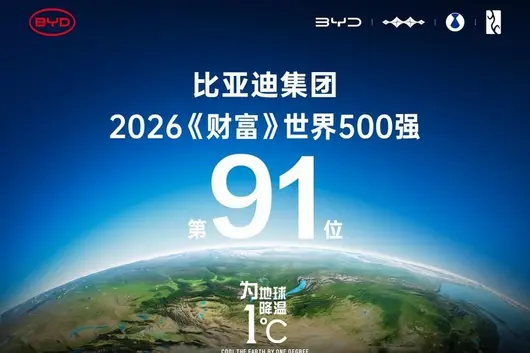
当一家中国企业在世界商业版图中刻下深刻的坐标,其意义远超榜单排名的数字跃迁。2026年《财富》世界500强榜单揭晓,比亚迪位列第91位。这是比亚迪连续第五年上榜,且排名持续稳步前移,稳固处于全球百强阵营的核心位置。这一成就并非偶然堆砌的数据,而是长期主义在商业逻辑中的必然回响。

回望过去五年,中国汽车工业经历了从跟随到并跑,再到局部领跑的深刻变革。在这场波澜壮阔的产业迁徙中,比亚迪凭借对核心技术的执着坚守,完成了从电池制造商到全球新能源汽车领导者的身份跨越。全球领跑五载登高,这句概括不仅是对过往成绩的总结,更是对未来路径的确认。作为全球新能源汽车领导者,比亚迪稳居世界百强阵营,是其坚持技术创新与全球突破的成果。
财务数据是检验企业经营质量的试金石。2025年,比亚迪实现全年营收8040亿元、净利润326亿元。在如此庞大的体量下保持健康的盈利水平,证明了其规模效应与成本控制能力的双重优势。同年,新能源汽车年销量达到460万辆,蝉联全球广受青睐。进入2026年,增长势头未减,1-6月累计销量超180万辆。其中,海外市场的表现尤为抢眼。2025年海外销量首次突破100万辆,同比增长145%;2026年上半年,海外销量持续增长,超78万辆。这种内外兼修的市场格局,有效分散了单一市场波动带来的风险,构建了更具韧性的全球业务网络。
支撑庞大销量的背后,是难以撼动的技术护城河。汽车行业正经历百年未有之大变局,电动化只是上半场,智能化才是下半场的关键赛点。今年5月,比亚迪率先承诺为城市领航安全兜底1年,并宣布全系车型均可搭载天神之眼 B 辅助驾驶激光版,开创全民城市领航时代。需要明确的是,驾驶辅助≠智能辅助驾驶,驾驶员需全程保持专注,随时接管车辆。这一举措旨在通过高阶智能辅助驾驶系统,有效降低驾驶风险,提升出行体验,而非替代人类驾驶员的判断与操作。
技术的厚度取决于研发投入的深度。2026年一季度,公司研发投入达113亿元,这一数字领先国内主流车企及头部新势力。截至目前,公司累计研发投入已突破2500亿元。正是这种近乎执拗的高强度投入,推动了刀片电池、易四方、云辇等突破性技术成果的加速落地。技术为王,创新为本,这不是一句空洞的口号,而是体现在每一笔研发账单、每一项专利授权中的行动准则。
全球化布局是比亚迪晋升世界百强的另一大支柱。业务遍布全球121个国家及地区,意味着比亚迪必须应对不同文化、法规、市场环境的复杂挑战。在巴西,首条海外云轨开通,巴西工厂达成第10万辆新能源汽车下线,标志着本土化生产迈出坚实一步;在欧洲,腾势Z、Z9GT与D9共同开启科技新豪华篇章,向传统豪华车腹地发起冲击;在日本,首款海外专研车型海獭(BYD RACCO)落地,展现了对成熟市场的尊重与适应;在泰国,工厂迎来投产两周年,辐射东南亚市场的能力日益增强。这些节点串联起来,勾勒出一幅清晰的全球制造与销售网络图景。
除了商业成功,企业的社会价值同样重要。在社会责任践行方面,比亚迪启动30亿元教育慈善基金,并与全国127所高校达成捐赠协议,激励超6000名学子。这种对人才储备和教育事业的长期投入,体现了企业对未来的责任感。汽车产业的竞争,归根结底是人才的竞争。通过支持高等教育,比亚迪不仅在履行公民义务,更是在为行业培养未来的工程师与管理者,形成良性循环。
面对未来,不确定性依然存在。地缘政治摩擦、贸易壁垒升高、原材料价格波动,都是横亘在中国车企出海道路上的障碍。但比亚迪的实践表明,唯有掌握核心技术,构建垂直整合的供应链体系,才能在不确定的环境中寻找确定性。从电池到电机,从电控到芯片,比亚迪实现了关键零部件的高度自研自产,这不仅降低了成本,更保障了供应链的安全与稳定。
第91位,是一个里程碑,也是一个新起点。它证明了中国品牌有能力在全球出众商业俱乐部中占据一席之地。但这并非终点,而是迈向更高目标的基石。随着全球能源转型的深入,新能源汽车的市场渗透率将持续提升,智能化技术的应用场景将不断拓展。比亚迪需要继续保持战略定力,避免盲目扩张,专注于产品力的打磨与服务体系的完善。
对于中国汽车工业而言,比亚迪的突围具有样本意义。它展示了一条通过技术积累实现弯道超车,再通过全球化布局实现品牌向上的可行路径。这条路径没有捷径,只有日复一日的研发攻关与市场深耕。在通往世界级企业的道路上,比亚迪正在用行动证明,中国品牌不仅能造出好车,更能建立起受人尊敬的全球品牌体系。
展望未来,比亚迪将继续以技术为引擎,以全球化为翼,在保持高质量发展的同时,为世界绿色出行提供更多中国方案。这不仅是企业的商业追求,更是时代赋予中国制造业的历史使命。在第91位的坐标上,比亚迪的故事仍在继续,且篇章愈发宏大。
In the Malaysian SUV market, many buyers will compare Proton X50 and Toyota Yaris Cross when choosing a car. These two cars are quite close in price and positioning. Today we will make a detailed comparison from multiple aspects to help you save time on research.
The Proton X50 OTR price in Malaysia is RM 89,800 - 113,300, with a total of 4 versions, including 1.5T Executive (RM 89,800), 1.5T Premium (RM 101,800), 1.5T Flagship (RM 113,300) etc.
The Toyota Yaris Cross OTR price in Malaysia is RM 99,900 - 109,900, with a total of 2 versions, including 2026 1.5L Standard (RM 99,900), 2026 HEV 1.5L Standard (RM 109,900) etc.
From a price perspective, the Proton X50 starting price is indeed RM 10,100 cheaper than Toyota Yaris Cross. If your budget is limited, Proton's entry-level version can already meet daily needs. But also be aware, that few thousand cheaper amount, there might be trade-offs in features, it depends on your specific needs.

Proton X50 is equipped with 1.5L 4-cyl, 105 hp. Official fuel consumption 6.0 L/100km.
Toyota Yaris Cross is equipped with 1.5L 4-cyl, 105 hp. Official fuel consumption 6.0 L/100km.
Both cars use the same powertrain, the driving feel on a daily basis is basically no difference. Fuel economy is also similar, no need to worry too much about this.
Proton X50 body length 4400 mm, trunk 400 L.
Toyota Yaris Cross body length 4400 mm, trunk 400 L.
The dimensions of the two cars are almost the same, interior space difference is not significant. Cars at this level are completely sufficient for daily use.

Proton X50 adopts 4WD drive system.
Toyota Yaris Cross adopts FWD drive system.
Proton's 4WD and Toyota's FWD will have different handling feelings, suggest test driving to compare.
Proton X50 and Toyota Yaris Cross are both mainstream choices in the Malaysian market, suitable for family use and daily commuting. If you value brand reputation and resale value more, you can prioritize the one with better reputation; if you care more about value for money and features, then choose the one with richer configuration. In the end, it is suggested to test drive both, experiencing it firsthand is the most important.
Overall, Proton X50 and Toyota Yaris Cross are both very good models in the Malaysian market. Choosing which one depends on your personal needs and budget. We suggest everyone do their research, compare quotes from several dealers, then go for test driving to make a final decision. Buying a car is a big deal, spending some time on research will never be wrong.



In recent years, Chinese automakers have accelerated their efforts to explore overseas markets, reaching from Southeast Asia in the east, Russia and Northern Europe in the north, to the heart of Europe in the west, and South America and Australia in the south. This export map covering five continents gives today's Chinese automakers a formidable momentum of "conquering territory".
Of course, the results are also quite encouraging. According to June data, Chinese automakers have taken 13% of the European market share. The "main force" including BYD, Chery, Leapmotor, as well as SAIC MG and Geely, have surpassed Japanese car brands in one fell swoop with advantages in technology and price, becoming the fastest-growing new force in the European market.
However, facing the pressing advances of Chinese automakers, European automakers are even more vigilant than Japanese brands.Currently, Europe is discussing imposing additional tariffs on hybrid vehicles imported from China to Europe.
It is understood that in the first half of this year, Chinese automakers captured nearly one-third of the plug-in hybrid market in Europe, undoubtedly further intensifying the sense of crisis among Volkswagen. They stated that without intervention, once consumers form new brand preferences, reversing the situation will become even more difficult!

Relevant information indicates that after receiving the request, the EU has already initiated preparatory work and plans to launch an anti-subsidy investigation against Chinese plug-in hybrid models. From the perspective of Chinese automakers, this investigation means an extremely severe challenge.
Behind this变相 "ban", not only does it reflect the apprehension of the European automotive industry, but it should also trigger a rethinking and judgment by Chinese automakers regarding their overseas strategies.
Chinese Automakers' Flank Tactics Strike at Europe's Weakness
In fact, previously when the EU was preparing to impose aggressive tariffs on Chinese new energy vehicles, Volkswagen had raised objections, worrying that it might suffer counter-retaliation from China's tariff policies, putting Volkswagen China in a passive position. Ultimately, the EU decided to impose additional anti-subsidy tariffs only on pure electric vehicles from China.
But nobody expected that Chinese automakers quickly switched to the plug-in hybrid track and exported heavily to Europe. By now, they have already formed a "suppression" on local enterprises.
From Volkswagen's perspective, European automakers have invested huge funds to meet emission regulations, while Chinese automakers can obtain local policy support; the two are not equal.They emphasized that they only wanted a fair competitive environment, not pure trade protection.
In other words, the reason Volkswagen and other European automakers suffered shock from Chinese new energy vehicles is because they received different treatment; Chinese automakers enjoyed more support brought by policy tilt.

But in reality, such an explanation is somewhat far-fetched. If it were purely because of subsidy issues, the breakthrough of Chinese automakers in the European market would only be temporary and unsustainable. They could not have reached today to form a momentum that even makes Volkswagen "fearful".
Therefore, the progress of Chinese automobiles in technology, supply chain, intelligence, etc., is the real "protective charm". Additionally, it must be admitted that Chinese automakers have been more wise in judging new energy technology routes.
Compared to European automakers placing their transformation focus entirely in the pure electric field, Chinese automakers did not put all eggs in one basket. Instead, they took two routes: "Pure Electric + Plug-in Hybrid". The strategy is more flexible. If Plan A doesn't work, they can bring out Plan B to respond quickly. There will always be a way to succeed.
Perhaps initially, Volkswagen believed that by imposing additional tariffs on pure electric cars produced in China, it would not interfere with the pure electric transformation of European local automakers. But what they didn't expect was that the originally underestimated Chinese automakers used another set of plans to complete a "flanking attack" on the European automotive industry.
Nowadays, the situation of Volkswagen and a bunch of European automakers is not optimistic. They are already experiencing unprecedented pressure in China, the world's largest single automotive market. If even the European home base starts to lose ground, these enterprises that once defined the global automotive industry structure will lose the initiative of future competition faster.

For Chinese automakers, the fierce reaction of European automakers proves on one hand that Chinese automakers have made traditional giants feel panicked, but on the other hand, it also raises the alarm for Chinese automakers going overseas.
Will future exports of Chinese automakers to the European market face greater obstacles? Will Europe gradually evolve into a market similar to Thailand, protecting local automotive industries through policy tools? These issues need serious attention.
In the Second Half of Globalization, Chinese Automakers Need to Change Tactics
After all, in the past few years, the rapid growth of Chinese automakers in overseas markets relied not only on product competitiveness but also benefited from a relatively open market environment.Taking Europe as an example, to promote new energy transformation, it actively opened the market, forcing local automotive upgrades. This actually provided a chance for Chinese automakers to show their strength.
However, as Chinese brands continuously break through, they inevitably touch the core interests of local automotive industries. At this time, it is no longer just about whose product is better or whose price is lower, but it further creates a new issue: how to transform from a competitor who only "grabs share" into a true "symbiote" who integrates into the local industrial system and creates value.
In the Thailand market, Chinese automakers once faced a similar soul-searching question.

Originally, Thailand was also one of the most open markets for Chinese new energy vehicles. Under policy support and market demand promotion, Chinese brands streamed in, quickly realizing the occupation of market share within a few years.But ultimately, it triggered serious dissatisfaction in the Thai automotive industry, urging the Thai government to tighten policies, strengthening the management of imported electric vehicles from aspects such as tax incentives, localization ratios, and investment rules.
For example, currently any electric vehicle enterprise enjoying Thai government subsidies must fulfill production compensation agreements. In other words, while exporting cars to Thailand, they must also produce cars locally. In 2026, this ratio is 1:2, and in 2027 it will become 1:3.
The meaning conveyed by this move is very clear: it wants Chinese automakers to increase investment in the Thai market, rather than just selling cars and leaving. In the future, only by taking an attitude of rooting locally can they be recognized and accepted by locals.
Actually, the idea in Europe is roughly the same. Executives of the German Volkswagen Group once stated that they are not opposed to carrying out targeted cooperation with Chinese automakers, including discussing shared capacity to produce vehicles in Europe. To put it simply, Chinese automakers are not banned from making money in Europe, but the prerequisite is to earn money together.
Actually, top automakers like BYD, Geely, Chery, etc., thought of this step early and are gradually speeding up local factory building plans. Once formal production starts, it will reduce the scale of direct imports to a certain extent and lower tariff impact. However, in this process, Chinese automakers still need to pay attention to how to integrate more deeply with the local industry. Besides creating output, can they create employment opportunities and cultivate supply chain systems to contribute to local industrial upgrades?

From Thailand to Europe, on the surface, everyone seems to be guarding against a large-scale "invasion" by Chinese automakers, but it also provides assistance for the "role transition" of Chinese automakers in the globalization process.After all, true "gold content" globalization is not just about how many cars are sold, but must grow from an outsider competitor to an industry participant. Only then can they, like those traditional multinational automakers, become an indispensable part of the global automotive industry.
In Malaysia's SUV market, many buyers compare the Proton X70 and Honda HR-V when choosing a car. These two models are quite close in price and positioning. Today, we will make a detailed comparison from multiple aspects to help you save time on research.
The Proton X70 OTR price in Malaysia is RM 106,800 - 122,300. There are 3 versions in total, including 1.5L Standard 2WD (RM 106,800), 1.5L Executive 2WD (RM 115,800), 1.5L Premium 2WD (RM 122,300), etc.
The Honda HR-V OTR price in Malaysia is RM 115,900 - 143,900. There are 4 versions in total, including 2026 e:HEV 1.5L RS (RM 143,900), 2026 1.5T V (RM 137,900), 2026 1.5T E (RM 130,900), etc.
From a price perspective, the Proton X70's starting price is indeed RM 9,100 cheaper than the Honda HR-V. If your budget is limited, Proton's entry-level version can already meet daily needs. However, note that the few thousand ringgit cheaper might involve trade-offs in features, depending on your specific needs.

The Proton X70 is equipped with a 1.5L Turbo, producing 140 hp. Official fuel consumption is 7.0 L/100km.
The Honda HR-V is equipped with a 1.5L Turbo, producing 140 hp. Official fuel consumption is 7.0 L/100km.
Both cars use the same powertrain, so the driving experience is basically no different. Fuel consumption is also similar, so there is no need to worry too much about this point.
The Proton X70 safety rating is 5★ (ASEAN NCAP). Active safety systems include ADAS (ACC, AEB, LKA, LDA, BSM, RCTA).
The Honda HR-V safety rating is 5★ (ASEAN NCAP). Active safety systems include Honda SENSING (ACC, CMBS, LKAS, RDM).
Both cars have the same safety rating. In this class, safety features are quite comprehensive. New car safety is generally good these days, so no need to worry too much about this.
Proton X70 body length is 4400 mm, trunk 400 L.
Honda HR-V body length is 4500 mm, trunk 450 L.
In terms of space, the Honda HR-V's body is 100 mm longer than the Proton X70, offering a better advantage in passenger space. However, the Proton X70 is a bit more flexible for parking in the city. Each has its trade-offs.
Proton X70 and Honda HR-V are both mainstream choices in the Malaysia market, suitable for family use and daily commuting. If you value brand reputation and resale value more, you can prioritize the one with better reputation; if you care more about value for money and features, choose the one with richer configurations. Ultimately, it is recommended to test drive both, as personal experience is the most important.
In general, both Proton X70 and Honda HR-V are very good models in the Malaysia market. Which one to choose depends mainly on your personal needs and budget. We suggest doing your research, comparing quotes from several dealerships, and then test driving to make the final decision. Buying a car is a big matter, spending time on research will never be wrong.


Recently, SAIC MG4 Urban (domestic model MG4) launched in the Brazilian market, receiving 2,436 purchase intentions within 24 hours before launch.
In the Brazilian pure electric vehicle market, launch popularity is a leading indicator of subsequent sales trends. Now ranking in the top three for local EV sales, BYD Dolphin Mini, BYD Dolphin, and Geely EX2 all delivered strong results upon entering the Brazilian market. This excellent launch performance for the MG4 Urban means it has earned its ticket to enter the top tier.

In fact, the MG4 Urban going overseas is not a new product trial. In August 2025, the new MG4 rapidly opened sales space after its domestic launch, with sales exceeding 10,000 units for 9 consecutive months and briefly topping the list of domestic compact cars. In other words, before going overseas, the MG4 Urban had already undergone full testing in the fiercely competitive Chinese market.
Early 2026, MG4 Urban started going overseas, entering the UK first, followed by mainland Europe, Australia, Singapore, and other markets, and recently expanded its footprint to Brazil. From Europe, Australia, Southeast Asia to South America, a product deployment route spanning multiple core markets has taken shape.
MG4 Urban blooming in multiple points globally is a microcosm of SAIC's overseas business strong growth. In the first half of 2026, SAIC's overseas sales reached 735,000 units, up 48.7% year-on-year, creating a historical high. Behind this is SAIC's system capability to establish a global product matrix and cover diverse markets. This means SAIC's going overseas is moving from the expansion of sales scale to value growth driven by the synergy of products, brands, and systems.
Not Just One Global Car
As the latest move in SAIC's global product layout, after landing in multiple overseas markets, MG4 Urban has consecutively received recognition from authoritative professional media in various countries.
In the UK authoritative automotive media "What Car?" compact EV crossover review, MG4 Urban defeated Renault 5 and Hyundai Inster to take the top spot; Australian "CarExpert" reviewed that its pricing is accessible, yet it has absolutely no "cheap feeling" in driving experience, equipment level, and space performance; German "The Welt" called it a "Compact Space Miracle", fully recognizing its space efficiency, energy consumption performance, and daily practicality.

In addition to media reputation, MG4 Urban also passed the test of the international authoritative safety system. The vehicle successively won European Euro NCAP and ANCAP dual five-star safety ratings. In core test scenarios such as frontal offset, full-width frontal impact, and side collision, the vehicle passenger cabin structure integrity and passenger key area protection performance were stable, with safety strength backed by the authority of both markets.
The consistent affirmation received by MG4 Urban in multiple markets and multi-dimensional evaluation systems confirms that SAIC has mature capability to define and build "Global Cars". This capability relies not only on hard power at the product and technology level but is more due to SAIC's long-settled global system capability in areas such as regulation adaptation, safety standards, and market entry.
And this global system capability is not only reflected in the MG4 Urban product.
In the first half of 2026, SAIC continued to expand its global product matrix around core potential markets such as Europe, Australia/New Zealand, Southeast Asia, Middle East & Africa: on the one hand, accelerating the deployment of main models such as MG4 Urban, MG S5 EV, MG S6 EV; on the other hand, launching annual upgrade products such as MG S9 PHEV, MG3 Hybrid+ in sync, with new car deployment and existing model upgrades advancing simultaneously.

From pure electric, hybrid to fuel, from hatchback, sedan, SUV to MPV, pickup, SAIC, according to the differences in energy structure, consumption level, and driving scenarios of different countries, constructed a global product fleet through parallel multi-technical routes and multi-category collaborative layout. This continuously expanding and continuously evolving product matrix is becoming an important support for SAIC to go deep into the global market and meet diverse needs.
For Chinese Cars Going Overseas
Tagged with Technology
As Chinese car export enters a new stage, export scale is no longer the only ruler to measure global capability. Whether technology and brands can be implanted into local consumer cognition, and whether R&D, production, sales, and services can be integrated into the local industrial system, determines how far the enterprise can go overseas.
In 2026, the MG brand conducted overseas marketing centered on "Global Layout, Local Deep Dive, Technical Empowerment", successively holding two Technology Days in Frankfurt and London, concentrating on displaying Hybrid+ oil-electric hybrid, Plug-in Hybrid+ plug-in hybrid, SolidCore semi-solid state battery, intelligent cockpit and assisted driving, and other technical achievements.

These technology displays are not "showing off muscles" detached from market demand, but solutions given for European electrification transition pain points. In Frankfurt, MG announced the launch of the European Engineering Center, deeply integrating local climate, regulations, and user habits into the product development process, releasing the SolidCore semi-solid state battery plan in sync; in London, SAIC announced the new generation Plug-in Hybrid+ plug-in hybrid technology, and promoted assisted driving technology targeted at European real road environments.
Through active voice in Technology Days and matched with the global product matrix offensive, SAIC MG gradually built the brand tag of "Global Technology Empowerment". So-called Global Technology Empowerment is not just pushing technology verified in the Chinese market overseas, but also doing localization development combined with local needs, letting advanced driving experience reach a wider mass consumer market. MG4 Urban is exactly the representative product of this concept.
Besides establishing technology cognition, SAIC is also using the global automotive culture stage to reshape MG's brand expression. At this year's Goodwood Festival of Speed, MG globally premiered two concept cars: MG GO! and Cyber Concept. The two products drew design inspiration from classic models such as MGB GT, MG 6R4 rally car, MG EX181, etc., while continuing the brand's historical genes, demonstrating MG's innovation capability facing the new energy era.

Technology conferences build technology cognition, cultural stages strengthen brand thickness. Today's MG brand is deeply integrating century-old brand accumulation with SAIC's electrification and intelligence technology advantages. It is no longer conveying a single product to global consumers, but also the brand's technical depth, individual propositions, and long-term vision.
Rooted Globally
Moving Towards Value Growth
Nowadays, SAIC is combining product import, brand building, user service, and localization operation more closely, forming long-term operation capability in more overseas markets.
In Thailand, MG continues to improve the new energy vehicle service system, launches the MG SMILE service strategy, and continues to provide lifelong warranty for three-electric systems for pure electric models, extending service from the car purchase link to the full usage cycle; in India, MG Windsor firmly holds the first tier of the local pure electric market, continuously improving the new energy vehicle ecology through localization production, channel layout, and charging facility layout; in the Middle East, MG launched the first off-road model RAKAN named in Arabic, taking localization from product adaptation further to cultural recognition.

From European technology R&D to Brazil product import; from Southeast Asia service upgrade to India new energy vehicle ecology construction, SAIC's globalization has surpassed the traditional mode of complete vehicle export, gradually forming a complete system with R&D, production, sales, service, and brand building coordinating and promoting. Currently, SAIC's products and services have entered more than 170 countries and regions globally, cumulative overseas sales have broken through 7 million units, constructing a global market pattern centered on Europe, supported by multiple points such as Australia/New Zealand, ASEAN, South Asia, Middle East, and the Americas.
From "Selling Cars Globally" to "Operating Brands Globally", SAIC's going overseas is moving from scale growth to value growth. Sales scale is still the foundation, but what has more long-term value is continuous recognition of technology and products, brand image continuously entering people's hearts, and local operation systems constantly improving. With more global models entering different markets, a SAIC with a more mature technical system, richer product matrix, and stronger brand influence is opening new growth space in the global automotive industry landscape.
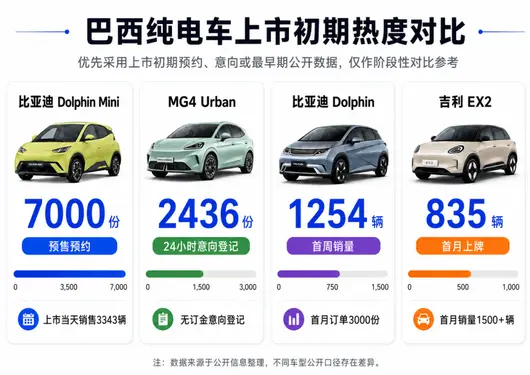

Baru-baru ini, MG4 Urban SAIC (model tempatan di China MG4) mendarat di pasaran Brazil, menerima 2,436 niat pembelian dalam 24 jam pertama selepas pelancaran.
Di pasaran kenderaan elektrik sepenuhnya di Brazil, kehangatan pelancaran awal adalah indikator awal trend jualan seterusnya. Kini, BYD Dolphin Mini, BYD Dolphin dan Geely EX2 yang menduduki tiga teratas jualan kereta elektrik tempatan, semuanya memberikan jawapan yang kuat apabila memasuki pasaran Brazil. Prestasi pelancaran MG4 Urban kali ini juga sama bagusnya, bermakna ia telah memperoleh tiket masuk ke kumpulan teratas.
Faktanya, pelancaran MG4 Urban ke luar negara bukan percubaan produk baru. Pada Ogos 2025, MG4 baharu dilancarkan di China dan segera membuka ruang jualan. Kini, ia telah mencatatkan jualan melebihi 10,000 unit selama 9 bulan berturut-turut, dan pernah menjadi juara jualan kereta kompak di China. Dengan kata lain, sebelum menuju luar negara, MG4 Urban telah melalui ujian yang mencukupi dalam pasaran China yang kompetitif.
Pada awal 2026, MG4 Urban segera memulakan ekspansi luar negara, pertama memasuki United Kingdom, kemudian mendarat di pasaran Eropah Daratan, Australia, Singapura, dan lain-lain. Baru-baru ini, skopnya diperluaskan hingga ke Brazil. Dari Eropah, Australia, Asia Tenggara ke Amerika Selatan, laluan pelancaran produk yang merentasi beberapa pasaran utama telah terbentuk.
Kejayaan MG4 Urban di banyak tempat di seluruh dunia adalah cerminan kepada pertumbuhan yang kukuh dalam perniagaan luar negara SAIC. Pada setengah tahun pertama 2026, jualan luar negara SAIC mencapai 735,000 unit, meningkat 48.7% setaraf tahun, mencatat rekod tertinggi sepanjang masa. Di sebalik itu adalah keupayaan sistem SAIC untuk membina matriks produk global yang merangkumi pasaran pelbagai, bermakna ekspansi luar negara SAIC sedang beralih daripada pengembangan skala jualan ke arah pertumbuhan nilai yang didorong oleh selarasnya produk, jenama dan sistem.
Bukan sekadar satu kereta global
Sebagai langkah terkini dalam pembangunan produk global SAIC, selepas mendarat di pelbagai pasaran luar negara, MG4 Urban telah berturut-turut menerima pengakuan daripada media profesional berwibawa di pelbagai negara.
Dalam tinjauan silang model EV kompak di media automotif berwibawa Inggeris What Car?, MG4 Urban mengungguli Renault 5 dan Hyundai Inster; Media Australia CarExpert menilai harganya mampu milik, namun tiada "rasa murah" dari segi kualiti pemanduan, tahap kelengkapan dan prestasi ruang; Media Jerman Die Welt pula memanggilnya "misteri ruang kelas kompak", mengakui sepenuhnya kecekapan ruang, prestasi kecekapan tenaga dan kegunaan harian.
Selain reputasi media, MG4 Urban juga telah melalui ujian sistem keselamatan berkuat kuasa antarabangsa. Kereta ini telah memperoleh gred keselamatan lima bintang ganda dari Euro NCAP Eropah dan ANCAP Australia-New Zealand. Dalam senario ujian utama seperti impak hadapan condong, impak penuh hadapan dan impak sisi, keutuhan struktur kabin penumpang dan prestasi perlindungan bahagian penting penumpang adalah stabil. Kuasa keselamatan mendapat pengesahan berwibawa daripada dua pasaran tersebut.
Pengakuan konsisten yang diperoleh MG4 Urban di pelbagai pasaran dan sistem penilaian berbilang dimensi mengesahkan bahawa SAIC telah mempunyai kemampuan matang untuk mendefinisikan dan mencipta "kereta global". Kemampuan ini bukan sahaja bergantung pada kekuatan keras pada tahap produk dan teknologi, malah mendapat manfaat daripada kemampuan sistem global SAIC yang dikumpulkan secara jangka panjang dalam bidang penyesuaian undang-undang, piawaian keselamatan dan pelancaran pasaran.
Dan kemampuan sistem global ini, tidak hanya terwujud pada satu produk MG4 Urban.
Setengah tahun ini, SAIC secara berterusan memperluaskan matriks produk global merentasi pasaran berpotensi utama seperti Eropah, Australia-New Zealand, Asia Tenggara dan Timur Tengah-Afrika: Di satu pihak, mempercepatkan pelancaran model utama seperti MG4 Urban, MG S5 EV, MG S6 EV; Di pihak lain, serentak mengeluarkan produk pengingkatan tahunan seperti MG S9 PHEV, MG3 Hybrid+, pelancaran kereta baharu dan pengingkatan model sedia ada dipacu secara serentak.
Dari EV, hibrid ke petrol, daripada hatchback, sedan, SUV ke MPV, pickup, SAIC membina armada produk global melalui pelbagai laluan teknologi selari dan pelbagai strategi selaras mengikut kategori, berbeza mengikut perbezaan struktur tenaga, tingkatan pengguna dan senario penggunaan kenderaan di setiap negara. Matriks produk yang sentiasa berkembang dan berkembang maju ini menjadi sokongan penting bagi SAIC untuk mendalami pasaran global dan menghadapi pelbagai keperluan.
Untuk Ekspansi Automotif China
Menerapkan Label Teknologi
Seiring masuknya ekspansi automotif China ke fasa baharu, skala eksport bukan lagi penunjuk tunggal untuk mengukur kemampuan globalisasi. Keupayaan teknologi dan jenama untuk mencapai kesedaran pengguna tempatan, dan samada penyelidikan, pengeluaran, jualan dan perkhidmatan boleh tertanam dalam industri tempatan, menentukan sejauh mana syarikat boleh berjalan di luar negara.
Pada 2026, jenama MG melancarkan pemasaran luar negara merentasi "pelan global, pengamalan tempatan, dan pengayaan teknologi", berturut-turut menganjurkan dua aktiviti hari teknologi di Frankfurt dan London, menampilkan hasil teknologi Hybrid+ Hibrid Petrol-Elektrik, Plug-in Hybrid+ Hibrid Disambung, SolidCore Bateri Separuh Pepejal, kenderaan pintar dan pemanduan terbantu.
Pentadbiran teknologi ini bukan "memamerkan kekuatan" yang tidak relevan dengan keperluan pasaran, sebaliknya adalah penyelesaian untuk kesukaran transformasi elektrifikasi Eropah. Di Frankfurt, MG mengumumkan pengaktifan Pusat Kejuruteraan Eropah, memasukkan iklim, undang-undang dan tabiat pengguna tempatan secara mendalam ke dalam proses pembangunan produk, serentak memulakan pelan Bateri Separuh Pepejal SolidCore; Ketika ke London, SAIC mengumumkan teknologi Hibrid Disambung Plug-in Hybrid+ generasi baharu, dan memajukan teknologi pemanduan terbantu berikutan persekitaran jalan sebenar Eropah.
Melalui pengucapan proaktif melalui aktiviti hari teknologi, dikombinasikan dengan serangan matriks produk global, SAIC MG secara beransur-ansur membina label jenama "samaan hak teknologi global". Samaan hak teknologi global, bukan sahaja mendorong teknologi yang telah disahkan matang di pasaran China ke luar negara, malah perlu melakukan pembangunan tempatan dengan menggabungkan keperluan tempatan, membolehkan pengalaman kenderaan maju mencapai pasaran pengguna yang lebih luas. MG4 Urban adalah produk perwakilan bagi falsafah ini.
Selain membina kesedaran teknologi, SAIC juga menggunakan panggung budaya automotif global untuk membentuk semula ekspresi jenama MG. Pada Festival Kelajuan Goodwood tahun ini, MG melancarkan secara global dua konsep kereta MG GO! dan Cyber Concept. Dua produk ini mendapat inspirasi rekaan dari model klasik seperti MGB GT, keretapi lumba MG 6R4, MG EX181, sambil melanjutkan gen sejarah jenama, memaparkan kemampuan inovasi MG ke arah era tenaga baharu.
Persidangan teknologi membina kesedaran teknologi, panggung budaya mengukuhkan ketebalan jenama. Jenama MG kini sedang menyatukan secara mendalam pengumpulan jenama seratus tahun dengan kelebihan teknologi elektrifikasi dan pengintelek SAIC. Ia tidak lagi menyampaikan produk tunggal kepada pengguna global, malah menyampaikan latarambelakang teknologi jenama, tuntutan peribadi dan visi jangka panjang.
Berpunca Global
Menuju Pertumbuhan Nilai
Sekarang, SAIC sedang menggabungkan dengan lebih erat pelancaran produk, pembangunan jenama, perkhidmatan pengguna dan penguasaan tempatan, membentuk keupayaan pengurusan jangka panjang di lebih banyak pasaran luar negara.
Di Thailand, MG terus meningkatkan sistem perkhidmatan kenderaan baharu, mengeluarkan strategi perkhidmatan MG SMILE, dan teruskan menyediakan jaminan seumur hidup tiga sistem utama untuk model EV, meluaskan perkhidmatan dari fasa pembelian kenderaan ke kitaran penggunaan; Di India, MG Windsor terus menduduki gred pertama pasaran EV tempatan, melalui pengeluaran tempatan, penyebaran saluran dan susun atur kemudahan pengecasan, sentiasa meningkatkan ekosistem kenderaan baharu; Di Timur Tengah, MG melancarkan model off-road RAKAN yang pertama menggunakan penamaan Bahasa Arab, menjadikan pengamalan tempatan daripada penyelarasan produk menuju pengenalan budaya.
Dari penyelidikan dan pembangunan teknologi di Eropah, ke pelancaran produk di Brazil; Dari peningkatan perkhidmatan di Asia Tenggara, ke pembinaan ekosistem kenderaan baharu di India, globalisasi SAIC telah mengatasi model tradisional eksport kenderaan lengkap, secara beransur-ansur membentuk sistem lengkap yang memacu selaras penyelidikan, pengeluaran, jualan, perkhidmatan dan pembangunan jenama. Pada masa ini, produk dan perkhidmatan SAIC telah memasuki lebih 170 negara dan wilayah, jualan terkumpul luar negara melebihi 7 juta unit, membentuk struktur pasaran global yang disokong pelbagai titik dengan Eropah sebagai teras, Australia-New Zealand, ASEAN, Asia Selatan, Timur Tengah, Amerika.
Dari "Jual kereta ke seluruh dunia" ke "Urus jenama di seluruh dunia", ekspansi luar negara SAIC sedang beralih dari pertumbuhan skala ke pertumbuhan nilai. Skala jualan masih menjadi asas, tetapi nilai jangka panjang yang lebih tinggi ialah teknologi dan produk yang sentiasa diterima, imej jenama yang sentiasa mendalam di minda, dan sistem operasi tempatan yang sentiasa sempurna. Seiring lebih banyak model global memasuki pasaran berbeza, SAIC dengan sistem teknologi yang lebih matang, matriks produk yang lebih kaya, dan pengaruh jenama yang lebih kuat sedang membuka ruang pertumbuhan baharu dalam peta industri automotif global.

In Malaysia's SUV market, many buyers compare Proton X50 and MG MG HS when selecting a car. These two models are quite similar in price and positioning. Today we will conduct a detailed comparison from multiple aspects to help you save time researching.
Proton X50's OTR price in Malaysia ranges from RM 89,800 to 113,300, with 4 versions in total, including 1.5T Executive (RM 89,800), 1.5T Premium (RM 101,800), 1.5T Flagship (RM 113,300), etc.
MG MG HS's OTR price in Malaysia ranges from RM 130,450 to 146,450, with 2 versions in total, including 1.5L Standard (RM 105,000), 1.5L Executive (RM 115,000), etc.
From a pricing perspective, Proton X50's starting price is indeed RM 40,650 cheaper than MG MG HS. If your budget is limited, Proton's entry-level version can already meet daily needs. However, also note that the few thousand cheaper might involve trade-offs in features, depending specifically on your requirements.
Proton X50 is equipped with 1.5L 4-cyl, 105 hp. Official fuel consumption 6.0 L/100km.
MG MG HS is equipped with 1.5L Turbo, 140 hp. Official fuel consumption 7.0 L/100km.
Regarding power, MG MG HS's 1.5L Turbo has 35 more horsepower than Proton X50's 1.5L 4-cyl. However, for daily city driving, the power of both cars is sufficient, you will not feel underpowered.
Proton X50 body length 4400 mm, trunk capacity 400 L.
MG MG HS body length 4400 mm, trunk capacity 400 L.
The dimensions of both cars are almost identical, with little difference in interior space. Cars at this level are more than sufficient for daily use.
Proton X50 and MG MG HS are both mainstream choices in the Malaysia market, suitable for family use and daily commuting. If you value brand reputation and resale value more, prioritize the one with the better reputation; if you care more about cost-performance and features, choose the one with richer configuration. Ultimately, it is recommended to test drive both models, as personal experience is the most important.
Overall, Proton X50 and MG MG HS are both very good models in the Malaysia market. Choosing which one depends mainly on your personal needs and budget. We suggest everyone do their research, compare quotes from several dealerships, and then test drive to make the final decision. Buying a car is a major matter, spending time doing research will definitely not go wrong.

In the SUV market in Malaysia, many buyers compare Proton X50 and MG MG HS when choosing a car. The price and positioning of these two cars are quite close. Today we will do a detailed comparison from multiple aspects to help you save time on research.
The OTR price of Proton X50 in Malaysia is RM 89,800 - 113,300. There are 4 versions in total, including 1.5T Executive (RM 89,800), 1.5T Premium (RM 101,800), 1.5T Flagship (RM 113,300), etc.
The OTR price of MG MG HS in Malaysia is RM 130,450 - 146,450. There are 2 versions in total, including 1.5L Standard (RM 105,000), 1.5L Executive (RM 115,000), etc.
From the price perspective, the starting price of Proton X50 is indeed RM 40,650 cheaper than MG MG HS. If your budget is limited, Proton's entry-level version can already meet daily needs. But also note, the difference of a few thousand might involve trade-offs in features. It depends on your specific needs.
Proton X50 is equipped with 1.5L 4-cyl, horsepower 105 hp. Official fuel consumption 6.0 L/100km.
MG MG HS is equipped with 1.5L Turbo, horsepower 140 hp. Official fuel consumption 7.0 L/100km.
In terms of performance, MG MG HS's 1.5L Turbo has 35 more horsepower than Proton X50's 1.5L 4-cyl. However, for daily city driving, the power of both cars is sufficient, you won't feel underpowered.
The safety rating of Proton X50 is 5★ (ASEAN NCAP). Active safety systems include ADAS (ACC, AEB, LKA, LDA, BSM, RCTA).
The safety rating of MG MG HS is TBD. Active safety systems include Basic.
Regarding safety features, both cars have received good ratings. However, there are some differences in function between Proton X50's ADAS (ACC, AEB, LKA, LDA, BSM, RCTA) and MG MG HS's Basic. If you value active safety, you can carefully compare the feature lists of both.
Proton X50 body length 4400 mm, trunk 400 L.
MG MG HS body length 4400 mm, trunk 400 L.
The dimensions of both cars are almost the same, the interior space difference is not significant. Cars in this class are fully sufficient for daily use.
Proton X50 warranty 5 years/150,000km, maintenance interval every 10,000km or 6 months.
MG MG HS warranty 7 years/150,000km, maintenance interval every 10,000km or 6 months.
Overall, Proton X50 and MG MG HS are both very good models in the Malaysian market. Which one to choose depends on your personal needs and budget. We recommend doing your research, comparing quotes from a few dealerships, and then test driving to make a final decision. Buying a car is a big thing, spending time doing research will definitely not be wrong.
In the Malaysian SUV market, many buyers compare Proton X50 and Kia Sportage when choosing a car. These two cars are quite close in price and positioning. Today, we will do a detailed comparison from multiple aspects to help you save time on research.
The OTR price of Proton X50 in Malaysia is RM 89,800 - 113,300, with a total of 4 versions, including 1.5T Executive (RM 89,800), 1.5T Premium (RM 101,800), 1.5T Flagship (RM 113,300), etc.
The OTR price of Kia Sportage in Malaysia is RM 129,639 - 179,320, with a total of 4 versions, including 2025 1.6T DCT 4WD High (RM 179,320), 2025 1.6T DCT 2WD High (RM 159,320), 2025 2.0L AT 2WD High (RM 139,639), etc.
From a price perspective, the starting price of Proton X50 is indeed RM 39,839 cheaper than Kia Sportage. If your budget is limited, Proton's entry-level version is already enough to meet daily needs. But note that the few thousand dollars difference might involve trade-offs in features, which depends on your specific needs.
Proton X50 is equipped with a 1.5L 4-cyl engine, 105 hp. Official fuel consumption 6.0 L/100km.
Kia Sportage is equipped with a 1.5L Turbo, 140 hp. Official fuel consumption 7.0 L/100km.
In terms of power, Kia Sportage's 1.5L Turbo has 35 horsepower more than Proton X50's 1.5L 4-cyl. However, for daily driving in the city, the power of both cars is sufficient and won't feel lacking.
Proton X50's safety rating is 5★ (ASEAN NCAP). Active safety systems include ADAS (ACC, AEB, LKA, LDA, BSM, RCTA).
Kia Sportage's safety rating is 5★ (ASEAN NCAP). Active safety systems include Drive Wise.
Both cars have the same safety rating. In this class, safety features are quite comprehensive. New cars nowadays generally have good safety, so there is no need to worry too much about this.
Proton X50 warranty 5 years/150,000km, maintenance interval every 10,000km or 6 months.
Kia Sportage warranty 5 years/300,000km, maintenance interval every 10,000km or 6 months.

Proton X50 and Kia Sportage are both mainstream choices in the Malaysian market, suitable for family use and daily commuting. If you value brand reputation and resale value more, prioritize the one with better reputation; if you care more about value for money and features, choose the one with richer configurations. Ultimately, it is recommended to test drive both, as personal experience is the most important.
Overall, Proton X50 and Kia Sportage are both very good models in the Malaysian market. Which one to choose depends on your personal needs and budget. We recommend doing your research, comparing quotes from several dealerships, and then test driving to make a final decision. Buying a car is a major decision, taking time to research is never wrong.
© 2024 Bitauto.com. All Rights Reserved.
Bitauto (www.yiche.com and www.bitauto.com) is one of the most visited automotive websites in China. We provide detailed info on Chinese car brands available in your area. Please note that the information provided on this website is based on publicly available data and is for reference only. It may not be fully updated or accurate at all times.

Help us improve our website


