

Homefuel

Search History
Popular Searches
Dealer Login / Sign Up

Penetration rate 67%, but new energy vehicles have not defeated fuel cars!
In September 2026, retail sales of conventional fuel passenger cars were 530,000, a year-on-year decrease of 43%. The sales share of fuel cars in China's passenger car market fell below one-third for the first time in history. New energy vehicle penetration rose to 67%, setting a new historical record. Many people immediately declared a death sentence for fuel cars here and announced victory for new energy vehicles.

But breaking down these numbers, the 67% penetration rate is indeed a real figure, but it is simultaneously a number accelerated by policy, amplified by replacement traffic, and highly differentiated in terms of power form.
It proves that new energy vehicles have crossed the threshold accepted by consumers, but perhaps they have not yet proved that they have crossed the threshold of sustainable growth without external support.
#Behind the 67% penetration rate, how much is inflated?#
In the early stage of new energy development, a large portion of sales actually relied on the B-end, after all, it is difficult for a new thing to directly gain recognition from C-end consumers when entering the market.
Like in the past period, the proportion of new energy vehicles in newly registered ride-hailing cars was as high as 92%. The penetration of new energy in the urban logistics delivery field is also accelerating. During these years, brands like Aion reached up to 26% share in the new ride-hailing market during peak sales periods. Basically, 1 out of every 4 new ride-hailing cars was an Aion.
The characteristic of this B-end procurement is centralized and large volume. It can quickly push up the penetration rate number, but it does not reflect the result of ordinary families voting with their wallets in the showroom, but rather batch decisions under operating costs and policy drivers.
Returning to this year, this "accusation" of high B-end share might not hold true as before. Data shows, the private car purchase share rose from 67% in 2020 to 84% in 2025. The share of family second cars broke through 50% for the first time. After the ride-hailing market tended to be saturated, the B-end share shrank to 9%.
The sales foundation of new energy vehicles is shifting from "operational support volume" to "private consumer take-over". New energy brands like Aion and Hongqi, which once highly relied on the B-end, have been struggling to reduce B-end share and rebuild C-end recognition over the past two years. This process itself shows that penetration built relying on the B-end is unsustainable, and the market is actively correcting it.
But if therefore one thinks 67% is already a "purely market-oriented" result, then it ignores two important influencing factors.

First, currently domestic new energy policies are still supporting the bottom. In 2025, the scale of trade-in exceeded 11.5 million vehicles. More than half of domestic retail participated in trade-ins, pulling a large amount of future demand to the present. In 2026, subsidies changed from fixed amounts to proportional calculation and upper limit control. The average subsidy for scrapping updates and replacement updates decreased by about 20% and 30% compared to 2025, respectively. Purchase tax also adjusted from fully exempt to half exempt.
After policy retreat, cumulative retail of passenger cars from January to September 2026 decreased by 22% year-on-year. Although cumulative retail of new energy vehicles remained growing, the growth rate narrowed significantly compared to the previous two years. This means that in the 67% penetration rate, there is embedded a layer of cost paid by finance, and a layer of replacement traffic consumed in advance.
Secondly, the denominator calculating this penetration is contracting. 67% is new energy retail volume divided by total passenger car retail volume. In September 2026, total passenger car retail was 1.618 million, a year-on-year drop of nearly 28%. When the denominator itself is shrinking rapidly, part of the penetration rise comes from "fuel cars falling faster", not "new energy rising enough".
In September, new energy retail was 1.084 million, also down 16.4% year-on-year. New energy and fuel cars were both in a decline interval in 2026. The new high in penetration rate was completed in a shrinking market. Therefore, reading this number as "new energy is crushing fuel cars" at this time is obviously a misjudgment.
Besides, part of the retail statistics scope includes exports. A large number of new cars sold overseas are counted in the total, but it is not a market happening in China. From January to September 2026, new energy vehicle exports were 4.006 million, growing 1.3 times year-on-year. Exports are real industrial achievements, but they are not evidence that "Chinese consumers chose new energy". If exports are stripped from the numerator of penetration, the real penetration of domestic C-end new energy will naturally be lower than 67%.
#Export share over half, relying on competitiveness or production capacity transfer?#
Aside from domestic sales share, a better means to measure the value of China's new energy is to look at whether it also gained recognition in overseas markets?
In September 2026, new energy passenger car exports were 558,000, up 163.5% year-on-year. The share of new energy in passenger car exports continued to rise. Against such data background, has China's new energy already possessed global brand competitiveness?
To answer this question, we need to judge from two aspects, namely "share acquisition driven by product power" and "capacity release under production capacity pressure". The two cannot be distinguished in total numbers, but are completely different in strategic meaning.
First look at this layer of production capacity pressure. In the first half of 2026, the auto industry capacity utilization rate was only 70.6%, lower than the 75% healthy line.
Export volume has accounted for 39.34% of total domestic vehicle production, close to four-tenths. A certain domestic overseas-head brand had total sales of 1.3575 million in the first half, exports 943,800 vehicles, share about 69.5%. This situation where one car company's 70% sales come from overseas is hard to judge as a natural result of competitiveness going global, and looks more like a passive choice due to domestic base contraction.

Against this, some institutions also made judgments. Morgan Stanley believes Chinese car companies rely on pushing millions of cars overseas to maintain factory operations; otherwise, capacity utilization would be below 50%. After all, capacity transfer is a layer of background color that cannot be peeled off from high export growth, but this also does not need to be denied, after all, export profits can also exchange for domestic financial bleeding, but packaging this as China's new energy global competitiveness is somewhat inappropriate.
Currently, China's new energy going overseas may mainly rely on systemic cost advantages. For example, BYD ATTO 3 terminal sales price in Germany is about 38,000 Euros, domestic Yuan PLUS is about 140,000 RMB. Even adding 10% basic tariff, up to 35.3% countervailing tax and 19% VAT, Chinese car companies' single vehicle profit in Europe is still significantly higher than domestic.
After tariffs were imposed in Europe, China's new energy did not collapse line by line. Actually, it relied on this cost advantage. Behind the 45% comprehensive tax rate, Chinese brand sales in Europe actually exceeded Japanese brands in monthly registration volume for the first time in May 2026. The "cheaper than you even after tax" systemic cost advantage is still able to manifest.
But in the Southeast Asian market, some Chinese car companies concentratedly swarmed into the A-segment new energy track. Prices highly overlap in the 100,000 to 150,000 RMB range. They moved the domestic "trading price for volume, fast stock distribution" tactic exactly as is to there. In the Thai market, the average price of Chinese brand electric vehicles dropped from about 1.2 million Thai Baht in 2023 to an 800,000 Baht range in 2026. Single vehicle gross profit compressed by 15% to 20%.
Channel end saw dealers belonging to the same Chinese brand diverting goods across regions. Individual enterprises compressed after-sales spare parts reserves to boost short-term sales. Overseas channels were simplified to "find agents, wholesale". Therefore, in the Southeast Asian market, the weight of "capacity transfer" in export high growth is significantly higher. It is not because the product is not good enough, but because the tactic itself is a continuation of domestic involution.
So at this time look again at the question raised earlier: Export share over half, is it competitiveness or capacity transfer?
In Europe, the component of competitiveness is heavier. Tariffs failed to stop sales, showing cost advantage and product definition capability are real. But this competitiveness is still built on "relative price-performance ratio", not brand premium; in Southeast Asia and the Middle East, the components of capacity transfer and involution overflow are heavier. Short-term shipment looks good, but long-term might overdraft the collective reputation of Chinese brands.
#Share less than one-third, fuel cars sentenced to death?#
Fuel cars are indeed receding in the incremental market, but the number "one-third" cannot directly reflect the final outcome of fuel cars, and even makes it impossible to lightly predict the future of fuel cars.
Why say so, because behind this number there are three facts that cannot be ignored.
The first fact: In the current Chinese auto market, the stock of fuel cars is 320 million vehicles, not simply one-third.
As of 2026, the national stock of fuel cars is about 320 million, accounting for 88% of the total domestic cars. The 67% new energy passenger car penetration rate talks about new car sales, while the average lifecycle of a fuel car is over ten years. Even if the new car market completely stops selling pure fuel cars starting tomorrow, the 320 million stock will still run on the road for over ten years.
Sales share and stock share are two time scales. Deriving the latter's extinction curve from the former is the error most easily made by linear thinking. Fuel car maintenance, servicing, parts, used car circulation, constitute a chain industry based on stock. The profit pool of this industry chain will not evaporate overnight just because new car penetration exceeds half.

The second fact: Some say gas stations are decreasing, but the current fuel car refueling system is not decoration. 110,000 gas stations cannot directly turn oil to electricity. Its current state looks more like a network undergoing self-upgrade.
Currently, according to public data, there are about 110,000 gas stations nationwide, serving an average of about 2,900 fuel cars per station. This density means the fuel car refueling system cannot have the possibility of systemic collapse before stock is scrapped on a large scale. More importantly, gas stations themselves are changing from "refueling" to "comprehensive energy service stations".
Many stations are refueling while installing fast charging piles. If a gas station can serve fuel cars and electric cars simultaneously, then the boundary between "fuel car supporting" and "new energy supporting" becomes blurred. At this time, using "number of gas stations" to argue for the vitality of fuel cars is naturally inappropriate.
The third fact, and most easily ignored: HEV is not new energy, but it is holding the position for fuel cars.
HEV (oil-electric hybrid) does not belong to the new energy category. It is classified into the fuel car camp in China, but exactly this "non-new energy" category has become the only direction still in positive growth in the fuel car big market.
In August 2026, HEV wholesale sales were 107,000, up 54% year-on-year; September HEV retail was about 115,000 to 120,000, the only category maintaining growth in the fuel camp; Globally, in the first half of 2026, pure gasoline cars accounted for 49% of new car sales, HEV accounted for 18%. The internal combustion engine has not disappeared, it is transforming from "unique power source" to "an efficient component in the power system".
So at this time, the judgment "fuel car share falls below one-third" depends on how you define "fuel car". If only pure fuel (without any electrification) is counted, the share is indeed shrinking rapidly. But if HEV is counted in the fuel car camp (policy caliber is indeed so), the actual position of fuel cars is far more than one-third.
HEV's counter-trend growth shows that a large number of consumers need "fuel-saving cars that don't need charging", not "electric cars that need changing refueling habits". This demand is real, scalable, and will not be completely replaced by pure electricity in the short term. Equating "pure fuel share decline" with "internal combustion engine technology exit" will underestimate the technical depth of traditional car companies in hybrid and efficient internal combustion engines, and also overestimate the speed of pure electricity replacement.
#New energy prosperity, is someone forced to bear the cost?#
New energy penetration rate reached 67%, not denying it showed a more prosperous trend compared to before. As for true or false prosperity, it needs to be viewed more calmly.
If "true" is defined as private consumption becoming the main force, then it is true; if "true" is defined as not relying on subsidies, not relying on replacement overdraft, not relying on capacity transfer, then it has not been fully achieved. But using "true or false" as a direct judgment might be too arbitrary. A more accurate question is: In this round of new energy prosperity, who bears the cost, who obtains the benefits, who digests the risk.

Consumers bear a part; they exchanged lower usage costs for range anxiety and refueling inconvenience; Finance bears a part; purchase tax exemption and replacement subsidies are real concessions; Car companies bear a part; the price war and capacity expansion costs are appearing on the income statement; Export markets also bear a part; high growth is triggering more and more trade barriers and localization requirements.
So prosperity is not false, but it is a prosperity with cost, a prosperity with structural differentiation, a prosperity far from the "crushing" degree.
67% penetration rate proves new energy has crossed the acceptance threshold, but it has not proved new energy has crossed the threshold of "sustainable growth without external support", nor has it proved fuel cars' resilience in stock, refueling network and hybrid form can be ignored.
Fuel cars were not sentenced to death, new energy has not received a life-exemption gold medal. China's auto market in 2026 is not a war where the outcome is already decided, but a transition period where two power systems, two cost structures, and two growth logics are running simultaneously, squeezing each other, shaping each other. At this time, if the transition period is taken as the final outcome, the thinking is somewhat too naive.
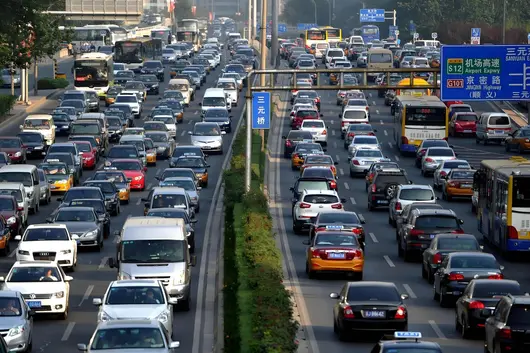

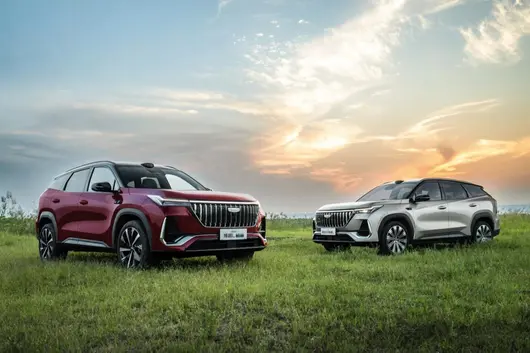
September 24, Kuangque Tower, Yuncheng, Shanxi. This ancient tower, remembered for 'going higher one more floor', welcomed a launch event that matched its temperament perfectly -- the all-new Fourth-Generation Boyue L officially launched. Fuel series launch limited price starts from 92,900 yuan, i-HEV series launch limited price starts from 99,900 yuan. Two cars launched together, nine trims, covering users with different power preferences and usage scenarios.

For the Chinese fuel SUV market, the name Boyue is not unfamiliar. Four generations in ten years, over 2.45 million users globally, consistently ranked first in A-segment fuel SUV sales for 14 consecutive months, January to August 2026 fuel vehicle sales champion. Behind these numbers is Boyue's consistent product logic: technology-driven, demand-oriented, reputation-based. And this time, the all-new Fourth-Generation Boyue L aims to, on top of the champion foundation, raise the standards even higher.

Dual Power Lines Running in Parallel, No Forced Choices
The most direct change in the all-new Fourth-Generation Boyue L is the expansion of power forms. The Fuel series continues to be equipped with the all-new 1.5TD Pro high-power engine, while the i-HEV series introduces Geely i-HEV Zhiqing hybrid for the first time. The two are not simply superimposed, but two solutions provided for different user scenarios.
The Fuel series is suitable for family users who prefer strong power, value cost-performance ratio, and are unwilling to change driving habits. The 1.5TD Pro high-power engine has a maximum power of 148kW, maximum torque of 315N·m, with overall parameters comparable to the 2.0TD power level of joint ventures. No charging pile needed, just refuel and go, long-distance driving and daily commuting are not restricted by charging conditions.

The i-HEV series targets users pursuing ultimate energy saving, long-distance commuting, and quiet comfort. Relying on the P1+P3 dual-motor decoupling architecture and 11-in-1 integrated electric drive, the vehicle can run purely electrically below 66km/h in urban areas, 0-30km/h acceleration takes only 2.11 seconds, power response time 10ms. WLTC combined fuel consumption as low as 4.67L/100km, full fuel and battery combined range exceeds 1200km, actual daily commuting fuel consumption as low as 3L level. For users who want to save fuel but don't want charging anxiety, this is a solution closer to actual usage scenarios.

Two power routes share the same intelligent, comfortable, and safety configuration. Whether choosing Fuel or HEV, users get the Qianli Haohan H5 assisted driving solution, Flyme Auto 2 smart cockpit, CCD variable damping suspension, fully equipped front seats, and other tier-crossing configurations. No need to make trade-offs between energy saving, intelligence, performance, and quality, this is the first answer given by the all-new Fourth-Generation Boyue L.
Three Strongest Technologies in the Same Class, Supporting Five Champion Product Powers
The product power improvement of the all-new Fourth-Generation Boyue L can be condensed into three technical highlights: Geely i-HEV Zhiqing Hybrid, all-new 1.5TD Pro high-power engine, Qianli Haohan H5 assisted driving solution. The three correspond to the core dimensions of energy saving, performance, and intelligence respectively, and also jointly support the five champion product powers: champion energy saving, champion performance, champion intelligence, champion quality, champion safety.
The core of champion energy saving is i-HEV Zhiqing Hybrid. The 1.5TD dedicated hybrid engine thermal efficiency reaches 47.26%, paired with 175kW electric drive system, over 80% operating conditions purely electric drive, engine running time reduced by 27% compared to traditional hybrid. Xingrui AI Cloud Power 2.0 large model can perceive temperature, humidity, altitude, slope and other environmental information in real time, intelligently match oil-electric strategies, comprehensive energy saving increased by over 10%. This system obtained the CATARC 'Industry's First HEV Intelligent Energy Saving Certification'.

Champion performance is reflected in two levels. i-HEV series 0-100km/h acceleration fastest 7.7 seconds, 0-30km/h acceleration 2.11 seconds, power response 10ms, 20 times faster than Japanese hybrid response speed of 200ms. The all-new 1.5TD Pro high-power engine first equipped in the Fuel series, jointly developed by Geely and Volvo, maximum power 148kW, increased by 15kW compared to previous generation; maximum torque 315N·m, increased by 25N·m compared to previous generation. Under the support of VGT variable geometry turbocharger, Joule engineering, mirror engineering technologies, WLTC combined fuel consumption 6.69L/100km, reduced by 2.3% compared to previous generation.
Champion intelligence is the most noteworthy change for the all-new Fourth-Generation Boyue L. The new car is the only fuel SUV under 300,000 yuan mass-produced equipped with a LiDAR, equipped with Qianli Haohan H5 assisted driving solution, equipped with 1 LiDAR, 3 mmWave radars, 11 HD cameras, 12 ultrasonic radars, total 27 sensors. Can achieve city NOA pilot driving assistance, highway NOA pilot driving assistance, and HPA multi-layer memory parking assistance. In terms of cockpit, Flyme Auto 2 smart cockpit system paired with 15.4-inch 2.5K ultra-clear central control screen and 25.6-inch AR-HUD, after Xingrui AI large model comes on board, voice interaction has capabilities such as emotional dialogue, complex intent vehicle control, navigation and itinerary planning. High-level intelligent driving is no longer the exclusive of new energy, this is the industry status quo the all-new Fourth-Generation Boyue L wants to break.

Champion quality is reflected in every detail of the cockpit. Front row seats support 6-way electric adjustment, 4-way electric lumbar support, leg rest, massage, heating, ventilation, memory, welcome, headrest audio, etc. 9 major functions; rear row equipped with seat heating and privacy glass; 16-speaker Flyme Sound Boundaryless Sound creates 7.1.2 panoramic surround sound; double-layer laminated glass improves quietness; steering wheel heating, crystal gear shift, 90% leather coverage rate improves touch; CMA premium architecture paired with CCD variable damping suspension, steering turnover lateral inclination reduced by 40%, filtering performance increased by 15%.

Champion safety takes '32+8+N' as the core. Among 32 active safety functions, AEB stationary braking stop supports up to 130km/h highest, and strengthens night backlight unexpected pedestrian emergence, night pedestrian popping out scene recognition; RMF driver incapacitation assistance can automatically slow down, turn on hazard lights, pull over steadily, and dial E-call rescue when driver has no power to control car. Passive safety aspect, 32000N·m/° body torsional stiffness, 1500MPa integrated hot-formed boron steel door ring, cloverleaf unloading force system and other structural technologies build a travel safety fortress. Breathing safety aspect, CN95 filter, '0' organic solvent and other material applications, make inside vehicle PM2.5 particle interception rate up to 99.9%, formaldehyde concentration only one-tenth of national standard threshold.

Over 200 Upgrades, Renewal Comparable to New Generation
The upgrade scale of the all-new Fourth-Generation Boyue L is not exaggerated to be described as 'comparable to new generation'. 8 styling upgrades, 75 energy saving upgrades, 48 performance upgrades, 53 intelligent upgrades, 16 major quality upgrades, 12 safety upgrades, cumulative over 200 functional upgrades, covering styling, energy saving, performance, intelligence, quality, safety six dimensions.
In terms of styling, the new car optimizes details on the basis of 'Mountain-River Aesthetics', front grille, front and rear bumper styling and process improvements, new Danxia Red, Snow Mountain Gold two body colors and Yunjin Brown interior color. Front grille adopts chrome trim strips in large areas, vehicle wind resistance reduced by 1.5%. Wheels new 19-inch Star Drill wheels and 20-inch Star Blade wheels, total 5 choices.

In terms of intelligence, 53 upgrades cover high-speed NOA traffic light response, city NOA narrow road passage, city roundabout passage, main/auxiliary road switching, vehicle lane intersection turn-around, extremely narrow parking space parking, 3D obstacle recognition, large vehicle avoidance reminder, etc. HMI visual interface upgrade, AI intelligent voice interaction, weather + music dual small window mode, external speakers and other configurations, further enrich cockpit experience.
In terms of quality, second row seat heating, double-layer laminated glass, steering wheel heating, rear privacy glass, fully equipped front seats, 1.9m large bed, 84.27% ultra-large usable space rate, 32 storage spaces, 90% leather coverage rate, NVH increased by 16%, 256-color ambient light, etc. 16 upgrades, allow all passengers to feel quality improvement.
Ten Years Four Generations, Champion Momentum Upward Again
Boyue's history is a miniature of Chinese brand SUVs continuously breaking through upwards. 2016 First Generation Boyue created the smart connectivity era, 2019 Second Generation Boyue created the smart safety era, 2022 Third Generation Boyue created the smart architecture era, 2025 Fourth Generation Boyue created the smart AI era. Four generations of models, each generation leads with industry-leading technology, product strength leads a generation.
Market performance also confirmed the effectiveness of this path. Boyue series cumulative sales broke 2 million, is one of the fastest models to break 500,000 and 1 million in Chinese SUV market. Sold to over 60 countries and regions, achieved local production in Belarus, Malaysia, etc. February 2025, Boyue global cumulative sales broke 2 million. January to August 2026, Boyue won fuel vehicle sales champion.

On top of the existing champion foundation, the goal of the all-new Fourth-Generation Boyue L i-HEV series is very clear: attack HEV market sales champion, together with Fuel series, help Boyue become Fuel + Hybrid 'Double Crown King'. From sales champion to value benchmark, from single power to dual car launch, from Fuel SUV to intelligent equality, the all-new Fourth-Generation Boyue L aims to do, not only continue the champion, but on top of the champion, take another step up.
From now until October 31, 2026, purchasing the all-new Fourth-Generation Boyue L can enjoy seven exclusive champion gifts, including champion cash gift, champion upgrade cabin gift, champion financial gift, champion renewal gift, champion traffic gift, champion gratitude gift, champion intelligent gift. Qianli Jinxiu Edition and Qianli Yuanxing Edition standard equipped with LiDAR, first owner limited time free enjoy value 25,000 yuan lifetime free pilot assisted driving function rights.
Fuel SUV First Choice, Never a Slogan. 92,900 yuan starting limited price, five champion product powers, over 200 functional upgrades, dual power running in parallel — all-new Fourth-Generation Boyue L gave everything it could give, the rest, let the market verify.

















© 2024 Bitauto.com. All Rights Reserved.
Bitauto (www.yiche.com and www.bitauto.com) is one of the most visited automotive websites in China. We provide detailed info on Chinese car brands available in your area. Please note that the information provided on this website is based on publicly available data and is for reference only. It may not be fully updated or accurate at all times.

Help us improve our website


