

Homegreen

Search History
Popular Searches
Dealer Login / Sign Up

Pada pasaran SUV di Malaysia, ramai pembeli membandingkan Mazda CX-3 dan Subaru Crosstrek semasa memilih kereta. Kedua-dua kenderaan ini mempunyai harga dan pasaran sasaran yang hampir sama, hari ini kita akan membuat perbandingan terperinci dari pelbagai aspek untuk membantu anda menjimatkan masa membuat kajian.
Harga OTR Mazda CX-3 di Malaysia adalah RM 126,159 - 139,159, keseluruhan ada 2 varian, termasuk 2023 2.0L High (RM 139,159), 2023 2.0L Plus (RM 126,159) dan lain-lain.
Harga OTR Subaru Crosstrek di Malaysia adalah RM 145,000 - 160,000, keseluruhan ada 1 varian, termasuk 2.0L e-Boxer (RM 150,000) dan lain-lain.
Dari segi harga, harga permulaan Mazda CX-3 memang lebih murah RM 18,841 berbanding Subaru Crosstrek. Jika bajet anda terhad, versi permulaan Mazda sudah boleh memenuhi keperluan harian. Namun perlu diingat, ribuan ringgit yang lebih murah itu mungkin melibatkan kompromi dalam peralatan, bergantung pada keperluan anda.

Paraf keselamatan Mazda CX-3 ialah 5★ (ASEAN NCAP), sistem keselamatan aktif termasuk i-Activsense.
Paraf keselamatan Subaru Crosstrek ialah 5★ (Euro NCAP), sistem keselamatan aktif termasuk EyeSight.
Dari segi pelengkapan keselamatan, kedua-dua kereta mendapat paras yang baik. Namun i-Activsense pada Mazda CX-3 dan EyeSight pada Subaru Crosstrek mempunyai perbezaan dari segi fungsi, jika anda lebih mementingkan keselamatan aktif, anda boleh membandingkan senarai fungsi kedua-duanya dengan teliti.

Panjang badan Mazda CX-3 4500 mm, ruang bagasi 450 L.
Panjang badan Subaru Crosstrek 4400 mm, ruang bagasi 400 L.
Dari segi ruang, badan Mazda CX-3 lebih panjang 100 mm berbanding Subaru Crosstrek, ruang duduk di dalam kereta sedikit lebih luas, terutamanya ruang kaki di baris belakang. Jika anda kerap membawa keluarga atau perlu letak kereta bayi, badan yang lebih besar memang lebih praktikal.

Jaminan Mazda CX-3 5 tahun/150,000km, jarak penyelenggaraan setiap 10,000km atau 6 bulan.
Jaminan Subaru Crosstrek 3 tahun/100,000km, jarak penyelenggaraan setiap 10,000km atau 6 bulan.

Mazda CX-3 dan Subaru Crosstrek adalah pilihan utama pasaran Malaysia, sesuai untuk kegunaan keluarga, perjalanan harian. Jika anda lebih mementingkan reputasi jenama dan harga semula, anda boleh prioritaskan jenama yang lebih baik; jika anda lebih mementingkan kos-kegunaan dan peralatan, pilih model yang lebih lengkap. Pada akhirnya, disyorkan untuk uji memandu kedua-dua model, pengalaman sendiri adalah yang paling penting.

Secara keseluruhan, Mazda CX-3 dan Subaru Crosstrek adalah model kereta yang sangat baik di pasaran Malaysia. Memilih yang mana, penting untuk melihat keperluan dan bajet anda. Kami cadangkan anda membuat kajian, bandingkan beberapa harga dari dealer, kemudian pergi uji memandu untuk membuat keputusan akhir. Membeli kereta adalah perkara besar, mengambil masa membuat kajian tidak akan salah.


In the Malaysia SUV market, many buyers compare the Toyota Harrier and Volvo XC90 PHEV when choosing a car. Both models are quite close in price and positioning, so today we will make a detailed comparison from multiple aspects to help you save time on research.
The Toyota Harrier OTR price in Malaysia is RM 289,000 - 289,000, with a total of 1 version, including the 2026 HEV 2.5L Standard (RM 289,000) etc.
The Volvo XC90 PHEV OTR price in Malaysia is RM 434,888 - 434,888, with a total of 2 versions, including the 2025 2.0T 77km Ultra (RM 434,888), What safety features does the Volvo XC90 PHEV have? (RM 362,888) etc.
In terms of price, the Toyota Harrier starting price is indeed RM 145,888 cheaper than the Volvo XC90 PHEV. If your budget is limited, Toyota's entry-level version is already sufficient for daily needs. But note also, the savings of a few thousand may involve trade-offs in features, depending on your specific requirements.

The Toyota Harrier is equipped with a 2.0L Turbo engine, horsepower 220 hp. Official fuel consumption 9.5 L/100km.
The Volvo XC90 PHEV is equipped with a Hybrid engine, horsepower 170 hp. Official fuel consumption 4.5 L/100km.
Regarding power, the Toyota Harrier's 2.0L Turbo has 50 more horsepower than the Volvo XC90 PHEV's Hybrid, offering more confidence in mid-range acceleration, especially when overtaking on the highway. However, the Volvo XC90 PHEV may have better fuel consumption, and the difference in daily city commuting won't be significant.

The Toyota Harrier safety rating is 5★ (ASEAN NCAP), active safety systems include Brand ADAS.
The Volvo XC90 PHEV safety rating is 5★ (Euro NCAP), active safety systems include Premium ADAS.
Regarding safety features, both cars received good ratings. However, there are some differences in features between the Toyota Harrier's Brand ADAS and the Volvo XC90 PHEV's Premium ADAS. If you value active safety more, you can carefully compare the feature lists of both.

The Toyota Harrier warranty is 5 years/unlimited mileage, service interval is every 10,000km or 6 months.
The Volvo XC90 PHEV warranty is 5 years/unlimited mileage, service interval is every 10,000km or 6 months.

Both the Toyota Harrier and Volvo XC90 PHEV are mainstream choices in the Malaysian market, suitable for family use and daily commuting. If you value brand reputation and resale price more, you can prioritize the one with better reputation. If you care more about value for money and features, choose the one with richer configuration. Ultimately, it is recommended to test drive both, as experiencing it personally is the most important.

Overall, both the Toyota Harrier and Volvo XC90 PHEV are very good models in the Malaysian market. Which one to choose mainly depends on your personal needs and budget. We suggest doing your research, comparing quotes from several dealerships, then test driving to make a final decision. Buying a car is a big matter, spending time on research will never go wrong.





In the Malaysian SUV market, many buyers compare Toyota Corolla Cross and Hyundai Tucson when choosing a car. These two models are quite close in price and positioning. Today, we will make a detailed comparison from multiple aspects to save you time on research.
Toyota Corolla Cross OTR price in Malaysia is RM 133,800 - 148,800, with 3 versions in total, including 2026 HEV 1.8L GR Sport (RM 148,800), 2026 HEV 1.8L Standard (RM 140,800), 2026 1.8L Standard (RM 133,800), etc.
Hyundai Tucson OTR price in Malaysia is RM 143,888 - 197,888, with 5 versions in total, including 2025 HEV 1.6T AT 2WD Prestige (RM 197,888), 2025 1.6T DCT 4WD Prestige (RM 186,888), 2025 1.6T DCT 2WD Prime (RM 164,888), etc.
In terms of price, Toyota Corolla Cross's starting price is indeed RM 10,088 cheaper than Hyundai Tucson. If your budget is limited, Toyota's entry-level version can already meet daily needs. However, also note that the few thousand cheaper may require trade-offs in features, depending on your specific needs.

Toyota Corolla Cross is equipped with a 1.5L Turbo engine, 140 hp power. Official fuel consumption 7.0 L/100km.
Hyundai Tucson is equipped with a 1.5L Turbo engine, 140 hp power. Official fuel consumption 7.0 L/100km.
Both cars use the same powertrain system, the driving feel is basically no difference. Fuel consumption is also similar, no need to worry too much about this point.
Toyota Corolla Cross safety rating is 5★ (ASEAN NCAP), active safety system includes TSS (PCS, LDA, ACC, LTA).
Hyundai Tucson safety rating is 5★ (ASEAN NCAP), active safety system includes SmartSense.
Both cars have the same safety rating, safety features are considered very complete in this class. New cars nowadays do not have poor safety, no need to worry too much about this point.
Toyota Corolla Cross adopts FWD drive configuration.
Hyundai Tucson adopts FWD drive configuration.
Both cars have the same drive configuration, both FWD, daily driving feel will not differ too much.

Overall, Toyota Corolla Cross and Hyundai Tucson are both quite good car models in the Malaysian market. Which one to choose depends mainly on your personal needs and budget. We suggest doing research well, comparing quotes from several dealerships, and then test-driving to make the final decision. Buying a car is a big matter, spending time on research will never be wrong.


喺馬來西亞嘅 SUV 市場,好多買家喺揀車嘅時候都會拿 Honda CR-V 同 Toyota Fortuner 嚟做比較。呢兩款車喺價位同定位上都幾接近,今日我哋就從多個方面做一次詳細嘅對比,幫你省下做功課嘅時間。
Honda CR-V 喺馬來西亞嘅 OTR 售價係 RM 178,200 - 195,900,合共有 4 個版本,包括 2026 e:HEV 2.0L 2WD RS(RM 195,900)、2026 1.5T 4WD V(RM 181,900)、2026 e:HEV 2.0L 2WD E(RM 178,200) 等。
Toyota Fortuner 喺馬來西亞嘅 OTR 售價係 RM 195,880 - 241,880,合共有 3 個版本,包括 2024 2.8T VRZ Diesel(RM 241,880)、2024 2.7L SRZ Petrol(RM 202,880)、2024 2.4L Standard Diesel(RM 195,880) 等。
從價錢嚟睇,Honda CR-V 嘅起步價確實比 Toyota Fortuner 平咗 RM 17,680。如果你預算有限,Honda 嘅入門版已經可以滿足日常需求。但都要留意,平嗰幾千蚊,可能喺配備上會有取捨,具體就要睇你嘅需求。

Honda CR-V 搭載 2.0L 4-cyl,馬力 170 hp。官方耗油 8.0 L/100km。
Toyota Fortuner 搭載 2.5L Diesel,馬力 187 hp。官方耗油 8.5 L/100km。
動力方面,Toyota Fortuner 嘅 2.5L Diesel 比 Honda CR-V 嘅 2.0L 4-cyl 多咗 17 匹馬力。不過日常喺市區行,兩款車嘅動力都夠用,唔會覺得唔夠力。
Honda CR-V 保修 5 年/無限里程,保養間隔 每 10,000km 或 6 個月。
Toyota Fortuner 保修 5 年/無限里程,保養間隔 每 10,000km 或 6 個月。
兩款車嘅保修條件一樣,呢方面唔使糾結。實際保養成本仲要睇品牌嘅服務網絡同零件價格,建議去車友群問下真實車主嘅經驗。

Honda CR-V 同 Toyota Fortuner 都係馬來西亞市場嘅主流選擇,適合家庭使用、日常通勤。如果你更睇重品牌口碑同二手價,可以優先考慮口碑更好嗰一款;如果你更在意性價比同配備,那就揀配置更豐富嗰款。最後仲建議兩款都去試車,親身體驗先係最重要嘅。

總括嚟講,Honda CR-V 同 Toyota Fortuner 都係馬來西亞市場幾唔錯嘅車型。揀邊一輛,關鍵都係要睇你嘅個人需求同預算。建議大家做好功課,多比較幾間車行嘅報價,再去試車做最終決定。買車係件大事,花少少時間做功課絕對唔會錯。


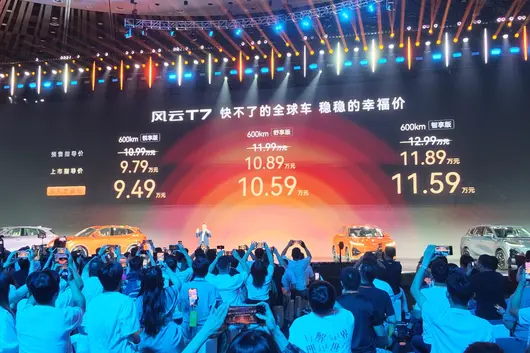
8 月 26 日,以 “稳稳的幸福” 为主题,奇瑞风云全新全球品质纯电 SUV—— 风云 T7 正式迎来上市。新车共推出 600km 悦享版、600km 舒享版、600km 智享版三款版型,上市指导价 9.79‑11.89 万元,抢先置换价 9.49‑11.59 万元,同时实现上市即交付,为十万级纯电 SUV 市场带来全球标准的全新选择。

发布会上,知名音乐人吴克群以 “幸福体验官” 身份惊喜登场,与奇瑞汽车执行副总裁李学用围绕 “稳稳的幸福” 展开深度对话,结合日常出行场景分享用车感悟,传递 “慢功造好车” 的造车理念,现场共同启动风云 T7「幸福共创计划」,号召大众发掘生活中点滴幸福瞬间,让硬核的汽车产品力转化为家庭出行触手可及的幸福感。

作为一台原生全球车,风云 T7 并非国内车型简单改款出海,而是立足奇瑞连续 23 年中国品牌乘用车出口第一、全球用户突破 2000 万的积淀,依托全球 1+7+N 研发体系,历经 3 年研发周期打磨,按照 2026 版 E‑NCAP 五星安全标准进行开发,前期完成全球多市场严苛验证之后回归国内市场。同源车型 Lepas L6 已登陆南非、泰国,后续将陆续登陆印尼、欧盟、澳新、英国等海外地区,面向全球 210 个国家和地区用车需求做同步适配,累计投入 81 台耐久试验车,整车测试里程超 600 万公里,专项耐久验证 145 万公里,跨越高温、高寒、高湿、高盐碱等极限环境,历经巴西高减速坎、墨西哥鹅卵石路、德国高速弯道、南非非铺装路面等 95% 全球道路类型试炼,在‑40℃~55℃超宽环境区间完成全场景考验,用全球严苛验证夯实产品可靠底色。

风云 T7 围绕超能跑、美全球、更安全、好智慧四大核心价值,打造碰撞安全、电池安全、续航平权、全域节能、操控性能、整车验证 “六大冗余” 产品实力,打破行业入门版本减配、续航差异化等市场痛点,实现十万级价位给到二十万级价值体验。
在超能跑层面,风云 T7 实现全系平权,三款版本全部标配 65.05kWh 犀牛电池,CLTC 续航 600km,实测续航可达 681.6km,实现反向虚标;30%-80% 快充仅需 20 分钟,一杯咖啡时间即可补充长续航。搭载 178kW 峰值功率 12 合 1 鲲鹏超能电驱,综合效率达 90.8%;全系标配双源宽温域热泵空调 + 高压 PTC 以及 AGS 智能进气格栅,零下 10℃环境续航可提升 15%-20%,无惧寒冬酷暑续航衰减。车身轴距 2700mm,车内得房率高达 84%,支持 1955mm×1310mm 纯平大床模式,450L 常规后备箱可拓展至 1550L,搭配 38 处储物空间、9 层云感舒适座椅,兼顾家庭通勤、露营出游多元场景,把出行松弛感落到实处。

美全球由全球 10 大设计中心、百余名设计师协同打造,汇集 5000 + 全球用户共创,同源车型 Lepas L6 亮相米兰设计周收获好评。驭风美学车身拥有 0.286Cd 超低风阻,提供炽焰橙、山烟紫等 6 款东方雅韵车漆,其中炽焰橙采用豪车级 Tri‑coat 三层喷涂工艺。云翼环抱座舱设计通透高级,提供温暖黑棕、极夜黑曜两套内饰配色,鹅卵石悬浮扬声器、菱格绗缝工艺加持,兼顾东方审美与全球用户喜好。

更安全是风云 T7 的核心底色。磐石车身采用九横五纵笼式结构,高强度钢占比 80%,搭载同级独有的 Shotgun 结构、首发双框副车架 + Pack 防撞梁,搭配贯穿式门槛加强梁;配备同级最多 9 安全气囊,包含 48L 远端气囊,构建碉堡级乘员舱防护。犀牛电池搭载 6D 锁子甲 31 层立体防护,IP68 防水能力达国标 96 倍,侧边抗挤压性能为国标 2 倍,完成 1008 小时盐雾、105 秒火烧严苛测试;整车提供动力电池安全兜底,若电池自身原因造成整车热失控损毁,可赔付同款或不低于原车配置新车。底盘由国际化专家团队调校,50.8:49.2 黄金轴荷比,70mm 大衬套、26mm 前稳定杆加持,80km/h 麋鹿测试成绩、500mm 涉水深度,复杂路况行驶稳定可控。

好智慧方面,风云 T7 同级首发 4nm 制程 8775 舱驾一体芯片,72TOPS 算力,系统响应低至 80ms。灵犀智舱 2.0 接入豆包大模型,拥有全场景模糊语音交互,支持小憩、露营、宝宝、宠物等多种场景模式;搭载 22 颗高精度传感器,猎鹰 500 驾辅系统支持 300 + 全场景自动泊车、高速领航辅助,同时提供智能驾驶兜底保障,购车一年内泊车、智能领航场景下,因辅助系统原因引发事故,最高可赔付 500 万元,大幅降低智能出行顾虑。
上市同步推出限时购车福利,即日起至 9 月 30 日下订,用户可享受 8 重重磅礼包:
此外,预售期 1000 元订金抵 2000 元购车款的膨胀礼,延期至 8 月 31 日 24:00 截止。
依托 “全球研发、全球标准、全球验证、全球品质” 一体化体系,风云 T7 以六大冗余硬实力、全系满配的诚意配置,重新定义十万级纯电 SUV 价值标杆。从全球道路严苛试炼,到国内上市即交付,风云 T7 将全球品质转化为日常出行的踏实安心,守护万千家庭 “稳稳的幸福”。
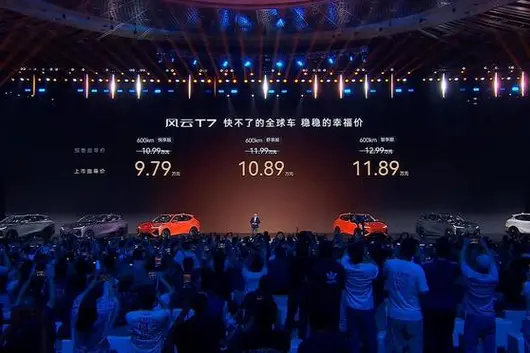
8月26日,奇瑞风云T7以“稳稳的幸福”为主题正式上市,共推出600km悦享版、600km舒享版、600km智享版三款车型,上市指导价9.79万元、10.89万元和11.89万元,抢先置换价9.49万元、10.59万元和11.59万元。作为一款历经三年研发、按全球标准打磨的纯电SUV,风云T7全系标配600公里续航,以“超能跑、美全球、更安全、好智慧”四大核心价值,为用户带来可靠安心的纯电出行选择。

发布会上,知名音乐人吴克群以“幸福体验官”身份亮相,与奇瑞汽车执行副总裁李学用就“稳稳的幸福”展开对谈,并共同启动风云T7「幸福共创计划」。吴克群结合自身用车体验,分享了风云T7在续航、空间、智能泊车等方面的真实感受。

生而全球:慢功造好车,先出海再回国
风云T7的研发历时3年,依托奇瑞全球“1+7+N”研发体系打磨,按2026版E-NCAP五星安全标准设计,即将进入欧洲高法规市场。新车并非国内车型简单改款出海,而是同步适配全球210个国家和地区用车需求,先行完成海外市场验证再回归国内。同源车型已在南非、泰国上市,并将陆续登陆欧盟、澳新、英国、以色列等市场。
在验证层面,风云T7投入81台耐久试验车同步路试,整车累计测试里程超600万公里,耐久专项实测145万公里。验证范围覆盖巴西高减速坎、墨西哥鹅卵石路、德国高速大曲率弯道、南非非铺装泥路等全球95%道路类型,环境适应区间达-40℃至55℃。

产品实力:四大核心价值,六大冗余
风云T7全系搭载65.05kWh犀牛电池,CLTC续航600km,实测续航681.6km实现“反向虚标”,30%-80%快充仅需20分钟。全系标配双源宽温域热泵空调与AGS智能进气格栅,-30℃至55℃超宽温域稳定运行,冬季续航提升30%。12合1鲲鹏电驱综合效率90.8%,峰值功率178kW。

安全方面,风云T7采用80%高强度钢、九横五纵笼式车身,同级独有的shotgun结构与双框副车架+Pack防撞梁提供额外碰撞防护。全系标配9安全气囊,含48L远端气囊和后排侧气囊,为10万级纯电SUV独有配置。犀牛电池具备6D锁子甲31层防护,IP68防水达国标96倍,侧边抗挤压为国标2倍。
智能座舱搭载同级首发的8775舱驾一体芯片,配备15.6英寸2.5K大屏及灵犀智舱2.0系统。猎鹰500智驾集成22颗高精度传感器,支持高速领航辅助及300+全场景自动泊车。

空间方面,风云T7轴距2700mm,得房率84%,后排座椅放倒后可形成1955mm×1310mm纯平大床。外观依托全球10大设计中心,融汇5000+用户共创,提供炽焰橙、山烟紫等6款东方雅韵车色。

上市权益:诚意十足
即日起至9月30日,下订可享8重礼包权益,包括价值6000元个性车色限时免费、2年6万0息金融政策、不分品牌3000元置换补贴等。特别值得关注的是,风云T7推出动力电池安全兜底与辅助驾驶兜底两项权益,前者若因电池自身原因导致整车热失控损毁,奇瑞将赔付同款新车;后者在购车一年内因智驾系统原因导致事故,最高赔偿500万元。此外,整车终身质保(含三电)与666元终身保养套餐同步提供。

从全球标准、全球验证到全球品质,风云T7以10万级价格带来20万级价值体验,为全球用户解锁“超美更好”的纯电出行生活。
说到底,这车定价和配置都很奇瑞——不玩虚的,续航一样、安全到位、配置实在,价格还压得住,尤其是600公里纯电续航,这在10万级纯电SUV中并不多见,我认为风云T7,称得上是又一款国民好车。
如果你要纯电的静谧与舒适,空间、安全和智驾不妥协,还要长续航,预算在10万左右,风云T7值得你去看看!
奇瑞花费近3年的时间,精心打磨风云T7,对其当然是寄予厚望,你认为风云T7,在10万级纯电SUV市场竞争力如何?会成为这一市场的新爆款吗?

Xiao He is an industry practitioner in the automotive sector. In 2020, guided by a friend from a securities firm, she bought a New Energy Vehicle Fund for the first time. She was lucky, catching the wave of general market rise around 2021. The fund reached a peak unrealized profit of 90%. At that time, she thought it would rise further, so she didn't sell.
Later, influenced by friends, Xiao He was no longer satisfied with just buying funds; she opened an account to trade individual stocks. Over the six years, she not only failed to make money but lost about 10,000 yuan. When it rose, she was greedy and wanted to see it rise more; when it fell, she waited to break even. In this cycle, she got stuck.
Xiao He is not an isolated case. From 2021 to 2025, New Energy Vehicle sales in China grew from 3.5 million to 16.49 million, an increase of nearly 4 times. But for many investors who bought car stocks, these five years were not a period of wealth growth, but five years of being stuck.
The industry is growing, but investors are losing money. The investment logic of car stocks has changed.
Once a hot favorite
2021 was the golden age for car stocks.
Xiao He remembers that summer, in the office, colleagues discussed not cars, but how much their funds or stocks had risen during lunch breaks. The New Energy Vehicle Fund she bought reached a peak unrealized profit of nearly double.
In 2021, the CSI New Energy Vehicle Index rose 56.96% for the year. It was an era where buying funds meant making money. "Funds that sold out in a day" appeared frequently, with scenes of new funds selling out in one day or single-day subscriptions exceeding 10 billion yuan repeating. The new energy sector was the focus of capital pursuit. For example, when the Invesco Great Wall New Energy Industry Fund was issued, the subscription amount exceeded the 6 billion yuan limit, triggering proportional allocation.

Image source: SheTu Figure
Why was capital so crazy? Because they were not buying cars; they were buying the future. The market universally believed three things at the time.
First, new energy would replace fuel vehicles. This is a certain industrial revolution, like smartphones replacing feature phones. Whoever seized this opportunity would become the next Apple.
Second, Chinese car companies would produce global giants like Tesla. BYD, NIO, Li Auto, Geely... were all expected to be great. At the moment Tesla's market cap surpassed Toyota, many believed Chinese car companies could do the same.
Third, intelligentization would redefine cars. Cars would become "smartphones on four wheels", and software and data would become new profit sources. Just like Apple made a fortune from the App Store, future car companies could make money from software charging.
Market expectations stacked these three layers, giving car stocks valuations far higher than traditional car companies.
At the end of 2021, CATL's market cap climbed to a peak of 1.6 trillion yuan, with the stock price touching a historical high of 692 yuan. Institutions generally viewed CATL as the "Moutai of the new energy era". Around the same year, BYD's market cap also once broke through 1 trillion yuan.
In August of the same year, the CSI New Energy Vehicle Index's P/E ratio once reached 160 times. At that time, the market didn't care how much car companies were earning now, but how much they could earn in the future. At that time, few doubted this story.
Xiao He's friend Xiao Ming bought at over 90 yuan per BYD stock and sold when it rose to over 200 yuan in 2021. Because he needed money urgently to buy a house then, he didn't regret selling early. But more people didn't sell; they believed stock prices could still rise.
Xiao He also didn't sell her held funds. Influenced by friends, she felt new energy was a long-term track and should be held long-term. She even recommended this fund to three or four friends.
One friend traded in and out short-term, made money, and bought a luxury bag worth tens of thousands. Looking back now, that friend instead became the smartest person.
The rise of car stocks in 2021 was not because car companies earned that much at the time, but because the market bet ahead on industrial changes over the next ten years. But the question is, the future came too fast and too ruthlessly.
After the tide recedes: from buying tracks to buying winners
2022, the tide began to recede gradually. That year, the CSI New Energy Vehicle Index fell nearly 30%.
Xiao He lost over 9,000 yuan that year, leaving little of what she earned the previous year.
The sharp decline in New Energy Vehicle funds was closely related to the broader environment. Pandemic impact, rising upstream raw material prices, subsidy phasing out, Fed interest rate hikes... various negative factors叠加, the new energy sector's heat cooled down quickly, entering the so-called bubble unwinding phase.
In April 2022, CATL stock price fell below 400 yuan, market cap fell below one trillion yuan. This distance from the 1.6 trillion high point, only four months had passed.
The fund redemption wave came. Many fund investors who entered at highs in 2021 couldn't stand the losses and cut losses to exit. Xiao He also exited at the end of October that year. But she didn't leave car stocks, just didn't get on for a short time. In 2024, Xiao He bought the previous funds again. Meanwhile, under the influence of friend Xiao Ju, she started paying attention to individual stocks.
Xiao Ju has deep research into the stock market, especially car stocks. She lost hundreds of thousands in the past two years, and broke even in 2024. She recommended buying BYD and CATL, "These two are leaders and can survive the cycle."
2024 was indeed the year of individual stock market. That year, the capital market began to shift from "valuing tracks" to "valuing enterprises". For example, Seres of the Huawei ecosystem rose from over 20 yuan in 2023 to over 130 yuan at the end of 2024 due to the hot sales of the AITO series.
Xiao Jun also entered that year. He currently holds three whole-vehicle stocks—BYD held for 428 days, Seres held for 545 days, JAC Motors held for 323 days. At over 90 yuan, he bought Seres and personally saw the stock price touch the historical high of 173 yuan, then fall all the way.
"A year ago, the car sector was still very hot, with many foreseeable imagination spaces." Xiao Jun recalled, at that time BYD's Supercharge hadn't been released yet. He was bullish on the Huawei ecosystem; Seres' layout in robotics and equity in Yinwang brought continuous positive news.
The launch of Maextro S800 brought a lot of imagination to JAC Motors. So, Xiao Jun bought JAC Motors. His profit expectation for JAC was above 20%, "At that time, people were too confident in car stocks, and reaching expectations might still require a wait." He once sold JAC Shares for profit, but because the stock continued to rise, he entered again.
The result was, from big rise to big fall, it took less than a year.
As of August 11, Seres stock price fell to around 56 yuan, down about 70% from the historical high, market cap shrank from 300 billion to less than 100 billion. JAC Motors stock price fell from the high of 58.8 yuan last May to around 26 yuan currently, market cap shrank to around 56 billion yuan.
Xiao Jun was stuck. He was very frustrated.
In the second half of 2025, Xiao He bought into the intelligent driving stock Qianli Technology under Geely based on friend advice. The reason for the bullish view was direct: Geely endorsement, its intelligentization and new energy popularization are fast, which can drive Qianli Technology business to improve.
Qianli Technology was formerly Lifan Technology. Geely became an important shareholder after its bankruptcy reorganization. In early 2025, Lifan Technology was officially renamed Qianli Technology and further focused on the "AI + Car" core strategy. It jointly launched the Qianli Haohan Intelligent Driving System with Geely, and in the second half of 2025 it was even invested in by Mercedes-Benz affiliated company. Multiple positive news drove Qianli Technology stock price to break 13.8 yuan/share at one point last year.

Photo provided by Xiao He
Unfortunately, Xiao He bought at the super-high position. To now, Qianli Technology has already made her lose over 10,000 yuan, loss rate over 30%. Holding it is hard, selling is unwilling, she can only self-soothe and insist it will improve.
Xiao Jun also bought Qianli Technology, similarly stuck.
Another investor Xiao Liang bought into New Energy Vehicle funds, after warming up in the first half of this year, now lost 6% again.
The experiences of these three are not isolated cases. From the second half of 2025 to now, the car sector as a whole experienced obvious fluctuations, and some hot car stocks even showed a "decline — warm up — decline again" trend.
Buy the dip?
Institutional holdings have dropped to the bottom, and voices of "buying the dip" are starting to appear in the market.
Orient Securities' latest research report shows, in Q2 2026, the heavy allocation ratio of active funds to the automotive industry was only 1.9%, down 2.2 percentage points month-on-month, hitting a five-year low. In terms of market cap share, the car sector accounts for 3.3% of All A-shares market cap, overweight ratio is minus 1.3%. It points out that fund holdings in passenger cars and parts sectors have both fallen to the bottom range.
Xiao He decided to enter after seeing content like this. She felt institutional holdings hit bottom, the sector should rebound, so she bought JAC Motors. But to now, she is still losing.
At the end of July, the car sector indeed once saw a brief warm up. As of July 31, the CSI Auto Index reported 9269.98 points, rising 0.78% for the day. For individual stocks that day, SAIC Motor rose 1.5%, JAC Motors rose over 7%, Seres and Changan Automobile achieved slight rise.
But this wave of warm up did not last. After entering August, the sector began to oscillate and correct again. On August 11, the CSI Auto Index closed down. From the high point in May to now, JAC Motors stock price has retraced nearly 50%, BYD stock price is also obviously lower than the high point of the past year.
Behind the correction is that industry fundamentals haven't given enough support. CAAM data shows, domestic passenger car sales in the first half were 8.287 million vehicles, down 24.3% year-on-year. The only highlight is exports; passenger car exports in the first half were 4.432 million vehicles, up 72% year-on-year.
The domestic market is becoming more like stock competition, the overseas market is becoming a new incremental market, but it is not enough to support the overall auto market size and performance to improve significantly. This means the auto industry is not without stories, but old stories are ending, and new stories still need to prove themselves.
Facing such market conditions, most stock investors choose to wait. Xiao Xia holds a car sector ETF for two or three years, warming up a bit this year, but he has no plan to increase holdings. Xiao Liang is also, he just wants to wait until profits recover to 20% to sell the fund.
Xiao Jun still chooses to hold BYD long-term. In his view, the core basis for distinguishing long-term holding from short-term attention is "is there potential and new story in the future". BYD's globalization is the new story he values.

BYD Sales January-June 2026
This story is being realized. From January to July 2026, BYD overseas sales were nearly 970,000 vehicles, July single month close to 180,000 vehicles, overseas share of total sales has reached 40%. Its Brazil and Thailand factories have mass production, Hungary, Turkey and other overseas bases are also progressing.
The market used to buy growth expectations brought by rapid rise in new energy penetration rate. Now penetration rate has entered a high position—July 2026 new energy passenger car retail penetration rate broke through 65%. Industry competition shifted from "who can seize the new energy bonus" to "who can survive and make money in stock competition". But under price war, most car company profits face pressure.
Industry growth does not equal enterprise profit, more does not equal stock rise. The industry incremental brought by new energy penetration rate rise, in the background of increasing enterprise numbers and intensified price competition, did not convert to profit growth synchronously. Data shows, the auto industry's overall profit margin has fallen to around 3%. Past early traded growth expectations were continuously realized, valuation center declined accordingly, capital began to look for new high growth expectations.
If profits are not good, the market needs new stories to support valuation. "Now new energy penetration rate has exceeded 50%, new car makers have all emerged, in other words, now we have reached the stage of a hundred schools of thought contending."
Xiao Jun believes, profit is a relatively important metric, but having profit alone is not enough, the capital market also needs new imagination space. "What supports capital market sentiment is new stories. Actually everyone is looking for new stories, such as XPeng's robotics, Li Auto's range extender, and following that we need to see if these new stories can continue."
But in veteran investor Tian Hu (pseudonym), these new stories are not enough to support car stocks returning to high points. "Electric vehicles' rising space is not much, and stocks are all about expectations." He judged, for a long period, car stocks will maintain oscillation trend, unless a truly explosive new technology appears. For the entire auto industry now, the only growth direction he is bullish on is exports.

Image source: Huaban
"I think, we must keep watching emerging industries like energy storage and computing power." Tian Hu said.
Capital is already voting with feet. Xiao He plans to sell Qianli Technology and other car stocks after breaking even or losses narrow, fully turning to tech class especially shares related to artificial intelligence. She has already bought quite a lot of tech funds and stocks. Xiao Liang also bought AI tech stocks, with significant gains.
In the capital circle chasing new stories, car stocks are not that hot anymore.
But this is not a problem of the auto industry.
Any industry going to maturity will experience such a moment: when incremental market becomes stock market, when the speed of storytelling can't keep up with the speed of capacity expansion, when the industry changes from "compare whose story is big" to "compare who can truly convert scale, technology, and cost into profit", capital will start to withdraw.
Internet was like this, smartphones were like this, new energy vehicles are like this. This is not industry failure, but a necessary path for industry to move from adolescence to adulthood.
Real tests, actually start after capital tide recedes. After capital tide recedes, enterprise real operational ability will be put on the stage. Companies relying on financing will disappear, companies relying on technology and efficiency will stay. Price wars will wash away a batch of players, industry concentration will rise, profits will concentrate at the top. This process might be very cruel, but it is not necessarily bad for industry long-term health.
And capital, always chases the next story. From new energy to AI, from energy storage to computing power, tracks change, logic doesn't change—always rush in when expectations are fullest, exit when realization is hardest.
For ordinary investors, the hardest is not finding the next hotspot, but admitting you might not find it. Not everyone can exit when it is hottest, not everyone can buy the dip when it is coldest. More often, we are attracted in when hottest, choose to stick around when coldest, and then repeat the same mistakes under the next hotspot.
Investment, ultimately is fighting with one's own humanity. Understanding cycles, accepting differentiation, not being swept by market emotion, is more important than betting on a track. The story of car stocks is finished, there will be the next story. But in the next story, hope we can all have a bit more calmness, a bit less greed.
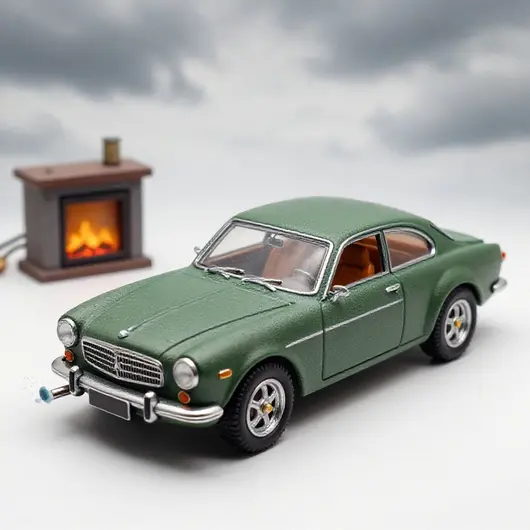
日前,深藍汽車正式公布了全新升級的深藍 S05。作為一款已經在全球累計收穫超過 24 萬用戶、連續多月蟬聯細分市場銷量冠軍的明星車型,S05 的今次煥新登場,顯然不僅僅是一次例行的產品迭代。
在競爭已進入白熱化的 2026 年中國新能源市場,一款「爆款」車型如何保持生命力?深藍 S05 的升級邏輯,或許給出了一個值得深思的答案。而這款車的意義,也早已超出了產品本身——它既是深藍汽車從「爆款」走向「常青樹」的關鍵落子,也是長安汽車在新能源戰略整合窗口期的一塊重要壓艙石。

從夠用到吸睛
回顧現款深藍 S05,其成功的关键在於精準卡位——在 11.99 萬至 14.99 萬元的價格區間,以純電 + 增程的雙動力佈局、2880mm 的超長軸距以及後置後驅的駕駛樂趣,精準切入了年輕家庭用戶的痛點。上市以來月均銷量穩定破萬,足以證明其產品定義的成功。
而全新深藍 S05 的升級,核心思路可以概括為一句話:在既有優勢之上,把「智能」這塊短板補齊,把「設計」這張長板拉長。
智能駕駛是此次升級最引人注目的變化。新車首次搭載了激光雷達,配合升級後的駕駛輔助「小藍燈」,在感知硬體層面實現了質的飛躍。在 10-15 萬元級的緊湊型 SUV 市場中,激光雷達的搭載目前仍屬稀缺配置。深藍 S05 此舉,實質上是将高階智能驾驶的硬件門檻大幅拉低,让更多主流用户能够享受到更精准的风险预判和更安心的驾驶辅助体验。這不僅是產品力的提升,更是对「科技平權」理念的一次實質性落地。
設計層面,全新 S05 延續了品牌「共生美學」的核心理念,並深化演繹了「星際飛翼」設計語言。封閉式前格柵搭配狹長燈組與「深藍之眼」花瓣燈,辨識度進一步提升。無框車門、半隱藏式門把手、1.9㎡全景天幕等年輕化配置的保留與優化,則繼續強化了其「潮電 SUV」的產品標籤。
內飾方面,全新「懸浮星艦」設計語言帶來了更具科技感的座艙氛圍。256 色懸浮式環抱氛圍燈支持隨情景模式律動,大尺寸懸浮中控屏與 HUD 抬頭顯示的搭配,進一步強化了人車交互的沉浸感。而 2880mm 軸距所帶來的寬敞後排空間、492L 雙層後備廂與 159L 前備箱的儲物組合,則讓這台緊湊型 SUV 在實用層面依然保持着越級的競爭力。
動力層面,新車繼續提供純電與增程雙動力選擇。純電版搭載 272 馬力後置單電機,提供 520km 與 620km 兩種 CLTC 續航版本;增程版 CLTC 純電續航 215km,綜合續航達 1310km。值得注意的是,新車搭載的寧德時代金鐘罩電池組與 3C 超級快充技術,在補能效率和電池安全層面均為同級領先水平。

從「爆款」到「常青樹」,S05 對深藍舉足輕重
全新深藍 S05 的登場,恰逢深藍品牌發展的關鍵節點。
從銷量數據來看,深藍汽車 2026 年上半年全球累計銷量已達 164,156 輛,同比增長 14.6%,其中 6 月單月銷量 33,625 輛,連續 4 個月突破 3 萬輛大關。海外市場表現尤為亮眼,上半年海外累計銷售 35,795 輛,同比增長 141%。而深藍 S05 一款車型,6 月全球銷量就達到 18,369 輛,佔品牌總銷量的半數以上,是深藍当之无愧的「銷量擔當」。
對於任何一個汽車品牌而言,單一車型的過度依賴既是榮耀也是風險。深藍汽車顯然意識到了這一點——L06、S07 等車型正在快速成長,但 S05 作為品牌「基本盤」的地位短期內難以被撼動。全新 S05 的推出,正是為了鞏固這一基本盤:通過激光雷達的上車和設計的迭代,讓這款已經證明自己的車型在智能駕駛浪潮中不掉隊,繼續保持對競品的領先優勢。
從品牌定位來看,深藍一直強調「年輕、科技、運動」的品牌調性。全新 S05 在外觀、內飾、智能三個維度的同步升級,恰好與這一調性形成了深度呼應。它不僅是深藍產品陣列中最走量的車型,更是品牌理念最直接的載體——讓年輕用戶以觸手可及的價格,享受到前沿的智能電動體驗。

從單打獨鬥到戰略協同
把視角拉高到長安汽車的層面,全新深藍 S05 的意義更加深遠。
2026 年,長安汽車正在推進一項重要的戰略調整——對阿維塔與深藍汽車進行戰略性整合與協同發展。整合後的兩大品牌將形成 150 萬 + 級的中高端品牌群,其中深藍的目標是 2030 年年銷 100 萬輛。在這一宏大目標面前,深藍需要一款足夠能打、足夠持久的核心車型來支撐銷量基盤——而 S05 正是這個角色最合适的人選。
與此同時,中國新能源市場的競爭格局正在發生深刻變化。2026 年上半年,純電市場已進入存量競爭階段,增程賽道也面臨結構性調整的壓力。在這樣的大環境下,一款月銷穩定過萬、且能通過持續迭代保持產品競爭力的車型,其戰略價值怎麼強調都不為過。全新 S05 的推出,不僅為深藍的銷量增長提供了持續動能,也為長安新能源矩陣的穩定運行提供了重要支撐。
更值得關注的是 S05 在全球化佈局中的角色。目前深藍 S05 已熱銷全球 73 個國家和地區,並斬獲了德國 iF 設計大獎等國際榮譽。深藍汽車已進入全球 110 多個國家和地區,在泰國建立了右舵車工廠。全新 S05 的升級,無疑將進一步提升這款「全球車」在國際市場的競爭力,為長安汽車的「海納百川」全球化戰略添上重要的一塊拼圖。

汽車網評:全新深藍 S05 的登場,表面上看是一次產品的中期改款,實則是深藍汽車從「爆款驅動」走向「體系化競爭」的關鍵一步。激光雷達的下放、設計的進化、空間的越級——這些產品力的升級背後,是一套完整的產品定義邏輯:在主流價格區間內,把用戶最在意的智能化、設計感和實用性做到極致。
對於深藍汽車而言,S05 是穩住基本盤的定海神針;對於長安汽車而言,S05 是新能源戰略整合期的重要支撐。在 2026 年這個行業關鍵分化期,全新深藍 S05 的登場,或許正是深藍從「中國主流」駛向「全球主場」道路上,最堅實的那一步。
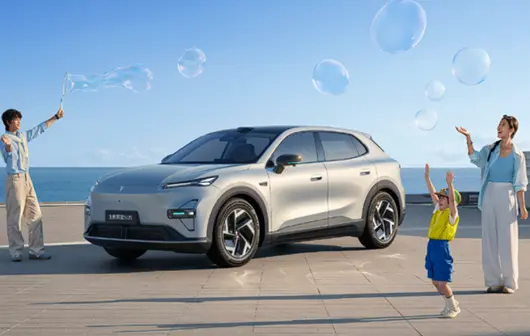

Dalam pasaran SUV di Malaysia, ramai pembeli semasa memilih kereta akan membandingkan Proton X50 dan Mitsubishi Xforce. Kedua-dua kereta ini hampir sama dari segi harga dan kedudukan, hari ini kita akan membuat perbandingan terperinci dari pelbagai aspek untuk membantu anda menjimatkan masa membuat kajian.
Harga OTR Proton X50 di Malaysia ialah RM 89,800 - 113,300, terdapat 4 varian, termasuk 1.5T Executive (RM 89,800), 1.5T Premium (RM 101,800), 1.5T Flagship (RM 113,300) dan lain-lain.
Harga OTR Mitsubishi Xforce di Malaysia ialah RM 109,930 - 119,930, terdapat 2 varian, termasuk 2026 1.5L Ultimate (RM 119,930), 2026 1.5L Urban (RM 109,930) dan lain-lain.
Dari segi harga, harga permulaan Proton X50 memang lebih murah RM 20,130 berbanding Mitsubishi Xforce. Jika bajet anda terhad, versi masuk Proton sudah boleh memenuhi keperluan harian. Tetapi perlu diperhatikan, beberapa ribu ringgit yang lebih murah, mungkin ada kompromi dari segi kelengkapan, ia bergantung pada keperluan anda.

Pemeringkatan keselamatan Proton X50 ialah 5★ (ASEAN NCAP), sistem keselamatan aktif termasuk ADAS (ACC, AEB, LKA, LDA, BSM, RCTA).
Pemeringkatan keselamatan Mitsubishi Xforce ialah 5★ (ASEAN NCAP), sistem keselamatan aktif termasuk MI-PILOT.
Pemeringkatan keselamatan kedua-dua kereta adalah sama, di dalam tahap ini pelengkapan keselamatan dianggap cukup lengkap. Keselamatan kereta baru sekarang tidak buruk, tiada perlu terlalu risau mengenai perkara ini.

Panjang badan Proton X50 4400 mm, ruang bonet 400 L.
Panjang badan Mitsubishi Xforce 4400 mm, ruang bonet 400 L.
Dimensi kedua-dua kereta hampir sama, ruang dalaman perbezaan tidak besar. Kereta di tahap ini, penggunaan harian sudah mencukupi.

Jaminan Proton X50 5 tahun/150,000km, selang servis setiap 10,000km atau 6 bulan.
Jaminan Mitsubishi Xforce 3 tahun/100,000km, selang servis setiap 10,000km atau 6 bulan.

Secara keseluruhan, Proton X50 dan Mitsubishi Xforce adalah model kereta yang sangat baik di pasaran Malaysia. Memilih yang mana, kuncinya adalah melihat keperluan dan bajet peribadi anda. Disyorkan untuk membuat kajian, membandingkan beberapa tawaran dari kedai kereta, kemudian melakukan ujian memandu untuk membuat keputusan akhir. Membeli kereta adalah perkara penting, meluangkan masa membuat kajian tidak akan salah.


在马来西亚的SUV市场,很多买家在选车的时候都会拿 Honda WR-V 和 Toyota Yaris Cross 来做比较。这两款车在价位和定位上都蛮接近的,今天我们就从多个方面做一个详细的对比,帮你省下做功课的时间。
Honda WR-V 在马来西亚的 OTR 售价是 RM 89,900 - 107,900,一共有 4 个版本,包括 2023 1.5L V(RM 99,900)、2023 1.5L E(RM 95,900)、2023 1.5L S(RM 89,900) 等。
Toyota Yaris Cross 在马来西亚的 OTR 售价是 RM 99,900 - 109,900,一共有 2 个版本,包括 2026 1.5L Standard(RM 99,900)、2026 HEV 1.5L Standard(RM 109,900) 等。
从价钱来看,Honda WR-V 的起步价确实比 Toyota Yaris Cross 便宜了 RM 10,000。如果你预算有限,Honda 的入门版已经可以满足日常需求。但也要注意,便宜的那几千块,可能在配备上会有取舍,具体要看你的需求。

Honda WR-V 的安全评级是 5★ (ASEAN NCAP),主动安全系统包括 Honda SENSING。
Toyota Yaris Cross 的安全评级是 5★ (ASEAN NCAP),主动安全系统包括 TSS。
两款车的安全评级一样,在这个级别里面安全配备都算给得很齐全了。现在的新车安全性都不差,不用太担心这一点。
Honda WR-V 车身长 4400 mm,后备箱 400 L。
Toyota Yaris Cross 车身长 4400 mm,后备箱 400 L。
两款车的尺寸几乎一样,车内空间差别不大。这个级别的车,日常使用完全够用。
Honda WR-V 保修 5年/无限制里程,保养间隔 每10,000km或6个月。
Toyota Yaris Cross 保修 5年/无限制里程,保养间隔 每10,000km或6个月。
两款车的保修条件一样,这方面不用纠结。实际保养成本还要看品牌的服务网络和零件价格,建议去车友群问问真实车主的经验。

Honda WR-V 和 Toyota Yaris Cross 都是马来西亚市场的主流选择,适合家庭使用、日常通勤。如果你更看重品牌口碑和二手价,可以优先考虑口碑更好的那一款;如果你更在意性价比和配备,那就选配置更丰富的那款。最终还是建议两款都去试驾,亲身体验才是最重要的。

总的来说,Honda WR-V 和 Toyota Yaris Cross 都是马来西亚市场很不错的车型。选择哪一辆,关键还是要看你的个人需求和预算。建议大家做好功课,多比较几间车行的报价,再去试驾做最终决定。买车是件大事,花点时间做功课绝对不会错。

© 2024 Bitauto.com. All Rights Reserved.
Bitauto (www.yiche.com and www.bitauto.com) is one of the most visited automotive websites in China. We provide detailed info on Chinese car brands available in your area. Please note that the information provided on this website is based on publicly available data and is for reference only. It may not be fully updated or accurate at all times.

Help us improve our website


