

Homehunting

Search History
Popular Searches
Dealer Login / Sign Up

喺馬來西亞嘅 SUV 市場,好多買家喺揀車嗰陣都會拿本田 HR-V 同豐田 Yaris Cross 嚟做比較。呢兩款車喺價位同定位上都幾接近,今日我哋就由多個方面做一個詳細嘅對比,幫你省咗做功課嘅時間。
本田 HR-V 喺馬來西亞嘅 OTR 售價係 RM 115,900 - 143,900,一共有 4 個版本,包括 2026 e:HEV 1.5L RS(RM 143,900)、2026 1.5T V(RM 137,900)、2026 1.5T E(RM 130,900) 等。
豐田 Yaris Cross 喺馬來西亞嘅 OTR 售價係 RM 99,900 - 109,900,一共有 2 個版本,包括 2026 1.5L Standard(RM 99,900)、2026 HEV 1.5L Standard(RM 109,900) 等。
由價錢嚟睇,豐田 Yaris Cross 嘅起步價比本田 HR-V 平咗 RM 16,000。實話講,喺呢個價位段,幾千塊嘅差距其實唔算大,關鍵仲係睇整體嘅性價比同長期使用成本。

本田 HR-V 搭載 1.5L Turbo,馬力 140 hp。官方油耗 7.0 L/100km。
豐田 Yaris Cross 搭載 1.5L 4-cyl,馬力 105 hp。官方油耗 6.0 L/100km。
動力方面,本田 HR-V 嘅 1.5L Turbo 比豐田 Yaris Cross 嘅 1.5L 4-cyl 多咗 35 匹馬力,中段加速更有信心,尤其係跑高速公路超車嘅時候。不過豐田 Yaris Cross 嘅油耗可能更抵,日常市區通勤差別唔會太大。

本田 HR-V 嘅安全評級係 5★ (ASEAN NCAP),主動安全系統包括 Honda SENSING (ACC, CMBS, LKAS, RDM)。
豐田 Yaris Cross 嘅安全評級係 5★ (ASEAN NCAP),主動安全系統包括 TSS。
兩款車嘅安全評級一樣,喺呢個級別入面安全配備都算俾得好齊全嘞。而家嘅新車安全性都唔錯,唔使太擔心呢一點。

本田 HR-V 採用 FWD 驅動方式。
豐田 Yaris Cross 採用 FWD 驅動方式。
兩款車嘅驅動方式一樣,都係 FWD,日常駕駛感受唔會有太大區別。

本田 HR-V 同豐田 Yaris Cross 都係馬來西亞市場嘅主流選擇,適合家庭使用、日常通勤。如果你更睇重品牌口碑同二手價,可以優先考慮口碑更好嗰款;如果你更在意性價比同配備,就揀配置更豐富嗰款。最終都係建議兩款都去試駕,親身體驗先係最重要嘅。

總括嚟講,本田 HR-V 同豐田 Yaris Cross 都係馬來西亞市場幾唔錯嘅車款。揀邊一輛,關鍵仲係要睇你嘅個人需求同預算。建議大家做好功課,多比較幾間車行嘅報價,再去試駕做最終決定。買車係件大事,花啲時間做功課絕對唔會錯。


In Malaysia's SUV market, many buyers compare Honda WR-V and Kia Sportage when choosing a car. These two models are quite close in price and positioning. Today, we will make a detailed comparison from multiple aspects to help you save time on research.
Honda WR-V's OTR price in Malaysia is RM 89,900 - 107,900, with a total of 4 versions, including 2023 1.5L V (RM 99,900), 2023 1.5L E (RM 95,900), 2023 1.5L S (RM 89,900), etc.
Kia Sportage's OTR price in Malaysia is RM 129,639 - 179,320, with a total of 4 versions, including 2025 1.6T DCT 4WD High (RM 179,320), 2025 1.6T DCT 2WD High (RM 159,320), 2025 2.0L AT 2WD High (RM 139,639), etc.
From a price perspective, Honda WR-V's starting price is indeed RM 39,739 cheaper than Kia Sportage. If your budget is limited, Honda's entry-level version can already meet daily needs. But be aware, those few thousand dollars cheaper might involve trade-offs in features, depending on your needs.

Honda WR-V is equipped with a 1.5L 4-cylinder engine, 105 hp. Official fuel consumption is 6.0 L/100km.
Kia Sportage is equipped with a 1.5L Turbo engine, 140 hp. Official fuel consumption is 7.0 L/100km.
Regarding power, Kia Sportage's 1.5L Turbo has 35 more horsepower than Honda WR-V's 1.5L 4-cylinder. However, in daily city driving, both cars have enough power and won't feel lacking.

Honda WR-V's safety rating is 5★ (ASEAN NCAP), with active safety systems including Honda SENSING.
Kia Sportage's safety rating is 5★ (ASEAN NCAP), with active safety systems including Drive Wise.
Both cars have the same safety rating, and safety features are quite complete in this class. New cars nowadays have good safety, so no need to worry too much about this point.

Honda WR-V warranty is 5 years/unlimited mileage, maintenance interval is every 10,000km or 6 months.
Kia Sportage warranty is 5 years/300,000km, maintenance interval is every 10,000km or 6 months.

Overall, Honda WR-V and Kia Sportage are both very good models in the Malaysian market. Choosing which one depends on your personal needs and budget. We suggest doing your homework, comparing quotes from several dealerships, and test driving before making a final decision. Buying a car is a big deal, spending time doing homework will never be wrong.


Dalam pasaran SUV di Malaysia, ramai pembeli semasa memilih kereta akan membandingkan Honda WR-V dan MG MG HS. Kedua-dua model ini mempunyai harga dan posisi pasaran yang agak hampir, hari ini kita akan buat perbandingan terperinci dari pelbagai aspek, membantu anda menjimatkan masa membuat penyelidikan.
Honda WR-V di Malaysia harga OTR adalah RM 89,900 - 107,900, terdapat 4 varian, termasuk 2023 1.5L V (RM 99,900), 2023 1.5L E (RM 95,900), 2023 1.5L S (RM 89,900) dan lain-lain.
MG MG HS di Malaysia harga OTR adalah RM 130,450 - 146,450, terdapat 2 varian, termasuk 1.5L Standard (RM 105,000), 1.5L Executive (RM 115,000) dan lain-lain.
Dari segi harga, harga permulaan Honda WR-V memang lebih murah RM 40,550 berbanding MG MG HS. Jika anda bajet terhad, versi permulaan Honda sudah boleh memenuhi keperluan harian. Tetapi mesti ambil kira, perbezaan harga seribu ringgit ini mungkin ada pertimbangan dalam peralatan, lihat keperluan anda.
Taraf keselamatan Honda WR-V adalah 5★ (ASEAN NCAP), sistem keselamatan aktif termasuk Honda SENSING.
Taraf keselamatan MG MG HS adalah TBD, sistem keselamatan aktif termasuk Basic.
Dari segi peralatan keselamatan, kedua-dua kereta mendapat rating yang baik. Namun Honda SENSING Honda WR-V dan Basic MG MG HS mempunyai perbezaan fungsi, jika anda mengutamakan keselamatan aktif, boleh bandingkan senarai fungsi kedua-duanya.
Honda WR-V menggunakan cara pemacu FWD.
MG MG HS menggunakan cara pemacu FWD.
Kedua-dua kereta menggunakan cara pemacu yang sama, iaitu FWD, pengalaman memandu harian tidak akan ada bezak besar.
Honda WR-V jaminan 5 tahun / jarak tanpa had, jarak penyelenggaraan setiap 10,000km atau 6 bulan.
MG MG HS jaminan 7 tahun / 150,000km, jarak penyelenggaraan setiap 10,000km atau 6 bulan.
Honda WR-V dan MG MG HS adalah pilihan utama pasaran Malaysia, sesuai untuk penggunaan keluarga, perjalanan harian. Jika anda mengutamakan reputasi jenama dan nilai jualan semula, boleh memberikan keutamaan kepada model yang mempunyai reputasi lebih baik; jika anda mengutamakan kos kegunaan dan peralatan, pilih model yang mempunyai peralatan lebih kaya. Akhir sekali disyorkan kedua-dua kereta dicuba, pengalaman peribadi yang paling penting.
Secara keseluruhan, Honda WR-V dan MG MG HS adalah model yang sangat baik di pasaran Malaysia. Memilih yang mana satu, kunci utamanya adalah melihat keperluan dan bajet peribadi anda. Disarankan untuk membuat kajian, bandingkan harga dari beberapa kedai kereta, kemudian uji memandu untuk membuat keputusan akhir. Membeli kereta adalah perkara besar, meluangkan masa untuk membuat kajian pasti tidak akan salah.

In the Malaysian SUV market, many buyers compare the Honda WR-V and Chery Tiggo Cross when choosing a car. These two cars are quite close in price and positioning, so today we will do a detailed comparison from multiple aspects to help you save time on research.
The Honda WR-V OTR price in Malaysia is RM 89,900 - 107,900, with a total of 4 versions, including 2023 1.5L V (RM 99,900), 2023 1.5L E (RM 95,900), 2023 1.5L S (RM 89,900), etc.
The Chery Tiggo Cross OTR price in Malaysia is RM 88,750 - 99,750, with a total of 2 versions, including 2025 HEV 1.5L CSH (RM 99,750), 2025 1.5T Standard (RM 88,750), etc.
From a price perspective, the starting price of the Chery Tiggo Cross is RM 1,150 cheaper than the Honda WR-V. Honestly, in this price range, a difference of a few thousand isn't really that big; the key is to look at overall value for money and long-term usage costs.
The Honda WR-V safety rating is 5★ (ASEAN NCAP), with active safety systems including Honda SENSING.
The Chery Tiggo Cross safety rating is TBD, with active safety systems including Basic.
Regarding safety features, both cars have received decent ratings. However, there are some differences in functionality between the Honda WR-V's Honda SENSING and the Chery Tiggo Cross's Basic. If you value active safety highly, you can carefully compare the feature lists of both.
The Honda WR-V body length is 4400 mm, trunk 400 L.
The Chery Tiggo Cross body length is 4400 mm, trunk 400 L.
The dimensions of both cars are almost the same, with little difference in interior space. For this class of cars, the space is fully sufficient for daily use.
The Honda WR-V warranty is 5 years/unlimited mileage, service interval every 10,000km or 6 months.
The Chery Tiggo Cross warranty is 3 years/100,000km, service interval every 10,000km or 6 months.

Both the Honda WR-V and Chery Tiggo Cross are mainstream choices in the Malaysian market, suitable for family use and daily commuting. If you value brand reputation and resale value more, you might prioritize the one with better reputation; if you care more about value for money and features, then choose the one with richer configurations. Ultimately, it is recommended to test drive both, as personal experience is the most important.
Overall, both the Honda WR-V and Chery Tiggo Cross are very good models in the Malaysian market. Which one to choose depends on your personal needs and budget. It is recommended to do your homework, compare quotes from several dealerships, and then go for a test drive to make the final decision. Buying a car is a big matter, and spending time doing homework will definitely not go wrong.

In the Malaysian SUV market, many buyers compare Honda WR-V and Mazda CX-3 when choosing a car. These two cars are quite close in price and positioning, so today we will do a detailed comparison from multiple aspects to help save you the time of doing research.
Honda WR-V OTR price in Malaysia is RM 89,900 - 107,900, with a total of 4 variants, including 2023 1.5L V (RM 99,900), 2023 1.5L E (RM 95,900), 2023 1.5L S (RM 89,900), etc.
Mazda CX-3 OTR price in Malaysia is RM 126,159 - 139,159, with a total of 2 variants, including 2023 2.0L High (RM 139,159), 2023 2.0L Plus (RM 126,159), etc.
From a price perspective, Honda WR-V's starting price is indeed RM 36,259 cheaper than Mazda CX-3. If your budget is limited, Honda's entry-level version can already meet daily needs. However, keep in mind that the savings of a few thousand ringgit might involve trade-offs in features, depending on your specific requirements.
Honda WR-V is equipped with 1.5L 4-cyl, 105 hp. Official fuel consumption 6.0 L/100km.
Mazda CX-3 is equipped with 1.5L Turbo, 140 hp. Official fuel consumption 7.0 L/100km.
In terms of power, Mazda CX-3's 1.5L Turbo has 35 hp more than Honda WR-V's 1.5L 4-cyl. However, for daily city driving, both cars have sufficient power and will not feel underpowered.
Honda WR-V safety rating is 5★ (ASEAN NCAP), active safety systems include Honda SENSING.
Mazda CX-3 safety rating is 5★ (ASEAN NCAP), active safety systems include i-Activsense.
Both cars have the same safety rating; safety features are quite comprehensive in this segment. New cars nowadays have good safety standards, so there is no need to worry too much about this.
Honda WR-V warranty 5 years/unlimited mileage, maintenance interval every 10,000km or 6 months.
Mazda CX-3 warranty 5 years/150,000km, maintenance interval every 10,000km or 6 months.

Overall, Honda WR-V and Mazda CX-3 are both very good models in the Malaysian market. Which one to choose mainly depends on your personal needs and budget. We recommend doing your homework, comparing quotes from several dealerships, and test driving before making the final decision. Buying a car is a major event; taking time to do research will never go wrong.

喺馬來西亞嘅 SUV 市場,好多買家在揀車嘅時候都會拿 Proton X90 同 Hyundai Tucson 嚟做比較。呢兩款車喺價位同定位上都幾接近,今日我哋就從多個方面做一個詳細嘅比較,幫你節省做功課嘅時間。
Proton X90 喺馬來西亞嘅 OTR 售價係 RM 106,800 - 122,800,一總有 4 個版本,包括 2026 1.5T Prime X(RM 122,800)、2026 1.5T Prime(RM 116,800)、2026 1.5T Lite(RM 106,800) 等。
Hyundai Tucson 喺馬來西亞嘅 OTR 售價係 RM 143,888 - 197,888,一總有 5 個版本,包括 2025 HEV 1.6T AT 2WD Prestige(RM 197,888)、2025 1.6T DCT 4WD Prestige(RM 186,888)、2025 1.6T DCT 2WD Prime(RM 164,888) 等。
從價錢嚟睇,Proton X90 嘅起步價確實比 Hyundai Tucson 平咗 RM 37,088。如果你預算有限,Proton 嘅入門版已經可以滿足日常需求。但要留意,平嗰幾千蚊,可能喺配備上有取舍,具體要睇你嘅需求。

Proton X90 嘅安全評級係 5★ (ASEAN NCAP),主動安全系統包括 ADAS (ACC, AEB, LKA, LDA, BSM, RCTA)。
Hyundai Tucson 嘅安全評級係 5★ (ASEAN NCAP),主動安全系統包括 SmartSense。
兩款車嘅安全評級一樣,喺呢個級別入面安全配備都算給得好齊全。而家嘅新車安全性都唔差,唔使太擔心這一點。
Proton X90 車身長 4400 mm,尾箱 400 L。
Hyundai Tucson 車身長 4400 mm,尾箱 400 L。
兩款車嘅尺寸差唔多,車內空間差別唔大。呢個級別嘅車,日常使用完全夠用。
Proton X90 保養 5 年/150,000km,保養間隔 每 10,000km 或 6 個月。
Hyundai Tucson 保養 5 年/300,000km,保養間隔 每 10,000km 或 6 個月。

Proton X90 同 Hyundai Tucson 都係馬來西亞市場嘅主流選擇,適合家庭使用、日常通勤。如果你更睇重品牌口碑同二手價,可以優先考慮口碑好嗰一款;如果你更在意性價比同配備,那就揀配置更豐富嗰款。最終都建議兩款都去試駕,親身體驗先係最緊要。

總括嚟講,Proton X90 同 Hyundai Tucson 都係馬來西亞市場幾唔錯嘅車型。揀邊一部,關鍵始終要睇你嘅個人需求同預算。建議大家做好功課,多比較幾間車行嘅報價,再去試駕先做最終決定。買車係件大事,花點時間做功課絕對唔會錯。


Dalam pasaran SUV di Malaysia, ramai pembeli sering membandingkan Proton X90 dan GWM Haval H6 ketika memilih kereta. Kedua-dua kereta ini sangat hampir dari segi harga dan kelas, hari ini kita akan buat perbandingan terperinci dari pelbagai aspek untuk membantu anda menjimatkan masa membuat kajian.
Harga OTR Proton X90 di Malaysia ialah RM 106,800 - 122,800, terdapat keseluruhan 4 variasi, termasuk 2026 1.5T Prime X (RM 122,800), 2026 1.5T Prime (RM 116,800), 2026 1.5T Lite (RM 106,800) dan lain-lain.
Harga OTR GWM Haval H6 di Malaysia ialah RM 139,750 - 139,750, terdapat keseluruhan 2 variasi, termasuk 1.5L Turbo Standard (RM 140,000), 1.5L Turbo Premium (RM 155,000) dan lain-lain.
Dari segi harga, harga permulaan Proton X90 memang RM 32,950 lebih murah berbanding GWM Haval H6. Jika bajet anda terhad, versi entry Proton sudah boleh memenuhi keperluan harian. Namun perlu diingat, wang yang lebih murah itu, mungkin ada kompromi dalam kelengkapan, bergantung pada keperluan anda.
Penarafan keselamatan Proton X90 ialah 5★ (ASEAN NCAP), sistem keselamatan aktif termasuk ADAS (ACC, AEB, LKA, LDA, BSM, RCTA).
Penarafan keselamatan GWM Haval H6 ialah TBD, sistem keselamatan aktif termasuk Basic.
Dari segi kelengkapan keselamatan, kedua-dua kereta telah mendapat penarafan yang baik. Namun, ADAS (ACC, AEB, LKA, LDA, BSM, RCTA) pada Proton X90 dan Basic pada GWM Haval H6 mempunyai perbezaan dari segi fungsi. Jika anda lebih mengutamakan keselamatan aktif, boleh bandingkan senarai fungsi kedua-dua model dengan teliti.
Panjang badan Proton X90 4400 mm, kapasiti truunk 400 L.
Panjang badan GWM Haval H6 4400 mm, kapasiti truunk 400 L.
Saiz kedua-dua kereta hampir sama, ruang dalam kabin tidak banyak berbeza. Kereta dalam kelas ini, sudah cukup untuk kegunaan harian.
Proton X90 dan GWM Haval H6 adalah pilihan utama dalam pasaran Malaysia, sesuai untuk kegunaan keluarga dan perjalanan harian. Jika anda lebih menekankan reputasi jenama dan harga kedua tangan, boleh utamakan model yang mempunyai reputasi lebih baik; jika anda lebih mengutamakan nilai harga-kualiti dan kelengkapan, pilih model yang mempunyai konfigurasi lebih lengkap. Pada akhirnya disarankan kedua-dua model untuk dicuba, pengalaman sendiri adalah yang paling penting.
Secara keseluruhannya, Proton X90 dan GWM Haval H6 adalah model kereta yang sangat bagus dalam pasaran Malaysia. Memilih mana satu, kunci utama tetap melihat keperluan dan bajet peribadi anda. Disarankan buat kajian dahulu, bandingkan sebutan harga beberapa kedai kereta, kemudian lakukan ujian pemanduan untuk membuat keputusan akhir. Membeli kereta adalah perkara besar, meluangkan masa untuk kajian tidak akan salah.

Di pasaran SUV Malaysia, ramai pembeli bandingkan Proton X90 dan Chery Tiggo 8 PHEV semasa memilih kereta. Kedua-dua kereta ini mempunyai harga dan pelaguan yang hampir sama. Hari ini kita akan buat perbandingan terperinci dari pelbagai aspek untuk membantu anda menjimatkan masa membuat kajian.
Harga OTR Proton X90 di Malaysia ialah RM 106,800 - 122,800, keseluruhan ada 4 versi, termasuk 2026 1.5T Prime X (RM 122,800), 2026 1.5T Prime (RM 116,800), 2026 1.5T Lite (RM 106,800) dan sebagainya.
Harga OTR Chery Tiggo 8 PHEV di Malaysia ialah RM 159,750 - 159,750, keseluruhan ada 2 versi, termasuk 1.6L Turbo Standard (RM 130,000), 1.6L Turbo Premium (RM 145,000) dan sebagainya.
Dari segi harga, harga permulaan Proton X90 memang RM 52,950 lebih murah berbanding Chery Tiggo 8 PHEV. Jika bajet anda terhad, versi asas Proton sudah boleh memenuhi keperluan harian. Tetapi perlu diingat, beberapa ribu yang lebih murah itu mungkin ada kompromi pada kelengkapan, bergantung pada keperluan anda.
Proton X90 dilengkapi enjin 1.5L Turbo, kuasa 140 hp. Konsumsi bahan api rasmi 7.0 L/100km.
Chery Tiggo 8 PHEV menggunakan enjin Hybrid, kuasa 170 hp. Konsumsi bahan api rasmi 4.5 L/100km.
Dari segi kuasa, Hybrid pada Chery Tiggo 8 PHEV mempunyai 30 hp lebih daripada 1.5L Turbo Proton X90. Tetapi untuk harian di bandar, kedua-dua kereta ini mempunyai kuasa yang mencukupi, tidak akan terasa kurang tenaga.
Proton X90 panjang badan 4400 mm, stor belakang 400 L.
Chery Tiggo 8 PHEV panjang badan 4400 mm, stor belakang 400 L.
Saiz kedua-dua kereta hampir sama, ruang dalaman tidak berbeza banyak. Kereta pada tahap ini sudah cukup untuk penggunaan harian.
Proton X90 menggunakan sistem gerak FWD.
Chery Tiggo 8 PHEV menggunakan sistem gerak FWD.
Kedua-dua kereta menggunakan sistem gerak yang sama, iaitu FWD, pengalaman memandu harian tidak akan berbeza banyak.
Proton X90 jaminan 5 tahun/150,000km, selang penyelenggaraan setiap 10,000km atau 6 bulan.
Chery Tiggo 8 PHEV jaminan 3 tahun/100,000km, selang penyelenggaraan setiap 10,000km atau 6 bulan.
Secara keseluruhan, Proton X90 dan Chery Tiggo 8 PHEV adalah model kereta yang sangat baik di pasaran Malaysia. Memilih mana satu, penting bergantung pada keperluan dan bajet peribadi anda. Kami sarankan anda membuat kajian, bandingkan harga daripada beberapa kedai kereta, kemudian uji drive untuk membuat keputusan akhir. Membeli kereta adalah perkara besar, meluangkan masa untuk kajian tidak akan salah.


Written by | Liu Ying
Edited by | Huang Dalu
Designed by | Zhen Youmei
Oil palm plantations in Tanjung Malim have been cleared, and bulldozers are parked at the edge of the open land.
BYD originally planned to build Malaysia's first local assembly plant here and have cars rolling off the production line in the second half of 2026. While the site has now completed preliminary preparations, the project is stalled at the permit conditions stage, and it remains unclear whether construction of the main factory building has officially begun.
The disagreement lies in three major conditions set by the Malaysian government: the factory is planned to produce 50,000 vehicles annually, but sales in Malaysia must not exceed 10,000 units per year, and the remaining production must be exported in principle.关键环节 such as body welding, painting, and final assembly must remain local. The minimum on-road price for locally sold models is also capped at 100,000 Ringgit (approximately 165,000 RMB).
The last condition directly targets BYD's most familiar competitive strategy. Even with various capabilities to drive costs down further, BYD cannot expand local demand through lower selling prices, nor can it turn policy incentives gained from local assembly into ammunition for another price war.
For the Malaysian government, this is not simply price management. Perusahaan Otomobil Kedua Sdn Bhd (Perodua), the second national car company, sells the most in Malaysia, with sales of approximately 360,000 units in 2025. Proton, Malaysia's first national car brand, follows closely with sales of nearly 158,000 units. These two local enterprises together control over 60% of the new car market, with connections to local parts companies, distribution networks, and hundreds of thousands of jobs.
Setting a minimum selling price keeps foreign electric vehicles outside the core price bracket of domestic brands, especially avoiding BYD's downward expansion into the mass market where Perodua relies on volume sales, buying time for local enterprises to complete electrification.
Almost at the same time, some Chinese companies were in a different situation.
In May 2026, PROTON Holdings Berhad, in which Geely is involved, announced the expansion of a new energy factory, raising the planned annual capacity from 20,000 units to 42,000 units.
In June 2026, the first phase of an automotive industrial park built by Chery with an investment of 2.2 billion Ringgit completed structural topping-out, with the steel structure glowing grey-white in the sunlight.
In the same month, the XPeng G6 drove off the Melaka production line of EP Manufacturing Berhad (EPMB), and the Leapmotor C10 also began assembly at a Stellantis Group factory in Kedah state.

Top 20 Electric Vehicle Brands in Malaysia from January to June 2026
Source: Data.gov.my
When BYD stopped at the factory entrance, other Chinese car companies did not leave. They continued to enter the Malaysia manufacturing system along paths such as equity cooperation, independent factory construction, local contract manufacturing, and sharing multinational group factories.
Since July 1, 2026, the declared CIF value of newly entering fully imported pure electric vehicles in Malaysia must not be less than 200,000 Ringgit, and motor power must not be less than 180 kW. Vehicles already in the country, port, or during transport may continue to follow the previous rules.
200,000 Ringgit is just the cost, insurance, and freight value. After including taxes, logistics, and distribution fees, the space for medium and low-priced imported electric vehicles in the mainstream market is further compressed.
In the first half of 2026, the registration volume of pure electric vehicles in Malaysia reached 31,738 units, accounting for 7.8% of all new car registrations. Proton ranked first with 13,530 units, followed by BYD with 5,675 units.

100,000 Ringgit, Blocking BYD's Price War
In August 2025, Tanjung Malim was still a new coordinate on BYD's Southeast Asia expansion map. BYD and Sime Motors announced they would build a local assembly plant at the Kuala Lumpur Kepong Science and Technology Park in Perak state, with a planned land area of about 600,000 square meters, nearly 150 acres, with vehicles expected to begin production in 2026.
Liu Xueliang, General Manager of BYD's Asia-Pacific Auto Sales Division, said at the time: "This commitment is also about the future of investing in Malaysia's electric vehicle ecosystem, including local assembly, talent development, and electric mobility."
Malaysia has become an important market for BYD in Southeast Asia. BYD even dispatched its own RoRo ship to Malaysia for the first time in August 2025. This ship can carry 7,000 vehicles, and the voyage also includes the Philippines, Indonesia, Singapore, and Thailand.
The turning point occurred over a month later.
On September 29, 2025, BYD obtained a Temporary Manufacturing License. The project planned investment was about 1.3 billion Ringgit with an annual capacity of about 50,000 units. However, industrial conditions attached to the permit quickly became the center of the dispute between the two parties. In 2026, the Ministry of Investment, Trade and Industry (MITI) publicly stated that the BYD project needed to comply with three major requirements.

Deputy Minister of Investment, Trade and Industry (MITI) Shen Zizhen
Source: Malay Mail
The first requirement limits local sales. BYD can sell at most 10,000 locally assembled cars in Malaysia per year, about 20% of the planned capacity. The remaining production must be sold overseas in principle. The purpose is to improve trade balance through large car investment and enter the global supply chain.
The second requirement increases manufacturing depth. Processes such as body welding, painting, and interior assembly must remain in Malaysia. Importing body parts that have already been welded and painted, then installing powertrains, interiors, and tires, is insufficient to reach the local value-added level the government hopes to achieve.
The third requirement limits prices. The minimum on-road price for BYD assembled models sold locally is 100,000 Ringgit. Previously, the figure of 200,000 Ringgit circulated in the market. MITI later clarified that this corresponded to the CIF value threshold for newly applying for fully imported pure electric vehicles, not the minimum retail price for BYD's locally assembled models.
This price line has a clear industrial protection meaning. Even if BYD lowers tariffs, logistics, and manufacturing costs through local assembly, it will be difficult to launch a sustained downward price war.
Protected are not only Proton, which is deeply cooperating with Geely, but more importantly Perodua, the domestic brand with the highest sales volume in Malaysia. Proton has accelerated new energy transformation using Geely's platforms and technology, while Perodua firmly occupies the larger mass consumer market.
A minimum selling price of 100,000 Ringgit is more like a direct price defense line for Perodua. It restricts BYD to a relatively high market segment. Foreign brands can still enter, but the core sales base of the local largest brand will not be pierced by a price war for the time being.
Many countries require foreign car projects to increase localization rates, undertake export tasks, or avoid low-price competition. Stacked on a factory with an annual capacity of 50,000 units, the commercial difficulty rises rapidly. BYD cannot quickly expand local sales volume with low prices, can only rely on about one-fifth of capacity to serve the local market, and must invest heavily in complete body and painting facilities. The remaining cars must find buyers in Southeast Asia from the moment of production.

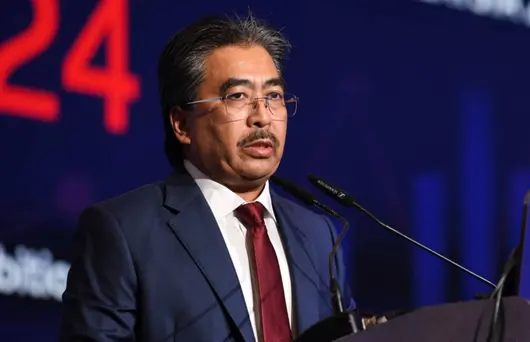
Minister of Investment, Trade and Industry of Malaysia Johari Abdul Ghani
Source: Facebook
The price floor limits demand expansion. The local sales cap depresses the domestic base on which the factory can rely. The deep manufacturing requirement raises initial fixed investment. These three conditions make the commercial closed loop originally relying on price, scale, and vertical integration difficult to operate.
Malaysian Minister of Investment, Trade and Industry Johari Abdul Ghani said: "These are precisely the conditions they cannot agree to. We must protect our automotive industry."
As of August 4, 2026, public information has not shown that BYD has officially cancelled the project. The site has cleared original oil palms and completed preliminary preparations. BYD has not announced further plans for the main project, while the Malaysian government stated that talks are still ongoing.

89 Brands Fighting for Less than 10% of the Market
While the car production line is still in negotiation, Chinese brands have already entered the streets and alleys of Malaysia.
In 2022, the share of new car registrations for Chinese brands in Malaysia was only 0.08%, with only 578 units for the year. By 2023, it rose to 1.27%. In 2024, it reached 4.01%. In 2025, it increased further to 7.61%. In the first five months of 2026, it rose to 8.92%. These figures do not include models sold under the Proton brand using Geely technology.
In 2025, OMODA JAECOO under Chery registered 17,845 units, BYD registered 14,407 units, and the Chery brand itself registered 12,942 units. All three brands entered the top ten sales by brand in Malaysia. Great Wall also sold 5,876 units.
Chinese car companies are filling product gaps with electric vehicles, plug-in hybrid vehicles, city SUVs, and new energy MPVs. The foreign brand market previously dominated by Japanese brands is now seeing new competitors.
More logos appear, but sales remain highly concentrated. According to registration data organized by the Road Transport Department (JPJ) of Malaysia, there were 98 car brands in Malaysia that registered at least one vehicle in 2025, higher than the 70 brands in 2010. However, the top five brands still occupy 84.3% of the market. Just nine brands can cover 90% of registrations, while the remaining 89 brands fight for less than 10% of the market, of which 51 brands registered fewer than 100 units for the year.

Based on 2025 overseas market sales data, Chinese car brands perform well in overseas markets
Source: Malaysia Road Transport Department
According to data from the Malaysian Automotive Association (MAA), national car sales in Malaysia in 2025 were about 820,000 units. Perodua sold 359,904 units that year, and Proton sold nearly 158,000 units. These two national brands together occupied over 60% of the market. The space left for all Chinese, Japanese, South Korean, and European foreign brands was only over 300,000 units.
Additionally, in the first half of 2026, new car registrations in Malaysia were 409,310 units. The proportion of pure electric vehicles rose from 4.3% in the same period last year to 7.8%. Growth is fast, but the market is still in the early stage driven jointly by policy and infrastructure.
As of February 5, 2026, Malaysia has built 5,624 public charging facilities, completing only 56% of the 10,000 target. Among them, DC fast charging reached 1,923, exceeding the initial target of 1,500. AC charging facilities are only 3,701, completing 40% of the 8,500 target. Residential areas, commercial districts, and local grid connections still need supplementation.

History and Reality of Local Protection Policies
Malaysia's opening to electric vehicles initially started from the import side. From 2022 to December 31, 2025, the government provided import duty and excise duty incentives for fully imported pure electric vehicles, allowing overseas brands to quickly increase models, reduce early prices, and help consumers understand electric vehicles. In 2025, the usage of electric vehicles in Malaysia increased to 44,813 units, compared to only 3,127 in 2022.
After this stage completed market cultivation, policy shifted to manufacturing. Import incentives for fully imported vehicles expired at the end of 2025. Relevant incentives for locally assembled pure electric vehicles were extended to the end of 2027. The 200,000 Ringgit CIF value and 180 kW power thresholds implemented in July 2026 further pushed fully imported vehicle models toward the high-end market.
For Chinese car companies hoping to continue competing in the 100,000 to 200,000 Ringgit price bracket, local assembly gradually changed from a choice to reduce tax burden into an important condition for staying in the mainstream market. Companies that already own Malaysian factories or can find contract manufacturers can complete the transition relatively quickly. Companies applying for large independent factories from scratch must face stricter industrial conditions.

XPeng G6
Source: CNA
This industrial policy preference has a long history. When Malaysia adjusted its National Automotive Policy in 2009, it already acknowledged that overcapacity existed domestically and explicitly retained the contract assembly system, allowing existing manufacturing enterprises to make idle capacity available to third parties to improve factory and equipment utilization. At that time, it was also stipulated that relevant models could not directly impact domestic car manufacturers' products.
More than a decade later, existing factories of EPMB, Inokom, and Stellantis have once again become entry points for foreign car companies to enter local manufacturing. The continued consideration is the same. The government hopes foreign investment brings orders and technology, and also hopes to use up already built infrastructure first, avoiding a limited market continuously replicating new idle capacity.
The Ministry of Investment, Trade and Industry of Malaysia said in a statement: "Our policy is not about closing the door, but ensuring every investment leaves deep local value, technology transfer, and sustainable employment."
Beyond industrial upgrading, protection of domestic brands is also directly written into policy interpretations. Proton and Perodua together control over 60% of the new car market. The two systems connect to a broad automotive ecosystem involving over 700,000 jobs. The government also hopes they establish their own models, technologies, and supplier systems in the early stages of electrification.

Proton e.MRS7
Source: paultan.org
Perodua has already begun to convert this policy space into real projects. In December 2025, the company launched its first pure electric vehicle, QV-E. This vehicle was developed with an investment of 800 million Ringgit and is produced in a newly built Smart Mobility Plant. The initial monthly capacity is 500 units, with a plan to increase to 3,000 units per month in the third quarter of 2026.
Zainal Abidin Ahmad, President and CEO of Perodua, said: "Currently, we can produce 500 units per month. By the third quarter of 2026, we will be able to provide 3,000 units per month."
In the early stage, QV-E is supplied by 52 Malaysian enterprises. Perodua plans to increase the number of suppliers to 70 before 2030 and raise the localization rate from over 50% in early 2026 to 70%. By June 2026, the company stated that monthly production has already exceeded 500 units. After producing body parts locally, spare parts supply and operational efficiency have also improved.

Below 100,000 Ringgit, Whose Market
To understand this price floor, one must first see what Malaysian consumers actually buy.
In 2025, Perodua sold 359,904 units, estimating a market share of 43.9%. Among them, Bezza sold 100,488 units, Axia sold 84,291 units, and Myvi sold 72,724 units. These three models were also the three most registered models in Malaysia. Their official starting prices were only 34,580 Ringgit, 22,000 Ringgit, and 46,500 Ringgit respectively.
The sales pillars of Proton are also located in the low-price bracket. In 2025, Saga sold 74,013 units, accounting for nearly half of Proton's total annual sales. The latest model's starting price is 38,990 Ringgit. X50's starting price is 89,800 Ringgit, and S70's starting price is 68,800 Ringgit. The two local brands rely not on the high-end market above 100,000 Ringgit, but on family car needs between 20,000 and 90,000 Ringgit.

Pricing and Sales of Main Models for Malaysia's Two Major Local Brands
Source: Automotive Business Review
Note: Prices are official starting or on-road prices for Peninsula Malaysia, excluding insurance; X50 and S70 sales are data for the first 11 months of 2025 announced by Proton, others are full-year 2025 data.
The price comparison of electric vehicles shows the protection direction of the policy even more clearly. Proton e.MAS 5's special listing price starts at 56,800 Ringgit; Perodua QV-E sells for 63,499 Ringgit under the battery leasing scheme and 87,499 Ringgit for full vehicle purchase. Both local enterprises can sell electric vehicles below 100,000 Ringgit, while BYD's locally assembled models are required to start from 100,000 Ringgit.

Price Floor for Local Electric Vehicles in Malaysia vs. BYD Local Assembly
Source: Automotive Business Review
This is not just for Proton defense. The larger protected object is Perodua. It is the largest car brand by sales volume in Malaysia, controlling over 40% of the national market and the largest local supply chain. The 100,000 Ringgit floor basically blocks BYD above the starting price of all existing products of Perodua, and also leaves price buffer room for Proton Saga, S70, X50 entry-level, and e.MAS 5.
Protecting domestic brands is actually to protect jobs. The minimum selling price of 100,000 Ringgit, on the surface, manages BYD's retail price, but actually it first defends Perodua's mass market. It also protects Proton and the industrial ecosystem behind the two enterprises. If companies like BYD quickly expand low-price local production with the help of tax incentives, affected will not only be the whole vehicle sales of the two local car companies but also a batch of Malaysian suppliers who have recently invested in equipment, developed products, and trained employees for electric vehicles.
From this perspective, Malaysia does not oppose BYD entering, but opposes BYD rapidly rewriting the market structure with low prices. The government hopes foreign capital brings factories, technology, exports, and jobs, but cannot let foreign capital use local incentives to squeeze domestic brands in return. BYD can stay, but must change its approach.

Exporting 40,000 Cars: How Difficult
BYD already has a factory with an annual capacity of 150,000 units in Rayong Province, Thailand. This factory started production in July 2024, producing pure electric vehicles and plug-in hybrid vehicles, simultaneously facing the Thai and other ASEAN markets. The Indonesia factory planned investment is 1 billion US Dollars, with a designed annual capacity also reaching 150,000 units. Long-term goals also include exports.
The Malaysia project plans an annual output of 50,000 units. If only 10,000 units can be sold locally, the remaining 40,000 units need to be exported. These cars will compete for the regional market jointly with BYD's right-hand drive models produced in Thailand, Indonesia, and China's local markets.
Bill Russo, CEO of automotive industry consultancy firm Automobility Limited, said: "Forcing Malaysia to become an export-based base will create duplication, not complementarity."

BYD Thailand Rayong Opens First Electric Vehicle (EV) Factory
Source: Reuters
Whole vehicle factories usually rely on domestic sales volume first to support production ramp-up, then use the remaining production for export. Malaysia's conditions pushed this sequence forward. The new factory has not yet formed a stable supply chain and scale effect but needs to rely on overseas orders to digest most of the production volume. Commercial risks are naturally higher.
Additionally, according to the general rules of origin under the ASEAN Trade in Goods Agreement (ATIGA), products usually need to reach at least 40% of ASEAN Regional Value Content (RVC) or complete specified four-digit HS code changes to obtain preferential tariffs between ASEAN member states. Specific models also need to meet corresponding product rules of origin.
Even if a car is completed in Malaysia with welding, painting, and final assembly, it does not automatically become a Malaysia-origin car eligible for preferential tariffs. If batteries, motors, electronic controls, body parts, and electronic systems mainly come from China, enterprises still need to increase materials, labor, and manufacturing value in Malaysia or other ASEAN countries to improve the likelihood of obtaining regional origin status.
This also explains the connection between complete manufacturing, local supply chains, and export requirements. Malaysia requires new factories to leave welding and painting. It is not just adding a few procedures on the production line; it also hopes more regional value is formed locally so that exported cars truly possess tariff conditions to enter the ASEAN market.

Proton e.MRS7
Source: paultan.org
Malaysia already has a car export foundation, but strengths still remain mostly with parts. According to Malaysia External Trade Development Corporation (MATRADE) data, car-related product exports in 2024 amounted to 10.37 billion Ringgit, up 2.3% year-on-year. Main products include automotive parts, bumpers, body parts, steering systems, and some plug-in hybrid vehicles. Main destinations are Singapore, Thailand, Australia, Taiwan, and Indonesia.
This means that if BYD wants to stably export about 40,000 cars from Tanjung Malim, it must convert existing parts, port, and trade advantages into whole vehicle certification, logistics, and overseas sales networks.
Local supply chain requirements will also touch upon BYD's original production mode.
BYD controls costs through high vertical integration. A 2023 breakdown study by UBS Group AG estimated that about 75% of the part value of BYD Seal comes from the group's internal system, significantly higher than Tesla Inc.'s Model 3 and VW ID.3.
Malaysia hopes its own glass, plastic, metal, electronics, and other automotive parts companies get orders. If BYD continues to rely heavily on group internal suppliers, the orders obtained by local industry are limited. However, if suppliers are changed rapidly, quality certification, price negotiation, and production adaptation need to be completed again.

Geely Already Seated at the Main Table
In the same Tanjung Malim, Proton's new energy factory faces another picture. In the factory area, white body parts are neatly arranged at the end of the inspection line. In September 2025, this factory officially came into use. The initial annual capacity was 20,000 units, producing e.MAS 7 first and reserving production space for e.MAS 5. The factory was initially designed to continue expanding to about 45,000 units.
Geely has an identity that other Chinese car companies cannot easily replicate. In 2017, Geely Holding Group acquired 49.9% of Proton shares. Malaysia's DRB-HICOM Berhad continues to hold 50.1%. Geely provides platforms, power, and new energy technology. Cars enter the market through the Proton brand. Malaysia retains the brand, production network, and local supplier system.
In May 2026, Proton announced an additional investment of 37 million Ringgit to raise the new energy factory planned annual capacity from 20,000 units to 42,000 units. At that time, the factory had 391 employees. In the first four months of 2026, 8,472 e.MAS 5 units were delivered, and Proton's new energy model total sales reached 11,617 units, an increase of 329% year-on-year. Expansion has already been supported by actual orders.

Proton e.MRS5
Source: paultan.org
Abdul Rashid Musa, Deputy Chief Executive Officer of Proton, said: "Customer demand has exceeded initial expectations, so we have accelerated the local capacity plan."
Geely and Proton cooperation has also gone beyond whole vehicle assembly. The Tanjung Malim Powertrain Plant can produce turbocharging and naturally aspirated engines, hybrid special engines, dual-clutch transmissions, hybrid transmissions, and electric drive units. Currently, engine design annual capacity is 240,000 units. Proton has cumulatively invested over 121 million Ringgit and plans to increase capacity to 400,000 units by 2028.
The factory currently employs over 500 people and cooperates with 16 suppliers, half of which are Malaysian enterprises. Over 50 Malaysian employees have gone to China for training. More importantly, parts produced in Tanjung Malin are already used in models sold by Geely to markets such as Vietnam, Mexico, and South Africa. Exports have turned from future plans into actual cargo flow.

Proton Opens R&D Facility in Hangzhou Bay, China
Source: Proton Official Website
That is to say, after Geely entered Malaysia through Proton, the local factory has integrated into its international production network. Engines, transmissions, and electric drive parts can flow across brands and markets. Malaysia gets not just an assembly line serving domestic sales.
Geely and DRB-HICOM are also promoting the Tanjung Malin Automotive High-Tech Valley. The goal is to attract about 32 billion Ringgit investment in multiple years, covering whole vehicles, suppliers, R&D, education, and park supporting facilities. This figure belongs to the long-term investment promotion target of the entire industrial park and cannot be all viewed as funds invested by Geely.
In February 2026, Zeekr, under Geely, also planned to conduct local assembly in Malaysia. Malaysia will become its first assembly market outside China. The 7X is the first confirmed model to be imported. As of August 4, 2026, the enterprise has not announced the official production time. Outsiders speculate it may be introduced as early as 2027, still awaiting company confirmation.

Chery Builds Park, More Brands Borrow Factories
In June 2026, the first phase of the Chery Smart Automotive Industrial Park completed structural topping-out. Steel frames glowed grey-white in the sunlight. The next stage will involve internal construction, production system installation, and equipment commissioning. The project is located in Lembah Beringin, Selangor, covering about 200 acres. Announced investment amount is 2.2 billion Ringgit. It will serve multiple brands in the future including Chery, OMODA JAECOO, iCAUR, and Lepas.
Zhang Guibing, Executive Vice President and General Manager of International Business Division of Chery, said: "Upon completion of the project, it will create high-value jobs, build R&D centers, and expand exports to neighboring countries."
Chery obtained manufacturing permits in June 2025, earlier than the September 2025 new rule breakpoint. Project agreements and construction progress thus enjoy stronger certainty. Multi-brand shared lines, supplier parks, and export plans also make this factory bear more regional functions than ordinary CKD projects. However, whether design capacity can be converted into stable production still needs order verification after operation in 2027.

XPeng Producing at EPMB Factory
Source: paultan.org
More Chinese car companies chose a simpler road with more investment. EPMB was originally a Malaysian automotive parts company. In recent years, it has developed its Melaka factory into a multi-brand contract manufacturing base. Great Wall Haval H6, WEY G9, MG S5 EV, and XPeng G6 have sequentially entered the production system.
In March 2026, the first locally assembled S5 EV under SAIC Motor's MG brand rolled off the line in Melaka. Initial planning monthly production was 120 to 180 units. Production in 2026 is expected to be 1,500 to 2,000 units. The long-term goal of the whole EPMB factory is an annual output of 30,000 units. This number needs to be shared by multiple brands and cannot be understood as capacity for a single MG model.
In June 2026, the first locally assembled XPeng G6 also rolled off the EPMB production line. XPeng subsequently opened local assembly version reservations in July 2026. Cooperation between the two sides also includes X9 and X9 PowerX range-extended models. XPeng reduced fixed investment for independent factory construction. EPMB increased equipment utilization by adding models.
Outside EPMB, Kulim in Kedah state also owns a more mature shared factory. Sime Darby Berhad's Inokom Corporation Sdn Bhd covers 200 acres. It has body, painting, final assembly, and centralized warehousing facilities. Over 2,700 employees are all from Malaysia and connected with 370 local suppliers.
Inokom currently produces cars for six brands including BMW, MINI, Porsche, Mazda, and Hyundai. Production volume increased from 20,500 units in 2021 to over 31,800 units in 2025. Since 2018, BMW and MINI have exported over 11,800 units of Inokom assembled models to the Philippines and Thailand. In 2026, locally assembled BMW i5 became the first pure electric vehicle assembled by BMW in the Asia-Pacific region.

Stellantis Signs Cooperation with Leapmotor, Starting Local Assembly in Gurun
Source: CNA
Inokom has cumulatively exported over 24,500 cars to the regional market. The factory also has a BMW engine production line. It demonstrates that borrowing local factories does not necessarily mean only completing the last few assembly processes. Mature contract manufacturers can also provide welding, painting, engines, quality control, supplier management, and whole vehicle exports.
Leapmotor takes another shared path. In June 2026, Stellantis began assembling Leapmotor C10 at the Gurun factory in Kedah and plans to import B10 before the end of 2026. The project investment is 2.23 million Euros for local assembly development, with another 3.1 million Euros for production line and infrastructure upgrades.
Isaac Yeo, Managing Director of ASEAN for Stellantis, said: "Leapmotor starting local assembly in Gurun is an important step for Malaysia to stand at the forefront of ASEAN electric vehicle industrialization."
This production line currently first serves the Malaysian market. Exports are still under evaluation. Leapmotor can use Stellantis' existing factories, quality systems, and employees without building welding and painting facilities for limited sales alone. Stellantis can also give existing factories new models and electric vehicle manufacturing investment.

Leaving Brands is Easy, Leaving Industry is Hard
In Malaysia, 98 brands are fighting for about 820,000 demand simultaneously. Nine brands take away 90% of sales. The market can accommodate many car models and brands, but the number of complete factories that can sustainably support is very limited.
Malaysia has 592 professional automotive suppliers, multiple free trade agreements, and a foundation in electronics and semiconductor industries. Car-related product exports have also exceeded 10 billion Ringgit. But it lacks the huge whole vehicle export scale like Thailand and the larger domestic market like Indonesia.
Thus, governments and foreign car companies jointly explored several different paths.
Entering domestic brand, powertrain, and export systems like Geely can obtain deeper industrial positions. Determining projects before rule changes and promising to build multi-brand industrial parks like Chery can continue to advance. Using existing factories of Malaysian enterprises like SAIC, Great Wall, and XPeng can reduce duplicate investment. Relying on manufacturing bases of multinational shareholders like Leapmotor can enter local production faster.

EPMB Adds MG S5 Electric Vehicle to Melaka Factory Assembly List
Source: paultan.org
BYD chose the independent factory construction model with stronger control and heavier investment, which coincidentally encountered new policy barriers. The path it usually uses in other markets is to first expand sales volume with competitive prices, then amortize manufacturing costs through scale. Malaysia, however, sets a price bottom first, then sets a local sales cap, and finally requires the factory to bear deep manufacturing and export tasks. Therefore, BYD's most proficient price war loses its room to maneuver.
For Malaysia, this set of policies also carries many risks. Excessive export requirements may lead investors to turn to other countries. Price thresholds will reduce the choice of affordable models. If domestic brands rely on protection for too long, the pressure to improve efficiency may also weaken.
At the same time, neighboring Thailand has already shown the other side of too rapid local capacity expansion.
Thailand initially attracted whole vehicle imports through subsidies while requiring participating enterprises to complete corresponding production quantities locally afterwards. By the end of 2024, relevant plans had brought about 84,000 imported pure electric vehicles. However, domestic car demand weakened, and production obligations came together.
The Thai government subsequently extended some production deadlines, temporarily postponing the pressure of compensatory capacity central release but did not end price competition. In 2025, pure electric vehicle sales and local production volume increased significantly, but the government still needed to adjust policies again at year-end through export offsets, registration extensions, and exit mechanisms.
Malaysia's vigilance also has the realistic background of BYD in Thailand.
In 2024, BYD and its distribution system in Thailand continuously offered significant discounts. Some early car buyers believed vehicles depreciated rapidly. The Thai consumer protection agency received about 70 complaints and launched an investigation. Some consumers claimed sales staff hinted prices would rise after incentives ended, but vehicle prices were subsequently reduced further. The investigation ultimately did not find BYD's discounts violated advertising law, but rapid price changes had triggered vigilance among consumers, dealers, and the government.
When whole vehicle enterprises continuously pass down price reduction pressure to the upstream, supplier profits, cash flow, and sustainable investment capabilities will all be tested.
Therefore, what Malaysia worries about is not just consumers buying cheaper cars, but BYD using tax exemptions and local assembly incentives to enter at low prices, rapidly expanding sales volume, and then passing the pressure to Perodua, Proton, local suppliers, and the distribution system. From the Thai experience, setting defense lines in advance is not baseless.

BYD Service Center and Sales Gallery in Shah Alam, Selangor
Source: CNA
Malaysia neither wants to merely become a sales point for tax-exempt imported cars nor can afford the cost of every foreign brand replicating a complete production system domestically.
The more realistic result is that Chinese car brands continue to increase, but production resources gradually concentrate in Proton, EPMB, Inokom, Stellantis, and a few large industrial parks. Multiple brands share factories, employees, and suppliers.
BYD has not officially cancelled the project, so declaring it has withdrawn from Malaysia at this time is still premature. But the original business plan has been frustrated. What it faces is not just a permit negotiation, but Malaysia's new boundary drawn for foreign automotive enterprises—come to build cars, participate in competition, but cannot pierce the defense line of local brands with low prices.
What is truly worth discussing is not whether Malaysia has reason to prevent, but whether prevention is appropriate. Malaysia chose to let local industry security take priority over price competition and consumers' short-term interests.
Main References:
1. Reuters, "Thailand to extend production timeframe for battery EVs", December 4, 2024.
2. Thailand Board of Investment, "Thailand EV Board Approves Extended Production Timeframe for BEV and Inclusion of Mild HEV in Hybrid Incentive Package to Support Industry's Electrification", December 4, 2024.
3. Reuters, "Thai EV output set to jump, sparking a price war in a bruised market", January 31, 2025.
4. Reuters, "China's intense EV rivalry tests Thailand's local production goals", July 5, 2025.
5. Thailand Board of Investment, "Thailand EV Board Adjusts EV3/EV3.5 Terms to Promote Exports as Investment in EV Supply Chain Tops 137 Billion Baht", July 30, 2025.
6. Reuters, "Thai auto sector facing crisis unless EV policy is overhauled, industry groups warn", May 14, 2026.
7. Reuters, "Thailand works on $700 million EV plan to replace 80,000 vehicles", July 23, 2026.
8. Reuters, "Malaysian carmaker Proton launches first EV plant", September 4, 2025.
9. Reuters, "Malaysia's Proton launches its first electric vehicle", December 16, 2024.
10. Reuters, "EPMB signs deal to assemble Xpeng's G6 and X9 models in Malaysia", December 15, 2025.
11. Malaysia Ministry of Investment, Trade and Industry, "MITI Reaffirms Commitment to Sustainable Automotive Growth; Clarifies BYD Investment and Sector Policies", March 31, 2026.
12. PROTON, "PROTON Accelerates EV Expansion to Cater to Demand for e.MAS Models", May 29, 2026.
13. PROTON, "PROTON Leads Malaysia's Automotive Transformation with Advanced Powertrain Hub", June 23, 2026.
14. Chery Malaysia, "Chery Reaches New Heights with Lembah Beringin Topping-Out", June 26, 2026.
15. Stellantis, "Stellantis Malaysia Officially Commences Local Assembly of Leapmotor Vehicles at Gurun Plant, Starting with the Flagship C10 SUV", June 4, 2026.
16. Sime, "Inokom Strengthens Malaysia's Automotive Assembly Capabilities Through Local Expertise and Global Partnerships", June 25, 2026.
17. Perodua, "Perodua Launches QV-E, Malaysia's First Homegrown BEV", December 1, 2025.
18. MATRADE, "Malaysian Automotive Sector Drives Export Growth at Automechanika Shanghai 2025", December 16, 2025.
19. Malay Mail, "Miti: EV Import Policy Revised After Tax Incentives End, RM200,000 CIF Threshold Set", July 8, 2026.
20. Bernama, "MITI: 5,624 Public EV Charging Units Installed Nationwide", February 5, 2026.
21. Paul Tan, "Malaysia Has Never Had More Car Brands: 98 Fought for Buyers in 2025, but 9 Still Took 90% of Sales", June 19, 2026.
22. Paul Tan, "EV Sales in Malaysia, First Half of 2026—31,738 Units, Up 85% on Last Year; Proton Drives Growth", July 13, 2026.
23. BYD Sime Motors, "BYD & Sime Motors Mark a Triple Milestone in Malaysia", August 22, 2025.
24. BYD Sime Motors, "BYD Zhengzhou's Maiden Voyage to Malaysia with a 7,000-Unit Capacity to Fulfil Malaysian Dreams", August 6, 2025.
25. Perodua, "Perodua Expects 2025 TIV to Surpass 2024, and Looks at a Better 2026", January 13, 2026.
26. PROTON, "Proton Defies Market Trends: 2025 Sales Reach 157,976 Units as Exports Hit 13-Year High", January 2, 2026.
27. Reuters, "BYD's Steep EV Discounting in Thailand Sparks Backlash, PM Seeks Assurances", July 5, 2024.
28. Reuters, "Thai Investigation Clears BYD over Discounts, Sources Say", November 29, 2024.
29. Reuters, "BYD Asks Suppliers to Cut Prices as China Auto War Intensifies", November 27, 2024.

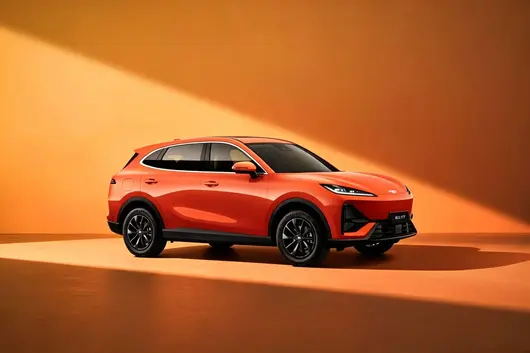
12 Ogos, Chery Fengyun T7 Mula Pra-jualan Rasmi, Keseluruhan Memperkenalkan 3 Varian, Julat Harga Pra-jualan Disyorkan dari RM109,900 - RM129,900. Dalam pasaran kereta baharu yang sedang terjerumus ke dalam persaingan 'spesifikasi berlebihan' dan 'pembuatan kereta pantas', Fengyun T7 berpegang pada falsafah pembuatan kereta jangka panjang. Melalui 2 tahun perancangan dan 3 tahun penyelidikan intensif, ia tidak hanya membawa satu sistem harga dan hak yang sangat jujur, tetapi juga menunjukkan kepada pasaran satu laluan pembuatan kereta berbeza yang 'Uji Global Terlebih Dahulu, Kemudian Sumbangan Kembali ke Negara Asal'.

Berbeza dengan model 'Pelancaran Domestik, Kemudian Ekspor' yang biasa dalam industri, Fengyun T7 tersemat dengan gen 'Kereta Global' sejak kelahirannya. Bergantung kepada sistem penyelidikan global Chery 1+7+N, kereta baharu ini dibina mengikut piawaian keselamatan 5 bintang E-NCAP versi 2026. Lawatan ke 15 negara yang mewakili telah dibuat, lebih 5000 kumpulan penyelidikan pengguna global telah disiapkan, 81 kereta ujian dikirim ke seluruh dunia untuk ujian jalan. Jumlah ujian keseluruhan melebihi 6 juta kilometer, serta 1.45 juta kilometer pengesahan ketahanan khusus, meliputi persekitaran ekstrim seperti sejuk melampau, suhu tinggi, kelembapan tinggi, dan dataran tinggi. Ia boleh menyesuaikan 95% skenario jalan raya global, benar-benar mencapai piawaian global, pengesahan global, dan perkongsian global. Model asalnya Lepas L6 telah terlebih dahulu diterima ujian sebenar di pasaran seperti Afrika Selatan dan Thailand. Majlis 'Ekspor Terbalik' ini, secara asasnya menggunakan piawaian paling ketat di seluruh dunia, untuk mengesan risiko awal bagi pengguna keluarga domestik dan memberikan perlindungan.

Reka bentuk luaran mengintegrasikan kearifan pereka global, menggunakan bahagian hadapan 'Mengawal Angin' dan jalur lampu 'Bentuk Angin'. Garisan permukaan sutera bentuk angin nampak kemas dan tahan lama untuk dilihat. Kereta baharu menawarkan 6 pilihan cat 'Keindahan Timur'. Orange 'Nyalaan' menggunakan proses penyemprotan mutiara tiga lapisan, tahan terhadap cahaya matahari dan penuaan; Bahagian dalaman 'Sayap Awan' menggunakan pelapik lembut secara meluas, menawarkan dua gaya dalaman, menggabungkan kehangatan rumah dan teknologi minimalis. Semua bahan hiasan luar dan dalam kereta telah melalui ujian UV dataran tinggi dan perubahan suhu tinggi rendah, tidak mudah tua atau pudar apabila digunakan untuk tempoh lama.

Dari segi kecerdasan, Fengyun T7 memuatkan cip terpadu kabin-pemanduan 4nm 8775 yang pertama dalam kelasnya, menyatukan kabin dan perkakasan pemanduan pintar. Skrin anti-kilau 15.6 inci 2.5K dilengkapi dengan Lingxi Smart Cabin 2.0 dan Model Besar Dou Bao, interaksi suara lancar dan semula jadi, menyokong sepenuhnya penyambungan telefon pintar arus perdana. Sistem Pemanduan Pintar Falcon 500 dilengkapi dengan 22 perkakasan pengesanan berketepatan tinggi. Ia tidak hanya mempunyai lebih 300 senario parking automatik, malah menurunkan fitur parking memori tanpa had 2km merentasi tingkat yang hanya dimiliki model mewah, menangani masalah parking di pusat beli-belah berbilang tingkat dan garaj menegak, benar-benar mencapai kebebasan parking.

Keselesaan memandu dan membonceng telah dikemaskan oleh pasukan profesional. Gandar keseluruhan 2700mm, kadar ruang dalaman 84%, lantai rata belakang membawa ruang duduk yang luas. Tempat duduk boleh dilipat untuk membentuk ruang rata besar 1955mm, memenuhi pelbagai senario kembara, berehat. Chassis dirombak oleh pasukan pakar bekas chassis Maserati, mencapai nisbah 50.8:49.2 bagi beban gandar hadapan dan belakang, dilengkapi dengan bushing penahan guncangan bersaiz besar dan brek kawalan wayar One-Box, menyeimbangkan keselesaan pemindahan bandar dan kestabilan kelajuan tinggi.

Keselamatan adalah garis dasar yang tidak boleh ditarik balik untuk kereta keluarga. Fengyun T7 membina badan sangkar seperti batu, 80% keluli kekuatan tinggi dipadankan dengan 18.84% keluli pembentukan panas, dilengkapi struktur Shotgun unik dalam kelas, rangka bumbung ganda dan bar penyerang kejut PACK. Keseluruhan siri dilengkapi 9 beg udara piawai, termasuk beg udara jauh dengan kapasiti besar 48L dan langsir udara sisi tekanan tahan lama. Bateri Rhinoceros mempunyai perlindungan perisai 31 lapisan 6D, piawaian perlindungan jauh melebihi piawaian negara. Serentak itu, Chery melancarkan jaminan keselamatan berganda yang jarang dalam industri: Bateri kuasa yang rosak akibat gangguan termal sendiri boleh diganti dengan kereta baharu; Pada tahun pertama pembelian, kerosakan akibat sistem pemanduan pintar boleh diganti sehingga RM5 Juta, menggunakan dasar kukuh untuk memancarkan keyakinan keselamatan.

Apabila banyak merek mengejar pelancaran produk baharu dengan cepat untuk mengambil pasaran, Chery memilih untuk tenang mengemaskan sebuah model global yang mampu bertahan ujian masa. Fengyun T7 yang pra-jualan bermula 10.99, menggabungkan jarak jauh tinggi, keselamatan tinggi, kecerdasan tinggi, dan ruang selesa menjadi satu, ia tidak mengejar kilat spesifikasi, tetapi dengan sokongan kepercayaan 20 Juta pengguna global, memberikan 'pilihan aman' yang tidak perlu ragu kepada pengguna keluarga. Bagi pengguna yang mengejar kualiti dan berlandaskan praktikal, ketibaan Fengyun T7, tepat pada masanya.
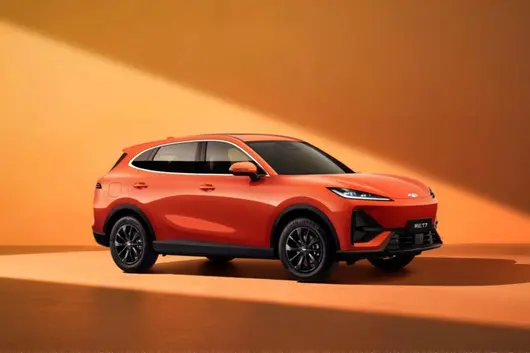

【车市百晓生】8 月 12 日,奇瑞风云 T7 正式开启预售。3 款版型,10.99 万-12.99 万,7 重购车权益。发布会主题是"慢功造好车,久等了"——在"上市即交付、交付即迭代"的行业节奏里,奇瑞喊了一句反潮流的口号。
核心叙事是"全球车"——按全球标准研发、在全球路况验证、然后回到中国。不是"卖得好再出海",是"先按最高标准造了,再回来给中国用户"。

产品定义围绕六个新刚需展开——不是炫技,是解决真实问题。
颜值。10 大全球设计中心、5000+ 用户共创。驭风前脸、风塑车身、天际霞光尾门——东方雅致+国际简约。漆面按海外耐候标准——常年日晒不褪色。内饰大面积软包+鹅卵石悬浮扬声器+菱格绗缝——10 万级难得精致。
安全。对标 2026 E-NCAP 五星、ASIL D 最高等级。2 年策划+3 年研发,81 台耐久车、600 万公里路试。80% 高强钢+18.84% 热成型钢,9 气囊。犀牛电池 IP68 为国标 96 倍。
出行。全系 65.05kWh 电池,CLTC 600km——实测 667+km,反向虚标。30% 到 80% 仅 20 分钟。全域热管理+双源热泵,-30°C 到 55°C 稳定。
智能。舱驾一体 8775 芯片,4nm/72TOPS。猎鹰 500 智驾,22 传感器,300+ 泊车场景——断头路、跨楼层、循迹倒车全支持。15.6 英寸 2.5K 大屏,CarPlay+HiCar+CarLink。
舒享。4570×1852×1694mm,轴距 2700mm。得房率 84%,后排纯平地台,放倒 1955mm 大床。9 层云感座椅带通风加热。底盘由玛莎拉蒂前专家领衔团队调校。
安心。电池兜底——热失控赔新车。智驾兜底——一年内事故最高赔 500 万。整车终身质保含三电。666 元终身保养。

同源车型 Lepas L6 已亮相米兰设计周。"反向出海"——不是卖得好再出去,是验证过再回来。
2 年策划、3 年研发、81 台耐久车、600 万公里测试、东南亚雨季+中东高温+印尼高湿极限试炼——10.99 万起的车,研发投入不输 20 万+。
奇瑞 23 年海外积累、全球研发中心和工厂。风云 T7 是这种全球积淀的产物——不是为了出海才造的车,是按全球标准造的车。

10-13 万纯电 SUV 市场,竞品为埃安 V 二代等。
风云 T7 独特优势:续航全系 600km 标配,竞品普遍 500-535km。猎鹰 500 的 300+ 泊车场景覆盖和舱驾一体芯片同价位领先。整车终身质保含三电+电池兜底+智驾兜底——10 万级顶格保障。
666 元终身保养是杀手级权益——直接打消纯电保养顾虑。


产品力在 10-13 万纯电 SUV 中很有竞争力。全系 600km+猎鹰 500+终身质保——同价位无直接对手。
"全球车快不了一点"的叙事有差异化——行业追快,奇瑞用慢做信任资产。600 万公里测试、81 台耐久车、全球极限试炼——23 年全球化护城河。
10.99 万起+7 重权益——尤其终身质保和 666 元终身保养——10 万级纯电 SUV 打出诚意牌。按全球标准造、用国民价格卖——奇瑞全球化正从"把车卖出去"变成"把标准带回来"。

In the Malaysian SUV market, many buyers compare Proton X90 and Mazda CX-8 when choosing a car. These two cars are quite close in price and positioning. Today, we will make a detailed comparison from multiple aspects to help you save time doing research.
The OTR price of Proton X90 in Malaysia is RM 106,800 - 122,800, with a total of 4 versions, including 2026 1.5T Prime X (RM 122,800), 2026 1.5T Prime (RM 116,800), 2026 1.5T Lite (RM 106,800), etc.
The OTR price of Mazda CX-8 in Malaysia is RM 165,360 - 201,360, with a total of 5 versions, including 2025 2.5T 4WD High Plus Petrol (RM 201,360), 2025 2.2L 2WD High Plus Diesel (RM 193,123), 2025 2.5L 2WD High Plus Petrol (RM 186,360), etc.
From a price perspective, the starting price of Proton X90 is indeed RM 58,560 cheaper than Mazda CX-8. If your budget is limited, Proton's entry-level version can already meet daily needs. But you should also note that the difference of a few thousand might involve trade-offs in equipment, depending on your specific needs.
Proton X90 is equipped with a 1.5L Turbo, 140 hp. Official fuel consumption 7.0 L/100km.
Mazda CX-8 is equipped with a 2.0L 4-cylinder, 170 hp. Official fuel consumption 8.0 L/100km.
In terms of power, Mazda CX-8's 2.0L 4-cylinder has 30 more horsepower than Proton X90's 1.5L Turbo. However, for daily city driving, the power of both cars is sufficient and will not feel underpowered.
Proton X90's safety rating is 5★ (ASEAN NCAP), active safety systems include ADAS (ACC, AEB, LKA, LDA, BSM, RCTA).
Mazda CX-8's safety rating is 5★ (ASEAN NCAP), active safety systems include Brand ADAS.
Both cars have the same safety rating. In this class, safety features are quite comprehensive. New cars nowadays are not lacking in safety, so there is no need to worry too much about this.
Proton X90 body length 4400 mm, trunk 400 L.
Mazda CX-8 body length 4500 mm, trunk 450 L.
In terms of space, Mazda CX-8's body is 100 mm longer than Proton X90, offering an advantage in seating space. However, Proton X90 is a bit more flexible for parking in the city, each has trade-offs.

Proton X90 adopts FWD drive mode.
Mazda CX-8 adopts FWD drive mode.
Both cars have the same drive mode, both are FWD, there will not be a big difference in daily driving experience.

Overall, Proton X90 and Mazda CX-8 are both very good models in the Malaysian market. Which one to choose mainly depends on your personal needs and budget. We recommend doing research, comparing quotes from several car dealerships, and then test driving to make a final decision. Buying a car is a big matter, spending some time doing research will never be wrong.

欧洲轮胎协会(Tyres Europe)发布了2026年第二季度及上半年的会员替换轮胎销售数据,及1-5月份轮胎进口数据。协会秘书长亚当·麦卡锡表示:“2026年第二季度欧洲替换轮胎需求走强,尤其是卡车和客车轮胎。”
欧盟市场整体复苏
乘用轮胎销量较2025年第二季度增长3%,上半年累计销量增长2%。
其中,全季轮胎再次领跑市场,季度销量增长15%,上半年增长9%;夏季轮胎销量下滑2%,持续被全季轮胎抢占市场份额;冬季轮胎季度销量微降1%,上半年累计销量仍比去年同期低5%。

本季度行驶里程下降,反映出平均燃油价格大幅上涨,以及中东持续冲突导致的消费者信心走弱。一季度进口量大幅下滑后,本季度进口出现反弹。
二季度卡客车轮胎销量增长13%,上半年累计增长7%。尽管存在地缘政治问题和燃料、能源成本高企的情况,货运活动和商业信心仍保持韧性。卡车轮胎进口在第一、二季度均大幅上升。

农业轮胎再次下滑,季度降幅为7%。不过,这一降幅较第一季度明显放缓。摩托车及踏板车轮胎季度销量增长1%,上半年累计增长4%。
中国占欧盟PCLT进口份额大幅下降
2026年7月7日,欧盟委员会结束了对中国PCLT轮胎(乘用车及轻卡轮胎)进口的反倾销调查,认定中国轮胎以倾销价格进入欧盟,并对欧盟轮胎产业造成实质性损害。
欧盟委员会对涉案产品征收4.3%至45.3%的最终关税,2026年7月8日生效,为期五年,且不追溯既往。
由于担心关税追溯,进口商在2025年前三个季度囤积库存(当时中国占欧盟进口的70%)。随着库存消耗,2026年第一季度中国轮胎进口量下降57%,份额降至42%。4-5月进口量持平,1至5月累计份额为51%。

其他来源的进口量在两个季度均增长约40%,但未能完全抵消中国的降幅。2026年1至5月,欧盟27国+英国地区的PCLT轮胎进口量同比下降6%。其中:
中国进口量下降24%,份额降至58%(2025年同期为72%),基本回到2019年的水平。

东盟供应商填补了这一空白:份额从7.4%几乎增至19.9%。泰国引领增长,进口量从200万条增至近600万条,越南进口量增长超一倍,至300万条以上。
柬埔寨从2025年的近乎零基数增至230万条,成为重要供应源;印度尼西亚进口量也有所增长。许多东盟来源的轮胎产自中国企业控股的工厂。韩国和日本的合计份额稳定在14.6%。
英国不受该关税制度约束,其从中国进口的轮胎份额保持不变(2026年约为75%),这拉高了"欧盟27国+英国"地区的整体份额。
TBR轮胎进口,东盟领先
在TBR(卡车及客车)轮胎进口中,韩国、日本和中国输给了泰国和越南。
2026年前五个月,来自非欧洲市场的TBR轮胎对欧盟27国及英国的进口量增长了近27%,第一季度和4-5月份的增长率相近。

泰国和越南目前占进口总量的近61%,高于去年同期的合计57%,远高于2019年的不到30%。五个月内,来自泰国的进口量增长了33%,来自越南的进口量增长了38%。
尽管中国的进口量增长了9%,但其份额从2025年和2019年的19%降至16%,地位有所削弱。
来自印度的进口量增长了两倍,成为第四大来源国,份额为6%。此举使其超过了埃及和韩国——这两个国家的进口量均出现下降,市场份额也大幅缩水。

欧洲卡车和客车轮胎贸易供应向东盟地区的集中度不断提高,这一趋势十分明显。自2019年以来,这种转变很大程度上是以牺牲韩国和日本等更传统的轮胎来源地为代价的。
总的来说,最新的数据勾勒出一个正在被贸易政策重塑的行业图景:需求端温和复苏,供应端则经历着剧烈的结构性洗牌——中国PCLT轮胎在欧洲的市场份额从72%骤降至58%,东盟供应商用三年时间完成了原本需要十年才能实现的份额跃升。
这场洗牌的背后,是中国轮胎企业通过海外产能布局完成的“曲线救市”。这既是对中国轮胎产业全球化能力的一次检验,也是一份关于供应链韧性的成绩单。

In Malaysia's SUV market, many buyers choose to compare Proton X90 and Honda HR-V when selecting a car. The two cars are quite close in price and positioning. Today we will make a detailed comparison from multiple aspects to help you save time on research.
In Malaysia, the Proton X90 OTR price is RM 106,800 - 122,800. There are a total of 4 versions, including 2026 1.5T Prime X (RM 122,800), 2026 1.5T Prime (RM 116,800), 2026 1.5T Lite (RM 106,800), etc.
In Malaysia, the Honda HR-V OTR price is RM 115,900 - 143,900. There are a total of 4 versions, including 2026 e:HEV 1.5L RS (RM 143,900), 2026 1.5T V (RM 137,900), 2026 1.5T E (RM 130,900), etc.
Looking at the price, the starting price of the Proton X90 is indeed RM 9,100 cheaper than the Honda HR-V. If your budget is limited, Proton's entry-level version can already meet daily needs. But you also need to note that the few thousand cheaper might involve compromises in equipment, depending on your specific needs.
The Proton X90 has a body length of 4400 mm and a trunk capacity of 400 L.
The Honda HR-V has a body length of 4500 mm and a trunk capacity of 450 L.
In terms of space, the Honda HR-V's body is 100 mm longer than the Proton X90, offering an advantage in passenger space. However, the Proton X90 is a bit more flexible for parking in the city, with each having its own trade-offs.
The Proton X90 uses FWD drive mode.
The Honda HR-V uses FWD drive mode.
Both cars use the same drive mode, both are FWD, and there will not be much difference in the daily driving experience.
Proton X90 and Honda HR-V are both mainstream choices in the Malaysian market, suitable for family use and daily commuting. If you value brand reputation and resale price more, you can prioritize the one with better reputation; if you care more about cost-performance and equipment, then choose the one with more configurations. Finally, we suggest test driving both cars, as personal experience is the most important.
In general, Proton X90 and Honda HR-V are both very good car models in the Malaysian market. Which one to choose depends mainly on your personal needs and budget. We suggest everyone do their research, compare quotes from several car dealerships, then go for a test drive to make the final decision. Buying a car is a big matter, spending some time on research will definitely not be wrong.

In the Malaysian SUV market, many buyers often compare Proton X70 and Subaru Crosstrek when choosing a car. The price and positioning of these two cars are quite close, today we will do a detailed comparison from multiple aspects, helping you save time doing your research.
The Proton X70 OTR price in Malaysia is RM 106,800 - 122,300, there are 3 versions in total, including 1.5L Standard 2WD (RM 106,800), 1.5L Executive 2WD (RM 115,800), 1.5L Premium 2WD (RM 122,300), etc.
The Subaru Crosstrek OTR price in Malaysia is RM 145,000 - 160,000, there is 1 version in total, including 2.0L e-Boxer (RM 150,000), etc.
From a pricing perspective, the Proton X70 starting price is indeed RM 38,200 cheaper than the Subaru Crosstrek. If your budget is limited, the Proton entry-level version can already meet daily needs. But also note, the few thousand RM cheaper might involve trade-offs in features, specifically depends on your needs.

Proton X70 is equipped with 1.5L Turbo, horsepower 140 hp. Official fuel consumption 7.0 L/100km.
Subaru Crosstrek is equipped with 1.5L Turbo, horsepower 140 hp. Official fuel consumption 7.0 L/100km.
Both cars use the same powertrain system, the daily driving feel is basically no difference. Fuel consumption is also similar, no need to worry too much about this.
Proton X70 body length 4400 mm, boot 400 L.
Subaru Crosstrek body length 4400 mm, boot 400 L.
The dimensions of both cars are almost the same, interior space difference is not large. For cars in this class, daily use is completely sufficient.

Proton X70 adopts FWD drive configuration.
Subaru Crosstrek adopts FWD drive configuration.
The drive configuration for both cars is the same, both are FWD, daily driving experience will not have much difference.
Proton X70 warranty 5 years/150,000km, service interval every 10,000km or 6 months.
Subaru Crosstrek warranty 3 years/100,000km, service interval every 10,000km or 6 months.
Overall, Proton X70 and Subaru Crosstrek are both very good models in the Malaysian market. Which one to choose, the key still depends on your personal needs and budget. We suggest everyone do homework well, compare quotes from a few car dealerships, then go for a test drive to make the final decision. Buying a car is a big matter, spending a bit of time doing homework will definitely not be wrong.


喺馬來西亞嘅 SUV 市場,好多買家喺揀車嘅時候都會拿 寶騰 X90 同 本田 WR-V 嚟比較。呢兩款車喺價位同定位上都好接近,今日我哋就從多個方面做一個詳細嘅對比,幫到你省返做功課嘅時間。
寶騰 X90 喺馬來西亞嘅 OTR 售價係 RM 106,800 - 122,800,總共有 4 個版本,包括 2026 1.5T Prime X(RM 122,800)、2026 1.5T Prime(RM 116,800)、2026 1.5T Lite(RM 106,800) 呢啲。
本田 WR-V 喺馬來西亞嘅 OTR 售價係 RM 89,900 - 107,900,總共有 4 個版本,包括 2023 1.5L V(RM 99,900)、2023 1.5L E(RM 95,900)、2023 1.5L S(RM 89,900) 呢啲。
從價錢睇落去,本田 WR-V 嘅入門價比 寶騰 X90 平咗 RM 16,900。講句實在,喺呢個價位段,幾千蚊嘅差距其實唔算大,關鍵始終係睇整體嘅性價比同長期使用成本。
寶騰 X90 嘅安全評級係 5★ (ASEAN NCAP),主動安全系統包括 ADAS (ACC, AEB, LKA, LDA, BSM, RCTA)。
本田 WR-V 嘅安全評級係 5★ (ASEAN NCAP),主動安全系統包括 本田 SENSING。
兩款車嘅安全評級一樣,喺呢個級數入面安全配備都算給好齊全。而家嘅新車安全性都唔差,唔使太擔心呢一點。
寶騰 X90 保養 5 年/150,000km,保養間隔 每 10,000km 或 6 個月。
本田 WR-V 保養 5 年/無限里程,保養間隔 每 10,000km 或 6 個月。
寶騰 X90 同 本田 WR-V 都係馬來西亞市場嘅主流選擇,適合家用、日常通勤。如果你更重視品牌口碑同二手價,可以優先考慮口碑好啲嗰一款;如果你更介意性價比同配備,那就揀配置更豐富嗰款。最後始終建議兩款都去試駕,親身試過先係最重要嘅。
總嚟講,寶騰 X90 同 本田 WR-V 都係馬來西亞市場好好嘅車款。揀邊一輛,關鍵始終要睇返你嘅個人需求同預算。建議大家做足功課,多比較幾間車行嘅報價,再去試駕做最終決定。買車係件大件事,花少少時間做功課絕對無錯。

Di pasaran SUV Malaysia, ramai pembeli membandingkan Proton X70 dan Subaru Forester semasa memilih kereta. Kedua-dua kereta ini mempunyai harga dan posisi yang agak hampir, hari ini kita akan buat perbandingan terperinci dari pelbagai aspek untuk membantu anda menjimatkan masa membuat kajian.
Proton X70 mempunyai harga OTR di Malaysia sebanyak RM 106,800 - 122,300, terdapat 3 versi, termasuk 1.5L Standard 2WD (RM 106,800), 1.5L Executive 2WD (RM 115,800), 1.5L Premium 2WD (RM 122,300) dan sebagainya.
Subaru Forester mempunyai harga OTR di Malaysia sebanyak RM 174,000 - 197,000, terdapat 3 versi, termasuk 2024 2.0L S EyeSight GT Edition (RM 189,538), 2024 2.0L S EyeSight (RM 177,538), 2024 2.0L L EyeSight (RM 167,538) dan sebagainya.
Dari segi harga, harga permulaan Proton X70 memang RM 67,200 lebih murah berbanding Subaru Forester. Jika bajet anda terhad, versi permulaan Proton sudah boleh memenuhui keperluan harian. Namun perlu diberi perhatian, perbezaan harga beberapa ribu itu mungkin ada kompromi pada kelengkapan, ia bergantung pada keperluan anda.

Proton X70 dilengkapi enjin 1.5L Turbo, kuasa 140 hp. Penggunaan minyak rasmi 7.0 L/100km.
Subaru Forester dilengkapi enjin 2.0L 4-cyl, kuasa 170 hp. Penggunaan minyak rasmi 8.0 L/100km.
Dari segi kuasa, enjin 2.0L 4-cyl Subaru Forester mempunyai 30 hp lebih berbanding 1.5L Turbo Proton X70. Namun semasa pemanduan harian di bandar, kuasa kedua-dua kereta ini sudah mencukupi, tidak terasa kurang tenaga.
Penarafan keselamatan Proton X70 ialah 5★ (ASEAN NCAP), sistem keselamatan aktif termasuk ADAS (ACC, AEB, LKA, LDA, BSM, RCTA).
Penarafan keselamatan Subaru Forester ialah 5★ (Euro NCAP), sistem keselamatan aktif termasuk EyeSight.
Dari segi kelengkapan keselamatan, kedua-dua kereta mendapat penarafan yang baik. Namun ADAS (ACC, AEB, LKA, LDA, BSM, RCTA) pada Proton X70 dan EyeSight pada Subaru Forester mempunyai beberapa perbezaan dari segi fungsi, jika anda mengutamakan keselamatan aktif, anda boleh bandingkan senarai fungsi kedua-dua.

Proton X70 panjang badan 4400 mm, bagasi 400 L.
Subaru Forester panjang badan 4400 mm, bagasi 400 L.
Saiz kedua-dua kereta hampir sama, ruang dalaman tidak banyak berbeza. Untuk kereta pada peringkat ini, penggunaan harian sudah mencukupi.
Proton X70 dan Subaru Forester adalah pilihan utama di pasaran Malaysia, sesuai untuk kegunaan keluarga dan perjalanan harian. Jika anda lebih mengutamakan reputasi jenama dan harga jual balik, boleh utamakan yang lebih berkualiti; jika anda lebih mengutamakan nilai dan kelengkapan, maka pilih yang lebih kaya dengan ciri-ciri. Pada akhirnya adalah disyorkan untuk memandu uji kedua-dua, pengalaman sendiri adalah yang paling penting.
Secara keseluruhannya, Proton X70 dan Subaru Forester adalah model kereta yang sangat baik di pasaran Malaysia. Memilih mana satu, asas utamanya ialah keperluan dan bajet peribadi. Disarankan buat kajian, bandingkan tawaran dari beberapa dealer, kemudian buat keputusan akhir selepas memandu uji. Membeli kereta adalah perkara penting, meluangkan masa untuk membuat kajian tidak akan salah.

In Malaysia's SUV market, many buyers compare Perodua Ativa and Mitsubishi Xforce when choosing a car. These two models are quite close in price and positioning. Today, we will make a detailed comparison from multiple aspects to help you save time doing research.
The OTR price of Perodua Ativa in Malaysia is RM 62,500 - 73,400, with a total of 3 versions, including 1.0L Turbo X (RM 62,500), 1.0L Turbo H (RM 67,300), 1.0L Turbo AV (RM 73,400), etc.
The OTR price of Mitsubishi Xforce in Malaysia is RM 109,930 - 119,930, with a total of 2 versions, including 2026 1.5L Ultimate (RM 119,930), 2026 1.5L Urban (RM 109,930), etc.
In terms of price, Perodua Ativa's starting price is indeed RM 47,430 cheaper than Mitsubishi Xforce. If your budget is limited, Perodua's entry-level version can already meet daily needs. However, also note that the few thousand less in price might involve trade-offs in features, depending on your needs.

Perodua Ativa's safety rating is 5★ (ASEAN NCAP), active safety systems include ASA 3.0 + ACC + LDA + LKA + BSM + RCTA.
Mitsubishi Xforce's safety rating is 5★ (ASEAN NCAP), active safety systems include MI-PILOT.
Both cars have the same safety rating, and safety equipment is quite complete for this level. New cars nowadays generally have good safety, so there is no need to worry too much about this.
Perodua Ativa body length is 4400 mm, trunk 400 L.
Mitsubishi Xforce body length is 4400 mm, trunk 400 L.
The dimensions of both cars are almost the same, and the interior space difference is not significant. For cars in this class, it is completely sufficient for daily use.
Perodua Ativa adopts FWD drive mode.
Mitsubishi Xforce adopts FWD drive mode.
Both cars have the same drive mode, both are FWD, so there won't be much difference in daily driving experience.

Overall, Perodua Ativa and Mitsubishi Xforce are both quite good models in the Malaysian market. Which one to choose depends mainly on your personal needs and budget. We suggest doing your research, comparing quotes from several dealerships, and then test driving to make the final decision. Buying a car is a major matter, taking time to do research will never be wrong.


[Pakar Pasaran Kereta] Great Wall Motor jualan Julai 108,067 unit, pertumbuhan tahun ke tahun 3.54%. Jan-Julai kumulatif 691,962 unit, pertumbuhan tahun ke tahun 2.64%.
Kadar pertumbuhan tidak begitu mengejutkan, tetapi strukturnya sedang membaik: bahagian kenderaan tenaga baharu meningkat, pertumbuhan luar negara 50.93%, Haval H10 prajualan 12 jam meraih 22,615 tempahan — produk baharu sedang memenuhi permintaan pasaran.

Haval: 56,272 unit, masih menjadi asas. Mempunyai sumbangan lebih daripada separuh jualan Great Wall. Prajualan H10 mula dari 214,800, 12 jam 22,600 tempahan — prestasi prajualan paling menonjol tahun ini. Meng Long PLUS, Anjing Besar terus panas terjual, teras pasaran SUV 100,000-200,000 tidak tererosi.
Tank: 17,228 unit, pertumbuhan bulan ke bulan 9.64%. Model baharu Tank 300 keluaran, mula dari 199,800, terus memperkukuh kelebihan dalam kategori off-road kuat. Pasaran SUV off-road kuat 200,000-300,000, Tank tidak mempunyai lawan sebenar.
Ora: 10,820 unit, lonjak drastik 151.63% tahun ke tahun. Kadar pertumbuhan tertinggi dalam Great Wall. Ora 5 menyelesaikan OTA kali kedua, versi hibrid keluaran. Tetapi lonjak 151% ada kesan asas rendah — asas Ora tahun lepas memang rendah.
Great Wall Pickup: 16,006 unit, pertumbuhan tahun ke tahun 16.22%. Siri Pao terus memimpin pasaran Pickup domestik, Hi4-T versi hibrid bermula pengalaman pengguna.
WEY: 7,725 unit, pertumbuhan bulan ke bulan 7.43%. V9X Edisi Keluarga baru keluaran, mula dari 316,800. Gaoshan meraih juara jualan MPV Tenaga Baharu paruh pertama tahun — sangat penting untuk WEY, membuktikan ia mempunyai kedudukan di pasaran premium. Tetapi jumlah mutlak 7,725 unit masih kecil, tidak selevel dengan Li Auto, Aito.
Haval H10: 12 jam 22,600 tempahan
Haval H10定位 "spesies baharu bentuk kotak", harga istimewa masa terhad mula dari 214,800. 12 jam 22,615 tempahan, diletakkan dalam industri keseluruhan adalah prestasi prajualan teras pertama.
H10 menyasar pasaran SUV off-road kuat, 200,000-250,000 ruang kini hanya ada Tank 300 dan Fang Cheng Bao dua pemain. H10 masuk dengan ambang lebih rendah dan rekaan lebih baharu, masa dipilih sesuai.
Tetapi ada jurang besar antara tempahan prajualan dan penghantaran sebenar. Sama ada Haval H10 boleh tukar 22,600 tempahan kepada jualan, bergantung pada kapasiti pengeluaran meningkat dan harga keluaran rasmi.

Jualan luar negara Julai pertumbuhan tahun ke tahun 50.93%, Great Wall bahagian yang berkembang paling laju.
Tindakan spesifik: Ora masuk ke Australia, Afrika Selatan, Malaysia, masuk Spain, Itali untuk uji jalan. Haval Meng Long PHEV turun dari kilang di Uzbekistan — bukan ekspor kereta lengkap, tapi pengeluaran lokal. Konvoi Tank di Kazakhstan melengkapkan pelayaran 3,220 km, brand menyokong aktiviti tempatan serentak.
Great Wall di luar negara bukan sekadar menjual kereta, tapi membina brand, membina kanal, membina kapasiti lokal. BYD dan Chery sudah berjaya, Great Wall sedang mengejar.
Penilaian Objektif
Great Wall Julai ada tiga titik cerah: Prajualan H10 meletup, pertumbuhan luar negara 51%, Ora pulih. Menunjukkan keupayaan definisi produk dan pelaksanaan globalisasi masih di tahap.
Dua perkara yang perlu diperhatian:
Pertama, kadar pertumbuhan keseluruhan tidak laju. 108,000 unit, tahun ke tahun 3.54%, berbanding BYD (419,000), Kumpulan Geely (250,000+), Chery (276,800), skala dan kadar pertumbuhan tidak berada di atas. Persaingan SUV domestik semakin sengit, teras Haval perlu dikuat secara berterusan.
Kedua, bahagian tenaga baharu boleh ditingkatkan lagi. Great Wall tidak mengeluarkan jualan tenaga baharu secara berasingan, tetapi dari struktur brand — teras Haval masih petrol dan PHEV, Tank dominan petrol, Ora EV tapi asas kecil — kadar penembusan tenaga baharu sepatutnya di bawah purata industri. Dalam konteks kadar penembusan tenaga baharu melebihi 60%, transformasi elektrifikasi perlu dipercepatkan.

Great Wall adalah syarikat yang dipacu oleh "inovasi kategori". Kejayaan Tank membuktikan ia pandai buat produk meletup di pasaran tersegmentasi. Data prajualan H10 membuktikan keupayaan ini masih ada.
Tetapi inovasi kategori ada siling: setiap pasaran tersegmentasi ada had atas. Jualan bulanan Tank 17,000 sudah bagus, ke atas lagi susah. Great Wall perlu kembali ke skala jualan tahunan 1.5 juta, yang diperlukan bukan hanya beberapa produk meletup kategori, tapi peningkatan keseluruhan kadar penembusan tenaga baharu.
Haval H10 adalah permulaan yang baik. Sama ada boleh memegang, lihat penghantaran dan reputasi selepas keluaran rasmi.
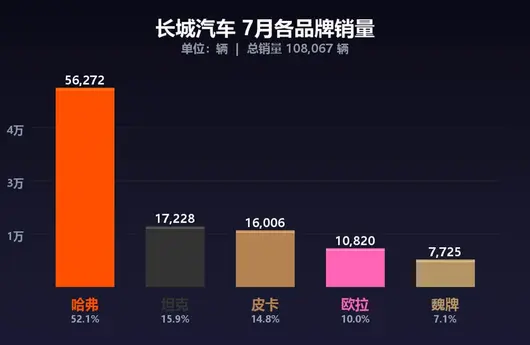

In Malaysia's SUV market, many buyers compare Perodua Aruz and Honda HR-V when choosing a car. These two models are quite close in price and positioning. Today, we will make a detailed comparison from multiple aspects to help you save time on research.
The OTR price of Perodua Aruz in Malaysia is RM 72,900 - 77,900, with a total of 2 variants, including 1.5L X (RM 72,900), 1.5L AV (RM 77,900), etc.
The OTR price of Honda HR-V in Malaysia is RM 115,900 - 143,900, with a total of 4 variants, including 2026 e:HEV 1.5L RS (RM 143,900), 2026 1.5T V (RM 137,900), 2026 1.5T E (RM 130,900), etc.
Looking at the price, Perodua Aruz's starting price is indeed RM 43,000 cheaper than Honda HR-V. If your budget is limited, Perodua's entry-level version can already meet daily needs. However, keep in mind that the cheaper few thousand might involve trade-offs in features, depending on your specific requirements.

Perodua Aruz is equipped with a 1.5L 4-cyl, 105 hp. Official fuel consumption 6.0 L/100km.
Honda HR-V is equipped with a 1.5L Turbo, 140 hp. Official fuel consumption 7.0 L/100km.
In terms of power, Honda HR-V's 1.5L Turbo has 35 more horsepower than Perodua Aruz's 1.5L 4-cyl. However, for daily city driving, both cars have sufficient power, so you won't feel it's lacking.
Perodua Aruz body length is 4400 mm, trunk 400 L.
Honda HR-V body length is 4500 mm, trunk 450 L.
In terms of space, Honda HR-V's body is 100 mm longer than Perodua Aruz, offering an advantage in seating space. However, Perodua Aruz is a bit more flexible when parking in the city, each has its trade-offs.
Both Perodua Aruz and Honda HR-V are mainstream choices in the Malaysian market, suitable for family use and daily commuting. If you value brand reputation and resale value more, prioritize the one with better reputation; if you care more about cost-performance ratio and features, choose the one with richer configurations. Ultimately, it is recommended to test drive both, as personal experience is the most important.
Overall, both Perodua Aruz and Honda HR-V are quite good models in the Malaysian market. Which one to choose depends on your personal needs and budget. It is recommended to do your research, compare quotes from several dealerships, and then test drive to make the final decision. Buying a car is a big matter, spending time doing research is never wrong.

© 2024 Bitauto.com. All Rights Reserved.
Bitauto (www.yiche.com and www.bitauto.com) is one of the most visited automotive websites in China. We provide detailed info on Chinese car brands available in your area. Please note that the information provided on this website is based on publicly available data and is for reference only. It may not be fully updated or accurate at all times.

Help us improve our website


