

Homelimau

Search History
Popular Searches
Dealer Login / Sign Up

车型概览

BMW X3 值不值得买,关键不是它看起来有多吸引,而是它能不能解决你的真实用车需求。这篇文章会把重点放在它和同级车相比的生活适配度。 近期围绕这款车的讨论包括「2026 BMW X3 30 xDrive M Sport Launched in Malaysia: 258 PS, Priced from RM358,800」,说明它在本地买家视野里仍有关注度。
价格落在 RM 325,800 - 358,800,买家可以先用它判断预算压力和同级定位。
购车价格指南
BMW X3 的购车预算可以先从 RM 325,800 - 358,800 开始衡量。这个数字真正影响的是月供、保险和现金流,而不只是展厅里的标价。
如果你在几个版本之间犹豫,可以把 2026 30 xDrive M Sport(RM 358,800)、2025 20 xDrive M Sport(RM 325,800) 放在同一张清单里比较。日常通勤买家优先看舒适与安全,常跑高速的买家则更应重视动力、辅助驾驶和座舱便利。
核心参数汇总
看 BMW X3 的核心规格,最重要是把数字翻译成生活里的感受。
0.9 kWh的电池容量,重点是能不能支撑一周通勤和周末出门。 258 Ps、400 N·m的输出,让高速并线和短距离超车更有底气。 自动变速箱 变速箱、四轮驱动布局 的设定,会影响起步顺滑度、湿地稳定感和长途巡航感。
优缺点分析
BMW X3 的优点不必夸张,真正有价值的是它能不能让日常使用更省心:预算位置清楚,方便和同级车直接比较、动力输出能支撑高速和超车需求、空间和车身尺寸便于家庭买家预判实用性。
需要留意的是,需要先确认家里、公司或常去商场的充电条件。这些不是扣分项,而是下订前应该先想清楚的生活细节。
购车常见问题解答
购买 BMW X3 前,买家最常问的不是单一规格,而是它能不能融入自己的生活。
这辆车适合谁?适合把它和同级车相比的生活适配度放在首位的买家。 家庭用户要看什么?优先看后排乘坐、儿童座椅、行李和日常上下车是否顺手。 每天开会不会麻烦?只要充电条件稳定,电动车的通勤体验通常更安静,也更容易控制日常能源成本。
竞品对比内容
把 BMW X3 放进同级车名单时,不建议只看品牌或外形。真正有用的比较顺序是:先用 RM 325,800 - 358,800 锁定预算圈、再看动力是否足够应付高速和满载、接着比较能源成本和补能便利、最后看空间是否适合家人和行李。
这样筛选出来的结果更贴近日常生活。你会更清楚它是适合城市通勤、家庭代步、长途巡航,还是更适合作为一辆讲求个性的选择。
用车全周期指南

拥有 BMW X3 的关键,是先把充电安排想清楚。家充、公司充电或商场快充只要其中一项稳定,日常体验就会轻松很多。
如果你常跑南北大道,动力和座舱舒适度会比单纯低价更重要;如果主要在市区,停车灵活性、视野和低速顺滑度会更影响心情。


The competition in the domestic passenger vehicle market has entered a deep stock game phase, and the industry elimination race continues to intensify. The system operation capability of automakers, the efficiency of new energy transformation, and the depth of globalization layout have become core indicators for measuring brand comprehensive competitiveness. With the formal disclosure of automaker production and sales data in May 2026, Changan Auto delivered a high-value monthly report card with all-domain balanced market performance. Relying on the robust trend of full-category product matrix efforts and synchronized growth in domestic and overseas markets, Changan Auto continues to firmly remain in the top tier of mainstream domestic automakers.

Overall Sales Stable with Growth, New Energy Transformation Results Highlighted
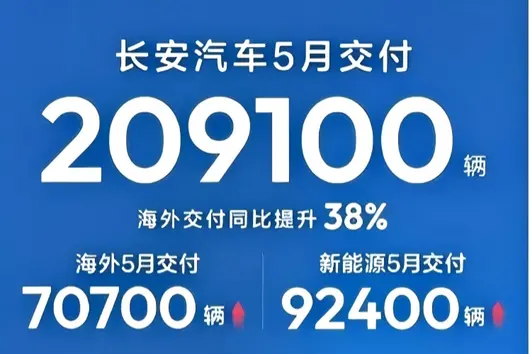
Data shows that Changan Auto's overall delivery volume in May reached 209,100 units, with single-month deliveries stably breaking through the 200,000 unit threshold, solidifying the brand's core market base. This achievement is not a temporary market surge, but a normalized result of the enterprise's all-category product collaborative efforts, continuous optimization of the vehicle manufacturing system and supply chain system, and the continuous highlight of systematic advantages.
The new energy business continues to serve as the core pillar of Changan Auto's growth. In May, the brand's new energy model deliveries reached 92,400 units, marking that its electrification transformation has fully shifted from the strategic layout stage to the harvest cycle of scaled implementation. The continuous expansion of new energy business volume effectively lifts the brand's overall growth potential, and coupled with the high-speed breakthrough of the overseas market, it has opened up a new incremental space for the brand.
 Overseas Market Storming Forward, Globalization Layout Enters Harvest Period
Essentially, the current competitive landscape of independent automakers has been reconstructed, and the market boundaries are no longer limited to domestic regional competition. Globalization operation capability and overseas market deep cultivation results have become the key core for top automakers to pull away industry gaps.
Looking at specific data, Changan Auto's overseas deliveries in May reached 70,700 units, a year-on-year increase of 38%, with single-month overseas growth rate ranking in the top tier of independent automakers. Looking at the annual cumulative performance, the growth potential is more outstanding. From January to May 2026, Changan Auto's overseas cumulative sales reached 130,531 units, a significant year-on-year increase of 167%, achieving a doubling growth. This bright data confirms the brand's strategic results of years of deep cultivation in overseas channel construction and promoting product localization adaptation, and the globalization layout has officially entered a high-speed realization period.

Sub-Brands Blossom in Multiple Areas, New Cars Overseas and Domestic Continuously Stand Out
Multi-brand and multi-category collaborative layout is the core advantage for Changan Auto to resist market fluctuations and achieve all-domain growth. The positioning of its sub-brands is precise and the racing lanes are clear, fully covering household transportation, high-end smart, commercial travel, overseas export and other sub-segments. A complete hierarchy and all-domain coverage product matrix has greatly improved the brand's market error tolerance rate and comprehensive competitiveness.
 In terms of sub-brand dimensions, Changan Qiyuan's May delivery volume was 34,528 units, among which the core AQ Series market performance was outstanding, with a year-on-year increase of 51%, and main model sales continued to maintain a hot trend. The brand's all-new Q05 model successfully landed in the Southeast Asia market, with orders breaking through 3,000 units three days after its launch in Thailand, quickly opening up the overseas sub-market and fully verifying Changan models' global product competitiveness and localization adaptation ability.

Deepal Auto continued a steady growth trend, with May sales of 33,243 units, a year-on-year increase of 30%, and the growth trend continued to be positive. The main model Deepal S05, with balanced product comprehensive strength and affordable pricing, continues to capture the mainstream household new energy market. Cumulative sales have exceeded 220,000 units, and market reputation and holdings are steadily rising. The high-end brand Avatr also achieved steady progress simultaneously, with May deliveries of 7,336 units, and recognition in the high-end smart car market continues to improve, helping Changan Auto complete its high-end market layout.

Fuel Power Iteration Upgrade, New and Old Kinetic Energy Seamless Connection
Indeed, Changan Auto's market breakthrough is not a phase dividend of a single lane, but the balanced result of fuel and new energy dual track parallel development and dual empowerment, achieving orderly iteration and collaborative growth of new and old kinetic energy.
Addressing diversified market consumer demands, Changan Auto continues to deepen traditional fuel power technology iteration and upgrade. The brand's all-new Blue Core Super Engine system has officially landed, and the 4th Generation CS75 PLUS and 4th Generation Eado dual cars simultaneously launched sales and delivery, with a starting price of 79,900 offering high market cost-performance. The new power architecture carried by the new cars achieves significant optimization of energy consumption, significantly reducing fuel consumption, with a range up to 1,500 km, effectively solving user long-distance travel energy consumption and range pain points, allowing traditional fuel models to still possess strong core competitiveness in the new energy market environment.

The commercial vehicle segment also achieved steady growth. Changan Kaicheng delivered 21,100 units in May, with new energy model deliveries increasing by 21% year-on-year. The steady progress of commercial vehicle new energy transformation complements Changan Auto's passenger and commercial combined, all-category coverage industry layout, achieving multi-track collaborative development.

Technical Strategy Deep Implementation, Laying Solid Foundation for Long-Term Development
Anyway, pure sales data can only reflect the brand's short-term market performance. The core power supporting Changan Auto to continue leading the industry stems from deep technical accumulation and long-term stable strategic layout.
Globalization strategy implementation has achieved landmark progress, and Changan Auto has officially become the global official partner of the Portugal National Team. Relying on the "All-Inclusive" globalization strategy, the brand continues to perfect overseas marketing, after-sales, and channel systems, accelerating the promotion from product export to brand, technology, and service all-around outward transformation strategy upgrade, and continuously deepening the globalization layout.
The intelligent field iteration pace continues to accelerate. Based on the "Beidou Tianshu" intelligent strategy, Changan Auto's independently developed Tianshu end-to-end intelligent driving technology is about to achieve mass production deployment, and the process of independent core technology landing continues to speed up. At the product level, the all-new Avatr 07L has completed the Ministry of Industry and Information Technology declaration, will be the first batch equipped with Huawei Qiankun ADS 5.0 high-end intelligent driving system, and凭借 advanced intelligent configuration, solidifying the brand's pre-emptive advantage in the high-end smart travel lane.
 Zhang Guan Commentary
From fuel power technology innovation to new energy scaled growth, from domestic market solid deep cultivation to overseas market leapfrog breakthrough, from product iteration upgrade to core technology independent control. Changan Auto's bright market performance in May was not accidental, but an inevitable result of the enterprise's long-term strategic adherence and system capability continuous precipitation. Against the background of industry deep reshuffle, this all-domain collaboration and multi-dimensional progression development model will continue to become the core support for Changan Auto to lead the passenger vehicle market.

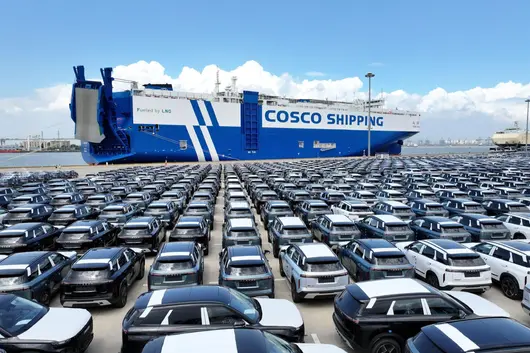
2026年5月,来自中国汽车工业协会的数据让行业的目光重新聚焦到了海外,1-5月,中国汽车累计出口已突破425万辆,同比增长超过50%,全年出口有望冲击1000万辆大关。
去年全年,中国汽车以709.8万台(中汽协数据)的出口总量,连续第三年压制日本,蝉联全球第一,超过了日本汽车1985年创下的685万台出口历史纪录。

曾经,丰田、本田、日产的标识遍布东南亚大街小巷,铃木在南亚市场独占鳌头,马自达在欧洲深受追捧,日系车依靠可靠、省油、保值的口碑,用四十年时间编织了一张覆盖全球的销售网络。
如今,这张网正在被中国车企一道一道地撕开口子。
比亚迪、吉利、奇瑞,三家年销量均超百万辆的中国车企,正在海外市场发起一场“集团冲锋”,为什么是这三家?因为这三家的国际化路径在不同的领域比较有代表性,一个靠新能源技术垂直整合强攻欧洲,一个靠全球并购编织品牌矩阵,一个靠二十年在海外建渠道的笨功夫硬生生磨出了出口量第一。
这已经不再是“中国能不能出口”的问题,而是“在中国车企的出海军团里,谁最能打”?
但与此同时,出口量的多寡只是一面镜子,最终战场的决胜在于:在比亚迪、吉利、奇瑞这三家出口“三巨头”中,谁能率先完成从“贸易输出”到“产业输出”的质变,成为新一代全球汽车巨头?这个问题的答案,将决定中国汽车工业在世界版图中的最终落子。
#海外市场,中国车接连拿下阵地#
从21世纪初进口整车、到2010年代合资建厂,中国汽车经历了一段漫长而无奈的“用市场换技术”时期,30年间,国内车企是技术输入方,反向输出基本为零。
但近几年,这样的态势正在发生扭转,2025年,中国汽车出口709.8万辆,同比增长21.1%。其中新能源出口261.5万辆,同比翻倍,占出口总量约36.8%;传统燃料汽车448.3万辆,同比下降2%,中汽协统计口径下,2025年整车出口占批发比重首次超过20%。
进入2026年,出口增速进一步加快,2026年1-5月,乘用车出口累计264.9万辆,同比增长61.7%,其中新能源乘用车出口173.2万辆,同比增长117.3%,在乘用车出口中占比已从2025年的约37%跃升至65%以上。

5月单月,新能源乘用车出口42.4万辆,同比增长112.6%,占乘用车出口的54.1%,每出口10辆车,超过5辆是电车;与此同时,出口单车均价已从五年前约10万元提升至30万元级别,出口产品加速走向中高端。
除了量的增长之外,中国车的出口市场从“单一依赖”走向“多点开花”。
2025年,中国乘用车出口前十目的国依次为:俄罗斯(55.54万辆,同比-46.1%)、阿联酋(53.97万辆,+74.3%)、墨西哥(49.08万辆,+44.2%)、英国(32.08万辆,+70.3%)、巴西(29.99万辆,+34.6%)、比利时(28.95万辆,+4.5%)、沙特(25.05万辆,+11.2%)、澳大利亚(24.62万辆,+59.3%)、哈萨克斯坦(18.70万辆,+74.3%)、伊朗(16.41万辆,-31.6%)。
除了向以俄罗斯为主体的独联体地区出口因政策和库存影响出现下滑,其他地区均呈现出增长的态势:欧洲出口151万辆、同比增长32%;向中东西亚出口127万辆、同比增长48%;向中南美出口101万辆、同比增长49%;向东南亚出口198万辆、同比大增57%;向非洲出口80万辆、同比暴涨119%。
欧洲,作为极其关键的突破性市场,2025年中国对欧盟汽车出口量首次突破100万辆,达100.62万辆,同比增长30.7%,出口额137.2亿欧元。
目前,中国是欧盟地区的第一大汽车进口来源地,同时也是欧洲汽车市场的第五大供应产地,在统计口径更广的数据当中显示,2025年中国品牌汽车在欧洲市场销量达到了81.1万辆,同比增长99%,市占率上升至7%以上。
中东,目前可以说是中国车企赚取高利润重要市场之一,2025年中国对中东区域汽车出口达140万辆,其中阿联酋57万辆与沙特30万辆合计贡献超六成份额,中国车企在该市场的份额已经接近30%,得益其高单价的市场特性,中国车企在这一市场的利润率明显高于其他国家及地区。

拉美地区的墨西哥市场,在去年超越俄罗斯,成为中国最大的出口国家,2025年墨西哥累计出口62.52万辆,墨西哥一直被视为中国车进入美洲市场的重要踏板,现如今已经有了越来越高的占比。
至于东南亚,日系车企此前已经建立起属于他们的市场壁垒,但如今中国车的加入正在侵蚀日系固有的市场份额,有数据显示,日系品牌在泰国的市场份额已经从90%下降至70%,这一数据变化的主要原因就是中国车的加入;再有印尼日系份额跌破81%,中国品牌达14%,目前中国汽车出口数量已占东南亚市场销量的27%左右。
目前,中国车企的出海基本上集中在头部几家,比如奇瑞、上汽、比亚迪、吉利等,这其中,比亚迪、奇瑞、吉利作为民企的三家代表,其实有着不同的出海策略,同时也代表着目前中国车走向海外的三种路径。
#三强逐鹿,谁能成为未来出海一哥?#
奇瑞,是目前中国车出口的一哥,也是目前中国车出口量最大的车企。
2026年第一季度,奇瑞出口39.3万辆,同比增长54%,出口占比高达67%,这样一个数字,意味着在奇瑞的销量结构里,海外销量已经超过国内,而且其出口端的单车均价达到12.16万元,比国内高出约1.47万元,海外市场的表现直接与奇瑞的盈利相挂钩。
按照不同市场区域来看,奇瑞在欧洲市场的优势较为突出,2026年1-4月,奇瑞在欧洲出口量达到14.7万辆,稳居中国品牌第一梯队,欧洲市场全年同比增长超200%,已进入英国、意大利等16个国家。

在中东市场,奇瑞一季度仍以5.6万辆的数据拿下出口榜首;而东南亚市场,2026年1-4月奇瑞出口2.4万辆,同比增长18.2%。奇瑞的出口路径以“燃油+混动”并行为主,在目前出口的车型当中,瑞虎系列在俄罗斯、拉美市场非常能打,OMODA、JAECOO则向欧洲市场加速渗透。
比亚迪在今年5月的出海量上仅次于奇瑞,大有赶超之势,先看数据,2025年比亚迪海外销量已达约110万辆,今年一季度出口约32万辆,出口占比超过46%,在此基础上,比亚迪已将2026年出口目标上调至150万辆,是三家之中目标最为激进的。

比亚迪海外出口不仅规模增长,结构也在优化,目前,巴西是其第一大海外市场,1-4月出口量高达14.8万辆,其中纯电动及插混几乎各占一半;欧洲市场1-4月出口近10万辆,同比增长29.7%;中东市场1-2月出口2.6万辆;东南亚方面,1-4月比亚迪出口3.2万辆,同比下降25%
至于吉利,其在用质量去换数量,如果单看出货量,吉利没法和奇瑞、比亚迪相比,2026年5月,吉利出口8.51万辆,同比增长183.7%;1-5月累计出口37.14万辆,同比增长157.7%,其在今年的出口数量计划为75万辆。

但值得注意的是,吉利海外单车均价已接近18万元,出口毛利比国内高出9个百分点,一季度单车均价达到11.81万元,同比提升近1.5万元,增速在自主品牌中领先。
在出海区域分布上,吉利是三家之中最均衡的,在北美墨西哥市场1.6万辆增长超3倍,在南美巴西首破7000辆;东南亚则稳居中国品牌榜首,以4.6万辆的1-4月出口量领跑中国品牌;在欧洲,吉利1-4月出口4.05万辆,同比增63.6%,出口绝对量仍在快速攀升。
#三条路径,三种打法?#
结合前面内容,我们会发现,这三家车企代表了目前国内主流的三种国际化模式,其在出海路径上各有侧重,打法截然不同。
比亚迪走的是新能源全产业链出海路线,这与其品牌发展路径不无相关,目前其出口车型以纯电和插混为主,价格区间覆盖1.5万至8万欧元。
比亚迪的逻辑很清楚:利用中国在电动化领域的全产业链优势,以技术领先和成本优势快速抢占海外市场,在欧洲和东南亚两大电动化前沿市场,比亚迪都选择自建工厂+自有渠道的重资产模式。

这种模式的优点是品牌掌控力强、利润链条完整,缺点则是投入大、回报周期长、对当地政策环境高度敏感,欧洲刚刚落地的电动汽车关税政策,这或许是比亚迪未来一段时间所面临的最大不确定性。
吉利走多品牌矩阵+海外品牌借力路线,通过收购沃尔沃、入股smart、合资成立极星,吉利已经拥有了一套横跨欧亚美的品牌矩阵。
这套矩阵让吉利可以针对不同市场派出不同品牌,欧洲由沃尔沃和极星打头阵,东南亚由吉利母品牌和宝腾冲锋,smart则担纲全球城市精品电动车,中东和拉美则由吉利母品牌和领克同步推进。

这种模式让吉利能够借助沃尔沃的经销商网络、售后体系和品牌溢价快速切入高端市场,同时用吉利主品牌和领克争夺主流市场,但多品牌协同本身就是一门高难度管理艺术,如果品牌区隔不清晰,可能出现左右手互搏。
奇瑞走高性价比燃油车+广泛渠道覆盖路线,出口主力仍以燃油SUV为主,价格区间集中在1.2万至2.5万美元。
奇瑞的优势在于,它的产品定价和发展中国家购买力高度匹配。南美、中东、俄罗斯、北非这些市场充电基建尚不完善、消费者对价格高度敏感、品牌忠诚度尚未固化,奇瑞在这里几乎没有直接的电动化竞争对手。

出口路线最简单,但也最容易被复制,当更多中国品牌带着同样高性价比的燃油车涌入这些市场时,奇瑞的先发优势迟早会被稀释,奇瑞正在尝试用星纪元等新能源产品打开新空间,但从目前的情况来看,新能源在奇瑞出口总量中的占比仍远低于比亚迪和吉利。
至于这三种出海路径,谁能赢下未来的出海C位之战,还不能轻易下结论。
奇瑞最大的优势是出口基盘最大,短时间内难以被超越,但它同样也有隐忧,比如其目前的出口结构,对中东及东欧市场依赖性较强,一旦地缘政治或贸易政策变动,冲击或许就会到来。
吉利的海外利润水平相对最高,多品牌差异化出海也最成熟,其问题在于能否在规模上与比亚迪和奇瑞形成真正的对抗,即便2026年出口目标上调至75万辆,距离比亚迪的150万辆仍有明显距离。
比亚迪的出海后劲最足,因为它不仅是卖车,而是在全球输出新能源产业链的标准,只要有新的市场建厂,“中国制造”的成本效率优势就能迅速转化为性价比优势,不确定性是比亚迪的海外品牌认知,在西欧主流消费群体中,比亚迪的品牌溢价尚未建立,一旦遇到贸易壁垒,比亚迪是否能维持在海外每辆车的利润水平,仍有挑战。
#海外本地化水平,决定未来座次#
全球最大汽车出口国,这个桂冠此前一直挂在日本汽车工业的头上,但是从2023年开始,其终于易主,中国跃升为全球最大汽车出口国,随后的2024年和2025年,这一地位持续稳固。
这是一个里程碑意义的事件,但同时我们也需要清楚的认识到,出海这件事情,仅仅是中国车走向国际化的第一步,而且就完全国际化这个问题,目前与日系等品牌也尚有差距。
为什么这么说?抛开出口量这个单一数据,决定国际化是否成功的其他数据还有很多,其中很重要的一个点就是海外产能。

通过2025年全年数据显示,中国车企的海外产量为800万辆,尽管这一数据较之前有了比较明显的上升,但是反观日本车企的海外产能,高达2040万辆,中国车虽然总量上去了,但是更多是依靠国内市场和整车出口来消化,距离日本车企那种完整的海外生产体系,距离尚远。
那么海外本土化生产究竟有多重要?
举个简单的例子就能够想明白,比如同样是开一家餐馆,纯靠进口就需要把食物做成成品,完整运输到当地,这其中不光要考虑运输的质量,同样还有更加高昂的成本;若是采用本地就有的食材,现场烹饪不仅成本更低,同时味道也会更适合本地消费者。
汽车市场同样如此,以丰田为例,根据集团对外公布消息,2025年丰田集团全球总销量达1132.3万辆,其中丰田与雷克萨斯品牌日本本土销量150.13万辆,海外销量为903.55万辆,若计入大发、日野等所有旗下品牌,整体海外销量会进一步增加,整体规模接近1000万辆,占据集团总销量的约85%。
要知道,现在的丰田尽管出现了利润的下滑,但仍然是全球最会赚钱的车企且没有之一,这其中很重要的一个点就是其遍布全球的本土化体系生态。
现阶段,我们大多自主品牌在海外的本土布局,大多还都是出口的“延伸”,比如工厂很多是组装为主,核心零部件的供应依旧是从国内出口到当地,同时销售网络也略显单薄,距离完整的产业生态还有距离。
至于后续,建立当地的系统生态自然是重点,就比亚迪来说,其已在泰国、乌兹别克斯坦、巴西拥有三座已投产的整车工厂,而匈牙利工厂,是比亚迪进军欧洲的关键一步,规划年产能15万辆,2026年Q2投产后将实现零关税入欧,成本降低20%-30%;印尼工厂同样计划在2026年投产。
比亚迪的全球工厂版图覆盖亚、欧、南美三大核心区域,是当前海外产能最活跃的中国车企。
吉利在海外拥有成熟的生产体系,马来西亚的宝腾工厂已深度本地化多年,并推出新能源宝腾X70;白俄罗斯BELGEE合资CKD工厂年产能6万辆,可直接辐射俄罗斯及东欧市场。
吉利正在入股雷诺巴西工厂,2026年有望投产吉利品牌车型,比利时、英国的工厂则更聚焦高端车型本地化,吉利并非简单新建产能,而是用存量产能改造+股权投资混合模式切入全球布局,成本可控性更强。
奇瑞在海外已建立完整的全工艺及CKD工厂矩阵,其在俄罗斯拥有四大生产基地;巴西有两家CKD工厂合计年产能23.6万辆;西班牙有欧州工业基地;伊朗、泰国、越南也均有布局,其中越南工厂号称东盟最大,奇瑞还在寻求与雷诺在哥伦比亚及阿根廷的战略同盟,进一步拓展拉美市场。
比亚迪重金投入新厂,快速抢占零关税通道;吉利擅长整合存量资源,用股权合作快速盘活现有产能;奇瑞则靠早期耕耘在重点区域形成了产能网络,三家可以说是各有侧重,针对未来,本地化速度将决定海外销量的可持续性,目前来看,比亚迪投入最重,决心最大;吉利借力最多,模式最灵活;奇瑞网点最密,但深度有待加强。

这场中国车的国际化竞赛,不是一场冲刺短跑,而是一场将跨越数年的全球马拉松。
短期看,奇瑞是现在规模化的冠军,百万辆级的出口体量、二十年的海外深耕,短期内无人能及;中期看,增速和品牌势能这两个关键点,比亚迪正在快速追赶,新能源的全球浪潮是它最大的顺风车;长期看,体系能力,是吉利的优势,品牌矩阵、沃尔沃的全球布局、宝腾的东南亚根基,构筑了一个相对平衡和抗风险的全球化系统。
最终,谁能拿下头筹,取决于一个更深层的问题,谁能在卖到全球之后,真正做到赢得人心?
中国车企已经证明了我们可以用成本和效率征服市场,但我们还没有完全证明,我们可以用品牌和信任征服用户,丰田的全球化用了半个世纪,大众的欧洲根基用了数十年,中国车企的出海才刚刚开始。
从这个意义上说,比亚迪、吉利、奇瑞之间的竞争,不是谁打败谁,而是谁能为中国汽车在全球消费者心中赢得一个真正的位置。
中国汽车出海的根本胜利,不是出口量超越日本,而是当全球消费者选择一辆高端电动车时,“中国品牌”能够与“德国造”“日本造”平起平坐,在如今这个从汽车大国走向强国的关键时期,中国车企每在海外打下一根坚实的桩,就意味着正在缩短从大国到强国的这段路程。

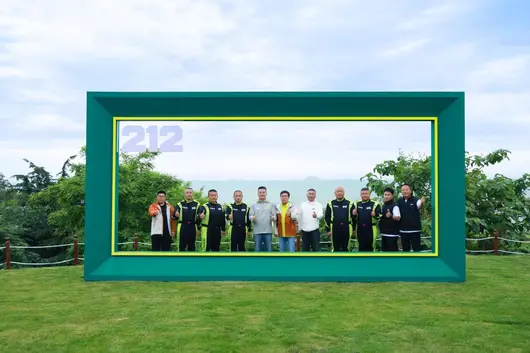
June 6, the 212 off-road vehicle Altay Rally finale ceremony landed in Qingdao. Han Qiaosheng, well-known driver Han Wei, manufacturers and amateur drivers, and event logistics teams gathered on-site to recap the just-concluded 2026 Altay International Rally. This year's event covered an extreme journey of 7,500 km. The 212 team relied on near-stock T01 mass-produced models, facing a host of 3.0T large-displacement competitors with 2.0T power, securing two wins and one runner-up in stages SS10 to SS13, winning the runner-up position in the T2.1 production factory team, and was the only participating manufacturer to achieve 100% course completion in this category. From the extreme battles on the Gobi sand fields to the glory summary at the offline ceremony, the old off-road IP proved with a practical fight: classic off-road is not just about preserving nostalgia; stock mass-produced cars can also stand on the podium of domestic top-tier rally events. The ordinary person's Altay off-road dream is taking root and sprouting.
The Altay Rally is known as the 'Eastern Dakar'. The 2026 session is considered the peak of difficulty in history by the industry. It spans across the northern and southern sides of the Tianshan Mountains, interwoven with desert, Gobi, Yardang, and shell crater road conditions. Over 60% of stages are shifting desert terrain, with partial stage surface temperatures breaking 60°C. Ultra-long distance high temperatures, continuous marches in no-man's-land caused many old teams to fail consecutively. The single ultra-long SS3 stage alone saw more than 30 vehicles suffer tire blowouts and more than 10 race cars helplessly withdraw, a tragic scene. The T2.1 category, as the core arena for factory mass-produced head-on showdown, rules clearly require that participating vehicles' power, chassis, gearbox, and other core hardware remain consistent with the mass-market production version. Only safety accessories like roll cages can be added, making it a 'strict open-air testing laboratory' for measuring a off-road vehicle's factory reliability. Against this background, 3.0T large-displacement models have long occupied category advantages. For small-displacement 2.0T models to break through was viewed by most off-road practitioners as an almost impossible task before the race.
No one expected that the old domestic off-road 212 would become the biggest dark horse of this event. The T01 battle cars that participated throughout had no heavy event modifications. The factory standard 2.0T turbocharged engine paired with ZF 8AT gearbox, assisted by BorgWarner large transfer case, 4L mode torque can be amplified 2.64 times. Under extreme operating conditions such as Gobi steep slope climbing and full-load towing, low-torque output is enough to rival large-displacement models. Long-distance crossing power remained smooth throughout, and failure rate was controlled at an extremely low level. At the body level, body-on-frame + front and rear solid axle classic hard-core architecture, combined with specialized optimized chassis tuning, faced continuous bumps and deep pit impacts, with body torsion resistance and deformation control performance standing out; full vehicle galvanized steel body calmly resisted Gobi gravel continuous scraping corrosion. Regarding safety configurations, the load-bearing capacity of the reinforced occupant cabin top increased by 16%. The cage body structure, paired with 540° panoramic imaging and emergency rescue call system, balanced extreme off-road performance with daily driving safety. This set of factory hardware configuration stood up to the solid real-world all-scenario verification in more than 7,000 km of bad road conditions.
At the finale ceremony scene, a group of Altay witnesses took turns sharing stage stories. From steady positioning earlier to preserve vehicle condition, to the latter half's devil desert stages suddenly powering up to sweep stage championships and runner-ups, drivers admitted that before the race no one was certain a 2.0T factory car could break out from a group of large-displacement opponents. The vehicle's stable and durable foundation was the key for the team to achieve full completion. Famous event host Han Qiaosheng commented on-site: "212 is a symbol of off-road nostalgia for generations of Chinese. In the past, people only remembered its classic history. Now it refreshes cognition with Altay results. Domestic hard-core off-road is breaking stereotypes with practical factory quality." Champion driver Han Wei also stated on-site: "T01 factory mechanical quality exceeded industry expectations. Relying on event data to polish products is a reliable path for domestic off-road brands to move steadily upwards."
Stage results landing in the consumer market was the heavy signal released by this ceremony. 212 officials officially announced at the event that the Altay same off-road modification kit will soon land on the brand's official mall. The kit includes chassis armor, beadlock wheels, professional off-road tires, and a full set of recovery and rescue equipment. All modification accessories have been tested on 212's 7,500 km extreme road conditions. Ordinary 212 owners do not need to modify the vehicle body significantly and can quickly upgrade off-road hardware to easily realize a cross-over switch from city commuting to wilderness crossing. 212 Off-Road Vehicle Marketing General Manager He Zhaopeng stated in the ceremony interview: "212's original intention was never to only be a race champion car, but to popularize off-road culture, giving every ordinary owner a chance for the off-road seeds in their hearts to take root and sprout. Verifying products at the Altay venue and benefiting users with modification kits is a key step for the brand to connect the race track and consumer market."
Focusing on future event layout, 212 has finalized the global off-road event map: the Altay Rally, Malaysia Sabah International Rainforest Race, Alxa T3 Challenge, and 2027 Altay Rally are all included in the participation plan, continuously practicing the 'race promoting research' product development philosophy. In addition, the brand's two heavy user support plans were launched simultaneously: the 2027 Altay amateur driver national recruitment has officially started, ordinary owners have the chance to fight in the top Altay venue as drivers; partnering with champion driver Han Wei to build the Champion Off-Road Training Academy, providing systematic off-road teaching, pre-race training, and full-chain empowerment for race participation to national owners. From professional factory teams fighting international events to cultivating amateur off-road enthusiasts, 212 is building a complete national off-road ecosystem from products, events to user training.
Looking at the domestic hard-core off-road market, many brands fall into the quagmire of 'heavy track modifications for results, mass-market vehicles disconnected from race cars', while 212 chooses to go against the grain, insisting on factory mass-produced car participation, using Altay extreme road conditions to reverse-optimize mass-produced models, and then releasing off-road technology precipitated from the track to ordinary consumers. With more than 60 years of brand accumulation, 212 has long stepped out of the single-nostalgia marketing old road. The Altay 7,500 km yellow sand trial is a self-renewal of classic domestic off-road. When modification kits enter the mall and amateur drivers can go directly to the Altay venue, 'Every 212 has an Altay dream' is no longer a slogan, but a reality that can be touched upon landing.
In the future, accompanied by multiple domestic and international top events landing successively and the off-road training academy operating on a normalized basis, 212 will also continue to convert track technology into consumer product strength, letting domestic hard-core off-road not only gallop across the Gobi and Altay but also accompany thousands of owners to rush to the distant mountains and fields.

[CNMO Tech News] On May 22, SAIC Group announced that it will welcome the delivery to its 100 millionth global user by the end of this month, becoming the first automotive group in the history of China's automotive industry to achieve cumulative production and sales exceeding 100 million vehicles.

SAIC Group
According to CNMO Tech, in 1955, Shanghai Internal Combustion Engine Parts Manufacturing Company was established; in 1958, the first Phoenix sedan was successfully prototype-made; in 1983, riding the wind of reform and opening up, SAIC pioneered industry joint venture cooperation, and the first domestic Santana was assembled successfully; in 2015, SAIC pioneered the creation of the world's first internet-connected car. For over seventy years, SAIC and numerous Chinese automakers have jointly witnessed and promoted the great journey of China's automotive industry from nothing to something, from weakness to strength, and from "following and learning" to "innovation and leadership".

SAIC is the earliest and largest Chinese automotive enterprise to "go global". In 2001, SAIC achieved passenger vehicle exports for the first time; now its products and services cover over 170 countries and regions globally, with overseas cumulative deliveries exceeding 7 million vehicles. Overseas, SAIC owns over 100 parts production bases, over 3000 dealer networks, has built 3 major R&D innovation centers including London, as well as 4 production and manufacturing centers in Thailand, Indonesia, India, Pakistan, and has established China's first and globally leading self-operated vehicle logistics fleet.
In 2025, SAIC launched the overseas "Glocal Strategy" — "Global + Local" combination strategy. Relying on profound accumulation in electric intelligent connected technology, SAIC will actively create new overseas models including SUVs, sedans, MPVs, pickups. Models equipped with the new HEV hybrid power system will cover mainstream global market segments. Disruptive technologies such as solid-state batteries will also gradually achieve implementation and application, further building a global automobile brand and localized system ecosystem.
SAIC Group stated that 100 million vehicles is a glorious milestone and even more so a new starting point for progress. Standing at this new starting point, SAIC will continue to walk the 100-million journey together with global users, jointly opening the next brilliant chapter of China's automotive industry.
© 2024 Bitauto.com. All Rights Reserved.
Bitauto (www.yiche.com and www.bitauto.com) is one of the most visited automotive websites in China. We provide detailed info on Chinese car brands available in your area. Please note that the information provided on this website is based on publicly available data and is for reference only. It may not be fully updated or accurate at all times.

Help us improve our website


