

Homeweddings

Search History
Popular Searches
Dealer Login / Sign Up

In the Malaysian SUV market, many buyers compare the Toyota Harrier and Volvo XC90 when choosing a car. These two models are quite close in price and positioning. Today, we will make a detailed comparison from multiple aspects to save you time on research.
The Toyota Harrier OTR price in Malaysia is RM 289,000 - 289,000, with a total of 1 version, including 2026 HEV 2.5L Standard (RM 289,000), etc.
The Volvo XC90 OTR price in Malaysia is RM 418,888 - 418,888, with a total of 1 version, including 2025 2.0T Ultra (RM 418,888), etc.
From a price perspective, the Toyota Harrier's starting price is indeed RM 129,888 cheaper than the Volvo XC90. If your budget is limited, Toyota's entry-level version can already meet daily needs. However, note that the few thousand difference might involve trade-offs in features, depending on your specific requirements.

The Toyota Harrier safety rating is 5★ (ASEAN NCAP), active safety system includes Brand ADAS.
The Volvo XC90 safety rating is 5★ (Euro NCAP), active safety system includes Premium ADAS.
Regarding safety features, both cars have received good ratings. However, there are some functional differences between the Toyota Harrier's Brand ADAS and the Volvo XC90's Premium ADAS. If you value active safety, you can compare the feature lists of both carefully.

The Toyota Harrier body length is 4400 mm, trunk 400 L.
The Volvo XC90 body length is 4400 mm, trunk 400 L.
The dimensions of both cars are almost the same, with little difference in interior space. Cars in this class are more than enough for daily use.

Toyota Harrier warranty 5 years/unlimited mileage, service interval every 10,000km or 6 months.
Volvo XC90 warranty 5 years/unlimited mileage, service interval every 10,000km or 6 months.

Overall, both the Toyota Harrier and Volvo XC90 are excellent models in the Malaysian market. Which one to choose depends mainly on your personal needs and budget. We suggest doing your research, comparing quotes from several dealerships, and then taking a test drive to make the final decision. Buying a car is a major matter, spending time on research will never go wrong.


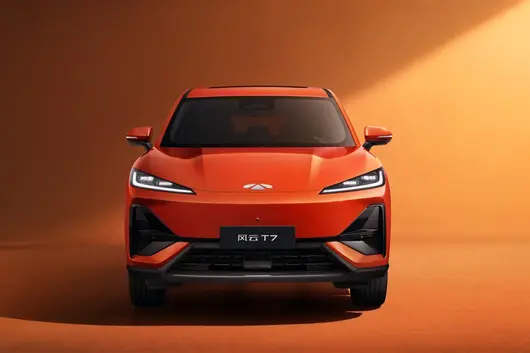
On August 26, Chery all-electric SUV Fengyun T7 launched, the new car offers 3 models, with an early trade-in price ranging from 94,900 to 115,900 yuan, and 9 tiers of purchase benefits launched simultaneously. As an all-electric SUV developed for the global market, Fengyun T7 relies on Chery's "1+7+N" global R&D system, incorporating regulatory standards and usage requirements from over 210 countries and regions into product definition, completing the full-process integrated layout from R&D, verification to quality building.

Fengyun T7 vehicle cumulative test mileage exceeds 6 million kilometers, durability special verification reaches 1.45 million kilometers, footprints cover over 100 extreme road condition environments globally, from Brazil's high-deceleration bumps, Mexico's cobblestone roads, to Germany highway's high-curvature turns and South Africa's unpaved muddy roads, achieving high-intensity coverage of over 95% of global road types. Its sibling model Lepas L6 has already launched in South Africa, Thailand and debuted at Milan Design Week.

Fengyun T7 body dimensions are 4570/1852/1694mm, wheelbase 2700mm, exterior adopts Eastern Wind-Riding Aesthetic design language, achieving balance between SUV mass and fluid posture through elements such as Wind-Riding front face, Wind-Blade headlights, Wind-Shaped satin body, and Horizon Dawn tailgate, with a drag coefficient of 0.286Cd. Interior space utilization rate reaches 84%, rear legroom 911mm, combined with pure flat floor design, rear seating experience is relatively spacious; trunk conventional volume 450L, expandable to 1550L with second-row seats folded down. Body offers 6 colors: Blazing Orange, Mountain Smoke Purple, Cloud Pink Beige, Flowing Silver, Bamboo Grey, and Ink Stone Black.

New car cockpit adopts Cloud Wing Wrap design, equipped with a 15.6-inch 2.5K HD anti-glare screen, powered by a class-leading 4nm process 8775 cockpit-integrated chip with NPU computing power reaching 72 TOPS and system response latency as low as 80ms. The infotainment system supports CarPlay, HiCar, and CarLink wireless connectivity. Lingxi Smart Cockpit 2.0 integrates the Doubao Large Model and multiple human-like voice companion modes, offering six one-click scene modes such as Rest, Awake, Sentry, and Baby. Nine-layer cloud-feel comfortable seats and 32 storage spaces meet diverse needs including daily commuting, suburban camping, and long-distance road trips.

The Falcon 500 driver assistance system equipped on Fengyun T7 integrates 22 high-precision sensors, including 3 mmWave radars, 7 cameras, and 12 ultrasonic radars, supporting over 300 full-scenario automatic parking types, 100-meter track reverse driving, and highway pilot assist functions.

The new car comes standard across all trims with a 65.05kWh Rhinoceros battery, CLTC range 600km, media actual test range reaches 681.6km, achieving "reverse mislabeling"; the battery supports fast charging from 30% to 80% SOC in 20 minutes. The new car also comes standard with a dual-source wide-temperature range heat pump air conditioning system, high-voltage PTC system, and AGS intelligent air intake grille, with range increasing by 30% in -10℃ environments. Its chassis is tuned by an international expert team, equipped with 70mm large bushings and One-Box wire-controlled braking system. The 50.8:49.2 golden axle load ratio balances driving stability and handling quality.

Fengyun T7 adopts a rock-solid body with 80% high-strength steel and 18.84% hot-formed steel. The unique Shotgun structure in its class effectively disperses collision energy, equipped with the most 9 airbags in its class. The battery features super strong 6D protection and a 31-layer "chainmail" structure. IP68 waterproofing reaches 96 times the national standard, side anti-compression is 2 times the national standard, passing 1008 hours of salt spray corrosion and 1.5 times the national standard duration fire tests.

The new car enters the market with a trade-in price starting from 94,900 yuan, offering 600km range, 8775 cockpit-driving integrated chip, and E-NCAP level safety standards simultaneously among class peers. Chery converts durability data accumulated through the global verification system into product selling points, creating a differentiated technical narrative in the 100,000 yuan class market. For family users with a budget around 100,000 yuan, primarily for city commuting, this car indeed provides a well-balanced option.

History always cycles, though the protagonists differ. Half a century ago, a petroleum crisis allowed Japanese cars, known for fuel efficiency and durability, to rise on the momentum and reshape the global automotive landscape. Half a century later, the script is strikingly similar: geopolitical conflicts disrupt energy supply, oil prices remain high. Now, standing at the center of the stage are China's new energy vehicles, holding a complete industrial chain and breaking through technologically in all aspects.

With the continuous development of new energy technology, application scenarios and capabilities are becoming wider and stronger. (Photo - Sun Wenjian)
01. Chinese Electric Vehicles Welcome New OpportunitiesEarly this summer, from the British Isles to the US West Coast, the author was repeatedly asked by locals, academics, and industry professionals: "Is it actually easy to drive new energy vehicles? How did China promote them?" Regardless of nationality or social class, the desire for low-cost mobility is felt worldwide.
What stirs all this is just two words: Oil Prices. Over the past six months, global refined oil prices have cumulatively risen by more than 30%. The shock to the supply side has not eased, and cost pressure is being transmitted to every ordinary user. Scott, a business consultant living in London, confessed to the author: "Sustained geopolitical conflicts directly drive up household energy and vehicle bills. The cost of using fuel vehicles has become a real pain point for Western families."

It's not just cars. Based on automotive supply chains, Chinese automakers are starting to manufacture robots. (Photo - Sun Wenjian)
According to the International Energy Agency (IEA) report, due to the situation in the Middle East, global oil supply decreased by an average of 3.9 million barrels per day. The Brent crude oil average price in April was $120.36 / barrel, a surge exceeding 62%. Financial institutions judge: High oil prices will become a medium-term norm; the era of cheap oil is hard to return to.
Europe, which once took the lead in setting targets for banning fuel vehicle sales, previously saw slow progress in electrification transformation due to lagging infrastructure, high costs, and conservative consumer concepts. However, the continuous impact of high oil prices is breaking this deadlock, turning electrification from a "policy option" into a "market necessity".

The Delivan brand, making its debut in Europe, designed for UK standards, has over 6,000 data collection points on the whole vehicle. (Photo - Li Xiyan)
This scene is so similar to the oil crisis of the 1970s: Back then, oil prices soared, completely crushing the dominance of American large-displacement fuel vehicles. Japanese small cars rose on the momentum with fuel-saving advantages, completing a global layout. But unlike the single product advantage of Japanese cars back then, the rise of China's new energy vehicles relies on the synergistic advantage of a closed-loop industrial chain, controllable autonomous technology, and comprehensive scenario coverage. Its foundation is steadier, barriers are deeper, and vitality is stronger.
For ordinary consumers, electric vehicles are the optimal solution for compressing vehicle usage costs. For the country, it is a strategic tool to reduce reliance on foreign oil and ensure energy security. For the industry, it is the core breakthrough for China's automotive sector to overtake on a new track and achieve global leadership. Under high oil prices, the consumption value, strategic value, and industrial value of China's new energy vehicles are becoming increasingly significant.
02. When Low Oil Prices Are No Longer EternalBefore this round of significant oil price increases, the vast majority of global markets took for granted a premise: the convenience of fuel vehicles is irreplaceable, and promoting electric vehicles is not a must. But everyone ignored that this "stability" was built on a fragile balance of sufficient oil supply and low prices.
Malaysia's oil import dependence rose from 19% to 32% in 2024, causing a sharp increase in fiscal subsidy pressure; Thailand's net energy imports are expected to account for 5.5% of GDP in 2025, with the economy highly dependent on oil; Chile relies on energy imports; high oil prices have severely hit copper mine mining and transportation.

Oil prices rose by more than 30% within half a year, making the increasingly heavy bill a real pain point for ordinary families. (Photo - Li Xiyan)
Long-term oil price subsidies have continuously squeezed public fiscal expenditures such as education, healthcare, and infrastructure. Once geopolitical conflicts break the original balance, the cost of maintaining low oil prices has become unsustainable. For ordinary consumers, when the cost of filling a tank continues to rise, shifting to more economical and stable electrified mobility becomes a natural choice.
Before this, long-term stable oil prices gave governments little motivation to invest in new electrification infrastructure like charging pile construction and grid expansion. Now, "investing funds in electrification future is better than fuel subsidies" has become a policy consensus for more and more countries.
When the author communicated with energy and public policy experts at the University of Oxford, scholars focused on China's new energy promotion path: Are subsidies for consumers or enterprises? How to solve the lack of charging piles? Vehicle reliability and residual value?

Buildings hundreds of years old, narrow roads, old power grids were once reasons hindering many countries from choosing electric vehicles. (Photo - Li Xiyan)
Changes on the demand side are also clear. The vehicle usage anxiety spawned by high oil prices has become a hot topic on global social platforms. Young consumer groups' acceptance of new energy and intelligent mobility has increased significantly, opening the most critical market entry for China's new energy vehicles.
Gary Miller, former Lord Mayor of Liverpool, told the author: "When I attended the Shanghai Auto Show three years ago, I was already impressed by the product power of China's new energy vehicles. Unfortunately, I couldn't buy a desired model back then. Now, watching China's new energy vehicles go global, I have gradually waited for a mature opportunity to buy a car."
A global reconstruction of transportation driven by high oil prices is quietly happening. China's new energy vehicles, standing at the center of the wave, not only caught the trend but also, relying on hard power, became the definers of the trend.
03. From Following to LeadingThe new normal of high oil prices brought by the Middle East situation has become the strongest catalyst for China's new energy vehicles accelerating overseas expansion. Zhu Jiangming, founder of Leapmotor, frankly told the author: "Global crude oil supply tension has directly boosted the market demand for electric vehicles. The company's overseas exports in the first quarter of this year far exceeded expectations, and we are confident in completing an export target of 150,000 units for the full year."
In 2025, China's automobile exports reached 7.098 million units, among which new energy vehicle exports reached 2.615 million units, a year-on-year surge of 103.7%, achieving high-quality overseas expansion with increased volume and value. From autonomous and controllable battery, motor, and electronic control systems, to comprehensive leadership in smart cockpits and advanced assisted driving, China's new energy vehicles have completed the transition from "following" to "leading," Models like BYD ATTO 3 and SAIC MG4 EV have successively become blockbuster products in multiple global markets.

It's not just on the ground. Through flying cars, Chinese automakers are beginning to layout a broader transportation space. (Photo - Li Xiyan)
In the hybrid track once monopolized by Japanese brands for a long time, Chinese brands have achieved a thorough overtake. Ren Xiangfei, Chief Engineering Technical Scientist of Geely Automobile Group, explained to the author using Geely i-HEV Zhiqing hybrid as an example: "Unlike the Japanese power split route of 'fuel car plus electricity', China's hybrid focuses on drive as the core, where the motor and engine can decouple and work independently, balancing ultimate energy saving with powerful dynamics, completely breaking the Japanese technological monopoly lasting for decades."
Zhao Fucheng, CTO of HaoSi Power, told the author: "Chinese enterprises have achieved global leadership in motor efficiency, battery cost control, and thermal efficiency management. Combined with internet of vehicles and AI energy management systems, they can provide users with a 'personalized' intelligent driving experience."
Currently, mainstream Chinese automakers like Geely, Changan, and Chery have all launched independently developed high-efficiency hybrid solutions. Fuel consumption and thermal efficiency performance remain firmly in the global first tier.

From components to complete vehicles, China's advantages are becoming increasingly significant. (Photo - Li Xiyan)
Volkswagen China Executive Vice President and CARIAD China CEO Han Sichu straight said, "The Chinese market has become the global innovation center for smart electrification. The competition rhythm of global new energy vehicles is being defined by China. Transnational automakers must establish core R&D and operational capabilities in China to seize this era's opportunity."
Now, more and more foreign brands are actively carrying out deep strategic cooperation with Chinese automakers: Leapmotor partners with Stellantis, relying on Chinese technology to leverage global channels; Dongfeng and Stellantis jointly produce new energy models for Jeep and Peugeot brands, supplying the global market. Chinese technology, Chinese standards, and Chinese solutions are becoming the mainstream choice for global automotive electrification transformation.

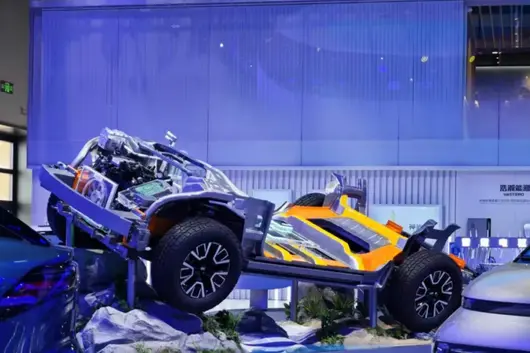
Chinese supply chain vehicles holding core technology have opened up broader global cooperation. The image shows the skateboard chassis created by Times Intelligent. (Photo - Li Xiyan)
As a leading global power battery enterprise, CATL's voice is getting louder and louder, at the previous Beijing Auto Show, launched five new battery products at once, including a new charging network; Almost at the same time, announced mass production cooperation with local Turkish electric vehicle Togg on the 'Rock Solid' chassis.
It's not just market share at the production end; CATL is also guiding global standards for the industrial chain, such as the carbon neutrality issue that all power battery enterprises are extremely concerned about. CATL has given its own solution.
What is rare is that from 2022 to 2025, industry demand exploded, and CATL's theoretical carbon emission total in core operations more than doubled. By common sense, capacity expansion and emission increase are inevitable laws. But CATL ultimately achieved net zero in core operations through engineering means. Carbon emission intensity per unit product decreased by about 77% compared to 2022, and unit energy consumption dropped to half of the industry average level.
Achieving carbon neutrality while business grows at a high speed proves that green and development can be completely achieved together.
From breaking through at a single point to leading the entire industrial chain, China's new energy vehicles, relying on this hardcore confidence, have found their footing in the turbulent times of high oil prices.
04. How to Break the Market Share Ceiling?Behind the high-speed growth, there are hidden concerns—the current high-speed growth of automobile exports may encounter a bottleneck soon.

Based on the advantages of the complete industrial chain, some car brands have targeted overseas since their inception. (Photo - Li Xiyan)
There is a natural ceiling of about 25% for the overseas market share of a single country brand. Roland Berger, after reviewing the history of the global automotive industry over the past century, estimated that in 2030, Chinese automakers' overseas sales could reach 7.5 to 10 million units, with market share between 15% and 20%.
Chinese automakers' globalization is mostly in the transition stage from assembly production to local operation. Insufficient localization leads to unsustainable cost advantages, fragile supply chains, and weak brands, becoming a core bottleneck.

New energy vehicles have become the core of incremental growth in China's automobile exports. (Photo: Xinhua Publishing House)
The past light-asset agency model has exposed numerous hidden dangers: stockpiling goods for volume, lack of terminal control, absent after-sales services, which will eventually overdraw brand reputation and miss market dividends. In this round of going overseas, Chinese automakers must take the long route of high-quality localization.
For this, Roland Berger Global Senior Partner Zheng Yun judges that in the next one to two years, China's automobile exports may enter a brief platform period. The key to breakthrough lies in completely shifting from "Made in China" to "Global Operation".

Relying on the synergistic advantages of a complete industrial chain closed loop, controllable autonomous technology, and comprehensive scenario coverage, China's new energy vehicles are starting to rise globally. (Photo - Li Xiyan)
Geely reached deep cooperation with Proton in Malaysia and built a joint venture factory in Brazil, relying on local resources to achieve a dual rooting of industrial chain and brand; In April, in Birmingham, UK commercial vehicles, Chery Commercial Vehicles' new brand DELIVAN landed in Europe. DELIVAN CEO Yang Junling told the author: "The company implements the model of 'UK definition, German engineering, European standards, local operation', builds local R&D and operation teams, creates a cross-border ambassador matrix, resonates with the European market with green concepts, abandons low-price competition, and builds high-end brand barriers with trust and localization."

Chinese technology, cross-national design, global products, such operations are becoming increasingly common. (Photo - Li Xiyan)
ConclusionHistory rhymes, but will not simply repeat. The oil crisis 50 years ago achieved the glory of Japanese cars; now high oil prices are achieving China's new energy vehicles. This is not an accidental trend, but the inevitability of China's automobiles deep cultivation for decades.
Text by | Li Xiyan • Huasheng
Editor | Heisong


喺馬來西亞嘅 SUV 市場,好多買家喺揀車嘅時候都會拿本田 WR-V 同斯巴魯 Forester 來做比較。這兩款車喺價位同定位上都幾接近,今日我哋就從多個方面做一個詳細嘅比較,幫你節省咗做功課嘅時間。
本田 WR-V 喺馬來西亞嘅 OTR 售價係馬幣 89,900 - 107,900,合共有 4 個版本,包括 2023 1.5L V(馬幣 99,900)、2023 1.5L E(馬幣 95,900)、2023 1.5L S(馬幣 89,900)等等。
斯巴魯 Forester 喺馬來西亞嘅 OTR 售價係馬幣 174,000 - 197,000,合共有 3 個版本,包括 2024 2.0L S 全視線 GT Edition(馬幣 189,538)、2024 2.0L S 全視線(馬幣 177,538)、2024 2.0L L 全視線(馬幣 167,538)等等。
由價錢睇落嚟,本田 WR-V 嘅起步價確實比斯巴魯 Forester 平咗馬幣 84,100。如果你預算有限,本田嘅入門版已經可以滿足日常需求。但都要注意,便宜嗰幾千蚊,可能喺配備上會取捨,具體要看你嘅需求。

本田 WR-V 嘅安全評級係 5★ (東協汽車安全評測),主動安全系統包括本田感知。
斯巴魯 Forester 嘅安全評級係 5★ (歐洲汽車安全評測),主動安全系統包括全視線。
安全配備方面,兩款車都拿到咗唔錯嘅評級。不過本田 WR-V 嘅本田感知同斯巴魯 Forester 嘅全視線喺功能上有啲分別,如果你比較重視主動安全嘅話,可以仔細比較一下兩者嘅功能列表。

本田 WR-V 採用前輪驅動驅動方式。
斯巴魯 Forester 採用前輪驅動驅動方式。
兩款車嘅驅動方式一樣,都係前輪驅動,日常駕駛感受唔會有太大分別。

本田 WR-V 同斯巴魯 Forester 都係馬來西亞市場嘅主流選擇,適合家庭使用、日常通勤。如果你更看重品牌口碑同二手價,可以優先考慮口碑更好嗰款;如果你更在意性價比同配備,那就揀配備更豐富嗰款。最終都係建議兩款都去試車,親身經歷先係最重要嘅。

總來講,本田 WR-V 同斯巴魯 Forester 都係馬來西亞市場幾唔錯嘅車款。揀邊一輛,關鍵仲要睇你嘅個人需求同預算。建議大家做好功課,多比較幾間車行嘅報價,再去試車做最終決定。買車係件大事,花啲時間做功課絕對唔會錯。


Di pasaran SUV Malaysia, ramai pembeli membandingkan Proton X90 dan Mitsubishi Xforce semasa memilih kereta. Kedua-dua kereta ini agak dekat dari segi harga dan kedudukan pasaran. Hari ini kami akan membuat perbandingan terperinci dari pelbagai aspek untuk membantu anda menjimatkan masa membuat kajian.
Harga OTR Proton X90 di Malaysia ialah RM 106,800 - 122,800, terdapat keseluruhan 4 varian, termasuk 2026 1.5T Prime X (RM 122,800), 2026 1.5T Prime (RM 116,800), 2026 1.5T Lite (RM 106,800) dan lain-lain.
Harga OTR Mitsubishi Xforce di Malaysia ialah RM 109,930 - 119,930, terdapat keseluruhan 2 varian, termasuk 2026 1.5L Ultimate (RM 119,930), 2026 1.5L Urban (RM 109,930) dan lain-lain.
Dari segi harga, harga permulaan Proton X90 memang lebih murah RM 3,130 berbanding Mitsubishi Xforce. Jika bajet anda terhad, varian permulaan Proton sudah boleh memenuhi keperluan harian. Tetapi perlu diingat, beberapa ribu ringgit yang lebih murah itu mungkin memerlukan kompromi dari segi kelengkapan, bergantung pada keperluan anda.

Proton X90 ditenagakan oleh 1.5L Turbo, kuasa 140 hp. Penggunaan minyak rasmi 7.0 L/100km.
Mitsubishi Xforce ditenagakan oleh 1.5L Turbo, kuasa 140 hp. Penggunaan minyak rasmi 7.0 L/100km.
Kedua-dua kereta menggunakan sistem kuasa yang sama, rasa memandu harian pada dasarnya tiada perbezaan. Dari segi penggunaan minyak juga hampir sama, tidak perlu terlalu ragu-ragu tentang hal ini.

Proton X90 panjang badan 4400 mm, bagasi 400 L.
Mitsubishi Xforce panjang badan 4400 mm, bagasi 400 L.
Saiz kedua-dua kereta hampir sama, ruang dalaman tidak banyak perbezaan. Kereta pada tahap ini, penggunaan harian sudah cukup.

Proton X90 dan Mitsubishi Xforce kedua-duanya pilihan utama di pasaran Malaysia, sesuai untuk kegunaan keluarga dan perjalanan harian. Jika anda lebih memutamakan reputasi jenama dan harga pasaran kedua, anda boleh memberi keutamaan kepada model yang lebih baik reputasinya; jika anda lebih mengambil berat tentang nisbah harga-kualiti dan kelengkapan, maka pilihlah model yang lebih banyak konfigurasi. Akhir sekali disyorkan kedua-dua model untuk dicuba memandu, pengalaman peribadi adalah yang paling penting.

Secara keseluruhannya, Proton X90 dan Mitsubishi Xforce kedua-duanya model yang bagus di pasaran Malaysia. Memilih yang mana satu, kuncinya bergantung pada keperluan peribadi dan bajet anda. Kami cadangkan anda membuat kajian, bandingkan beberapa tawaran dari pengedar kereta, kemudian cuba memandu untuk membuat keputusan akhir. Membeli kereta adalah perkara besar, menghabiskan masa membuat kajian tidak akan salah.


喺馬來西亞嘅 SUV 市場,好多買家喺揀車嘅時候都會拿 Perodua Aruz 同 Proton X50 做比較。呢兩款車喺價位同定位上都好接近,今日我哋就從多個方面做一個詳細嘅比較,幫你省返做功課嘅時間。
Perodua Aruz 喺馬來西亞嘅 OTR 售價係 RM 72,900 - 77,900,一共有 2 個版本,包括 1.5L X(RM 72,900)、1.5L AV(RM 77,900) 等。
Proton X50 喺馬來西亞嘅 OTR 售價係 RM 89,800 - 113,300,一共有 4 個版本,包括 1.5T Executive(RM 89,800)、1.5T Premium(RM 101,800)、1.5T Flagship(RM 113,300) 等。
由價錢睇,Perodua Aruz 嘅起步價確實比 Proton X50 平咗 RM 16,900。如果你預算有限,Perodua 嘅入門版已經可以滿足日常需求。不過都要注意,平嗰幾千蚊,可能喺配備上會有取捨,具體睇你嘅需求。

Perodua Aruz 採用 FWD 驅動方式。
Proton X50 採用 4WD 驅動方式。
Perodua 嘅 FWD 同 Proton 嘅 4WD 喺操控上會有唔同感受,建議試車對比。
Perodua Aruz 保修 5 年/150,000km,保養間隔 每 10,000km 或 6 個月。
Proton X50 保修 5 年/150,000km,保養間隔 每 10,000km 或 6 個月。
呢兩款車嘅保修條件一樣,呢方面唔使糾結。實際保養成本仲要睇品牌嘅服務網絡同零件價格,建議去車友群問下真實車主嘅經驗。

Perodua Aruz 同 Proton X50 都係馬來西亞市場嘅主流選擇,適合家庭使用、日常通勤。如果你更看重品牌口碑同二手價,可以優先考慮口碑更好嗰一款;如果你更在意性價比同配備,那就揀配置更豐富嗰款。最後仲係建議兩款都去試車,親身體驗先係最重要嘅。

總嚟講,Perodua Aruz 同 Proton X50 都係馬來西亞市場幾唔錯嘅車款。揀邊一部,關鍵仲係要睇你嘅個人需求同預算。建議大家做好功課,多比較幾間車行嘅報價,再去試車做最終決定。買車係件大事,花少少時間做功課絕對唔會錯。


In Malaysia's SUV market, many buyers compare Perodua Aruz and Chery Tiggo Cross when choosing a car. These two models are quite close in price and positioning. Today we will conduct a detailed comparison from multiple aspects to save you time on research.
The OTR price of Perodua Aruz in Malaysia is RM 72,900 - 77,900, with a total of 2 versions, including 1.5L X (RM 72,900), 1.5L AV (RM 77,900), etc.
The OTR price of Chery Tiggo Cross in Malaysia is RM 88,750 - 99,750, with a total of 2 versions, including 2025 HEV 1.5L CSH (RM 99,750), 2025 1.5T Standard (RM 88,750), etc.
From a price perspective, the starting price of Perodua Aruz is indeed RM 15,850 cheaper than Chery Tiggo Cross. If your budget is limited, Perodua's entry-level version can already meet daily needs. However, note that saving a few thousand comes with potential trade-offs in features, depending on your specific needs.
Perodua Aruz comes with a 1.5L 4-cyl engine, 105 hp. Official fuel consumption 6.0 L/100km.
Chery Tiggo Cross comes with a 1.5L 4-cyl engine, 105 hp. Official fuel consumption 6.0 L/100km.
Both cars use the same powertrain system, the driving feel is basically no different. Fuel consumption is also similar, no need to worry too much about this.
Perodua Aruz body length 4400 mm, trunk 400 L.
Chery Tiggo Cross body length 4400 mm, trunk 400 L.
The dimensions of both cars are almost identical, interior space difference is not significant. For this level of cars, daily use is completely sufficient.
Perodua Aruz adopts FWD drive mode.
Chery Tiggo Cross adopts FWD drive mode.
Both cars have the same drive mode, both are FWD, daily driving feel will not be much different.

Perodua Aruz warranty 5 years/150,000km, maintenance interval every 10,000km or 6 months.
Chery Tiggo Cross warranty 3 years/100,000km, maintenance interval every 10,000km or 6 months.
Overall, Perodua Aruz and Chery Tiggo Cross are both very good models in the Malaysian market. Which one to choose depends on your personal needs and budget. We recommend doing your research, comparing quotes from several dealers, and then test driving to make the final decision. Buying a car is a big matter, spending time doing research will never be wrong.

在马来西亚的汽车市场,很多买家在选车的时候都会拿 Mercedes-Benz GLC 和 Porsche Cayenne 来做比较。今天我们从多个方面做一个详细的对比,帮你省下做功课的时间。

Mercedes-Benz GLC 在马来西亚的 OTR 售价是 RM 336,888 - 336,888,一共有 2 个版本,包括 GLC 200(RM 290,000)、GLC 300(RM 340,000) 等。
Porsche Cayenne 在马来西亚的 OTR 售价是 RM 609,000 - 1,200,000,一共有 3 个版本,包括 2025 Sportback 2.0T quattro S line(RM 442,112)、2026 Cayenne 3.0T(RM 609,000)、2026 Cayenne S 4.0T(RM 1,200,000) 等。
从价钱来看,Mercedes-Benz GLC 的起步价确实比 Porsche Cayenne 便宜了 RM 272,112。如果你预算有限,Mercedes-Benz 的入门版已经可以满足日常需求。但也要注意,便宜的那几千块,可能在配备上会有取舍,具体要看你的需求。

Mercedes-Benz GLC 车身长 4400 mm,后备箱 400 L。
Porsche Cayenne 车身长 4400 mm,后备箱 400 L。
两款车的尺寸几乎一样,车内空间差别不大。这个级别的车,日常使用完全够用。

Mercedes-Benz GLC 保修 3年/100,000km,保养间隔 每10,000km或6个月。
Porsche Cayenne 保修 3年/100,000km,保养间隔 每10,000km或6个月。
两款车的保修条件一样,这方面不用纠结。实际保养成本还要看品牌的服务网络和零件价格,建议去车友群问问真实车主的经验。
Mercedes-Benz GLC 和 Porsche Cayenne 都是马来西亚市场的主流选择,适合家庭使用、日常通勤。如果你更看重品牌口碑和二手价,可以优先考虑口碑更好的那一款;如果你更在意性价比和配备,那就选配置更丰富的那款。最终还是建议两款都去试驾,亲身体验才是最重要的。
总的来说,Mercedes-Benz GLC 和 Porsche Cayenne 都是马来西亚市场很不错的车型。选择哪一辆,关键还是要看你的个人需求和预算。建议大家做好功课,多比较几间车行的报价,再去试驾做最终决定。买车是件大事,花点时间做功课绝对不会错。

在马来西亚的SUV市场,很多买家在选车的时候都会拿 Volvo XC60 和 Mercedes-Benz GLC 来做比较。这两款车在价位和定位上都蛮接近的,今天我们就从多个方面做一个详细的对比,帮你省下做功课的时间。
Volvo XC60 在马来西亚的 OTR 售价是 RM 328,888 - 328,888,一共有 1 个版本,包括 2025 2.0T Core(RM 328,888) 等。
Mercedes-Benz GLC 在马来西亚的 OTR 售价是 RM 336,888 - 336,888,一共有 2 个版本,包括 GLC 200(RM 290,000)、GLC 300(RM 340,000) 等。
从价钱来看,Volvo XC60 的起步价确实比 Mercedes-Benz GLC 便宜了 RM 8,000。如果你预算有限,Volvo 的入门版已经可以满足日常需求。但也要注意,便宜的那几千块,可能在配备上会有取舍,具体要看你的需求。

Volvo XC60 搭载 2.0L Turbo,马力 220 hp。官方油耗 9.5 L/100km。
Mercedes-Benz GLC 搭载 2.0L Turbo,马力 220 hp。官方油耗 9.5 L/100km。
两款车用的是同一套动力系统,日常开起来的感受基本没有差别。油耗方面也差不多,不用太纠结这一点。

Volvo XC60 车身长 4400 mm,后备箱 400 L。
Mercedes-Benz GLC 车身长 4400 mm,后备箱 400 L。
两款车的尺寸几乎一样,车内空间差别不大。这个级别的车,日常使用完全够用。

Volvo XC60 和 Mercedes-Benz GLC 都是马来西亚市场的主流选择,适合家庭使用、日常通勤。如果你更看重品牌口碑和二手价,可以优先考虑口碑更好的那一款;如果你更在意性价比和配备,那就选配置更丰富的那款。最终还是建议两款都去试驾,亲身体验才是最重要的。
总的来说,Volvo XC60 和 Mercedes-Benz GLC 都是马来西亚市场很不错的车型。选择哪一辆,关键还是要看你的个人需求和预算。建议大家做好功课,多比较几间车行的报价,再去试驾做最终决定。买车是件大事,花点时间做功课绝对不会错。

© 2024 Bitauto.com. All Rights Reserved.
Bitauto (www.yiche.com and www.bitauto.com) is one of the most visited automotive websites in China. We provide detailed info on Chinese car brands available in your area. Please note that the information provided on this website is based on publicly available data and is for reference only. It may not be fully updated or accurate at all times.

Help us improve our website


