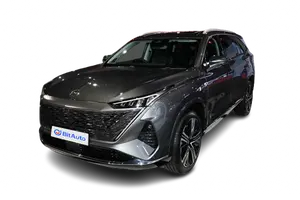
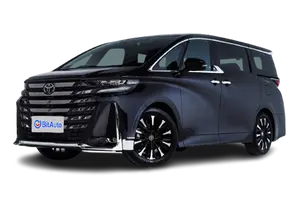
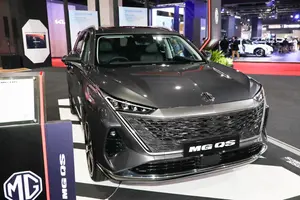
Long-distance drivers: QS — refuels anywhere with no charging stops
Performance seekers: QS — 208 hp beats the Vellfire's 187 hp
Price & Ownership Costs
ParameterMG QSToyota Vellfire
PriceTBCRM 549,900
Body Type / Seats5 door SUV · 7 seats5 door MPV · 7 seats
AssemblyCBUCBU
Annual Road TaxRM 434.40 ✓RM 829.60
Engine, Fuel Economy & Refuelling
ParameterMG QSToyota Vellfire
Engine Capacity1,986 cc2,487 cc ✓
Fuel Grade95-
Rated Economy8.8 L/100km5.7 L/100km
Fuel Tank65 L ✓60 L
Only the Vellfire is a hybrid; the QS runs a conventional petrol engine. The QS uses a 2-litre turbocharged engine; the Vellfire a 2.5-litre naturally-aspirated engine. The Vellfire is more frugal at 5.7 L/100km versus 8.8 L/100km. On a full tank the Vellfire covers roughly 1053 km versus 739 km for the QS.
Power & Performance
ParameterMG QSToyota Vellfire
Motor-Front
Max Power208 Ps ✓187 Ps
Max Torque360 N·m ✓233 N·m
Drivetrain4WDFWD
TransmissionATE-CVT
Dimensions
ParameterMG QSToyota Vellfire
Length-5,005 mm
Width-1,850 mm
Height-1,950 mm
Wheelbase-3,000 mm
Comfort & Technology
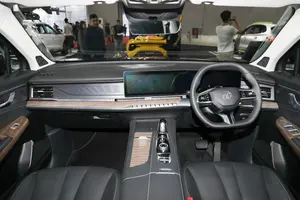
QS
Vellfire
14" central touchscreen + 12.3" digital cluster
Dual-zone automatic climate control
Ventilated front seats
Panoramic sunroof
Wireless phone charging
Sales Comparison
Monthly new car sales in Malaysia, with data for the past 6 or 12 months, or the full sales history since launch.
Monthly Sales Trend (Malaysia)
Loading sales data…
Monthly Registrations
Monthly Registrations
Data is based on vehicle registration and transaction records from Road Transport Department (JPJ), updated on the 10th of each month. It covers car sales by brand and model, as well as EV sales across Malaysia.