

HomeAccelerate

Search History
Popular Searches
Dealer Login / Sign Up

"Golden September and Silver October" has circulated for years. In previous years, entering this season, showroom traffic and transactions would all go up a bit. But this September, the auto market failed to heat up.
According to data from the China Passenger Car Association, September's national passenger car market retail sales were 1.618 million vehicles, down 28% year-on-year, and month-on-month growth was only 5%. January-September cumulative retail sales were 13.334 million vehicles, down 21.7% year-on-year. The magnitude of the decline was the largest among all months since the beginning of the year.

Image Source: China Passenger Car Association
The total volume looks poor, but structural changes are fast. On one side, fuel car retail sales were nearly halved year-on-year. On the other, new energy retail penetration rate surged to a historic high of 67%, and its exports even doubled year-on-year. The changes behind the numbers are far more complex than the single word "slow".
Why was the peak season not busy? Among domestic brands and joint ventures, who is retreating and who is advancing? Where has the landscape between new energy and fuel cars reached? In October, can the auto market recover?
Domestic Brands Near 70%, Joint Ventures Seek Turning Points
First, look at domestic brands. According to China Passenger Car Association data, September domestic brand retail sales were 1.13 million vehicles, down 25% year-on-year, and month-on-month growth was 5%. The domestic retail share in that month was 69.8%, up 2.8 percentage points year-on-year, approaching 70%.

Market share is still rising, but sales volume is falling, which is not contradictory. The overall cake is smaller, but the piece domestic brands took is bigger.
Domestic brands are not resting on laurels either. According to China Passenger Car Association analysis, September's retail decline was exceptionally prominent, the result of multiple factors superimposed. The Mid-Autumn Festival holiday moved to late September, sales volume that week of the holiday obviously weakened. Before some provinces' subsidies expired in last September, there was a concentrated buying spree, raising the comparison base. High oil prices continue to suppress car buying willingness. AI-driven memory and chip price explosions and supply tightness also made the recent new energy product release pace slower. Between the market's hot and cold, domestic brands also find it hard to save themselves.
From the retail structure perspective, domestic brands' roots are deeper. Data shows, September domestic brand new energy vehicle retail penetration rate was as high as 84.5%, and new energy retail share was 64.5%. Early start in electrification transformation and wide product line layout allowed domestic brands to hold their position in this consumption switch. Overseas markets are also providing incremental growth. September domestic brand exports were 812,000 vehicles, up 75% year-on-year, and export ratio for some car companies has already exceeded 50%.
Then look at the joint venture camp, days are tighter. September mainstream joint venture brand retail sales were 310,000 vehicles, down 36% year-on-year, and month-on-month growth was 2%. Among them, German brand share was 12.2%, down 2 percentage points year-on-year; Japanese brand 10.7%, down 0.9 percentage points; American brand share 6.3%, slightly up 0.5 percentage points year-on-year. It is the only force in joint venture factions going against the trend upwards.
Loosening of the base is the root cause. Joint ventures started with fuel cars, but September fuel car market collapsed overall. Mainstream joint venture fuel car retail sales were down 42% year-on-year. The reputation accumulated over decades of engines and gearboxes rapidly depreciated in front of high oil prices.
However, joint ventures are not retreating across the board. China Passenger Car Association data shows, September mainstream joint venture brand new energy car retail sales grew 36% year-on-year, while domestic new energy retail sales declined 19%. Joint venture brand new energy wholesale penetration rate rose to 16.3%, retail penetration rate 15.9%, and new energy retail share 4.8%, up 1.6 percentage points year-on-year.
Absolute volume is still small, but direction has turned. Volkswagen, Toyota, and GM have started seriously betting resources on electrification, and low-sales joint venture car companies are also gradually recovering vitality.
Luxury cars also failed to save themselves. September luxury car retail sales were 170,000 vehicles, down 29% year-on-year, but month-on-month growth was 12%. This month-on-month growth rate was the fastest among the three camps; retail share was 11%, down only 0.2 percentage points year-on-year.
With guide prices returning to reasonable ranges, a lot of price water in luxury cars was squeezed out. More noteworthy is the electrification speed: luxury car new energy wholesale penetration rate 55.4%, retail penetration rate 44.9%, more than half of luxury car wholesale sales volume is contributed by new energy.
The contrast at the production side also explains the problem. September domestic brand production was down only 1% year-on-year, and month-on-month growth was 9%, capacity basically stabilized; joint venture brand production was down 29% year-on-year, and month-on-month growth was 20%; luxury brand production was down 24%, and month-on-month growth was 5%.
In the wholesale pattern, September Leapmotor, Arcfox, GAC Aion, BAIC Passenger Cars and other car companies had year-on-year growth rates exceeding 20%. 22 new energy manufacturers had monthly wholesale breaking 10,000 vehicles, combined accounting for 94.4% of total new energy volume. The top runners are getting faster, and space for the waist and tail is getting narrower.
Domestic brands defending the title, joint ventures self-rescuing, luxury brands turning around, September's camp battle is far from being as one-sided as the share numbers look.
New Energy Penetration Rate 67%, Fuel Nearly Halved
Between camps there is still back and forth, the relative position between oil and electricity is becoming clearer and clearer.
According to China Passenger Car Association data, September new energy passenger car retail sales were 1.084 million vehicles, down 16.7% year-on-year, and month-on-month growth was 7.8%. Wholesale was 1.666 million vehicles, up 11.3% year-on-year, and month-on-month growth was 10%. Retail end is still adjusting under the disturbance of high base and subsidy policies, while wholesale end has already returned to double-digit growth.

Image Source: China Passenger Car Association
More critical indicator is penetration rate. September new energy retail penetration rate reached 67%, up 9.1 percentage points year-on-year, and up 1.7 percentage points month-on-month; wholesale penetration rate 65.4%, up 12 percentage points year-on-year. Both hit historic highs. In other words, among every three new cars sold, more than two are new energy.
Fuel car side is another scene. Data shows, September fuel car retail sales were down 43% year-on-year, among them pure fuel cars down 49%, nearly halved; conventional fuel passenger car retail was only 530,000 vehicles, down 43% year-on-year, and down 0.3% month-on-month. By camp, domestic fuel cars down 47%, joint ventures down 42%, luxury down 41%. In front of high oil prices, camp distinction loses meaning, all fuel cars were impacted.
The most direct reason is still high oil price. China Passenger Car Association data shows, since end of September, gasoline cumulative adjustment this year was 2,375 yuan/ton. Car usage costs remain high, fuel car consumption willingness continuously suppressed. Of course, this cycle correction also superimposed subsidy policy adjustment and high base factors. For many consumers, switching to an electric car is already a logical choice, "oil-electric substitution" has changed from trend to norm.
Inside new energy, differentiation is also obvious. From September wholesale structure, pure electric 1.126 million vehicles, up 18.3% year-on-year, share 67.6%; plug-in hybrid 423,000 vehicles, slightly down 0.1% year-on-year, share 25.4%; extended range 117,000 vehicles, down 4% year-on-year, share 7%. Pure electric strong, plug-in hybrid lost speed, extended range weakened, heat of each technology route is being resorted.
Then look at price brackets, high-end and low-end performance difference is huge. In high-end market, September Class B EV wholesale was 329,000 vehicles, up 21% year-on-year, accounting for 29% of pure electric share, the relatively stable block in pure electric market.
In low-end market, Class A00 pure electric wholesale was only 78,000 vehicles, down 51% year-on-year, share 7%, down 10 percentage points significantly compared to same period last year. The impact of subsidy policy changes on entry models was almost immediate.
There are also highlights in the middle ground: Class A0 wholesale 396,000 vehicles, up 10% year-on-year, accounting for 35% of pure electric; Class A 266,000 vehicles, share 24%, down slightly 2 percentage points year-on-year. New forces retail share reached 23.6%, up 3.4 percentage points year-on-year, among them pure electric share rose to 75%, volume increase obvious for 100,000-150,000 yuan models.
Export data is more eye-catching than domestic retail. Data shows, September new energy passenger car exports were 558,000 vehicles, up 163.5% year-on-year, accounting for 60.8% of total passenger car exports, added 21 percentage points compared to same period last year; January-September new energy exports 3.887 million vehicles, up 138.8% year-on-year. BYD single month new energy exports were about 176,000 vehicles, Chery and Geely follow closely behind.
Car model lists can also explain the problem. September wholesale sales models exceeding 20,000 units reached 23. BYD Song ranked first with 69,266 units, Model Y 62,948 units, BYD Yuan UP 62,711 units, Geely Xingyuan 60,871 units followed closely. Wholesale list top four were all new energy, traditional fuel models squeezed to list middle section.
Looking globally, January-August China new energy passenger cars accounted for 62% of world share, August single month reached 65.3%; in world plug-in hybrid market, Chinese brand share reached 71%. Domestic new energy share in overseas market, August rose to 29%, jumping up 14 percentage points year-on-year.
Electrification is long ago not China's exclusive story, just countries' paces are completely different. China Passenger Car Association aggregated data from various country industry associations, same period world new energy passenger car sales were 15.7 million vehicles, up 15% year-on-year, global penetration rate 24.5%. Germany penetration 33.4%, UK 36%, US only 7%, Japan only 4%, countries' progress difference is huge, Chinese brands still have no small expansion space. Fuel cars retreating, new energy expanding, the speed of this position swap is still accelerating.
October Auto Market, Can it Warm Up?
September's answer paper has been submitted, what about October?
First look at calendar. According to China Passenger Car Association analysis, this year October workdays total 18 days, flat with same period last year. Since Mid-Autumn Festival fell in late September, October's effective sales time is longer, terminal traffic expected to continuously warm up. "Golden September" debt owed, market expects "Silver October" to repay.

Image Source: Chery Automobile
Supporting factors are substantial. National Day auto shows opened densely, local subsidies landed successively, car company peak season promotions fully spread out, three forces short-term support bottom. On policy level, this year trade-in subsidies continue to exert force, subsidy quantity expected to present "low front high back" trend, contrasting with last October subsidy gradually exiting, beneficial for auto market stability.
But pressure also cannot be ignored. Core feature of macro environment is economy weak repair, policy mainly with stock replacement stimulation, market still in stock game stage. Resident income confidence is weak, price wars bring cautious sentiment, consumption end first purchase increment temporarily blocked, replacement stock becomes important support for steady growth.
Consumers accounting is also becoming more detailed, car buying decision from purely looking at car price, turned to comprehensive evaluation of full-cycle usage cost, residual value, smart experience.
High oil price variable remains. China Passenger Association judgment, if international oil prices continue at high position, fuel car consumption will continue to be low, "oil-electric substitution" will also accelerate, new energy penetration rate expected at 65% or above high position operation.
For fourth quarter pace, China Passenger Association person in charge Cui Dongshu expressed, relative to last year, this year market to rise is still relatively hard. September, October base relatively high, October, November will have certain improvement, negative growth magnitude will obviously narrow, December year-on-year decline range expected to be within 10%, gradually closing to flat, laying good foundation for next year growth. In his opinion, this year belongs to a stage connecting past and future.
In structure, there are several clues worth attention. Class A car pure electrification trend is obvious, fast charge technology improvement is pulling Class A EV sales. Replacement demand squeezes first purchase, Class B and above high-end models demand strong, Class A, A00 class economy EV affected by complex factors continue to shrink.
Aging is accelerating, some car companies start layout elderly-friendly products and travel services, A0 class EV expected to win increment.
China Passenger Association also expects, future policy can continue to support economy EV development, encourage miniaturization, give low-price cars more subsidies, push down-market first purchase demand release. Big city penetration high, county/town penetration weak, in such pattern, county first purchase is still a blue ocean to be opened.
In export aspect need to watch wind direction change. EU market trade pressure increased, plug-in hybrid model restrictions already started landing, trend of growth rate slow down will gradually reflect. But stretching time, China cars going global trend has not changed.
Put vision to whole world, this judgment is clearer. Global market can also serve as reference: January-August world car sales 63.43 million vehicles, up 2% year-on-year, China market share 32%, India, Vietnam, Thailand and other emerging market growth leading, "East rise West fall" still is industry main line.
Channel and profit level pressure is also not small. China Passenger Association survey shows, this year de-stocking feature prominent, January-September industry inventory down 680,000 vehicles; dealers new car purchase more cautious, most think this year "Golden September Silver October" peak season effect obviously weaker than previous years, survival pressure and confidence insufficient exist at same time.
In terms of profit, according to China Passenger Association data, January-August auto industry profit 253.4 billion yuan, down 16% year-on-year, operating income profit margin only 3.6%; August single month profit 37.1 billion yuan, up 24% year-on-year, profit margin back to 4%, counts as a bit of warmth in valley. Upstream non-ferrous raw materials, memory chip price rise, downstream demand not strong, price wars not stop, car companies squeezed at two ends situation in short term hard to change.
Put eyes on long term, auto market growth power structure is changing. Marriage total center shifts down, marriage age shifts back, aging accelerates, growth power turning from "new marriage first purchase" to "replacement purchase, additional purchase, new energy upgrade, aging-friendly travel".
October may not see a vengeful rebound, but the demand temporarily suppressed by high oil price, high base and holiday misalignment will not disappear out of thin air.
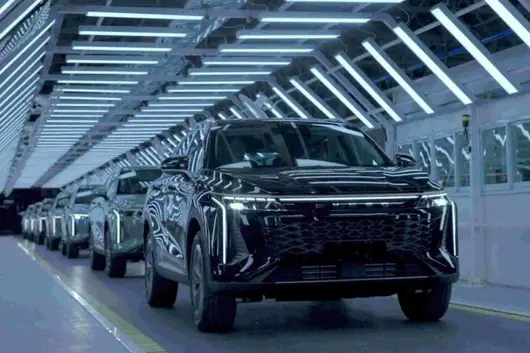

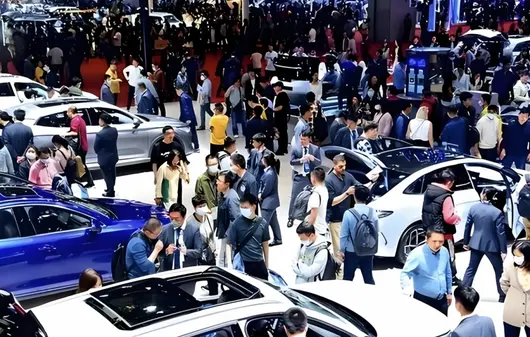
In June, automakers mass-announced impressive production and sales data. BYD, Leapmotor, NIO, and XPeng all submitted growth reports, with single-brand sales figures rising steadily, creating a boom-like scene. However, data shows domestic passenger car retail sales dropped 21% year-on-year. Since the end of last year, the domestic auto market has been stuck in a double-digit decline range, with the drop in February touching 25.3% at one point.

On one side, brands are constantly releasing good news to the outside world; on the other, the overall market continues to shrink. Behind this seemingly contradictory collective carnival lies a picture of industry segmentation woven together by the struggle for existing market share and breakthroughs in overseas markets.
Domestic Auto Market Slows Down
Looking solely at the delivery speed reports released by various automakers to the public, the domestic auto industry in June still seemed to be on an upward trajectory, with head-brand sales figures showing red across the board. However, after terminal retail data was finalized, the 21% year-on-year decline indicates that the contraction of overall industry demand is already a set fact.

Many people interpret the positive growth of head brands as breaking the situation against the trend brought by the company's product power breakthrough. In the current market environment, this judgment is incomplete. With overall domestic terminal demand continuously shrinking and the total market volume continuously falling, the reason head automakers can achieve growth against the trend is partly due to incremental offset from overseas exports, and partly due to grabbing shares in the domestic existing stock market. The extra sales volume of head brands mostly comes from stock orders diverted from weak brands, which also leads to SME automakers lacking capital, technology, and channel support having actual decline rates far higher than the industry average of 21%.
Factors such as capital chains, R&D reserves, offline channels, and many others determine whether an automaker can survive this downturn cycle. This year, many marginal automakers have stopped planning annual facelifts and new models, and dealer stores in various places have successively closed down and withdrawn networks. Consumers naturally avoid these risky brands when purchasing new cars, so customer sources naturally tilt towards enterprises with scale advantages such as BYD and Geely. All global mature auto markets have gone through a brand clearance stage; the domestic auto market has simply compressed the time of this process. The more depressed the market is, the more solid the barriers of scale advantages for head enterprises become.

The 150,000 to 250,000 RMB price range, which is the main interval, is becoming the most brutal battleground in this entire stock war, and the collapse of the intermediate market is hard to reverse. This range was once the foundation for joint-venture fuel vehicles and the core battlefield for independent brands to achieve scale. Currently, user willingness to upgrade has weakened significantly, and hesitation has surged. To save sales, joint ventures rely heavily on deep price cuts to clear stock; discounts for classic family cars like Accord and Passat keep widening, completely loosening traditional pricing systems. Independent automakers, on the other hand, are densely launching hybrid and BEV models in this segment. LiDAR and advanced intelligent driving features are trickling down. Highly homogenized products combined with endless price wars compress the profit margins across the entire market.
Consumer hesitation is strongest in this price segment. Most potential car buyers worry about receiving a new model replacement or a new round of price cuts shortly after getting their cars, so they hesitate to finalize orders. The recent pressure on orders for the BYD Qin and Song pillars exactly proves the congestion level of this red sea track.
Head Automakers Profit Overseas
Domestic competition is cutthroat, while overseas markets have become a panacea for head automakers.
For a long time, the model for domestic automakers going overseas was simple and direct: assemble complete vehicles domestically, ship them in containers, and rely on low prices to open up sales channels in markets like Southeast Asia and Latin America. Essentially, it was just digesting excess capacity. This unidirectional commodity export method has a very low error tolerance. Once the target market implements tariff restrictions or import quota policies, the entire export sales chain will be directly blocked. Not long ago, the new policy introduced by Malaysia was an example.

Now, head automakers are starting to land complete manufacturing, supply chain, and service ecosystems overseas, thereby breaking away from the fragile model that relies solely on exporting complete vehicles, and establishing a long-term stable operational foundation in overseas markets.
From a technological development perspective, over the past few years, basic electrification hardware such as battery packs, drive motors, and hybrid architectures have become highly mature, with solutions converging. Head automakers have basically leveled out the generation gap at the hardware level, making it hard to gain a long-term advantage based on single hardware parameters alone. True differentiation is gradually shifting to intelligent driving algorithms, vehicle architecture tuning, global thermal management, and other soft capabilities. Under the premise of hardware homogenization, scale-based cost control has become the core decisive factor for automakers. BYD reduces manufacturing expenses through its vertical industrial chain, CATL has become a top player in power batteries. New entrant brands find it difficult to bridge the software system gap and replicate scale cost advantages. Achieving a curve overtaking on the hardware side is extremely difficult.
Speaking of this, everyone should be able to see clearly: the overseas expansion of an automaker's supply chain is essentially the outward extension of its own industrial chain capabilities. Against the backdrop of domestic technological homogenization and intensified market involution, what truly widens the final gap between automakers is the control over the core supply chain.
If an automaker only retains body manufacturing and complete vehicle assembly business, it is essentially just an assembly OEM for the upstream supply chain. If upstream raw materials or core parts prices fluctuate slightly, the pricing and profit margin of the terminal model will be directly squeezed. It cannot create unique configurations distinct from competitors, nor does it have the confidence for autonomous pricing.

The industry has gradually differentiated into two response modes. Some automakers go deep internally in self-research, keeping key parts in their own hands; others actively bind with top supply chain enterprises, locking in priority supply qualifications to avoid supply disruption and price hike risks. Those SME automakers that cannot land on either side have neither the capital to invest in upstream R&D nor stable parts orders. Not to mention participating in overseas market layouts, they can hardly withstand the price involution in the domestic market either.
Global layout and deepening of the upstream supply chain are essentially two sides of the same coin. Opening up incremental markets outwardly and safeguarding the profit foundation inwardly; missing either one makes it difficult for an automaker to stabilize its position in the upcoming industry reshuffling.
Public Car Review
In the future, electrification hardware will tend towards homogenization, and the competitive barriers of automakers will shift from parameter stacking to cost control, software capability, and supply chain control. Head enterprises will guard the domestic foundation relying on the full-chain system while overseas expanding with localized ecosystems to hedge risks. In the future, industry victory and defeat will no longer depend on the explosive power of a single product, but on the system showdown of supply chain barriers superimposed with global capabilities. The polarized pattern will continue to solidify.
May 26, Pony.ai (NASDAQ: PONY) released the unaudited financial report for the first quarter of 2026. The Robotaxi (autonomous driving ride-hailing) business achieved a new quarterly revenue record. Based on the strong start performance, the company raised its 2026 Robotaxi business target: expecting annual Robotaxi revenue to increase from 3 times that of 2025 to more than 3.5 times, fleet size raised from 3,000 vehicles to over 3,500 vehicles, covering more than 20 cities domestically and internationally.

In the first quarter, Pony.ai achieved total revenue of 236 million Yuan, a 145% increase year-on-year and a 17.6% increase quarter-on-quarter; gross profit was 38.36 million Yuan, up 140.1% year-on-year, mainly driven by the explosive expansion of the Robotaxi business and the rapid scaling of the Intelligent Solutions business (formerly "Technology Licensing and Application Business"). The company's operational efficiency continues to improve; operating loss in the first quarter remained basically flat year-on-year and narrowed by 21% quarter-on-quarter. As of March 31, the company held cash equivalents and long-term and short-term financial investments totaling 9.902 billion Yuan (approximately $1.436 billion), with ample capital reserves providing solid support for the long-term scaling strategy.
After achieving positive earnings per vehicle at the city level, the Robotaxi business entered a high-speed growth stage. Robotaxi business revenue in the first quarter reached 59.12 million Yuan, a 395.4% surge year-on-year and a 28.7% increase quarter-on-quarter — this single quarter figure has already exceeded half of the 2025 full-year Robotaxi revenue of 116 million Yuan. Among them, passenger fare revenue surged 456.5% year-on-year, becoming the core growth momentum. As of May 2026, the scale of Robotaxi registered users in China has exceeded three times that of the same period last year.
Pony.ai Founder and CEO Peng Jun stated: "The start of 2026 was excellent. Scaled fleets, outstanding technology and operational capabilities, and high-quality user experience have become our core barriers. Driven by the 'China + Overseas' dual-engine strategy and the co-built fleet model, the company will continue to accelerate revenue growth and consolidate its leading position in the industry."
This year, Pony.ai Robotaxi has achieved monthly growth in three major commercialization indicators: fleet size, user scale, and paid order volume. Facing the travel slump during the Spring Festival and the traditional off-season of the first quarter, the Robotaxi business demonstrated resilience across cycles. The financial report shows this momentum continues in the second quarter: May Robotaxi average weekly paid order volume grew 119% compared to January, and the daily average paid order volume during the May Day holiday increased by 544% compared to the same period last year.

It is worth noting that even if the discounted Robotaxi pricing is higher than entry-level ride-hailing, user demand remains strong, especially during peak hours. This means users are willing to pay for the experience and value of the product itself. While expanding rapidly, Pony.ai continues to improve operational efficiency and experience and reduce daily operational costs by optimizing charging efficiency and dispatch algorithms.
Supported by the rapid growth of the Robotaxi business is the simultaneous expansion of fleet size and operational footprint. As of May 24, Pony.ai Robotaxi fleet size has exceeded 1,700 vehicles; the newly added model this year — Toyota bZ4X Robotaxi — has started full autonomous driving testing and will be deployed in multiple top domestic cities this year. During the Beijing Auto Show, the company further announced that the cost of domestic Robotaxi vehicles in 2027 (including vehicles, batteries, and autonomous driving kits) will be controlled within 230,000 Yuan, paving the cost path for commercialization landing.
In the domestic market, Pony.ai Robotaxi services entered Guangzhou city center in the first quarter, covering landmarks such as Canton Tower and the China Import and Export Fair Complex. Overseas markets entered a period of rapid expansion: the company launched Europe's first Robotaxi commercial service in Zagreb, the capital of Croatia, and started unmanned testing in Dubai. Currently, Pony.ai Robotaxi business covers 9 countries globally and has opened public ride-hailing services in China, Croatia, Qatar, Singapore, and South Korea.

Pony.ai Founder and CTO Lou Tiancheng stated that world models and multi-layered safety systems are the underlying support for promoting long-term commercialization. In April 2026, the company completed the PonyWorld World Model 2.0 iteration, with the R&D paradigm shifting from "Reinforcement Learning" to "Autonomous Learning", entering a new stage of autonomous driving technology driven by AI. At the same time, the company has built a multi-dimensional safety defense line: at the algorithm level, reinforcement learning and world models make vehicle safety in complex scenarios far superior to human drivers; at the vehicle level, system-level multi-redundancy design achieves fault tolerance, ensuring safe vehicle operation and parking to the side when hardware/software fails; at the operational level, a dedicated security team embeds safety mechanisms into the entire operational process, cooperating with efficient remote support and ground assistance for rapid response to emergencies.
Other business lines also showed impressive growth momentum. The Robotruck (autonomous truck) business revenue in the first quarter was 70.33 million Yuan, up 31% year-on-year. Pony.ai announced in April to launch a full-scenario freight layout of "Trunk Logistics + Urban Distribution": the fourth-generation pure electric heavy truck will enter mass production in the second half of this year, and the company also becomes the first enterprise in the country to carry out autonomous heavy truck formation unmanned freight on the Beijing-Tianjin route; the first full-vehicle-spec, full-redundancy unmanned light truck was also unveiled at the Beijing Auto Show. Relying on the same technology stack, operation system, and vehicle-spec kit as Robotaxi, the single-kilometer urban distribution freight cost decreased by 40%-50% compared to manual labor. Intelligent Solutions business revenue in the first quarter was 107 million Yuan, up 246.5% year-on-year. Among them, the shipment volume of autonomous driving domain controllers in the first quarter increased to more than 6 times that of the same period last year, mainly benefiting from the strong demand in low-speed unmanned delivery, unmanned cleaning, logistics, and humanoid robot markets.
Pony.ai CFO Wang Haojun was full of confidence in achieving the annual goals: "Driven by the Robotaxi dual-engine strategy, we delivered a strong opening performance report — a single quarter of Robotaxi revenue exceeded half of the last full year. Based on this momentum, we proactively raised the annual goal. This not only shows that Pony.ai, as the industry leader, is accelerating realizing commercialization implementation, but also means that L4 autonomous driving has ushered in a watershed moment for scaled commercial operation."

Author | Guo Yue
Editor | Zhihao
He Xiaopeng: Not only looking at scale but also long-term development, three new cars queued up in the second half of the year, welcoming the strongest sales growth.
CarDaily reported on May 28. Just now, Xpeng Group Chairman and CEO He Xiaopeng spent most of the time on the first-quarter earnings conference call responding to Xpeng's business layout in intelligent cars, Robotaxi, humanoid robots, and other aspects.
Regarding new cars, three new cars will be released globally in the second half of this year, and Xpeng will welcome the strongest sales growth curve in history.
Regarding overseas business, in April this year, Xpeng's overseas sales volume broke through 6,000 units for the first time, with a goal to continue exceeding 10,000 units per month in the fourth quarter. Starting from the second quarter, the revenue contribution from international business is expected to exceed 20%.
Regarding Robotaxi, the Xpeng GX fleet has already started small-scale L4 testing. Xpeng's goal is to start Robotaxi demonstration operation services in Guangzhou in the third quarter of this year. After the second-generation VLA lands overseas, Xpeng will also actively explore deploying affordable Robotaxis in both domestic and overseas markets.
Regarding humanoid robots, the software and hardware R&D progress of Xpeng's new generation IRON humanoid robots for mass production version is proceeding smoothly, planned to debut officially in the third quarter of this year. Xpeng aims to achieve mass production of high-end humanoid robots by the end of this year, first trial commercialized in Xpeng stores, and delivered to Chinese and overseas commercial customers starting next year.
Starting next year, humanoid robot hardware revenue and AI model revenue will become one of the important drivers of Xpeng Group's revenue and gross profit growth.
Just today, Xpeng Group released the Q1 2026 financial report.

▲ Xpeng Q1 2026 Financial Data
Specifically, Xpeng's Q1 2026 delivery volume reached 62,700 units, a year-on-year decline of 33%, total revenue of 13.03 billion Yuan, a year-on-year decline of 17.6%; gross margin improved year-on-year by 5 percentage points to 20.6%, net loss increased to 1.78 billion Yuan. These performances are partly due to the continued increase in R&D investment. In the first quarter of this year, its R&D expenses were 2.91 billion Yuan, a year-on-year increase of 46.8%, and further increased compared to the 2.87 billion Yuan in the fourth quarter of last year.
Regarding Q1 performance, He Xiaopeng stated that Xpeng did not just focus on scale when the market challenge was downward, but focused more on the balance between sales volume and operating quality and long-term development. He is very confident that the sales volume of every quarter in the rest of this year will grow significantly quarter-on-quarter.
As of the time of reporting, Xpeng Group's US stock price was reported at $16.845 (approximately 114.2 RMB) / share, up 2.4%, with a market cap of $16.124 billion (approximately 109.3 billion RMB).

▲ Xpeng Group US Stock Price as of Publication Time
01.
He Xiaopeng 11 Questions Show Determination:
New Cars, Robotaxi, and Robots Will All Be Globalized Well
On the Xpeng Group earnings conference call held tonight, Xpeng Group Chairman and CEO He Xiaopeng and Executive Vice Chairman and Co-President Brian Gu provided detailed responses on the key focus and planning for future development.

▲ Xpeng Group Chairman and CEO He Xiaopeng (right in picture), Executive Vice Chairman and Co-President Brian Gu (left in picture)
Below is the main content of this conference call, edited by CarDaily without changing the original meaning:
Q1: After the new model GX was on the market for a week, the response was enthusiastic. What is the current total order volume? What is the single-unit gross margin level? What is the expectation for its monthly sales target?
He Xiaopeng: As of now, the order performance of GX has exceeded our expectations, and the situation is very good. We observed some interesting data: First, the waiting time for the pure electric flagship model has exceeded 30 weeks, and orders for the flagship version are still growing rapidly.

▲ Xpeng GX
From the order structure, in the early stage of GX launch, the flagship version accounted for more than 80% of the share, and it is still the model with the highest sales proportion. At the same time, the sales proportion of GX's Max version is less than 5%, lower than our initial expectations.
In terms of powertrain type, the initial order volume of the extended-range version was lower than the pure electric version, but it is now gradually moving closer to the pure electric version, especially after we strengthened marketing in areas where we were originally not good at marketing, such as the north and west, this trend is more obvious.
For GX, our primary task is to push for capacity ramp-up to the fullest extent, while adhering to providing high-quality service and quality, ensuring GX can achieve long-term stable delivery. I am most concerned about the sustained performance of GX.
As a flagship model of Xpeng, GX's gross margin is very good. Previously, when I communicated with the media, I mentioned that if there is only one SKU, the gross margin may not meet expectations; but in reality, GX's gross margin is better than our overall gross margin level.
I also want to add a point: Starting from this year, all new cars of Xpeng will focus on two new priorities. First, how to pursue commercial quality in commercial configuration and commercial pricing. Second, we do not pursue an initial sales surge followed by a decline, but pursue a more stable sales performance.
To this end, we have established a new system in supply chain management, modularization, ramp-up processes, and supply chain security.
I believe that starting from GX, we will be able to better balance business benefits and scale, achieving more stable long-term sales.
Q2: What are the plans for Robotaxi business operations domestically and going global? Has the recent tightening of domestic regulations affected business progress? How do you view the potential impact of B-side business on Xpeng's C-side passenger vehicle sales?
He Xiaopeng: We noticed the recent tightening of domestic regulations on autonomous driving, but this has not affected our overall pace.
From my perspective, the real business opportunity for Robotaxi will arrive in 2028. Currently, Xpeng is trying to run through this model both domestically and globally, landing and implementing the VLA 2.0 system in China and overseas.
In China, we will conduct rapid R&D and testing through existing models and plan to launch an economy vehicle for Robotaxi scenarios in 2027.
Regarding the business model, I want to emphasize two points: First, we only provide products and offer a commission model, not participating in operations directly, so we will have a large number of partners. Second, the main battlefield for Robotaxi is the global market, and I believe the global market has huge business value.
Regarding your concern about the impact of B-side Robotaxi on C-side sales, I want to add a few points of view.
First, Robotaxi testing at the current stage is actually having a positive impact on the C-side, because the future VLA system will provide various different intelligent assisted driving strategies.
Secondly, as policies and regulations gradually relax and commercial operation gradually lands, Robotaxi vehicles will gradually separate from C-side vehicles, forming a second independent vehicle track, becoming a new type of transportation tool.
Q3: In the second half of this year to about a year in the future, what important trends and changes will the VLA 2.0 OTA bring?
He Xiaopeng: I think that within this year, Xpeng's VLA capabilities will experience two important nodes.

▲ Xpeng VLA 2.0 Push First Month Assisted Driving Mileage Proportion Breaks 50%
The first node may appear in the third quarter of this year.
In the past period, Xpeng VLA mainly focused on engineering, safety, and basic customer experience, without focusing on improving performance upper limits. In the third quarter of this year, we will greatly improve the performance upper limit of VLA. The user experience will manifest as vehicles being smarter, having stronger generalization capabilities, and greatly reducing the disengagement rate.
The second node is the end of this year.
We hope to fuse VLA and VLM capabilities through organizational mergers. At that time, vehicles will not only have the "driver ability" of autonomous driving but also possess language communication capabilities, and even lay the foundation for future "car butler" capabilities.
We believe this will be the preliminary form of L5 level capabilities. We hope to gradually achieve this goal.
Q4: What differentiation advantages does the humanoid robot have in hardware costs in the next year? What is the business model overseas?
He Xiaopeng: The mass production version of IRON is designed according to automotive-grade safety and reliability. Recently, we have completed the development of self-developed dexterous hands. Flexibility has significantly improved, while costs have significantly decreased.
In the process of robot mass production, we encountered many challenges different from car mass production. For example, the hardware of current humanoid robots does not fully consider safety, reliability, stability, and maintainability—it does not follow automotive-grade standards.

▲ Xpeng Plans to Mass Produce Humanoid Robots by the End of 2026
In addition, many energy groups have not considered how to scale, how to solve supply chain yield rate and quality issues, nor have they considered whether the underlying architecture of hardware and software should be placed locally or in the cloud, and if placed in the cloud, how to solve a series of issues such as data privacy, traffic, computing power, latency, etc.
For this reason, we have become a robot company that almost self-develops core hardware and software in full-stack (except for battery cells) since the beginning of last year. This enables us to achieve high integration.
I believe the initial hardware cost structure of robots will be close to a car, but in the long run, we will gradually obtain more economical scale solutions. But today, the robot's cost structure is very close to a car.
Regarding overseas markets, just like our car business, our robots have considered globalization from the first product.
The sales logic of robots may be more adaptable globally than in China, and acceptance among grassroots employees overseas is higher.
We have done a lot of work on how hardware meets overseas policies and how software and data meet local regulations.
For example, Xpeng's current VLA data processing volume is about 200 million Tokens per hour. If the robot model is placed in the cloud, it is estimated that 500 million to 1 billion Tokens per hour will be required, and traffic costs may exceed 100GB. Therefore, completely relying on cloud computing power is not feasible.
We comprehensively considered overseas hardware, software, data privacy, comprehensive usage costs, and commercial logic from the beginning. As domestic business advances, we hope to see new changes in robot business overseas next year as well.
Q5: Besides Guangzhou, can you reveal the Robotaxi city expansion plan and timeline as well as progress in applying for the corresponding license?
He Xiaopeng: Currently, our Robotaxi business only considers Guangzhou. We have already obtained the Guangzhou testing operation license and hope to run through the complete technology, product, and business model in Guangzhou first.
Afterwards, we will find more partners domestically and overseas for them to operate locally.
Since announcing this plan, we have received a large number of requests from overseas and some domestic partners. They are very interested in observing our overall progress in the next year.
After we launch economy vehicles suitable for Robotaxi scenarios and better overall solutions in 2027, I believe everyone will see our continuous improvement in Robotaxi commercialization capabilities.

▲ Xpeng Will Launch Three Robotaxis in 2026
Q6: What are the guidance for vehicle gross margin and company overall gross margin in the second quarter?
Brian Gu: Our overall gross margin in the first quarter is very close to the fourth quarter of last year. We indeed observed a trend of rising raw material costs, some of which have been reflected in the first quarter. We expect these cost factors to continue in subsequent quarters of this year.
In the second quarter, we launched the full-size SUV GX, and delivery will start in subsequent quarters. GX's gross margin is at the highest level in our entire product portfolio.
From the product structure perspective, we expect to see better model combinations in the second quarter and the second half of the year. Comprehensive factors, we expect the company's total gross margin in the second quarter to maintain a level roughly similar to the first quarter.
Q7: Can you talk about the growth catalysts for the overseas market, as well as sales and profit contributions in the next three years? Also, which model's profit is better, export or local production?
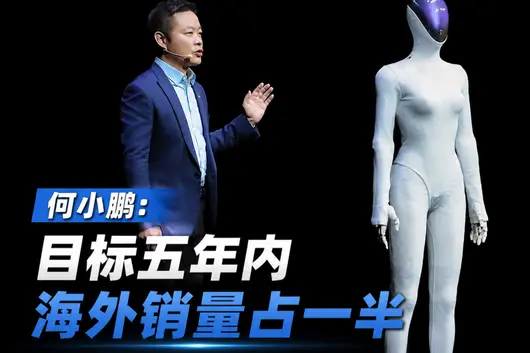
He Xiaopeng: The overseas market is one of the most important strategic directions for Xpeng. I hope that in the next five years, the sales volume of the overseas market will account for half of our total sales volume. At that time, the revenue and profit contribution from overseas will exceed domestic.
I am very confident that as Xpeng launches multiple global models in the second half of this year, Xpeng's globalization speed will be significantly improved in the next two years.
Whether in hardware, AI software, channels, services, or supercharging capabilities, we will make huge investments overseas, and overseas profit performance will also be very good.
Our R&D investment in cars this year is mainly concentrated in the overseas market. Therefore, I am very confident about achieving accelerated growth in the overseas market in the next three years.
Brian Gu: I will add a few points. First, from the latest international sales figures, overseas sales volume has accounted for nearly 20% of our total sales volume. And last year, international sales volume accounted for about 10% of the global total sales volume.
Second point, even when facing some tariff issues and cost increases this year, the single-vehicle profit of our international business is still significantly better. The contribution of international business to our profit is very considerable.
We expect this growth momentum to last throughout the year. I believe maintaining the proportion of overseas sales volume at around 20% throughout the year is sustainable. Of course, the Chinese market itself is also expected to have significant growth.
Regarding going global, we are increasing overseas localization investments. The overseas market will make an important contribution to the company's overall momentum and profitability.
Q8: In this year and next year, what proportion of models is expected to be produced in local factories? Will this proportion differ across different regions?
Brian Gu: Currently, we have two factories in Southeast Asia, located in Indonesia and Malaysia, mainly serving the local markets. In addition, we cooperate with Magna in Austria to produce vehicles for the European market.
These three manufacturing bases will increase capacity this year, and there will be new models produced in those local markets.
For Southeast Asian countries, localized production mainly satisfies local market demands; while the Austria factory serves the European market.
I expect most of our European sales will come from localized production. In other regions where manufacturing facilities have not been established, we will continue to maintain the current business model.
As we improve sales and market share in these large markets, we are actively exploring ways to increase localized production capabilities to meet localization content rules and gradually move towards a deeper localized production model.
Q9: Can you give a few specific examples to explain the commercial functions and application scenarios of Xpeng robots in its own stores and customer stores? What is the price strategy for sales to the outside? Since its cost structure is close to a car, can the sales strategy also be analogous to cars?
He Xiaopeng: Our robots are different from most robots. We hope it is used in an environment interacting with humans. Therefore, we first consider commercial environments, and the initial application scenarios are tour guide, sales guide.

▲ Xpeng New Generation IRON Service Scenario
Whether in China or overseas, robots can introduce products in stores, for example, introducing vehicles in our stores. Although the final transaction may still need to be handled by humans, company introduction, product introduction, performance explanation, and other work can be assisted by robots.
Based on the fact that tour guiding and sales guiding have been verified in a large number of jobs globally, we hope to expand to deeper scenarios of sales retail, such as cashier positions. The number of cashier and retail sales positions is very large globally.
Therefore, from the commercialization path perspective, Xpeng will focus on deepening from the sales guide perspective, while we will open up a lot of cooperation.
If our partners have different job requirements, they can generate data with us, perform pre-training and post-training, and thus generate different models. These models can be placed on our external cooperation platform for users to download and activate.
Regarding future commercialization pricing, we are still discussing. But it can be seen that our robots are very similar to cars, so their sales price will certainly be more expensive than an ordinary car.
There will be good gross margins on hardware in the early stage. At the same time, our robots also have a large amount of data processing in the cloud, so we hope to take a faster step in software charging.
We believe that break-even targets can be achieved within a few months in the overseas market, while it may take slightly longer in the domestic market.
Therefore, we are constantly thinking about the commercial logic of robots from the perspective of how customers use them, why they buy them, and how they get value.
Q10: Can you share your thoughts on the evolution of the group's long-term business model? How do you view the timing of revenue generation from various strategic sectors, as well as changes in the medium-to-long-term revenue structure?
He Xiaopeng: At the current stage, the group's main revenue source is certainly scale effects, mainly from hardware; if looking at the ecosystem, it is system effects.
But looking globally, very few car manufacturers can build a software platform on top of the scale effect of hardware to form the next level of network effects - that is, achieve software charging and multi-sided network effects.
Further back, with the rise of overall intelligent AI capabilities, there will also be ant colony effects. Just like ant colonies, forming new synergy between centralized and decentralized.
These three effects will gradually overlap. Each effect involves different competitive barriers and corresponds to different business logic.
Q11: How is the service revenue trend this year? Is there a possibility for technical licensing or technical services with our partners to expand overseas?
Brian Gu: We continue to maintain the previous guidance: In 2026, the total revenue from technology, services, and IP licensing will be roughly the same as in 2025.
Starting from the second quarter of this year, we will scale up delivery of Turing Chips to partners.

▲ Xpeng Turing Chip Obtained Volkswagen Confirmation
We continue to believe that achieving technology commercialization and monetization through such cooperation is a very attractive business model for us.
Given that Xpeng internally possesses a large amount of proprietary technology, we hold a very open attitude towards expanding such technology commercialization opportunities.
02.
Gross Margin Growth Highlights Operating Resilience
Expected Delivery Volume and Revenue to Increase Significantly in Second Quarter
From the Q1 2026 financial report of Xpeng Group, the total revenue of Xpeng Group in Q1 2026 was 13.03 billion Yuan, down 17.6% compared to Q1 2025, and down 41.4% compared to Q4 2025.

▲ Xpeng Q1 2026 Financial Data
Among them, Xpeng's automotive sales revenue in Q1 2026 was 11.0 billion Yuan, down 23.5% compared to the same period of Q1 2025, and down 42.3% compared to Q4 2025.
Regarding net loss, its net loss in Q1 2026 was 1.78 billion Yuan. In Q1 2025, this figure was 660 million Yuan. Net profit in Q4 2025 was 380 million Yuan.
Regarding gross margin, Xpeng Group's gross margin in Q1 2026 was 20.6%, exceeding Li Auto (7.9%) and NIO (19.0%), with automotive gross margin at 12.1%. In comparison, it was 10.5% in the same period of Q1 2025, and 13.0% in Q4 2025.

▲ Xpeng Q1 2026 Gross Margin Steady
As of Q1 2026, Xpeng's cash on hand was 42.09 billion Yuan.
For the second quarter of this year, Xpeng Group expects delivery and revenue scale to achieve significant increases.

▲ Xpeng Q2 2026 Performance Guidance
Regarding delivery volume, the official forecast expects vehicle deliveries for the quarter to reach 100,000-106,000 units, with a year-on-year change of approximately -3.08% to 2.73%, and a quarter-on-quarter growth of approximately 59.54% to 69.11%.
Regarding revenue, the official forecast expects total revenue for the quarter to be 19.6 billion to 20.8 billion Yuan, with a year-on-year increase of 7.25% to 13.82%, and a quarter-on-quarter increase of 50.38% to 59.59%.
Brian Gu stated: "We will accelerate the large-scale commercialization of Physical AI applications with company-level strategic priority."
03.
Conclusion: Xpeng Accelerates Towards the End Game of Physical AI
From the information disclosed in the Q1 2026 financial report and conference call, Xpeng is on the eve of Physical AI applications moving from mass production landing to explosive scale growth.
Its Physical AI layout is welcoming a historic breakthrough in commercialization mass production: The proportion of second-generation VLA smart driving mileage broke through 50%, the first full-stack self-developed Robotaxi has rolled off the production line, the humanoid robot goal is to mass produce by the end of the year, flying cars are entering the eve of mass production. Multiple business lines are simultaneously approaching explosive scale growth, jointly building a solid foundation for Xpeng to move towards the era of Physical AI.
Under this circumstance, Xpeng Group's gross margin still maintained at a high level of 20.6%, showing strong operating resilience. From the obvious rebound in delivery guidance in the second quarter, Xpeng is expected to welcome strong sales growth.
With VLA architecture iteration, the successive landing of multiple new cars and robot products, Xpeng is expected to build a more complete business ecosystem in the fields of intelligent mobility and embodied intelligence. Its future development potential is worth continuous observation.

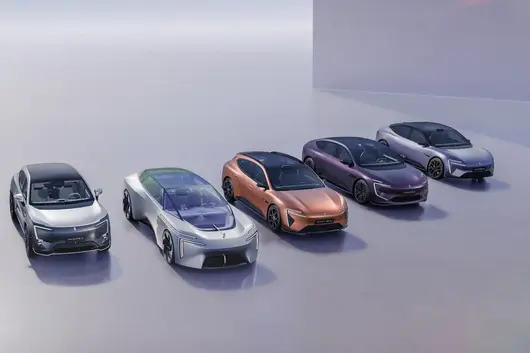
On the occasion of the brand's fifth anniversary, Avatr Technology is entering a new stage where development momentum is fully unleashed. Currently, its cumulative sales have exceeded 250,000 units, establishing a solid position in the high-end intelligent electric vehicle market. With the continuous improvement of the product matrix, the accelerated implementation of core technologies, and the in-depth promotion of overseas layout, Avatr not only achieved overall profitability but also demonstrated strong growth resilience and brand vitality. As the largest external shareholder of Huawei Invision, Avatr will continue to benefit from the synergy dividends of the intelligent ecosystem, driving the brand toward higher-order development.

In the five years since establishment, Avatr has successively launched multiple models such as Avatr 11, 12, 06/06T, 07, covering a price range of 200,000 to 700,000 RMB. In the second half of this year, Avatr will also launch Avatr 07L and a brand new large six-seater flagship SUV. The latter will be the industry's first to equip CATL condensation state batteries, further raising the product ceiling and expanding market coverage. According to the plan, by 2030, Avatr will complete the layout of 17 products, comprehensively covering SUVs, sedans, MPVs, and other sub-segments. Overseas expansion has also progressed rapidly. Since going global in 2024, Avatr has entered more than 40 countries and regions worldwide. Not only did it firmly hold the top spot in Thailand's high-end electric vehicle sales, but it also secured a 10% share of the high-end market in the UAE, and the global layout has taken initial shape. This year, Avatr will officially enter the European market, further accelerating the penetration of the global high-end market, planning to cover more than 110 countries and regions by 2030, with overseas sales accounting for 40%.


Behind the brand's rapid growth is the continuous intensification of Changan Automobile's strategic empowerment to Avatr. As the core carrier of Changan Automobile's high-end strategy, Avatr carries the mission of breaking through upwards and building a global high-end brand. In April this year, Changan Automobile announced that Avatr and Deepal Automobile would launch strategic synergy, following the principle of "Front-end independence, Mid-end and Back-end synergy, Brand independent operation", further enhancing Avatr's strategic weight, with group-wide resources possibly continuing to tilt towards it. As the "flagship and benchmark" of the brand group, while the three major systems of brand operation, channel operation, and user service remain unchanged for Avatr, the high-end positioning is becoming increasingly solid. After the synergy implementation, efficiency and system capabilities are further amplified, providing a solid backing for the brand's long-term development.


In addition, Avatr's unique advantages backed by the "Big Three" of Changan, Huawei, and CATL are still deepening, building a unique technical and resource barrier. Based on Changan's century-old manufacturing heritage, Avatr has independently researched two core technologies: Kunlun Intelligent Range Extender and Taihang Smart Control Chassis. The iterated Taihang Smart Control Chassis 2.0 achieves dual advancement in safety and handling with industry-leading distributed electric drive technology. At the same time, as a "technical shareholder" of Huawei and CATL, Avatr not only enjoys priority access to the latest technologies but also partners with them to define every new technology from the source. Avatr, as the largest external shareholder of Huawei Invision, has formed an interest community bonded by capital and continues to enjoy development dividends. CATL, as Avatr's second largest shareholder, has always prioritized mounting front-line battery technologies such as Shenxing, Xiaoyao, and Condensation State on Avatr models, ensuring product strength remains at the forefront of the industry.
Standing at a new milestone of the fifth anniversary, Avatr — this young "New Luxury" brand — is steadily walking the path of sustainable growth of "Original, Intelligent, New Luxury" with clearer product strategy, deeper technical cooperation, and more firm global layout. As a core strategic asset of Changan Automobile, Avatr is constantly consolidating its core competitiveness facing the future and releasing long-term value.
© 2024 Bitauto.com. All Rights Reserved.
Bitauto (www.yiche.com and www.bitauto.com) is one of the most visited automotive websites in China. We provide detailed info on Chinese car brands available in your area. Please note that the information provided on this website is based on publicly available data and is for reference only. It may not be fully updated or accurate at all times.

Help us improve our website


