

HomeAccord

Search History
Popular Searches
Dealer Login / Sign Up


On July 16, GAC Group held a grand event at its Trumpchi factory in Guangzhou — celebrating the rollout of the 30 millionth vehicle.
What does 30 million represent? In the history of the Chinese automotive industry, no more than one hand of automakers have reached this number. It took GAC 29 years from the rollout of the first Accord in 1997 to now.
But the interesting part of this event was not the number itself, but the state GAC presented.
The star rolling off the line was not a traditional fuel car, but a right-hand drive Trumpchi M8 PHEV. The recipient was not a domestic dealer representative, but a Thai car owner.
The identity and destination of this vehicle speak louder than the number 30 million.

Selling to Thailand
A detail at the venue was worth noting: Vehicles numbered 29,999,995 to 29,999,999 rolled off the line in sequence. They were GAC Honda P7, GAC Toyota bZ7, GAC Qijing GT7, GAC Aion N60, and GAC Hyper S600, all New Energy Vehicles.

This was not just a rollout ceremony; it was clearly GAC flexing its muscles. The joint venture sector, the independent sector, pure electric, plug-in hybrid, and right-hand drive vehicles, the entire New Energy vehicle matrix appeared collectively. GAC wants to say one thing: Regarding electrification, I am serious.

In the first half of this year, GAC Group sales reached 773,100 vehicles, a 2.35% year-on-year increase, with New Energy Vehicle sales growing by 68.8%. Overseas exports exceeded 120,000 vehicles, a significant 132% increase year-on-year.
The growth rate is impressive, but the base is still relatively small. In the current era of deep industry reshuffling, GAC needs to run faster.
Quality is the Bottom Line, What Cannot Be Lost
GAC Chairman Feng Xingya said a sentence at the event: “Quality is the bottom line GAC will never cede.” Listening to this sentence today, it is actually quite weighty.
In the past few years, the Chinese automotive industry engaged in fierce involution, competing on price, specs, and computing power. But some things are hard to compete on, such as the quality control system.

GAC's quality management system has its uniqueness: integrating Honda's Total Quality Management (TQM), Toyota's Production System (TPS), plus the pragmatic DNA in Lingnan culture. This system ensures that GAC's joint venture and independent brands have long been at the forefront of the industry in product reliability.
Data also supports this: The Star Spirit Safety Guard System covers nearly 2 million users, avoiding 6.28 million potential travel risks; the Magazine Battery has cumulatively equipped 1.5 million vehicles, with safe driving mileage exceeding 160 billion kilometers.
In today's era where the industry madly piles on specs and configurations, "no breakdowns" has become a scarce value.
After 30 Million, Where to Go?
Feng Xingya announced a policy at the event: Launching the "30 Million Vehicle Rollout · Renewal and Gratitude Season". GAC's six major brands — Honda, Toyota, Trumpchi, Aion, Hyper, Qijing — will launch their respective policies around new purchase, trade-in, and extra purchase.
This is an action on the service level. More worthy of attention is GAC's next technology roadmap.

In the powertrain field, GAC's "Star Source Power" will cover three technology roadmaps: extended-range, plug-in hybrid, and Super Twin Engine. The pilot production line for all-solid-state batteries has been completed, and the Quark Electric Drive motor has exceeded 99% maximum efficiency.
In the intelligent networking field, the Star Spirit architecture is connecting six systems: intelligent driving, cockpit, powertrain, chassis, body, and vehicle connectivity. The goal is "one brain for unified command". The partner list is also long — Huawei, CATL, Didi, Tencent, Alibaba.
As of now, GAC has cumulatively invested over 62 billion yuan in R&D, with a global R&D team exceeding 6,800 people.
This level of investment is considered quite substantial among traditional automakers.
In Conclusion
30 million units is a milestone, but for GAC it is more of a watershed.
In the past 29 years, GAC relied on joint ventures for foundation, quality for reputation, and supply chain advantages and manufacturing capabilities to walk to today step by step. But for the next 30 million units, relying on these alone is not enough.
New energy transformation cannot be slow, intelligentization cannot lag behind, and the overseas market must be conquered. This is the same test faced by all traditional automakers.
GAC's choice is: Quality cannot be lost, but technology cannot be slow, rhythm cannot be chaotic, and the global market cannot be abandoned.
It looks like an attack on all fronts, but the logic is actually simple — to catch up on necessary courses as soon as possible while holding the bottom line.
After 30 million, the real test has just begun.
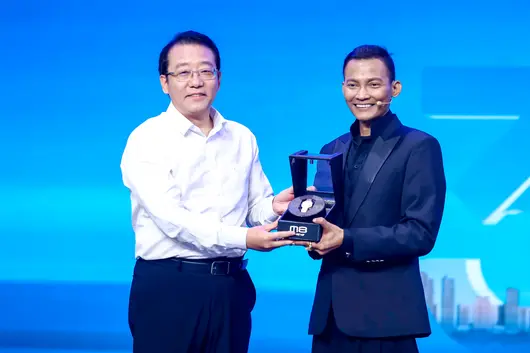

16 Julai, Kumpulan GAC mengadakan satu acara yang cukup meriah di Pabrik Trumpchi GAC, Guangzhou — merayakan keluaran unit kenderaan keseluruhan ke-30 juta.
Apa konsep 30 juta? Dalam sejarah industri automotif China, syarikat kereta yang dapat mencapai angka ini tidak melebihi satu tangan. GAC dari keluaran Accord pertama pada tahun 1997 hingga sekarang, mengambil masa 29 tahun.
Tetapi tempat yang menarik dalam acara ini, bukan pada nombor itu sendiri, tetapi pada keadaan yang ditunjukkan oleh GAC.
Tuan rumah utama di lokasi pengeluaran bukan sebuah kereta bahan api tradisional, tetapi sebuah versi stereng kanan GAC Trumpchi M8 PHEV. Objek penyerahan kenderaan bukan wakil pengedar tempatan, tetapi seorang pemilik kereta Thailand.
Status dan destinasi kenderaan ini lebih banyak menjelaskan masalah berbanding nombor 30 juta ini.
Jual ke Thailand
Terdapat satu butiran yang menarik perhatian di lokasi acara: Unit ke-29,999,995 hingga ke-29,999,999 turun barisan secara bersiri, masing-masing adalah GAC Honda P7, GAC Toyota bZ7, Enlight GT7, GAC Aion N60, GAC Hyper S600, semuanya seragam Kenderaan Tenaga Baharu.
Bukan majlis pengeluaran ini, jelas GAC sedang mempamerkan kekuatan. Suku bahagian gabungan, suku bahagian mandiri, elektrik tulen, pencampuran plug-in, kereta stereng kanan, matriks Kenderaan Tenaga Baharu lengkap muncul secara kolektif. Satu-satunya kata yang GAC mahu sampaikan: Untuk perkara elektrifikasi ini, saya serius.
Pada separuh pertama tahun ini, jualan Kumpulan GAC mencapai 773,100 unit, meningkat 2.35% berbanding tahun sebelumnya, jualan Kenderaan Tenaga Baharu meningkat 68.8% berbanding tahun sebelumnya. Eksport luar negeri melepasi 120,000 unit, meningkat tajam 132% berbanding tahun sebelumnya.
Kadar pertumbuhan ini cantik, tetapi asasnya masih agak kecil. Pada masa penyusunan semula industri yang mendalam ini, GAC perlu berlari lebih pantas.
Kualiti adalah garis dasar, perkara yang tidak boleh ditinggalkan
Pengerusi Kumpulan GAC, Feng Xingya, mengutarkan satu kalimat di acara itu: "Kualiti adalah garis batas yang tidak akan GAC tinggalkan." Kalimat ini didengar pada masa kini, sebenarnya agak bererti.
Beberapa tahun lalu, industri automotif China terlibat dalam persaingan ganas, memperebut harga, konfigurasi, pengiraan, tetapi ada perkara yang sukar diperolehi melalui persaingan, seperti sistem kawalan kualiti.
Sistem pengurusan kualiti GAC mempunyai keunikannya: menggabungkan Pengurusan Kualiti Penuh (TQM) Honda, Pengeluaran Terjamin (TPS) Toyota, ditambah dengan gen praktikal dalam budaya Lingnan. Sistem ini menjamin bahawa gabungan dan merek mandiri di bawah GAC dalam kebolehpercayaan produk sentiasa berada di hadapan industri.
Data juga menyokong: Sistem Keselamatan Xingling melindungi hampir 2 juta pengguna, mengelakkan 6.28 juta risiko perjalanan berpotensi; Bateri Magasin terkumpul dipasang pada 1.5 juta kenderaan, jarak perjalanan selamat melebihi 160 bilion kilometer.
Pada masa industri secara ganas menimbun bahan dan konfigurasi, perkara "tidak rosak", sebaliknya menjadi nilai yang terhad.
Selepas 30 Juta, Ke Arah Mana?
Feng Xingya mengumumkan satu dasar di lokasi acara: Melancarkan "Keluaran 30 Juta·Musim Terima Kasih Segar", enam merek di bawah GAC — Honda, Toyota, Trumpchi, Aion, Hyper, Enlight, akan mengikut pembelian baharu, pertukaran dan pembelian tambahan melancarkan dasar masing-masing.
Ini adalah tindakan pada paras perkhidmatan. Lebih menarik perhatian, adalah laluan teknologi GAC seterusnya.
Kawasan kuasa, "Kuasa Xingyuan" GAC akan meliputi Julang Panjang, Pencampuran Plug-in dan Super Dual Engine tiga laluan teknologi. Jalur pengeluaran percontohan bateri pepejal penuh telah siap dibina, motor penggerak elektrikal Quark mempunyai kecekapan tertinggi melampaui 99%.
Kawasan Internet Pintar, Struktur Xingling sedang membuka Pintar Memandu, Kabin, Kuasa, Chassis, Badan, Enam Sistem Internet Kereta, matlamat adalah "Satu Otak Perintah Seragam". Senarai rakan kongsi juga panjang — Huawei, CATL, Didi, Tencent, Alibaba.
Hingga kini, GAC telah melabur penyelidikan dan pembangunan terkumpul lebih 62 bilion yuan, pasukan penyelidikan global lebih 6800 orang.
Tahap pelaburan ini, dalam syarikat automotif tradisional dikira sebagai jumlah yang besar.
Penutup
30 juta unit adalah satu titik tolak, tetapi untuk GAC ini lebih merupakan satu titik pisah.
29 tahun lalu, GAC bergantung pada gabungan untuk asas, bergantung pada kualiti untuk reputasi, bergantung pada kelebihan rantaian bekalan dan keupayaan pembuatan berjalan ke hari ini. Tetapi 30 juta unit seterusnya, hanya bergantung pada ini tidak mencukupi.
Transformasi Tenaga Baharu tidak boleh perlahan, Pintar tidak boleh ketinggalan, Pasaran Luar Negara mesti ditakluki, ini adalah satu soalan ujian yang sama yang dihadapi oleh semua syarikat automotif tradisional.
Pilihan GAC adalah: Kualiti tidak boleh ditinggalkan, tetapi teknologi tidak boleh lambat, irama tidak boleh kacau, pasaran global tidak boleh dilepaskan.
Terlihat menyerang empat arah, tetapi logik sebenarnya mudah — Di bawah keadaan mempertahankan garis dasar, pelajaran yang perlu diambil perlu ditambal secepat mungkin.
Selepas 30 Juta, ujian yang sebenar baru sahaja bermula.











1. Top 10 May Auto Sales Feature No Fuel-powered Vehicles
Fuel-powered cars have completely exited the stage of the top ten in passenger car retail sales for the past May. According to the May passenger car retail sales ranking released by the media, all top ten models are new energy vehicles. Among them, Geely Xingyuan ranks first with 38,800 units, Tesla Model Y ranks second with 28,900 units, Xiaomi SU7, Leapmotor A10, and Li Auto i6 rank third to fifth respectively. Among the top ten list, pure electric, extended-range, and plug-in hybrid each occupy one spot, while not a single fuel car can be seen.
In April, there was still one fuel car, Geely Binyue, in the top ten list; in March, five fuel cars were included; this number was 7 models in January this year. It took less than half a year for fuel-powered cars to go from accounting for the majority to returning to zero. CPCA Secretary-General Cui Dongshu pointed out that the May car market showed a 'cool fuel, hot new energy' trend, with the domestic new energy retail penetration rate rising to 62.9%, setting a new historical high, and the electrification substitution speed exceeding expectations.
2. Changan Ford New Energy Business Halts

Changan Ford New Energy Automotive Technology Co., Ltd., established less than three years ago, is facing a key node of shareholders selling equity. Recently, according to the Chongqing United Property Exchange, Chongqing Changan Automobile Co., Ltd. has listed for transfer the 40% equity it holds in Changan Ford New Energy, with a transfer reserve price of 154 million yuan. If the transfer is successful, Changan Automobile will no longer directly hold Changan Ford New Energy equity. The most eye-catching part of this announcement is not the number, but a detail: starting from October 1, 2025, Changan Ford New Energy will no longer undertake relevant business for Ford brand vehicle sales and after-sales, and currently has no business plans or related investment plans for vehicle sales, parts sales, etc. in the future.
In September 2023, Changan Ford New Energy was jointly established by Changan Automobile and Changan Ford Automobile Co., Ltd. At that time, Ford's pure electric SUV Mustang Mach-E was performing poorly in China. After Changan Ford New Energy was established, it quickly took over the Mach-E's operations in China and optimized and upgraded the powertrain, battery management system, and smart configurations of the vehicle. However, the sales of Ford Mach-E at the terminal market never made much progress, selling only 35 units throughout 2025. In addition to introducing Ford Mach-E, Changan Ford New Energy originally planned to launch a new model annually starting from 2025, focusing on pure EV and extended-range categories, with the first strategic model code-named CX810. However, from being exposed in early 2024 until now, two years have passed, but this model code-named CX810 still failed to hit the market.
3. Tesla Publishes Global Pending Approval List for FSD Markets

Recently, Tesla announced the global approval progress and complete list of pending entry countries and regions for its Full Self-Driving System (FSD). As of early June 2026, over 1.3 million Tesla vehicles worldwide have activated FSD, mainly concentrated in markets that have completed approval. Among them, the North American market has already fully opened FSD, the South American region has become Tesla's next expansion focus, and Europe is the region where FSD is advancing fastest recently.
In terms of the Asia-Pacific market, China has completed FSD approval and launched it early, with this function landing in 2025 with Version 13.0, initially open only to some owners. According to Tesla's recently updated Chinese owner's manual and official website information, the FSD equipped with the latest Version 14.0 will soon be re-launched in China. According to plans, Tesla aims to land in Japan by the end of 2026; India, Malaysia, Thailand and other Asian countries are also in the approval sequence.
4. Saidou Technology Launches New Brand AIVA

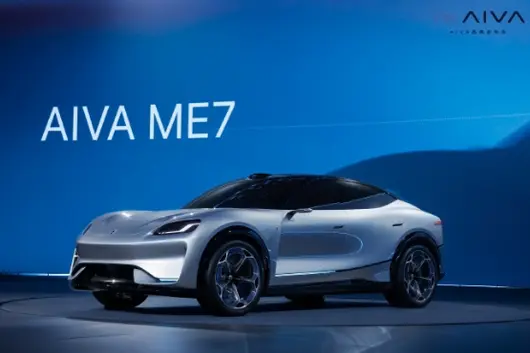
Another new car brand—AIVA—was released. The brand was launched by Saidou Technology, with the presence of Serres, CATL, state-owned capital platform, and Volcengine, and the brand focuses on the currently popular 'AI-defined cars' track.
The first mass-produced model AIVA ME7 is positioned as a crossover, to be released within the year, with the entire series covering the mainstream market above 200,000 yuan. The new car is produced at Serres Phoenix Factory, with plans to establish independent sales channels and target domestic and overseas markets. In terms of intelligence, AIVA will standardly equip an Intelligent Cockpit System based on the Doubao Large Model for the entire series, and Intelligent Driving will adopt the Assisted Driving Solutions provided by DeepRoute.ai.
5. Stelato New MPV, Hardcore SUV Spy Shots Exposed

Road test spy shots of two new models from the Stelato brand have been exposed, respectively a mid-to-large MPV and a Hardcore SUV. Reports say, the two new cars are planned to be launched successively within 2026. From the spy shots, the wheelbase performance of this MPV is outstanding, the side lines are neat and smooth, high probability it will focus on the mid-to-high-end new energy MPV market, focusing on intelligent cockpit, luxury driving experience and space performance, expected to be equipped with Huawei's latest HarmonyOS Intelligent Cockpit, high-level Intelligent Driving Assistance Systems and other core configurations.
The new Hardcore SUV targets the high-temperature rising high-end new energy hardcore off-road market. The road test vehicle body outline is tough and square, possessing typical high ground clearance and tough body proportions. The landing of the two new models will help Stelato build a 'Sedan+MPV+Hardcore SUV' diversified product matrix, break the limitations of single-model layout, and comprehensively cover mainstream high-end new energy submarkets.
6. Wang Chuanfu Makes Bold Claim: BYD to be No. 1 Globally in Five Years

BYD Chairman and President Wang Chuanfu stated at the 2025 Annual General Meeting held recently, "In the first quarter this year, new energy vehicles experienced the darkest moment. Affected by the January 2026 New Energy Vehicle Purchase Tax Halving Policy, car buying demand was front-loaded in November and December of last year. In the first two months this year, BYD's sales declined, but in the following March and April, with the iteration of new technologies and the rise in global oil prices, the company's new energy vehicle sales recovered month by month."
Wang Chuanfu stated that BYD's second-generation Blade Battery production capacity, released in March, is currently ramping up, and many operating data are starting to recover. With the production capacity ramping up, it is expected that monthly sales will increase by 20,000 to 30,000 units until year-end; at the same time, the company's cash flow will also improve synchronously, returning to previous levels. Looking forward, Wang Chuanfu believes that under domestic and foreign dual-wheel drive, BYD will gain significant growth in 2030, and it is expected that the company's production and sales scale can become No. 1 globally. In the past two years, BYD ranked fifth in the global auto sales rankings with sales of 4.27 million units and 4.6 million units; Toyota Motor has exceeded 10 million units in sales for five consecutive years, stably topping the global rankings.
7. 11th Gen Accord Major Redesign Incoming

Recently, the Head of Honda US Product Planning stated when interviewed by the media that the Honda Accord will undergo a major redesign, with the new car's appearance and driving experience all comprehensively innovated, with overall performance close to a brand new model.
According to informed sources, the design of the new Accord will reference the Honda 0 Series Pure Electric Sedan, and achieve balance in style. In appearance, the new car will possibly use longer shaped headlights, an optimized front grille, the rear end redesigned synchronously, paired with a new tail light group. Inside the cabin, it is expected to be equipped with a larger center console entertainment screen, while continuing the driver-centric cockpit layout. As for power, it is highly likely to continue using the current powertrain, but may be equipped with a brand new S+ Shift System.
8. Audi Unveils New Flagship Supercar

Audi unveiled the new flagship supercar Nuvolari, which is not only the spiritual successor to the R8, but is also called by Audi CEO Gao Denuo 'the manifesto for the brand's future'. This mid-engine supercar with a V8 Hybrid System, limited to 499 units, with an output of 1001 horsepower, has become the fastest and most powerful mass-produced road car Audi has ever had, planned to start delivery in the first half of next year, with an estimated starting price of about 500,000 pounds.
This car is Audi's first mass-produced car with a full carbon fiber exterior, the body is made of carbon fiber reinforced polymer, and is paired with an aluminum alloy space frame. The rear wing can be adjusted to three modes: closed, low drag, and high downforce. The cockpit uses a minimalist layout with the driver at the center, with key functions located within the driver's view. The powertrain is built based on the same component unit as the Lamborghini Temerario, after exclusive tuning by Audi, zero to hundred acceleration is only 2.6 seconds.

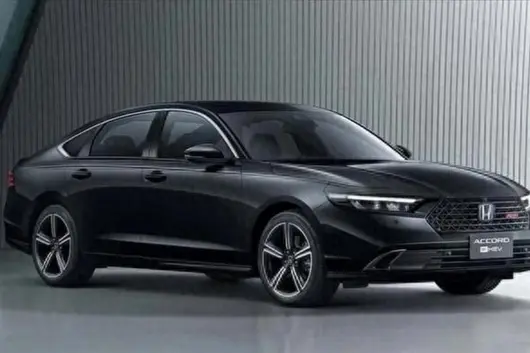
In the joint venture mid-size sedan market, the Honda Accord has always been an indispensable model, consistently ranking in the top sales tier. However, in the past two years, the market landscape has changed dramatically. Domestic new energy sedans have emerged strongly, while competitors like Camry and Passat continue to iterate, squeezing the Accord's market share. To reverse the decline, Honda launched a mid-cycle major redesign of the Accord in the Thailand market at the end of May 2026, going directly "All In Hybrid", no longer offering pure gasoline versions, while comprehensively upgrading the interior smart cockpit and optimizing exterior details, attempting to break the current stalemate. Many domestic car enthusiasts are asking, will this upgraded new Accord succeed in reversing the market decline after being introduced domestically and returning to the peak of the top-selling title in its class? Let's take a look together below.

The 2026 Honda Accord is a mid-cycle redesign version of the 11th generation model, officially released on May 28, 2026 in the Thailand market. A total of three trim models were launched, all are 2.0L e:HEV hybrid versions, namely e:HEV E, e:HEV EL, and e:HEV RS Panoramic. Highly likely to officially launch in the 3rd quarter of 2026. GAC Honda's actions have always been fast, so domestic simultaneous introduction should not make us wait long.
Regarding price, the official guide price range in the Thailand market is 1.479 million - 1.764 million Thai Baht, equivalent to about 120,000 - 144,000 RMB, the price was slightly adjusted downwards compared to the previous generation model.
The new car front face abandoned large-area chrome plating, replaced with a hexagonal glossy black honeycomb grille. Matrix LED headlights on both sides became longer and sharper, the daytime running light strips were also made into a "hook" shape, the gaze is sharp with a bit of Type-R flavor. The side still retains fastback coupe lines, but equipped with new style low-drag wheels, visually estimated to be 19 inches. The biggest change at the rear is the full-width taillights, with Honda LOGO embedded in the middle, the overall visual effect is wider and lower/crouching.

At the same time, the new car added "Urban Gray Pearl paint", the top RS version was also equipped with exclusive sport kits, full body blacked-out trim, black exterior mirror housing added.
Regarding dimensions, the 2026 Accord Thailand version overall length, width, height are 4962mm x 1862mm x 1449mm, wheelbase is 2830mm. As a standard mid-size sedan, these size parameters are quite good. Even if there is a small bump in the rear middle floor, daily full-load travel will not overly affect comfort. The only thing to note is that the hybrid model due to battery pack mounted at the bottom, the trunk floor is slightly raised, storage space is slightly reduced compared to the old fuel version.
In terms of interior, large area inside the car uses soft leather wrapping, door panels, center console, armrest box and other high-frequency contact areas are all delicate soft materials. High-spec RS version provides pure white interior option for the first time, white seats, white door panels, white instrument panel, further matched with metal trim accents, looks very high quality.
Center console standard equipment 12.3-inch floating center console large screen and 10.2-inch full LCD instrument panel, top version also equipped with 11.5-inch HUD head-up display. Regarding the car machine, expected to be equipped with Honda CONNECT 4.0 Smart Navigation Interconnect System, supports 5G online, Ai voice visible is available to speak, wireless CarPlay, CarLife and OTA upgrade functions.

Regarding configurations, equipped with Honda SENSING 360+ Safety Sense System. Besides conventional active braking, traffic sign recognition, lane keeping assist, lane departure warning, forward collision warning, full-speed range ACC, also added forward intersection vehicle warning, driver status monitoring, congestion assist with low-speed follow-stop, and highway indicator lane change assist functions. Regarding comfort configurations: all series equipped with keyless entry, one-key start, automatic climate control, rear independent air vents, electric sunroof, multifunction genuine leather steering wheel, seat height adjustment and other basic configurations. High-spec models add seat heating, ventilation functions, rear central armrest extended design, ambient light, auto-dimming rearview mirror, rain-sensing wipers, and other configurations.
Regarding power, Thailand market directly cancelled pure gasoline versions, all series equipped with 2.0L e:HEV hybrid system.

This 4th generation i-MMD dual-motor hybrid system, composed of 2.0L direct injection Atkinson cycle engine + dual motors, engine body maximum power 147 hp, peak torque 182N·m; drive motor maximum power 184 hp, peak torque 335N·m; system comprehensive output power reaches 158kW (about 215 hp), peak torque 350 N·m, transmission system matches E-CVT electronic continuously variable transmission. Expected 0-100km/h acceleration time will shorten from current 7.9 seconds to about 7.5 seconds, WLTC comprehensive fuel consumption is around 4.0L/100km.
Suspension is still front MacPherson rear multi-link, but high-spec models will add ADS full-time adaptive shock absorption system, minimum turning radius reduced to 5.2 meters.
Final question: New Accord, can it really reverse the decline?
Ya Li thinks, from the 2026 Accord redesign Thailand market performance, the new Accord has reached the first tier level of joint venture mid-size cars, compared to Camry and other same-class competitors will not lag behind.
Ya Li thinks it wants to reverse the market situation in the domestic market, return to the peak, unlikely. Today's mid-size car market is no longer the era where joint venture cars dominate alone, domestic new energy models' intelligence, cost-performance advantage is too obvious, occupied a large amount of market share.
But then again if GAC Honda is decisive enough on pricing, not holding back, give consumers a "Wow" surprise price in one step, it is still possible. As for whether it can achieve sales reversal after being introduced domestically, believe market feedback will give the most true answer.
© 2024 Bitauto.com. All Rights Reserved.
Bitauto (www.yiche.com and www.bitauto.com) is one of the most visited automotive websites in China. We provide detailed info on Chinese car brands available in your area. Please note that the information provided on this website is based on publicly available data and is for reference only. It may not be fully updated or accurate at all times.

Help us improve our website


