

HomeAutomotive Industry

Search History
Popular Searches
Dealer Login / Sign Up

The domestic new energy vehicle market saw concentrated price increases in May
Over 15 automakers adjusted prices or reduced benefits, Tesla Model Y Long Range version increased by 18,000 yuan, Performance version by 20,000 yuan, Xiaomi SU7 entire lineup adjusted up by 4,000 yuan, BYD increased the price of the LiDAR option package, NIO adjusted prices for some models and cancelled free battery swapping. The core reason is that battery raw materials such as Lithium Carbonate prices rose significantly, battery cost per vehicle increased by 3,000-6,000 yuan, plus automotive-grade chip price hikes, intelligent driving model costs increased an additional 3,000-7,000 yuan. The price hike wave indicates the industry is shifting from price wars to cost pass-through. Top-tier enterprises can still absorb some pressure thanks to scale, but mid-tier and new forces face tighter constraints. Consumers will likely wait and see in the short term. Long term, new energy penetration rate continues to steadily rise. May new energy retail penetration rate is expected to reach around 62.5%.
Dense launch of new cars after Beijing Auto Show
In May, multiple new cars were released. WEY V9X launched, 349,800-389,800 yuan, large luxury plug-in hybrid SUV, first on the Guiyuan S platform, pure electric range up to 470km, combined range 1700km. XPeng GX launched as a full-size flagship SUV, filling the brand's high-end gap. Voyah Taishan X8, Geely Galaxy Star 7, etc., also launched subsequently, focusing on mid-to-high-end plug-in hybrids and intelligent configurations. These cars concentrate in the interval above 300,000 yuan, indicating automakers are working harder in the high-end market with larger profit margins. Configurations generally strengthen 800V platforms, LiDAR, and hybrid systems. In actual usage scenarios, long range and recharging convenience are the main selling points.
Sales and Market Performance
January to May passenger car retail sales declined overall year-on-year, new energy retail also declined year-on-year but penetration rate continued to set new highs. BYD's domestic sales in April exceeded 320,000 units, continuing to lead. Exports remained strong, Chinese brands in Europe electric vehicle market share broke through 15% for the first time. Domestic demand was weak, exports became an important support. Independent brand retail share approached 70%, Geely and Changan stood out in traditional automaker transformation. Fuel vehicles exchanged price for volume but sales declined, inventory was high, indicating the trend of consumers shifting to new energy hasn't changed, just the rhythm affected by cost and economic environment.
Xiaomi Pure Electric SUV Delivery and Intelligent Hardware Cost Reduction
Xiaomi Auto delivered Xiaomi YU7 pure electric mid-to-large SUV in May. The vehicle uses an 800V high-voltage platform, equipped with 101 kWh battery, CLTC range 810 km. Intelligent driving system selected pure vision solution with dual Orin-X chips, computing power 508 TOPS. First month delivery quantity 12,000 units. Xiaomi reduced hardware costs through supply chain restructuring, bringing the price of intelligent SUVs at the same level down to 220,000 yuan. Pure vision intelligent driving solution has entered the scaled implementation stage in the mid-to-high-end market.
BYD Fifth Generation DM Model Sales and Market Share Changes
May statistical data, Qin L and Seal 06 equipped with Fifth Generation DM hybrid technology single month sales combined 60,000 units. The system engine thermal efficiency 46.06%, fuel consumption with depleted battery 2.9 liters per 100km, combined range 2000 km. Due to core components full industry chain self-production, automakers set starting price within 100,000 yuan. This pricing strategy led to market share decline of joint venture brand fuel vehicles at the same price level. May joint venture Class A fuel vehicle market share declined 12% year-on-year, speed of fuel to hybrid transformation accelerated.

Tesla FSD China Data Center Operations and Localized Testing
Mid-May, Tesla completed Shanghai data center expansion, autonomous driving system FSD obtained partial city map audit and data compliance access. End of May, Tesla pushed V12.5 version internal test to users in Shanghai, Shenzhen. The system adopts end-to-end large model technology, cancelled rule-based code. Test data shows, when the system deals with non-motor vehicles and complex intersections, intervention rate is 1.2 times per 100 km. Data compliance landing accelerated domestic automaker end-to-end intelligent driving model iteration speed, industry competition shifted to model training efficiency.

Chinese Automakers Building Overseas Factories and Supply Chain Localization Transformation
Late May, BYD Thailand factory and Geely Southeast Asia manufacturing base completed Phase II expansion, two factories annual capacity both reached 150,000 units. Chery Spain factory started assembly. Facing tariff policy changes, Chinese automakers May adjusted going global strategy, shifted from complete vehicle exports to full industry chain localization. Data shows, May Chinese car overseas factory local parts procurement rate increased 15 percentage points. Through capital and technology output to respond to trade barriers, reshaped global automotive supply chain, overseas factory profit ratio became indicator to measure automaker operation status.

Traditional 4S Dealership Channel Transformation and New Energy Outlet Expansion
May passenger car market data shows, new energy vehicle penetration rate stable above 53% for three months. Affected by this, traditional fuel vehicle 4S dealerships appeared store closure phenomenon, May nationwide closed fuel vehicle stores quantity 180 stores. Meanwhile, automakers converted shopping mall direct stores to comprehensive delivery centers. Among newly added new energy vehicle service outlets this month, comprehensive centers integrating sales, delivery, after-sales accounted for 70%. Channel structure changes indicate, new energy vehicles completed market education, sales network layout entered service efficiency competition stage from traffic acquisition stage.
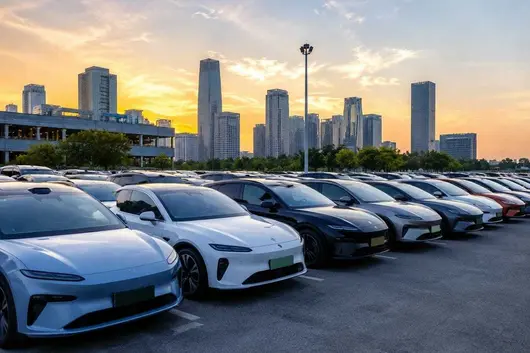

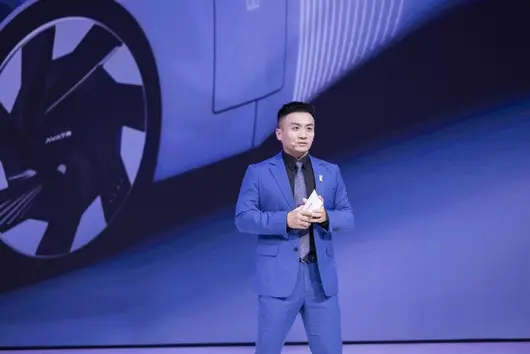
June 13, the 28th Chongqing International Automobile Exhibition kicked off. As the annual barometer of the automotive market in Central and Western China, beneath the bustling surface of this auto show lies a collective anxiety haunting the entire industry: price wars playing out in turn, the configurations arms race intensifying, yet consumers are becoming increasingly numb. While most brands are still fighting in the red ocean of "comparing low prices and competing on specs", Avatr unveiled its full range of products and the concept car VISION XPECTRA, using the three irreplaceable cards of design, technology, and brand to provide another growth path for the Chinese car market suffocatingly trapped in involution.
Five years since establishment, gaining over 260,000 global users, entering over 40 countries and regions and achieving overseas profitability, Avatr's logic for breaking the deadlock is exactly jumping out of the industry's inertia trap of involution.

While Others Pile Up Surface Configurations, Avatr Intensifies Underlying Safety
The current electric vehicle market has fallen into a distorted configuration race: screens becoming larger and more numerous, seat functions becoming more comprehensive, radar counts continuously increasing, brands are frantically adding features in "visible areas". However, the underlying technologies truly concerning driving and passenger safety, few brands settle down to cultivate deeply. In Avatr's view, safety is the bottom line of luxury, and the core proposition where cutting corners is absolutely forbidden.
Taihang Intelligent Control 2.0, released in March this year, is the concentrated implementation of this logic. Many only noticed the eye-catching performance of the 712 kW system maximum power and 2.71-second 0-100 km/h acceleration, but ignored the true core of this system—it deeply embedded safety capabilities into the chassis and e-drive system, rather than staying on paper parameters.
Unlike traditional four-wheel drive which can only implement front-rear power distribution, Taihang distributed e-drive can independently and precisely control the speed and torque of left and right wheels. Facing complex road conditions such as mountains, slippery, ice and snow, the system can identify slipping wheels at millisecond level and actively correct vehicle posture. Extreme scenario capabilities such as stable driving at 220 km/h with four-wheel blowouts, regenerative braking providing braking force after mechanical brake failure, anti-water slippage, have all become calibration standards for mass-produced models. More importantly, this is not concept technology for show platforms, but mass-produced functions already equipped on New Avatr 12 and Avatr 06T. The "Taihang Safety Series" special experience activity launched this month brings lab technology in front of users, conducting real-scenario tests in more than 10 cities across the country.
When the industry is all engaged in involution on visible configurations, Avatr chooses to cultivate deeply in the "invisible underlying". Beneath the decent surface, is a more solid safety foundation. This is the core that new luxury should have.

While Others Imitate and Follow Trends, Avatr Makes Originality a Global Passport
At this Chongqing Auto Show, Avatr's first concept car VISION XPECTRA's debut in the Mountain City was one of the highlights attracting the most attention in the whole venue. The panoramic prism cabin transparent like a glass greenhouse, "Emotional Vortex" as the core of intelligent interaction carries emotional connection, inflatable materials and 3D knitting processes give machines temperature and vitality. This car is not just an imagination of future travel, but also the design prototype for Avatr's second-generation mass-produced products.
Many people believe "design is metaphysics", but in the global automotive market, original design is exactly the hardest core brand moat. Body shapes can be imitated, configuration lists can be piled up, but a unique design language and aesthetic system can never be copied.
Avatr's confidence lies in, its original design has already got the ticket to the global market. Between 2024 and 2026, Avatr 11, 12, 07, 06 consecutively won Red Dot, iF, IDA and other multiple global top design awards, becoming one of the Chinese new luxury brands with the most international design awards. Behind this recognition, is the support of a complete global design system: Munich and Shanghai two major design centers, gathering over 200 design talents from 25 countries globally, defining the design philosophy of "Emotional New Luxury" from the source.
Original design is never a sentiment slogan, but a passport for brands to go global. In mature luxury markets such as Europe, consumers have extremely high requirements for brand aesthetics. Low prices and piling configurations make it hard to break through. Only unique design languages and brand temperament can grab a place in the home field where hundred-year luxury brands reside.

While Others Go Overseas for Low Price and High Volume, Avatr Exports High-End Brands
2026 is a big year for Chinese car companies going overseas, but the overseas logic of most brands has not jumped out of the existing framework: domestic market involution has peaked, then turn overseas to seek incremental growth, still walking the old road of low price and high volume. While Avatr's overseas route, from the start, chose a differentiated high-end path.
To date, Avatr has entered over 40 countries and regions globally, and has achieved profitability in multiple mature high-end markets first. In markets such as Thailand, UAE, Avatr firmly stays in the first tier of high-end pure electric with pricing higher than domestic, not relying on low prices to exchange for scale, but instead relying on product power and brand power to stand firm in the high-end market. This is not common among Chinese overseas brands.
By the end of this year, Avatr will officially land in Europe—this birthplace of global luxury cars, and also the ultimate arena for brand value. According to the plan, by 2030, Avatr's goal is 800,000 units global annual sales, overseas sales proportion exceeding 40%, business covering 110 countries and regions. More notably, Avatr's overseas strategy core is not "boosting sales", but "establishing brands". The patience of not pursuing short-term scale is exceptionally scarce in the impetuous industry—once the value of a high-end brand is diluted by low prices, it becomes extremely difficult to rebuild.
Meanwhile, Avatr's brand games are also breaking through the traditional boundaries of the automotive industry. Partnering with Mango TV to link "Sailing", "Singer" etc. nine top variety show IPs, becoming the Portuguese national team's global official partner. Not simple logo insertion, but truly resonating with users' life loves. When cars evolve from transport tools to emotional carriers, brands are no longer cold symbols, but cultural symbols bound with user lifestyle.

Conclusion: Looking back from the five-year establishment milestone, Avatr's core choices have always been clear: not being swept away by industry involution, persist in its own development rhythm. Others compete on terminal prices, it competes on underlying technology; others pile surface configurations, it does original design; others rush volume overseas at low prices, it operates high-end brands.
As Wang Hui, Chairman of Avatr Technology, said: "On the automotive race field, the Chinese team has already steadily stood in the center of the stage, competing on the same field with global hundred-year luxury brands, opening a true world-class competition." The core of this competition has never been price levels, but the barriers of core technology, uniqueness of design language, and brand value recognized by the global market.
In the second half of the year, the Smart & Elegant Big Five-Seat Luxury SUV Avatr 07L is about to be released. The flagship large six-seat SUV equipped with CATL Kunlun Condensed Battery for the first time will also appear within the year. In the next five years, can Avatr truly stand firm in the global market and confront hundred-year luxury brands head-on? The answer is slowly becoming clear in time.


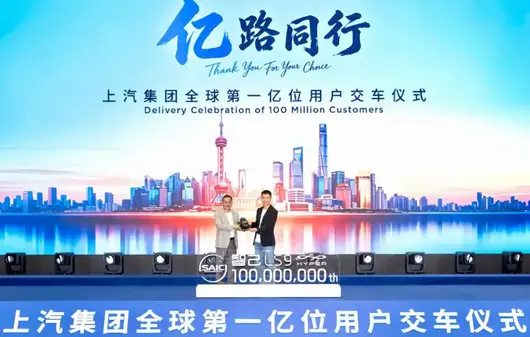
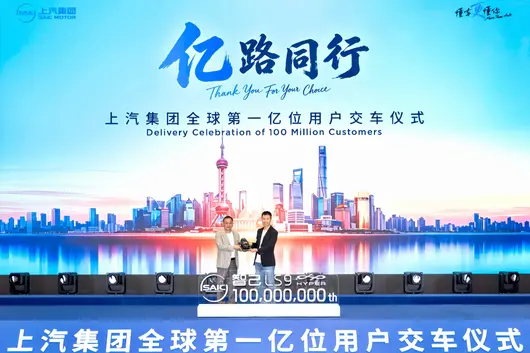
On May 28, 2026, SAIC Motor's "Global 100 Millionth User Vehicle Delivery Ceremony" was held at the World Living Room of the North Bund in Shanghai. Over ten passenger car brands and nineteen models under SAIC, through the method of "Global Relay Delivery", traversed mountains and seas, crossed continents, and connected globally, making SAIC Motor the first Chinese automotive group to accumulate production and sales exceeding 100 million vehicles, casting a new milestone for the Chinese automotive industry.

In 1955, Shanghai Internal Combustion Engine Parts Manufacturing Company was established, marking the start of Shanghai's automotive industry. In 1958, workers hammered out the first "Phoenix" sedan, achieving a "zero breakthrough" in Shanghai's sedan manufacturing. For over 70 years, SAIC has witnessed and driven the entire process of China's automotive industry from nothing to something, from weak to strong: Santana rolled off the line in 1983, opening joint venture cooperation; Shanghai GM was established in 1997, creating the "Shanghai Speed" of 23 months from factory construction to vehicle launch; the independent brand Roewe was born in 2006, and the world's first internet car Roewe RX5 was launched in 2016; the high-end intelligent electric brand IM Motors was established in 2020.
Running through this journey is SAIC's user philosophy of "Understanding Cars, Understanding You Better". From the Santana localization community to Joint Venture 2.0 technology co-creation, from internet cars to full-by-wire chassis, solid-state/semi-solid-state batteries, and AI large models on vehicles — every leap is an upgrade of the "Understanding Cars" capability, and a continuity of the original intention of "Understanding You". 100 million vehicles, but also the concentrated fulfillment of 100 million users' trust.
The first 100 millionth vehicle delivery model, IM LS9 Hyper, is a masterpiece of SAIC's over 70 years of technical accumulation, ushering in a new era of the "New Three Major Components" for new energy vehicles. It is equipped with next-generation chassis technology, the industry-first full-by-wire four-wheel steering; next-generation intelligent driving hardware, 520-line ultra-view LiDAR + NVIDIA Thor chip, next-generation three-electric systems — whole-domain 800V high-voltage platform and Star Super Range Extender. Fully pre-embedded redundant capabilities for continuous evolution towards L3 and above high-level intelligent driving.
At the same time, IM LS9 Hyper is the first to equip SAIC's Gold Label Hurricane three-motor, calmly joining the Performance 3-Second Club; furthermore, collaborating with Purple Mountain Laboratories, globally launching "Intrinsic Security" technology, expanding the automotive safety boundary from "Physical Safety" to "Information and System Security", which is an essential security cornerstone of the AI era.
Behind the 100 million vehicles is SAIC's full-value chain closed loop covering six major sectors: passenger vehicles, components, mobility, services, finance, international operations, and innovative technology. From January to April 2026, SAIC's cumulative sales reached 1.302 million units, ranking as the China automotive sales champion for four consecutive months. Among them, independent brand sales reached 910,000 units, accounting for nearly 70%; new energy vehicle sales 412,000 units; overseas market sales 459,000 units, a surge of 50.2% year-on-year.
At the delivery ceremony scene, SAIC's full brands and full product matrix collaborated and exerted strength. Independent brands went all out: Shangjie Z7, Huajing S, Roewe M7, MG4 Semi-Solid State Battery Version, Wuling Starlight 560, Maxus eDeliver5, Hongyan Heavy Truck, Yuejin Dana T1, Sunwin Pure Electric Bus, IVECO Juxing EV, etc. were successively delivered, covering multiple scenarios such as personal travel, family life, commercial operations, and logistics transport.
Joint venture brands concentratedly displayed "Joint Venture 2.0" results: Volkswagen ID. ERA 9X will globally launch equipped with the Momenta R7 Reinforcement Learning World Model, delivering over 7,000 units within one month of launch; Audi E7X plans to become Audi's first global model to implement L3-level autonomous driving landing; Buick Zhijing E7 is built based on the "Xiaoyao" Super Fusion Architecture, delivering over 10,000 units within one month of launch.

Starting from the main venue in Shanghai, the delivery scenes were continuously lit up in multiple domestic cities such as Nanjing, Liuzhou, Taiyuan, as well as in countries such as the UK, Indonesia, and Singapore, pioneering a new narrative method for Chinese automotive brands.
Behind this is the deep foundation of SAIC's global layout. SAIC is a pioneer of Chinese automotive enterprises "Going Global": owning over 100 parts production bases overseas, over 3,000 dealership networks, built 3 major R&D innovation centers including London, and 4 production and manufacturing centers in Thailand, Indonesia, India, and Pakistan; Anji Logistics owns 42 Ro-Ro ships of various types, 8 international routes covering Southeast Asia, Europe, and the Americas.
NOWadays, SAIC's products and services are distributed in over 170 countries and regions, with cumulative overseas sales breaking 7 million units. In 2025, SAIC launched the overseas "Glocal Strategy" (Global + Local), accelerating the shift from "Product Going Overseas" to "Value Chain Going Overseas", letting "China Smart Manufacturing" further go global.
The final focus of "Understanding Cars, Understanding You Better" is the travel life of every real user. "GetApp" founder Luo Zhenyu, as Huajing S No. 001 Experience Officer, from New Year's Eve speech praising Huawei Qiankun Intelligent Driving to entering the factory to witness the roll-off; Former German national football team member Yang Chen chose ID.ERA 9X, because its Golden Range Extender and Long-termism coincide; Cao Kailiang ordered a car for the whole family, then idol Jay Chou happened to become the Buick MPV Family Spokesperson; Charity blogger Liu Jia cut hair and gave company for left-behind children in Guangxi mountains for five consecutive years, Buick assisted immediately, he was moved by the Zhijing E7 "Perfect Cockpit". From self-media bloggers to village secretaries, from charity guardians to logistics enterprises — every user is a microcosm of real life, this is the most vivid interpretation of "Understanding Cars, Understanding You Better".
100 million vehicles is the phased answer sheet of SAIC's over 70 years of development, and is more of a new starting line for SAIC facing the intelligent electricity future "Second Entrepreneurship". In 2014, SAIC actively implemented the important instruction of "Developing new energy vehicles is the inevitable path for China to move from a car big power to a car strong power", taking the lead in comprehensive transformation. Twelve years later, from the "Leading the Charge" in intelligent electricity transformation to the "Ten Thousand Horses Galloping" in independent joint ventures, passenger/commercial use, domestic/overseas, SAIC will continuously use "Understanding Cars, Understanding You Better" as the user philosophy, letting technology innovation truly benefit every user.
From 1955 to 2026, from the first user to the 100 millionth user, from startup exploration to industry leadership — SAIC will continue to walk the 100 Million Mile Path together with global users and global partners, co-creating a new future for beautiful mobility.
China's First 100 Million-Level Automaker Emerges
Journey of 100 Million Together: SAIC Motor Welcomes Global 100 Millionth User

May 28, 2026, SAIC Motor's "Global 100 Millionth User Handover Ceremony" was held at Shanghai North Bund World Living Room. More than 10 vehicle brands and 19 models under SAIC, via "Global Relay Delivery", traversed mountains and seas, crossed continents, and connected globally. SAIC Motor thus became the first Chinese automotive group to exceed 100 million in cumulative production and sales, setting a new milestone for China's automotive industry.
From "Phoenix" to "IM": 100 Million Vehicles Witness the Striving and Original Aspiration of China's Automotive Industry
In 1955, Shanghai Internal Combustion Engine Parts Manufacturing Company was established, marking the start of Shanghai's automotive industry. In 1958, workers hammered out the first "Phoenix" brand sedan, achieving the breakthrough of "zero" in Shanghai sedan manufacturing.

Over 70 years, SAIC has personally experienced and promoted the entire process of China's automotive industry from nothing to something, from weak to strong: Santana went off the line in 1983, opening joint venture cooperation; Shanghai GM was established in 1997, creating the "Shanghai Speed" of building a factory and producing vehicles in 23 months; the independent brand Roewe was born in 2006; in 2016, the world's first Internet car Roewe RX5 was launched; in 2020, the high-end smart electric brand IM Motors was established.

Running through this journey is SAIC's consistent user philosophy of "Knows Cars, Knows You Better". Knowing cars is the extreme pursuit of core technologies; knowing you is precisely implementing every cutting-edge technology into a perceptible and enjoyable mobility experience for users. From Santana localization consortium to Joint Venture 2.0 technology co-creation, from Internet cars to full electronic chassis, solid/semi-solid batteries, and large AI models on cars — every leap is an upgrade in the capability of "knowing cars", and a inheritance of the original aspiration of "knowing you". 100 million vehicles is also a concentrated redemption of 100 million users' trust.
The 100 Millionth Vehicle: IM LS9 Hyper, Condensing 70+ Years of SAIC Technology
The first 100 millionth vehicle delivery model, IM LS9 Hyper, is a masterpiece condensing SAIC's 70+ years of technical accumulation, opening a new era of "New Three Major Components" for new energy vehicles. It is equipped with next-generation chassis technology, the world's first full electronic four-wheel steering in its class; next-generation intelligent driving hardware, 520-line ultra-view LiDAR + NVIDIA Thor chip; next-generation powertrain — global 800V high-voltage platform and Stellar Super Range Extension. It fully pre-embedded redundancy capabilities for continuous evolution towards L3 and above advanced intelligent driving. At the same time, IM LS9 Hyper is the first to搭载 SAIC Gold Badge Hurricane Three-Motor, effortlessly joining the Performance 3-second Club; combined with Zijinshan Laboratory, it globally debuted the "Endogenous Security" technology, expanding the automotive safety boundary from "Physical Safety" to "Information and System Safety", a necessary safety cornerstone of the AI era.

The 100 Millionth User, Momenta CEO Cao Xudong, is SAIC's core strategic partner in the intelligent driving field. The intelligent driving technology co-created in-depth has empowered multiple brands of independent and joint ventures. "Partners Become Owners" is not only a satisfactory delivery between manufacturer and user, but also a deep resonance between intelligent automotive ecosystem partners.

System Strength: SAIC's Full Brand Matrix Global Relay Delivery
Behind the 100 million vehicles is SAIC's full value chain closed loop covering six sectors: vehicles, parts, mobility and service, finance, international operations, and innovative technology. From January to April 2026, SAIC cumulatively sold 1.302 million units, ranking first in China's automotive sales for four consecutive months. Among them, independent brand sales were 910,000 units, accounting for nearly 70%; new energy vehicle sales were 412,000 units; overseas market sales were 459,000 units, a year-on-year surge of 50.2%.
At the delivery ceremony site, SAIC's full brand and full product matrix worked together. Independent brands went all out: Shangjie Z7, Huajing S, Roewe M7, MG4 Semi-Solid Battery Version, Wuling Starlight 560, Maxus eDeliver5, Hongyan Heavy Truck, Yuejin Danan T1, Sunwin Pure Electric Bus, IVECO Juxing EV, etc., were delivered successively, covering diversified scenarios such as personal travel, family life, commercial operations, and logistics transport. Joint venture brands concentratedly revealed "Joint Venture 2.0" results: Volkswagen ID. ERA 9X will globally debut equipped with Momenta R7 Reinforcement Learning World Model, delivering more than 7,000 units one month after launch; AUDI E7X plans to become AUDI's first global model to realize L3-level autonomous driving landing; Buick Zhijing E7 is built based on the "Xiaoyao" Super Fusion Architecture, delivering over 10,000 units one month after launch.

Departing from Shanghai's main venue, delivery scenes were lit up in succession in multiple domestic cities such as Nanjing, Liuzhou, Taiyuan, and countries such as the UK, Indonesia, and Singapore, pioneering a new narrative method for Chinese automotive brands. Behind this lies SAIC's deep foundation in global layout. SAIC is a pioneer of Chinese automotive enterprises "going out": it has over 100 parts production bases and over 3,000 distributor networks overseas, built 3 major R&D innovation centers including London, and 4 production and manufacturing centers in Thailand, Indonesia, India, and Pakistan; Anji Logistics owns 42 RoRo ships, with 8 international routes covering Southeast Asia, Europe, and the Americas. Nowadays, SAIC's products and services are distributed in over 170 countries and regions, with overseas cumulative sales exceeding 7 million units. SAIC MG has been ranked first in Chinese brand Europe sales for 11 consecutive years; in 2025, Europe annual sales exceeded 300,000 units, becoming the first Chinese automotive brand to exceed 1 million cumulative sales in Europe and the UK. In March this year, MG held a Technology Day in Frankfurt, Germany, globally debuting semi-solid batteries and Hybrid+ hybrid technology, with the Hybrid+ family's overseas monthly sales exceeding 20,000 units. In 2025, SAIC released the overseas "Glocal Strategy" (Global + Local), accelerating the shift from "Product Going Overseas" to "Value Chain Going Overseas", letting "Made in China Intelligence" move further into the world.

From "Know Cars" to "Know You": A Delivery Ceremony Where Users Take Center Stage
The final foothold of "Knows Cars, Knows You Better" is the mobility life of every real user. Luo Zhenyu, founder of Dedao APP, as the No. 001 Experience Officer of Huajing S, praised Huawei Qiankun Intelligent Driving in the New Year's Eve speech to visiting the factory to witness roll-off; former German national team player Yang Chen chose ID. ERA 9X, as its golden range extension and long-termism coincided; after Cao Kailiang's family ordered a car, idol Jay Chou happened to become the Buick MPV family spokesperson; charity blogger Liu Jia cut hair and gave companionship to left-behind children in Guangxi mountains for five consecutive years, Buick provided aid immediately, he was moved by Zhijing E7's "Full Score Cabin". From self-media bloggers to village secretaries, from charity guardians to logistics enterprises — every user is a microcosm of real life, this is the most vivid interpretation of "Knows Cars, Knows You Better".
100 million vehicles is a phased answer sheet of SAIC's 70+ years of development, and even more so a new starting line for SAIC's "Second Entrepreneurship" towards the smart electric future. In 2014, SAIC actively implemented the important instruction "Developing new energy vehicles is the inevitable path for China to become a great auto power from an auto power", taking the lead in comprehensive transformation. Twelve years later, from "Leading the Pack" in smart electric transformation to "Thousands of Horses Galloping" in independent and joint venture, passenger and commercial, domestic and overseas, SAIC will continuously use "Knows Cars, Knows You Better" as the user philosophy, letting technological innovation truly benefit every user.
From 1955 to 2026, from the first user to the 100 Millionth user, from startup exploration to industry leadership — SAIC will continue to travel together with global users and global partners on a Journey of 100 Million, co-creating a new future of beautiful mobility.



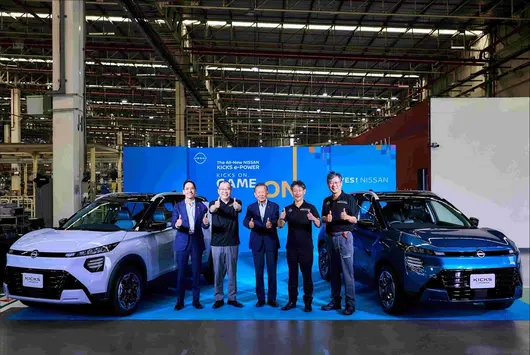
Over the past few decades, Thailand has remained one of the most successful nations in ASEAN's automotive industry. Japanese brands like Toyota, Honda, Isuzu, Mitsubishi, and Nissan have long treated Thailand as ASEAN's production and export hub, earning Thailand the nickname 'Detroit of Asia'. At its peak, Thailand's annual car exports neared 1 million units, with a supply chain system that was the most complete in ASEAN.

However, now, this automotive kingdom that once seemed impregnable is showing increasing unease. The reason is simple: Chinese car brands are rapidly transforming the entire ASEAN automotive market. Especially since the arrival of the EV era, Chinese brands have entered the Thai market almost like an 'overwhelming force'. Chinese brands keep releasing new models with lower prices and higher specs, while also sparking fierce price wars.

Consumers are naturally happy as they can buy cheaper, more high-tech EVs. But the issue is, the ones truly starting to feel panicked are actually Thai local car suppliers. Recently, multiple Thai auto-related associations, including the Thai Automotive Parts Manufacturers Association (TAPMA) and the EV Association, have publicly demanded the government raise taxes on imported Chinese EVs, while also strengthening local content (localization rate) regulations, hoping to protect the local automotive industry.

Many people might think: 'Isn't it great to have cheap EVs? Why would suppliers be afraid?' Because a truly powerful automotive industry is never just about 'selling many cars', but about whether there is a complete industrial chain behind it. For decades, Japanese factories in Thailand built not just assembly plants, but a whole complete ecosystem. From engines, gearboxes, exhaust systems to steel, wiring harnesses, plastic parts, and electronic modules, almost all involved numerous local suppliers. It was precisely this that allowed Thailand to build thousands of automotive-related companies and support a large workforce.
But after the EV era began, the entire game rules started to change. Because many Chinese EV companies adopt the vertically integrated (vertical integration) model. Simply put, they produce a lot of core parts themselves, or directly use existing Chinese supply chains, rather than supporting local suppliers on a large scale like Japanese brands did in the past.

What shocked the Thai automotive industry the most was that, according to what the Thai Automotive Parts Manufacturers Association revealed earlier, there are currently about 660 auto parts suppliers in Thailand, but the companies that successfully secured orders from Chinese brands are said to be only about 18. This number explains the situation very well. In other words, although Chinese EV sales in Thailand are rising, a large number of Thai local suppliers are not truly benefiting.

Many Chinese brands have built factories in Thailand, but batteries, motors, electronic control systems, and even some chassis and electronic architectures still highly rely on the Chinese local supply chain. The result is that local suppliers get very limited orders. More realistically, when Chinese EVs start slashing prices crazily, Japanese brand sales also begin to suffer. For Thai suppliers long relying on Toyota, Honda, and Isuzu orders, this equals a 'double blow'.

On one side, Chinese brands are not giving too many orders; on the other, traditional Japanese orders are starting to decrease. According to local industry organizations, orders for some Thai suppliers have dropped significantly, with some factories starting to shorten work hours and lay off staff, while some small suppliers closed down directly. So the Thai automotive industry's demand for the government to raise Chinese EV taxes actually reflects a real concern, not that 'Chinese cars sell too much', but that the entire local automotive industry might be slowly hollowed out.
Because if in the future the Thai market only has 'selling many Chinese EVs', but local suppliers, R&D capabilities, and industrial technology do not grow in sync, then looking long-term, the entire industrial chain will actually become increasingly fragile.
In the past few years, the development speed of Chinese brands in Malaysia has also been incredibly astonishing, and the biggest advantage remains 'high specs, low price'. In the past, many consumers had doubts about Chinese cars, but now more and more people are discovering that Chinese brands not only have increasingly beautiful designs but their tech features are even starting to surpass some Japanese and Korean brands.
May 28, inside the Shanghai North Bund World Living Room, the atmosphere was fervent. Meanwhile, the footage on the large screen at the Chengdu Jixiang Buick branch venue, thousands of miles away, jumped in sync with the main venue. As the IM LS9 Hyper slowly drove into the center of the stage, and as Momenta CEO Cao Xudong received the car key from the Chairman of SAIC Motor, applause rang out on the scene — this was not only the moment of delivery to the 100 millionth user of SAIC Motor, but also the first time a vehicle enterprise in China's automotive industry welcomed a cumulative production and sales volume breaking 100 million vehicles.

As an automotive editor, witnessing this historical node at the Chengdu branch venue, the feeling was quite complex. Over the past few years, China's automotive market has experienced a transition from growth to stock, with price wars, elimination battles, and surging trends of going global alternating on stage. Against this broad backdrop, a local car enterprise able to cross the threshold of 100 million vehicles must necessarily possess a deep logic beyond a single product cycle or any single tech explosion.

SAIC's history almost overlaps with China's automotive industry history. In 1955, the Shanghai Internal Combustion Engine Parts Manufacturing Company was established; in 1958, workers hammered out the first "Phoenix brand" sedan with hammers. Over the subsequent seven decades, SAIC witnessed the entire process from nothing to something, from weak to strong. In 1983, the first Santana was hand-assembled off the line, opening the curtain of China's automotive joint venture cooperation, and also driving the establishment of a modern parts system.

In 1997, Shanghai GM was established, the "Shanghai Speed" of building a factory and launching cars in 23 months is still talked about by the industry to this day; the China's first joint venture professional automotive design and R&D center built at the same time marked SAIC's transformation from pure manufacturing to building technical capabilities. In 2006, the independent brand Roewe was born; in 2016, the world's first Internet car Roewe RX5 went on sale; in 2020, the high-end smart electric brand IM Motors was established. This timeline clearly outlines the evolution trajectory of a car enterprise from learning, chasing, parallel, to local leading.

But historical accumulation is just the foundation. The achievement of 100 million vehicles requires the continuous release of system capabilities. SAIC's system architecture covers six major sectors: whole vehicles, parts, mobility, services, finance, international business, and innovation technology, forming a tightly coordinated full value chain closed loop. In January-April 2026, SAIC's cumulative sales reached 1.302 million units, ranking first among China's car enterprises for four consecutive months, with independent brands accounting for nearly 70%, new energy vehicle sales reaching 412,000 units, and overseas market sales of 459,000 units, a year-on-year growth of 50.2%. These data indicate that SAIC's growth does not rely on the pulling power of a single sector, but is the result of multiple engines including independent and joint venture, passenger and commercial, domestic and overseas all working simultaneously.

Specific to the product level, the full brand matrix displayed at the delivery ceremony site was impressive. For independent brands, Shangjie Z7, Huajing S, Roewe M7, MG4 Semi-Solid State Battery Version, Wuling Starlight 560, Maxus eDeliver5, Hongyan Heavy Trucks, Yuejin Dana T1, Sunwin All-Electric Bus, Iveco Juxing EV, and other models cover full scenarios from personal travel to commercial operations, from urban logistics to public transport. Joint venture brands concentrated on displaying the results of "Joint Venture 2.0": Volkswagen ID. ERA 9X global premiere equipped with Momenta R7 Reinforcement Learning World Model, delivery exceeded 7,000 units in one month after launch; Audi E7X plans to become Audi's first global model achieving L3-level autonomous driving landing; Buick Zhijing E7 is built based on the "Xiaoyao" Super Fusion Architecture, delivery broke 10,000 units in one month after launch. From "Market for Technology" to "Technology Co-creation", SAIC's role in joint venture relationships has undergone a substantive shift.


Accumulation at the technical level is the core power supporting this system's operation. The first 100 million vehicle delivery model, IM LS9 Hyper, can be regarded as a concentrated presentation of SAIC's technical accumulation over seven decades. It is equipped with full-line drive-by-four-wheel steering first in its class, 520-line ultra-vision LiDAR, NVIDIA Thor Chip, Full-Domain 800V High-Voltage Platform, and Star Super Extended-Range System, comprehensively pre-installing redundancy capabilities for L3 and above high-level intelligent driving. SAIC Gold Badge Hurricane Tri-Motor first launch has propelled it into the Performance 3-Second Club, and the "Intrinsic Security" technology jointly premiered globally with Purple Mountain Laboratories expands the car safety boundary from traditional physical safety to the field of information and system security. It is worth noting that the 100 millionth user is exactly Momenta CEO Cao Xudong, SAIC's core strategic partner in the intelligent driving field. The intelligent driving technology deeply co-created by both parties has empowered multiple independent and joint venture brands. This coincidence of "Partner Becomes Car Owner" reflects SAIC's open and collaborative industrial philosophy in the era of smart electric vehicles.


Globalization layout is another important dimension of SAIC's system capability. As the earliest and largest representative of China's automotive enterprises "Going Global", SAIC has over 100 parts production bases and over 3,000 dealer networks overseas, building London's 3 major R&D innovation centers and Thailand, Indonesia, India, Pakistan 4 manufacturing production centers. Anji Logistics possesses 42 Ro-ro ships of various types, with 8 international routes covering Southeast Asia, Europe, and the Americas. Currently, SAIC's products and services are spread over more than 170 countries and regions, with cumulative overseas sales breaking 7 million units. MG has ranked as the European sales champion for Chinese brands consecutively for 11 years, with 2025 European annual sales breaking 300,000 units, becoming the first Chinese car brand with cumulative sales breaking one million in Europe and the UK. In March this year, MG held a Tech Day in Frankfurt, Germany, premiering the world's semi-solid state battery and Hybrid+ Hybrid Technology, the latter's overseas monthly sales has broken 20,000 units. After launching the overseas "Glocal Strategy" (Global + Local) in 2025, SAIC is accelerating from "Product Going Global" to "Value Chain Going Global".

If technology and systems are rational hard power, then user stickiness is emotional soft power. At the delivery ceremony, SAIC displayed multiple sets of user stories: Guode APP Founder Luo Zhenyu as the Huajing S No. 001 Experience Officer, from praising Huawei Qiankun Intelligent Driving in the New Year's Eve Speech to entering the factory to witness the offline; Former German National Team Player Yang Chen chose ID.ERA 9X, because its Golden Extended Range and Long-termism Philosophy coincided; London Intern Doctor Natalia inherited her grandfather's MG sentiment; The returning couple brought MG memories from their time in the UK back to the domestic market; Public Welfare Blogger Liu Jia provided haircutting and companionship to left-behind children in Guangxi Mountainous Areas for five consecutive years, Buick provided assistance immediately, he was moved by Zhijing E7's "Full Score Cabin". These stories have no deliberate emotional stirring, but clearly convey one message: SAIC's user stickiness does not come from marketing scripts, but comes from products and services responding to real needs in different scenarios.

Returning to the initial question: Why was SAIC able to become the first car enterprise in China to break 100 million cumulative production and sales? The answer may perhaps be summarized in a few elements without shortcuts — sufficient long time accumulation, sufficiently wide system coverage, sufficiently deep tech investment, and sufficiently fine user insights. These elements taken out individually, many car enterprises are doing, but those able to continue for over seven decades and maintain balanced development in various dimensions are not common.

100 million vehicles is a milestone, but also a new starting point. In 2014, SAIC was the first to fully transform to new energy; twelve years later, from the "Leading the Pack" of "Smart Power Transformation" to "Thousands of Horses Galloping" of independent and joint venture, passenger and commercial, domestic and overseas, SAIC has consistently carried the user concept of "Know Cars Better, Know You Better" throughout. From 1955 to 2026, from the first user to the 100 millionth user, SAIC's next journey is just beginning.

Auto Circle On Cars
From an industry perspective, SAIC's 100 million vehicles is not only a breakthrough in scale numbers, but also marks the capability leap of China's automotive industry from "Joint Venture Dependence" to "Independent Dominance". It is worth noting that SAIC did not rely on a single hit product or short-term trend, but through seven decades of systematic construction, formed hard-to-replicate comprehensive advantages in dimensions such as technology, manufacturing, supply chain, and globalization. The next-generation tech cluster represented by IM LS9 Hyper, as well as the cumulative sales of over 7 million in overseas markets, prove that SAIC already possesses the basic base to compete on the same stage with multinational giants. After 100 million vehicles, how to convert scale advantages into continuous innovation efficiency and brand premium will be the core proposition of SAIC's "Second Entrepreneurship".

China's first automobile group to surpass 100 million cumulative production and sales has been born!
Recently, SAIC Group welcomed its "Global 100 Millionth User", and SAIC Group thereby became the first Chinese automobile group to surpass 100 million cumulative production and sales, casting a new milestone for the Chinese automobile industry.
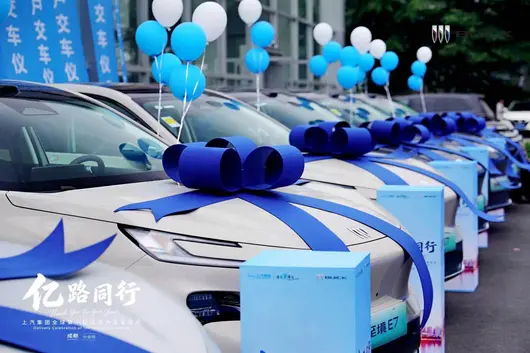
To celebrate this important historical moment, SAIC Group held a grand "Global 100 Millionth User Car Handover Ceremony" on May 28 at the Shanghai North Bund World Living Room. More than 10 complete vehicle brands and 19 car models under SAIC carried out "Global Relay Delivery", crossing mountains and seas, spanning continents, and connecting the globe. On that day, a grand car handover ceremony was also held simultaneously at the Chengdu Buick 4S Store.

In 1955, the Shanghai Internal Combustion Engine Parts Manufacturing Company was established, and the Shanghai Automotive Industry started from here. In 1958, workers forged the first "Phoenix Brand" sedan with hammers, achieving a "zero breakthrough" in Shanghai sedan manufacturing. Over the past 70 years, SAIC has witnessed and driven the entire process of the Chinese automotive industry developing from nothing to something, from weak to strong: In 1983, the Santana rolled out, opening up joint cooperation; in 1997, Shanghai GM was established, creating the "Shanghai Speed" of building a factory and producing a vehicle in 23 months; in 2006, the independent brand Roewe was born; in 2016, the world's first Internet car Roewe RX5 was launched; in 2020, the high-end smart electric brand IM Motors was established.
Running through this journey is the user philosophy that SAIC has always adhered to: "Know Cars, Understand You Better". From the Santana localization community to Joint Venture 2.0 technology co-creation, from Internet cars to full control chassis, solid-state/semi-solid-state batteries, AI Large Models on board - every leap is the advancement of "Know Cars" capability, and the inheritance of "Understand You Better" original intention.

The 100 Millionth vehicle delivery model, IM LS9 Hyper, is the comprehensive work of SAIC's technology accumulation over 70 years, opening a new era of "New Three Major Components" for new energy vehicles. The 100 Millionth user, Cao Xudong, CEO of Momenta, is precisely SAIC's core strategic partner in the intelligent driving field. The intelligent driving technology co-created in depth by both sides has already empowered multiple independent and joint venture brands. "Partner becomes Owner" is not only a satisfied delivery between manufacturer and user, but also a deep resonance between intelligent car ecosystem partners.
Behind the 100 million vehicles is the full value chain closed loop of SAIC covering six sectors: complete vehicles, parts, mobility and services, finance, international business, and innovative technology. In January-April 2026, SAIC's cumulative sales reached 1.302 million vehicles, ranking as China's top car manufacturer sales champion for four consecutive months. Among them, independent brand sales were 910,000 vehicles, accounting for nearly 70%; new energy vehicle sales were 412,000 vehicles; overseas sales were 459,000 vehicles, surging 50.2% year-on-year.
At the delivery ceremony site, SAIC's full brands and full product matrix coordinated to exert force. Independent brands launched in full force: Shangjie Z7, Huajing S, Roewe M7, MG4 Semi-solid Battery Version, Wuling Starlight 560, MAXUS eDeliver5, Hongyan Heavy Truck, Yuejin Dana T1, Sunwin Pure Electric Bus, Iveco Juxing EV, etc., were successively delivered, covering diverse scenarios such as personal travel, family life, commercial operations, and logistics transportation.
Joint venture brands showcased results of "Joint Venture 2.0": Volkswagen ID. ERA 9X will globally premiere equipped with Momenta R7 Reinforcement Learning World Model; after one month on the market, deliveries broke 7,000 units; Audi E7X plans to become Audi's first global model to achieve L3 level autonomous driving implementation; Buick Zhijing E7 is built based on the "Xiaoyao" Super Fusion Architecture, and deliveries broke 10,000 units one month after launch.

From the Shanghai main venue, the delivery scenes were continuously lit up in Nanjing, Liuzhou, Taiyuan and other domestic cities, and in countries like the UK, Indonesia, Singapore. Behind this is SAIC's deep foundation of global layout.
SAIC is a pioneer of Chinese automotive enterprises "Going Global": Overseas, it owns over 100 parts production bases and over 3,000 dealer networks, and has built 3 R&D Innovation Centers and 4 Production Centers; Anji Logistics owns 42 ro-ro ships of various types, with 8 international routes covering Southeast Asia, Europe, and the Americas.
Nowadays, SAIC's products and services are spread across over 170 countries and regions, with overseas cumulative sales surpassing 7 million vehicles. SAIC MG has ranked as the European sales champion of Chinese brands for 11 consecutive years; in 2025, its European annual sales surpassed 300,000 vehicles, becoming the first Chinese car brand with cumulative sales breaking 1 million in Europe and the UK.
In 2025, SAIC launched the overseas "Glocal Strategy" (Global + Local), accelerating the shift from "Product Going Global" to "Value Chain Going Global", letting "Chinese Smart Manufacturing" further reach the world.

The ultimate focal point of "Know Cars, Understand You Better" is the travel life of every real user. Luo Zhenyu, founder of "Dedao APP", as the No. 001 Experience Officer of Huajing S, went from praising Huawei Qiankun Intelligent Driving in the New Year's Eve Speech to entering the factory to witness the roll-out; former German national team player Yang Chen chose ID. ERA 9X, because its Golden Extended Range and Long-termism coincided; after Cao Kailiang ordered a car for his whole family, his idol Jay Chou happened to become the spokesperson for the Buick MPV Family; charity blogger Liu Jia has given haircuts and companionship to left-behind children in Guangxi mountainous areas for five consecutive years; Buick aided immediately when contacted, and he was moved by the Buick Zhijing E7's "Full Score Cabin". From self-media bloggers to village secretaries, from charity guardians to logistics enterprises - every user is a microcosm of real life, which is the most vivid interpretation of "Know Cars, Understand You Better".
100 million vehicles is a phased report card of SAIC's 70-year development, and even more a brand new starting line for SAIC's "Second Entrepreneurship" facing the future of Smart Electric. In 2014, SAIC actively implemented the important directive that "Developing new energy vehicles is the only way for China to move from a major automotive country to a strong automotive power", leading the comprehensive transformation. Twelve years later, from being "Leading" in the Smart Electric Transformation to "All Galloping" in Independent & Joint, Passenger & Commercial, Domestic & Overseas, SAIC will continuously take "Know Cars, Understand You Better" as the user philosophy, making technological innovation truly benefit every user.
© 2024 Bitauto.com. All Rights Reserved.
Bitauto (www.yiche.com and www.bitauto.com) is one of the most visited automotive websites in China. We provide detailed info on Chinese car brands available in your area. Please note that the information provided on this website is based on publicly available data and is for reference only. It may not be fully updated or accurate at all times.

Help us improve our website


