

HomeBYD L3

Search History
Popular Searches
Dealer Login / Sign Up


Auto-First | Wutong
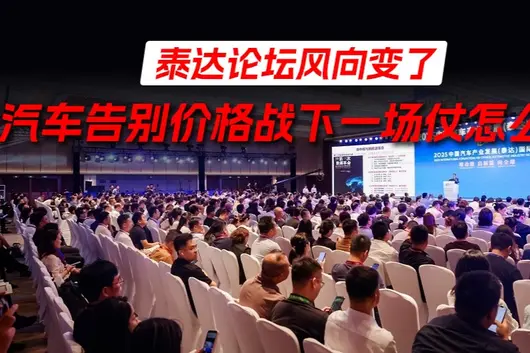
Every September TEDA Forum is a window to observe the trend of China's auto industry. This year, the trend has clearly changed.
In the past few years, the keywords of this forum have always been "New Energy Penetration Rate", "Smart Driving Equity", "Going Global". But this year, you will find a subtle change — from the Chief Engineer of the Ministry of Industry and Information Technology, the Secretary-General of the Industry Association to executives of top car companies, everyone is saying the same thing: curb irrational competition, and can no longer get trapped in unscrupulous price wars.
This is not just empty talk. When industry profit margins fall below the alert line, when overcapacity becomes a consensus, when "losing money on every car sold" changes from rumor to reality, stopping irrational competition is essentially declaring the end of an era of extensive growth.
The question is: No longer relying solely on low prices to exchange for volume, how to fight the next battle?
What Happened at the Forum: Signals of Collective Shift from Ministries to Car Companies
First, let's clarify the most critical pieces of information from the forum.

Wang Weiming, Chief Engineer of the Ministry of Industry and Information Technology stated at the opening ceremony on September 19, which can be regarded as the policy orientation of this industrial shift. He openly stated that the current industry faces challenges such as "irrational competition, declining manufacturing profit margins", and announced that it will implement a special action to improve automotive standards and implement a digital ID system for power batteries.
The weight of this sentence lies in: previously the regulatory layer was more focused on industry guidance, now upgraded to normalized regulation of competition order, rectifying irrational competition chaos. A difference of one word conveys a stronger industrial governance orientation.
He Yi, Executive Deputy Secretary-General of China Association of Automobile Manufacturers stated that the domestic market is facing phased pressure, the whole industry should consolidate consensus and respond collaboratively, jointly maintain a fair market environment, and continuously improve global compliance management capabilities and risk resistance capabilities.
Meanwhile, Wang Weiming pointed out industry shortcomings — high-end chips, basic operating systems still have gaps, overseas trade barriers are intensifying, and competition has shifted from product level to rule level. The breakthrough direction is also clear: automotive chips, all-solid-state batteries, operating systems, autonomous driving large models.

Gong Jinfeng, Deputy Secretary of the Party Committee and General Manager of China Automotive Technology and Research Center's statement is more direct: the industry must shift from price competition to quality upgrade, implement product safety main responsibility, and strictly control production consistency. At the same time, support L3 and above autonomous driving scale commercial operation, promote deep integration of automobiles with AI, low-altitude economy, and embodied intelligence.

Statements at the enterprise level are also noteworthy. Liu Zongcheng, President of Seres Group Technology Company said something very heavy: "The biggest risk in the automotive industry is not slowness, but speed of achievement." He opposes compressing verification cycles and lowering safety standards to rush speed, emphasizes that Chinese automobiles must move from scale leadership to quality leadership, and adhere to the "Five Highs" standard of high safety, high reliability, high performance, high quality, and high value.

Chen Xiaofeng, Vice President and Chief Scientist of Great Wall Motor Technology Center then directed the topic towards going global: Intelligence is the most distinct label for Chinese cars going global. Going global has already bid farewell to simple cost-performance ratio, it must upgrade from hardware export to systematic AI ecosystem going global. Overseas competition is not selling cars, it is the cross-regional landing of a whole set of intelligent capabilities.
Looking at these speeches together, you will find a clear main line: the benchmark for industry competition is shifting from "low price high volume" to "quality + system + rules".
Fact Layering: What is Confirmed, What is Still Changing
Before discussing the industry shift, let's clarify the boundaries of facts first.
Confirmed Facts:
First, the "15th Five-Year Plan for the Development of Intelligent Connected New Energy Vehicle Industry" issued by nine departments was implemented on September 11, explicitly clarifying the goals of 70% penetration rate for new energy passenger cars and 40% for commercial vehicles by 2030, with large-scale implementation of highly autonomous driving. This is not an impromptu speech at the forum, but a formal policy document.
Second, the collective statements of top car companies are consistent — opposing irrational competition, emphasizing quality and safety. Executives from companies like Seres, Great Wall, and Changan conveyed similar signals on different occasions.
Third, the direction of capacity control and merger and restructuring is clear. The 15th Five-Year Plan document mentions strengthening capacity early warning control and encouraging merger and restructuring. This means that clearing backward capacity will no longer rely solely on spontaneous market adjustment, but will also be supported by policy guidance.

Variables Still Need Observation:
First, how is "rectifying irrational competition" specifically implemented? Is it interviews, industry self-discipline, or other regulatory measures? The execution intensity directly affects the pace of industry shift.
Second, the coverage and implementation time of the power battery digital ID system. Currently only the direction of system construction is clear, and specific details have not been released to the public.
Third, FAW's intention to invest in GAC. Both parties have only signed an intent agreement, and are in the planning stage of major asset restructuring, still with major uncertainty. If this cooperation is implemented, it is a new paradigm of central enterprise restructuring after the shelving of Changan Dongfeng integration: capital union first, then business synergy, not pursuing full merger. Whether it can be implemented in the future also depends on the compilation of the plan and regulatory approval results.
Distinguish these clearly, and you will not misread "direction set" as "reform implemented".
The Real Disagreement Behind This Shift: If Not Low Price War, Then What?
On the surface, all parties at the forum are calling for curbing irrational competition. But looking deeper, the understanding of "what war to fight next" by all parties is actually not fully consistent.

The perspective of the Ministry of Industry and Information Technology is a struggle for rules. Wang Weiming mentioned that global industry competition has become a struggle for standards and rules. China's new energy vehicle production and sales have been first in the world for 11 consecutive years, but high-end chips and basic operating systems still have shortcomings. So the breakthrough direction is automotive chips, all-solid-state batteries, operating systems, autonomous driving large models — these are "bottleneck" areas, and also where the discourse power for the next round of rule-making lies.
Seres' perspective is a struggle for safety and quality. Liu Zongcheng said "the biggest risk is speed of achievement", behind which is industry concerns: in the process of rapid expansion, some enterprises have the impulse to compress verification cycles and lower safety standards. The "Five Highs" standard he emphasizes is essentially saying: scale growth cannot be at the expense of safety.
Great Wall's perspective is a struggle for ecosystem going global. What Chen Xiaofeng said about "systematic AI ecosystem going global" does not mean simply selling cars overseas, but moving a whole set of capabilities such as intelligent driving, cockpit systems, charging networks, and user services overseas. This is a higher dimension competition — from selling products to selling systems.
You will find that these three perspectives are not contradictory, but focus differently. The regulatory layer worries about industrial security and rule discourse power, car companies need to solve business models and find differentiated competitive paths, while the industry forms a unique consensus: relying solely on low prices for volume is no longer viable.
Why Now: The Industry Turning Point Has Arrived
Why specifically the 2026 TEDA Forum collectively calling to curb irrational competition? This is not accidental, but a combination of several variables reaching a critical point.
First Variable: The domestic market has shifted from incremental to stock-based.
New energy penetration rate stabilizes at 60%, fuel vehicles accelerate decline. When penetration exceeds 50%, the industry changes from "grabbing new users" to "grabbing stock replacement users". In this stage, the marginal effect of low-price competition will decrease rapidly — the number of users that can be grabbed by lowering prices becomes less, but the profit loss becomes larger.
Second Variable: Overcapacity has changed from a hidden worry to reality.
The 15th Five-Year Plan specifically mentions capacity early warning control, indicating that this problem has become serious enough to require policy intervention. A large number of car companies are in a loss-making state, market share continues to concentrate on top companies like BYD, Geely, Chery, Leapmotor; losing money on selling cars becomes normal, dealer profits continue to bear pressure. This state continuing long-term will be transmitted to the entire industry chain.

Third Variable: Overseas profit has become a new lifeline.
Domestic single-car profit is extremely thin, overseas single-car net profit is significantly higher than domestic. BYD's overseas revenue share exceeded half for the first time in the first half of the year, indicating that going global has changed from "icing on the cake" to an important profit pillar. However, direct export of complete vehicles faces tariff barriers in various countries, car companies fully turn to overseas factory building + local supply chain model — competition dimension upgrades, no longer a cost-performance battle of single cars, but a comprehensive competition of supply chain, system, and compliance.
Fourth Variable: Global traditional car companies collectively shrink and slim down.
Volkswagen continues to promote local capacity optimization, layoff plans, shrink fuel vehicle business, streamline product lines; BMW and Mercedes-Benz simultaneously compress R&D and personnel, shrink inefficient businesses. Traditional car company strategy: cut fuel vehicle R&D, reduce redundant capacity, focus on high-end electric vehicles.
This leaves a window period for Chinese car companies, but the window will not remain open forever. Whoever can build system capabilities within the window period can occupy a position in the future global landscape.
These four variables combined explain why it is now — not because enterprises actively give up low-price strategies, but the cost of continuous irrational competition has become so large that the entire industry finds it difficult to bear.
What to Watch Next: Three Observation Dimensions
The forum ended on September 20, but the industry shift has just begun. Next, there are three dimensions worth continuous observation.
Observation 1: Will the power battery digital ID become a straitjacket for irrational competition?
The core of the battery digital ID system is to achieve traceability and regulatory oversight of the full lifecycle of power batteries. This means the grey space of low-price competition will be compressed — the path of relying on low-cost inferior batteries to lower prices will be subject to stronger constraints in the future. The implementation details and enforcement intensity of this system directly determine whether "quality upgrade" is a slogan or reality.

Observation 2: Will central SOE capital join hands, triggering a new round of industry integration?
FAW intends to invest in GAC, belonging to the planning stage, and still has major uncertainty. If this model runs smoothly, more car companies may collaborate in procurement, R&D, and going global through equity binding methods in the future. This will directly change the industry competition landscape.
Observation 3: Localization going global, is it real profit or a new burden?
BYD Hungary Factory, Leapmotor with Stellantis Spain Shared Line, Chery Vietnam Factory, Changan Indonesia Base — the overseas factory building wave has risen. But building a factory is just the first step. Whether able to achieve local profitability overseas, build a complete supply chain system, and cope with local compliance and labor issues are the real tests.
Auto-First View: Industry Track Switch, New Stage of Hard Power Competition Begins
Every year after the TEDA Forum ends, a bunch of "golden quotes" are spread. But golden quotes themselves do not change the industry. What truly changes the industry is the realistic pressure and policy push behind the golden quotes.
This year's signal is clear: China's automobile industry is bidding farewell to the extensive stage of "exchanging price for volume", and entering a new stage of "winning by quality, going global by system, deciding victory by rules".
This process will not be smooth. Irrational competition will not disappear immediately because of appeals on the forum, quality upgrade will not be completed automatically because of a few documents. But the direction is set — the next five years, whoever can build barriers in core technology, system capabilities, and global compliance will truly survive.
For ordinary consumers, this may mean: ultra-low price models will become fewer, but models with better product quality and safety guarantees will become more and more. For car enterprises, this means: the days of relying solely on price cuts to boost volume are over, the era of competing on comprehensive strength has begun. (Some images from the internet)

Auto-First | Wutong
Setiap bulan September, Forum TeDa adalah jendela untuk melihat arah industri automotif China. Tahun ini, arah telah berubah dengan jelas.
Dalam beberapa tahun kebelakangan ini, kata kunci forum ini sentiasa adalah "kadar penetrasi tenaga baharu", "persamaan panduan pintar", "keluar ke luar". Tetapi tahun ini, anda akan menemui perubahan yang halus - dari Ketua Jurutera Kementerian Perindustrian, Setiausaha Agung persatuan industri hingga eksekutif tinggi syarikat automotif teratas, semua orang bercakap tentang perkara yang sama: perlu mengekang persaingan tidak rasional, tidak boleh terjerumus dalam pembantaian harga tanpa batasan.
Ini bukan sekadar kata-kata pampas. Apabila margin keuntungan industri jatuh di bawah garis amaran, apabila lebihan kapasiti menjadi consensus, apabila "jual satu rugi satu" berubah daripada khabar angin kepada realiti, menghenti persaingan tidak rasional, pada asasnya mengisytiharkan berakhirnya era pertumbuhan kasar.
Soalannya: Tidak lagi bergantung semata-mata pada harga rendah untuk menukar jumlah, bagaimana berperang seterusnya?
Apa yang berlaku di forum: Dari agensi kerajaan hingga syarikat automotif, isyarat perubahan kolektif
Pertama, uruskan beberapa maklumat paling penting di forum ini dengan jelas.
Jurutera Utama Kementerian Perindustrian dan Maklumat, Wang Weiming dalam deklarasi pada majlis pembukaan pada 19 September, boleh dianggap sebagai penentuan dasar peralihan industri ini. Beliau dengan jelas menyatakan bahawa industri semasa menghadapi cabaran seperti "persaingan tidak rasional, margin keuntungan pembuatan menurun", mengumumkan akan melaksanakan tindakan khusus peningkatan standard automobil, melaksanakan sistem sijil digital bateri kuasa.
Bobot ayat ini terletak pada: Sebelum ini, pihak pengawalan lebih banyak menggunakan panduan industri, kini dinaikkan ke tahap norma persaingan yang biasa, menangani kekacauan persaingan tidak rasional. Perbezaan satu perkataan, menyampaikan arah tadbir urus industri yang lebih kuat.
Setiausaha Agung Bersara Persatuan Perindustrian Automobil China, He Yi kemudian menyatakan bahawa pasaran dalam negara menghadapi tekanan fasa, seluruh industri perlu memperakui konsensus untuk menangkis bersama, bersama-sama memelihara pasaran adil, terus meningkatkan kemampuan operasi mematuhi peraturan global dan kemampuan melawan risiko.
Serentak itu, Wang Weiming menunjukkan kekurangan industri - cip tahap tinggi, sistem pengendalian asas masih mempunyai jurang, halangan perdagangan luar negara semakin meningkat, persaingan telah beralih dari peringkat produk ke peringkat peraturan. Arah serang juga jelas: cip automobil, bateri pepejal penuh, sistem pengendalian, model besar panduan automatik.
Timbalan Setiausaha Jawatankuasa Parti Pusat Automotif, Pengurus Besar Gong Jinfeng ucapannya lebih jelas: industri perlu beralih dari persaingan harga ke peningkatan kualiti, menekan tanggungjawab utama keselamatan produk, mengawal ketat konsistensi pengeluaran. Serentak itu menyokong operasi komersial skala besar panduan automatik L3 dan ke atas, mendorong perpaduan mendalam automobil dengan AI, ekonomi udara rendah, kecerdasan berbadan.
Deklarasi pada peringkat syarikat juga layak diberi perhatian.Pengerusi Syarikat Teknologi Kumpulan Seres, Liu Zongcheng mengatakan kata yang sangat berat: "Risiko terbesar industri automobil bukan perlahan, tetapi cepat menjadi matang." Beliau menentang memampatkan kitar pengesahan, menurunkan standard keselamatan untuk mengejar kelajuan, menekankan automobil China perlu beralih dari kepimpinan saiz kepada kepimpinan kualiti, meneguhkan piawaian "lima tinggi" keselamatan tinggi, kebolehpercayaan tinggi, prestasi tinggi, kualiti tinggi, nilai tinggi.
Timbalan Presidial Pusat Teknologi Automobil Great Wall, Saintis Utama Chen Xiaofeng kemudian mengarahkan topik kepada keluar ke luar: kecerdasan adalah label paling jelas automobil China keluar ke luar, keluar ke luar sudah meninggalkan harga dan prestasi semata-mata, perlu dari eksport perkakasan dinaikkan ke ekosistem AI berstruktur keluar ke luar. Persaingan luar negara bukan menjual kereta, adalah penurunan keupayaan pintar lengkap merentas wilayah.
Jika melihat pembicaraan ini bersama, anda akan menemui garis utama yang jelas: penggaris persaingan industri sedang beralih dari "harga rendah untuk jumlah" kepada "kualiti + sistem + peraturan".
Lapisan Fakta: Mana yang disahkan, mana yang masih berubah
Sebelum membincangkan peralihan industri, pertama sekali uruskan sempadan fakta dengan jelas.
Fakta yang telah disahkan:
Pertama, "Perancangan Lima Belas Tahun Pembangunan Industri Automobil Persimpangan Intelek dan Tenaga Baharu" yang dicetak oleh sembilan jabatan telah dilaksanakan pada 11 September, secara jelas sasaran kadar penetrasi automotif tenaga baharu 70%, kenderaan niaga 40% pada 2030, pelaksanaan skala panduan automatik tinggi. Ini bukan ucapan spontan di forum, tetapi dokumen dasar rasmi.
Kedua, deklarasi kolektif syarikat automotif teratas adalah sama - menentang persaingan tidak rasional, menekankan kualiti dan keselamatan. Eksekutif tinggi Seres, Great Wall, Changan dan syarikat lain memindahkan isyarat serupa di tempat yang berbeza.
Ketiga, arah penyesuaian kapasiti dan penggabungan semula telah jelas. Perancangan Lima Belas Tahun menyatakan penguatan kawalan amaran kapasiti, menggalakkan penggabungan semula, ini bermakna pembersihan kapasiti ketinggalan tidak lagi bergantung pada laras pasaran semata-mata, tetapi akan mempunyai panduan dasar menyokong.
Faktor yang perlu diperhatikan masih lagi:
Pertama, "tindakan menangani persaingan tidak rasional" bagaimana dilaksanakan secara khusus? Adakah rayuan, disiplin industri atau alat kawalan lain? Kuasa pelaksanaan mempengaruhi secara langsung tahap pusingan industri.
Kedua, skop liputan dan masa pelaksanaan sistem sijil digital bateri kuasa. Saat ini hanya arah pembinaan sistem yang jelas, butiran khusus belum dikeluarkan secara luar.
Ketiga, perkara FAW berniat menyertai GAC, kedua-dua pihak hanya menandatangani perjanjian hasrat, berada dalam peringkat perancangan penggabungan semula aset besar, masih wujud ketidakpastian besar. Jika kerjasama ini dilaksanakan, ini adalah paradigm baru penggabungan syarikat negara: perkahwinan modal dahulu, kemudian penyelarasan perniagaan, tidak mengejar penggabungan penuh. Seterusnya boleh dilaksanakan atau tidak, perlu lihat hasil penyediaan cadangan dan kelulusan pengawalan.
Jika membezakan ini, anda tidak akan salah tafsir "arah sudah tetap" sebagai "pembaharuan sudah dilaksanakan".
Perbezaan sebenar di sebalik peralihan ini: Jika tidak berlawan perang harga rendah, maka perang apa?
Di permukaan, pihak di forum semua memanggil untuk mengekang persaingan tidak rasional. Tetapi melihat lebih dalam, pemahaman pihak mengenai "perang apa yang perlu dilancarkan seterusnya" sebenarnya tidak sepenuhnya sama.
Perspektif Jabatan Perindustrian dan Maklumat adalah perjuangan peraturan. Wang Weiming menyebut, persaingan industri global telah menjadi perjuangan standard, peraturan. Penjualan dan pengeluaran tenaga baharu China selama 11 tahun berturut-turut menjadi nombor satu di seluruh dunia, tetapi cip tahap tinggi, sistem pengendalian asas masih mempunyai kekurangan. Jadi arah serang adalah cip automobil, bateri pepejal penuh, sistem pengendalian, model besar panduan automatik - ini adalah bidang "terkunci leher", juga wacana penyediaan peraturan dalam gelombang seterusnya.
Perspektif Seres adalah perjuangan keselamatan dan kualiti. Liu Zongcheng berkata "risiko terbesar adalah menjadi matang dengan cepat", di sebalik itu kebimbangan industri: dalam proses pengembangan pantas, sebahagian syarikat wujud dorongan untuk memampatkan kitar pengesahan, menurunkan standard keselamatan. "Lima tinggi" piawaian yang beliau tekankan, pada asasnya bermaksud: kadar pertumbuhan saiz tidak boleh dengan mengorbankan keselamatan.
Perspektif Great Wall adalah perjuangan ekosistem keluar ke luar. Apa yang dikatakan Chen Xiaofeng "keluar ke luar ekosistem AI berstruktur", tidak merujuk kepada menjual kereta ke luar negara secara mudah, tetapi memindahkan keupayaan lengkap sistem pemanduan pintar, sistem bilik penumpang, rangkaian pengisian semula, perkhidmatan pengguna ke luar negara. Ini adalah persaingan dimensi yang lebih tinggi - dari menjual produk ke menjual sistem.
Anda akan mendapati, ketiga-tiga perspektif ini tidak bercanggah, tetapi penekanan berbeza. Pihak pengawalan bimbang keselamatan industri dan wacana peraturan, syarikat automotif perlu menyelesaikan model keuntungan, mencari laluan persaingan berbeza, dan industri membentuk konsensus unik: semata-mata bergantung pada harga rendah untuk jumlah, sudah tidak dapat diteruskan.
Mengapa sekarang: Titik belok industri sudah tiba
Mengapa khusus Forum TeDa tahun 2026, secara kolektif memanggil untuk mengekang persaingan tidak rasional? Ini bukan kebetulan, tetapi beberapa faktor bertindan sampai ke titik kritikal.
Faktor pertama: pasaran dalam negara berubah dari pertumbuhan tambah kepada stok tetap.
Kadar penetrasi tenaga baharu berdiri di 60%, kenderaan bahan api fosil semakin memudar. Apabila kadar penetrasi melebihi 50%, industri berubah dari "merebut pengguna baharu" kepada "merebut pengguna tukar stok". Pada fasa ini, kesan marjinal persaingan harga rendah akan menurun dengan cepat - pengguna yang boleh direbut dengan menurunkan harga semakin kurang, tetapi kehilangan keuntungan semakin besar.
Faktor kedua: lebihan kapasiti telah berubah dari kebimbangan tersembunyi kepada realiti.
Perancangan Lima Belas Tahun secara khusus menyebut kawalan amaran kapasiti, menunjukkan masalah ini sudah serius sehingga memerlukan intervensi dasar. Sebilangan besar syarikat automotif berada dalam keadaan kerugian, bahagian pasaran terus berkonsentrasi ke syarikat teratas seperti BYD, Geely, Chery, Leapmotor; kerugian menjual kereta menjadi biasa, keuntungan dealer terus tertekan. Jika keadaan ini berlanjutan, ia akan menghantar ke seluruh rantai industri.
Faktor ketiga: keuntungan luar negara menjadi nyawa baru.
Keuntungan per unit di dalam negara sangat nipis, keuntungan bersih per unit luar negara jauh lebih tinggi daripada di dalam negara. Bahagian pendapatan luar negara BYD pada separuh tahun pertama kali melebihi separuh, menunjukkan keluar ke luar telah berubah dari "memperindah" menjadi pilar keuntungan penting. Tetapi eksport kenderaan terus menghadapi halangan tarif negara, syarikat automotif secara menyeluruh beralih ke membina kilang di luar negara + model rangkaian bekalan tempatan - dimensi persaingan dinaikkan, bukan lagi persaingan harga dan prestasi kereta tunggal, tetapi persaingan menyeluruh rangkaian bekalan, sistem, kepatuhan.
Faktor keempat: syarikat automotif tradisional di seluruh dunia secara kolektif mengecutkan badan.
Volkswagen meneruskan optimasi kapasiti tempatan, pelan penurunan kakitangan, mengurangkan perniagaan bahan api fosil, merangkak garis produk; BMW, Mercedes-Benz serentak menekan penyelidikan dan pembangunan serta kakitangan, mengecutkan tidak cekap. Strategi syarikat automotif tradisional: mengurangkan penyelidikan bahan api fosil, mengurangkan kapasiti berlebihan, fokus pada kenderaan elektrik tahap tinggi.
Ini memberi ruang tetingkap kepada syarikat automotif China, tetapi tetingkap tidak akan terbuka sentiasa. Siapa boleh membina keupayaan sistem dalam tempoh tetingkap, siapa boleh menduduki tempat dalam skop global masa hadapan.
Empat faktor bertindan ini, menjelaskan mengapa sekarang - bukan syarikat secara aktif meninggalkan strategi harga rendah, tetapi kos persaingan tidak rasional yang berterusan, sudah terlalu besar sehingga seluruh industri suka menanggung.
Apakah yang patut dilihat seterusnya: Tiga dimensi pemerhatian
Forum tamat pada 20 September, tetapi peralihan industri baru bermula. Seterusnya, terdapat tiga dimensi yang layak diperhatikan berterusan.
Pemerhatian satu: Adakah sijil digital bateri kuasa akan menjadi "cincin ketat" persaingan tidak rasional?
Intipati sistem sijil digital bateri, adalah mewujudkan boleh diikuti, boleh dikawal sepanjang hayat bateri kuasa. Ini bermakna ruang kelabu persaingan harga rendah akan dipampat - laluan menurunkan harga menggunakan bateri rendah kos kualiti rendah, pada masa depan akan terhad lebih kuat. Butiran pelaksanaan sistem ini dan kuasa pelaksanaan, secara langsung menentukan "peningkatan kualiti" adalah slogan atau realiti.
Pemerhatian dua: Adakah modal syarikat negara dan negeri berganding akan menaikkan satu gelombang penggabungan industri baharu?
FAW berniat menyertai GAC, termasuk dalam peringkat perancangan, masih wujud ketidakpastian besar. Jika model ini berjaya dijalankan, seterusnya mungkin ada lebih banyak syarikat automotif melalui ikatan ekuiti, pada peringkat pembelian, penyelidikan pembangunan, keluar ke luar menyelaraskan. Ini akan mengubah langsung skop persaingan industri.
Pemerhatian tiga: Adakah penyesuaian luar negara adalah keuntungan sebenar atau beban baharu?
Kilang Hungary BYD, Leapmotor dan Stellantis bersama laluan Sepanyol, kilang Vietnam Chery, pangkalan Indonesia Changan - gelombang membina kilang luar negara sudah mula. Tetapi membina kilang hanyalah langkah pertama, sama ada boleh mendapatkan keuntungan setempat di luar negara, membina sistem rangkaian bekalan lengkap, menghadapi masalah tempatan kepatuhan dan buruh, ini adalah ujian sebenar.
Pandangan Auto-First: Lintasan industri bertukar, fasa baharu perbandingan kekuatan teras dibuka
Setiap kali Forum TeDa berakhir, akan ada satu tumpuan "perkataan emas" yang disebarkan. Tetapi perkataan emas sendiri tidak mengubah industri, yang benar-benar mengubah industri, adalah tekanan realiti di sebalik perkataan emas dan dorongan dasar.
Isyarat tahun ini jelas: Industri automotif China sedang meninggalkan fasa kasar "menukar harga kepada jumlah", memasuki fasa baharu "menang dengan kualiti, keluar ke luar dengan sistem, menentukan kemenangan dengan peraturan".
Proses ini tidak akan lancar. Persaingan tidak rasional tidak akan segera hilang kerana panggilan di forum, peningkatan kualiti juga tidak akan siap secara automatik kerana beberapa dokumen. Tetapi arah sudah ditetapkan - lima tahun seterusnya, siapa boleh membina tembok pada teknologi teras, keupayaan sistem dan kepatuhan global, siapa yang boleh benar-benar hidup.
Bagi pengguna biasa, mungkin bermakna: model harga rendah ekstrim akan berkurang, tetapi model dengan jaminan kualiti produk, keselamatan lebih terjamin akan semakin banyak. Bagi syarikat automotif, bermakna: hari bergantung semata-mata pada penurunan harga untuk menambah jumlah sudah berakhir, zaman perbandingan kekuatan gabungan bermula. (Sebahagian gambar berasal dari internet)
© 2024 Bitauto.com. All Rights Reserved.
Bitauto (www.yiche.com and www.bitauto.com) is one of the most visited automotive websites in China. We provide detailed info on Chinese car brands available in your area. Please note that the information provided on this website is based on publicly available data and is for reference only. It may not be fully updated or accurate at all times.

Help us improve our website


