

HomeBYD

Search History
Popular Searches
Dealer Login / Sign Up

By / Zhang Guoli of China Independent Automotive Network
This time, we really have to praise BYD.
It's not that polite kind of praise, nor is it the standard rhetoric written by media after a company sponsors a poster, such as "taking responsibility" and "being accountable". To be honest, everyone is tired of reading such drafts, the writers are tired, and the readers are tired.
This time is different.
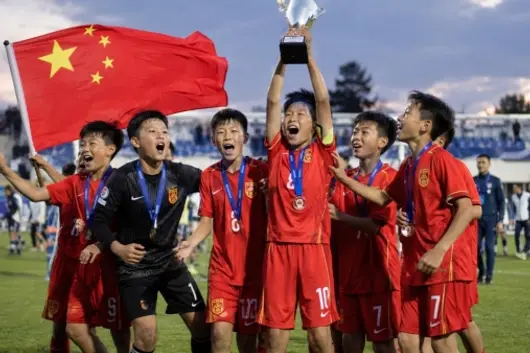
A group of Chinese children born in 2014 won 7 matches in 7 games in Italy, scoring 21 goals and conceding only 2. In the final, facing the Everton Youth Team of the Premier League's old club, it was 1-1 in regular time, and 5-4 in the penalty shootout, and they held onto the championship trophy.
Do you think this matters a lot?

If this happened with the adult national team, it might have caused a stir long ago. But unfortunately, this is a group of children around 12 years old. They haven't reached the voice change period yet, haven't truly walked into the cruel door of professional football, but they have already fought for a breath of air for Chinese football first.
In the lens, the children rushed towards the goalkeeper, hugged in a group, shouting until their faces turned red. Someone on the stands waved a national flag, some parents covered their faces crying, some just stood there smiling, eyes getting wet as they smiled.
This scene is more real than many hot-blooded videos at many car launch events.
Behind these children stands BYD.
This is the place I feel most worth writing about.
Many companies doing sports marketing like to take the safe route. Find stars, sponsor tournaments, shoot big films, shout slogans, finally landing on a sentence "supporting sports power". The process is familiar, risk is low, and it is easy to be forgotten.
BYD didn't choose the easiest road this time.
It invested in youth training, children, a field where commercial return is not visible in the short term, and even might bring controversy. Chinese football is already a public opinion minefield, whoever touches it gets scolded. If you win, people say you are riding the hype; if you lose, people say you are messing around wildly. Supporting the adult team might get you scolded, supporting the youth team isn't necessarily better off either.
But BYD still stepped down.

From winning the title in Thailand to claiming the championship in Italy, it wasn't just printing a Logo on the jersey, nor sending a Weibo post to ride the hotspot and leave. It truly gave resources, attention, and trust to these children.
The most rare thing about this isn't money.
Of course, money is important. Youth training without money, nothing can be talked about. Air tickets, accommodation, competition registration, equipment, overseas exchange, team support, which one is not solved by love alone. Dong Lu said the Chinese Football Juniors have invested 58 million yuan over the years, Series A 5 million, Series B 9 million, the remaining 44 million supported by traffic, sponsorship, and paid live streaming. This number might not be scary in professional football, but in youth football, it is already very heavy.
But what BYD truly contributed was not just the sponsorship fee.
It gave this project a sense of certainty.
What do children playing football fear most? Not the bitterness, not the tiredness, or even not losing games. What they fear most is uncertainty.
Is there a game today? Is there training tomorrow? Can we go abroad? Can parents still hold on? Can the project continue? These questions, each one can slowly grind away a child's football dream.
BYD's appearance at least lets these children know: someone sees them, someone is willing to support them, someone is willing to send them to a bigger stage.
This is precious.
China's youth training has been shouting for so many years, what it lacks most is not slogans. We are too good at shouting, "Starting from the toddlers" this phrase has been shouted for decades, the throat is hoarse. What is truly lacked is high-quality matches, international vision, stable investment, and opportunities for children to truly go out.
No matter how lively you kick domestically, if you don't collide with peers from Europe, you will never know what the real rhythm is. How they press, how they turn, how they position, how they handle the ball in physical contact, these are not things you can learn by watching videos.
Chinese Football Juniors went to Italy this time, won against Everton, Florence, Braga, this experience, the value to children far exceeds a trophy.
Trophies will be put in the cabinet, but that body memory after playing against world strong teams will remain on the children.
This is where BYD did the most valuable thing.
It didn't just give the children a "Good luck", it gave them real opportunities to play on the field.
As an automotive industry editor, I actually know clearly, BYD's strongest place in recent years, is not just sales, nor just technology, but it increasingly understands how to tell the story of "Chinese brands going global".
In the past, when Chinese cars went overseas, many people didn't believe it. Thought Chinese brands can only fight price wars, thought new energy is just a gimmick, thought independent brands are very hard to truly walk into the global market.
But BYD in recent years, step by step pushed back the doubts.
From Blade Battery to DM Hybrid; from Dynasty, Ocean, to Denza, Fang Cheng Bao, Yangwang; from domestic market all the way to hit the overseas market, BYD is no longer the Chinese car company that needs to explain itself repeatedly in the past. It now represents the industrial height of Chinese new energy, and also represents the confidence of Chinese manufacturing going up.
So the fact that it supports the Football Juniors is particularly interesting.

A Chinese automotive brand that was once questioned, underestimated, and ridiculed is supporting a group of Chinese football youths who are also questioned, controversial, and not trusted by many people.
This is no coincidence.
This is the same temperament.
Others say you can't do it, don't rush to argue first, just get the results out first.
Others say you are not high-end enough, don't rush to explain first, go to the world stage first.
Others laugh you can't walk far, you just walk step by step to show him.
BYD did this way back then. Now, this group of football Juniors is also doing this way.
Of course, I don't want to write this article as mindless praise.
BYD deserves praise, but this thing cannot be deified. Chinese Football Juniors won the U12 championship, it's very spirited, very uplifting, but it is not the proof that Chinese football turned over. Winning at 12 doesn't mean winning at 17; winning the championship now doesn't mean professional players will definitely come out in the future. The most cruel place of youth training is exactly behind.
Puberty development, injuries, psychological pressure, academic choices, professional channels, these hurdles are getting harder one by one. Children surrounded by flowers today might face missing out, substitutes, transformation, or even leaving football in a few years.
So, truly responsible support is not accompanying them to win once, but accompanying them to walk for a long time.
This is also why I hope BYD will continue to do this.
Don't just stop at a championship poster.
Don't just stop at a hot search.
Even more don't just treat this as a beautiful brand marketing.
If BYD can make youth training support a long-term project, such as continuing to support overseas competitions, professional coach exchanges, sports rehabilitation, psychological counseling, data training, youth football public welfare plans, then it is not just a simple sponsor, but truly giving a remedial lesson to Chinese football.
The commercial value of this thing might not be seen in the short term.
But the brand value will be deep.
Consumers nowadays, especially young consumers, have already not eaten empty slogans easily. If you say you have social responsibility, they will ask: What did you actually do? If you say you support Chinese sports, they will ask: Who did you actually support? If you say you are proud of Chinese brands, they will ask: Did you land this pride on specific people?
BYD gave a specific answer this time.
It supported not an abstract concept, but a group of children.
Not a PPT, but a match after match.
Not a sentence "Going global", but really sending the children to the Italy stage.
This is more powerful than many ads.
Because it is real.
And reality is the most scarce communication resource now.
I even think, BYD's smartest place this time, is that it didn't steal the show.
Championship belongs to children. Applause belongs to children. The lens should go to children first. BYD stands behind, doing the person who lifts them up.
This attitude is actually higher level.
Chinese enterprises in the past doing public welfare, doing sports sponsorship, often tend to use force too hard, wanting to stick the brand name in every corner. But this time, what truly makes people remember BYD is not how big the Logo is, but after children won the championship, people will naturally think: Oh, originally behind is BYD supporting.
This is good brand communication.
No shouting, but has weight.
Sun Jihai's quote "Youth training is still a circus", argued fiercely online. To be honest, controversy won't completely disappear because of one championship. Minor protection, commercialization boundaries, live streaming authorization, training system, these problems should continue to be discussed.
But one point must be clear: Cannot because a project has controversy, negate the value of enterprise support for youth training. Cannot because dislike Dong Lu, ignore children's efforts, ignore BYD's investment.
The most terrible place of Chinese football is not too much criticism, but too few people doing things.

Too many spectators, too few builders.
Too much scolding, too little long-term investment.
Mouths all say valuing youth training, when really paying money, giving resources, shouldering risk, many people fell silent again.
So this time, BYD deserves applause.
It didn't stand on the shore pointing out how children should swim, but handed a lifebuoy. It didn't just say "we care about youth growth", but turned care into air tickets, schedules, confrontation, trophies and smiles on children's faces.
This is what Chinese enterprises should look like.
Car manufacturers must certainly build good cars. Technology must be hard, products must be strong, sales must be fought out. But a truly mature Chinese automotive brand should not only talk parameters, range, price. It should also have a deeper relationship with this society.
BYD did it this time.
It makes people see, a Chinese new energy top enterprise, not only can compete in the global market with transnational giants, but also willing to invest resources into Chinese youths, into those places that have no result yet but determine the future.
Is this thing small?
From a commercial point of view, maybe not big. Won't because Football Juniors win the championship, BYD tomorrow sell dozens of thousands of more cars.
But from the brand spirit point of view, this thing is not small.
Because it makes the name BYD, and a group of Chinese children running, fighting, scoring, winning the championship on the Europe stage link together.
This link is more warm than cold sales posters.
Chinese football's future, won't because a U12 championship trophy immediately change. We can't be that innocent.
But if more and more enterprises like BYD, willing to cast eyes on youth training, willing to cast resources on children, willing to take a step first when there is no certain return, then Chinese football at least won't always only leave sighs.

This time, children won.
BYD also won.
Not winning on traffic, not winning on hot search, but winning that it did a right thing, and did it sufficiently specific.
Chinese football needs this kind of specificity.
Chinese brands also need this kind of specificity.
Chinese youths, even more need this kind of specificity.
So at the end of this article, I don't want to beat around the bush.
BYD's wave this time, indeed beautiful.
It is not only building cars, it gave Chinese football youths a road to the world.

Gasgoo News In the Japanese automotive market, a long-neglected niche segment is quietly becoming a new battlefield for electrification transformation—Mini Cars (Kei Car). This Japan-exclusive vehicle category, with its lower price and tax fees, and the convenience brought by smaller dimensions, has long accounted for about 40% of new car sales in Japan. Since it is mainly used for short urban commutes and family transportation, the range requirements are relatively low, so Japanese mini cars are naturally suitable for electrification transformation. Today, with the entry of Chinese car companies and the strategic shift of Japanese local car companies, the Japanese mini car market is accelerating its transition from the fuel era to electrification.
BYD and Chery Bet on Japanese Electric Mini Car Market
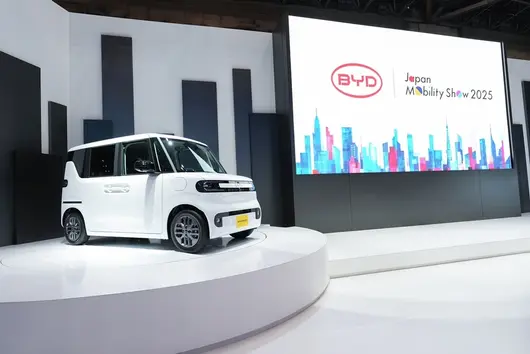
Last October, BYD showcased a boxy four-door pure electric mini car named Racco at the Japan Mobility Show in Japan, and announced that this model would officially launch in Japan this summer. This is BYD’s first electric mini car built specifically for the Japanese market.

BYD Racco; Image Source: BYD
It is reported that the Racco model offers 3 versions, with the entry-level version having a range of about 200 km, and the other two versions having a range of 300 km. Racco strictly follows Japanese mini car standards and is equipped with sliding doors for the first time on such pure electric vehicles to better adapt to narrow streets and parking environments in Japanese cities. At the same time, the new car will also provide richer assisted driving functions.
BYD also plans to rapidly expand its sales network in Japan by opening numerous micro stores that display only one or two models. Atsuki Tofukuji, President of BYD Automotive Japan, stated: “We plan to cover local small commercial circles to sell micro electric vehicles.” These stores will be located in remote cities with a population of less than 500,000, displaying at most a few exhibition cars per store, with a faster store opening speed. BYD’s micro stores will feature Racco as the core recommended product.
Following BYD, Chery Motors also plans to launch a pure electric mini car in Japan next spring. Chery will join forces with four partners to jointly create a new electric brand EMTA, and has already established the operating company EMT in Yokohama, Japan, responsible for vehicle R&D and sales work. The CEO of EMT said in an interview recently: “This brand is built for Japanese consumers, aiming to create a more convenient and comfortable way of travel for the public.”
EMT belongs to a Singapore joint venture. The joint venture is led by Chery, while the other four cooperating enterprises are China Jiangsu Yueda Automobile Group, power battery manufacturer Gotion High-Tech, and Japanese automotive supplies retailer Autobacs Seven, and painting equipment company Anest Iwata.
This light vehicle is jointly developed by China and Japan. It will initially be produced in China, and core functions such as driving assistance all adopt Chery technology.
EMT Company Chief Marketing Officer Susumu Uchikoshi stated that the new car pricing will benchmark against fuel-powered mini cars of the same class. It is reported that the sales price of Honda N-Box fuel mini cars, which are very popular in the Japanese market, is 1.74 million to 2.48 million yen (approximately 10,915 to 15,560 USD).

Image Source: EMTA
According to the plan, EMT will start with this pure electric light vehicle and launch four electric vehicle models in Japan before 2029. Autobacs will rely on its own offline store network to assist in vehicle sales.
After the launch of this electric light vehicle, EMT plans to build 100 stores integrating sales and after-sales in Japan, and continue to expand channels, striving to increase the store scale to hundreds by the 2027 fiscal year. The CEO of EMT Company stated: “Japan is our most important market, and the brand new European mini electric vehicle standards have also brought new opportunities for the brand’s global development.”
Japanese Car Companies Accelerate Mini Car Electrification Layout
With Chinese car companies accelerating their layout, Japanese local car companies are also actively promoting electric mini car products and market planning.
Honda’s electrification pace is the most eye-catching. Its N-Box mini car is the absolute king of the Japanese market. Sales broke through 200,000 units in 2024, ranking first in sales for three consecutive years. Honda launched the N-One e: pure electric mini car last September. The group will also launch the pure electric version of the N-Box model in 2028. Currently, the range and pricing of the electric N-Box model are still in the final confirmation stage. Besides the electric version, Honda is expected to continue selling the fuel version of the N-Box model.

N-One e; Image Source: Honda
Nissan officially launched the revised model of its Sakura electric mini car in April this year, aiming to maintain its competitiveness in the Japanese electric mini car market. The Nissan Sakura model was initially launched in 2022 as the mass production version of the IMk concept car and has continuously become the best-selling electric mini car in Japan in recent years. According to data released by Nissan, the sales of this model reached 14,093 units in the full year of 2025, ranking first in this sub-market for four consecutive years. It is reported that the sales of the two electric mini car models, Nissan Sakura and Mitsubishi eK X, in 2024, accounted for more than 40% of the total sales of electric vehicles in Japan.
In addition, Suzuki Motors plans to launch its first electric mini car within this fiscal year. Daihatsu also launched an electric mini commercial vehicle jointly developed with Toyota in February this year. Japanese local brands are building a deep moat using their huge channel advantages (Daihatsu alone has about 700 regular stores; if small outlets are included, it reaches 6,000).
Currently, in the Japanese new car market, the proportion of electric vehicles is only about 2%, ranking last among developed countries. Insufficient number of charging piles and high vehicle prices are the main constraints. High cost-performance electric mini vehicles are expected to improve the local electric vehicle penetration rate. Since mini cars are mainly used for short-distance travel, range requirements are not high, which fits very well with the positioning of pure electric vehicles. Seiji Sugiura, a senior analyst at an automotive market analysis institution, said: “Pure electric mini cars do not need to reach the range level of conventional passenger cars. As long as the pricing is reasonable, electric light vehicles are expected to quickly occupy the market.”
However, for BYD and Chery, the real test lies not only in launching a mini electric vehicle priced to benchmark the N-Box, but also in how to eliminate Japanese consumers' brand concerns over time, and how to maintain the balance between price and quality under the local advantages of Toyota, Honda, and Suzuki. This battle of pure electric mini cars may be the key battle for Chinese car companies to truly open the door to the Japanese market.
© 2024 Bitauto.com. All Rights Reserved.
Bitauto (www.yiche.com and www.bitauto.com) is one of the most visited automotive websites in China. We provide detailed info on Chinese car brands available in your area. Please note that the information provided on this website is based on publicly available data and is for reference only. It may not be fully updated or accurate at all times.

Help us improve our website


