

HomeBattery

Search History
Popular Searches
Dealer Login / Sign Up















Author | Hao Wen
Editor | Qujie Business News Group
In this round of car manufacturers developing batteries in-house, what might be rewritten is not just the supplier list, but also CATL's profit model relying on a complete battery system to obtain premiums.
On the evening of September 18, after the Xpeng G9L launch event, Xpeng founder He Xiaopeng stated in response to media inquiries about whether they would develop batteries in-house, "Starting this year, Xpeng will handle batteries entirely in-house;" previously, Li Auto also announced that self-developed batteries will gradually cover all models.
Car manufacturers' accelerated commitment to developing batteries quickly formed a response in the capital market. On September 18, CATL's A-share closed at 301.95 yuan/share, a drop of more than 35% from the year's high of 467.34 yuan on May 7. The HK share closed at 507 HKD/share, a new intraday low since March 10. The total market capitalization of A+H shares evaporated by more than 700 billion yuan from the peak.

Image Source: Baidu Screenshot
The market generally views car manufacturers developing batteries in-house as two things: saving costs and ensuring supply. But the changes happening in the industry are far more than just replacing suppliers. Car manufacturers are seeking to regain product definition rights over batteries. CATL's past profit path relying on complete battery system solutions to obtain premiums is being impacted, and the original business model is facing structural adjustments.
1. Definition Rights Shift Down, Manufacturing Rights Remain CentralFirst, clearly see what car manufacturers are actually doing. They are not fully building battery cell factories themselves, but are keeping product definition rights such as battery formulas, fast-charging logic, BMS strategies, and vehicle integration standards in their own hands, while handing over the battery cell manufacturing process to battery suppliers.
For example, Xiaomi's "Longjia Battery" involves Xiaomi responsible for product definition and battery pack design and development, with CALB and Sunwoda customizing battery cells according to Xiaomi standards; Li Auto's battery self-research involves self-developed and self-made battery packs, with cells produced by Sunwoda and CALB; Xpeng has taken back the entire battery pack chain, retaining only the procurement of battery cells.
This exactly hits CATL's core source of high gross margins. In the past, it delivered a complete set of "battery solutions + exclusive designated supply", obtaining technology, system solutions, and pricing dividends from exclusive supply in one order. Nowadays, car manufacturers hold formulas, structures, vehicle integration, and other links in their own hands, only purchasing customized battery cells from battery manufacturers. CATL's business space for obtaining premiums relying on complete battery packs is facing obvious squeezing.
Changes are also reflected in financial report data. In the first half of 2026, CATL's largest revenue source - power battery system gross margin dropped to 20.63%, a year-on-year decline of 1.78 percentage points.

Image Source: Semi-Annual Report Screenshot
The rising logic of second-tier battery factories has also become clear. In addition to their own technology iterations, the key lies in being willing to adapt to car manufacturers' product definitions and undertake deep customization development. Li Auto injected 2.65 billion yuan to increase capital in Sunwoda, becoming its second-largest shareholder. CALB has also grown into Xpeng's main supplier. Under the current industry chain pattern, manufacturers capable of implementing car manufacturer customized battery cell solutions are expected to capture the incremental share released by CATL.
2. "Know How to Build Cars, Not Necessarily How to Build Batteries"Car manufacturers regaining definition rights is essentially a redistribution of profits.
In the past few years, profits in the new energy vehicle industry chain have concentrated heavily on the battery segment. In the first half of 2026, CATL's net profit attributable to parent company was 43.284 billion yuan, while according to statistics, the combined net profit of 15 mainstream listed car manufacturers such as BYD, SAIC, Geely, Chery, etc., was 21.048 billion yuan, less than half of CATL alone. As early as 2022, GAC Group's then Chairman Zeng Qinghong openly complained: "Batteries account for 60% of the vehicle cost, aren't I just working for CATL?"

Image Source: Semi-Annual Report Screenshot
In this round, car manufacturers developing batteries in-house combined with multiple suppliers running in parallel, the goal is to squeeze excess profits in the battery segment and promote profits to flow back to the vehicle end. The lithium battery industry may return from past phased high returns to a relatively fair profit level of manufacturing.
But inferring "CATL will be replaced" based on this is still premature. Car manufacturers' battery self-research has a natural ceiling. He Xiaopeng explicitly stated in an interview that Xpeng does not intend to enter the production of battery cells itself; investing in battery cells is ultimately for others.
Car manufacturers are good at vehicle product definition and system integration, but face high thresholds in yield, consistency, and cost control of mass production of battery cells; battery cell manufacturing belongs to capital-intensive industries, only sufficient scale can dilute costs. Once sales fluctuate, capital-intensive capacity will drag down the car manufacturer's balance sheet. CATL's Chief Manufacturing Officer Ni Jun once openly stated: "Knowing how to build cars doesn't mean knowing how to build batteries, professionals should do professional things."
Definition rights can be contested, but barriers to mass production are difficult to migrate quickly. In the first half of this year, CATL's battery system capacity utilization rate reached 94.86%, with 764 GWh of capacity under construction; the German plant has already achieved profitability, and bases in Hungary, Spain, and Indonesia are landing successively. According to data released by Korean market research firm SNE Research, from January to May 2026, CATL's global power battery market share broke through 40% for the first time, reaching 40.2%.

Image Source: Semi-Annual Report Screenshot
CATL has even started to fight back for definition rights. It launched the 75# standardized battery swapping block for heavy trucks, laid out passenger car integrated smart chassis, packaged "battery + chassis" into a standardized solution that vehicle manufacturers can procure, trying to turn itself back into the "person who sets standards". On high-end models above 300,000 yuan, Qilin and Shenxing supercharging remain the mainstream technical solutions in terms of performance and safety. Although car manufacturers generally introduce second and third suppliers and carry out diversified supply chain layouts, for main-selling high-end flagship models, most will still keep CATL in the supplier list.
Therefore, the industry is unlikely to move towards simple substitution. In the domestic power battery track, a two-way check and balance pattern is more likely to form: car manufacturers strive for product definition rights, promoting more industry chain profits to flow back to the vehicle end; CATL guards the core capabilities of high-end manufacturing.
However, challenges still objectively exist. If more high-end models deeply dominate battery definitions later, the product performance advantages of leading battery enterprises gradually turn into industry general capabilities, and CATL's existing product premiums still have the possibility of being continuously compressed.
Facing the gaming pressure of the domestic market, CATL has not bet all its chips on domestic car manufacturers' power battery businesses. Overseas markets and energy storage businesses have become important growth pillars. In the first half of the year, the energy storage business achieved revenue of 53.261 billion yuan, a year-on-year increase of 87.54%; overseas revenue was 87.129 billion yuan, a year-on-year increase of 42.35%, with overseas business gross margin at 29.97%, significantly higher than the domestic business's 21.16%.
For CATL, the real risk does not lie in being completely replaced by car manufacturers, but in whether it can adapt to the gross margin in the domestic market that is tending to thin out, relying on manufacturing advantages, global layout, and energy storage business to continuously obtain reasonable returns.

Author | Guo Yue
Editor | Zhi Hao
Car Daily reported on September 18, last night XPeng officially launched its flagship large 5-seater SUV XPeng G9L. The new car offers pure electric and extended range power options, with a limited-time price of 231,800 to 309,800 RMB.

▲ XPeng G9L Price
After the meeting, XPeng Group Chairman & CEO He Xiaopeng, XPeng Group Product Matrix GM Wu Anfei accepted interviews from domestic media including Car Daily.
At the interview site, He Xiaopeng and Wu Anfei had in-depth exchanges on flagship 5-seater SUV positioning and group targets, premiumization of Chinese brands, overseas layout progress, XPeng cooperation with Volkswagen and other car companies, robot planning, and other questions.
Compared to the product presentation at the launch event, XPeng official released clearer strategic information on new cars: G9L undertakes the task of brand premiumization and completing product matrix. Group target is for this car to be top 3 globally in sub-market. This model is the volume and profit contributor, and also bears the responsibility of expanding global scale. New car will be globally launched at Paris Motor Show on October 12.
Regarding Chinese car brands impacting premium, He Xiaopeng's view is, in the context of tech inclusivity, car price ceiling does not exist. Key point is satisfying which type user needs. In future Chinese cars will have products priced from 1 million to 10 million RMB. Competition will rise from function, performance, price to brand, quality, and software value.
He Xiaopeng also emphasized overseas tactics, No price war, tech gap competition. Next year overseas will focus on completing intelligent driving, offline voice, and super fast charging capabilities. 2027 to 2028 promote global charge network construction.
He also revealed, XPeng is negotiating tech and chip cooperation with more car and non-car companies.
Regarding robots, He Xiaopeng believes, Robot difficulty is about 20x of making cars. XPeng target is mass production end of December 2026, then global delivery. Intelligent driving, OrinX distilled version planned to roll out batch by batch from 4th quarter this year.
Notably, facing the question "Whether self-developing batteries", He Xiaopeng stated directly: "Starting this year XPeng batteries are all done by ourselves. Not battery cells, investing in cells ultimately others. We also invested in 3 cell companies, but batteries starting this year we do them all ourselves."
Overall, XPeng's group interview content has jumped out of single model launch itself, but systematically displayed Chinese car premiumization, robots, intelligent driving, etc. second growth curves and AI ecosystem, etc. layout aspects. This is not only XPeng's strategic goal, but also a microcosm of Chinese cars moving from local scale competition to global value competition.
Below is the core content of this group interview, Car Daily edited based on not changing original meaning.
One. New Car Launched Globally in October Targeting Top 3 in Global Sub-MarketQ1: G9L vs G9 are two cars, but named G9L, easy to think it's long version. Launch event emphasized 5-seater GX. Why name G9L? Why not directly make GX 5-seater?
Wu Anfei: Name was debated many times. G9 is hot selling globally, overseas selling well, we thought many times.
We think GX's X globally will be understood as number 10, and G9L car is bigger than G9, thinking back and forth, calling G9L is more suitable. Logic is very simple, discussed many times in middle.

▲ XPeng G9L
Recently encountered some strange things, Australia etc. already used some names, we are still discussing some small adjustments.
Second question, why not modify on GX 6-seater basis, change 6 seats to 5 seats? This is why today call it Gold Large 5-Seater.
If big modification, investment cost smaller, but can only realize seat count change, did not realize handling adaptation, handling might be sacrificed. How to realize space, handling and max axle ratio?
We initially hoped to design a car adapting global gold ratio. We gave up a very mature, simple, small investment model, hoped to design native, space and motion considering car, thus had G9L. We did not want to take shortcuts.
Q2: G9L price aggressive, launch event mentioned 100+ items 500k luxury config, achieving "9 Series config, 6 Series price". Industry many flagship config usually only high or top config, G9L large scale config release how consider behind?
Wu Anfei: G9L and GX same source, more than 3 years ago we hoped to design two flagship cars. Fundamental reason is customer needs: Users hope for 9 Series flagship experience, but family members not so many, only need one 5-seater car.
Therefore from design start we hoped to make a 9 Series large 5-seater car.
First, it is not simple shortening 6 seats or adjusting seats, but redesign, adopt new gold ratio native 5-seater car, reach 0.605 gold ratio.

▲ XPeng G9L Multiple Luxury Configs Ensure Driving and Riding Experience
Second, it positioned as global car from start, support left and right steering, 2WD and 4WD.
Third, energy forms provide pure electric and extended range multiple choices, because some countries charging facilities imperfect, extended range can also provide good experience. These 3 dimensions thought from 3 years ago when considering this car already considered.
He Xiaopeng: It is different from traditional 6 seats modified 5 seats, 5-seater car first must be easy to drive. Gold driving and riding is very cool. I many times use intelligent driving, excited I drive myself, G9L driving very cool.
Today G9L has 3 main configs: 702 Max 2WD, Ultra SE, Flagship, all fall into 250k to 300k this core price segment.
This price segment many users want to buy a car for oneself driving cool, occasionally take family friends, has face, intelligent driving strong, say out very cool car, this is what we very expect to make product.
Q3: XPeng this year product update rhythm very fast, management layer put 4th quarter monthly delivery 60k target entrusted on G9L. G9L in XPeng overall product layout undertake what role? Management layer more expect sales scale, or product structure and profit quality improvement?
Wu Anfei: G9L positioning clear, is flagship twin cars one. We hope brand continuous upward, GX responsible for large 6-seater, G9L complete large 5-seater map.

▲ XPeng G9L
Sales and profit we both hope to obtain, but more want is how to let large 5-seater flagship both get Chinese users like, also get global users like, and in sales, profit and overseas go out aspect bring company new growth point.
He Xiaopeng: XPeng now so big car must definitely pursue enough profit, but put in global angle, it will have very large scale. G9 globally sells very well, G9 plus G9L I believe will be better, this is my expectation.
Q4: Last time GX you said domestic target sales top 3, GX now sales not bad. G9L domestic sales target is what? Two cars 3 years ago same period R&D, except tech platform shared, core supply chain reuse share about how much?
He Xiaopeng: We did not discuss G9L sales target. If you must ask, I don't know short term or mid term, for me same is global top 3, in this category, this sub-market, I think very have opportunity.
XPeng car matrix breakthrough already opened, we very clear future in one price segment do what positioning car, this is 10 years, 20 years thinking logic. Some categories expect top 3, some categories expect top one or top two.
Including just now someone asked why not make GX into 5 seats, we found 6 modify 5 revision plan which side crowd not like, should do this segment customer well, do perfect, can sell best, not less spend money, less work, finally sales less.
We did dozens of countries test, now still someone outside repeatedly test, so expect long term stable high quality do it well.
Wu Anfei: Supply chain reuse aspect, G9L is a global car, bottom layer chassis craft 90% above is native shared, same platform.
Upper body is completely two forms, because posture different, appearance contour different, so upper body is like new designed gold ratio state, comprehensive reuse rate will be lower.
Middle back office like software, model, compute power, hardware all shared, of course will do certain adaptation.
Q5: G9L approximately when start global delivery? Global delivery quantity expectation how? Any North America sell car plan?
Wu Anfei: G9L in October 12 Paris Motor Show start global launch, launch after start delivery. Global sales target aspect, different countries, different markets have different target.

▲ XPeng G9L
We hope it in global big car market from top 3 start, gradually to better direction develop.
He Xiaopeng: If future have opportunity, I believe XPeng products will go to US. I hope XPeng products can let global users both like, this is my long term goal.
Q6: 300k mid-large SUV track competition fierce, G9L most move which type customer? If only say one core competitiveness, G9L most core competitiveness is what?
Wu Anfei: We hope to move have city gene family users, also have many luxury car replacement users. Core competitiveness summarize: Guard safety, constantly raise safety lower limit, put this type user max demand space do extreme.
G9L is an extreme space, many this size cars layout 6 seats, we only layout 5 seats. In addition, intelligent driving definitely is our car killer weapon.
Q7: G9L right steering version domestic rolled off line, future overseas launch specific plan how? Any production line overseas go plan? Overseas adaptation, compliance aspect did what adjustments? Why no in Middle East sell pure electric?
He Xiaopeng: Because no production capacity.
Wu Anfei: G9L in October 12 Paris Motor Show Europe sell. Except Paris, global now deploy 60-plus countries, continuously in October, November, December launch and start delivery.
Will it in local build production line? Today share passed, XPeng global have 3 manufacturing bases: Graz, Indonesia, Malaysia all have factories.
G9L first step firstly in Europe Graz factory produce, I also will go to Graz factory solve rest situation completely, complete mass production action. Overall overseas go out rhythm with domestic synchronize.
Global synchronize overseas go out must adapt how many laws, do how many change?
First manufacturing quality and supply chain is one body. Manufacturing with domestic supply chain, manufacturing craft, inspection craft global same root same source, one body design. Different countries will adapt laws, also Europe specific demands.
Today saw Russian arm source, that is Europe luggage rack have many demands, so we in luggage rack design, body stiffness strength spend many kung fu, strength very strong.

▲ XPeng G9L with Russian Arm on Stage
Actual life scene is Europe many users hope install bicycle and go out travel product. Verification aspect will do, also adapt energy, seat forms etc.
He Xiaopeng: I supplement. XPeng next year have 3 core capabilities, previously in overseas did not show, 2027 year all will show.
First is intelligent driving, previously did not have laws support, next year global up VLA.
Second is voice, overseas voice languages especially many, some places monthly collect 4,000 yuan traffic fee, pass 5 months only give bill, not like China operators next month give bill. So must do no traffic under voice dialogue.
Third is super fast charging, just completed first global storage super charge integrated device, currently overseas preliminary build, 2027 year, 2028 year XPeng super storage charging station will in global large range build.
These 3 capabilities XPeng domestic all have, domestic have intelligent driving, voice, charging, overseas all not, but next year start, XPeng in global tech differentiation will more and more.
Everyone will see, XPeng next year export is both sell expensive, also sell good, also growth fast enterprise one, I very have confidence.
Q8: G9L why consume time 3 years, cross 26 countries, complete 6.74 million km global verification? This long cycle massive mileage behind strategic consideration is what? Many car companies promote car interior large flat floor and life scene, G9L in attracting global young family users, most differentiated and max moat is what?
Wu Anfei: 3 years ago develop this car time, we from internal always hope improve durability, safety aspect lower limit, and design into global car, consider extreme cold, extreme hot various scene test.
Deploy vehicles compared normal car factories more many, left steering, right steering countries both do corresponding test. Company product matrix logic always hope develop reliability lower limit up lift, today also see safety upper limit raise.
Regarding development cycle, we put development verification do more sufficient. Compared ordinary Chinese car, max difference is verification more complete.
He Xiaopeng: Simply speak, expect future more cars with same logic face global. Face global then comply global standards, comply global standards, durability, reliability, stability need do better more comprehensive; do more comprehensive, must spend more time, more money, but benefit is whole car quality better.
Today have mentioned G9L quality good, stiffness, performance, space, this very important.
Differentiated aspect, First, same have space long board, G9L driving and riding capability very good, I think far beyond them.

▲ XPeng G9L Cockpit
Second, same have max config, and price very fragrant.
Third, safety standard is global safety standard, add several countries, many limit conditions safety standard. We on safety quality requirement more comprehensive, more comprehensive.
I always think a car need comprehensiveness, for luxury cars only then more safe, because various extreme conditions all have good experience, for high-end flagship car owners very important.
Q9: Wang Fengying said G9L "Global No Rivals", is she 30-year SUV career most like one car. You with Wang Fengying on G9L have what exchange details? From project start to now, which thing discuss longest time? Any dispute? Finally who persuade who?
He Xiaopeng: Although Wang Fengying do SUV origin, I do Internet origin, but we common characteristic is sincere.

▲ XPeng Official States New Car Has No Rivals in Global Same Price Range
G9L initially just a thought and target, process meet many difficulties and challenges.
I once with Wang Fengying, Wu Anfei discuss, G9L test time whether stick film tear off, because film will cover many details, also can not hear wind noise. They from various reasons persuade me, I also did retreat and compromise.
Second, G9L must up XPeng 2nd Gen VLA XOS 6.3.0 version. Wu Anfei and Wang Fengying than me more insist, they think this is a special good intelligent assist driving system.
2022 end year I pull Wang Fengying join XPeng time, she still think autonomous driving assist not important, but now her thought completely change, request 6.3.0 version must do well and mount to G9L. Including appearance, 4WD config, price etc, Wang Fengying and I in G9L spend very much energy.
Wu Anfei: I also participated many debate, finally everyone both can find good solution. Core goal is build this level without rival car, simultaneously it is a global car. Departure point consistent, debate last result will not bad.
He Xiaopeng: We often in meeting room debate, like G9L price, eating time then relax.
Q10: You with Yin Zheng partner complete product explanation, feel how? Yin Zheng on G9L propose what impression deep thought or suggestion? With Ouyang Nana stage cooperation have what difference?
He Xiaopeng: One handsome guy, one beauty.
Yin Zheng self say is "Suit Tyrant", Ouyang Nana is gentle intelligent.

▲ Actor Yin Zheng Introduces XPeng G9L
Yin Zheng very know cars, like drive performance cars, like for Russian arm modification; Ouyang Nana is new driver, first time see her time she just got driver license. From not know car to know car, is completely different two states.
One pursue driving and riding performance, one pursue interaction, experience, peace of mind and appearance. They common characteristic is both better than I can speak.
Two. He Xiaopeng Discusses Chinese Cars Price Ceiling Does Not Exist, Future Will See Million Level ModelsQ11: XPeng October Paris Motor Show will globally launch G9L, foreign high-end flagship SUV competition fierce, brand cognition more solidified. This track overseas go out core competitiveness where? How persuade them accept China luxury flagship? Overseas high-end flagship track need rapidly complete what?
Wu Anfei: First share G9 overseas case. G9 is mature case, we in Germany etc many countries rank sub-market first. Can understand as, we already in Europe countries, originally auto industry very developed countries compete.
G9L such flagship car innate have many advantages: First, intelligent driving capability. G9L already mount 2nd Gen VLA, currently Europe test, laws complete test after can push out, this aspect lead most part enterprises.
Second, 9 Series flagship config. Europe luxury brand cars most either select option add money, either simply not have, we in config aspect global no rivals.
Third, provide double energy, have pure electric have extended range. Europe charging facilities developed, pure electric completely no problem; charging facilities not developed places, extended range can provide choice. Recently go Middle East etc, GX in Middle East already exceed 3,000 orders, mainly extended range.
He Xiaopeng: That because we not in Middle East sell pure electric, if sell pure electric more.
Wu Anfei: We in global flagship product aspect completely have very strong competitiveness. Another angle, Chinese cars overseas go out have so much competitiveness, Europe government also start intervene, also show they also see our competitiveness.
Q12: Fuel car era luxury brand core is engine and gearbox, EV era 3-electric flatten barriers, car price constantly drop. Many intelligent EV product power not lose 3 5 years ago 400-500k, 600-700k cars, but sell to before that high price more and more hard. You think domestic EV price ceiling where? Fuel car era Porsche maybe 1 million+, domestic EV about how much?
Wu Anfei: This really is tech inclusivity time. 10 years, 20 years ago spend 1 million can buy 9 Series product, now 300k price, including GX and G9L, all can buy original comparable million level ability.
First to consumer favorable, is good thing, also industry progress mark.
Also because this reason, Chinese cars export more and more rich, global look also is competitiveness.
Price ceiling does not exist, key is truly satisfy which class user demand. 500k level user have 500k level demand, we need realize demand change.
Before produce fridge, TV, big sofa, next will bring new tech demand, like higher level intelligent driving.
Before is L2 level assist driving, future will definitely realize L3 level or L4 level, give different stage user bring larger differentiation feel.
He Xiaopeng: Today enterprise competition if only in function, performance, price, still not high dimension competition.
Future competition in higher dimension, like brand value, quality value, up up besides scale value, most important is software value not yet dug.
Software later is SaaS, later is network effect, later is ant colony effect. Today car competition still only use hardware effect, software effect not fully dug, later will form new business change, very fast, in this 10 years will see.
Maybe today imagine not, like 2014 year imagine not 2025 year NEV penetration rate exceed 50%, this is dynamic change logic.
I think Chinese cars definitely will have 500k+, 1 million+, even 1 million to 10 million between product, don't know who is do.
Maybe different companies have different ideas, positioning, difference and level. Why plane can sell 10 million+, car most sell 500k-? This is tech bring difference.
This 10 years if car software capability stronger, I believe Chinese car industry also stronger, later will have larger change.
Q13: You once said overseas must do high-end, benchmark Audi etc high-end brand. Rely on what support mid-high-end positioning? Specific tactic is what? Any stage goal?
He Xiaopeng: Very simple, rely on tech difference. If everyone go Europe, ask Europe people know not know XPeng, definitely not few people know; ask them XPeng is what price car, many people think is mid-high-end and high-end.
G9 in Europe sell 80,000 to 100,000 Euro (approx RMB 615k-769k), and in many countries pure electric mid-large SUV category, XPeng G9 is number one, very interesting.
Although this category scale together not enough big, but we many years all very persist.
I also said, why G9L, MONA all have Euro spec version, directly go overseas, directly put tech difference do well. Europe, Southeast Asia, Mexico friends, all expect a different car.
We not walk price, not hit low config, but walk tech difference.
From this year end start, XPeng overseas product road just gradually pull up. I very firmly believe, we must put global brand, profit, tech difference both do well.
Three. Currently Negotiating Tech Cooperation with More Car Companies, VLA Distilled Version Push Out from 4th QuarterQ14: Super extended range described as "No anxiety pure electric", how satisfy user "both want and also want" demand? You like which one car?
Wu Anfei: Super extended range in product think can understand as "Can refuel pure electric". This time extended range pure electric range reach 435 km, city daily use week charge once enough, even not charge also enough, because pure electric can use up then extended range refuel.
Long distance travel time, extended range range exceed 1,600 km, reach 1,602 km, completely satisfy cross province, go scenic spot etc travel demand.
In addition, we still standard equip 5C extended range battery, charging speed very fast. Extended range system adopt invisible extended range tech, pure electric switch extended range or low power time, experience almost no feel, because both have engine noise reduction ENC tech, also RNC tech.
We think in super extended range track, this set tech is whole industry leading.
He Xiaopeng: I late to 3 minutes, because Mexico ambassador in side ask me when time put G9L bring to Mexico.
Do extended range inspiration one origin is I go to Mexico, found local electricity supply not enough. China infra capability global best, but many countries lack electricity serious, equivalent 1990 year around China electricity level.
This year beginning Iran war also explain, some places lack oil.
Australia recently buy EV, also because no oil.
Future different region definitely need two energy forms, some places only electricity, some places only oil.
No matter China North, often go far away, or global partial regions, need no mileage anxiety pure electric.
As for what I like what car, previous like drive is P7, but recently often test G9, it than P7 high; from handling angle, P7 is very low lying sedan, handling very flexible. Recently drive more G9L, really very easy to drive, I very like.
Maybe 10 years later make out a dream car, but current tech not yet reach, next 10 years we will try best do, then tell you real answer.
Q15: XPeng with VW tech cooperation give XPeng bring what? Face Europe and global market, will with more car companies carry out tech cooperation?
He Xiaopeng: We with VW both harvest much, learn mutually, grow together. 3 people walk must have my teacher, German car companies and German industrial enterprises have many places worth us learn seriously, this is I very like thing.
Except VW, we also in communicate more cooperation, and with more car companies or non-car companies negotiate, involve tech and chip etc areas, suitable time share.
From next year angle, will see XPeng in open platform do very many things, because robot is open platform. We very expect XPeng future with China and global different industry, different demand companies have more depth win-win cooperation.
Q16: 2nd Gen VLA join time concept after performance amazing, some media take it with Tesla compare, both almost same dimension. UN autonomous driving laws currently landing, XPeng in global market advantage is what? Will be intelligent driving? Silicon Valley aspect progress how?
He Xiaopeng: XPeng 2nd Gen VLA XOS 6.3.0 version to user layer not necessarily huge jump, but from tech layer is huge jump. Big road effect with FSD consistent, small road effect obviously exceed FSD.

▲ XPeng G9L Equipped with 2nd Gen VLA 6.3.0 Version
We in multiple Europe countries and Australia have full blood version FSD, simply take 6.3 version go local run, find we than them good much. Interesting is, XPeng in overseas maybe take local small data do post training can do very well, this actually is foundation generalization capability.
I very have confidence, next year XPeng cars including G9L walk to global, software with VLA+VLM main, VLA responsible movement, VLM responsible brain, communication and interaction. Put these 2 capabilities combine together, will construct Chinese cars walk to global new core differentiation.
Before UN laws feedback not support L2, now L2, L3 both give definition.
I have confidence in 2027 year, 2028 year, everyone will see global most leading intelligent assist driving, definitely will have XPeng, this is we all out strength do thing.
Q17: Previously in Guangzhou experience OrinX distilled version VLA2.0, experience with XOS 6.3.0 Ultra version very close. Double OrinX have this big progress, why not early say? Many owners waiting, new version when push?
He Xiaopeng: Many OrinX owners both waiting distilled version.
Past progress not bad, but autonomous driving not only do well capability, also do well safety and comprehensive experience. Today these fields also many capabilities currently build.
We expect this year 4th quarter start, batch by batch to OrinX owners push. Not all cars, all versions one time push, but gradually batch. We expect all Double OrinX owners use up distilled version, this is we all out strength do thing.
Distilled very spend money, far beyond outside said A model to B model distilled, investment fee exceed my imagination.
We invest very big, hope put good distilled capability bring to everyone.
Why not early publicize? Because publicize earlier, someone will ask is whether day after tomorrow can upgrade. Actually it just R&D process, effect not bad, but also many work complete after can system upgrade.
We currently tight drum preparation, from 4th quarter start batch push.
Four. Robot Difficulty About 20 Times Car Making, Target End of 2026 Global DeliveryQ18: XPeng robot complete record financing and start auto production line, heat unprecedented. You previously said last year robot explode fire after don't want more exposure, now is one time amazing or enter new cycle? Humanoid robot players rare, parts supply will restrict cost?
He Xiaopeng: Robot R&D very hard, do a robot about 20 times do car difficulty. Hardware, software, design, supply chain, many supply chain we self-develop self-check.
Because large amount self-develop self-make, I believe robot true mass production after capacity pressure not big. Past I don't want put robot out, because difficulty too big, also don't know previous year or last year when can stable put.
Today outside have many robot videos, we past 2 years also can do, but through edit put out no meaning, because can not mass production, just demo capability.
Now global many do brain robot companies constantly say brain reach new level.
Why global no do autonomous driving companies go publish pure research progress? Because autonomous driving already mass production, only research, not scale mass production, value basically no.
Robot today still belong to many car companies not out first car level. XPeng think, this year about equivalent 2018 year XPeng G3. 2018 December end XPeng G3 release, 2019 April start delivery; 8 years later, is 2026 December end, we target robot mass production, after start global delivery.
XPeng robot from research to engineering, product, commodity mass production, walk into very painful but happy rhythm period. Now start gradually warm up, wait until 4th quarter, next year 1st quarter 2nd quarter, everyone will see robot capability have jump.
We robot with most robot companies different, they do hammer, production tools, find where have nail; We think robot is production tools, production power and production relation of 3-in-1, no need find scene, can in sales store sell itself, also in pass sell cars, is completely different product.
Hard to do, but very interesting, I believe it truly can sell, not only to everyone see, next year do other things.
Q19: XPeng announce humanoid robot auto production line and first robot off line. Past industry compete parameter and demo capability, now XPeng put robot bring into production system, to XPeng robot commercialization mean what? From "Make Robot" walk to "Use Robot Make Robot", Car field accumulation exert how big role? Car network level then?
He Xiaopeng: Robot special hard, hardware, software, design, make all hard. Every change might change many associated places, even don't think of places.
Like robot head mount camera, head camera angle, auto focus AF, look near ability etc, will influence layout, parameter and capability.
Previous years robot one big problem handshake, can handshake no need lower head; If eyes config not good, must slightly lower head, will limit hands, feet, waist movement. Most part do robot companies all seriously under-evaluate hardware complexity.
Like do auto assist driving, first must have OK cars, chassis, compute power, otherwise impossible do. XPeng past spend very long time think hardware, production line and supply chain.
We many thing is industry not have. Recently robot WRC World Robot Conference exhibition, many robotic hands, robotic arm elbow joint again thick, usually also 1 to 2 bare wires. To do both thin, both safe, both durable, both have force, all must re-self-develop, external supply chain basically not satisfy demand. This is why I say this is very hard step.
Today robot production line not open public, maybe next year certain time open, might be high beat production line.
Inside have people, have robots, beat very high, not like car production line, not like phone production line, is strange production line. We get one year plus, hand dry only half year, R&D and design dry one year plus, front want do more clear. Can mass production, how mass production, is robot vector to mass production road walk key step. I also expect future years, no matter commercial, industrial or family, both can see robot help to us.
Car network level, XPeng have 70% capability with robot overlap, but more overlap is back office or middle capability, front office have many different.
Today G9L release VLA+VLM, is we from last year end major modification start goal: Put robot and next generation car upgrade to same frequency, same source, same middle office. This time finish after, robot speaking capability in car after will all have.

▲ VLA+VLM Connects Robot and Car
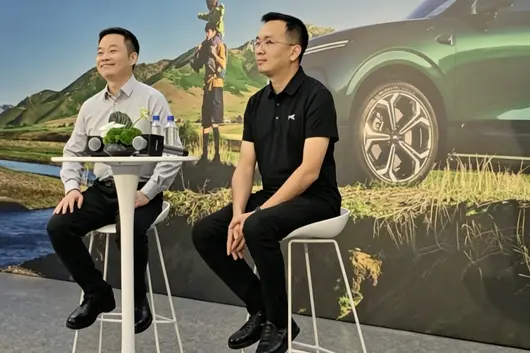




Tesla CEO Elon Musk posted on social media on the 9th local time, stating that redesigning the Cybercab production process achieved a production speed more than 5 times faster than traditional car manufacturing models. He explained that relying on the Unboxed (disassembly modular production) mode, various assembly modules are produced in parallel, and the entire vehicle is assembled at the final step; the production line footprint is halved, and output increases. The Cybercab, which started production at the Texas Gigafactory in February 2026, has become an industry focus again thanks to the astonishing production capacity achieved in just over half a year.

Of course, there are still unresolved issues. As of early September, only 45 Cybercabs are registered in Texas, accounting for 11% of the total 420 registered autonomous vehicles in Tesla's Texas. The effect of cost reduction remains to be verified by the actual utilization rate and final vehicle selling price. Drastic changes in production models are not exclusive to Tesla. Vehicle manufacturers like Ford and Hyundai Motor Group are reworking their assembly lines in their own ways. The century-old underlying logic of automobile manufacturing is wavering. This article reviews the technical routes of each company.

After Henry Ford, the iteration of production models
In 1913, Henry Ford introduced assembly line assembly at his Highland Park Plant in Michigan. The body moves along the conveyor belt, and workers at fixed stations repeatedly complete assigned tasks. The Model T went off the line in 90 minutes, and cars truly went to the masses. This model became the standard paradigm of the automotive industry for over a hundred years thereafter.
The electrification era is overturning this logic. Internal combustion engines and gearboxes are eliminated, and the number of parts is greatly reduced; simplified vehicle structures centered around batteries and motors have spawned new assembly processes. Starting with Tesla, Ford, Hyundai Motor Group, Toyota, Volkswagen, and BYD, each car manufacturer has offered different solutions. The focus of EV competition is shifting from batteries and software to the manufacturing process itself.

Tesla Abandoning Conveyor Belts
Tesla first unveiled the Unboxed modular production process on Investor Day in March 2023, redefining the concept of sequential assembly. Instead of completing the entire vehicle sequentially along a long assembly line, the 5 major modules—front cabin large die-cast parts, rear cabin large die-cast parts, structural battery pack, interior, and pre-painted exterior coverings—are manufactured synchronously on independent lines, and finally assembled into a complete vehicle at once in the final assembly area.

In traditional car manufacturing, painting is an independent process after the body is completed. The Unboxed mode directly colors the component panels in advance, eliminating the whole vehicle painting step. Tesla's goal is to reduce the Model Y production cost by nearly half and compress the single vehicle assembly time to 5-10 seconds. Referencing the 33-second production cycle of a single Model Y at Shanghai Gigafactory, the target speed is equivalent to more than 3 times the current level.
The United States Patent and Trademark Office granted Tesla the Unboxed process patent in September 2025. The first model to implement this process is the autonomous Robotaxi Cybercab, mass-produced at the Texas Gigafactory in February 2026. Existing mass-produced models such as Model 3, Model Y, and Cybertruck have not fully implemented this process yet. The planned budget-friendly new cars under $30,000 mass-produced in the middle of 2026 will also adopt this production method. However, there is also industry skepticism: Can this production line achieve multi-model co-line production? Referencing Tesla's past record of multiple production delays, whether this process can land stably on schedule remains to be seen.

Ford: Three-Path Split "Assembly Tree" Production Line
As the pioneer of assembly lines, Ford, after over a century, is personally deconstructing the production system it invented itself. Universal EV Production System (Universal EV Production System): Splits a single long production line into front, middle, and rear three branches, finally converging for final assembly, Ford calls this Assembly Tree (assembly tree). This architecture was made possible by eliminating internal combustion engine and gearbox assembly processes: The middle production line responsible for assembling batteries, seats, center consoles, and carpets serves as the main trunk, while front and rear cabin large aluminum die-cast parts are completed on independent lines and then merge into final assembly. Parts and tools are transported along the assembly tree to corresponding workstations, reducing workers' body twisting and large arm reaching actions.

This system was first implemented at Ford's Louisville Assembly Plant in Kentucky. Ford invested $2 billion to retrofit this plant and $3 billion in the Michigan battery plant, totaling an investment of $5 billion. The scrap metal from demolition reached 25,000 tons, and installing the new truss structure consumed a total weld length of 700 miles (about 1,126 km). The plant's first mass-produced model is the $30,000 level mid-size electric pickup Fathom. Ford stated that the assembly speed of this universal EV production system increased by 40% compared to traditional lines; the factory added dedicated workstations where software can be pre-flashed before module assembly; the plant's 5G network supports synchronized quality inspection during the assembly process. Parts mass production is scheduled for Q1 2027, and official mass production for consumers is expected in 2028.
Ford stopped electric pickup F-150 Lightning production in December 2025, with the official reason being the inability to find a viable profit path. This massive investment in the Louisville plant forms a sharp contrast with it, reflecting Ford's shift in electrification focus towards affordable high-volume models.

Hyundai Motor Group: Exploring Two Process Routes in Parallel
Hyundai Motor Group has not selected a single route but is synchronously advancing differentiated manufacturing innovation in Singapore, the US, and Ulsan.
The Hyundai Motor Group Global Innovation Center HMGICS located in Jurong, Singapore, directly abandons conveyor belts. The factory layout includes 27 oval independent work cells to achieve multi-model flexible mixed-line production. AGV unmanned transfer robots can carry up to 3 tons of car body, transporting between work cells, replacing conveyor belts. Boston Dynamics' quadruped robot Spot captures assembly points to complete quality inspection. The factory produces both IONIQ5 and autonomous Robotaxis simultaneously, with an annual capacity of over 30,000 units, leaning towards an experimental factory for small batches and multi-varieties.

The HMGMA (North American Gigafactory) in Ellaville, Georgia, US, scales the cell mode up to mass production scale. It adopts manufacturing platforms verified by HMGICS, with an annual capacity of 300,000 units; 161 Autonomous Mobile Robots (AMR) achieve logistics automation for interior assembly; the battery module factory is directly connected to the vehicle factory via a tunnel conveyor belt, improving logistics efficiency. The factory started producing the IONIQ5, added the Kia Sorento Hybrid model on June 2, 2026, and continues to expand co-line models.

The third route is in Ulsan, South Korea. Unlike 1996's Asan plant where Hyundai built a new vehicle plant, they chose to build a giant die-cast dedicated production line within the existing Ulsan factory. Using 6,000-ton or larger large-scale die-casting equipment to form car body parts in one piece, greatly reducing the number of parts and welding processes. Industry forecasts predict this process will be featured first on the 2026 large electric SUV Genesis GV90.

Hyundai Motor Group's route differs from Tesla and Ford, belonging to a dual-line parallel strategy: The Singapore factory focuses on the Cell cell mode for small batches and multi-varieties; the Georgia and Ulsan factories target large-scale mass production, developing large die-casting and automated logistics. Not pursuing a single standard answer, they implement multiple solutions in parallel based on production capacity scale and product goals.

Toyota, Volkswagen, BYD: Their Respective Routes?
Toyota still relies on the two pillars of the TPS Toyota Production System: Just-in-Time production and Jidoka (Autonomation), while conducting new trials. In June 2023, the Technical Workshop unveiled the self-driving assembly line: EVs rely on their own sensors to move autonomously through various processes, eliminating the need for conveyor belts. The goal is to reduce equipment investment and adapt to multi-variety, small-batch production. Meanwhile, next-generation EVs (prioritizing Lexus) will implement large die-casting processes starting from the 2026 model year, with the vehicle body split into three major parts (front, middle, rear) assembled integrally.

Volkswagen once launched the Trinity project benchmarking against Tesla, planning to build a new factory in Wolfsburg, compressing single-vehicle manufacturing time to 10 hours, only one-third of ID.3's current production duration. However, software R&D delays, management changes, and stagnant European EV demand led to repeated postponements. In 2026, Volkswagen is considering closing 4 factories in Germany and laying off up to 100,000 people. This case fully illustrates that even grand manufacturing innovation concepts are easily shelved in the face of financial crises.
Chinese BYD does not fuss over production line forms, focusing instead on vertical supply chain integration. 70-80% of core parts such as batteries, power semiconductors, motors, and electronic controls are developed and produced in-house, building a system immune to external supply chain fluctuations. The Shenzhen headquarters final assembly line produces a complete vehicle every 51 seconds. R&D of parts allows battery technology iterations to be synchronized to vehicle design and manufacturing processes quickly, which is the core reason behind its high cadence.

The Key in the End: Cost and Execution Capability
Each company's route is different, but the general direction is converging: Relying on large die-casting to reduce parts; abandoning fixed conveyor belts, shifting to flexible logistics with robots and AGVs; completing software flashing in advance during the assembly stage. Every company is utilizing the simplified vehicle structure brought by electrification to forge their own path.

But the implementation progress differs significantly among companies: Hyundai Motor Group operates a small-scale Singapore test line while advancing Georgia and Ulsan mass production lines, and has even integrated hybrid models into production. Tesla and Ford have set commercialization timelines using Cybercab and Fathom as explicit new vehicle carriers, but it still takes time to reach stable mass production. In contrast, Volkswagen proves that manufacturing innovation is easily downgraded due to corporate financial conditions.
Now, the EV markets in various global regions are cooling and heating differently, and manufacturing innovation has become a cost-reduction measure that determines the life or death of car companies. It cannot be determined yet which process will become the industry new standard, but the conveyor belt assembly line that has lasted for a hundred years is no longer the only solution.
© 2024 Bitauto.com. All Rights Reserved.
Bitauto (www.yiche.com and www.bitauto.com) is one of the most visited automotive websites in China. We provide detailed info on Chinese car brands available in your area. Please note that the information provided on this website is based on publicly available data and is for reference only. It may not be fully updated or accurate at all times.

Help us improve our website


