

HomeBoyue

Search History
Popular Searches
Dealer Login / Sign Up

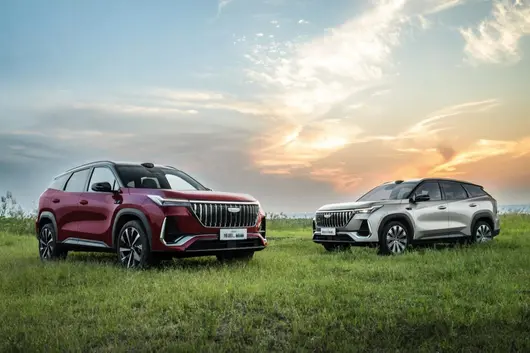
September 24, Kuangque Tower, Yuncheng, Shanxi. This ancient tower, remembered for 'going higher one more floor', welcomed a launch event that matched its temperament perfectly -- the all-new Fourth-Generation Boyue L officially launched. Fuel series launch limited price starts from 92,900 yuan, i-HEV series launch limited price starts from 99,900 yuan. Two cars launched together, nine trims, covering users with different power preferences and usage scenarios.

For the Chinese fuel SUV market, the name Boyue is not unfamiliar. Four generations in ten years, over 2.45 million users globally, consistently ranked first in A-segment fuel SUV sales for 14 consecutive months, January to August 2026 fuel vehicle sales champion. Behind these numbers is Boyue's consistent product logic: technology-driven, demand-oriented, reputation-based. And this time, the all-new Fourth-Generation Boyue L aims to, on top of the champion foundation, raise the standards even higher.

Dual Power Lines Running in Parallel, No Forced Choices
The most direct change in the all-new Fourth-Generation Boyue L is the expansion of power forms. The Fuel series continues to be equipped with the all-new 1.5TD Pro high-power engine, while the i-HEV series introduces Geely i-HEV Zhiqing hybrid for the first time. The two are not simply superimposed, but two solutions provided for different user scenarios.
The Fuel series is suitable for family users who prefer strong power, value cost-performance ratio, and are unwilling to change driving habits. The 1.5TD Pro high-power engine has a maximum power of 148kW, maximum torque of 315N·m, with overall parameters comparable to the 2.0TD power level of joint ventures. No charging pile needed, just refuel and go, long-distance driving and daily commuting are not restricted by charging conditions.

The i-HEV series targets users pursuing ultimate energy saving, long-distance commuting, and quiet comfort. Relying on the P1+P3 dual-motor decoupling architecture and 11-in-1 integrated electric drive, the vehicle can run purely electrically below 66km/h in urban areas, 0-30km/h acceleration takes only 2.11 seconds, power response time 10ms. WLTC combined fuel consumption as low as 4.67L/100km, full fuel and battery combined range exceeds 1200km, actual daily commuting fuel consumption as low as 3L level. For users who want to save fuel but don't want charging anxiety, this is a solution closer to actual usage scenarios.

Two power routes share the same intelligent, comfortable, and safety configuration. Whether choosing Fuel or HEV, users get the Qianli Haohan H5 assisted driving solution, Flyme Auto 2 smart cockpit, CCD variable damping suspension, fully equipped front seats, and other tier-crossing configurations. No need to make trade-offs between energy saving, intelligence, performance, and quality, this is the first answer given by the all-new Fourth-Generation Boyue L.
Three Strongest Technologies in the Same Class, Supporting Five Champion Product Powers
The product power improvement of the all-new Fourth-Generation Boyue L can be condensed into three technical highlights: Geely i-HEV Zhiqing Hybrid, all-new 1.5TD Pro high-power engine, Qianli Haohan H5 assisted driving solution. The three correspond to the core dimensions of energy saving, performance, and intelligence respectively, and also jointly support the five champion product powers: champion energy saving, champion performance, champion intelligence, champion quality, champion safety.
The core of champion energy saving is i-HEV Zhiqing Hybrid. The 1.5TD dedicated hybrid engine thermal efficiency reaches 47.26%, paired with 175kW electric drive system, over 80% operating conditions purely electric drive, engine running time reduced by 27% compared to traditional hybrid. Xingrui AI Cloud Power 2.0 large model can perceive temperature, humidity, altitude, slope and other environmental information in real time, intelligently match oil-electric strategies, comprehensive energy saving increased by over 10%. This system obtained the CATARC 'Industry's First HEV Intelligent Energy Saving Certification'.

Champion performance is reflected in two levels. i-HEV series 0-100km/h acceleration fastest 7.7 seconds, 0-30km/h acceleration 2.11 seconds, power response 10ms, 20 times faster than Japanese hybrid response speed of 200ms. The all-new 1.5TD Pro high-power engine first equipped in the Fuel series, jointly developed by Geely and Volvo, maximum power 148kW, increased by 15kW compared to previous generation; maximum torque 315N·m, increased by 25N·m compared to previous generation. Under the support of VGT variable geometry turbocharger, Joule engineering, mirror engineering technologies, WLTC combined fuel consumption 6.69L/100km, reduced by 2.3% compared to previous generation.
Champion intelligence is the most noteworthy change for the all-new Fourth-Generation Boyue L. The new car is the only fuel SUV under 300,000 yuan mass-produced equipped with a LiDAR, equipped with Qianli Haohan H5 assisted driving solution, equipped with 1 LiDAR, 3 mmWave radars, 11 HD cameras, 12 ultrasonic radars, total 27 sensors. Can achieve city NOA pilot driving assistance, highway NOA pilot driving assistance, and HPA multi-layer memory parking assistance. In terms of cockpit, Flyme Auto 2 smart cockpit system paired with 15.4-inch 2.5K ultra-clear central control screen and 25.6-inch AR-HUD, after Xingrui AI large model comes on board, voice interaction has capabilities such as emotional dialogue, complex intent vehicle control, navigation and itinerary planning. High-level intelligent driving is no longer the exclusive of new energy, this is the industry status quo the all-new Fourth-Generation Boyue L wants to break.

Champion quality is reflected in every detail of the cockpit. Front row seats support 6-way electric adjustment, 4-way electric lumbar support, leg rest, massage, heating, ventilation, memory, welcome, headrest audio, etc. 9 major functions; rear row equipped with seat heating and privacy glass; 16-speaker Flyme Sound Boundaryless Sound creates 7.1.2 panoramic surround sound; double-layer laminated glass improves quietness; steering wheel heating, crystal gear shift, 90% leather coverage rate improves touch; CMA premium architecture paired with CCD variable damping suspension, steering turnover lateral inclination reduced by 40%, filtering performance increased by 15%.

Champion safety takes '32+8+N' as the core. Among 32 active safety functions, AEB stationary braking stop supports up to 130km/h highest, and strengthens night backlight unexpected pedestrian emergence, night pedestrian popping out scene recognition; RMF driver incapacitation assistance can automatically slow down, turn on hazard lights, pull over steadily, and dial E-call rescue when driver has no power to control car. Passive safety aspect, 32000N·m/° body torsional stiffness, 1500MPa integrated hot-formed boron steel door ring, cloverleaf unloading force system and other structural technologies build a travel safety fortress. Breathing safety aspect, CN95 filter, '0' organic solvent and other material applications, make inside vehicle PM2.5 particle interception rate up to 99.9%, formaldehyde concentration only one-tenth of national standard threshold.

Over 200 Upgrades, Renewal Comparable to New Generation
The upgrade scale of the all-new Fourth-Generation Boyue L is not exaggerated to be described as 'comparable to new generation'. 8 styling upgrades, 75 energy saving upgrades, 48 performance upgrades, 53 intelligent upgrades, 16 major quality upgrades, 12 safety upgrades, cumulative over 200 functional upgrades, covering styling, energy saving, performance, intelligence, quality, safety six dimensions.
In terms of styling, the new car optimizes details on the basis of 'Mountain-River Aesthetics', front grille, front and rear bumper styling and process improvements, new Danxia Red, Snow Mountain Gold two body colors and Yunjin Brown interior color. Front grille adopts chrome trim strips in large areas, vehicle wind resistance reduced by 1.5%. Wheels new 19-inch Star Drill wheels and 20-inch Star Blade wheels, total 5 choices.

In terms of intelligence, 53 upgrades cover high-speed NOA traffic light response, city NOA narrow road passage, city roundabout passage, main/auxiliary road switching, vehicle lane intersection turn-around, extremely narrow parking space parking, 3D obstacle recognition, large vehicle avoidance reminder, etc. HMI visual interface upgrade, AI intelligent voice interaction, weather + music dual small window mode, external speakers and other configurations, further enrich cockpit experience.
In terms of quality, second row seat heating, double-layer laminated glass, steering wheel heating, rear privacy glass, fully equipped front seats, 1.9m large bed, 84.27% ultra-large usable space rate, 32 storage spaces, 90% leather coverage rate, NVH increased by 16%, 256-color ambient light, etc. 16 upgrades, allow all passengers to feel quality improvement.
Ten Years Four Generations, Champion Momentum Upward Again
Boyue's history is a miniature of Chinese brand SUVs continuously breaking through upwards. 2016 First Generation Boyue created the smart connectivity era, 2019 Second Generation Boyue created the smart safety era, 2022 Third Generation Boyue created the smart architecture era, 2025 Fourth Generation Boyue created the smart AI era. Four generations of models, each generation leads with industry-leading technology, product strength leads a generation.
Market performance also confirmed the effectiveness of this path. Boyue series cumulative sales broke 2 million, is one of the fastest models to break 500,000 and 1 million in Chinese SUV market. Sold to over 60 countries and regions, achieved local production in Belarus, Malaysia, etc. February 2025, Boyue global cumulative sales broke 2 million. January to August 2026, Boyue won fuel vehicle sales champion.

On top of the existing champion foundation, the goal of the all-new Fourth-Generation Boyue L i-HEV series is very clear: attack HEV market sales champion, together with Fuel series, help Boyue become Fuel + Hybrid 'Double Crown King'. From sales champion to value benchmark, from single power to dual car launch, from Fuel SUV to intelligent equality, the all-new Fourth-Generation Boyue L aims to do, not only continue the champion, but on top of the champion, take another step up.
From now until October 31, 2026, purchasing the all-new Fourth-Generation Boyue L can enjoy seven exclusive champion gifts, including champion cash gift, champion upgrade cabin gift, champion financial gift, champion renewal gift, champion traffic gift, champion gratitude gift, champion intelligent gift. Qianli Jinxiu Edition and Qianli Yuanxing Edition standard equipped with LiDAR, first owner limited time free enjoy value 25,000 yuan lifetime free pilot assisted driving function rights.
Fuel SUV First Choice, Never a Slogan. 92,900 yuan starting limited price, five champion product powers, over 200 functional upgrades, dual power running in parallel — all-new Fourth-Generation Boyue L gave everything it could give, the rest, let the market verify.

24 September, Guoque Lou, Yuncheng, Shanxi. Menara purba yang dikenali kerana 'naik ke tingkat yang lebih tinggi', ini menyambut sebuah pelancaran yang sangat serasi dengan wataknya – Boyue L Generasi Keempat Baharu rasmi dilancarkan. Siri Bahan Api pelancaran had masa bermula 92,900 Yuan, Siri i-HEV pelancaran had masa bermula 99,900 Yuan. Dua kenderaan dilancarkan serentak, sembilan varian, menempati pengguna dengan keutamaan kuasa dan senario penggunaan yang berbeza.
Bagi pasaran SUV Bahan Api China, nama Boyue tidak asing. Sepuluh tahun, empat generasi, lebih 2.45 juta pengguna di seluruh dunia, terukir sebagai nombor satu jualan SUV Bahan Api A selama 14 bulan berturut-turut, juara jualan kereta bahan api Januari hingga Ogos 2026. Di sebalik angka-angka ini, terdapat logik produk yang konsisten Boyue: dipacu oleh teknologi, diarahkan oleh keperluan, berlandaskan reputasi. Dan kali ini, Boyue L Generasi Keempat Baharu yang baharu akan dilakukan, adalah di atas tapak juara, menaikkan piawaian lagi setingkat.
Dua kuasa selari, tiada pilihan perlu dibuat
Perubahan paling langsung Boyue L Generasi Keempat Baharu yang baharu ialah pengayaan bentuk kuasa. Siri Bahan Api terus dilengkapi enjin 1.5TD Pro kuasa tinggi generasi baharu, Siri i-HEV kali pertama memperkenalkan Hybrid Zhiqing i-HEV Geely. Keduanya bukan sekadar penambahan mudah, tetapi dua penyelesaian berbeza diberikan untuk senario pengguna berlainan.
Siri Bahan Api sesuai untuk pengguna keluarga yang lebih meminati kuasa kuat, mengutamakan nisbah kualiti harga, dan tidak mahu mengubah amalan penggunaan kereta. Enjin 1.5TD Pro kuasa tinggi kuasa maksimum 148kW, tork maksimum 315N·m, parameter keseluruhan menandingi tahap kuasa 2.0TD syarikat gabungan. Tiada pengecas diperlukan, terus bergerak setelah isi minyak, pemanduan jauh dan perjalanan ke pejabat tidak terhad oleh keadaan pengisian tenaga.
Siri i-HEV tertumpu kepada pengguna yang mengejar penjimatan tenaga maksimum, perjalanan jauh ke pejabat, dan keselesaan sunyi. Bergantung pada arkitektur pemecahan enjin berganda P1+P3 dan sistem pengecasan terintegrasi 11 dalam 1, kenderaan boleh berjalan sepenuhnya elektrik di bawah 66km/h dalam bandar, pecutan 0 ke 30km/h hanya 2.11 saat, masa tindak balas kuasa 10ms. Kecekapan gabungan WLTC rendah sehingga 4.67L/100km, jarak perjalanan gabungan penuh minyak dan penuh elektrik melebihi 1200km, ujian sebenar jualan petrol perjalanan ke pejabat sehari-hari rendah sehingga tahap 3L. Bagi pengguna yang mahu jimat minyak dan tidak mahu bimbang tentang pengisian tenaga, ini adalah satu penyelesaian yang lebih hampir dengan senario penggunaan sebenar.
Dua laluan kuasa, berkongsi set konfigurasi pintar, selesa dan selamat yang sama. Sama ada pilih Bahan Api atau HEV, pengguna boleh mendapat pelan bantuan pemanduan Qianli Haohan H5, kabin pintar Flyme Auto 2, suspensi penyerap hentak CCD yang boleh diubah, kerusi hadapan dengan kelengkapan penuh dan konfigurasi lain melebihi kelas. Tiada perlu membuat pilihan antara penjimatan tenaga, kepintaran, prestasi, kualiti, ini adalah jawapan pertama yang diberikan oleh Boyue L Generasi Keempat Baharu yang baharu.
Tiga teknologi terkuat dalam kelasnya, menyangga lima kekuatan produk juara
Peningkatan kekuatan produk Boyue L Generasi Keempat Baharu yang baharu, boleh diringkas kepada tiga titik teknologi: Hybrid Zhiqing i-HEV Geely, Enjin 1.5TD Pro kuasa tinggi generasi baharu yang sekali lagi, pelan bantuan pemanduan Qianli Haohan H5. Ketiganya masing-masing sepadan dengan dimensi asas penjimatan tenaga, prestasi dan kepintaran, juga bersama-sama menyokong lima kekuatan produk juara: juara penjimatan tenaga, juara prestasi, juara kepintaran, juara kualiti, juara keselamatan.
Teras juara penjimatan tenaga adalah Hybrid Zhiqing i-HEV. Kesan haba enjin hybrid khusus 1.5TD mencapai 47.26%, dipadankan dengan sistem pengecasan elektrik 175kW, lebih 80% keadaan kerja didorong sepenuhnya oleh elektrik, masa operasi enjin berkurangan 27% berbanding hybrid minyak-elektrik tradisional. Model besar Kuasa Awan AI Xingrui 2.0 boleh mengesan maklumat persekitaran seperti suhu, kelembapan, paras, cerun secara masa nyata, menyeimbangkan strategi minyak-elektrik secara pintar, penjimatan tenaga gabungan meningkat lebih 10%. Sistem ini mendapat pengesahan "HEV Pintar Penjimatan Tenaga Industri Pertama" dari Pusat Automotif China.
Prestasi juara terwujud dalam dua lapisan. Pecutan 0-100km/j terpantas siri i-HEV 7.7 saat, pecutan 0 ke 30km/h 2.11 saat, tindak balas kuasa 10ms, 20 kali lebih pantas daripada tindak balas 200ms hybrid minyak Jepun. Enjin 1.5TD Pro kuasa tinggi generasi baharu yang dipasang untuk pertama kali dalam siri Bahan Api, dikembangkan bersama oleh Geely dan Volvo, kuasa maksimum 148kW, meningkat 15kW berbanding generasi terdahulu; tork maksimum 315N·m, meningkat 25N·m berbanding generasi terdahulu. Di bawah sokongan teknologi seperti Turbin Keratan Boleh Ubah VGT, Projek Joule, Projek Cermin, minyak gabungan WLTC 6.69L/100km, menurun 2.3% berbanding generasi terdahulu.
Kepintaran juara adalah perubahan yang paling menarik perhatian dalam Boyue L Generasi Keempat Baharu yang baharu. Kereta baharu adalah SUV Bahan Api satu-satunya yang memaparkan radar laser dalam siri pengeluaran bawah 300,000 Yuan, dilengkapi dengan pelan bantuan pemanduan Qianli Haohan H5, dilengkapi dengan 1 radar laser, 3 radar gelombang milimeter, 11 kamera HD, 12 radar ultrasonik, jumlah 27 sensor. Boleh melaksanakan bantuan pemanduan NOA bandar, bantuan NOA lebuh raya, dan bantuan parkir memori HPA merentasi aras. Dari aspek kabin, sistem kabin pintar Flyme Auto 2 dipadankan dengan skrin kawalan tengah ultra HD 2.5K saiz 15.4 inci dan AR-HUD 25.6 inci, selepas Model AI Xingrui dipasang pada kereta, interaksi suara mempunyai keupayaan perbualan emosi, kawalan kereta niat kompleks, navigasi dan perancangan perjalanan dan lain-lain keupayaan. Pemanduan pintar高阶 tidak lagi eksklusif kepada kereta tenaga baharu, ini adalah keadaan industri yang Boyue L Generasi Keempat Baharu yang baharu ingin pecahkan.
Kualiti juara terwujud dalam setiap butiran kabin. Kerusi hadapan menyokong 9 fungsi besar termasuk pengawalan elektronik 6 hala, sandaran pinggang elektrik 4 hala, sandaran kaki, urut, pemanasan, pengudaraan, memori, menyambut tetamu, sistem audio sok kepala; kerusi belakang dilengkapi pemanasan kerusi dan kaca privasi; 16 speaker Flyme Sound Tanpa Sempadan mencipta bunyi sekeliling 7.1.2; kaca berlapis dua meningkatkan ketenangan; pemanasan stereng, pemindahan gear kristal, kadar pembungkusan kulit 90% meningkatkan rasa sentuhan; arkitektur mewah CMA dipadankan dengan suspensi penyerap hentak CCD yang boleh diubah, kecondongan berputar ketika memusingkan berkurang 40%, prestasi penapisan getaran meningkat 15%.
Keselamatan juara berteras pada '32+8+N'. Dalam 32 fungsi keselamatan aktif, sokongan maksimum berhenti AEB pada keadaan statik sehingga 130km/h, dan mengukuhkan pengesanan senario seperti kanak-kanak dalam cahaya silau malam, kanak-kanak melompat keluar malam hari; bantuan kehilangan keupayaan pemandu RMF boleh mengurangi kelajuan, membuka lampu kecemasan, berhenti di tepi jalan dengan lancar dan menghubungi E-call untuk bantuan apabila pemandu tidak dapat mengawal kereta. Dari segi keselamatan pasif, keanjalan torsi badan 32,000N·m/°, rangka pintu boron steel bentuk panas terintegrasi 1500MPa, teknik struktur seperti sistem pelepasan daya semanggi tiga membentuk benteng keselamatan出行. Dari segi keselamatan pernafasan, penapis CN95, aplikasi bahan seperti "0" pelarut organik, membuatkan kadar perangkap zarah PM2.5 di dalam kenderaan setinggi 99.9%, kepekatan formaldehid hanya sepersepuluh had yang ditetapkan oleh piawaian negara.
Lebih daripada 200 peningkatan, baru seperti ganti model
Peningkatan幅度 Boyue L Generasi Keempat Baharu yang baharu, menggunakan 'seperti ganti model' untuk menggambarkan tidak berlebihan. 8 peningkatan gaya, 75 peningkatan penjimatan tenaga, 48 peningkatan prestasi, 53 peningkatan kepintaran, 16 peningkatan kualiti, 12 peningkatan keselamatan, jumlah lebih daripada 200 peningkatan fungsi, merangkumi enam dimensi gaya, penjimatan tenaga, prestasi, kepintaran, kualiti, keselamatan.
Dari segi gaya, kereta baharu mengoptimumkan butiran di atas asas 'Estetika Gunung dan Sungai', gaya dan proses penghadang hadapan, hadapan dan belakang meningkat, menambah warna badan Merah Danyan, Emas Bukit Salji dan warna dalaman Coklat Yunnan. Penghadang hadapan menggunakan hiasan plating kromium secara besar-besaran, rintangan udara keseluruhan kenderaan menurun 1.5%. Pelekat roda menambah roda berlian bintang 19 inci dan roda pisau bintang 20 inci, jumlah 5 pilihan.
Dari segi kepintaran, 53 peningkatan merangkumi tindak balas lampu lalu lintas NOA laju, laluan bandar NOA jalan sempit, laluan bulatan bandar, pertukaran jalan utama dan bantuan, memusing di persimpangan laluan, parkir tempat parkir sangat sempit, pengenalpastian halangan 3D, amaran elak kenderaan besar dan lain-lain fungsi. Pengurusan antaramuka visual HMI, interaksi suara pintar AI, mod dua tingkap kecil cuaca + muzik, pembesar suara luar kereta dan lain-lain konfigurasi, lebih memperkaya pengalaman kabin.
Dari segi kualiti, pemanasan kerusi baris kedua, kaca berlapis dua, pemanasan stereng, kaca privasi baris belakang, kerusi hadapan penuh, katil besar 1.9m, kadar ruang efektif 84.27%, 32 ruang penyimpanan, kadar pembungkusan kulit 90%, peningkatan NVH 16%, lampu suasana 256 warna dan 16 peningkatan lain, memberi semua penumpang rasa peningkatan kualiti.
Sepuluh tahun, empat generasi, tenaga juara naik lagi
Sjarah Boyue adalah ringkasan突破 terus ke atas SUV jenama China. 2016 Generasi Pertama Boyue mewujudkan Era Sambungan Pintar, 2019 Generasi Kedua Boyue mewujudkan Era Keselamatan Pintar, 2022 Generasi Ketiga Boyue mewujudkan Era Arkitektur Pintar, 2025 Generasi Keempat Boyue mewujudkan Era AI Pintar. Empat generasi model, setiap generasi memasang teknologi terkemuka industri terlebih dahulu, kekuatan produk mendahului satu generasi.
Prestasi pasaran juga mengesahkan keaslian laluan ini. Jualan kumulatif siri Boyue melebihi 2 juta unit, adalah salah satu model yang paling cepat melebihi 500,000 unit, 1 juta unit di pasaran SUV China. Dijual ke lebih 60 negara dan wilayah, mencapai pengeluaran tempatan di Belarus, Malaysia dan lain-lain. Februari 2025, jualan kumulatif global Boyue melebihi 2 juta unit. Januari hingga Ogos 2026, Boyue merangkul juara jualan kereta bahan api.
Di atas tapak juara sedia ada, sasaran siri i-HEV Boyue L Generasi Keempat Baharu yang baharu sangat jelas: mencapai jualan teratas pasaran HEV, bersama siri Bahan Api, membantu Boyue menjadi Juara Berganda Bahan Api + Hybrid Minyak. Dari juara jualan ke tanda aras nilai, dari kuasa tunggal ke dua kenderaan dilancarkan serentak, dari SUV Bahan Api ke hak sama rata kepintaran, apa yang perlu dilakukan oleh Boyue L Generasi Keempat Baharu yang baharu, bukan sahaja meneruskan juara, tetapi naik ke tingkat lebih tinggi di atas juara.
Dari hari ini hingga 31 Oktober 2026, membeli Boyue L Generasi Keempat Baharu yang baharu boleh menikmati tujuh hadiah juara eksklusif, termasuk Hadiah Tunai Juara, Hadiah Naik Kabin Juara, Hadiah Kewangan Juara, Hadiah Baru Juara, Hadiah Traffik Juara, Hadiah Terima Kasih Juara, Hadiah Pintar Juara. Verisi Qianli Jinxiu dan Verisi Qianli Yuanxing dilengkapi radar laser secara standard, pemilik pertama menikmati hak fungsi bantuan pemanduan NOA percuma seumur hidup bernilai 25,000 Yuan secara masa had percuma.
Pilihan pertama SUV Bahan Api, bukan sekadar slogan. Had masa bermula 92,900 Yuan, lima kekuatan produk juara, lebih 200 peningkatan fungsi, dua kuasa selari – Boyue L Generasi Keempat Baharu yang baharu memberikan semua yang boleh, yang tinggal, serahkan kepada pasaran untuk mengesahkan.

In the Brazilian car market, BYD leaving everyone else in the dust is a well-worn topic, but what truly deserves close examination is Geely's skyrocketing speed.
July just delivered a sales report of 7,458 units, stubbornly competing with Chery until there was only a 105-unit gap, maximally heightening the suspense of who is the third Chinese brand; the single EX2 model sold nearly 4,000 units, firmly ranking in the top 10 for EV sales in Brazil, with the full month brand sales likely to stay steadily above 7,000 units.

It is worth noting that Geely's official announcement of entering Brazil was just one year ago. In one year, going from zero to selling over 7,000 units a month and breaking into the top 11 of the brand rankings, this speed counts as first-tier level across the entire history of Chinese automakers going global.
Many people only focus on that exaggerated 26,535.7% year-on-year growth, joke about it being a "low base number game", and move on from this. But few dig deep into why it was precisely Geely that was able to solidify sales in such a short time? The answer, bluntly put, is not complex – this "asset-light joint venture global expansion" strategy of theirs is too mature and too practical.
Don't be deceived by the percentage, over 7,000 units is a solid foothold
The 26,535.7% year-on-year growth rate is essentially because in July 2025, Geely had not officially started sales, there were only dozens of exhibition cars and test drive cars registered that month, the denominator was extremely small, so the calculated percentage naturally exploded. But setting aside this statistical number, looking at absolute sales: July 7,458 units, exceeding old-brand joint venture players like Jeep and Nissan, and only 105 units away from Chery which has cultivated the Brazilian market for years, this is no longer a number game.

As of early August 2026, Geely has just completed one year in Brazil, cumulative sales have already broken through 25,000 units. For a brand new brand, this achievement is highly valuable. It is worth knowing that for many Chinese brands entering emerging markets, stable monthly sales of 3,000 units in the first two years is considered passing. Geely directly touched the threshold of 7,000 units in just one year, and is still climbing upwards.
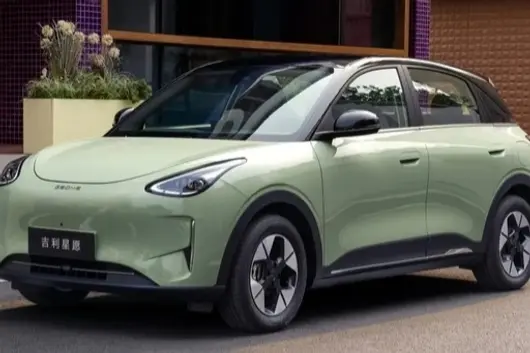
The core supporting this sales volume is the EX2 car, which is the Xingyuan in China. Compact pure electric, rear-drive layout, sufficient range and space, plus precise pricing, just hit the market gap for entry-level EVs in Brazil. But product strength is just the foundation, what truly allowed it to quickly stock and deliver was the path Geely chose that was completely different from BYD and Great Wall.
Core Password: Don't forcefully invest in heavy assets, enter directly by borrowing Renault's express lane
BYD bought Ford's old factory to renovate it themselves, Great Wall took over Mercedes' old factory and then expanded capacity, both walking the heavy asset route of "building factories themselves, building channels themselves" – the benefit is having full control, the downside is high costs and long cycles, volume doesn't start without three to five years.
Geely chose the completely opposite path: in 2025 established a joint venture with Renault, acquired 26.4% of shares of Renault Brazil, directly letting Renault serve as their General Distributor in Brazil.

How ruthless is this move? It is equivalent to directly grabbing all of Renault's assets accumulated over decades of operation in Brazil:
Ready-made distribution system: Renault Brazil originally had 263 dealership outlets, covering major cities nationwide, familiar with local dealer rules and consumer habits. Geely didn't need to recruit from scratch, directly relied on this system to expand authorized stores, opening 43 standard 4S stores and 13 mall experience points in one year, covering 24 states and over 50 cities. If another brand did it themselves, this coverage would take at least 3 years.
Ready-made after-sales and parts system: Brazil has vast territory, parts warehousing and after-sales repair are the fatal weaknesses of new brands. Renault has mature nationwide parts warehouses and after-sales standards, Geely directly accessed them, consumers buying cars don't worry about not being able to repair or waiting for parts for half a year, naturally adding a layer of trust.
Ready-made factory capacity: No need to buy land and build factories, directly started production of EX2 at Renault's Ayrton Senna Industrial Park, achieved local mass production in June 2026, just avoided Brazil's gradually rising import tariffs, costs directly dropped a notch, supply volume no longer restricted by sea transport.
Put simply, others going global is "starting from scratch", Geely directly brought product technology, "moving in ready-furnished" to others' mature industrial systems. Less money spent, fewer pitfalls stepped into, volume growth speed naturally became faster.
This is not a last-minute rush, it is Geely's mature strategy played over nearly 10 years
Many people think this is the first time Geely is doing this, actually quite the opposite, this "equity investment in local automakers, outputting technology products, reusing partner channel capacity" model, Geely had already worked it out in Malaysia long ago.
In 2017, Geely acquired 49.9% shares of the Malaysian national brand Proton. At that time Proton had been losing money for consecutive years, annual sales dropped from a peak of over 200,000 units to 70,000 units, market share left only 15%, even Volkswagen and Peugeot were unwilling to take over. Geely didn't grab controlling equity, only took operation management rights, exported their car models, technology, management system into it, the first car was the Proton X70 built based on Boyue.

How was the result? Proton sales volume increased by 50% year-on-year in the second year, directly turned from loss to profit in 2019, by 2024 annual sales had rushed to 152,000 units, sitting second in the Malaysian market steadily for 6 consecutive years, market share close to 19%. Geely not only revitalized a local brand, but also by using Proton's identity, smoothly obtained the entry ticket to the entire ASEAN market, avoiding high regional trade barriers.
The Brazil model is essentially an upgraded version of the Proton model. The subsequent Korean Renault cooperation, Spanish Ford joint venture, all follow the same train of thought: do not pursue wholly-owned control, do not directly confront the local market, but find a partner with capacity, channels, and understanding of local rules, I provide technology and products, you provide sites and networks, we share the money together, make the market bigger together.
Why say this model is worth most Chinese automakers learning
Now talking about Chinese automakers going global, many people open with "build factories themselves, cultivate locally", as if without spending billions to build a factory, it's not considered truly going global. But the reality is, not all automakers have the volume and cash flow of BYD, capable of withstanding the pressure of investment without output in the first few years.

The value of Geely's asset-light model lies in that it offers another feasibility:
First, fast results, low trial and error costs. No need to wait two or three years for factory construction and channel expansion, cooperation landing can stock goods, if selling well add more, if selling poorly won't cause major damage.
Second, low local resistance, easier to land. Compared to the impression of "Chinese automakers coming to snatch the market", this "cooperating with local enterprises, revitalizing idle capacity, creating jobs" model, whether government or consumers, acceptance is much higher, and not easy to become a target of local industry associations.
Third, extremely high replicability. From Southeast Asia to South America, then to Europe, as long as a local partner with capacity and channels can be found, this model can be quickly reused, no need to explore from zero for every market.
Conclusion: Of course it doesn't mean the heavy asset model is bad. BYD and Great Wall's route, although can firmly hold the brand and profit in their own hands, but the initial investment is undoubtedly higher. For more Chinese brands wanting to go global and also quickly open the market, Geely's "taking advantage of the trend" strategy is clearly more pragmatic and more universal.

The Brazilian market is just a microcosm. In the next few years, Chinese automakers going global will shift from "swarming in" to "competing in refined operations", by that time, whoever can find a landing method more suitable for themselves will truly survive and thrive. And the asset-light joint venture idea Geely has verified over nearly 10 years and multiple markets is obviously an assignment worth serious reference.

Pasaran kereta di Brazil, kemenangan BYD yang jauh melampaui adalah cerita lama, tetapi yang benar-benar perlu diteliti dengan teliti, adalah kelajuan lonjakan Geely.
Bulan Julai baru sahaja menyerahkan laporan prestasi 7,458 unit, secara paksa bersaing dengan Chery sehingga hanya beza 105 unit, meningkatkan ketegangan kedudukan ketiga jenama China menjadi maksimum; satu model EX2 sahaja telah menjual hampir 4,000 unit, kekal kukuh dalam sepuluh teratas jualan kenderaan elektrik di Brazil, jualan jenama keseluruhan bulan ini berkemungkinan besar kekal kukuh di atas 7,000 unit.
Perlu diketahui, Geely baru sahaja mencapai satu tahun pengumuman rasmi masuk ke Brazil. Satu tahun masa dari sifar sehingga jualan bulanan lebih tujuh ribu, meleset ke dalam 11 teratas senarai jenama, kelajuan ini dalam sejarah keseluruhan syarikat kereta China keluar negara, dikira sebagai tahap pasukan teratas.
Ramai hanya menatap peningkatan tahun-ke-tahun yang berlebihan iaitu 26535.7%, menggeleng-geleng 'permainan angka dengan asas rendah', lalu menganggap perkara ini selesai. Tetapi很少有人深究:Mengapa Geely sahaja, mampu menjadikan jualan kukoh dalam masa yang begitu singkat? Jawapannya jika diungkap tidak rumit - strategi 'pelaburan ringan dan perkongsian keluar negara' yang dipegangnya, terlalu matang dan terlalu praktikal.
Jangan tertipu dengan peratusan, lebih tujuh ribu unit adalah teguh berdiri di tapak
Kadar pertumbuhan tahun-ke-tahun 26535.7%, asalnya kerana Julai 2025 Geely belum menjual secara rasmi, bulan itu hanya ada beberapa puluh unit kenderaan pameran, ujian darat yang didaftarkan, penyebut sangat kecil, peratusan yang dikira secara semula jadi meledak. Tetapi abaikan statistik angka ini, lihat jualan mutlak: Julai 7,458 unit, melebihi Jeep, Nissan dan pesaing合资 lama lain, dan Chery yang telah mendalami Brazil bertahun-tahun hanya beza 105 unit, ini bukan lagi permainan angka.
Setakat awal Ogos 2026, Geely masuk Brazil baru sahaja mencapai satu tahun, jualan kumulatif telah melangkaui 25,000 unit. Untuk jenama baharu, prestasi ini sangat bernilai. Perlu diketahui, ramai jenama China masuk ke pasaran baharu, dua tahun pertama jualan bulanan stabil 3,000 unit sudah dianggap lulus, Geely terus menggunakan satu tahun masa untuk merasai ambang 7,000 unit, malah masih terus naik.
Teras yang menyokong jualan ini ialah model EX2 ini, iaitu Xingyuan di pasaran domestik. Sedang elektrik penuh, susunan belakang drive, jarak laluan dan ruang yang mencukupi, ditambah penetapan harga yang tepat, sangat tepat menyasar kekosongan pasaran kenderaan elektrik permulaan di Brazil. Tetapi kekuatan produk hanyalah asas, yang membolehkannya dengan pantas menghantar barangan, penghantaran pantas, ialah jalan yang dipilih Geely yang berbeza sepenuhnya daripada BYD dan Great Wall.
Rahsia Utama: Tidak membebankan modal berat, menyewa jalan pantas Renault untuk masuk terus
BYD membeli kilang lama Ford, mengubahsuai sendiri, Great Wall mengambil kilang lama Mercedes, kemudian menambah kapasiti, semuanya berjalan di atas laluan modal berat 'membina kilang sendiri, membina saluran sendiri' - kelebihannya adalah suara penuh di tangan sendiri, kekurangannya adalah membakar wang banyak, jangka masa panjang, tanpa 3-5 tahun tidak boleh naik kuantiti.
Geely memilih laluan yang bertentangan sepenuhnya: Pada 2025 membentuk syarikat perkongsian dengan Renault, memperoleh 26.4% saham syarikat Renault Brazil, secara langsung membiarkan Renault menjadi pengedar utama Geely di Brazil.
Seberapa hebat langkah ini? Setara terus memegang seluruh aset Renault yang diuruskan selama puluhan tahun di Brazil:
Sistem pengedaran sedia ada: Renault Brazil asalnya mempunyai 263 titik pengedaran, menutupi bandar-bandar utama seluruh negara, memahami peraturan pengedar tempatan dan tabiat pengguna. Geely tidak perlu mencari pelabur dari sifar, secara langsung bergantung pada sistem ini untuk mengembangkan kedai yang diiktiraf, dalam satu tahun dibuka 43 kedai 4S piawai, 13 titik pengalaman pasar raya, menutupi 24 negeri lebih 50 bandar. Pertukaran jenama lain yang lakukan sendiri, cakupan ini sekurangnya perlu bertahan 3 tahun.
Sistem pasca jualan dan aksesori sedia ada: Tanah Brazil yang luas, penyimpanan aksesori, pembaikan pasca jualan adalah kelemahan jenama baharu. Renault mempunyai gudang aksesori negara yang matang dan standard pasca jualan, Geely terus sambung, pengguna yang membeli kereta tidak perlu risau tidak boleh dibaiki, menunggu aksesori selama setengah tahun, secara semula jadi lebih satu lapisan kepercayaan.
Kapasiti kilang sedia ada: Tidak perlu membeli tanah membina kilang, secara langsung melancarkan pengeluaran EX2 di Taman Perindustrian Ayrton Senna milik Renault, pada Jun 2026 mencapai pengeluaran tempatan, sama-sara mengelak cukai import yang dinaikkan secara berperingkat di Brazil, biaya terus turun satu tahap, kuantiti bekalan tidak lagi terhad oleh pengangkutan laut.
Maksudnya secara ringkas, orang lain keluar negara bermula dengan tangan kosong, Geely langsung membawa produk teknologi, 'masuk dengan perabot lengkap' kepada sistem industri matang orang lain. Wang kurang dibelanjakan, lubang kurang dipijak, kelajuan naik kuantiti secara semula jadi lebih cepat.
Ini bukan usaha tergesa-gesa di akhir masa, Geely telah bermain strategi matang hampir 10 tahun
Ramai sangka ini kali pertama Geely buat begitu, sebenarnya sebaliknya, model 'pelaburan dalam syarikat kereta tempatan, menghasilkan produk teknologi, guna semula saluran kapasiti mereka' ini, Geely sudah berjaya laksanakan di Malaysia sejak dulu.
Pada 2017, Geely membeli 49.9% saham jenama kebangsaan Malaysia Proton. Ketika itu Proton sudah rugi bertahun-tahun, jualan tahunan dari puncak 200,000 unit jatuh ke 70,000 unit, kekuarangan pasaran tinggal 15%, setakat Volkswagen, Peugeot pun tidak mahu mengambil alih. Geely tidak merebut hak kawalan, hanya mengambil hak pengurusan operasi, masukkan model kereta, teknologi, sistem pengurusan sendiri, kereta pertama adalah Proton X70 yang dibina berdasarkan Boyue.
Bagaimana hasilnya? Jualan Proton tahun kedua meningkat 50% tahun-ke-tahun, pada 2019 terus berubah rugi ke untung, ke 2024 jualan tahunan sudah melonjak ke 152,000 unit, berterusan 6 tahun stabil duduk kedua pasaran Malaysia, kekuarangan pasaran hampir 19%. Geely bukan sahaja menghidup semula jenama tempatan, tetapi juga dengan identiti Proton, berjaya mendapatkan tiket masuk seluruh pasaran Asean, mengelak halangan perdagangan wilayah yang tinggi.
Model Brazil, pada asalnya adalah versi naik taraf model Proton. Seterusnya kerjasama Renault Korea, perkongsian Ford Sepanyol, semuanya思路 yang sama: tidak mengejar penguasaan penuh modal, tidak menghadapi keras pasaran tempatan, melainkan cari rakan kongsi yang ada kapasiti, saluran, faham peraturan tempatan, saya keluar teknologi dan produk, anda keluar tapak dan rangkaian, bersama bagi wang, bersama besarkan pasaran.
Mengapa dikatakan model ini, patut dipelajari kebanyakan syarikat kereta China
Sekarang bercakap mengenai syarikat kereta China keluar negara, ramai cakap terus 'bina kilang sendiri, mendalamkan tempatan', nampaknya jika tidak kelabai berbilion membina kilang, tidak kira keluar negara sebenar. Tetapi realiti, bukan semua syarikat kereta ada besaran dan aliran tunai BYD, boleh menanggung tekanan beberapa tahun awal hanya masuk tidak keluar.
Nilai model modal ringan Geely, terletak pada ia memberikan satu kemungkinan lain:
Pertama, kelihatan pantas, kos percubaan rendah. Tidak perlu menunggu dua tahun tiga tahun kilang siap, saluran dibuka, perkongsian ditubuhkan boleh penghantaran barangan, jualan baik tambah, jualan buruk tidak mencederakan tulang tulang.
Kedua, tolakan tempatan kecil, lebih mudah dilaksanakan. Berbanding imej 'syarikat kereta China datang rebut pasaran', model 'berkongsi dengan syarikat tempatan, menghidupkan semula kapasiti terbiar, mencipta pekerjaan' ini, sama ada kerajaan atau pengguna, taraf penerimaan jauh lebih tinggi, tidak mudah menjadi sasaran industri persatuan tempatan.
Ketiga, boleh direplikasi amat kuat. Dari Asia Tenggara ke Amerika Selatan, seterusnya ke Eropah, selama boleh cari rakan kongsi tempatan yang ada kapasiti, saluran, model ini boleh digunakan semula dengan pantas, tidak perlu setiap pasaran mencari dari sifar.
Kesimpulan: Tentu saja bukan bermaksud model modal berat itu tidak baik. Laluan BYD, Great Wall, walaupun boleh pegang tegas merek dan keuntungan di tangan sendiri, tetapi pelaburan awal tentu lebih tinggi. Bagi lebih banyak jenama China yang mahu keluar negara, dan mahu buka pasaran pantas, strategi Geely 'memanfaatkan momentum' ini, jelas lebih praktikal, dan lebih universal.
Pasaran Brazil hanyalah satu bayangan kecil. Beberapa tahun akan datang, keluar negara syarikat kereta China akan beralih dari 'semua masuk serentak' kepada 'berlumba operasi teliti', apabila tiba masa, siapa boleh cari cara pelaksanaan yang lebih sesuai, siapa sebenarnya boleh bertahan hidup, hidup dengan baik. Dan Geely menggunakan hampir 10 tahun masa, konsep perkongsian modal ringan yang disahkan pelbagai pasaran, jelas adalah tugasan yang patut dirujuk dengan serius.

In the current automotive industry, the new energy wave is booming, market competition continues to intensify, industry focus mostly centers on the electrification track, and the huge potential of the fuel vehicle market has long been underestimated by public opinion. Many car companies have tilted their R&D focus towards new energy, creating a one-sided perception in the market that 'fuel vehicles have no incremental growth.'

Latest June insured volume data shattered this prediction: Geely Boyue led the fuel SUV track again, with June sales hitting 14,970 units. The first half of 2026 cumulative sales firmly held the champion spot for all-category fuel SUVs, with a monthly average nearing 20,000 units. To date, global cumulative sales have exceeded 2.4 million units, consecutive champion of A-segment fuel SUVs for 12 months. In the current era where many models rely on short-term marketing to shine briefly, Boyue's continuous strong sales over a decade have been called the rare 'Boyue Phenomenon' by the industry.
A fact is that the China auto market will not move towards a single new energy pattern. The data of over 200 million fuel car ownership nationwide and 25,000 new fuel cars delivered daily proves the fuel market has irreplaceable huge rigid demand. Large numbers of family users still value the convenience of refueling fuel vehicles and lack of range anxiety, while urgently wanting intelligent experiences at the same level as new energy models. Most car companies ignored the upgrade needs of stock users, either staying at the level of old mechanics or simply installing large screens to cope with the market, ultimately being not chosen by consumers. Boyue stood firm at the top through multiple industry shocks, which is by no means due to luck, but the result of long-termist strategy and precise product iteration.
Ten years, four generations of models, Boyue has cultivated the internal combustion engine market's continuous sales, which is enough to prove: fuel vehicles will not end, outdated products will be forgotten. Dancing with the era, being friends with time is Boyue's ten-year long success evolution criterion.
Decade-long four generations iteration, casting uncopyable market barriers with time
Boyue's growth trajectory far exceeds the lifecycle of ordinary hit models. In 2018, Boyue sales broke 500,000 units just 25 months after launch. This achievement took CR-V 86 months, Tiguan 42 months, and Haval H6 31 months. At that time, it refreshed the growth speed of independent brand SUVs. 'Boyue Speed' once became an industry sales benchmark. Thereafter, sales accelerated continuously, breaking 1 million units in 52 months, 1.5 million in 82 months, 1.8 million in 99 months, reaching 2 million units in early 2025, and growing to 2.4 million units in just over a year.

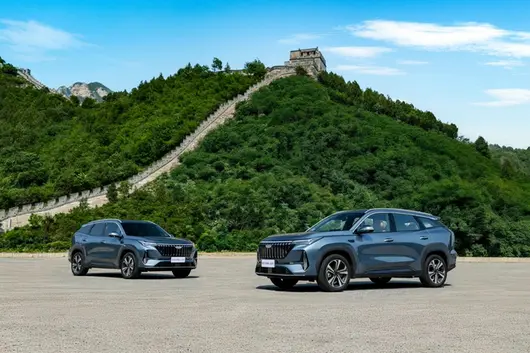
Looking globally, Boyue has long stepped out of the domestic market. Products are exported to over 60 countries, with local production completed in Belarus and Malaysia, adapting to different regional usage needs such as Middle East high heat, Nordic severe cold, and Southeast Asia rainforests. It has won the number one China brand sales in sub-segments in countries like Costa Rica and Moldova. It has become a global business card representing the strength of Chinese fuel SUVs. 2.4 million global users have built a dual barrier of reputation and sales that competitors find hard to copy.

The underlying logic supporting this cross-cycle strong sales is the four generations of models progressing step-by-step and precisely evolving to fit the needs of each generation of users.
Ten years ago, in the 100,000-level fuel SUV market, joint venture models dominated. The industry generally only cultivated mechanical hardware like power and chassis. Car computer interaction was a blank. Ordinary family consumers were just getting used to private cars. They were no longer satisfied with 'can drive, good to drive' and urgently wanted more convenient, stronger tech-feel in-vehicle interaction experiences. However, products in the same price range had no mature smart solutions available. Smart needs were long-term unsatisfied.
The first-generation Boyue first brought the complete smart internet system down to the 100,000-level price point, equipped with industry-leading GKUI car computer system, launched a landmark smart voice interaction. One sentence 'Hello Boyue' realizes voice control of navigation, air conditioning, and multimedia. Simultaneously equipped standard 4G in-vehicle network, mobile phone connectivity, OTA cloud upgrades. It filled the smart blank of home fuel SUVs. On the basis of solid and reliable mechanical quality, it used perceivable smart experiences to widen the gap with same-level competitors, redefined the experience bottom line of 100,000-level fuel cars, and became a phenomenon hit all at once.

Subsequently, as the car buying crowd shifted to three-to-four person families, the first priority for users shifted to family travel safety. However, most car companies in the industry still built safety at the level of high-strength body, multi-airbags and other passive protection. AEB pre-collision, blind spot warning and other active safety configurations were almost absent in the 100,000-level home SUVs. Various hidden risks like picking up children, city commute, and highway lane changes became the major concern for family owners.
The second-generation Boyue locked the product upgrade core on full-domain safety, bringing active safety configurations exclusive to high-end models to mainstream price points. It popularized AEB pre-collision, reversing vehicle side warning, lane change assist, door opening warning and other functions across the entire series, while strengthening cage-type high-strength body passive protection, winning C-NCAP five-star safety certification. No longer relying on 'can't break' to guarantee safety, but avoiding danger through proactive judgment, hitting the core demand of 'prevent trouble before it happens' for family users, setting the family safety SUV label, and firmly grasping the family user base.

In 2022, independent brand technology rose comprehensively, consumer car buying cognition upgraded significantly. Users were no longer satisfied with surface functions like large screens and safety configurations, but started caring about the whole vehicle's underlying architecture, chassis driving texture, and long-distance driving fatigue. However, the industry had obvious technical barriers. CMA global high-end architecture, L2 level assist driving systems, were mostly only supplied to high-end models. 100,000-level home SUVs still used old platforms. Users were willing to pay for advanced driving and riding experiences, but could not find affordable choices.
At this time, Boyue L launched. The new car broke the price barrier of high-end technology, landed on CMA global luxury architecture, synchronously equipped GEEA 2.0 electronic and electrical architecture. It optimized chassis filtering and driving stability from the bottom layer, thoroughly improving the cheap driving and control texture of traditional fuel SUVs. At the same time, it pioneered bringing a complete L2 level assist driving to the 100,000-level home market, equipped with full-speed ACC, lane centering, traffic congestion assist, relieving long-distance and city commute driving fatigue. It made up for fuel home vehicle driving and control shortfalls with high-end architecture and high-order intelligent driving, meeting user upgrade needs for whole-vehicle premium feel and easy driving. Boyue L 'New Three Good SUV' label entered the hearts of people. Layered technical precipitation of the first three generations also paved the way for the fourth-generation Boyue L's all-round upgrade.
Step by step forward, Boyue stepped accurately on the beat every time. Its experience tells us: the market eliminates not fuel vehicles, but outdated products lacking innovation and disconnected from users. The huge fuel stock market will not actively discard classics, but is waiting for models like Boyue, which can be friends with time, to take up the banner.
Fuel and Electric Share Intelligence to Break the Situation, Intelligence Makes the Fuel Track Reveal New Vitality
In May 2025, the arrival of the fourth-generation Boyue L again pushed following the trend to the extreme.
The new energy wave swept the market. Consumers fell into a choice contradiction. EVs had intelligent configurations maxed out, but suffered from range anxiety and inconvenient charging. Traditional fuel vehicles had convenient refueling and no mileage concerns, but were generally intelligently backward and cockpit experiences conservative. Users with budgets of over 100,000 were almost unrelated to high-order intelligence. Most car companies only did single-track, unable to balance two core advantages. The market lacked balanced fuel SUV products.

The fourth-generation Boyue L relied on the precipitation of the first three generations of technology to complete an all-round leap upgrade. Based on the new dual architecture of CMA+GEEA 3.0, it built fuel-electric same intelligence product power. Hardware equipped with 7nm high-computing power car-grade chips, multi-screen immersive smart cockpit. The Little Blue Light Edition brought the Qianli Haohan H3 high-order smart driving solution down to the 120,000-level market. Highway NOA, full-scenario automatic parking and other functions were fully popularized across the series. At the same time, it retained the core advantages of fuel vehicles: convenient refueling and no range anxiety. It was comprehensively balanced in six dimensions: looks, space, comfort, safety, driving control, and intelligence. It thoroughly broke the industry prejudice that 'high-order intelligence belongs only to new energy', precisely connecting the current dual rigid demand of 'fuel reliability + electric intelligence' for family users, pointing out a new direction for evolution in the fuel track.

Data shows the fourth-generation Boyue L Little Blue Light Edition assist driving activation rate is as high as 75%. The single user's longest assist driving mileage exceeded 50,000 km. The single car's maximum parking times reached 2091 times. The monthly average assist driving time was 10.4 hours. A large number of owners use smart functions daily at high frequency, confirming intelligence has long been real rigid demand for fuel vehicle owners, not an optional accessory configuration.
Its upgrade and strong sales not only consolidated its own benchmark status, but also provided the clearest evolution template for all car companies sticking to the fuel track and seeking product upgrades. It once again proved that if you approach the market, the market will definitely rush to you with two-way momentum.
Finally
Ten years together through wind and rain, from the domestic market to over 60 countries globally. 2.4 million user choices gathered into the heaviest recognition for Boyue. Electrification changed the market wind direction, but the need for people to want worry-free, solid, and keep up with intelligent trends in travel has never changed.
Many people on the market treat fuel and electric as a single-choice question of two selections. But the market gave a completely opposite answer: the fuel track still hides huge consumption potential, there is no exit. Truly eliminated are products that only move forward slowly, unwilling to approach user needs.

'Each generation has its own key priorities.' Boyue's ten years of evergreen is not based on holding onto advantages and lying flat, but always insighting into needs and presenting the eggs this generation's users want. Just as that phrase 'Good Looking, Good Driving, Good Smart', the user's feelings and reputation of Boyue have never changed for ten years. But the 'Good' era standard is changing, Boyue's pursuit of technology and quality has always been changing.
Boyue L walked out a differentiated road, giving a clear inspiration to all brands sticking to the fuel track: the market always leaves enough growth space for products willing to continuously grow.
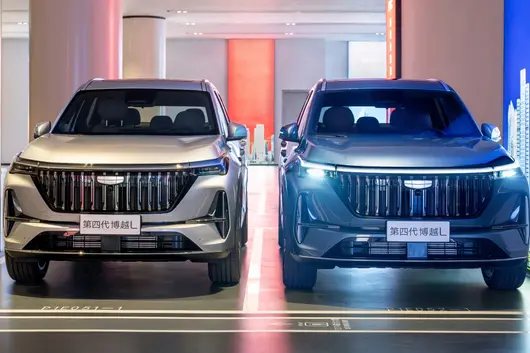

Halfway through 2026, the NEV penetration rate in China's auto market continues to climb, with almost all major automakers reducing fuel vehicle R&D and accelerating electrification transitions.
However, real sales data presents a different picture: From January to May this year, domestic fuel passenger car cumulative sales reached 3.87 million units, accounting for a still-high 52%. More than 25,000 fuel vehicles are still being delivered to users daily, with over 200 million fuel vehicles running on roads nationwide.
In this "unpromising" market, a fuel SUV presented a report card no one could ignore—4th Gen Boyue L, dominating the sales chart for all-brand fuel SUVs for 5 consecutive months in 2026, claiming A-class fuel SUV sales champion for 11 consecutive months, with monthly sales exceeding 30,000 units, meaning a new owner chooses it every 1.08 minutes.

While most automakers choose to reduce fuel vehicle R&D and accelerate the "stop fuel" transition, Geely took a different path: Persisting in a "Multi-Energy Parallel" strategy, continuously injecting smart fresh blood into fuel vehicles. The dominance of 4th Gen Boyue L is a victory of strategic patience.
Persist in doing difficult but correct things
For the past two to three years, almost all traffic, capital, and public opinion have flowed towards new energy, with many automakers explicitly announcing schedules to stop selling fuel vehicles, with fuel vehicle R&D budgets significantly cut.
But Geely's choice was completely different. In Geely's view, fuel vehicles, hybrids, and pure electric vehicles are not replacement relationships, but long-term coexistence relationships. Over 200 million fuel vehicles in domestic inventory, nearly 10 million annual fuel new vehicle demands, these figures behind are countless real users' travel necessities, not a market that can be easily "skipped". So Geely did not follow the trend to "abandon oil for electricity", but proposed a "Multi-Energy Parallel" strategy—no matter which energy form, Geely will do it the best.
This stability requires huge courage and resource support. Relying on five global R&D centers, Xingrui Intelligent Computing Center 2.0, and industry-leading large AI models, Geely systematically empowered fuel vehicles with intelligent capabilities originally belonging to electric vehicles. GEEA 3.0 Electronic and Electrical Architecture, Xingrui AI-Drive Digital Tuning Technology, FlymeAuto Smart Cockpit... these technologies sounding like "new forces" were used by Geely without hesitation on the 4th Gen Boyue L.

Data doesn't lie. Currently, Geely's L2 and above assisted driving vehicle inventory exceeds 7.5 million units, cumulative assisted driving mileage exceeded 10 billion kilometers, with a significant portion coming from fuel vehicle users. This means Geely not only didn't abandon fuel vehicles, but instead relied on the huge fuel vehicle user group to build China's leading smart driving data pool for automakers.
Conversely, some automakers in the industry rushing to reduce fuel vehicle business and promote stop-sale plans, faced many challenges such as user group continuity and single technical route during transition. Geely proved with action: Not following trends, not having weaknesses, doing every technical route well is the greatest respect for users.
How to concentrate the release of "Multi-Energy" advantages?
Strategic stability must ultimately land on products. The reason 4th Gen Boyue L can dominate against the trend is because it is no longer a "traditional fuel vehicle", but an "all-rounder" gathering the best of Geely's multi-energy technology system.

First look at smart driving. 4th Gen Boyue L Small Blue Light Edition is equipped with Qianli Haohan H3 Assisted Driving Solution, becoming the only fuel SUV within 120,000 yuan equipped with high-end smart driving. This system is based on Horizon Journey J6M high computing power chip, computing power reaches 128 TOPS, matching 3 millimeter-wave radars, 11 high-sensitivity cameras and 12 ultrasonic radars, can achieve Highway and Elevated High-level Navigation Assisted Driving (HNOA), Urban Congestion Cruise (ICC), Multi-scenario Parking Assist and other functions. Pure Visual Map-Free Solution covers 380,000 km highway and 30,000 km elevated roads nationwide, can drive new roads, can drive with network.
User feedback data is more intuitive: Small Blue Light Edition smart driving activation rate is as high as 75%, single user longest assisted driving mileage exceeded 50,000 kilometers, single vehicle cumulative parking times up to 2,091 times. From "curious try" to "can't leave daily", Boyue L truly brought fuel vehicle smart driving experience into users' lives.

Second look at smart cockpit. FlymeAuto system standard on all series, along with Huawei HarmonyOS, Xiaomi HyperOS known as three giants of domestic cockpits. 15.4-inch 2.5K HD Full Screen, 16-speaker FlymeSound audio (1000W independent amplifier, 7.1.2 surround sound), 25.6-inch AR-HUD head-up display... these configurations put on any 200,000 yuan level new energy vehicle are not out of place, but Boyue L brought them to the 120,000 yuan level fuel vehicle market.
More importantly, based on GEEA 3.0 Electronic and Electrical Architecture, Boyue L supports full-domain FOTA upgrade, often used often new like electric vehicles. Users don't need to worry "become outdated after buying home", because its intelligence will evolve with OTA.

Mechanical quality is equally not vague. CMA Global Premium Architecture is same source as Volvo, Lynk & Co, brought 79 km/h Moose Test score and 35.8-meter racing-grade braking distance. 2.0TD engine max power 160kW, peak torque 325 N·m, 0-100 km/h acceleration 7.4 seconds, fuels with 92 octane gasoline can be used, usage cost is 8% lower than peer models.
In space, 84.27% same class maximum space utilization rate, 2,785 mm wheelbase, flat rear floor, let family sit comfortably; 650L super large trunk plus two-layer magic partition, snowboards, strollers can be easily loaded.

4th Gen Boyue L fully transplanted pure electric intelligence, architecture, experience originally belonging to pure electric onto fuel vehicles, letting users enjoy the cutting-edge product power of the times without changing energy habits. This is the power of Multi-Energy Strategy—not betting on one road, but letting every road lead to good products.
The secret of Boyue Family 10 years long success
Stretching the timeline, you will find that since Boyue Family 1st Gen model launch in 2016, after 9 years 4 iterations, global cumulative sales exceeded 2.4 million units. It took 25 months to exceed 500,000 units, 52 months to reach 1 million units, 82nd month to exceed 1.5 million units, 99th month to exceed 1.8 million units, February 2025 to exceed 2 million units, now standing at the high ground of 2.4 million units. In China SUV market, models capable of maintaining such long-period, high-intensity hot sales momentum are few.
So, why was Boyue able to and how could it cross the cycle?

1st Gen Boyue "Hello, Boyue" pioneered China's SUV smart connectivity, letting voice interaction no longer be a plot in sci-fi movies; 2nd Gen Boyue focused on smart safety, changed AEB Pre-collision System from luxury car patent to standard of people's cars; 3rd Gen Boyue based on CMA Architecture, first brought NOA Highway Navigation Assist into fuel vehicle field, broke monopoly of "High-end Smart Driving = Electric Vehicles"; to 4th Gen Boyue L, directly opened "Fuel Vehicle AI Intelligence Equality Era", GEEA 3.0 Architecture, Xingrui AI-Drive, FlymeAuto... every generation upgrade, Boyue was not following trends, but doing out things users "want but haven't spoken" in advance.
Behind this capability is Geely's deep insight into user needs and long-termism of technical investment. Boyue Family has now received true choice of 2.4 million users, these users come from over 60 countries and regions. In Belarus, Malaysia, Boyue achieved localized production, becoming China's first SUV model realizing product, technology, management full export. In Costa Rica, Moldova and other countries, Boyue ranks first in Chinese brand sub-market. It can be said, it has become a true Chinese SUV global name card.

Back to "Multi-Energy Strategy", Boyue Family's long success, precisely proves Geely strategy's foresight. When other automakers all "stop fuel", Boyue kept deepening in fuel vehicle market, won users' long-term trust with generations of evolution. January to May 2026 fuel SUV sales champion, not a surprise from the sky, but the result of Geely persisting for ten years like one day, the result of those abandoned fuel vehicle users voting with feet.
More importantly, fuel vehicle business's steady performance, provided continuous cash flow and user data for Geely's huge R&D investment in electrification, intelligence. 7.5 million smart driving vehicles, 10 billion kilometers driving mileage, these data feed back Geely's AI algorithms and smart driving models, letting every Geely car, no matter burning oil or electricity, get smarter the further it drives. From this meaning, cannot say "Multi-Energy" is conservative, rather it is a more advanced offensive posture.

At the crossroads of industrial transformation, following trends betting is easy, staying focused is hardest. Users never care what name your energy strategy is called, only care if your car is easy to drive, easy to park, easy to use. Geely proved, as long as products are strong enough, fuel vehicles can also become leaders of the times.
Dominating charts for 5 months might just be the start, with 4th Gen Boyue L continuing hot sales, overseas market accelerating expansion, and Geely in intelligence, global field continuous deepening, Boyue Family's legendary story, is still accelerating上演。And that phrase "Oil vs. Electric debate will end, standards for good cars will never go out of date", maybe that is the best annotation for this era.
© 2024 Bitauto.com. All Rights Reserved.
Bitauto (www.yiche.com and www.bitauto.com) is one of the most visited automotive websites in China. We provide detailed info on Chinese car brands available in your area. Please note that the information provided on this website is based on publicly available data and is for reference only. It may not be fully updated or accurate at all times.

Help us improve our website


