

HomeCo

Search History
Popular Searches
Dealer Login / Sign Up
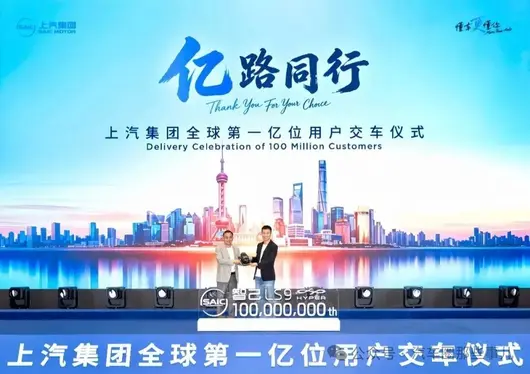
May 28, inside the Shanghai North Bund World Living Room, the atmosphere was fervent. Meanwhile, the footage on the large screen at the Chengdu Jixiang Buick branch venue, thousands of miles away, jumped in sync with the main venue. As the IM LS9 Hyper slowly drove into the center of the stage, and as Momenta CEO Cao Xudong received the car key from the Chairman of SAIC Motor, applause rang out on the scene — this was not only the moment of delivery to the 100 millionth user of SAIC Motor, but also the first time a vehicle enterprise in China's automotive industry welcomed a cumulative production and sales volume breaking 100 million vehicles.

As an automotive editor, witnessing this historical node at the Chengdu branch venue, the feeling was quite complex. Over the past few years, China's automotive market has experienced a transition from growth to stock, with price wars, elimination battles, and surging trends of going global alternating on stage. Against this broad backdrop, a local car enterprise able to cross the threshold of 100 million vehicles must necessarily possess a deep logic beyond a single product cycle or any single tech explosion.

SAIC's history almost overlaps with China's automotive industry history. In 1955, the Shanghai Internal Combustion Engine Parts Manufacturing Company was established; in 1958, workers hammered out the first "Phoenix brand" sedan with hammers. Over the subsequent seven decades, SAIC witnessed the entire process from nothing to something, from weak to strong. In 1983, the first Santana was hand-assembled off the line, opening the curtain of China's automotive joint venture cooperation, and also driving the establishment of a modern parts system.

In 1997, Shanghai GM was established, the "Shanghai Speed" of building a factory and launching cars in 23 months is still talked about by the industry to this day; the China's first joint venture professional automotive design and R&D center built at the same time marked SAIC's transformation from pure manufacturing to building technical capabilities. In 2006, the independent brand Roewe was born; in 2016, the world's first Internet car Roewe RX5 went on sale; in 2020, the high-end smart electric brand IM Motors was established. This timeline clearly outlines the evolution trajectory of a car enterprise from learning, chasing, parallel, to local leading.

But historical accumulation is just the foundation. The achievement of 100 million vehicles requires the continuous release of system capabilities. SAIC's system architecture covers six major sectors: whole vehicles, parts, mobility, services, finance, international business, and innovation technology, forming a tightly coordinated full value chain closed loop. In January-April 2026, SAIC's cumulative sales reached 1.302 million units, ranking first among China's car enterprises for four consecutive months, with independent brands accounting for nearly 70%, new energy vehicle sales reaching 412,000 units, and overseas market sales of 459,000 units, a year-on-year growth of 50.2%. These data indicate that SAIC's growth does not rely on the pulling power of a single sector, but is the result of multiple engines including independent and joint venture, passenger and commercial, domestic and overseas all working simultaneously.

Specific to the product level, the full brand matrix displayed at the delivery ceremony site was impressive. For independent brands, Shangjie Z7, Huajing S, Roewe M7, MG4 Semi-Solid State Battery Version, Wuling Starlight 560, Maxus eDeliver5, Hongyan Heavy Trucks, Yuejin Dana T1, Sunwin All-Electric Bus, Iveco Juxing EV, and other models cover full scenarios from personal travel to commercial operations, from urban logistics to public transport. Joint venture brands concentrated on displaying the results of "Joint Venture 2.0": Volkswagen ID. ERA 9X global premiere equipped with Momenta R7 Reinforcement Learning World Model, delivery exceeded 7,000 units in one month after launch; Audi E7X plans to become Audi's first global model achieving L3-level autonomous driving landing; Buick Zhijing E7 is built based on the "Xiaoyao" Super Fusion Architecture, delivery broke 10,000 units in one month after launch. From "Market for Technology" to "Technology Co-creation", SAIC's role in joint venture relationships has undergone a substantive shift.


Accumulation at the technical level is the core power supporting this system's operation. The first 100 million vehicle delivery model, IM LS9 Hyper, can be regarded as a concentrated presentation of SAIC's technical accumulation over seven decades. It is equipped with full-line drive-by-four-wheel steering first in its class, 520-line ultra-vision LiDAR, NVIDIA Thor Chip, Full-Domain 800V High-Voltage Platform, and Star Super Extended-Range System, comprehensively pre-installing redundancy capabilities for L3 and above high-level intelligent driving. SAIC Gold Badge Hurricane Tri-Motor first launch has propelled it into the Performance 3-Second Club, and the "Intrinsic Security" technology jointly premiered globally with Purple Mountain Laboratories expands the car safety boundary from traditional physical safety to the field of information and system security. It is worth noting that the 100 millionth user is exactly Momenta CEO Cao Xudong, SAIC's core strategic partner in the intelligent driving field. The intelligent driving technology deeply co-created by both parties has empowered multiple independent and joint venture brands. This coincidence of "Partner Becomes Car Owner" reflects SAIC's open and collaborative industrial philosophy in the era of smart electric vehicles.


Globalization layout is another important dimension of SAIC's system capability. As the earliest and largest representative of China's automotive enterprises "Going Global", SAIC has over 100 parts production bases and over 3,000 dealer networks overseas, building London's 3 major R&D innovation centers and Thailand, Indonesia, India, Pakistan 4 manufacturing production centers. Anji Logistics possesses 42 Ro-ro ships of various types, with 8 international routes covering Southeast Asia, Europe, and the Americas. Currently, SAIC's products and services are spread over more than 170 countries and regions, with cumulative overseas sales breaking 7 million units. MG has ranked as the European sales champion for Chinese brands consecutively for 11 years, with 2025 European annual sales breaking 300,000 units, becoming the first Chinese car brand with cumulative sales breaking one million in Europe and the UK. In March this year, MG held a Tech Day in Frankfurt, Germany, premiering the world's semi-solid state battery and Hybrid+ Hybrid Technology, the latter's overseas monthly sales has broken 20,000 units. After launching the overseas "Glocal Strategy" (Global + Local) in 2025, SAIC is accelerating from "Product Going Global" to "Value Chain Going Global".

If technology and systems are rational hard power, then user stickiness is emotional soft power. At the delivery ceremony, SAIC displayed multiple sets of user stories: Guode APP Founder Luo Zhenyu as the Huajing S No. 001 Experience Officer, from praising Huawei Qiankun Intelligent Driving in the New Year's Eve Speech to entering the factory to witness the offline; Former German National Team Player Yang Chen chose ID.ERA 9X, because its Golden Extended Range and Long-termism Philosophy coincided; London Intern Doctor Natalia inherited her grandfather's MG sentiment; The returning couple brought MG memories from their time in the UK back to the domestic market; Public Welfare Blogger Liu Jia provided haircutting and companionship to left-behind children in Guangxi Mountainous Areas for five consecutive years, Buick provided assistance immediately, he was moved by Zhijing E7's "Full Score Cabin". These stories have no deliberate emotional stirring, but clearly convey one message: SAIC's user stickiness does not come from marketing scripts, but comes from products and services responding to real needs in different scenarios.

Returning to the initial question: Why was SAIC able to become the first car enterprise in China to break 100 million cumulative production and sales? The answer may perhaps be summarized in a few elements without shortcuts — sufficient long time accumulation, sufficiently wide system coverage, sufficiently deep tech investment, and sufficiently fine user insights. These elements taken out individually, many car enterprises are doing, but those able to continue for over seven decades and maintain balanced development in various dimensions are not common.

100 million vehicles is a milestone, but also a new starting point. In 2014, SAIC was the first to fully transform to new energy; twelve years later, from the "Leading the Pack" of "Smart Power Transformation" to "Thousands of Horses Galloping" of independent and joint venture, passenger and commercial, domestic and overseas, SAIC has consistently carried the user concept of "Know Cars Better, Know You Better" throughout. From 1955 to 2026, from the first user to the 100 millionth user, SAIC's next journey is just beginning.

Auto Circle On Cars
From an industry perspective, SAIC's 100 million vehicles is not only a breakthrough in scale numbers, but also marks the capability leap of China's automotive industry from "Joint Venture Dependence" to "Independent Dominance". It is worth noting that SAIC did not rely on a single hit product or short-term trend, but through seven decades of systematic construction, formed hard-to-replicate comprehensive advantages in dimensions such as technology, manufacturing, supply chain, and globalization. The next-generation tech cluster represented by IM LS9 Hyper, as well as the cumulative sales of over 7 million in overseas markets, prove that SAIC already possesses the basic base to compete on the same stage with multinational giants. After 100 million vehicles, how to convert scale advantages into continuous innovation efficiency and brand premium will be the core proposition of SAIC's "Second Entrepreneurship".
2026年6月5日,BJ30 旅行家 5国 · 破5燃擎节油挑战实景直播测评活动于雁栖湖顺利落幕。历经三小时全路况实景实测,在全网亿万网友、五国海外达人、到场车主共同见证下,7万级方盒子——BJ30 旅行家成功实现多路况百公里油耗跌破 5L,一举打破硬派方盒子SUV“高油耗”行业刻板印象。

海外五国先行试炼,构筑双向闭环验证体系
本次国内节油实测并非临时起意,早在直播落地之前,北京越野便远赴南非、波兰、印尼、阿联酋、墨西哥五大国家,邀约本土知名汽车博主开启跨地域长途实测试炼。五国地域横跨热带雨林、中东荒漠、东欧碎石山路、非洲城郊公路等差异化地貌与气候环境,在多元真实用车场景中,完成整车底盘调校、三擎HEV混动架构、电四驱系统全维度可靠性摸底,海量实地行驶数据为国内实景测评筑牢权威背书,形成“海外全域可靠性验证+国内全场景油耗实测”双循环闭环测试,全程遵循GLTC全球生活测试循环、OLTC越野生活测试循环双重严苛标准,测试结果真实可溯源、数据有迹可循。五国跨国实测全部达成百公里油耗低于5L的优异成绩,提前印证BJ30旅行家混动节油硬实力。
三大实景路况轮番测评,全场景实测兑现省油本色
本次国内直播测评设置北汽蓝谷基地发车、封箱加注燃油、T4航站楼中途休整、油耗揭晓四大严谨环节,围绕城市拥堵通勤、高速满载长途、乡道砂石轻越野三大主流用车场景分段实测,精准还原普通家庭日常出行全场景用车环境。

城市拥堵实测:三擎混动攻克堵车油耗难题
BJ30 旅行家搭载三擎六模 + 电四驱专属混动架构,区别于传统燃油SUV怠速高耗、低速费油弊端,系统默认电机优先驱动、发动机按需智能介入,完美化解城市早晚高峰频繁启停、低速蠕行带来的油耗飙升痛点。官方标定两驱版综合油耗 5.85L/100km、四驱版6.45L/100km,在商区+居民区密集拥堵路况实景测试中,车辆实测油耗成功击穿5L/100km关口。相较同价位2.0T燃油车型动力更强、能耗更低。对比PHEV插电混动车型,车身轻量化优势突出、无需外接充电,馈电状态下越野稳定性更佳、用车维保成本更低,完美适配城市上班族日常代步,大幅缩减日常养车燃油开支。
高速满载测评:2820mm超长轴距解锁超大家用空间
高速路段同步开展满载空间实测,依托2820mm越级轴距,BJ30 旅行家座舱空间表现亮眼,满员乘坐时前后排腿部空间宽裕,无局促压抑感。方正车身最大化挖掘装载潜能,常规后备箱可轻松收纳全套露营装备、户外大件器材,后排座椅放倒后可拓展至1.92m平整大床,波兰海外博主现场实测,满载露营物资后仍可在后备厢平躺休憩,出色装载力精准匹配全家长途自驾、近郊露营的家用刚需。高速巡航阶段,混动系统智能优化发动机转速区间,在保障驾乘舒适的同时持续优化燃油经济性,实现大空间与低油耗双向兼顾。

非铺装越野实测:高离地间隙加持,烂路穿行从容有度
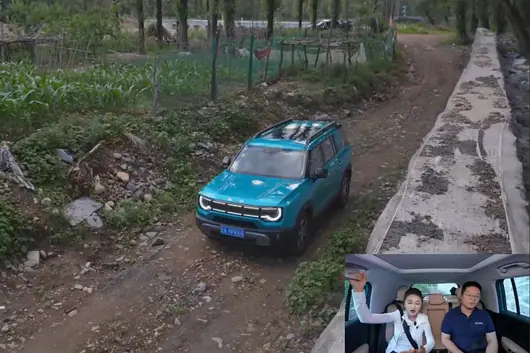
轻越野测试路段由窄距乡道、碎石路面、坑洼非铺装山路、缓坡爬坡路面组合而成,考验整车通过性能。BJ30 旅行家标配 215mm超高离地间隙、ATS多模式全地形控制系统与毫秒级电控四驱,搭配精细化专业越野底盘,驾驶者一键切换对应地形模式后,四驱系统实时动态分配四轮动力,轻松翻越坑洼、规避碎石剐蹭,从容应对各类轻度越野路况。依托OLTC越野测试标准打造的整车越野配置,让7万级价位车型实现城市通勤、户外穿越一车两用,五国海外体验博主纷纷对车辆烂路行驶质感给出高度评价。

产品力领跑细分市场,高光版6月12日重磅上市
依托省油、大空间、强越野的全能产品表现,BJ30 旅行家长期稳居细分市场头部,斩获连续两年轻混方盒子销量第一、连续23个月自主轻混SUV销量第一、10-15万级自主紧凑型SUV三年保值率72%同级别榜首多项荣誉。完善的全国售后网点布局,进一步打消车主维保后顾之忧。现场多位真实车主分享用车体验,日常工作日市区通勤、周末结伴露营越野的高频用车场景中,车辆油耗、空间、越野表现均长期符合预期,海量用户口碑夯实车型标杆地位。

直播现场同步释放重磅产品信息:6月12日BJ30 旅行家高光版正式上市。新款车型实现全面产品升级,动力系统优化、车载小电瓶升级,内饰用料、智能舒适配置全面加码,多款高配配置下放,同时推出专属定制配色特别版,在现款实测油耗破5L的硬核基础上进一步补强产品实力,为7万级家用轻越野SUV市场带来全新选择。
© 2024 Bitauto.com. All Rights Reserved.
Bitauto (www.yiche.com and www.bitauto.com) is one of the most visited automotive websites in China. We provide detailed info on Chinese car brands available in your area. Please note that the information provided on this website is based on publicly available data and is for reference only. It may not be fully updated or accurate at all times.

Help us improve our website


