

HomeDatang

Search History
Popular Searches
Dealer Login / Sign Up


According to a report from Deutsche Bank, BYD plans to sell over 2.5 million cars overseas in 2027. By expanding fleet size and increasing overseas production, it will further expand its rapid growth in international markets.
BYD management currently expects overseas sales in 2026 to reach 1.9 to 2 million vehicles. This is far higher than the 1.3 million target announced in January and the revised 1.5 million target in March.
Overseas markets have become a key support for BYD's domestic sales decline. In the first 8 months of this year, BYD's overseas sales increased by 85.72% year-on-year, reaching 1.16226 million vehicles.
During the same period, BYD's domestic sales fell 32.72% to 1,505,755 units, dragging total sales down 6.84% to 2,668,015 units.
Based on sales figures through August, BYD needs to achieve an average monthly overseas sales volume of about 184,000 to 209,000 units in the remaining 4 months to meet its latest full-year sales target.
In August, BYD's overseas sales reached a record 189,466 units, a 134.45% year-on-year increase, accounting for 43.03% of the total monthly sales.

BYD management stated that overseas sales this year were limited by shipping capacity; if capacity were sufficient, sales volume could have been higher.
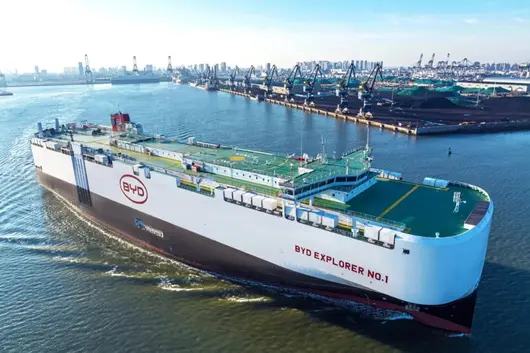
BYD plans to achieve its 2027 sales targets by expanding its dedicated vehicle transport fleet, increasing market share, and increasing overseas local production.
Deutsche Bank noted that BYD's Indonesia factory has started production, the Brazil factory is gradually increasing annual capacity with a target of 300,000 units, and the Hungary factory is expected to begin assembly in November or December.
Management is also evaluating other overseas production locations to expand its local production scale.
Overseas expansion also supported BYD's profitability. BYD management stated that despite unfavorable exchange rates, the profit per vehicle overseas in the first half of this year was about 20,000 RMB ($2,950).
The company expects overseas profit per vehicle to remain basically stable in the short term. Gains from sales growth will be offset by continuous investment in sales network expansion and new factory commissions.
In China, BYD is relying on its Flash Charge technology and supporting network to drive sales, but battery supply remains a constraint on near-term deliveries.
BYD management stated that vehicle orders supporting the Flash Charge technology backlog is about 250,000 units. The supply shortage of the second-generation Blade battery is expected to be fully resolved in the first quarter of 2027.
BYD reiterated its goal to build 20,000 Flash Charge stations in China by the end of 2026, then add 30,000 more in 2027 and 40,000 in 2028, bringing the total to 90,000.
BYD also reiterated plans to deploy 6,000 Flash Charge stations overseas at a conference call, but did not provide a completion timeline.
Li Yunfei stated in an interview in July that the company plans to complete the construction of 6,000 overseas Flash Charge stations by the end of March 2027, including 3,000 in Europe, 2,000 in the Americas, and 1,000 in the Asia-Pacific region.
Smart driving is another key investment area. BYD management expects internal capabilities to see significant improvement in smart driving in 2027.
BYD will continue to independently develop solutions while allowing external suppliers to bid on projects. R&D investment, massive vehicle data scale, and hardware-software vertical integration will help consolidate smart driving technology advantages.

Menurut laporan Bank Deutsche, BYD merancang untuk melampaui 2.5 juta kenderaan dalam jualan luar negara pada 2027, melalui pengembangan saiz armada dan peningkatan pengeluaran di luar negara, untuk terus mengembangkan pertumbuhan pantas di pasaran antarabangsanya.
Pengurusan BYD kini meramalkan jualan luar negara pada 2026 akan mencapai 1.9 juta hingga 2 juta unit. Ini jauh melebihi sasaran 1.3 juta unit yang diumumkan pada Januari dan sasaran yang dikemaskini 1.5 juta unit pada Mac.
Pasaran luar negara telah menjadi sokongan utama bagi penurunan jualan domestik BYD. Pada 8 bulan pertama tahun ini, jualan luar negara BYD meningkat secara tahunan sebanyak 85.72%, mencapai 1.16226 juta unit.
Pada tempoh yang sama, jualan domestik BYD menurun 32.72% kepada 1,505,755 unit, menarik turun jumlah keseluruhan jualan sebanyak 6.84% kepada 2,668,015 unit.
Berdasarkan keadaan jualan sehingga Ogos, BYD perlu mencapai purata jualan luar negara sekitar 184,000 hingga 209,000 unit setiap bulan selama 4 bulan baki, untuk mencapai sasaran jualan tahunan terkini mereka.
Pada bulan Ogos, jualan luar negara BYD mencapai rekod tertinggi 189,466 unit, meningkat 134.45% secara tahunan, dan mewakili 43.03% daripada jumlah jualan bulan tersebut.
Pengurusan BYD menyatakan jualan luar negara tahun ini adalah terhad oleh kapasiti pengangkutan laut, dan jika kapasiti pengangkutan mencukupi, jumlah jualan boleh jadi lebih tinggi.
BYD merancang untuk mencapai sasaran jualan 2027 mereka melalui pengembangan armada pengangkutan kenderaan khas, peningkatan bahagian pasaran, dan peningkatan pengeluaran tempatan di luar negara.
Bank Deutsche menyatakan, kilang BYD di Indonesia telah mula menghasilkan, kilang Brazil sedang meningkatkan kapasiti tahunan secara beransur-ansur dengan sasaran 300,000 unit, dan kilang Hungary dijangka mula perakitan pada November atau Disember.
Pengurusan juga sedang menilai lokasi pengeluaran luar negara lain untuk mengembangkan skala pengeluaran tempatan mereka.
Pengembangan luar negara juga menyokong keupayaan keuntungan BYD. Pengurusan BYD menyatakan, walaupun menghadapi faktor nilai mata wang yang tidak menguntungkan, namun keuntungan per kenderaan luar negara di separuh tahun pertama tahun ini adalah sekitar 20,000 Renminbi (2,950 Dolar AS).
Syarikat meramalkan keuntungan per kenderaan luar negara akan kekal stabil dalam masa singkat. Keuntungan daripada peningkatan jualan akan disara oleh pelaburan berterusan dalam pengembangan rangkaian jualan dan pelancaran kilang baru.
Di China, BYD sedang bergantung pada teknologi pengecasan pantas dan rangkaian sokongannya untuk menggalakkan jualan, tetapi bekalan bateri masih merupakan faktor kekangan bagi serahan terkini.
Pengurusan BYD menyatakan, jumlah pesanan terkumpul untuk kenderaan yang menyokong teknologi pengecasan pantas adalah sekitar 250,000 unit. Dijangka masalah kekurangan bekalan Bateri Blade Generasi Kedua akan diselesaikan sepenuhnya pada Suku Pertama 2027.
BYD mengulangi sasaran, iaitu membina 20,000 stesen pengecasan pantas di China menjelang akhir 2026, kemudian menambah 30,000 unit pada 2027, 40,000 unit pada 2028, menjadikan jumlah keseluruhan 90,000 unit.
BYD juga mengulangi rancangan untuk menempatkan 6,000 stesen pengecasan pantas di luar negara dalam mesyuarat telefon, tetapi tidak menyediakan jadual siap.
Li Yunfei menyatakan dalam temual bulan Julai, syarikat merancang untuk menyiapkan pembinaan 6,000 stesen pengecasan pantas luar negara menjelang akhir Mac 2027, yang termasuk 3,000 unit di Eropah, 2,000 unit di Amerika, dan 1,000 unit di Asia Pasifik.
Pemanduan pintar adalah tumpuan pelaburan lain. Pengurusan BYD meramalkan keupayaan dalaman syarikat akan meningkat secara ketara dalam pemanduan pintar pada 2027.
BYD akan meneruskan pembangunan penyelesaian secara dalaman, sambil membenarkan pembekal luar menyertai tender projek. Pelaburan penyelidikan dan pembangunan, skala data kenderaan yang besar, serta integrasi menegak perisian dan perkakasan, akan membantu memperkukuh keunggulan teknologi pemanduan pintar.

Evening of August 28, BYD ([002594.SZ](002594.SZ)) officially released 2026 semi-annual financial report, company's multiple operating data performed robustly. During the reporting period, revenue reached 344.8 billion yuan, net profit attributable to shareholders 12.3 billion yuan, R&D investment 28.9 billion yuan, cash reserves as high as 167.4 billion yuan. Among them, second quarter performance was particularly bright, net profit rose 30% year-on-year, gross margin increased to 18.9%, reaching a new high in the past year, company profitability continues to improve.

Currently, the automotive market competition is becoming increasingly fierce, BYD relies on solid operating fundamentals and continuously optimized business structure, overall development momentum in the first half of the year was strong, further consolidating its industry leading position.
Offshore and High-end Dual Line Effort, Uncover New Growth Space
In the first half of the year, BYD's overseas market sales reached 790,000 units, surging 68% year-on-year, business map has covered over 120 countries and regions, won new energy vehicle sales champion in key overseas markets such as UK, Brazil, Thailand. With overseas local factory capacity gradually released, sales channels continuously improved, overseas business has become an important driving force for pulling BYD's performance growth.
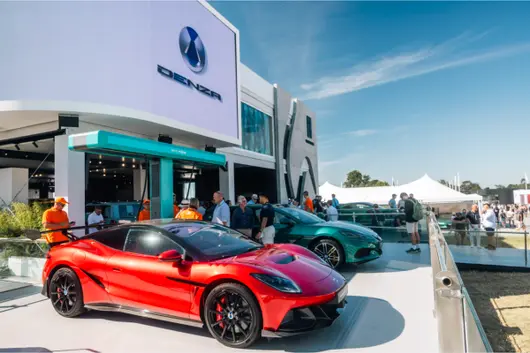
The high-end brand segment also delivered impressive results, Fang Cheng Bao, Denza, YangWang three high-end brands first half year total sales 228,000 units, growing 61% year-on-year, sales share increased to 12.6% of total sales. Among them, Fang Cheng Bao sales 160,000 units, year-on-year increase 163%; Denza June single month sales first broke through 20,000 units, product average selling price reached 360,000 yuan; YangWang as domestic million-level luxury new energy brand, also domestic first sales quickly broke ten thousand million luxury car brand.

The dual drive of internationalization and high-endization drove continuous optimization of the product structure and boosted second-quarter profitability improvements. The net profit in this report was affected by exchange losses caused by exchange rate fluctuations, but the company's main business profitability remained stable, fully demonstrating strong operating resilience.
Heavy R&D Investment, Hard-core Technology Accelerates Commercialization
Behind the impressive operating results lies continuous high investment in R&D support. 2026 first half BYD R&D investment 28.9 billion yuan, cumulative R&D investment broke through 270 billion yuan, firmly ranking in the first echelon of R&D investment in A-shares.
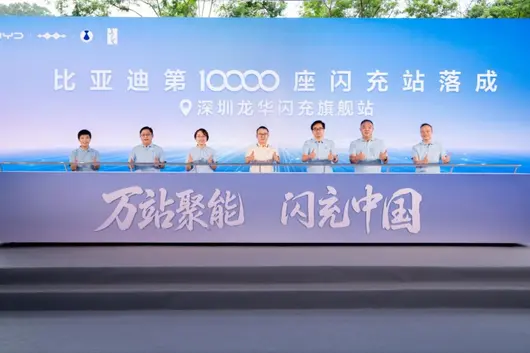
Major R&D investments were quickly converted into actual product technology results. This March, the second-generation Blade Battery and Flash Charge technology were officially released, refreshing the global record for production vehicle charging speed, solving the long-standing industry difficulties of slow charging and low-temperature charging, received recognition from the Ministry of Industry and Information Technology. Capacity construction and Flash Charge station layout matching it were promoted synchronously, 10,000 Flash Charge stations have now been built domestically, covering 332 cities nationwide; meanwhile planning to land 6,000 Flash Charge stations overseas in the coming year, helping popularize electrification globally.

The intelligent driving field also achieved major breakthroughs. In May, BYD announced achieving city navigation safety guarantees, combined with the previous intelligent parking safety guarantee, becoming the global only vehicle enterprise to achieve intelligent driving 'Dual Safety Guarantees'. By end of July, the volume of BYD vehicles equipped with assisted driving exceeded 3.52 million units, the God's Eye System generates over 220 million kilometers of driving data daily. The self-developed 4nm intelligent driving chip, Xuanji A3, officially appeared, completing full-stack self-research from bottom-layer chips to software systems, continuously promoting innovation in automotive intelligence.
Upholding Corporate Responsibility, Practicing Green and Low-Carbon Development
Beyond operational development, BYD actively assumes social responsibility. Taxes paid domestically in the first half of 2026 totaled 22.3 billion yuan. The enterprise established a 2045 full value chain carbon neutrality goal, ESG comprehensive performance ranked among the forefront of domestic enterprises. In the first half of the year, the new energy vehicles under the brand reduced carbon emissions by a total of 23.17 million tons over their full life cycle, equivalent to planting 386 million trees, contributing solidly to the green and low-carbon cause.
Outlook for the Second Half
In the first half of 2026, the global automotive industry structure was reshaped, many car enterprises faced profit pressure, BYD achieved counter-trend growth, multiple core indicators in the second quarter reached new peaks. Outlook for the Second Half, new technologies continue to land, the proportion of high-end models further improved, the overseas layout entered the harvest stage, the company's profitability is expected to continue to be released, the full-year performance has a favorable basis. Relying on technology innovation, global layout, and a high-end product matrix, operating quality and efficiency achieved a steady increase, BYD is reshaping its own growth path, continuously leading the transformation of the global new energy vehicle industry.

Petang 28 Ogos, BYD (002594.SZ) secara rasmi telah mengeluarkan laporan kewangan separuh tahun 2026, pelbagai data operasi perusahaan menunjukkan prestasi yang stabil. Tempoh laporan merekodkan pendapatan operasi 344.8 bilion yuan, keuntungan bersih kumpulan 12.3 bilion yuan, pelaburan R&D 28.9 bilion yuan, rizab tunai sehingga 167.4 bilion yuan. Di mana prestasi suku kedua khususnya cemerlang, keuntungan bersih meningkat 30% berbanding tahun sebelumnya, margin kasar dinaikkan ke 18.9%, mencatatkan rekod tertinggi dalam tempoh setahun, tahap keuntungan perusahaan terus membaik.
Di ketika ini persaingan pasaran kenderaan automotif semakin sengit, BYD bergantung kepada asas operasi yang kukuh dan struktur perniagaan yang berterusan dioptimumkan, keseluruhan perkembangan pada separuh tahun pertama sangat kuat, memperkukuh lagi kedudukan perusahaan ketua industri.
Fokus Ganda Luar Negara dan Tahap Tinggi, Membuka Ruang Pertumbuhan Baru
Pada separuh tahun pertama, jualan pasaran luar negara BYD mencapai 790,000 unit, meningkat 68% berbanding tahun sebelumnya, peta perniagaan telah merangkumi lebih 120 negara dan wilayah, di United Kingdom, Brazil, Thailand dan negara luar negara utama telah menjuarai jualan kenderaan tenaga baharu. Dengan pelepasan kapasiti kilang tempatan luar negara secara beransur, saluran penjualan semakin sempurna, perniagaan luar negara telah menjadi daya penting menarik pertumbuhan pendapatan BYD.
Sektor jenama tahap tinggi juga memberikan jawapan cemerlang, Fangcheng Bao, Denza, Yangwang tiga jenama tahap tinggi pada separuh tahun pertama jumlah jualan 228,000 unit, meningkat 61% berbanding tahun sebelumnya, peratusan jualan dinaikkan ke 12.6% daripada jumlah jualan keseluruhan. Di antaranya Fangcheng Bao jualan 160,000 unit, peningkatan tahun ke tahun 163%; Denza Jun jualan bulanan tunggal kali pertama pecahkan 20,000 unit, harga purata produk mencapai 360,000 yuan; Yangwang sebagai jenama mewah kenderaan baharu tenaga tempatan peringkat berjuta-juta yuan, juga merupakan jenama kereta mewah berjuta-juta yuan pertama dalam negara dengan jualan pantas pecahkan 10,000 unit.
Pemanduan dwi hala pengantarabangsaan dan pentahapan tinggi, menggerakkan struktur produk terus dioptimumkan, membantu penambahbaikan keuntungan suku kedua. Laporan kewangan keuntungan bersih ini dipengaruhi kerugian pertukaran mata wang akibat kadar tukaran berfluktuasi, tetapi status keuntungan perniagaan utama perusahaan kekal stabil, mencerminkan dengan jelas ketahanan operasi yang kuat.
Pelaburan Berat untuk R&D, Teknologi Teras Mempercepat Penukaran
Dibalik prestasi operasi yang cemerlang, adalah sokongan pelaburan R&D yang berterusan tinggi. 2026 separuh tahun pertama pelaburan R&D BYD 28.9 bilion yuan, kumulatif pelaburan R&D pecahkan 270 bilion yuan, tetap menduduki barisan hadapan pertama pelaburan R&D dalam saham A.
Pelaburan R&D jumlah besar dengan cepat ditukar kepada hasil teknologi produk praktikal. Mac tahun ini, generasi kedua bateri pisau dan teknologi cas kilat secara rasmi dilancarkan, merekodkan kelajuan cas kenderaan kuantiti global, menyelesaikan masalah jangka panjang mengganggu industri cas perlahan, cas suhu rendah, mendapat pengiktirafan Kementerian Perindustrian. Bersedia dengan pembinaan kapasiti, layout stesen cas kilat berjalan serentak, dalam negara kini telah dibina 10,000 stesen cas kilat, merangkumi 332 bandar di seluruh negara; pada masa yang sama merancang masa depan satu tahun di luar negara mendarat 6,000 stesen cas kilat, membantu pengamalan penggeraan global.
Kawasan pemanduan pintar juga mencapai pecahan besar, BYD Mei mengumumkan luaran mencapai bumbung keselamatan panduan bandar, ditambah sebelumnya bumbung keselamatan parkir pintar, menjadi syarikat kereta tunggal di dunia yang mencapai pemanduan pintar "dua bumbung keselamatan". Hingga akhir Julai, kenderaan BYD dilengkapi pemanduan bantuan jumlah simpanan melebihi 3.52 juta unit, sistem Mata Dewa setiap hari menghasilkan data memandu melebihi 220 juta kilometer. Cip pemanduan pintar 4nm dirangka sendiri Xuanji A3 rasmi muncul, lengkap dari cip asas ke sistem perisian keseluruhan siri dirangka sendiri, berterusan memajukan inovasi automotif pintar.
Pegangan Tanggungjawab Perusahaan, Mewujudkan Pembangunan Hijau Rendah Karbon
Dalam pembangunan operasi, BYD secara aktif mengambil tanggungjawab sosial. 2026 separuh tahun pertama jumlah cukai dalam negara 22.3 bilion yuan. Perusahaan menentukan 2045 tahun semua nilai rantaian sasar neutral karbon, prestasi ESG keseluruhan menduduki depan perusahaan dalam negara. Separuh tahun pertama kenderaan baru tenaga anak perusahaan jumlah kitaran hayat dikurangkan pelepasan karbon 23.17 juta tan, setara pokok 386 juta, benar-benar sumbangan kepada usaha hijau rendah karbon.
Wawasan Separuh Tahun Kedua
2026 separuh tahun pertama keseluruhan industri automotif dunia reka bentuk semula, tidak kurang syarikat kereta menghadapi tekanan keuntungan, BYD mencapai pertumbuhan berlawanan tren, suku kedua pelbagai indikator utama sekali lagi memuncak. Wawasan separuh tahun kedua, teknologi baharu berterusan mendarat, nisbah model tahap tinggi meningkatkan lagi, layout luar negara masuk ke peringkat hasil, keuntungan perusahaan dijangka berterusan dibebaskan, prestasi tahun penuh mempunyai asas membaik. Bergantung kepada inovasi teknologi, layout globalisasi dan matriks produk tahap tinggi, kualiti dan kuantiti operasi mencapai peningkatan stabil, BYD sedang mereka semula jalan pertumbuhan diri, berterusan memimpin perubahan industri kenderaan baharu tenaga global.

On the evening of August 28, BYD (002594.SZ) released its financial report for the first half of 2026, with core indicators remaining robust: operating revenue 344.8 billion yuan, net profit attributable to parent company 12.3 billion yuan, R&D investment 28.9 billion yuan, cash reserves 167.4 billion yuan. Notably, net profit in the second quarter grew by 30% year-on-year, gross margin continued to rise, reaching 18.9%, setting a new high in nearly a year, with profitability steadily improving and resilient growth solidifying its industry position.

Currently, competition in the automotive industry is intensifying. Relying on a solid operational foundation and continuously optimized business structure, BYD's development trend continued to improve in the first half of the year, further consolidating its leading industry position.

Dual Drive of Overseas High-End Markets, Growth Structure Continues to Optimize
In the first half of the year, BYD's overseas sales reached 790,000 units, a 68% year-on-year increase, with business covering over 120 countries and regions. It topped the new energy vehicle brand sales chart in core markets such as the UK, Brazil, and Thailand. With the sequential release of localized overseas production capacity and the continuous improvement of the channel system, the overseas segment has become an important engine driving the company's performance growth.
During the same period, the high-end product matrix accelerated volume growth. The three brands Fangchengbao, Denza, and Yangwang achieved a combined sales volume of 228,000 units, up 61% year-on-year, accounting for 12.6% of total sales. Among them, Fangchengbao brand sales reached 160,000 units, up 163% year-on-year; Denza brand also performed brightly, with June sales breaking 20,000 units for the first time, with an average product price reaching 360,000 yuan; Yangwang is the brand with the fastest sales volume breaking 10,000 units in the domestic new energy million-class luxury car segment.

Internationalization and high-endization advance on two tracks, driving continuous optimization of the company's product structure and steadily enhanced profitability. Net profit in the second quarter grew 30% year-on-year, with gross margin reaching 18.9%, setting a new high in nearly a year. Although net profit faced short-term pressure, a closer look reveals it was mainly due to exchange losses from currency fluctuation this year. The company's main business profitability remained stable, and development resilience became increasingly prominent.

Huge R&D Investment Builds Moat, Technical Achievements Land Intensively
Operating quality steadily climbed, with the core driver being continuous technological breakthroughs. In the first half of 2026, the company invested 28.9 billion yuan in R&D, far exceeding net profit during the same period, retaining the title of "King of R&D" in A-shares. Cumulative R&D investment has exceeded 270 billion yuan.

High-intensity R&D investment is accelerating conversion into perceptible technical results. The second-generation Blade Battery and Flash Charging Technology released in March this year created a global record for the fastest mass-produced charging speed, solving the world problem of "slow charging" and "difficulty in charging at low temperatures" in one go, gaining authoritative recognition from the Ministry of Industry and Information Technology. Beyond technological breakthroughs, second-generation Blade Battery production capacity and Flash Charging Station construction are speeding up synchronously. Relying on the "Flash Charge China" strategy, 10,000 Flash Charging Stations have currently been built nationwide, covering 332 cities, and there is a plan to deploy 6,000 Flash Charging Stations overseas within a year to assist global electrification leapfrog development.

Key progress has also been made in the field of intelligence. After providing a safety guarantee for intelligent parking, BYD became the first to commit to a safety guarantee for city navigation in May, becoming the world's only enterprise with a "dual guarantee" and promoting the popularization of assisted driving with practical actions. As of July 31, BYD's assisted driving vehicle holdings exceeded 3.52 million units, and Divine Eye generates data exceeding 220 million kilometers daily. The Xuanji A3 released during the same period is China's first self-developed 4nm process intelligent driving chip. From underlying chips to system software, BYD continues to promote vertical integration and full-stack self-research, leading the intelligent revolution in the global automotive industry.

Development with Responsibility, Actively Fulfilling Social Responsibility
Practicing social responsibility, BYD answers with action. In the first half of 2026, BYD's domestic tax total was 22.3 billion yuan, far exceeding net profit during the same period. In terms of sustainable development, the company firmly anchors the goal of "achieving carbon neutrality across the entire value chain by 2045", with ESG performance firmly staying in the first tier of domestic enterprises. From January to June, BYD's new energy vehicle lifecycle carbon emission reduction reached 23.17 million tons, equivalent to planting 386 million trees, contributing practical power to low-carbon transformation.

Conclusion
In the first half of 2026, the global automotive industry accelerated restructuring, with industry profitability generally under pressure. BYD broke out against the trend, with second-quarter performance reaching a new level. With technical results continuing to emerge in the second half of the year, the proportion of high-end models steadily increasing, and the global layout entering the harvest period, the company's profitability and development potential will be further highlighted. Full-year performance is expected to improve quarter by quarter and continue to climb. From technological breakthroughs to global layout, from high-end breakthroughs to responsibility, the company is reshaping growth logic with all-round competitiveness and leading global industrial transformation.
Follow Us
ID: Test Drive
Car Selection | Car Usage | Car Modification | Car Racing

Pada malam 28 Ogos, BYD (002594.SZ) mengumumkan laporan kewangan untuk setengah tahun pertama 2026, pelbagai metrik utama kekal stabil: pendapatan operasi 3448 bilion yuan, untung bersih induk 123 bilion yuan, pelaburan penyelidikan dan pembangunan 289 bilion yuan, simpanan tunai 1674 bilion yuan. Yang menarik untuk diambil perhatian ialah keuntungan bersih suku kedua meningkat 30% secara tahun ke tahun, margin kasar berterusan meningkat, mencapai 18.9%, mencapai tertinggi hampir setahun, keupayaan keuntungan meningkat stabil, pertumbuhan teguh mengukuhkan kedudukan industri.
Pada masa ini persaingan industri automotif semakin sengit, BYD凭借 tapak operasi stabil dan struktur perniagaan yang dioptimumkan secara berterusan, tren perkembangan pertama setengah tahun terus membaik, kedudukan pemimpin industri semakin diperkukuh.
Pendorongan Berganda Antarabangsa dan Premium, Struktur Pertumbuhan Terus Membaik
Pada setengah tahun pertama, jualan antarabangsa BYD mencapai 790,000 unit, meningkat 68% secara tahun ke tahun, operasi merangkumi lebih 120 negara dan wilayah di seluruh dunia, berada di puncak jenama kenderaan baru tenaga elektrik di pasaran utama seperti United Kingdom, Brazil, Thailand. Bersertifikat pelepasan kapasiti tempatan antarabangsa secara berturutan dan penyempurnaan sistem saluran secara berterusan, sektor antarabangsa telah menjadi enjin penting untuk menarik pertumbuhan prestasi syarikat.
Pada masa yang sama, matriks produk premium mempercepatkan peningkatan kuantiti, tiga jenama Fang Cheng Bao, Denza dan Yangwang mencapai jumlah jualan 228,000 unit, meningkat 61% secara tahun ke tahun, berat dalam jumlah jualan naik ke 12.6%, di mana jualan jenama Fang Cheng Bao mencapai 160,000 unit, meningkat 163% secara tahun ke tahun; Jenama Denza juga menunjukkan prestasi yang cemerlang, jualan Jun untuk pertama kalinya melepasi 20,000 unit, harga purata produk mencapai 360,000 yuan; Yangwang adalah jenama yang paling cepat menembusi 10,000 unit jualan di kalangan kereta mewah tenaga nasional bernilai sejuta yuan.
Pergerakan serentak antarabangsa dan premium, memacu pengoptimuman struktur produk syarikat secara berterusan, keupayaan keuntungan meningkat stabil, keuntungan bersih suku kedua meningkat 30% secara tahun ke tahun, margin kasar mencapai 18.9%, mencapai tertinggi hampir setahun. Walaupun keuntungan bersih tertekan jangka pendek, tetapi jika dikaji secara mendalam, penyebabnya adalah kebanyakannya kerugian pertukaran mata wang yang terhasil daripada kebolehubah kadar pertukaran tahun ini, keuntungan operasi utama syarikat kekal stabil, keteguhan perkembangan semakin ketara.
Pelaburan R&D Besar Membangun Parit Pertahanan, Keputusan Teknologi Dilaunkan Secara Padat
Kualiti operasi meningkat stabil, pendorong utama terletak pada terobosan teknologi yang berterusan. Pada setengah tahun pertama 2026, pelaburan R&D syarikat 289 bilion yuan, jauh melebihi keuntungan bersih masa yang sama, menang anugerah "Raja Penyelidikan" di Saham A berturut-turut, pelaburan kumulatif R&D telah memecah 2700 bilion yuan.
Pelaburan R&D yang berintensiti tinggi, sedang mempercepatkan penukaran kepada hasil teknikal yang dapat dirasakan. Bateri Pisau Siri Kedua dan teknologi Pengecasan Pantas yang dilancarkan pada Mac tahun ini, mencipta rekod kelajuan pengecasan pengeluaran global terpantas, berjaya memecahkan masalah dunia "Pengecasan Lambat" dan "Sukar Pengecasan Suhu Rendah" secara sekali imbas, mendapat pengiktirafan berwibawa dari Kementerian Perindustrian dan Maklumat. Selain terobosan teknikal, kapasiti Bateri Pisau Siri Kedua dan pembinaan Stesen Pengecasan Pantas sedang mempercepatkan secara serentak, dengan berlandaskan strategi "Pengecasan Pantas China", kini 10,000 stesen Pengecasan Pantas telah dibina di seluruh negara, merangkumi 332 bandar, dan merancang untuk melancarkan 6,000 stesen Pengecasan Pantas di luar negara dalam masa satu tahun, membantu pembangunan melonjak elektrik global.
Bidang kecerdasan pintar juga mendapat perkembangan penting, selepas menyediakan perlindungan keselamatan untuk parkir pintar, BYD menjanjikan untuk melindungi keselamatan panduan bandar untuk pertama kali pada Mei, menjadi syarikat unik dunia yang "pelindungan berganda", mendorong普及 pemanduan bantu dengan tindakan nyata. Sehingga 31 Julai, jumlah kenderaan pemanduan bantu BYD melebihi 3.52 juta unit, Mata Dewa menjana data lebih 220 juta kilometer setiap hari. Xuanji A3 yang dilancarkan pada masa yang sama, adalah cip pemanduan pintar proses 4nm direka sendiri pertama China, daripada cip asas hingga perisian sistem, BYD terus melancarkan integrasi menegak dan penyelidikan dan pembangunan keseluruhan stack, memimpin perubahan kecerdasan pintar industri automotif global.
Pembangunan Tidak Melupakan Tanggungjawab, Secara Aktif Melaksanakan Tanggungjawab Sosial
Melaksanakan tanggungjawab sosial, BYD menjawab dengan tindakan. Pada setengah tahun pertama 2026, jumlah cukai BYD dalam negara 223 bilion yuan, jauh melebihi keuntungan bersih masa yang sama. Dalam aspek pembangunan lestari, syarikat menentukan sasaran "mencapai neutraliti karbon seluruh rantaian nilai pada 2045", prestasi ESG kekal di peringkat pertama syarikat domestik. Januari-Jun, jumlah pengurangan karbon kitaran hidup kenderaan elektrik baru BYD mencapai 23.17 juta tan, bersamaan dengan menanam 386 juta pokok, memberikan kekuatan sebenar untuk transformasi karbon rendah.
Penutup
Pada setengah tahun pertama 2026, industri automotif global mempercepatkan pembinaan semula, keuntungan industri secara umum tertekan. BYD menembusi menentang arus, prestasi suku kedua naik ke peringkat baharu. Dengan hasil teknikal pertama setengah tahun yang berterusan muncul, nisbah model premium meningkat stabil, pelaburan globalisasi memasuki tempoh hasil, keupayaan keuntungan dan potensi pembangunan syarikat akan semakin ketara, prestasi keseluruhan tahun dijangka membaik dari suku ke suku, terus meningkat. Dari terobosan teknikal ke pelaburan global, dari menembusi premium ke tanggungjawab, syarikat kini menyemak semula logik pertumbuhan dengan daya saing menyeluruh, memimpin perubahan industri global.
Ikuti Kami
ID: Lapangan Uji
Memilih Kereta | Menggunakan Kereta | Mengubahsuai Kereta | Berlumba Kereta

Netcar Commentary A convoy departed from Xi'an, passing through Bozhou, Jingdezhen, Hangzhou, Wuyishan, Quanzhou, and Chaozhou along the way, finally arriving in Shenzhen. Fragrant herbs, porcelain, silk, and tea were written into the route map, and seven flash charging stations, two racetracks, and models from five networks and four brands were also interspersed.
When I first saw this map, my gaze first fell on the road after Shenzhen.
Shenzhen is where BYD started, it is BYD's global headquarters, and also the endpoint of this domestic journey. The convoy will continue to go overseas from here.

In recent years, Chinese car companies have been used to using roll-on/roll-off ships, overseas sales, and new factories to tell the story of going global, and BYD also has enough numbers. But when the convoy runs past highways, cities, mountain roads, and coastal roads, telling the story of China's smart manufacturing setting sail on the new Silk Road overseas, I gradually feel that how the technology in the car works, and how charging follows, might be closer to the daily life of globalization than a departure at the port.
Over twenty years in the automotive field, BYD's impression on the outside world has changed several times. Early on, people remembered its batteries, later people remembered DM-i and Blade Batteries, and in recent years, Yangwang, Fangchengbao, DiPilot, DiSus, Yi Sifang, and Flash Charge have been added.
After the number of terms increased, I also worried they would each talk their own language, until seeing different brands driving along the same route, I realized BYD is organizing the technology accumulated over these years into things that users can feel.
Nineteen Years Ago, BYD Was Already Studying Fast Charging
From 2007 to 2008, BYD participated in research and development projects such as pure electric vehicles and their fast charging systems. In December 2008, F3DM was launched in Shenzhen. This car could charge using a common 220V power source, also supported fast charging at professional charging stations. The announced charging speed at the time was a 50% charge in 10 minutes.

In that era when private new energy vehicle consumption in China was just starting, charging facilities were very scarce. Users had not yet formed the cognition of charging cars, nor had they formed the habit of charging cars.
When F3DM launched, Wang Chuanfu reminded owners on stage not to forget to charge mobile phones before going to sleep, and not to forget to charge the car either. This action which sounds quite ordinary today, even required a car company to teach users back then.
By the end of 2010, F3DM cumulative sales were only 365 units. This number is far from BYD today, but looking back from the current perspective, at that time BYD had already considered batteries, cars, and charging facilities together before the market matured, forming a sharp contrast with the blind follow-the-market car-making of many car companies today.

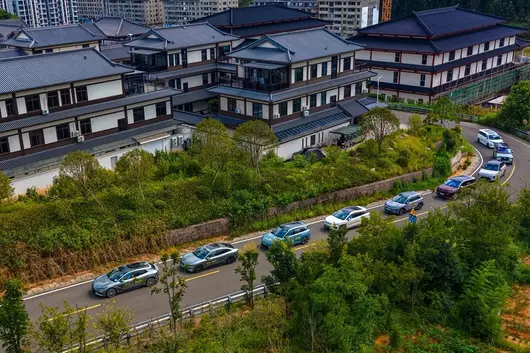
Eighteen years ago, F3DM already had fast charging capability, but charging facilities were far from mature. This time, the BYD convoy went south along Xi'an Lintong, Bozhou Yingquan, Hefei, Shengzhou, Wuyishan, and coastal highway. Flash charging stations are already distributed in highway service areas and urban business circles, and the number of stations is still increasing.
With the support of the second-generation Blade Battery, BYD's Flash Charge models have shortened charging time to minutes. On highways, city stops, and mountain roads, users can continue on the road with just a brief stop. The charging experience is very close to refueling a fuel vehicle.
When the convoy arrived in Shenzhen, my understanding of BYD's charging system also changed.
In the past, I often regarded batteries as its trump card for making cars. Looking at it again today, BYD has been preparing for charging for many years. And now, the most direct feeling for users is the dozens of minutes saved on the road.

Early research did not immediately bring market. BYD did not stop investment because of this. After F3DM, this thing was continued for nearly twenty years. BYD's credibility when talking about charging technology today also comes from this verifiable long-term investment.
Five Networks, Four Brands Walk on the Same Road
Around 2019, BYD began to adjust automobile sales channels. Since then, Dynasty, Ocean, Denza, Fangchengbao, and Yangwang gradually formed their own product sequences.
But in the process of BYD extending from the mass home market to luxury, ultra-luxury, off-road, and high-performance markets, external doubts have always existed.
Some say, for a brand good at mass manufacturing, entering higher-priced, more refined markets, the lessons to be made up are far more than power and configuration.
The convoy drove from Xi'an to Shenzhen. Cities, highways, mountain roads, and racetracks appeared in sequence. Dynasty and Ocean bear daily and family travel, Denza takes care of long-distance seating and luxury experience, Fangchengbao enters mountain roads and unpaved roads, Yangwang shows four-motor and body control capabilities at the racetrack.

Although there are differences in price and usage among brands and models, every car shares BYD's accumulated new energy vehicle technology and whole vehicle manufacturing capabilities.
On this road from north to south, the convoy passed urban areas, and ran on highways and mountain roads. Enabling DiPilot has become a common action during driving.
After running hundreds of kilometers, the driver can feel the heaviness and lightness of acceleration/deceleration during car following, a judgment once entering/exiting ramps, whether the takeover prompt comes a bit early or late.
A few years ago, when talking about BYD externally, the first thoughts were still batteries and hybrids. High-level assisted driving was rarely ranked at the front. This impression needs to change. Every car following, lane changing, and takeover must give people confidence.

In the past many years, BYD brought heavy-weight technologies to mass production products one after another, and made products in scale. After the formation of Five Networks Four Brands, they showed another capability. That is relying on common R&D and manufacturing foundations to enter multiple market segments and serve users with different needs.
This change is more important than adding a few brand names or models. It means BYD is growing from an automotive enterprise known for technology into an automotive group with clear brand hierarchy and wide market coverage.
From a Three-Person Office in Rotterdam to Rayong Factory
At the end of 1998, Li Ke brought an engineer and a translator to Rotterdam, Netherlands. Wang Chuanfu gave them startup resources: one shipping container of batteries and $30,000, and said, if you can reach break-even, continue. If you lose it all, stop.
Then the three people made calls to find customers during the day, wrapped battery packs together at night, and drove forklifts to deliver goods the next day.
On New Year's Day 1999, BYD's first overseas branch opened for business. At that time, the protagonist of overseas business was still batteries hidden in mobile phones.

More than twenty years later, BYD's own roll-on/roll-off ships began to shuttle between global ports, and Thailand's Rayong factory has already covered stamping, welding, painting, assembly, and parts production.
In July 2024, BYD's 8 millionth new energy vehicle rolled off this factory. Annual capacity about 150,000 units. Compared to shipping a car from Shenzhen, building a factory locally requires handling employees, supply, regulations, services, and consumption habits. Investment is heavier, and more is left behind.
In 2025, BYD's overseas sales exceeded 1 million units for the first time. Entering 2026, the overseas market is still growing rapidly, business has already covered 121 countries and regions.
From walking from the small office in Rotterdam to today, BYD's overseas operation has changed products, scale, and methods. The early approach of being close to customers and entering local markets has not lost its effectiveness.
After the convoy arrives in Shenzhen, it will continue to drive overseas. This reminds me of the three people in Rotterdam back then.
For a Chinese brand going global, the starting point can be a shipping container of batteries, or it can be a ship of new energy vehicles. But finally it must be implemented in the lives of local users.

After sales volume reached one million units, the overseas market BYD faces has become much more complex than before.
More than twenty years ago, BYD needed to make overseas customers know a battery enterprise from China. Today, what it needs to build is global consumer recognition of a Chinese automobile enterprise.
Written at the End
Thousands of years ago, camel caravans and merchant ships followed the Silk Road, transporting fragrant herbs, porcelain, silk, and tea to farther places. The world thereby recognized China's products.
Today, a convoy composed of different brand models of BYD drove from Xi'an to Shenzhen, then went to South Asia. This journey spanning mountains and rivers looked back at the traffic on the ancient Silk Road, and also let technology and vehicles undergo testing on real roads.
Electric vehicles, lithium batteries, and photovoltaic products are called China's Export "New Three Items". They represent another change in China's exports. The three fields involved in "New Three Items", BYD has been laid out for many years.
With whole vehicles accelerating into overseas markets, BYD's technology application, charging facilities, and long-term services will also quickly follow.
From single commodity output to technology, manufacturing, and service capabilities entering overseas markets together. BYD is participating in global traffic and energy transformation with green technology, creating a new business card of China's smart manufacturing belonging to this era.

August 18, 2026, BYD Malaysia Sdn Bhd (abbreviated as "BYD Malaysia") and Malaysian bus manufacturer Bus Cap Berhad (abbreviated as "Bus Cap") signed an exclusive Memorandum of Understanding (MOU) in Shenzhen. The two parties will focus on local assembly and manufacturing of electric buses as the primary cooperation priority, jointly promoting strategic cooperation on new energy commercial vehicles in Southeast Asia with Malaysia as the base.

Bus Cap is a listed bus manufacturer in Malaysia. Its core subsidiary, SHL Coach, has been rooted in Perak since 1968 and possesses a mature local manufacturing foundation and market understanding. According to the MOU, the two parties plan to carry out cooperation around areas such as product localization, sales models, and after-sales services, and explore establishing electric bus local assembly and manufacturing facilities in Perak. BYD will leverage its leading new energy technologies, comprehensive solutions, and global marketing promotion experience, combined with Bus Cap's local industrial foundation, to lay a solid foundation for the overall development of electric buses in Malaysia.
BYD Group Vice President and General Manager of the 15th Division & Commercial Vehicle Division Luo Zhongliang stated: "This MOU is an important step for BYD Malaysia in evaluating local electric commercial vehicle opportunities. Based on this cooperation, BYD will combine localization needs to promote the R&D and production of various new energy buses, further explore various new energy commercial vehicle solutions, and continue to expand the Southeast Asian market with Malaysia as a fulcrum."
Huang Zongyang, Executive Director of Bus Cap, stated: "This MOU is an important step in Bus Cap's development journey after listing, and will establish a competitive foundation for electric bus assembly, manufacturing, and deployment in Malaysia."

This cooperation aligns with the Malaysia National Energy Transition Roadmap (NETR) and the direction of public transport electrification. The two parties will take this as a starting point to deepen cooperation in the field of new energy commercial vehicles and jointly explore broader Southeast Asian market opportunities.
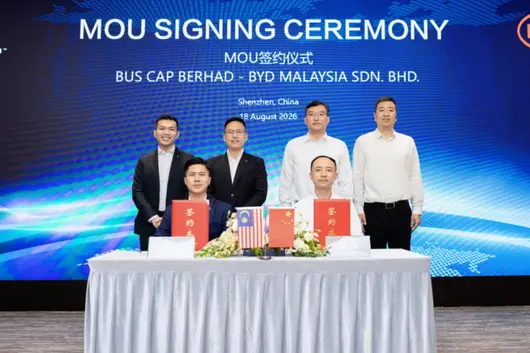

18 Ogos 2026, BYD Malaysia Sdn. Bhd. (dikenali sebagai "BYD Malaysia") dan pengeluar bas Malaysia Bus Cap Berhad (dikenali sebagai "Bus Cap") di Shenzhen menandatangani Memorandum Persefahaman Eksklusif (MOU), kedua-dua pihak akan memfokuskan kepada penganjakan dan pembuatan tempatan bas elektrik sebagai prioritas kerjasama awal, bersama-sama memacu kerjasama strategik kenderaan perniagaan tenaga baharu di Asia Tenggara dengan pangkalan di Malaysia.
Bus Cap ialah pengeluar bas tersenarai di Malaysia. Anak syarikat utamanya, SHL Coach, telah berpangkalan di Negeri Perak sejak 1968 dan mempunyai asas pembuatan tempatan serta pemahaman pasaran yang mapan. Mengikut MOU, kedua-dua pihak merancang untuk mengadakan kerjasama dalam bidang tempatanisasi produk, model jualan, dan perkhidmatan selepas jualan, serta meneroka kemungkinan mewujudkan fasiliti penganjakan dan pembuatan bas elektrik tempatan di Negeri Perak. BYD akan menggabungkan teknologi tenaga baharu yang terkemuka, penyelesaian komprehensif, dan pengalaman pemasaran global dengan asas perindustrian tempatan Bus Cap, untuk meletakkan asas yang kukuh bagi pembangunan keseluruhan bas elektrik di Malaysia.
Luo Zhongliang, Timbalan Presiden Kumpulan BYD dan Pengurus Besar Bahagian ke-15&Bahagian Kenderaan Perniagaan berkata: "MOU kali ini merupakan langkah penting bagi BYD Malaysia dalam menilai peluang kenderaan perniagaan elektrik tempatan. Atas asas kerjasama ini, BYD akan menggabungkan keperluan tempatanisasi, memacu penyelidikan dan pengeluaran pelbagai jenis bas tenaga baharu, meneroka lebih banyak penyelesaian kenderaan perniagaan tenaga baharu, dan menggunakan Malaysia sebagai asas untuk terus mengembangkan pasaran Asia Tenggara."
Wong Kong Yong, Ahli Lembaga Eksekutif Bus Cap berkata: "MOU ini merupakan langkah penting dalam perkembangan sejarah Bus Cap selepas tersenarai, dan akan membina asas yang kompetitif untuk pemasangan, pembuatan serta pelaksanaan bas elektrik di Malaysia."
Kerjasama ini selaras dengan Peta Jalan Transisi Tenaga Negara (NETR) Malaysia dan arah pembangunan elektrifikasi pengangkutan awam. Kedua-dua pihak akan menjadikan ini sebagai titik permulaan untuk memperdalam kerjasama dalam bidang kenderaan perniagaan tenaga baharu, dan bersama-sama meneroka peluang pasaran Asia Tenggara yang lebih meluas.


From Xi'an Datang West City to Quanzhou Ancient Port, from the thousand-year-old camel bell trail to the ten-thousand-ton roll-on/roll-off giant ship — in the midsummer of 2026, a fleet consisting of BYD's full range of new energy vehicles traveled east and south along the veins of the ancient Silk Road, finally sailing out to sea from Shenzhen Port. This journey has a grand name: "2026 Silk Road 10,000-Li Journey · Enlightened Path".

Silk Road Intersection: From Product Cards to Smart Manufacturing Cards
The ancient Silk Road consists of two channels: overland and maritime. The overland Silk Road starts from Xi'an, goes west over mountains and ridges, and reaches Rome directly. The maritime Silk Road starts from Quanzhou, sets sail for the Nanyang region, and reaches Rome. Today, the BYD fleet retraces this thousand-year-old path, while collecting civilization marks at the four intangible cultural heritage nodes, more importantly, unfolding the hard-core strength of flash charging technology and intelligent driving on the 10,000-li test journey.
Currently, BYD's overseas sales have exceeded one million vehicles, with year-on-year growth exceeding 140%, and products cover over 120 countries and regions worldwide.

Road to Overseas Expansion: From Product Export to System Export
Currently, BYD already owns 8 custom RORO ships, with an annual capacity reaching 250,000 to 300,000 vehicles, effectively supporting its overseas market expansion strategy. More importantly, BYD has upgraded "overseas expansion" from single product output to systematic output of "technology + infrastructure + industry". Landing the first flash charging station in Europe, building an exclusive energy replenishment network in Uzbekistan, and laying out localized production bases in Thailand and Brazil. This "systematic overseas expansion" model makes China's new energy technology no longer isolated "commodities", but rather "solutions" integrated into local energy structures and industrial upgrades.

Flash Charging Field Test: 5-minute Energy Replenishment Rewrites Mobility Rules
In this journey spanning thousands of kilometers, flash charging technology became the most focused topic. The BYD flash charging system equipped with the 2nd generation Blade Battery, charging from 10% to 70% battery level takes only 5 minutes at normal temperature, and charging to 97% takes less than 9 minutes; even in extreme cold environments at minus 30 degrees Celsius, charging duration is only 3 minutes longer than normal temperature.
As of the end of June 2026, BYD has cumulatively built 7,018 flash charging stations nationwide, covering 325 cities. From North to Shuangyashan, Heilongjiang, West to Kashgar, Xinjiang, South to Sanya, Hainan, truly realizing the mobility vision of "Travel China with Flash Charging".

10,000-Li Intelligent Driving: Verifying Domestic Hard Power
Aside from flash charging technology, BYD's "Heavenly Eye" high-level intelligent driving assistance system is also a core verification item of this Silk Road 10,000-Li Journey. The fleet fully activated all-scenario NOA intelligent driving functions throughout the journey under complex road conditions such as cross-city highway sections from Quanzhou to Chaozhou to Shenzhen, urban commuting sections in Chaozhou Ancient City and Quanzhou urban area, and coastal highways with strong winds. This Silk Road 10,000-Li Journey fleet gathered the five product matrices of BYD Dynasty, Ocean, Denza, Fang Cheng Bao, and Yangwang, covering full price range and full scenario vehicle usage needs from 100,000-level home use to million-level flagship.

Conclusion
When the aromatic medicines, porcelain, silk, and tea of the ancient Silk Road meet with the "New Three Items" of export represented by batteries, new energy vehicles, and photovoltaic energy storage, what we witness is not only China's era leap from commodity output to integrated export of technology, complete vehicles, and energy replenishment systems, but also a brand new Chinese name card where China's smart manufacturing reshapes the global sustainable development new order with green technology as the link.
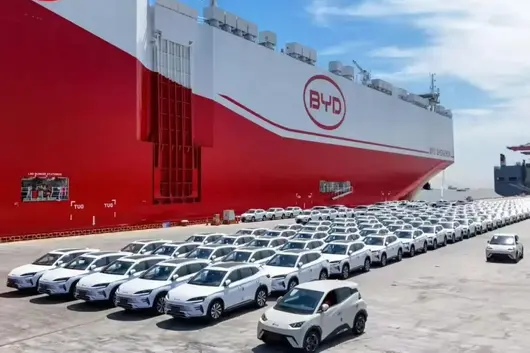

Dari Pasaran Barat Datang Xi'an ke Pelabuhan Kuno Quanzhou, dari Jalan Kuno Loncung Unta Seribu Tahun ke Kapal Pengangkut Ribu Tan — Musim Panas 2026, satu konvoi kenderaan tenaga baharu BYD sepenuhnya, mengikut jejak Laluan Sutera Kuno bergerak ke arah Timur dan Selatan, akhirnya menuju Pelabuhan Shenzhen dan berlayar ke luar negara. Perjalanan ini mempunyai nama yang megah: 'Perjalanan Laluan Sutera 2026 10,000 Mil·Jalan Pemikiran'.
Persilangan Laluan Sutera: Dari Kepingan Produk ke Kepingan Pembuatan Cerdas
Laluan Sutera Kuno terbahagi kepada dua laluan: darat dan laut, laluan darat bermula dari Xi'an menuju ke barat membelah gunung dan lembah sehingga ke Roma, laluan laut pula bermula dari Quanzhou berlayar ke arah Selatan Lautan mencapai Roma. Hari ini, konvoi BYD berjalan kembali di jalan kuno beribu tahun ini, semasa mengumpul tanda-tanda tamadun di empat nodus warisan tidak ketara, malah menampilkan kekuatan teknologi cas pantas dan pemanduan pintar sepanjang perjalanan ujian sebenar seribu batu di atas.
Pada masa ini, jualan luar negara BYD telah melepasi satu juta kenderaan, meningkat pada tahun semasa melebihi 140%, produk merangkumi lebih daripada 120 negara dan wilayah di seluruh dunia.
Laluan Ekspor: Dari Ekspor Produk ke Ekspor Sistem
Pada masa ini, BYD telah mempunyai 8 kapal roll-on/roll-off khas, kapasiti pengangkutan tahunan mencapai 250,000 hingga 300,000 kenderaan, akan menyokong dengan berkesan strateginya untuk meluaskan pasaran luar negara. Yang lebih penting, BYD telah menaikkan status 'ekspor' dari pengeluaran produk tunggal kepada pengeluaran sistem 'teknologi + infrastruktur + industri'. Di Eropah memasang stesen cas pantas pertama, di Uzbekistan membina rangkaian pengisian tenaga khas, di Thailand dan Brazil merancang tapak pengeluaran tempatan. Mod 'ekspor sistem' ini, membuatkan teknologi tenaga baharu China bukan lagi 'produk' yang terpencil, tetapi menjadi 'penyelesaian' yang menyepadukan struktur tenaga tempatan dan peningkatan industri.
Ujian Cas Pantas: Pengisian Tenaga 5 Minit Mengubah Peraturan Perjalanan
Dalam perjalanan merentasi beribu kilometer ini, teknologi cas pantas menjadi fokus utama. Sistem cas pantas BYD yang dilengkapi bateri pisau generasi kedua, pada suhu bilik cas bateri dari 10% ke 70% hanya mengambil masa 5 minit, cas hingga 97% hanya mengambil masa kurang daripada 9 minit; bahkan dalam persekitaran sangat sejuk pada 30 darjah di bawah sifar, masa cas hanyalah 3 minit lebih daripada suhu bilik.
Setakat hujung Jun 2026, BYD telah membina kumulatif 7,018 stesen cas pantas di seluruh negara, merangkumi 325 bandar, utara hingga Shuangyashan, Heilongjiang; barat hingga Kashgar, Xinjiang; selatan hingga Sanya, Hainan, benar-benar merealisasikan wawasan perjalanan 'Menyusuri China Mengikut Cas Pantas'.
Pemanduan Pintar 10,000 Mil: Menguji Kehebatan Lokal
Selain teknologi cas pantas, sistem bantuan pemanduan pintar tinggi tingkat 'Mata Dewa' BYD juga merupakan subjek ujian teras Perjalanan Laluan Sutera 10,000 Mil kali ini. Konvoi pada bahagian lebuh raya merentas bandar dari Quanzhou ke Chaozhou ke Shenzhen, bahagian bandar berdaftar dari Chaozhou dan Quanzhou, di bawah keadaan jalan kompleks seperti lebuh raya bersempadan pantai berangin, sepanjang perjalanan, fungsi pemanduan pintar NOA semua skenario dihidupkan. Konvoi Perjalanan Laluan Sutera 10,000 Mil kali ini menghimpunkan lima matriks produk BYD: Dinasti, Laut, Denza, Fangcheng, Yangwang, merangkumi keperluan kenderaan untuk semua harga dari 100,000 peruntuk rumah tangga hingga 1,000,000 ke tahap flagship, untuk semua skenario.
Penutup
Apabila rupa, seramik, sutera, dan teh Laluan Sutera Kuno bertemu dengan 'Tiga Baharu Baru' Ekspor yang diwakili oleh bateri, kenderaan tenaga baharu, dan tenaga fotovoltan penyimpanan, kita bukan sahaja menyaksikan lompatan zaman China dari pengeluaran produk kepada pengeluaran bersepadu teknologi, kereta lengkap, dan sistem pengisian tenaga, malah merupakan kad perniagaan baru China di mana pembuatan pintar China menggunakan teknologi hijau sebagai penghubung, membentuk semula tatanan pembangunan lestari global yang baru.
© 2024 Bitauto.com. All Rights Reserved.
Bitauto (www.yiche.com and www.bitauto.com) is one of the most visited automotive websites in China. We provide detailed info on Chinese car brands available in your area. Please note that the information provided on this website is based on publicly available data and is for reference only. It may not be fully updated or accurate at all times.

Help us improve our website


