

HomeDolphin

Search History
Popular Searches
Dealer Login / Sign Up











In the current era of profound changes in the global automotive industry landscape, authoritative voices from across the ocean often trigger broader industry resonance. US Treasury Secretary Scott Bessent (Scott Bessent), while delivering a speech at the Charlotte Economics Club (Charlotte Economics Club), turned his gaze toward a new energy vehicle manufacturer in the East.

According to US Treasury Secretary Bessent's speech at the Charlotte Economics Club, BYD is an excellent car worth $70,000 that consumers can buy for $35,000. This evaluation is not an isolated market noise, but a high summary of BYD's product strength and cost-performance ratio, quickly ripples in the international public opinion field, and is a true portrayal of China's automotive export reputation.
Bessent's evaluation directly points to BYD's core competitiveness: winning global consumers' trust votes with affordable pricing, reliable quality, rich configurations, and value beyond its class. In the traditional automotive brand premium logic, high prices are often linked with luxury configurations, while BYD rewrites this established rule through technological innovation and industry chain integration. Overseas market pricing for high-end car experiences of about $70,000, BYD faces global consumers with a pricing of $35,000. This huge value gap is the fundamental reason for its international attention.
Market data is the only standard to test product strength. As of August, BYD passenger vehicles and pickup trucks overseas sales reached 189,000 units, a year-on-year increase of 134.6%, an increase of over 100,000 units compared to the same period last year, refreshing overseas sales records for five consecutive months. More notably, overseas cumulative sales from January to August reached 1.158 million, exceeding BYD's overseas sales of 1.0496 million for the whole year of 2025. Behind this series of numbers is BYD's deep cultivation and steady expansion in the overseas market. Models such as Yuan UP, Dolphin Family, and Song PLUS are the main forces for the overseas market. They have gained positive feedback in markets with different cultural backgrounds thanks to their excellent design, smart cockpit experience, and solid range performance.
This heavy overseas sales result is by no means relying solely on price advantages, but is a hard-core result precipitated from the whole industry chain self-research and sedimentation. BYD persists in the vertical integration strategy, realizing the complete autonomy and controllability of three core technologies: batteries, motors, and electronic controls. From the safety innovation of Blade Battery to the technical iteration of e-platform 3.0, to the high-efficiency energy saving of DM-i Super Hybrid System, the breakthrough of every technology is converted into actual advantages in the product end. Relying on continuous technological iteration and large-scale refined manufacturing, on the basis of adhering to product quality, upgrading the value logic of the automotive industry, Chinese new energy vehicles rely on hard strength to rush to global new tracks.
At large overseas auto shows, BYD's exhibition booths are always popular.

Two-story buildings paired with dynamic test drive areas, highlighting the brand's international strength. This is not only a brand display but also a communication of technology and culture. Overseas consumers can intuitively feel the excellent performance of BYD vehicles in handling, comfort, and intelligent assisted driving through personal test drives. This recognition based on real experience is more persuasive than any advertisement. BYD persists in compliant deep cultivation of the overseas market, respecting local laws and regulations, integrating into local community culture, and responding to external noise with tens of millions of overseas user choices and real delivery results.
Facing the complex international trade environment, BYD chose to meet challenges with an open and cooperative posture. The company invested and built production bases in Thailand, Brazil, Hungary, and other places, which not only drove local employment and economic development but also realized the localization layout of the supply chain. This "Global Manufacturing, Global Service" model effectively reduces logistics costs and tariff risks, improves response speed and service efficiency. At the same time, BYD actively cooperates with top global suppliers, introduces advanced management experience and technical resources, and continuously improves its own competitiveness.
The reason why Bessent's remarks triggered attention also lies in reflecting the complex mindset of the US political circle towards the rise of China's new energy vehicles. On the one hand, they admit BYD's leading position in product strength and cost-performance ratio; on the other hand, they are worried that the local automotive industry will be impacted. However, the essence of market competition is survival of the fittest, consumers vote with their hard money, choosing products with more value. BYD's success is not relying on protectionist barriers, but technological innovation and cost control. This victory based on market laws is truly sustainable.
Looking to the future, BYD will continue to increase R&D investment and promote technological iteration and product upgrades. In the field of intelligence, the company will further deepen cooperation with technology enterprises, improve the level of smart cockpit and intelligent assisted driving, and meet the growing personalized needs of consumers. In the field of green energy, BYD will expand business sectors such as energy storage and solar energy, and build a more complete clean energy ecosystem. At the same time, the company will continue to deepen the globalization layout, expand more emerging markets, and enhance brand influence and market share.
For Chinese car brands, BYD's overseas journey provides valuable experience. First, must insist on technological innovation, master core technology, and occupy the initiative in international competition. Second, pay attention to brand building, improve brand image and reputation, and win consumer trust. Third, respect local culture and laws, achieve localization operations, and integrate into local society. Finally, maintain an open and cooperative mindset, grow together with global partners, and achieve win-win results.
Bessent's evaluation is just a vignette, which reflects the profound changes that the global automotive industry is undergoing. New energy vehicles are no longer merely transportation tools, but intelligent mobile terminals and green energy carriers. On this new track, Chinese brands are gradually changing from followers to leaders by virtue of technical accumulation and industry chain advantages. As an outstanding example among them, BYD's successful experience is worth learning from the industry.
Of course, the overseas journey is not smooth. Challenges such as geopolitical risks, trade barriers, and cultural differences still exist. BYD needs to keep a clear head and move forward steadily. While seizing opportunities, prevent risks; while pursuing scale, pay attention to quality; while based on the present, look to the future. Only in this way can we walk steadily and go far in the global market and achieve high-quality development.
In summary, US Treasury Secretary Bessent's evaluation of BYD is not only an affirmation of its product strength but also a recognition of the development of China's new energy vehicle industry. BYD has won the favor of global consumers with excellent product performance, affordable price positioning, and complete industry chain layout. In the future, with the continuous progress of technology and continuous expansion of the market, BYD is expected to play a bigger role in the global automotive stage and contribute Chinese wisdom and strength to promote the global automotive industry's green transformation. This process is not only BYD's growth history but also a vignette of China's automotive industry going global.
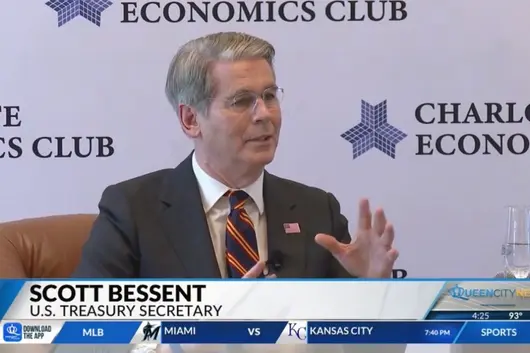

Pada masa kini apabila struktur industri automotif global sedang berubah secara mendalam, suara berwibawa dari seberang samudera sering mencetuskan resonansi industri yang lebih meluas. Menteri Kewangan Amerika Scott Bessent (Scott Bessent) dalam berucap di Charlotte Economics Club (Charlotte Economics Club), memfokuskan perhatian kepada sebuah pengeluar kenderaan baharu di Timur.
Menurut ucapan Setiausaha Kewangan AS Bessent di Charlotte Economics Club, BYD ialah kereta cemerlang dalam kategori bernilai 70,000 Dolar AS yang boleh dibeli pengguna dengan harga 35,000 Dolar AS. Penilaian ini bukanlah bunyi pasaran yang terpisah, tetapi ringkasan tinggi terhadap kekuatan produk dan nisbah harga-kuasa BYD, dengan cepat menimbulkan riak dalam arena pendapat antarabangsa, menjadi gambaran sebenar reputasi eksport kereta China yang luar biasa.
Ucapan Bessent ini secara langsung menunjuk teras daya saing BYD: dengan harga mampu milik, kualiti boleh dipercayai, kelengkapan kaya, dan pengalaman melebihi kelas, lalu mendapat undian kepercayaan pengguna global. Dalam logik premium jenama automotif tradisional, harga tinggi sering dikaitkan dengan pelaburan mewah, manakala BYD melalui inovasi teknologi dan integrasi rantaian industri, mengubah peraturan tetap ini. Pengalaman kenderaan mewah berharga kira-kira 70,000 Dolar AS di pasaran luar negara, BYD menawarkan dengan harga 35,000 Dolar AS kepada pengguna global, perbezaan nilai yang besar ini, inilah punca utama ia mendapat perhatian antarabangsa.
Data pasaran adalah satu-satunya piawaian untuk menguji kekuatan produk. Sehingga bulan Ogos, jualan luar negara kenderaan persendirian dan pikap BYD sebanyak 189,000 buah, peningkatan selang masa 134.6% berbanding tahun sebelumnya, lebih 100,000 buah daripada tahun yang sama, merekodkan jualan luar negara selama 5 bulan berturut-turut. Yang lebih menarik perhatian ialah, 1 hingga 8 bulan jualan luar negara kumulatif 1.158 juta, telah melebihi jualan luar negara keseluruhan tahun 2025 iaitu 1.0496 juta. Di sebalik nombor-nombor ini, adalah kerja mendalam dan ekspansi stabil BYD di pasaran luar negara. Yuan UP, keluarga Dolphin, Song PLUS dan banyak model lain menjadi tumpuan pasaran luar negara, mereka mendapat maklum balas positif dalam pasaran latar belakang budaya yang berbeza berdasarkan reka bentuk cemerlang, pengalaman kabin pintar dan prestasi jarak jauh yang kukuh.
Keputusan jualan luar negara yang berat ini bukan semata-mata bergantung kepada kelebihan harga, tetapi merupakan hasil keras daripada penyelidikan dan pembangunan dalam rantaian industri penuh. BYD berpegang teguh kepada strategi integrasi menegak, merealisasikan tiga teknologi utama iaitu bateri, motor dan kawalan elektrik sepenuhnya autonomi dan terkawal. Dari inovasi keselamatan Bateri Blade ke iterasi teknologi Platform e 3.0, dan seterusnya ke sistem hibrid super DM-i yang cekap dan menjimatkan, setiap lompatan teknologi ditukar kepada kelebihan praktikal di hujung produk. Bergantung kepada iterasi teknologi berterusan dan pembuatan halus berskala, dengan berpegang pada kualiti produk, menaik taraf logik nilai industri automotif, kereta baharu China dengan kekuatan sebenar bergerak ke laluan baharu global.
Di pameran automotif besar di luar negara, stan BYD sentiasa penuh sesak dengan pengunjung.
Bangunan dua tingkat dilengkapi zon ujian jalan dinamik, mendemonstrasikan kekuatan antarabangsa jenama. Ini bukan sekadar pameran jenama, malah pertukaran teknologi dan budaya. Pengguna luar negara melalui ujian jalan sendiri, secara langsung menghayati prestasi cemerlang kenderaan BYD dari segi pengendalian, keselesaan dan pemandu bantuan pintar. Pengiktirafan berasaskan pengalaman sebenar ini lebih meyakinkan daripada sebarang iklan. BYD berpegang teguh strategi mendalami pasaran luar negara mengikut peraturan, menghormati undang-undang tempatan, menyepadukan dengan budaya komuniti tempatan, dengan memilih oleh jutaan pengguna luar negara dan hasil penghantaran sebenar untuk menjawab kebisingan luar.
Menghadapi persekitaran perniagaan antarabangsa yang kompleks, BYD memilih menghadapi cabaran dengan sikap kerjasama terbuka. Syarikat melabur dan membina tapak pengeluaran di Thailand, Brazil, Hungary dan tempat lain, bukan sahaja mendorong pekerjaan dan pembangunan ekonomi tempatan, tetapi juga merealisasikan perancangan penerusan bekalan tempatan. Model 'Pengeluaran Global, Perkhidmatan Global' ini, secara efektif mengurangkan kos logistik dan risiko duti, meningkatkan kelajuan tindak balas dan kecekapan perkhidmatan. Serentak itu, BYD bekerjasama secara aktif dengan pembekal teratas dunia, memperkenalkan pengalaman pengurusan dan sumber teknologi maju, sentiasa meningkatkan daya saing sendiri.
Sebab ucapan Bessent ini mencetuskan perhatian, juga kerana ia mencerminkan keadaan rumit pihak politik Amerika terhadap kebangkitan kereta baharu China. Di satu pihak, mereka mengakui kepimpinan BYD dalam kekuatan produk dan nisbah harga-kuasa; di pihak lain, khuatir industri automotif tempatan terjejas. Walau bagaimanapun, hakikat persaingan pasaran adalah yang unggul akan mengalahkan yang terdesak, pengguna mengundi dengan wang sebenar, memilih produk yang lebih bernilai. Kejayaan BYD, bukan bergantung kepada halangan proteksionisme, tetapi inovasi teknologi dan kawalan kos. Kejayaan berasaskan peraturan pasaran ini, barulah benar-benar boleh diteruskan.
Membawa pandangan ke hadapan, BYD akan terus meningkatkan pelaburan penyelidikan dan pembangunan, mendorong iterasi teknologi dan penggantian produk. Dalam bidang kecerdasan, syarikat akan memperdalam kerjasama dengan syarikat teknologi, meningkatkan tahap kabin pintar dan pandu bantuan pintar, memenuhi keperluan peribadi pengguna yang semakin meningkat. Dalam bidang tenaga hijau, BYD akan mengembangkan bidang perniagaan seperti penyimpanan tenaga, tenaga solar, membina ekosistem tenaga bersih yang lebih lengkap. Serentak itu, syarikat akan memperdalam pelan globalisasi, mengembang lebih banyak pasaran baharu, meningkatkan pengaruh jenama dan bahagian pasaran.
Bagi jenama automotif China, jalan eksport BYD memberikan pengalaman berharga. Pertama, mesti berpegang teguh inovasi teknologi, menguasai teknologi teras, baru boleh mendominasi dalam persaingan antarabangsa. Kedua, hendaklah mengutamakan pembinaan jenama, meningkatkan imej dan reputasi jenama, meraih kepercayaan pengguna. Ketiga, harus menghormati budaya tempatan dan undang-undang, merealisasikan pengoperasian tempatan, menyatu dengan masyarakat tempatan. Keempat, harus mengekalkan sikap kerjasama terbuka, berkembang bersama rakan global, merealisasikan keuntungan bersama dan menang sama menang.
Penilaian Bessent hanyalah satu gambaran kecil, ia menyerlahkan perubahan mendalam yang sedang dialami industri automotif global. Kereta baharu bukan lagi sekadar alat pengangkutan, malah terminal bergerak pintar dan waduan tenaga hijau. Dalam laluan baharu ini, jenama China dengan pengumpulan teknologi dan kelebihan rantaian industri, secara beransur-ansur dari pengikut berubah menjadi pemimpin. BYD sebagai pencabar teratas di antara mereka, pengalamannya yang berjaya layak untuk dirujuk oleh industri.
Tentu saja, jalan eksport bukan laluan rata. Risiko geopolitik, halangan perdagangan, perbezaan budaya dan cabaran lain masih wujud. BYD perlu mengekalkan pemikiran yang jelas, bergerak dengan kukuh. Sama ada menangkap peluang, atau menghalang risiko; sama ada mengejar skala, atau mengutamakan kualiti; sama ada berpihak pada masa kini, atau berfokuskan masa depan. Hanya dengan ini, boleh bergerak dengan stabil dan jauh di pasaran global, merealisasikan pembangunan berkualiti tinggi.
Secara ringkasnya, penilaian Setiausaha Kewangan AS Bessent terhadap BYD, adalah pengiktirafan terhadap kekuatan produknya, serta pengiktirafan terhadap perkembangan industri kereta baharu China. BYD dengan prestasi produk cemerlang, penentuan harga mampu milik dan perancangan rantaian industri yang lengkap, meraih pencalonan pengguna global. Pada masa depan, dengan kemajuan teknologi yang tidak terhenti dan pengembangan pasaran yang berterusan, BYD dijangka memainkan peranan lebih besar di pentas automotif global, menyumbang kecerdasan dan kekuatan China untuk memacu transformasi hijau industri automotif global. Proses ini, bukan sahaja sejarah pertumbuhan BYD, malah gambaran kecil industri automotif China menuju ke dunia.

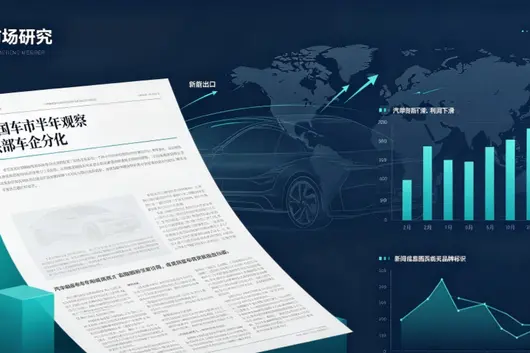
In September 2026, overseas investment bank JPMorgan released the latest industry research report regarding the Chinese passenger car market, giving an overall prudent assessment on the domestic vehicle sector, only prioritizing BYD and Geely, two car companies with scale, diversified products, and globalization capabilities. The underlying motive is the H1 2026 financial reports of domestic car companies just released.
The prudent tone of this report is not groundless speculation, but based on the actual operating results of the domestic auto market in H1 2026. Official data from CAAM is right in front: Total domestic car sales in H1 were 15.017 million, down only 4.1% year-on-year. Market volume remains huge, consumer demand has not collapsed. But opening mainstream car company financial reports, the industry's profit system almost collectively collapsed: net profit basically fell across the board, over half of car companies fell into loss, many old top players shifted from profit to loss.
Many people think the difficulty in the car market is "can't sell". The real status is: cars are still sold, just thinner margins, deeper losses the more it sells.
The biggest abnormal reversal in the H1 car market this year: growth was all in revenue and sales, collapse was all in profit.
Among 16 mainstream listed car companies, only Leapmotor, NIO, JAC, BAIC BluePark had net profit indicators achieve year-on-year positive growth. But this group of bright data is completely a "verbal trap": the latter three didn't profit at all, just loss width narrowed, book still losing money. Only Leapmotor truly profited and profit surged in the whole industry.
More terrifying than losses is profit regression. Seres, Li Auto, Voyah, BAIC Motor four last year still steadily made money. This year H1 collectively shifted from profit to loss, directly fell from profit tier into loss quagmire. Market iteration speed far exceeded everyone's imagination.
More subversive to cognition is: even the industry absolute leader, cannot withstand this profit winter.
Take BYD as example. As the industry profit ceiling, it is still the only one in the whole industry with net profit over 10 billion. Basic market share no one can shake. But vertically compared to same period last year, decline data glaring to the naked eye: H1 revenue 344.815 billion yuan, year-on-year 7.13%; net profit attributable to parents 12.325 billion yuan, year-on-year significantly down 20.54%, gross margin fell back to 18.85%.
Simple calculation reveals the truth: BYD sales still leads globally, but vehicle profitability is continuously shrinking. Domestic price war has precisely pierced the leader's profit floor.
If BYD is "earned less", then Great Wall Motor is "earned it all away", perfectly confirms the dilemma of traditional car companies.
Great Wall this year seems comprehensive improvement: H1 sales 575,800 vehicles, year-on-year slight increase 1.22%; revenue first exceeded 100 billion in H1, reached 102.101 billion yuan, year-on-year realized positive growth. Sales, revenue double increase, should be a favorable report card. Result profit directly halved then halved again: net profit attributable to parents only 2.465 billion yuan, year-on-year plummeted 61.11%.
Car companies have entered the distorted stage of "volume without profit, revenue increase without profit increase". Surface sales red fire, inside profit already riddled with holes.
In the industry full loss tide, uniquely killed out a counter-trend steady outlier, again subvert industry cognition.
Geely Automobile became the head only steady basic market share car company: H1 sales 1.423 million vehicles, year-on-year slight increase 1%; revenue 173.6 billion yuan, year-on-year surged 14.67%; net profit attributable to parents 9.09 billion yuan, only slightly down 1.79%, gross margin stable at 17.90%.
In the large environment of full industry profit plummet, nearly zero decline profit performance appears especially scarce. Its counter-cyclical logic is very clear: Zeekr high-end models volume boost lift product average price, overlay overseas exports continuously increase revenue. Using product upgrade + globalization, hedged against domestic fierce price war. This is also the core direction for subsequent car companies to break the situation.
Many people doubt: Sales didn't drop big, where did the car companies money go lost? Two full industry common reasons, reveal the answer.
First, manufacturing costs fully up, squeeze full industry gross margin. Lithium carbonate, chips, copper, aluminum etc raw material prices rose, directly lift per-vehicle manufacturing cost. NIO's Li Bin openly admitted: compared to end of last year, this year Q2 per-vehicle cost up 14,000 yuan. H2 will also up 2,000 yuan again.
Cost up treat all car companies equally, but leader can rely on scale, supply chain advantage hedge. SMEs, new forces can only hard carry. Loss naturally continuously expand.
Second, currency fluctuation violently, swallow overseas car companies profit. Now head car company overseas ratio extremely high. Chery export ratio about 70%, Great Wall over 50%, BYD, Changan over 40%, Geely, SAIC over 30%.
Great Wall's Wang Xingjun directly points out profit down key: Overseas tax subsidy payment delay, currency fluctuation drag performance. But most key reversal is here: excluding exchange rate, one-time gains/losses, most head car companies real profit actually in big surge.
Data won't lie: SAIC adjusted core net profit 7.87 billion yuan, year-on-year surge 72%; Changan adjusted profit year-on-year growth 12%; Geely adjusted core net profit 9.68 billion yuan, year-on-year big increase 46%.
This means, car companies main business earning ability didn't collapse. Just short-term external factors covered real strength. Globalization long ago not bonus, but car company survival core trump card.
More key incremental fact is: Overseas market not only risk avoid, but also earn higher profit.
BYD H1 overseas revenue 181.268 billion yuan, year-on-year surge 33.9%, account for total revenue half more. JPMorgan precise calculation: BYD domestic vehicle profit about 10,000 yuan, overseas vehicle profit over 20,000 yuan. Profitability is domestic market two times. With Hungary, Indonesia, Brazil overseas factories continuously ramp up, overseas high profit bonus will continue release.
Also precisely saw through this industry underlying logic, JPMorgan gave extremely sober differentiated judgment: Keep prudent on Chinese passenger car industry overall. Not blindly bullish. Only long term firmly first choice BYD, Geely two leaders. At the same time strategy bullish counter-cyclical heavy truck track.
Current car market, long ago said goodbye to "Sales is King" era.
2026 H1 Report given ultimate answer very cruel: Domestic involution kill profit, overseas increment save company. Car companies only can in domestic price cut involution, being market eliminated. Holding scale, diversified product, globalization layout leader, crossing industry winter.
This thunderous car market reshuffle just started: Sales decide hype, profit decide life and death, overseas decide future.
Source: Car Observer

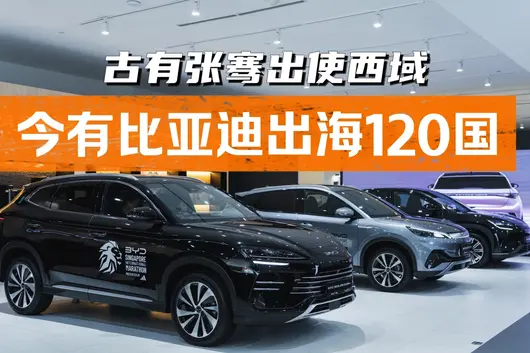
August 25, the Silk Road 10,000-Mile Journey activity, bearing world-class historical and cultural significance, concluded successfully in Singapore!
This fleet, composed of five BYD networks and four brands, departed from Xi'an, the starting point of the Silk Road, lasted 33 days, crossed six domestic provinces, passed through Thailand, Malaysia, and finally arrived in Singapore. Along the way, Flash Charge efficiently replenished energy, God's Eye ensured safety and peace of mind, and Cloud Suspension provided comfortable and stable travel. BYD used disruptive technology to solve all pain points of long-distance travel for new energy vehicles.
In Singapore, BYD is regarded by local users as high-end luxury cars. Taking the Dolphin as an example, the price in Singapore is around 900,000 RMB, truly unaffordable for ordinary people. Even selling at such a high price, sales rose steadily. From January to July, the market share of the overall passenger car market was 24.7%, occupying one-quarter of the entire Singapore passenger car market. Among them, the market share of pure electric vehicles reached 40.3%. It has also ranked first in total brand sales for 19 consecutive months.


Currently, BYD New Energy Vehicles have entered 120 countries and regions. In the first half of this year, sales in Thailand, the UK, Italy, Spain, Saudi Arabia, the UAE, South Africa, and other places were booming. In Brazil, nearly 100,000 units were sold in just 6 months.
From January to July, overseas cumulative sales exceeded 970,000 units, a year-on-year increase of 76%; July overseas sales were 179,800 units, a year-on-year increase of 124.3%.
Based on overseas sales figures, it can be seen that foreigners do not favor century-old brands. Seeing the reliable, safe, smart, and energy-efficient BYD, they simply cannot turn away.
In ancient times, there was the Silk Road; Zhang Qian's mission to the Western Regions opened up ancient trade routes. Today, BYD New Energy Vehicles cross borders for travel, retracing the Silk Road with China's smart manufacturing, supporting green transportation on the Belt and Road, and using technical strength to promote green transformation.


© 2024 Bitauto.com. All Rights Reserved.
Bitauto (www.yiche.com and www.bitauto.com) is one of the most visited automotive websites in China. We provide detailed info on Chinese car brands available in your area. Please note that the information provided on this website is based on publicly available data and is for reference only. It may not be fully updated or accurate at all times.

Help us improve our website


