

HomeElectric Vehicles

Search History
Popular Searches
Dealer Login / Sign Up

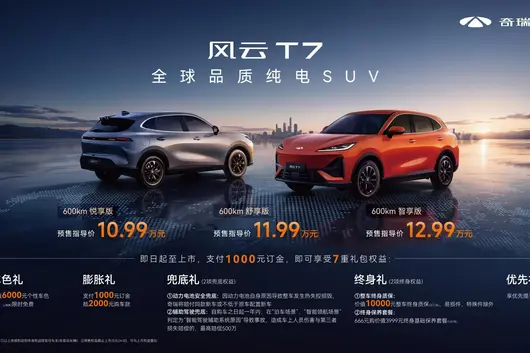
The new energy vehicle market is becoming increasingly competitive. Many new cars are rushed to the market, compressing R&D testing cycles. Paper specifications look impressive, but facing different climates and complex road conditions, long-term reliability is often overlooked. "Rapid car building" is gradually becoming a major discussion point in the industry. The Fengyun T7, pre-sale launched on August 12, proposes making good cars through slow craftsmanship, not pursuing a quick market launch. This also reflects that home electric vehicles no longer just compete on configuration numbers; quality and durability are becoming the new core of competition.

Unlike many domestic models developed and simply modified for export, this one follows the path of overseas verification first, then domestic launch. The project planning took two years, R&D took three years. From the outset, it benchmarked against the strict overseas 2026 version E-NCAP safety standards. The same-source model Lepas L6 has already been launched in Thailand and South Africa. Only after undergoing actual use testing by local consumers did it return to the domestic market to open pre-sales.

The "slow" mentioned here does not mean low R&D efficiency, but rather investing energy into many testing phases that consumers cannot see. Completing 1.45 million kilometers of durability road tests, running to all parts of the world for on-site assessments. Nordic freezing cold, Southeast Asian heavy rain and high humidity, Middle East continuous sun exposure, Brazilian pothole-ridden roads, all actually driven. Meanwhile, collecting opinions from over 5,000 global users, visiting 15 countries, incorporating real local driving habits into the design in advance, rather than waiting until after launch to fix problems.

Focusing on domestic family daily use, it targets the real pain points of most car owners. Many home electric vehicles now require extra payment for long range, and require increased budget for a full set of safety configurations; it is difficult to concentrate all advantages in one vehicle. Fengyun T7 makes 600km range standard across the entire series. High percentage high-strength steel body, nine airbags, multi-layer protective battery, without making cuts between trim levels. The chassis is tuned with participation from overseas engineers, balancing city commuting and off-road self-driving. Cabin space, storage, and camping mode are all fully equipped, minimizing constant compromises consumers have to make when buying a car.

This product logic relies on Chery's experience accumulated from long-term overseas exports. Export rankings have remained high for more than twenty consecutive years, serving over 20 million overseas users, settling into a complete set of R&D, manufacturing, and verification processes. The so-called global car is not just a slogan; it means the vehicle must withstand regulations of various countries, withstand extreme cold and heat, muddy and bumpy various real-world road conditions.

The industry price war has lasted for a long time; simply piling up specifications makes it hard to create a gap. For ordinary families, a car is used for many years. They care more about stability after three to five years of use, whether it can be used normally in extreme weather. Fengyun T7 offers another problem-solving approach: compared to rapid updates, solidifying reliability is the foundation for domestic brands going global and establishing themselves in the market in the long run.

Gasgoo Auto News: Driven by falling battery costs and the rise of Chinese automakers with economies of scale in emerging markets, the average price of electric vehicles globally last year fell below that of hybrid models.
Lithium-ion batteries account for 30%-40% of total vehicle costs, while China's battery capacity is abundant, controlling about 80% of the global battery market, which has also kept battery prices continuously falling. Bloomberg New Energy Finance (BloombergNEF) estimates that between 2020 and 2025, passenger vehicle battery prices fell cumulatively by 37%.

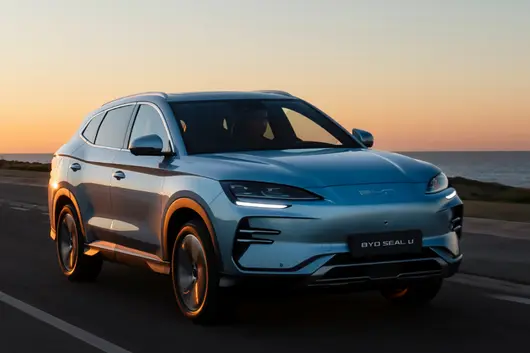
Image Source: BYD
At the same time, major automakers are increasingly adopting Lithium Iron Phosphate (LFP) batteries without expensive cobalt elements. Although lithium iron phosphate batteries were previously considered to have lower energy density than traditional lithium batteries, their performance is continuously improving. Renault and Volkswagen both announced last year that they would equip some new models with LFP batteries.
With fierce competition in the Chinese domestic market, Chinese EV automakers are accelerating their overseas expansion, which also drove down global vehicle prices. BYD and other Chinese automakers achieved autonomous production of components from batteries to chassis by relying on vertically integrated supply chains and refining cost advantages.
Previously high prices hindered the widespread adoption of electric vehicles in most regions globally. In markets such as China and Norway, EV prices are already on par with or even lower than fuel-powered vehicles, and the pace of electrification in these regions is much faster, while emerging markets may replicate this trend.
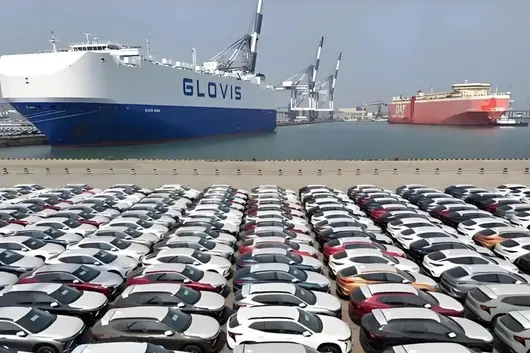
According to data from the China Association of Automobile Manufacturers, China's EV exports reached 1.64 million units in 2025, while exports in 2020 were less than 100,000. Consumers in major export markets such as Thailand and Mexico highly value the high cost-performance ratio of Chinese models, with Chinese brands accounting for nearly 30% of new car sales in Thailand.
From the perspective of average prices in various countries, EV prices in Southeast Asian and South American countries have already fallen below those of hybrid models. Thailand is actively attracting investment to support the EV industry; both BYD and Great Wall Motor have already established factories locally. Yoshiaki Kawano, an executive at Mobility Global, stated: "Chinese automakers initially expanded market share by focusing on volume-selling compact EVs, but have now expanded their product lines to launch larger and premium models with higher profit margins."
In the past, Japanese automakers focused on the hybrid route, forming differentiated competition with lower purchase thresholds and long range. Now they are also beginning to readjust their strategies. Toyota adopted the strategy of "running multiple technology routes in parallel," launching both EVs and hybrid models simultaneously based on the needs of consumers in different markets. Nissan followed the lead of Chinese competitors, producing EVs in China for export to overseas markets.
Affected by rising oil prices due to the Middle East situation, global EV sales have surged significantly in recent months. The International Energy Agency (IEA) predicts that in 2026, purely electric and plug-in hybrid models will account for about 30% of global car sales.

"The recent wind direction seems a bit off."
A senior executive of an automaker responsible for the Southeast Asian market told Auto Industry Chronicle.
Starting July 1 this year, all electric vehicles imported fully into Malaysia (CBU) must simultaneously meet two new conditions: a minimum landed price of not less than 200,000 Ringgit (approx. 330,000 RMB), and motor power of no less than 180kW.
This does not include the restored import tax, consumption tax, and sales tax.
The reasons provided by the other party are also very sound: first, to protect local automotive brands and create space for their development, and second, to prevent Malaysia from becoming a dumping ground for excess electric vehicle production capacity from other countries.
When the model of relying on price advantages to quickly distribute goods several years ago no longer works, it also means that Chinese brands must readjust their layout thinking: either accelerate localization production or be squeezed out of the market by high tariffs.
From "Tax Exemption Dividends" to "Additional Clauses"From 2022 to 2025, to support the rapid popularization of the electric vehicle industry, Malaysia issued a temporary relaxation policy: for electric vehicles above 100,000 Ringgit, import tax and domestic tax were exempted, only 10% sales tax was levied.

Top 20 Malaysian Electric Vehicle Brand Registrations in 2025
The generous policy dividends also attracted many Chinese brands to enter quickly.
In the top 10 Malaysia Electric Vehicle Sales Rankings for 2025, BYD, Zeekr, Chery, XPeng, and Denza all made the list (Proton ranked 2nd is strategically controlled by Geely).
BYD had held the title of local electric vehicle sales champion for three consecutive years. Taking advantage of the hot sales momentum, in August 2025, BYD announced the landing of a CKD complete vehicle assembly factory at KLK Science Park, Tanjung Malim, Perak, with a planned annual capacity of 50,000 units and an estimated investment of about 1.3 billion Ringgit.
After obtaining the temporary manufacturing permit at the end of September of the same year, the project progress advanced rapidly.
However, an accident occurred.
In March 2026, local media reported that BYD's Tanjung Malim factory construction showed "signs of suspension".
"Government requires BYD factory 80% capacity must be exported" and "Local selling price must not be less than 200,000 Ringgit" once circulated on the internet.
In response, the Malaysian Ministry of Investment, Trade and Industry (MITI) issued a special clarification. The rumor of "80% capacity must be exported" was actually an additional clause limitation:
The annual local sales cap for this factory is 10,000 units, and this quota exactly accounts for 20% of the project's planned total capacity, and the 10,000 unit quota is a production framework jointly agreed upon by multiple parties.
Additionally, the on-road price of locally assembled CKD vehicles must not be less than 100,000 Ringgit, not 200,000.
MITI repeatedly emphasized, the additional clauses were not targeting BYD, but applied to all new automotive investment projects in Malaysia starting from September 2025, except for projects using existing local assembly facilities.

BYD Dolphin Right-Hand Drive Version
But the policy implementation node happened to coincide with BYD's factory construction cycle, inevitably leading to speculation.
After winning the local electric vehicle sales champion for three consecutive years, BYD started factory construction in September 2025, the timing was exactly covered by the new rules. Meanwhile, BYD's popular Dolphin, Atto 2, Seal models locally were priced around 100,000 Ringgit.
In the view of industry insiders, on one hand, they cannot launch models below 100,000 Ringgit, on the other hand, they are constrained by an annual domestic sales cap of 10,000 units, and the additional clauses also require the complete vehicle assembly process to be in local supporting welding workshops, coating workshops, and final assembly workshops, obviously increasing costs. The three major limits force BYD to reconsider the value of this project.
It is not only BYD affected by this.
"The additional clauses came out particularly suddenly. We were supposed to start work on local layout in Malaysia this year, now we are negotiating adjustments again." A senior executive of a central enterprise overseas told Auto Industry Chronicle candidly.
NO.2Were We Targeted?
So, were Chinese brands deliberately targeted?
In fact, behind the additional constraint clauses issued by Malaysia lies a macro consideration based on the domestic industrial chain and employment stability.
Malaysian Minister of Investment, Trade and Industry Zahari Abdul Ghani explained that the relevant clauses treat all countries and brands equally, aiming to drive local assembly production capacity towards sustainable, high-value-added market segments, while avoiding replacement shocks to the existing local supplier ecosystem.
At the same time, the clause is export-oriented as its core, aiming to enable foreign investment to help Malaysia balance trade income and expenditure and deeply integrate into the global supply chain.
Industry insiders pointed out that this does not limit the total factory capacity, but is a strategic policy guiding enterprises to develop with exports as the core.
Malaysia hopes to get rid of the pure "import selling" model and expand the added value of local industries.
Currently, local brands Perodua and Proton have long occupied more than 60% of the mainstream share of the passenger car market. The industrial system supporting hundreds of parts manufacturers provides over 700,000 employment positions and is the cornerstone of stable local industrial development. Introducing advanced Chinese electric vehicle technology and industrial systems helps to quickly improve the development level of the local industrial chain.
As MITI also emphasized, projects using existing local assembly facilities are not subject to the newly issued additional clauses.
NO.3Chinese Brands Have Their Own "Tricks"
The localization layout of Chinese automakers is showing differentiation: some are trying to build independent capacity, while others choose to "borrow a boat to go overseas", embedding into the local industrial chain with lower policy risk through joint ventures or shared local production lines.
Just not far from Tanjung Malim, in Beringin High-Tech Automotive Valley, Selangor State, construction progress has never stopped.
In 2025, Chery adopted a joint venture model with local capital to build a smart automotive industrial park, with the first phase planning an annual capacity of 100,000 units, expandable to 300,000 units, and expected to start production in the second half of 2026.

Chery iCar officially rolls off the production line
Chery is one of the earlier Chinese automakers to obtain formal complete vehicle manufacturing qualifications in Malaysia. Besides the smart automotive industrial park under construction, it currently owns two production bases in the local area:
One is a CKD contract factory in cooperation with local enterprise Inokom, mainly responsible for fuel and hybrid model assembly production; the other is a wholly-owned complete vehicle factory located in Shah Alam, Selangor State, officially put into production in 2024, focusing on Jaecoo, Omoda high-end series and iCar new energy vehicle models.

Proton e.MAS 5
Geely did not build a factory, but chose the cooperation route.
In 2017, Geely entered the market by acquiring a 49.9% stake in the local automaker Proton. After years of development, relying on local CKD assembly and Geely technology empowerment, Proton's new energy sub-brand e.MAS series has flexible pricing space, with the entry-level pure electric model e.MAS 5 starting price only 56,800 Ringgit.
In 2025, Proton pure electric models registered 8,890 units, ranking second; from January to May 2026, cumulative registration was 11,642 units, climbing to the sales top with significant advantages.
Zeekr, as a high-end pure electric brand under Geely, focuses on SUV and MPV as the core promoted models in the Malaysian market.
Relying on the strategic cooperation between Geely and Proton to share local production lines, it does not need to build a new factory. Recently, Zeekr 7X will also undergo local CKD assembly, completing the transformation from pure complete vehicle import to localization production.
XPeng also chose to borrow local factories and existing production lines, adopting the CKD loose assembly mode for vehicle assembly. Just the day before yesterday, XPeng Automotive announced that its EPMB factory located in Malacca, Malaysia officially started production, and the first batch of G6s also officially rolled off the production line.
A head of a certain automaker preparing to enter the Malaysian market sighed that the local automotive consumption market volume is considerable, and relying on the ASEAN Free Trade Agreement, vehicles produced locally for export to neighboring countries such as Vietnam and Indonesia can enjoy preferential tariffs, and as an export track it still has stable development space.
"But adjustments to the implementation rhythm and plan are necessary."
NO.4The Market is Huge, but Risks are Not Small Either
In recent years, Chinese automakers have gone overseas in groups to seek new growth breakthroughs.
Southeast Asia has become the first stop for overseas expansion for many brands. The gasoline vehicle market here has long been monopolized by Japanese brands, electrification started relatively late, and the local industrial chain is weak. Chinese automakers, relying on the generational advantage in tri-electric technology, cost control, and intelligence, can quickly fill the market gap and form dimensional reduction strikes.
On the other hand, these countries are also willing to open their doors wide to attract investment.
Taking Thailand as an example, its Board of Investment (BOI) provided heavy benefits such as 10-13 years exemption on corporate income tax for landing automakers, which also attracted many overseas automakers to enter.
But, there is no free lunch in the world.
BOI also set strict performance conditions; automakers need to complete indicators such as specified investment amount, localization procurement ratio, annual production, etc. If standards are not met, BOI can adjust or revoke some incentives and demand recovery of tax benefits already enjoyed plus penalty interest.
"This year is the concentrated expiration node of performance agreements. To complete indicators, Chinese automakers have also started price wars in Thailand. The industry 'involution externalization' phenomenon is obvious." A head of an automaker said.
With the improvement of local industrial chain maturity, the tightening of foreign investment import, factory construction, and export related rules has become a long-term trend, and the development space relying on low prices and high volume is being continuously compressed.
"Automakers going overseas cannot only see short-term market dividends; they must assess long-term policy restrictions in advance." This head said.
NO.5Written at the End
For Chinese automakers, the window period for overseas "low price high volume" is narrowing.
Local policies will definitely continue to adjust, and the market pattern is far from set.
Although Southeast Asia is becoming a new battlefield for Chinese automakers to seek overseas growth, however, is this battlefield really easy to capture?

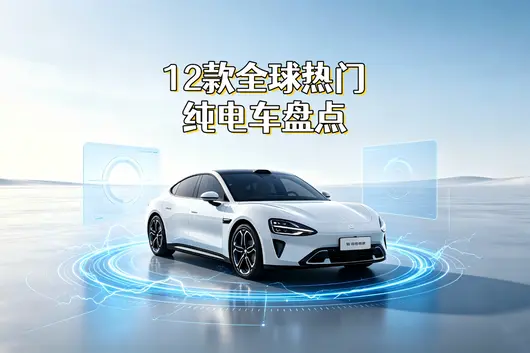
Combining 2026 global pure electric SUV pricing and delivery statistics from various regions, it can be seen that in overseas developed areas with well-established charging infrastructure, high fuel usage costs, and continuous implementation of new energy-related supporting policies, multiple models with higher terminal pricing have all seen year-on-year sales growth. The price level of the vehicle model cannot directly determine the delivery scale of the regional market.
1. Mature Markets in Europe and America: High-Priced Models Continue to Scale, Usage Ecosystem Affects Market Performance
Tesla Model Y is a mid-size 5-seater pure electric SUV. It adopts the brand's exclusive pure electric architecture, providing rear-wheel drive and all-wheel drive power versions. CLTC range interval 554-821km. European region adopts WLTP cycle for range calibration. It has multiple full vehicle production bases overseas. German market equivalent to 310,000 RMB, Norway equivalent to 280,000 RMB, UK equivalent to 380,000 RMB. First 5 months of 2026, German market sales volume for this model changed year-on-year by 173%, Norway cumulative registration 8,845 units, UK registration volume exceeded 6,000 units. Nordic region public charging facility coverage is relatively wide, pure electric models maintain a stable proportion in the local family car selection list. Users purchasing cars comprehensively reference multiple dimensions such as usage costs, charging conditions, and vehicle prices.

Skoda Elroq is developed based on the Volkswagen MEB platform, positioned as a compact home pure electric SUV. It provides 55kWh, 63kWh, 82kWh three battery configurations, optional rear-wheel drive, all-wheel drive power formats. WLTP cycle maximum range 581km, body dimensions adapt to multi-member family travel needs. Germany is the main sales area for this model. January to May cumulative registration 16,800 units, year-on-year change amplitude 142%, it has multiple times topped the German pure electric car monthly sales list. The model's German market pricing equivalent to 293,000 RMB, Spain market pricing relatively lower by nearly 90,000 RMB. Product positioning and Tesla, Chinese brand mid-size pure electric SUVs are in the same price range.

Volkswagen ID.4 is also built relying on the MEB modular pure electric platform, supports rear-wheel drive, all-wheel drive version selection. WLTP range standard adapts to European all-region travel scenarios. Germany is still the model's largest single global market. First 5 months registration 8,685 units, year-on-year change amplitude -31.7%. UK, Norway, Denmark, Sweden and other traditional sales regions simultaneously saw sales declines. Australia, Spain, Netherlands regions delivery volume increased year-on-year. Australia market increase 455.7%. Previously the local market was long subject to full vehicle production capacity, export quota restrictions, consumer demand existed backlog. Currently this model faces Chinese brand pure electric models market diversion on one hand, on the other hand affected by brand internal fuel, hybrid models user diversion.

Kia EV3 small pure electric SUV based on E-GMP derived 400V platform. Equipped with 58.3kWh standard range, 81.4kWh long range two sets of batteries. Full series front-engine front-wheel drive layout. Long range version WLTP range max 604km. Regional market sales trends show obvious distinctions. Germany, UK market monthly registration volume maintained flat interval, new energy subsidy withdrawal, regional high interest rate environment restricted sales growth space. Netherlands, Norway, Denmark Nordic region market registration volume declined, early phase subsidies released market demand ahead of schedule, after policy tightening market entered adjustment cycle. Australia electrification process continues steadily, small SUV category fits local consumption choices, registration volume steadily increased. Spain market entry terminal price approx 20,000 Euros, relying on pricing adjustments to gain market share. Latin America, Middle East markets affected by import/export tariffs, exchange rate fluctuations, model pricing and monthly delivery volume fluctuation amplitude large. Regional market trends and local new energy support policies high correlation.
Leapmotor, XPeng, Deepal, Chery subsidiaries multiple models completed European multiple country channel layout. Each region terminal pricing generally higher than domestic market guide price. Products equipped with 800V high voltage fast charging, intelligent driving hardware etc. configurations as regional market sales support conditions.
2. Chinese Brands European Layout: Pricing Higher Than Domestic, Relying on Product Parameters to Expand Channels
Leapmotor B10 EV compact pure electric SUV equipped with brand exclusive B platform. Provides 800V silicon carbide high voltage architecture option. Equipped with 69.7kWh Lithium Iron Phosphate battery. CLTC cycle max range 610km. Rear-motor rear-wheel drive layout. Wheelbase 2735mm. 30%-80% power fast charge time approx 16 minutes. German market equivalent to 235,000 RMB, first 5 months registration 1,530 units. UK market equivalent to 285,000 RMB, same period registration 1,423 units. Product simultaneously launched European multiple country sales channels.

XPeng G6 mid-size pure electric SUV equipped with full-domain 800V high voltage platform. Divided into rear-wheel drive, all-wheel drive versions. CLTC cycle range max 700km and above. Sales channels cover Germany, Spain, UK, Ireland. First 5 months of 2026, Germany sales year-on-year change 263%, Spain year-on-year change 430%, UK year-on-year change 1289%, Ireland year-on-year change 333%. German market equivalent to 341,000 RMB, UK equivalent to 362,000 RMB, Switzerland market starting price exceeded 370,000 RMB. Overseas terminal prices higher than domestic. Brand continuously expands European offline stores and maintenance networks.

Deepal S07 mid-size pure electric SUV provides pure electric, extended range two power forms. Overseas each region pricing benchmark same-level mid-size pure electric SUV. UK 39,990 GBP, Australia 47,990 AUD, Spain 39,999 EUR, Italy entry price close to 45,000 EUR. Price located at local mid-size new energy passenger car high-middle configuration interval. Australia market sales volume year-on-year growth five times. Thailand as early overseas area, current period sales year-on-year change -26.8%. Regional similar model launch quantity increase, industry competition intensity rise.

Omoda 5 EV compact pure electric SUV is Chery global model. Body dimensions adapt to city commute use. Providing standard range version. First 5 months of 2026 overseas total registration 4,675 units. UK single market registration 2,340 units, accounting for overseas total sales near 50%. Year-on-year change 61.9%. UK market equivalent to RMB nearly 300,000. Compare Indonesia, Thailand market price difference approx 150,000 RMB. UK has no EU regional tariffs, belongs to Chery key channel construction regions. Current sales sources concentrated in UK. Germany, Spain channels in expansion stage.
Australia implements electric car FBT tax reduction, salary package car purchase etc. policies. Regional fuel prices long-term exist fluctuations. Usage cost differences affect user selection tendencies. Multiple models local market registration volume appear multiple times year-on-year change. Become each brand overseas main incremental regions.
3. Australia Market Full Bloom: Multiple Models Synchronous Growth, Policy Adjustments Affect Demand Release
BYD Sealion 7 EV mid-size pure electric SUV equipped with second generation Blade Battery. Australia is this model's global largest overseas market. First 5 months registration 7,786 units. Year-on-year change 297%. Local starting price equivalent to 260,000 RMB. Vehicle range, configuration, warranty standards and Tesla Model Y form same interval comparison. UK market current period sales year-on-year change 888%. Thailand, Indonesia etc. Southeast Asia regions registration volume appeared decline. Each brand overseas resource placement focus gradually toward Australia, Europe regions tilting.

Zeekr 7X mid-size pure electric SUV full series equipped with 800V high voltage platform. Equipped with 75kWh, 103kWh two sets of batteries. Divided into rear-wheel drive, dual-motor all-wheel drive versions. WLTP cycle range interval 480-615km. Australia is this model's overseas registration volume highest market. First 5 months registration 3,664 units. Norway, Sweden, Denmark electrification penetration rate high. Sales volume year-on-year change amplitude large. But overall registration volume limited. Brazil, Switzerland, Colombia market terminal pricing equivalent to 500,000 to 600,000 RMB. Benchmark local luxury fuel SUV. Current period market registration scale low. Belongs to brand overseas high-end market test placement.

Geely EX5 compact pure electric SUV adopts front-engine front-wheel drive layout. Range parameters adapt to city commute scenarios. Entered Australia sales channels in 2025. First 5 months of 2026 local registration 4,453 units. Year-on-year change 335%. Starting price equivalent to 200,000 RMB. Relying on local electric car tax fee reduction policies, this model annual registration volume exceeds multiple overseas traditional automakers launched pure electric products.
Southeast Asia region user car purchase budget interval low. Model entry pricing, local new energy industry support policies jointly catalyze regional single market hot models. Market operation logic and Europe, Australia high-price markets exist obvious distinctions.
4. Southeast Asia Differentiated Track: Affordable Models Regional Proportion High, Industrial Policies Continuously Landing
Jaecoo E5 compact pure electric SUV equipped with 61.1kWh Lithium Iron Phosphate battery. Front-engine single motor drive. WLTP cycle range approx 400km. Adapt to Southeast Asia city commuter scenarios. Indonesia is this model's core sales region. First 5 months cumulative registration nearly 14,000 units. Regional pure electric model registration volume ranked first. Total registration volume is twice the second-ranked model's. Local starting price equivalent to 118,000 RMB. Indonesia implements electric car tax burden reduction, car purchase incentives etc. policies. Continuously introduce Chinese automakers local plant building. New energy industry supporting measures continuously updated. This model simultaneously launched Thailand, Australia, UK channels. Each region registration volume lower than Indonesia.
SummaryCombining 12 models 2026 first 5 months each region pricing, registration data and vehicle basic parameters can draw uniform market characteristics: Charging supporting complete, fuel usage cost high, new energy supporting policies stable landing developed regions. Even if model terminal pricing high, registration volume can still maintain year-on-year increase. Southeast Asia affordable models only adapt local consumption budget interval, difficult to complete cross-region market synchronous scaling.
12 models cover small, compact, mid-size pure electric SUV sub-categories. Respectively equipped MEB, E-GMP, 800V high voltage, brand exclusive pure electric architecture etc. technical platforms. On range, body dimensions, product positioning form distinctions. Overseas pure electric model registration volume not decided by single price factor. Regional charging supporting, energy prices, support policies, vehicle hardware parameters all will produce effect on market performance. Current stage major automakers overseas channel expansion, model placement planning. More tilt toward Europe, Australia etc. electrification mature markets.

Author | Janson
Editor | Zhihao
For every 10 electric vehicles sold globally, 6 come from Chinese automakers; for every 4 electric vehicles produced globally, 3 are made in China.
Che Dong Xi news on May 25, the International Energy Agency recently released the 'Global EV Outlook 2026 (2026 Global Electric Vehicle Outlook)' report, analyzing the current development status of the global electric vehicle industry from an international organization's perspective.

▲ 2026 Global Electric Vehicle Outlook Report
The report shows that Chinese automakers supplied 60% of global electric vehicle sales in 2025; of the nearly 22 million electric vehicles produced globally, nearly 75% were completed in China. In other words, China is not only the world's largest electric vehicle consumption market but is also becoming the most important electric vehicle supply source.
More critically, exports are becoming a new variable in China's electric vehicle industry.
The report points out that China's electric vehicle production exceeded domestic demand in 2025, making exports an important incremental source. China's electric vehicle exports exceeded 2.5 million units that year, doubling year-on-year; entering the first quarter of 2026, despite domestic sales facing temporary pressure, China's electric vehicle exports doubled year-on-year again.
From the perspective of export destinations, Chinese electric vehicles are moving from a single market to a diversified market. After Europe, Southeast Asia, the Middle East, and Latin America are becoming new growth areas, with Southeast Asia growing by about 130% year-on-year, the Middle East by about 60%, and Latin America by about 55%.
This means Chinese electric vehicles going global is no longer a trial run by a few companies, but is becoming an important growth direction for the entire industry.

▲ Global Electric Vehicle Sales and Sales Share in Selected Regions from 2020-2025
Worth mentioning, China is not a member state of the International Energy Agency, but acts as an associate state, directly becoming the absolute protagonist in the report. The word "China" appears 486 times in this report, far higher than "Europe" (220 times), "United States" (204 times), "India" (92 times), and "Japan" (69 times).
Che Dong Xi carefully deconstructed this report. After interpreting it from the dimensions of market, policy, and outlook, it was found that China's status in the global electric vehicle field is very obvious, and the actions of China's new energy vehicle industry are also influencing the development of the global industry.
01.
From the World's Largest Demand Market
To the World's Largest Supply Source
The report from the International Energy Agency shows that in terms of production volume, sales volume, or export scale, China is one of the most important markets in the current global electric vehicle industry.
This change is first reflected at the level of complete vehicle supply.
The report shows that global electric vehicle production approached 22 million units in 2025, with nearly 75% produced in China. In other words, for every 4 electric vehicles produced globally, about 3 come from China's manufacturing system. Meanwhile, China's electric vehicle production has exceeded domestic demand, making exports an important incremental source.

▲ Electric Vehicle Production, Demand, and Net Trade in Major Markets
The report points out that China's electric vehicle exports exceeded 2.5 million units in 2025, doubling year-on-year; entering the first quarter of 2026, despite domestic sales facing temporary pressure, China's electric vehicle exports doubled year-on-year again.
This means exports are gradually becoming an important variable for complete vehicle enterprises to balance domestic fluctuations, expand profit space, and participate in global competition.

▲ Overseas Sales, Export Value, and Brand Distribution of Chinese-Made Electric Vehicles
Of course, the rapid growth of China's electric vehicle exports cannot be simply understood as a one-sided pull by overseas demand. More accurately, it is the result of the combined effect of domestic supply capacity, price competition, manufacturing scale, and global demand.
Intensified domestic market competition and pressure on profit margins have driven enterprises to actively seek overseas increments; while the advantages of Chinese automakers in model richness, cost control, and delivery capability have also improved their efficiency in entering overseas markets.

▲ Electric Vehicle Registrations and Penetration Rate by Major Countries/Regions
Currently, Chinese electric vehicles have formed a more systematic penetration in multiple emerging markets.
In markets outside Europe and the US, imported electric vehicles from China accounted for 55% of 2025 electric vehicle sales, whereas five years ago this proportion was less than 5%.
1. European Market: Still an Important Destination for Going Global
From the perspective of export destinations, Europe remains an important market for Chinese electric vehicles.
In 2025, China exported about 940,000 electric vehicles to Europe, a year-on-year increase of nearly 50%; but Europe's share in China's electric vehicle exports has dropped to about 40%. Meanwhile, the growth center is beginning to spread to more emerging markets.

▲ Proportion of Chinese Electric Vehicle Imports in Emerging Markets
2. Southeast Asian Market: Strong Influence of Chinese Brands
In 2025, Southeast Asian electric vehicle sales doubled year-on-year, exceeding 500,000 units for the year, with electric vehicles accounting for nearly 20% of new car sales.
Among them, Thailand, Indonesia, and Vietnam are the main growth markets; although the Vietnamese market is mainly driven by the local company VinFast, in countries like Thailand, Indonesia, Malaysia, and the Philippines, the influence of Chinese manufacturing and Chinese brands is very prominent.
In Thailand, electric vehicle sales reached about 140,000 units in 2025, accounting for nearly one-quarter of new car sales, and Chinese-made electric vehicles still accounted for about three-quarters of the local electric vehicle market; in Indonesia, 2025 electric vehicle sales doubled year-on-year, with about 75% coming from Chinese imports.
In Malaysia, Chinese imported electric vehicles once accounted for about 80% of the market; in the Philippines, Chinese imported models, especially those related to BYD, constitute an important part of local electric vehicle sales.

▲ Chinese Overseas Electric Vehicle Manufacturing Capacity and Southeast Asian Distribution
3. Latin American Market: Brazil and Mexico are the Mainstays
The Latin American market also shows a similar trend. In 2025, Latin American electric vehicle sales grew by 75%, with Brazil and Mexico contributing over 75% of the regional increment.
Among them, Brazil's 2025 electric vehicle sales reached 180,000 units, accounting for about 9% of new car sales, with nearly 85% from Chinese manufacturing; Mexico's 2025 electric vehicle sales tripled year-on-year, with Chinese imported models accounting for about 85% of local electric vehicle sales, higher than the about 60% in 2024.

▲ Electric Vehicle Sales Share in Emerging Markets by Place of Production
However, China's electric vehicle going global is not without challenges. As Chinese brands' market share overseas increases, some countries begin to raise localization requirements, adjust import tariffs, or promote the construction of local manufacturing capabilities.
The report also mentions that China's electric vehicle exports in 2026 may face uncertainties such as inventory backlog, export management, and tightening of overseas policies.
From a medium to long-term perspective, China's core position in the global electric vehicle industry will continue.
The report predicts that China will still be the world's largest electric vehicle producer in 2035, accounting for about 60% of global electric vehicle production; the export scale is expected to continue growing, continuing to be an important supply force for the global electric vehicle market.

▲ Outlook on China's Electric Vehicle Sales Share
From a long-term perspective, China will still be the most critical market, manufacturing base, and export center in the global electric vehicle industry chain.
02.
Automakers and Industry Chain All Join In
Competition Pushed Towards Overseas Markets
Chinese electric vehicles forming today's scale in the global market is not solely driven by a single enterprise, a single hit model, or a specific subsidy policy, but is the result of long-term accumulation of an industry system.
From the perspective of the industry chain, enough automakers participate, the industry chain is complete enough, product prices are competitive enough, and finally pushed to overseas markets by fierce competition.
First, China's electric vehicle industry developed fast enough, with enough participants. The IEA report shows that the Chinese market had nearly 700 available electric vehicle models in 2025, the only major car market where the number of electric vehicle models exceeds fuel vehicle models, with electric vehicle models outnumbering traditional models by about 60%.
This shows that the Chinese electric vehicle market is no longer a testing ground for a few brands, but a mature market where almost all mainstream automakers are deeply involved.

▲ Breakdown of Electric Vehicle Price Changes in China, Germany, and US
However, the premise of export growth is still that China possesses a sufficiently large domestic market as a basic board.
In 2025, China's electric vehicle sales exceeded 13 million units, accounting for about 60% of global sales; in new car sales in China, electric vehicles accounted for nearly 55%, becoming one of the mainstream categories of China's car market.
Traditional automakers, new force brands, new entrants with tech company backgrounds, and commercial vehicle enterprises are all launching products at different price bands and in segmented markets. The report also mentions that the Chinese market had over 1,100 models in 2025, with the number of electric vehicle models increasing by about 25% year-on-year, and large cars and SUVs accounting for over 60% of electric vehicle sales.

▲ Distribution of Model Price Intervals in Major Markets
The result of supply density is that the consumer choice space is quickly opened. Whether it's entry-level small cars, family SUVs, or plug-in hybrids, pure electric models, the Chinese market can provide a large number of choices. For automakers, this also means the speed of product iteration must accelerate, with configuration, price, channels, and brands all having to participate in competition.
Compared to markets like Europe and the US which still face issues of insufficient model choice and price intervals being relatively high, China's electric vehicle market entered the high-density competition stage earlier.

▲ Price Premium of Electric Vehicles vs. Fuel Vehicles in Emerging Markets
Second, China possesses a more complete electric vehicle industry chain, especially forming a global advantage in the battery link.
The report shows that in 2025, China's battery cell production accounted for over 80% of the global total, with an even higher proportion in key links such as cathode and anode materials; from cells and materials to complete vehicle integration and charging equipment, China has formed a highly localized and scaled supply system.
Batteries are one of the most expensive core components of electric vehicles. China's advantage in the battery industry directly determines the scope for reducing complete vehicle costs.
The report mentions that Chinese battery pack prices are about 30% lower than North America and about 35% lower than Europe; meanwhile, Lithium Iron Phosphate batteries are widely applied in China, further lowering the cost threshold for mainstream and entry-level models.
This industry chain integrity is not only reflected in "being able to make it", but more in "making it fast, lowering costs, and supplying enough".

▲ Public Charging Pile Quantity and Fast/Slow Charging Structure in China, Europe, and US
When battery costs decline, material supply is stable, and the parts system is mature, automakers can launch new models faster and can also transmit cost advantages to terminal prices faster.
Third, Chinese-made electric vehicles have formed a clear cost advantage and are starting to compete directly with fuel vehicles. The report shows that in 2025, about 70% of pure electric vehicles in China were sold at prices lower than same-class fuel vehicles; in the small car market, electric vehicles have basically replaced fuel vehicles.
Meanwhile, the average price of China's pure electric vehicles dropped by over 10% in 2025, with about 30% of pure electric model entry prices below $20,000 (approximately 136,400 RMB); in the SUV sub-market, pure electric SUVs achieved price parity with same-class fuel SUVs for the first time.
Finally, overly sufficient competition has also pushed Chinese automakers overseas. With more models, prices continuing to drop, and supply chain efficiency constantly improving, the scale advantage of China's electric vehicle industry has been brought about, but also brought profit margin pressure.
The report clearly mentions that fierce domestic competition and pressure on profit margins are one of the important reasons driving Chinese automakers to expand overseas sales; by 2025, China's electric vehicle production has exceeded domestic demand, with exports exceeding 2.5 million units, doubling year-on-year, and exports in the first quarter of 2026 doubling year-on-year again.
From the results, the overseas market is becoming a new direction for the release of China's electric vehicle industry capabilities.

▲ Outlook on Global Electric Vehicle Fleet
Therefore, Chinese electric vehicles going global is not simply "exporting because they can't sell domestically anymore", but the result of these capabilities overflowing to overseas markets after domestic high-intensity competition screens out cost, product, supply chain, and delivery capabilities.
The domestic market is responsible for "practicing capabilities", while the overseas market becomes a new growth space. The fundamental reason why Chinese electric vehicles can rapidly expand their presence in the global market is precisely that this industry system has formed a self-reinforcing closed loop.
03.
Conclusion: Chinese Automakers Going Global Continue to Accelerate
Entering 2026, China's new energy vehicle exports continue to accelerate. Data from the China Association of Automobile Manufacturers shows that from January to April 2026, China's new energy vehicles accumulated exports of 1.384 million units, a year-on-year increase of 1.2 times; during the same period, China's complete vehicles accumulated exports of 3.127 million units, a year-on-year increase of 61.5%.
At the automaker level, the overseas market has become an important increment for top domestic brands. From January to April 2026, Chery accumulated exports of 570,900 units, a year-on-year increase of 66.3%; BYD's overseas cumulative sales exceeded 450,000 units, and adjusted its full-year overseas target from 1.3 million units up to 1.5 million units.
Automakers such as Geely, Changan, and Great Wall also maintained growth in the overseas market, with Geely achieving 286,200 units in overseas sales from January to April, Changan 285,700 units, and Great Wall 180,600 units.
It is not difficult to see that the overseas market is becoming a new growth space for Chinese automakers, and Chinese automakers are also playing an increasingly important supply role in the global electric vehicle market.
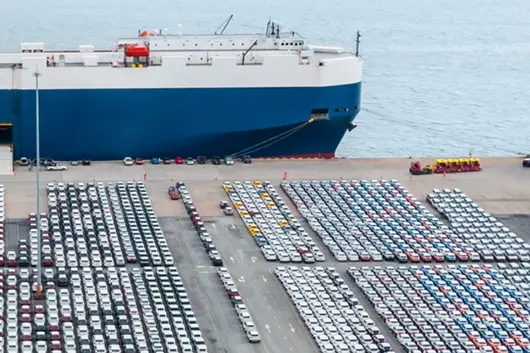


China is the largest electric vehicle market. For every ten electric vehicles sold globally, six come from China. China is also the largest electric vehicle manufacturing hub, accounting for nearly 75% of 2025 electric vehicle production. The International Energy Agency wrote in the "2026 Global Electric Vehicle Outlook" that global electric vehicle sales are expected to reach 23.4 million units in 2026, accounting for nearly 30% of global car sales, with China's share reaching 61%.
According to the "2026 Global Electric Vehicle Outlook" released by the International Energy Agency on May 20, 2025 global electric vehicle sales (including BEVs and PHEVs) increased by 20% year-on-year, exceeding 20 million units. This means one in four new cars sold globally is an electric vehicle, and electric vehicle sales hit a record high in nearly 100 countries.
On the sales side, China's electric vehicle sales exceeded 13 million units, maintaining its position as the world's largest electric vehicle market. On the production side, Chinese automakers supplied 60% of global electric vehicle sales. Chinese electric vehicle exports doubled to a record high of over 2.5 million units.

In electric vehicles sold in other parts of the world (excluding China, US, and EU major markets), 55% were imported from China, whereas five years ago this figure was less than 5%. China still holds a dominant position in the electric vehicle supply chain, accounting for over 80% of battery production by 2025, and an even higher share in the production of key electric vehicle battery materials.
Electric vehicle growth in the European market was also significant, with sales increasing by over 30% in 2025 to 4.2 million units, accounting for 28% of all new car sales. Among them, Germany is the largest electric vehicle market in Europe. Driven by policy, sales reached 850,000 units in 2025, up 50% year-on-year, with a market penetration rate of 30%. Norway is the market with the highest electric vehicle penetration rate globally, with 97% of new car sales being electric vehicles in 2025. Turkey is the market with the fastest electric vehicle growth in Europe; sales more than doubled compared to 2024, reaching nearly 240,000 units.
Due to reduced electric vehicle incentives, electric vehicle sales in the US market dropped significantly, reaching approximately 1.5 million units in 2025, slightly lower than 2024.
Outside the major markets of China, US, and Europe, electric vehicle sales reached 2 million units in 2025, up nearly 50% from the same period last year. The International Energy Agency pointed out that this nearly 50% growth was mainly attributed to sales growth in emerging markets and developing economies (EMDEs) excluding China.

The vast majority of electric vehicle supply in emerging markets and developing economies (EMDEs) excluding China comes from China. For example, three-quarters of electric vehicle sales in the Thailand market in 2025 were Chinese brands, and Chinese imported electric vehicles accounted for 80% of the Malaysia market. Additionally, in Brazil, Mexico, and the Central Asia region, the share of Chinese electric vehicles exceeded 85%.
The "2026 Global Electric Vehicle Outlook" forecasts trends for the global electric vehicle market in 2026 and 2035. Fatih Birol, Executive Director of the International Energy Agency, stated that the decline in battery prices and potential policy responses to the current global energy crisis will provide further momentum for the electric vehicle market.

It is expected that global electric vehicle sales will reach 23.4 million units in 2026, accounting for nearly 30% of global car sales. Among them, China's sales are expected to reach 14.3 million units, up 8.33% year-on-year; Europe's sales are expected to reach 5 million units, up 19.05% year-on-year; US sales are expected to be 1.2 million units, down 20% year-on-year; and sales in other countries and regions are 2.9 million units, up 45% year-on-year. Regarding electric vehicle products, comprehensive automaker plans expect the number of global electric vehicle models in 2026 to break through 1,100, an increase of about 15%. Pure electric vehicle models account for about 65% of the total electric vehicle models.
With the accumulation of overseas inventory, Chinese electric vehicle exports are expected to face headwinds in 2026. According to 2025 data from the China Association of Automobile Manufacturers, electric vehicle exports exceeded overseas sales by more than 25%, indicating a significant increase in overseas inventory, which may limit additional shipment volumes. At the same time, rapidly changing trade policies may also be another obstacle to Chinese electric vehicle exports in 2026.
The "2026 Global Electric Vehicle Outlook" emphasizes that despite the impact of overseas inventory growth and trade policy shifts on Chinese electric vehicle exports, the momentum of Chinese electric vehicle exports will continue. The overseas sales targets of China's top ten automakers will exceed 7 million, approaching China's total automobile export volume in 2025.
With electric vehicles becoming increasingly cost-competitive in key markets, even without new incentive policies, by 2035 the global stock of electric vehicles (excluding two- and three-wheelers) is expected to surge from the current nearly 80 million to 510 million, with a market penetration rate reaching around 50%, and China and European market penetration rates reaching 90%. The International Energy Agency emphasized that by 2035, China will still be the world's largest electric vehicle producer, and more than one-quarter (6 million units) of electric vehicles sold in developed economies will be made in China.
(Head image generated by AI)

Chinese car companies going global are becoming increasingly powerful; recently even Singapore, this "classic petrol paradise", has been captured by Chinese cars in the last two years.
In Q1 2026, the share of pure EVs in new car sales in Singapore surged to 57.6%. This is the first time in history that pure EVs sold more than the combined total of petrol cars and hybrids.
What does this mean? Now when people buy cars, EVs have become the default first choice.
This shift is directly reflected in the sales rankings; I organized a table to make it clearer:
 From this list, you can most intuitively feel the impact of Chinese brands.
In the top 10, Chinese brands took four seats. Besides BYD at the top, Chery, GAC, and MG broke into the top 10 for the first time collectively, directly squeezing out several old rivals from Korean and Japanese series.
What's more terrifying is the overall momentum. In January 2023, the market share of Chinese brands in Singapore was a pitiful 3.3%; by February 2026, this figure surged to 39.5%.
A 10-fold leap over three years, this is no longer "grabbing a piece of cake", this is simply "making a whole new table of dishes".
And this is not the end. By April, the monthly market share of Chinese brands even surged to 48.5%, just a step away from half the market.
Behind this is the collective charge of more than ten brands such as Zeekr, XPeng, Dongfeng, and Leapmotor. It can be said that in Singapore, buying Chinese cars has become a very mainstream, even fashionable thing.
So, do you know which Chinese car models Singaporeans love to buy the most?
I did some research; the following models are currently the undisputed "stars":
 BYD Atto 3: This is BYD's absolute mainstay. It can be said that it alone drove the entire EV trend in Singapore. It was the sales champion for 14 consecutive months in Singapore; just knowing that tells you how deeply rooted it is locally.
Chery Omoda E5: This is Chery's "secret weapon" for breaking records. From selling 90 units a month to 600 units in a quarter, it relies on this precisely positioned electric SUV.
GAC Aion Y Plus: GAC's sales are almost entirely supported by it. Its advantage is: competitive price, and it perfectly fits the standard for Singapore's Class A Certificate of Entitlement, immediately lowering the car purchasing threshold.
MG 4 Electric: This hatchback electric small car sold very well in Europe, and it is the same in Singapore.
It looks stylish, handles flexibly, and has a fair price, making it especially popular among young people.
Honestly, the explosion of Chinese brands in Singapore absolutely did not rely on the old impression of "dumping low prices".
First, they fully mastered the policy. The Singapore government offers up to 30,000 SGD in subsidies for EVs, but levies a surcharge of up to 35,000 SGD on high-emission vehicles.
With this inflow and outflow, it is clear who is more cost-effective. Chinese brands are also smart, focusing on models that meet the Class A Certificate of Entitlement standards, directly saving users a large sum of money.
Second, the product power has truly improved. In a mature market like the Lion City, consumers are very shrewd. Now Chinese EVs, range anxiety is basically solved, and charging networks are expanding rapidly. Most importantly, for the same money, the infotainment system, intelligent assisted driving, and that smooth large screen you get offer an experience far superior to Japanese or even German cars at the same price.
Finally, it is a shift from "single combat" to "group fight". Previously relying on just BYD, now Chery, GAC, Zeekr are all here, forming a brand matrix.
When everyone goes into the store and sees, everywhere are Chinese cars, this "momentum" rises. On the contrary, old brands like Mercedes-Benz and BMW, although also good cars, clearly lagged half a beat in reaction speed to electrification. Sales dropped nearly 40% year-on-year, this is the most direct price.
Looking forward, although the Singapore market is not huge, only over 50,000 vehicles a year, it is the benchmark for Southeast Asia.
Being able to stand firm in Singapore is like holding a "passport" to the global high-end market. For Chinese car brands, this is not just selling cars, but also proving brand value.
The upcoming battle is about competing in service, charging ecosystem, and user reputation. However, from what we see now, Chinese brands have already run far ahead; traditional car companies really need to step up their game.
© 2024 Bitauto.com. All Rights Reserved.
Bitauto (www.yiche.com and www.bitauto.com) is one of the most visited automotive websites in China. We provide detailed info on Chinese car brands available in your area. Please note that the information provided on this website is based on publicly available data and is for reference only. It may not be fully updated or accurate at all times.

Help us improve our website


