

HomeElectric

Search History
Popular Searches
Dealer Login / Sign Up

As the competition in the global new energy vehicle sector extends from consumer markets to official and public domains, BYD is continuously expanding its influence in the new energy official vehicle track with a posture of "breakthroughs on both domestic and international lines". In the first half of 2026, BYD's overseas passenger car and pickup sales approached 790,000 units, up 67.9% year-on-year, with business covering over 120 countries and regions worldwide, and topping the new energy vehicle brand sales chart in core markets such as the UK, Brazil, and Thailand. Relying on this global baseline, BYD new energy official vehicles have successively entered the overseas roster, forming a clear path of "overseas benchmark leading, domestic continuous expansion".

National Level Recognition Implemented: Uzbekistan "Friendship Medal" Becomes Overseas Benchmark
Recently, President Mirziyoyev of the Republic of Uzbekistan signed a presidential decree, awarding the "Friendship Medal" to the BYD team. This is another high-level endorsement given by the country's official side to BYD following the production launch of the local new energy factory and the selection of BYD models for official vehicles at the Presidential Office. For Chinese new energy vehicle brands accelerating globalization, this is not only an honor but also means recognition by the overseas government affairs system regarding products, services, and localization contributions.

Mass Replacement of Overseas Government Fleets: From Pakistan to Cape Verde, Hungary, Austria
Uzbekistan is not an isolated case. Nearly 100 BYD electric official vehicles in Pakistan have been mass-delivered and put into use. This is Pakistan's first large-scale procurement of new energy official vehicles, making the country a milestone market for BYD's overseas police vehicle cooperation. The Cape Verde government official fleet has comprehensively switched to BYD; Hungary, Austria, and other countries have incorporated BYD models into official vehicle systems such as diplomatic reception and police patrols. The layout of overseas official vehicles is penetrating from single-point benchmarks to wider regions.

Police Scene Scaling: Philippines, Mexican Police Forces Equip Successively
In the professional niche field of police vehicles, BYD's overseas layout is further accelerated. In September, BYD delivered a batch of Dolphin police cars to the Philippines police; recently, dozens of Destroyer 05 entered the Mexican police force as police cars. So far, BYD has delivered multiple models including BYD SHARK pickup, Seal, Yuan UP, Seagull, etc. to police departments in multiple places in Mexico, covering diverse duty needs. Police vehicles often face high-load conditions such as daily patrols, high-speed pursuits, and rough road conditions, which is a comprehensive test of the three-electric system, chassis, and active/passive safety. Relying on professional modification capabilities and mature technology platforms, BYD has verified reliability and durability in actual combat in multiple places, promoting new energy police vehicles from demonstration operations to scaled and normalized application.

Domestic Government Procurement Continues to Lead: Securing Mass Orders in Multiple Places After Exceeding 22% Share
In the domestic market, BYD also ranks firmly at the top of new energy official vehicle procurement. Announcements from the China Government Procurement Network show that since the second half of the year, government agencies in many places across the country have completed mass procurement of BYD official vehicles. This is another affirmation given by the domestic government affairs market after BYD retained the top sales position in domestic new energy official vehicle government procurement with a market share exceeding 22% in the first half of the year. In the police field, police vehicles such as Fang Cheng Bao Ti 7 have also completed mass delivery in many places across the country. From mass procurement by the capital's agencies to the gradual perfection of multiple police vehicle matrices in many places, BYD's coverage breadth and depth in the domestic government affairs market continue to improve.

All-Scenario, All-Category: Systematic Competitiveness Under Complex Government Affairs Needs
Vehicle needs for government and public institutions are highly complex, including grand and atmospheric high-specification administrative reception, as well as daily security patrols, and even potentially facing special scenarios such as field emergency rescue. BYD has built a full-category product matrix spanning sedans, SUVs, hard-core off-road vehicles to pickups, and adopts an electric/hybrid dual-line layout, equipped with 2nd Generation Blade Battery and fast-charging technology, DM-i hybrid, and God's Eye assisted driving technology, adaptable to diverse scenarios such as reception, inspection, patrol, law enforcement, and emergency response. From high-end comfortable riding to hard-core professional vehicles, its systematic advantages are rapidly responding to complex government affairs needs.

Global Market Support: From Official Vehicle First Choice to Chinese Cars Recognized Globally
From being dominated by joint venture brands in the past to becoming an important Chinese option for global government electricization, BYD is accelerating the global government affairs layout on this high-end track that tests the comprehensive strength of automotive brands with hard technology power and brand credibility. BYD has consecutive four years retained the sales champion in domestic new energy vehicles; overseas business covers more than 120 countries and regions worldwide, topping the new energy vehicle brand sales chart in core markets such as the UK, Brazil, and Thailand. The breakthroughs on both domestic and overseas sides of the official vehicle market are not only footnotes to China's intelligent manufacturing strength but also provide a new Chinese solution for global official travel electricization.
With continuous deepening of overseas benchmark markets and steady release of domestic government procurement orders, BYD new energy official vehicles are driving into the center of the global government vehicle stage with a more complete product matrix and a more mature technology system.

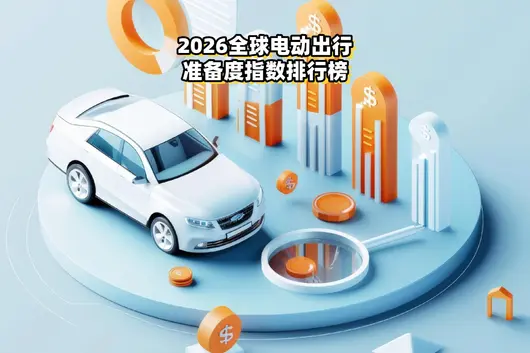
An organization released the 2026 Global Electric Mobility Readiness Index, showcasing new evaluation criteria for the electrification track. The competition in the industry is no longer about automotive manufacturers' mass production capabilities; the complete electric mobility ecosystem built by various regions is the key to determining the market development level.

This study covers 31 countries and regions globally, completing a quantitative evaluation around five dimensions: macro environment, market landscape, consumer acceptance, charging infrastructure, and vehicle ownership costs. The list uses 100 points as the baseline; reaching the score means the market competition level of electric vehicles and fuel vehicles is equal; a score exceeding 100 points represents that the electric mobility ecosystem is generally superior to the traditional fuel vehicle system.
The list results overturned the cognition of the traditional automotive market landscape. China ranked second globally with 106 points, and Norway with 103 points, both being the only two markets breaking the hundred-point baseline. Arthur D. Little Automotive Business Manager Nikola Borgo stated that the electrification advantages in China and Norway have moved beyond simple product competition, forming a systematic advantage in market structure, supporting systems, and consumption levels.

Singapore with 96 points and the Netherlands with 90 points form the first echelon, followed by Western European markets such as France, Germany, and the UK. These regions have well-perfected supporting foundations, and high vehicle purchase costs are the main development constraints.
Do Traditional Powers Fall into the Middle and Lower Ranks of Electrification?What makes this list most valuable for industry reference is the ranking performance of traditional automotive powers. In the global automotive market, the US ranks 25th, and Japan, with a deep industrial foundation, ranks 23rd. Both major traditional strong markets are in the middle to lower ranks of the list. This result confirms the index logic: the scale accumulation of the traditional automotive industry cannot be directly converted into electrification development advantages; the electrification track competes on the perfection of the market ecosystem.

According to research summaries, the global top electrification markets have formed three differentiated development paths. China leverages complete industrial clusters, huge market scale, and perfect charging systems to form synergies. Through scale effects, it reduces vehicle usage and purchase costs, building a sustainable electric market cycle.
Norway focuses on consumer-side incentives, relying on taxes and usage policies to guide users to choose electric vehicle models independently, with the market electrification rate remaining high for a long time. The Netherlands, relying on high urbanization rates and dense charging networks, has established a mature electric mobility model in the urban market. Although the three paths are different, all achieve steady implementation relying on a complete ecosystem.
Europe's Electrification Progresses SteadilyPreviously, the European electric vehicle market experienced phased sales pullbacks, triggering industry questioning of its electrification progress. This index points out that this is merely a slowdown in development rhythm, not a deviation in development direction; European electrification is still progressing steadily. High model prices, policy adjustments, and uneven model supply are the main drag factors, but they have not destroyed the overall ecosystem.

The German market is highly representative. After subsidy adjustments, sales briefly declined, but later achieved sales recovery relying on charging network expansion, new car launches, and usage tax optimization, with penetration rates continuously recovering. Currently, the electric vehicle market share in France has broken through 20%, and in the Netherlands, it reached 40.3%. The list also reveals a pattern: small, high-urbanization areas, relying on high-density infrastructure, perfect incentive policies, and high-quality energy structures, have higher electric mobility ecosystem operation efficiency.
The rankings of the US and Japan are behind, but the causes are completely different. US policy continuity is weak; federal tax credit standards tightened, infrastructure construction across states is uneven, consumer rights contract, continuously suppressing terminal demand. Japan adheres to a technology-neutral strategy, not solely tilting towards the pure electric track, reserving development space for hybrid and plug-in hybrid models, reserving buffers for domestic automaker transformation, which also directly leads to delayed progress in pure electric supporting ecosystem construction.
Emerging Markets RiseThe reconstruction of mature market rankings represents changes in industry stock, while the rapid growth of emerging markets determines the future increment of global electrification. The growth rate of electric penetration in multiple non-traditional automotive powers exceeds most European countries. Vietnam, Thailand, and Turkey electric vehicle penetration rates have reached 40%, 23%, and 22.3% respectively.

Purchase costs remain an obstacle to popularizing electric vehicles in these markets, allowing Chinese EV models with cost advantages to penetrate Southeast Asian and South American markets quickly. Meanwhile, local automakers such as Vietnam's VinFast and Turkey's Togg are also gradually rising. Currently, emerging markets are still in the early stage of development, the competitive landscape has not yet solidified, there is a sufficient market layout window period, continuously rewriting the regional market landscape long dominated by Japanese automakers.

Compared to the hardware and product capability differences often discussed in the industry, this index highlights the advantages of Chinese automakers: efficient R&D and market operation systems. The new model development cycle for domestic automakers is about 24 months, far shorter than the 48 months for European automakers, and they can quickly iterate user feedback and optimize product adaptability. The efficiency gap continuously reshapes industry competition logic. The current demand of European automakers has shifted from model layout to stable profitability of electric businesses. Renault's new Twingo adopting the "Designed in China, Produced in Europe" model is a typical case of leveraging domestic system advantages.
Ecological Capability Determines Long-Term RankingThis 2026 Global Electric Mobility Readiness Index reconstructs industry competition logic. In the electrification transition, whole vehicle manufacturing scale is no longer the evaluation standard; the complete ecosystem composed of charging infrastructure, policy systems, vehicle usage costs, and regulatory rules is the factor determining long-term market rankings.

Under the new system, advantages of traditional industrial powers like the US and Japan have faded, while markets with complete ecosystems like China and Norway remain firmly in the forefront. Competition in mature markets has already shifted from product availability to business profitability and system capability; competition in emerging markets no longer relies on brand accumulation but tests cost control and rapid iteration capabilities. For domestic automakers, the ecosystem advantages at this stage are not permanent barriers; how to continuously optimize systems and replicate models overseas is a long-term development topic.

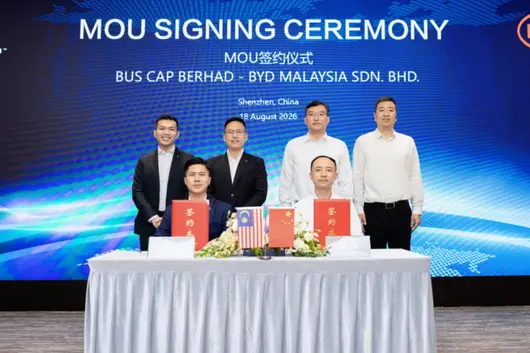
August 18, 2026, BYD Malaysia Sdn Bhd (abbreviated as "BYD Malaysia") and Malaysian bus manufacturer Bus Cap Berhad (abbreviated as "Bus Cap") signed an exclusive Memorandum of Understanding (MOU) in Shenzhen. The two parties will focus on local assembly and manufacturing of electric buses as the primary cooperation priority, jointly promoting strategic cooperation on new energy commercial vehicles in Southeast Asia with Malaysia as the base.

Bus Cap is a listed bus manufacturer in Malaysia. Its core subsidiary, SHL Coach, has been rooted in Perak since 1968 and possesses a mature local manufacturing foundation and market understanding. According to the MOU, the two parties plan to carry out cooperation around areas such as product localization, sales models, and after-sales services, and explore establishing electric bus local assembly and manufacturing facilities in Perak. BYD will leverage its leading new energy technologies, comprehensive solutions, and global marketing promotion experience, combined with Bus Cap's local industrial foundation, to lay a solid foundation for the overall development of electric buses in Malaysia.
BYD Group Vice President and General Manager of the 15th Division & Commercial Vehicle Division Luo Zhongliang stated: "This MOU is an important step for BYD Malaysia in evaluating local electric commercial vehicle opportunities. Based on this cooperation, BYD will combine localization needs to promote the R&D and production of various new energy buses, further explore various new energy commercial vehicle solutions, and continue to expand the Southeast Asian market with Malaysia as a fulcrum."
Huang Zongyang, Executive Director of Bus Cap, stated: "This MOU is an important step in Bus Cap's development journey after listing, and will establish a competitive foundation for electric bus assembly, manufacturing, and deployment in Malaysia."

This cooperation aligns with the Malaysia National Energy Transition Roadmap (NETR) and the direction of public transport electrification. The two parties will take this as a starting point to deepen cooperation in the field of new energy commercial vehicles and jointly explore broader Southeast Asian market opportunities.

Gasgoo Auto News: Driven by falling battery costs and the rise of Chinese automakers with economies of scale in emerging markets, the average price of electric vehicles globally last year fell below that of hybrid models.
Lithium-ion batteries account for 30%-40% of total vehicle costs, while China's battery capacity is abundant, controlling about 80% of the global battery market, which has also kept battery prices continuously falling. Bloomberg New Energy Finance (BloombergNEF) estimates that between 2020 and 2025, passenger vehicle battery prices fell cumulatively by 37%.

Image Source: BYD
At the same time, major automakers are increasingly adopting Lithium Iron Phosphate (LFP) batteries without expensive cobalt elements. Although lithium iron phosphate batteries were previously considered to have lower energy density than traditional lithium batteries, their performance is continuously improving. Renault and Volkswagen both announced last year that they would equip some new models with LFP batteries.
With fierce competition in the Chinese domestic market, Chinese EV automakers are accelerating their overseas expansion, which also drove down global vehicle prices. BYD and other Chinese automakers achieved autonomous production of components from batteries to chassis by relying on vertically integrated supply chains and refining cost advantages.
Previously high prices hindered the widespread adoption of electric vehicles in most regions globally. In markets such as China and Norway, EV prices are already on par with or even lower than fuel-powered vehicles, and the pace of electrification in these regions is much faster, while emerging markets may replicate this trend.
According to data from the China Association of Automobile Manufacturers, China's EV exports reached 1.64 million units in 2025, while exports in 2020 were less than 100,000. Consumers in major export markets such as Thailand and Mexico highly value the high cost-performance ratio of Chinese models, with Chinese brands accounting for nearly 30% of new car sales in Thailand.
From the perspective of average prices in various countries, EV prices in Southeast Asian and South American countries have already fallen below those of hybrid models. Thailand is actively attracting investment to support the EV industry; both BYD and Great Wall Motor have already established factories locally. Yoshiaki Kawano, an executive at Mobility Global, stated: "Chinese automakers initially expanded market share by focusing on volume-selling compact EVs, but have now expanded their product lines to launch larger and premium models with higher profit margins."
In the past, Japanese automakers focused on the hybrid route, forming differentiated competition with lower purchase thresholds and long range. Now they are also beginning to readjust their strategies. Toyota adopted the strategy of "running multiple technology routes in parallel," launching both EVs and hybrid models simultaneously based on the needs of consumers in different markets. Nissan followed the lead of Chinese competitors, producing EVs in China for export to overseas markets.
Affected by rising oil prices due to the Middle East situation, global EV sales have surged significantly in recent months. The International Energy Agency (IEA) predicts that in 2026, purely electric and plug-in hybrid models will account for about 30% of global car sales.











© 2024 Bitauto.com. All Rights Reserved.
Bitauto (www.yiche.com and www.bitauto.com) is one of the most visited automotive websites in China. We provide detailed info on Chinese car brands available in your area. Please note that the information provided on this website is based on publicly available data and is for reference only. It may not be fully updated or accurate at all times.

Help us improve our website


