

HomeFengyun T7

Search History
Popular Searches
Dealer Login / Sign Up

August 12, Chery Fengyun T7 officially starts pre-sale, pre-sale price 99,800 to 139,800 yuan, with the theme of "Slow Craft Builds Quality Cars, Long Wait", bringing global car quality to the 100,000-yuan level home pure electric SUV market. When the industry pursues rapid updates and fast-track car building as the norm, Fengyun T7 chooses to settle down and polish the product, facing real driving anxiety of ordinary family users with a strict global validation system.
 Fengyun T7 is not simply a domestic model modified for export, but a global model developed simultaneously for 210 countries and regions. The homologous model Lepas L6 is already launched in South Africa and Thailand, having received real testing from overseas markets, now returning to the domestic market with overseas feedback. The new car underwent 2 years of planning, 3 years of R&D, visited 15 countries, completed 5,000+ global user surveys, built according to the 2026 version E-NCAP 5-star safety standard, environmental adaptation covers -40°C to 55°C, covering 95% of global road types. 81 durability test vehicles invested for the whole car, cumulative test mileage exceeds 6 million kilometers, solving potential issues like high heat, extreme cold, high humidity, unpaved roads before launch, without letting consumers act as testers.
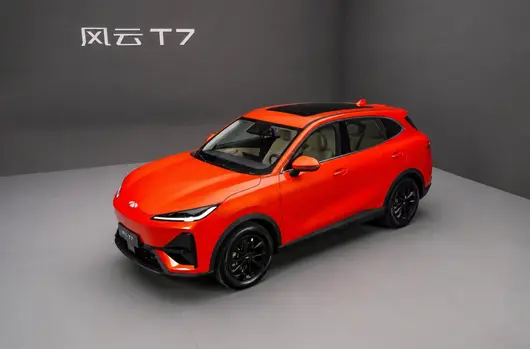
 In the current context where home car buying often forces trade-offs, Fengyun T7 breaks the tiered premium formula, equipping six family essentials: range, safety, intelligence, comfort, driving control, and appearance all at once. All trims standard equipped with 65.05kWh Rhino Battery, CLTC range 600km, achieving range equality, 30%-80% fast charging takes only 22 minutes, effectively alleviating range anxiety. On safety, 80% high-strength steel cage body paired with 9 airbags, Rhino Battery has 31-layer protection structure, multiple test standards far exceed national standards, protecting the whole family's travel.

Equipped with 4nm cabin-integrated driving chip in intelligence, infotainment system is smooth, supports 6 major one-click scene modes, Falcon 500 intelligent driving reduces long-distance driving burden. 2700mm wheelbase brings 84% interior space utilization rate, rear space is spacious, seats folded flat can achieve the class's largest 1955mm × 1310mm pure flat big bed mode, trunk expansion volume can reach 1,550L, commute, family travel, camping, long-distance travel can all be handled calmly. Appearance integrates global aesthetics with Eastern artistic conception, six paint colors balance appearance and anti-aging ability, looks good and is more durable.
 Slow in R&D, Slow in Design, Slow in Standards, Slow in Validation. Unlike most models launched domestically first then go overseas, Fengyun T7 first undergoes testing in high-threshold overseas markets, then brings mature products back to China. 99,800 to 139,800 yuan pre-sale range, allowing ordinary families not to pay overseas high costs, to enjoy product strength synchronized globally.
The pure electric track enters the second half, competition is no longer just about paper parameters, reliability, durability, and environmental adaptability are the core. Fengyun T7 uses a long-termist car building philosophy, setting up a new value reference for the 100,000-yuan level home pure electric SUV.
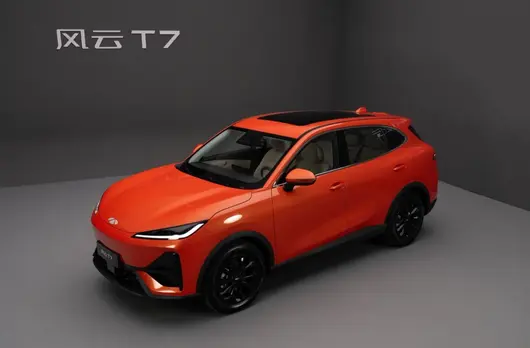

12 Ogos, Chery Fengyun T7 secara rasmi melancarkan pra-penjualan, harga pra-penjualan 9.98 hingga 13.98 puluh ribu Yuan, dengan tema "Kerja Perlahan Membina Kereta Hebat, Sudah Lama Menunggu", membawa kualiti kereta global, ke pasaran SUV elektrik murni untuk keluarga tahap seratus ribu. Apabila industri mengejar pembaruan pantas, pembinaan kereta pantas menjadi kebiasaan, Fengyun T7 memilih untuk fokus tenang mengasah produk, dengan sistem pengesahan global yang ketat, berdepan secara langsung dengan kebimbangan penggunaan kereta sebenar pengguna keluarga biasa.
Fengyun T7 bukan pengembangan dalam negara ubah suai mudah ke pasaran antarabangsa, tetapi serentak untuk 210 negara dan wilayah global. Model asal yang sama Lepas L6 sudah keluar pasaran di Afrika Selatan, Thailand, meraih ujian sebenar pasaran luar negara, kini kembali ke dalam negara dengan maklum balas luar negara. Kereta baharu历经 2 tahun perancangan, 3 tahun penyelidikan, melawat 15 negara,完成 5000+ penyelidikan pengguna global, mengikut piawaian keselamatan 5 bintang E-NCAP edisi 2026, kesesuaian persekitaran merangkumi -40°C hingga 55°C, boleh menampung 95% jenis jalan global. Keseluruhan pelaburan kereta 81 unit kereta ujian ketahanan, jumlah jarak ujian terkumpul lebih 6 juta kilometer, penyelesaian berlainan potensi masalah seperti suhu tinggi, suhu rendah, kelembapan tinggi, jalan tidak berturap sebelum keluar pasaran, tiada penguna menjadi pemandu uji.
Dalam pembelian kereta keluarga dipaksa memilih sekarang, Fengyun T7 memecahkan tipuan premium berperingkat, jarak jauh, keselamatan, kecerdasan, keselesaan, pengendalian, rupa enam keperluan asas keluarga dilengkapkan sekaligus. Semua model piawaian bateri Rhinoceros 65.05kWh, jarak CLTC 600km, mencapai hak sama jarak, pengisian pantas 30%-80% hanya 22 minit, berkesan meredakan kebimbangan jarak. Dari segi keselamatan, kerangka kubah keluli bertekanan tinggi 80% ditambah 9 beg udara, bateri Rhinoceros memiliki 31 struktur perlindungan, beberapa piawaian ujian jauh melebihi piawaian negara, menjaga perjalanan seluruh keluarga.
Dari segi pintar dilengkapi cip 4nm integrasi kenderaan dan pemanduan, sistem kenderaan lancar, sokongan enam mod skena butang satu, Falcon 500 pemanduan pintar meredakan beban memandu jarak jauh. Paksi 2700mm bawa 84% kadar penggunaan ruang dalaman, ruang baris belakang longgar, kerusi dilipat boleh capai 1955mm x 1310mm mod katil rata sepenuhnya terbesar dalam kelas, kapasiti pengembangan kargo belakang boleh mencapai 1550L, perjalanan kerja, ibu bapa dan anak, perkhemahan, perjalanan jarak jauh boleh dihadapi dengan tenang. Reka bentuk luaran merangkumi estetika global dan makna Timur, enam jenis cat kereta mengimbangi rupa dan keupayaan tahan lama, cantik dan lebih tahan.
Perlahan dalam penyelidikan, perlahan dalam reka bentuk, perlahan dalam piawaian, perlahan dalam pengesahan. Berbeza dengan majoriti model keluar pasaran domestik dahulu baru antarabangsa, Fengyun T7 terima ujian pasaran luar negara dengan pintu masuk tinggi dahulu, baru bawa produk matang kembali ke domestik. Julat pra-penjualan 9.98-13.98, tiada perlu pengguna bayar kos tinggi luar negara, boleh menikmati kekuatan produk seragam global.
Litar elektrik murni masuk separuh kedua, persaingan sudah tidak lagi sekadar spesifikasi kertas, kebolehpercayaan, ketahanan, keupayaan menyesuaikan persekitaran adalah teras. Fengyun T7 dengan falsafah pembinaan kereta jangka panjang, untuk SUV elektrik murni keluarga tahap seratus ribu, menubuhkan rujukan nilai baharu.

12 Ogos, Chery Fengyun T7 secara rasmi mula prasejualan. Mesyuarat pelancaran prasejualan kali ini bertajuk "Kerja Teliti Menghasilkan Kereta Baik, Maaf Menantikan", menyampaikan falsafah pembuatan Fengyun T7 yang mengamalkan pendekatan jangka panjang, penekanan produk dan pendirian keras untuk membuat kereta yang baik, serta mengungkapkan rasa terima kasih yang ikhlas kepada pelanggan yang menantikan jangka masa panjang. Sebagai SUV elektrik penuh yang menenangkan yang dibina oleh Chery untuk keluarga global, Fengyun T7 terbit daripada sistem pembuatan berkualiti global Chery, menjangkau satu perkhidmatan enam keperluan utama rupa, perjalanan, keselamatan, kecerdasan, keselesaan, dan ketenangan keluarga berkualiti, menyusun semula penanda nilai SUV elektrik rumah dengan kualiti global.


Tajuk: Kerja Telikit Hasilkan Pekerjaan Halus: Kereta Global "Tidak Boleh Pantas"
Pada masa ini dalam pasaran elektrik rumah, "pembuatan kereta pantas" telah menjadi kesakitan industri. Di bawah gelombang pembuatan kereta pantas, Fengyun T7 memilih laluan yang berbeza sepenuhnya — perlahan dalam penyelidikan, perlahan dalam reka bentuk, perlahan dalam pengesahan, perlahan dalam menerima ujian piawaian global.
Di sebalik slogan yang kelihatan seolah-olah menipu ini, terdapat pendirian Fengyun T7 terhadap logik pembuatan jangka panjang. 2 tahun perancangan, 3 tahun penyelidikan, Fengyun T7 dibangunkan mengikut piawaian keselamatan E-NCAP 2026, keselamatan fungsi mencapai tahap tinggi ASILD, memenuhi tuntutan kepatuhan data global. Menyelesaikan 5,000+ tinjauan pengguna global, 15 negara tipikal lawatan mendalam, ruang pelarasan persekitaran merangkumi -40°C hingga 55°C.
Perlahan dalam penyelidikan: tempoh penyelidikan 3 tahun, sistem penyelidikan 1+7+N global dipahat; Perlahan dalam reka bentuk: 5,000+ penciptaan bersama pengguna, ratusan pereka pereka kerjasama; Perlahan dalam piawaian: direka mengikut piawaian E-NCAP versi 2026, akan memasuki pasaran undang-undang tinggi Eropah; Perlahan dalam pengesahan: 1.45 juta kilometer ujian khas,历经 lima persekitaran terhad. Fengyun T7 menggunakan kitar validasi global yang lengkap, membuktikan kepada pengguna: kualiti SUV elektrik yang benar-benar telah ditapis di seluruh dunia, hanya layak untuk kepercayaan jangka masa panjang seluruh keluarga.


Kewibawaan Kualiti Global: No. 1 Eksport 23 Tahun, 20 Juta Pengguna Memberi Sokongan
Kewibawaan kepercayaan kualiti ini berasal daripada pengumpulan globalisasi yang mendalam Chery. Berada di tempat pertama eksort kereta penumpang jenama Cina selama 23 tahun berturut-turut, pengguna global lebih 20 juta, produk dijual ke lebih 130 pasaran luar negara. Model global asal Lepas L6 telah dilancarkan di Afrika Selatan dan Thailand dan menerima pengiktirafan pengguna luar negara, kini pulang setelah disahkan di pasaran global.
Fengyun T7 sejak awal penyelidikan telah menetapkan lima sistem piawaian global, ujian global, pengguna global, ketahanan global, pembuatan berkualiti global. Jarak ujian kumulatif keseluruhan kenderaan melebihi 6 juta kilometer, ujian khas ketahanan 1.45 juta kilometer, merangkumi lebih 100 persekitaran jalan ekstrem seperti Eropah, Australia, New Zealand, Timur Tengah, Afrika Selatan, Rusia, Mexico, Brazil, dll. 81 unit kereta ketahanan khusus dijalankan ujian jalan secara serentak, keselamatan meniru piawaian ketat versi 2026 E-NCAP — Chery secara kumulatif 71 model keselamatan 5 bintang global, kekuatan dapat dilihat.
Dari lembap tropika ke sejuk Nordic, dari sinaran UV kuat di dataran tinggi ke jalan luar negara yang kompleks, Fengyun T7 telah mengalami ujian kereta nyata terhad menyeluruh. Tinggi kemasukan air piawaian negara hanya 150 mm, Fengyun T7 mencapai 500 mm kalis air peringkat off-road; pam haba + PTC pemanas sumber dwi, operasi stabil pada -30°C, suhu persekitaran -20°C dalam 20 minit naik ke 23°C, kadar pencapaian jangkauan musim sejuk meningkat 30%. Di bawah sokongan proses pembuatan pintar seragam global, ketepatan kimpalan automatik penuh kimpalan mencapai ±0.01 mm, stesen pemeriksaan Mata Elang AI+5G lebih 200 titik pengesan visual, kepekaan pengesan 100 kali ganda mata manusia, memastikan setiap kenderaan tiada perbezaan piawaian.
Satu Kereta Memenuhi Enam Keperluan Utama: Penanda Nilai Rumah Tidak Kompromi
Memecah kesakitan pengguna pada pasaran masa kini di mana jangkauan, keselamatan, ruang, pemanduan pintar, keselesaan, rupa terbahagi, membolehkan keluarga biasa tidak perlu kompromi, satu kereta merangkumi perhubungan kerja, berkhemah, ibu bapa-anak, perjalanan jauh semua senario.

Dari segi perhubungan, semua varian standard bateri Badak 65.05kWh, jangkauan CLTC 600 km, ujian boleh mencapai 667 km, pengisian pantas 30%-80% hanya 22 minit. Umur kitaran bateri lebih 2,500 kali, keseluruhan kenderaan 15 tahun tiada keperluan ganti bateri. Dari segi keselamatan, 80% keluli kuat tinggi + 18.84% keluli bentuk haba, 9 melintang 5 memanjang badan berbentuk sangkar, 9 beg udara paling banyak dalam kelas termasuk 48 L isipadu maksima beg udara jarak jauh rongga ganda. Perlindungan 31 lapisan Besi Badak 6D, kalis air IP68 mencapai 96 kali piawaian negara.
Dari segi kecerdasan, pertama dalam kelas cip 8775 gabungan kabin-kemudi 4 nm, kuasa pengiraan NPU 72 TOPS, dilancarkan Kabin Pintar Lingxi 2.0 × Model Besar DouBa. 15.6 inci 2.5 K 1000 nit skrin anti silau, enam mod senario satu tekan, Pemanduan Pintar Falcon 500 22 sensor kejituan tinggi mencapai parkir automatik semua senario lebih 200. Dari segi keselesaan, badan 4570×1852×1694 mm, jarak as 2700 mm, kadar penggunaan ruang 84%, lantai rata penuh kaki belakang 911 mm. Mod katil rata penuh terbesar dalam kelas 1955 mm×1310 mm, baku bagasi maksimum pengembangan 1550 L.

Estetika Timur Tahan Lama Global: Dua Bintang Rupa Bertemu Sinaran
Fengyun T7 adalah hasil kreatif gabungan pusat penyelidikan dan reka bentuk global 8, pasukan pereka antarabangsa terkemuka dan 5,000+ penciptaan bersama pengguna global. Model asal Lepas L6 sebelum ini muncul di Minggu Reka Bentuk Milan, menerima tinjauan umum "sangat menarik, sangat tahan lama". Bahagian hadapan angin garisan angin kencang melukis besar tidak menonjol, lampu pisau angin memisahkan cahaya dan bayang dengan jelas, badan sutera angin permulaan permukaan lancar, pintu belakang cahaya langit garisan bahu lebar mencipta rasa kuat stabil.
Enam jenis cat aroma timur eksklusif — Jingga Api Terang, Ungu Asap Gunung, Mutiara Merah Jambu Awan, Perak Aliran Cahaya, Kelabu Bambu Muda, Hitam Batu Tinta, diambil dari pemandangan timur alam semula jadi. Jingga Api Terang menggunakan teknologi cat tiga lapisan Tri-coat eksklusif dalam kelas, disepadukan cat luar 2K 8 lapisan, pigmen mutiara nano pada cahaya yang berbeza menampilkan tekstur gradasi. Kabin melengkung sayap awan bentuk berehat seperti camar, jahitan berlian tahap permata, tekstur air bergelora dalaman, pemadatan lembut kawasan besar sentuhan tinggi.


Dua bintang rupa sedan dan SUV telah menjadi潮流 gabungan reka bentuk utama, Chery Fengyun A9 dan Fengyun T7 adalah dua bintang rupa kekuatan di bawah siri Fengyun. Fengyun T7 berdiri di pandangan estetika global, menggabungkan bahasa reka bentuk antarabangsa dan nuansa timur yang anggun — cantik tidak berlebihan, mengimbangi gaya dan kualiti tinggi.

Dari penyelidikan piawaian global ke ujian beratus juta kilometer, dari liputan penuh enam keperluan utama ke estetika timur tahan lama global, Fengyun T7 menggunakan "tenaga perlahan" memahat satu SUV elektrik berkualiti tinggi yang menahan ujian pasaran global. Dalam setengah kedua persaingan EV dari menimbun bahan ke membanding kualiti, Fengyun T7 dengan kualiti global sebagai asas, membawa penyelesaian satu perkhidmatan kepada keluarga berkualiti. 12 Ogos prasejualan rasmi dimulakan, Fengyun T7 akan mencocokkan harga nasional bernilai tinggi dengan kualiti global, layak dinanti.
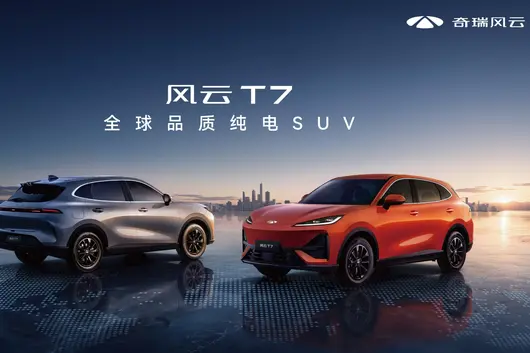

In recent years, the logic of competition in China's domestic new energy vehicle market has long been firmly tied to the word "fast". To seize the dividend of niche tracks, most brands have compressed the R&D cycle of new models to 12-18 months, with modular platforms and simulation models taking turns, seeking only to launch new products quickly and stock goods quickly. Market data can further confirm this involution. Only in the first half of 2026, hundreds of new domestic cars appeared densely, with almost a completely new model appearing every day. However, the cost of high-speed expansion came: mass cutting off of high-temperature, high-cold real road tests for large batches of models, hasty completion of electronic control and chassis calibration, "delivery first, OTA remediation later" becoming an industry unwritten rule. Subsequent mass recalls, frequent durability failures, caused "speed-made cars" controversy to continue fermenting. Regulatory levels also issued new rules to raise listing test thresholds. The whole industry began to reflect collectively: Is blindly seeking speed the wrong path?
Just in the background where the industry collectively chased speed dividends, Chery Fengyun T7 appeared remarkably out of place. The model started pre-research in 2022, underwent nearly five years of polishing before starting domestic pre-sales. The super-long development cycle made it known in the industry as "the world's slowest car". Automotive industry bloggers published public articles raising doubts. At one time, public opinion divergence was obvious. Many netizens believed that traditional car companies had bloated processes and backward R&D efficiency. Facing overwhelming questions, Chery Executive Vice President Li Xueyong gave a unified response: R&D cannot be fast, testing cannot be fast, co-creation cannot be fast.

At first glance, the long polishing cycle seems contrary to the fierce market environment now, missing the window period of seizing the market. But if jumping out of the single domestic market perspective, combined with Chery consecutive 23 years ranking first in Chinese passenger car exports and owning 20 million global users global layout, Fengyun T7's "slowness" is far from a system shortcoming, but a set of active choices serving the global market, with safety and reliability as the first standard. While the industry reflects on the shortcomings of speed-made cars, one is also suspicious of a fine craft-made slow car. This contradiction exactly introduces a proposition worthy of deep thought for the whole industry: In the matter of building cars, how should speed and quality be balanced.
Blindly seeking speed compresses R&D, overdrafting product bottom line
Looking back at the golden development stage of fuel cars, the complete R&D verification cycle of a new complete vehicle generally maintained 3 to 5 years, two winters and two summers extreme tests, hundreds of thousands of durability road tests were hard standards, enough time left for engineers to polish chassis, tune electronic control, verify vehicle body safety, vehicle durability has stable guarantee. But after the wave of electric intelligence came, development tools iterated and upgraded, many car companies saw the space to compress the cycle, began to delete practical test links without bottom line.
Originally months of global road condition calibration, compressed to merely a few weeks; high altitude, high saline-alkali, extreme cold and other extreme environment field tests, directly replaced by laboratory simulation data; chassis, battery pack durability test mileage greatly shrunk. This "cost reduction speed up" model indeed showed results in the short term, car companies could quickly launch multiple models to fill the product line, relying on configuration stacking, low-price strategy to snatch customers. But the market will not tolerate shortcuts for long, industry hidden dangers gradually exposed: new energy vehicle recall numbers increased year by year, battery leakage, chassis abnormal sound, low temperature range cliff-like decline and other batch failures are emerging one after another. Frequent after-sales maintenance, large-scale recalls, constantly consume brand reputation, car companies seem to make short-term sales, in reality carry long-term cost burden, industry overall profit margin continues to fall, falling into the vicious cycle of "low-price involution, quality decline".
Exactly because of chaos, regulation timely hand tightened standards, raised new energy vehicle listing mandatory road test mileage, from policy level called stop speed-made cars. When the whole industry was examining the drawbacks of "speed first", Fengyun T7's multi-year development cycle naturally formed a strong reverse contrast. Many people simply attributed the slow pace to Chery system old, R&D efficiency insufficient, but ignored a core difference: the vast majority of fast-landing new cars on the market only adapt to domestic single climate, road conditions and regulations, verification process can be greatly simplified; while Fengyun T7 is a model launched synchronously for multiple countries globally, to adapt to EU, Southeast Asia, Australia New Zealand, Middle East, South America completely different regulation standards and extreme usage environments, any one test link cannot be omitted, naturally cannot copy domestic model fast development model. For Chery which has deep cultivation in overseas markets for decades, short-term listing speed can yield, but facing global users' safety and durability bottom line, absolutely cannot easily compromise.
Slow is not delay, global verification builds product foundation
The core of external controversy is focused on "why spend years polishing a new car", and Chery executives proposed three layers of "cannot be fast", just exactly completely answered the origin of this long cycle. The time, manpower, test costs invested in recent years, not one cent wasted on redundant processes, all concentrated in unsimplifiable global verification engineering, massive practical test data, cross-border collaborative development, overseas market pre-verification, together support this "slow car" product confidence.
Whole vehicle R&D stage, Chery cumulative invested 963 exclusive test vehicles, completed 1.45 million km global road practical tests, test fleet visited global various extreme regions, Nordic extreme cold, plateau strong UV, tropical high humidity, Middle East high saline-alkali, South Africa muddy unpaved road, Brazil ultra-high speed bumps all covered, completely completed multi-region two winters two summers full cycle tests. Different regions' climate, road conditions brought usage pain points, engineers all targeted optimization: Nordic exclusive heat pump plus PTC dual-source heating system, 20 minutes rapid heating, winter range achievement rate improved 30%; tropical version did 500mm off-road grade wading depth, calmly cope with continuous heavy rain and water accumulation road sections; plateau vehicle strengthened anti-aging paint surface and sealing strips, strictly control interior harmful substances volatilization; African, South American road conditions poor, whole vehicle added battery front and rear anti-collision beams, withstand big pits, steep slopes, high speed bumps brought impact. Comparing industry part new cars only 20-30k km finished durability tests, Fengyun T7 million km road test logic not hard to understand: Take all extreme working conditions users may encounter in future 10 years, all verify before listing, from source prevent batch failures. Meanwhile, whole vehicle strictly benchmarked 2026 version E-NCAP severe safety standards, completed safety driving, collision avoidance, collision protection, post-collision safety four dimension evaluations, this set covered multi-country compliance requirements verification process, itself does not exist fast compression possibility.
Having only field tests not enough to support a global model, cross-regional collaborative development and user co-creation also need sufficient cycle. Fengyun T7 relied on Chery global top 10 R&D design centers, over 100 cross-border designers synchronously collaborated, supply chain selected Bosch, Sony, Valeo, Autoliv etc. global top brands, chassis handed to original Maserati senior engineers completed European tuning, interior used EU environmental friendly skin-friendly fabrics. Multi-country teams synchronously promoted design, chassis, electronic control, safety development, cross-timezone communication, different region performance adaptation debugging, will lengthen overall development duration. Car companies also jumped out of closed-off building car traditional model, linked global over 1000 users deep co-creation, collected different country family travel demands, trunk multiple anchor rings, load bearing hooks etc. details, all tailored for overseas outdoor cargo, living travel needs. In order to further verify product adaptability, same source model Lepas L6 first appeared at Milan Design Week, landed South Africa, Thailand markets, collected real overseas user feedback continuously iterate, mature experience returned domestic polishing Fengyun T7. Global co-creation, overseas advance verification model lengthened cycle, but let product truly fit global users real needs, not car company subjective conjecture configuration stacking.
Development rhythm, Fengyun T7 also jumped out of domestic car companies "first local, then overseas" conventional logic, chose global synchronously development, overseas advance landing. Same source models already in South Africa, Thailand listed, domestic opened pre-sales, Indonesia synchronously promoted listing, September enter EU, October cover Australia New Zealand, UK, Israel, Malaysia etc. markets. Chery products sold to global 130+ countries, 20 million overseas users accumulated unified quality cognition, enterprise insisted not do domestic and overseas double standard models. If for quickly seizing domestic market, simplified overseas regulations, climate, road condition tests, short term can quickly move volume, but put overseas after extremely easy to explode batch quality problems, consume years built overseas channels and brand reputation. For Chery which deep cultivation in global track, sacrificed short-term listing speed, polished a set of global unified standard reliable product, is looking long-term layout inevitable choice.
Jump out short-term involution, build global quality barrier
See clear Fengyun T7 slow polishing behind global verification system, then return to current domestic car market competition pattern, can read Chery this set difference play behind long-termism thinking. Now most brands competition vision limited to domestic short-term sales battle, relying on fast new launches, hardware configuration stacking fight for existing customers, rarely layout adapt global market high standard whole vehicle R&D, homogenization low-price involution intensified. Fengyun T7 actively slow down rhythm deep cultivation verification, essence is Chery jumped out of price war mud swamp, relying on irreproducible whole field test system, build exclusively own product quality barrier.
From business logic level deconstruct, speed-made cars seem save front R&D, test cost, but buried huge hidden danger. New car delivery frequently fault, large-scale recalls, will produce high maintenance, parts, transport costs, more importantly erode user trust, belongs to overdraft long-term value exchange short-term traffic. On the contrary Fengyun T7 front invested many test vehicles and million km road test resources, solve once multi-region working condition under product defects, after listing can significantly reduce after-sales failure rate; unified global whole vehicle quality standard, support multi-country synchronously listing put, long term down can dilute high investment cost. Again put into domestic car industry upgrade big trend look, industry from scale expansion turn to high quality overseas, overseas markets whole vehicle durability, safety, environment adaptability standards generally higher than domestic basic norms, many independent brands overseas blocked, root reason is domestic speed-made models cannot adapt overseas strict regulations and complex road conditions. Fengyun T7 sufficient verification cycle, is exactly Chery for global track advance layout, use top standard polish universal type global model, rely on mature overseas system continuously broaden overseas share, avoid domestic disorder low-price competition.
Meanwhile, domestic consumers car buying concepts also quietly turning. Early users easily attracted by new cars, fancy configurations, now everyone more looks at vehicle long-term reliability, low temperature range, chassis durability such invisible hidden quality. Slow polishing brings balanced stable usage experience, exactly can become Fengyun T7 distinguish from various speed-made models core label, continuously settle long-term user trust. In global users broke 20 million after, Chery clear adjustment overall strategy, no longer blindly participate short-term sales involution, fully turn to product quality and brand value competition, and experienced years polishing Fengyun T7, is just this new strategy landing core carrier. Market competition ultimately won't only look at one time fast slow, able to continuously stable output reliable product, can retain users, stand firm domestic and overseas markets.
When "speed-made cars" drawbacks simultaneously welcome market and regulation dual constraints, automotive industry extensive speed era already ended, entire industry have to return to building car most simple essence: cars are durable consumer goods guarding family travel safety, far from pursuing fast iteration electronic fast consumer goods. Fengyun T7 nearly 5 years long R&D, million km global whole field trial, phased multi-country market verification, surface see unable to follow industry fast new launch rhythm, in fact guarded safety, durability, compliance three building car core bottom lines.
So-called "slow work yields good quality", never is enterprise deliberately delay development schedule, but in R&D, field test, user co-creation, global compliance every key link, not willing to make compromise concession. Industry everyone all in grab faster listing, faster harvest traffic current, still have car companies willing sink heart, consume several years time polish a model adapt global multi-markets, this determination, is just independent brand impact global, towards high-end indispensable confidence. Fengyun T7 also gives whole industry clear answer: New car listing speed can only make short-term market heat, stable solid, stood through global diverse environment test product quality, is decide one car brand can go how far, go how long core foundation.
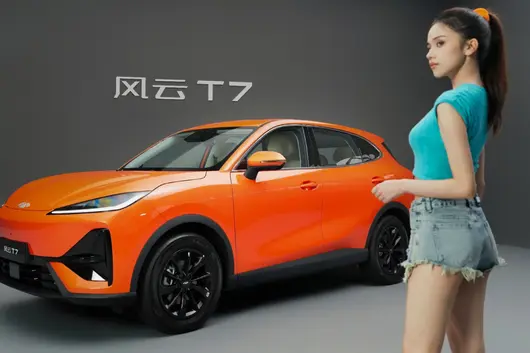

Recently, there's an interesting topic in the automotive world — "rapid-production cars are being stopped".
The issue started at the 2026 China Auto Forum, where automotive executives publicly criticized some brands for cutting necessary testing phases to accelerate market entry, effectively making consumers act as "test drivers" and creating safety hazards. At almost the same time, the National Automotive Standardization Technical Committee proposed increasing the total mileage for reliability driving tests for new energy vehicle models to 30,000 kilometers. From industry self-reflection to standard upgrades, the gears calling for "rapid-production cars" to be stopped are accelerating their rotation.
Simply put, some brands, in order to grab market share, have forcibly compressed R&D testing that should take several years down to 18 months or even shorter. In the fuel vehicle era, it generally took over 36 months from design to market launch for a new car; now many brands cut it in half. A netizen commented poignantly: "Even QQ Speed new cars have to be tested on the test server for half a year before officially launching." Virtual racing cars in games need half a year of testing, while real cars worth over 100,000 in reality, some brands only give half a year.

In this wave of "nothing works faster than speed," Chery Fengyun T7 appears a bit out of place.
On August 9, "Auto Man Old Xu" publicly questioned on Weibo: Others have finished the facelift for three generations of cars, but Fengyun T7 is still "coming soon". Is this due to poor R&D efficiency, or is there another reason? After the question was raised, Li Xueyong, Executive Vice President of Chery Automobile, gave three responses to "cannot be fast" — R&D cannot be fast, testing cannot be fast, co-creation cannot be fast.
To be honest, this response sounds quite official. But if you see what Fengyun T7 has actually been doing over the years, you might understand a bit.

Fengyun T7 is not a "China-exclusive car" — it is called LEPAS L6 overseas. South Africa has already pre-sold, Thailand has already launched, and it will subsequently enter over 130 countries and regions including the EU, Australia-New Zealand, UK, etc. A car must meet regulatory standards of so many countries at the same time; just in terms of regulatory adaptation, this cannot be completed in 18 months.
Let's look at testing. Fengyun T7 has cumulatively invested 963 test vehicles, with global durability test mileage reaching 1.45 million kilometers. Test routes cover the EU, Australia, South America, Middle East, Southeast Asia, Russia, experiencing extreme environments such as high temperature, extreme cold, high humidity, and high salinity. This is not beautiful data run out in a lab, but polished inch by inch on real extreme road conditions. Regarding safety, it benchmarks the 2026 version E-NCAP Five-Star standards, covering four dimensions: safe driving, collision avoidance, collision protection, and post-collision safety. These testing phases cannot be saved on any single one, nor can any be rushed.

Additionally, there are the top 10 global R&D design centers, over a hundred designers collaborating, and over 1,000 global users deeply co-creating. From design to verification to user feedback polishing for a car, every link requires time.
Of course, from the consumer's perspective, whether these reasons for "slowness" hold water is a topic worth discussing. After all, the market waits for no one — while you spend five years polishing a car, competitors may have already completed the iteration of two generations of products. Technology updates so fast, will long-cycle R&D lead to obsolescence upon launch? For this question, I'm afraid no one can give a standard answer.

But thinking from another angle, building cars is ultimately not building phones. If a phone has bugs, a restart fixes it; if a car has issues on the highway, that is a life-threatening matter. Rather than letting users act as "test drivers" to find issues after launch, it's better to solve all issues before launch. Fengyun T7 follows a path of "go overseas first, then return home" — first run around the globe to verify quality, then return to the domestic market. This path spends several times more time than "rapid production", but every step is unavoidable.
At the end of the day, this controversy of "fast and slow" reflects the clash of two car-building logics: one treats cars as fast-moving consumer goods, pursuing speed and traffic; the other treats cars as durable goods, obsessing over quality and safety. "Rapid-production cars" being stopped is never about the ability to iterate quickly, but rather about neglecting safety and perfunctorily handling quality.

Is Fengyun T7's "slowness" actually a shortcoming in R&D efficiency, or is it a time cost that a global car must pay? This question, perhaps only after it truly launches and stands the test of the market and time, can we get a clear answer.
Do you think, when it comes to building cars, should it be fast or should it be slow?
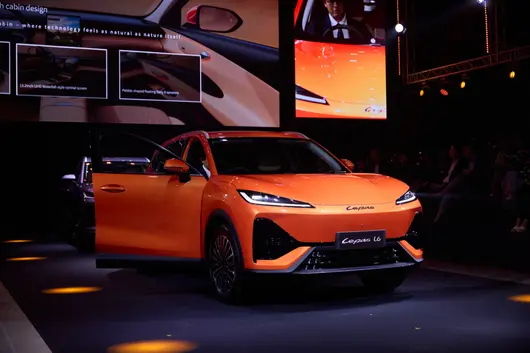

Baru-baru ini terdapat topik yang agak menarik dalam kalangan industri automoter — “Kereta siap kilat sedang dihentikan”。
Punca kejadian ini ialah pada Forum Automoter China 2026, beberapa eksekutif syarikat automoter telah mengkritik secara terbuka beberapa jenama kerana mengurangkan peringkat ujian yang perlu untuk mempercepatkan jadual pelancaran, menjadikan pengguna secara tidak langsung bertindak sebagai “penguji kereta”, mencetuskan potensi keselamatan. Hampir pada masa yang sama, Jawatankuasa Teknikal Penpiawaian Automoter Kebangsaan bercadang untuk meningkatkan jumlah jarak ujian kebolehpercayaan bagi kenderaan tenaga baharu kepada 30,000 kilometer. Dari introspeksi industri hingga penambahbaikan piawaian, “kereta siap kilat” dihentikan gear, sedang berputar dengan lebih laju。
Secara mudahnya, ada sesetengah jenama untuk merebut pasaran, memampatkan ujian penyelidikan dan pembangunan yang sepatutnya mengambil masa beberapa tahun hingga hanya 18 bulan atau lebih pendek. Pada zaman kereta bahan api, satu model baharu dari reka bentuk hingga pelancaran secara amnya mengambil masa lebih 36 bulan, kini ramai jenama terus memotong separuh. Netizen berkomentar dengan sangat pedih: “Permainan QQ Speed kereta baharu pun perlu diuji selama setengah tahun di server ujian sebelum dilancarkan secara rasmi.” Kereta lumba maya dalam permainan perlu diuji selama setengah tahun, kereta sebenar bernilai ratusan ribu dalam kehidupan nyata, ada jenama yang hanya beri masa setengah tahun。
Dalam suasana “hanya kelajuan yang tidak boleh dikalahkan” ini, Chery Fengyun T7 nampak sedikit tidak sepadan。
Pada 9 Ogos, “Lao Xu Automoter” secara terbuka mempersoalkan di Weibo: Kereta tiga generasi orang lain sudah siap ubah suai, Fengyun T7 masih dalam “akan dilancarkan”, adakah ini kerana kecekapan penyelidikan dan pembangunan tidak memuaskan, atau ada sebab lain? Setelah soalan itu diajukan, Li Xueyong, Timbalan Presiden Eksekutif Chery Automobile memberikan tiga respons “tidak boleh dipercepat” — penyelidikan dan pembangunan tidak boleh dipercepat, ujian tidak boleh dipercepat, co-creation tidak boleh dipercepat。
Sejujurnya, respons ini kedengaran agak rasmi. Tetapi jika anda lihat apa yang Fengyun T7 lakukan selama tahun-tahun ini, mungkin anda boleh fahami sedikit。
Fengyun T7 bukan satu “kereta khas China” — ia dipanggil LEPAS L6 di luar negara, pra-penjualan di Afrika Selatan sudah, Thailand sudah dilancarkan, seterusnya akan memasuki Kesatuan Eropah, Australia, New Zealand, United Kingdom dan lebih 130 negara serta wilayah lain. Satu kereta perlu memenuhi piawaian undang-undang banyak negara serentak, sekadar penyesuaian undang-undang sahaja, bukan boleh disiapkan dalam 18 bulan。
Lihat ujian pula. Fengyun T7 telah melabur 963 unit kenderaan ujian secara kumulatif, jarak ujian ketahanan global mencapai 1.45 juta kilometer. Laluan ujian meliputi Kesatuan Eropah, Australia, Amerika Selatan, Timur Tengah, Asia Tenggara, Rusia, mengalami persekitaran ekstrem pelbagai seperti suhu tinggi, sangat sejuk, kelembapan tinggi, dan tanah berair masin. Ini bukan data cantik yang dihasilkan dalam makmal, ini digiling satu inci satu inci di jalan raya ekstrem yang sebenar. Dari segi keselamatan, ianya membandingkan dengan piawaian Lima Bintang E-NCAP versi 2026, merangkumi empat dimensi pemanduan selamat, mengelakkan perlanggaran, perlindungan perlanggaran, dan keselamatan selepas perlanggaran. Peringkat ujian ini, tiada yang boleh dijimatkan, dan tiada yang boleh dipercepatkan。
Selain itu terdapat 10 pusat penyelidikan dan reka bentuk global terkemuka, lebih 100 pereka bekerjasama, 1,000+ pengguna global terlibat secara mendalam. Satu kereta dari reka bentuk hingga pengesahan dan seterusnya penambahbaikan berdasarkan maklum balas pengguna, setiap peringkat memerlukan masa。
Tentu saja, dari sudut pandangan pengguna, adakah alasan “lambat” ini sah, merupakan isu yang patut diperdebatkan. Lagipun pasaran tidak menunggu — ketika anda meluangkan lima tahun mengasah satu kereta, pesaing mungkin sudah menyiapkan dua generasi penambahbaikan produk. Pengemaskinian teknologi secepat ini, adakah penyelidikan kitaran panjang akan menyebabkan ketinggalan apabila dilancarkan? Masalah ini, saya khuatir tiada siapa yang boleh memberikan jawapan standard。
Tetapi berfikir dari sudut lain, membuat kereta akhirnya bukan membuat telefon bimbit. Telefon bimbit keluar ralat restart sekali je okay, kereta ada masalah di lebuh raya, itu urusan nyawa. Berbanding selepas pelancaran membiarkan pengguna menjadi “penguji kereta” untuk menemui masalah, lebih baik selesaikan semua masalah sebelum pelancaran. Fengyun T7 mengambil laluan “keluar laut dahulu, kemudian pulang ke negara” — dahulu berjoging di seluruh dunia mengesahkan kualiti, kemudian kembali ke pasaran domestik. Laluan ini lebih banyak mengambil masa beberapa kali daripada “siap kilat”, tetapi setiap langkah tidak boleh mengelakkannya。
Pada hakikatnya, pergolakan “kelajuan dan kelambatan” ini, memantulkan perlanggaran dua logik pembuatan kereta: satu menganggap kereta sebagai barang segera, mengejar kelajuan dan trafik; satu lagi menganggap kereta sebagai barang tahan lama, bertekad pada kualiti dan keselamatan. “Kereta siap kilat” dihentikan, sasaran bukanlah keupayaan pelayaran pantas, tetapi pengabaian terhadap keselamatan, pengabaian terhadap kualiti。
“Kelambatan” Fengyun T7, adakah ia kelemahan kecekapan penyelidikan, atau merupakan kos masa yang perlu dibayar untuk kereta global? Masalah ini, mungkin hanya selepas ia benar-benar dilancarkan, melalui ujian pasaran dan masa, barulah boleh ada jawapan yang jelas。
Apa pendapat anda, dalam hal membuat kereta, patut laju atau lambat?

At the 2026 China Auto Forum, Beijing Hyundai GM Li Fenggang publicly criticized some brands for cutting necessary testing links to accelerate launch schedules, making consumers substitute as "test drivers". Almost simultaneously, the National Automotive Standardization Technical Committee proposed increasing the total mileage of new energy vehicle reliability driving tests to 30,000 kilometers. Both issues point in the same direction — "Rushed Cars" are being called off.

At this critical juncture, Fengyun T7 became the "center of attention": Others complete the full process from R&D to launch in 12 to 18 months, while this car is just preparing for pre-sale, having started preliminary research in 2022.
So, why is Fengyun T7 so "slow"? According to Li Xueyong, Executive Vice President of Chery Automobile, it is simply that R&D cannot be rushed, testing cannot be rushed, and co-creation cannot be rushed.

First, look at R&D. Fengyun T7 is not a "China-special car"; overseas it is called LEPAS L6. South Africa has pre-sales, Thailand has launched, and it will later enter the EU, Australia/New Zealand, UK, and over 130 other countries. Created collaboratively by top 10 global R&D design centers and hundreds of designers, with deep co-creation by 1000+ global users. Adapting to different countries' regulatory standards, road conditions, and climate environments means the R&D cycle cannot be compressed.

Next, look at testing. Fengyun T7 has cumulatively invested in 963 test vehicles, with a global durability testing mileage reaching 1.45 million kilometers. Test routes cover the EU, Australia, South America, Middle East, Southeast Asia, and Russia, enduring extreme environments including high heat, extreme cold, high humidity, and high salinity. This is not data run out in a lab, but ground up inch by inch in real extreme environments. Meanwhile, the full suite of evaluations covers four major dimensions: safe driving, collision avoidance, collision protection, and post-collision safety: these testing links cannot be saved on, nor can they be rushed.

Finally, look at co-creation. Fengyun T7 has 1000+ global users deeply participating in the R&D process; users' real feedback and actual needs from different markets are all integrated into the product definition. This co-creation model itself requires time; it cannot be hurried.
To be honest, some cars in the industry can be "fast" now by compressing testing and simplifying verification. But making cars is not making phones; a car concerns the travel safety of a family for at least several years, or up to over a decade. Rather than letting users act as "test drivers" to find problems after launch, it is better to solve all problems before launch. Fengyun T7 ran 1.45 million kilometers genuinely in global extreme environments; this "slowness" is the slowness that is responsible to users.

Simply put, Fengyun T7's "slowness" is not low efficiency, but a necessary path of positive development. It is not built in China and then tweaked and modified and sold abroad, but designed from day one according to global standards: first run a verification lap globally for quality, then return to the domestic market. This path of "first going global, then returning home" inherently requires several times the time of "rapid completion".
It can be said that Fengyun T7's "slowness" is that sense of reverence when facing the global market: reverence for safety, reverence for quality, reverence for users. This "slowness" is worth it.

Pada Forum Kereta China 2026, Pengurus Agung Hyundai Beijing Li Fenggang secara terbuka mengkritik sesetengah jenama yang memendekkan elemen ujian yang diperlukan untuk mempercepatkan kitaran pelancaran, menyebabkan pengguna bertindak sebagai "pemandu ujian" secara tersirat. Hampir serentak, Jawatankuasa Teknikal Piawaian Automotif Negara bercadang untuk meningkatkan jumlah jarak ujian kebolehpercayaan kenderaan elektrik baharu kepada 30,000 kilometer. Kedua-dua perkara ini menunjukkan ke arah yang sama—"kereta siap segera" sedang ditamatkan.
Pada saat genting ini, Fengyun T7 menjadi "paling menonjol": orang lain menghabiskan seluruh proses dari penyelidikan dan pembangunan hingga pelancaran dalam 12 hingga 18 bulan, tetapi kereta ini hanya bersedia untuk pra-penjualan selepas kajian awal dari tahun 2022 hingga kini.
Maka, mengapa Fengyun T7 begitu "lambat"? Menurut Pengarah Eksekutif Chery Automobile Li Xueyong, itu bermaksud penyelidikan dan pembangunan tidak boleh cepat, ujian tidak boleh cepat, dan kerjasama bersama tidak boleh cepat.
Lihat dahulu penyelidikan dan pembangunan. Fengyun T7 bukanlah "kereta khas China", di luar negara dipanggil Lepas L6, Afrika Selatan telah pra-penjualan, Thailand telah dilancarkan, seterusnya akan mendarat di Eropah, Australia, New Zealand, United Kingdom dan lebih 130 negara dan kawasan lain. Sepuluh pusat penyelidikan dan pembangunan rekaan teratas dunia, ratusan pereka berkolaborasi mencipta, lebih 1000 pengguna global menyumbang secara mendalam. Untuk disesuaikan dengan piawaian undang-undang, keadaan jalan raya, dan persekitaran iklim negara yang berbeza, kitaran penyelidikan dan pembangunan tidak boleh dipendekkan.
Lihat pula ujian. Fengyun T7 telah melabur kumulatif 963 buah kereta ujian, jarak ujian ketahanan global mencapai 1.45 juta kilometer. Laluan ujian meliputi Eropah, Australia, Amerika Selatan, Timur Tengah, Asia Tenggara, Rusia, mengalami pelbagai persekitaran ekstrem seperti panas tinggi, sejuk tinggi, lembap tinggi, garam tinggi. Ini bukan data yang diuji di dalam makmal, tetapi digilap inci demi inci dalam persekitaran ekstrem sebenar. Serentak itu, penilaian penuh merangkumi empat dimensi: pemanduan selamat, mengelak kemalangan, perlindungan kemalangan, keselamatan selepas kemalangan: elemen ujian ini, tiada yang boleh dipotong, dan tiada yang boleh dibuat cepat.
Akhirnya lihat kerjasama bersama. Fengyun T7 mempunyai lebih 1000 pengguna global yang terlibat secara mendalam dalam proses penyelidikan dan pembangunan, maklum balas sebenar pengguna, keperluan sebenar pasaran yang berbeza, semuanya telah dimasukkan ke dalam definisi produk. Model kerjasama bersama seperti ini sendiri memerlukan masa, tidak boleh dipaksa.
Katakanlah kebenaran, ada beberapa kereta dalam industri sekarang yang boleh "cepat" kerana memendekkan ujian, memudahsambungkan pengesahan. Tetapi membina kereta bukan membina telefon pintar, satu kereta melibatkan keselamatan perjalanan keluarga selama beberapa tahun sekurang-kurangnya, lebih daripada sebelas tahun. Lebih baik menyelesaikan semua masalah sebelum pelancaran berbanding membiarkan pengguna menjadi "pemandu ujian" untuk mencari masalah selepas pelancaran. Fengyun T7 telah berjalan secara nyata 1.45 juta kilometer dalam persekitaran ekstrem global, "kelambatan" ini ialah kelambatan yang bertanggungjawab kepada pengguna.
Secara mudahnya, "kelambatan" Fengyun T7 bukan bererti kecekapan rendah, tetapi jalan wajib pembangunan yang betul. Ia bukan dibina di dalam negara dahulu kemudian diubah suai dan dijual ke luar negara, tetapi dari hari pertama telah dibina mengikut piawaian global: dulu berjalan di seluruh dunia untuk mengesahkan kualiti, kemudian kembali ke pasaran dalam negara. Laluan "keluar laut dahulu, pulang ke negara kemudian" ini sendiri memerlukan masa berlipat ganda lebih daripada "siap segera".
Boleh dikatakan, "kelambatan" Fengyun T7 ialah rasa hormat itu apabila berhadapan dengan pasaran global: rasa hormat terhadap keselamatan, rasa hormat terhadap kualiti, rasa hormat terhadap pengguna. "Kelambatan" ini, bernilai.
© 2024 Bitauto.com. All Rights Reserved.
Bitauto (www.yiche.com and www.bitauto.com) is one of the most visited automotive websites in China. We provide detailed info on Chinese car brands available in your area. Please note that the information provided on this website is based on publicly available data and is for reference only. It may not be fully updated or accurate at all times.

Help us improve our website


