

HomeGalaxy A7 EV

Search History
Popular Searches
Dealer Login / Sign Up

On August 1, Geely Automobile Holdings Limited (0175.HK) announced the latest sales data: July sales reached 250,161 vehicles, showing month-on-month and year-on-year double growth for 5 consecutive months, with a 5% increase year-on-year and a 4% increase month-on-month. Among them, overseas exports reached 106,663 vehicles, a 202% increase year-on-year and a 4% increase month-on-month, achieving month-on-month and year-on-year double growth for 7 consecutive months, and exports exceeding 100,000 vehicles for two consecutive months. In the first half of the year, Geely Automobile's overseas sales cumulatively reached 470,000 vehicles. Behind this impressive performance is the result of Geely Automobile relying on a global product matrix and industrial layout, accelerating the promotion of high-value overseas expansion, gradually improving local channels and production systems, and accelerating the implementation of the globalization strategy.

Double Breakthrough in Sales and Structure, Moving Towards High-Value Overseas Expansion
From a data perspective, Geely's overseas growth is substantial. In July, new energy vehicle exports reached 62,604 units, surging 616% year-on-year, accounting for 59% of total exports, achieving simultaneous upgrades in export scale and product structure.
Meanwhile, multiple brands are blooming in multiple locations in the global market. In June, Geely Star Wish (Geely EX2) ranked first in Thailand EV sales, second in Brazil EV sales, and second in Mexico all-category pure electric sales; Starship 7 EM-i (Geely EX5 EM-i) secured first place in Poland's C-segment PHEV market single model sales and second place in Mexico's June PHEV sub-market sales.
Since its launch, Lynk & Co 08 has achieved nearly 190,000 cumulative global deliveries, ranking in the top three for Mexico's high-end PHEV SUV and Morocco's mid-size PHEV SUV sales in the first half of the year. Zeekr has anchored its global luxury technology brand positioning, with its influence continuously advancing, securing the top spot for Australia and Malaysia's luxury pure electric brand sales in the first half of the year. From the mainstream mass market to the luxury technology track, Geely Automobile's product matrix has taken root globally.

Systematic Collaboration Construction Establishes New Paradigm for Overseas Expansion
The continuous improvement of overseas exports is rooted in Geely's globalization strategy coordination, as well as long-term technical accumulation and systematic innovation capabilities.
Relying on the "One Geely" strategy, Geely has built a brand matrix with clear positioning and distinct personality, forming a development pattern of collaborative combat and potential complementarity among Geely, Lynk & Co, and Zeekr. Among them, the Geely brand is positioned as a global mainstream automobile brand, focusing on safety, quality, and intelligence; the Lynk & Co brand is positioned as a global new energy high-end brand, focusing on fashion, sports, and personality; the Zeekr brand is positioned as a global luxury technology brand, focusing on luxury, extreme, and technology.
Geely has always regarded technological innovation as the core driving force for globalization development, building a globalization technology system of "Five Design Centers, Five Engineering R&D Centers, Five Testing Areas, Five Energy Technology Forms, and Five AI Smart Ecosystems" around global R&D, global synergy, and global innovation, providing solid support for globalization development.
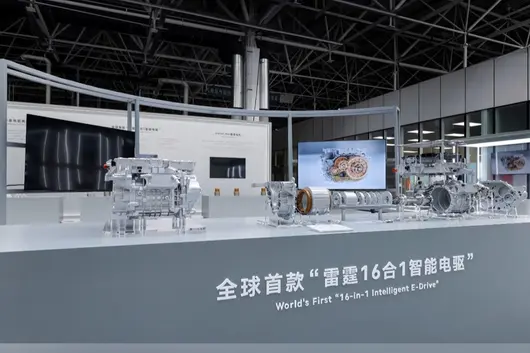
In the past decade, Geely's cumulative R&D investment has exceeded 250 billion yuan. In the fuel vehicle field, Geely has created globally leading BMA and CMA vehicle architectures and independently developed the Thunder God power system; in the new energy field, it has created new energy exclusive architectures such as SEA and GEA, successively launched core technologies such as the Thunder God AI Electric Mix 2.0 system, Divine Shield Gold Brick Battery, and "11-in-1" electric drive, continuously improving product competitiveness.

In addition, Geely continues to promote the construction of local operational capabilities, further opening up overseas market growth space through win-win cooperation with localization enterprises. In July, Geely Automobile reached an agreement with Ford Motor Company, and both parties will establish a joint venture company at Ford's Valencia plant in Spain, creating new energy vehicle products for the Geely and Ford brands for the European market through capacity sharing, accelerating the implementation of Geely's European localization strategy.

Under the top-level coordination of the "One Geely" strategy, with five globalization technology systems as the growth base, multi-brand differentiated matrices as market touchpoints, and local operations as the grip, continuously strengthening service and channel systems, Geely has walked a new path of driving high-quality growth with systematic capabilities.
Looking to the future, we will continue to adhere to open collaboration, persist in continuous product technology innovation, adhere to user supremacy, and insist on compliant operation, creating higher value for global users, and contributing greater strength to promoting the high-quality "going global" of China's automotive industry.

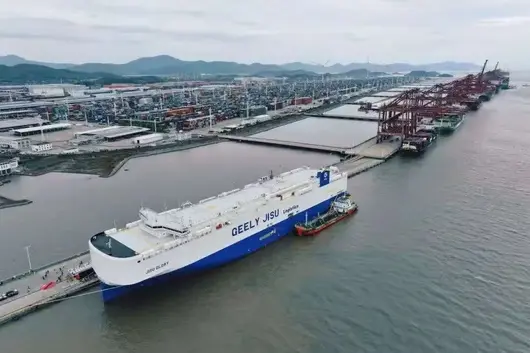
During the first half of this year, China exported 5.096 million vehicles, a 65.3% increase year-on-year, with June seeing single-month exports surpass 100,000 vehicles for the first time. Among these, the proportion of new energy vehicles has exceeded 46%.
More importantly, this wave of overseas expansion is no longer just about loading cars onto ships for shipment. Chery, BYD, SAIC, and Great Wall Motor have all built factories abroad, moving entire factories, supply chains, and channels over. Even with the EU raising tariffs to 45.3%, China's car exports to Europe increased by 84.7% in the first quarter, with market share rising from 0.5% three years ago to 11%.
The opportunity has truly arrived. At this critical moment, Geely did something at its mid-year performance briefing: raising the full-year overseas sales target from 640,000 vehicles to 920,000 vehicles in one go, and also stated an ambition to aim for an annual sales volume of one million.
A single increase of 44% in targets is rare among domestic automakers. The first reaction of outsiders is "It's just bragging." However, after reviewing Geely's mid-year report and its overseas strategy, you will find it isn't gambling, but holding a clear play it has held for a long time.

These 920,000 vehicles are not made on a whim
We have seen too many companies喊 targets at the beginning of the year and quietly adjust them by mid-year. But this time, Geely's reasons are so simple you cannot refute them: the original 640,000 target was already completed in the first half.
Let's look at the data directly, all from the mid-year performance announcement: overseas sales reached 474,000 vehicles in the first half, a 158% increase year-on-year, exceeding last year's full-year volume. Last year's entire workload was finished in this year's first half.
Overseas monthly sales broke 100,000 vehicles for two consecutive months in June and July, with July alone reaching 106,700 vehicles, a massive 202% increase year-on-year. This is no longer luck, but a new normal. Cumulative sales for the first seven months were 580,900 vehicles, a 164.8% increase year-on-year. So, adjusting from 640,000 to 920,000 simply means writing the obvious trend into official numbers ahead of time.
Moreover, the quality of these 920,000 vehicles is even more worth discussing than the numbers themselves. New Energy Vehicles are the absolute main force: new energy exports reached 277,200 vehicles in the first half, skyrocketing 585% year-on-year, accounting for nearly 60% of total exports; in July alone, new energy exports were 62,600 vehicles, directly more than six times the previous year.
In other words, what Geely is selling overseas is no longer the old story of exchanging foreign exchange via low-price fuel vehicles, but new energy vehicles equipped with intelligent cockpits and three-electric technology. More impressively, as volume increases, prices do not drop — average vehicle revenue is 112,000 yuan, up 15,000 yuan year-on-year, with a gross margin of 17.9%, and core net profit per vehicle of 6,806 yuan, up 45% year-on-year.
Selling more and selling for more value. With this momentum, raising the target to 920,000 might even be considered conservative by Geely itself.

Where is the confidence? Three words — Systematic Capability
Geely's overseas expansion has long passed the stage of just shipping cars to ports; now it is moving factories, technology, and brands outward. This is the fundamental reason why it dares to shout 920,000 vehicles without feeling insecure.
The first layer of confidence is that capacity has truly landed. Overseas, 12 factories are already running, with capacity exceeding 650,000 units, aiming for 840,000 by year-end. This is not a PPT pitch, but actual production lines. Southeast Asia is the root. The Proton AHTV industrial park in Malaysia is upgrading capacity from 200,000 to 500,000 units, and was included in the Malaysian government's national development plan, handling R&D, manufacturing, and exports all at once.
Europe has two legs. On July 23, Geely spent 221 million euros to acquire 34% equity in Ford's Valencia, Spain factory, an old plant with 500,000 units annual capacity, where Galaxy and Lynk & Co will start production in 2028; the Volvo Europe factory will take over the luxury car role within the system, also aiming for 2028. For South America, it will leverage Renault's local bases and channels.
The most refined point of this asset-light, industry symbiosis strategy is: it bypasses the "Made in China, Sold Globally" tariff wall, using joint ventures, equity, and shared capacity to plant Chinese brands directly into local industrial chains. While others are still figuring out how to export, Geely is already answering how to take root.
The second layer of confidence is that channels and markets are spread out systematically. 114 core overseas markets, 17 emerging markets, and over 2,000 offline channels. Regional layout is also clear: ASEAN one 300,000-unit tier, Europe, Eastern Europe, and Latin America/Non-ASEAN three 200,000-unit tiers, Middle East & Asia one 100,000-unit tier. The benefit of this multi-polar pattern is that even if one market fluctuates, it won't cause severe damage — this is exactly the strategy only mature multinational automakers have.
The third layer of confidence is a thick war chest. R&D expenditure in the first half was 9.06 billion yuan, up 8% year-on-year; cash reserves on hand were 69.56 billion yuan. With nearly 70 billion yuan backing, daring to continue increasing R&D spending speaks of long-termism. Going overseas is a marathon, not a sprint; the money bag is the stamina for the second half.

Why偏偏 is it now?
Some might say, anyone can shout targets, why believe Geely can deliver? My view is that this window right now is almost tailor-made for Chinese automakers going global.
Sky time (Timing). In the export map of the first half of this year, Russia, Brazil, and the UK ranked top three, with emerging markets contributing over 4.14 million vehicles in one breath, and the acceptance of Chinese brands visibly warming up. Despite tariffs, market share in Europe continues to rise, proving that the product power of Chinese new energy vehicles is already hard to stop. Geely is stepping right on this biggest trend.
Earth location (Geography). Domestic new energy penetration rates hit 60%, and the world's top-tier industrial scale has given Chinese automakers cost and efficiency advantages in batteries, intelligent driving, and supply chains that others cannot catch up with in a short time. Once these advantages start flowing outward, it is the starting point for Chinese automobiles rewriting the global landscape.
People (Team/Strategy). Geely's strategy in the past two years has been doing subtraction — Geometry merging with Galaxy, Lynk & Co merging with Zeekr, brands shifting from fighting independently to collaborative warfare. The effect is real: administrative expense ratio dropped from 1.9% to 1.7% in the first half. With strength twisted into one rope, the momentum for going overseas naturally increases.
There is also a rather interesting detail. On the day the mid-year report was released, Geely announced management adjustments simultaneously: Li Shufu stepped down as Chairman of the Board and became Honorary Chairman, An Conghui took over, Gui Shengyue served as Vice Chairman, and Gan Jiayue became President. Completing this generational transition while handing in these results is itself a sense of calm — Geely's globalization no longer relies on the bravery of a single person, but on a whole set of running systems and teams.

920,000 vehicles, what does it actually mean?
To be honest, 920,000 vehicles is a hard threshold in the global automotive landscape. It means Geely is moving from "First Tier of Overseas Expansion" to "True Global Automaker". When a Chinese automaker's overseas sales approach one million units, its identity is no longer just an exporter of Made-in-China products, but someone qualified to sit at the table to discuss rules.
Geely's own words are more direct: the long-term goal is to have two-thirds of sales come from overseas. Once that day comes, Geely will change from "Chinese Geely" to "Global Geely" — this is what generations of Chinese automotive people want to do, and the outline is becoming clearer now.
Of course, I won't put too many words to fill the air. The overseas market has never been a smooth path; tariffs, geopolitics, localization, cultural differences — every hurdle requires real skill, the battle for 920,000 vehicles has just begun.
But there is one thing I dare to judge: a car company that dares to raise export targets from 640,000 to 920,000 at mid-year in front of the whole industry, with nearly 70 billion yuan in cash on hand and 12 overseas factories running — it is not gambling, it is using strength to force you to reconsider it.

Auto Review:
In the wave of exports surpassing 5 million units this half, which Chinese automaker will dare to shout for one million in overseas sales next? When Chinese car overseas sales collectively stand on one million units, how will the global automotive chessboard be played again?
This matter is worth our focus on the long view, watching slowly.

Selama enam bulan pertama tahun ini, eksport kenderaan automotif China mencapai 5.096 juta unit, meningkat 65.3% secara tahunan. Pada bulan Jun, eksport bulanan tunggal pertama kali mencapai lebih 1 juta unit. Di dalamnya, peratusan kenderaan baharu melebihi 46%.
Yang lebih worth talking about, gelombang ekspansi luar negara ini bukan lagi sekadar menaburkan ke kapal untuk dihantar. Chery, BYD, SAIC, Great Wall semuanya telah membina kilang di luar negara, membawa keseluruhan rangkaian kilang, rantaian bekalan dan saluran. Malah walaupun EU menaikkan tarif hingga 45.3%, eksport kenderaan China ke EU pada suku pertama masih meningkat 84.7%, bahagian pasaran daripada 0.5% tiga tahun lalu meningkat ke 11%.
Peluang memang nyata telah bermula. Pada ketika ini, Geely telah melakukan sesuatu dalam persidangan prestasi pertengahan tahun: meningkatkan sasaran penjualan luar negara sepanjang tahun daripada 640,000 unit, serentak ke 920,000 unit, malah menyatakan mahu menembusi jualan tahunan sebanyak satu juta.
Sasaran dinaikkan 44% pada satu masa, ini sangat jarang dalam syarikat automotif domestik. Orang luar reaksi pertama adalah 'bercakap kosong'. Tetapi jika meneliti laporan pertengahan Geely dan strateginya di luar negara, anda akan dapati, ia tidak sedang bertaruh, ini adalah kartu terang yang disimpan lama.
Ini 920,000 unit, bukan hasil terkaan
Kita sudah melihat terlalu banyak sasaran di awal tahun, diam-diam diubah di pertengahan tahun. Tetapi kali ini Geely, alasannya telus sehingga anda tidak boleh menafikan, sasaran asal 640,000 unit, ia telah selesai dalam enam bulan pertama.
Langsung kepada data, semua dari pengumuman prestasi pertengahan: Eksport luar negara enam bulan pertama terjual 474,000 unit, meningkat 158% berbanding tahun lalu, sudah melebihi jumlah keseluruhan tahun lalu. Kerja satu tahun tahun lalu, selesai dalam setengah tahun tahun ini.
Bulan Jun dan Julai secara berturut-turut dua bulan, eksport bulanan luar negara menembusi 100,000 unit, bulan Julai malah 106,700 unit, meningkat 202% berbanding tahun lalu. Ini bukan lagi kebetulan, ia trend baharu. 7 bulan pertama kumulatif 580,900 unit, meningkat 164.8% berbanding tahun lalu. Jadi dari 640,000 ditukar ke 920,000, mudah kata ia menuliskan trend yang dilihat semua orang, ke dalam angka rasmi lebih awal.
Dan kualiti 920,000 unit ini, lebih bernilai untuk dibincangkan berbanding kuantiti itu sendiri. Kenderaan baharu adalah kekuatan utama: Eksport kenderaan baharu enam bulan pertama 277,200 unit, meningkat mendadak 585% berbanding tahun lalu, menempati hampir 60% jumlah eksport; Eksport bulanan kenderaan baharu bulan Julai 62,600 unit, meningkat langsung 6 kali ganda lebih berbanding tahun lalu.
Dengan kata lain, apa yang Geely jual ke luar negara sekarang, bukan lagi cerita lama menggunakan kereta api bahan api murah untuk dapatkan mata wang asing, sebaliknya kenderaan baharu satu persatu membawa kabin pintar, teknologi tiga elektrik. Lebih jarang, jumlah naik, harga tidak turun — pendapatan per kenderaan 112,000 yuan, meningkat 15,000 yuan berbanding tahun lalu, margin keuntungan kasar 17.9%, keuntungan bersih teras per kenderaan 6806 yuan, meningkat 45% berbanding tahun lalu.
Jualan semakin banyak, dan semakin bernilai. Dengan momentum ini, menaikkan sasaran ke 920,000, Geely sendiri mungkin menganggapnya terlalu konservatif.
Di mana kepercayaannya? Tiga perkataan — kekuatan sistem
Ekspansi luar negara Geely, sudah melepasi tahap menghantar kereta ke pelabuhan, sekarang membawa kilang, teknologi dan jenama keluar bersama. Ini juga sebab utama mengapa berani menyebut 920,000 unit, tidak ragu-ragu.
Tahap keyakinan pertama, kapasiti pengeluaran benar-benar telah dilaksanakan. 12 kilang luar negara telah beroperasi, kapasiti melebihi 650,000 unit, menuju ke 840,000 unit pada akhir tahun. Ini bukan PPT, ia garisan pengeluaran sebenar. Tenggara adalah akar. Taman Industri AHTV Proton Malaysia, sedang naik taraf kapasiti daripada 200,000 unit ke 500,000 unit, dan telah dimasukkan dalam pelan pembangunan negara oleh kerajaan Malaysia, penyelidikan, pembuatan, eksport serentak.
Eropah mempunyai dua kaki. 23 Julai, Geely membelikan 34% saham kilang Ford Valencia Sepanyol dengan kos 221 juta Euro, pangkalan lama kapasiti 500,000 unit setahun, 2028 akan menurunkan Galaxy dan Lynk & Co; Kilang Volvo Eropah pula mengambil kerja kenderaan mewah dalam sistem, juga menyasar 2028. Amerika Selatan, pinjam pangkalan dan saluran tempatan Renault untuk dilaksanakan.
Strategi aset ringan dan ekosistem industri ini, bahagian paling cermat ialah: ia mengelakkan dinding tarif 'Dibuat di China, Dijual di seluruh dunia', menggunakan perkongsian, saham, kongsi kapasiti, menanam jenama China secara terus ke dalam rantaian industri tempatan. Orang lain masih berfikir cara eksport, Geely sudah menjawab cara berakar.
Tahap keyakinan kedua, saluran dan pasaran telah dibina secara sistematik. 114 pasaran utama luar negara, 17 pasaran baharu, saluran luar talian melebihi 2,000 syarikat. Susun atur wilayah jelas: ASEAN satu tahap 300,000, Eropah, Eropah Timur, Amerika Latin dan Afrika tiga tahap 200,000, Timur Tengah Asia satu tahap 100,000. Struktur kutub ini, faedah jika sesuatu pasaran berfluktuasi, tidak sehingga kecederaaan teruk — ini tepat strategi hanya dimiliki oleh syarikat automotif antarabangsa matang.
Tahap keyakinan ketiga, modal tebal. enam bulan pertama penyelidikan dan pembangunan melabur 9.06 bilion yuan, meningkat 8%; simpanan tunai di akaun 69.56 bilion yuan. Hampir 70 bilion tunai sebagai asas, berani menambah penyelidikan dan pembangunan, barulah boleh bicara orientasi jangka panjang. Ekspansi luar negara adalah maraton bukan lari 100 meter, dompet wang adalah tenaga separuh kedua.
Mengapa tepat sekarang?
Ada yang berkata, sasaran siapa tak boleh sebut, kenapa percaya Geely boleh capai? Pandangan saya, tingkap masa ini, hampir dibuat khas untuk ekspansi luar negara syarikat automotif China.
Masa yang sesuai. Dalam peta eksport China enam bulan pertama, Rusia, Brazil, United Kingdom berada tiga teratas, pasaran baharu memberikan lebih 4.14 juta unit, penerimaan jenama China kelihatan meningkat. Eropah menanggung tarif bahagian masih naik, menunjukkan kuasa produk kenderaan baharu China, sudah keras tidak dapat ditolak. Geely menunggang angin paling kuat ini.
Lokasi yang sesuai. Penetrasi kenderaan baharu domestik naik ke 60%, saiz industri nombor satu dua dunia, membolehkan syarikat automotif China mengumpul kelebihan kos dan kecekapan pada bateri, pemanduan pintar, rantaian bekalan yang orang lain tidak boleh kejar dalam masa singkat. Kelebihan ini sekali mula dikongsi, ia permulaan automotif China menulis semula struktur global.
Orang yang sesuai. Strategi Geely dua tahun kebelakangan ini sentiasa membuat pengurangan — Geometry bergabung dengan Galaxy, Lynk & Co bergabung dengan Zeekr, jenama dari berpecah menjadi operasi bersinergi. Kesan juga nyata, kadar kos pentadbiran enam bulan pertama diturunkan dari 1.9% ke 1.7%. Kuatan diputar jadi satu tali, kekuatan eksplorasi luar negara semula jadi lebih kuat.
Ada butiran yang menarik. Hari pengumuman laporan pertengahan, Geely mengumumkan penyesuaian pengurusan serentak: Li Shufu meletak jawatan Pengerusi Jawatankuasa Pentadbiran, berpindah ke Pengerusi Kehormat Seumur Hidup, An Conghui meneruskan, Gui Shengyue sebagai Timbalan Presiden, Gan Jiayue sebagai Presiden. Menyerahkan catatan pencapaian ini sambil lengkapkan pertukaran generasi, ia sendiri adalah ketenangan — globalisasi Geely, tidak lagi bergantung kepada keberanian seseorang, tetapi kepada satu sistem penuh dan pasukan.
920,000 unit, sebenarnya membawa maksud apa?
Sejujurnya, angka 920,000 unit ini, diletakkan dalam peta automotif global adalah ambang yang keras. Ia bermaksud Geely sedang bergerak dari 'Barisan Terdepan Ekspansi Luar', menuju 'Syarikat Automotif Global Sejati'. Syarikat automotif China jualan luar negara menghampir sejuta unit, statusnya tidak lagi hanya eksportir pembuatan China, tetapi mempunyai hak untuk duduk di meja membincangkan peraturan.
Perkataan Geely sendiri lebih lurus: Sasaran jangka panjang adalah membiarkan dua pertiga jualan berasal dari luar negara. Bila tiba hari itu, Geely akan berubah dari 'Geely China' menjadi 'Geely Dunia' — ini perkara yang ingin dilakukan oleh beberapa generasi orang automotif China, sekarang kontur sudah semakin jelas.
Tentu saja, saya tidak perlu terlalu pasti. Pasaran luar negara selalunya bukan jalan rata, tarif, geografi, tempatan, perbezaan budaya, mana-mana halangan perlu usaha sebenar, perang 920,000 unit baru baru bermula.
Tetapi ada perkara saya berani membuat keputusan: sebuah syarikat automotif berani di pertengahan tahun, di depan seluruh industri, menaikkan sasaran eksport dari 640,000 ke 920,000, di akaun masih ada hampir 70 bilion tunai, 12 kilang luar negara beroperasi — ia tidak sedang bertaruh, sedang memaksa anda mengenali semula dengan kekuatan.
Ulasan AutoNet:
Dalam gelombang eksport lima juta unit dalam enam bulan ini, syarikat automotif China seterusnya yang berani sebut satu juta unit ekspansi luar negara akan jadi siapa? Bila jualan luar negara kenderaan China secara kolektif berdiri di satu juta unit, catur automotif global, akan dimainkan semula bagaimana?
Perkara ini, bernilai kita arahkan pandangan lebih jauh, lihat perlahan-lahan.
© 2024 Bitauto.com. All Rights Reserved.
Bitauto (www.yiche.com and www.bitauto.com) is one of the most visited automotive websites in China. We provide detailed info on Chinese car brands available in your area. Please note that the information provided on this website is based on publicly available data and is for reference only. It may not be fully updated or accurate at all times.

Help us improve our website


