

HomeHonda CR-V

Search History
Popular Searches
Dealer Login / Sign Up

To speak fairly, the official vehicle market is absolutely the ultimate touchstone for automakers' hard power! And now, on this high-end track, our Chinese brand BYD is making a strong global breakthrough, achieving two-way breakthroughs domestically and internationally, continuously leading the global new energy official vehicle market.

First, looking at the overall market, in the first half of 2026, BYD's passenger car and pickup overseas sales were nearly 790,000 units, surging 67.9% year-on-year, business expanded to over 120 countries worldwide. Key markets like the UK, Brazil, Thailand directly secured the new energy sales championship. With this solid foundation, BYD's new energy official vehicle business is thriving everywhere.
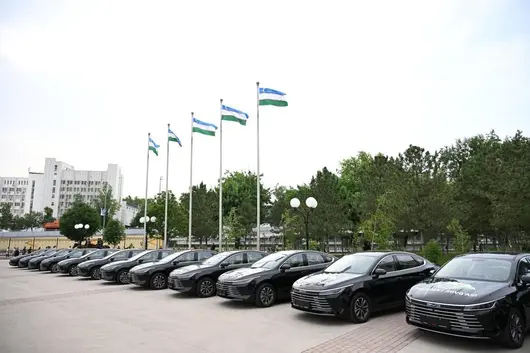
Speaking of highlights, Uzbekistan takes the lead. The President personally signed a presidential decree, awarding BYD a national-level "Medal of Friendship". Earlier than this, the Presidential Office official vehicles were already using BYD models. This national-level recognition is the hardest proof of Chinese new energy vehicles winning overseas government trust.

Not only is the Central Asian market shining, Pakistan also procured nearly 100 pure electric official vehicles in one go, and all have been delivered. This is also the first time the local area introduced new energy official vehicles on a large scale. At the same time, the Cape Verde government fleet directly switched completely to BYD; Hungary and Austria also included BYD in foreign affairs reception vehicles. Police vehicles are seeing frequent good news too, with Philippine Dolphin police cars and Mexican Destroyer 05 police cars starting service one after another. Multiple car models adapt to various duty scenarios.

Good news from overseas continues, and domestically BYD also firmly stays at the top. In the first half of the year, BYD secured over 22% market share in domestic new energy official vehicles, ranking first in government procurement sales. Currently, government agencies in many places continue bulk purchasing. In police scenarios, Fang Cheng Bao Titanium 7 and other models are landing in batches. Sedans, SUVs, and pickups are all available in full categories. Patrol, law enforcement, and emergency response can all be handled.

In the past, the official vehicle market was basically firmly occupied by joint venture brands. Now, relying on solid technology and brand reputation, BYD has delivered a Chinese solution for global government electrification.
In summary, official vehicles represent official endorsement and trust. Securing big orders overseas and defending advantages domestically, "Made in China" steadily stands on the global high-end automotive track!

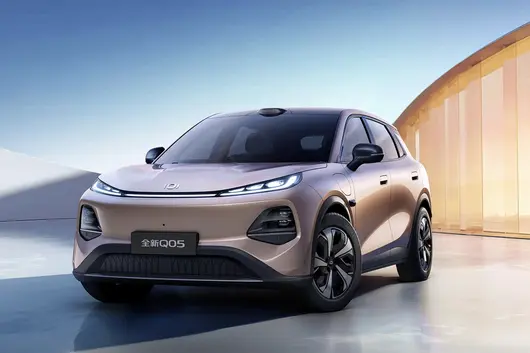
The 2027 Changan Qiyuan Q05 officially launched on October 13, 2026. As a model year revision, the new car has updates on appearance colors and configuration levels.
What Changes Are There In Interior and Exterior Configurations?
The appearance continues the Digital Wisdom Flying Wing 2.0 design language, adding exclusive colors. It further enriches choices based on the five existing body colors: Pine Green, Flowing Gold Purple, Moonlight Silver, Cloud Shadow Grey, and Cloud Brocade White.

This time only the Le Enjoy, Shu Comfort, and Chang Enjoy three versions with 506 km range are newly released. Core upgrades focus on two key configurations: 506 km range versions come standard with heat pump air conditioning, and the Tire Blowout Stability System is standard across the entire lineup.
The former directly solves the biggest shortcoming of the current model lineup lacking heat pump air conditioning and severe winter range shrinkage; the latter is comprehensively pushed through 46 whole-vehicle OTA upgrades, changing safety configurations from high-spec exclusive to entire lineup standard.
From Monthly Sales of Thousands to Six Consecutive Titles, Cumulative 100,000 Units Write a U-Shaped Curve
Reviewing the sales trajectory of Changan Qiyuan Q05, this is a typical U-shaped growth curve. At the beginning of the 2025 launch, monthly sales hovered between 1,000 to 2,000 units for a long time, having almost no presence in the compact SUV market.
The turning point occurred in March 2026, when the monthly retail sales suddenly jumped to 12,602 units, then climbed all the way to 15,814 units in April, 15,954 in May, 18,908 in June, reaching 18,871 in July.

Cumulative sales from January to August 2026 reached 52,674 units, with August single month reaching 17,349 units. As of August, the cumulative sales of the new Q05 broke through 100,000 units, holding the compact SUV sales champion title for 6 consecutive months. In September, global cumulative sales broke through 30,000 units.
All-Around Benchmark in the 100,000-Level Market, Balanced Product Power Precisely Hits Essential Needs
The core reason Changan Qiyuan Q05 stands out is that it doesn't win through price wars, but through configuration wars making it a hit. This car accurately positions itself in the 100,000-level home pure electric SUV market, making high-level configurations standard: Entire lineup standard CATL Golden Bell 2.0 battery, entire lineup supports 3C fast charging, 15 minutes from 30% to 80%, high-spec versions equipped with LiDAR and Horizon J6M chips, supporting Highway NOA pilot assistance.

2,735 mm wheelbase and 540 L trunk space are at a leading level in the same class. Compared with major competitors, Qiyuan Q05's 405 km version power consumption is only 11.30 kWh/100 km, significantly lower than BYD Yuan UP's 12.5 kWh/100 km, fast charging speed is also far better than competitors. To summarize in one sentence: Within a 100,000-level budget, Qiyuan Q05 forces configurations that others dare not release downwards into it, making users believe this brand is worth paying for.

Heat Pump Air Conditioning Fixes Shortcomings, Tire Blowout Stability Sets New Safety Benchmark for Same Class
The 2027 model upgrades are extremely targeted. The biggest user pain point of the current Qiyuan Q05 is the entire lineup lacks heat pump air conditioning, relying on PTC resistance heating causing winter range to shrink significantly. Actual test shows winter 2 to 6°C temperature, highway range only 200 km+, achievement rate less than 50%.

After the 506 km version standard heat pump air conditioning, this problem will be significantly improved. Tire Blowout Stability System standard across entire lineup is another highlight - this function was previously pushed free via OTA to old users, 2027 model solidifies it as factory standard, can effectively control vehicle direction under highway blowout scenarios, reduce risk of loss of control. These two upgrades precisely respond to user core demands: Winter range anxiety and driving safety.

Continued Sales Prospects Look Promising, Commuter SUV Worth Recommending
Overall, the 2027 model Qiyuan Q05 continuous sales is almost a certainty event. Besides domestic, Changan Qiyuan Q05 held compact SUV sales champion for 6 consecutive months, overseas market Qiyuan Q05 has officially landed in Thailand market, planned to launch in Spain and Italy in Q1 2027, global layout will provide extra increment to sales. For consumers buying electric commuter SUV, 2027 model Q05 worth recommending: budget limited choose 506 Le Enjoy version enough to meet daily commute; pursue comfort experience recommend Shu Comfort version; users with demand for smart driving can pay attention to Chang Enjoy version.

Dengan adilnya, pasaran kenderaan rasmi adalah batu uji yang tepat untuk menguji kekuatan sebenar pengeluar kenderaan! Dan sekarang, di trek premium ini, jenama China kami, BYD sedang melakukan penembusan kuat di peringkat global, mencapai kejayaan dua hala di dalam dan luar negara, serta terus memimpin pasaran kenderaan rasmi tenaga baharu di seluruh dunia.
Lihat dahulu jumlah keseluruhan, jualan luar negara kereta penumpang dan pikap BYD pada separuh pertama 2026 hampir 790,000 unit, naik mendadak 67.9% berbanding tahun sama, perniagaan tersebar ke lebih 120 negara di seluruh dunia, pasaran utama seperti United Kingdom, Brazil, Thailand, terus menduduki kejuaraan jualan tenaga baharu. Dengan tapak asas yang kukuh ini, perniagaan kenderaan rasmi tenaga baharu BYD semakin berkembang pesat.
Masa paling gemilang pastinya Uzbekistan. Presiden sendiri menandatangani perintah presiden, memberikan Pingat "Persahabatan" peringkat kebangsaan kepada BYD. Lebih awal daripada itu, kenderaan rasmi di istana presiden sudah menggunakan model BYD, pengiktirafan peringkat kebangsaan ini adalah bukti paling kukuh kenderaan tenaga baharu China merangkul kepercayaan pentadbiran luar negara.
Bukan sahaja pasaran Asia Tengah menonjol, Pakistan sekali gus membeli hampir seratus buah kenderaan rasmi elektrik sepenuhnya, dan telah dihantar sepenuhnya, ini juga kali pertama pengenalan besar-besaran kenderaan rasmi tenaga baharu di sana. Pada masa yang sama, armada kerajaan Cape Verde terus menukar sepenuhnya kepada BYD; Hungary dan Austria juga memasukkan BYD ke dalam kenderaan rasmi untuk urusan diplomatik. Kenderaan polis pula menerima berita positif, polis Dolphin Filipina, polis Destroyer 05 Mexico berkhidmat berturut-turut, pelbagai model disesuaikan dengan pelbagai situasi tugas.
Berita gembira dari luar negara berterusan, pasaran dalam negara BYD juga kekal di kedudukan teratas. Pada separuh pertama tahun, BYD menguasai lebih 22% bahagian pasaran kenderaan rasmi tenaga baharu dalam negara, jualan perolehan kerajaan menduduki tempat pertama, ketika ini banyak institusi terus membuat pembelian pukal. Dalam senario penguatkuasaan, model seperti Fangchengbao Titanium 7 didatangkan secara pukal, sedan, SUV, pikap semua kategori tersedia, patroli, penguatkuasaan, dan keadaan kecemasan semua boleh diatasi.
Dulu, pasaran kenderaan rasmi dipegang ketat oleh jenama gabungan. Kini dengan teknologi yang kukuh dan reputasi jenama, BYD telah memberikan penyelesaian pengelektrikan pentadbiran global daripada China.
Secara keseluruhannya, kenderaan rasmi mewakili sokongan dan kepercayaan rasmi, luar negara meraih tempahan besar, dalam negara mengekalkan kelebihan, pembuatan pintar China, berdiri kukuh di trek kenderaan premium global!

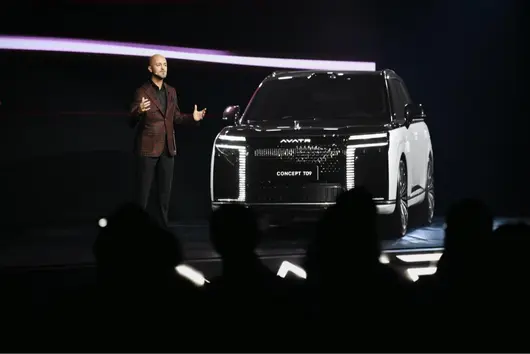
Avatr T09 Concept debuts in Paris and reveals its interior; this flagship SUV targeting the 500,000-yuan segment gathers top-tier technology from Changan, Huawei, and CATL, declaring Avatr's formal offensive towards the European luxury home court.
The Avatr T09 Concept completed its global premiere in Paris. This flagship SUV targeting the 500,000-yuan market segment is not only the inaugural work of Avatr's flagship sequence but also the mass-produced model with the highest technology density for the brand to date, expected to hit the market within 2026. Top-tier technologies from Changan, Huawei, and CATL converge here: a 2.0T hybrid engine paired with a three-motor distributed electric drive, with total system power exceeding 1,000 horsepower; bolstered by CATL's Shao Yao Super Extended Hybrid Battery (71.24kWh), offering a CLTC pure electric range of up to 400km. In the heartland of traditional luxury within the 500,000-yuan segment, Avatr plays no games, directly reshaping flagship standards with hard-core data.
In terms of design and cockpit experience, the T09 rejects the cold stacking of features, fully landing the "Emotional New Luxury" philosophy. The exterior presence is self-evident: the 3D embossed grille is composed of 362 LOGO elements of varying heights, paired with a 2.1 sq m super-large clamshell hood and dual-layer diamond-cut crystal light groups, perfectly fusing architectural presence with power. Inside the cabin, the industry-exclusive retractable Vortex Emotional Vortex becomes the interaction core, built with 118 RGB LED matrix light sources, accompanied by pinch protection to guard details; coupled with a 10.25-inch instrument panel and a one-piece triple screen composed of dual 17.2-inch center and passenger screens, the touch-and-connect NFC feature makes interaction smoother, making technology truly possess warmth.
More worth noting is the underlying logic behind Avatr's global expansion. Going head-to-head in the European home market relies absolutely not on slogans, but on solid, tangible system capabilities. Currently, Avatr's business covers 70 countries and regions, with an average product selling price exceeding 300,000 yuan and profitability already achieved. Among them, market share in Egypt's high-end EV sector reaches 10%, and the Avatr 11 took the sales champion title in Thailand's luxury pure electric SUV market. In 2027, Avatr will formally enter Europe; the 06T and 07L will serve as the first batch of core products, landing in Norway and Spain first, directly challenging the origin of century-old luxury. Over the next three years, the European product matrix and services will continue to be perfected.
From the Paris debut to the planned entry into Europe, the unveiling of the Avatr T09 released a clear signal: the upward breakthrough of Chinese automobiles has evolved from simple product export to a brand value leap centered on original design and top-tier technology. On the path of defining new luxury, Avatr is using an uncompromising attitude and absolute technical advantages, not following the crowd, challenging the global luxury first tier head-to-head.


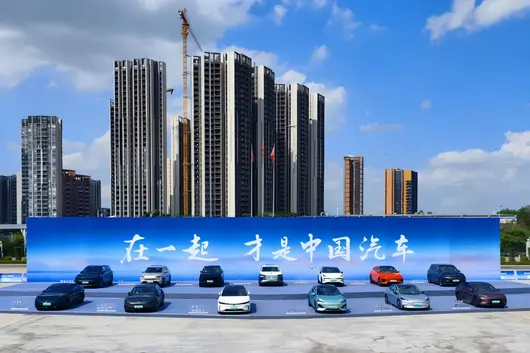
On October 10, the Ministry of Industry and Information Technology, Ministry of Public Security, Ministry of Ecology and Environment, and State Administration for Market Regulation jointly issued the "Notice on Further Strengthening the Management of Innovative Design, R&D, and Testing Verification of Automobile Products (Draft for Comments)".
The next day, People's Daily Client published an opinion piece titled "Four Departments Join Hands, Say No to 'Quick-Made Cars'!", clearly pointing out the direction of the document.
Almost at the same time, the Maextro V800 brake pedal bracket breakage incident continued to ferment in the public opinion field, and the authoritative investigation conclusion has not yet been released. However, the discussion has already settled on a basic consensus: Brake system related components should never fail during normal vehicle operation. Whether the vehicle involved has defects still depends on the answer from an authoritative investigation.
This brake from domestic regulation is easily read as only concerning domestic consumer rights. However, looking at the node where Chinese car exports are moving towards the tens of millions of units scale, it has another meaning: Chinese cars cannot carry the "Quick-Made" baggage to knock on the door of the global market. We hope overseas users finally remember "Value for Money", not just "Cheap".

30,000 km plus "Two Winters and One Summer", establishing the universal trust threshold of the global market
The benchmark of this draft for comments is quite specific. In R&D testing verification, it proposes requiring new declared products to complete reliability and durability, structural reliability, software function reliability, and environmental adaptability tests. Among them, the reliability verification test mileage shall not be less than 30,000 km, the environmental adaptability verification period shall not be less than 1 year, and must include "Two Winters and One Summer".
In innovative design, it draws multiple red lines: it proposes prohibiting fully hidden door handles, forbids using folding screens or flexible screens, "zero-gravity" seats, rotating seats, or folding seats into beds shall not be used during driving. Emergency escape, emergency braking, and other manipulation parts involving safety must retain physical buttons and conspicuous markings. The document proposes adding 51 main vehicle product technical parameters.
The timeline is also clear: According to the draft for comments, starting January 1, 2027, new products that fail to complete testing verification as required or provide false materials will not be announced, meaning they cannot enter the production access list or go on sale for consumption; products that have obtained the announcement must submit materials for reporting before July 1, 2027. If overdue and safety hazards exist, production will be stopped and recalls will be implemented.
The change in regulatory logic is more noteworthy than the provisions themselves: shifting from the past "meeting national standards is enough" to "sufficient R&D verification before access". Regulation no longer only looks at whether submitted samples pass the line, but asks whether enterprises have actually finished their homework before mass production.
These requirements are not "high standards" unique to the Chinese market; rather, they are the most basic trust language of a mature automotive market for a vehicle. High temperature, high cold, high altitude calibration, and complete road tests are the global development rhythm already passed in the fuel vehicle era. Professor Zhu Xichan of the School of Automotive and Energy at Tongji University gave reference in an interview with People's Daily Client: Whole vehicle road testing for new models usually requires Two Winters and Two Summers; even for facelifts, one Winter and one Summer, and 30,000 km of real road testing are indispensable. The draft for comments sets the access lower limit at "Two Winters and One Summer", and the space left between this and the higher rhythm followed by enterprises for sufficient verification is precisely the space for enterprises to add layers themselves.
From this perspective, this document is not adding burdens to enterprises, but allowing them to complete a qualification match for the global arena in the domestic market first. Cui Dongshu, head of the China Association of Automobile Distributors Passenger Car Division, compares the reliability mileage standard to a "coming of age ceremony" for new energy vehicles, believing the industry is shifting from "cultivation priority" to "norm priority". The meaning of adulthood is that one cannot use children's standards to demand oneself.
"Quick-Made" can rely on iteration repairs domestically, overseas margin for error narrows significantly
The "Quick-Made Car" controversy appeared concentrated this year, with fertile soil. According to sorting by 21st Century Business Herald, in the fuel vehicle era, the development cycle of a new model was generally more than 36 months, with some as long as 40 to 60 months; after entering the new energy era, the industry average cycle was compressed to 28 to 39 months first, further compressed to about 24 months in 2026, and some new power brands even approached 12 to 18 months. Data from BitAuto shows that in the first half of 2026, there were as many as 576 new car models launched domestically. Great Wall Motor founder Wei Jianjun therefore sighed, on average there are two to three press conferences every day.
The tactics of "fast iteration, price for volume, and post-processing with OTA (remote online upgrade)" can operate domestically because domestic user tolerance for new brands is higher, replacement cycles are short, and lower purchase costs partially offset residual value (i.e., used car value retention) anxiety. However, after going overseas, this margin for error mechanism will narrow significantly.
The scrutiny method of the overseas market is completely different: When a car has centralized quality problems, what is remembered is often not a specific brand, but the "Chinese Cars" overall label. With the rapid increase of Chinese cars in overseas holdings, some markets have already begun discussions on Chinese car quality, after-sales, and used car residual value. According to media reports, at the end of last year, a Chinese brand significantly cut prices in the Thai market, with some models seeing price reductions of up to 38%; early this year, similar price competition appeared in the UK. The German business head of Arval, a leasing enterprise under BNP Paribas France, directly told Huxiu in an interview that the residual value gap between Chinese new energy vehicles and European competitive products is essentially a trust gap. Leasing fleet vehicles have high usage intensity, flowing into the used car market in batches after two or three years. Once residual value is suppressed, it hurts all Chinese brands entering this market later.
This is the risk after scaling up. Data from the European Automobile Manufacturers Association (ACEA) shows that in the first half of 2026, five Chinese car enterprises—BYD, SAIC, Chery, Geely, and Leapmotor—sold a total of about 643,000 units in Europe, with market share rising from 4.5% to 8.9%, year-on sales increasing by 111.5%; in May this year, the single-month sales of Chinese brands in 31 European countries exceeded Japanese brands for the first time. The larger the share, the higher the cost of the "Quick-Made" label. Former Deputy Secretary General of the China Association of Automobile Manufacturers, Chen Shihua, reminded at an industry forum before that Chinese cars "really walked too fast", and "can stabilize a bit".
Product competitiveness lesson has been completed, owe the lesson proven by time
It needs to be admitted that today's product competitiveness of Chinese cars is no longer what it used to be. Models such as NIO ET5 have obtained five-star ratings from Euro NCAP (European New Car Assessment Programme). Models of brands such as BYD, Chery, and MG have also successively appeared on the five-star list in recent years.
Besides product competitiveness, the real trend of the price line is more complex than a single number, requiring the curve to be viewed completely. According to CAAM and CPCA data, the average export price of Chinese cars rose steadily from about $16,000 USD in 2021 to about $19,000 USD in 2023; among them, the average export price of new energy vehicles reached above $20,000 around 2022. KPMG China's report calculated at the time that the average price of a single new energy vehicle exported to Europe in 2022 was about $30,000. However, since 2024, this curve has begun to decline: the overall export average price in 2024 was about $18,000 USD, and further dropped to about $16,000 USD in 2025. CPCA analysis indicates the decline is mainly related to the decrease in Tesla export proportion, export market structure changes, and the increase in the proportion of small pure electric models.
At the same time as the total volume average price fluctuates, the value band of top brands is still rising. China Youth Daily reported that BYD overseas sales in 2025 broke through 1 million vehicles for the first time, reaching 1.05 million vehicles, with an average overseas selling price of about 180,000 RMB per vehicle, and overseas business gross profit margin close to 28%. More and more overseas reviews also admit that the configuration and technology provided by Chinese cars in the same price range are no longer inferior.
But trust is a lagging indicator. Safety ratings can be obtained with one test, but brand perception takes decades. Japanese and Korean car manufacturers dug deeply in Europe for decades before completing the image flip from cheap to reliable; no one achieved it by the number of press conferences. Conversely, if the "pulsed new product launch" rhythm at home is read by the external market as speculation, the scores accumulated in product competitiveness will also be diluted by the narrative. Li Shufu, Chairman of Geely Holding Group Group, reminded at the 2026 Chongqing Auto Forum that cars relate to human lives, "cars cannot be produced with short-quick concepts".
From "Cheap" to "Value for Money", a narrative switch that must be completed
Low price itself is not wrong; it is the natural result of Chinese supply chain efficiency and scale advantages. But low price should be the conclusion obtained after consumers vote with money, not a flag raised by Chinese cars going overseas themselves. Once "Cheap" becomes solidified into a label, it will simultaneously lower three things: premium ability, used car residual value, and trade negotiation position. In January this year, China and Europe reached a price commitment arrangement for electric vehicle trade, replacing some anti-subsidy tariffs by setting a minimum price (referred to as "floor price" in the industry), which objectively compressed the space for purely using low price to pry open the European mass market, and also forced Chinese brands to go up.
What Chinese cars truly need to establish in the global impression is "Value for Money": give better technology, stricter verification, and more long-term peace of mind for the same price, and this "goodness" remains valid even after the vehicle is used for many years. This cannot be completed by marketing talk; it is written in the 30,000 km test mileage, written in the BYD Hungary factory under construction, written in the localization cooperation between Chery and Spanish car companies, written in the service outlets gradually opening on European streets and warranty promises, and also written in details such as Chery joining the IATF International Automotive Task Force Board in June this year to participate in global automotive quality standard formulation—IATF is the institution formulating global automotive quality management system standards.
From a domestic perspective, this switch also has no retreat path. According to industry media estimates, the overall profit margin of the automotive industry has fallen below 3%, and the whole vehicle manufacturing link is even as low as about 1.5%, with space for price-for-volume narrowing. Domestically fighting "Involution" and overseas brand building are essentially the same thing: pulling competition back from "who is faster, who is cheaper" to "who is more reliable, who is more worth it".
The draft for comments from the four departments has drawn a bottom line for the industry. The sentence in the People's Daily Client opinion deserves to be quoted again: "'Steady' is a more persistent 'Fast'." Placed in the overseas context, it can be translated into another sentence: The global market will finally remember not whose press conferences are opened more densely, but whose cars still make people feel at ease after being used for many years.
Unload the burden of the "Quick-Made Car", and Chinese cars can walk far with light gear.
* Personal opinion, for reference only.


喺馬來西亞嘅 SUV 市場,好多買家喺揀車嘅時候都會拿豐田 Fortuner 同 MG HS 嚟做比較。呢兩款車喺價位同定位上都好接近,今日我哋就從多個方面做個詳細嘅比較,幫你省咗做功課嘅時間。
豐田 Fortuner 喺馬來西亞嘅 OTR 售價係 RM 195,880 - 241,880,一共有 3 個版本,包括 2024 2.8T VRZ Diesel(RM 241,880)、2024 2.7L SRZ Petrol(RM 202,880)、2024 2.4L Standard Diesel(RM 195,880)等等。
名爵 HS 喺馬來西亞嘅 OTR 售價係 RM 130,450 - 146,450,一共有 2 個版本,包括 1.5L Standard(RM 105,000)、1.5L Executive(RM 115,000)等等。
從價錢睇,名爵 HS 嘅起價比豐田 Fortuner 平咗 RM 65,430。講真,喺呢個價位段,幾千蚊嘅差距其實唔算大,關鍵都係睇整體嘅性價比同長期使用成本。

豐田 Fortuner 車身長 4400 mm,尾箱 400 L。
名爵 HS 車身長 4400 mm,尾箱 400 L。
兩款車嘅尺寸幾乎一樣,車內空間分別唔大。呢個級別嘅車,日常使用完全夠用。

豐田 Fortuner 採用 FWD 驅動方式。
名爵 HS 採用 FWD 驅動方式。
兩款車嘅驅動方式一樣,都係 FWD,日常駕駛感受唔會有太大分別。

豐田 Fortuner 同 MG HS 都係馬來西亞市場嘅主流選擇,適合家庭使用、日常通勤。如果你更睇重品牌口碑同二手價,可以優先考慮口碑更好嗰款;如果你更介意性價比同配備,嗰就揀配備更豐富嗰款。最終都建議兩款都去試駕,親身體驗先至最重要。
總嚟講,豐田 Fortuner 同 MG HS 都係馬來西亞市場好唔錯嘅車型。揀邊一輛,關鍵都要睇你嘅個人需求同預算。建議大家做足功課,多比較幾間車行嘅報價,再去試駕先做最終決定。買車係件大事,花少少時間做功課絕對唔會錯。


Dalam pasaran SUV di Malaysia, ramai pembeli semasa memilih kereta akan membandingkan Toyota Fortuner dan Chery Tiggo 8 PHEV. Kedua-dua kereta ini mempunyai harga dan segmen yang agak hampir. Hari ini, kita akan membuat perbandingan terperinci dari pelbagai aspek untuk membantu anda menjimatkan masa.
Toyota Fortuner mempunyai harga OTR di Malaysia sebanyak RM 195,880 - 241,880, terdapat 3 varian, termasuk 2024 2.8T VRZ Diesel (RM 241,880), 2024 2.7L SRZ Petrol (RM 202,880), 2024 2.4L Standard Diesel (RM 195,880) dan lain-lain.
Chery Tiggo 8 PHEV mempunyai harga OTR di Malaysia sebanyak RM 159,750 - 159,750, terdapat 2 varian, termasuk 1.6L Turbo Standard (RM 130,000), 1.6L Turbo Premium (RM 145,000) dan lain-lain.
Dari segi harga, harga permulaan Chery Tiggo 8 PHEV adalah RM 36,130 lebih murah berbanding Toyota Fortuner. Sejujurnya, dalam segmen harga ini, perbezaan beberapa ribu sebenarnya tidak besar, perkara utama adalah melihat nilai keseluruhan dan kos penggunaan jangka panjang.
Penarafan keselamatan Toyota Fortuner adalah 5★ (ASEAN NCAP), sistem keselamatan aktif termasuk.
Penarafan keselamatan Chery Tiggo 8 PHEV adalah TBD, sistem keselamatan aktif termasuk Basic.
Toyota Fortuner menggunakan sistem penggerak FWD.
Chery Tiggo 8 PHEV menggunakan sistem penggerak FWD.
Kedua-dua kereta ini mempunyai sistem penggerak yang sama, iaitu FWD, pengalaman memandu sehari-hari tidak akan mempunyai perbezaan besar.
Toyota Fortuner dan Chery Tiggo 8 PHEV adalah pilihan utama pasaran Malaysia, sesuai untuk kegunaan keluarga dan perjalanan harian. Jika anda lebih menghargai reputasi jenama dan harga jualan semula, anda boleh mengutamakan yang mana satu mempunyai reputasi lebih baik; jika anda lebih memperdulikan nisbah harga dan kelengkapan, pilih yang mempunyai kelengkapan lebih lengkap. Akhir sekali, disarankan untuk membuat uji memandu kedua-dua kereta, pengalaman sendiri adalah yang paling penting.
Secara keseluruhannya, Toyota Fortuner dan Chery Tiggo 8 PHEV adalah model kereta yang sangat baik di pasaran Malaysia. Memilih mana satu, perkara utama adalah bergantung pada keperluan dan bajet peribadi anda. Kami menyarankan anda melakukan riset, bandingkan tawaran harga dari beberapa dealer, kemudian buat uji memandu untuk keputusan akhir. Membeli kereta adalah perkara besar, meluangkan masa membuat riset tidak akan pernah salah.

Dalam pasaran SUV di Malaysia, ramai pembeli membandingkan Toyota Fortuner dan Chery Tiggo 8 Pro ketika memilih kereta.
Toyota Fortuner dijual di Malaysia dengan harga OTR RM 195,880 - 241,880, terdapat 3 varian, termasuk 2024 2.8T VRZ Diesel (RM 241,880), 2024 2.7L SRZ Petrol (RM 202,880), 2024 2.4L Standard Diesel (RM 195,880) dan lain-lain.
Chery Tiggo 8 Pro dijual di Malaysia dengan harga OTR RM 159,750 - 159,750, terdapat 2 varian, termasuk 1.6L Turbo Standard (RM 130,000), 1.6L Turbo Premium (RM 145,000) dan lain-lain.
Dari segi harga, harga permulaan Chery Tiggo 8 Pro adalah RM 36,130 lebih murah daripada Toyota Fortuner. Jujurnya, pada julat harga ini, perbezaan ribuan ringgit sebenarnya tidak terlalu besar, yang penting adalah nilai keseluruhan dan kos penggunaan jangka panjang.
Penilaian keselamatan Toyota Fortuner adalah 5★ (ASEAN NCAP), sistem keselamatan aktif termasuk .
Penilaian keselamatan Chery Tiggo 8 Pro adalah TBD, sistem keselamatan aktif termasuk Basic.
Panjang badan Toyota Fortuner 4400 mm, ruang bagasi 400 L.
Panjang badan Chery Tiggo 8 Pro 4400 mm, ruang bagasi 400 L.
Saiz kedua-dua kereta hampir sama, ruang dalaman tidak banyak berbeza. Kereta dalam julat ini, cukup untuk penggunaan harian.
Toyota Fortuner dijamin 5 tahun/tanpa had jarak, selang penyelenggaraan setiap 10,000km atau 6 bulan.
Chery Tiggo 8 Pro dijamin 3 tahun/100,000km, selang penyelenggaraan setiap 10,000km atau 6 bulan.
Secara umumnya, Toyota Fortuner dan Chery Tiggo 8 Pro adalah model kereta yang sangat baik di pasaran Malaysia. Memilih mana satu, yang penting adalah keperluan dan bajet peribadi anda. Kami cadangkan anda melakukan penyelidikan terlebih dahulu, bandingkan harga di beberapa dealer, kemudian buat ujian memandu untuk membuat keputusan akhir. Membeli kereta adalah urusan penting, meluangkan masa untuk penyelidikan tidak akan salah.

喺馬來西亞嘅 SUV 市場,好多買家喺揀車嗰陣都會將 Toyota Fortuner 同 Chery Tiggo 7 Pro 嚟做比較。呢兩款車喺價位同定位上都好接近,今日我哋就由多個方面做一個詳細嘅比較,幫你慳做功課嘅時間。
Toyota Fortuner 喺馬來西亞嘅 OTR 售價係 RM 195,880 - 241,880,一共有 3 個版本,包括 2024 2.8T VRZ Diesel(RM 241,880)、2024 2.7L SRZ Petrol(RM 202,880)、2024 2.4L Standard Diesel(RM 195,880) 等。
Chery Tiggo 7 Pro 喺馬來西亞嘅 OTR 售價係 RM 123,750 - 123,750,一共有 2 個版本,包括 1.6L Turbo Standard(RM 125,000)、1.6L Turbo Premium(RM 140,000) 等。
由價錢睇,Chery Tiggo 7 Pro 嘅起步價比 Toyota Fortuner 平咗 RM 72,130。老實講,喺呢個價位段,幾千蚊嘅差距其實唔算大,關鍵仲係睇整體性價比同長期使用成本。
Toyota Fortuner 搭載 2.5L Diesel,馬力 187 hp。官方油耗 8.5 L/100km。
Chery Tiggo 7 Pro 搭載 1.5L Turbo,馬力 140 hp。官方油耗 7.0 L/100km。
動力方面,Toyota Fortuner 嘅 2.5L Diesel 比 Chery Tiggo 7 Pro 嘅 1.5L Turbo 多咗 47 匹馬力,中段加速更有信心,尤其係跑高速公路超車嗰陣。不過 Chery Tiggo 7 Pro 嘅油耗可能更抵用,日常市區通勤差異唔會太大。
Toyota Fortuner 嘅安全評級係 5★ (ASEAN NCAP),主動安全系統包括。
Chery Tiggo 7 Pro 嘅安全評級係 TBD,主動安全系統包括 Basic。
Toyota Fortuner 車身長 4400 mm,後備箱 400 L。
Chery Tiggo 7 Pro 車身長 4400 mm,後備箱 400 L。
兩款車嘅尺寸差唔多一樣,車內空間差異唔大。呢個級別嘅車,日常使用完全夠用。
Toyota Fortuner 保養期 5 年/不限里程,保養間隔 每 10,000km 或 6 個月。
Chery Tiggo 7 Pro 保養期 3 年/100,000km,保養間隔 每 10,000km 或 6 個月。
總體嚟講,Toyota Fortuner 同 Chery Tiggo 7 Pro 都係馬來西亞市場好好嘅車型。揀邊一輛,關鍵仲要睇你嘅個人需要同預算。建議大家做好功課,多比較幾間車行嘅報價,先至去試駕做最終決定。買車係件大事,花啲時間做功課絕對唔會錯。

喺馬來西亞嘅 SUV 市場,好多買家喺揀車嘅時候都會拿 Toyota Fortuner 同 Chery Tiggo 7 Pro 嚟做比較。這兩款車喺價位同定位上都幾相近,而家我哋就從多個方面做一個詳細嘅比較,幫你省返做功課嘅時間。
Toyota Fortuner 喺馬來西亞嘅 OTR 售價係 RM 195,880 - 241,880,一共有 3 個版本,包括 2024 2.8T VRZ Diesel(RM 241,880)、2024 2.7L SRZ Petrol(RM 202,880)、2024 2.4L Standard Diesel(RM 195,880)等。
Chery Tiggo 7 Pro 喺馬來西亞嘅 OTR 售價係 RM 123,750 - 123,750,一共有 2 個版本,包括 1.6L Turbo Standard(RM 125,000)、1.6L Turbo Premium(RM 140,000)等。
從價錢嚟睇,Chery Tiggo 7 Pro 嘅起步價比 Toyota Fortuner 平咗 RM 72,130。老實講,喺呢個價位段,幾千塊嘅差距其實唔算大,關鍵仲係睇整體嘅性價比同長期使用成本。
Toyota Fortuner 採用 FWD 驅動方式。
Chery Tiggo 7 Pro 採用 FWD 驅動方式。
兩款車嘅驅動方式一樣,都係 FWD,日常駕駛感受唔會有太大分別。
Toyota Fortuner 保修 5 年/無限里程,保養間隔 每 10,000km 或 6 個月。
Chery Tiggo 7 Pro 保修 3 年/100,000km,保養間隔 每 10,000km 或 6 個月。
Toyota Fortuner 同 Chery Tiggo 7 Pro 都係馬來西亞市場嘅主流選擇,適合家庭用、日常通勤。如果你更重視品牌口碑同二手價,可以優先考慮口碑更好嗰款;如果你更在意性價比同配備,那就揀配置更豐富嗰款。最後仲係建議兩款都去試駕,親身體驗先係最重要嘅。
總括嚟講,Toyota Fortuner 同 Chery Tiggo 7 Pro 都係馬來西亞市場幾唔錯嘅車型。揀邊一輛,關鍵仲係要睇你個人需求同預算。建議大家做好功課,多比較幾間車行嘅報價,再試駕先做最終決定。買車係件大事,花少少時間做功課絕對唔會錯。

喺馬來西亞嘅 SUV 市場,好多買家喺揀車嘅時候都會拎 豐田 Fortuner 同 奇瑞 瑞虎 7 Pro 嚟做比較。這兩款車喺價錢同定位上都幾接近,今日我哋就從多個方面做一個詳細嘅比較,幫你節省做功課嘅時間。
豐田 Fortuner 喺馬來西亞嘅落地價係 RM 195,880 - 241,880,合共 3 個版本,包括 2024 2.8T VRZ Diesel(RM 241,880)、2024 2.7L SRZ Petrol(RM 202,880)、2024 2.4L Standard Diesel(RM 195,880) 等等。
奇瑞 瑞虎 7 Pro 喺馬來西亞嘅落地價係 RM 123,750 - 123,750,合共 2 個版本,包括 1.6L Turbo Standard(RM 125,000)、1.6L Turbo Premium(RM 140,000) 等等。
由價錢嚟睇,奇瑞 瑞虎 7 Pro 嘅入場價比 豐田 Fortuner 平咗 RM 72,130。講真,喺呢個價位段,幾千蚊嘅差距其實唔算大,關鍵仲係睇整體嘅性價比同長期使用成本。
豐田 Fortuner 嘅安全評級係 5★ (ASEAN NCAP),主動安全系統包括 。
奇瑞 瑞虎 7 Pro 嘅安全評級係 TBD,主動安全系統包括 Basic。
豐田 Fortuner 採用 FWD 前輪驅動方式。
奇瑞 瑞虎 7 Pro 採用 FWD 前輪驅動方式。
兩款車嘅驅動方式一樣,都係 FWD,日常駕駛感受唔會有太大分別。
豐田 Fortuner 同 奇瑞 瑞虎 7 Pro 都係馬來西亞市場嘅主流選擇,適合家庭使用、日常通勤。如果你更重視品牌口碑同二手價,可以優先考慮口碑更好嗰款;如果你更在意思性價比同配備,就揀配備更豐富嗰款。最終都係建議兩款都去試駕,親身體驗先係最重要嘅。
總括嚟講,豐田 Fortuner 同 奇瑞 瑞虎 7 Pro 都係馬來西亞市場幾唔錯嘅車型。揀邊一輛,關鍵都要睇你嘅個人需求同預算。建議大家做好功課,多比較幾間車行嘅報價,先去試駕先至做最終決定。買車係件大事,花少少時間做功課絕對唔會錯。

喺馬來西亞嘅 SUV 市場,好多買家喺揀車嘅時候都會拿 Toyota Fortuner 同 Mazda CX-80 嚟做比較。呢兩款車喺價位同定位上都蠻接近嘅,今日我哋就從多個方面做一個詳細嘅對比,幫你省做功課嘅時間。
豐田 Fortuner 喺馬來西亞嘅 OTR 售價係 RM 195,880 - 241,880,一共有 3 個版本,包括 2024 2.8T VRZ Diesel(RM 241,880)、2024 2.7L SRZ Petrol(RM 202,880)、2024 2.4L Standard Diesel(RM 195,880)等。
馬自達 CX-80 喺馬來西亞嘅 OTR 售價係 RM 296,610 - 296,610,一共有 1 個版本,包括 2025 2.5L 65km High Plus(RM 296,610)等。
由價錢嚟睇,豐田 Fortuner 嘅起步價確實比馬自達 CX-80 平咗 RM 100,730。如果你預算有限,豐田嘅入門版已經可以满足日常需要。但都要注意,平嗰幾千蚊,可能喺配備上會有取捨,具體要睇你嘅需要。
豐田 Fortuner 搭載 2.5L Diesel,馬力 187 hp。官方耗油 8.5 L/100km。
馬自達 CX-80 搭載 2.0L Turbo,馬力 220 hp。官方耗油 9.5 L/100km。
動力方面,馬自達 CX-80 嘅 2.0L Turbo 比豐田 Fortuner 嘅 2.5L Diesel 多咗 33 匹馬力。不過日常喺市區開,兩款車嘅動力都夠用,唔會覺得唔夠力。
豐田 Fortuner 嘅安全評級係 5★ (ASEAN NCAP),主動安全系統包括。
馬自達 CX-80 嘅安全評級係 5★ (ASEAN NCAP),主動安全系統包括 Brand ADAS。
兩款車嘅安全評級一樣,喺呢個級別入面安全配備都算好齊全。依家嘅新車安全性都好好,唔使太擔心呢一點。
豐田 Fortuner 採納 FWD 驅動方式。
馬自達 CX-80 採納 FWD 驅動方式。
兩款車嘅驅動方式一樣,都係 FWD,日常駕駛感受唔會有太大分別。

總體嚟講,豐田 Fortuner 同馬自達 CX-80 都係馬來西亞市場好好嘅車型。揀邊一輛,關鍵都係要睇你嘅個人需要同預算。建議大家做足功課,多比較幾間車行嘅報價,再去試駕先做最終決定。買車係件大事,花啲時間做功課絕對唔會錯。

In Malaysia's SUV market, many buyers compare Toyota Fortuner and Mazda CX-80 when choosing a car.
Toyota Fortuner's OTR price in Malaysia is RM 195,880 - 241,880, with a total of 3 versions, including 2024 2.8T VRZ Diesel (RM 241,880), 2024 2.7L SRZ Petrol (RM 202,880), 2024 2.4L Standard Diesel (RM 195,880), etc.
Mazda CX-80's OTR price in Malaysia is RM 296,610 - 296,610, with a total of 1 version, including 2025 2.5L 65km High Plus (RM 296,610), etc.
Looking at the price, Toyota Fortuner's starting price is indeed RM 100,730 cheaper than Mazda CX-80. If your budget is limited, Toyota's entry-level version can already meet daily needs. But also note, the few thousand cheaper difference might involve trade-offs in features, depending on your specific needs.
Toyota Fortuner is equipped with 2.5L Diesel, 187 hp. Official fuel consumption 8.5 L/100km.
Mazda CX-80 is equipped with 2.0L Turbo, 220 hp. Official fuel consumption 9.5 L/100km.
Regarding power, Mazda CX-80's 2.0L Turbo has 33 more horsepower than Toyota Fortuner's 2.5L Diesel. However, for daily city driving, both cars have sufficient power, you won't feel lacking.
Toyota Fortuner body length 4400 mm, trunk 400 L.
Mazda CX-80 body length 4500 mm, trunk 450 L.
In terms of space, Mazda CX-80's body is 100 mm longer than Toyota Fortuner, offering an advantage in seating space. However, Toyota Fortuner is a bit more flexible to park in the city, each has its trade-offs.
Toyota Fortuner and Mazda CX-80 are both mainstream choices in the Malaysian market, suitable for family use and daily commuting. If you value brand reputation and resale value more, you can prioritize the one with better reputation; if you care more about cost-performance ratio and features, choose the one with richer configuration. Ultimately, it is recommended to test drive both, personal experience is the most important.
Overall, Toyota Fortuner and Mazda CX-80 are both quite good models in the Malaysian market. Which one to choose ultimately depends on your personal needs and budget. It is recommended to do your research, compare quotes from several dealerships, and then test drive to make a final decision. Buying a car is a big matter, spending some time doing research will definitely not be wrong.



In the Malaysian SUV market, many buyers compare the Toyota Fortuner and Mazda CX-60 when choosing a car. These two vehicles are quite close in price and positioning. Today we will make a detailed comparison from multiple aspects to help you save time on research.
The OTR price of Toyota Fortuner in Malaysia is RM 195,880 - 241,880, with a total of 3 variants, including 2024 2.8T VRZ Diesel (RM 241,880), 2024 2.7L SRZ Petrol (RM 202,880), 2024 2.4L Standard Diesel (RM 195,880), etc.
The OTR price of Mazda CX-60 in Malaysia is RM 200,510 - 252,873, with a total of 2 variants, including 2026 3.3T 4WD High Plus (RM 252,873), 2025 2.5L 2WD High (RM 200,510), etc.
In terms of price, the Toyota Fortuner's starting price is indeed RM 4,630 cheaper than the Mazda CX-60. If your budget is limited, Toyota's entry-level version can already meet daily needs. However, also note that the few thousand dollars saved might involve trade-offs in features, depending on your specific needs.
Toyota Fortuner is equipped with a 2.5L Diesel, 187 hp. Official fuel consumption is 8.5 L/100km.
Mazda CX-60 is equipped with a 2.0L 4-cyl, 170 hp. Official fuel consumption is 8.0 L/100km.
In terms of power, the Toyota Fortuner's 2.5L Diesel has 17 more horsepower than the Mazda CX-60's 2.0L 4-cyl, providing more confidence in mid-range acceleration, especially when overtaking on highways. However, Mazda CX-60's fuel consumption might be more friendly, and the difference in daily city commuting will not be too large.
Toyota Fortuner body length is 4400 mm, trunk 400 L.
Mazda CX-60 body length is 4500 mm, trunk 450 L.
In terms of space, the Mazda CX-60's body is 100 mm longer than the Toyota Fortuner, giving it an advantage in passenger space. However, the Toyota Fortuner will be more flexible for parking in the city, each has trade-offs.
Toyota Fortuner warranty is 5 years/unlimited mileage, service interval every 10,000km or 6 months.
Mazda CX-60 warranty is 5 years/150,000km, service interval every 10,000km or 6 months.

Overall, both Toyota Fortuner and Mazda CX-60 are very good models in the Malaysian market. Choosing which one depends mainly on your personal needs and budget. It is recommended to do your research, compare quotes from several dealerships, and then test drive to make the final decision. Buying a car is a big matter, spending time on research will never be wrong.


© 2024 Bitauto.com. All Rights Reserved.
Bitauto (www.yiche.com and www.bitauto.com) is one of the most visited automotive websites in China. We provide detailed info on Chinese car brands available in your area. Please note that the information provided on this website is based on publicly available data and is for reference only. It may not be fully updated or accurate at all times.

Help us improve our website


