

HomeHonda City

Search History
Popular Searches
Dealer Login / Sign Up

喺馬來西亞嘅 SUV 市場,好多買家在揀車嗰陣都會拿 Honda CR-V 同 Mazda CX-9 嚟做比較。呢兩款車喺價位同定位上都幾接近,今日我哋就從多個方面做個詳細比較,幫你省返做功課嘅時間。
Honda CR-V 喺馬來西亞嘅 OTR 售價係 RM 178,200 - 195,900,一共有 4 個版本,包括 2026 e:HEV 2.0L 2WD RS(RM 195,900)、2026 1.5T 4WD V(RM 181,900)、2026 e:HEV 2.0L 2WD E(RM 178,200)等。
Mazda CX-9 喺馬來西亞嘅 OTR 售價係 RM 328,810 - 345,810,一共有 2 個版本,包括 2023 2.5T 4WD(RM 345,810)、2023 2.5T 2WD(RM 328,810)等。
從價錢睇,Honda CR-V 嘅入門價確實比 Mazda CX-9 平咗 RM 150,610。如果你預算有限,Honda 嘅入門版已經可以滿足日常需求。但都要注意,平少少嘅幾千蚊,可能會喺配備上有取舍,具體要睇你嘅需求。

Honda CR-V 搭載 2.0L 4-cyl,馬力 170 hp。官方油耗 8.0 L/100km。
Mazda CX-9 搭載 2.0L Turbo,馬力 220 hp。官方油耗 9.5 L/100km。
動力方面,Mazda CX-9 嘅 2.0L Turbo 比 Honda CR-V 嘅 2.0L 4-cyl 多咗 50 匹馬力。不過日常喺市區開,兩款車嘅動力都夠用,唔會覺得唔夠力。

Honda CR-V 採 FWD 驅動方式。
Mazda CX-9 採 FWD 驅動方式。
兩款車嘅驅動方式一樣,都係 FWD,日常駕駛感受唔會有太大分別。

Honda CR-V 保用 5 年/無限制里程,保養間隔 每 10,000km 或 6 個月。
Mazda CX-9 保用 5 年/150,000km,保養間隔 每 10,000km 或 6 個月。

Honda CR-V 同 Mazda CX-9 都係馬來西亞市場嘅主流選擇,適合家庭使用、日常通勤。如果你更睇重品牌口碑同二手價,可以優先考慮口碑更好嗰一款;如果你更在意性價比同配備,就揀配置更豐富嗰款。最終都係建議兩款都去試駕,親身體驗先係最重要。

總嘅嚟講,Honda CR-V 同 Mazda CX-9 都係馬來西亞市場好唔錯嘅車型。揀邊一輛,關鍵都係要睇你嘅個人需求同預算。建議大家做好功課,多比較幾間車行嘅報價,先去試駕做最終決定。買車係件大事,花少少時間做功課絕對唔會錯。


In Malaysia's SUV market, many buyers compare Honda CR-V and Mazda CX-8 when choosing a car. These two cars are quite close in price and positioning. Today, we will make a detailed comparison from multiple aspects to help you save time on research.
Honda CR-V OTR price in Malaysia is RM 178,200 - 195,900, with a total of 4 versions, including 2026 e:HEV 2.0L 2WD RS (RM 195,900), 2026 1.5T 4WD V (RM 181,900), 2026 e:HEV 2.0L 2WD E (RM 178,200), etc.
Mazda CX-8 OTR price in Malaysia is RM 165,360 - 201,360, with a total of 5 versions, including 2025 2.5T 4WD High Plus Petrol (RM 201,360), 2025 2.2L 2WD High Plus Diesel (RM 193,123), 2025 2.5L 2WD High Plus Petrol (RM 186,360), etc.
From a price perspective, Mazda CX-8's starting price is RM 12,840 cheaper than Honda CR-V. Honestly, in this price range, a difference of a few thousand is not really significant, the key is to look at the overall cost-effectiveness and long-term usage costs.
Honda CR-V comes with 2.0L 4-cyl, 170 hp power. Official fuel consumption 8.0 L/100km.
Mazda CX-8 comes with 2.0L 4-cyl, 170 hp power. Official fuel consumption 8.0 L/100km.
Both cars use the same powertrain system, the driving feel is basically the same in daily use. Fuel consumption is also similar, no need to worry too much about this point.
Honda CR-V body length 4500 mm, trunk 450 L.
Mazda CX-8 body length 4500 mm, trunk 450 L.
The dimensions of both cars are almost the same, the interior space difference is not large. For this class of cars, daily use is fully sufficient.
Honda CR-V adopts FWD drive system.
Mazda CX-8 adopts FWD drive system.
Both cars have the same drive system, both are FWD, daily driving feeling will not have much difference.

Honda CR-V and Mazda CX-8 are both mainstream choices in the Malaysian market, suitable for family use, daily commuting. If you value brand reputation and resale value more, you can prioritize the one with better reputation; if you care more about cost-performance ratio and features, then choose the one with richer configuration. In the end, it is recommended to test drive both, personal experience is the most important.
Overall, Honda CR-V and Mazda CX-8 are both very good models in the Malaysian market. Which one to choose mainly depends on your personal needs and budget. It is recommended that you do your research, compare quotes from several car dealerships, and then go for a test drive to make a final decision. Buying a car is a big matter, spending time on research will never be wrong.

In Malaysia's SUV market, many buyers compare the Honda CR-V and Mazda CX-5 when choosing a car. These two models are quite close in price and positioning. Today, we will make a detailed comparison from multiple aspects to help you save time on research.
The OTR price of the Honda CR-V in Malaysia is RM 178,200 - 195,900, with a total of 4 versions, including 2026 e:HEV 2.0L 2WD RS (RM 195,900), 2026 1.5T 4WD V (RM 181,900), 2026 e:HEV 2.0L 2WD E (RM 178,200) etc.
The OTR price of the Mazda CX-5 in Malaysia is RM 135,469 - 166,760, with a total of 3 versions, including 2025 2.0L AT 35th Anniversary (RM 316,154), 2025 2.0L AT (RM 296,154), 2025 2.0L MT (RM 294,154) etc.
From a price perspective, the starting price of the Mazda CX-5 is RM 42,731 cheaper than the Honda CR-V. Honestly, at this price segment, a difference of a few thousand is not really significant; the key is to look at overall value for money and long-term maintenance costs.
The Honda CR-V is equipped with a 2.0L 4-cyl engine, 170 hp. Official fuel consumption 8.0 L/100km.
The Mazda CX-5 is equipped with a 1.5L Turbo engine, 140 hp. Official fuel consumption 7.0 L/100km.
In terms of power, the Honda CR-V's 2.0L 4-cyl has 30 more horsepower than the Mazda CX-5's 1.5L Turbo, providing more confidence in mid-range acceleration, especially when overtaking on highways. However, the Mazda CX-5's fuel consumption might be better, and the difference in daily city commuting won't be too significant.
The Honda CR-V's safety rating is 5★ (ASEAN NCAP), active safety systems include Honda SENSING (ACC, CMBS, LKAS, RDM).
The Mazda CX-5's safety rating is 5★ (ASEAN NCAP), active safety systems include .
Both cars have the same safety rating, and safety features are quite complete at this level. New cars nowadays are not bad in safety, no need to worry too much about this point.
Honda CR-V body length 4500 mm, trunk 450 L.
Mazda CX-5 body length 4500 mm, trunk 450 L.
The dimensions of both cars are almost the same, and the interior space difference is not significant. Cars at this level are more than enough for daily use.

Honda CR-V warranty 5 years/unlimited mileage, maintenance interval every 10,000km or 6 months.
Mazda CX-5 warranty 5 years/150,000km, maintenance interval every 10,000km or 6 months.

Overall, the Honda CR-V and Mazda CX-5 are both very good models in the Malaysian market. Which one to choose depends on your personal needs and budget. It is recommended to do your research, compare quotes from several dealerships, and go for a test drive to make the final decision. Buying a car is a big matter, spending some time researching will never go wrong.

Di pasaran SUV di Malaysia, ramai pembeli semasa memilih kereta akan membandingkan Honda CR-V dan Mazda CX-8.
Harga OTR Honda CR-V di Malaysia adalah RM 178,200 - 195,900, terdapat 4 versi, termasuk 2026 e:HEV 2.0L 2WD RS (RM 195,900), 2026 1.5T 4WD V (RM 181,900), 2026 e:HEV 2.0L 2WD E (RM 178,200) dan lain-lain.
Harga OTR Mazda CX-8 di Malaysia adalah RM 165,360 - 201,360, terdapat 5 versi, termasuk 2025 2.5T 4WD High Plus Petrol (RM 201,360), 2025 2.2L 2WD High Plus Diesel (RM 193,123), 2025 2.5L 2WD High Plus Petrol (RM 186,360) dan lain-lain.
Dari segi harga, harga permulaan Mazda CX-8 adalah RM 12,840 lebih murah daripada Honda CR-V. Jujurnya, pada julat harga ini, beza beribu-ribu ringgit sebenarnya tidak besar, yang penting adalah lihat nilai keseluruhan dan kos penggunaan jangka panjang.
Honda CR-V dilengkapi enjin 2.0L 4-cyl, kuasa 170 hp. Penggunaan bahan api rasmi 8.0 L/100km.
Mazda CX-8 dilengkapi enjin 2.0L 4-cyl, kuasa 170 hp. Penggunaan bahan api rasmi 8.0 L/100km.
Kedua-dua kereta menggunakan sistem penarik yang sama, rasa semasa memandu dalam harian hampir tiada perbezaan. Begitu juga penggunaan bahan api, tidak perlu terlalu bimbang dengan hal ini.
Honda CR-V panjang kenderaan 4500 mm, ruang muatan belakang 450 L.
Mazda CX-8 panjang kenderaan 4500 mm, ruang muatan belakang 450 L.
Saiz kedua-dua kereta hampir sama, ruang dalaman tidak banyak berbeza. Kereta pada peringkat ini, penggunaan harian adalah cukup.
Honda CR-V menggunakan cara pemanduan FWD.
Mazda CX-8 menggunakan cara pemanduan FWD.
Cara pemanduan kedua-dua kereta sama, sama-sama FWD, rasa memandu harian tidak akan berbeza terlalu banyak.
Honda CR-V dan Mazda CX-8 kedua-duanya adalah pilihan utama pasaran Malaysia, sesuai untuk kegunaan keluarga, perjalanan harian. Jika anda lebih mementingkan reputasi jenama dan harga kedua, boleh utamakan yang mempunyai reputasi lebih baik; jika anda lebih mengambil berat mengenai nilai dan kelengkapan, pilih yang mempunyai konfigurasi lebih kaya. Pada akhirnya disyorkan untuk uji pemanduan kedua-dua model, pengalaman langsung adalah yang paling penting.
Secara keseluruhan, Honda CR-V dan Mazda CX-8 kedua-duanya adalah model kereta yang sangat baik di pasaran Malaysia. Memilih yang mana, yang penting adalah melihat keperluan dan bajet peribadi anda. Kami cadangkan anda buat kajian, bandingkan harga dari beberapa pengedar kereta, kemudian uji pemanduan untuk membuat keputusan akhir. Membeli kereta adalah perkara besar, luangkan masa membuat kajian tidak akan salah.

在馬來西亞嘅 SUV 市場,好多買家在揀車嘅時候都會拿 Honda CR-V 同 Mazda CX-60 做比較。呢兩款車喺價位同定位上都幾接近,今日我哋就從多個方面做一個詳細嘅比較,幫你省下做功課嘅時間。
Honda CR-V 喺馬來西亞嘅 OTR 售價係 RM 178,200 - 195,900,一共有 4 個版本,包括 2026 e:HEV 2.0L 2WD RS(RM 195,900)、2026 1.5T 4WD V(RM 181,900)、2026 e:HEV 2.0L 2WD E(RM 178,200)等。
Mazda CX-60 喺馬來西亞嘅 OTR 售價係 RM 200,510 - 252,873,一共有 2 個版本,包括 2026 3.3T 4WD High Plus(RM 252,873)、2025 2.5L 2WD High(RM 200,510)等。
從價錢來看,Honda CR-V 嘅起步價確實比 Mazda CX-60 平咗 RM 22,310。如果你預算有限,Honda 嘅入門版已經可以滿足日常需求。但都需要注意,平嗰幾千塊,可能喺配備上有取舍,具體要睇你嘅需求。
Honda CR-V 搭載 2.0L 4-cyl,馬力 170 hp。官方油耗 8.0 L/100km。
Mazda CX-60 搭載 2.0L 4-cyl,馬力 170 hp。官方油耗 8.0 L/100km。
兩款車用嘅係同一套動力系統,日常開起嚟嘅感覺基本上無分別。油耗方面都差不多,唔使太糾結這一點。
Honda CR-V 車身長 4500 mm,尾箱 450 L。
Mazda CX-60 車身長 4500 mm,尾箱 450 L。
兩款車嘅尺寸幾乎一樣,車內空間分別唔大。呢個級別嘅車,日常使用完全夠用。
Honda CR-V 採用 FWD 驅動方式。
Mazda CX-60 採用 FWD 驅動方式。
兩款車嘅驅動方式一樣,都係 FWD,日常駕駛感受唔會有太大區別。

Honda CR-V 同 Mazda CX-60 都係馬來西亞市場嘅主流選擇,適合家庭使用、日常通勤。如果你更睇重品牌口碑同二手價,可以優先考慮口碑更好嗰一款;如果你更在意性價比同配備,就揀配備更豐富嗰款。最後始終建議兩款都去試駕,親身體驗先係最重要嘅。

總體嚟講,Honda CR-V 同 Mazda CX-60 都係馬來西亞市場好唔錯嘅車型。揀邊輛,關鍵始終要睇你嘅個人需求同預算。建議大家做好功課,多比較幾間車行嘅報價,再去試駕做最終決定。買車係件大事,花點時間做功課絕對唔會錯。

喺馬來西亞嘅 SUV 市場,好多人揀車嗰陣都會將 Honda CR-V 同 Mazda CX-60 嚟比較。呢兩款車喺價位同定位上都好接近,今日我哋就由多個方面做個詳細嘅比較,幫你省返做功課嘅時間。
Honda CR-V 喺馬來西亞嘅 OTR 售價係 RM 178,200 - 195,900,一總共有 4 個版本,包括 2026 e:HEV 2.0L 2WD RS(RM 195,900)、2026 1.5T 4WD V(RM 181,900)、2026 e:HEV 2.0L 2WD E(RM 178,200) 等等。
Mazda CX-60 喺馬來西亞嘅 OTR 售價係 RM 200,510 - 252,873,一總共有 2 個版本,包括 2026 3.3T 4WD High Plus(RM 252,873)、2025 2.5L 2WD High(RM 200,510) 等等。
單從價錢睇,Honda CR-V 嘅入門價確實平咗 Mazda CX-60 RM 22,310。如果你預算有限,Honda 嘅入門版已經滿足日常需求。但都要留意,平嗰幾千蚊,可能喺配備上要有取舍,具體睇你嘅需求。
Honda CR-V 配備 2.0L 4-cyl,馬力 170 hp。官方油耗 8.0 L/100km。
Mazda CX-60 配備 2.0L 4-cyl,馬力 170 hp。官方油耗 8.0 L/100km。
兩款車用緊同一套動力系統,日常駕駛嘅感覺基本冇分別。油耗方面都差不多,唔使太糾結呢點。
Honda CR-V 車身長 4500 mm,尾箱 450 L。
Mazda CX-60 車身長 4500 mm,尾箱 450 L。
兩款車嘅尺寸幾近一樣,車內空間差別唔大。呢個級別嘅車,日常使用完全夠用。
Honda CR-V 同 Mazda CX-60 都係馬來西亞市場嘅主流選擇,適合家庭使用、日常通勤。如果你更重視品牌口碑同二手價,可以優先考慮口碑好嗰款;如果你更在意性價比同配備,就揀配置更豐富嗰款。最終都係建議兩款都去試駕,親身試乘先至最重要。
總而言之,Honda CR-V 同 Mazda CX-60 都係馬來西亞市場幾唔錯嘅車款。揀邊一輛,關鍵都要睇返你嘅個人需求同預算。建議大家做好功課,多比較幾間車行嘅報價,再去試駕先做最後決定。買車係件大事,花少少時間做功課絕對無錯。

In the SUV market in Malaysia, many buyers compare Honda CR-V and Mazda CX-30 when choosing a car.
The OTR price of Honda CR-V in Malaysia is RM 178,200 - 195,900, with a total of 4 versions, including 2026 e:HEV 2.0L 2WD RS (RM 195,900), 2026 1.5T 4WD V (RM 181,900), 2026 e:HEV 2.0L 2WD E (RM 178,200), etc.
The OTR price of Mazda CX-30 in Malaysia is RM 122,409 - 146,409, with a total of 4 versions, including 2025 2.0L High+ Premium (RM 146,409), 2025 2.0L High+ (RM 138,409), 2025 2.0L High (RM 130,409), etc.
From a price perspective, the starting price of Mazda CX-30 is RM 55,791 cheaper than Honda CR-V. Honestly, in this price range, a difference of a few thousand is not really significant; the key is still to look at overall value and long-term usage costs.
The safety rating of Honda CR-V is 5★ (ASEAN NCAP), active safety systems include Honda SENSING (ACC, CMBS, LKAS, RDM).
The safety rating of Mazda CX-30 is 5★ (ASEAN NCAP), active safety systems include i-Activsense.
The safety ratings of both cars are the same. In this class, safety features are considered quite comprehensive. New car safety in general is not poor, so there is no need to worry too much about this.
Honda CR-V adopts FWD drive configuration.
Mazda CX-30 adopts FWD drive configuration.
The drive configuration of both cars is the same, both are FWD, so there will not be much difference in daily driving feel.
Honda CR-V warranty is 5 years/unlimited mileage, maintenance interval is every 10,000km or 6 months.
Mazda CX-30 warranty is 5 years/150,000km, maintenance interval is every 10,000km or 6 months.

Overall, both Honda CR-V and Mazda CX-30 are very good models in the Malaysian market. Which one to choose depends mainly on your personal needs and budget. It is recommended to do your research, compare quotes from multiple dealers, and test drive before making a final decision. Buying a car is a major decision, spending time on research will never be wrong.

以产品力赢得世界认可。作为汽车圈从业者,最近两件事放在一起,感触很深。马斯克曾直言,如果没有贸易壁垒,中国车企几乎会干掉全球绝大多数竞争对手。如今美国财长贝森特公开演讲中点名比亚迪,恰恰印证了这个预判。

贝森特评价,比亚迪是花3.5万美元就能买到、拥有7万美元级别价值的好车。这番来自西方政界的公开点评,是对比亚迪产品力最直接的权威认可。

放眼全球,比亚迪收获的不止财长的肯定。多国政要纷纷给予背书:加州州长纽森体验仰望U8,乌兹别克斯坦总统授予其友谊勋章,巴西、泰国等多国高层,都认可比亚迪的技术创新与本土化成果。

贝森特的言论引爆海外舆论,不少美国网友直言他就是比亚迪最好的销售员,甚至呼吁比亚迪赴美建厂,倒逼本土行业创新。这也意味着全球汽车评价体系正在改变,消费者不再迷信品牌溢价,转而看重核心技术与真实用车体验。

市场数据更是最好佐证。今年1‑8月比亚迪海外累计销售115.8万辆,已经超过去年全年海外销量,在多国拿下新能源销量榜首。

这份成绩并非依靠低价,依托电池、电机、电控全产业链自研,比亚迪用亲民定价给到越级产品体验,打破海外品牌溢价壁垒。马斯克的判断,正在被比亚迪实打实的产品力逐步兑现。

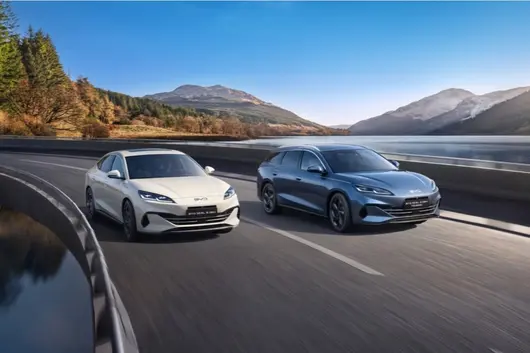

In August 2026, Deepal Cars maintained a steady trend, achieving global sales of 28,659 units, with cumulative global sales surpassing 947,600 units, steadily approaching the million-unit sales milestone. As Deepal's global bestseller, the Deepal S05 achieved 17,474 units in global sales this August, a year-on-year increase of 43.42% and a month-on-month increase of 24.29%. Since launch, monthly sales have exceeded 10,000, cumulative global sales exceeded 260,000 units, firmly establishing itself in the first tier of 150,000-class compact new energy SUVs. The new Deepal S05 is also selling well since launch; this is both a powerful echo of the market's response to Deepal S05's continuous evolution and another proof of technological equity taking root in the mainstream market.

The all-new Deepal S05 brings Lidar and one-piece end-to-end algorithms to the mainstream 150,000-class home market at once, making smart assisted driving that once belonged only to high-end models accessible daily for more families. The new car is equipped with the Tiandu Pilot Smart Driving Assistance System, featuring 27 high-precision perception hardware units including one Lidar across the vehicle. Paired with dual Horizon J6M chips and Tesla's similar one-piece end-to-end algorithm, the vehicle possesses prediction and decision-making capabilities closer to human drivers. The system supports over 90 assisted driving functions, easily covering daily high-frequency scenarios such as urban areas, highways, and parking; the industry-exclusive full-scenario roaming assistance allows easy travel even in map-free environments, further expanding the application boundaries of smart driving assistance.

Inside the cockpit, the new car is equipped with the industry-leading 3nm automotive-grade cockpit chip, matching the process of top global mobile phone chips, leading the industry by 3-5 years; combined with four-map fusion real-scene lane-level navigation, a 15.6-inch 2.5K Sunflower Screen, 18-speaker sky surround sound, and deep-thinking smart AI voice interaction, making family travel both high-tech and fun.
FSD+HRS Advanced Variable Adaptive Suspension, Resolving Family Travel Pain PointsAddressing the ride comfort that young family users care about most, the all-new Deepal S05 comes standard with FSD+HRS advanced variable adaptive suspension, leading the 150,000-class segment. This system can sense road conditions in real-time and automatically adjust damping, providing sufficient support during cornering to suppress roll, and automatically softening when passing bumpy roads to filter vibrations. Combined with HRS hydraulic rebound buffering technology, it effectively eliminates fine bouncing and residual shocks. No nose dive during braking, no body roll during cornering, no bumps on rough roads. Every trip for the whole family is steady and calm, seniors don't get carsick, and children can sit comfortably.

In terms of power, the new car offers two pure electric versions of 520km and 620km (CLTC), with 0-100km acceleration in 6.28 seconds; the entire series comes standard with 3C ultra-fast charging, with 30%-80% charging time not exceeding 15 minutes. Combined with the globally first wide-temperature micro-core high-frequency pulse heating technology and heat pump air conditioning, charging time is reduced by 55% and range increased by 21 km in -30°C environments, allowing users to depart with peace of mind regardless of winter or summer.
New Technology Sports Aesthetics, Interpreting Fashionable Light Luxury TextureDesign and quality are also key to winning over young families with the all-new Deepal S05. The new car continues the Interstellar Wings 2.0 design language, adding full-body flowing light trim lines, fluid dynamic dual waistlines, and 18-inch "Stellar Vortex" sports wheels. Combined with frameless doors and semi-hidden mechanical door handles, it integrates pioneering sports posture with practical safety. Inside the cockpit, a new Nebula Purple interior color is added, forming three interior choices together with Thermal Wave Orange and Star Rock Grey; the entire cabin is 99% covered in high-grade leather, combined with high-grade wood texture decorative panels and 256-color floating surround ambient lighting, making light luxury texture accessible.
Champion Selection, 260,000+ Global Users Confirm QualityGymnastics Olympic Champion and Full Sweep Winner on Uneven Bars, He Kexin, as the first celebrity owner of the all-new Deepal S05, a two-time champion known for "stability" and "accuracy" on the competition field, also upheld champion-level rigorous standards when choosing a car. The all-new Deepal S05 won her high recognition with its solid chassis texture, flexible and practical storage space, and comfortable riding experience. The champion's rigorous selection also becomes the most powerful testament to the product strength of this "Global Fashion Laser Smart SUV".

As a pioneer of Deepal's "Embrace All Rivers" plan, Deepal S05's global map has expanded to 73 countries and regions, with overseas monthly sales steadily breaking 6,000 units. In the overseas market, Deepal S05 successively won authoritative honors such as the German iF Design Award and Thailand's Best Rear-Drive Compact Electric SUV of the Year; domestically, it secured the No. 1 position in J.D. Power 2026 China New Energy Vehicle New Car Quality Research Compact Pure Electric SUV. Multi-dimensional recognition of sales, reputation, and professional honors both domestically and internationally makes Deepal S05 not only a hot-selling product but also a core carrier for Deepal Cars to push Chinese new energy technology to the world.
Continued Hot Sales Since Launch, Starting a New Global JourneyThe continued hot sales of the all-new Deepal S05 since launch are the inevitable result of Deepal Cars' long-term adherence to technological equity and deepening user needs. It not only made upgraded configurations such as Lidar, one-piece end-to-end algorithms, 3nm automotive-grade cockpit chips, and FSD+HRS advanced variable adaptive suspension, change from high-end exclusives to 150,000-class mainstream choices, but also allowed more users to enjoy upgraded experiences at mainstream prices. On the new starting point of Deepal Cars sprinting to one million users within the year, the all-new Deepal S05 will add new momentum for Deepal Cars to accelerate leading the global new energy track.
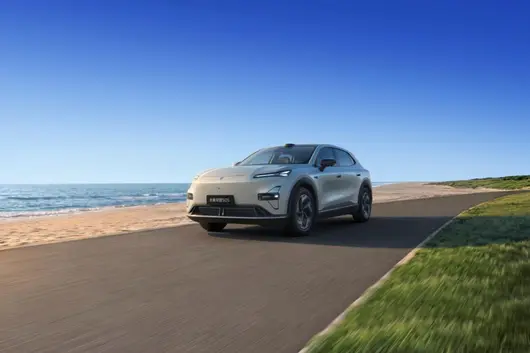


泰国汽车市场有个心照不宣的共识:MPV是日系车的自留地。
半个多世纪以来,从生产端到消费端,日系品牌在这里织出了一张密不透风的网。市占率常年维持在80%以上,不是“偏好”问题,是“没有别的选择”。丰田埃尔法在泰国街头和高端酒店门廊里的存在感,几乎等同于这个品类本身。
所以当星光730(WULING DARION EV)在8月拿下泰国全品类MPV销量冠军时,这件事的分量远超一个简单的月度销冠。它意味着,那个被日系车定义了半个多世纪的市场规则,第一次被一款中国车实质性地改写了。

先来看一组容易被忽略的数据:星光730在泰国的车主中,经商人员、公司雇员和公务员合计占比87%,63%月收入折合人民币一万元以上,近半数选择全款支付。换句话说,这不是靠价格敏感型用户堆出来的销量,而是一群在泰国社会有支付能力、有判断力、也有社交圈层影响力的高净值人群,用真金白银投了票。

这恰恰是日系垄断最难突破的环节。在成熟汽车市场,品牌认知的代际传承极其牢固——父亲开丰田,儿子大概率也开丰田,何况泰国消费者过去根本没有太多“向上比较”的参照系。星光730要做的,不是把价格打到日系车的七折,而是让一个泰国医生或商人觉得:这辆车开出去,接待客户不丢面子,带家人出游不亏舒适,日常使用不比埃尔法逊色。
从结果看,它做到了。政企客户采购、高端酒店合作、媒体集体好评,多重信任背书叠加之下,星光730在泰国市场完成了从“新面孔”到“主流选项”的跃迁。


而在国内市场,星光730同样没有给对手留出太多余地。上市10个月,累计销量突破65000台,蝉联10个月15万内MPV销量冠军,位列2026年1-8月自主品牌MPV销量TOP1。这不是一款车在某个细分市场的偶然冒头,而是一个产品定义被大规模验证的过程。国内市场的持续热销,说明星光730对“全能家用MPV”的理解,精准踩中了国内多人口家庭最真实的用车痛点。

中国多孩家庭和泰国高净值家庭,在购车逻辑上看似大相径庭。前者看重通勤成本、空间利用率、配置性价比;后者在意接待体面、品质可靠、圈层认同。但星光730在两个市场拿到了同一个结果:第一。
这反过来说明一件事——MPV市场的竞争轴心正在发生迁移。过去这个品类是围绕“商务接待”构建的,埃尔法们用夸张的前脸和航空座椅定义了高端MPV的全部想象。但当家庭用户成为增量主力,真正的产品力变成了另一套公式:第三排能不能坐得舒服?侧滑门够不够便利?用车成本能不能让日常通勤不肉疼?智能化配置是不是“有”而不是“装饰”?
星光730在泰国购车用户中,电滑门、7座布局、外观造型以并列23%的关注度成为最受重视的三项配置。这个数据很有信息量:泰国消费者关心的不是马力参数或品牌血统,而是最朴素的“体面+实用”。而星光730恰好在这三件事上都给出了越级答案——同级唯一电动滑移门、2+2+3真七座布局、以及一个在任何场合都“不跌份”的设计语言。

更值得玩味的是对标品牌的构成。泰国用户购车时的主要竞品选择中,大通占比46%、比亚迪28%,日系标杆埃尔法反而被归入了“被超越”的阵营。这揭示了一个深层变化:在泰国新一代消费者的心智中,中国品牌之间的横向比较,已经替代了“日系基准”成为新的决策坐标系。换句话说,规则确实被改写了。
从“出海”到“定义标准”,还有多远星光730目前已经登陆印尼、哈萨克斯坦、泰国等25个海外市场。单看这个数字,中国车企出海早已不是新鲜叙事。但“进入市场”和“定义标准”之间,隔着一条需要产品力持续兑现才能跨越的鸿沟。

泰国销冠之所以值得被行业评论关注,不在于它多卖了几百台车,而在于它验证了一个此前未被证明的命题:中国品牌可以在一个被日系深度驯化的成熟市场,以产品力而非价格战的方式,赢得高净值用户的主动选择。这是中国汽车出海从“贸易型”转向“品牌型”的标志性样本。
上汽通用五菱的智能岛制造体系为这种跨市场的一致性提供了底座——全球“万车如一、万里如一”的制造标准,让一款在中国跑出来的国民MPV,能够无缝适配曼谷高端酒店的接待场景。这种底层能力的复用效率,恰恰是此前中国品牌出海最稀缺的资产。
当然,一个月度销冠不构成终局。日系品牌在泰国半个世纪积累的渠道纵深和售后网络,短期内仍是中国车企难以完全对标的壁垒。但星光730至少证明了一件事:在MPV这个曾被认为“最不可能翻盘”的细分市场,中国产品用最朴素的方式赢得了尊重——把车造得足够好用,然后让用户自己选择。

星光730在泰国MPV销冠只是一个序章。当一款车能同时在竞争最激烈的中国市场、日系统治最深的泰国市场同时站上第一,它实际上已经不是在“参与竞争”,而是在重新定义这个品类该往哪里走。
这才是“双冠”真正的含金量。
In the Malaysian SUV market, many buyers compare Honda CR-V and Toyota Fortuner when choosing a car. These two models are quite close in price and positioning. Today, we will make a detailed comparison from multiple aspects to help you save time on research.
Honda CR-V's OTR price in Malaysia is RM 178,200 - 195,900, with a total of 4 versions, including 2026 e:HEV 2.0L 2WD RS (RM 195,900), 2026 1.5T 4WD V (RM 181,900), 2026 e:HEV 2.0L 2WD E (RM 178,200) etc.
Toyota Fortuner's OTR price in Malaysia is RM 195,880 - 241,880, with a total of 3 versions, including 2024 2.8T VRZ Diesel (RM 241,880), 2024 2.7L SRZ Petrol (RM 202,880), 2024 2.4L Standard Diesel (RM 195,880) etc.
From a price perspective, the Honda CR-V's starting price is indeed RM 17,680 cheaper than the Toyota Fortuner. If your budget is limited, Honda's entry-level version already meets daily needs. However, note that the difference of a few thousand might involve trade-offs in features, depending on your specific requirements.
Honda CR-V features a 2.0L 4-cyl, 170 hp. Official fuel consumption 8.0 L/100km.
Toyota Fortuner features a 2.5L Diesel, 187 hp. Official fuel consumption 8.5 L/100km.
In terms of power, Toyota Fortuner's 2.5L Diesel has 17 more horsepower than Honda CR-V's 2.0L 4-cyl. However, for daily city driving, both cars have sufficient power, you won't feel it's lacking.
Honda CR-V's safety rating is 5★ (ASEAN NCAP), active safety systems include Honda SENSING (ACC, CMBS, LKAS, RDM).
Toyota Fortuner's safety rating is 5★ (ASEAN NCAP), active safety systems include .
Both cars have the same safety rating, safety features in this segment are quite comprehensive. New cars nowadays have no issues with safety, no need to worry too much about this point.
Honda CR-V uses FWD drive mode.
Toyota Fortuner uses FWD drive mode.
Both cars have the same drive mode, both are FWD, daily driving experience won't have much difference.

Overall, Honda CR-V and Toyota Fortuner are both very good models in the Malaysian market. Which one to choose mainly depends on your personal needs and budget. We suggest doing your research, compare quotes from several dealerships, and then test drive to make a final decision. Buying a car is a big matter, spending some time researching is never wrong.

喺馬來西亞嘅 SUV 市場,好多買家喺選車嘅時候都會拿 Honda CR-V 同 Mazda CX-30 嚟做比較。這兩款車喺價位同定位上都幾近,今日我哋就從多個方面做一個詳細嘅比較,幫你省返做功課嘅時間。
Honda CR-V 喺馬來西亞嘅 OTR 售價係 RM 178,200 - 195,900,一共有 4 個版本,包括 2026 e:HEV 2.0L 2WD RS(RM 195,900)、2026 1.5T 4WD V(RM 181,900)、2026 e:HEV 2.0L 2WD E(RM 178,200)等。
Mazda CX-30 喺馬來西亞嘅 OTR 售價係 RM 122,409 - 146,409,一共有 4 個版本,包括 2025 2.0L High+ Premium(RM 146,409)、2025 2.0L High+(RM 138,409)、2025 2.0L High(RM 130,409)等。
從價錢睇落,Mazda CX-30 嘅起步價比 Honda CR-V 平咗 RM 55,791。講真係,喺呢個價位段,幾千蚊嘅差距其實唔算大,關鍵始終係睇整體嘅性價比同長期使用成本。
Honda CR-V 嘅安全評級係 5★ (ASEAN NCAP),主動安全系統包括 Honda SENSING (ACC, CMBS, LKAS, RDM)。
Mazda CX-30 嘅安全評級係 5★ (ASEAN NCAP),主動安全系統包括 i-Activsense。
兩款車嘅安全評級一樣,喺呢個級別入面安全配備都算好齊全。而家嘅新車安全性都唔差,唔使太擔心呢一點。
Honda CR-V 保養保修 5 年/無限制里程,保養間隔 每 10,000km 或 6 個月。
Mazda CX-30 保養保修 5 年/150,000km,保養間隔 每 10,000km 或 6 個月。
Honda CR-V 同 Mazda CX-30 都係馬來西亞市場嘅主流選擇,適合家庭使用、日常通勤。如果你更重視品牌口碑同二手價,可以優先考慮口碑更好嗰一款;如果你更在意性價比同配備,嗰就揀配置更豐富嗰款。始終都建議兩款都去試駕,親身體驗先係最重要嘅。
總體嚟講,Honda CR-V 同 Mazda CX-30 都係馬來西亞市場幾唔錯嘅車款。揀邊架,關鍵始終係睇你嘅個人需要同預算。建議大家做好功課,多比較幾間車行嘅報價,先至去試駕做最後決定。買車係件大事,花啲時間做功課絕對唔會錯。

喺馬來西亞嘅 SUV 市場,好多買家喺揀車嗰陣都會拿 Honda CR-V 同 Mazda CX-30 嚟做比較。呢兩款車喺價錢同定位上都幾相近,今日我哋就從多個方面做一個詳細嘅比較,幫你省咗做功課嘅時間。
Honda CR-V 喺馬來西亞嘅 OTR 售價係 RM 178,200 - 195,900,一共有 4 個版本,包括 2026 e:HEV 2.0L 2WD RS(RM 195,900)、2026 1.5T 4WD V(RM 181,900)、2026 e:HEV 2.0L 2WD E(RM 178,200) 等。
Mazda CX-30 喺馬來西亞嘅 OTR 售價係 RM 122,409 - 146,409,一共有 4 個版本,包括 2025 2.0L High+ Premium(RM 146,409)、2025 2.0L High+(RM 138,409)、2025 2.0L High(RM 130,409) 等。
從價錢睇,Mazda CX-30 嘅起步價比 Honda CR-V 平咗 RM 55,791。老實講,喺呢個價錢段,幾千蚊嘅差距其實唔算大,關鍵仲係睇整體嘅性價比同長期使用成本。
Honda CR-V 搭載 2.0L 4-cyl,馬力 170 hp。官方油耗 8.0 L/100km。
Mazda CX-30 搭載 1.5L Turbo,馬力 140 hp。官方油耗 7.0 L/100km。
動力方面,Honda CR-V 嘅 2.0L 4-cyl 比 Mazda CX-30 嘅 1.5L Turbo 多咗 30 匹馬力,中段加速更有信心,尤其係跑高速公路超車嗰陣。不過 Mazda CX-30 嘅油耗可能更友好,日常市區通勤差別唔會太大。
Honda CR-V 車身長 4500 mm,行李廂 450 L。
Mazda CX-30 車身長 4500 mm,行李廂 450 L。
兩款車嘅尺寸幾乎一樣,車內空間差別唔大。呢個級別嘅車,日常使用完全夠用。
Honda CR-V 保修 5 年/無限制里程,保養間隔 每 10,000km 或 6 個月。
Mazda CX-30 保修 5 年/150,000km,保養間隔 每 10,000km 或 6 個月。
總嚟講,Honda CR-V 同 Mazda CX-30 都係馬來西亞市場幾唔錯嘅車。揀邊一輛,關鍵仲係睇你嘅個人需求同預算。建議大家做好功課,多比較幾間車行嘅報價,再去試駕做最終決定。買車係件大事,花少少時間做功課絕對唔會錯。

喺馬來西亞嘅 SUV 市場,好多買家喺揀車嘅時候都會拿本田 CR-V 同馬自達 CX-3 去做比較。呢兩款車喺價位同定位上都幾接近,今日我哋就從多個方面做一個詳細嘅比較,幫你慳返做功課嘅時間。
本田 CR-V 喺馬來西亞嘅 OTR 售價係 RM 178,200 - 195,900,一共有 4 個版本,包括 2026 e:HEV 2.0L 2WD RS(RM 195,900)、2026 1.5T 4WD V(RM 181,900)、2026 e:HEV 2.0L 2WD E(RM 178,200) 等。
馬自達 CX-3 喺馬來西亞嘅 OTR 售價係 RM 126,159 - 139,159,一共有 2 個版本,包括 2023 2.0L High(RM 139,159)、2023 2.0L Plus(RM 126,159) 等。
由價錢睇,馬自達 CX-3 嘅起步價比本田 CR-V 平咗 RM 52,041。講實話,喺呢個價位段,幾千蚊嘅差距其實唔算大,關鍵仲係睇整體嘅性價比同長期使用成本。
本田 CR-V 嘅安全評級係 5★ (ASEAN NCAP),主動安全系統包括本田 SENSING (ACC, CMBS, LKAS, RDM)。
馬自達 CX-3 嘅安全評級係 5★ (ASEAN NCAP),主動安全系統包括 i-Activsense。
兩款車嘅安全評級一樣,喺呢個級距入面安全配備都算好齊全。而家嘅新車安全性都唔差,唔使太擔心呢點。
本田 CR-V 採用 FWD 驅動方式。
馬自達 CX-3 採用 FWD 驅動方式。
兩款車嘅驅動方式一樣,都係 FWD,日常駕駛感受唔會有太大分別。
本田 CR-V 同馬自達 CX-3 都係馬來西亞市場嘅主流選擇,適合家庭使用、日常通勤。如果你更睇重品牌口碑同二手價,可以優先考慮口碑更好嗰款;如果你更介意性價比同配備,就揀配置更豐富嗰款。最終仲係建議兩款都去試駕,親身體驗先至最重要。

總體嚟講,本田 CR-V 同馬自達 CX-3 都係馬來西亞市場幾唔錯嘅車型。揀邊輛,關鍵仲係睇你嘅個人需求同預算。建議大家做好功課,多比較幾間車行嘅報價,再去試駕做最終決定。買車係件大事,花少少時間做功課絕對唔會錯。

喺馬來西亞嘅 SUV 市場,好多買家揀車嗰陣都會拿 Honda CR-V 同 Toyota Harrier 嚟比較。呢兩款車喺價位同定位上都幾接近,而家我哋就從多個方面做個詳細比較,幫你省返做功課嘅時間。
Honda CR-V 喺馬來西亞嘅 OTR 售價係 RM 178,200 - 195,900,一共有 4 個版本,包括 2026 e:HEV 2.0L 2WD RS(RM 195,900)、2026 1.5T 4WD V(RM 181,900)、2026 e:HEV 2.0L 2WD E(RM 178,200) 等。
Toyota Harrier 喺馬來西亞嘅 OTR 售價係 RM 289,000 - 289,000,一共有 1 個版本,包括 2026 HEV 2.5L Standard(RM 289,000) 等。
從價錢睇落去,Honda CR-V 嘅起步價確實比 Toyota Harrier 平咗 RM 110,800。如果你預算有限,Honda 嘅入門版已經滿足日常需要。但都要注意,平嗰幾千蚊,可能喺配備上面要有取舍,具體要睇你嘅需要。
Honda CR-V 嘅安全評級係 5★ (ASEAN NCAP),主動安全系統包括 Honda SENSING (ACC, CMBS, LKAS, RDM)。
Toyota Harrier 嘅安全評級係 5★ (ASEAN NCAP),主動安全系統包括 Brand ADAS。
兩款車嘅安全評級一樣,喺呢個級別裡面安全配備都算好齊全。而家嘅新車安全性都幾唔錯,唔使太擔心這一點。
Honda CR-V 保修 5 年/無限里程,保養間隔 每 10,000km 或 6 個月。
Toyota Harrier 保修 5 年/無限里程,保養間隔 每 10,000km 或 6 個月。
兩款車嘅保修條件一樣,呢方面唔使糾結。實際保養成本仲要睇品牌嘅服務網絡同零件價格,建議去車友群問下真實車主嘅經驗。
Honda CR-V 同 Toyota Harrier 都係馬來西亞市場嘅主流選擇,適合家庭使用、日常通勤。如果你更加睇重品牌口碑同二手價,可以優先考慮口碑好嗰款;如果你更加在意性價比同配備,就揀配置更豐富嗰款。最終都係建議兩款都去試駕,親身體驗先係最重要嘅。

總體嚟講,Honda CR-V 同 Toyota Harrier 都係馬來西亞市場幾唔錯嘅車型。揀邊一架,關鍵仲要睇你嘅個人需要同預算。建議大家做好功課,多比較幾間車行嘅報價,再至去試駕做最終決定。買車係件大事,花少少時間做功課絕對唔會錯。

喺馬來西亞嘅 SUV 市場,好多買家揀車嘅時候都會拿 Honda CR-V 同 Toyota Harrier 做比較。呢兩款車喺價位同定位上都幾接近,今日我哋就由多個方面做一個詳細比較,幫你節省做功課嘅時間。
Honda CR-V 喺馬來西亞嘅 OTR 售價係 RM 178,200 - 195,900,一共有 4 個版本,包括 2026 e:HEV 2.0L 2WD RS(RM 195,900)、2026 1.5T 4WD V(RM 181,900)、2026 e:HEV 2.0L 2WD E(RM 178,200) 等。
Toyota Harrier 喺馬來西亞嘅 OTR 售價係 RM 289,000 - 289,000,一共有 1 個版本,包括 2026 HEV 2.5L Standard(RM 289,000) 等。
從價錢嚟睇,Honda CR-V 嘅起步價確實比 Toyota Harrier 平咗 RM 110,800。如果你預算有限,Honda 嘅入門版已經可以滿足日常需要。但都需要注意,平少少嘅幾千元,可能喺配備上要有取捨,具體要看你嘅需要。
Honda CR-V 搭載 2.0L 4-cyl,馬力 170 hp。官方油耗 8.0 L/100km。
Toyota Harrier 搭載 2.0L Turbo,馬力 220 hp。官方油耗 9.5 L/100km。
動力方面,Toyota Harrier 嘅 2.0L Turbo 比 Honda CR-V 嘅 2.0L 4-cyl 多咗 50 匹馬力。不過日常喺市區開,兩款車嘅動力都夠用,唔會覺得唔夠力。
Honda CR-V 車身長 4500 mm,車尾箱 450 L。
Toyota Harrier 車身長 4400 mm,車尾箱 400 L。
空間方面,Honda CR-V 嘅車身比 Toyota Harrier 長咗 100 mm,車內坐人嘅空間會啲寬鬆少少,尤其係後座腿部空間。如果你經常載家人或者需要放嬰兒車,大少少嘅車身確實更實用。
Honda CR-V 採用 FWD 驅動方式。
Toyota Harrier 採用 FWD 驅動方式。
兩款車嘅驅動方式一樣,都係 FWD,日常駕駛感受唔會有太大分別。
Honda CR-V 同 Toyota Harrier 都係馬來西亞市場嘅主流選擇,適合家庭使用、日常通勤。如果你更睇重品牌口碑同二手價,可以優先考慮口碑更好嗰一款;如果你更在意性價比同配備,那就揀配備更豐富嗰款。最後始終建議兩款都去試駕,親身體驗先係最重要嘅。

總計嚟講,Honda CR-V 同 Toyota Harrier 都係馬來西亞市場幾唔錯嘅車款。揀邊一輛,關鍵仲係睇你嘅個人需求同預算。建議大家做好功課,多比較幾間車行嘅報價,再去試駕做最終決定。買車係件大事,花少少時間做功課絕對唔會錯。
In the Malaysian SUV market, many buyers compare the Honda CR-V and Toyota Corolla Cross when choosing a car. These two models are quite close in price and positioning. Today, we will make a detailed comparison from multiple aspects to help you save time on research.
The OTR price of the Honda CR-V in Malaysia is RM 178,200 - 195,900, with a total of 4 versions, including 2026 e:HEV 2.0L 2WD RS (RM 195,900), 2026 1.5T 4WD V (RM 181,900), 2026 e:HEV 2.0L 2WD E (RM 178,200), etc.
The OTR price of the Toyota Corolla Cross in Malaysia is RM 133,800 - 148,800, with a total of 3 versions, including 2026 HEV 1.8L GR Sport (RM 148,800), 2026 HEV 1.8L Standard (RM 140,800), 2026 1.8L Standard (RM 133,800), etc.
In terms of price, the starting price of the Toyota Corolla Cross is RM 44,400 cheaper than the Honda CR-V. Honestly, in this price range, a difference of a few thousand is not that big; the key is to look at overall value for money and long-term maintenance costs.
The Honda CR-V uses FWD drive mode.
The Toyota Corolla Cross uses FWD drive mode.
The drive modes of both cars are the same, both are FWD, so there won't be much difference in daily driving experience.
Honda CR-V warranty 5 years/unlimited mileage, service interval every 10,000km or 6 months.
Toyota Corolla Cross warranty 5 years/unlimited mileage, service interval every 10,000km or 6 months.
The warranty conditions for both cars are the same, no need to worry about this. Actual maintenance costs depend on the brand's service network and parts prices; it is recommended to ask real owners in car enthusiast groups for experience.
Both the Honda CR-V and Toyota Corolla Cross are mainstream choices in the Malaysian market, suitable for family use and daily commuting. If you value brand reputation and resale value more, you can prioritize the one with better reputation; if you care more about value for money and features, choose the one with richer configurations. Ultimately, it is recommended to test drive both, as personal experience is the most important.

Overall, both the Honda CR-V and Toyota Corolla Cross are very good models in the Malaysian market. Choosing which one depends mainly on your personal needs and budget. It is recommended to do your homework, compare quotes from several dealerships, and then test drive to make the final decision. Buying a car is a big matter, taking time to do research will never be wrong.

In Malaysia's SUV market, many buyers compare the Honda HR-V and Subaru Crosstrek when choosing a car. These two cars are quite close in price and positioning, today we will make a detailed comparison from multiple aspects to help you save time on research.
Honda HR-V OTR price in Malaysia is RM 115,900 - 143,900, there are 4 variants in total, including 2026 e:HEV 1.5L RS (RM 143,900), 2026 1.5T V (RM 137,900), 2026 1.5T E (RM 130,900), etc.
Subaru Crosstrek OTR price in Malaysia is RM 145,000 - 160,000, there is 1 variant in total, including 2.0L e-Boxer (RM 150,000), etc.
From a price perspective, Honda HR-V's starting price is indeed RM 29,100 cheaper than Subaru Crosstrek. If your budget is limited, Honda's entry-level version is already sufficient for daily needs. However, please note, the cheaper few thousand might involve trade-offs in features, it depends on your specific needs.

Honda HR-V comes with 1.5L Turbo, horsepower 140 hp. Official fuel consumption 7.0 L/100km.
Subaru Crosstrek comes with 1.5L Turbo, horsepower 140 hp. Official fuel consumption 7.0 L/100km.
Both cars use the same powertrain, the driving experience in daily use is basically the same. Fuel consumption is also similar, no need to worry too much about this point.

Honda HR-V safety rating is 5★ (ASEAN NCAP), active safety systems include Honda SENSING (ACC, CMBS, LKAS, RDM).
Subaru Crosstrek safety rating is 5★ (Euro NCAP), active safety systems include EyeSight.
Regarding safety features, both cars received good ratings. However, there are some differences in functionality between Honda HR-V's Honda SENSING (ACC, CMBS, LKAS, RDM) and Subaru Crosstrek's EyeSight. If you value active safety more, you can compare their feature lists carefully.

Honda HR-V body length is 4500 mm, trunk 450 L.
Subaru Crosstrek body length is 4400 mm, trunk 400 L.
Regarding space, Honda HR-V's body is 100 mm longer than Subaru Crosstrek, the interior seating space is slightly more spacious, especially the rear seat legroom. If you often carry family or need to fit a stroller, a larger body is indeed more practical.

Honda HR-V warranty 5 years/unlimited mileage, maintenance interval every 10,000km or 6 months.
Subaru Crosstrek warranty 3 years/100,000km, maintenance interval every 10,000km or 6 months.
Overall, Honda HR-V and Subaru Crosstrek are both excellent models in the Malaysia market. Which one to choose depends mainly on your personal needs and budget. We suggest doing your homework, comparing quotes from several car dealerships, and then test driving to make a final decision. Buying a car is a big matter, spending some time doing research is definitely not wrong.

In the Malaysian SUV market, many buyers compare Honda HR-V and Volkswagen Tiguan when choosing a car. These two models have very similar pricing and positioning. Today we will do a detailed comparison from multiple aspects to save you time on research.
The OTR price of Honda HR-V in Malaysia is RM 115,900 - 143,900. There are 4 versions in total, including 2026 e:HEV 1.5L RS (RM 143,900), 2026 1.5T V (RM 137,900), 2026 1.5T E (RM 130,900), etc.
The OTR price of Volkswagen Tiguan in Malaysia is RM 206,540 - 260,024. There are 2 versions in total, including 2025 Allspace 2.0T R-Line (RM 260,024), 2025 Allspace 1.4T Elegance (RM 206,540), etc.
From a price perspective, the starting price of Honda HR-V is indeed RM 90,640 cheaper than Volkswagen Tiguan. If your budget is limited, Honda's entry-level version can already meet daily needs. However, note that the few thousand cheaper price might involve trade-offs in features; it depends on your specific needs.
Honda HR-V is equipped with 1.5L Turbo, horsepower 140 hp. Official fuel consumption 7.0 L/100km.
Volkswagen Tiguan is equipped with 2.0L 4-cyl, horsepower 170 hp. Official fuel consumption 8.0 L/100km.
Regarding power, Volkswagen Tiguan's 2.0L 4-cyl has 30 more horsepower than Honda HR-V's 1.5L Turbo. However, for daily city driving, both cars have sufficient power, you won't feel underpowered.
Honda HR-V body length 4500 mm, trunk 450 L.
Volkswagen Tiguan body length 4400 mm, trunk 400 L.
Regarding space, Honda HR-V's body is 100 mm longer than Volkswagen Tiguan, the interior seating space is slightly more spacious, especially rear legroom. If you often carry family members or need to fit a stroller, a larger body is indeed more practical.
Honda HR-V uses FWD drivetrain.
Volkswagen Tiguan uses FWD drivetrain.
Both cars have the same drivetrain, both are FWD, the daily driving experience won't differ much.

Both Honda HR-V and Volkswagen Tiguan are mainstream choices in the Malaysian market, suitable for family use and daily commuting. If you value brand reputation and resale value more, consider the one with better reputation first; if you care more about cost-performance ratio and features, then choose the one with richer features. Ultimately, we recommend test driving both, personal experience is the most important.
Overall, Honda HR-V and Volkswagen Tiguan are both very good models in the Malaysian market. Which one to choose depends on your personal needs and budget. We suggest doing your research, compare quotes from several dealerships, then test drive to make the final decision. Buying a car is a big deal, spending time researching is never wrong.


The value of the Leapmotor model lies in verifying a possibility: In the industrial cycle where new energy vehicles return from "tech consumer products" to "manufacturing commodities," vertical integration and cost efficiency remain the core propositions that cannot be bypassed.
By Intelligent Driving Network / Zero Sauce
Edited by Langlang Mountain and Mingzhi Mountain
Starting from the 2025 Leapmotor 10th Anniversary event, Leapmotor founder Zhu Jiangming and the management team have been preparing for the Leapmotor Technology Day in September this year through subsequent public events and media exchanges.
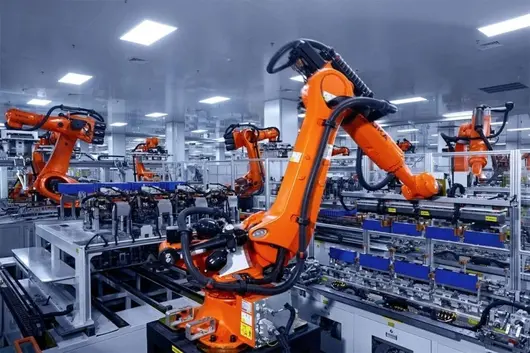
As the most important "appetizer" of the Leapmotor Technology Day, Leapmotor opened its Huzhou Super Five-Electric Factory to the media for the first time one week before the event—a core component self-research and self-manufacturing cluster with a total construction area of about 500,000 square meters, covering five major factory zones: batteries, electric drives, domain controllers, headlights, and electronics/power.
Just one day before the factory opened, major domestic automotive enterprises including Leapmotor announced their August sales, and Leapmotor once again led the New Force automakers with a new car sales volume of 103,129. Combining with the Q2 financial reports of each company, it can also be found that while Leapmotor's sales continue to grow, it has also become the only New Force automaker to achieve profitability for three consecutive semi-annual periods.
With the industry profit margin compressed to 3%, why can Leapmotor still make money? Placing this profit accounting in the factory makes it clearer.
01.
The Cost Ledger: Location Economics
The cost logic given by Leapmotor can be summarized in one sentence: full-domain in-house R&D, deep manufacturing, eliminating supplier gross margin.
Since the brand's establishment, 18 component factories have been built, and 65% of vehicle costs are under the enterprise's independent control.

Calculating with the industry supplier's common 15% gross margin, the 65% self-research and self-manufacturing ratio can save about 10% of costs compared to the external procurement mode—65%×15%≈9.75%, this arithmetic is self-consistent.

The Huzhou Electric Drive Integrated Factory is a specimen of this logic.
It concentrates the four core processes of stator manufacturing, rotor manufacturing, controller manufacturing, and electric drive system final assembly into one factory zone, reducing the production links of 3 times packaging, 3 times transportation, and 3 times warehousing and delivery of stators, rotors, and controllers.
Leapmotor calculated that the transportation packaging inventory dimension for a single electric drive system can save about 50 yuan. Based on an annual production of 1 million sets, a total manufacturing cost of about 50 million yuan is saved. This process model also applies to battery and electronic control factories.
Saving 50 yuan per vehicle is indeed not a very significant number, but reducing physical transport saves "links", not "materials".
This means Leapmotor's cost reduction path is process efficiency, not lowering material standards. The two are two philosophies: the former builds "cheap" on management precision, while the latter builds "cheap" on sacrificing experience.
On the side of the Electric Drive Integrated Factory, there is even an undeveloped river transport route. During the visit, Leapmotor relevant personnel also revealed to the Intelligent Driving Network that this factor was indeed considered when the factory was built. If this route can be navigated smoothly subsequently, transportation costs can continue to decline.

This "Location Economics" can be expanded to Leapmotor's entire Huzhou factory area. It is revealed that Leapmotor chose Huzhou instead of Jinhua or Hangzhou to build the factory. The two core reasons given by the official are: first, local government policy support; second, Huzhou has a superior location and convenient transportation, capable of covering supply to core markets such as Anhui.
Subsequently, Leapmotor will continue to expand the scale of component self-manufacturing. Production lines such as compressors, on-board power supplies, and electronic oil pumps were put into production one after another last year and are still in the production ramp-up phase. With the expansion of production scale, there is still further space for manufacturing costs to decline.
This space will be further amplified by platform commonality rates. Leapmotor vehicle architecture has an 88% component commonality rate. Under the same platform, a large number of components such as chassis parts, interior and exterior trim parts, seats, etc., achieve sharing except for styling and body shells. This means R&D costs, mold costs, and procurement costs are amortized on a larger sales volume base.
These two numbers, 65% and 88%, directly influenced Zhu Jiangming's pricing strategy: "cost pricing".
This pricing model, which is not oriented by brand premium but based on its own cost capability, gives the space saved by vertical integration to consumers. This forms an essential difference from the industry common "competitive benchmark pricing" or "brand premium pricing".
It is worth noting that Leapmotor's vertical integration is not a BYD-style full-chain heavy asset model. Leapmotor adopts an "invest in equipment only, not factories" light asset strategy. Among the 18 component factories, it focuses on high-value-added core components, while traditional interiors, tires, wheels, etc., are still resolved through external procurement or joint ventures.
This "selective vertical integration" allows it to achieve a specific balance between fixed asset investment and cost control.
02.
The Technology Ledger: Quality Economics
At the technical level, the five factories in Huzhou of Leapmotor constitute a complete chain of evidence: with micron-level even nanometer-level manufacturing precision as input, and PPM-level defect rate and 100% inspection coverage as output, ultimately realized as product failure rates below the industry average and promising lifetime warranties.
Electric Drive Integrated Factory: From Rotor Dynamic Balancing to 40PPM
Quality hazards in the electric drive system often arise in transport and assembly links. Leapmotor concentrates the four core processes in the same factory zone, eliminating intermediate transport loss, but this is only physical integration; what truly determines the yield is precision control within the process.

In the rotor dynamic balancing link, Leapmotor controls the positive and negative electrode calibration error at ≤100mg, far better than the industry common standard of 200—500mg, with the minimum remaining unbalance ≤0.1gmm/kg, equivalent to the rotor working center of gravity eccentricity ≤0.1μm. This precision directly determines the NVH performance and energy loss of the electric drive system—the larger the unbalance, the stronger the vibration induced by periodic centrifugal force, and the more energy the motor consumes to overcome vibration resistance. The electric control assembly link adopts a high-precision intelligent servo press, with pressure precision ≤0.5%FS and displacement precision ≤10μm, doubled compared to the industry mainstream standard. The direct benefit of precision improvement is ensuring the integrity of sealing rings and avoiding high-voltage insulation failure caused by water vapor intrusion. In the EOL testing link, NVH measurement system accuracy is ≤2dB (industry mainstream 3dB), and 100% off-line detection and speed/torque range test coverage are achieved.
The cumulative result of these technical investments is: Leapmotor oil-cooled electric drive 3mis quality average is 40PPM, less than one-ninth of the industry average 360PPM. As a comparison, Leapmotor promises a lifetime warranty for the electric drive system—the confidence of this commitment is not marketing rhetoric, but a loss probability calculation supported by 40PPM quality data.
SMT Factory: Chip-Level Environment Control and 99.995% Welding Yield
Domain controllers are the "brains" of intelligent electric vehicles. A circuit board the size of an A4 paper integrates about 8,000 electronic components. If any one is misaligned by 10μm or has a poor solder joint, it may lead to infotainment lag, function malfunction, or even safety hazards. Leapmotor's SMT factory raises the manufacturing environment to chip-level: temperature fluctuation ±0.5°C, humidity ±1%RH, cleanliness 100,000 grade, full-domain electrostatic protection voltage <100V. The purpose of this environment control level is to reduce the three quality control risks of poor welding, refusal of welding, and electrostatic breakdown from the production source.

In terms of process precision, the ultra-high speed precision placement link placement precision reaches ±15μm, better than the industry mainstream 25—30μm level; 3D optical reinspection precision is also ±15μm, process capability CPK ≥ 2.0, reaching top industry quality control standards; nitrogen vacuum reflow welding achieves welding yield > 99.995%. Three inspection links achieve 100% off-line full inspection, defective products automatically sorted and isolated. In May 2026, Leapmotor intelligent driving domain controller installation volume was 34,822 sets, ranking 5th in the industry, and promised an electronic control lifetime warranty. High welding yield and full coverage detection mean the base of after-sales repair rates is significantly compressed, and software OTA iteration efficiency is no longer dragged down by hardware defective products.
Battery Factory: 10nm Cleaning and 99.9% Welding Yield
The safety and consistency of power batteries depend on the "marching together" ability of hundreds of cells. Leapmotor battery factory module line automation rate reaches 90%, planned and designed independently by Leapmotor. The core logic is using machine certainty to replace human intervention uncertainty.

Cell nanoscale plasma cleaning raises cleanliness to 10nm, 10 times the industry average 100nm precision. Cleanliness directly determines coating adhesion and cell performance consistency. Spider arm cell stacking shortens single cell processing speed to 1 second, 20% higher than the industry traditional mechanical hand, but speed is not at the cost of precision. Ring spot Busbar welding reduces spatter by more than 99%, process yield rate reaches 99.9%, fundamentally reducing cell short circuit and thermal runaway risks. Airtightness test differential pressure sampling resolution 0.1Pa, reaching industry head standards, ensuring battery pack airtightness. Battery capacity test through high-precision SOX model controls SOC deviation at <3%, better than the national standard ≤5% requirement, reducing "hidden power" and the wooden bucket effect.
The production line achieves 100% full inspection and data traceability. The final result is: Leapmotor battery failure rate is about 30% of the industry average level, and promises a battery lifetime warranty. For users, this means slower range degradation and higher vehicle resale value; for enterprises, this means the probability distribution of after-sales battery replacement costs is significantly shifted left.
Headlight Factory: Grade 100 Cleanliness and 4-Camera 100% Visual Full Inspection
Headlight manufacturing seems far from "safety core", but Leapmotor's headlight factory technical standards are not downgraded due to this.

The factory has the industry's first 100% fully automated injection molding dark factory. The core area cleanliness reaches Grade 100 (chip-level), 10 times the sterile operating room cleanliness. Vacuum aluminum plating thickness is controlled at 0.1μm, reaching top industry standards, directly determining reflectivity and durability—the higher the reflectivity, the better the night lighting effect; the more uniform the plating, the stronger the thermal shock and aging resistance.
In the visual inspection link, four 20 million pixel high-definition industrial cameras are used to perform 100% beam pattern inspection and missing/leak installation inspection from four angles. Compared to the industry's usual two-camera configuration, it achieves double inspection redundancy. The direct benefit of this technical investment is to prevent defective products from flowing out, avoiding driving safety hazards and after-sales claims for users caused by headlight beam pattern deviation or assembly defects.
Electronics & Power Factory: 10μm Assembly Precision and Aerospace/Military Grade Standard
The Electronics & Power Factory is responsible for the manufacturing of three core components: electronic oil pumps, on-board power supplies, and heat pump compressors. Among them, Leapmotor electronic oil pump production line automation rate reaches 100%, leading the industry.
In the outer rotor assembly link, the production line achieves intelligent positioning through visual guidance, combined with high-precision sensors to control face dimension precision at 10μm—this level is better than the industry precision pump 15μm conventional standard, reaching aerospace/military grade requirements. The precision of face gap directly determines the volumetric efficiency of the pump: if the gap is too large, oil leakage increases and volumetric efficiency drops; if the gap is too small, friction resistance rises and mechanical losses intensify. 10μm precision control is to find the optimal balance point between leakage and friction.
In the on-board power supply signal board installation link, the production line uses 2D vision cameras to guide robots to complete automatic assembly, assembly precision also reaches 10μm, reaching the industry high-end level.

The heat pump compressor executes 100% online finished product insulation dielectric strength test. Test voltage is 2500V, higher than the industry common 2000V standard; test precision is controlled at ±3%, better than industry ±5% error level. Higher test voltage and stricter precision standards mean the missed inspection probability of insulation failure is further suppressed, and product reliability obtains substantial improvement.

The technical parameters of the five factories are not isolated. They all point to a quantifiable cost reduction result:
High technology brings not vanity on the spec sheet, but product stability supported by high yield, and loss reduction converted by stability—including manufacturing cost loss, after-sales repair loss, and brand trust loss.
Leapmotor dares to promise a lifetime warranty for the three core systems of electric drive, electronic control, and battery. Its underlying logic lies here: when manufacturing precision compresses the failure rate to 1/3 or even 1/9 of the industry average, the lifetime warranty is no longer risk gambling, but a cost-controlled service经过精算 (actuarially calculated).
Serving users, and serving customers.
03.
The Business Ledger: Tier 1 Economics
Among the information released in this open day, the component external supply is the most significant.

According to Leapmotor official news, the Huzhou headlight factory is Leapmotor's first headlight manufacturing factory facing external customers, and has reached cooperation with Stellantis and FAW, supplying full category lighting fixtures for different vehicle models;
Subsequently is the electric drive. Leapmotor's wholly-owned subsidiary LingSheng Power signed an agreement with Peugeot-Citroen (under Stellantis) to provide electric drive assembly development, factory prototypes, and special testing services for it. This means external supply jumps from finished components to the joint development stage.
Higher up is the vehicle architecture. Opel brand under Stellantis plans to adopt Leapmotor's latest pure electric architecture and core components of battery technology, retaining Opel's own design, chassis, and cockpit systems. Cooperation upgrades from "selling parts" to "selling platforms".
Along with the component penetration, there is continuous binding at the capital and equity level. In October 2023, Stellantis invested in Leapmotor for about 1.5 billion euros, obtaining about 20% equity (later increased to about 21%). In May 2024, both parties established a joint venture Leapmotor International, Leapmotor holds 49% equity, Stellantis holds 51% equity and leads it, responsible for sales and channels in markets outside Mainland China. In May 2026, both parties intend to further expand cooperation to joint procurement and shared production lines.
"Partnering to go global" at the channel level is the direct product of this binding. Leapmotor utilizes Stellantis's existing production capacity and channel networks in Malaysia, Spain, Brazil, etc., achieves local production in CKD/SKD mode, avoids trade barriers while reducing capital investment. This forms a sharp contrast with the heavy asset path of most Chinese automakers building overseas factories independently. Leapmotor International achieved profitability just two years after establishment, with overseas gross margin stable at 18%—20%, higher than the domestic level.
This "reverse technology export" has symbolic significance in the history of China's automotive industry.
In the past 40 years, China's automotive industry was dominated by the narrative "market for technology"; while the model of Leapmotor and Stellantis—Chinese automakers provide core technology, international giants provide brand and channels—is rewriting this narrative.
But Tier 1 business is not only for shareholders. Besides Stellantis, Leapmotor's component business has obtained cooperation from more than ten domestic and foreign automakers. Among them, FAW has reached cooperation with Huzhou headlight factory, supplying full category lighting fixtures for different vehicle models.
FAW's addition shows that external supply is an open business facing mainstream Chinese automakers. Leapmotor summarizes it as "Vehicle + Tier 1" dual-wheel drive.
"Vehicle + Tier 1" is not without precedent: BYD's FinDreams series external supply, CATL budded from ATL power battery department, are all paths verified on China's automotive industry chain.

Leapmotor's difference lies in the path sequence: first rely on self-supply to scale, then seek external supply.
Monthly sales of 100,000 units are the "order basic platform" of these component factories. External supply is incremental amortization, not a last resort. This model is coherent, but whether it can be established depends on whether external supply customer quantity and revenue proportion can be disclosed with data, whether internal and external supply pricing is fair, and whether external customers are willing to place orders with a vertical system of whole-vehicle peers for the long term.
It needs to be noted that vertical integration is not a consensus in the intelligent electric vehicle era. Most automakers choose "in-house R&D + external procurement" to maintain flexibility in technology generation switching.
But Leapmotor's self-manufacturing scope is actually selective: it does high value, high coupling components—domain controllers, electric drives, battery packs, headlights, electronics/power; while cell links etc. are not fully self-manufactured. This selective vertical integration is both different from "closed in-house R&D", and exactly the reason it dares to open orders to external customers.
Final Thoughts:
Of course, any business model has its applicable boundaries. Leapmotor's "full-domain in-house R&D + deep manufacturing" model is no exception.
First is scale dependency.
The cost reduction effect of vertical integration highly relies on sales volume to amortize fixed costs. Zhu Jiangming once publicly stated that new energy vehicle startups need "1 million annual sales to survive". Leapmotor's target for 2026 is to sprint to 1 million vehicles. Once the scale growth slows down, the capacity utilization rate of 18 component factories will decline, and its cost advantage will be quickly eroded by fixed costs.
Second is the "glass ceiling" of technical depth.
Leapmotor still has obvious boundaries at the core material level: cells come from external procurement (such as CATL), chips come from suppliers such as Qualcomm, NVIDIA, Leapmotor does not do wafer-level in-house R&D. This means during periods of raw material price volatility in batteries and chip supply tightness, Leapmotor's cost control capability will still be subject to pressure from upstream transmission.
Finally is the uncertainty of overseas policy. The EU's countervailing tariffs on Chinese electric vehicles, Malaysia's mandatory export quota requirements for new whole-vehicle factories, and the difficulty of building local supply chains in Europe all lay down variables for Leapmotor's global path.

Can the Leapmotor model be replicated? The answer is likely negative.
Its founder team comes from Dahua Technology, with deep electronics manufacturing genes; its "cost pricing" strategy requires extremely strong strategic firmness, which is not common in the capital-seeking new energy track; its "partnering to go global" global path relies on deep interest binding with international giants like Stellantis, having irreproducible contingency.
But the value of the Leapmotor model does not lie in becoming a template, but in verifying a possibility: In the industrial cycle where new energy vehicles return from "tech consumer products" to "manufacturing commodities," vertical integration and cost efficiency remain the core propositions that cannot be bypassed.
Monthly sales of 100,000 is just the visible result above the iceberg. Below the iceberg is a systemic capability reconstruction about how to build a good car.
© 2024 Bitauto.com. All Rights Reserved.
Bitauto (www.yiche.com and www.bitauto.com) is one of the most visited automotive websites in China. We provide detailed info on Chinese car brands available in your area. Please note that the information provided on this website is based on publicly available data and is for reference only. It may not be fully updated or accurate at all times.

Help us improve our website


