

HomeJapanese Cars

Search History
Popular Searches
Dealer Login / Sign Up


There is an unspoken consensus in the Thai automotive market: MPVs are the Japanese brands' private preserve.
For over half a century, Japanese brands have woven a tight-knit net here from production to consumption. Market share has maintained above 80% for years. It's not a matter of "preference," but of "having no other choice." The presence of Toyota Alphard on Thai streets and in front of high-end hotels is almost synonymous with the category itself.
Therefore, when the Starlight 730 (WULING DARION EV) took the Thailand full-category MPV sales champion title in August, the weight of this matter far exceeded a simple monthly sales champion. It means that market rules defined by Japanese cars for over half a century were substantially rewritten by a Chinese vehicle for the first time.

First, let's look at a set of easily overlooked data: Among Starlight 730 owners in Thailand, business owners, corporate employees, and civil servants combined make up 87%, 63% have a monthly income of over 10,000 RMB, and nearly half choose to pay in full. In other words, this is not sales volume piled up by price-sensitive users, but a group of high-net-worth individuals with payment ability, judgment, and social circle influence in Thai society, voting with their hard-earned money.

This is precisely the link hardest to break through in Japanese monopolies. In mature automotive markets, intergenerational brand inheritance is extremely solid — fathers drive Toyotas, sons are likely to drive Toyotas too. Furthermore, Thai consumers previously had no reference points for "upward comparison." What Starlight 730 needs to do is not to slash prices to 70% of Japanese cars, but to make a Thai doctor or merchant feel: driving this car out to receive clients won't lose face, taking family on outings won't compromise comfort, and daily use won't be inferior to Alphard.
From the results, it succeeded. Government and enterprise client procurement, high-end hotel partnerships, collective media praise, under the superposition of multiple trust endorsements, Starlight 730 completed the leap from "new face" to "mainstream option" in the Thai market.


In the domestic market, Starlight 730 also did not leave much room for rivals. 10 months after launch, cumulative sales exceeded 65,000 units, holding the MPV sales champion title within the 150,000 RMB range for 10 consecutive months, ranking TOP1 in domestic independent brand MPV sales for January-August 2026. This is not the accidental rise of a car in a specific sub-market, but a process where a product definition is validated on a large scale. The continuous hot sales in the domestic market indicate that Starlight 730's understanding of "all-around home MPV" precisely hit the most realistic pain points of multi-person families in China.

Chinese multi-child families and Thai high-net-worth families seem vastly different in purchasing logic. The former value commute costs, space utilization, and configuration cost-performance; the latter care about dignified reception, quality reliability, and circle identity. But Starlight 730 achieved the same result in both markets: First place.
This conversely indicates one thing — the competitive axis of the MPV market is shifting. In the past, this category was built around "business reception," with Alphards defining all imagination of high-end MPVs with exaggerated front faces and aviation seats. But when family users become the main source of growth, real product strength becomes another formula: Can the third row sit comfortably? Are the sliding doors convenient enough? Can vehicle usage costs avoid making daily commute painful? Is intelligent configuration "having" rather than "decoration"?
Among Thai car buyers of Starlight 730, electric sliding doors, 7-seat layout, and exterior styling, each with 23% interest, became the top three most valued configurations. This data is informative: Thai consumers care not about horsepower parameters or brand heritage, but the most plain "dignity + practicality." Starlight 730 happened to give leap-level answers in all three aspects — the only electric sliding door in its class, 2+2+3 true seven-seat layout, and a design language that is "not losing face" in any situation.

More interesting is the composition of benchmark brands. Among main competitor choices when Thai users buy cars, Maxus accounted for 46%, BYD 28%, while the Japanese benchmark Alphard was instead grouped into the "overtaken" camp. This reveals a deep change: in the minds of Thailand's new generation of consumers, horizontal comparison between Chinese brands has replaced the "Japanese benchmark" as the new decision coordinate. In other words, the rules have indeed been rewritten.
From "Going Overseas" to "Defining Standards", How Far is It?Starlight 730 has already landed in 25 overseas markets including Indonesia, Kazakhstan, Thailand, and more. Just looking at this number, Chinese car companies going overseas is no longer a fresh narrative. But between "entering the market" and "defining standards," there is a chasm that requires continuous product strength fulfillment to cross.

The reason why the Thailand sales champion deserves industry comment attention is not that it sold a few hundred more cars, but that it verified a proposition previously unproven: Chinese brands can, in a mature market deeply tamed by Japanese brands, win active choices from high-net-worth users through product strength rather than price wars. This is a signature sample of Chinese car going overseas shifting from "trade-oriented" to "brand-oriented".
SAIC-GM-Wuling's intelligent island manufacturing system provides the foundation for this cross-market consistency — global "10,000 cars like one, 10,000 miles like one" manufacturing standards, allowing a national MPV that ran in China to seamlessly adapt to the reception scenarios of Bangkok high-end hotels. The reuse efficiency of this underlying capability is precisely the scarcest asset for Chinese brands going overseas previously.
Of course, a monthly sales champion does not constitute the final outcome. The channel depth and after-sales network accumulated by Japanese brands in Thailand over half a century still remain barriers that Chinese car companies find difficult to fully benchmark in the short term. But Starlight 730 has at least proven one thing: in the MPV sub-market once considered "most impossible to turn the tables," Chinese products won respect in the most plain way — make the car good enough to use, and then let users choose for themselves.

Starlight 730 being the Thailand MPV sales champion is just a prelude. When a car can stand at number one simultaneously in the most fiercely competitive Chinese market and the Thai market where Japanese brands rule the deepest, it is actually no longer "participating in competition", but redefining where this category should go.
This is the true value of the "double champion".


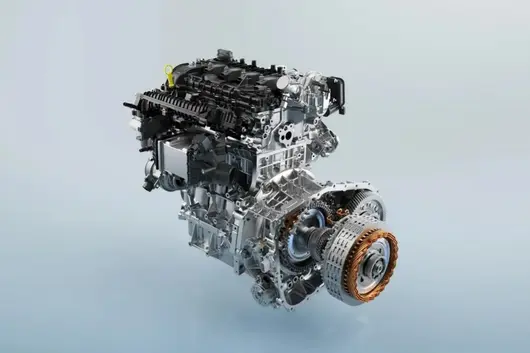
Recently, the engine technology of Chinese automakers has sparked the attention of Japanese media.
A Japanese media outlet reported that in terms of engine thermal efficiency, Chinese automakers are rapidly approaching, or even surpassing Japan. For Chinese automakers, competing on engine thermal efficiency is actually nothing new.
In the past few years, automakers like GAC, Chery, Geely, and Dongfeng have showcased thermal efficiency data one after another, rising from 44% and rolling to over 46%.Engines have not been eliminated by electrification; instead, they have found new value in the hybrid era.
But what is more worth attention is perhaps the "method of use" of these engines.
Most of them were previously used in extended-range and plug-in hybrid vehicles. In the past six months, more and more automakers have started to densely push high-thermal-efficiency hybrid-specific engines to "blue-plate" gasoline-hybrid models.
Recently launched Geely Emgrand i-HEV, achieved a fuel consumption of 2.22L per 100km, breaking the Guinness World Record held by the Toyota Prius.

In this market of oil-electric hybrids, Toyota and Honda have operated for decades, and domestic brands still couldn't truly conquer it.But now, this stronghold of Japanese cars also begins to be shaken.
Fully replacing fuel vehicles, has the opportunity for gasoline-hybrid vehicles arrived?
In recent years, the Chinese auto market has completed a switch from fuel to electricity, with NEV penetration rate exceeding 50%. But the gasoline-hybrid (HEV) stuck in the middle and marked as "blue-plate" side, has not been taken seriously by domestic brands.
Now, this pattern is quietly changing. At the end of last year, a batch of domestic cars like Geely Preface, Changan Eado, UNI-V, CS55, CS75, were filed with MIIT for gasoline-hybrid versions.

At the end of March this year, Changan took the lead in releasing Blue Whale Super Power Hybrid; in April, Geely, Great Wall, and GAC successively unveiled i-HEV, Super Smart HEV, and Xingyuan Super Dual Engine.These systems mostly jumped out of the old path of Japanese "fuel-based", taking electric drive as the main focus, and through new technologies like AI calibration, some models ran "2L-level" fuel consumption in challenge tests.
New cars are also landing successively. At the end of April, Geely Preface i-HEV, Xingyue L i-HEV were launched first; at the end of May, Changan 4th Gen CS75 PLUS, 4th Gen Eado's Blue Whale Super Power version were launched and delivered; on June 16, Geely Emgrand i-HEV was also officially launched.

The sales of this batch of new cars may need to be observed for a period, but these automakers exerting effort on gasoline-hybrid models collectively, has already explained that market patterns may produce changes. And the reason for changes has a certain relationship with policy factors.
Starting from 2026, new energy vehicle purchase tax changes from full exemption to half levy, and the plug-in hybrid pure electric range threshold for subsidies rises from 43km to 100km.A batch of short-range plug-in hybrids were blocked outside the policy door, and non-plug-in, non-reliant on charging piles, yet fuel-saving gasoline-hybrids, cost-performance ratio highlighted instead.
The principles of some gasoline-hybrid models and plug-in hybrid models are actually not much different. Both are engines with electric motors, the difference lies mainly in the battery.
Plug-in hybrids carry batteries of 10+ degrees or even larger, can get green plates, can be plugged in and driven as electric cars; gasoline hybrids have only 1 to 5 degrees small batteries, rely on engines and energy recovery to charge themselves, get blue plates.

The key lies in, among people buying short-range plug-in hybrids, many actually never charge, drive them as fuel cars. This way, that big battery becomes a burden that only increases vehicle weight and cost, yet serves no use. For this part of users, gasoline hybrids with smaller batteries, lower prices, drive away after refueling, are actually more practical.
From an industry perspective, the rise of gasoline hybrids has another layer of meaning.
Price wars have fought for more than two years, automakers have almost no profit left. Data from CPCA shows, in the first quarter of 2026, the automotive industry profit margin was only 3.2%, creating a new historic low.Since the beginning of this year, MIIT and CAAM have acted multiple times to "curb excessive competition", and in June also interviewed automakers suspected of irrational competition.
Compared to piling big batteries, fighting price wars, gasoline hybrid batteries are small, no charging system needed, vehicle cost can be further reduced. In the current situation where curbing excessive competition is the main tone, this road is actually more meaningful for the healthy development of the industry.
Going overseas collectively is the bigger battlefield for gasoline hybrids
Although relying on policy adjustments, gasoline hybrids have a larger space domestically, but looking at the overall picture, the trend of electrification is irreversible. Therefore, compared to domestic, overseas is the real imagination space for gasoline hybrids.
In recent years, exports have almost become another leg of Chinese automakers. Data from CAAM shows, in January-May 2026, Chinese auto exports were 4.059 million vehicles, up 63% year-on-year; while at the same time domestic market continued to bear pressure, light 5th month single month, domestic sales slipped over 20% year-on-year. Going overseas became the most important incremental value for automakers.
And in this game of going overseas, the space for gasoline hybrids may be larger than plug-in hybrids and pure electric.
Global passenger car annual sales about 70 million, among them non-plug-in/fuel vehicles still account for a large proportion, mostly distributed in markets with imperfect charging facilities and traditional driving habits.
Gasoline hybrids don't need charging, drive away after refueling, almost a "no-threshold" overseas solution. In Europe, gasoline hybrids were originally the best selling power type, 2025 new car market share about 34.5%, exceeding pure electric and plug-in hybrid sum.

And at the policy level, gasoline hybrids might also have more advantages. Chinese pure electric has long been subject to anti-subsidy tariffs added by the EU, and according to German media reports, the EU recently also prepares to deal with Chinese plug-in hybrids.Pure electric, plug-in hybrids may be restricted at present, non-plug-in gasoline hybrids, instead became a relatively steadier road.
In fact, there are already domestic brands relying on gasoline hybrids to verify the market overseas.
For Europe, SAIC MG specially made a non-plug-in gasoline-electric hybrid product line "Hybrid+", which is gasoline hybrid products, MG3, MG HS, MG ZS all have corresponding models.
Relying on this set of gasoline hybrid models, MG ZS Hybrid+ in UK 2025 first half registration over 11,000 units, won local small SUV gasoline hybrid market sales champion, forcing Toyota Yaris Cross and Nissan Juke behind. January-May this year, SAIC sold about 150,000 vehicles in Europe, continuing to rank first among Chinese brands, among them gasoline hybrids is the fastest growing part.

Presumably, besides MG, there will be more Chinese automakers successively spreading gasoline hybrid models overseas, and entering more markets.
And this road, destined to face giants like Toyota, Honda directly. Gasoline hybrids are actually the stronghold Japanese cars have operated for decades, only in 2025, Toyota global sold about 4.4 million gasoline hybrids, accounting for 40% of its total sales, in European market closer to two-thirds of total sales.Chinese automakers entering, means moved their most steady piece of cheese.
Such direct confrontation, actually has been played out in Southeast Asia.
This area once called Japanese "backyard" market, Japanese share once exceeded 80%, Thailand closer to 90%; while as BYD, SAIC, Great Wall and other brands entered on a large scale, Japanese brands retreated step by step.
2025, Southeast Asia six countries Japanese cars sales about 2.27 million vehicles, down more than 20% year-on-year. In Thailand, Japanese share already slipped from more than 90% to around 70%, Suzuki, Subaru even directly withdrew from Thailand local production.
And this time, Chinese automakers to grab, no longer just electric vehicle incremental value, but Japanese rely on for decades gasoline hybrid basic plate.
Written at the end:
Decades ago, Toyota used a Prius, wrote "fuel-saving" standard answer for gasoline hybrids; decades later, this Japanese car's most steady brand, is now being chased by Chinese automakers from domestic to overseas.
Of course, decades of accumulated reputation, won't collapse overnight. Long-term reliability of hybrids, overseas tariffs that may be added anytime, are tests that cannot be bypassed.
But one point is already clear — that hurdle that could be bypassed through "bend" in the past, this time, Chinese automakers choose on "straight road", facing head-on across.

How are Chinese car brands performing in the Malaysian market?
Data is here: In April 2026, the total new car sales in Malaysia reached 78,100 units, a year-on-year increase of 20.9%, while the cumulative annual sales were 269,800 units, up 3.1% year-on-year.
Now Chinese car brands in Malaysia have shifted from "marginal players" to "main force," not only established a foothold but also started to exert substantial pressure on Japanese brands.
Below I will recap the highlights from last month (April 2026) and then look at the specific performance of Chinese cars.
 The Malaysian car market is now dominated by two local giants: Perodua (Second National Car) and Proton are taking nearly two-thirds (64.1%) of the business.
Especially Proton, backed by Geely, sales skyrocketed 47.9%, nearly doubling.
Previously, Chinese people traveling to Malaysia often saw Toyota, Honda, Suzuki, etc. everywhere on the streets, now their sales have all declined.
Among them Toyota sales dropped 9.7% last month, Honda dropped 8.3%. This illustrates a clear problem: people no longer blindly worship Japanese brands, they started turning to local and our Chinese brands.
Indeed, now Chinese cars in Malaysia are no longer fighting alone, but have become a "cluster" that can fight.
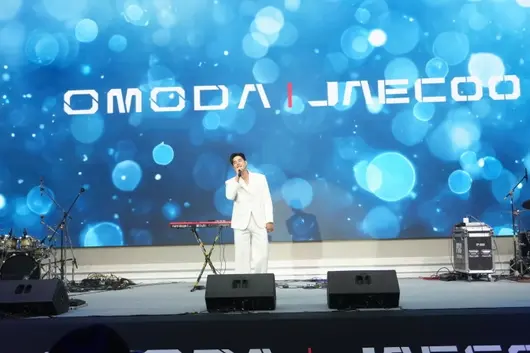
The ranking from this April shows the current momentum. Chery's sub-brand Omoda Jaecoo entered the top five for the first time, directly pushing down the traditional Japanese brands.
 In general, in the first four months of this year, Chinese car brands Chery Omoda and Jaecoo have already jumped to fifth place, sales 5,215, basically secured their seat in the first tier. BYD ranked eighth with a cumulative performance of 3,674 vehicles. Chinese brands in Malaysia have moved from "small-scale operations" to a new stage of "scale breakthrough".
Previously the Malaysian market was Perodua and Proton two local brands eating the meat, Toyota and Honda drinking the soup. Now Chinese brands (especially Omoda Jaecoo and BYD) squeezed into top five, top eight, directly causing Honda to drop 8%, showing our cars really snatched the Japanese brands' cake.
Did you notice? Just in the top ten, there are Omoda Jaecoo, BYD, Jetour these Chinese brands. If adding Chery, Great Wall, Chinese brands on the list are already very conspicuous. This coordinated effort effect will make consumers feel "Chinese cars are a reliable choice".
Especially Geely invested local brand Proton, its electric vehicle e.MAS series sells very well. Although Proton counts as a Malaysian local brand, its new energy technology comes from China. This is equivalent to Chinese car technology using "borrowing a chicken to hatch eggs", achieving leapfrog overtaking in Malaysia.
So in my opinion, our Chinese cars have new design, high configuration, good intelligent experience, plus Chery, BYD, Geely these big factories have already built factories in Malaysia, costs have come down, prices also have competitiveness.
But Japanese cars decades accumulated reputation (durable, high resale value) are hard to overturn at once. Moreover Malaysia's charging piles are not that many, pure electric cars to fully popularize still need to wait a bit.
In general, Chinese brands in Malaysia are already no longer a "niche choice", but have become one of the mainstream options. As long as maintaining current product power and cost-performance ratio, replacing Japanese cars to become the "third major player" is only a matter of time.
What do you think?

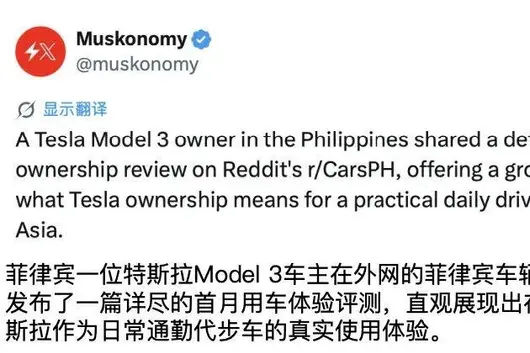
Recently, overseas blogger @muskonomy shared the usage experience of a Model 3 owner from the Philippines from the first month after purchasing the car.

After just one month of use, the Model 3 shows significant advantages in usage costs and smart experience, and space and practicality are also excellent, making him sigh he never wants to switch back to a fuel car.
Before buying the Model 3, this owner had been driving a Japanese B-class fuel car for a long time, with a fixed daily route, commuting on the highway from Monday to Wednesday, with an average weekly mileage of about 110 km. Year-round highway travel made him particularly picky about vehicle handling and driving quality.
What made him exclaim "Great Value" is Tesla's excellent usage economy. Previously driving a Japanese B-class fuel car, refueling costs remained high, "Before oil prices rose, just filling up cost about 13,200 pesos (approx. 1452 RMB) per month". After buying the Model 3, he used home charging for refueling, only needing to charge twice a week, monthly electricity cost about 2000 pesos (approx. 221 RMB), only one-sixth of the previous fuel car, commuting usage cost significantly reduced.

Even more surprising to the owner, the Model 3's space performance far exceeded expectations. "I am about 6.3 feet tall (approx. 191cm), weight 225 lbs (approx. 102 kg), worried before picking up the car that interior space was limited. After actual experience found, even if front seats are adjusted to comfortable position, rear seats can still easily accommodate adult passengers, daily commute completely sufficient, practicality maximized."
Singapore owner @Coco Silly Fish from Southeast Asian country also swapped her home's fuel car for Tesla. She shared on social platform, when driving fuel cars before, cost pressure brought by oil price rise, fuel anxiety from morning/evening peak traffic congestion, always troubled her greatly. After driving Tesla, commuting refuel cost even lower than public transport, overall usage experience also greatly improved.
Besides saving money and being worry-free, Tesla's powerful power response, easy and effort-saving driving feeling in congested sections all left a deep impression on her: "The current calm feeling of usage is something fuel cars cannot replace!"



For the past few decades, Japanese cars, relying on reliability, fuel economy, and global manufacturing systems, have long occupied an important position in the global automotive industry. The endurance and resilience of the Japanese car manufacturing system are also key reasons for their global popularity. Toyota surpassed Volkswagen Group to become the world's largest carmaker in 2020 and still firmly holds the top spot.
However, against the backdrop of the Middle East situation causing international oil prices to surge, Chinese new energy vehicles seem to be quietly impacting the established global automotive market structure.
Statistics from the International Energy Agency (IEA) show that Chinese enterprises account for 60% of global EV sales in 2025. Relying on power battery, intelligent driving, smart cockpits, and supply chain advantages, they achieved a transition from "catchers" to "rule makers" in the EV era. Companies like BYD, Geely, Wuling, Chery, XPeng, Li Auto, and Leapmotor are accelerating their march into global markets, including mature automotive markets like Europe and Japan.
Unlike the large-scale entry into Europe, Chinese car brands choosing to directly enter the Japanese automotive market mainly focus on BYD, Zeekr, Chery, etc., and generally choose to directly enter the local mass-market passenger vehicle sector, competing head-on with Toyota, Honda, and Nissan.
Chinese electric vehicles, equally affordable yet more intelligent, have already brought some impact to the Japanese automotive industry. "In the past, cheap meant bad quality, but now (Chinese cars) product quality has significantly improved. Prices are so cheap, it's hard for Japanese cars to compete." A senior executive of a Toyota primary supplier told Nikkei News.
Nikkei News also commented that Chinese Chery Automobile and BYD plan to launch light EVs in Japan. If competing on the same stage, the situation will inevitably become increasingly severe for Japanese cars.
If the spike in international oil prices caused by the Middle East crisis is the main reason new energy vehicles have been welcomed by European and Japanese consumers in recent months, then a forecast from the IEA still gives an optimistic expectation for new energy vehicle development. IEA predicts that global EV stock will increase to more than 6 times that of 2025 by 2035, accounting for 50% of global car sales.
In this way, a problem also surfaces: Will Chinese new energy vehicles replace Japanese cars first?
Both Japanese Fuel Cars and EVs Are Trapped
Market sales are the most intuitive manifestation of industrial competition.
According to Japanese media statistics, Toyota and Honda's new car sales in China in May decreased by 32% and 49% year-on-year, respectively. In terms of cumulative new car sales in China from January to May, Toyota reached 579,400 units, a 10% decline year-on-year, while Honda reached 173,344 units, a 30% decline year-on-year.
Toyota explained: "After March, affected by the Middle East situation, crude oil and gasoline prices rose, exacerbating the stagnation of the gasoline car market."
In fact, even before the Middle East situation, the Chinese car market had already formed a clear differentiation. The incremental new energy market is completely dominated by local Chinese brands, while Japanese and German car companies can only continuously retreat to the shrinking fuel vehicle stock market. Compared to Japanese cars' cautious attitude in the Chinese new energy vehicle market, German car companies have a more aggressive layout in intelligent electric vehicles.
Even under the pressure of international situations, Toyota, the world's largest carmaker, remains cautious about electrification layout. On May 29, 2026, Japanese media reported that Toyota Motor will suspend the development of new generation pure electric vehicles (EV).
 Lexus LF-ZC Concept Car
Specifically, Toyota suspended the mass production model of Lexus pure electric sedan "LF-ZC". This car was originally scheduled to be launched in 2027. It is a flagship model tasked with Lexus' electrification transformation mission. In addition to carrying new high-performance batteries, it also utilizes "Integrated Die Casting" technology to achieve one-piece molding of parts using aluminum casting. As a new generation EV gathering the latest Toyota technological essentials, it received high attention from the market. Announcing the suspension of R&D after two delays further shocked the outside world.
Japanese media analysis pointed out two reasons behind Toyota suspending the development of the LF-ZC model: First, the United States revoked tax credits for EV purchases and other policies, and Europe also cancelled the policy prohibiting the sale of internal combustion engines in principle by 2035. Second, the rise of Chinese cars, especially the competitive barriers established by Chinese car companies relying on domestic suppliers, autonomous driving, and internet-of-vehicles technologies.
Once the core moat technology of Japanese cars, fuel-electric hybrid technology is now being chased by domestic DM-i and Thor DHT plug-in hybrid technologies, continuously siphoning off Japanese hybrid stock users with lower fuel consumption on low battery and stronger power performance.
At the same time, what brought the biggest impact to Japanese cars is that Chinese new energy vehicle exports have become a new growth curve. In 2025, the export volume of domestic new energy vehicles doubled significantly, selling far to global markets such as Europe, Southeast Asia, and the Middle East, having shaken off the low-end cheap label, with brand power and product power upgrading synchronously.
Adding insult to injury for Japanese cars, due to the continued blockade of the Strait of Hormuz, Toyota Motor announced in late May 2026 plans to cut overseas production by about 83,000 units before November, mainly reducing the production of fuel vehicles facing the Middle East and Asian markets.
If looking only at the Chinese market, a tacitly understood reality is that, in the short term, Japanese cars still have stable fuel vehicle stock space. However, with the improvement of domestic charging infrastructure and the popularization of consumer electrification awareness in the medium and long term, the stock of fuel vehicles will also continue to shrink, and the decline in Japanese car sales will become the norm.
Intelligence Generation Gap, Chinese Cars' Killer App in Japan
Recently, Japanese research company MM Institute (Minato-ku, Tokyo) released the results of a survey on Japan's autonomous bus practical testing project. The results show that among the vehicles used in the 2025 annual practical testing, Chinese BYD ranked first with 36.4%. The combined share of Chinese manufacturers reached 50.3%.
It is understood that the survey object for this time was L2-level and above autonomous driving buses, and the project mainly focused on road driving practical testing for ordinary passengers. In 2025, there were a total of 143 vehicles used in practical testing projects nationwide in Japan, an increase of 18 vehicles over the previous year.
Looking at the share of each company, BYD ranked first, France's Navya second, and the third place was Estonia's Auve Tech accounting for 12.6%, China's intelligent solution supplier WeRide accounting for 2.8%.

If electrification is the choice of different technology routes between Chinese and Japanese car companies, then intelligence is the core track that completely widens the generation gap between the two sides. Japanese media reports write: Multiple Japanese car company executives publicly admitted that Japanese car companies are at least five years behind Chinese car companies in smart cockpits and high-level autonomous driving.
If calculated based on the traditional car iteration rhythm more familiar to Toyota and other car companies, a 5-year gap is a whole generation of cars.
Japanese media believes the reason for this difference in car building is the different underlying car building logic of the two sides.
The person in charge of MM Institute's survey said: "Most autonomous practical testing projects in Japan are led by startup companies. Such projects are more inclined to adopt vehicles from overseas manufacturers." While he has high hopes for domestic Japanese manufacturers, he also pointed out: "Considering safety aspects, some manufacturers are cautious about practical testing, and there are also concerns about price".
In fact, mainstream domestic autonomous new cars are all equipped with native intelligent electric architectures, standard full vehicle OTA upgrades, and the vehicle can update the in-vehicle system, voice interaction, energy consumption control, assisted driving functions, etc., online throughout its life cycle, achieving "getting newer with use".
At the same time, 8155/8295 flagship chips, continuous voice interaction, multi-screen interconnection, and localized ecosystem adaptation have become standard equipment for 200,000-level family cars. The intelligent experience fits domestic user needs and has long become an "cannot go back after use" travel mode for Chinese car owners. This strategy of "dimensionality reduction attack" using intelligence against non-smart cars might also be feasible in the Japanese market. After all, Japanese car companies still follow fuel car development logic, hardware is fixed so functions are locked, most models do not support full vehicle OTA, and chip performance is "lagging behind since departure".
Not to mention, starting from the end of 2025, more than ten domestic brands have begun testing L3-level autonomous driving commercial operations, and more new force car company heads believe that from a technical level they can "go straight to L4". XPeng recently launched XPeng GX which has already pre-installed Robotaxi capabilities. This intelligent leadership tag will also help improve the image of Chinese cars in overseas markets.
Global Market, Chinese Cars and Japanese Cars Must Fight
The replacement of Japanese cars by Chinese electric vehicles is not limited to the domestic market. In the future, on a global scale, it will continue to impact Japanese cars' overseas advantage markets cultivated for half a century, completely rewriting the global automotive competition pattern.
According to statistics, in 2025, the market share of Chinese brands in Southeast Asian new energy markets broke through 22.2%, BYD single brand market share in Thailand's pure electric market exceeded 70%. In the entry-level family car markets of Indonesia and Vietnam, Chinese electric vehicles have begun to shake the monopoly of Japanese fuel cars in local markets.
 Great Wall Motor in Thailand, image source: Great Wall Motor
In the European market, even facing tariff barriers and strict localization requirements, domestic new energy and plug-in hybrid models still maintain positive growth. They rank high in the new energy sales list in countries such as the UK, Norway, and Spain. Especially in recent months, affected by rising international oil prices, the sales of Chinese new energy vehicles in Europe continue to rise.
In Japanese traditional advantage markets such as Mexico and South America, Chinese electric vehicles continue to increase their market share with high cost-performance and reliable three-electric technology, continuously replacing traditional Japanese fuel models. With Canada opening the new energy vehicle market to Chinese car companies, the volume of Chinese new energy vehicles in North America will also steadily increase in the future.
 BYD enters the Japanese K-car market, image source: BYD Fan Home
Especially worthy of mention is in the Japanese market. In the past two years, BYD, Wuling and other brands have completed right-hand drive modifications and local certifications, officially landing in the Japanese market. BYD ATTO3 remains stable in the Japanese small electric vehicle sales list, and the market share of Chinese brands in Japanese new energy segments continues to break through.
Reporter's Note
Returning to the question at the very beginning of the text: Will Chinese new energy vehicles replace Japanese cars first?
It is unavoidable that Japanese cars have half a century of accumulation in advantage markets and still cannot be shaken by Chinese car companies in the short term. However, if focusing on the long-term 5-10 year dimension, global fuel ban policies continue to land, electrification and intelligence become the main industry tracks, and the technical barriers of Japanese cars in the fuel era will begin to collapse.
If Japanese cars cannot quickly solve short boards, then the problems of intelligence capability, supply chain system, and slow transformation will also continue to amplify in the future 10 years. During this period, Chinese electric vehicles might greatly squeeze Japanese car shares, thereby rewriting the global automotive map.
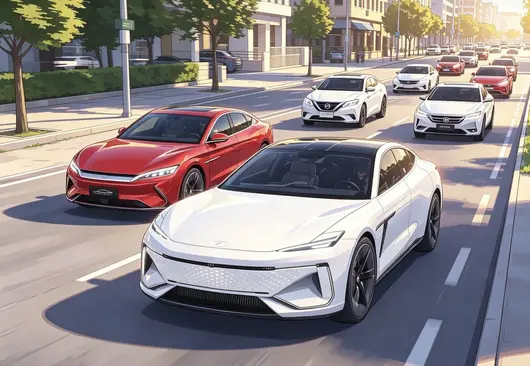

Have you ever seen the roads in India?
I've seen them online.
The scene is usually like this: a sedan blocked behind a cow, motorcycles running wild nearby, even milk tea vendors nearby, so "clean and hygienic".

However, in a place where many feel physically uncomfortable after watching, Toyota, Suzuki, Honda and other Japanese car companies decided to bet on India.
According to the Indian "Brand Quality Foundation" website, the three car companies will invest nearly $11 billion to build factories, increase capacity, and develop exports in India.
Some netizens commented: Did the three Japanese car companies have too much money?
In fact, they didn't have endless money to spend, nor were they bewildered by Indian curry. These Japanese car executives are much clearer than us.
Current Japanese car revenue and market share are declining. Raw material costs are soaring. Looking at the world map, finding a market that can accommodate capacity, expand share, and has gentle competition is not easy.
So, it wasn't that Japanese car companies chose India, but because they had no choice.
The Pain of Japanese Car Companies
Past Japanese cars were truly the envy of others.
Ask old drivers who drove Japanese cars over ten years ago, talking about Japanese cars, almost no one doesn't give a thumbs up, cheap price, fuel saving, durable...
Even many Japanese cars needed to be bought at a markup, but who would think this iron fortress would be beaten out of sight in a few short years.
With the wave of new energy vehicles coming, electrification and intelligence became the goal for many domestic car companies to "leapfrog". Relying on China's strong new energy vehicle industry chain advantages and car companies' own persistence on R&D and technology, Chinese independent brands quickly achieved "leapfrogging".
Domestic cars once criticized are now becoming more and more common on the roads, even surpassing joint ventures in share.
According to CPCA data, in April 2026, the share of independent brands reached as high as 62.5%, far exceeding Japan's 13.1%.

You need to know, the Chinese car market is the largest car market in the world. Losing speed in the Chinese market is like losing a huge piece of cake.
Meanwhile, the main theme of the Chinese market in recent years is still price wars. Racing on configuration, price, and service has become a normal state, which also had a huge impact on Japanese cars' profits.
Apart from China, Japanese cars are also not doing well in the US.
On January 20, 2025, Trump swore in as the 47th US President, starting a series of chaotic operations, including imposing additional car tariffs in the name of national security, causing the tariff rate for imported Japanese cars to reach as high as 27.5% at one point. Although it decreased later, it was still far higher than the initial tax rate.
This operation directly led to a tariff loss of over 2 trillion yen for seven Japanese car companies in fiscal year 2025.
Looking at Japan itself, it is actually not easy either.
Middle East geopolitical conflicts blocked shipping in the Strait of Hormuz, transportation costs and raw material costs soared, Japanese car companies also had to suffer in silence.

Executives looking at the reports, their backs went cold, only to find a new growth curve.
So, Japanese car companies didn't fall in love with India, there was nowhere else to go.
Deep Thought on Choosing India
So, what magic does India have, to make Japanese car companies invest heavily?
The first advantage is big. In 2025, the Indian car market achieved 5.517 million new car sales, up 6% year-on-year, breaking the historical record, ranking as the third largest car market in the world, exceeding Japan for four consecutive years, second only to China and the United States.
The value of this doesn't need me to say much. India achieved this result mainly because India has been promoting tax reduction policies to promote consumption, which led to a significant increase in domestic consumption willingness.
The second advantage is close, meaning it is close to places where Japanese cars sell well, such as Africa.
So, India for Japanese car companies is more like a convenience store built in the center of a crossroad. You don't need to ship cars to eight countries separately, just build well at this stop in India, then unload ship by ship, and you can save a lot of costs.

The Nikkei also believes that India is expected to become its global car supply center.
The third advantage is stability. You know, Japanese cars' advantage is fuel cars, after all, the three major components of engines, gearboxes, and chassis, they have played for many years, technology accumulation is number one in the world.
But the Chinese car market has fully promoted electrification and intelligence development, leading to Japanese cars' advantage becoming weaker and weaker, impossible to play out. But India is different, it has the characteristics of few charging piles and slow electrification process. Indian old people buying cars still look for cheap, fuel saving, easy to fix, and these three points are exactly Japanese cars' old trade.
Especially Suzuki, always been India's car market evergreen, almost always sitting on the best-selling model throne, reputation of being worry-free, better than any advertisement.
So, Japanese car companies' vigorous layout of the Indian market is obviously carefully considered.
But, is the Indian market really that easy to mix?
The Hard-to-Bite Indian Market
Of course, India is not perfect like a hot commodity, its disadvantages are as obvious as its advantages, and every one is enough for Japanese car companies to face a hard time.
First talk about electrification. Yes, right now India has few charging piles and electric cars don't sell well, it is indeed a shelter for Japanese fuel cars. But you have to think, how long can this "shelter" avoid?
India previously shouted the slogan of 30% of new cars being electric vehicles by 2030. Although it sounds like bragging, but can't help but they really give subsidies, really build charging stations.
Imagine, what if one day India suddenly wakes up, starts vigorously promoting electrification, doing infrastructure, charging piles popping out like mushrooms after rain, then Japanese cars will be dumbfounded?
Isn't this a version of the Thai market?
Back then Japanese cars in Thailand won easily. The entire Southeast Asian market was called Japanese cars' backyard. Result Thailand took the lead in promoting electrification. Chinese electric vehicles came in, directly became a hot commodity. Look at Japanese cars again, share in Thailand falling down rapidly.

If India accelerates electrification, history will likely repeat, and this time, Japanese cars don't even have a place to flee, how to prevent will become the first problem for Japanese car companies.
Next talk about policy. India's policy is like a pot of curry, you never know if you will eat chicken or potato next time.
This magical country, today low tariff encourages building factories, tomorrow may fine you a huge amount. What's more annoying is mandatory joint venture. Foreign car companies want to sell cars in India, have to find local partners to partner up. When your factory is built, supply chain is done, India directly backstabs you. At that time whether adding money or withdrawing capital, what you get is heartache.
So you see, this market like India is like a mango that looks very sweet, bite the first mouth it's okay, chew two more mouths hit the hard core.
Japanese cars now is calculating, while the core hasn't bit the tooth, hurry up to nibble a few more mouths, but the core will bite sooner or later, just don't know which day.
Epilogue
Japanese cars this trip to India, not go for tourism, is go to make a living.
Chinese and Southeast Asian dining tables are more crowded, production and transportation costs have risen. Looking around the world, only this pot in India is still steaming, even if what is boiling inside is curry-flavored stones, have to bite hard and chew down.
Japanese car companies want to expand market, India wants to pull economy, solve employment, both sides have their own thoughts.
As for the ending is Japanese cars in India regain their glory, or like past competitors shamefully walk away, then is not known.
But no matter how, this play just started, we slowly watch is okay.
Anyway India's story, never bored.
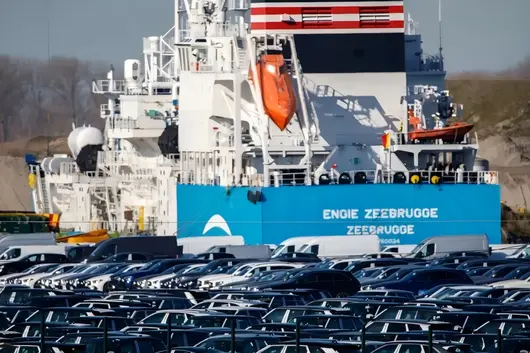

"In the past, selling Toyotas, the first thing customers would say upon entering was: When can I pick up the car? Now the first thing is: Whose intelligent driving system does this car use?" This is what a Toyota 4S shop salesperson told me recently.
He entered the industry in 2018. At that time, the Camry had price markups, people queued for the Highlander, and the Alphard was like a financial product. The hardest part of selling Japanese cars was not selling the cars, but calming the customers' emotions.

But now, the one thing he does most every day is explain: 'Our cars actually use a lot of Chinese supply chains.' When he said this, his tone even sounded a bit proud.
Indeed, ten years ago, Chinese automakers were still figuring out how to make door gaps even; five years ago, Chinese new energy vehicles were completely overshadowed by the industry; and now, if Japanese cars want to do new energy well, the first thing has become: Connect to the Chinese supply chain first.
You will find that when an era truly ends, it is often not because someone fell.
Instead, people who were once high and mighty start to actively learn from you.

Recently, sales of Toyota's pure electric SUV broke ten thousand again. Many people interpret this as a 'Japanese counterattack'. But if you take this car apart to look, you will find things are not that simple.
Momenta Intelligent Driving, Hesai LiDAR, Desay SV Domain Control, FinDream Battery, CALB, Zhengli New Energy...
To put it bluntly, many so-called 'Japanese new energy vehicles' now look more and more like 'Japanese shells assembled by the Chinese supply chain'. But the issue is, this precisely shows that China's automotive industry has truly won. Because true industrial victory is never about crushing others, but even your rivals are forced to use you.
This is actually more terrifying than sales overtaking.
In the past, everyone always said Chinese automakers were 'overtaking on a curve'. Looking back now, this statement was actually too conservative. China's automotive industry isn't about overtaking at all; it's about changing the track entirely.

In the internal combustion engine era, why was the Japanese supply chain strong? Because that era competed on precision manufacturing, stable quality control, long-cycle iteration, and a closed supply system. To put it simply, it was 'slow work yields fine results'. Toyota's system was essentially the highest level of order in the industrial era.
The problem is, the new energy era is different.
Now it competes on iteration speed, software capability, cost control, supply chain collaboration, and large-scale rapid trial and error. In the past, a car model was replaced every five years; now there is an OTA update every half year; in the past, suppliers took three months to change a mold; now Chinese manufacturers take three weeks.

In the past, the strongest point of Japanese manufacturing was 'not making mistakes'. Now the strongest point of Chinese manufacturing is allowing rapid mistakes, then rapid evolution. These are two completely different industrial philosophies. So many people actually misunderstand Chinese new energy vehicles. Everyone always thinks Chinese automakers win because they are cheap. But what is truly terrifying is never the low price. It is that China now possesses 'cheap', 'good enough', and 'fast' all at once.
This is the most scary part. Because the most unsolvable thing in the industrial world is that you are cheaper than me and iterate faster than me. This is also why, today, more and more Japanese suppliers are starting to collapse. Many people see Japanese parts companies going bankrupt and think it is just a sales issue.
Actually, it's not. The real problem is that the industrial logic upon which the entire Japanese supply chain relies is starting to fail. In the past, the biggest moat for Japanese suppliers was the Keiretsu system. Toyota only used the Toyota system; Honda only supported the Honda supply chain. Denso, Aisin, Jtekt, Yazaki... the whole system was like a closed empire.
But in the new energy era, there is a particularly cruel thing: closed systems mean slow. And being slow is almost a mortal sin today.
So you will see a particularly absurd phenomenon. In the past, Chinese suppliers desperately wanted to get into the Japanese system; now Japanese automakers are coming to Chinese suppliers. Because without using the Chinese supply chain, cars simply cannot compete.
This is particularly obvious in Southeast Asia. Two years ago, many people were still discussing: 'Will Chinese cars fight fiercely with Japanese cars in Thailand?' But now it is found that it is not a 'head-to-head match'. Instead, the Chinese supply chain directly penetrated into Japanese car factories.

This is more ruthless than grabbing the market. Because grabbing the market is just grabbing sales. Grabbing the supply chain is equivalent to grabbing the industrial lifeline. In the past, one of the scariest points of Japanese manufacturing was that it controlled the Asian industrial system. Now this control is shifting. And it is shifting very quickly.
The most interesting thing is that the Japanese themselves actually realized the problem first. The Nikkei has started to frequently use words like 'Keiretsu Dissolution'. Translated, it is actually just one sentence: The core thing of the Japanese automotive industry is collapsing.
So today the most painful are no longer Japanese brands, but that group of Japanese suppliers. Because vehicle manufacturers can at least 'surrender'. The supply chain is not that easy to turn around.
Toyota can still use Chinese intelligent driving; Nissan can still accept Chinese batteries; Honda can still learn new EV brands to do cockpits. But what about those traditional suppliers?

All advantages established in the internal combustion engine era suddenly became useless. More cruelly, the most important things in the new energy era, batteries, intelligence, software, intelligent driving, China has almost occupied all of them.
So you will see a particularly darkly humorous picture. On one side, Japanese media are heartbroken over 'Japanese car soul handed over to China'; on the other side, Japanese suppliers are taking BYD orders again to stay alive. This is actually very much like dynastic transitions in history.
People of the old era will not disappear suddenly. They will first be shocked, then deny, then angry, and finally join.
Many people still think China's automotive industry is just 'new energy leading'. But I think the real change is far more than cars. Cars are just the most obvious open exam for China's manufacturing upgrade. Because cars are the crown of industry. Behind it are connected chips, materials, software, batteries, machinery, manufacturing, AI, automation, and supply chain collaboration.

Whoever wins the car has the qualification to reconstruct the next generation industrial order. And what is truly terrifying about China today is that a 'supply chain black hole effect' is starting to appear.
What is a black hole? It means all industries will eventually be sucked into it.
You make cars, you have to connect to Chinese batteries; you do intelligent driving, you have to connect to Chinese computing power; you do supply chains, you have to accept Chinese speed; you do manufacturing, you have to adapt to Chinese costs.
It is highly likely that a very realistic situation will appear in the future. Manufacturing industries that do not join the Chinese supply chain will find it harder and harder to stay at the table. This is not some nationalistic emotion. This is industrial law.
Because at the end of manufacturing development, it is no longer about single-point technology, but about who can compress the entire supply chain into 'one machine'.
And the strongest ability China has now is this. From batteries to intelligent driving, from parts to whole vehicles, from R&D to mass production, China's industry has truly formed a complete closed loop, super-large scale, super-high-speed iteration, and super-strong cost control for the first time.
This thing is what is truly making the whole world anxious today. So look back at those news of 'Japanese cars using Chinese supply chains'.
You will find that its true meaning is not 'Chinese parts entered the Japanese system'. It is that Chinese manufacturing has begun to become the global industrial system itself for the first time.
© 2024 Bitauto.com. All Rights Reserved.
Bitauto (www.yiche.com and www.bitauto.com) is one of the most visited automotive websites in China. We provide detailed info on Chinese car brands available in your area. Please note that the information provided on this website is based on publicly available data and is for reference only. It may not be fully updated or accurate at all times.

Help us improve our website


