

HomeKopiC

Search History
Popular Searches
Dealer Login / Sign Up

In the Malaysian SUV market, many buyers compare Mazda CX-3 and MG MG HS when choosing a car. These two cars are quite close in price and positioning. Today we will make a detailed comparison from multiple aspects to help you save time on research.
Mazda CX-3 OTR price in Malaysia is RM 126,159 - 139,159, with a total of 2 versions, including 2023 2.0L High (RM 139,159), 2023 2.0L Plus (RM 126,159) etc.
MG MG HS OTR price in Malaysia is RM 130,450 - 146,450, with a total of 2 versions, including 1.5L Standard (RM 105,000), 1.5L Executive (RM 115,000) etc.
From the price perspective, Mazda CX-3 starting price is indeed RM 4,291 cheaper than MG MG HS. If your budget is limited, Mazda's entry-level version can already meet daily needs. But also note, the few thousand cheaper might have trade-offs in features, it depends on your specific needs.

Mazda CX-3 safety rating is 5★ (ASEAN NCAP), active safety system includes i-Activsense.
MG MG HS safety rating is TBD, active safety system includes Basic.
Regarding safety features, both cars have received good ratings. However, Mazda CX-3's i-Activsense and MG MG HS's Basic have some differences in functions. If you value active safety more, you can carefully compare the function lists of both.

Mazda CX-3 uses FWD drive method.
MG MG HS uses FWD drive method.
Both cars have the same drive method, both are FWD, daily driving experience won't have much difference.

Mazda CX-3 and MG MG HS are both mainstream choices in the Malaysian market, suitable for family use and daily commuting. If you value brand reputation and resale value more, consider the one with better reputation first; if you care more about value for money and features, then choose the one with richer configuration. Ultimately it is recommended to test drive both, personal experience is most important.
Overall, Mazda CX-3 and MG MG HS are both very good models in the Malaysian market. Which one to choose, key depends on your personal needs and budget. We suggest doing your research, compare quotes from several dealerships, then go for test drive to make final decision. Buying a car is a big matter, spending time on research is never wrong.


In the Malaysian SUV market, many buyers compare Mazda CX-3 and Chery Tiggo 8 when choosing a car. These two cars are quite close in price and positioning. Today we will make a detailed comparison from multiple aspects to help you save time doing homework.
The OTR price of Mazda CX-3 in Malaysia is RM 126,159 - 139,159, with a total of 2 versions, including 2023 2.0L High (RM 139,159), 2023 2.0L Plus (RM 126,159) etc.
The OTR price of Chery Tiggo 8 in Malaysia is RM 129,750 - 129,750, with a total of 1 version, including 2026 1.6T Standard (RM 129,750) etc.
From a price perspective, the starting price of Mazda CX-3 is indeed RM 3,591 cheaper than Chery Tiggo 8. If your budget is limited, Mazda's entry-level version is already sufficient for daily needs. But pay attention, the few thousand cheaper might involve trade-offs in features, depending on your specific needs.
Mazda CX-3 is equipped with 1.5L Turbo, 140 hp. Official fuel consumption 7.0 L/100km.
Chery Tiggo 8 is equipped with 1.5L Turbo, 140 hp. Official fuel consumption 7.0 L/100km.
Both cars use the same powertrain, the driving feel is basically the same. Fuel consumption is also similar, no need to worry too much about this.
Mazda CX-3 adopts FWD drive mode.
Chery Tiggo 8 adopts FWD drive mode.
Both cars have the same drive mode, both are FWD, there won't be much difference in daily driving feel.
Mazda CX-3 warranty 5 years/150,000km, maintenance interval every 10,000km or 6 months.
Chery Tiggo 8 warranty 3 years/100,000km, maintenance interval every 10,000km or 6 months.

Both Mazda CX-3 and Chery Tiggo 8 are mainstream choices in the Malaysian market, suitable for family use and daily commuting. If you value brand reputation and resale value more, you can prioritize the one with better reputation; if you care more about cost-performance and features, then choose the one with richer configurations. In the end, it is recommended to test drive both, personal experience is the most important.
Overall, both Mazda CX-3 and Chery Tiggo 8 are very good models in the Malaysian market. Which one to choose depends on your personal needs and budget. It is recommended to do homework, compare quotes from multiple dealerships, then test drive to make a final decision. Buying a car is a big matter, spending time doing homework will definitely not be wrong.

喺馬來西亞嘅 SUV 市場,好多買家喺揀車嘅時候都會拎 Toyota Harrier 同 Audi Q5 嚟作比較。呢兩款車喺價錢同定位上都好接近,今日我哋就由多個方面做一個詳細嘅對比,幫你省返做功課嘅時間。
Toyota Harrier 喺馬來西亞嘅 OTR 售價係 RM 289,000 - 289,000,一共有 1 個版本,包括 2026 HEV 2.5L Standard(RM 289,000)等。
Audi Q5 喺馬來西亞嘅 OTR 售價係 RM 354,174 - 423,174,一共有 2 個版本,包括 40 TDI(RM 320,000)、45 TFSI(RM 350,000)等。
從價錢睇,Toyota Harrier 嘅起步價真係比 Audi Q5 平咗 RM 65,174。如果你預算有限,Toyota 嘅入門版已經可以滿足日常需求。但都要留意,平嗰幾千蚊,可能喺配備上有取捨,具體要看你嘅需求。

Toyota Harrier 搭載 2.0L Turbo,馬力 220 hp。官方油耗 9.5 L/100km。
Audi Q5 搭載 2.0L Turbo,馬力 220 hp。官方油耗 9.5 L/100km。
兩款車用嘅係同一套動力系統,日常開嚟嘅感受基本無分別。油耗方面都差唔多,唔使太糾結這一點。

Toyota Harrier 嘅安全評級係 5★ (ASEAN NCAP),主動安全系統包括 Brand ADAS。
Audi Q5 嘅安全評級係 5★ (Euro NCAP),主動安全系統包括 Pre Sense + ACC。
安全配備方面,兩款車都拿到咗唔錯嘅評級。唔過 Toyota Harrier 嘅 Brand ADAS 同 Audi Q5 嘅 Pre Sense + ACC 喺功能上有些差異,如果你比較重視主動安全嘅話,可以仔細對比吓兩者嘅功能列表。

Toyota Harrier 車身長 4400 mm,尾箱 400 L。
Audi Q5 車身長 4400 mm,尾箱 400 L。
兩款車嘅尺寸幾乎一樣,車內空間差別唔大。呢個級別嘅車,日常使用完全夠用。

Toyota Harrier 採用 FWD 驅動方式。
Audi Q5 採用 FWD 驅動方式。
兩款車嘅驅動方式一樣,都係 FWD,日常駕駛感受唔會有太大區別。

總括嚟講,Toyota Harrier 同 Audi Q5 都係馬來西亞市場好唔錯嘅車型。揀邊一輛,關鍵都係睇你嘅個人需求同預算。建議大家做足功課,多比較幾間車行嘅報價,再去試駕做最終決定。買車係件大事,花少少時間做功課絕對無錯。


In the Malaysian SUV market, many buyers compare Toyota Harrier and Chery Tiggo 8 PHEV when choosing a car. These two models are quite close in price and positioning. Today, we will make a detailed comparison from multiple aspects to help you save time on research.
The OTR price of Toyota Harrier in Malaysia is RM 289,000 - 289,000, with 1 variant in total, including 2026 HEV 2.5L Standard (RM 289,000), etc.
The OTR price of Chery Tiggo 8 PHEV in Malaysia is RM 159,750 - 159,750, with 2 variants in total, including 1.6L Turbo Standard (RM 130,000), 1.6L Turbo Premium (RM 145,000), etc.
From a price perspective, the starting price of Chery Tiggo 8 PHEV is RM 129,250 cheaper than Toyota Harrier. To be honest, in this price range, a difference of a few thousand isn't really significant; the key is to look at overall value for money and long-term usage costs.
Toyota Harrier's safety rating is 5★ (ASEAN NCAP), and the active safety system includes Brand ADAS.
Chery Tiggo 8 PHEV's safety rating is TBD, and the active safety system includes Basic.
Regarding safety features, both cars have received good ratings. However, there are some differences in functionality between Toyota Harrier's Brand ADAS and Chery Tiggo 8 PHEV's Basic. If you value active safety highly, you can compare their feature lists in detail.
Toyota Harrier uses FWD drive mode.
Chery Tiggo 8 PHEV uses FWD drive mode.
Both cars have the same drive mode, both are FWD, so there shouldn't be a huge difference in daily driving experience.
Toyota Harrier warranty 5 years/unlimited mileage, maintenance interval every 10,000km or 6 months.
Chery Tiggo 8 PHEV warranty 3 years/100,000km, maintenance interval every 10,000km or 6 months.
Toyota Harrier and Chery Tiggo 8 PHEV are both mainstream choices in the Malaysian market, suitable for family use and daily commuting. If you value brand reputation and resale value more, prioritize the one with better reputation; if you care more about value for money and features, choose the one with richer configurations. Ultimately, it is recommended to test drive both, as personal experience is the most important.
In summary, Toyota Harrier and Chery Tiggo 8 PHEV are both very good models in the Malaysian market. Choosing which one depends mainly on your personal needs and budget. We suggest doing your research, comparing quotes from multiple dealerships, and then test driving to make a final decision. Buying a car is a big deal, spending some time on research will never be wrong.

Dalam pasaran SUV Malaysia, ramai pembeli ketika memilih kereta sering membandingkan Toyota Fortuner dan MG MG HS. Kedua-dua kereta ini mempunyai harga dan kedudukan yang agak dekat, hari ini kita akan buat perbandingan terperinci dari pelbagai aspek, bantu anda menjimatkan masa melakukan kajian.
Harga OTR Toyota Fortuner di Malaysia adalah RM 195,880 - 241,880, terdapat 3 varian, termasuk 2024 2.8T VRZ Diesel (RM 241,880), 2024 2.7L SRZ Petrol (RM 202,880), 2024 2.4L Standard Diesel (RM 195,880) dan lain-lain.
Harga OTR MG MG HS di Malaysia adalah RM 130,450 - 146,450, terdapat 2 varian, termasuk 1.5L Standard (RM 105,000), 1.5L Executive (RM 115,000) dan lain-lain.
Dari segi harga, harga permulaan MG MG HS lebih murah RM 65,430 berbanding Toyota Fortuner. Jujur sekali, dalam segmen harga ini, beza beberapa ribu ringgit sebenarnya tidak besar, yang penting adalah lihat nisbah nilai keseluruhan dan kos jangka masa panjang.

Toyota Fortuner menggunakan cara pemacu FWD.
MG MG HS menggunakan cara pemacu FWD.
Kedua-dua kereta menggunakan cara pemacu yang sama, iaitu FWD, pengalaman memandu harian tidak akan terlalu berbeza.

Toyota Fortuner mempunyai jaminan 5 tahun/jarak bebas had, selang penyelenggaraan setiap 10,000km atau 6 bulan.
MG MG HS mempunyai jaminan 7 tahun/150,000km, selang penyelenggaraan setiap 10,000km atau 6 bulan.

Toyota Fortuner dan MG MG HS adalah pilihan utama dalam pasaran Malaysia, sesuai untuk kegunaan keluarga dan perjalanan harian. Jika anda lebih menghargai reputasi jenama dan harga jual semula, boleh mempertimbangkan model yang mempunyai reputasi lebih baik; jika anda lebih menekankan nisbah nilai dan kelengkapan, maka pilih model yang lebih lengkap. Akhir sekali, disarankan untuk mencuba kedua-dua model, pengalaman sendiri adalah yang paling penting.
Secara keseluruhannya, Toyota Fortuner dan MG MG HS adalah model kereta yang cukup baik dalam pasaran Malaysia. Memilih mana satu, penting untuk melihat keperluan dan bajet peribadi anda. Disarankan membuat penelitian, bandingkan harga dari beberapa pengedar kereta, baru buat ujian memandu untuk membuat keputusan akhir. Membeli kereta adalah perkara besar, meluangkan masa untuk membuat penelitian pasti tidak akan salah.


10 月 10 日,玲瓏輪胎發出 TBR 產品價格調整通知函:自 11 月 1 日起,針對國內零售市場 TBR 所有品牌部分產品系列進行價格上調,漲幅 3% 左右。
係本輪漲價潮裏第一張明確把執行日排進 11 月嘅函件,漲價函依然喺密集落實,檔期已經排到下個月。
01
六家函件扎堆,10 月檔期排滿
節後這一週多,新發布嘅漲價通知集中出現。
山東華盛橡膠 10 月 4 日發函,函件裏嘅話說得最直白:近期天然膠、合成膠、炭黑等主要原材料價格持續上漲,導致輪胎製造成本劇烈攀升,已出現較大虧損;公司決定自 10 月 5 日起對各品牌系列輪胎產品價格上調 3%—5%,後續將依原材料價格變動擇機調整。

躍龍橡膠自 10 月 10 日起對產品價格進行 3% 上浮調整,並明確本次漲價唔接受預付款;華東橡膠自 10 月 11 日起,針對國內替換市場 TBR 所有品牌全系產品上調 5%,函件同樣提示不排除因原材料持續上漲、後續價格繼續上調。


雄鷹橡膠科技(青島)自 10 月 12 日起,對國內替換市場 TBR 所有品牌產品上調 3%—5%,以交貨日期為準、唔以訂單日為憑據。

廈門正新橡膠擬定 10 月 25 日起對 TBR 產品上調 3%,後續不排除依成本上漲情況再調整。

六家函件裏,TBR 係絕對主角,執行日從 10 月 5 日一路排到 11 月 1 日,基本覆蓋整個 10 月再加 11 月初。
02
成本指數同比漲了三成
漲價嘅家底還是成本。10 月 10 日,隆眾資訊半鋼胎原材料成本指數報 16552.14,環比 +0.37%、同比 +29.98%;全鋼胎原材料成本指數報 15705.37,環比 +0.08%、同比 +30.17%。

10 月 9 日合成橡膠價格繼續走高,係這兩條曲線維持上漲嘅直接推手。原料對比表裏,天然橡膠(泰國 20#混合標膠,山東)10 月 10 日報 19680 元/噸,較 10 月 8 日上漲 2.07%;丁苯橡膠(齊魯 1502E,華北)報 17000 元/噸,上漲 2.41%;順丁橡膠(齊魯 BR9000,華北)報 16700 元/噸,上漲 1.83%;炭黑(N660,山東)報 9600 元/噸,持平。四大主材三項上行,只有炭黑站穩咗。

現貨與盤面同向。期貨盤面上,橡膠期貨 10 月 12 日盤中報 19800 元/噸,單日漲 2.30%。

03
庫存連降,渠道跟住行
漲價冇壓成庫存,反而喺去貨。本周期(10 月 2 日—10 月 8 日),山東輪胎樣本企業成品庫存環比下降。
截至 10 月 8 日,半鋼胎樣本企業平均庫存周轉 36.95 天,環比減少 1.72 天、同比減少 7.71 天;全鋼胎樣本企業平均庫存周轉 26.16 天,環比減少 0.96 天、同比減少 13.71 天。

同比兩位數嘅降幅說明兩件事:一係漲價函喺刺激渠道提前下單備貨,二係工廠嘅出貨節奏好於前期。貨從工廠流到咗經銷商倉庫,冇停喺廠區。
04
全漲時期,漲到咗終端
呢一輪同前幾輪唔太一樣。以往多係工廠單向喊漲,渠道按兵不動,終端價格唔動。
渠道端嘅跟進其實從上月底就開始咗:9 月 29 日,吉林、山東、廣州三地渠道商先後發函,10 月 1 日起上調 1%—5%,渠道商首次加入漲價行列。


本輪漲價進一步蔓延至終端市場,零售端開始跟調,廠商庫存同步降低,市場進入全漲時期。廠家嘅成本壓力,第一次被鏈條上嘅每一環分擔咗一部分。
05
後市要盯三個變數:
一係 10 月及 11 月檔期嘅落地率,函件寫咗唔等於終端成交價跟到位;
二係成本指數仲會唔會繼續抬升,合成橡膠一旦鬆動,整個節奏都會變;
三係天然橡膠嘅供給端,目前尚未看到鬆動跡象,同比三成嘅原料漲幅仲喺向下游傳導。

10 月下旬到 11 月初,係呢一輪漲價能否真正落地嘅觀察窗口。對經銷商而言,備貨節奏同資金佔用要一齊計——漲價函密集期最容易出現嘅係搶貨、壓庫,隨後需求頂唔順。
下一步,隨著原材料價格維持高位、11 月窗口臨近,輪胎價格調整仍將延續,鏈條各環節嘅價格與庫存亦喺同步重估。
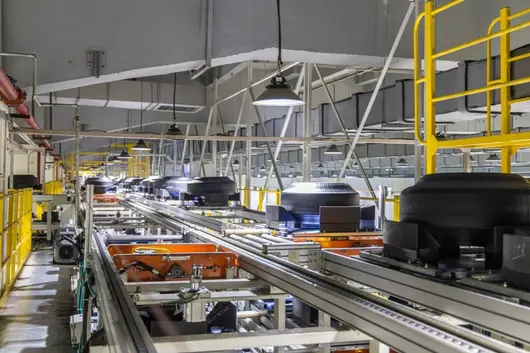
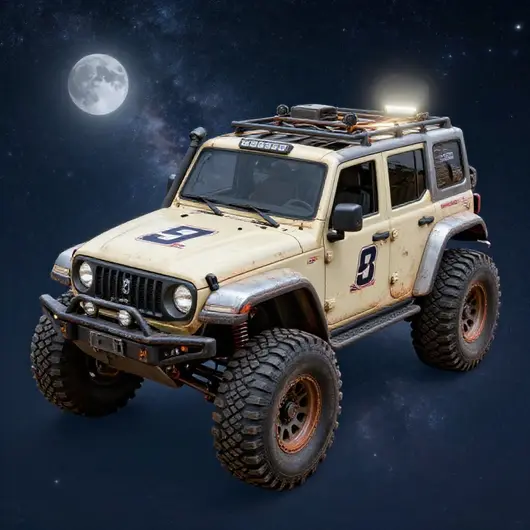
Di pasaran SUV Malaysia, ramai pembeli membandingkan Toyota Corolla Cross dan Chery Tiggo 9 semasa memilih kereta. Kedua-dua model ini memiliki harga dan kedudukan yang agak hampir. Hari ini, kami akan membuat perbandingan terperinci dari pelbagai aspek untuk membantu anda menjimatkan masa membuat kajian.
Harga OTR Toyota Corolla Cross di Malaysia adalah RM 133,800 - 148,800, terdapat keseluruhan 3 versi, termasuk 2026 HEV 1.8L GR Sport (RM 148,800), 2026 HEV 1.8L Standard (RM 140,800), 2026 1.8L Standard (RM 133,800) dan lain-lain.
Harga OTR Chery Tiggo 9 di Malaysia adalah RM 166,800 - 179,800, terdapat keseluruhan 1 versi, termasuk 2026 2.0T Standard (RM 179,750) dan lain-lain.
Dari segi harga, harga permulaan Toyota Corolla Cross memang lebih murah RM 33,000 berbanding Chery Tiggo 9. Jika bajet anda terhad, versi permulaan Toyota sudah boleh memenuhi keperluan harian. Tetapi anda perlu berhati-hati, perbezaan harga beberapa ribu ringgit itu mungkin melibatkan kompromi dalam kelengkapan, bergantung pada keperluan anda.

Penilaian keselamatan Toyota Corolla Cross adalah 5★ (ASEAN NCAP), sistem keselamatan aktif termasuk TSS (PCS, LDA, ACC, LTA).
Penilaian keselamatan Chery Tiggo 9 adalah TBD, sistem keselamatan aktif termasuk Basic.
Dari segi kelengkapan keselamatan, kedua-dua model mendapat penilaian yang baik. Namun, TSS (PCS, LDA, ACC, LTA) pada Toyota Corolla Cross dan Basic pada Chery Tiggo 9 mempunyai perbezaan dari segi fungsi. Jika anda mengutamakan keselamatan aktif, anda boleh membandingkan senarai fungsi kedua-duanya dengan teliti.
Toyota Corolla Cross menggunakan cara pemacu FWD.
Chery Tiggo 9 menggunakan cara pemacu FWD.
Cara pemacu kedua-dua kereta adalah sama, iaitu FWD, pengalaman memandu harian tidak akan berbeza jauh.
Toyota Corolla Cross dan Chery Tiggo 9 kedua-duanya adalah pilihan utama pasaran Malaysia, sesuai untuk kegunaan keluarga dan perjalanan harian. Jika anda lebih mengutamakan reputasi jenama dan harga jual semula, anda boleh mengutamakan model yang mempunyai reputasi lebih baik; Jika anda lebih mementingkan nilai dan kelengkapan, maka pilih model yang mempunyai kelengkapan lebih banyak. Pada akhirnya adalah disyorkan untuk melakukan ujian pemanduan bagi kedua-dua model, pengalaman secara langsung adalah yang paling penting.

Secara keseluruhan, Toyota Corolla Cross dan Chery Tiggo 9 adalah model kereta yang sangat bagus di pasaran Malaysia. Memilih yang mana satu, kuncinya adalah melihat keperluan dan bajet anda sendiri. Kami sarankan anda membuat kajian dengan baik, bandingkan beberapa tawaran dari beberapa dealer, kemudian lakukan ujian pemanduan untuk membuat keputusan akhir. Membeli kereta adalah perkara besar, menghabiskan sedikit masa untuk membuat kajian pasti tidak akan salah.


Dalam pasaran SUV di Malaysia, ramai pembeli membandingkan Toyota Yaris Cross dan Chery Tiggo 9 ketika memilih kereta. Kedua-dua kereta ini mempunyai harga dan segmen yang agak dekat. Hari ini kita akan buat perbandingan terperinci dari banyak aspek, untuk membantu anda menjimatkan masa membuat kajian.
Toyota Yaris Cross mempunyai harga OTR di Malaysia sebanyak RM 99,900 - 109,900, dengan 2 versi keseluruhan, termasuk 2026 1.5L Standard (RM 99,900), 2026 HEV 1.5L Standard (RM 109,900), dan lain-lain.
Chery Tiggo 9 mempunyai harga OTR di Malaysia sebanyak RM 166,800 - 179,800, dengan 1 versi keseluruhan, termasuk 2026 2.0T Standard (RM 179,750), dan lain-lain.
Dari segi harga, harga permulaan Toyota Yaris Cross memang lebih murah RM 66,900 berbanding Chery Tiggo 9. Jika bajet anda terhad, versi permulaan Toyota sudah boleh memenuhi keperluan harian. Namun, perlu diingat, beberapa ribu ringgit yang murah itu, mungkin ada kompromi pada kelengkapan, bergantung pada keperluan anda.

Panjang kenderaan Toyota Yaris Cross adalah 4400 mm, ruang muatan 400 L.
Panjang kenderaan Chery Tiggo 9 adalah 4400 mm, ruang muatan 400 L.
Saiz kedua-dua kereta hampir sama, ruang dalaman tiada perbezaan besar. Kereta dalam kelas ini, cukup untuk kegunaan harian.

Toyota Yaris Cross menggunakan kaedah pemacu FWD.
Chery Tiggo 9 menggunakan kaedah pemacu FWD.
Kaedah pemacu kedua-dua kereta sama, semuanya FWD, rasa memandu harian tidak akan banyak berbeza.

Toyota Yaris Cross dan Chery Tiggo 9 adalah pilihan utama di pasaran Malaysia, sesuai untuk kegunaan keluarga dan perjalanan harian. Jika anda lebih mengutamakan reputasi jenama dan harga kereta terpakai, boleh utamakan yang reputasinya lebih baik; Jika anda lebih mengutamakan nilai harga dan kelengkapan, pilih yang mempunyai konfigurasi lebih lengkap. Akhir sekali, disyorkan kedua-dua kereta dicuba, pengalaman langsung adalah yang paling penting.
Secara keseluruhan, Toyota Yaris Cross dan Chery Tiggo 9 adalah model kereta yang sangat bagus di pasaran Malaysia. Memilih yang mana, kunci utamanya adalah melihat keperluan dan bajet peribadi anda. Kami mencadangkan anda membuat kajian, bandingkan harga dari beberapa kedai kereta, kemudian cuba drive untuk keputusan akhir. Membeli kereta adalah perkara penting, meluangkan masa membuat kajian pasti tidak akan salah.


Have you ever calculated this: For a new energy vehicle selling at 200,000, how much money can the car manufacturer keep in their pocket at the end?
The answer is possibly less than 10,000. And how much can the battery supplier take from these 200,000? More than 60,000. This isn't the most heartbreaking part. What truly makes the industry restless is that CATL earned 20.7 billion in the first quarter of this year, while the combined earnings of several top domestic car manufacturers are less than a fraction of that. Some joke that building cars nowadays isn't working for CATL, it's working for free for CATL. This sounds exaggerated, but looking at the freshly released Q1 report, most car manufacturers probably can't smile.
Car manufacturing profits all ran into the battery factory's pocketCATL's numbers for Q1 2026 are truly eye-catching, achieving 129.131 billion yuan in revenue, with a net profit attributable to shareholders of the listed company at 20.738 billion yuan, a year-on-year increase of 48.52%, earning a net profit of 230 million yuan daily. What does this concept mean? Just look at the report cards submitted by car manufacturers in the first quarter to understand.

In Q1, BYD achieved revenue of 150.225 billion yuan, with net profit attributable to shareholders of 4.085 billion yuan. Geely Automotive's Q1 revenue was 83.776 billion yuan, with net profit attributable only 4.166 billion yuan. Great Wall Motor's situation is similar, Q1 revenue 45.109 billion yuan, but net profit attributable is only 945 million yuan. Looking at Changan Automobile, Q1 revenue is about 32.706 billion yuan, net profit attributable to shareholders is only 351 million yuan.
That is to say, BYD's profit in three months is less than 4.1 billion, Geely less than 4.2 billion, Great Wall less than 1 billion, and Changan is only 351 million. CATL's single-quarter net profit is five times that of BYD, more than twice that of Geely and Great Wall combined, and Changan is left behind by an order of magnitude.
Putting these numbers into perspective, a more intuitive comparison comes from the industry as a whole. Cui Dongshu, Secretary General of CPCA, previously gave data showing that in Q1 2026, China's automotive industry revenue was 2.4128 trillion yuan, profit was 78.4 billion yuan, down 18% year-on-year, sales profit margin further dropped to 3.2%. And a year ago, the profit margin for the entire domestic automotive industry in the first half of the year had already been compressed to around 4.8%. Now it's not only not improved but worse.

According to industry data, the proportion of power batteries in the total cost of a vehicle has reached 30% to 40%. If the price of lithium is high, this proportion could be even higher. Considering the fierce price war in the new energy vehicle market price today, with an average drop of 38,000 yuan, the profit space for car manufacturers has been compressed to the extreme.
This is why many consumers find that new energy vehicles of the same level have small price differences, but configurations are getting more competitive. Because the only thing that can make a difference is remaining in intelligence and cockpit experience, while the most valuable batteries, everyone basically gets goods from the same supplier. A single quarter's profit of a battery supplier is higher than the combined profit of several top car manufacturers. Is this really a healthy industry ecosystem?
A car holds batteries, but more importantly, others' profitsZeng Qinghong of GAC Group said at the 2022 World Power Battery Conference that power battery costs account for 40% to 60% of the total vehicle cost. He joked saying "Am I not working for CATL now?". Fast forward nearly 4 years, this sentence remains a true portrayal of the entire industry.
When an ordinary car owner buys a car, they of course care most about range and reliability, and CATL's reputation in these two matters is indeed solid. But the greater the reputation, the harder it is for car manufacturers to break free from dependence. When a supplier accounts for over 43% of the power battery installation share in China, any car manufacturer wanting to switch supply plans has to consider whether consumers will approve. At the same time, battery companies have also unknowingly grasped pricing power and discourse power. Car manufacturers not only have to pay money but also queue up to pay prepayments to lock capacity. This kind of supply chain relationship was almost unimaginable in the traditional automobile industry era.

If we compare CATL with an engine-making enterprise, this contrast becomes clearer. Taking Weichai Power as an example, as the leading enterprise in the domestic engine field, 2025 full-year revenue was 231.8 billion yuan, net profit attributable to 10.9 billion yuan. While CATL's single-quarter net profit in 2026 alone exceeded 20 billion yuan, close to twice Weichai's full-year profit.

If Weichai represents the traditional internal combustion engine era still maintaining balance between vehicle manufacturers and parts suppliers, then in the power battery field, this balance has been completely broken. An owner might rarely ask what brand of engine is in the car when buying, but more and more people will actively check if this car uses CATL's battery. This is the power of consumer-end cognition, and this power in turn gives battery manufacturers greater bargaining confidence.
When battery manufacturers grasp the "steering wheel" of the industry, what do consumers feel?For ordinary consumers, changes in the profit structure of the industry upstream will eventually fall on the reality of car selection and driving experience. The most direct manifestation is the "breaking out" of battery brands. A few years ago, few people would care which company's cells an electric vehicle used, but now many potential car buyers will actively check which company is the battery supplier of a certain car when browsing forums or watching car reviews, or even take "CATL" as an important car purchasing decision factor. This cognitive migration objectively gives CATL greater market appeal and makes car manufacturers more cautious in supplier selection.

From a more realistic driving scenario, this trend of upstream profit centralization is also affecting product definition and pricing strategies. Batteries account for over 30% of the total vehicle cost, meaning that for car manufacturers to launch an affordable model, they must make trade-offs in battery capacity. This is why there are some entry-level models in the market with shorter range but guaranteed battery brands. It's not that car manufacturers don't want to give big batteries, but the batteries themselves are too expensive. For budget-limited family users, this sometimes becomes a dilemma: if you want long range, you have to accept a higher car price; if you want it cheap, range and battery brand may have to compromise.
Another noteworthy phenomenon is that car manufacturers, in order to cope with battery cost pressure, are ganging up to build their own battery production lines. Whether it is a car manufacturer like BYD which already has battery self-supply capability, or other car manufacturers that have entered or are entering the field, they are all trying to master the battery business themselves. But whether this practice can fundamentally change the profit distribution pattern is still hard to say. After all, building a complete battery production line requires throwing billions in, technology accumulation and yield ramp-up also require a long cycle, not every car manufacturer can afford it. And in this process, car manufacturers' R&D expenses continue to rise, while terminal prices drop again and again, and profits are squeezed even thinner.

This phenomenon of profit inversion between battery manufacturers and car manufacturers is unlikely to reverse in the short term. CATL's domestic installation share has risen to 47.7% in Q1 2026, increasing by another 3.4 percentage points year-on-year, and market concentration is further improving. For consumers who want to buy new energy vehicles, this means that battery brands will remain a realistic proposition that must be faced when selecting cars for a long time. And when the most cost item of a car is in the hands of one supplier, the discourse power of the entire industrial chain is also transferring quietly. This transfer will eventually reflect in the choices of every car buyer in terms of price, configuration, driving experience, etc.
To put it simply, the growth of the domestic new energy vehicle market now is not as crazy as the previous two years, the growth rate of new car registration volume is slowing down, the penetration rate in first and second-tier cities is gradually hitting the ceiling, and the consumer power of third and fourth-tier markets needs time to cultivate. In this situation, whether car manufacturers or battery manufacturers, they have to fight for meat in the stock market, and price wars will inevitably get fiercer, and profits will naturally become thinner. Although CATL's Q1 net profit of 20.7 billion yuan is eye-catching, this is behind the squeezed survival space of small and medium battery enterprises and vehicle manufacturers. If we only look at this domestic cake, sooner or later everyone will be unable to fight for it.

So, going overseas is the solution. Europe, Southeast Asia, the Middle East, South America, the penetration rate of new energy vehicles in these places is still very low, and the market space is much larger than in China. CATL has already built factories in Germany and Hungary, and recently there are reports that they intend to further layout in Spain or Indonesia. On the car manufacturer side, BYD, SAIC, Geely, etc., are also accelerating the landing of overseas factories and sales networks. Selling products and technology to the global market, making the global market capacity larger, only then will the entire industrial chain have the opportunity to move from "rolling profits" to "sharing increments".
If Chinese new energy vehicles and batteries can stand firm overseas, scale effects will further reduce costs, and domestic car prices are expected to become more reasonable. At the same time, the competitive environment of the overseas market forces enterprises to improve product quality and service standards, and the ultimate beneficiary is still the ordinary car buyer. Instead of consuming each other in the domestic red ocean, why not work together to make the cake bigger. The pattern of battery manufacturers eating meat and car manufacturers drinking soup will not change in a day, but when everyone turns their eyes to a wider world, at least the meat in this pot of soup will be much more than now.
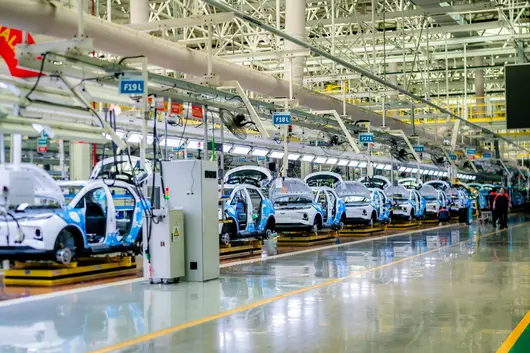


"The company is willing to compare technical capabilities with FSD 'face-to-face'."
WeRide Founder, Chairman and CEO Han Xu, stated this during the Q2 2026 earnings conference call.
In his view, the ultimate competition in autonomous driving is not about marketing, but the ability to consistently deliver in real roads and real environments.
From the first half of 2026 performance, WeRide is entering an accelerated commercialization stage. In the second quarter, company revenue was approximately 232 million yuan, up 82% year-on-year, up 103% quarter-on-quarter, with a gross margin of 37.5%. Overseas revenue increased by 164% year-on-year, approximately 170% quarter-on-quarter, accounting for nearly 40% of total revenue.

However, the company still had a net loss of 790 million yuan in the first half, with R&D investment of 798 million yuan. Revenue growth coexisting with losses indicates WeRide is still in the stage of scale expansion and technology investment, with some distance to true profitability.
Regarding profit expectations, WeRide executives stated that they will maintain R&D investment discipline in the future, continuously invest in foundation model R&D. With the scaling of L2++/L3, operating leverage will accelerate further. The company is expected to achieve comprehensive break-even before 2029.
During the conference call, company executives divided the business into three major segments: L4, L2++/L3, and AI infrastructure, and clarified the company's Physical AI strategic positioning.
Specifically, in the first half, L4 business revenue was 179 million yuan, up 44.8% year-on-year; other business revenue was 166 million yuan, up 119.8% year-on-year. Among them, product revenue increased by 62.8% year-on-year, service revenue increased by 78.8% year-on-year.
Compared to L4 business which is still in a large-scale investment phase, L2++/L3 is becoming the fastest-growing business segment. In the second quarter, company L2++/L3 business revenue grew approximately 26 times year-on-year, with WRD 3.0 shipments of approximately 30,000 units. As of the end of June, the company has secured L2++ mass production design points for over 30 vehicle models, expected to reach cumulative installed capacity of over 100,000 units by the end of 2026, reaching 500,000 units in 2027.
The characteristic of L2++/L3 business is that it can bring scale growth to the company. The characteristic of this business is that once vehicle adaptation is completed, the software can go into mass production with the OEM, and revenue growth from new vehicles does not require a proportional increase in R&D investment. WeRide hopes to establish scale effects through this and gradually form a second growth curve.
By region, the overseas market is one of WeRide's fastest-growing businesses currently.
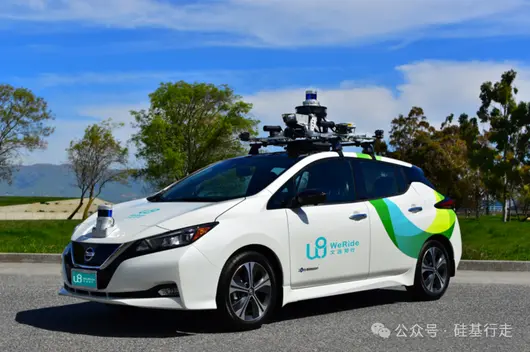
As of the end of July 2026, the company's global L4 fleet was approximately 3,400 vehicles, of which Robotaxis were over 1,800; business covers 13 countries and over 60 cities. Overseas revenue in the first half was 119 million yuan, up 154.4% year-on-year, accounting for approximately 34.5% of total revenue; Overseas revenue in the second quarter grew 164% year-on-year.

WeRide mainly adopts a light-asset model to expand overseas Robotaxi business: Vehicles and daily operations are managed by local partners, while the company provides autonomous driving systems, vehicle modification, technology deployment and continuous operation support, and earns revenue through technical service fees and mileage fees.
The company expects that under steady-state operations, each Robotaxi in the overseas market can generate over $40,000 - $50,000 in technical service revenue annually. Compared to purchasing vehicles independently and bearing operating costs, this model helps reduce capital expenditure and improve business expansion efficiency.
Currently, WeRide has advanced Robotaxi projects in markets such as Madrid, Spain; Zurich, Switzerland; Denmark; Singapore; and Abu Dhabi, Dubai. Among them, Abu Dhabi and Dubai have achieved full unmanned Robotaxi operations, with approved service areas covering over 70% of urban core areas.
It should be known that overseas operating licenses must be obtained through technology localization, ecosystem integration, and strict safety verification. Relying on this alone, WeRide is already 2-3 years ahead of competitors. Subsequently, as regulatory frameworks in different markets become increasingly similar and compliance marginal costs continue to decrease, expansion speed will continue to accelerate.
However, whether overseas business can continue to grow depends on whether partners can continuously expand fleet size, and whether "demonstration projects" can be expanded to more cities. In any case, licenses, regulatory experience, local partnership networks, and safe operation records have become important barriers for its overseas expansion.
In terms of the domestic market, WeRide emphasizes autonomous operations and real order growth more.
In Q2 2026, the company's Robotaxi average daily orders per vehicle exceeded 21, up 24% quarter-on-quarter, with a peak of 28 orders per vehicle per day; domestic ride-hailing revenue grew approximately 140% quarter-on-quarter, registered users grew 35% quarter-on-quarter.
In Guangzhou, the company's Robotaxi service coverage has extended to areas such as Huangpu, Tianhe, Haizhu, etc., nearly expanding 3 times compared to the end of 2025, and achieving 7x24 hour commercial operation. Service areas have also extended to complex urban road environments such as Zhujiang New Town, Tianhe, and Canton Fair Complex, Haizhu District.
For Robotaxi companies, fleet size is not the only indicator; order volume, vehicle utilization rate, and revenue per vehicle better reflect commercial quality. WeRide's current order level still cannot compare with mature ride-hailing platforms, but the continuous growth in orders indicates that its service areas, user perception, and operational efficiency are improving.
In the future, the company needs to further increase vehicle density, reduce empty driving time, and expand Robotaxi coverage in urban core areas to convert technical capabilities into more stable revenue.
During the conference call, an analyst asked WeRide about its view on the trend of OEM self-research. Han Xu stated that he welcomes competition. However, Han Xu also stated that Physical AI cannot generate hallucinations; safety is the top priority. In Han Xu's view, there is a clear threshold in the Robotaxi industry: it requires operating for more than half a year, a fully unmanned fleet of 100 units, and no major accidents to qualify, otherwise propaganda without meeting standards has no practical significance.
Compared to L4 Robotaxi, the commercialization path of L2++/L3 is closer to the traditional automotive supply chain.
WeRide WRD 3.0 adopts a one-piece end-to-end architecture, having secured mass production design points for over 30 vehicle models, and is conducting testing and adaptation in markets such as France, Germany, and Japan. In April 2026, GAC Aion N60 was officially launched, becoming the first mass-produced passenger vehicle from the cooperation between WeRide and an OEM.

In addition, the company cooperates with mainstream global automakers, which helps improve market recognition of its technology and engineering capabilities.
During the conference call, an analyst asked questions about WeRide's L2++/L3 competitive advantages. WeRide stated that the Genesis and WITT two major models are its core technology barriers. Relying on these two technologies, the company can build a globally leading ADAS solution with a team of only two to three hundred people, supporting rapid business growth.
Simply put, WITT extracts and verifies "physical facts" from massive real road test videos, while Genesis reconstructs long-tail scenarios and extreme conditions based on these facts through simulation, forming a complete closed loop from data understanding, generation to algorithm iteration.
The direct effect brought by this technical architecture is an exponential improvement in efficiency. According to financial report disclosures, the WITT model can save up to 98% of token costs in similar tasks, with a single GPU processing up to 10,000 minutes of vehicle operation videos per day, achieving up to 200 times data processing efficiency improvement.
Han Xu said: "With the support of this model, WeRide only needs 200 TOPS computing power to surpass competitors requiring 2000 TOPS computing power, and has won the China City Intelligent Driving Challenge championship for six consecutive years, which fully demonstrates the technical advantage of our customized foundation models."
The core problem WeRide currently faces is whether business growth can ultimately translate into cash flow improvement.
In the first half, company R&D investment was 798 million yuan, net loss was 790 million yuan. As of the end of the period, the company has approximately 5.4 billion yuan in cash, cash equivalents, time deposits, and restricted cash. Capital reserves are relatively sufficient, but continuous R&D, overseas expansion, and domestic operations will still bring significant cash consumption.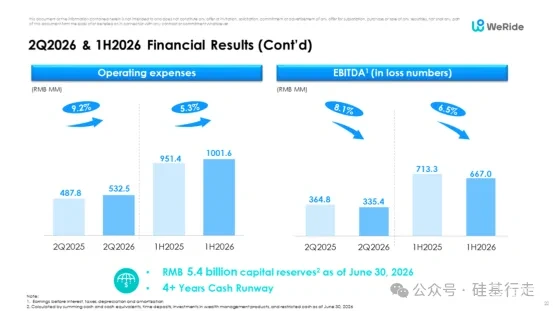
The company expects to achieve comprehensive break-even before 2029. To achieve this goal, the overseas Robotaxi fleet needs continuous expansion, L2++/L3 needs mass production installation, while R&D and operating costs cannot grow in sync with revenue.
WeRide has already formed a relatively clear business portfolio: Overseas L4 provides high gross margin and light asset growth space, Domestic Robotaxi provides real operational data, L2++/L3 undertakes mass production tasks, and AI infrastructure such as WITT and GENESIS attempts to reduce data processing and model training costs.
It can be seen that in the first half of 2026, WeRide has sailed into the deep waters of commercialization. Next, the market will focus not just on new licenses, new models, or new partners, but on when fleet utilization, revenue, and profit inflection points will truly appear.
To conclude the article, we end with a quote from Han Xu on the conference call -
"For our business, what ultimately matters is not what we claimed. But what we have consistently delivered in the real world, in real environments? Narratives may change, technology may iterate, market cycles may rise and fall, but facts endure, and excellent performance in the real world endures. And a proven track record is always the most powerful language."
---END---

喺馬來西亞嘅 SUV 市場,好多買家喺揀車嗰陣都會拿 Perodua Aruz 同 Proton X70 嚟做比較。呢兩款車喺價位同定位上都幾接近,今日我哋就從多個方面做一個詳細嘅比較,幫你節省做功課嘅時間。
Perodua Aruz 喺馬來西亞嘅 OTR 售價係 RM 72,900 - 77,900,一共有 2 個版本,包括 1.5L X(RM 72,900)、1.5L AV(RM 77,900) 等。
Proton X70 喺馬來西亞嘅 OTR 售價係 RM 106,800 - 122,300,一共有 3 個版本,包括 1.5L Standard 2WD(RM 106,800)、1.5L Executive 2WD(RM 115,800)、1.5L Premium 2WD(RM 122,300) 等。
從價錢嚟睇,Perodua Aruz 嘅起步價確實比 Proton X70 平咗 RM 33,900。如果你預算有限,Perodua 嘅入門版已經可以滿足日常需求。但都要注意,平嗰幾千蚊,可能喺配備上會有取捨,具體要看你嘅需求。

Perodua Aruz 嘅安全評級係 5★ (東協 NCAP),主動安全系統包括 。
Proton X70 嘅安全評級係 5★ (東協 NCAP),主動安全系統包括 ADAS (ACC, AEB, LKA, LDA, BSM, RCTA)。
兩款車嘅安全評級一樣,喺呢個級別入面安全配備都算好齊全。而家嘅新車安全性都唔差,唔使太擔心這一點。

Perodua Aruz 車身長 4400 mm,行李箱 400 升。
Proton X70 車身長 4400 mm,行李箱 400 升。
兩款車嘅尺寸幾乎一樣,車內空間差別唔大。呢個級別嘅車,日常使用完全夠用。
Perodua Aruz 保修 5 年/150,000 公里,保養間隔 每 10,000 公里或 6 個月。
Proton X70 保修 5 年/150,000 公里,保養間隔 每 10,000 公里或 6 個月。
兩款車嘅保修條件一樣,呢方面唔使糾結。實際保養成本仲要看品牌嘅服務網絡同零件價格,建議去車友群問問真實車主嘅經驗。
總體嚟講,Perodua Aruz 同 Proton X70 都係馬來西亞市場好唔錯嘅車型。揀邊一輛,關鍵都仲係要看你嘅個人需求同預算。建议大家做好功課,多比較幾間車行嘅報價,先至去試駕做最終決定。買車係件大事,花少少時間做功課絕對唔會錯。


在马来西亚的汽车市场,很多买家在选车的时候都会拿 Volkswagen Golf R 和 Mercedes-Benz E-Class 来做比较。今天我们从多个方面做一个详细的对比,帮你省下做功课的时间。


Volkswagen Golf R 在马来西亚的 OTR 售价是 RM 338,812 - 338,812,一共有 2 个版本,包括 2026 2.0T Standard(RM 338,812)、DCT(RM 294,800) 等。
Mercedes-Benz E-Class 在马来西亚的 OTR 售价是 RM 363,888 - 363,888,一共有 2 个版本,包括 E 200 Avantgarde(RM 350,000)、E 300 AMG Line(RM 400,000) 等。
从价钱来看,Volkswagen Golf R 的起步价确实比 Mercedes-Benz E-Class 便宜了 RM 25,076。如果你预算有限,Volkswagen 的入门版已经可以满足日常需求。但也要注意,便宜的那几千块,可能在配备上会有取舍,具体要看你的需求。

Volkswagen Golf R 采用 FWD 驱动方式。
Mercedes-Benz E-Class 采用 FWD 驱动方式。
两款车的驱动方式一样,都是 FWD,日常驾驶感受不会有太大区别。

Volkswagen Golf R 保修 3年/100,000km,保养间隔 每10,000km或6个月。
Mercedes-Benz E-Class 保修 3年/100,000km,保养间隔 每10,000km或6个月。
两款车的保修条件一样,这方面不用纠结。实际保养成本还要看品牌的服务网络和零件价格,建议去车友群问问真实车主的经验。

Volkswagen Golf R 和 Mercedes-Benz E-Class 都是马来西亚市场的主流选择,适合家庭使用、日常通勤。如果你更看重品牌口碑和二手价,可以优先考虑口碑更好的那一款;如果你更在意性价比和配备,那就选配置更丰富的那款。最终还是建议两款都去试驾,亲身体验才是最重要的。
总的来说,Volkswagen Golf R 和 Mercedes-Benz E-Class 都是马来西亚市场很不错的车型。选择哪一辆,关键还是要看你的个人需求和预算。建议大家做好功课,多比较几间车行的报价,再去试驾做最终决定。买车是件大事,花点时间做功课绝对不会错。


在马来西亚的汽车市场,很多买家在选车的时候都会拿 Mazda CX-30 和 Chery Tiggo Cross 来做比较。今天我们从多个方面做一个详细的对比,帮你省下做功课的时间。


Mazda CX-30 在马来西亚的 OTR 售价是 RM 122,409 - 146,409,一共有 4 个版本,包括 2025 2.0L High+ Premium(RM 146,409)、2025 2.0L High+(RM 138,409)、2025 2.0L High(RM 130,409) 等。
Chery Tiggo Cross 在马来西亚的 OTR 售价是 RM 88,750 - 99,750,一共有 2 个版本,包括 2025 HEV 1.5L CSH(RM 99,750)、2025 1.5T Standard(RM 88,750) 等。
从价钱来看,Chery Tiggo Cross 的起步价比 Mazda CX-30 便宜了 RM 33,659。老实讲,在这个价位段,几千块的差距其实不算大,关键还是看整体的性价比和长期使用成本。
Mazda CX-30 的安全评级是 5★ (ASEAN NCAP),主动安全系统包括 i-Activsense。
Chery Tiggo Cross 的安全评级是 TBD,主动安全系统包括 Basic。
安全配备方面,两款车都拿到了不错的评级。不过 Mazda CX-30 的 i-Activsense 和 Chery Tiggo Cross 的 Basic 在功能上有些差异,如果你比较看重主动安全的话,可以仔细对比一下两者的功能列表。
Mazda CX-30 采用 FWD 驱动方式。
Chery Tiggo Cross 采用 FWD 驱动方式。
两款车的驱动方式一样,都是 FWD,日常驾驶感受不会有太大区别。
Mazda CX-30 保修 5年/150,000km,保养间隔 每10,000km或6个月。
Chery Tiggo Cross 保修 3年/100,000km,保养间隔 每10,000km或6个月。

总的来说,Mazda CX-30 和 Chery Tiggo Cross 都是马来西亚市场很不错的车型。选择哪一辆,关键还是要看你的个人需求和预算。建议大家做好功课,多比较几间车行的报价,再去试驾做最终决定。买车是件大事,花点时间做功课绝对不会错。


在马来西亚的SUV市场,很多买家在选车的时候都会拿 BMW X3 和 Porsche Cayenne 来做比较。这两款车在价位和定位上都蛮接近的,今天我们就从多个方面做一个详细的对比,帮你省下做功课的时间。
BMW X3 在马来西亚的 OTR 售价是 RM 325,800 - 358,800,一共有 2 个版本,包括 xDrive20i(RM 320,000)、xDrive30e(RM 360,000) 等。
Porsche Cayenne 在马来西亚的 OTR 售价是 RM 609,000 - 1,200,000,一共有 3 个版本,包括 2025 Sportback 2.0T quattro S line(RM 442,112)、2026 Cayenne 3.0T(RM 609,000)、2026 Cayenne S 4.0T(RM 1,200,000) 等。
从价钱来看,BMW X3 的起步价确实比 Porsche Cayenne 便宜了 RM 283,200。如果你预算有限,BMW 的入门版已经可以满足日常需求。但也要注意,便宜的那几千块,可能在配备上会有取舍,具体要看你的需求。

BMW X3 的安全评级是 5★ (Euro NCAP),主动安全系统包括 Premium ADAS。
Porsche Cayenne 的安全评级是 TBD,主动安全系统包括 Basic。
安全配备方面,两款车都拿到了不错的评级。不过 BMW X3 的 Premium ADAS 和 Porsche Cayenne 的 Basic 在功能上有些差异,如果你比较看重主动安全的话,可以仔细对比一下两者的功能列表。

BMW X3 车身长 4400 mm,后备箱 400 L。
Porsche Cayenne 车身长 4400 mm,后备箱 400 L。
两款车的尺寸几乎一样,车内空间差别不大。这个级别的车,日常使用完全够用。

BMW X3 保修 5年/无限里程,保养间隔 每10,000km或6个月。
Porsche Cayenne 保修 3年/100,000km,保养间隔 每10,000km或6个月。

BMW X3 和 Porsche Cayenne 都是马来西亚市场的主流选择,适合家庭使用、日常通勤。如果你更看重品牌口碑和二手价,可以优先考虑口碑更好的那一款;如果你更在意性价比和配备,那就选配置更丰富的那款。最终还是建议两款都去试驾,亲身体验才是最重要的。

总的来说,BMW X3 和 Porsche Cayenne 都是马来西亚市场很不错的车型。选择哪一辆,关键还是要看你的个人需求和预算。建议大家做好功课,多比较几间车行的报价,再去试驾做最终决定。买车是件大事,花点时间做功课绝对不会错。


在马来西亚的SUV市场,很多买家在选车的时候都会拿 Volkswagen Tiguan 和 Mercedes-Benz GLA 来做比较。这两款车在价位和定位上都蛮接近的,今天我们就从多个方面做一个详细的对比,帮你省下做功课的时间。
Volkswagen Tiguan 在马来西亚的 OTR 售价是 RM 206,540 - 260,024,一共有 2 个版本,包括 2025 Allspace 2.0T R-Line(RM 260,024)、2025 Allspace 1.4T Elegance(RM 206,540) 等。
Mercedes-Benz GLA 在马来西亚的 OTR 售价是 RM 258,888 - 295,888,一共有 1 个版本,包括 Standard(RM 258,888) 等。
从价钱来看,Volkswagen Tiguan 的起步价确实比 Mercedes-Benz GLA 便宜了 RM 52,348。如果你预算有限,Volkswagen 的入门版已经可以满足日常需求。但也要注意,便宜的那几千块,可能在配备上会有取舍,具体要看你的需求。

Volkswagen Tiguan 车身长 4400 mm,后备箱 400 L。
Mercedes-Benz GLA 车身长 4400 mm,后备箱 400 L。
两款车的尺寸几乎一样,车内空间差别不大。这个级别的车,日常使用完全够用。
Volkswagen Tiguan 保修 3年/100,000km,保养间隔 每10,000km或6个月。
Mercedes-Benz GLA 保修 3年/100,000km,保养间隔 每10,000km或6个月。
两款车的保修条件一样,这方面不用纠结。实际保养成本还要看品牌的服务网络和零件价格,建议去车友群问问真实车主的经验。
Volkswagen Tiguan 和 Mercedes-Benz GLA 都是马来西亚市场的主流选择,适合家庭使用、日常通勤。如果你更看重品牌口碑和二手价,可以优先考虑口碑更好的那一款;如果你更在意性价比和配备,那就选配置更丰富的那款。最终还是建议两款都去试驾,亲身体验才是最重要的。

总的来说,Volkswagen Tiguan 和 Mercedes-Benz GLA 都是马来西亚市场很不错的车型。选择哪一辆,关键还是要看你的个人需求和预算。建议大家做好功课,多比较几间车行的报价,再去试驾做最终决定。买车是件大事,花点时间做功课绝对不会错。


在马来西亚的SUV市场,很多买家在选车的时候都会拿 Mazda CX-9 和 Porsche Macan 来做比较。这两款车在价位和定位上都蛮接近的,今天我们就从多个方面做一个详细的对比,帮你省下做功课的时间。
Mazda CX-9 在马来西亚的 OTR 售价是 RM 328,810 - 345,810,一共有 2 个版本,包括 2023 2.5T 4WD(RM 345,810)、2023 2.5T 2WD(RM 328,810) 等。
Porsche Macan 在马来西亚的 OTR 售价是 RM 469,000 - 469,000,一共有 4 个版本,包括 2025 55 quattro S line(RM 467,285)、2025 50 quattro Advanced(RM 361,135)、PMT 1874, Lorong IKS BukitTengah 14000 Bukit Mertajam(RM 296,610) 等。
从价钱来看,Mazda CX-9 的起步价确实比 Porsche Macan 便宜了 RM 140,190。如果你预算有限,Mazda 的入门版已经可以满足日常需求。但也要注意,便宜的那几千块,可能在配备上会有取舍,具体要看你的需求。
Mazda CX-9 的安全评级是 5★ (ASEAN NCAP),主动安全系统包括 Brand ADAS。
Porsche Macan 的安全评级是 5★ (Euro NCAP),主动安全系统包括 InnoDrive。
安全配备方面,两款车都拿到了不错的评级。不过 Mazda CX-9 的 Brand ADAS 和 Porsche Macan 的 InnoDrive 在功能上有些差异,如果你比较看重主动安全的话,可以仔细对比一下两者的功能列表。
Mazda CX-9 车身长 4500 mm,后备箱 450 L。
Porsche Macan 车身长 4400 mm,后备箱 400 L。
空间方面,Mazda CX-9 的车身比 Porsche Macan 长了 100 mm,车内乘坐空间会稍微宽裕一些,尤其是后座腿部空间。如果你经常载家人或者需要放婴儿车,大一点的车身确实更实用。

Mazda CX-9 和 Porsche Macan 都是马来西亚市场的主流选择,适合家庭使用、日常通勤。如果你更看重品牌口碑和二手价,可以优先考虑口碑更好的那一款;如果你更在意性价比和配备,那就选配置更丰富的那款。最终还是建议两款都去试驾,亲身体验才是最重要的。

总的来说,Mazda CX-9 和 Porsche Macan 都是马来西亚市场很不错的车型。选择哪一辆,关键还是要看你的个人需求和预算。建议大家做好功课,多比较几间车行的报价,再去试驾做最终决定。买车是件大事,花点时间做功课绝对不会错。

© 2024 Bitauto.com. All Rights Reserved.
Bitauto (www.yiche.com and www.bitauto.com) is one of the most visited automotive websites in China. We provide detailed info on Chinese car brands available in your area. Please note that the information provided on this website is based on publicly available data and is for reference only. It may not be fully updated or accurate at all times.

Help us improve our website


