

HomeLabuan

Search History
Popular Searches
Dealer Login / Sign Up

喺馬來西亞嘅 SUV 市場,好多買家喺揀車嘅時候都會拿 Honda CR-V 同 Chery Tiggo 8 Pro 嚟做比較。呢兩款車喺價位同定位上都幾接近,而家我哋就由多個方面做一個詳細嘅對比,幫你省下做功課嘅時間。
Honda CR-V 喺馬來西亞嘅 OTR 售價係 RM 178,200 - 195,900,一共有 4 個版本,包括 2026 e:HEV 2.0L 2WD RS(RM 195,900)、2026 1.5T 4WD V(RM 181,900)、2026 e:HEV 2.0L 2WD E(RM 178,200) 等。
Chery Tiggo 8 Pro 喺馬來西亞嘅 OTR 售價係 RM 159,750 - 159,750,一共有 2 個版本,包括 1.6L Turbo Standard(RM 130,000)、1.6L Turbo Premium(RM 145,000) 等。
由價錢嚟睇,Chery Tiggo 8 Pro 嘅起步價比 Honda CR-V 平咗 RM 18,450。老實講,喺呢個價位段,幾千蚊嘅差距其實唔算大,關鍵始終睇整體嘅性價比同長期使用成本。

Honda CR-V 車身長 4500 mm,行李廂 450 L。
Chery Tiggo 8 Pro 車身長 4400 mm,行李廂 400 L。
空間方面,Honda CR-V 嘅車身比 Chery Tiggo 8 Pro 長咗 100 mm,車內乘車空間會稍為寬裕啲,尤其係後座腳部空間。如果你經常載家屬或者需要放嬰兒車,大少少嘅車身確實更實用。

Honda CR-V 採用 FWD 驅動方式。
Chery Tiggo 8 Pro 採用 FWD 驅動方式。
兩款車嘅驅動方式一樣,都係 FWD,日常駕駛感覺唔會有太大分別。

Honda CR-V 同 Chery Tiggo 8 Pro 都係馬來西亞市場嘅主流選擇,適合家庭使用、日常通勤。如果你更重視品牌口碑同二手價,可以優先考慮口碑更好嗰一款;如果你更在意性價比同配備,就揀配置更豐富嗰款。最終都建議兩款都去試駕,親身體驗先至係最重要。
總體嚟講,Honda CR-V 同 Chery Tiggo 8 Pro 都係馬來西亞市場幾唔錯嘅車型。揀邊一輛,關鍵始終都要睇你個人嘅需求同預算。建議大家做好功課,多比較間車行嘅報價,再去做試駕做最終決定。買車係件大事,花少少時間做功課絕對無錯。

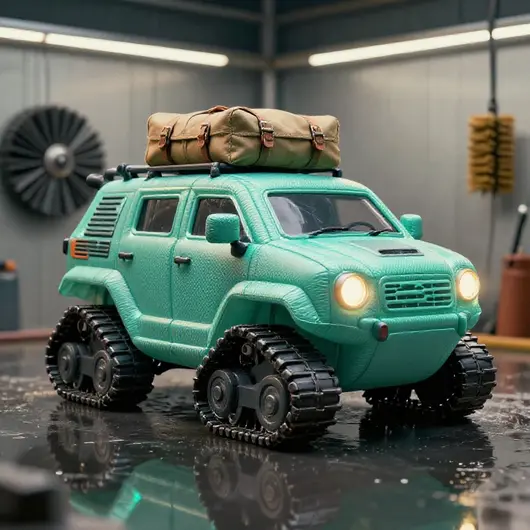
Di pasaran SUV Malaysia, ramai pembeli membandingkan Proton X90 dan Kia Sportage ketika memilih kereta. Kedua-dua kereta ini hampir sama dari segi harga dan kedudukan, hari ini kita akan buat perbandingan terperinci dari pelbagai aspek untuk membantu anda menjimatkan masa mengkaji.
Harga OTR Proton X90 di Malaysia ialah RM 106,800 - 122,800, terdapat 4 versi, termasuk 2026 1.5T Prime X (RM 122,800), 2026 1.5T Prime (RM 116,800), 2026 1.5T Lite (RM 106,800) dan lain-lain.
Harga OTR Kia Sportage di Malaysia ialah RM 129,639 - 179,320, terdapat 4 versi, termasuk 2025 1.6T DCT 4WD High (RM 179,320), 2025 1.6T DCT 2WD High (RM 159,320), 2025 2.0L AT 2WD High (RM 139,639) dan lain-lain.
Dari segi harga, harga permulaan Proton X90 memang lebih murah RM 22,839 berbanding Kia Sportage. Jika bajet anda terhad, versi permulaan Proton sudah cukup memenuhi keperluan harian. Namun perlu berhati-hati, ribuan ringgit yang lebih murah ini mungkin ada pengorbanan dari segi peralatan, bergantung pada keperluan anda.

Pengkelasan Keselamatan Proton X90 ialah 5★ (ASEAN NCAP), sistem keselamatan aktif termasuk ADAS (ACC, AEB, LKA, LDA, BSM, RCTA).
Pengkelasan Keselamatan Kia Sportage ialah 5★ (ASEAN NCAP), sistem keselamatan aktif termasuk Drive Wise.
Kedua-dua kereta ini mempunyai pengkelasan keselamatan yang sama, dalam kategori ini peralatan keselamatan dianggap sangat lengkap. Keselamatan kereta baharu masa kini semuanya baik, tidak perlu terlalu risau mengenai hal ini.

Proton X90 jaminan 5 tahun/150,000km, selang penyelenggaraan setiap 10,000km atau 6 bulan.
Kia Sportage jaminan 5 tahun/300,000km, selang penyelenggaraan setiap 10,000km atau 6 bulan.

Proton X90 dan Kia Sportage adalah pilihan utama di pasaran Malaysia, sesuai untuk kegunaan keluarga dan perjalanan harian. Jika anda lebih mementingkan reputasi jenama dan harga jualan semula, boleh mempertimbangkan yang mempunyai reputasi lebih baik; jika anda lebih mementingkan nilai dan peralatan, pilih yang mempunyai konfigurasi lebih banyak. Akhir sekali, disarankan untuk mencuba kedua-dua model, pengalaman sendiri adalah yang paling penting.

Secara keseluruhan, Proton X90 dan Kia Sportage adalah model kereta yang sangat baik di pasaran Malaysia. Memilih yang mana, terutamanya bergantung pada keperluan dan bajet peribadi anda. Kami sarankan anda melakukan kajian, bandingkan tawaran daripada beberapa kedai kereta, kemudian buat ujian pemanduan untuk membuat keputusan akhir. Membeli kereta adalah perkara besar, mengambil masa melakukan kajian tidak akan rugi.


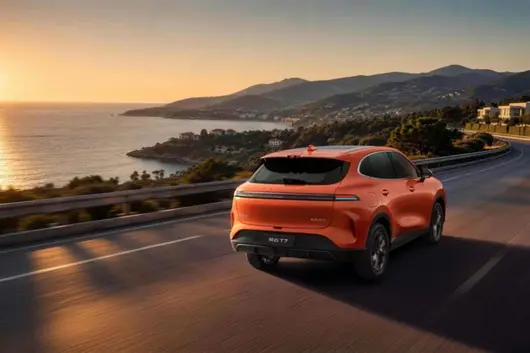
12 Ogos, SUV Elektrik Murni Kualiti Global Fengyun T7 secara rasmi membuka pra-jualan, bermula pada harga RM109,900. Temea pelancaran ini agak menarik perhatian — “Perlahan menghasilkan kereta baik, harap ditunggu.” Dalam pasaran automotif masa kini yang melancarkan model baharu dalam unit "bulan" dan menyegarkan pemahaman dalam unit "minggu", Chery menggunakan "harap ditunggu" sebagai pembuka bicara, yang dalam dirinya merupakan satu sikap.

Ini bukan sekadar permintaan maaf atau ucapan terima kasih kepada pengguna, malah lebih seperti respons yang lembut dan mantap terhadap trend "pembinaan kereta secara cepat" dalam industri ini. Apabila banyak jenama menekan kitaran penyelidikan dan pembangunan ke bawah 18 bulan, cuba menggunakan pemikiran internet untuk membentuk semula industri automotif, Fengyun T7 memilih laluan yang seolah-olah "tidak sebulu" dengan yang lain: 2 tahun perancangan, 3 tahun penyelidikan dan pembangunan, 81 unit kereta tahan lasak ujian laluan serentak, 6 juta kilometer ujian terkumpul. "Perlahan" ini adalah rasa hormat Chery terhadap peraturan pembinaan kereta; manakala apabila kita memandang ke arah produk sendiri, respons cip 80ms, kelajuan cas pantas 20 minit, peningkatan kelajuan permulaan 33%, ia juga menunjukkan "kelajuan" yang melampau.

Pra-jualan Fengyun T7, pada asasnya melempar satu soalan ke pasaran: Di zaman elektrik pintar ini, perlahan dan cepat, sejak dahulu bukanlah pilihan tunggal yang mana satu dipilih, tetapi dialektik dua muka yang menyatu.
慢,是看不见的底层逻辑Chery "perlahan", bukan kecekapan yang rendah, tetapi pegangan terhadap "langkah yang tidak boleh dipadam".
Dalam zaman kereta bahan api tradisional, masa pengesahan penyelidikan dan pembangunan yang lengkap bagi satu kereta lazimnya memerlukan 3 hingga 4 tahun. Dalam arus gelombang kecerdasan elektrik, angka ini terus dipendekkan. Tetapi kereta akhirnya bukan barang pengguna pantas, ia memikul keselamatan jutaan keluarga, menanggung ujian ketat keadaan jalan, iklim, dan kebiasaan global yang berbeza. Seperti kata eksekutif Chery: "Ada masa, kita benar-benar tidak berani memotongnya."

"Perlahan" Fengyun T7, tampak dalam usaha keras terhadap piawaian global. Bergantung kepada pengumpulan teknologi globalisasi 23 tahun Chery, kereta ini melangkah dalam laluan "ujian eksport songsang" — bukannya mengesahkan di dalam negara dahulu kemudian diarah ke luar negara, sebaliknya terus memasukkan musim hujan Asia Tenggara, panas terik Timur Tengah, persekitaran lembap tinggi Indonesia ke dalam lapangan ujian kenderaan sebenar yang terhad. 81 unit kereta tahan lasak khas ujian laluan serentak, 1.45 juta kilometer ujian khas khusus, jarak ujian terkumpul 6 juta kilometer, nombor-nombor di sebalik ini adalah penebusan berkesan Chery terhadap perkataan "kereta global".

Perlahan ini, juga tampak dalam tidak mengalah selangkah terhadap garis dasar keselamatan. Fengyun T7 menandingi piawaian keselamatan E-NCAP versi 2026 lima bintang, keselamatan fungsi mencapai paras tertinggi ASIL-D. 80% baja berkemampuan tinggi, 18.84% baja formasi panas membentuk badan sangkar sembilan melintang lima memanjang, 9 beg udara (termasuk beg udara jauh dwi-kamari 48L), gred kalis air IP68 sebanyak 96 kali ganda piawai kebangsaan — konfigurasi ini bukan frasa pemasaran, tetapi perisai fizikal yang dihancurkan dengan masa dan wang benar.
Dalam industri yang umumnya mengejar "kelajuan", Chery memilih menggunakan 4 tahun untuk mengasah satu kereta, pemikiran jangka panjang ini seolah-olah "tidak sebulu", sebenarnya tanggungjawab yang mendalam terhadap pengguna. Lagi pula, kelajuan boleh dikejar, tetapi keselamatan tiada jalan pintas.

Jika "perlahan" adalah latar belakang Chery, maka "kelajuan" adalah kad nama pertama yang Fengyun T7 berikan kepada pengguna.
Kelajuan ini, pertama sekali tampak dalam kehalusan pengalaman pintar. Dilengkapi cip integrasi kabin pemandu 8775, proses 4nm, kekuatan pengiraan 72TOPS, respons hanya memerlukan 80ms, peningkatan kelajuan permulaan 33%. Dalam hari ini kesesakan sistem kenderaan masih menjadi masalah utama industri, apakah maksud kelajuan respons 80ms? Ia bermaksud setiap sentuhan anda, setiap arahan suara, akan mendapat maklum balas hampir serta-merta. Skrin besar HD 2.5K 15.6 inci, Lingxi Smart Cabin 2.0, Sistem Bantuan Pemanduan Falcon 500, parking automatik semua senario 300+ — konfigurasi ini bukan penimbunan bahan, tetapi menukar pengalaman dengan kekuatan pengiraan, menukar keamanan dengan kelajuan.

Kelajuan ini, juga tampak dalam突破 kecekapan pengisian tenaga. Semua model piawai bateri Rhinoceros 65.05kWh, jarak perjalanan CLTC 600km, jarak perjalanan ujian sebenar 667+km, penandaan palsu songsang telah menjadi kebolehan tradisional Chery. Yang lebih penting, cas dari 30% ke 80% hanya memerlukan 20 minit. Masa secawan kopi, cukup untuk membolehkan kenderaan kembali dari keadaan kebimbangan ke keadaan tenang. Disertai pengurusan haba terpadu merentas domain penukar haba dua sumber luas dan PTC Voltan Tinggi, walaupun dalam persekitaran sejuk melampau -30°C, dalam 5 minit sudah boleh dipanaskan dengan pantas ke 30°C. Respons pantas terhadap persekitaran terhad ini, adalah penjagaan tepat teknologi terhadap pengalaman pengguna.
Kelajuan, bukan perniagaan terburu-buru, tetapi hasil akumulasi tebal dan pelepasan nipis. Apabila 23 tahun pengumpulan teknologi globalisasi, 26 tahun asas reka bentuk底盘, 5,000 lebih pengguna domestik dan asing penyatuan bersama sepanjang proses, akhirnya terikat menjadi respons 80ms, cas 20 minit, jarak perjalanan ujian sebenar 667+km, "kelajuan" ini baru benar-benar mempunyai berat.
慢是为了更快的出发Kembali ke tema pelancaran: "Perlahan menghasilkan kereta baik, lama ditunggu".
Maksud tersirat ayat ini sebenarnya adalah: Kami perlahan, adalah untuk membolehkan anda dalam setiap perjalanan masa depan, boleh sampai lebih cepat, menikmati lebih tenang, menghadapi yang tidak diketahui dengan lebih selesa.
Dalam industri automotif yang secara kolektif memecut hari ini, Chery memilih satu laluan yang seolah-olah bertentangan: menggunakan "perlahan" untuk mengasah logik asas, menggunakan "kelajuan" untuk menunaikan pengalaman pengguna. Ini bukan goyah dalam strategi, tetapi kesedaran yang jelas terhadap hakikat pembinaan kereta — keselamatan, kualiti, boleh dipercayai, perkara-perkara yang memerlukan pengendapan masa, tidak boleh laju; manakala kecerdasan, kecekapan, pengalaman, dimensi yang diberi kuasa oleh teknologi, mesti laju.
Pra-jualan Fengyun T7, zon harga RM109,900 hingga RM129,900, 7 lapisan hak pembelian kereta, jaminan seumur hidup kereta penuh, RM666 membeli pakej penyelenggaraan asas seumur hidup — ini adalah kesungguhan Chery berikan kepada pengguna. Tetapi lebih penting daripada kesungguhan, adalah keteguhan yang tetap dikekalkan oleh syarikat automotif ini di zaman bising: tahu apa yang boleh laju, tahu apa yang tidak boleh laju.
Perlahan, adalah sikap keras kepala Chery; kelajuan, adalah keupayaan Chery. Apabila kedua-duanya mencapai perdamaian di badan Fengyun T7, apa yang kita lihat bukan sekadar satu produk, tetapi kesedaran yang jarang sekali di pasaran yang tidak stabil.
Harap ditunggu, tetapi berbaloi. Kerana kelajuan sebenar, sejak dahulu bukan berlari awal, tetapi setiap langkah pijakan kuat, kemudian, pada masa yang perlu mempercepat, tanpa ragu-ragu menekan pedal minyak.

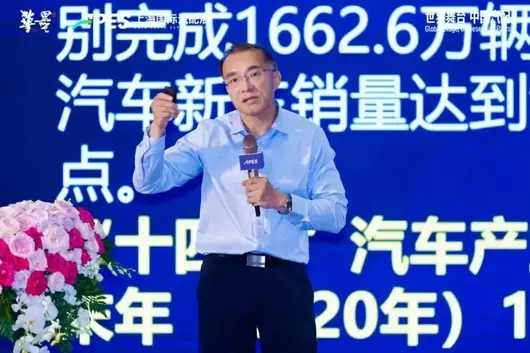
2026 上海 APES 國際汽配展圓滿落幕,中汽協許海東秘書長嘅一場主題演講,揭開咗而家汽配行業最清晰嘅發展邏輯:中國汽車產業已經走完單純產品出海階段,正式邁入生態全球化時代。

而輪胎作為汽車剛需核心零件,正緊緊踩住整車出口、新能源爆發兩大風口,以整零協同研發、海外當地建廠、技術定製升級嘅全新模式,徹底改寫全球輪胎市場格局。
整車出口爆發式增長
為輪胎打開全球增量通道
中國汽車產業連續 17 年產銷量穩居全球第一,龐大嘅國內市場夯實咗零部件研發、製造嘅成本底座,而整車大規模揚帆出海,直接為輪胎輸送源源唔斷嘅配套訂單:
2025 年國內汽車產銷突破 3400 萬輛,全年整車出口 709.8 萬輛(配套輪胎超 2800 萬條),同比大漲 21.1%,相較 2020 年激增超 6 倍;其中新能源車出口 261.5 萬輛,實現翻倍增長。

唔同於早年零散輪胎外貿出口,而家比亞迪、吉利、奇瑞等主機廠出海唔再單打獨鬥,而係攜本土零部件產業鏈集體出征。國內而家已經落地 23 個以上海外 CKD 整車工廠,零部件百家企業超 8 成已喺全球 50 多個國家佈局生產基地,車廠落地建廠,輪胎就近配套供貨成為行業標配。
整車行去邊度,國產輪胎嘅市場就延伸邊度;大量出海新車上路後,隨之而來嘅替換胎需求,更加打開咗長久穩定嘅海外後市場空間。
新能源賽道彎道超車
國產品牌拿走高端原配話語權
新能源車自重更大、扭矩更強、嚴格要求低滾阻省電、靜音舒適、抗磨損、低溫續航穩定,對輪胎技術門檻遠高於傳統燃油車,剛好成為國產輪胎實現技術超車嘅絕佳賽道。

朝陽輪胎(中策橡膠)今年針對百萬級行政旗艦尊界 S800 專屬定製朝陽 1 號 ARISUN1 輪胎,摒棄通用製式:低溫活性橡膠改善電車冬季續航,低溫續航較海外高端胎提升 15%;搭配自適應穩定結構同多層靜音結構,兼顧濾震、操控與座艙靜謐;仲可以聯動智能底盤、智駕系統感知路況調整車身姿態,打破高端豪車原配外資輪胎嘅固有認知,開創自主品牌車企原廠高端定製輪胎品類。
產能層面,2026 年中策投資 10.4 億元建設越南輪胎基地,繼泰國、印尼、墨西哥之後敲定第四大海外廠區。憑藉東南亞關稅優勢穩固歐盟供貨,貿易壁壘之下歐洲訂單持續向頭部集聚,海外擴產紅利持續釋放。

玲瓏輪胎出海歷經四大階段:初期外貿拓客、泰國建廠實現產能出海、全球佈局研發中心掌握自研標準、現階段深耕屬地化生態運營。泰國工廠輻射亞太、北美;塞爾維亞歐洲工廠順利投產,拿到大眾、雷諾、福特等歐美車企配套資質。國內配套比亞迪、吉利、紅旗,新能源原配胎銷量位居內資品牌前列,跟隨主機廠海外 CKD 工廠就近供貨,有效縮減物流與關稅開支。
賽輪輪胎為應對歐盟反傾銷同全球貿易壁壘,提前佈局越南、柬埔寨、墨西哥、埃及多國海外工廠,歐洲訂單轉由海外基地交付,順利規避關稅。歐洲本土供給縮減後,企業訂單量持續走高,數次調價依然供不應求。
日前賽輪同比亞迪達成深度戰略合作,聚焦聯合研發、綠色製造、產業鏈協同,依托比亞迪全球出海渠道推廣液體黃金 EV 輪胎,憑藉低滾阻、高耐磨特性適配全球多地新能源用車場景。
整零協同三大進階
中跳出歐美、日韓傳統模式
過往全球主流供應鏈分為兩類:歐美松散戰略合作、日韓車企參股深度綁定模式,但層級化管理、部門壁壘明顯,難以適配新能源快速迭代、全球化多變嘅市場環境。
許海東喺演講中提出產業鏈三層協同路徑,正係國產輪胎同車廠嘅發展方向:
規定配合:只按硬性要求完成基礎供貨,企業各自為戰,效率低下;
默契配合:上下游主動協同,優先考量整條產業鏈整體收益,響應海外市場速度大幅提升;
協同創新:車廠同輪胎企業聯合研發、共研適配產品、共同開拓海外市場,統一研判全球區域路況、氣候、法規需求,這亦係中國輪胎長久立足全球嘅核心競爭力。
依托國內超大市場體量分攤研發成本、海量汽車保有量培育技術人才、新能源技術領先優勢,國產輪胎唔再單純比拼低價,而以整車開拓 + 輪胎配套 + 海外售後 + 人才屬地化四個維度一體模式,構建中國特色汽車供應鏈生態。
機遇同挑戰並存
生態全球化係破局之道
貿易壁壘、地緣衝突始終係繞唔開嘅行業難題,頭部輪胎企業早已經搵到解法: 以多區域海外產能分散風險,依托整車出海就近配套規避關稅;深耕新能源差異化技術,用低滾阻、靜音、雪地適配、智能協同等專屬性能拉開差距;從 OE 原配配套切入,反向帶動海外替換胎市場口碑同銷量提升。
曾經,中國輪胎靠住物美價廉銷嚟世界各地;而家,乘住中國汽車全球化嘅浩蕩浪潮,中策、玲瓏、賽輪正以技術為核心、整零協同為紐帶、全球產能為支撐,一步步邁入全球輪胎價值鏈中高端。

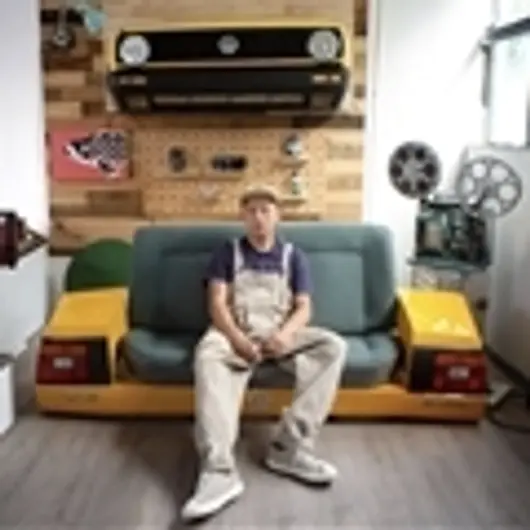
喺馬來西亞嘅 SUV 市場,好多買家喺揀車嘅時候都會揀 Mazda CX-8 同 Chery Tiggo 9 嚟比較。兩款車喺價位同定位上都相當接近,今日我哋就從多個方面做一個詳細嘅比較,幫你省返做功課嘅時間。
Mazda CX-8 喺馬來西亞嘅 OTR 售價係 RM 165,360 - 201,360,總共 5 個版本,包括 2025 2.5T 4WD High Plus Petrol(RM 201,360)、2025 2.2L 2WD High Plus Diesel(RM 193,123)、2025 2.5L 2WD High Plus Petrol(RM 186,360)等。
Chery Tiggo 9 喺馬來西亞嘅 OTR 售價係 RM 166,800 - 179,800,總共 1 個版本,包括 2026 2.0T Standard(RM 179,750)等。
睇返價錢,Mazda CX-8 嘅起步價確實比 Chery Tiggo 9 平咗 RM 1,440。如果你預算有限,Mazda 嘅入門版已經可以滿足日常需求。但都留意下,平嗰幾千蚊,可能喺配備上有取捨,具體要看你嘅需求。

Mazda CX-8 嘅安全評級係 5★ (ASEAN NCAP),主動安全系統包括 Brand ADAS。
Chery Tiggo 9 嘅安全評級係 TBD,主動安全系統包括 Basic。
安全配備方面,兩款車都拿到唔錯嘅評級。不過 Mazda CX-8 嘅 Brand ADAS 同 Chery Tiggo 9 嘅 Basic 喺功能上有啲分別,如果你比較睇重主動安全嘅話,可以仔細比較下兩者嘅功能列表。
Mazda CX-8 採用 FWD 驅動方式。
Chery Tiggo 9 採用 FWD 驅動方式。
兩款車嘅驅動方式一樣,都係 FWD,日常駕駛感受唔會有太大分別。
Mazda CX-8 同 Chery Tiggo 9 都係馬來西亞市場嘅主流選擇,適合家庭使用、日常通勤。如果你更睇重品牌口碑同二手價,可以優先考慮口碑更好嗰款;如果你更在意性價比同配備,就揀配置更豐富嗰款。最終仲係建議兩款都去試駕,親身體驗先係最重要嘅。

總括嚟講,Mazda CX-8 同 Chery Tiggo 9 都係馬來西亞市場幾唔錯嘅車型。揀邊一輛,關鍵仲係睇你嘅個人需求同預算。建議大家做好功課,多比較幾間車行嘅報價,再去試駕做最終決定。買車係一件大事,花少少時間做功課絕對唔會錯。

在马来西亚的汽车市场,很多买家在选车的时候都会拿 Volkswagen Golf R 和 Mercedes-Benz C-Class 来做比较。今天我们从多个方面做一个详细的对比,帮你省下做功课的时间。


Volkswagen Golf R 在马来西亚的 OTR 售价是 RM 338,812 - 338,812,一共有 2 个版本,包括 2026 2.0T Standard(RM 338,812)、DCT(RM 294,800) 等。
Mercedes-Benz C-Class 在马来西亚的 OTR 售价是 RM 292,888 - 296,888,一共有 2 个版本,包括 C 200 Avantgarde(RM 260,000)、C 300 AMG Line(RM 310,000) 等。
从价钱来看,Mercedes-Benz C-Class 的起步价比 Volkswagen Golf R 便宜了 RM 45,924。老实讲,在这个价位段,几千块的差距其实不算大,关键还是看整体的性价比和长期使用成本。

Volkswagen Golf R 搭载 2.0L Turbo,马力 220 hp。官方油耗 9.5 L/100km。
Mercedes-Benz C-Class 搭载 2.0L Turbo,马力 220 hp。官方油耗 9.5 L/100km。
两款车用的是同一套动力系统,所以日常开起来的感受基本没有差别。油耗方面也差不多,不用太纠结这一点。

Volkswagen Golf R 的安全评级是 5★ (Euro NCAP),主动安全系统包括 IQ.Drive。
Mercedes-Benz C-Class 的安全评级是 5★ (Euro NCAP),主动安全系统包括 Active Distance Assist, Active Steering Assist。
两款车的安全评级一样,在这个级别里面安全配备都算给得很齐全了。现在的新车安全性都不差,不用太担心这一点。

Volkswagen Golf R 采用 FWD 驱动方式。
Mercedes-Benz C-Class 采用 FWD 驱动方式。
两款车的驱动方式一样,都是 FWD,日常驾驶感受不会有太大区别。

总的来说,Volkswagen Golf R 和 Mercedes-Benz C-Class 都是马来西亚市场很不错的车型。选择哪一辆,关键还是要看你的个人需求和预算。建议大家做好功课,多比较几间车行的报价,再去试驾做最终决定。买车是件大事,花点时间做功课绝对不会错。


在马来西亚的汽车市场,很多买家在选车的时候都会拿 Mazda CX-60 和 Mitsubishi Xforce 来做比较。今天我们从多个方面做一个详细的对比,帮你省下做功课的时间。


Mazda CX-60 在马来西亚的 OTR 售价是 RM 200,510 - 252,873,一共有 2 个版本,包括 2026 3.3T 4WD High Plus(RM 252,873)、2025 2.5L 2WD High(RM 200,510) 等。
Mitsubishi Xforce 在马来西亚的 OTR 售价是 RM 109,930 - 119,930,一共有 2 个版本,包括 2026 1.5L Ultimate(RM 119,930)、2026 1.5L Urban(RM 109,930) 等。
从价钱来看,Mitsubishi Xforce 的起步价比 Mazda CX-60 便宜了 RM 90,580。老实讲,在这个价位段,几千块的差距其实不算大,关键还是看整体的性价比和长期使用成本。

Mazda CX-60 的安全评级是 5★ (Euro NCAP),主动安全系统包括 i-Activsense Pro。
Mitsubishi Xforce 的安全评级是 5★ (ASEAN NCAP),主动安全系统包括 MI-PILOT。
安全配备方面,两款车都拿到了不错的评级。不过 Mazda CX-60 的 i-Activsense Pro 和 Mitsubishi Xforce 的 MI-PILOT 在功能上有些差异,如果你比较看重主动安全的话,可以仔细对比一下两者的功能列表。

Mazda CX-60 采用 FWD 驱动方式。
Mitsubishi Xforce 采用 FWD 驱动方式。
两款车的驱动方式一样,都是 FWD,日常驾驶感受不会有太大区别。
Mazda CX-60 保修 5年/150,000km,保养间隔 每10,000km或6个月。
Mitsubishi Xforce 保修 3年/100,000km,保养间隔 每10,000km或6个月。
总的来说,Mazda CX-60 和 Mitsubishi Xforce 都是马来西亚市场很不错的车型。选择哪一辆,关键还是要看你的个人需求和预算。建议大家做好功课,多比较几间车行的报价,再去试驾做最终决定。买车是件大事,花点时间做功课绝对不会错。


Author | Guo Yue
Editor | Zhihao
He Xiaopeng: Not only looking at scale but also long-term development, three new cars queued up in the second half of the year, welcoming the strongest sales growth.
CarDaily reported on May 28. Just now, Xpeng Group Chairman and CEO He Xiaopeng spent most of the time on the first-quarter earnings conference call responding to Xpeng's business layout in intelligent cars, Robotaxi, humanoid robots, and other aspects.
Regarding new cars, three new cars will be released globally in the second half of this year, and Xpeng will welcome the strongest sales growth curve in history.
Regarding overseas business, in April this year, Xpeng's overseas sales volume broke through 6,000 units for the first time, with a goal to continue exceeding 10,000 units per month in the fourth quarter. Starting from the second quarter, the revenue contribution from international business is expected to exceed 20%.
Regarding Robotaxi, the Xpeng GX fleet has already started small-scale L4 testing. Xpeng's goal is to start Robotaxi demonstration operation services in Guangzhou in the third quarter of this year. After the second-generation VLA lands overseas, Xpeng will also actively explore deploying affordable Robotaxis in both domestic and overseas markets.
Regarding humanoid robots, the software and hardware R&D progress of Xpeng's new generation IRON humanoid robots for mass production version is proceeding smoothly, planned to debut officially in the third quarter of this year. Xpeng aims to achieve mass production of high-end humanoid robots by the end of this year, first trial commercialized in Xpeng stores, and delivered to Chinese and overseas commercial customers starting next year.
Starting next year, humanoid robot hardware revenue and AI model revenue will become one of the important drivers of Xpeng Group's revenue and gross profit growth.
Just today, Xpeng Group released the Q1 2026 financial report.

▲ Xpeng Q1 2026 Financial Data
Specifically, Xpeng's Q1 2026 delivery volume reached 62,700 units, a year-on-year decline of 33%, total revenue of 13.03 billion Yuan, a year-on-year decline of 17.6%; gross margin improved year-on-year by 5 percentage points to 20.6%, net loss increased to 1.78 billion Yuan. These performances are partly due to the continued increase in R&D investment. In the first quarter of this year, its R&D expenses were 2.91 billion Yuan, a year-on-year increase of 46.8%, and further increased compared to the 2.87 billion Yuan in the fourth quarter of last year.
Regarding Q1 performance, He Xiaopeng stated that Xpeng did not just focus on scale when the market challenge was downward, but focused more on the balance between sales volume and operating quality and long-term development. He is very confident that the sales volume of every quarter in the rest of this year will grow significantly quarter-on-quarter.
As of the time of reporting, Xpeng Group's US stock price was reported at $16.845 (approximately 114.2 RMB) / share, up 2.4%, with a market cap of $16.124 billion (approximately 109.3 billion RMB).

▲ Xpeng Group US Stock Price as of Publication Time
01.
He Xiaopeng 11 Questions Show Determination:
New Cars, Robotaxi, and Robots Will All Be Globalized Well
On the Xpeng Group earnings conference call held tonight, Xpeng Group Chairman and CEO He Xiaopeng and Executive Vice Chairman and Co-President Brian Gu provided detailed responses on the key focus and planning for future development.

▲ Xpeng Group Chairman and CEO He Xiaopeng (right in picture), Executive Vice Chairman and Co-President Brian Gu (left in picture)
Below is the main content of this conference call, edited by CarDaily without changing the original meaning:
Q1: After the new model GX was on the market for a week, the response was enthusiastic. What is the current total order volume? What is the single-unit gross margin level? What is the expectation for its monthly sales target?
He Xiaopeng: As of now, the order performance of GX has exceeded our expectations, and the situation is very good. We observed some interesting data: First, the waiting time for the pure electric flagship model has exceeded 30 weeks, and orders for the flagship version are still growing rapidly.

▲ Xpeng GX
From the order structure, in the early stage of GX launch, the flagship version accounted for more than 80% of the share, and it is still the model with the highest sales proportion. At the same time, the sales proportion of GX's Max version is less than 5%, lower than our initial expectations.
In terms of powertrain type, the initial order volume of the extended-range version was lower than the pure electric version, but it is now gradually moving closer to the pure electric version, especially after we strengthened marketing in areas where we were originally not good at marketing, such as the north and west, this trend is more obvious.
For GX, our primary task is to push for capacity ramp-up to the fullest extent, while adhering to providing high-quality service and quality, ensuring GX can achieve long-term stable delivery. I am most concerned about the sustained performance of GX.
As a flagship model of Xpeng, GX's gross margin is very good. Previously, when I communicated with the media, I mentioned that if there is only one SKU, the gross margin may not meet expectations; but in reality, GX's gross margin is better than our overall gross margin level.
I also want to add a point: Starting from this year, all new cars of Xpeng will focus on two new priorities. First, how to pursue commercial quality in commercial configuration and commercial pricing. Second, we do not pursue an initial sales surge followed by a decline, but pursue a more stable sales performance.
To this end, we have established a new system in supply chain management, modularization, ramp-up processes, and supply chain security.
I believe that starting from GX, we will be able to better balance business benefits and scale, achieving more stable long-term sales.
Q2: What are the plans for Robotaxi business operations domestically and going global? Has the recent tightening of domestic regulations affected business progress? How do you view the potential impact of B-side business on Xpeng's C-side passenger vehicle sales?
He Xiaopeng: We noticed the recent tightening of domestic regulations on autonomous driving, but this has not affected our overall pace.
From my perspective, the real business opportunity for Robotaxi will arrive in 2028. Currently, Xpeng is trying to run through this model both domestically and globally, landing and implementing the VLA 2.0 system in China and overseas.
In China, we will conduct rapid R&D and testing through existing models and plan to launch an economy vehicle for Robotaxi scenarios in 2027.
Regarding the business model, I want to emphasize two points: First, we only provide products and offer a commission model, not participating in operations directly, so we will have a large number of partners. Second, the main battlefield for Robotaxi is the global market, and I believe the global market has huge business value.
Regarding your concern about the impact of B-side Robotaxi on C-side sales, I want to add a few points of view.
First, Robotaxi testing at the current stage is actually having a positive impact on the C-side, because the future VLA system will provide various different intelligent assisted driving strategies.
Secondly, as policies and regulations gradually relax and commercial operation gradually lands, Robotaxi vehicles will gradually separate from C-side vehicles, forming a second independent vehicle track, becoming a new type of transportation tool.
Q3: In the second half of this year to about a year in the future, what important trends and changes will the VLA 2.0 OTA bring?
He Xiaopeng: I think that within this year, Xpeng's VLA capabilities will experience two important nodes.

▲ Xpeng VLA 2.0 Push First Month Assisted Driving Mileage Proportion Breaks 50%
The first node may appear in the third quarter of this year.
In the past period, Xpeng VLA mainly focused on engineering, safety, and basic customer experience, without focusing on improving performance upper limits. In the third quarter of this year, we will greatly improve the performance upper limit of VLA. The user experience will manifest as vehicles being smarter, having stronger generalization capabilities, and greatly reducing the disengagement rate.
The second node is the end of this year.
We hope to fuse VLA and VLM capabilities through organizational mergers. At that time, vehicles will not only have the "driver ability" of autonomous driving but also possess language communication capabilities, and even lay the foundation for future "car butler" capabilities.
We believe this will be the preliminary form of L5 level capabilities. We hope to gradually achieve this goal.
Q4: What differentiation advantages does the humanoid robot have in hardware costs in the next year? What is the business model overseas?
He Xiaopeng: The mass production version of IRON is designed according to automotive-grade safety and reliability. Recently, we have completed the development of self-developed dexterous hands. Flexibility has significantly improved, while costs have significantly decreased.
In the process of robot mass production, we encountered many challenges different from car mass production. For example, the hardware of current humanoid robots does not fully consider safety, reliability, stability, and maintainability—it does not follow automotive-grade standards.

▲ Xpeng Plans to Mass Produce Humanoid Robots by the End of 2026
In addition, many energy groups have not considered how to scale, how to solve supply chain yield rate and quality issues, nor have they considered whether the underlying architecture of hardware and software should be placed locally or in the cloud, and if placed in the cloud, how to solve a series of issues such as data privacy, traffic, computing power, latency, etc.
For this reason, we have become a robot company that almost self-develops core hardware and software in full-stack (except for battery cells) since the beginning of last year. This enables us to achieve high integration.
I believe the initial hardware cost structure of robots will be close to a car, but in the long run, we will gradually obtain more economical scale solutions. But today, the robot's cost structure is very close to a car.
Regarding overseas markets, just like our car business, our robots have considered globalization from the first product.
The sales logic of robots may be more adaptable globally than in China, and acceptance among grassroots employees overseas is higher.
We have done a lot of work on how hardware meets overseas policies and how software and data meet local regulations.
For example, Xpeng's current VLA data processing volume is about 200 million Tokens per hour. If the robot model is placed in the cloud, it is estimated that 500 million to 1 billion Tokens per hour will be required, and traffic costs may exceed 100GB. Therefore, completely relying on cloud computing power is not feasible.
We comprehensively considered overseas hardware, software, data privacy, comprehensive usage costs, and commercial logic from the beginning. As domestic business advances, we hope to see new changes in robot business overseas next year as well.
Q5: Besides Guangzhou, can you reveal the Robotaxi city expansion plan and timeline as well as progress in applying for the corresponding license?
He Xiaopeng: Currently, our Robotaxi business only considers Guangzhou. We have already obtained the Guangzhou testing operation license and hope to run through the complete technology, product, and business model in Guangzhou first.
Afterwards, we will find more partners domestically and overseas for them to operate locally.
Since announcing this plan, we have received a large number of requests from overseas and some domestic partners. They are very interested in observing our overall progress in the next year.
After we launch economy vehicles suitable for Robotaxi scenarios and better overall solutions in 2027, I believe everyone will see our continuous improvement in Robotaxi commercialization capabilities.

▲ Xpeng Will Launch Three Robotaxis in 2026
Q6: What are the guidance for vehicle gross margin and company overall gross margin in the second quarter?
Brian Gu: Our overall gross margin in the first quarter is very close to the fourth quarter of last year. We indeed observed a trend of rising raw material costs, some of which have been reflected in the first quarter. We expect these cost factors to continue in subsequent quarters of this year.
In the second quarter, we launched the full-size SUV GX, and delivery will start in subsequent quarters. GX's gross margin is at the highest level in our entire product portfolio.
From the product structure perspective, we expect to see better model combinations in the second quarter and the second half of the year. Comprehensive factors, we expect the company's total gross margin in the second quarter to maintain a level roughly similar to the first quarter.
Q7: Can you talk about the growth catalysts for the overseas market, as well as sales and profit contributions in the next three years? Also, which model's profit is better, export or local production?
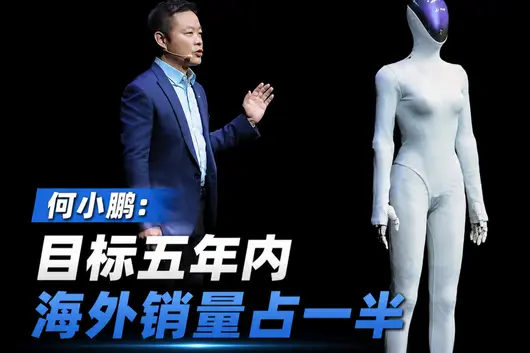
He Xiaopeng: The overseas market is one of the most important strategic directions for Xpeng. I hope that in the next five years, the sales volume of the overseas market will account for half of our total sales volume. At that time, the revenue and profit contribution from overseas will exceed domestic.
I am very confident that as Xpeng launches multiple global models in the second half of this year, Xpeng's globalization speed will be significantly improved in the next two years.
Whether in hardware, AI software, channels, services, or supercharging capabilities, we will make huge investments overseas, and overseas profit performance will also be very good.
Our R&D investment in cars this year is mainly concentrated in the overseas market. Therefore, I am very confident about achieving accelerated growth in the overseas market in the next three years.
Brian Gu: I will add a few points. First, from the latest international sales figures, overseas sales volume has accounted for nearly 20% of our total sales volume. And last year, international sales volume accounted for about 10% of the global total sales volume.
Second point, even when facing some tariff issues and cost increases this year, the single-vehicle profit of our international business is still significantly better. The contribution of international business to our profit is very considerable.
We expect this growth momentum to last throughout the year. I believe maintaining the proportion of overseas sales volume at around 20% throughout the year is sustainable. Of course, the Chinese market itself is also expected to have significant growth.
Regarding going global, we are increasing overseas localization investments. The overseas market will make an important contribution to the company's overall momentum and profitability.
Q8: In this year and next year, what proportion of models is expected to be produced in local factories? Will this proportion differ across different regions?
Brian Gu: Currently, we have two factories in Southeast Asia, located in Indonesia and Malaysia, mainly serving the local markets. In addition, we cooperate with Magna in Austria to produce vehicles for the European market.
These three manufacturing bases will increase capacity this year, and there will be new models produced in those local markets.
For Southeast Asian countries, localized production mainly satisfies local market demands; while the Austria factory serves the European market.
I expect most of our European sales will come from localized production. In other regions where manufacturing facilities have not been established, we will continue to maintain the current business model.
As we improve sales and market share in these large markets, we are actively exploring ways to increase localized production capabilities to meet localization content rules and gradually move towards a deeper localized production model.
Q9: Can you give a few specific examples to explain the commercial functions and application scenarios of Xpeng robots in its own stores and customer stores? What is the price strategy for sales to the outside? Since its cost structure is close to a car, can the sales strategy also be analogous to cars?
He Xiaopeng: Our robots are different from most robots. We hope it is used in an environment interacting with humans. Therefore, we first consider commercial environments, and the initial application scenarios are tour guide, sales guide.

▲ Xpeng New Generation IRON Service Scenario
Whether in China or overseas, robots can introduce products in stores, for example, introducing vehicles in our stores. Although the final transaction may still need to be handled by humans, company introduction, product introduction, performance explanation, and other work can be assisted by robots.
Based on the fact that tour guiding and sales guiding have been verified in a large number of jobs globally, we hope to expand to deeper scenarios of sales retail, such as cashier positions. The number of cashier and retail sales positions is very large globally.
Therefore, from the commercialization path perspective, Xpeng will focus on deepening from the sales guide perspective, while we will open up a lot of cooperation.
If our partners have different job requirements, they can generate data with us, perform pre-training and post-training, and thus generate different models. These models can be placed on our external cooperation platform for users to download and activate.
Regarding future commercialization pricing, we are still discussing. But it can be seen that our robots are very similar to cars, so their sales price will certainly be more expensive than an ordinary car.
There will be good gross margins on hardware in the early stage. At the same time, our robots also have a large amount of data processing in the cloud, so we hope to take a faster step in software charging.
We believe that break-even targets can be achieved within a few months in the overseas market, while it may take slightly longer in the domestic market.
Therefore, we are constantly thinking about the commercial logic of robots from the perspective of how customers use them, why they buy them, and how they get value.
Q10: Can you share your thoughts on the evolution of the group's long-term business model? How do you view the timing of revenue generation from various strategic sectors, as well as changes in the medium-to-long-term revenue structure?
He Xiaopeng: At the current stage, the group's main revenue source is certainly scale effects, mainly from hardware; if looking at the ecosystem, it is system effects.
But looking globally, very few car manufacturers can build a software platform on top of the scale effect of hardware to form the next level of network effects - that is, achieve software charging and multi-sided network effects.
Further back, with the rise of overall intelligent AI capabilities, there will also be ant colony effects. Just like ant colonies, forming new synergy between centralized and decentralized.
These three effects will gradually overlap. Each effect involves different competitive barriers and corresponds to different business logic.
Q11: How is the service revenue trend this year? Is there a possibility for technical licensing or technical services with our partners to expand overseas?
Brian Gu: We continue to maintain the previous guidance: In 2026, the total revenue from technology, services, and IP licensing will be roughly the same as in 2025.
Starting from the second quarter of this year, we will scale up delivery of Turing Chips to partners.

▲ Xpeng Turing Chip Obtained Volkswagen Confirmation
We continue to believe that achieving technology commercialization and monetization through such cooperation is a very attractive business model for us.
Given that Xpeng internally possesses a large amount of proprietary technology, we hold a very open attitude towards expanding such technology commercialization opportunities.
02.
Gross Margin Growth Highlights Operating Resilience
Expected Delivery Volume and Revenue to Increase Significantly in Second Quarter
From the Q1 2026 financial report of Xpeng Group, the total revenue of Xpeng Group in Q1 2026 was 13.03 billion Yuan, down 17.6% compared to Q1 2025, and down 41.4% compared to Q4 2025.

▲ Xpeng Q1 2026 Financial Data
Among them, Xpeng's automotive sales revenue in Q1 2026 was 11.0 billion Yuan, down 23.5% compared to the same period of Q1 2025, and down 42.3% compared to Q4 2025.
Regarding net loss, its net loss in Q1 2026 was 1.78 billion Yuan. In Q1 2025, this figure was 660 million Yuan. Net profit in Q4 2025 was 380 million Yuan.
Regarding gross margin, Xpeng Group's gross margin in Q1 2026 was 20.6%, exceeding Li Auto (7.9%) and NIO (19.0%), with automotive gross margin at 12.1%. In comparison, it was 10.5% in the same period of Q1 2025, and 13.0% in Q4 2025.

▲ Xpeng Q1 2026 Gross Margin Steady
As of Q1 2026, Xpeng's cash on hand was 42.09 billion Yuan.
For the second quarter of this year, Xpeng Group expects delivery and revenue scale to achieve significant increases.

▲ Xpeng Q2 2026 Performance Guidance
Regarding delivery volume, the official forecast expects vehicle deliveries for the quarter to reach 100,000-106,000 units, with a year-on-year change of approximately -3.08% to 2.73%, and a quarter-on-quarter growth of approximately 59.54% to 69.11%.
Regarding revenue, the official forecast expects total revenue for the quarter to be 19.6 billion to 20.8 billion Yuan, with a year-on-year increase of 7.25% to 13.82%, and a quarter-on-quarter increase of 50.38% to 59.59%.
Brian Gu stated: "We will accelerate the large-scale commercialization of Physical AI applications with company-level strategic priority."
03.
Conclusion: Xpeng Accelerates Towards the End Game of Physical AI
From the information disclosed in the Q1 2026 financial report and conference call, Xpeng is on the eve of Physical AI applications moving from mass production landing to explosive scale growth.
Its Physical AI layout is welcoming a historic breakthrough in commercialization mass production: The proportion of second-generation VLA smart driving mileage broke through 50%, the first full-stack self-developed Robotaxi has rolled off the production line, the humanoid robot goal is to mass produce by the end of the year, flying cars are entering the eve of mass production. Multiple business lines are simultaneously approaching explosive scale growth, jointly building a solid foundation for Xpeng to move towards the era of Physical AI.
Under this circumstance, Xpeng Group's gross margin still maintained at a high level of 20.6%, showing strong operating resilience. From the obvious rebound in delivery guidance in the second quarter, Xpeng is expected to welcome strong sales growth.
With VLA architecture iteration, the successive landing of multiple new cars and robot products, Xpeng is expected to build a more complete business ecosystem in the fields of intelligent mobility and embodied intelligence. Its future development potential is worth continuous observation.
© 2024 Bitauto.com. All Rights Reserved.
Bitauto (www.yiche.com and www.bitauto.com) is one of the most visited automotive websites in China. We provide detailed info on Chinese car brands available in your area. Please note that the information provided on this website is based on publicly available data and is for reference only. It may not be fully updated or accurate at all times.

Help us improve our website


