

HomeMalaysia

Search History
Popular Searches
Dealer Login / Sign Up




奇瑞 9 月出口 207,814 輛。呢樣嘢咩意思——中国汽车企業單月出口第一次突破 20 萬輛。而奇瑞前三季度累計出口 155.1 萬輛,已經超過佢自己 2025 年全年嘅銷量。

中汽協嘅數據:2026 年 1 至 8 月中國汽車出口 715.3 萬輛,按年同比增長 66.7%,已經超過 2025 年全年嘅 709.8 萬輛。8 月單月出口 101 萬輛,連續三個月站穩百萬輛;其中新能源出口 52.6 萬輛,按年增 1.3 倍——每出口兩輛車就有一輛係新能源,呢個比例已經連續三個月超過 50%。

(糾正一個常被混淆嘅數字:52.4% 係 1 至 8 月新能源汽車銷量佔汽車總銷量嘅比例,唔係出口入面嘅新能源佔比;出口入面新能源佔比 8 月單月 52.1%,1 至 8 月累計 48.0%。)
全年呢?中汽協副秘書長陳士華話「審慎樂觀,有望突破 1000 萬輛」,崔東樹更樂觀,話能到 1200 萬輛。而中汽協年初嘅預期係 740 萬輛——已經俾實際數據甩脫一大截。
頭部三家好集中。8 月奇瑞出口 19.7 萬輛排第一,比亞迪 18.95 萬輛創公司單月紀錄,吉利 11.01 萬輛按年增 205%。9 月比亞迪海外 17.99 萬輛,奇瑞 20.78 萬輛,吉利 10.67 萬輛按年增 162%,長安 9.62 萬輛按年增 73.8%。

回首睇呢條曲線有點唔真實。2020 年中國汽車出口先至 99.5 萬輛,2023 年 491 萬——嗰年超過日本,成為咗全球第一大汽車出口國,2025 年中汽協口徑 709.8 萬。六年,由百萬輛級別跨到八百萬輛級別。
目的地亦喺變。真正嘅變化係歐洲:今年前 7 個月,自營車企對歐盟出口 77.7 萬輛,按年增 106%,變成咗第一大區域目的地。ACEA 嘅數據顯示,8 月中國品牌喺歐盟加英國市場合計佔有率達 11.3%,去年同期只有 7.1%;今年 5 月,五間中國車企喺 31 個歐洲國家賣咗 13.84 萬輛,六間日本車企 13.04 萬輛——月度銷量第一次超過日本。

有趣嘅係插混。歐盟反補貼關稅主要針對純電,插混仲適用 10% 基礎關稅,車企就加倍推插混。中國車企今年 6 月佔咗歐洲插混交付量嘅 34%,創歷史新高。
光靠運輸唔得,要去當地造。比亞迪泰國羅勇工廠零組件本地化採購率約 92%,巴西工廠至今 7 月累計生產 10 萬輛、直接僱用咗 5500 名當地員工;吉利海外製造工廠 12 座,7 月仲宣佈擬以 2.21 億歐股入股福特西班牙瓦倫西亞工廠;奇瑞接手日產西班牙舊廠、收購日產南非工廠。商務部嘅數據:中國企業喺 80 多個國家同地區投資咗汽車製造業,汽車賣到 200 多個國家同地區。

但另一方面,國內市場喺塌。上半年汽車國內銷量 992.1 萬輛,按年同比下降 21.1%;乘用車零售 870.1 萬輛,按年降 20.2%;9 月 1 至 27 日零售按年降 29%。一升一降,這就係嗰個講爛晒嘅「剪刀差」——上半年乘用車批發降 5.7%、零售降 20.2%,中間差咗近 15 個百分點,壓畀咗渠道,亦流向咗海外。
出口唔係冇代價。國內頭部車企出海淨利率普遍低於 5%,豐田、大眾嘅海外淨利率喺 15% 至 20%;絕大多數車企只靠賣車搵錢,海外售後、汽車金融呢啲後市場幾乎空白。貿易壁壘喺加高:歐盟反補貼關稅最高 45.3%,巴西 7 月 1 號起新能源車進口關稅升至 35%。仲有集中度隱患——超過 50% 嘅出口集中喺歐洲、俄羅斯、巴西三大市場,今年 8 月中東受地緣衝突影響,阿聯酋單月下滑超三成。

所以 8 月 24 日商務部、工業和信息化部、市場監管總局聯合印發咗《汽車行業境外競爭行為與合規建設指引》,這係我哋第一份針對特定行業嘅境外合規指導文件。核心一條:定價要建立以成本為基礎、以國際市場供求為導向嘅策略,唔可以為咗獲得不正當競爭優勢擾亂市場秩序;制定建議零售價時要針對唔同配置設定清晰嘅價格梯度,避免頻繁、大幅度價格波動影響品牌形象。
一句說話總結而家:國內賣唔動,海外賣到飛起,但海外賣越多,越容易俾人盯上。
出海從來都唔係一條避難嘅路,只係換咗一個更難嘅考場。
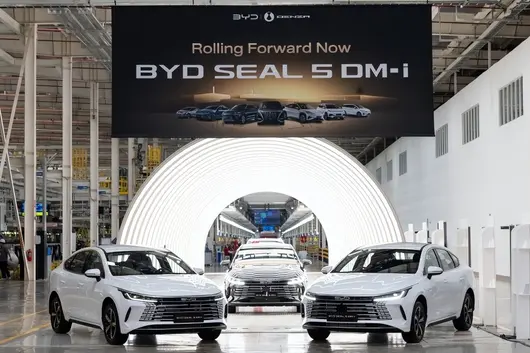

Chery exported 207,814 units in September. What does this mean — Chinese automotive enterprises exceeded 200,000 units in single-month exports for the first time. Chery's cumulative exports for the first three quarters reached 1.551 million units, already exceeding its own full-year target of 2025.
Data from CAAM: In January–August 2026, China's automotive exports reached 7.153 million units, a 66.7% year-on-year increase, surpassing the 7.098 million units of the full year of 2025. Single-month exports in August hit 1.01 million units, standing at the million-unit mark for three consecutive months; new energy vehicle exports were 526,000 units, a 1.3-fold increase year-on-year — for every two cars exported, one is a new energy vehicle. This proportion has exceeded 50% for three consecutive months.
(Correction on a frequently confused figure: The 52.4% figure represents the proportion of new energy vehicle sales to total vehicle sales from January–August, not the proportion of new energy vehicles in exports; the proportion of new energy vehicles in exports was 52.1% in August single month and cumulative 48.0% for January–August.)
As for the full year? CAAM Vice Secretary-General Chen Shihua said "cautiously optimistic, expected to exceed 10 million units". Cui Dongshu was more optimistic, saying it could reach 12 million units. CAAM's expectation at the beginning of the year was 7.4 million units — far surpassed by actual data.
The top three are very concentrated. In August, Chery exported 197,000 units, ranking first; BYD exported 189,500 units, setting a company single-month record; Geely exported 110,100 units, up 205% year-on-year. In September, BYD overseas exports were 179,900 units, Chery 207,800 units, Geely 106,700 units up 162% year-on-year, Changan 96,200 units up 73.8% year-on-year.
Looking back at this curve, it feels slightly unreal. In 2020, China's automotive exports were only 995,000 units; 2023 was 4.91 million — that year surpassed Japan to become the world's largest automotive exporting country. In 2025, according to CAAM figures, it was 7.098 million. Six years, spanning from the million-unit level to the eight-million-unit level.
Destinations are also shifting. The real change is Europe: In the first seven months of this year, independent Chinese automakers exported 777,000 units to the EU, up 106% year-on-year, becoming the number one regional destination. Data from ACEA shows, in August, Chinese brands held a combined share of 11.3% in the EU and UK markets, compared to only 7.1% in the same period last year; in May this year, five Chinese automakers sold 138,400 units in 31 European countries, six Japanese automakers 130,400 units — monthly sales exceeded Japan for the first time.
What's interesting is plug-in hybrids. EU anti-subsidy tariffs mainly target pure EVs; plug-in hybrids still apply a 10% basic tariff, so automakers are boosting plug-in hybrid offerings. Chinese automakers accounted for 34% of plug-in hybrid deliveries in Europe in June this year, a historic high.
Simply relying on shipping is no longer viable; manufacturing locally is necessary. BYD's Rayong factory in Thailand has a parts localization procurement rate of about 92%; the Brazil factory cumulatively produced 100,000 units by July this year, directly employing 5,500 local workers; Geely has 12 overseas manufacturing plants, and in July also announced a plan to invest €221 million to acquire a stake in Ford's Valencia factory in Spain; Chery took over Nissan's old factory in Spain and acquired Nissan's South Africa factory. Ministry of Commerce data: Chinese enterprises have invested in the automotive manufacturing industry in more than 80 countries and regions, selling cars to more than 200 countries and regions.
But on the other side, the domestic market is collapsing. The first half of the year, domestic car sales were 9.921 million units, down 21.1% year-on-year; passenger car retail sales were 8.701 million units, down 20.2% year-on-year; retail sales from September 1–27 decreased 29% year-on-year. One up, one down. This is the so-called "scissors gap" — passenger car wholesale dropped 5.7%, retail dropped 20.2% in the first half of the year. The nearly 15 percentage point difference was borne by channels and also flowed overseas.
Exports do not come without costs. Net profit margins for leading domestic automakers going overseas are generally below 5%; Toyota and Volkswagen's overseas net profit margins are between 15% and 20%; the vast majority of automakers only make money selling cars; overseas after-sales and auto finance in the aftermarket are nearly blank. Trade barriers are rising: EU anti-subsidy tariffs up to 45.3%; Brazil raised new energy vehicle import tariffs to 35% starting July 1. There is also a risk of concentration — more than 50% of exports are concentrated in the EU, Russia, and Brazil markets. In August this year, the Middle East was affected by geopolitical conflicts, with the UAE experiencing a single-month drop of over 30%.
Therefore, on August 24, the Ministry of Commerce, MIIT, and State Administration for Market Regulation jointly issued the "Guidelines on Overseas Competitive Behavior and Compliance Construction for the Auto Industry". This is China's first overseas compliance guidance document targeting a specific industry. The core point is: Pricing must establish a cost-based, internationally supply-and-demand-oriented strategy, without disrupting market order to gain unfair competitive advantage; when setting MSRPs, clear price gradients must be set for different configurations to avoid frequent and significant price fluctuations that could affect brand image.
To sum up in one sentence: Domestic sales are struggling, overseas sales are booming, but the more it sells overseas, the more likely it is to be targeted.
Going overseas has never been a path of refuge, just swapping to a more difficult exam.

© 2024 Bitauto.com. All Rights Reserved.
Bitauto (www.yiche.com and www.bitauto.com) is one of the most visited automotive websites in China. We provide detailed info on Chinese car brands available in your area. Please note that the information provided on this website is based on publicly available data and is for reference only. It may not be fully updated or accurate at all times.

Help us improve our website


