

HomeMalaysians

Search History
Popular Searches
Dealer Login / Sign Up

Di pasaran SUV Malaysia, ramai pembeli sering membandingkan Proton X90 dan Chery Tiggo 8 PHEV semasa memilih kereta. Kedua-dua model kereta ini sangat hampir dari segi harga dan posisi. Hari ini, kami akan membuat perbandingan terperinci dari pelbagai aspek untuk membantu anda menjimatkan masa membuat penyelidikan.
Harga OTR Proton X90 di Malaysia adalah RM 106,800 - 122,800, terdapat 4 varian, termasuk 2026 1.5T Prime X (RM 122,800), 2026 1.5T Prime (RM 116,800), 2026 1.5T Lite (RM 106,800), dan lain-lain.
Harga OTR Chery Tiggo 8 PHEV di Malaysia adalah RM 159,750 - 159,750, terdapat 2 varian, termasuk 1.6L Turbo Standard (RM 130,000), 1.6L Turbo Premium (RM 145,000), dan lain-lain.
Dari segi harga, harga permulaan Proton X90 memang lebih murah RM 52,950 berbanding Chery Tiggo 8 PHEV. Jika bajet anda terhad, versi permulaan Proton sudah cukup untuk memenuhi keperluan harian. Tetapi perlu diingat, beberapa ribu ringgit yang lebih murah mungkin mempunyai kompromi dari segi peralatan, ia bergantung pada keperluan anda.

Proton X90 dilengkapi 1.5L Turbo, 140 hp kuasa. Penggunaan bahan api rasmi 7.0 L/100km.
Chery Tiggo 8 PHEV dilengkapi Hybrid, 170 hp kuasa. Penggunaan bahan api rasmi 4.5 L/100km.
Dari segi kuasa, Hybrid Chery Tiggo 8 PHEV mempunyai 30 hp lebih daripada 1.5L Turbo Proton X90. Namun semasa memandu harian di bandar, kuasa kedua-dua kereta sudah mencukupi, tidak terasa kurang kuasa.

Penarafan keselamatan Proton X90 adalah 5★ (ASEAN NCAP), sistem keselamatan aktif termasuk ADAS (ACC, AEB, LKA, LDA, BSM, RCTA).
Penarafan keselamatan Chery Tiggo 8 PHEV adalah TBD, sistem keselamatan aktif termasuk Basic.
Dari segi peralatan keselamatan, kedua-dua kereta mendapat penarafan yang baik. Namun ADAS (ACC, AEB, LKA, LDA, BSM, RCTA) Proton X90 dan Basic Chery Tiggo 8 PHEV mempunyai perbezaan fungsi, jika anda lebih mengutamakan keselamatan aktif, anda boleh membandingkan senarai fungsi kedua-duanya dengan teliti.

Proton X90 menggunakan cara gerak roda FWD.
Chery Tiggo 8 PHEV menggunakan cara gerak roda FWD.
Kedua-dua kereta menggunakan cara gerak yang sama, iaitu FWD, pengalaman memandu harian tidak akan terlalu berbeza.
Secara keseluruhan, Proton X90 dan Chery Tiggo 8 PHEV adalah model kereta yang sangat baik di pasaran Malaysia. Memilih yang mana, penting bergantung pada keperluan dan bajet peribadi anda. Kami sarankan anda melakukan penyelidikan terlebih dahulu, bandingkan beberapa tawaran dari dealer kereta, kemudian buat ujian memandu untuk membuat keputusan akhir. Membeli kereta adalah perkara besar, meluangkan masa melakukan penyelidikan tidak akan salah.


喺馬來西亞嘅 SUV 市場,好多買家喺揀車嗰陣都會拿 Proton X90 同 Chery Tiggo 8 嚟做比較。呢兩款車喺價位同定位上都幾接近,今日我哋就從多個角度做一個詳細比較,幫你省咗做功課嘅時間。
Proton X90 喺馬來西亞嘅 OTR 售價係 RM 106,800 - 122,800,一共有 4 個版本,包括 2026 1.5T Prime X(RM 122,800)、2026 1.5T Prime(RM 116,800)、2026 1.5T Lite(RM 106,800)等等。
Chery Tiggo 8 喺馬來西亞嘅 OTR 售價係 RM 129,750 - 129,750,一共有 1 個版本,包括 2026 1.6T Standard(RM 129,750)等等。
從價錢睇,Proton X90 嘅起步價確實比 Chery Tiggo 8 平咗 RM 22,950。如果你預算有限,Proton 嘅入門版已經可以滿足日常需求。但都要注意,平嗰幾千蚊,可能喺配備上有取舍,具體要睇你嘅需求。
Proton X90 嘅安全評級係 5★ (ASEAN NCAP),主動安全系統包括 ADAS (ACC, AEB, LKA, LDA, BSM, RCTA)。
Chery Tiggo 8 嘅安全評級係 TBD,主動安全系統包括 Basic。
安全配備方面,兩款車都拿到唔錯嘅評級。不過 Proton X90 嘅 ADAS (ACC, AEB, LKA, LDA, BSM, RCTA) 同 Chery Tiggo 8 嘅 Basic 喺功能上有少少差異,如果你比較重視主動安全嘅話,可以仔細比較下兩者嘅功能列表。
Proton X90 車身長 4400 mm,尾箱 400 L。
Chery Tiggo 8 車身長 4400 mm,尾箱 400 L。
兩款車嘅尺寸幾乎一樣,車內空間分別唔大。呢個級別嘅車,日常使用完全夠用。
Proton X90 同 Chery Tiggo 8 都係馬來西亞市場嘅主流選擇,適合家庭使用、日常通勤。如果你更看重品牌口碑同二手價,可以優先考慮口碑好嗰款;如果你更在意性價比同配備,那就揀配備更豐富嗰款。最終都係建議兩款都去試駕,親身體驗先係最緊要。

總嘅嚟講,Proton X90 同 Chery Tiggo 8 都係馬來西亞市場幾唔錯嘅車型。揀邊架,關鍵都要睇你嘅個人需求同預算。建议大家做好功課,多比較幾間車行嘅報價,先去試駕先做最終決定。買車係一件大事,花少少時間做功課絕對無錯。

China's auto exports in 2026 are still surging ahead. Monthly exports broke the 1 million mark for the first time, with cumulative exports in the first half exceeding 5.3 million vehicles, a year-on-year growth rate of over 50%. The position of the world's top export nation is becoming increasingly secure.
Behind the dazzling growth figures, a discussion about "when exports will peak" is quietly heating up within the industry chain.
Gu Huai (all names in this article are pseudonyms), who just returned from touring overseas markets, is an insider at a Chinese Tier 1 supplier that began its overseas layout relatively early. In his view, the node for export ceilings is likely to occur in 2029, corresponding to a peak scale of about 12 million vehicles.
This is not just one company's opinion. At a salon event held recently by the Gasgoo Auto Research Institute, several industry insiders from the automotive industry chain converged on the peak window pointing to 2028-2030. As for the peak scale, industry predictions range from 12 million to 15 million vehicles. The core of the disagreement lies in the timing of tightening trade barriers and the speed of overseas capacity implementation.

Image source: Leapmotor
Growth still surging, peak zone emerging
If we rewind time to two years ago, industry predictions on the export peak were earlier.
The logic back then was very clear: overseas factories of leading automakers would concentrate production in 2025-2026, whole vehicle exports would be quickly replaced by localized capacity, and the growth curve would flatten quickly. However, the endurance of exports far exceeded industry expectations. The "ceiling" considered at that time to be about to be touched has now been overturned by actual data that broke through continuously.
According to data from the General Administration of Customs organized by the China Association of Automobile Manufacturers, China's passenger vehicle exports in January-June 2026 reached 5.307 million vehicles, with year-on-year growth of 52.8%. The export volume for January-July counted by the China Passenger Car Association has reached 6.4 million units, with year-on-year growth of 54%. Extrapolating based on the current pace, breaking through 10 million vehicles for the whole year is almost without suspense.
In front of these scalding data figures, the industry also has more realistic judgments on the point when exports will hit the peak.
Chen Mo, an insider at a global cabin electronics Tier 1 supplier, frankly admitted, "Previously we judged that this year or next year would be the export peak, after all overseas factories have successively started localized production. But now looking at it, this time node needs to be pushed back."
In his view, the resilience of exports comes from a diversified market layout. Leading domestic automakers are expanding simultaneously in Southeast Asia, South America, and Europe. The growth rhythms of different regions are staggered, supporting the overall export scale. "In the future, it won't surge like before, but is likely to remain stable, possibly even a slight decline, with no cliff-like drop."
Similar judgments are not uncommon within the industry chain, just that different enterprises have different observation dimensions.
Jiang Yu, an insider at a domestic automotive semiconductor manufacturer, believes that exports will continue to grow in two to three years, until exports touch around 15 million vehicles, will encounter the true bottleneck. This means China's share of the global automotive market will climb to a higher level, necessarily triggering more intensive trade protection measures.
Lu Ming, head of overseas business at a leading domestic automotive interior and exterior enterprise, values the rhythm of the capacity cycle more. In his observation, Chinese automakers' overseas capacity will be gradually implemented and released in 2027, 2028. Exports won't brake immediately, rather, it will continue to walk along with the capacity ramp-up. The true balance state between exports and overseas capacity will likely appear between 2028 and 2029.
Zhou Yan, head of overseas business at a global automotive parts giant, provided more granular inflection point judgments from observing the supply chain frontlines: Looking at different metrics, pure CBU vehicle exports will likely welcome a scale inflection point in 2028, with export volume seeing a substantive decline. If KD kits are included in the full statistics, data fluctuations will be relatively flat, but the downward trend of pure vehicle exports is quite clear.
Tian Tao, an analyst at a consulting institution in the automotive industry, stated that geopolitics, tariff policies, and localized capacity superimpose three factors, and the export ceiling will likely fall around 2030.

Image source: Chery
Of course, all these industry insiders emphasize: export ceiling does not equal the overseas sales peak of Chinese automakers.
Su Wan, head of overseas business expansion for intelligent cabins at a parts enterprise, said very clearly, "The momentum of exports rushing towards 10 million vehicles this year is indeed astonishing, and in the next few years, export volume will likely enter a bottleneck period, stabilizing growth and no longer skyrocketing. But if sales from localized production are included, the overall scale will still steadily rise. Exports have an upper limit, but the globalization of Chinese automakers has no upper limit. This is not the same thing at all."
Zhao Kai, head of enterprise development at a German automotive parts supplier, also confirmed this from industrial logic. In his view, new energy vehicles becoming the export main force itself extends the growth cycle. The battery technology iteration behind electric vehicles formed a synergy with national energy storage strategies, making China's automotive industrial advantages more solid than in the fuel vehicle era, and the resilience of export growth also far exceeds initial industry expectations.
Barriers and Capacity, Two Major Reality Constraints
Although the momentum of growth is fierce, no one believes exports will always rise. Two ceilings hanging above exports are slowly pressing down. One is the trade policy barrier being built higher and higher, the other is the localized capacity replacement proactively pushed by automakers.
Europe is the market that felt the chill first.
EU anti-subsidy tariffs targeting Chinese pure electric vehicles have taken effect. Multiple domestic automakers apply to different additional tax rates. After adding basic tariffs, comprehensive tariff costs for some brands have risen significantly, valid for as long as several years. This is just the first gate, and more systematic rule reshaping is on the way.
Lin Zhou, an insider at a Spanish-backed joint venture parts enterprise, revealed that the 'Industrial Accelerator Act' the EU is pushing is currently still in the legislative draft stage. According to general extrapolations by industry institutions, the bill is expected to complete legislation in 2027. Constraint clauses related to automobiles will land successively after the bill takes effect, and the overall time window is concentrated in 2027-2028. Final progress still depends on negotiation progress between the European Parliament and Council.
The core logic of the bill is very straightforward: through localized content requirements, public procurement restrictions, investment review means, it aims to protect and support the European local automotive industry.
"2026 is a key node," Lin Zhou added. The head new energy brand's Hungary factory officially operated this year, but carbon emission qualification accounting will land in 2027. The EU will introduce third-party audit agencies to check 2026 data and calculate final carbon emission indicators. And this indicator is tightening year by year; if standards are not met, additional tariffs must be levied. Besides the EU-level unified bill, individual member states are also issuing local policies, explicitly and implicitly guiding Chinese automakers to invest and build factories locally. Essentially, all are using rules to force localization.
Fang Cheng, an insider at a domestic automotive electronics enterprise, spoke even more directly: "We are not just going to earn Europeans' money, but also reconstructing the local industrial landscape. For European players guarding century-old industrial foundations, earning money can be tolerated, but having rice bowls snatched and tracks changed by latecomers equates to slapping in public. Resistance will only get more intense. Trade protection is not a question of whether it will come; it has already come, and it will increase more."
In his view, relying on high-speed growth of whole vehicle exports is naturally unsustainable, will soon touch the policy red line, and localization is the core path to break the situation.
More fundamental than policy barriers is the localization route chosen proactively by automakers. When export scale reaches a certain level, coupled with the rise of tariff costs, building factories locally for production became the inevitable choice.
Currently, overseas factories of leading automakers have already entered the concentrated production launch period.
BYD's Hungary Szeged factory will start whole vehicle assembly in the fourth quarter of 2026. Its Thailand Rayong, Brazil Camacari two factories have already achieved mass production, and capacity is still continuously ramping up. Chery's Spain Barcelona joint venture factory, Malaysia Intelligent Auto Industrial Park, and South Africa Rosslyn factory will all be put into production successively in 2027. SAIC MG's European production base located in Port Ferrol, Spain is planned to officially start operations at the end of 2028.

Image source: BYD
In the industry's view, whole vehicle exports were originally a transitional stage of overseas layout. Once the costs and efficiency of local factories are worked out, combined with the consideration of tariff and logistics costs, the priority of whole vehicle exports will naturally gradually decline.
Lu Ming's viewpoint also confirms this logic: The process of overseas capacity landing and release is the process of exports being gradually replaced. In the initial phase of capacity ramp-up, it may still need to export some parts or whole vehicles to supplement market gaps. After capacity is fully released, the incremental space for exports will be greatly compressed.
But this replacement is not a zero-sum game. Su Wan repeatedly emphasized: Exports and localized production are not a replacement relationship of mutual exclusion; it is a baton-passing progressive relationship. Exports are responsible for quickly opening markets and building brand awareness, localization is responsible for reducing costs and digging deep into user markets, both together expanding the overseas basic board of Chinese automakers.
Exports are not the destination, Going overseas heads to deep waters
When whole vehicle export growth gradually hits the top, China Auto's globalization layout will also synchronously enter the real deep waters.
As Jiang Yu said, when whole vehicle export scale approaches 15 million vehicles level, resistance for further growth will significantly increase. This is not a decline in Chinese automakers' competitiveness, but overseas localized capacity entering a concentrated release period, gradually replacing whole vehicle exports. On the surface, export number growth slows down, but Chinese automakers' global market share is still rising, it is just that the growth carrier has shifted from "whole vehicle exports" to "local manufacturing".
This is also the consensus of all industry chain personnel: The next stage of Chinese auto going overseas is shifting from "selling products" to "outputting industry". Going out with the vehicle factories is not just cars, but also the whole supply chain system.
Gu Huai's overseas survey confirms this trend. He summarized three mainstream models of current automakers going overseas: One is pure whole vehicle exports to fight the market; Two is cooperating with local factories to produce and reduce costs; Three is building factories and ecosystems solely like leading new energy brands. In the process of the three models blending promotion, parts, glass, chips, electronics systems and other supply chain links will also gradually complete localization along with them.
"At normal pace, around 2028, Chinese automakers' overseas industrial layout will be able to reach a relatively large scale. Not just selling cars over there, but moving the whole industrial ecosystem over there," Gu Huai said.
Tier 1 suppliers have already walked ahead. Multiple global parts enterprises are adjusting global capacity layouts, fully cooperating with the overseas rhythm of Chinese mainstream OEMs. Su Wan revealed that factories of the enterprise where he is located around the world are docking with Chinese automakers' overseas projects. Following the customer's factory building rhythm, synchronously landing capacity, from cabin systems to interior modules, are all rapidly promoting localization support capabilities.
The pace of local supply chain going overseas is also accelerating. Fang Cheng revealed that as a chip manufacturer, the company is planning to go overseas with the OEM, partner with domestic parts enterprises, and jointly achieve overseas localized production. "Automaker going overseas is never fighting alone; it must be the whole industry chain going out together to truly take root."

AI Generated Image; Source: Doubao
Of course, challenges are far more than imagined. Moving factories over does not guarantee localization success.
Shen Yan, an insider at an Italian enterprise, reminded that what Chinese brands forbid most is directly moving domestic tactics overseas. European market consumers' sensitivity to vehicle long-term value retention, brand reputation and terminal service is far higher than short-term price. If only relying on price wars, rapid model iteration, without valuing core user maintenance and service system construction, even if completing local factory building, it is also very difficult to truly stand firm in mature markets.
"2028 to 2030, export growth will gradually slow down, but won't immediately hit the ceiling. The real test has never been how much export volume rushes to, but whether China's new energy brands can truly stand in European mature markets," Shen Yan emphasized. Relying on B-side low price volume mode doesn't work in Europe; taking quality route and doing terminal service well is the key to long-term survival.
Zhou Yan suggested that there is no need to fix eyes only on Europe. South America, Africa and other regions' automotive consumption is still in rising period, trade environment is also more friendly, will be a new growth point continuously upwards. Dispersing market layout is itself the best way to hedge single market policy risks.
Zheng Ze, an insider at a German capital parts enterprise, then gave judgment from a more macro perspective: China Auto's product competitiveness is already strong enough. The one truly deciding ceiling height has never been the product itself, but national strategy and industrial discourse power. Whether can break trade barriers, strive for more fair market environment, is the core variable deciding China Auto globalization upper limit.
From a longer term industrial cycle perspective, the peak of China Auto exports is essentially a switch of growth mode. In the past few years, we relied on whole vehicle export's high growth to take the position of the world's top export nation. Next, we will through localization's deep layout, gradually strive for global automotive industry's discourse power.
Under the ceiling of export numbers is a wider globalization space.
(Note: All names in this article are pseudonyms, and some personally identifiable information has been blurred)
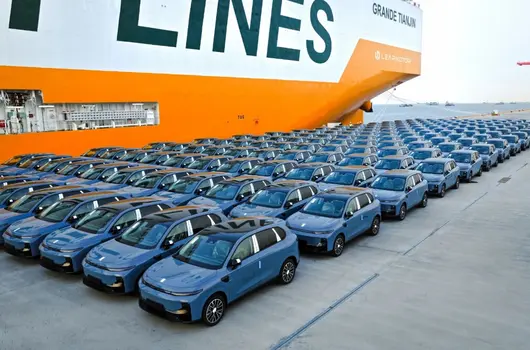

In Malaysia's SUV market, many buyers compare the Proton X90 and Mazda CX-5 when choosing a car. These two cars are quite close in price and positioning. Today, we will make a detailed comparison from multiple aspects to help you save time on research.
The Proton X90 OTR price in Malaysia is RM 106,800 - 122,800, with 4 versions in total, including 2026 1.5T Prime X (RM 122,800), 2026 1.5T Prime (RM 116,800), 2026 1.5T Lite (RM 106,800), among others.
The Mazda CX-5 OTR price in Malaysia is RM 135,469 - 166,760, with 3 versions in total, including 2025 2.0L AT 35th Anniversary (RM 316,154), 2025 2.0L AT (RM 296,154), 2025 2.0L MT (RM 294,154), among others.
In terms of price, the Proton X90's starting price is indeed RM 28,669 cheaper than the Mazda CX-5. If your budget is limited, Proton's entry-level version already meets daily needs. However, be aware that the few thousand Ringgit cheaper may involve trade-offs in features, depending on your specific needs.
Proton X90 is equipped with a 1.5L Turbo engine, 140 hp. Official fuel consumption is 7.0 L/100km.
Mazda CX-5 is equipped with a 1.5L Turbo engine, 140 hp. Official fuel consumption is 7.0 L/100km.
Both cars use the same powertrain, the driving feel is basically the same. Fuel consumption is also similar, no need to worry too much about this.
Proton X90 safety rating is 5★ (ASEAN NCAP), active safety systems include ADAS (ACC, AEB, LKA, LDA, BSM, RCTA).
Mazda CX-5 safety rating is 5★ (ASEAN NCAP), active safety systems include .
Both cars have the same safety rating, safety features are quite comprehensive in this class. New car safety nowadays is not bad, no need to worry too much about this.
Proton X90 uses FWD drive mode.
Mazda CX-5 uses FWD drive mode.
Both cars have the same drive mode, both are FWD, daily driving feel will not be too different.

Proton X90 and Mazda CX-5 are both mainstream choices in the Malaysia market, suitable for family use, daily commute. If you value brand reputation and resale value more, you can prioritize the one with better reputation; if you care more about cost-performance and features, choose the one with richer configuration. In the end, it is recommended to test drive both, personal experience is the most important.

Overall, Proton X90 and Mazda CX-5 are both very good models in the Malaysia market. Choosing which one depends mainly on your personal needs and budget. It is recommended to do your homework, compare quotes from several car dealerships, then test drive to make the final decision. Buying a car is a big matter, spending some time doing homework will definitely not be wrong.

Dalam pasaran SUV di Malaysia, ramai pembeli membandingkan Proton X90 dan Toyota Fortuner ketika memilih kereta. Kedua-dua kereta ini hampir sama dari segi harga dan kedudukan, hari ini kita akan membuat perbandingan terperinci dari pelbagai aspek untuk membantu anda menjimatkan masa membuat persiapan.
Proton X90 mempunyai harga OTR di Malaysia sebanyak RM 106,800 - 122,800, mempunyai 4 variasi keseluruhan, termasuk 2026 1.5T Prime X (RM 122,800), 2026 1.5T Prime (RM 116,800), 2026 1.5T Lite (RM 106,800) dan lain-lain.
Toyota Fortuner mempunyai harga OTR di Malaysia sebanyak RM 195,880 - 241,880, mempunyai 3 variasi keseluruhan, termasuk 2024 2.8T VRZ Diesel (RM 241,880), 2024 2.7L SRZ Petrol (RM 202,880), 2024 2.4L Standard Diesel (RM 195,880) dan lain-lain.
Dari segi harga, harga permulaan Proton X90 memang lebih murah RM 89,080 berbanding Toyota Fortuner. Jika bajet anda terhad, varian permulaan Proton sudah cukup untuk memenuhi keperluan harian. Tetapi perlu diingat, perbezaan harga beberapa ribu ringgit itu mungkin memerlukan kompromi pada ciri-ciri, bergantung pada keperluan anda.
Proton X90 dilengkapi 1.5L Turbo, kuasa 140 hp. Penggunaan bahan api rasmi 7.0 L/100km.
Toyota Fortuner dilengkapi 2.5L Diesel, kuasa 187 hp. Penggunaan bahan api rasmi 8.5 L/100km.
Dari segi kuasa, 2.5L Diesel Toyota Fortuner mempunyai 47 hp lebih daripada 1.5L Turbo Proton X90. Namun untuk penggunaan harian di bandar, kuasa kedua-dua kereta adalah mencukupi, anda tidak akan berasa kurang tenaga.
Proton X90 dijamin 5 tahun/150,000km, jarak penyelenggaraan setiap 10,000km atau 6 bulan.
Toyota Fortuner dijamin 5 tahun/tanpa had jarak, jarak penyelenggaraan setiap 10,000km atau 6 bulan.
Proton X90 dan Toyota Fortuner adalah pilihan utama di pasaran Malaysia, sesuai untuk kegunaan keluarga dan perjalanan harian. Jika anda lebih mementingkan reputasi jenama dan harga semula, pertimbangkan yang mempunyai reputasi lebih baik; jika anda lebih mementingkan nilai wang dan ciri-ciri, pilih yang mempunyai konfigurasi lebih kaya. Akhir sekali, disyorkan untuk kedua-dua model dicuba dahulu, pengalaman sendiri adalah yang paling penting.

Secara keseluruhannya, Proton X90 dan Toyota Fortuner adalah model kereta yang cukup baik di pasaran Malaysia. Memilih yang mana bergantung pada keperluan dan bajet peribadi anda. Kami menasihati anda membuat persiapan, bandingkan banyak tawaran dari agensi kereta, kemudian buat keputusan akhir setelah ujian memandu. Membeli kereta adalah perkara besar, mengambil masa untuk membuat persiapan pasti tidak salah.

喺馬來西亞嘅 SUV 市場,好多人揀車嗰陣都會拎 寶騰 X90 同 豐田 Yaris Cross 做比較。兩款車喺價位同定位上都好接近,今日我哋就從多個方面做一个詳細嘅比較,幫你節省做功課嘅時間。
寶騰 X90 喺馬來西亞嘅 OTR 售價係 RM 106,800 - 122,800,總共有 4 個版本,包括 2026 1.5T Prime X(RM 122,800)、2026 1.5T Prime(RM 116,800)、2026 1.5T Lite(RM 106,800) 等。
豐田 Yaris Cross 喺馬來西亞嘅 OTR 售價係 RM 99,900 - 109,900,總共有 2 個版本,包括 2026 1.5L Standard(RM 99,900)、2026 HEV 1.5L Standard(RM 109,900) 等。
由價錢睇落,豐田 Yaris Cross 嘅起步價比 寶騰 X90 平咗 RM 6,900。講實啲,喺呢個價位段,幾千蚊嘅差距其實唔算幾大,關鍵仲係睇整體嘅性價比同埋長期使用成本。
寶騰 X90 嘅安全評級係 5★ (ASEAN NCAP),主動安全系統包括 ADAS (ACC, AEB, LKA, LDA, BSM, RCTA)。
豐田 Yaris Cross 嘅安全評級係 5★ (ASEAN NCAP),主動安全系統包括 TSS。
兩款車嘅安全評級一樣,喺呢個級別入面安全配備都算好齊全。依家嘅新車安全性都唔錯,唔使太擔心呢一點。
寶騰 X90 車身長 4400 mm,尾箱 400 L。
豐田 Yaris Cross 車身長 4400 mm,尾箱 400 L。
兩款車嘅尺寸差唔多一樣,車廂空間差別唔大。呢個級別嘅車,日常使用完全夠用。
寶騰 X90 保養 5 年/150,000km,保養間隔 每 10,000km 或 6 個月。
豐田 Yaris Cross 保養 5 年/無限制里程,保養間隔 每 10,000km 或 6 個月。

總括嚟講,寶騰 X90 同 豐田 Yaris Cross 都係馬來西亞市場入面好唔錯嘅車型。揀邊一輛,關鍵仲係睇返你個人需要同預算。建議大家做足功課,多比較幾間車行嘅報價,先去試駕再做最終決定。買車係件大事,花少少時間做功課絕對唔會錯。

In the Malaysian SUV market, many buyers compare Proton X70 and Kia Sportage when choosing a car. These two cars are quite close in price and positioning. Today, we will conduct a detailed comparison from multiple aspects to help you save time on research.
The OTR price of Proton X70 in Malaysia is RM 106,800 - 122,300, with a total of 3 versions, including 1.5L Standard 2WD (RM 106,800), 1.5L Executive 2WD (RM 115,800), 1.5L Premium 2WD (RM 122,300), etc.
The OTR price of Kia Sportage in Malaysia is RM 129,639 - 179,320, with a total of 4 versions, including 2025 1.6T DCT 4WD High (RM 179,320), 2025 1.6T DCT 2WD High (RM 159,320), 2025 2.0L AT 2WD High (RM 139,639), etc.
In terms of price, the starting price of Proton X70 is indeed RM 22,839 cheaper than Kia Sportage. If your budget is limited, Proton's entry-level version can already meet daily needs. However, keep in mind, the few thousand difference might involve trade-offs in specifications, which depends on your specific needs.

Proton X70 is equipped with a 1.5L Turbo, horsepower 140 hp. Official fuel economy 7.0 L/100km.
Kia Sportage is equipped with a 1.5L Turbo, horsepower 140 hp. Official fuel economy 7.0 L/100km.
Both cars use the same powertrain, and the driving experience is basically no difference in daily use. Fuel consumption is also about the same, no need to worry too much about this.
Proton X70's safety rating is 5★ (ASEAN NCAP), active safety systems include ADAS (ACC, AEB, LKA, LDA, BSM, RCTA).
Kia Sportage's safety rating is 5★ (ASEAN NCAP), active safety systems include Drive Wise.
Both cars have the same safety rating. Safety equipment in this class is quite comprehensive. New car safety is not bad nowadays, no need to worry too much about this.

Proton X70 body length is 4400 mm, trunk 400 L.
Kia Sportage body length is 4400 mm, trunk 400 L.
Both cars have almost the same dimensions, and the interior space difference is not significant. Cars in this class are fully sufficient for daily use.
Proton X70 warranty 5 years/150,000km, service interval every 10,000km or 6 months.
Kia Sportage warranty 5 years/300,000km, service interval every 10,000km or 6 months.
In summary, Proton X70 and Kia Sportage are both very good models in the Malaysian market. Which one to choose depends on your personal needs and budget. We recommend doing your homework, comparing quotes from several dealerships, and then test driving to make the final decision. Buying a car is a major matter, spending time on research will never be wrong.


In Malaysia's SUV market, many buyers compare Proton X70 and Mitsubishi Xforce when choosing a car. These two cars are quite close in price and positioning. Today we will do a detailed comparison from multiple aspects to help you save time on research.
Proton X70 OTR prices in Malaysia are RM 106,800 - 122,300, with a total of 3 versions, including 1.5L Standard 2WD (RM 106,800), 1.5L Executive 2WD (RM 115,800), 1.5L Premium 2WD (RM 122,300), etc.
Mitsubishi Xforce OTR prices in Malaysia are RM 109,930 - 119,930, with a total of 2 versions, including 2026 1.5L Ultimate (RM 119,930), 2026 1.5L Urban (RM 109,930), etc.
In terms of price, Proton X70's starting price is indeed RM 3,130 cheaper than Mitsubishi Xforce. If your budget is limited, Proton's entry-level version can already meet daily needs. However, be aware that the few thousand Ringgit difference might involve trade-offs in features, depending on your specific needs.

Proton X70 features a 1.5L Turbo, 140 hp. Official fuel consumption 7.0 L/100km.
Mitsubishi Xforce features a 1.5L Turbo, 140 hp. Official fuel consumption 7.0 L/100km.
Both cars use the same powertrain, the driving experience is basically the same. Fuel consumption is also similar, no need to worry too much about this point.
Proton X70 body length 4,400 mm, trunk 400 L.
Mitsubishi Xforce body length 4,400 mm, trunk 400 L.
The dimensions of both cars are almost the same, interior space difference is not large. For cars in this class, daily use is completely sufficient.
Proton X70 adopts FWD drive method.
Mitsubishi Xforce adopts FWD drive method.
Both cars have the same drive method, both are FWD, daily driving experience will not differ much.
Proton X70 and Mitsubishi Xforce are both mainstream choices in the Malaysian market, suitable for family use, daily commuting. If you value brand reputation and resale value more, you can prioritize the one with better reputation; if you care more about value for money and features, choose the one with richer configurations. Ultimately, it is recommended to test drive both, personal experience is the most important.
Overall, Proton X70 and Mitsubishi Xforce are both quite good car models in the Malaysian market. Which one to choose depends mainly on your personal needs and budget. It is recommended to do your research, compare quotes from several car dealers, then go for a test drive to make the final decision. Buying a car is a major matter, spending time on research will definitely not go wrong.


Di pasaran SUV Malaysia, ramai pembeli akan membandingkan Proton X70 dan Mitsubishi Xforce semasa memilih kereta. Kedua-dua kereta ini agak dekat dari segi harga dan kategori, hari ini kita akan buat perbandingan terperinci dari pelbagai aspek, membantu anda menjimatkan masa membuat kajian.
Harga OTR Proton X70 di Malaysia adalah RM 106,800 - 122,300, terdapat sebanyak 3 varien, termasuk 1.5L Standard 2WD (RM 106,800), 1.5L Executive 2WD (RM 115,800), 1.5L Premium 2WD (RM 122,300) dan lain-lain.
Harga OTR Mitsubishi Xforce di Malaysia adalah RM 109,930 - 119,930, terdapat 2 varien, termasuk 2026 1.5L Ultimate (RM 119,930), 2026 1.5L Urban (RM 109,930) dan lain-lain.
Dari segi harga, harga permulaan Proton X70 memang lebih murah RM 3,130 berbanding Mitsubishi Xforce. Jika bajet anda terhad, versi asas Proton sudah boleh memenuhi keperluan harian. Tetapi perlu diingat, ribuan ringgit yang lebih murah itu mungkin ada kompromi dari segi kelengkapan, ia bergantung pada keperluan anda.
Proton X70 dilengkapi enjin 1.5L Turbo, kuasa 140 hp. Penggunaan bahan api rasmi 7.0 L/100km.
Mitsubishi Xforce dilengkapi enjin 1.5L Turbo, kuasa 140 hp. Penggunaan bahan api rasmi 7.0 L/100km.
Kedua-dua kereta menggunakan sistem kuasa yang sama, pengalaman memandu harian pada dasarnya tiada perbezaan. Dari segi penggunaan bahan api juga hampir sama, tidak perlu terlalu bimbang mengenai perkara ini.
Proton X70 menggunakan sistem penggerak FWD.
Mitsubishi Xforce menggunakan sistem penggerak FWD.
Sistem penggerak kedua-dua kereta adalah sama, kedua-duanya FWD, pengalaman memandu harian tidak akan berbeza jauh.
Proton X70 dijamin 5 tahun/150,000km, selang penyelenggaraan setiap 10,000km atau 6 bulan.
Mitsubishi Xforce dijamin 3 tahun/100,000km, selang penyelenggaraan setiap 10,000km atau 6 bulan.
Proton X70 dan Mitsubishi Xforce adalah pilihan utama di pasaran Malaysia, sesuai untuk kegunaan keluarga dan perjalanan harian. Jika anda lebih mementingkan reputasi jenama dan harga kereta terpakai, boleh mempertimbangkan dahulu model yang lebih unggul dari segi reputasi; jika anda lebih mementingkan nisbah harga dan kelengkapan, maka pilihlah model yang lebih lengkap kelengkapannya. Pada akhirnya, disarankan untuk membuat ujian memandu kedua-dua model, pengalaman langsung adalah yang paling penting.
Secara keseluruhan, Proton X70 dan Mitsubishi Xforce adalah model yang sangat bagus di pasaran Malaysia. Memilih mana satu, kuncinya bergantung pada keperluan dan bajet peribadi anda. Disarankan melakukan kajian, bandingkan sebut harga dari beberapa dealer, kemudian buat ujian memandu untuk membuat keputusan akhir. Membeli kereta adalah perkara besar, mengambil sedikit masa untuk membuat kajian pasti tidak salah.
In the Malaysian SUV market, many buyers compare Perodua Ativa and Mazda CX-30 when choosing a car. These two cars are quite close in price and positioning. Today we will make a detailed comparison from multiple aspects to help you save time on research.
The OTR price of Perodua Ativa in Malaysia is RM 62,500 - 73,400, with a total of 3 versions, including 1.0L Turbo X (RM 62,500), 1.0L Turbo H (RM 67,300), 1.0L Turbo AV (RM 73,400), etc.
The OTR price of Mazda CX-30 in Malaysia is RM 122,409 - 146,409, with a total of 4 versions, including 2025 2.0L High+ Premium (RM 146,409), 2025 2.0L High+ (RM 138,409), 2025 2.0L High (RM 130,409), etc.
From a price perspective, the starting price of Perodua Ativa is indeed RM 59,909 cheaper than Mazda CX-30. If your budget is limited, Perodua's entry-level version can already meet daily needs. But note, the few thousand dollars saved might mean compromises on features, depending on your needs.

The safety rating of Perodua Ativa is 5★ (ASEAN NCAP), active safety systems include ASA 3.0 + ACC + LDA + LKA + BSM + RCTA.
The safety rating of Mazda CX-30 is 5★ (ASEAN NCAP), active safety systems include i-Activsense.
Both cars have the same safety rating, safety features are quite comprehensive for this class. New cars nowadays don't lack safety, no need to worry too much about this point.

Perodua Ativa adopts FWD drive system.
Mazda CX-30 adopts FWD drive system.
Both cars have the same drive system, both are FWD, daily driving experience won't differ much.

Both Perodua Ativa and Mazda CX-30 are mainstream choices in the Malaysia market, suitable for family use and daily commuting. If you value brand reputation and resale value more, you can prioritize the one with better reputation; if you care more about value for money and features, choose the one with richer configuration. Ultimately, we suggest test driving both, personal experience is most important.

Overall, both Perodua Ativa and Mazda CX-30 are very good car models in the Malaysia market. Which one to choose depends on your personal needs and budget. We suggest doing your research, comparing quotes from multiple dealerships, and then test driving to make the final decision. Buying a car is a big deal, taking time to research is never wrong.


喺馬來西亞嘅 SUV 市場,好多買家喺揀車嘅時候都會拿 Perodua Ativa 同 Chery Tiggo Cross 做比較。這兩款車喺價位同定位上都蠻接近嘅,今日我哋就從多個方面做一個詳細嘅比較,幫你省下做功課嘅時間。
Perodua Ativa 喺馬來西亞嘅 OTR 售價係 RM 62,500 - 73,400,一共有 3 個版本,包括 1.0L Turbo X(RM 62,500)、1.0L Turbo H(RM 67,300)、1.0L Turbo AV(RM 73,400) 等。
Chery Tiggo Cross 喺馬來西亞嘅 OTR 售價係 RM 88,750 - 99,750,一共有 2 個版本,包括 2025 HEV 1.5L CSH(RM 99,750)、2025 1.5T Standard(RM 88,750) 等。
從價錢睇,Perodua Ativa 嘅起步價確實比 Chery Tiggo Cross 便宜咗 RM 26,250。如果你預算有限,Perodua 嘅入門版已經可以滿足日常需求。但都要注意,便宜嗰幾千塊,可能喺配備上會有取捨,具體要看你嘅需求。
Perodua Ativa 搭載 1.5L 4-cyl,馬力 105 hp。官方油耗 6.0 L/100km。
Chery Tiggo Cross 搭載 1.5L 4-cyl,馬力 105 hp。官方油耗 6.0 L/100km。
兩款車用嘅係同一套動力系統,日常開起嚟嘅感受基本上冇咩差別。油耗方面都差不多,唔使太糾結這一點。
Perodua Ativa 嘅安全評級係 5★ (ASEAN NCAP),主動安全系統包括 ASA 3.0 + ACC + LDA + LKA + BSM + RCTA。
Chery Tiggo Cross 嘅安全評級係 TBD,主動安全系統包括 Basic。
安全配備方面,兩款車都拿唔錯嘅評級。不過 Perodua Ativa 嘅 ASA 3.0 + ACC + LDA + LKA + BSM + RCTA 同 Chery Tiggo Cross 嘅 Basic 喺功能上有啲差異,如果你比較著重主動安全嘅話,可以仔細對比一下兩者嘅功能列表。
Perodua Ativa 採用 FWD 驅動方式。
Chery Tiggo Cross 採用 FWD 驅動方式。
兩款車嘅驅動方式一樣,都係 FWD,日常駕駛感受唔會有太大區別。

總體嚟講,Perodua Ativa 同 Chery Tiggo Cross 都係馬來西亞市場幾唔錯嘅車型。揀邊一輛,關鍵都要睇你嘅個人需求同預算。建議大家做好功課,多比較幾間車行嘅報價,再去試駕做最終決定。買車係件大事,花啲時間做功課絕對唔會錯。
Dalam pasaran SUV di Malaysia, ramai pembeli ketika memilih kereta akan membandingkan Proton X70 dan MG MG HS. Kedua-dua kereta ini sangat hampir dalam harga dan kedudukannya, hari ini kita akan buat perbandingan terperinci dari pelbagai aspek untuk membantu anda menjimatkan masa membuat kajian.
Harga OTR Proton X70 di Malaysia ialah RM 106,800 - 122,300, sebanyak 3 varian, termasuk 1.5L Standard 2WD (RM 106,800), 1.5L Executive 2WD (RM 115,800), 1.5L Premium 2WD (RM 122,300) dan lain-lain.
Harga OTR MG MG HS di Malaysia ialah RM 130,450 - 146,450, sebanyak 2 varian, termasuk 1.5L Standard (RM 105,000), 1.5L Executive (RM 115,000) dan lain-lain.
Dari segi harga, harga permulaan Proton X70 memang lebih murah RM 23,650 berbanding MG MG HS. Jika bajet anda terhad, varian permulaan Proton sudah boleh memenuhi keperluan harian. Tapi perlu diingat, beberapa ribu ringgit yang lebih murah itu mungkin ada kompromi dalam kelengkapan, bergantung kepada keperluan anda.
Panjang badan Proton X70 4400 mm, Bak belakang 400 L.
Panjang badan MG MG HS 4400 mm, Bak belakang 400 L.
Saiz kedua-dua kereta hampir sama, ruang dalam kereta tidak banyak perbezaannya. Kereta dalam tahap ini, untuk penggunaan harian sudah cukup.
Proton X70 menggunakan cara pemacu FWD.
MG MG HS menggunakan cara pemacu FWD.
Cara pemacu kedua-dua kereta sama, semuanya FWD, pengalaman memandu harian tidak akan ada banyak perbezaan.
Proton X70 dan MG MG HS adalah pilihan utama dalam pasaran Malaysia, sesuai untuk kegunaan keluarga, perjalanan harian. Jika anda lebih mengutamakan reputasi jenama dan harga kenderaan terpakai, boleh memberi keutamaan kepada model yang mempunyai reputasi lebih baik; jika anda lebih mengambil berat tentang nilai harga dan kelengkapan, maka pilihlah model yang mempunyai kelengkapan lebih banyak. Akhirnya disarankan untuk menguji kedua-duanya, pengalaman sendiri adalah yang paling penting.
Secara keseluruhannya, Proton X70 dan MG MG HS adalah model kereta yang sangat bagus dalam pasaran Malaysia. Pilihan mana satu, penting sekali bergantung kepada keperluan dan bajet peribadi anda. Kami sarankan anda membuat kajian yang baik, bandingkan lebih banyak tawaran harga daripada pengedar, kemudian uji jalan buat keputusan akhir. Membeli kereta adalah perkara besar, luangkan masa membuat kajian tidak akan salah.

In Malaysia's SUV market, many buyers compare Proton X70 and Chery Tiggo 8 Pro when choosing a car. These two cars are quite close in price and positioning. Today we will do a detailed comparison from multiple aspects to help you save time doing research.
Proton X70's OTR price in Malaysia is RM 106,800 - 122,300, with a total of 3 versions, including 1.5L Standard 2WD (RM 106,800), 1.5L Executive 2WD (RM 115,800), 1.5L Premium 2WD (RM 122,300) etc.
Chery Tiggo 8 Pro's OTR price in Malaysia is RM 159,750 - 159,750, with a total of 2 versions, including 1.6L Turbo Standard (RM 130,000), 1.6L Turbo Premium (RM 145,000) etc.
From the price perspective, the starting price of Proton X70 is indeed RM 52,950 cheaper than Chery Tiggo 8 Pro. If your budget is limited, Proton's entry-level version can already meet daily needs. But also note, the lower price of a few thousand might have trade-offs in features, specifically depends on your needs.
Proton X70 is equipped with 1.5L Turbo, 140 hp. Official fuel consumption 7.0 L/100km.
Chery Tiggo 8 Pro is equipped with 2.0L 4-cyl, 170 hp. Official fuel consumption 8.0 L/100km.
In terms of power, the 2.0L 4-cyl of Chery Tiggo 8 Pro has 30 more horsepower than the 1.5L Turbo of Proton X70. However, for daily driving in the city, both cars have enough power, you won't feel it is lacking.
Proton X70's safety rating is 5★ (ASEAN NCAP), active safety systems include ADAS (ACC, AEB, LKA, LDA, BSM, RCTA).
Chery Tiggo 8 Pro's safety rating is TBD, active safety systems include Basic.
Regarding safety features, both cars have achieved good ratings. However, the ADAS (ACC, AEB, LKA, LDA, BSM, RCTA) of Proton X70 and the Basic of Chery Tiggo 8 Pro have some differences in functionality. If you value active safety more, you can compare the feature lists of both carefully.
Proton X70 warranty 5 years/150,000km, maintenance interval every 10,000km or 6 months.
Chery Tiggo 8 Pro warranty 3 years/100,000km, maintenance interval every 10,000km or 6 months.
Proton X70 and Chery Tiggo 8 Pro are both mainstream choices in the Malaysian market, suitable for family use and daily commuting. If you value brand reputation and resale value more, you can prioritize the one with better reputation; if you care more about cost-performance and features, then choose the one with richer configuration. Ultimately, it is recommended to test drive both models, experiencing it personally is the most important.
Overall, Proton X70 and Chery Tiggo 8 Pro are both very good car models in the Malaysian market. Which one to choose depends mainly on your personal needs and budget. We recommend you do your research, compare quotes from several dealerships, and then test drive to make the final decision. Buying a car is a major matter, spending some time doing research will definitely not be wrong.
In Malaysia's SUV market, many buyers compare the Proton X70 and Chery Tiggo Cross when choosing a car. These two models are quite close in price and positioning. Today, we will do a detailed comparison from multiple aspects to save you time on research.
The Proton X70 OTR price in Malaysia is RM 106,800 - 122,300, with a total of 3 versions, including 1.5L Standard 2WD (RM 106,800), 1.5L Executive 2WD (RM 115,800), 1.5L Premium 2WD (RM 122,300), etc.
The Chery Tiggo Cross OTR price in Malaysia is RM 88,750 - 99,750, with a total of 2 versions, including 2025 HEV 1.5L CSH (RM 99,750), 2025 1.5T Standard (RM 88,750), etc.
Looking at the price, the starting price of the Chery Tiggo Cross is RM 18,050 cheaper than the Proton X70. To be honest, in this price range, a difference of a few thousand is actually not significant; the key is to look at the overall value for money and long-term running costs.
The Proton X70 safety rating is 5★ (ASEAN NCAP), with active safety systems including ADAS (ACC, AEB, LKA, LDA, BSM, RCTA).
The Chery Tiggo Cross safety rating is TBD, with active safety systems including Basic.
In terms of safety features, both cars have received good ratings. However, there are some differences in function between the Proton X70's ADAS (ACC, AEB, LKA, LDA, BSM, RCTA) and the Chery Tiggo Cross's Basic. If you value active safety more, you can compare the feature lists of both in detail.

The Proton X70 adopts FWD drive configuration.
The Chery Tiggo Cross adopts FWD drive configuration.
Both cars have the same drive configuration, which is FWD, so there will not be much difference in the daily driving experience.
Both the Proton X70 and Chery Tiggo Cross are mainstream choices in the Malaysian market, suitable for family use and daily commuting. If you value brand reputation and resale value more, you can prioritize the one with better reputation; if you care more about value for money and features, choose the one with richer configuration. Ultimately, we suggest test driving both; personal experience is the most important.
Overall, both the Proton X70 and Chery Tiggo Cross are excellent models in the Malaysian market. Which one to choose depends on your personal needs and budget. We suggest doing your research, comparing quotes from several dealerships, and then test driving to make the final decision. Buying a car is a major decision; spending time on research will never go wrong.


喺馬來西亞嘅 SUV 市場,好多買家喺選車嘅時候都會拿 Perodua Aruz 同 MG MG HS 來做比較。這兩款車喺價位同定位上都幾接近,今日我哋就由多個方面做一个詳細嘅對比,幫你慳做功课嘅時間。
Perodua Aruz 喺馬來西亞嘅 OTR 售價係 RM 72,900 - 77,900,一共有 2 個版本,包括 1.5L X(RM 72,900)、1.5L AV(RM 77,900) 等。
MG MG HS 喺馬來西亞嘅 OTR 售價係 RM 130,450 - 146,450,一共有 2 個版本,包括 1.5L Standard(RM 105,000)、1.5L Executive(RM 115,000) 等。
從價錢睇落,Perodua Aruz 嘅起步價真係比 MG MG HS 慳 RM 57,550。如果你預算有限,Perodua 嘅入門版已經滿足日常需要。但都要留意,平嗰幾千塊,可能喺配備上會有取捨,具體要看你嘅需要。

Perodua Aruz 配備 1.5L 4-cyl,馬力 105 hp。官方油耗 6.0 L/100km。
MG MG HS 配備 1.5L Turbo,馬力 140 hp。官方油耗 7.0 L/100km。
動力方面,MG MG HS 嘅 1.5L Turbo 比 Perodua Aruz 嘅 1.5L 4-cyl 多咗 35 匹馬力。不過日常喺市區開,兩款車嘅動力都夠用,唔會覺得唔夠力。
Perodua Aruz 嘅安全評級係 5★ (ASEAN NCAP),主動安全系統包括 。
MG MG HS 嘅安全評級係 TBD,主動安全系統包括 Basic。
Perodua Aruz 採用 FWD 驅動方式。
MG MG HS 採用 FWD 驅動方式。
兩款車嘅驅動方式一樣,都係 FWD,日常駕駛感受唔會有太大分別。
總嘅嚟講,Perodua Aruz 同 MG MG HS 都係馬來西亞市場幾唔錯嘅車型。揀邊一輛,關鍵仲係睇你嘅個人需要同預算。建議大家做好功課,多比較幾間車行之嘅報價,再去試駕做最終決定。買車係件大事,花少少時間做功課絕對唔會錯。

喺馬來西亞嘅 SUV 市場,好多買家喺揀車嗰陣都會拿 Proton X50 同 Mazda CX-3 黎做比較。呢兩款車喺價位同定位上都係好接近,而家我哋就從多個方面做一個詳細嘅比較,幫你省返做功課嘅時間。
Proton X50 喺馬來西亞嘅 OTR 售價係 RM 89,800 - 113,300,一共有 4 個版本,包括 1.5T Executive(RM 89,800)、1.5T Premium(RM 101,800)、1.5T Flagship(RM 113,300) 等。
Mazda CX-3 喺馬來西亞嘅 OTR 售價係 RM 126,159 - 139,159,一共有 2 個版本,包括 2023 2.0L High(RM 139,159)、2023 2.0L Plus(RM 126,159) 等。
由價錢睇落,Proton X50 嘅起步價確實比 Mazda CX-3 平咗 RM 36,359。如果你預算有限,Proton 嘅入門版已經可以滿足日常需求。不過都要注意,平嗰幾千蚊,可能喺配備上會有取捨,具體要睇你嘅需求。

Proton X50 搭載 1.5L 4-cyl,馬力 105 hp。官方油耗 6.0 L/100km。
Mazda CX-3 搭載 1.5L Turbo,馬力 140 hp。官方油耗 7.0 L/100km。
動力方面,Mazda CX-3 嘅 1.5L Turbo 比 Proton X50 嘅 1.5L 4-cyl 多咗 35 匹馬力。不過日常喺市區行,兩款車嘅動力都夠用,唔會覺得唔夠力。
Proton X50 車身長 4400 mm,車尾箱 400 L。
Mazda CX-3 車身長 4500 mm,車尾箱 450 L。
空間方面,Mazda CX-3 嘅車身比 Proton X50 長咗 100 mm,乘坐空間更有優勢。不過 Proton X50 喺城市入面停車會靈活啲,各有取捨。
Proton X50 同 Mazda CX-3 都係馬來西亞市場嘅主流選擇,適合家庭使用、日常通勤。如果你更睇重品牌口碑同二手價,可以優先考慮口碑更好嗰一款;如果你更在意性價比同配備,就揀配置更豐富嗰款。最終都係建議兩款都去試駕,親身體驗先係最重要嘅。

總括嚟講,Proton X50 同 Mazda CX-3 都係馬來西亞市場幾唔錯嘅車型。揀邊一輛,關鍵都係要睇你嘅個人需求同預算。建議大家做好功課,多比較幾間車行嘅報價,先去試駕做最終決定。買車係件大事,花費少少時間做功課絕對唔會錯。


In the Malaysian SUV market, many buyers compare Proton X50 and Mazda CX-3 when choosing a car. These two cars are quite close in price and positioning, today we will make a detailed comparison from multiple aspects to help you save time on research.
The OTR price for Proton X50 in Malaysia is RM 89,800 - 113,300, there are 4 versions in total, including 1.5T Executive (RM 89,800), 1.5T Premium (RM 101,800), 1.5T Flagship (RM 113,300), etc.
The OTR price for Mazda CX-3 in Malaysia is RM 126,159 - 139,159, there are 2 versions in total, including 2023 2.0L High (RM 139,159), 2023 2.0L Plus (RM 126,159), etc.
In terms of price, the starting price of Proton X50 is indeed RM 36,359 cheaper than Mazda CX-3. If your budget is limited, Proton's entry-level version can already meet daily needs. However, keep in mind that the few thousand less in price might involve trade-offs in equipment, depending specifically on your needs.
Proton X50 is equipped with a 1.5L 4-cyl, horsepower 105 hp. Official fuel consumption 6.0 L/100km.
Mazda CX-3 is equipped with a 1.5L Turbo, horsepower 140 hp. Official fuel consumption 7.0 L/100km.
In terms of power, Mazda CX-3's 1.5L Turbo has 35 more horsepower than Proton X50's 1.5L 4-cyl. However, for daily city driving, the power of both cars is sufficient, you won't feel underpowered.
Proton X50's safety rating is 5★ (ASEAN NCAP), active safety system includes ADAS (ACC, AEB, LKA, LDA, BSM, RCTA).
Mazda CX-3's safety rating is 5★ (ASEAN NCAP), active safety system includes i-Activsense.
Both cars have the same safety rating, safety features are quite comprehensive within this class. New cars nowadays have good safety, no need to worry too much about this.
Proton X50 adopts 4WD drive mode.
Mazda CX-3 adopts FWD drive mode.
Proton's 4WD and Mazda's FWD will feel different in handling, test drive comparison is recommended.
Overall, both Proton X50 and Mazda CX-3 are very good car models in the Malaysian market. Which one to choose depends primarily on your personal needs and budget. We suggest doing your research, comparing quotes from several dealerships, and then test driving before making a final decision. Buying a car is a big matter, spending some time researching will never be wrong.
Dalam pasaran SUV di Malaysia, ramai pembeli membandingkan Proton X70 dan Honda CR-V apabila memilih kereta. Kedua-dua kereta ini sangat hampir dari segi harga dan kedudukan pasaran. Hari ini, kami akan membuat perbandingan terperinci daripada pelbagai aspek untuk membantu anda menjimatkan masa membuat kajian.
Harga OTR Proton X70 di Malaysia adalah RM 106,800 - 122,300, terdapat 3 varian, termasuk 1.5L Standard 2WD (RM 106,800), 1.5L Executive 2WD (RM 115,800), 1.5L Premium 2WD (RM 122,300) dan lain-lain.
Harga OTR Honda CR-V di Malaysia adalah RM 178,200 - 195,900, terdapat 4 varian, termasuk 2026 e:HEV 2.0L 2WD RS (RM 195,900), 2026 1.5T 4WD V (RM 181,900), 2026 e:HEV 2.0L 2WD E (RM 178,200) dan lain-lain.
Dari segi harga, harga permulaan Proton X70 memang lebih murah RM 71,400 berbanding Honda CR-V. Jika bajet anda terhad, versi asas Proton sudah boleh memenuhi keperluan harian. Tetapi perlu diingat, beberapa ribu Ringgit yang lebih murah itu mungkin melibatkan pengurangan kelengkapan, ia bergantung pada keperluan anda.

Proton X70 dilengkapi 1.5L Turbo, kuasa 140 hp. Penggunaan minyak rasmi 7.0 L/100km.
Honda CR-V dilengkapi 2.0L 4-silinder, kuasa 170 hp. Penggunaan minyak rasmi 8.0 L/100km.
Dari segi kuasa, 2.0L 4-silinder Honda CR-V mempunyai 30 kuasa kuda lebih berbanding 1.5L Turbo Proton X70. Namun untuk penggunaan harian di bandar, kedua-dua kereta mempunyai kuasa yang mencukupi dan tidak berasa kurang tenaga.

Penilaian keselamatan Proton X70 ialah 5★ (ASEAN NCAP), sistem keselamatan aktif termasuk ADAS (ACC, AEB, LKA, LDA, BSM, RCTA).
Penilaian keselamatan Honda CR-V ialah 5★ (ASEAN NCAP), sistem keselamatan aktif termasuk Honda SENSING (ACC, CMBS, LKAS, RDM).
Kedua-dua kereta mempunyai penilaian keselamatan yang sama, kelengkapan keselamatan dalam kategori ini dianggap lengkap. Keselamatan kereta baharu semasa tidak kurang bagus, tidak perlu bimbang mengenai hal ini.

Proton X70 menggunakan cara pemacu FWD.
Honda CR-V menggunakan cara pemacu FWD.
Kedua-dua kereta mempunyai cara pemacu yang sama, iaitu FWD, pengalaman memandu harian tidak akan banyak berbeza.
Secara keseluruhan, Proton X70 dan Honda CR-V adalah model yang cukup baik dalam pasaran Malaysia. Pilihan kereta bergantung pada keperluan dan bajet peribadi anda. Disarankan untuk membuat kajian, membandingkan sebut harga daripada beberapa pengedar kereta, kemudian buat ujian memandu untuk keputusan akhir. Membeli kereta adalah perkara besar, meluangkan masa membuat kajian tidak akan salah.


喺馬來西亞嘅 SUV 市場,好多買家在揀車嘅時候都會拿 Proton X50 同 MG MG HS 做比較。呢兩部車喺價位同定位上都幾接近,而家我哋就由多個方面做一個詳細嘅比較,幫住你節省做功課嘅時間。
Proton X50 喺馬來西亞嘅 OTR 售價係 RM 89,800 - 113,300,一共有 4 個版本,包括 1.5T Executive(RM 89,800)、1.5T Premium(RM 101,800)、1.5T Flagship(RM 113,300) 等。
MG MG HS 喺馬來西亞嘅 OTR 售價係 RM 130,450 - 146,450,一共有 2 個版本,包括 1.5L Standard(RM 105,000)、1.5L Executive(RM 115,000) 等。
由價錢睇嚟,Proton X50 嘅起價真係比 MG MG HS 平咗 RM 40,650。如果你預算有限,Proton 嘅入門版已經可以滿足日常需要。不過都要留意,嗰幾千蚊嘅差價,喺配備度會有取舍,具體睇你嘅需要。
Proton X50 嘅安全評級係 5★ (ASEAN NCAP),主動安全系統包括 ADAS (ACC, AEB, LKA, LDA, BSM, RCTA)。
MG MG HS 嘅安全評級係 TBD,主動安全系統包括 Basic。
安全配備方面,兩部車都拿到唔錯嘅評級。不過 Proton X50 嘅 ADAS (ACC, AEB, LKA, LDA, BSM, RCTA) 同 MG MG HS 嘅 Basic 喺功能上有啲差異,如果你比較重視主動安全嘅話,可以仔細對比下兩者嘅功能列表。
Proton X50 車身長 4400 mm,行李箱 400 L。
MG MG HS 車身長 4400 mm,行李箱 400 L。
兩部車嘅尺寸幾乎一樣,車內空間分別唔大。呢個級別嘅車,日常使用完全夠用。
Proton X50 採用 4WD 驅動方式。
MG MG HS 採用 FWD 驅動方式。
Proton 嘅 4WD 同 MG 嘅 FWD 喺操控上會有唔同感覺,建議試駕對比。
總括嚟講,Proton X50 同 MG MG HS 都係馬來西亞市場幾唔錯嘅車型。揀邊一部,關鍵仲係要睇你嘅個人需要同預算。建議大家做足功課,多比較間車行嘅報價,先再試駕做最後決定。買車係一件大事,花少少時間做功課絕對無問題。

喺馬來西亞嘅 SUV 市場,好多買家喺揀車嗰陣都會拿 Proton X50 同 Subaru Forester 嚟比較。呢兩款車喺價位同定位上都幾接近,今日我哋就從多個方面做一个詳細嘅比較,幫你節省做功課嘅時間。
Proton X50 喺馬來西亞嘅 OTR 售價係 RM 89,800 - 113,300,一共有 4 個版本,包括 1.5T Executive(RM 89,800)、1.5T Premium(RM 101,800)、1.5T Flagship(RM 113,300) 等。
Subaru Forester 喺馬來西亞嘅 OTR 售價係 RM 174,000 - 197,000,一共有 3 個版本,包括 2024 2.0L S EyeSight GT Edition(RM 189,538)、2024 2.0L S EyeSight(RM 177,538)、2024 2.0L L EyeSight(RM 167,538) 等。
從價錢嚟睇,Proton X50 嘅起價確實比 Subaru Forester 平咗 RM 84,200。如果你預算有限,Proton 嘅入門版已經可以滿足日常需求。但都要注意,平幾千蚊嗰陣,可能喺配備上面會有取舍,具體要睇你嘅需求。
Proton X50 配備 1.5L 4-cyl,馬力 105 hp。官方油耗 6.0 L/100km。
Subaru Forester 配備 2.0L 4-cyl,馬力 170 hp。官方油耗 8.0 L/100km。
動力方面,Subaru Forester 嘅 2.0L 4-cyl 比 Proton X50 嘅 1.5L 4-cyl 多咗 65 匹馬力。不過日常喺市區開,兩款車嘅動力都夠用,唔會覺得唔夠力。
Proton X50 嘅安全評級係 5★ (ASEAN NCAP),主動安全系統包括 ADAS (ACC, AEB, LKA, LDA, BSM, RCTA)。
Subaru Forester 嘅安全評級係 5★ (Euro NCAP),主動安全系統包括 EyeSight。
安全配備方面,兩款車都拿到唔錯嘅評級。不過 Proton X50 嘅 ADAS (ACC, AEB, LKA, LDA, BSM, RCTA) 同 Subaru Forester 嘅 EyeSight 喺功能上面有些差異,如果你比較睇重主動安全嘅話,可以仔細對比下兩者嘅功能列表。
Proton X50 車身長 4400 mm,車尾箱 400 L。
Subaru Forester 車身長 4400 mm,車尾箱 400 L。
兩款車嘅尺寸幾乎一樣,車內空間差別唔大。呢個級別嘅車,日常使用完全夠用。

Proton X50 保修 5 年/150,000km,保養間隔 每 10,000km 或 6 個月。
Subaru Forester 保修 3 年/100,000km,保養間隔 每 10,000km 或 6 個月。
總括嚟講,Proton X50 同 Subaru Forester 都係馬來西亞市場好唔錯嘅車型。揀邊一輛,關鍵都係睇你嘅個人需求同預算。建議大家做好功課,多比較幾間車行嘅報價,再去試駕做最終決定。買車係件大事,花少少時間做功課絕對唔會錯。
© 2024 Bitauto.com. All Rights Reserved.
Bitauto (www.yiche.com and www.bitauto.com) is one of the most visited automotive websites in China. We provide detailed info on Chinese car brands available in your area. Please note that the information provided on this website is based on publicly available data and is for reference only. It may not be fully updated or accurate at all times.

Help us improve our website


