

HomeMitsubishi Xpander

Search History
Popular Searches
Dealer Login / Sign Up



喺馬來西亞嘅 SUV 市場,好多買家喺揀車嗰陣都會拿 豐田 Fortuner 同 現代 Santa Fe 嚟比較。呢兩款車喺價位同定位上都幾接近,今日我哋就從多個方面做一個詳細嘅比較,幫你攞少啲做功課嘅時間。
豐田 Fortuner 喺馬來西亞嘅 OTR 售價係 RM 195,880 - 241,880,一共有 3 個版本,包括 2024 2.8T VRZ Diesel(RM 241,880)、2024 2.7L SRZ Petrol(RM 202,880)、2024 2.4L Standard Diesel(RM 195,880) 等。
現代 Santa Fe 喺馬來西亞嘅 OTR 售價係 RM 225,000 - 270,000,一共有 3 個版本,包括 2025 2.5T DCT 4WD Calligraphy 6 Seats(RM 270,000)、2025 HEV 1.6T AT 2WD Prestige 7 Seats(RM 245,000)、2025 HEV 1.6T AT 2WD Prime 7 Seats(RM 225,000) 等。
從價錢來看,豐田 Fortuner 嘅起步價確實比 現代 Santa Fe 便宜咗 RM 29,120。如果你預算有限,豐田嘅入門版已經可以滿足日常需要。但要留意,平咗嘅嗰幾千蚊,可能在配備上會有取捨,具體要睇你嘅需要。

豐田 Fortuner 嘅安全評級係 5★ (ASEAN NCAP),主動安全系統包括 。
現代 Santa Fe 嘅安全評級係 TBD,主動安全系統包括 Basic。

豐田 Fortuner 車身長 4400 mm,行李廂 400 L。
現代 Santa Fe 車身長 4400 mm,行李廂 400 L。
兩款車嘅尺寸幾乎一樣,車內空間差別唔大。呢個級別嘅車,日常使用完全夠用。

豐田 Fortuner 採納 FWD 驅動方式。
現代 Santa Fe 採納 FWD 驅動方式。
兩款車嘅驅動方式一樣,都係 FWD,日常駕駛感受唔會有太大分別。

總括嚟講,豐田 Fortuner 同 現代 Santa Fe 都係馬來西亞市場幾唔錯嘅車型。揀邊架,關鍵始終要睇你嘅個人需要同預算。建議大家做好功課,多比較幾間車行嘅報價,再去試駕先做最終決定。買車係件大事,花少啲時間做功課絕對無錯。


喺馬來西亞嘅 SUV 市場,好多買家喺揀車嗰陣都會拿豐田 Fortuner 同三菱 Xforce 嚟做比較。呢兩款車喺價位同定位上都幾接近,今日我哋就從多個方面做一個詳細嘅比較,幫你省返去做功課嘅時間。
豐田 Fortuner 喺馬來西亞嘅 OTR 售價係 RM 195,880 - 241,880,一共有 3 個版本,包括 2024 2.8T VRZ Diesel(RM 241,880)、2024 2.7L SRZ Petrol(RM 202,880)、2024 2.4L Standard Diesel(RM 195,880)等。
三菱 Xforce 喺馬來西亞嘅 OTR 售價係 RM 109,930 - 119,930,一共有 2 個版本,包括 2026 1.5L Ultimate(RM 119,930)、2026 1.5L Urban(RM 109,930)等。
從價錢嚟睇,三菱 Xforce 嘅起步價比豐田 Fortuner 平咗 RM 85,950。老實講,喺呢個價位段,幾千塊嘅差距其實唔算大,關鍵都係睇整體嘅性價比同埋長期使用成本。
豐田 Fortuner 嘅安全評級係 5★ (ASEAN NCAP),主動安全系統包括 。
三菱 Xforce 嘅安全評級係 5★ (ASEAN NCAP),主動安全系統包括 MI-PILOT。
兩款車嘅安全評級一樣,喺呢個級別入面安全配備都算畀得好齊全。而家嘅新車安全性都唔差,唔使太擔心呢一點。
豐田 Fortuner 保養 5 年/無限制里程,保養間隔 每 10,000km 或 6 個月。
三菱 Xforce 保養 3 年/100,000km,保養間隔 每 10,000km 或 6 個月。
豐田 Fortuner 同三菱 Xforce 都係馬來西亞市場嘅主流選擇,適合家庭使用、日常通勤。如果你更加重視品牌口碑同二手價,可以優先考慮口碑更好嗰一款;如果你更加在意性價比同配備,咁就揀配置更豐富嗰款。最終都係建議兩款都去試駕,親身體驗先係最重要嘅。

總嘅嚟講,豐田 Fortuner 同三菱 Xforce 都係馬來西亞市場幾唔錯嘅車型。揀邊一輛,關鍵都要睇你嘅個人需求同埋預算。建議大家做好功課,多比較幾間車行之嘅報價,先去試駕做最終決定。買車係件大事,花少少時間做功課絕對唔會錯。

In Malaysia's SUV market, many buyers compare Toyota Fortuner and Chery Tiggo 9 when choosing a car. These two cars are quite close in price and positioning. Today, we will make a detailed comparison from multiple aspects to help you save time on research.
The OTR selling price of Toyota Fortuner in Malaysia is RM 195,880 - 241,880, with a total of 3 versions, including 2024 2.8T VRZ Diesel (RM 241,880), 2024 2.7L SRZ Petrol (RM 202,880), 2024 2.4L Standard Diesel (RM 195,880), etc.
The OTR selling price of Chery Tiggo 9 in Malaysia is RM 166,800 - 179,800, with a total of 1 version, including 2026 2.0T Standard (RM 179,750), etc.
From a price perspective, the starting price of Chery Tiggo 9 is RM 29,080 cheaper than Toyota Fortuner. Honestly, in this price segment, a difference of a few thousand is not that big. The key is to look at overall value for money and long-term usage costs.
The safety rating of Toyota Fortuner is 5★ (ASEAN NCAP), active safety systems include .
The safety rating of Chery Tiggo 9 is TBD, active safety systems include Basic.
Toyota Fortuner body length 4400 mm, trunk 400 L.
Chery Tiggo 9 body length 4400 mm, trunk 400 L.
The dimensions of both cars are almost the same, and the interior space difference is not significant. For cars of this class, daily use is fully sufficient.
Toyota Fortuner warranty 5 years/unlimited mileage, maintenance interval every 10,000km or 6 months.
Chery Tiggo 9 warranty 3 years/100,000km, maintenance interval every 10,000km or 6 months.

Overall, Toyota Fortuner and Chery Tiggo 9 are both very good models in the Malaysian market. Which one to choose mainly depends on your personal needs and budget. We suggest doing your research, comparing quotes from several dealerships, and then test driving to make the final decision. Buying a car is a big matter; spending time doing research will definitely not be wrong.

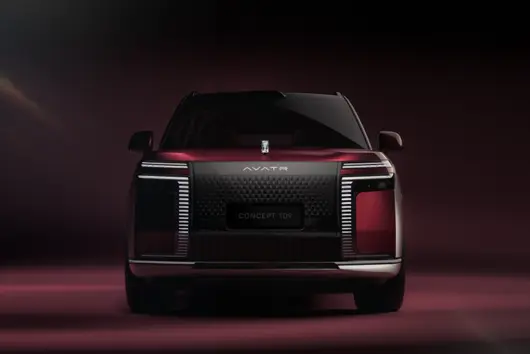
2026年10月11日,巴黎。阿维塔T09概念版全球首秀。
说实话,看完发布会我愣了几秒。不是因为它参数多炸裂——千匹马力、400km纯电续航、华为乾崑智驾,这些放在2026年的中国车市,已经算不上什么爆炸新闻。真正让我愣住的,是整场发布会从头到尾没提一句“对标谁”。


这在过去二十年的中国汽车出海叙事里,几乎不可想象。
我们习惯了这样的剧本:中国品牌去欧洲,先讲性价比,再讲电动化领先,最后小心翼翼地加一句“我们也在努力理解豪华”。本质上,我们一直在别人的考卷上答题。BBA定义了什么叫豪华,保时捷定义了什么叫运动,路虎定义了什么叫气场,然后我们拿着中国供应链的成本优势和技术迭代的速度,试图在这些既定框架里答出更高的分数。


阿维塔T09这次,直接把考卷撕了。
陈卓说“旗舰序列尊崇奢华,对应尊贵、从容与气场”。注意这个词:气场。这不是配置表能写出来的东西,也不是零百加速能证明的东西。它是一个纯东方的审美概念,西方豪华品牌讲了一百年的“presence”,本质上和“气场”是两套语言。阿维塔现在要做的事,是用一套完整的原创设计语言,把“气场”翻译成全球市场能读懂、能感知、甚至能向往的东西。
这比堆技术难多了。
看它的设计执行:前脸362个不同立体高度的LOGO元素,不是简单的矩阵排列,而是“疏密有致地衔接,于光影间流转生辉”。晶钻阵列灯组用内外双层钻石切割,追求的是“钻石火彩质感”。2.1㎡蚌式前舱盖配岛屿式隆起,把“沉稳的力量”和“灵动的张力”揉在一起。侧面刀锋线条配收腰曲面,D柱铝饰板融入车窗轮廓和尾翼,做出悬浮车顶。


这套语言的核心逻辑不是“好看”,而是“不彰自显”。
西方豪华车的设计逻辑是什么?是彰显。大格栅、大标、大轮毂、大排气,用视觉冲击力告诉你“我贵”。阿维塔T09走的是另一条路:远观威仪,近鉴考究。你不走近,看不出362个LOGO元素的高低错落;你不细看,读不懂双层钻石切割的光影层次。尊贵感不是喊出来的,是藏起来的,是等你发现的那个瞬间,自己涌上来的。
这很东方。也很冒险。
因为欧洲市场对“豪华”的认知是路径依赖的。他们习惯了三叉星徽的直白,习惯了双肾格栅的张扬,习惯了英国车的贵族叙事和意大利车的激情叙事。突然来一个中国品牌,说“我们的豪华叫情感新奢,我们的气场叫不彰自显”,他们能不能get到?
我觉得能。但需要时间。

Vortex情感涡流这个细节很说明问题。360°无缝两段式反曲面、可升降、118颗RGB LED、防夹功能。前三个是技术参数,最后一个是态度。一个情感交互装置,特意设计了防夹。 这在西方豪华车的语境里,叫“人性化配置”;在阿维塔的语境里,叫“有温度的情感交互”。区别在于:前者是功能列表里的一行字,后者是设计哲学里的一口气。
阿维塔把首秀放在巴黎,宣布2027年进军欧洲,这个节奏也很讲究。不是2026,不是2028,是2027。给自己留了一年多的时间,去铺渠道、建服务体系、做品牌预热。海外业务已经覆盖70个国家,平均售价超30万,已经盈利。埃及高端电动车市占率10%,泰国豪华纯电SUV销量第一。这些数据说明一件事:阿维塔不是去欧洲试水的,是去欧洲扎根的。
但我想说的重点是另一件事。
中国汽车出海,过去靠的是“我比你便宜”和“我比你快”。这两张牌打到现在,边际效应在递减。欧洲人开始反应过来,开始加关税,开始搞本地保护。下一步拼什么?拼谁能在别人的主场,用自己的规则赢。

阿维塔T09巴黎首秀,本质上是在做一件事:把“情感新奢”这四个字,从一句品牌口号,变成一个全球市场愿意讨论、愿意理解、甚至愿意追随的设计范式。
这条路如果走通了,中国汽车才算真正完成了从“产品出海”到“品牌出海”的跃迁。走不通,就还是在别人的考卷上答题,只是分数高一点而已。
所以,阿维塔T09的意义,不在于它能不能在50万级市场卖爆。而在于它是否能让欧洲用户开始讨论“气场”这个词,是否能让“不彰自显”成为一个被全球豪华车市场认可的审美标准。
这才是真正的踢馆。

 汽势Auto-First|撒马尔
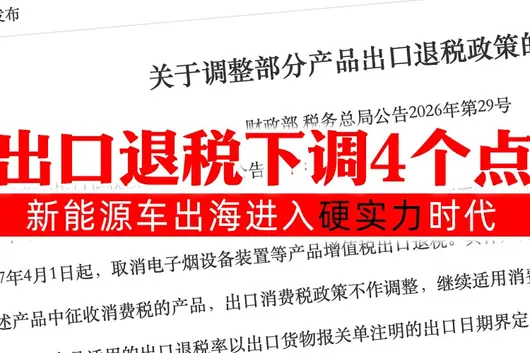
2026年10月12日,财政部、税务总局一纸公告落定:自2027年4月1日起,新能源汽车增值税出口退税率由13%下调至9%。至此,光伏退税已归零、电池退税正分步取消,"新三样"里最后一个享受全额退税的品种,整车,也明确迎来退税率下调。
以一辆离岸价15万元的车粗略测算,退税额从约1.95万元降至1.35万元,单车少退约6000元。CLSA等机构测算显示,部分电动车出口业务净利润率仅在10%左右,这4个百分点,足以让相当一部分车型从“赚钱”变成“白干”。
此外,冲击并不均匀。比亚迪已在匈牙利、巴西推进本地生产,长城在泰国、巴西、俄罗斯布局产能,这些企业的海外销量不受出口退税变动影响。真正承压的是靠低价铺量、没有品牌溢价、又无力出海建厂的中小车企,既无法提价转嫁,也缺乏内部消化空间。

业内人士分析称,一方面,税收支持应与产业生命周期匹配,产业成熟后应更多依靠市场力量,下调退税一定程度上可以减少内卷式竞争,企业从低价竞争转向技术和品牌竞争。
另一方面,此前退税率高,部分车企即便以低于成本的价格在海外销售,也能靠退回的税款弥补亏损。这一模式不仅不可持续,还在持续招致欧盟反补贴调查的施压。
下调退税,对内是整治“内卷外溢”,对外是降低贸易摩擦风险。
2026年1至9月,新能源汽车出口400.6万辆,同比增长1.3倍,占汽车出口比重连续四个月超过50%。中国新能源汽车的竞争力根基是产业链、三电与智能化构成的体系能力,而非退税红利。光伏出口退税从9%归零后,出口依然保持高速增长,已是前车之鉴。
值得关注的是“抢出口”窗口。参考光伏、电池此前的经验,政策落地前大概率重演"抢出口",海外经销商加速下单,企业赶在2027年4月1日前密集报关,出口数据会先冲高再回落,但这改变不了长期逻辑。
真正要问的是,褪去政策红利后,谁能不靠退税也持续盈利。要么把产能搬到海外,要么把产品溢价做到足以覆盖成本。

就在今日,10月12日,商务部就中欧混动汽车、电动汽车磋商共识答记者问。 关于混动汽车,双方强调并确认了三项基本原则。
一是尊重事实。根据欧盟统计局数据,2024年欧盟自中国进口混动汽车10.7万辆,2025年为30.2万辆。双方在2025年基础上达成向上安排,确保中国企业的出口空间和稳定增长,照顾了双方产业基于现实的合理关切。二是非歧视。任何措施都不会专门针对中国产品,更不能歧视性对待中国企业。中方获得配额将不会低于欧方的其他任何进口来源地。三是合规。双方确认贸易安排应符合世贸组织规则。中方保留在世贸组织框架下诉诸争端解决、要求贸易补偿等一切权利。这三项基本原则贯穿始终,是保障中国企业合法权益的坚实基础。
显然,关于汽车出口,正处在一个风口浪尖时刻。
汽势观:新能源车出口的“断奶”时刻4个点不会逆转中国电动车的出海大势,成本优势的主引擎早已从退税换成了产业链纵深、技术代差和规模效应。只有习惯了退税这道护城河的车企,才会恐慌。


Author | Klein
Produced by | Roadside Coffee
Abstract: A globally leading new energy vehicle industry should not just earn a "pittance".
On October 12, 2026, there were two news items worth looking at together.
Morning: The 91st Paris Motor Show opened. Among approximately 60 vehicle exhibitors, 20 were Chinese brands, a full third, double the previous edition. AITO, Avatr, Li Auto, AION, 212, all visiting for the first time, the exhibition hall was lively.
At 5:09 PM, the Ministry of Finance and the State Taxation Administration announced that starting April 1, 2027, the VAT export refund rate for new energy vehicles will be reduced from 13% to 9%.
One set up a stage in Paris, one withdrew support in Beijing. These two events coinciding on the same day may not be anyone's arrangement, but putting them together reflects the most accurate situation of Chinese automakers going global right now: the stage is getting bigger, the way out is getting fewer.
Hidden Messages in the Announcement
The policy itself is not long, can be clarified in a few sentences.
Refund rate drops 4 percentage points, from 13% to 9%; only new energy is affected, the 13% for fuel passenger cars, commercial vehicles, and engineering machinery remains unchanged; a buffer of nearly six months is given, to be implemented only on April 1, 2027; based on the export date on the customs declaration form.

The last point means that there is likely to be a wave of export rush in the first quarter of next year. Automakers and dealers will concentrate customs declaration before the end of March, pushing the data very high, then it will drop back in the second quarter.
By then, if you see news of record exports in the first quarter, you must squeeze out this part of the "water".

What is truly worth pondering are these five words "only new energy". According to the consistent terminology of domestic financial and tax policies, new energy vehicles include pure electric, plug-in hybrid (including extended range) and fuel cell vehicles, meaning DM-i which BYD is currently promoting in Europe, and extended range of Li Auto and AITO, are all within the range of these 4 percentage points.
And fuel vehicles sent to Russia and the Middle East by automakers such as Chery, Great Wall, and Geely, continue to enjoy full tax refunds.
In fact, this story has been told for a while, and the capital market even began selling off automotive stocks early for this expectation. At the end of September, a Citi meeting minutes already revealed the script, stating that tax refund adjustments "will be led by new energy vehicles", and "it is expected that it is unlikely to apply to fuel passenger cars, commercial vehicles, or engineering machinery".
The announcement today almost follows this script, only the implementation time is three months earlier than rumors (rumors say the policy starts implementing from July 1, 2027).
Script Played Twice
Looking at this announcement alone makes it easy to underestimate it. Looking at it over a long time line, one will discover the consistent deep meaning of the policy.
In December 2024, the export refund rate for photovoltaics and lithium batteries dropped from 13% to 9%. This April, 249 photovoltaic products were directly zeroed out, batteries first dropped to 6%, and will be completely cancelled starting January 1, 2027.
Now, it's the turn of complete vehicles. From now on, the export tax refunds for photovoltaics, batteries, and complete vehicles, the "New Three", have all entered the decline channel.

The export side is retreating, and the domestic side is too. Starting this year, new energy vehicle purchase tax changed from exemption to half reduction, with a maximum reduction of 15,000 yuan per vehicle. In 2027, purchase tax is likely to be fully collected. This year's policy also cut into lithium battery consumption tax. Starting September 1, lithium primary batteries, lithium-ion batteries, and all-vanadium flow batteries were re-added to the consumption tax items, collected at 2% first, and will restore the 4% statutory tax rate starting September 1, 2027.
Domestically and internationally, financial and tax support are coming to an end.
The official explanation for the previous two adjustments is against "involution-style" competition, and this is indeed a common pain point of the "New Three" industry. Under involution, automotive industry profits continue to drop, many automakers treated exports as a "lifeline", but automakers spread "involution" to overseas markets in a very short time.
The "price war" of Chinese automakers in overseas markets has already started. Automakers use taxes refunded by the state to negotiate prices against each other overseas. The finance ministry is essentially paying for foreign consumers, and in the end, it only brings a letter of anti-subsidy investigation.

This accounting, no one is willing to calculate it again. So why is new energy targeted first? Because it is the main cause of trouble.
Shortly after Chinese pure electric vehicles were levied with anti-subsidy duties by the EU, plug-in hybrid cars and hybrid electric cars were also put on the negotiation table by the EU. On October 9, the EU just reached an agreement with the Chinese government that Chinese car exports to Europe over the next four years should be cut by more than half compared to the original forecast.
As for fuel vehicles, going overseas is to fight head-on with Japanese and South Korean traditional automakers in their own territory, it didn't invite encirclement, and there is no reason to add another blow, moreover fuel vehicles are experiencing a cliff-like shrinkage in the domestic market, at this time it is also necessary to protect them.
There is another reason that sounds not very nice but is very realistic. New energy has already accounted for more than 40% of car exports, the financial bulk of tax refund expenditures is pressed on it.
In a sense, this announcement is an official certification, the wings of new energy vehicles are deemed hard enough to "wean off".
How painful is 4 percentage points?
Simply do the math, the refund rate drops 4 points, equal to 40,000 less refunded per vehicle exported with an FOB price of 1 million yuan. Roughly calculated at an average export price of 150,000 yuan, one vehicle will refund about 6,000 yuan less.
What does 6,000 yuan mean? Just look at the financial reports of BYD and Chery, the two major exporters. BYD's net profit attributable to parent company for the first half year was 12.325 billion yuan, selling 1.8085 million vehicles, with a net profit per vehicle of about 6,800 yuan. Chery's first half year net profit attributable to parent company per vehicle was 6,719 yuan.

In other words, if this cut is swallowed entirely by the automakers, the export profit per vehicle for top enterprises will basically be zero.
Of course, not all will be swallowed. Automakers with brand and channel bargaining power will raise prices, especially on the European side where the anti-subsidy case follows the "price commitment for tariffs" route, which already requires Chinese cars to be sold at "higher prices". The reduction in tax refunds equals handing over a ready-made reason for price increase.
The ones who really feel the pain are two groups of people, small and medium players relying on low prices to grab market share, and parallel exports and zero-mile used car chains eating the tax refund price difference.
One cut down, the tail is cleared out, what is squeezed out is gray business. This might just be the effect the policy wants.
Localization Acceleration Again
In 2026, China's automotive export volume is expected to break through the 10 million unit mark, and besides the milestone of scale, this year will also be a key year for Chinese automakers' overseas localization layout.
Looking back at this year, multiple forces are pushing Chinese automakers to accelerate overseas market localization layout.
The EU just put a "four-year halving" framework on hybrid exports; Thailand tightly binds imported cars with local production obligations; the RMB appreciated against the US dollar by more than 4 percent in the first half of the year. Just BYD, Chery, SAIC, and Geely, the four companies' exchange loss total was over 9.4 billion yuan, BYD alone 4.7 billion; after domestic purchase tax was halved, the price war continues to overflow overseas; now, tax refunds take away another 4 points.

Let's not count the capacity bottlenecks of Ro-Ro ships, that's the story for another article.
The next phase of this business of complete vehicle exports almost only has one clear direction left — building factories overseas.
Local car production, there are no issues with export tax refunds, no exchange exposure, no touching import tariffs, and can bring jobs and tax revenue to the host country, transforming from "blockaded exporters" to "welcome investors".
The EU forces you to localize with walls, Thailand forces you to localize with ratios, the RMB forces you to localize with exchange losses, now the Ministry of Finance pushes you with tax refunds again.
Inside and outside the walls, the direction happens to be consistent.
Final Words
New energy vehicle export tax refunds of course will not stop at this point. Photovoltaics took less than a year and a half from 13% to 9% to 0. Batteries took one year from 9% to 6% to 0. Cars might take a bit longer, but never too long.
According to the prediction of CPCA Secretary-General Cui Dongshu, the reduction of complete vehicle export tax refunds will take two steps, from 13% to 9% to 5%, finally down to 0, the second step may land around mid-2029.
For automakers, a steady posture is to treat 9% as a transition, doing long-term overseas financial models based on "zero tax refund". As for the 13% for fuel vehicles, it is probation, not exemption.
Only after the tax refund safety net ends will the globalization of Chinese automakers truly begin. There is only one question left, which overseas factory will be able to complete proper layout before that day?



© 2024 Bitauto.com. All Rights Reserved.
Bitauto (www.yiche.com and www.bitauto.com) is one of the most visited automotive websites in China. We provide detailed info on Chinese car brands available in your area. Please note that the information provided on this website is based on publicly available data and is for reference only. It may not be fully updated or accurate at all times.

Help us improve our website


