
HomeMitsubishi

Search History
Popular Searches
Dealer Login / Sign Up











Transformasi elektrifikasi trak utama Jepun akhirnya membuat langkah bererti. Baru-baru ini, menurut laporan media asing, Mitsubishi Motors telah mengesahkan pelancaran versi hibrid trak Triton, model ini akan bersama-sama dengan SUV Pajero hibrid baharu yang baru, melaksanakan pengeluaran secara besar-besaran melalui penambahbaikan elektrifikasi di kilang pengeluaran Thailand. Untuk ini, Mitsubishi merancang menambah pelaburan 16 bilion Baht Thailand untuk kilang Thailand, dan menyasarkan untuk membina menjadi hab eksport trak elektrik global dan SUV Hardcore pada tahun 2030.

Versi Triton hibrid petrol-elektrik (HEV) yang pertama akan menjadi versi pengeluaran pertama, kemudian seterusnya berdasarkan iterasi teknologi bateri dan permintaan pasaran global, secara berperingkat memajukan penyelidikan dan pembangunan trak Plug-in Hibrid (PHEV) malah trak sepenuhnya elektrik. Ketua Strategik Kejuruteraan dan Produk Global Mitsubishi sebelum ini dengan jelas menyatakan, pendekatan hibrid boleh serasi terus dengan platform kerangka terasing yang sedia ada, tanpa perlu pengubahsuaian besar-besaran pada rangka dan struktur chasis, kos pelaksanaan jangka pendek lebih rendah, dan juga lebih mampu menjamin keupayaan beban berat dan kebolehpercayaan off-road model trak, adalah laluan teknologi paling realistik pada masa kini.

Perlu diperhatikan, Mitsubishi tidak menggunakan teknologi penambah jarak e-Power rakan sekutu perkongsian Nissan, sebaliknya memilih pembangunan bebas sistem hibrid khas trak, tujuan utamanya adalah mengekalkan ciri prestasi utama trak Hardcore, untuk mengelakkan pengorbanan beban, tarikan dan kemampuan menyesuaikan jalan tidak berturap akibat elektrifikasi.

Mitsubishi mempercepatkan pergerakan elektrifikasi trak, pada asasnya adalah pilihan pasaran yang didorong oleh gelombang eksport trak baharu elektrik China. Sebagai contoh dengan pasaran trak utama global seperti Australia, jualan Mitsubishi Triton pada tahun 2025 menduduki tempat ke-17; manakala BYD Shark 6 trak plug-in hibrid hanya menggunakan satu tahun untuk mengejar, menduduki tempat ke-18. Selain BYD, Great Wall Cannon Alpha versi plug-in hibrid juga telah dilancarkan ke pasaran Australia, ditambah Ford Ranger versi plug-in hibrid memasuki pasaran, pasaran trak Australia yang pada asasnya didominasi kuasa diesel, persaingan elektrifikasi telah dimulakan sepenuhnya.

Berbeza dengan strategi jenama China yang umum menumpukan plug-in hibrid, elektrik tulen dahulu, Mitsubishi memilih pendekatan hibrid petrol untuk memasuki kategori trak, lebih sesuai dengan keperluan utama pengguna trak tradisional terhadap kebolehpercayaan, kos penggunaan rendah, dan mengelakkan masalah kekurangan infrastruktur pengecasan di loji perlombongan terpencil, senario off-road. Tetapi laluan konservatif ini juga menghadapi cabaran: pada masa ini, trak plug-in hibrid jenama China telah mencapai kelebihan teknologi julat elektrik tulen lebih 100km, julat gabungan pecah 1000km, julat harga terus menurun, yang akan lebih mendesak ruang hidup trak diesel tradisional.

Penutup: Bagi Mitsubishi, penambahbaikan elektrifikasi adalah pilihan wajib untuk menangani peraturan pelepasan global, dan juga pelan strategik utama untuk menentang pengembangan eksport trak China. Dengan pemajuan versi Triton hibrid, pasaran trak sederhana global akan menghadapi pertembungan langsung antara hibrid Jepun dan plug-in hibrid China, pertelingkahan laluan teknologi elektrifikasi trak, juga akan dari persaingan jualan di pasaran, berpanjangan ke permainan jangka panjang laluan teknologi.
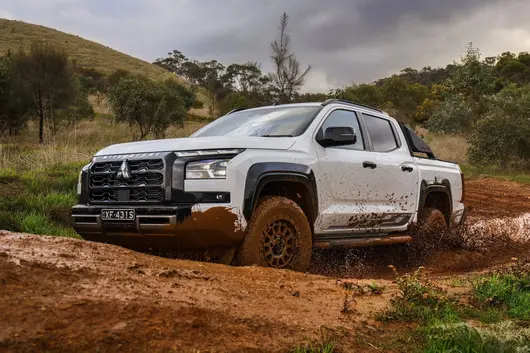

The electrification transformation of mainstream Japanese pickups has finally taken a substantial step. Recently, according to foreign media reports, Mitsubishi Motors has confirmed the launch of a hybrid version of the Triton pickup, this model will go into mass production along with the new Pajero hybrid SUV through the electrification upgrade of its Thailand production base. For this, Mitsubishi plans to add a 16 billion baht investment in the Thailand factory, aiming to build it into a global export hub for electrified pickups and rugged SUVs by 2030.
The first mass-produced version will be the HEV (Hybrid Electric Vehicle) version of the Triton, subsequently, further progress will be made on the R&D of PHEV (Plug-in Hybrid Electric Vehicle) and even fully electric pickups based on battery technology iterations and global market demand. Mitsubishi Global Engineering and Product Strategy Head previously clearly stated, the hybrid solution can be directly compatible with the existing body-on-frame platform, requiring no large-scale modifications to the chassis or underframe structure, resulting in lower short-term implementation costs, and better ensuring the heavy-load capacity and off-road reliability of the pickup models, making it the most pragmatic technical path at present.
Notably, Mitsubishi did not adopt the e-Power extended-range technology from alliance partner Nissan, instead choosing to independently develop a hybrid system exclusive to pickups, the core purpose is to retain the core performance attributes of rugged pickups, avoiding sacrificing load capacity, towing capability, and off-pavement adaptability due to electrification.
Mitsubishi's acceleration of pickup electrification is essentially a market choice forced by the wave of Chinese new energy pickups going overseas. Taking Australia, a global core pickup market, as an example, in 2025 the Mitsubishi Triton sales ranked 17th; while the BYD Shark 6 plug-in hybrid pickup caught up in just one year, ranking 18th. Apart from BYD, the Great Wall Cannon Alpha plug-in version has also landed in the Australian market, combined with the entry of the Ford Ranger plug-in version, the Australian pickup market originally monopolized by diesel power has seen electrification competition fully start.
Unlike Chinese brands that generally prioritize layouts of plug-in hybrids and pure electric routes, Mitsubishi chooses to enter the pickup track from hybrid electric, which fits the core demands of traditional pickup users for reliability and low operating costs, and also avoids the pain points of insufficient charging infrastructure in remote mining areas and off-road scenarios. However, this conservative route also faces challenges: current Chinese brand plug-in hybrid pickups have already achieved technical advantages of all-electric range over 100 km and combined range exceeding 1,000 km, price ranges continue to drop, further squeezing the survival space of traditional diesel pickups.
Conclusion: For Mitsubishi, electrification upgrades are not only a mandatory choice to respond to global emission regulations but also a core layout to resist the overseas expansion of Chinese pickups. With the promotion of the Triton hybrid version, the global mid-size pickup market will welcome a direct confrontation between Japanese hybrids and Chinese plug-in hybrids. The debate on pickup electrification technical routes will also extend from sales competition at the market end to the long-term game of technical paths.




© 2024 Bitauto.com. All Rights Reserved.
Bitauto (www.yiche.com and www.bitauto.com) is one of the most visited automotive websites in China. We provide detailed info on Chinese car brands available in your area. Please note that the information provided on this website is based on publicly available data and is for reference only. It may not be fully updated or accurate at all times.


