
HomeMitsubishi

Search History
Popular Searches
Dealer Login / Sign Up


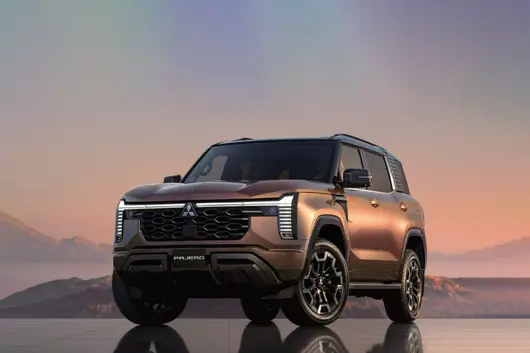
In 2021, the last fourth-generation Pajero rolled off the line at the Gifu Plant. The Japanese hardcore off-road benchmark that has spanned nearly 40 years globally and sold over 3.29 million units entered a 5-year dormancy period.
Recently, Mitsubishi Motor officially unveiled the new Pajero. The fifth-generation product is manufactured in Thailand and launched in Japan and Australia markets. Next year it will be sold in over 100 countries and regions — among which China is likely not included. Besides the diesel engine debut by Mitsubishi not fitting local conditions, the expected starting price of around 330,000 overseas, combined with tariffs and freight, results in a price over 400,000 domestically, also facing severe challenges from same-class products.
For example, GAC has accumulated experience from joint ventures with Mitsubishi and Jeep, launching the Trumpchi Yue 7 with a pre-sale price starting at 179,800. The two models used similar gold paint as advertising color, but the new Pajero loses in size, power, and configuration. Only after 27 years does it return to a body-on-frame chassis, giving the new Mitsubishi car the confidence to challenge the Toyota LC250 Prado again.
01
Body-on-Frame Chassis Revival, Hard Specs Inferior to Yue 7
Focusing on the new Pajero, the first thing to discuss is its chassis. Starting from the third-generation Pajero released in 1999, Mitsubishi switched to a unibody with a built-in ladder frame. This new car is developed based on the latest Triton pickup platform. On one hand, it is a return to reason and ancestral teachings, passing the torch of V97 to Trumpchi Yue 7. On the other hand, it also solves the cost difficulty of independent Pajero development, providing material basis for its resurrection.

This also explains why the new Pajero is manufactured in Thailand — after all, this is the hometown of the Southeast Asian version L200. However, the new Pajero is not simply understood as the off-road version of Triton. Mitsubishi only uses pickup design for the front suspension and front floor; all other chassis components are newly built. The new car adopts a traditional independent ladder frame chassis. High-strength steel and enlarged cross-section make its anti-torsion and anti-bending rigidity improved.
The new Pajero front suspension is double wishbone structure. The rear suspension consists of a solid axle with five links and coil springs. Compared with the four-wheel independent suspension of the previous two generations, its comfort on the highway may be compromised, but the suspension travel and impact resistance will be better. Combined with improved load capacity, the performance of the new Pajero in off-road scenarios is likely stronger than the old model.
On the existing platform basis, Mitsubishi cannot equip the new Pajero with dual-chamber air suspension, variable damping shock absorbers and other chassis hardware like GAC Trumpchi Yue 7, so its ground clearance is fixed at 230mm. Unlike Yue 7 which can adjust from 230-310mm, it is even slightly 5mm lower than the previous generation, but higher than Prado's 221mm. Combined with a wading depth of around 800mm, it is enough for the new Pajero to boast.

As for the 30.4° approach angle, 25.8° departure angle, and 22.6° ramp breakover angle, there is no progress compared to V97, the advantage over Prado is not significant, and it is even more impossible to compare with the lift-able Trumpchi Yue 7. Friends pursuing ultimate passability need to reach the goal through modification later.
02
Diesel Power Main Push, Plug-in Hybrid Still on the Way
The choice of powertrain limited the future of the new Pajero in the Chinese market. Currently, Mitsubishi will only continue to use the 4N16 diesel engine from Triton. The new Pajero is equipped with a twin-turbo 2.4L version, featuring variable geometry turbine technology. After the tail gas after-treatment system, it is the first Mitsubishi diesel engine to meet Euro 6d emission standards.
Moreover, the new Pajero can output 150kW peak power. The 480N·m torque is improved by 10N·m compared to the pickup version, performing better than the previous generation Pajero's 3.2T diesel engine, consistent with the LC250 Prado's 2.8T power, just 20N·m lower in torque.
Choosing the 2.4T diesel engine, the advantage of the new Pajero lies in wide applicability. Although looking at the book values, it is significantly lower than Yue 7 dual motors' 550kW, and acceleration performance has a significant gap, Mitsubishi off-road vehicles can achieve 3.5 tons of towing capacity, which is an ability Trumpchi cannot possess.
Moreover, from information revealed after the press conference, the new Pajero will have HEV and PHEV models later. Among them, Mitsubishi is likely to transplant the Outlander PHEV powertrain to the new Pajero. The combination of 2.4L gasoline engine and dual motors will be more suitable for Chinese owner needs, and can also face off against Tank 500 PHEV in overseas markets.

Regarding gearbox choice, the new Pajero did not continue to use the Triton's 6-speed transmission, but changed to Mitsubishi's latest developed 8-speed automatic transmission.
It may be optimized based on the Aisin AL80F set of Pajero Sport and Prado. Compared with the old 5AT transmission, using tighter gear ratios shows better performance in smoothness and efficiency, and also reinforces oil cooling, meeting the diesel engine's long-time high torque load, calmly coping with the new Pajero's 7 driving mode changes.
Moreover, the new Pajero transmission can also work with S-AWC all-wheel control system and SS4-II Super Select 4WD system, utilizing the newly added AYC active yaw control to help it achieve more stable driving performance. This function mainly uses front wheel braking to vector distribute torque between left and right wheels, correcting driving attitude and trajectory in curves and slippery roads.

Mitsubishi's signature SS4-II is also present. It has four modes: 2H, 4H, 4HLc, and 4LLc. It can realize the switching between two-wheel drive and full-time four-wheel drive on paved roads within 100km/h through planetary gear center differential lock, and can also perform torque-sensing center differential locking and low-speed four-wheel drive independent control, achieving better off-road performance.

03
Dimensions Not as Good as Chinese Off-Roaders, Design Catches up to Mainstream Aesthetics
From body-on-frame chassis, diesel power to Super Select 4WD system, Mitsubishi gives the new Pajero leading performance in class, and in terms of dimensions, it shows even more ambition to steal Prado's business.
The new Pajero's length, width, and height are 4920mm, 1925mm, and 1910mm respectively, with a wheelbase of 2870mm. Compared to V97, it is slightly increased. Except for the wheelbase being 20mm more, each of Mitsubishi new car's three-dimension data is shorter than Prado's. For Japanese consumers who have long been troubled by Toyota's delivery waiting list, the smaller dimensions will instead be an advantage of the new Pajero. If compared with 5-meter level domestic manufacturing like Trumpchi Yue 7 and Tank 500, Mitsubishi's restraint is even more visible.
As for the design part, Mitsubishi improved significantly on the basis of Triton, while maintaining the high body stance of off-road vehicles, paying tribute to classics in details, making the new Pajero follow mainstream aesthetics without disappointing off-road players.

From body lines and surfaces, we can feel Mitsubishi's understanding of toughness. From the bulges on both sides of the hood, the creases of upper and lower waistlines, to the high head, flared fenders and side steps, the new Pajero has a tough look. The black cladding connecting the front and rear bumpers to the wheel arches is selected by Mitsubishi using slightly glossy plastic parts, improving the overall refined feel.
The new Pajero's front face is highly recognizable. It did not continue to use Triton's shape. The square head has a sense of power. The T-shaped DRL combined with the through light strip incorporates the six horizontal bars of the grille, echoing the shape of the rear light clusters, with rich details. The two-tone body reveals the fashionable vibe missing from Mitsubishi in the past.

Disappointing for old car fans, the new Pajero cancels the rear-mounted spare tire, changing to a plain upward-opening tailgate. To save face, Mitsubishi deliberately uses the upper and lower waistline to gather. Combined with the tailgate convex shape, it forms a hexagonal contour to pay tribute to its past self. As for the designer emphasized decoration at the C-pillar position originating from the roll cage of the first-generation Pajero convertible, it is even more of an inside joke element.

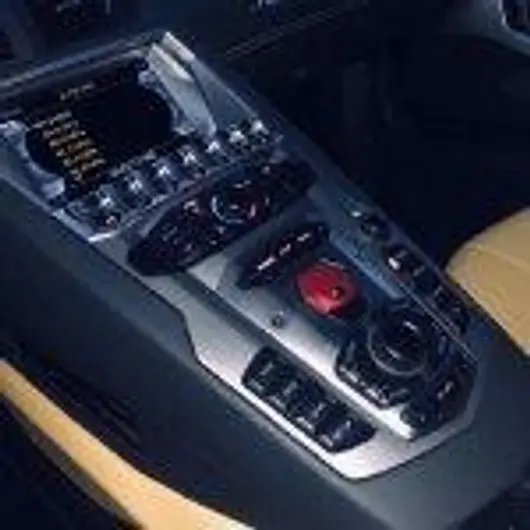
Also paying tribute to the first-generation Pajero is the new car's interior. Mitsubishi mainly wants to find the style of that year on the horizontally laid instrument panel. The camel leather trim decoration below the air conditioning vents similar to subway seats does have a retro meaning. Large amounts of soft package stitching use Japanese traditional wood grain craftsmanship. The A-pillar and passenger grab handle have off-road flavor, but the integrated large screen with two 14.3-inch screens pulls people back to 2026.

The center screen can digitally replicate Mitsubishi off-road vehicles' classic three-cluster gauge, and display off-road information such as altitude, heading, pitch angle, roll angle, etc., and can also switch dynamic effects according to driving modes. The new car's center screen also provides wireless smartphone connectivity, and can automatically switch 16 background themes over time, or display a 3D multi-view panoramic image system with透视 chassis.

Mitsubishi first equipped 8 airbags including front outboard airbags on the new Pajero. Coupled with forward collision mitigation and forward collision warning, as well as the first-equipped lane keep assist system capable of offset correction, its active safety capability is enhanced. As for smart assisted driving, the new Pajero's MI-PILOT only has adaptive cruise control with lane keep capability, with a significant gap compared to domestic models.
New Pajero users may not have high requirements for intelligence. Comfort features might be more appealing to them. Mitsubishi prepared acoustic glass for front and rear side windows for the new car, coupled with body noise reduction upgrades, and Yamaha 12-speaker + dual amplifier audio system with active noise cancellation. The new Pajero will have better suppression of engine noise and wind noise.

The new Pajero this time focuses on seven-seat layout. Through the second-row seat 150mm slide and fold, it optimizes the convenience of third-row passenger access. On the basis of improving the first two-row seat ergonomics experience, Mitsubishi equipped seats with heating and ventilation functions. The third row adjusted seating posture. Combined with toe room left after lifting the second-row seat, and three-zone air conditioning that can be independently adjusted, the new Pajero's third row can also satisfy adult sitting. According to current information, the Japan market only has seven-seat version, while the Australia version has five-seat and seven-seat options.

04
Driving Review Summary
Mitsubishi only announced the new Pajero pricing in Australia so far — the entry-level GLS five-seat and seven-seat versions are 68,490 AUD and 69,990 AUD respectively. The top-spec GSR is 84,990 AUD, approximately 330,000 to 410,000 RMB. Compared to the 54,990 AUD before V97 sales stopped, the new Pajero price increased significantly. Compared to the same-spec Triton, it is 8,000 AUD more expensive, but still lower than the Toyota LC250 Prado diesel GX starting price of 72,500 — this price locally should be able to buy the Tank 500 Vanta top-spec version, it just depends on whether consumers have an obsession with the Pajero name.
Domestic off-road players do not need to despair. Although Mitsubishi does not officially introduce the new Pajero, the parallel import channel still exists. At least I heard that some merchants still have stock V97. If the market demand scale is large enough and customer groups can accept a starting price above 400,000, in the future we still have the opportunity to see the new Pajero running on domestic roads — however, it can no longer return to the glory of 20 years ago, after all, the current domestic Prado monthly sales are just above four digits.

In Mitsubishi's plan, Pajero may become an independent series like Range Rover and Defender. In the future, there might also be mid-size Pajero with SUV style and small Pajero with two-door all-electric style. Hope that in the era of new energy ruling the market, domestic car enthusiasts still have the opportunity to play "niche" models, and find different fun in homogenized products.
(END)

2021, unit terakhir Pajero Generasi Keempat keluar dari Kilang Gifu, piawaian off-road tegar Jepun yang merentasi dunia hampir 40 tahun, dengan jualan keseluruhan melebihi 3.29 juta unit, memasuki tempoh tidur selama 5 tahun.
Baru-baru ini, Kereta Mitsubishi secara rasmi melancarkan Pajero Baharu, produk Generasi Kelima diperbuat di Thailand dan dilancarkan di pasaran Jepun dan Australia, tahun depan juga akan dijual di lebih daripada 100 negara dan wilayah — di mana kemungkinan besar tidak termasuk China. Selain enjin diesel pelancaran pertama Mitsubishi tidak sesuai dengan keadaan negara, harga permulaan dianggarkan sekitar 330,000 di luar negara, selepas ditambah dengan cukai dan kos penghantaran, harga melebihi 400,000 juga akan menghadapi cabaran serius daripada produk kelas sama di China.
Contohnya GAC telah mengumpul pengalaman pernah bekerjasama dengan Mitsubishi, Jeep, melancarkan Trumpchi Yue 7 dengan pra-tempahan bermula 179,800, kedua-dua model menggunakan cat warna emas yang serupa sebagai warna iklan, tetapi Pajero Baharu dimensi, kuasa, peralatan ketinggalan, hanya setelah 27 tahun kembali ke Rangka Terasing, memberikan keyakinan kepada kereta baru Mitsubishi untuk menentang semula Toyota LC250 Prado.
01
Kebangkitan Rangka Terasing, Spesifikasi Kurang Baik daripada Yue 7
Fokus kepada Pajero Baharu, yang perlu dibincangkan dahulu adalah rangkanya. Mulai dari Generasi Ketiga Pajero yang dikeluarkan tahun 1999, Mitsubishi mengubah kepada Rangka Bersatu dengan bingkai trapezoid dalam, kereta baru kali ini dikembangkan berdasarkan platform pikap Triton terkini, di satu sisi dianggap membetulkan kesilapan, kembali ke warisan, tongkat estafet V97 diberikan kepada Trumpchi Yue 7, di sisi lain juga menyelesaikan masalah kos pembangunan mandiri Pajero, memberikan asas material untuk kebangkitannya.
Ini juga menjelaskan mengapa Pajero Baharu dibuat di Thailand — kerana ini adalah rumah bagi L200 versi Asia Tenggara. Namun Pajero Baharu bukan sekadar dianggap sebagai versi off-road Triton, Mitsubishi hanya di suspensi depan dan lantai depan menggunakan reka bentuk pikap, komponen底盘 lain dibina semula. Kereta baru menggunakan bingkai tulang belakang terasing tradisional, keluli kekuatan tinggi dan penampang yang lebih besar, membuat keanjalan pusingan dan lenturannya mempunyai kemajuan.
Suspensi depan Pajero Baharu adalah struktur dua lengan silang, suspensi belakang terdiri dari桥 keseluruhan lima batang dengan spring spiral, berbanding dengan suspensi berasingan empat roda model dua generasi sebelumnya, kenyamanan行驶时 di jalan raya mungkin ada pengurangan, tetapi pergerakan dan ketahanan hentaman akan lebih baik, ditambah dengan peningkatan keupayaan beban, Pajero Baharu prestasi dalam situasi off-road kemungkinan besar lebih kuat daripada model lama.
Berdasarkan platform sedia ada, Mitsubishi tidak boleh seperti GAC Trumpchi Yue 7 memberikan Pajero Baharu peranti底盘 seperti suspensi udara dwi-rongga, penyesuai halang perubahan, ini memaksa jarak tanah tetap 230mm, tidak seperti Yue 7 boleh melakukan pelarasan 230-310mm, malah sedikit lebih rendah 5mm daripada model generasi sebelumnya, tetapi lebih tinggi daripada 221mm Prado, ditambah kedalaman air kira-kira 800mm, sudah cukup untuk Pajero Baharu memuji diri.
Mengenai sudut mendekati 30.4°, sudut keluar 25.8° dan sudut melalui menegak 22.6°, berbanding V97 tiada kemajuan, perbandingan dengan Prado kelebihan tidak banyak, malah tidak boleh dibandingkan dengan Trumpchi Yue 7 yang boleh dinaikkan. Rakan yang mengejar keupayaan melalui, kemudian perlu diubah suai untuk mencapai matlamat.
02
Fokus Utama Kuasa Diesel, Pampan Hibrid Masih Dalam Perjalanan
Pilihan总成 kuasa membatasi masa depan Pajero Baharu di pasaran China. Sekarang Mitsubishi hanya akan gunakan enjin diesel 4N16 Triton, Pajero Baharu dipasang dengan versi 2.4L turbo ganda, mempunyai teknologi turbo penampang boleh ubah, melalui sistem pengendalian sisa ekzos, ia enjin diesel Mitsubishi pertama memenuhi piawaian pelepasan Euro 6d.
Dan Pajero Baharu boleh mengeluarkan kuasa puncak 150kW, tork 480N.m berbanding versi pikap meningkat 10N.m, prestasi lebih baik daripada enjin diesel 3.2T Pajero generasi sebelumnya, kuasa 2.8T LC250 Prado sama, hanya tork rendah 20N.m.
Memilih enjin diesel 2.4T, kelebihan Pajero Baharu terdapat pada kegunaan luas, walaupun hanya melihat nilai angka bukan sahaja jauh lebih rendah daripada 550kW motor ganda Yue 7, prestasi pecutan lebih jauh perbezaan, tetapi kereta off-road Mitsubishi boleh capai keupayaan seret 3.5 tan, ini adalah kemampuan yang Trumpchi tidak boleh miliki.
Dan dari maklumat yang terungkap selepas pameran, Pajero Baharu seterusnya akan ada model HEV dan PHEV, Mitsubishi mungkin memindahkan总成 kuasa Outlander PHEV ke Pajero Baharu, kombinasi enjin petrol 2.4L dan motor ganda, lebih sesuai dengan keperluan pemilik China, juga boleh berdepan secara langsung dengan Tank 500 PHEV di pasaran luar negara.
Dalam pilihan transmisi, Pajero Baharu tidak juga menggunakan semula transmisi 6 kelajuan Triton, tetapi bertukar kepada transmisi automatik 8 kelajuan yang dibangunkan Mitsubishi terkini.
Ia mungkin pada asas AL80F Aisin Pajero Kaiten, Prado dilakukan optimum, berbanding transmisi 5AT lama, menggunakan nisbah gigi lebih rapat, prestasi lebih cemerlang dalam kelancaran dan kecekapan, juga memperkuatkan penyejukan minyak, memenuhi beban tork tinggi enjin diesel lama, menghadapi perubahan 7 mod pemanduan Pajero Baharu dengan tenang.
Dan transmisi Pajero Baharu boleh berkoordinasi dengan sistem kawalan roda penuh S-AWC, sistem 4WD pilihan utama SS4-II, menggunakan kawalan yaw aktif AYC yang ditambah, membantunya mencapai prestasi berkendara lebih stabil. Fungsi ini utamanya melalui brek roda depan untuk mengagihkan tork roda kiri kanan secara vektor, membetulkan postur dan lintasan berkendara pada lengkung dan jalan licin.
Dan SS4-II jenama Mitsubishi juga tidak hilang, ia ada 4 mod: 2H, 4H, 4HLc dan 4LLc, boleh melalui pembezaan roda planet tengah, dalam 100km/h capai pertukaran perjalanan jalan berturap dua roda dan 4WD masa penuh, juga boleh melakukan pembezaan tork pengesan pembeza tengah dan 4WD rendah kawalan mandiri, mencapai prestasi off-road lebih baik.
03
Dimensi Tidak Seperti Off-Road China, Reka Bentuk Meng chase Estetika Utama
Dari Rangka Terasing, kuasa diesel hingga sistem 4WD pilihan utama, Mitsubishi memberikan prestasi terunggul kelas kepada Pajero Baharu, tetapi dalam aspek dimensi, lebih jelas melihat ambisi mahu merebut bisnis Prado.
Panjang, lebar dan tinggi Pajero Baharu masing-masing 4920mm, 1925mm dan 1910mm, jarak asak 2870mm, berbanding V97 meningkat sedikit, tetapi kecuali jarak asak lebih 20mm, setiap data tiga ukuran kereta baru Mitsubishi lebih pendek sedikit daripada Prado, bagi pengguna Jepun yang menderita menunggu pengumpulan kereta Toyota lama, dimensi lebih kecil sebaliknya akan menjadi kelebihan Pajero Baharu, jika dibandingkan dengan pembuatan China 5 meter seperti Trumpchi Yue 7, Tank 500, lebih jelas melihat pengawalan Mitsubishi.
Mengenai bahagian reka bentuk, Mitsubishi pada asas Triton banyak perbaikan, menyelaraskan postur badan tinggi kereta off-road, menghormati klasik pada perincian, membuat Pajero Baharu mengikuti estetika utama, tidak juga membuat pemain off-road kecewa.
Dari garisan badan dan permukaan badan, kita boleh rasai pemahaman Mitsubishi tentang kehardikan, dari cembungan di kedua sisi penutup enjin, lipatan garis pinggang atas dan bawah, hingga kepala kereta tinggi, kelopak roda luar dan pedal sisi, Pajero Baharu semua mempunyai气质 hardy, panel pelindung hitam dari bumper depan belakang menyambung ke kelopak roda, Mitsubishi memilih plastik hitam sedikit berkilat, meningkatkan kesan halus keseluruhan kereta.
Pengenalan hadapan Pajero Baharu agak tinggi, ia tidak menggunakan semula reka bentuk Triton, kepala kereta bersudut mempunyai rasa tenaga, lampu LED T bentuk digabungkan dengan jalur lampu menyeluruh, menjadikan 6 jalur petak grille menyatu di dalamnya, beresonans dengan bentuk kumpulan lampu ekor, perincian sangat kaya, badan penyambungan dua warna mengeluarkan气质 fesyen yang Mitsubishi kekurangan dahulu.
Yang mengecewakan peminat lama, Pajero Baharu membatalkan tayar simpanan belakang, bertukar ke pintu belakang buka atas biasa, Mitsubishi untuk memulihkan maruah, sengaja menggunakan garis pinggang atas bawah merapatkan, gabungkan dengan bentuk ekor menonjol, terbentuk kontur heksagon, menghormati diri sendiri yang lalu. Mengenai pereka menekankan, hiasan pada posisi tiang C berasal dari kerangka anti-roll versi terbuka Pajero pertama, lebih merupakan elemen yang hanya faham internal.
Interi kereta baru juga menghormati Pajero pertama, Mitsubishi terutama ingin mencari gaya zaman dahulu dari dashboard layout mendatar, di bawah lubang angin AC, dekorasi kulit unta serupa kerusi metro, memang ada sedikit 意味 retro, banyak jahitan bungkusan lembut, menggunakan teknik seni patung kayu Jepun tradisional, gagang tiang A dan penumpang, sangat berbau off-road, tetapi skrin besar satu badan yang gabungkan 2 skrin 14.3 inci, masih menarik orang kembali ke tahun 2026.
Skrin pusat kawalan boleh menyalin digital jadual tiga klasik kereta off-road Mitsubishi, dan paparkan maklumat off-road seperti altitud, arah, sudut pitch, sudut roll, juga boleh tukar efek dinamik mengikut mod pemanduan, skrin pusat kawalan kereta baru memberikan keupayaan hubungan telefon kereta tanpa wayar, dan boleh tukar 16 tema latar automatik mengikut masa, juga boleh paparkan sistem imej panorama 3D pelbagai sudut dengan底盘 perspektif.
Mitsubishi untuk pertama kali memuatkan pada Pajero Baharu, 8 kantung udara termasuk kantung udara depan jauh, sertai pengurangan hentaman hadapan dan amaran hentaman hadapan, dan untuk pertama kali memuatkan sistem bantuan kekalkan lorong yang boleh membetulkan anjakan, membuat kemampuan keselamatan aktifnya mempunyai pengukuhan. Mengenai bahagian pemanduan pintar bantu, MI-PILOT Pajero Baharu hanya mempunyai keupayaan krus adaptil dengan kekalkan lorong, dan berbeza jauh dengan model buatan negara.
Pengguna Pajero Baharu mungkin tidak memerlukan kecerdasan besar, konfigurasi keselesaan mungkin lebih boleh menggembirakan mereka. Mitsubishi sediakan kaca kedap bunyi tingkap sisi depan belakang untuk kereta baru, sertai pengurangan bunyi badan kereta, dan sistem audio Yamaha 12 speaker + dual amplifier dengan bunyi aktif, Pajero Baharu mempunyai penghalang lebih baik terhadap bunyi enjin dan bunyi angin.
Pajero Baharu kali ini fokus layout 7 kerusi, melalui slid dan lipat kerusi baris kedua 150mm, menambah baik kemudahan masuk keluar penumpang baris ketiga. Mitsubishi pada asas memperbaiki pengalaman ergonomik kerusi baris pertama kedua, konfigurasi fungsi pemanas dan pengudaraan kerusi, baris ketiga menyesuaikan postur duduk, ditambah ruang kaki di belakang kerusi baris kedua dinaikkan, dan AC tiga zon boleh laras mandiri, baris ketiga Pajero Baharu juga boleh memuatkkan dewasa. Berdasarkan maklumat sekarang, pasaran Jepun hanya ada versi 7 kerusi, versi Australia ada 5 kerusi dan 7 kerusi boleh pilih.
04
Ringkasan Pemanduan
Mitsubishi sekarang hanya di Australia mengumumkan harga Pajero Baharu, versi 5 kerusi dan 7 kerusi GLS permulaan masing-masing 68,490 Dolar Australia dan 69,990 Dolar Australia, versi tertinggi GSR berharga 84,990 Dolar Australia, kira-kira 330,000-410,000 Yuan RMB. Berbanding V97 sebelum henti jual 54,990 Dolar Australia, Pajero Baharu kenaikan harga sangat besar, berbanding Triton konfigurasi sama lebih mahal 8,000 lebih Dolar Australia, tetapi masih rendah daripada Toyota LC250 Prado Diesel GX 72,500 Dolar Australia, harga ini di tempat sepatutnya boleh beli Tank 500 Vanta versi tertinggi, lihat sama ada pengguna memiliki ketekunan pada nama Pajero ini.
Pemain off-road dalam negara juga tidak perlu putus asa, walaupun Mitsubishi tidak rasmi perkenalkan kuasa Pajero Baharu, tetapi saluran import selang masih wujud, sekurang-kurangnya saya dengar sekarang ada peniaga ada stok V97. Jika skala permintaan pasaran cukup besar, kelompok pelanggan boleh terima harga permulaan lebih 400,000, masa depan kita masih ada peluang melihat bayang lari Pajero Baharu di jalan dalam negara, cuma, ia tidak boleh kembali ke kegemilangan 20 tahun dahulu, kerana kini jualan bulanan Prado buatan negara hanya baru sampai 4 angka.
Dalam perancangan Mitsubishi, Pajero mungkin seperti Range Rover, Defender menjadi siri kereta sendiri, masa depan mungkin ada Pajero saiz sederhana gaya SUV, Pajero saiz kecil pintu dua elektrik penuh. Semoga di zaman dominasi tenaga baharu, peminat kereta dalam negara masih ada peluang bermain model "niche", dalam produk homogen cari keseronokan berbeza.
(Tamat)

More Stylish Exterior, More Tech Interior: New Mitsubishi Pajero Official Images Released, Is It Still a Hit for Off-Road Enthusiasts?
Whether in China or abroad, anyone in the "off-road circle" naturally knows the nickname "Mountain Cat". Even though Mitsubishi has exited the Chinese market and the model has been discontinued for 5 years, it is still often compared when discussing off-road vehicles. Just a few days ago, Mitsubishi officially released the official images of the new Pajero model. As its fifth-generation vehicle, the new car will be manufactured in Thailand and will gradually roll out to over 100 countries in regions like ASEAN and the Middle East next year.

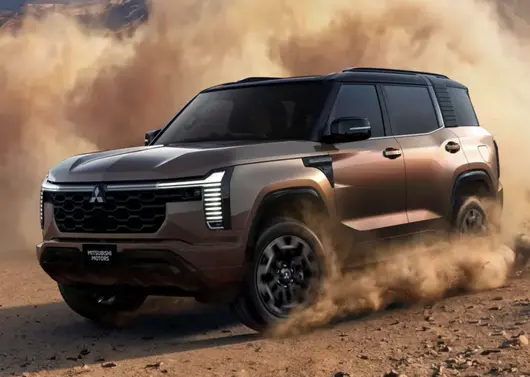
Design-wise, there is basically no major connection with the "Mountain Cat" Pajero we knew before, although the new car continues the family's signature rugged style. At the front, the new car adopts a split headlight design with vertically oriented daytime running lights on either side of the bumper and a horizontal light bar matrix layout inside. A through-type LED light strip connects the headlight groups, giving the overall look a more fashionable feel, leaning towards new energy vehicles. The large central grille features a blackened honeycomb layout for a sportier appearance, while the dual raised contours on the hood add a muscular look.
The body design also changes the impression of the Pajero among Chinese consumers. The overall lines are richer and more youthful. The segmented body creases are agile yet powerful. The body trim, wheel arches, and mirror housings all use black finishes, and the A, B, C, and D pillars along with the roof are painted black. The contrasting body color is more fashionable, and the silver trim on the C-pillar adds depth to the new car.

The rear also features a new through-type light group design, with taillight shapes echoing the headlights. The new car cancels the external spare tire design common in previous fourth-generation models. Combined with the octagonal tailgate, complex lines, and spoiler design at the bumper, it lacks the wildness and steadiness of the old models, instead interpreting sportiness, fashion, and technology.

After seeing the exterior, let's look at the interior. Like the exterior, the new car's interior design has no connection with previous models. The dual-screen combination of a floating LCD instrument cluster and a large infotainment screen brings plenty of technology and intelligence to the cabin. Below the large screen are air conditioning buttons, while the central instrument panel features a physical gear selector and 4WD knob. According to official images, the interior uses extensive leather material wrapping, and the overall premium feel is significantly better than the old models.

In terms of dimensions, the new car measures 4920/1925/1910mm in length, width, and height, with a wheelbase of 2870mm. Compared to the old model's 4900/1875/1900mm dimensions and 2780mm wheelbase, the new car sees improvements across the board. More importantly, the new car does not adopt the external spare tire design, meaning the actual length increase is greater than the specs suggest. Inside, it uses a three-row seven-seat layout, although the third-row seats are more suitable for occasional emergency use based on the parameters.

Regarding power, the new car will be equipped with a 2.4T diesel engine, generating a maximum of 204 horsepower, mated to an 8AT transmission.

Final Thoughts:
Combining current information, the new car's profile is clear, and its product positioning and trends are aimed at accommodating both "off-roading and family" needs. The new design is more fashionable and tech-focused, but it lacks the steadiness of before. It remains to be seen if everyone will still accept it.

Luaran lebih moden, dalaman lebih berteknologi: Imej Rasmi Mitsubishi Pajero Baharu Dilancarkan, Adakah Ia Masih Pilihan Ramai Peminat Off-Road?
Sama ada di dalam negara mahupun di luar negara, sesiapa yang berada dalam "komuniti off-road", nama "Kucing Gunung" semestinya diketahui, walaupun kini Mitsubishi telah meninggalkan pasaran China, walaupun ia telah berhenti pengeluaran selama 5 tahun, namun kini apabila menyebut kenderaan off-road, akan tetap secara tidak sengaja membawanya untuk dibandingkan. Dan hanya beberapa hari lalu, jenama Mitsubishi secara rasmi melancarkan imej rasmi model Pajero baharu, sebagai model generasi kelima, kenderaan baharu akan dihasilkan di Thailand, secara beransur-ansur merangkumi lebih 100 negara seperti ASEAN, Timur Tengah pada tahun depan.
Dari segi reka bentuk boleh dikatakan tiada terlalu banyak kaitan dengan "Kucing Gunung" Pajero yang kita fahami sebelum ini, namun kenderaan baharu masih meneruskan jalan keras yang dipegang oleh keluarga. Di bahagian hadapan, kenderaan baharu menggunakan reka bentuk kumpulan lampu yang berbeza sepenuhnya, bingkai di kedua-dua sisi direka dengan lampu harian menegak, dan dalaman menggunakan susun atur matriks jalur lampu mendatar; antara kumpulan lampu dilengkapi dengan jalur LED menyeluruh, secara keseluruhan nampak lebih moden, dan juga lebih cenderung kepada rasa kenderaan tenaga baru; Gril sedutan saiz besar di bahagian tengah menggunakan susun atur sarang lebah hitam, lebih menunjukkan sifat sukan, pada masa yang sama bentuk dua cembung di atas penutup enjin nampak lebih berotot.
Dari segi badan juga mengubah semula gambaran Pajero dalam hati masyarakat tempatan kita sebelum ini, garisan keseluruhan kenderaan akan lebih kaya, lebih muda; garisan lekuk badan yang berselang-seli cukup lincah, pada masa yang sama tidak kehilangan kekuatan, plat hiasan badan, pelekat roda serta cangkerang cermin sisi menggunakan warna hitam, pada masa yang sama tiang ABCD badan serta atap juga menggunakan cat hitam, badan warna kontras lebih moden, dan sokongan plat perak di tiang C, maka kenderaan baharu menambah beberapa tingkat.
Bahagian belakang juga menggunakan sepenuhnya reka bentuk kumpulan lampu menyeluruh, bentuk lampu belakang membentuk resonan dengan kumpulan lampu hadapan, dan kenderaan baharu membatalkan reka bentuk ban cadangan gantung luar yang dipasang pada model generasi keempat sebelum ini, bak muatan bersudut lapan disesuaikan dengan garis yang relatif kompleks serta reka bentuk spoiler di bahagian bingkai, memang tidak ada kegagahan dan ketenangan model lama itu, lebih banyak merupakan interpretasi sukan, fesyen serta rasa teknologi.
Lepas lihat luar, mari lihat dalaman sekali lagi, sama seperti luaran, reka bentuk dalaman kenderaan baharu boleh dikatakan tiada sebarang kaitan dengan model lama, paparan digital terapung + skrin pusat besar yang membentuk skrin ganda, membawa cukup rasa teknologi serta prestasi pintar ke dalam kenderaan, di bawah skrin besar dilengkapi dengan butang pengudaraan, kawasan papan pemuka tengah dirancang dengan tuas gear fizikal serta butang kuasa empat roda; pada masa yang sama menurut imej rasmi kelihatan, dalaman kenderaan baharu menggunakan skala besar bahan kulit dibalut, keseluruhan rasa tinggi ketara jelas lebih baik daripada model lama.
Dari segi saiz, panjang, lebar dan tinggi kenderaan baharu masing-masing 4920/1925/1910mm, jejari paksi 2870mm; berbanding model lama 4900/1875/1900mm, jejari paksi 2780mm, saiz keseluruhan kenderaan baharu semuanya telah menyaksikan peningkatan, yang lebih utama, kenderaan baharu tidak menggunakan reka bentuk ban cadangan gantung luar, ini juga bermaksud peningkatan saiz sebenar dari segi panjang kenderaan akan lebih baik daripada parameter; pada masa yang sama dalaman menggunakan susun atur tujuh tempat duduk tiga baris, namun mengikut parameter, tempat duduk baris ketiga jelas lebih sesuai untuk kegunaan kecemasan.
Dari segi kuasa, kenderaan baharu akan memuatkan enjin diesel 2.4T, kuasa maksimum 204 hp, dipasangkan transmisi 8AT.
Penutup:
Berdasarkan maklumat semasa, siluet kenderaan baharu memang jelas, penentuan produk serta kecenderapan, jelas masih berarah ke arah satu kenderaan memuatkan "off-road dan keluarga", reka bentuk yang lebih baru lebih moden, teknologi, namun tiada rasa tenang sebelum ini, tidak tahu adakah anda semua masih boleh menerimanya?

The Mitsubishi Pajero, once dominant in the off-road community, has officially returned after five years of production halt. The fifth-generation model takes up the flagship SUV flag for Mitsubishi once again, not only adopting a traditional body-on-frame ladder chassis structure but also featuring the Super Select 4WD-II four-wheel drive system, a 2.4-liter diesel engine, and a three-row seven-seater layout. The name that once accompanied countless off-road enthusiasts traversing the wilderness now returns in a brand new form. The new vehicle will be produced in Thailand, while models previously produced at the same Thailand factory also include the Mitsubishi L200/Triton pickup.

After four generations of development, the previous generation model was officially discontinued in 2021. In the Japanese market, Pajero production ended even earlier, in 2019. Since its first launch in 1982, the Pajero has accumulated production of over 3.29 million units, and this model was once sold in more than 170 countries and regions worldwide. In the 1990s, the Pajero was one of the important representative models in the off-road vehicle field. Meanwhile, the Pajero has also left a significant mark in motorsports: Mitsubishi began participating in the Dakar Rally in 1983 and eventually won the championship 12 times, including the glorious feat of winning 7 consecutive titles.

The design of the all-new Pajero clearly references the historical heritage of this series. The body adopts a square and upright design style, making the whole vehicle appear heavier and more powerful. Mitsubishi has also incorporated some historically significant design details. For example, the striking C-pillar design is reportedly intended to pay homage to the roll cage elements on the open-top first-generation Pajero models.

The hexagonal shape of the tailgate symbolizes the spare tire mounted on the exterior of the rear end in the past. However, the new model will no longer continue to mount a spare tire on the tailgate.

In terms of interior, Mitsubishi adopted a wide, horizontally laid-out dashboard design; the high-spec model consists of two 14.3-inch screens, while the entry-level version uses a 12.3-inch display.

The digital dashboard draws upon the classic triple-gauge layout of past Pajero models, while adding more modern information displays, including: altitude, compass direction, outside temperature, vehicle climb angle, and vehicle lateral tilt angle.

The all-new Pajero offers three rows of seats, accommodating up to 7 passengers in total. The second-row seats support forward and backward sliding within a 150 mm range, which not only facilitates passengers entering the third row but also allows flexible adjustment of the interior space according to actual needs. For third-row passengers, Mitsubishi has further increased headroom and legroom.

From a technical perspective, the new generation Pajero has undergone significant upgrades compared to previous models. The fifth-generation model reintroduces a high-strength ladder chassis structure; by using special steel and increasing the chassis structure cross-sectional area, the overall torsional and bending rigidity of the body has been improved.

Regarding suspension, the new car's front suspension uses a double-wishbone independent setup, while the rear suspension features a solid axle connected via a five-link structure and is equipped with coil springs. This design provides larger suspension travel and achieves superior wheel traction and vehicle cross-axle capability in complex off-road environments.

In terms of powertrain, the all-new Pajero is equipped with a 2.4-liter four-cylinder diesel engine, adopting variable geometry turbocharging technology, with the engine capable of outputting a maximum torque of 480 N·m. Currently, Mitsubishi has not yet announced specific power parameters. As a reference, the same diesel engine has a maximum power output of 204 hp in the Mitsubishi L200 pickup model. Regarding the transmission system, the new car matches a newly developed 8-speed automatic transmission and offers a sport mode.
In terms of off-road capability, Mitsubishi equips the new Pajero with a further upgraded Super Select 4WD-II super-select four-wheel-drive system, offering four drive modes, and also features the S-AWC Super All-Wheel Control system, which integrates multiple technologies such as Active Yaw Control, Traction Control System, Vehicle Stability Control, and ABS Anti-lock Braking System. Among them, the Active Yaw Control system enhances vehicle stability in different driving environments by precisely controlling brake intervention and adjusting power distribution between the left and right wheels of the front axle.

For different road conditions, the new Pajero offers seven driving modes, which adjust the vehicle's powertrain and stability control system strategies accordingly based on different terrain environments. Meanwhile, another feature of the all-new Pajero is the 3D Multi-Angle Monitor System, which collects images through four cameras and combines them with a 3D vehicle model to achieve a panoramic display of the vehicle's surrounding environment.
Additionally, the vehicle also offers a front chassis transparency function. When the driver selects the 4HLc or 4LLc mode, this function automatically activates, displaying images of the area below the front bumper and ahead of the vehicle; this view helps the driver observe obstacles that cannot be directly seen from the driving position.
It is reported that the all-new Pajero will first be produced in Thailand and is planned to launch in the local market in fiscal year 2026. Subsequently, this model will enter the Japanese and Australian markets. Starting from fiscal year 2027, Mitsubishi plans to gradually promote the new Pajero to approximately 100 countries and regions. In some markets where Pajero was previously sold under different names, the new model will also reinstate the name "Montero", although official pricing information has not yet been released.


Mitsubishi Pajero yang pernah mendominasi dunia off-road kembali secara rasmi setelah dihentikan produksinya selama lima tahun. Model generasi kelima mengangkat semula bendera Mitsubishi SUV flagship, tidak hanya menggunakan struktur kerangka tangga tanpa beban tradisional, tetapi juga dilengkapi sistem 4WD Super Select 4WD-II, enjin diesel 2.4 liter dan susun atur tiga baris tujuh tempat duduk. Nama yang pernah mendampingi ramai peminat off-road di alam liar kini muncul semula dengan penampilan yang sepenuhnya baru. Kereta baru akan dihasilkan di Thailand, dan model yang sebelumnya dihasilkan di kilang Thailand yang sama termasuk pikap Mitsubishi L200/Triton.
Model generasi sebelum ini setelah melalui perkembangan empat generasi model secara rasmi dihentikan produksinya pada tahun 2021. Dan di pasaran Jepun, pengeluaran Pajero lebih awal lagi berakhir pada tahun 2019. Sejak pertama kali diperkenalkan pada tahun 1982, jumlah pengeluaran terkumpul Pajero melebihi 3.29 juta unit, model ini pernah dijual di lebih daripada 170 negara dan wilayah di seluruh dunia. Pada tahun 1990-an, Pajero merupakan salah satu model perwakilan penting dalam bidang kenderaan off-road. Sementara itu, Pajero juga meninggalkan jejak yang mendalam dalam sukan perlumbaan: Mitsubishi mula menyertai Rali Dakar pada tahun 1983 dan akhirnya meraih kejuaraan keseluruhan sebanyak 12 kali, termasuk pencapaian cemerlang menjuarai secara berturut-turut selama 7 kali.
Rekaan Pajero baharu jelas merujuk kepada warisan sejarah siri kenderaan ini. Badan kenderaan menggunakan gaya rekaan yang bersudut dan tegak lurus, menjadikan keseluruhan kenderaan kelihatan lebih berat dan mempunyai rasa kekuatan yang lebih kuat. Mitsubishi juga menggabungkan beberapa reka bentuk sejarah yang bermakna. Contohnya, reka bentuk tiang C yang menonjol, dikatakan bertujuan untuk menghormati elemen bingkai penggulung pada model Pajero terbuka generasi pertama.
Dan pintu belakang menggunakan bentuk heksagon melambangkan tayar simpanan eksternal yang dipasang di bahagian belakang kenderaan pada masa lalu. Namun, model baharu tidak akan terus menggunakan tayar simpanan eksternal pada pintu belakang.
Dari segi dalaman, Mitsubishi menggunakan reka bentuk dashboard yang lebar dan susun atur mendatar, model tahap tinggi terdiri daripada dua skrin bersaiz 14.3 inci, manakala model peringkat permulaan menggunakan paparan skrin 12.3 inci.
Panel meter digital mengamalkan susun atur panel meter tiga unit klasik Pajero pada masa lalu, sambil menambah lebih banyak maklumat paparan moden, termasuk: ketinggian dari paras laut, arah kompas, suhu luaran, sudut pendakian kenderaan, sudut condongan sisi kenderaan.
Pajero baharu menawarkan tiga baris tempat duduk, boleh menampung kesemuanya 7 penumpang. Kursi baris kedua menyokong gelincir hadapan dan belakang dalam julat 150 milimeter, ini bukan sahaja memudahkan penumpang masuk ke baris ketiga, juga boleh menyesuaikan ruang dalaman kenderaan secara fleksibel mengikut keperluan sebenar. Bagi penumpang baris ketiga, Mitsubishi telah menambah ruang kepala dan ruang kaki.
Dari sudut teknologi, Pajero generasi baharu berbanding model sebelum ini telah mengalami pengisian yang ketara. Model generasi kelima menggunakan semula struktur kerangka tangga berketegasan tinggi, dengan menggunakan keluli khas serta meningkatkan saiz keratan rentas struktur kerangka, kekakuan puntiran keseluruhan dan kekakuan lentur badan kenderaan telah ditingkatkan.
Dari segi suspensi, suspensi hadapan kereta baharu menggunakan suspensi bebas double wishbone, suspensi belakang menggunakan gandar penuh yang disambungkan dengan struktur lima link dan dilengkapi dengan spring spiral. Reka bentuk ini dapat memberikan laluan suspensi yang lebih besar dan mencapai keupayaan terekat pada tanah serta keupayaan menyeberangi gandar silang yang lebih cemerlang dalam persekitaran off-road yang kompleks.
Dari segi sistem kuasa, Pajero baharu dilengkapi dengan satu enjin diesel empat silinder 2.4 liter dan menggunakan teknologi penambah tekanan geometri boleh ubah, enjin maksimum boleh output 480 Newton-meter tork puncak. Semasa ini Mitsubishi belum mengumumkan parameter kuasa yang spesifik. Sebagai rujukan, enjin diesel yang sama pada model pikap Mitsubishi L200 mempunyai kuasa maksimum 204 kuasa kuda. Dari segi sistem transmisi, kereta baharu menyepadukan sebuah transmisi automatik 8 kelajuan yang dibangunkan sepenuhnya baharu dan menyediakan mod sukan.
Dari segi keupayaan off-road, Mitsubishi telah melengkapkan Pajero baharu dengan sistem 4WD pilihan super Super Select 4WD-II yang telah dinaik taraf lagi, menyediakan empat mod pemacu dan dilengkapi dengan sistem kawalan roda empat super S-AWC, sistem ini menggabungkan: kawalan yaw aktif, sistem kawalan cengkaman, sistem kawalan kestabilan kenderaan, serta sistem brek anti-kunci ABS dan teknologi lain. Diantaranya, sistem kawalan yaw aktif melalui kawalan tepat masuk brek, mengatur pembahagian kuasa antara roda kiri dan kanan gandar hadapan, dengan itu meningkatkan kestabilan kenderaan dalam persekitaran memandu yang berbeza.
Dan untuk situasi jalan raya yang berbeza, Pajero baharu menyediakan tujuh mod memandu, mod memandu ini akan melakukan penyesuaian yang sewajarnya terhadap strategi sistem kuasa dan sistem kawalan kestabilan kenderaan mengikut persekitaran tanah yang berbeza. Sementara itu, satu lagi ciri khas Pajero baharu adalah sistem pantauan 3D pelbagai sudut, sistem ini mengumpul gambar melalui empat kamera dan digabungkan dengan model kenderaan tiga dimensi, mewujudkan paparan panoramik sekitar kenderaan.
Selain itu, kenderaan juga menyediakan fungsi penglihatan terowong lantai hadapan. Apabila pemandu memilih mod 4HLc atau 4LLc, fungsi ini akan dibuka secara automatik dan memaparkan imej di bawah bemper hadapan kenderaan serta kawasan di hadapan, sudut pandangan ini dapat membantu pemandu melihat kawasan halangan yang tidak dapat dilihat secara langsung dari posisi memandu.
Diketahui, Pajero baharu akan dihasilkan di Thailand terlebih dahulu dan dijadualkan dilancarkan di pasaran tempatan pada tahun kewangan 2026. Seterusnya, model ini akan memasuki pasaran Jepun dan Australia. Memulakan dari tahun kewangan 2027, Mitsubishi merancang secara beransur-ansur untuk mengiklankan Pajero baharu ke kira-kira 100 negara dan wilayah. Dan di beberapa pasaran yang sebelum ini menjual Pajero dengan nama yang berbeza, model baharu akan menggunakan semula nama "Montero" ini, semasa ini maklumat harga rasmi belum diumumkan.

In 2021, the last Pajero quietly rolled off the line at the Gifu factory in Japan. At that time, almost everyone thought the era belonging to the Pajero had come to an end. This lone mountain cat from the South American wilderness now only lives in memories and the second-hand market. However, today, Mitsubishi Motors officially unveiled the all-new Pajero, a generation legend, to the world in Tokyo. With a full 20 years of accumulation, it returns in a high-profile manner.

This is the fifth-generation Pajero. The new car is manufactured at Mitsubishi Motors' Thailand production base and will debut in the Thai market first. In fiscal year 2026, it will be launched in Japan and Australia. Starting from fiscal year 2027, it is planned to go on sale in approximately 100 countries globally, covering ASEAN, Latin America, Middle East, and other markets.

Regarding power, the new Pajero is equipped with a 2.4-liter turbocharged diesel engine, matched with an 8AT transmission. Maximum power is 204 hp, maximum torque is 480 Nm. The new car features Mitsubishi Selectric 4WD-II (SS4-II) and S-AWC Super All-Wheel Control integrated dynamic control system. It offers four modes: 2H rear-wheel drive, 4H full-time four-wheel drive, 4HLc locking center differential, and 4LLc low-range four-wheel drive lock.

The new car reintroduces a ladder-frame body-on-frame chassis (the previous generation Pajero used a unibody). The suspension configuration features front double-wishbone independent suspension, paired with a newly developed rear five-link solid axle structure. Mitsubishi proposed a unique development indicator: "Off-Road Comfort". It does not just require the vehicle to pass complex obstacles, but also reduces bumps from bad roads, optimizes the body vibration isolation structure, filters excess vibrations, and achieves a two-way balance between off-road capability and on-road driving quality.

Regarding appearance, the fifth-generation Pajero is built based on the "Grand Charisma" design concept. The entire vehicle uses powerful horizontal lines. The upright and substantial body posture continues the classic design genes. The flared and raised wheel arches intuitively highlight the performance orientation. The sculptural body surfaces give the whole vehicle a strong visual presence. The full-LED lights at the front adopt a new generation T-shaped design.


The overall length is 4920 mm, width 1925 mm, height 1910 mm, and wheelbase is 2870 mm. The entire side focuses on a box-style shape, with approach angle 30.4°, ramp breakover angle 22.6°, departure angle 25.8°. The rear end cancels the external spare tire, switching to a liftback tailgate, while also selecting a through-light group design.


The interior continues the first-generation iconic horizontal dashboard layout, balancing functionality with luxurious texture. The dual-screen UI design replicates many classic Pajero elements. The former three-dial mechanical instrument cluster has evolved into a modernized multi-functional Multi-Meter display, which can show altitude, heading, body pitch and roll angles, and 4WD system status in real-time. Key information during off-road travel is at a glance. The dashboard and door panels are covered with large-area soft materials. Stitching draws on traditional Japanese craftsmanship, textures are layered, bringing the premium feel that a flagship should have down to every detail touchable by fingertips.


Cabin quietness is the focus of improvement for this generation. Except for the windshield, front and rear doors all use acoustic glass. Noise-reducing materials are arranged at multiple points on the body to suppress wind noise and engine noise. It is equipped with a 12-speaker Yamaha co-developed audio system inside.

In terms of space, the fifth-generation Pajero adopts a three-row seven-seat layout, equipped with a seat ventilation system for natural heat dissipation of the seats as a whole, and also features three-zone automatic air conditioning and independent temperature adjustment.

In terms of safety, the new car is equipped with active safety configurations such as collision warning, emergency lane assist, cross-traffic alert, and adaptive cruise control. Additionally, the new car provides 8 airbags.

In the current market, off-road vehicles are constantly competing on refrigerators, TVs, and spacious sofas. The inclusion of motors further strengthens the performance of off-road models, yet gradually dilutes the most fundamental ability of "conquering roads". Adhering to the pure mechanics of "traditional methods", the all-new Pajero provides the answer for old-school off-road players: A truly excellent flagship off-road SUV should be able to commute safely on city roads and take the family out comfortably; and when needed, rush to unpaved remote destinations.

Regrettably, based on Mitsubishi's current product launch plans, this highly-anticipated hard-core flagship is temporarily unavailable in the domestic market, and domestic consumers currently have no way to experience this new Pajero through official channels. But this does not mean we lack quality hard-core choices. In recent years, local independent brands have risen rapidly in the hard-core off-road track, and a batch of powerful domestic hard-core off-road vehicles has emerged constantly. They also possess body-on-frame chassis, powerful 4WD capabilities, balancing home comfort and cross-country strength. They understand domestic consumers' yearning for outdoor exploration, and fully adapt to local road conditions and usage scenarios, providing a high-standard localized solution for off-road enthusiasts. However, for older generations of domestic consumers and users, the reliability, power, and stability brought by the names "Mountain Cat" or "Pajero" are deeply ingrained.



After fading from the market for many years, Mitsubishi has officially launched the all-new Pajero. The new car is positioned as a global flagship off-road SUV, based on a body-on-frame structure, equipped with a 2.4T diesel engine, and will be sold in 100 markets worldwide.

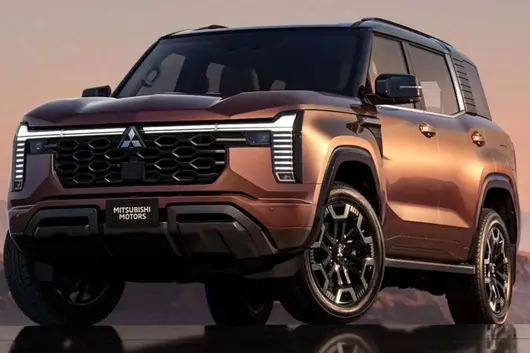
The new Pajero body is 4920mm long with a 2870mm wheelbase, dimensions directly competing with the Toyota Land Cruiser 250 series. The exterior adopts a boxy and rugged design language, the front face is a new family design, retaining the Mitsubishi three-diamond logo. A horizontal through-type LED daytime running light strip spans the entire front, with vertical LED light groups arranged on the left and right, highly recognizable. Large honeycomb-style black grille, paired with a heavy front bumper, with a black protective plate at the bottom. The front lines are straight and rugged, typical of hardcore off-road style.

The boxy and straight body profile features concave lines on the doors and a rugged body line. Doors are equipped with embedded steps for easy entry and exit; door handles are traditional pull-out type. Behind the windows are signature vertical decorative louvers, paying homage to the design of the old Pajero. Paired with large multi-spoke dual-tone off-road wheels, thick-walled tires, flared wheel arches, black fender flares, highlighting off-road attributes.

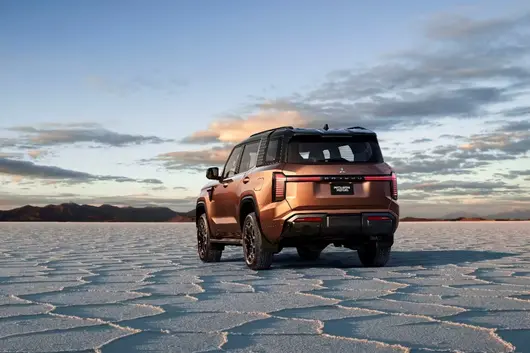
The rear is square and neat, with a through-type red taillight, vertical light groups on both sides, multi-layer bulb design inside the taillight. "PAJERO" lettering is printed in the middle of the taillight, with the Mitsubishi logo placed above. The rear bumper is thick, with a black bottom protective plate, and red reflectors embedded on both sides. The tailgate is an integrated design, no longer using the old spare tire mount solution.
Body colors available in Armor Copper Metallic and Phantom Blue Metallic (with gold accents).


In terms of interior, the new car adopts a three-row seven-seat layout, with significantly improved materials and craftsmanship, offering Camel leather with black inserts and fine stitching. In terms of tech configuration, high-spec models are equipped with dual 14.3-inch displays (low-spec is 12.3 inches), with 16 built-in theme backgrounds and the "Digital Tri-Gauge" paying homage to the old Pajero, which can display off-road data such as altitude, compass, temperature, pitch/roll angles. The audio system is from Yamaha, equipped with 12 speakers, dual amplifiers, and noise cancellation features.

In terms of sound insulation, measures such as acoustic glass are used, reportedly allowing normal conversation even at high speeds and in high-noise environments. Safety configurations include 8 airbags, MI-PILOT driving assistance kit, and 3D panoramic view (including transparent chassis function).

The chassis is based on the Triton ladder frame, but the suspension system has been exclusively tuned - front double wishbone independent suspension, rear five-link solid axle, tuning referenced Dakar Rally engineering experience. Ground clearance 230mm, approach angle 30.4 degrees, breakover angle 22.6 degrees, departure angle 25.8 degrees.

In terms of power, equipped with a 2.4-liter diesel engine (single variable geometry turbocharger), maximum torque 480 N·m (some specs are 470 N·m), matched with an 8-speed automatic transmission and permanent all-wheel drive system, equipped with Mitsubishi S-AWC Super Select 4WD (including AYC Active Yaw Control and seven terrain modes). Electric power options will be launched in the future.

The new car will be manufactured in Thailand, launching in Thailand, Japan, and Australia before the end of March 2027, then expanding to 100 markets including Southeast Asia, Latin America, and the Middle East. Some markets will use the Montero name. Mitsubishi stated "have not decided whether to introduce to the US", but may enter North America in some form before 2030. In addition, the Pajero will become a sub-brand, and K-Car models and compact SUVs will also be launched in the future.
As for domestic Chinese brands, Hardcore SUVs such as the Fang Cheng Bao Titanium Series, Tank Series, and BYD Yangwang U8 have already secured a share in the Chinese market. If the Pajero has the opportunity to enter the Chinese market in the future, it will face not only the Toyota Land Cruiser and Ford Bronco, but also these Chinese brands with significant advantages in electrification and intelligence. However, the Pajero has deep roots in the global market, especially in the Southeast Asian, Middle Eastern, and Australian markets, its brand appeal remains significant.

Selepas sekian lama menarik diri dari pasaran, Mitsubishi telah melancarkan Pajero baharu sepenuhnya. Kereta baharu ini diletakkan sebagai SUV off-road flagship global, berdasarkan struktur kerangka berasingan, dilengkapi enjin diesel 2.4T, dan akan dijual di 100 pasaran di seluruh dunia.
Pajero baharu mempunyai panjang badan 4920mm, wheelbase 2870mm, saiznya dibandingkan secara langsung dengan siri Toyota Land Cruiser 250. Reka bentuk luar menggunakan gaya yang tegas dan kotak, bahagian hadapan menggunakan reka bentuk keluarga yang sepenuhnya baharu, mengekalkan logo tiga berlian Mitsubishi. Jalur lampu harian LED mendatar yang menyeluruh merentasi seluruh bahagian hadapan, diselingi dengan kumpulan lampu LED menegak di kiri dan kanan, mempunyai pengenalpastian yang tinggi. Jejaring tengah hitam berstruktur sarang lebah bersaiz besar, dipadankan dengan penyangga hadapan yang berat, di bahagian bawah terdapat pelindung hitam. Garisan hadapan kenderaan adalah lurus dan tegas, merupakan gaya off-road yang kukuh yang tipikal.
Garisan luar badan kenderaan yang kotak dan lurus, pintu mempunyai garisan lekukan ke dalam, garis pinggang badan tegas. Pintu dilengkapi dengan pijakan terbenam, memudahkan masuk dan keluar; pemegang pintu adalah jenis tarik luaran tradisional. Di belakang tingkap terdapat reka bentuk keluli hiasan menegak yang beriklan, ini adalah reka bentuk untuk mengingati Pajero model lama. Dipadankan dengan roda off-road dua warna berbilang jejari bersaiz besar, tayar dinding tebal, fender meluas, pelindung roda hitam, menonjolkan sifat off-road.
Bahagian belakang kenderaan yang kotak dan rapi, lampu belakang LED merah menyeluruh, di kedua-dua sisi adalah kumpulan lampu jalur menegak, reka bentuk lampu dalaman berlapis. Di tengah lampu belakang dicetak penanda huruf PAJERO, di atasnya diletakkan logo Mitsubishi. Penyangga belakang tebal, dilengkapi dengan pelindung bawah hitam, lampu merah reflektif terbenam di kedua-dua sisi. Pintu belakang adalah reka bentuk satu kes, tidak lagi menggunakan skema tayar simpanan gantung model lama.
Warna badan disediakan Armor Copper Metallic dan Phantom Blue Metallic (dengan hiasan emas).
Dari segi dalaman, kereta baharu menggunakan susunan tujuh tempat duduk tiga baris, bahan dan penghasilan meningkat dengan ketara, menyediakan kulit warna Camel dipadankan dengan penyekat hitam dan jahitan halus. Dari segi konfigurasi teknologi, model pengesahan tinggi dilengkapi dengan dua paparan skrin 14.3 inci (model pengesahan rendah 12.3 inci), membina dalam 16 latar tema dan "tiga jam digital" mengingati Pajero model lama, boleh memaparkan data off-road seperti ketinggian, kompas, suhu, sudut pitch dan roll, dan sebagainya. Sistem audio datang dari Yamaha, dilengkapi dengan 12 pembesar suara, dwi penguat kuasa dan fungsi pampasan bunyi bising.
Dari segi penimbalan bunyi menggunakan langkah-langkah seperti kaca akustik, dikatakan dapat berbual dengan normal walaupun dalam persekitaran kelajuan tinggi dan bunyi bising. Konfigurasi keselamatan termasuk 8 beg udara, Kumpulan Bantuan Memandu MI-PILOT dan imej panorama 3D (termasuk fungsi lantai telus).
Kerangka berdasarkan kerangka trapezium Triton, tetapi sistem gantungan telah dikalibrasi secara eksklusif - gantungan hadapan dwi lengan garpu bebas, gantungan belakang lima link, kalibrasi merujuk kepada pengalaman kejuruteraan lumba Dakar. Jurang tanah 230mm, sudut hampiran 30.4 darjah, sudut laluan 22.6 darjah, sudut keberangkatan 25.8 darjah.
Dari segi kuasa, dilancarkan enjin diesel 2.4 liter (turbocharger dengan pekukungan tunggal), tork maksimum 480 Nm (sebahagian spesifikasi 470 Nm), disesuaikan dengan kotak gear automatik 8 kelajuan dan sistem pacuan empat roda sepanjang masa, dilengkapi Mitsubishi S-AWC super select 4WD (mengandungi kawalan AYC dan tujuh mod tanah). Akan mengeluarkan pilihan kuasa elektrik pada masa hadapan.
Kereta baharu akan dihasilkan di Thailand, dilancarkan terdahulu di Thailand, Jepun dan Australia sebelum akhir Mac 2027, kemudian berkembang ke 100 pasaran seperti Asia Tenggara, Amerika Latin dan Timur Tengah. Sebahagian pasaran akan menggunakan nama Montero. Mitsubishi menyatakan "belum memutuskan untuk memperkenalkan ke Amerika", tetapi mungkin memasuki Amerika Utara dalam bentuk tertentu sebelum 2030. Selain itu, Pajero akan menjadi sub-merek, pada masa hadapan akan mengeluarkan model kelas K-Car dan SUV kompak.
Dari segi merek China, siri Fang Cheng Bao Titanium, siri Tank, BYD Yangwang U8, dan lain-lain SUV kukuh telah menempati sebahagian daripada pasaran di Tiongkok. Jika Pajero pada masa hadapan ada peluang memasuki pasaran Tiongkok, ia akan berhadapan bukan sahaja Toyota Land Cruiser dan Ford Bronco, tetapi juga merek China ini yang mempunyai kelebihan jelas dalam elektrifikasi dan kecerdasan. Walau bagaimanapun, tapak Pajero di pasaran global adalah kukuh, terutamanya di pasaran Asia Tenggara, Timur Tengah dan Australia, kekuatan jenamanya masih tidak boleh dianggap remeh.

Pada tahun 2021, unit Pajero terakhir dihasilkan secara diam-diam di kilang Gifu Jepun, pada masa itu hampir semua orang fikir zaman Pajero telah tamat, Kucing Gunung anggun yang datang dari padang terbuka Amerika Selatan ini, kini hanya hidup dalam kenangan dan pasaran barang terpakai sahaja. Namun pada hari ini, Mitsubishi Motors secara rasmi mendedahkan Pajero generasi baharu yang paling penuh ini kepada dunia di Tokyo, membawa kembali satu legenda selama 20 tahun penuh, kembali secara mencolok.
Ini adalah Pajero generasi kelima, kereta baharu ini diilakkan di pangkalan pengeluaran Mitsubishi Motors Thailand, ia akan melangkah ke pasaran Thailand dahulu, sepanjang Tahun Kewangan 2026 akan mula dilancarkan di Jepun dan Australia. Bermula Tahun Kewangan 2027, dirancang untuk dilancarkan di kira-kira 100 negara di seluruh dunia, meliputi ASEAN, Amerika Latin, Timur Tengah dan pasaran lain.
Dari segi kuasa, Pajero baharu dilengkapi enjin diesel turbo 2.4 liter, padan dengan gearbox 8AT, kuasa maksimum 204 hp, tork maksimum 480 Nm, kereta baharu mempunyai sistem pemacu empat roda pilihan ultra-II (SS4-II) Mitsubishi dan sistem kawalan integrasi dinamik Super All-Wheel Control (S-AWC). Menyediakan empat mod: 2H pemacu belakang, 4H pemacu empat roda masa penuh, 4HLc kunci pembeza pusat, 4LLc kunci pemacu empat roda laju rendah.
Kereta baharu menggunakan semula kerangka tangga bukan bawaan (generasi sebelumnya Pajero adalah bawaan), konfigurasi suspensi menggunakan suspensi double wishbone hadapan bebas, disepadukan dengan struktur gandar belakang lima link baru dibangunkan. Mitsubishi mencadangkan indeks pembangunan unik iaitu "Selesa Off-Road". Bukan sahaja meminta kenderaan boleh melalui halangan kompleks, malah perlu mengurangkan gegaran yang dibawa oleh jalan buruk, mengoptimumkan struktur peredam getaran badan, menapis gegaran berlebihan, mencapai keseimbangan dua hala antara keupayaan off-road dan kualiti pemanduan jalan raya.
Dari segi rupa luar, Pajero generasi kelima dibina berdasarkan reka bentuk "Grand Charisma", keseluruhan kenderaan menggunakan garisan mendatar yang penuh kekuatan, postur badan tegak dan tebal melanjutkan gen reka bentuk klasik, pelana roda yang membesar dan melonjak secara visual menunjukkan取向 prestasi, permukaan badan yang penuh patung, memberikan kenderaan keseluruhan aura visual yang kuat. Lampu LED seluruh di bahagian hadapan menggunakan reka bentuk bentuk T generasi baharu.
Panjang keseluruhan 4,920 mm, lebar 1,925 mm, tinggi 1,910 mm, jarak as 2,870 mm, sisi keseluruhan menonjolkan bentuk kotak, sudut pendekatan 30.4°, sudut lintang 22.6°, sudut pergi 25.8°. Bahagian belakang menghapuskan ban simpanan gantung luar, menggunakan pintu belakang model liftgate, serta memilih bentuk lampu menyeluruh.
Interior meneruskan susun atur papan pemuka melintang ikonik generasi pertama, fungsi dan kualiti kemewasan diimbangi. Reka bentuk UI skrin berganda banyak mereplikasi elemen klasik Pajero, papan instrumen mekanikal tiga bulatan dahulu, berevolusi kepada papan pemuka Multifungsi Multi-Meter moden, boleh memaparkan ketinggian, arah perjalanan, sudut condong dan condong badan, keadaan kerja sistem pemacu empat roda secara masa nyata, maklumat penting sepanjang perjalanan off-road dapat dilihat dengan jelas. Papan pemuka dan panel pintu dibalut dengan bahan lembut secara luas, jahitan merujuk kepada kraf tangan tradisional Jepun, tekstur kaya dengan lapisan, menempatkan rasa premium yang sepatutnya bagi model flagship ke setiap butiran yang boleh disentuh dengan hujung jari.
Ketenangan dalaman kenderaan adalah arah utama yang diperbaiki pada generasi ini, selain cermin depan, pintu hadapan dan belakang menggunakan kaca akustik sepenuhnya, bahan mengurangkan bunyi diletakkan di banyak titik seluruh badan kenderaan, mengurangkan bunyi angin, bunyi enjin. Sistem audio yang dibangunkan bersama Yamaha dengan 12 pembesar suara dalam kenderaan.
Dari segi ruang, Pajero generasi kelima menggunakan susun atur tujuh tempat duduk tiga baris, dilengkapi dengan sistem pengudaraan kerusi, penyejukan semula jadi keseluruhan kerusi, dan dilengkapi dengan pendingin udara automatik tiga zon dan pengaturan suhu bebas.
Dari segi keselamatan, kereta baharu dilengkapi dengan amaran perlanggaran, bantuan lorong kecemasan, amaran lalu lintas persimpangan, serta sistem kruise adaptif dan peralatan keselamatan aktif lain. Selain itu, kereta baharu menyediakan 8 beg udara.
Dalam pasaran semasa, kenderaan off-road semakin bersaing dengan peti sejuk, TV, Sofas Besar, sertaan motor membuat prestasi model off-road semakin bertambah, tetapi perlahan-lahan mengurangkan keupayaan "menakluki jalan" yang paling asas. Meneguh mesin tulen "Metode Tradisional", Pajero baharu memberikan jawapan kepada pemain off-road lama: Sebuah SUV off-road flagship yang benar-benar hebat, sepatutnya mampu berkerja lancar di jalan bandar, membawa keluarga bepergian selesa; dan apabila diperlukan, menuju ke tempat jauh tanpa jalan berturap.
Yang mengecewakan, daripada pelan pelancaran produk yang diumumkan oleh Mitsubishi pada masa ini, papan pemuka keras yang diharapkan ini, sementara tiada kaitan dengan pasaran domestik, pengguna domestik sementara tidak mempunyai cara untuk merasai Pajero baharu ini di saluran rasmi. Tetapi ini tidak bermakna kita kekurangan pilihan keras berkualitas. Dalam beberapa tahun kebelakangan ini, jenama tempatan baharu berkembang pesat di litar off-road keras, banyak model off-road keras buatan negara yang berdaya saing muncul. Mereka mempunyai kerangka bukan bawaan, keupayaan pemacu empat roda yang hebat, menyeimbangkan keselesaan rumah dan kekuatan penerobosan, memahami keinginan pengguna domestik terhadap petualangan luar, serta sesuai dengan keadaan jalan tempatan dan skenario penggunaan, memberikan penyelesaian tempatan bermutu tinggi kepada pencinta off-road, tetapi bagi pengguna generasi lama domestik, nama Serval atau Pajero memberikan kebolehpercayaan, kekuatan, kestabilan yang mendalam dalam fikiran.






© 2024 Bitauto.com. All Rights Reserved.
Bitauto (www.yiche.com and www.bitauto.com) is one of the most visited automotive websites in China. We provide detailed info on Chinese car brands available in your area. Please note that the information provided on this website is based on publicly available data and is for reference only. It may not be fully updated or accurate at all times.


