

HomeMondeo

Search History
Popular Searches
Dealer Login / Sign Up

16 years ago, Geely bought Volvo from Ford.
At that time, many people's first reaction was not admiration, but worry: a Chinese private car company suddenly taking over a European luxury brand, was this an overseas acquisition, or simply spending money to buy a master to worship?

16 years later, the story circled back to Ford.This time, however, the positions of the people sitting at both sides of the negotiation table were slightly different.
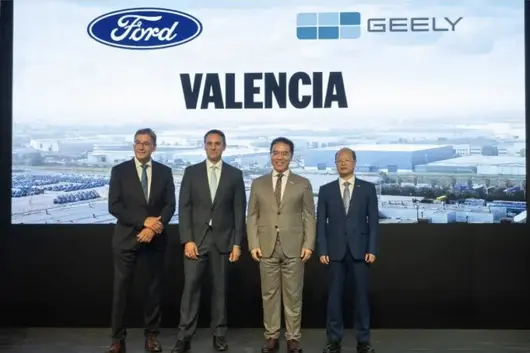
On July 23, Ford and Geely announced they will establish a joint venture company targeting the European market around the Valencia, Spain factory.Ford holds about 66%, Geely holds about 34%, both parties will produce multi-energy models of Ford and Geely brands here. According to the plan, two Geely new energy SUVs will be rolled off the line in 2028, and both parties will jointly develop a new car that offers pure electric, plug-in hybrid, and extended-range versions.

So strictly speaking,Geely did not buy the Ford factory with people and land as a package deal.
But what is most worth looking at is not who has a few more percentage points on the equity table, but who needs whom more.
The Valencia factory has an annual capacity of about 500,000 vehicles and was once one of Ford's most important manufacturing bases in Europe, producing a long list of models familiar to European consumers such as Fiesta, Mondeo, Galaxy. However, now the factory mainly relies on Kuga to maintain production, capacity utilization is only about 30%, and production volume has dropped by more than 70% compared to 2019.

A factory capable of producing 500,000 cars is now waiting for orders most of the time. Machines are still there, workers are still there, supply chains are still there,but there aren't enough cars to sell.
It is like an old restaurant that once had people queuing for two hours to eat; the kitchen, tables and chairs, waiters, nothing was missing, but finally discovered there were only three tables of guests in the hall.
At this time, Geely pushed the door and walked in.Not here to eat, but bringing menus, chefs, and a group of new customers, asking Ford: Your kitchen is empty anyway, why don't we partner up?
This is the really interesting part of this news. In the past, Chinese car companies going to Europe were usually there to learn. Learn how Europeans do design, learn how Germans tune chassis, learn how century-old car companies manage supply chains. If really can't learn, directly hire a few designers, chassis engineers, and sales executives back.

Chinese cars at that time were like students who suddenly made money, searching the world for famous teachers. European car companies sat on the podium, collecting tuition fees while being somewhat condescending.
In 2010, Geely acquired Volvo, which was the most representative transaction under this historical background. Why did Ford sell Volvo back then? Because after the financial crisis, they lacked money and needed to contract their frontline. Why did Geely buy? Because it needed brands, technology, and a mature global system.
That was a standard exchange of Chinese capital for European technology.
But the logic of today's Valencia cooperation has been reversed. What Ford needs from Geely is not just money,but new energy products, vehicle platforms, development speed, and orders that can fill the factory again.
In other words, 16 years ago Geely bought a European luxury brand from Ford; 16 years later, Ford is starting to invite Geely back to help solve what cars the European factory should actually build.

This is not simply "feng shui goes in cycles", but a rearrangement of power relations in the automotive industry. Because for an automotive company, what is truly dangerous has never been selling fewer cars, but gradually losing the ability to define the next car.
Factory idleness is just the appearance.Behind the appearance is Ford's awkwardness in Europe's new energy transformation.
In the past few years, Ford has done a lot of things in Europe. It cooperated with Volkswagen, launching Explorer EV and Capri EV based on Volkswagen's MEB platform; also cooperated with Renault, hoping to jointly develop cheaper small electric vehicles; now inviting Geely into Valencia.

Cooperation is certainly not wrong. The automotive industry is inherently a highly collaborative industry, no car company can manufacture everything from chips to tires by itself.
But when a century-old car company's new products rely more and more on others to provide platforms, technology, or capacity solutions, things are not as easy as "open cooperation".It shows that Ford is using partners to make up for its speed and cost shortcomings in European new energy products.

Past Ford, others came to borrow platforms, factories, brands. Present Ford, started looking for partners everywhere. Volkswagen handles part of the pure electric platform, Renault helps solve small electric vehicles, now Geely brings new energy SUVs and new platforms into the Spanish factory.
Those who don't know might think Ford pulled a group chat in the auto industry, the group name being "European Business Self-Help Mutual Aid Society".
And Geely choosing to enter Valencia at this time is absolutely not doing charity in Europe.
Chinese car companies going overseas, the simplest stage, is to load cars onto ships from domestic and ship them to Europe to sell. But with tariffs, local manufacturing rules, and political reviews increasing, pure exports are becoming a business with higher costs and lower certainty.
The EU currently still implements countervailing measures on pure electric vehicles produced in China, and is also discussing more clear "Made in Europe" requirements.

So now what Chinese car companies are thinking is no longer "how to sell cars to Europe",but "how to make themselves part of the local European industry". That is exactly the purpose behind BYD poaching a former Hungarian foreign minister; Geely's cooperation with Ford in the Spanish Valencia factory today is the same.
After all, building a factory from scratch is like registering a new account again. But entering a factory that Ford has operated for many years is like taking over an old account with real-name certification, credit records, and lists of local government and union friends.

What is truly valuable is not those stamping machines in the factory building, but the workers behind them, suppliers, certification experience, and interest relationships formed with the local government and community.
In the past, what Europe feared most was whether Chinese cars would take away Europeans' jobs. Now a slightly awkward picture has emerged,if Chinese car companies don't come, some European workers' jobs will be even harder to keep.
Europe is adding tariffs on Chinese EVs on one side, worrying that Chinese brands will impact the local industry; on the other side, welcoming Chinese models into local factories, because factories need orders, local areas need tax revenue, workers need jobs.
What they say on their mouths is "prevent industrial hollowing out", but their bodies honestly ask: When can those two models of SUVs go on the production line?
However, seeing this, don't rush to open champagne yet.
Chinese car companies walking into European factories does not mean they have obtained permanent property rights from then on.On the contrary, the troubles Chinese enterprises have encountered overseas in the past year and a half are already so many that they could almost shoot an international business war serial drama alone.

The UK government forcibly nationalized British Steel under China's Jingye Group; The Netherlands government implemented rare operational intervention on Nexperia under Wingtech Technology; Panama Supreme Court ruled contracts invalid for companies under Hutchison Whampoa operating two canal ports; Australian government clearly promoted Darwin Port to return to national control, Landbridge Group holding 99-year lease has launched legal action.
The resource countries are not idle either.Niger expelled three Chinese oil company executives, wanting to avoid debt; Indonesia, after relying on Chinese capital and technology to become a global nickel industry center, started tightening ore quotas, raising taxes and fees, adjusting pricing methods, hoping to keep more profit and resource control rights in its own hands.

The most uncomfortable is India, planning to maintain strict review for Chinese enterprises for a long time, BYD was recently investigated due to import parts tariff issues. The Indian government also issued a 650 million tax bill to BYD.
Looking at these things together, it is indeed easy to feel a sense of an approaching storm.
It seems as soon as Chinese enterprises prepare to go out on a large scale, the whole world starts closing doors and changing locks, then tells you, sorry, recently the four words "National Security" are a bit busy, ports are managed by it, chips are managed by it, steel is managed by it, mines are also managed by it.
But this is exactly the proof that Chinese enterprises have truly started globalization.
In the past, Chinese companies had less presence overseas, of course not so much friction. You just sell some goods, others treat you as a supplier; when you start buying factories, getting ports, controlling resources, building supply chains, even affecting a country's employment and industrial security, the way others look at you naturally changes.

A person who never goes to sea certainly will not encounter storms at sea. But this cannot prove the shore is safer, it can only prove he can never reach the other shore.
So the question has never been whether Chinese enterprises should go overseas or not,the way of going overseas must be upgraded.
In the past, Chinese enterprises were best at calculating production costs, how much a battery costs, how long it takes for a car to roll off the line, how much efficiency can be improved.
In the future, we also have to learn to calculate political costs, whether the government will change, whether industrial policy will turn, whether the boundary of "National Security" will suddenly expand, after contract disputes, whether local laws and arbitration mechanisms are reliable.
From this angle, looking at the joint venture between Geely and Ford, it is even more interesting.
Ford holds 66%, Geely holds 34%, on the surface Geely has no control, not enough "to feel proud". But this may exactly be a design where courage and wisdom coexist.

Geely did not buy a European factory alone, then hang a sign at the door announcing flag planting success, but kept Ford on the ship, kept Spanish workers on the production line, tied local suppliers, government tax revenue and employment into the project.
If someone really wants to overturn the table in the future, those whose feet will be hit first are not just Geely, but also Ford, local unions, parts enterprises, and families relying on this factory to eat.
This is mature globalization.It is not walking to a country, declaring this belongs to me from now on; but making more and more locals discover that if this project is gone, they will also feel the pain.
So these recent overseas frictions are certainly worth being vigilant, but not worth concluding "Chinese enterprises should not go overseas".

The larger the contact surface, the more friction points there are naturally. The heavier the assets Chinese enterprises take out, the more critical the industries entered, the more resistance encountered will not just be commercial competition, but become a mixed question of law, politics, public opinion, and national security.
This is very troublesome, but it is also an unavoidable path.
16 years ago, Geely bought Volvo from Ford, buying a ticket to enter the global automotive industry.
16 years later, Geely walked into Ford's European factory, bringing not just money, but products, technology, efficiency, and orders.
In the past, Chinese cars going overseas, they sold cars. In the future, what truly needs to be exported is a complete car-making method, and the ability to survive in unfamiliar rules.
The thing European cars worried most about has indeed happened. Chinese car companies not only drove cars into the European market, but also started to embed themselves into the production lines of the European automotive industry.
But for Chinese enterprises, the real test has just begun.
Selling cars is just the first step. True globalization is walking outwards while getting beaten, while learning how not to get beaten for nothing.
16 tahun lalu, Geely membeli Volvo dari tangan Ford.
Pada masa itu, reaksi pertama ramai bukan kekaguman, sebaliknya kebimbangan: Sebuah syarikat automotif swasta China, tiba-tiba mengambil alih sebuah jenama mewah Eropah, adakah ini pembelian asing, ataukah membayar wang untuk membawa nenek moyang pulang untuk disembah?
16 tahun kemudian, cerita itu kembali kepada Ford.Hanya kali ini, orang yang duduk di kedua-dua sisi meja rundingan, posisinya sudah agak berbeza.
23 Julai, Ford dan Geely mengisytiharkan bahawa mereka akan menubuhkan sebuah syarikat patuh yang bertujuan untuk pasaran Eropah di sekitar kilang Valensia, Sepanyol.Ford memegang kira-kira 66% saham, Geely memegang kira-kira 34% saham, kedua-dua pihak akan menghasilkan pelbagai model enajeri berkadar jenama Ford dan Geely di sini. Mengikut pelan, dua model SUV tenaga baharu Geely akan keluar dari garisan pengeluaran pada 2028, kedua-dua pihak juga akan membangunkan secara bersama sebuah kereta baharu yang menawarkan versi elektrik tulen, hibrid boleh dicas dan range extender.
Jadi secara ketat,Geely tidak membeli kilang Ford dengan orang dan tanah sebagai satu bungkusan.
Tetapi satu perkara yang paling patut dilihat, sebenarnya bukan berapa peratus lebih pada jadual ekuiti, tetapi siapa yang lebih memerlukan siapa.
Kapasiti tahunan kilang Valensia adalah kira-kira 500,000 kenderaan, pada masa dahulu merupakan salah satu tapak pembuatan terpenting Ford di Eropah, pernah menghasilkan Fiesta, Mondeo, Galaxy dan banyak lagi model yang dikenali ramai oleh pengguna Eropah. Namun kini, kilang ini bergantung kepada Kuga untuk mengekalkan pengeluaran, kegunaan kapasiti hanya sekitar 30%,产量相比 2019 年 sudah menurun lebih 70%.
Sebuah kilang yang boleh mengeluarkan 500,000 kenderaan, kini kebanyakan masa menunggu order. Mesin masih ada, pekerja masih ada, rantai bekalan masih ada,hanya kereta tidak cukup dijual.
Ini sama seperti sebuah restoran lama yang pernah perlu beratur dua jam untuk makan, dapur, meja kerusi, pelayan semuanya tidak kurang, akhirnya ditemukan bahawa di dewan hanya ada tiga meja tetamu.
Pada masa ini, Geely mendorong pintu masuk.Bukan untuk makan, tetapi membawa senarai menu, tukang masak dan sekumpulan pelanggan baru, bertanya kepada Ford: Dapur kosong Anda juga kosong, tidak baik kalau kita berkongsi?
Inilah bahagian paling menarik berita ini. Dahulu syarikat automotif China pergi ke Eropah, biasanya untuk belajar. Belajar bagaimana orang Eropah melakukan reka bentuk, belajar bagaimana orang Jerman menyetel chassis, belajar bagaimana syarikat automotif seratus tahun mengurus rantai bekalan. Jika benar-benar tidak boleh belajar, terus merekrut beberapa pereka, jurutera chassis dan eksekutif jualan pulang.
Pada masa itu, automotif China, seperti seorang pelajar yang baru dapat wang, beraya mencari guru mahir. Syarikat automotif Eropah duduk di atas podium, sambil mengambil yuran sekolah, sedikit banyak agak merendahkan.
Geely mengambil alih Volvo pada 2010, merupakan satu transaks yang paling representatif di bawah latar belakang zaman ini. Mengapa Ford menjual Volvo pada masa itu? Kerana selepas krisis kewangan mereka kurang wang, perlu menarik balik lini. Mengapa Geely membeli? Kerana perlu jenama, teknologi dan sistem global yang matang.
Itu adalah pertukaran modal China dengan teknologi Eropah yang piawai.
Tetapi kerjasama Valensia hari ini, logik sudah berbalik. Ford perlu daripada Geely, bukan sekadar wang,melainkan produk tenaga baharu, platform model, kelajuan pembangunan, dan order yang boleh memenuhi semula kilang.
Dengang kata lain, 16 tahun lalu Geely membeli sebuah jenama mewah Eropah dari tangan Ford; 16 tahun kemudian, Ford mulai mengajak Geely pulang, membantu dirinya menyelesaikan masalah kilang Eropah sebenarnya harus menghasilkan kereta apa.
Ini bukan sekadar "perputaran nasib", tetapi satu penyusunan semula hubungan kuasa industri automotif. Kerana bagi sebuah syarikat automotif, yang benar-benar berbahaya bukan kurang menjual sebuah kereta, tetapi perlahan-lahan kehilangan keupayaan menentukan kereta seterusnya.
Kilang terbiar, hanyalah fenomena.Di belakang fenomena, adalah keraguan Ford dalam transformasi tenaga baharu Eropah.
Beberapa tahun kebelakangan ini, Ford di Eropah telah membuat banyak perkara. Ia bekerjasama dengan Volkswagen, berdasarkan platform MEB Volkswagen mengeluarkan Explorer EV dan Capri EV; kemudian bekerjasama dengan Renault, berharap membangunkan kereta elektrik kecil yang lebih murah; sekarang sekali lagi membawa Geely masuk Valensia.
Kerjasama sememangnya tidak salah. Industri automotif asalnya adalah industri yang sangat kolaboratif, tiada syarikat automotif boleh membuat sendiri dari cip hingga tayar.
Tetapi apabila produk baharu syarikat automotif seratus tahun semakin bergantung pada orang lain menyediakan platform, teknologi atau pelan kapasiti, perkara tidak lagi mudah seperti "kerjasama terbuka" begitu sahaja.Ia menunjukkan Ford sedang menggunakan rakan kongsi, membaiki kelemahan kelajuan dan kos dalam produk tenaga baharu Eropah.
Ford dahulu, adalah orang lain yang meminjam platform, meminjam kilang, meminjam jenama. Ford sekarang, mulai mencari rakan kongsi di mana-mana. Volkswagen bertanggungjawab sebahagian platform elektrik tulen, Renault membantu menyelesaikan kereta elektrik kecil, sekarang Geely membawa SUV tenaga baharu dan platform baru masuk kilang Sepanyol.
Yang tidak tahu, sangka Ford telah membuat kumpulan dalam industri automotif, nama kumpulan itu "Kumpulan Bantuan Dan Selamatkan Perniagaan Eropah".
Dan Geely memilih pada masa ini masuk Valensia, juga bukan semata-mata pergi ke Eropah untuk beramal kebajikan.
Syarikat automotif China keluar negeri, fasa paling mudah, adalah memuatkan kereta dari dalam negara ke atas bot, hantar ke Eropah jualan. Tetapi dengan tarif, peraturan pembuatan tempatan dan semakan politik yang semakin banyak, pengeluaran tulen sedang menjadi bisnes dengan kos lebih tinggi, kepastian lebih rendah.
Uni Eropah ketika ini masih melaksanakan langkah anti subsidi bagi kereta elektrik tulen yang dihasilkan di China, pada masa sama juga membincangkan keperluan "pembuatan Eropah" yang lebih jelas.
Maka sekarang syarikat automotif China berfikir, bukan lagi "bagaimana menjual kereta ke Eropah",melainkan "bagaimana menjadikan diri sendiri sebahagian industri tempatan Eropah". Tujuan BYD mencabut bekas menteri luar Hungary adalah sedemikian, Geely hari ini bekerjasama kilang Valensia Sepanyol dengan Ford juga sedemikian.
Memang, membina kilang sendiri dari sifar, seperti mendaftar akaun baharu. Tetapi masuk kilang Ford yang telah beroperasi bertahun-tahun, seperti mengambil alih akaun lama yang disahkan nama, ada rekod kredit, dan senarai kawan kerajaan tempatan dan serahan pekerja.
Yang benar-benar bernilai bukan beberapa mesin pengejan di dalam bangunan kilang, tetapi pekerja di belakangnya, penyedia bekalan, pengalaman pengesahan, dan hubungan kepentingan yang terbentuk dengan kerajaan tempatan dan masyarakat.
Dahulu Eropah paling bimbang, adakah automotif China akan merebut mangkuk nasi orang Eropah. Kini muncul satu gambar agak pelik,syarikat automotif China tidak datang, beberapa mangkuk nasi pekerja Eropah malah lebih sukar dijamin.
Eropah sebelah menambah tarif pada kereta elektrik China, bimbang jenama China mengganggu industri tempatan; sebelah lagi menyambut masuk kereta model China ke kilang tempatan, kerana kilang perlu order, kawasan perlu cukai, pekerja perlu bekerja.
Yang di mulut mengatakan "mencegah pengkosongan industri", badan sangat jujur bertanya satu soalan, dua model SUV anda, bila boleh masuk garisan pengeluaran?
Walau bagaimanapun, melihat sampai sini jangan tergesa-gesa buka cawan sampanye.
Syarikat automotif China masuk kilang Eropah, tidak sama dengan daripada sekarang memegang hak milik kekal.Justru sebaliknya, syarikat China tahun lebih satu akhir-akhir ini masalah yang dihadapi di luar negara, sudah banyak sehingga boleh secara berasingan merakam satu drama siri perang dagangan antarabangsa.
Kerajaan Britain secara paksa memilikikan semula Britain Steel di bawah kumpulan Jingye China; Kerajaan Belanda melaksanakan campur tangan operasi jarang sekali pada Nexperia di bawah Wingtech; Mahkamah Rayuan Tertinggi Panama memutuskan kontrak pengendali dua pelabuhan terusan di bawah Hutchison adalah tidak sah; Kerajaan Australia secara jelas mendorong Darwin Port kembali kepada kawalan negara, Lanqiao Holdings yang memegang sewa 99 tahun sudah memulakan tindakan undang-undang.
Di sebelah negara sumber juga tidak berdiam diri.Niger mengusir tiga eksekutif syarikat minyak China, ingin berhutang; Indonesia bergantung kepada modal dan teknologi China menjadi pusat industri nikel global, kemudian mulai mengemas semula kuota bijih, menaikkan cukai dan yuran, menyesuaikan cara penetapan harga, berharap mengekalkan lebih banyak keuntungan dan kawalan sumber di tangan sendiri.
Yang paling sukar untuk ditahan adalah India, merancang mengekalkan semakan ketat terhadap syarikat China untuk jangka masa panjang, BYD baru-baru ini kerana isu cukai komponen import telah disiasat. Kerajaan India juga memberikan BYD sebil cukai bernilai 650 juta.
Apabila perkara ini dilihat bersama-sama, memang mudah memunculkan rasa badai akan datang.
Seperti syarikat China baru bersedia keluar secara besar-besaran, seluruh dunia mula menutup pintu, mengganti kunci, kemudian memberitahu anda, maaf, "keselamatan negara" empat perkataan agak sibuk, pelabuhan dikawal olehnya, cip dikawal olehnya, besi dikawal olehnya, bijih juga dikawal olehnya.
Tetapi ini tepat sekali adalah bukti syarikat China benar-benar mula melakukan globalisasi.
Dahulu syarikat China di luar negara kehadiran tidak begitu kuat, sememangnya tidak begitu banyak gesekan. Anda hanya menjual barangan, orang lain menganggap anda pembekal; Apabila anda mulai membeli kilang, memegang pelabuhan, mengawal sumber, membina rantai bekalan, malah mempengaruhi pekerjaan dan keselamatan industri sebuah negara, pandangan orang lain terhadap anda semula jadi berubah.
Seorang yang tidak pernah pergi ke laut, memang tidak akan menghadapi ombak di atas laut. Tetapi ini tidak boleh menunjukkan darat lebih selamat, hanya menunjukkan dia tidak akan pernah sampai ke seberang.
Maka masalah bukan sama ada syarikat China masih perlu keluar negeri,melainkan kaedah keluar negeri perlu diunggulkan.
Dahulu syarikat China paling mahir mengira kos pengeluaran, sekeping bateri berapa wang, sebuah kereta berapa lama keluar garisan, kecekapan boleh tingkatkan beberapa peratus.
Seterusnya juga mesti belajar mengira kos politik, kerajaan akan bertukar pemerintahan, dasar industri akan berubah arah, had "keselamatan negara" akan tiba-tiba meluas, apabila kontrak keluar perbezaan, undang-undang tempatan dan mekanisme arbitrase sebenarnya boleh dipercayai atau tidak.
Dari sudut ini melihat semula Geely dan Ford patuh, sebaliknya lebih menarik.
Ford memegang 66% saham, Geely memegang 34%, secara nampaknya Geely tidak mempunyai kawalan, kurang "bangga". Tetapi ini mungkin sekali adalah desain yang serentak mempunyai keberanian dan kebijaksanaan.
Geely tidak membeli sendiri sebuah kilang Eropah, kemudian gantung papan di pintu mengisytiharkan menegak bendera kejayaan, tetapi meninggalkan Ford di atas bot, meninggalkan pekerja Sepanyol di garisan pengeluaran, memasukkan penyedia tempatan, cukai kerajaan dan pekerjaan dalam projek.
Nanti benar-benar ada orang mahu menggulingkan meja, yang tidak hanya Geely yang kaki akan tersangkut, tetapi juga Ford, serahan pekerja tempatan, syarikat komponen, dan keluarga yang bergantung kilang ini untuk makan.
Inilah globalisasi matang.Bukan berjalan masuk sebuah negara, mengisytiharkan selepas ini tempat ini sudah menjadi milik saya; sebaliknya membiarkan lebih banyak orang tempatan mengetahui, projek ini jika tiada, mereka juga akan rasa sakit.
Maka gesekan luar negara baru-baru ini, sememangnya bernilai berhati-hati, tetapi tidak bernilai kerana itu membuat kesimpulan "syarikat China tidak sepatutnya keluar negeri".
Kawasan hubungan semakin luas, titik gesekan semula jadi semakin banyak. Aset syarikat China berjalan keluar semakin berat, industri yang dimasuki semakin kritikal, rintangan yang dihadapi yang tidak hanya akan menjadi persaingan perniagaan, tetapi akan menjadi soalan campuran undang-undang, politik, pendapat awam dan keselamatan negara.
Ini sangat rumit, tetapi juga laluan yang mesti dilalui.
16 tahun lalu, Geely membeli tiket masuk ke dalam industri automotif global dari tangan Ford.
16 tahun kemudian, Geely masuk kilang Eropah Ford, yang dibawa bukan sekadar wang, tetapi produk, teknologi, kecekapan dan order.
Dahulu automotif China keluar negeri, menjual kereta. Seterusnya yang benar-benar ingin dieksport, adalah keseluruhan kaedah pembuatan kereta, dan keupayaan hidup dalam peraturan asing.
Perkara yang paling bimbang industri automotif Eropah, memang berlaku. Syarikat automotif China tidak hanya memandu kereta masuk pasaran Eropah, juga mulai menanamkan diri dalam garisan pengeluaran industri automotif Eropah.
Tetapi untuk syarikat China, ujian sebenar baru bermula.
Menjual kereta hanyalah langkah pertama. Globalisasi sebenar, adalah sambil berjalan keluar, sambil menerima tamparan, sambil belajar cara tidak menerima tamparan dengan sia-sia.
© 2024 Bitauto.com. All Rights Reserved.
Bitauto (www.yiche.com and www.bitauto.com) is one of the most visited automotive websites in China. We provide detailed info on Chinese car brands available in your area. Please note that the information provided on this website is based on publicly available data and is for reference only. It may not be fully updated or accurate at all times.

Help us improve our website


