

HomeNeta Auto

Search History
Popular Searches
Dealer Login / Sign Up


Did Neta, which burned 30 billion Yuan, actually come back to life with just 3 billion?
In 2022, Neta was still the most prominent among China's new force automakers, surpassing Nio, XPeng, and Li Auto to become the sales champion.
However, this turned out to be its final moment of glory.
In the short few years after, the plot turned sharply downward, factories halted production, employees were owed wages, suppliers blocked doors demanding debt... Neta, which once shouted about making cars for the people, ultimately could not withstand the new energy elimination match.

Nearly 500,000 Neta owners could only watch helplessly as their beloved cars became abandoned vehicles.
Some even posted signs on the rear of the cars: Limited edition cars, repair costs are huge, do not approach!

Many thought this story had ended. No one expected that over a year after bankruptcy reorganization, Neta Auto actually waited for the "Taiyi Realist" to revive it itself — Taiyi Shenglian.
The restructuring plan disclosed in September 2026 shows that this company plans to invest 3 billion Yuan to exchange for approximately 70.62% equity of Hozon New Energy.

But this 3 billion Yuan cannot all be used for making cars. 1.167 billion Yuan must first be used to repay debts and restructure, leaving only 1.833 billion Yuan to restore production and turnover.
And Neta accumulated losses of 18.373 billion Yuan from 2021 to 2023 over three years.
Neta Auto, which lost 18.3 billion Yuan in 3 years, leaving 500,000 owners stranded, on what grounds is it revived again?
01
Burned 18.3 billion, only took 3 years
How long does it take a car company to go from sales champion to bankruptcy?
Neta's answer is: less than 3 years.

In 2022, with 152,100 vehicles, it topped the new force automakers in sales.
However, just three years later, a piece of bad news suddenly came: Neta was taken to court for owing advertising fees, and the bankruptcy reorganization procedure had begun.
Why was a car circle star company worth billions in financing tripped up by over 5 million Yuan in goods payments?
The answer has long been hidden in Neta's most distinctive tag: Cheap.

In 2014, Fang Yunzhou left Chery to start a business, establishing Hozon New Energy, which was the predecessor of Neta.
At the beginning of its founding, financing was difficult, and the company once failed to pay wages for half a year.
So from the beginning, Neta understood a simple principle earlier than many new forces: Don't talk about changing the world yet, just survive first.
What truly injected the soul into Neta was another key figure — marketing veteran Zhang Yong, also from Chery.

After Zhang Yong joined, the first thing he did was rename. Changing the forgettable "Hozon Auto" to a name known by all Chinese people — Neta.
Secondly, he found the most realistic marketing route for Neta.打出 "Make cars for the people" slogan, choose the consumption market below 200,000 Yuan, avoiding the 300,000-400,000 Yuan price bracket where Nio, XPeng compete most fiercely.
In 2019, Neta first挤进了 the new force table. That year, Nio delivered 20,000 vehicles, WM Motor 16,000, XPeng 16,000, Neta with 10,006 vehicles just crossed 10,000, not very eye-catching.
But it had a very clear tag: Cheap. At that time, Neta N01 after subsidies had a starting price of only 66,800 Yuan.

Facts proved, this trick really works. Relying on low-price models like Neta V, its sales like sat on a rocket.
But looking back, Neta's most glorious time was also its most dangerous time. The tag "Low price cars" was firmly welded on the body, becoming the tag that was difficult to shake off in the future.
After securing the sales champion in 2022, Neta immediately entered the mid-to-high-end market, launching the Neta GT priced at 178,800 Yuan-226,800 Yuan. As a result, throughout 2023, it delivered only 127,500 vehicles, failing to complete the annual sales target of 250,000.
In 2022, it won the sales champion with 150,000 vehicle sales, but left 6.67 billion Yuan net loss. By 2023, when Nio, XPeng, and Leapmotor had already achieved profitability, Neta was still deeply mired in losses.

Deeply mired in losses, financing was difficult, that debt payment eventually became the last straw. The sales champion pushed out by low prices was eventually trapped by low prices.
And in the new energy elimination match, such "abandoned vehicles" are not just Neta.
02
Abandoned bankrupt car companies left a mess of pits
After the restructuring news spread, some questioned: Such a huge pit, is there actually anyone scrambling to take over?
According to Cailian Press reports, in Neta Auto 2026 restructuring plan, only the ordinary claims, priority claims and employee claims included in the plan exceed 14 billion Yuan.
Actually, capital eyeing "abandoned car companies" is not just one family.
After WM Motor reorganized, new investors announced investment funds to restart the Wenzhou factory, even re-raised the slogans of production resumption and IPO. After HiPhi entered restructuring, it also designed plans such as debt-to-equity swap.

New energy car companies burn money while alive, after they die, why did they become delicacies instead?
The answer is, creating a car company from scratch is a money-burning black hole, but acquiring a fallen car company is a rather cost-effective deal.
Take Neta for example, after bankruptcy reorganization acceptance, its total asset evaluation market value is about 1.742 billion Yuan, liquidation value is even only about 830 million Yuan.
Now Taiyi Shenglian investing 3 billion Yuan can obtain about 70.62% equity of Hozon New Energy.

Moreover, what capital is truly eyeing is the car production lines Neta spent ten years, burned over 10 billion after, left behind.
If starting a car company from scratch today, must assemble R&D teams, develop models, test verification, polish supply chains, also build factories, apply for qualification certificates, lay out sales and after-sales networks. Every step, means time and real gold and silver.
Although Neta has fallen, the previous car production lines did not scrap with it.
Its vehicle platforms, equipment and factories are not completely stopped, and has even laid out production bases such as Tongxiang, Yichun, Nanning, overseas has Thailand, Indonesia and other market channel layouts.
Now the restructuring plan to undertake, is precisely these core assets.

Precisely because of this, the more brutal the new energy elimination match, the more likely abandoned car companies will have someone take over.
As of May 2026, there have been 23 new energy car companies entering bankruptcy, restructuring or substantive stoppage, cumulative compliant sales about 850,000 vehicles.
The new energy elimination match to today, a batch of car companies burned the money for R&D for latercomers, built factories, stepped on the supply chain pits, finally fell at the finish line due to cash flow break.

Consumers avoid abandoned vehicles in the used car market, but capital started looking at abandoned car companies to buy the dip in the primary market.
After all, car production lines can be used again, historical debts can even be rearranged through restructuring.
But the trust consumers have lost, no one knows how much it costs to buy back.
03
"Resurrected" abandoned cars still need to earn back reputation
For car companies, bankruptcy reorganization may just be the company changed a boss.
For owners, it could be a car bought for over 100,000 Yuan suddenly became "electronic orphans".
In the era of smart electric vehicles, a car is no longer just "four wheels and a battery". Behind it are connected vehicle service, mobile App, intelligent driving systems, three electric diagnosis programs, and data that only original manufacturers have permission to view.
Once the car company disappears, the "digital umbilical cord" behind the whole car is cut off.

For example, "Securities Times" once reported, a WM Motor E.5 owner encountered power battery failure, drove the car to a third-party repair shop, but couldn't even find the problem. Reason, the three electric detection programs and fault codes are all in the original factory's hands.
Finally really need to change the battery, quote high up to tens of thousands of Yuan, fast catching up to one-third of the original car price.
Not only WM Motor, there was also a HiPhi owner, accidentally hit the bumper, because original factory parts discontinued supply, looked for months still didn't find suitable parts.
So "Limited edition cars, repair is very expensive", is really not just owner self-mockery.

Besides repair difficulty, saying stop just stop service also makes owners walk on thin ice.
In 2025, "Legal Daily" reported, a Neta owner ready to drive to work, but suddenly found Neta App stop service, mobile key malfunctioned, couldn't even lock the car door.
Although service recovered a few hours later, those few days, he didn't dare to drive the car.

More troublesome is still behind, after car insurance expiration, he asked several insurance companies continuously, didn't succeed in buying commercial insurance, could only "run naked" on the road.
Also Neta owners received sales point notices, vehicles listed in high risk directory. The original insurance company also directly indicated, because car company operational problems occurred, some parts supply existence risk, car loss insurance cannot continue underwriting.
In response to this situation, the law actually gave car companies a red line long ago. "Car Sales Management Measures" clearly requires, model production stop or sales stop, suppliers still should guarantee at least 10 years of parts supply and corresponding after-sales service.
But the problem is, a company if connect employee wages and supplier goods payments cannot pay out, originally promised ten years after-sales, can only become unpaid bills no one cashes out.

Of course, not all "abandoned cars" will finally become orphans.
At the end of 2024 JiYue fell into operational crisis, shareholder side continues intervention after-sales.
By 2025, JiYue cooperated with Lynk & Co, designated stores continue provide repair services, road rescue and part intelligent driving OTA also able to continue.
This case actually shows one thing: After car companies go bankrupt, after-sales whether can continue, is not technical problem, just look at whether anyone willing to continue responsible.

This is also Neta's real problem. Once sold 152,100 vehicles Neta, now restructuring first stage, only plan from 10,000 vehicles start again.
But before persuading these 10,000 new owners to pay money, it first must let nearly 500,000 old owners re-trust one thing: This time, car company won't throw them on the halfway again.
After all, car companies can bankruptcy reorganize, consumer trust cannot restart with one click.
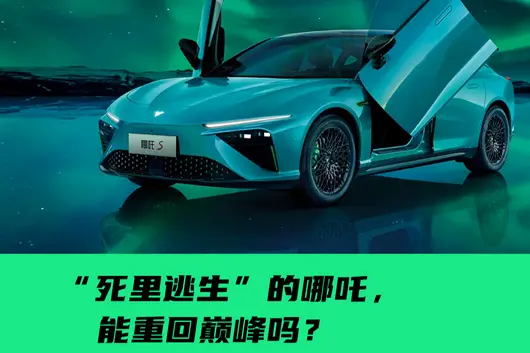

Mythology says Taiyi Zhenren reshaped Nezha's body using lotus roots. In reality, a company called "Taiyi Shenglian" is attempting to inject 3 billion yuan to "resurrect" Neta Auto.

On September 11, the fourth creditors' meeting for the bankruptcy reorganization case of Neta Auto's parent company, Hozon New Energy, was held online. The "Draft Plan of Reorganization" first disclosed the reorganization investor as Zhejiang Taiyi Shenglian Enterprise Management Partnership (Limited Partnership). Taiyi Shenglian plans to invest 3 billion yuan to acquire approximately 70.62% equity of Hozon New Energy, gaining operational control of the reorganized enterprise. Among this, 1.167 billion yuan will be used to repay related claims corresponding to assets to be retained and bankruptcy expenses, while the remaining 1.833 billion yuan will supplement working capital.

Business registration information shows that Taiyi Shenglian was registered and established in April 2026, formed by Zhejiang Shanzi Holdings Co., Ltd. and Zhejiang Shanzi Yuxu Technology Co., Ltd. in partnership. The former's actual controller is Ye Ji, Chairman of Shanzi Gaoke. Shanzi Gaoke has had a long-term layout in the vehicle production field: In 2023, it acquired Hebei Hongxing Motor to obtain passenger car production qualifications. In 2025, its subsidiary Shanzi Youqian collaborated with Tmall to launch its first model which has entered the engineering verification stage, with plans for mass production in the third quarter of 2026. During the public recruitment of reorganization investors for Hozon New Energy in December 2025, Shanzi Gaoke was the only interested investor to pay a 50 million yuan security deposit.

However, Shanzi Gaoke's own financial situation is not ample. In the first half of 2026, the company's operating revenue was 1.371 billion yuan, down 20.87% year-on-year; net profit attributable to parents was only 30.83 million yuan, down 85.69% year-on-year; and deducted non-recurring net profit loss was 349 million yuan. The registered capital of 3.001 billion yuan is still in subscribed status, and there are uncertainties regarding whether funds can arrive on schedule.

Debt is the most direct test. The "Draft Plan of Reorganization" shows that ordinary claims for Hozon New Energy are approximately 11.7 billion yuan, involving over 1,600 households; priority claims are approximately 2.2 billion yuan, involving 9 households. The repayment rate for ordinary claims below 800,000 yuan is approximately 12%, with only 10,000 yuan paid in the first 12 months, while the excess portion is converted into equity; priority claims only pay interest for the first three years, and principal repayment starts from the fourth year. Since 2017, Neta Auto has completed 10 rounds of financing, with a total financing amount of 22.844 billion yuan, but the gross margins from 2021 to 2023 were -34.4%, -22.5%, and -14.9% respectively, remaining in a loss state for a long time. At the time of bankruptcy reorganization, Hozon New Energy's net loss reached 18.3 billion yuan.

According to the "Three-Step Strategy" in the "Draft Plan of Reorganization", the first phase involves resuming production of the Neta X model, focusing on overseas markets with a target annual sales volume of 10,000 units; the second phase involves developing models adapted for regions such as Asia, Africa, and Latin America, with a target annual production of 300,000 units; the third phase aims to create global intelligent models, striving for an annual output value of 40 billion yuan and starting IPO preparation.

The time window for resuming production is very tight. Neta Auto halted production since November 2024, which has been nearly two years. According to relevant regulations from the Ministry of Industry and Information Technology, a production volume below 2,000 units for two consecutive years may result in being listed on the special publicity list. The situation in overseas markets is also not optimistic — in the first half of 2026, Neta Auto's cumulative sales in Thailand were only 365 units, and the Thailand Ministry of Finance had previously filed a lawsuit against it for failing to meet local production targets, seeking recovery of over 2 billion Thai Baht in subsidies.
Precedents are not distant. HiPhi Auto announced in 2025 that it received a 600 million USD investment from the Lebanese company EV Electra, but the funds never arrived, and the reorganization ultimately fell through.

According to Shanghai Securities News, some Neta Auto creditors stated that the probability of the reorganization plan passing is high, but whether Neta Auto can restart mass production depends on many factors such as paid-in capital arrival and capacity integration. The 3 billion yuan is a huge gap compared to the 13.9 billion yuan debt hole and the continuous capital investment required for vehicle manufacturing. Whether Neta can truly achieve rebirth, the answer is not in the draft, but in whether the money can arrive and whether it can smoothly return to the market.
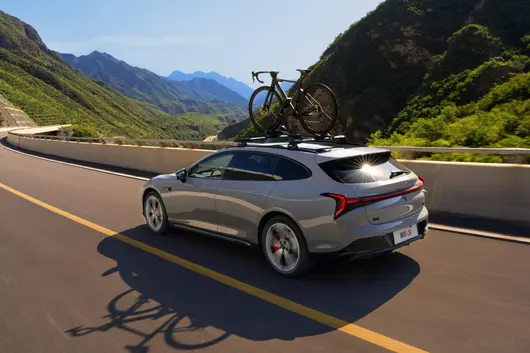


In mythology, what saved Ne Zha was his master Taiyi Zhenren, who constructed his body using lotus roots. In reality, the investor saving Neta Auto has named themselves"Taiyi Shenglian". This appears quite dramatic and delivers an emotional impact.
On the morning of September 11, Neta Auto's parent company Hozon New Energy Co., Ltd. (hereinafter referred to as "Hozon New Energy") held its fourth creditors' meeting in bankruptcy reorganization via online format to vote on the "Restructuring Plan (Draft)". Zhejiang Taiyi Shenglian Enterprise Management Partnership (Limited Partnership) (hereinafter referred to as "Taiyi Shenglian"), as the restructuring investor, plans to invest 3 billion yuan for restructuring investment and obtain approximately 70.62% of Hozon New Energy's equity, mastering the operating control rights of the enterprise after restructuring.
According to the content of the "Restructuring Plan (Draft)", the 3 billion yuan that Taiyi Shenglian intends to invest will be used in two parts: 1.167 billion yuan will be used to repay relevant claims corresponding to assets to be retained and bankruptcy expenses; the remaining 1.833 billion yuan will be used to supplement Hozon New Energy's working capital, supporting its operation and development after restructuring.
It is understood that the ordinary claims in this Neta Auto restructuring amount to 11.7 billion yuan, involving over 1,600 households; priority claims amount to about 2.2 billion yuan, involving 9 households. Regarding repayment methods, for ordinary claims below 800,000 yuan, the repayment rate is about 12%, paying 10,000 yuan within the first 12 months, and paying the remaining approximately 80,000 yuan within two years, with excess amounts converted into equity; priority claim amounts remain unchanged, paying interest for the first three years and repaying principal starting from the fourth year.

In terms of asset disposal, the "Restructuring Plan (Draft)" also clearly states that this restructuring will retain core assets related to Neta X and Neta L, while equipment related to Neta S and Neta GT will be disposed of as non-core assets. Some media reports stated that Taiyi Shenglian's management team possesses automotive industry operation and bankruptcy restructuring experience and had managed the restructuring of listed companies in the parts industry.
The mastermind behind the Taiyi Shenglian company is actually Shanzi High-Tech, a company transformed from a traditional real estate enterprise to high-end manufacturing, which previously entered whole vehicle manufacturing by acquiring Hebei Hongxing Automobile Manufacturing Co., Ltd. and cooperating with the Harbin Municipal Government to establish Heilongjiang Yunfeng Automobile, but the automotive business progress was not smooth.
During Hozon New Energy's public recruitment for restructuring investors in August 2025, Shanzi High-Tech was the sole prospective investor and paid a security deposit of 50 million yuan. Taiyi Shenglian is indeed the entity specifically established by Shanzi High-Tech for this restructuring. Qichacha shows that this company was registered in April 2026, established as a partnership by Zhejiang Shanzi Holding Co., Ltd. and Zhejiang Shanzi Yuxu Technology Co., Ltd., with the actual controller being Ye Ji, chairman of Shanzi High-Tech, and registered capital of 3.001 billion yuan.

The "Restructuring Plan (Draft)" also planned a "Three-Step" strategy for Neta Auto:
Step 1: Restart Neta X model production, mainly targeting overseas markets, with a target annual sales volume of 10,000 units. Retaining production qualifications is the most critical task for Neta Auto at present. From November 2024 until now, Neta has not produced for two years. If production is lower than 2,000 vehicles for two consecutive years, it might be listed on the Ministry of Industry and Information Technology Special Publicity List. That is to say, Neta must achieve production resumption within the next 4 months. The Neta X proposed to restart production first is exactly the main model for Neta Auto's previous overseas expansion. The "Restructuring Plan (Draft)" discloses that the model has already received some intention orders.
Step 2: Develop adapted models for markets such as Asia, Africa, Latin America, with a target annual production of 300,000 units to further amplify overseas market advantages.
Step 3: Build global intelligent models, aiming for an annual output value of 40 billion yuan, and start IPO preparation work.
However, the "Restructuring Plan (Draft)" did not propose a clear timeline for the "Three-Step" strategy. Judging from the "Three-Step" strategy, Neta still chooses to break through through overseas markets. This is easy to understand, because the competition in the domestic market is no longer the same as before. Whether in brand reputation, technological reserves, or channel coverage, Neta no longer possesses competitiveness in China. However, overseas is not a blue ocean either. With the pressure on domestic market sales, domestic independent automakers are going overseas in batches, including Neta's previous overseas market Thailand, where EV competition is becoming increasingly intense. It is relatively difficult for Neta to break through with an old model.

Additionally, the draft also mentions that Neta Auto will rebuild confidence in upstream supply chain cooperation, restore official spare parts supply, fully restart after-sales maintenance and repair, and activate existing service networks. For the approximately 400,000 Neta car owners nationwide, this is the most practical positive information.
However, it needs to be noted that Taiyi Shenglian company's 3.001 billion yuan registered capital is currently in the subscribed state, not paid-in. Furthermore, the voting results of this "Restructuring Plan (Draft)" have not yet been released.
This means that before the money actually arrives, everything still remains uncertain. HiPhi Auto serves as a cautionary tale. After repeatedly being let down by the Saudi Investment Department and iAuto Group, in 2025, the Lebanese company EV Eletra and Neta's parent Human Horizons established Jiangsu HiPhi Auto Co., Ltd., announcing an investment of 600 million USD (including 100 million USD deposit). Just when the outside world thought the restructuring was stable, this money never arrived on time, eventually falling through, and HiPhi's revival ended with nothing.
Even if the 3 billion yuan arrives smoothly, only 1.833 billion yuan can truly be used for operational infusion. For car manufacturing, this is just a drop in the bucket. For example: NIO Chairman Li Bin raised the threshold for car manufacturing from 20 billion yuan to 40 billion yuan in 2021. In the first half of this year, only Leapmotor among the new forces achieved profitability. Li Auto, which was profitable first, had a net loss of 3.994 billion yuan in the first half of this year, Xpeng lost 3.12 billion yuan, and NIO lost 0.86 billion yuan. Even these top new forces are still struggling on the line of profit and loss, and Neta wants to stand firm, needing continuous capital infusion later.
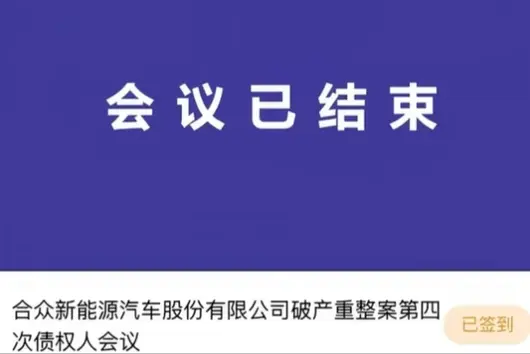

Neta Auto's parent company Hozon New Energy's bankruptcy reorganization has made substantive progress. On September 11, the fourth creditors' meeting was held online, the restructuring investor Taiyi Shenglian plans to contribute 3 billion yuan, in exchange for about 70.62% equity of Hozon New Energy. Of this amount, 1.167 billion is used to pay off debts, and 1.833 billion is kept as working capital. The first thing after restructuring is to resume production of the Neta X, focusing on the overseas market, with a first-stage target of 10,000 units. From the sales champion of new EV startups with annual sales of 150,000 to bankruptcy reorganization, Neta took less than four years. Whether 3 billion can truly bring it back to life is worth a calm look.

Who is the Investor
This company named Taiyi Shenglian sounds quite suitable for Neta, but it is actually a subject specifically established for this restructuring. Public information shows Taiyi Shenglian was registered in April 2026, jointly established by Zhejiang Shanzi Holdings and Zhejiang Shanzi Yuxu Technology, the actual controller is Ye Ji, Chairman of Shanzi High-Tech. As early as August 2025 when Hozon New Energy recruited restructuring investors, Shanzi High-Tech was the only prospective investor, later Taiyi Shenglian replaced Shanzi High-Tech to participate in the restructuring investment, with relevant rights and obligations transferred together. Taiyi Shenglian's management team is said to have bankruptcy restructuring experience, having previously led the restructuring of listed companies in the parts industry.

How the 3 Billion is Spent
According to the arrangement of the restructuring draft, the 3 billion yuan was split into two parts. 1.167 billion yuan is used to settle claims corresponding to assets to be retained and bankruptcy expenses, essentially plugging holes in historical debts. The remaining 1.833 billion yuan is injected as working capital into Hozon New Energy to restore production, restart the supply chain, and maintain daily operations. The investor takes 70.62% equity and obtains operational control.
One reality needs to be seen clearly: 3 billion sounds like a lot, but Neta Auto's debt scale far exceeds this number. As of March 2025, the company owed over 6 billion yuan in payments to 134 core suppliers, total liabilities approaching 10 billion yuan, and cash on hand was only 320 million yuan. For the huge debt portfolio, the debt repayment fund of 1.167 billion can cover a quite limited proportion. Whether the restructuring plan can pass smoothly at the creditors' meeting is the first hurdle.
Resuming Neta X Production, Focusing on Overseas Markets
The primary task after restructuring is to bring the Neta X off the production line again. This compact SUV was previously the absolute main force for Neta's overseas expansion. After listing overseas in July 2024, orders exceeded 7,000 units, taking the number one spot in pure electric SUV registrations in the Thai market for two consecutive months. Currently, Neta X has already secured some intent orders. The first-phase sales target after resuming production is set at 10,000 units, mainly targeting the overseas market.
In addition to resuming vehicle production, the plan also mentions repairing cooperative relationships with upstream suppliers, restoring parts supply, revitalizing the original offline service network, and providing maintenance services to existing car owners. This point is the most tangible commitment for the existing 400,000 car owners. After Neta Auto's financial crisis hit, a large number of car owners faced the dilemma of after-sales supply interruption. Whether the service system can be rebuilt again explains the issue better than how many new cars are sold.
According to the plan, subsequent stages will develop adapted models for the Asia, Africa, and Latin America markets, with an annual production target of 300,000 units. The long-term plan aims to surge to 40 billion yuan annual output value and initiate an IPO. This blueprint spans a considerable distance, but starting from the first step of resuming production of 10,000 units, the gap in between needs to be filled step by step.

Conclusion
Neta Auto's restructuring this time is essentially using 3 billion to exchange for a chance to start over. Neta X indeed has a foundation overseas. Thailand registration data, sales networks in 7 countries, over 7,000 historical orders, these are all real assets. But it must also be seen that Neta Auto went from sales champion in 2022 to production halt in 2024. The collapse speed was rare among new EV startups. Cumulative losses over three years were 18.3 billion yuan, averaging a loss of over 80,000 yuan per car sold. The root of the problem is not just in the channels or product rhythm, but the entire business model did not work from the beginning.
The money from Taiyi Shenglian solves the problem of "surviving", not "thriving". Facing nearly 10 billion yuan in debt, the 1.167 billion debt repayment fund can actually leverage limited creditor confidence. Resuming Neta X production to fight the overseas market, the direction is correct, but the competitive landscape of the overseas market is already completely different from 2024. Chinese brands' layout in Southeast Asia is getting denser, and it is not easy for Neta to regrab market share. Whether this restructuring succeeds, short-term looks at the voting result of the creditors' meeting, medium-term looks at the actual delivery volume after Neta X resuming production, long-term looks at whether the new investor is willing to continue investing in R&D and quality control. 3 billion is just an entry ticket, the road ahead is still very long.

Proses penstrukturan semula secara kebankrapan bagi syarikat induk Neta Auto, Hesheng New Energy, telah mencapai kemajuan yang ketara. Pada 11 September, Mesyuarat Kreditur Ke-4 diadakan secara talian, pelabur penstrukturan semula Taiyi Shenglian merancang melabur 3 bilion yuan, untuk menukar sekitar 70.62% saham Hesheng New Energy. Daripada jumlah itu, 1.167 bilion digunakan untuk melunaskan hutang, 1.833 bilion dibiarkan sebagai modal kerja. Tindakan pertama selepas penstrukturan semula adalah untuk memulakan semula pengeluaran Neta X, menumpukan kepada pasaran luar negara, dengan sasaran fasa pertama sebanyak 10,000 unit. Daripada juara jualan baharu dengan jualan tahunan 150,000 unit sehingga penstrukturan semula kebankrapan, Neta mengambil masa kurang daripada empat tahun. Adakah 3 bilion ini boleh membuatnya benar-benar hidup semula, ia patut dipandang dengan tenang.
Siapakah Pelabur?
Nama syarikat Taiyi Shenglian kedengaran sesuai dengan Neta, tetapi ia sebenarnya merupakan entiti yang ditubuhkan khusus untuk penstrukturan semula kali ini. Maklumat awam menunjukkan Taiyi Shenglian didaftarkan pada April 2026, dibentuk oleh Zhejiang Shanzi Holdings dan Zhejiang Shanzi Yuxu Technology, dengan pemilik sebenar ialah Ye Ji, Pengerusi Shanzi High-Tech. Pada awal Ogos 2025 semasa Hesheng New Energy mengumpul pelabur penstrukturan semula, Shanzi High-Tech adalah satu-satunya pelabur berpotensi, kemudian digantikan oleh Taiyi Shenglian untuk menyertai pelaburan penstrukturan semula, hak dan kewajipan berkaitan dipindahkan sekaligus. Pasukan pengurusan Taiyi Shenglian dikatakan mempunyai pengalaman penstrukturan semula kebankrapan, pernah mengendalikan kerja penstrukturan semula bagi syarikat tersenarai dalam industri komponen.
Bagaimana 3 Bilion Itu Dibelanjakan
Mengikut arrangement draf penstrukturan semula, 3 bilion yuan dipecahkan kepada dua bahagian. 1.167 bilion yuan digunakan untuk melunaskan hutang yang berkaitan dengan aset yang diingini disimpan dan kos kebankrapan, secara sederhananya untuk menutup lubang hutang sejarah. Baki 1.833 bilion yuan sebagai modal kerja disuntikkan ke Hesheng New Energy, digunakan untuk memulakan semula pengeluaran, melancarkan semula rantaian bekalan, dan mengekalkan operasi harian. Pelabur mengambil 70.62% saham, mendapatkan kuasa penguasaan operasi.
Di sini perlu dilihat satu realiti: 3 bilion kedengaran banyak, tetapi skala hutang Neta Auto jauh melebihi angka ini. Hingga Mac 2025, syarikat tertunggak 6 bilion yuan kepada 134 pembekal teras, jumlah hutang hampir 10 bilion, wang tunai di buku hanya tinggal 320 juta yuan. Dana pelunasan hutang 1.167 bilion bagi baki hutang yang besar, nisbah liputan agak terhad. Adakah pelan penstrukturan semula boleh lulus dalam mesyuarat kreditur, adalah halangan pertama.
Neta X Kembali Produksinya, Tumpuan Utama Luar Negeri
Tugas utama selepas penstrukturan semula adalah untuk memulakan semula pengeluaran Neta X. SUV Kompak ini sebelum ini merupakan tonggak utama eksporsi Neta, selepas pelancaran luar negara pada Julai 2024 tempahan melebihi 7,000 unit, berulang kali selama dua bulan berturut-turut mengambil tempat pertama bilangan pendaftaran SUV elektrik tulen di pasaran Thailand. Sekarang Neta X telah menerima sebahagian tempahan niat, sasaran jualan fasa pertama selepas memulakan semula pengeluaran ditetapkan sebanyak 10,000 unit, terutamanya untuk pasaran luar negara.
Selain memulakan semula pengeluaran kereta utuh, pelan ini juga menyentuh mengenai membaiki hubungan kerjasama dengan pembekal hulu, memulakan semula bekalan spare part, menggerak semula rangkaian perkhidmatan offline sedia ada, memberikan perkhidmatan pembaikan dan penyelenggaraan kepada pemilik kereta sedia ada. Ini adalah janji yang paling nyata bagi 400,000 pemilik kereta sedia ada. Selepas Neta Auto meletup, ramai pemilik kereta menghadapi kesulitan bekalan pasca-jualan, sama ada boleh menyusun semula rangkaian perkhidmatan, lebih boleh menjelaskan masalah daripada berapa banyak kereta baharu dijual.
Mengikut perancangan, peringkat seterusnya akan membangunkan model yang disesuaikan untuk pasaran Asia, Afrika, dan Amerika Latin, sasaran pengeluaran tahunan 300,000 unit, pelan jangka panjang untuk menetapkan nilai pengeluaran 40 bilion yuan dan memulakan IPO. Reka bentuk ini mempunyai jurang yang tidak sedikit, tetapi bermula dengan langkah pertama memulakan semula 10,000 unit, jurang di antaranya perlu diisi langkah demi langkah.
Penutup
Penstrukturan semula Neta Auto kali ini, pada asasnya menggunakan 3 bilion untuk menukar peluang untuk memulakan semula. Neta X memang mempunyai asas di luar negara, data pendaftaran di Thailand, rangkaian jualan di 7 negara, tempahan sejarah lebih daripada 7,000 unit, semuanya adalah aset sebenar. Tetapi juga perlu dilihat, Neta Auto dari juara jualan 2022 hingga henti pengeluaran 2024, kadar runtuh dalam baharu adalah jarang berlaku, kerugian terkumpul tiga tahun 18.3 bilion, purata setiap menjual satu kereta rugi lebih daripada 80,000 yuan. Akar masalah bukan sahaja pada saluran atau irama produk, tetapi keseluruhan model perniagaan sejak awal tidak dapat dikendalikan.
Wang Taiyi Shenglian ini boleh menyelesaikan masalah 'hidup', bukan masalah 'hidup dengan baik'. Dana pelunasan hutang 1.167 bilion berhadapan dengan hutang hampir 10 bilion, keyakinan kreditur yang sebenarnya boleh digerakkan adalah terhad. Memulakan semula Neta X untuk memasarkan pasaran luar negara, arah adalah betul, tetapi struktur persaingan pasaran luar negara berbeza sepenuhnya dengan 2024, pelaburan jenama Cina di Asia Tenggara semakin padat, Neta ingin merampas semula bahagian tidak mudah. Adakah penstrukturan semula kali ini berjaya, jangka pendek lihat keputusan undi mesyuarat kreditur, jangka sederhana lihat jumlah penghantaran sebenar selepas Neta X kembali, jangka panjang lihat sama ada pelabur baharu rela terus melabur dalam penyelidikan dan kawalan kualiti. 3 bilion hanyalah tiket masuk, jalan di hadapan masih panjang.
© 2024 Bitauto.com. All Rights Reserved.
Bitauto (www.yiche.com and www.bitauto.com) is one of the most visited automotive websites in China. We provide detailed info on Chinese car brands available in your area. Please note that the information provided on this website is based on publicly available data and is for reference only. It may not be fully updated or accurate at all times.

Help us improve our website


