

HomeNew Energy Vehicles

Search History
Popular Searches
Dealer Login / Sign Up

The domestic new energy passenger car market structure is stabilizing, with multiple independent automakers continuing to expand their overseas market layout. July China new energy passenger car export destination data objectively presents the current overseas layout status of domestic new energy vehicles. The top ten export destinations this time cover five major regions: Europe, Oceania, Southeast Asia, East Asia, and Latin America, showing obvious characteristics of a diversified market layout.

From export data, the UK is the top destination for China's new energy passenger car exports in July, with monthly exports reaching 51,300 vehicles, representing a significant overseas market scale. The UK continues to promote the replacement of fuel vehicles, with steady release of demand for new energy passenger cars. Local consumer groups are gradually increasing their acceptance of pure electric and plug-in hybrid vehicle models.

Exports to the UK primarily consist of home-use pure electric SUVs and mid-size new energy sedans. Domestic common models such as the BYD Dolphin and Yuan Plus enter local channels, supplementing the mid-range new energy passenger car market supply. Compared to domestic European automaker products, domestic models differ in cockpit configuration and basic function layout, adaptable to the regular vehicle needs of ordinary families.
Belgium ranks second on the list with an export volume of 48,600 vehicles, with a relatively small sales gap compared to the UK. Affected by geographic location, the Port of Antwerp in Belgium is a major automotive transit hub in Europe. Domestic new energy vehicles arriving there are partially used for local terminal sales, while the rest are diverted to neighboring EU countries. This is the main reason for the relatively large volume of imported Chinese new energy vehicles in the country.
Models exported to the European region are mainly long-range pure electric passenger cars, suitable for long-distance travel across cities and regions in Europe. This includes many XPeng pure electric sedans and SUVs with moderate domestic retention. Currently, many European countries have implemented new energy transformation-related policies, providing a basic market environment for imported new energy models. Dynamic adjustments to regional trade rules and carbon emission standards will increase the overseas operating costs of domestic automakers, and long-term expansion of the European market involves certain uncertainties. Apart from the UK and Belgium, Spain and Italy also make the top ten export list. Europe remains the core region for domestic new energy passenger cars going global.
Oceania market expands steadilyAustralia ranks third on the list, importing 39,700 Chinese new energy passenger vehicles in July. Australia's traditional automotive market has long been dominated by large-displacement fuel SUVs, with new energy model penetration rates generally lower than in Europe. In recent years, local consumption structure has gradually adjusted, and new energy model market capacity has increased.

Domestic models exported to Australia are concentrated in large-space pure electric SUVs. Models on sale such as the BYD Tang and Haval Xilong have batched into the local market, fitting local consumer preferences for large-size vehicles. Vehicle range parameters can meet the needs of long-distance travel between Australian cities, and the overall export scale maintains steady growth. Compared to the European market, Australia's vehicle import access rules are relatively relaxed, belonging to an overseas market with growth potential.
Currently, multiple domestic automakers have included Australia in their overseas layout scope, continuously investing in models on sale. As the local market's understanding of new energy models gradually improves, the subsequent capacity changes in this market have continuous observation value.
The Southeast Asia region showed stable growth in this export list. The Philippines, Thailand, and Indonesia all made the top ten exports. Among them, the Philippines imported 36,400 units in July, ranking fourth. Sales volume was higher than Thailand and Indonesia.

Southeast Asia has a huge population base, and the automotive consumption market is in a growth phase. Local fuel vehicle usage costs are relatively high, while new energy passenger cars have certain advantages in usage costs. The Philippines focuses on short-distance urban commuting. Imported models are mainly small and medium-sized pure electric sedans and small SUVs. Models like the BYD Seagull fit the local mainstream travel needs.
Thailand, as an automotive industry gathering place in Southeast Asia, imported 27,200 Chinese new energy passenger vehicles in July. Local authorities continuously issued new energy industry support policies to promote electrification. Multiple domestic automakers have established local production systems in Thailand, reducing tariff costs and expanding the Southeast Asia market through local production and sales models. Released models cover mainstream categories on sale such as MG and Neta brand home sedans and mid-size SUVs.
Indonesia imported 15,400 units in July. The country has abundant upstream resources for power batteries. The local government relies on the new energy vehicle industry to improve the local industrial chain, attracting overseas automakers to invest locally. As local charging infrastructure continues to improve, the Indonesian new energy vehicle consumption market has expansion potential. The hot and rainy climate characteristics of Southeast Asia place higher requirements on vehicle battery protection and body sealing processes. Overseas automakers need to complete targeted vehicle calibration to ensure stable product operation.
East Asian and Latin American markets achieve breakthroughsSouth Korea ranks sixth on the list, importing 17,800 Chinese new energy passenger vehicles in July. South Korea has a complete vehicle manufacturing industry. The new energy passenger car market competition atmosphere is strong. Domestic models achieving stable batch exports reflect the phased progress of independent brands in this overseas market.

Domestic models exported to South Korea are mostly high-spec pure electric SUVs. NIO and XPeng SUV models gradually enter local channels, cutting into the local market relying on basic configurations and reasonable pricing systems. At the same time, South Korean vehicle safety standards and import certification systems are relatively strict. Market access thresholds are high, and subsequent market development involves certain difficulties.
Mexico ranks tenth on the list with an import volume of 12,100 vehicles, and is the only Latin American country in the top ten list this time. Mexico is adjacent to the North American market. The regional circulation conditions are special. In addition to local terminal consumption, imported vehicles have certain cross-regional circulation space. Models exported to Mexico are mainly compact pure electric passenger cars. Multiple domestic home-use models enter local channels, adaptable to urban commuting, suburban travel, and other diverse scenarios. The popularization progress of new energy vehicles in Latin America is relatively slow. Mexico is an important node for domestic new energy vehicles entering the Latin American continent, with the possibility of radiating surrounding areas.

Comprehensive July overall export data shows that dependence on a single market for domestic new energy passenger cars going global continues to decrease. Europe maintains a stable export volume. Southeast Asia and Oceania market sales steadily increase. East Asia and Latin American markets gradually open up. The going-global pattern of multiple regions in parallel gradually takes shape.
At the same time, vehicle usage habits and travel scenarios differ in different regions. Domestic-adapted vehicle configurations and functions cannot fully adapt to overseas market needs. Automakers need to complete localized adaptation of infotainment system languages, maps, chassis calibration, and basic driving assistance functions based on local road conditions and needs. In addition, the global trade environment has fluctuations. Some regional trade protection tendencies have risen. Tariff adjustments, trade investigations, and other factors continuously impact automaker export business. The construction cycle of overseas after-sales service systems is relatively long. Repair outlets and parts supply chain construction speeds are difficult to match sales growth speeds. Terminal service breakdowns may easily occur, affecting the market reputation of domestic cars abroad.
The journey towards globalization continuesThe global automotive electrification transformation trend remains stable. Overseas traditional fuel automakers' transformation rhythm is relatively slow, leaving corresponding market space for domestic new energy automakers going global. Domestic new energy vehicles have a complete industrial chain covering batteries, motors, electronic controls, and vehicle manufacturing. Perfect industrial supporting conditions constitute the basic support for automakers' layout of overseas markets.

If automakers want to carry out overseas business stably, they need to shift from single-product output to full-dimension localized layout, perfecting the overseas R&D, production, sales, and after-sales full-chain system. Currently, multiple automakers have launched overseas factory construction. Through local production to reduce the impact of tariffs and adapt to local policies and consumer culture, it is the main direction for domestic automakers' global development.
July new energy passenger car export data shows the UK and Belgium support the core European market. Oceania and Southeast Asia sales grow steadily. Mexico becomes an important channel to enter the Latin American market. Cross-continental export sales networks are preliminarily formed.
For domestic new energy automakers, overseas markets are no longer just a supplement to the domestic market, but will form an impact on corporate long-term operations. Subsequent monthly export data, regional market sales fluctuations, overseas access rule adjustments, are all worth the industry's continuous tracking to observe the long-term trend of domestic new energy vehicle global development.
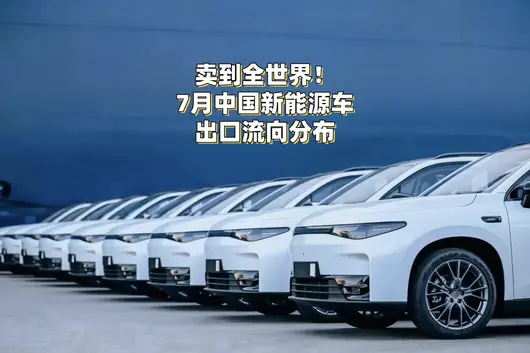

On September 4, GAC Group released its August production and sales announcement. Cumulative sales from January to August reached 1.0126 million units, maintaining positive year-on-year growth. New energy vehicles totaled 368,200 units, a significant 63.06% increase year-on-year; energy-saving vehicles reached 288,700 units, a 3.30% year-on-year growth. The sales share of energy-saving and new energy vehicles rose to 64.86%, a significant increase of over 14 percentage points year-on-year.

Independent brands continue to lead the way. From January to August, sales exceeded 461,500 units, a significant 31.44% year-on-year increase, with growth rates maintaining double-digits for 6 consecutive months. In August, independent brands contributed 61,378 units, a 20.43% year-on-year increase, with sales share rising to 48.49%, approaching half of the total market.
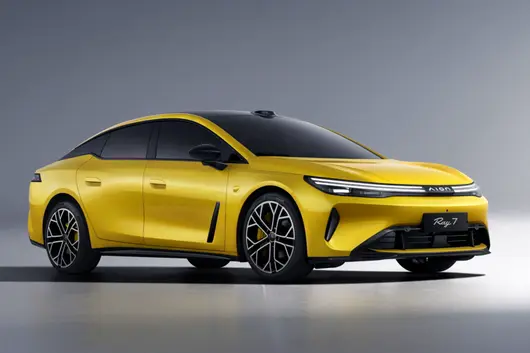
Hyper Aion BU August sales reached 33,694 units, a 38.56% year-on-year increase, with growth rates maintaining double-digits for 6 consecutive months; from January to August, approximately 244,100 units were sold, a significant 58.37% year-on-year increase. Aion i60 August terminal sales exceeded 11,000 units, staying above 10,000 for consecutive months, ranking firmly at the forefront of the A-class dual-power SUV segment; Aion N60 secured the sales champion title in the 100,000 to 130,000 RMB LiDAR SUV category for 4 consecutive months. Aion cooperated with Huawei's intelligent electric vehicle product line, debuting the new model Ray7. The new luxury smart sports SUV Hyper S600 began hot delivery simultaneously, with launch rights prices starting from 179,900 RMB.
GAC Trumpchi August sales 26,584 units, month-on-month growth 16.91%, January to August 213,700 units, year-on-year growth 8.47%. SUV family monthly sales 17,813 units, year-on-year growth 22.3%. The first all-scenario smart enjoyment hard-core SUV "Yue 7" opened pre-sales on September 2, with cumulative orders from the priority access plan exceeding 15,000 units by the end of August. Trumpchi M8 produced the 500,000th unit, global MPV users surpassed 900,000, solidifying the status of "China's MPV Expert".

Qijing is a high-end smart car brand created by GAC in partnership with Huawei Qiankun. Cumulative sales from July to August were nearly 4,000 units. GAC Group Chairman Feng Xingya met with Huawei founder Ren Zhengfei again to reach an important consensus; Qijing moved from "direction consensus" to "deepening development". The second strategic model, spacious five-seat smart versatile SUV Qijing GX7, opened pre-sales on September 4, featuring the industry's first 20-second one-key pure-flat large bed technology, L3 autonomous driving architecture, the only one in its class with 4 LiDARs, standard CATL battery, comprehensive range exceeding 1,500 kilometers.
GAC Toyota January to August cumulative sales exceeded 450,000 units, August 52,700 units, month-on-month growth 13.33%. Camry, Highlander, and Sienna top three flagship models monthly sales 23,540 units, accounting for 44.7%. Bomi 3X sales have firmly stayed at the forefront of joint-venture new energy vehicles for multiple months. On August 19, the 2027 model Camry equipped with a new smart cockpit and AI voice large model went on sale.
GAC Honda August sales 12,080 units, month-on-month growth 3.4%. The company is undergoing major strategic upgrades, planning to comprehensively promote localization around R&D definition, industrial ecosystem, channel network, and business structure, planning 5 new models for the next two years, including two localized new energy vehicle models.
Overseas business becomes the "first growth curve". August independent brand exports nearly 27,000 units, year-on-year growth 177%; January to August cumulative exports 172,000 units, year-on-year growth 136%. Africa becomes the fastest-growing overseas market, terminal sales increased by 881% year-on-year; Ethiopia, Côte d'Ivoire, South Africa, Libya all grew by multiples. Americas market terminal sales increased 93% year-on-year; Uruguay, Costa Rica, Brazil, Colombia continued to grow by multiples. Europe terminal sales grew 93% month-on-month; UK, Portugal, Poland increased by 89%, 167%, 33% respectively, same month GAC sales ranked second in Greece pure EV market. Southeast Asia terminal sales increased 24% year-on-year; Philippines grew nearly three times; Singapore, Thailand, Indonesia double-digit growth. Middle East market cumulative users surpassed 100,000.
Localization production and channel construction accelerate. August cooperation reached with Anlujie in Egypt, achieving a key leap from exports to localized production; simultaneously landed in West Africa Ghana, launching multiple models including Trumpchi M8, Aion i60, Aion V. In Europe, signed with car retailer Yinzhi Jie in Romania, accelerating Eastern European channel layout. Australia-wide dealer conference held in August, integrating channel resources to accelerate Australian market expansion.

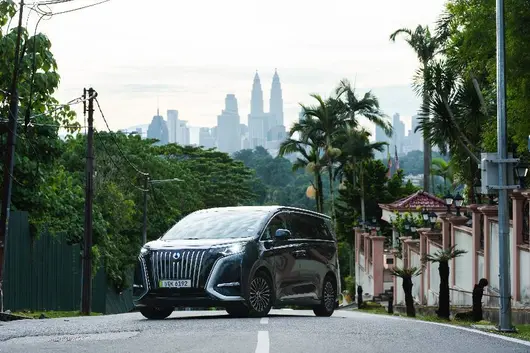
Walking along Singapore streets, you'll notice an interesting phenomenon — whether on city main roads, core business districts, or shopping malls, BYD models are everywhere. In one of the markets with the highest car ownership costs and strictest entry standards globally, this Chinese brand is being fiercely pursued by local consumers.


The numbers speak for themselves. As of July 2026, BYD has topped the passenger car sales champion across all brands in Singapore for 19 consecutive months. From January to July 2026, BYD captured 24.7% of the overall local car market and 40.3% of the pure electric vehicle market — on average, 1 out of every 4 new cars is a BYD, and over 4 out of every 10 pure electric cars come from BYD.
As is well known, Singapore's car purchase threshold is extremely high, and BYD models are priced quite high, yet they are regarded as a premium brand locally and remain hot-selling despite the "high price". This is absolutely not accidental, but a double victory of product technology and localized operational capabilities. On the channel front, BYD has deployed 16 retail touchpoints, with some stores directly entering core shopping malls to reach high-end audiences through innovative models, and dealer confidence continues to strengthen.

Hard power is the confidence. On July 24, 2026 Silk Road 10,000 Mile Journey · Enlightenment Road ASEAN Line departed from Xi'an, lasting 33 days traversing Thailand and Malaysia, concluding upon landing in Singapore, with the Dynasty, Ocean, Denza, Fang Cheng Bao, and Yang Wang five major matrices providing escort throughout. The Silk Road journey accompanied by green energy, supporting the expedition are precisely the two technologies: Flash Charging and God's Eye.


Flash Charging makes "charging like refueling" a reality: 5 minutes to charge from 10%-70% at normal temperature, 9 minutes to charge to 97%; from 20%-97% in extreme cold at -30° only takes 3 more minutes. On August 28, BYD Flash Charging stations officially surpassed 10,000, with 20,000 stations to be built by the end of the year, within 5 kilometers in 90% of urban areas for charging. God's Eye B equipped with LiDAR covers highways, city pilot, and smart parking, and pioneered the "Double Safety Net" — Smart Parking lifetime guarantee, City Pilot 1-year guarantee. The 19-time Champion is just the beginning.


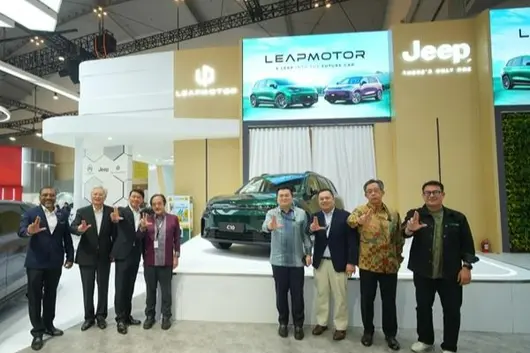
In the first half of 2026, China's total automotive exports reached 5.31 million units, including 2.42 million new energy vehicle exports, a year-on-year increase of 70%. The image shows Leapmotor's B10 and C10 global models at the 2026 Indonesia International Motor Show.
Statistical data shows that in the first half of 2026, China's total automotive exports reached 5.31 million units, a year-on-year increase of 53%; among them, new energy vehicle exports reached 2.42 million units, a year-on-year increase of 70%, further consolidating China's position as the world's number one automotive exporting country.
On the one hand, geopolitical risks have driven up global oil prices, enhancing the competitiveness of Chinese new energy vehicles; on the other hand, the continuous expansion of the 'Global South' markets has prompted Chinese automakers to rush to accelerate their overseas layouts. For Leapmotor Motors, aiming to challenge the annual sales milestone of 1 million units, the July results further validate the effectiveness of the domestic and international dual-wheel drive.
It is understood that Leapmotor delivered 101,267 units in the domestic market in July, doubling year-on-year, becoming the first new force automaker to break the 100,000 units monthly sales mark. In the first half of this year, Leapmotor's cumulative sales reached 356,487 units, a year-on-year increase of about 97%, making it the only new force brand to break the 300,000 units sales milestone in the first half of this year. Models such as A10, B Series, C10, and D19 bloomed in multiple points, consolidating Leapmotor's growth foundation.
Recently, Leapmotor showcased its two global models, Leapmotor B10 and C10, at the 2026 Indonesia International Motor Show and officially announced its entry into the Indonesian market. Leapmotor also jointly announced with the Indonesian Indomobil Group the official launch of localized KD assembly production in Indonesia. Through deep cooperation with PT National Assemblers under the Indomobil Group, Leapmotor achieved a leap from product output to localized whole industry chain layout. As of now, Leapmotor has formed a dual manufacturing base layout in Malaysia and Indonesia, becoming one of the few Chinese new energy brands with dual KD capacity in Southeast Asia.
Some analysts believe that China's new energy vehicle industry has currently formed a development pattern of 'domestic scaling as a bottom line, global expansion adding volume', and neither aspect should be neglected. For example, Leapmotor's breakthrough of 100,000 units in monthly sales marks that new force automakers have officially entered the volume tier of mainstream automakers. Industry competition has shifted from single-product comparison to a long-term contest of comprehensive systems including supply chain, self-developed manufacturing, and channel services.
In recent years, Chinese new energy vehicles going global have bid farewell to simple whole vehicle exports, shifting to a new stage of 'technology export + local factory construction + ecosystem co-building'. It is understood that relying on the three-party synergy with Stellantis and the Indonesian Indomobil Group, Leapmotor adopts a brand co-store sales model, leveraging local mature distribution networks. The plan is to complete 50 service outlets in Indonesia by the end of the year, covering the full pre-sales and after-sales chain. In fact, localized production not only avoids import tariffs and shortens delivery cycles but also drives local employment and supporting industry chain upgrades, aligning with the policy orientation of ASEAN countries to cultivate their local new energy industries. As of now, Leapmotor's overseas business covers more than 40 countries and regions globally, with over 2,000 stores, and global cumulative deliveries have broken through 1.5 million units. Southeast Asian localized manufacturing will become a key fulcrum for its global expansion.
"Practice proves that Leapmotor is becoming a typical sample of new energy vehicle companies with the 'domestic scaling, global localization' dual-wheel drive." Independent auto analyst Bai De believes that on the one hand, the domestic market is responsible for 'revenue generation, training, building industry chains', and on the other hand, the international market is responsible for 'expansion, setting standards, sharing risks'. Only by making good use of the domestic and international market dual-wheel drive can Chinese new energy vehicles consolidate their global leading advantages and achieve high-quality development of the automotive industry.
Bai De emphasized that on the basis of achieving scaled growth, Chinese new energy vehicles must continue to invest in technological innovation. It is revealed that Leapmotor will hold a Technology Day in September 2026, upgrade the world model intelligent driving system, and achieve universal implementation of high-level intelligent driving with low computing power.
As more Chinese automakers adhere to technology-based enterprise development, delve into cutting-edge self-developed technologies, perfect product matrices, and promote localized industry layouts, China's new energy industry's global competitive advantage will continue to be consolidated, and the process of Chinese automotive industry upgrading and global green transportation transformation will also accelerate further.


Written by | AUTO Xinqiu
Author | AUTO Xinqiu Team
Just now, the new Onvo L60 was launched.
There are two things worth looking at together around this launch event. Counting back one day, NIO participated in the formulation of Singapore's battery swapping standards. On the day of the launch, an autonomous driving video of Onvo L60 crossing an extremely narrow karst cave was released to the outside world, causing quite a discussion on overseas social media.
But what truly made the industry notice this was the price. The Shenji NX9031 self-developed chip, full-domain 900V high-voltage platform, SkyOS Tianxu operating system — these three things appeared simultaneously on a car with a starting price of just over 200,000 (CNY). And these three technologies were positioned as flagship-level on previous NIO brand models.
This cannot be explained by a product iteration alone.
In the new energy vehicle industry these past two years, everyone is shouting "independent R&D". Battery, motor, and control system self-research, chip self-research, system self-research, intelligent driving self-research — this term has become somewhat inflated. But even with the same "self-research", some is a light asset approach of "defining specifications, outsourcing design", while others is a heavy asset route of "doing the entire process from architecture to tape-out themselves". The difference between the two is not visible in the short term, but vastly different in the long term.
The emergence of the new Onvo L60 basically brings this problem to the table: after the independent R&D system is truly proven, what exactly does it bring?
The True Divide of Independent R&D, Starting with a Chip
To figure out what makes NIO's independent R&D different from others, the best entry point is the intelligent driving chip.
Shenji NX9031, the team behind this project has over 600 people. Li Bin specifically emphasized one sentence at the media communication meeting: "It is a complete design capability from front-end to back-end." This is not said off the cuff.
There are two paths for making intelligent driving chips in the industry: one is to define parameters well, find a design company to do it for you, saving money and fast, but the disadvantage is subsequent iterations are constrained by others. The other is to build a team yourself, pressing the entire process from architecture design to back-end tape-out in your own hands, burning money, slow, but chips, algorithms, sensors, and operating systems can be coupled end-to-end.
This chip is not that chip. Just like building cars, outsourcing to an engineering design company and doing full-stack self-research yourself both result in something called "car", but the foundation is completely different.

Li Bin mentioned three specific comparison dimensions at the communication meeting.
The first is memory bandwidth, the Shenji NX9031's memory bandwidth is "basically 2 times that of industry peers" — this indicator determines how large a model can run on the car and how the inference speed is.
The second is multi-modal signal processing capability, also known as ISP. Li Bin mentioned that the good performance in crossing karst caves has something to do with this, because image processing capability is key in extremely dark environments.
The third is dual-chip millisecond-level hot switching. Li Bin said this is very important for L3, L4 level intelligent driving.
These three indicators alone are technical parameters, but together they point to the same thing: only when chips, algorithms, and operating systems are all your own does the initiative of product definition truly lie in your hands.Otherwise, you are just making choices on a supplier's quote sheet.
But the dividends of chip independent R&D extend beyond single-point indicators. Because the chip is your own, and sensor layout was planned uniformly in advance, like NIO decided on a hardware baseline of "7 8-megapixel cameras + 7 surround cameras" starting from the ET7 era, continuing all the way to Onvo L60, so the hardware architecture is naturally reusable.
Hardware reusability means data reusability; data reusability means toolchain reusability. Here, Li Bin revealed a detail: all intelligent driving versions of NIO's second-generation platform models can achieve "simultaneous release within a time window of no more than a few weeks plus or minus". Behind this rhythm, after the underlying architecture is unified, one set of code can cover multiple car models.
Assume there are 5 cars under the brand, if the intelligent driving software for each needs to be developed, tested, and iterated separately, maintenance costs are multiplicative. After the underlying architecture is unified, adding one more car to share R&D costs, the marginal cost is so low it can be ignored.
The new Onvo L60 can use flagship intelligent driving, not because NIO is generous, but because the cost structure changed itself after hardware unification.
The Moat of Independent R&D Has Already Been Dug Open
If the chip story explains what independent R&D can bring, then lightweighting and battery swapping explain that some things cannot be done at all without independent R&D.
Let's talk about lightweighting first.
Li Bin spent a large portion of the launch event speaking about lightweighting, which is uncommon in the industry. Lightweighting is a "invisible" indicator. Users do not pay for a low body-in-white lightweighting coefficient, and car companies usually do not take it as a selling point.
But Li Bin broke it down very finely.
The new Onvo L60 achieved a body-in-white lightweighting coefficient of 2.22. So, how was this done? There are four keys, mostly requiring independent R&D support.
The first is the battery. The battery is the heaviest component of the whole vehicle. If you focus on stacking range, stacking large-capacity LFP batteries, the weight goes up. Onvo's strategy is restrained: 85 kWh uses ternary lithium batteries, which is over 100 kg lighter than LFP of the same capacity. But ternary lithium is expensive. Li Bin's original words were: "This is a large sum of money."
The second is systemic reconstruction. Onvo L60's "smart fuse", which sounds like just changing a part, actually requires the entire vehicle's high-voltage and low-voltage architecture to be redesigned. Using traditional fuses, circuit design is standard parts; switching to smart fuses, everything from distribution logic to harness routing must be redone. Integrated design is the same, packing more functions into fewer modules, saving not just weight but also space and BOM costs. But each is an independent R&D project; without independent chassis and independent electronic/electrical architecture teams, you can't do it alone.
The third is full-domain 900V. Many people haven't noticed the contribution of high-voltage platforms to lightweighting — the higher the voltage, the smaller the current under the same power; the smaller the current, the thinner the harness; the thinner the harness, the lighter the whole vehicle. This loop sounds simple, but the threshold of 900V itself is extremely high. From power semiconductors to insulation design to thermal management, all are tough challenges.
Finally is engineering capability. A lightweighting coefficient of 2.22 tests the ability to "achieve the best structure with the least material while ensuring crash safety". Li Bin made an analogy: "Sometimes overusing materials yields no safety benefit, just like some houses look very thick walls, it does not mean they are structurally solid." This capability cannot rely on suppliers; it relies on the data, simulation, testing, and trial-and-error accumulated by the whole vehicle engineering team over the years.
After going through these four things, the lightweighting matter is clear: it is not a single-point technical indicator, but the comprehensive result of several independent R&D systems working collaboratively: chassis, core electric systems, electronic/electrical architecture, and engineering simulation.

Let's talk about battery swapping next.
On the same day the new Onvo L60 launched, NIO participated in the formulation of Singapore's battery swapping standards. Adding to this, over 60 battery swapping stations already operational in Europe, this model which was repeatedly questioned in the past is turning from a corporate choice into an industry option.
But the battery swapping matter is independent R&D from start to finish. Currently, among Onvo L60 users, the penetration rate of the battery leasing scheme is over 90%.
Obviously, once users accept "separation of vehicle and battery", the risks of battery life, anxiety about resale value, and concerns about charging convenience are all transferred to the operator, which is NIO itself.
And NIO dares to take this responsibility, there is only one reason: the battery swapping network is part of the entire independent R&D system. Battery charging/discharging strategies, life management algorithms, residual value assessment models are all run by their own team. If you outsource battery swapping to third-party operators, you simply dare not promise users "battery rental covers lifetime warranty" because you cannot control the real health status of the battery.
Chip independent R&D lets you modify, lightweighting lets you save, battery swapping lets you guarantee — these three things put together form a complete independent R&D puzzle. And the new Onvo L60 is the first time these three things are fulfilled simultaneously on a car in the 200,000 level.

The Most Difficult Path, Highest Barrier Instead
Speaking of here, there is an unavoidable question: Independent R&D is so money-burning, who is paying the bill?
In 2026, the supply chain pressure is quite real. Automotive-grade memory prices are rising sharply, and lithium prices are also rebounding. For one Onvo L60, just the cost end increased by over 10,000 yuan. If converted to the final selling price including taxes, the impact is about 15,000.
Here, Li Bin spoke a big truth: "Onvo L60 still has gross profit, but it's quite miserable."
But under this pressure, the Onvo L60 starting price was still placed just over 200,000. However, 90% of orders selected the high-spec version with Shenji chips and LiDAR. Average selling price for the whole brand in the first quarter was 240,000 — this is higher than many traditional luxury brands. From January to May, NIO overall growth was 68%, higher than internal targets.
Looking at these two sets of numbers together, the conclusion might be somewhat counter-intuitive — Independent R&D burns money, but Independent R&D is exactly the way to digest costs.
The logic here is not complex. The same technical system covers three brands: NIO, Onvo, Firefly; R&D expenses are spread across more cars; the same hardware architecture serves multiple models, and after procurement volume goes up, negotiation power also increases. After hardware unification, data reuse, and toolchain sharing are proven, for every additional car, marginal costs will drop significantly.
The new Onvo L60 presses flagship technology down to the 200,000 level, not because NIO is doing charity, but because this economic model is operating on its own.
But if you stretch the timeline, the real account of independent R&D is not calculated by quarter.
If you look at a quarter — others are competing in sales volume, he is repairing battery swapping stations. Others buy chips to compete in computing power, he builds a team from scratch for tape-out. Others stack big batteries to compete in range, he calculates lightweighting coefficients. Every move seen individually looks like engaging in an unprofessional business.
But looking at 3 to 5 years, you will find 3,900 battery swapping stations have been laid out, chips have run through end-to-end coupling, lightweighting coefficients reached 2.22 — these single points begin to link into a system.
Looking at ten years, you will find this company built a complete set of infrastructure on core electric systems, intelligent driving, energy replenishment, and electronic/electrical architecture that others cannot bypass. This is the core barrier brought by independent R&D, and also the key reason why consumers are increasingly paying for NIO.
Written at the End
Back to the new Onvo L60.
The significance of this car is not that it is 50,000-60,000 cheaper than Model Y, nor is it about using flagship chips and LiDAR, let alone how much it sold for.
Its significance lies in a 200,000 level car paired with a technical combination that only a full-stack independent R&D system can support. China's new energy vehicle independent R&D has entered the stage of "can it work well, is it worth the account" from the stage of "can it be made".
In the table of China's new energy vehicles, players willing to build infrastructure for ten years, trade time for space, trade deep plowing for barriers can be counted on one hand. The emergence of the new Onvo L60 is simply saying one thing: the investments that everyone thought were quite silly back then are now beginning to be redeemed line by line on reports, products, and industry standards.
The marathon is not yet finished. But those running ahead are always the ones who dug the deepest foundation before the starting line.
* All images in this article are from the internet
Focusing on intelligent cars, assisting key decisions.
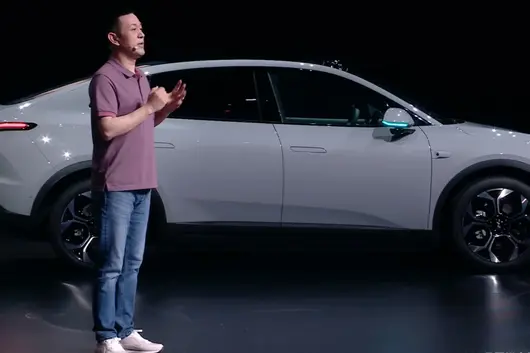

Author | Janson
Editor | Zhihao
For every 10 electric vehicles sold globally, 6 come from Chinese automakers; for every 4 electric vehicles produced globally, 3 are made in China.
Che Dong Xi news on May 25, the International Energy Agency recently released the 'Global EV Outlook 2026 (2026 Global Electric Vehicle Outlook)' report, analyzing the current development status of the global electric vehicle industry from an international organization's perspective.

▲ 2026 Global Electric Vehicle Outlook Report
The report shows that Chinese automakers supplied 60% of global electric vehicle sales in 2025; of the nearly 22 million electric vehicles produced globally, nearly 75% were completed in China. In other words, China is not only the world's largest electric vehicle consumption market but is also becoming the most important electric vehicle supply source.
More critically, exports are becoming a new variable in China's electric vehicle industry.
The report points out that China's electric vehicle production exceeded domestic demand in 2025, making exports an important incremental source. China's electric vehicle exports exceeded 2.5 million units that year, doubling year-on-year; entering the first quarter of 2026, despite domestic sales facing temporary pressure, China's electric vehicle exports doubled year-on-year again.
From the perspective of export destinations, Chinese electric vehicles are moving from a single market to a diversified market. After Europe, Southeast Asia, the Middle East, and Latin America are becoming new growth areas, with Southeast Asia growing by about 130% year-on-year, the Middle East by about 60%, and Latin America by about 55%.
This means Chinese electric vehicles going global is no longer a trial run by a few companies, but is becoming an important growth direction for the entire industry.

▲ Global Electric Vehicle Sales and Sales Share in Selected Regions from 2020-2025
Worth mentioning, China is not a member state of the International Energy Agency, but acts as an associate state, directly becoming the absolute protagonist in the report. The word "China" appears 486 times in this report, far higher than "Europe" (220 times), "United States" (204 times), "India" (92 times), and "Japan" (69 times).
Che Dong Xi carefully deconstructed this report. After interpreting it from the dimensions of market, policy, and outlook, it was found that China's status in the global electric vehicle field is very obvious, and the actions of China's new energy vehicle industry are also influencing the development of the global industry.
01.
From the World's Largest Demand Market
To the World's Largest Supply Source
The report from the International Energy Agency shows that in terms of production volume, sales volume, or export scale, China is one of the most important markets in the current global electric vehicle industry.
This change is first reflected at the level of complete vehicle supply.
The report shows that global electric vehicle production approached 22 million units in 2025, with nearly 75% produced in China. In other words, for every 4 electric vehicles produced globally, about 3 come from China's manufacturing system. Meanwhile, China's electric vehicle production has exceeded domestic demand, making exports an important incremental source.

▲ Electric Vehicle Production, Demand, and Net Trade in Major Markets
The report points out that China's electric vehicle exports exceeded 2.5 million units in 2025, doubling year-on-year; entering the first quarter of 2026, despite domestic sales facing temporary pressure, China's electric vehicle exports doubled year-on-year again.
This means exports are gradually becoming an important variable for complete vehicle enterprises to balance domestic fluctuations, expand profit space, and participate in global competition.

▲ Overseas Sales, Export Value, and Brand Distribution of Chinese-Made Electric Vehicles
Of course, the rapid growth of China's electric vehicle exports cannot be simply understood as a one-sided pull by overseas demand. More accurately, it is the result of the combined effect of domestic supply capacity, price competition, manufacturing scale, and global demand.
Intensified domestic market competition and pressure on profit margins have driven enterprises to actively seek overseas increments; while the advantages of Chinese automakers in model richness, cost control, and delivery capability have also improved their efficiency in entering overseas markets.

▲ Electric Vehicle Registrations and Penetration Rate by Major Countries/Regions
Currently, Chinese electric vehicles have formed a more systematic penetration in multiple emerging markets.
In markets outside Europe and the US, imported electric vehicles from China accounted for 55% of 2025 electric vehicle sales, whereas five years ago this proportion was less than 5%.
1. European Market: Still an Important Destination for Going Global
From the perspective of export destinations, Europe remains an important market for Chinese electric vehicles.
In 2025, China exported about 940,000 electric vehicles to Europe, a year-on-year increase of nearly 50%; but Europe's share in China's electric vehicle exports has dropped to about 40%. Meanwhile, the growth center is beginning to spread to more emerging markets.

▲ Proportion of Chinese Electric Vehicle Imports in Emerging Markets
2. Southeast Asian Market: Strong Influence of Chinese Brands
In 2025, Southeast Asian electric vehicle sales doubled year-on-year, exceeding 500,000 units for the year, with electric vehicles accounting for nearly 20% of new car sales.
Among them, Thailand, Indonesia, and Vietnam are the main growth markets; although the Vietnamese market is mainly driven by the local company VinFast, in countries like Thailand, Indonesia, Malaysia, and the Philippines, the influence of Chinese manufacturing and Chinese brands is very prominent.
In Thailand, electric vehicle sales reached about 140,000 units in 2025, accounting for nearly one-quarter of new car sales, and Chinese-made electric vehicles still accounted for about three-quarters of the local electric vehicle market; in Indonesia, 2025 electric vehicle sales doubled year-on-year, with about 75% coming from Chinese imports.
In Malaysia, Chinese imported electric vehicles once accounted for about 80% of the market; in the Philippines, Chinese imported models, especially those related to BYD, constitute an important part of local electric vehicle sales.

▲ Chinese Overseas Electric Vehicle Manufacturing Capacity and Southeast Asian Distribution
3. Latin American Market: Brazil and Mexico are the Mainstays
The Latin American market also shows a similar trend. In 2025, Latin American electric vehicle sales grew by 75%, with Brazil and Mexico contributing over 75% of the regional increment.
Among them, Brazil's 2025 electric vehicle sales reached 180,000 units, accounting for about 9% of new car sales, with nearly 85% from Chinese manufacturing; Mexico's 2025 electric vehicle sales tripled year-on-year, with Chinese imported models accounting for about 85% of local electric vehicle sales, higher than the about 60% in 2024.

▲ Electric Vehicle Sales Share in Emerging Markets by Place of Production
However, China's electric vehicle going global is not without challenges. As Chinese brands' market share overseas increases, some countries begin to raise localization requirements, adjust import tariffs, or promote the construction of local manufacturing capabilities.
The report also mentions that China's electric vehicle exports in 2026 may face uncertainties such as inventory backlog, export management, and tightening of overseas policies.
From a medium to long-term perspective, China's core position in the global electric vehicle industry will continue.
The report predicts that China will still be the world's largest electric vehicle producer in 2035, accounting for about 60% of global electric vehicle production; the export scale is expected to continue growing, continuing to be an important supply force for the global electric vehicle market.

▲ Outlook on China's Electric Vehicle Sales Share
From a long-term perspective, China will still be the most critical market, manufacturing base, and export center in the global electric vehicle industry chain.
02.
Automakers and Industry Chain All Join In
Competition Pushed Towards Overseas Markets
Chinese electric vehicles forming today's scale in the global market is not solely driven by a single enterprise, a single hit model, or a specific subsidy policy, but is the result of long-term accumulation of an industry system.
From the perspective of the industry chain, enough automakers participate, the industry chain is complete enough, product prices are competitive enough, and finally pushed to overseas markets by fierce competition.
First, China's electric vehicle industry developed fast enough, with enough participants. The IEA report shows that the Chinese market had nearly 700 available electric vehicle models in 2025, the only major car market where the number of electric vehicle models exceeds fuel vehicle models, with electric vehicle models outnumbering traditional models by about 60%.
This shows that the Chinese electric vehicle market is no longer a testing ground for a few brands, but a mature market where almost all mainstream automakers are deeply involved.

▲ Breakdown of Electric Vehicle Price Changes in China, Germany, and US
However, the premise of export growth is still that China possesses a sufficiently large domestic market as a basic board.
In 2025, China's electric vehicle sales exceeded 13 million units, accounting for about 60% of global sales; in new car sales in China, electric vehicles accounted for nearly 55%, becoming one of the mainstream categories of China's car market.
Traditional automakers, new force brands, new entrants with tech company backgrounds, and commercial vehicle enterprises are all launching products at different price bands and in segmented markets. The report also mentions that the Chinese market had over 1,100 models in 2025, with the number of electric vehicle models increasing by about 25% year-on-year, and large cars and SUVs accounting for over 60% of electric vehicle sales.

▲ Distribution of Model Price Intervals in Major Markets
The result of supply density is that the consumer choice space is quickly opened. Whether it's entry-level small cars, family SUVs, or plug-in hybrids, pure electric models, the Chinese market can provide a large number of choices. For automakers, this also means the speed of product iteration must accelerate, with configuration, price, channels, and brands all having to participate in competition.
Compared to markets like Europe and the US which still face issues of insufficient model choice and price intervals being relatively high, China's electric vehicle market entered the high-density competition stage earlier.

▲ Price Premium of Electric Vehicles vs. Fuel Vehicles in Emerging Markets
Second, China possesses a more complete electric vehicle industry chain, especially forming a global advantage in the battery link.
The report shows that in 2025, China's battery cell production accounted for over 80% of the global total, with an even higher proportion in key links such as cathode and anode materials; from cells and materials to complete vehicle integration and charging equipment, China has formed a highly localized and scaled supply system.
Batteries are one of the most expensive core components of electric vehicles. China's advantage in the battery industry directly determines the scope for reducing complete vehicle costs.
The report mentions that Chinese battery pack prices are about 30% lower than North America and about 35% lower than Europe; meanwhile, Lithium Iron Phosphate batteries are widely applied in China, further lowering the cost threshold for mainstream and entry-level models.
This industry chain integrity is not only reflected in "being able to make it", but more in "making it fast, lowering costs, and supplying enough".

▲ Public Charging Pile Quantity and Fast/Slow Charging Structure in China, Europe, and US
When battery costs decline, material supply is stable, and the parts system is mature, automakers can launch new models faster and can also transmit cost advantages to terminal prices faster.
Third, Chinese-made electric vehicles have formed a clear cost advantage and are starting to compete directly with fuel vehicles. The report shows that in 2025, about 70% of pure electric vehicles in China were sold at prices lower than same-class fuel vehicles; in the small car market, electric vehicles have basically replaced fuel vehicles.
Meanwhile, the average price of China's pure electric vehicles dropped by over 10% in 2025, with about 30% of pure electric model entry prices below $20,000 (approximately 136,400 RMB); in the SUV sub-market, pure electric SUVs achieved price parity with same-class fuel SUVs for the first time.
Finally, overly sufficient competition has also pushed Chinese automakers overseas. With more models, prices continuing to drop, and supply chain efficiency constantly improving, the scale advantage of China's electric vehicle industry has been brought about, but also brought profit margin pressure.
The report clearly mentions that fierce domestic competition and pressure on profit margins are one of the important reasons driving Chinese automakers to expand overseas sales; by 2025, China's electric vehicle production has exceeded domestic demand, with exports exceeding 2.5 million units, doubling year-on-year, and exports in the first quarter of 2026 doubling year-on-year again.
From the results, the overseas market is becoming a new direction for the release of China's electric vehicle industry capabilities.

▲ Outlook on Global Electric Vehicle Fleet
Therefore, Chinese electric vehicles going global is not simply "exporting because they can't sell domestically anymore", but the result of these capabilities overflowing to overseas markets after domestic high-intensity competition screens out cost, product, supply chain, and delivery capabilities.
The domestic market is responsible for "practicing capabilities", while the overseas market becomes a new growth space. The fundamental reason why Chinese electric vehicles can rapidly expand their presence in the global market is precisely that this industry system has formed a self-reinforcing closed loop.
03.
Conclusion: Chinese Automakers Going Global Continue to Accelerate
Entering 2026, China's new energy vehicle exports continue to accelerate. Data from the China Association of Automobile Manufacturers shows that from January to April 2026, China's new energy vehicles accumulated exports of 1.384 million units, a year-on-year increase of 1.2 times; during the same period, China's complete vehicles accumulated exports of 3.127 million units, a year-on-year increase of 61.5%.
At the automaker level, the overseas market has become an important increment for top domestic brands. From January to April 2026, Chery accumulated exports of 570,900 units, a year-on-year increase of 66.3%; BYD's overseas cumulative sales exceeded 450,000 units, and adjusted its full-year overseas target from 1.3 million units up to 1.5 million units.
Automakers such as Geely, Changan, and Great Wall also maintained growth in the overseas market, with Geely achieving 286,200 units in overseas sales from January to April, Changan 285,700 units, and Great Wall 180,600 units.
It is not difficult to see that the overseas market is becoming a new growth space for Chinese automakers, and Chinese automakers are also playing an increasingly important supply role in the global electric vehicle market.
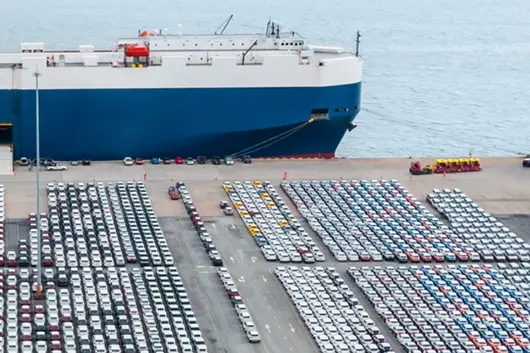


Making a move exposes weakness; the US tries all tricks to ban China's new energy vehicles.
In this showdown of new energy vehicles, who is actually breaking down?
This is a war where there is no "neck" to choke, and even more so, an encirclement doomed to fail!
How strong is China's new energy vehicle industry? Strong enough to stun even the world's number one... Strong enough that the US has started using tactics to limit Chinese tech companies like Huawei to block China's new energy vehicles.
But the question is, if two very representative Chinese listed new energy vehicle companies are put on the Chinese Military Enterprise List (CMC List), can it stop China's new energy vehicles from going global?
AutosKline believes this is futile! From raw materials to finished vehicles, the entire industrial chain leaves the US with almost nowhere to choke.
01
On June 8, 2026 (US Eastern Time), the US Department of Defense issued "Notice on Designating Chinese Military Enterprises". According to this notice, the US Department of Defense has listed the two most representative listed new energy vehicle companies in China—BYD and NIO—on the Chinese Military Enterprise List.
So, are two listed Chinese auto companies actually that powerful? Worthy of the US military's attention.

Subsequently, BYD and NIO issued announcements successively, roughly stating they are not Chinese military enterprises, nor are they military-civil fusion enterprises of the Chinese defense industry, and believing there is no justifiable reason to list the companies in this list.
On the other hand, this Chinese Military Enterprise List from the US Department of Defense is not a sanctions list. Being listed will not affect the two companies' normal business operations, will not affect their business dealings with anyone (except the US Department of Defense); US government procurement restrictions related to the list will not affect business, and the Chinese Military Enterprise List does not restrict securities trading.
From the statements in BYD and NIO's announcements, it is easy to see that this US restriction and strike is fundamentally different from targeting Huawei. It is not a chokehold at the technical level, but rather building high walls at the market level.
Earlier, the US had already raised tariffs on China's new energy vehicles to over 100%...
02
In the past, the US suppressed our Huawei by conducting surgical-style precise strikes in the semiconductor field where Chinese technology was relatively weak and relied on external supply chains, but Huawei endured hardships and broke through the technological blockade.
China's new energy vehicle industry today, we have long mastered the entire industrial chain advantage from lithium mines, batteries, motors to complete vehicle manufacturing; the US essentially has no "neck" to choke.
In other words, the opponent is on the defensive, it is an offensive and defensive struggle after the shift in strength. Domestically, we have already turned the new energy vehicle industry into a trillion-level industry, and the market has already exceeded 10 million units in scale.

Therefore, this time the Chinese Military Enterprise List is more like a political gesture and trade barrier, only the means are somewhat lacking.
Its core purpose is nothing more than to restrict market access, directly ban their core defense procurement, and at the same time form a strong political signal to guide US allies and partner countries to exclude Chinese enterprises.
03
At the same time, AutosKline believes the US may also have the intention of curbing capital infusion, shaping the listed enterprises into investment targets "with risks", and increasing their financing costs globally.
BYD was once favored by US investors, while NIO was even the first New Force stock from China to list in the US. Both companies have a very strong demonstration effect in the electric vehicle field.
Even more ambitious is that the US attempts to define competitive rules, "generalizing security" in the new energy vehicle industry, attempting to shape China's industrial advantages in global public opinion as threats "controlled by the Chinese government, unsafe, and militarized", thereby gaining the right to define rules.
04
AutosKline believes the US's calculation is very loud, but the direct impact is limited. BYD and NIO have very little vehicle export to the US, this ban carries more symbolic significance than actual trade strikes.
However, there may be short-term pain at the capital level, which may trigger some passive foreign capital to sell off for risk avoidance, affecting stock prices in the short term. But the industry fundamentals are driven by technology and markets, and will be repaired in the long run.
On June 10, the reaction of the capital market was far more intense than the reaction of the enterprise's actual operations.

For NIO, the pain might be more obvious. Overall, NIO is still in the loss period, highly dependent on capital market financing to support R&D and battery swapping network construction; if financing costs rise and channels narrow, it will directly affect cash flow.
Conversely, for BYD, it is more like being bitten by a mosquito, its main business foundation is extremely deep, possessing strong free cash flow and vertical chain manufacturing capabilities; short-term fluctuations in the external capital market cannot hurt the bones and muscles.
For these two listed companies, although stock prices may fall excessively in the short term due to passive fund outflows and hedge fund short selling, as long as their cars are still selling hot, core indicators such as gross margin and cash flow remain strong, this fall will eventually attract value investors to buy the dip.
05
Global market differentiation risk may be the biggest threat facing China's new energy vehicle industry soon.
AutosKline believes that under US pressure, the global market may split into two. One is a trust market centered on the US, and the other is a value market centered on China. This may force companies to make an either-or choice.
This will further become a potential obstacle to the high-endization of Chinese cars, the path of entering European and American high-end markets and establishing luxury brand images will be more tortuous.
However, times have changed. Chinese cars going global is already a historical trend, unstoppable. Especially in the last two years, Chinese cars are shifting from product going global to in-depth industrial going global and ecological going global.

Such as BYD's factories in Hungary, Thailand, Brazil, are deeply bound with local interests, forming an irreversible cooperation pattern. Establishing deep cooperation joint ventures in target markets, creating local brands, becoming major local taxpayers and job creators.
Not only that, Chinese listed auto companies want to promote Chinese-led supercharging standards, battery swapping standards, and vehicle connectivity standards globally, enabling more national industrial chains to operate around Chinese standards, locking the pattern from the source.
Of course, since the other side may use resource cards, we must establish overwhelming advantages in upstream resource layout such as lithium, cobalt, nickel, and in battery recycling technologies. Let any attempt to build alternative industrial chains face cost gaps that are hard to cross.
In the rare earth field, we have already done this. Do not forget, Tesla is still in China.
Views of AutosKline:
The industrial advantage of China's new energy vehicles is systematic; it cannot be easily destroyed by a list. What really needs to be wary of is not that the US won't buy our cars, but that it is pulling allies to build a new rule set that excludes us.
The top priority is to use deeper globalization to dismantle the attempt to isolate us.
When Chinese technology, standards, factories, and interests are closely integrated with the global ecosystem, one-sided suppression is difficult to truly take effect.
Text is original content from AutosKline, content reference materials sourced from listed company announcements and industry public information (relevant companies and institutions should have the obligation to be responsible for truthfulness); some images are from the Internet, copyrighted by original owners.
Articles on this account, without authorization, cannot be reprinted, and violators will be pursued. At the same time, article content does not constitute investment advice for anyone! Stock market risk is high, investment must be cautious!


At the beginning of June, various automakers successively released their sales performance reports for May 2026. According to the forecast data released by the CPCA (China Passenger Car Association) on May 23, domestic new energy passenger car retail volume was expected to reach 950,000 units, penetration rate approximately 62.5%, setting a new historical high. This data further confirms the continued deepening of electrification transformation, as the new energy vehicle market is steadily transitioning from "policy-driven" to "market-driven".
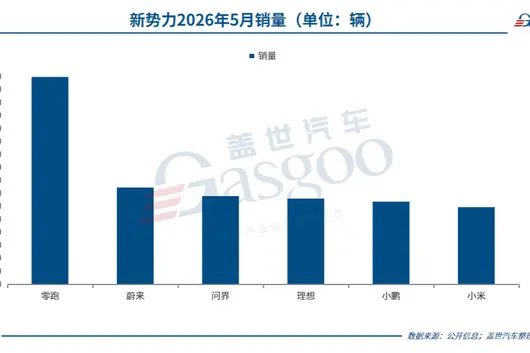
Looking at specific sales data, the top tier pattern of new forces experienced severe differentiation in May - Leapmotor led by a "huge gap" with monthly sales exceeding 80,000 units. At the same time, traditional auto groups represented by BYD, Changan, Geely, etc., saw their self-incubated new energy brands also show a collective surge in volume in May, and the strategic value of multi-brand matrices is accelerating realization.
New Forces Matrix: Leapmotor 80,000+ "Huge Gap Lead", Multiple Brands Gathered in the 30,000 Bracket

The new forces market pattern in May showed distinct tiered characteristics: Leapmotor exceeded 80,000 units in a single month, forming a leading advantage; NIO, relying on three-brand synergy, reached sales volume of 37,700 units; Li Auto, Xpeng, Xiaomi, AITO, and other brands were concentrated in the 30,000-35,000 unit range, forming the most competitive core battlefield.

Image Source: Leapmotor
Leapmotor became the undisputed biggest highlight of May. According to Leapmotor official data, May total delivery volume reached 81,569 units, year-on-year growth 81%, month-on-month growth 14.26%, once again breaking the brand's single-month delivery historical record. Leapmotor also became the first enterprise among Chinese new automakers to exceed 80,000 units in single-month delivery.
Looking at specific models, Leapmotor A10 exceeded 20,000 units in single-month delivery, D19 new orders continued to maintain above 10,000 units, C Series global cumulative sales already exceeded 800,000 units. By the end of May, Leapmotor cumulative delivery in the first five months exceeded 300,000 units.
Leapmotor's 2026 annual sales target is 1.05 million units. Behind this ambition is Leapmotor Chairman Zhu Jiangming's proposed "2026 Sprint to 1 Million Units" strategic goal. With June C Series refresh, D99 pre-sale, and Lafa5 large-scale overseas expansion, Leapmotor is expected to launch a shock at the new milestone of 90,000 units monthly delivery.

Image Source: NIO
NIO Company also showed steady performance in May. Data shows, NIO May delivery of new cars 37,705 units, year-on-year growth 62.3%, month-on-month growth 28.4%.
NIO's growth benefits from the strategic effectiveness of three brands working together - NIO brand delivered 20,013 units, year-on-year growth 50.8%; ONVO brand delivered 12,029 units, year-on-year growth 91.5%, month-on-month increase as high as 124.8%; Firefly brand delivered 5,663 units, year-on-year growth 53.9%.
From the product level, flagship SUV NIO ES8 sold 11,475 units in May, maintaining competitiveness in the high-end market above 400,000 yuan. By the end of May, NIO company cumulative delivery this year reached 150,500 units, year-on-year growth 68.7%, cumulative delivery total has reached 1.148 million units.
Li Auto May delivery 33,350 units, by end of May historical cumulative delivery volume has reached 1.703 million units. Li Auto Chairman and CEO Li Xiang stated, since first quarter this year delivery volume has entered a growth track, among them Li Auto i6 delivered volume exceeded 20,000 units for three consecutive months, stable in top three pure electric SUV sales; May, new Li Auto L9 officially released and started delivery, L Series models entered new upgrade cycle, new L9 Livis order volume exceeded 10,000 units within two weeks of release.

Image Source: Xpeng
Xpeng Group May delivery 32,158 units, month-on-month growth 3.7%, creating a new monthly delivery high since 2026. This growth mainly stems from the continuous effort of existing product matrix - 2026 Model P7+, G6, G9 and G7 Super Range Extender versions etc. models have completed capacity ramp-up, MONA M03 maintains hot sales in 150,000 yuan level pure electric market.
On May 20, new tech flagship Xpeng GX officially launched and started delivery, providing pure electric and super range extender two power, total 8 models, 12 hours after launch firm orders reached 24,863 units, among them Ultra flagship version ratio exceeds 80%.
Xiaomi Auto May delivery volume continued to exceed 30,000 units, holding steady the "30,000+" step for the second consecutive month. Xiaomi has evolved from early SU7 "single product holding the flag" to SU7 Series and YU7 Series dual-line parallel product pattern.
By end of May, Xiaomi Auto first five months cumulative delivery volume approx 140,000 units, completed full year 550,000 units delivery target 25.5%. As a new force entered market only two plus years, Xiaomi maintaining monthly sales 30,000+ level already belongs to difficult, but second half year average monthly delivery needs to reach approx 55,000 units to achieve full year target, challenge still exists.

Image Source: HarmonyOS Intelligent Alliance
May 2026, HarmonyOS Intelligent Alliance single month delivery volume reached 46,122 units, achieving year-on-year and month-on-year dual growth. Among them, AITO Auto full series models May delivery 34,320 units, month-on-month growth 48.2%, 1-5 months cumulative year-on-year growth 28.7%.
New generation AITO M9 launched 24 hours firm orders exceeded 20,000 units, and achieved launch and delivery immediately; AITO M6 launched first month delivery exceeded 20,000 units.
From competitive landscape perspective, besides Leapmotor, remaining several new force brand delivery volumes front and back gap not big, ranking may interchange at any time, pattern highly dynamic. From this "30,000 bracket cluster", it can be seen, new forces from "break 30,000" to "stand firm 40,000" still need to cross growth threshold - this both tests product matrix richness, and puts higher requirements on supply chain management and delivery system.
Domestic New Energy: Multiple Brands Work Together, Enter Fast Lane

In the domestic new energy brand matrix that traditional auto groups are accelerating promoting, May also handed in an outstanding answer sheet. Looking at overall data released by major vehicle groups, the trend of steady improvement in new energy penetration rate is converting into tangible sales volume scale.

Image Source: BYD Auto
BYD May sales 383,000 units, ranking first in industry, among them passenger car sales 377,000 units. Dynasty Network and Ocean Network sales 330,200 units, still BYD sales cornerstone; Fangchengbao sales 30,186 units; Denza sales 16,303 units; Yangwang sales 286 units.
In terms of overseas market, BYD May export new energy vehicles total 160,600 units, year-on-year growth 80.7%, creating new historical high again.
Geely Auto May group total sales volume 238,000 units, realized same month-on-month dual growth for three consecutive months. That month new energy model sales volume 133,000 units, accounted for sales volume ratio 56.1%, exceeded 50% for four consecutive months.
Underlying Zeekr brand May delivery 34,377 units, year-on-year growth 81.8%, creating new historical high again - Zeekr 009, 9X, 8X etc. models ratio nearly 50%, driving brand single car transaction average price year-on-year increase 52.4%, holding steady in luxury brand camp.
Lynk & Co brand May sales 20,732 units, new energy sales 14,688 units, month-on-month growth 17%, new energy sales ratio as high as 71%.

Image Source: Changan Auto
Changan Auto May global delivery 209,000 units, new energy vehicle delivery 92,000 units. Changan electrification transformation shows multi-brand matrix head-to-head competition characteristic: Changan Qiyuan May delivery 34,528 units, among them new Q05 delivery 15,812 units, Thailand launch three days orders exceeded 3,000 units; Deepal Auto May global sales 33,243 units, year-on-year growth 30%, 1-5 months overseas cumulative sales 28,704 units, year-on-year growth 167%; Avatr May delivery 7,336 units, showing continuous upward trend. Sorting out data of each month this year, Avatr from January 2,216 units, February 4,033 units, March 5,143 units, April 5,279 units climbed up to May 7,336 units, visible its growth momentum.
SAIC Motor Group May vehicle sales volume 349,000 units, among them new energy vehicle sales 182,000 units, year-on-year growth 46.49%. Underlying IM Motors May delivery 10,023 units, holding steady 10,000 unit gateway for two consecutive months, 1-5 months cumulative sales year-on-year growth 115%; SAIC Passenger Car new energy 1-5 months cumulative reached 174,000 units, year-on-year surge 195%, MG4 Family 8 months sales broke 10,000.

Image Source: eπ Tech
Dongfeng system domestic new energy brands also performed outstandingly. Dongfeng eπ Tech May delivery 24,830 units, year-on-year growth 42%, 1-5 months cumulative delivery 109,600 units, overseas market year-on-year growth 194%. Voyah Auto May delivery 13,003 units, year-on-year growth 30%, 1-5 months cumulative delivery 62,041 units, year-on-year growth 35%.
Hyper Aion BU May sales 33,140 units, year-on-year growth 23.76%, among them Aion i60 monthly sales continued over 10,000. Arcfox Auto May sales 17,943 units, year-on-year growth 32.82%, overall performance steady, Alpha S5, Koala etc. models are its main force models, May started pre-sale Arcfox Beta S3 and launched Wayfind V9 future will further support its overall sales.
Conclusion:
From overall industry view, May new energy penetration rate approx 62.5%, new high again. Domestic brands have become important market force, traditional big factory late advantage showed - Geely new energy ratio exceeded 56%, Changan new energy approaching 100,000 units, SAIC new energy year-on-year increase over 46%. But there is a problem still cannot ignore, multi-brand matrix at the same time covering segmented markets, also faces resource integration and internal friction control test.
Looking forward subsequently, as multiple new models enter delivery cycle, new energy market expected to continue growth. Can Leapmotor stabilize "One Super" status? Who in 30,000 bracket cluster will break out first? These will be the highlights coming next.


For the past few decades, Japanese cars, relying on reliability, fuel economy, and global manufacturing systems, have long occupied an important position in the global automotive industry. The endurance and resilience of the Japanese car manufacturing system are also key reasons for their global popularity. Toyota surpassed Volkswagen Group to become the world's largest carmaker in 2020 and still firmly holds the top spot.
However, against the backdrop of the Middle East situation causing international oil prices to surge, Chinese new energy vehicles seem to be quietly impacting the established global automotive market structure.
Statistics from the International Energy Agency (IEA) show that Chinese enterprises account for 60% of global EV sales in 2025. Relying on power battery, intelligent driving, smart cockpits, and supply chain advantages, they achieved a transition from "catchers" to "rule makers" in the EV era. Companies like BYD, Geely, Wuling, Chery, XPeng, Li Auto, and Leapmotor are accelerating their march into global markets, including mature automotive markets like Europe and Japan.
Unlike the large-scale entry into Europe, Chinese car brands choosing to directly enter the Japanese automotive market mainly focus on BYD, Zeekr, Chery, etc., and generally choose to directly enter the local mass-market passenger vehicle sector, competing head-on with Toyota, Honda, and Nissan.
Chinese electric vehicles, equally affordable yet more intelligent, have already brought some impact to the Japanese automotive industry. "In the past, cheap meant bad quality, but now (Chinese cars) product quality has significantly improved. Prices are so cheap, it's hard for Japanese cars to compete." A senior executive of a Toyota primary supplier told Nikkei News.
Nikkei News also commented that Chinese Chery Automobile and BYD plan to launch light EVs in Japan. If competing on the same stage, the situation will inevitably become increasingly severe for Japanese cars.
If the spike in international oil prices caused by the Middle East crisis is the main reason new energy vehicles have been welcomed by European and Japanese consumers in recent months, then a forecast from the IEA still gives an optimistic expectation for new energy vehicle development. IEA predicts that global EV stock will increase to more than 6 times that of 2025 by 2035, accounting for 50% of global car sales.
In this way, a problem also surfaces: Will Chinese new energy vehicles replace Japanese cars first?
Both Japanese Fuel Cars and EVs Are Trapped
Market sales are the most intuitive manifestation of industrial competition.
According to Japanese media statistics, Toyota and Honda's new car sales in China in May decreased by 32% and 49% year-on-year, respectively. In terms of cumulative new car sales in China from January to May, Toyota reached 579,400 units, a 10% decline year-on-year, while Honda reached 173,344 units, a 30% decline year-on-year.
Toyota explained: "After March, affected by the Middle East situation, crude oil and gasoline prices rose, exacerbating the stagnation of the gasoline car market."
In fact, even before the Middle East situation, the Chinese car market had already formed a clear differentiation. The incremental new energy market is completely dominated by local Chinese brands, while Japanese and German car companies can only continuously retreat to the shrinking fuel vehicle stock market. Compared to Japanese cars' cautious attitude in the Chinese new energy vehicle market, German car companies have a more aggressive layout in intelligent electric vehicles.
Even under the pressure of international situations, Toyota, the world's largest carmaker, remains cautious about electrification layout. On May 29, 2026, Japanese media reported that Toyota Motor will suspend the development of new generation pure electric vehicles (EV).
 Lexus LF-ZC Concept Car
Specifically, Toyota suspended the mass production model of Lexus pure electric sedan "LF-ZC". This car was originally scheduled to be launched in 2027. It is a flagship model tasked with Lexus' electrification transformation mission. In addition to carrying new high-performance batteries, it also utilizes "Integrated Die Casting" technology to achieve one-piece molding of parts using aluminum casting. As a new generation EV gathering the latest Toyota technological essentials, it received high attention from the market. Announcing the suspension of R&D after two delays further shocked the outside world.
Japanese media analysis pointed out two reasons behind Toyota suspending the development of the LF-ZC model: First, the United States revoked tax credits for EV purchases and other policies, and Europe also cancelled the policy prohibiting the sale of internal combustion engines in principle by 2035. Second, the rise of Chinese cars, especially the competitive barriers established by Chinese car companies relying on domestic suppliers, autonomous driving, and internet-of-vehicles technologies.
Once the core moat technology of Japanese cars, fuel-electric hybrid technology is now being chased by domestic DM-i and Thor DHT plug-in hybrid technologies, continuously siphoning off Japanese hybrid stock users with lower fuel consumption on low battery and stronger power performance.
At the same time, what brought the biggest impact to Japanese cars is that Chinese new energy vehicle exports have become a new growth curve. In 2025, the export volume of domestic new energy vehicles doubled significantly, selling far to global markets such as Europe, Southeast Asia, and the Middle East, having shaken off the low-end cheap label, with brand power and product power upgrading synchronously.
Adding insult to injury for Japanese cars, due to the continued blockade of the Strait of Hormuz, Toyota Motor announced in late May 2026 plans to cut overseas production by about 83,000 units before November, mainly reducing the production of fuel vehicles facing the Middle East and Asian markets.
If looking only at the Chinese market, a tacitly understood reality is that, in the short term, Japanese cars still have stable fuel vehicle stock space. However, with the improvement of domestic charging infrastructure and the popularization of consumer electrification awareness in the medium and long term, the stock of fuel vehicles will also continue to shrink, and the decline in Japanese car sales will become the norm.
Intelligence Generation Gap, Chinese Cars' Killer App in Japan
Recently, Japanese research company MM Institute (Minato-ku, Tokyo) released the results of a survey on Japan's autonomous bus practical testing project. The results show that among the vehicles used in the 2025 annual practical testing, Chinese BYD ranked first with 36.4%. The combined share of Chinese manufacturers reached 50.3%.
It is understood that the survey object for this time was L2-level and above autonomous driving buses, and the project mainly focused on road driving practical testing for ordinary passengers. In 2025, there were a total of 143 vehicles used in practical testing projects nationwide in Japan, an increase of 18 vehicles over the previous year.
Looking at the share of each company, BYD ranked first, France's Navya second, and the third place was Estonia's Auve Tech accounting for 12.6%, China's intelligent solution supplier WeRide accounting for 2.8%.

If electrification is the choice of different technology routes between Chinese and Japanese car companies, then intelligence is the core track that completely widens the generation gap between the two sides. Japanese media reports write: Multiple Japanese car company executives publicly admitted that Japanese car companies are at least five years behind Chinese car companies in smart cockpits and high-level autonomous driving.
If calculated based on the traditional car iteration rhythm more familiar to Toyota and other car companies, a 5-year gap is a whole generation of cars.
Japanese media believes the reason for this difference in car building is the different underlying car building logic of the two sides.
The person in charge of MM Institute's survey said: "Most autonomous practical testing projects in Japan are led by startup companies. Such projects are more inclined to adopt vehicles from overseas manufacturers." While he has high hopes for domestic Japanese manufacturers, he also pointed out: "Considering safety aspects, some manufacturers are cautious about practical testing, and there are also concerns about price".
In fact, mainstream domestic autonomous new cars are all equipped with native intelligent electric architectures, standard full vehicle OTA upgrades, and the vehicle can update the in-vehicle system, voice interaction, energy consumption control, assisted driving functions, etc., online throughout its life cycle, achieving "getting newer with use".
At the same time, 8155/8295 flagship chips, continuous voice interaction, multi-screen interconnection, and localized ecosystem adaptation have become standard equipment for 200,000-level family cars. The intelligent experience fits domestic user needs and has long become an "cannot go back after use" travel mode for Chinese car owners. This strategy of "dimensionality reduction attack" using intelligence against non-smart cars might also be feasible in the Japanese market. After all, Japanese car companies still follow fuel car development logic, hardware is fixed so functions are locked, most models do not support full vehicle OTA, and chip performance is "lagging behind since departure".
Not to mention, starting from the end of 2025, more than ten domestic brands have begun testing L3-level autonomous driving commercial operations, and more new force car company heads believe that from a technical level they can "go straight to L4". XPeng recently launched XPeng GX which has already pre-installed Robotaxi capabilities. This intelligent leadership tag will also help improve the image of Chinese cars in overseas markets.
Global Market, Chinese Cars and Japanese Cars Must Fight
The replacement of Japanese cars by Chinese electric vehicles is not limited to the domestic market. In the future, on a global scale, it will continue to impact Japanese cars' overseas advantage markets cultivated for half a century, completely rewriting the global automotive competition pattern.
According to statistics, in 2025, the market share of Chinese brands in Southeast Asian new energy markets broke through 22.2%, BYD single brand market share in Thailand's pure electric market exceeded 70%. In the entry-level family car markets of Indonesia and Vietnam, Chinese electric vehicles have begun to shake the monopoly of Japanese fuel cars in local markets.
 Great Wall Motor in Thailand, image source: Great Wall Motor
In the European market, even facing tariff barriers and strict localization requirements, domestic new energy and plug-in hybrid models still maintain positive growth. They rank high in the new energy sales list in countries such as the UK, Norway, and Spain. Especially in recent months, affected by rising international oil prices, the sales of Chinese new energy vehicles in Europe continue to rise.
In Japanese traditional advantage markets such as Mexico and South America, Chinese electric vehicles continue to increase their market share with high cost-performance and reliable three-electric technology, continuously replacing traditional Japanese fuel models. With Canada opening the new energy vehicle market to Chinese car companies, the volume of Chinese new energy vehicles in North America will also steadily increase in the future.
 BYD enters the Japanese K-car market, image source: BYD Fan Home
Especially worthy of mention is in the Japanese market. In the past two years, BYD, Wuling and other brands have completed right-hand drive modifications and local certifications, officially landing in the Japanese market. BYD ATTO3 remains stable in the Japanese small electric vehicle sales list, and the market share of Chinese brands in Japanese new energy segments continues to break through.
Reporter's Note
Returning to the question at the very beginning of the text: Will Chinese new energy vehicles replace Japanese cars first?
It is unavoidable that Japanese cars have half a century of accumulation in advantage markets and still cannot be shaken by Chinese car companies in the short term. However, if focusing on the long-term 5-10 year dimension, global fuel ban policies continue to land, electrification and intelligence become the main industry tracks, and the technical barriers of Japanese cars in the fuel era will begin to collapse.
If Japanese cars cannot quickly solve short boards, then the problems of intelligence capability, supply chain system, and slow transformation will also continue to amplify in the future 10 years. During this period, Chinese electric vehicles might greatly squeeze Japanese car shares, thereby rewriting the global automotive map.
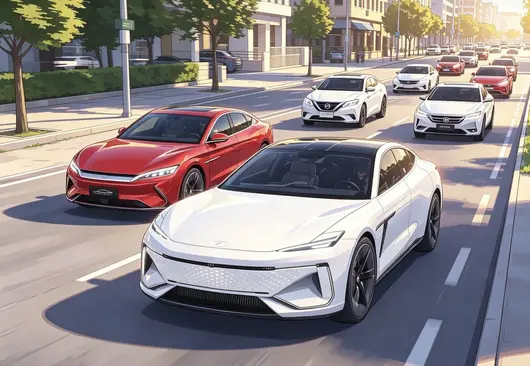
© 2024 Bitauto.com. All Rights Reserved.
Bitauto (www.yiche.com and www.bitauto.com) is one of the most visited automotive websites in China. We provide detailed info on Chinese car brands available in your area. Please note that the information provided on this website is based on publicly available data and is for reference only. It may not be fully updated or accurate at all times.

Help us improve our website


