

HomeNezha U

Search History
Popular Searches
Dealer Login / Sign Up

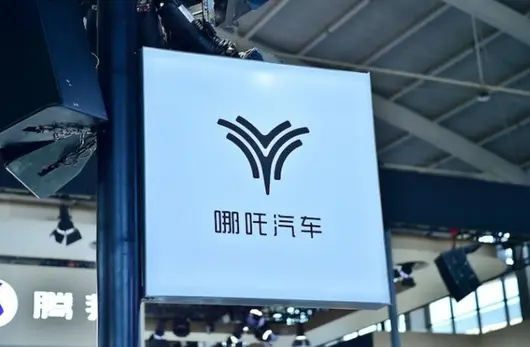
On one hand, the list of casualties keeps growing; on the other, "revival" acts keep unfolding — a bizarre yet fantastical drama is playing out in reality in the Chinese automotive industry.
According to statistics, at the peak of the car-making boom, hundreds of companies crossed over to enter the market. By May 2026, 23 have entered bankruptcy, liquidation, or complete suspension. Industry insiders' judgment is even more direct: Of the more than 100 new energy brands on sale in the previous two years, only a dozen or so might remain by 2030.
Clearance is a fact happening in this industry. But as this "death list" keeps lengthening, Nezha Auto welcomed "revival" with 3 billion yuan in restructuring investment — A car company that ceased production for nearly two years and owes 26 billion yuan has been pulled back to the table by capital.

From sales champion to complete suspension, Nezha Auto took less than two years.
In 2022, Nezha Auto topped the new car-making forces sales champion with 152,100 units, overpowering "Weilai, Xpeng, and Li Auto", becoming the first new force brand to break through 150,000 annual sales. Supporting this achievement were the 100,000-level Nezha V and the 150,000-level Nezha U — the former contributed 98,900 units annually, accounting for 65%, while the latter accounted for over 30%. The "surrounding cities from the countryside" downward strategy combined with an entry-level product matrix allowed Nezha Auto to quickly become a market-recognized "dark horse".
In the overseas market, it was equally outstanding. In 2024, Nezha achieved an annual sales volume of 7,969 units in Thailand with just two models, ranking third in global new energy vehicle brand sales and first among new forces in Thailand, with a share of the market segment reaching 11.4%. At that time, Nezha held a good hand: Complete double car-making qualifications, mass production capacity at the 150,000-unit level, first-mover channels in the Southeast Asian market, and a stock user base exceeding 400,000.

However, after the peak, the collapse came very quickly. In July 2022, Nezha launched the Nezha S, a mid-to-high-end sedan carrying brand elevation aspirations, with prices reaching up to over 300,000 yuan. However, the new car's 400V charging technology was two generations behind competitors, and the infotainment chip computing power was only 1/3 of competitors'. Since deliveries started in late November of that year, only 2,205 units were delivered annually; the Nezha GT launched in 2023 also fell flat, with 7,092 units delivered annually, with monthly sales peaking at only 2,277 units, far short of the 5,000 units monthly sales expectation.
While failing to break through to the high end, the 100,000-yuan level base was also quickly eroded by competitors: "latercomers" like BYD Seagull and Wuling Bingo invaded aggressively with stronger brand power and higher configurations, causing Nezha Auto to instantly fall into a predicament of having no support on either side.

Sales data clearly recorded the fall: In 2023, Nezha Auto's annual sales were 127,500 units, a 16% year-on-year decline, completing only 51% of the 250,000-unit goal, becoming the only "top new force" driving in reverse. In 2024, sales plummeted to 64,500 units, a 49.37% drop from the previous year, shrinking nearly 60% compared to the 2022 peak. By December 2024, domestic retail sales were only 237 units, down 88.89% year-on-year.
More shocking than sales was the loss: For a long time, Nezha Auto maintained its scale by "losing money on every car sold." Data shows that from 2021 to 2023, Hozon New Energy cumulative net losses reached as high as 18.3 billion yuan, losing over 80,000 yuan per car sold on average. Funds from 10 financing rounds totaling 22.8 billion yuan were almost burned through, and the capital chain completely broke.

According to a normal industry script, Nezha Auto's story should have ended by 2025: production suspension, debt, bankruptcy reorganization; next would be asset liquidation, qualification revocation, slowly being forgotten. But Nezha Auto, nevertheless, staged a "revival".
The reason is not hard to explain: Nezha holds a car-making "double qualification". It is reported that since the approval gate closed in 2017, for new players to make cars, the only path is to acquire an existing "shell". According to regulations, Nezha must produce at least 2,000 cars within 2026, otherwise the qualification faces revocation. There are only three months left until the end of the year. Therefore, the purpose behind the 3 billion yuan restructuring funds is not to sell cars, nor after-sales, but to get the production line running before the end of the year to keep the license.

However, such a script is not unfamiliar. WM Motor and HiPhi have both staged it: In 2025, WM Motor high-profile announced a revival, promising an initial investment of 1 billion yuan, planning 100,000 units annual production and sales in 2026. But the result waited for was that in June 2026, car machines completely paralyzed, the official APP could not be logged into, promised funds were not actually paid, and the revival plan failed substantially; HiPhi, on the other hand, the new investors who announced taking over did not even pay the deposit, negotiations stalled until April 2026 when the court approved the restructuring plan, and at this time nearly a year had passed since it announced "revival". Money didn't arrive, negotiations stopped, the script was finished, leaving only a shell in place.

Now, what Nezha is walking on seems to be the same path.
And behind this lies a cruel reality: The two words "revival" sound like hope, but in fact it is a deeper helplessness; it never saves the car company itself, but a license plate, a new story for the capital market to hear. As for whether Nezha's 400,000 owners can get their cars repaired, whether suppliers' debts can be recovered, whether creditors' 12% repayment rate can be fulfilled, these problems that need solving, not one has been solved.
Those who should exit cannot exit, those who should be cleared cannot be cleared, no one is responsible for those who should be responsible. This is not a reversal of destiny for a car company, but another proof of the failure of the entire industry's clearance mechanism. And Nezha Auto will not be the last "reviver".

Sambil senarai kepupusan semakin memanjang, satu pihak lagi drama "bangkit semula" berlangsung berturut-turut — sebuah drama yang absurd dan ajaib, sedang berlaku nyata dalam industri automotif China.
Berdasarkan statistik, pada puncak gelombang pembuatan kereta, terdapat ratusan syarikat menyertai dari industri berbeza. Hingga Mei 2026, 23 syarikat telah memasuki kebankrapan, penyelesaian atau berhenti beroperasi sepenuhnya. Penilaian pakar industri lebih langsung: lebih 100 jenama kenderaan baharu yang dijual pada dua tahun lepas, pada 2030 mungkin tinggal hanya beberapa sahaja.
Penyingkiran, adalah fakta yang sedang berlaku dalam industri ini. Tetapi ketika senarai "kematian" ini terus memanjang, Kereta Nezha tiba-tiba menerima "kelahiran semula" melalui pelaburan penyusunan semula bernilai 3 bilion yuan — syarikat kereta yang berhenti pengeluaran selama hampir dua tahun, berhutang 26 bilion yuan, ditarik kembali ke meja permainan oleh modal.
Daripada juara jualan hingga berhenti beroperasi sepenuhnya, Kereta Nezha hanya mengambil masa kurang daripada dua tahun.
Pada 2022, Kereta Nezha menduduki tangga teratas juara jualan pembuat kereta baharu dengan 152,100 kenderaan, mengungguli "Nio, Xpeng, Li Auto", menjadi jenama pembuat kereta baharu pertama melangkaui 150,000 jualan tahunan. Penggerak prestasi ini ialah Nezha V kategori 100,000 dan Nezha U kategori 150,000 — yang pertama menyumbang 98,900 kenderaan sepanjang tahun, mencapai 65%, yang kedua melebihi 30%. Strategi pasaran bawah配合 matriks produk peringkat pemula menjadikan Kereta Nezha pantas menjadi "kuda hitam" yang diakui pasaran.
Dalam bidang pasaran luar negara, prestasi juga cemerlang. Pada 2024, Nezha hanya dengan dua model kereta, jualan tahunan di Thailand mencapai 7,969 kenderaan, menempati tempat ketiga jualan jenama kenderaan elektrik global di Thailand dan tempat pertama pembuat kereta baharu, menguasai bahagian pasaran bahagian tertentu mencapai 11.4%. Ketika itu, Nezha memegang tangan kartu yang bagus: kelayakan pembuatan kereta lengkap berganda, keupayaan pengeluaran besar-besaran tahap 150,000 kenderaan, saluran permulaan pasaran Asia Tenggara, basis pengguna aset melebihi 400,000.
Walau bagaimanapun, selepas puncak, runtuhannya berlaku dengan sangat cepat. Julai 2022, Nezha melancarkan sedan sederhana-tinggi Nezha S yang memikul tanggung jawab menaikkan jenama, harga mencecah lebih 300,000 yuan. Walau bagaimanapun, teknologi pengecasan 400V kereta baharu ketinggalan dua generasi berbanding pesaing, kuasa pengiraan cip sistem kereta hanyalah 1/3 pesaing, sejak penghujung November tahun itu bermula delivery, sepanjang tahun hanya deliver 2,205 kenderaan; Nezha GT yang dilancarkan 2023 juga gagal, delivery sepanjang tahun 7,092 kenderaan, jualan bulanan tertinggi hanya 2,277 kenderaan, jauh mencapai ekspektasi jualan bulanan 5,000 kenderaan.
Sementara usaha ke bahagian tinggi gagal, teras jualan kategori 100,000 yuan juga cepat dimakan oleh pesaing: BYD Seagull, Wuling Bingo dan "penyusup lain" dengan kekuatan jenama yang lebih kuat dan konfigurasi lebih tinggi merampas wilayah dengan kuat, Kereta Nezha serta-merta terperangkap dalam dilema tiada tempat bergantung.
Data jualan mencatat dengan jelas proses jatuh: 2023, jualan tahunan Kereta Nezha 127,500 kenderaan, menurun 16% berbanding tahun sebelumnya, hanya menamatkan 51% sasaran 250,000 kenderaan, menjadi pembuat kereta baharu teratas "kembali ke belakang" yang tunggal. Jualan 2024 jatuh ke 64,500 kenderaan, merosot 49.37% daripada tahun lepas, berbanding puncak 2022 mengecut hampir enam puluh peratus, hingga Disember 2024, jualan runcit domestik hanya 237 kenderaan, menurun 88.89% berbanding tahun sebelumnya.
Lebih mencengkam daripada jualan ialah kerugian: Untuk jangka masa panjang, Kereta Nezha mengekalkan skala dengan "menjual satu, rugi satu". Data menunjukkan, 2021-2023, Hengtong New Energy jumlah kerugian bersih mencapai 18.3 bilion yuan, purata setiap kereta dijual rugi lebih 80,000 yuan. 10 pusingan pembiayaan 22.8 bilion yuan hampir habis, rantaian tunai benar-benar putus.
Mengikut skrip industri biasa, cerita Kereta Nezha seharusnya berakhir pada 2025: penghentian pengeluaran, hutang, penyusunan semula kebankrapan, seterusnya cuma penyelesaian aset, penyenarahan kelayakan, lambat laun dilupakan orang. Tetapi Kereta Nezha, secara kebetulan mempersembahkan satu drama "bangkit semula".
Sebabnya, tidak sukar untuk dijelaskan: Nezha memegang satu "lesen berganda" pembuatan kereta. Dikatakan, sejak pintu kelulusan ditutup pada 2017, pemain baharu yang mahu membuat kereta, satu-satunya laluan ialah membeli "cangkang" sedia ada. Mengikut peraturan, Nezha mesti membuat sekurang-kurangnya 2,000 kenderaan pada 2026, sebaliknya kelayakan berhadapan penyenarahan. Tinggal tiga bulan sahaja menuju penghujung tahun. Oleh itu, kegunaan dana penyusunan semula 3 bilion yuan di sebalik, bukan menjual kereta, bukan perkhidmatan lepas jualan, tetapi memastikan talian pengeluaran beroperasi sebelum penghujung tahun, menyimpan lesen.
Walau bagaimanapun, skrip ini tidak asing. WM Motor dan HiPhi pernah mempersembahkan: 2025, WM Motor secara terbuka mengisytiharkan bangkit semula, komited pelaburan awal 1 bilion yuan, merancang 2026 jualan dan pengeluaran 100,000 kenderaan. Tetapi hasil yang ditunggu, Jun 2026, sistem kereta lumpuh sepenuhnya, APP rasmi tidak boleh log masuk, dana yang dijanjikan tidak dilihat dibayar, rancangan bangkit semula gagal; HiPhi, pengambil alih yang diumumkan pelabur baharu malah bayaran jaminan belum dibayar, rundingan terhenti sehingga April 2026 mahkamah baru kelulus rancangan penyusunan semula, ketika itu sudah hampir setahun sejak ia mengisytiharkan "bangkit semula". Duit tidak sampai, rundingan berhenti, skrip habis dipersembahkan, hanya tinggal satu cangkang kosong di tempat.
Kini, yang sedang diikut oleh Nezha, kelihatan seperti jalan yang sama.
Di sebalik ini, mendedahkan satu realiti yang kejam: Dua perkataan "bangkit semula", kedengaran seperti harapan, sebenarnya adalah ketidakupayaan yang lebih mendalam, ia tidak pernah menyelamatkan syarikat kereta itu sendiri, tetapi satu lesen, satu cerita baharu untuk didengar pasaran modal. Mengenai 400,000 pemilik Nezha sama ada boleh membaik pulih kereta, hutang pembekal sama ada boleh dipulangkan, kadar pelunasan 12% pemiutang sama ada boleh ditepati, masalah yang perlu diselesaikan ini, satu pun tidak diselesaikan.
Yang patut menarik diri tidak boleh ditarik, yang patut dibersihkan tidak boleh dibersihkan, yang patut bertanggungjawab tiada siapa yang bertanggungjawab. Ini bukan pembalikan nasib sebuah syarikat kereta, tetapi bukti sekali lagi mekanisme penyaringan industri keseluruhan gagal. Dan Kereta Nezha, bukan pelaku "bangkit semula" yang terakhir.
© 2024 Bitauto.com. All Rights Reserved.
Bitauto (www.yiche.com and www.bitauto.com) is one of the most visited automotive websites in China. We provide detailed info on Chinese car brands available in your area. Please note that the information provided on this website is based on publicly available data and is for reference only. It may not be fully updated or accurate at all times.

Help us improve our website


