

HomePickup

Search History
Popular Searches
Dealer Login / Sign Up

Recently, the South African Motor Industry Association (Naamsa) released new car sales data for September 2026. The overall sales of new cars in the South African new car market reached 61,645 units that month, a year-on-year increase of 12.7%; among them, the light commercial vehicle (LCV) sector sales were 14,361 units, a year-on-year increase of 9.6%. As the "basic foundation" of South African car consumption, pickups have the dual attributes of production tools and family vehicles, and their monthly sales rankings have always been regarded as a barometer of the car market.

In September, the total sales of the top 20 pickups in the South Africa sales ranking were about 12,390 units, a month-on-month increase of about 6.1% compared to 11,675 units in August, with market enthusiasm further enhanced compared to August. The biggest highlight of the ranking is that the Isuzu D-Max surpassed the Ford Ranger again after half a year, and the top three positions saw a rare swap.

At the top level, although Toyota Hilux sales dropped 2.9% month-on-month to 3,769 units, it still firmly held the top spot with an absolute advantage of leading the second place by more than 1,200 units. The currently available Hilux is produced by the Durban Prospecton plant, where the eighth and ninth generation models are sold together, and its status as the "King of South African Pickups" remains hard to shake in the short term.

The real contest is between the second and third places. Isuzu D-Max increased by 27.2% month-on-month to 2,551 units, rising to second, including 516 units of government procurement orders, accounting for about two-tenths of its total sales; this is the second time this year it has surpassed Ranger since March. Ford Ranger manufactured by Silverton plant sold 2,502 units, increasing 5.4% month-on-month, setting a new monthly high for many years, but still placed third with a slight gap of 49 units. The two locally made pickups are showing a close combat situation.

In the second tier, Mahindra Pik Up dropped 14.9% month-on-month to 521 units, holding fourth; Great Wall P-Series (including P300 and P500, P500 equipped with all-new 3.0T diesel power) decreased 12.1% month-on-month to 517 units, following closely with a difference of only 4 units, and has firmly held the top spot for Chinese brand pickups for several consecutive months. Volkswagen Amarok rose sharply by 22.5% month-on-month to 430 units, surpassing Toyota LC79 to rise to sixth; Land Cruiser 79 dropped slightly by 3.5% month-on-month to 419 units, falling to seventh.

The competition among other top 10 models is also fierce. JAC T Series increased 3.7% month-on-month to 255 units, rising to eighth; its 360 kW T9 plug-in hybrid version will also be launched soon; Mahindra Bolero increased by 46.8% month-on-month to 226 units, Peugeot Landtrek soared by 55.6% month-on-month to 207 units, both of which have entered the top 10.

Those falling out of the top 10 are Nissan Navara and Foton Tunland. Affected by the suspension of production at Rosslyn plant in May and the production line being handed over to Chery, Navara plummeted 37.2% month-on-month to 184 units, ranking only 11th, resulting in one less seat for Japanese brands in the top 10; and Chery taking over the Rosslyn plant also means that Chinese automakers in South Africa are moving from product exports to production capacity localization. Foton Tunland sales were 179 units, increasing 13.3% month-on-month, ranking 12th.

Other Chinese brands performed steadily overall. BYD Shark 6 increased 23.6% month-on-month to 157 units, JMC Bus also increased 16.2% month-on-month to 151 units, SAIC Maxus T60 increased 6.7% month-on-month to 128 units. Changan Hunter surged 330% month-on-month to 99 units, with the highest increase among the entire ranking; Mitsubishi Triton manufactured in Thailand and Kia Tasman were 53 units and 30 units respectively, both refreshing their best achievements for the year. The 8 Chinese brand pickups listed totaled about 1,495 units, an increase of about 6.8% month-on-month, accounting for more than 12% of the total ranking sales, and are becoming an important force driving market expansion.

Final Thoughts: In September 2026, the South Africa pickup market presented a pattern of "overall recovery, top swap, Chinese brand advance". With Navara local production capacity exiting and plug-in hybrid pickups entering one after another, the ranking battle on this list in the fourth quarter will still be full of uncertainties.
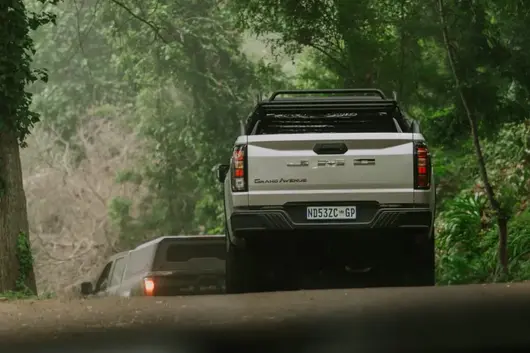

September 2026, pasaran kereta baru Australia serahkan 108,778 unit, meningkat 1.8% secara tahun ke tahun. Gelombang elektrifikasi terus merentasi pasaran: kereta elektrik tulen dengan 26,287 unit, 24.2% bahagian mengungguli kereta petrol (26,018 unit, turun 36.2% secara tahun ke tahun) selama dua bulan berturut-turut, jualan elektrik tulen melonjak 117.7% secara tahun ke tahun; hybrid plug-in meningkat 122.7% hingga 10,072 unit, BYD dan Tesla menjadi pemenang terbesar. Ford Ranger kembali merebut kejuaraan jualan keseluruhan.

Pasaran Pickup mengecut, model diesel tradisional merosot serentak
Berdasarkan statistik model, 24 model pickup di pasaran Australia pada September terjual sebanyak 18,406 unit, menurun kira-kira 13% berbanding tahun sebelumnya; blok kenderaan komersial ringan keseluruhan turun 13.2%, membentuk kontras jelas dengan pasaran SUV yang meningkat 6.1%.

Pickup memikul tugasan berat dan tarik cerucuk, elektrifikasi secara semulajadi ketinggalan berbanding kenderaan penumpang, tetapi dengan harga minyak tinggi dan tekanan transformasi, model diesel tradisional telah turun serentak selama beberapa bulan: Isuzu D-Max terjual 1,866 unit (-6.2%), Mitsubishi Triton 1,202 unit (-30.6%), GWM Cannon 852 unit (-31.6%), Mazda BT-50 843 unit (-22.5%), Kia Tasman 355 unit (-56.0%), Nissan Navara 338 unit (-34.9%), Volkswagen Amarok 244 unit (-42.7%), KGM Musso 85 unit (-38.4%), Jeep Gladiator hanya 5 unit (-80%); Toyota Land Cruiser 70 jatuh 96.1% secara tahun ke tahun hingga 36 unit.

Ranger kembali ke puncak, kedudukan teratas ditetapkan
Puncak jualan pickup Australia pada September adalah Ford Ranger, serahkan 5,062 unit pada September, meningkat 4.0% secara tahun ke tahun, berganda dari 2,440 unit pada Ogos, sekaligus mengatasi Toyota RAV4 (4,624 unit) dan Tesla Model Y (4,476 unit), menjadi model paling laris di keseluruhan pasaran. Tempat kedua dan ketiga masing-masing Toyota Hilux (4,455 unit, -11.7%) dan Isuzu D-Max (1,866 unit, -6.2%); BYD Shark 6 dengan 1,492 unit menduduki tempat keempat, Mitsubishi Triton dengan 1,202 unit tempat kelima, GWM Cannon, Mazda BT-50 masing-masing 852 unit, 843 unit terletak tempat keenam, ketujuh.

Dari segi kumulan tahunan, Ranger 37,858 unit, Hilux 36,616 unit, Model Y mengejar rapat dengan 35,930 unit, perbezaan ketiga-tiganya hampir dua ribu unit, juara tahunan masih wujud ketidakpastian.
Jenama China tumbuh lawan arus, Pickup Saiz Penuh berbeza
Yang naik lawan arus hampir keseluruhan jenama China. BYD Shark 6 hybrid plug-in di tempat ke-4 jadual pickup serahkan 1,492 unit, meningkat 25.1% secara tahun ke tahun; LDV T60 terjual 375 unit (+68.9%), jenama lebih tinggi Pickup Besar Terron 9 terjual 239 unit (+195.1%), Foton Tunland V7 terjual 129 unit, JAC T9 terjual 58 unit (-47.3%). Pickup jenama China sebanyak 3,145 unit, menyumbang kira-kira 17% pasaran pickup bulan itu; jualan kenderaan buatan China di Australia pada September 42,358 unit (+63.8%), manakala bekalan negara tradisional tempat asal pickup Thailand turun 15.2% secara tahun ke tahun.

Perbezaan pasaran Saiz Penuh jelas: Chevrolet Silverado terjual 154 unit (-1.3%), Silverado HD terjual 139 unit (-26.5%), RAM 1500 terjual 145 unit (-38.3%), RAM 2500/3500 masing-masing terjual 68 unit (+61.9%), 32 unit; Ford F-150 terjual 128 unit (dasar rendah meningkat mendadak), Toyota Tundra hybrid terjual 104 unit (+92.6%).

Penutup: Data September menggariskan gambaran yang lebih kompleks daripada "menang melalui elektrifikasi": Ranger凭借供给恢复短暂"回血" -> Ranger mendapat "semangat" sementara akibat pemulihan bekalan, sukar menutupi pengecutan berterusan pasaran pickup tradisional yang didominasi diesel; jenama China adalah kutub pertumbuhan utama, tetapi pertumbuhan bukan sepenuhnya bergantung pada elektrifikasi - Shark 6 dengan status hybrid plug-in meningkat 25.1% secara tahun ke tahun, manakala model China seperti LDV T60, Terron 9 yang kuat lawan arus sebaliknya adalah kenderaan diesel, harga sebenar yang menentukan jualan, kuasa produk dan kebaruan model. Arah elektrifikasi pickup jelas, namun jauh dari fasa penentuan.

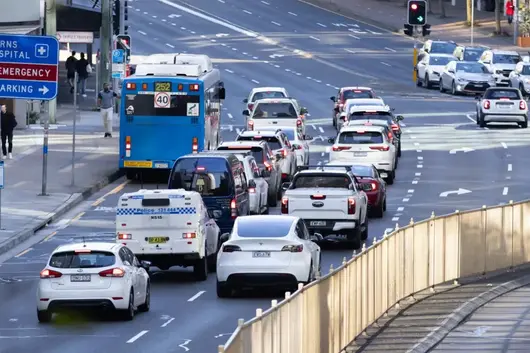



It is worth noting that this new vehicle is not a product independently developed by Honda from scratch, but is expected to adopt Mitsubishi Group as a base, through OEM (Original Equipment Manufacturer) cooperation, with Mitsubishi responsible for production, followed by sales under the Honda badge. Although the official name and design details of the new vehicle have not been announced, for Honda which has long lacked traditional body-on-frame pickup products, this is undoubtedly a strategic shift worth monitoring.
According to information disclosed by Japanese media, Honda is coordinating with Mitsubishi Group to obtain OEM supply of Triton, expected to be produced by Mitsubishi's factory in Thailand and sold in Southeast Asia under the Honda brand. If the plan is successfully implemented, this new Honda pickup could be seen as early as 2028, and may further expand to other overseas markets in the future.

This cooperation method is actually not complicated. Simply put, Mitsubishi is responsible for providing existing mature models, while Honda utilizes its own brand influence and sales network to push the products to the market. For Honda, the biggest benefit is not having to invest a large amount of funds to develop a new pickup platform, while also shortening the time required for new vehicle R&D and market launch.
As for Mitsubishi, supplying Triton to Honda can also help the Thailand factory increase production volume and improve the utilization rate of existing production facilities. Therefore, this cooperation has practical commercial value for both parties. However, current related news still comes from Japanese media reports, and Honda and Mitsubishi have not yet officially announced the final specifications, exterior design, and launch countries of the new vehicle.

Actually, Honda is not completely without pickup products. The Ridgeline sold by the brand in the North American market is currently a quite special pickup, however, it adopts Unibody body construction design, which has obvious differences from traditional pickups like Toyota Hilux and Mitsubishi Triton.

Adopting Unibody construction design mainly emphasizes daily driving comfort and practicality, not the traditional Ladder Frame structure. The characteristic of Ladder Frame is that the body and chassis adopt a separate structure, which can be reinforced for load capacity, towing, and complex terrain. Therefore, it has long been the main design for traditional pickups. In the Southeast Asian market, especially in Thailand, Malaysia, and Indonesia, such models are popular among off-road enthusiasts and family users in addition to commercial use.
If Honda directly adopts the Mitsubishi Triton platform, it can obtain a ladder-frame chassis, suspension structure, and four-wheel drive technology that has already been validated by the market, without the need to rebuild a complete R&D system. In fact, Honda previously sold a pickup named Tourmaster in Thailand, which was also launched in cooperation with Isuzu. Therefore, this cooperation with Mitsubishi can also be seen as Honda's second attempt to enter the traditional pickup market.

The current Mitsubishi Triton belongs to the sixth generation model, which made its global debut in Thailand in 2023. The new vehicle adopts a newly developed Ladder Frame chassis structure and is upgraded in terms of body rigidity, suspension, and powertrain.
If Honda ultimately adopts the existing Triton powertrain combination, then the new vehicle theoretically has the opportunity to achieve performance that is quite close. However, since the product is expected to be launched as early as 2028, whether it will continue to use the same 2.4L diesel engine, whether power will be adjusted, or whether other power versions will be launched, there is no further news at present. What can be confirmed is that adopting an existing mature platform will allow Honda to significantly lower the threshold for developing traditional pickups, which is also the most important advantage of the cooperation between the two parties.

When talking about the pickup market in Southeast Asia, Toyota Hilux is definitely a name that cannot be ignored. For a long time, Hilux has established a very strong competitiveness in many markets relying on its durability, reliability, well-established after-sales network, and good used car residual value. Besides Hilux, there are also mature rivals such as Isuzu D-MAX, Ford Ranger, and Mitsubishi Triton on the current market. For Honda preparing to join this field, the challenge is obviously not small.
First, traditional pickup buyers attach great importance to the durability, maintenance cost, and long-term usage performance of vehicles. Even though Honda has established a good brand reputation in the passenger car field, it will still take time to let consumers accept a diesel pickup truck hanging the Honda badge.
Secondly, price will also become a key factor. Assuming the Honda version Triton adopts a very close mechanical structure to the original factory model, Honda must establish its own product characteristics through exterior design, interior equipment, driving assistance systems, and price positioning. Otherwise, consumers are likely to directly choose the Mitsubishi Triton.

On the other hand, Honda itself owns a large passenger car customer base, which may also become an advantage for the new vehicle. For consumers who already own Honda City, Civic, or CR-V, if they hope to purchase a vehicle more suitable for cargo, towing, or off-road purposes in the future, they will have another option to stay within the Honda brand.
Therefore, Honda's entry into the pickup market does not represent an ability to immediately shake Hilux's status, but if the product pricing is reasonable and is combined with existing dealer networks, there is indeed a chance to become a new competitor in this market.
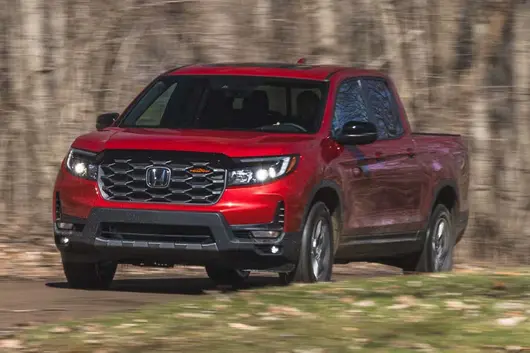



August 2026, Australia new car market deliveries reached 108,760 units, up 4.9% year-on-year. Behind the stable figures lies a historic shift in powertrains: 27,078 Battery Electric Vehicles (BEVs) were delivered, surging 169.4% year-on-year. With a market share of 24.9%, BEVs surpassed petrol, diesel, and hybrid for the first time, becoming the top powertrain type in Australia; Plug-in Hybrid Electric Vehicles (PHEVs) also grew 171.1% to 10,591 units. The Tesla Model Y topped the overall model sales list, while BYD secured second place among brands with 8,231 units (+68.8%), making New Energy brands the biggest winners of the month.

As pickups bear heavy-load tasks such as hauling, towing, and off-roading, their requirements for range and power are far higher than ordinary passenger cars; consequently, their electrification lags significantly behind the overall market — but August data shows they can no longer stay isolated.

Toyota Hilux retained the pickup title with 4,833 units, but saw only a slight increase of 0.2% year-on-year, essentially standing still. Ford Ranger suffered a cliff-like drop, delivering only 2,440 units, plummeting 50.6% year-on-year — primarily due to a temporary delivery halt caused by safety concerns with side air curtains, resulting in a monthly loss of about 2,500 units, which is a supply-side shock rather than a demand collapse.

Isuzu D-Max delivered 1,708 units (-26.2%), Mitsubishi Triton 1,161 units (-23.8%), and Mazda BT-50 recorded 804 units (-29.4%); all three Japanese diesel pickups declined by double digits. Volkswagen Amarok 306 units (-27.7%), Nissan Navara 277 units (-53.2%), and Kia Tasman performed the worst with only 312 units, down 61.1% year-on-year.

Pickups manufactured in China continued to expand their presence. BYD Shark 6 led Chinese brand pickups with 1,385 units, followed closely by Great Wall Cannon with 827 units. Adding Maxus LDV pickups (T60 + Terron 9 totaling 423 units), Foton Tunland V7 (124 units), MG U9 (115 units), JAC T9 (77 units), and others, total Chinese pickups reached approximately 2,951 units, accounting for about 18.5% of the Australian pickup market. In contrast, vehicles manufactured in Thailand delivered 15,658 units in August, down 24.7% year-on-year, driven almost entirely by the contraction of the pickup segment — Thailand is the main production base for Japanese pickups.

Amidst the general decline, BYD Shark 6 grew 9.8% year-on-year, reaching a year-to-date total of 12,094 units, becoming one of the few mainstream pickups with positive growth. Its PHEV positioning balances electric driving experience with pickup utility needs, coupled with BYD's strong brand power and more competitive pricing, opening up new volume outside of traditional diesel pickups. Notably, New Energy itself is not a guarantee of growth; brand momentum, pricing, and supply rhythm are key.

The full-size pickup market showed clear divergence. Ford F-150 delivered 152 units (surged from a low base), Chevrolet Silverado 1500 delivered 148 units (-6.9%), and RAM 1500 fell 32.6% to 149 units. Premium pickups above A$100,000 overall grew 18.1% to 764 units, forming a contrast with mainstream market weakness.

Final thoughts: August data clearly shows that even in the pickup segment where electrification is inevitably lagging, traditional fuel powertrains are also feeling a clear chill. Ranger's delivery halt amplified the decline. BYD Shark 6's growth against the trend validated the viability of PHEVs in the pickup market. Chinese brands like Great Wall Cannon, Maxus LDV, and others became an undeniable force in the Australian pickup market through stable sales volumes and forward-looking new energy layouts. With Ranger resuming deliveries in September and more hybrids and EV pickups entering the market, how the Australian pickup landscape will change again remains to be seen.


Pada Ogos 2026, pasaran kereta baharu Australia menghantar 108,760 unit, meningkat 4.9% berbanding tahun sebelumnya. Di sebalik angka yang stabil adalah pergantian bersejarah dalam jenis kuasa: Kereta elektrik tulen dihantar sebanyak 27,078 unit, melonjak 169.4% berbanding tahun lalu, dengan perkongsian 24.9% untuk kali pertama melebihi petrol, diesel dan hibrid, menjadi jenis kuasa terbesar di Australia; Hibrid sambungan juga meningkat 171.1% kepada 10,591 unit. Tesla Model Y menduduki puncak senarai jualan semua model, BYD dengan 8,231 unit (+68.8%) kekal di kedudukan kedua untuk jenama, jenama kenderaan baharu menjadi pemenang terbesar bulan ini.
Kereta Pickup kerana menanggung tugas berat seperti memuat, menarik, dan off-road, permintaan terhadap jangkauan dan kuasa jauh lebih tinggi daripada kenderaan penumpang biasa, oleh itu, elektrifikasi nya jelas tertinggal daripada pasaran keseluruhan— tetapi data Ogos menunjukkan, ia tidak lagi mampu berasingan.
Toyota Hilux dengan 4,833 unit mengekalkan kejuaraan Pickup, tetapi hanya meningkat sedikit 0.2% berbanding tahun lalu, pada dasarnya tidak bergerak. Ford Ranger menghadapi kejatuhan mendadak, hanya menghantar 2,440 unit, turun drastis 50.6% berbanding tahun lalu— sebab utama adalah keselamatan kantung angin sisi menyebabkan penghantaran sementara dihentikan, kerugian tunggal bulan kira-kira 2,500 unit, ini merupakan kejangan dari sisi penawaran bukan kejatuhan permintaan.
Isuzu D-Max menghantar 1,708 unit (-26.2%), Mitsubishi Triton 1,161 unit (-23.8%), Mazda BT-50 ialah 804 unit (-29.4%), tiga Pickup Diesel Jepun semuanya turun dua digit. Volkswagen Amarok 306 unit (-27.7%), Nissan Navara 277 unit (-53.2%), Kia Tasman paling buruk, hanya 312 unit, turun drastis 61.1% berbanding tahun lalu.
Kereta Pickup buatan China sentiasa memperluas kehadiran. BYD Shark 6 dengan 1,385 unit memimpin Pickup jenama China, Great Wall Cannon dengan 827 unit menyusul di belakang, ditambahkan LDV Pickup bersama (T60 + Terron 9 jumlah 423 unit), Foton Tunland V7 (124 unit), MG U9 (115 unit), JAC T9 (77 unit) dan lain-lain, jumlah Pickup China adalah kira-kira 2,951 unit, mewakili sekitar 18.5% pasaran Pickup Australia. Sebaliknya, kenderaan buatan Thailand dihantar 15,658 unit pada Ogos, turun 24.7% berbanding tahun lalu, hampir sepenuhnya didorong oleh penyusupan kategori Pickup— Thailand adalah pangkalan utama pengeluaran Pickup Jepun.
Di tengah derangan penurunan, BYD Shark 6 meningkat 9.8% berbanding tahun lalu, terkumpul 12,094 unit dari permulaan tahun hingga sekarang, menjadi salah satu Pickup terbitan utama yang menunjukkan pertumbuhan positif. Posisi Hibrid Sambungan mengimbangi pengalaman elektrifikasi dan keperluan praktikal Pickup, disertai kekuatan jenama BYD dan penetapan harga yang lebih kompetitif, menciptakan jumlah baharu di luar Pickup Diesel tradisional. Perlu diperhatikan, kenderaan baharu sendiri bukan jaminan pertumbuhan, tenaga jenama, harga dan irama penawaran adalah kunci.
Pasar Pickup Saiz Penuh menunjukkan pembezaan yang ketara. Ford F-150 menghantar 152 unit (lonjakan tinggi dari asas rendah), Chevrolet Silverado 1500 menghantar 148 unit (-6.9%), RAM 1500 turun 32.6% kepada 149 unit. Pickup mewah di atas 100,000 Dolar Australia secara keseluruhan meningkat 18.1% kepada 764 unit, membentuk kontras dengan kelemahan pasaran utama.
Tulisan Akhir: Data Ogos menunjukkan jelas, walaupun dalam kategori Pickup yang lambat dalam elektrifikasi, kuasa tradisional Bahan Api juga sudah merasakan kesulitan yang ketara. Penghantaran Ranger yang dihentikan memperparahkan penurunan. Pertumbuhan melawan arus BYD Shark 6 mengesahkan kebolehlaksanaan Hibrid Sambungan dalam pasaran Pickup, Great Wall Cannon, LDV dan jenama China lain berkat volume jualan yang stabil dan susunan kenderaan baharu yang proaktif, menjadi kekuatan yang tidak boleh diabaikan dalam pasaran Pickup Australia. Dengan Ranger memulakan penghantaran pada September, lebih banyak Hibrid dan Pickup Elektrik masuk, bagaimana susunan Pickup Australia akan berubah, mari kita tunggu.

Recently, an exclusive report from US media sent shockwaves through the global pickup community: Ford is developing a Bronco pickup, while the production prospects of the currently sold Ranger in the US are clouded.

According to the report, Ford "currently has no plans" to produce the next-generation Ranger at the Michigan Assembly Plant in Wayne, Michigan. This factory, which also produces the Bronco SUV and Ranger, is set to transform into an exclusive Bronco production base by around 2030. Taking over the Ranger production line will be a midsize pickup based on Bronco, expected to launch between 2029 and 2030.

However, there is disagreement among media outlets regarding whether Ranger will stay or go in the US. Some believe Ranger will be completely discontinued and directly taken over by the Bronco pickup; others believe Ranger will be relocated to the Blue Oval City plant in Tennessee and continue to exist in a new generation by 2029 - Ford has confirmed it will produce a fuel pickup with a size close to Ranger in Tennessee, but has not specified if it will still be called Ranger. Industry forecasting firms judge: A Bronco-styled midsize pickup will replace Ranger at the Michigan plant in fall 2029.

In response to the reports, Ford's official response was vague, stating only that they do not comment on "future product speculation, much of which is inaccurate".
In April 2026, Ranger US sales volume was only 5,245 units, a year-on-year plunge of 25%, even being surpassed by Mustang; while the Bronco brand's sales volume in Q3 2025 grew 41.3% year-on-year, achieving its best quarterly performance in history. Using a high-premium Bronco pickup to replace the weak-selling Ranger makes complete financial sense.

For overseas consumers, the biggest concern is whether US market changes will affect the global market. The answer is: Ranger is basically unaffected. Ranger is a true global model, with independent production lines set up in Thailand, South Africa, Argentina, etc., supplying Southeast Asia, Australia, Europe, Africa, and South American markets. The US Michigan plant only supplies North America; its production line adjustments have no direct relation to overseas Ranger.
However, the situation for the Bronco pickup is different. The Bronco brand has accelerated its global expansion in recent years, and Bronco SUVs have already entered markets like Europe and Australia. If the Bronco pickup succeeds in the US, Ford is very likely to push it overseas, forming a "two-car strategy" with Ranger - Ranger focuses on utility attributes and value for money, while the Bronco pickup focuses on off-road lifestyle and brand premium. The two cover different groups, rather than simple substitution.

Final Thoughts: The changes surrounding the Ranger and Bronco pickups are currently still in the rumor and prediction phase. What is certain is: the Bronco pickup is on the way, and the Michigan plant will turn into an exclusive Bronco base; what is not yet determined is whether Ranger will be completely discontinued in the US or continue at another plant. For overseas markets, Ranger's production line independence means it will not be impacted in the short term; but in the long term, the globalization of the Bronco pickup may change the global midsize pickup competitive landscape, complementing rather than substituting Ranger. In 2029, everything will be revealed.
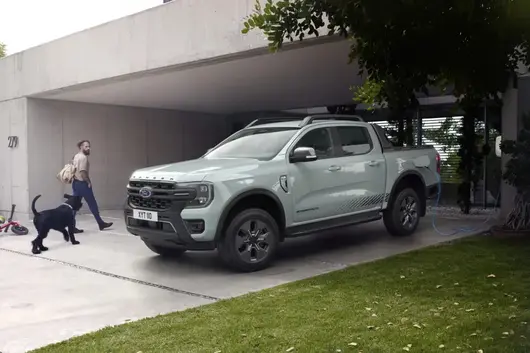

In July 2026, the Thailand pickup market totaled only 11,134 units for the month, continuing a weak trend. Toyota Hilux TRAVO/REVO secured the top spot with 5,358 units, holding a 48.1% share, accounting for nearly half the market; Isuzu D-Max sold 3,803 units, with a 34.2% share. The two Japanese brands combined accounted for over 82% share, and the dual oligopoly structure remains stable.

Internally, the Toyota Hilux series shows "concurrent operation of commercial and passenger lines": Travo commercial version sold 3,242 units, Revo passenger version sold 2,116 units; the former has a base advantage, while the latter's continued sales volume reflects that demand for high-end passenger pickups has not completely disappeared. Hilux Champ ranked fourth with 479 units, a 4.3% share, complementing Travo as a product.

Isuzu D-Max remains firmly in second place, locking the top 2 positions with Toyota. Ford Ranger sold 568 units ranking third, with a 5.1% share, securing its place among American pickups; Mitsubishi Triton sold 403 units ranking sixth, with a 3.6% share.

What is worth noting is the performance of new energy pickups. Geely Radar (GEELY Radar) ranked fifth with 409 units, a 3.7% share, surpassing Mitsubishi Triton to become the largest pure electric pickup in July sales. King Long Dracon sold 16 units, Foton e-Tunland sold 10 units, Deepal Hunter K50 sold 3 units. Chinese brands have formed a cluster effect in the pure electric pickup track. Although the overall share of pure electric pickups is still less than 4%, in the context of the continuous decline of traditional fuel pickups, electrification may be a key variable to break the Japanese monopoly.

July's slump was not accidental. Suwat, Vice Chairman of the Federation of Thai Industries and Chairman of the Automotive Industry Group (AIC), had previously warned: In 2025, the proportion of Thailand's pickup sales to the overall market dropped to 23%, a historic low. Between 2010 and 2022, this proportion remained at around 45% for a long time. In 2023, it dropped to 34% (about 265,000 units), in 2024 it fell to 23% (about 163,000 units), and in 2025 it remained at 23% but the absolute volume dropped to about 144,000 units.

High household debt, rising non-performing loans, and weak domestic purchasing power are the core reasons for the continuous pressure on the pickup market. AIC urged the government to introduce stimulus policies as soon as possible, because the localisation rate of the pickup industry is as high as 90%, covering more than 2,500 parts suppliers. Market contraction will have a chain impact on the entire supply chain.

Exports are also under pressure. Affected by the Middle East situation, Thailand's car exports declined by more than 20% in the past two months. From January to May 2026, Thailand exported 49,961 cars to the Middle East, a year-on-year drop of 30.4%. The Middle East is Thailand's third-largest export market, accounting for 20% of total exports in 2025. Four-door pickups and PPVs (pickup-derived SUVs) are their main demand products. Combined with weak domestic demand, Thailand's pickup industry is facing a dual squeeze.

Final Thoughts: July data once again confirms that the downward trend of the Thailand pickup market has not bottomed out. The dual oligopoly structure of Toyota and Isuzu is difficult to shake in the short term, but Chinese pure electric pickups represented by Geely Radar are quietly accumulating momentum. How to find a balance between domestic demand stimulus, export diversification, and electrification transformation will be the key to determining whether the Thailand pickup market can emerge from the valley.

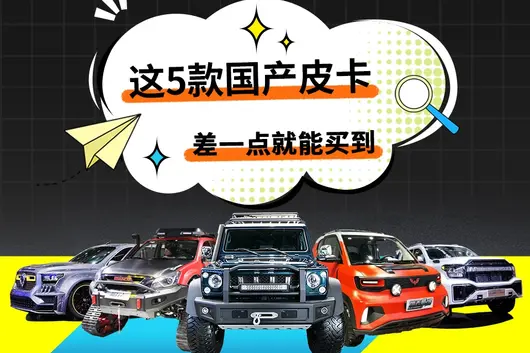
When we see overseas pickup modifications or designs, we always sigh, why haven't domestic pickup companies officially launched these cars? Actually, domestic car companies also have a deep understanding of pickup modifications, but constrained by various regulations, many very interesting models cannot be mass-produced, which is indeed a pity. However, I believe that with the progress and iteration of regulations, these types of vehicles will eventually gain recognition from the management and be legally allowed on the road. So today let's take a look at what very interesting but not mass-produced pickup products there are domestically.

3 Types of 6-Wheel Pickups:
BJ80 6x6 Pickup Version, Wuling Hongguang MINI EV 6-Wheel Pickup, Great Wall Cannon CYBERP!CKUP Chaojing Co-Creation Edition
In the past when domestic pickups were not blooming everywhere, when we saw high-definition large pictures of those overseas high-performance cars, Mercedes-Benz 6x6 often appeared. This pickup almost became the ultimate dream model for many people, little did we know that multiple 6x6 pickup products had also appeared in our country.
The earliest one is the BJ80 6x6 pickup from Beijing Automotive Group at that time. At the 2018 Beijing Auto Show, BAIC launched this tall and mighty pickup built on the BJ80. It added a rear axle on the original car basis, and the rear part was changed to an open cargo box style, becoming a 6-wheel pickup. The power part adopts a plug-in hybrid system. The last axle is driven by a motor, but there is also a drive shaft from the middle axle to the last axle. Moreover, all wheels of this car used portal axles to increase ground clearance. The rear two axles use a helical spring multi-link structure. The car attracted many people's attention at the auto show scene at that time, but based on the market situation at the time, it was destined to be just for display purposes and cannot be mass-produced.


At the 2020 Chengdu Auto Show, another 6x6 pickup product appeared, and this car was even less likely to be mass-produced than the previously introduced BJ80 6x6. It is the Wuling Hongguang MINI EV Special Edition. This is because Wuling Hongguang MINI EV was sold extremely hotly that year, it is an absolute internet-famous product. So Wuling took advantage of the heat and jointly launched this 6-wheel heavily modified pickup with a modifier, used for promotion and attraction at the auto show.


This small 6-wheel pickup added a cargo box design on the original car basis, and to carry this cargo box, an axle was added directly to the rear, forming the form of a 6-wheel pickup. From the chassis form, this car still retains the original drive form, "middle axle" motor drive. With such a small volume and load capacity, it is absolutely impossible to mass-produce.

The most hopeful mass production one is the Great Wall Cannon 6x6 model CYBERP!CKUP co-created with Chaojing launched by Great Wall Cannon at the 2023 Shanghai Auto Show. This car is said to come from the first Chinese 6X6 super off-road platform built by Great Wall, which will break the situation of foreign enterprises dominating 6x6. This car is equipped with a 3.0T V6+9HAT hybrid system, outputting 260kW/500N・m, pure electric range 110km (CLTC), comprehensive fuel consumption 8.5L/100km. In terms of off-road configuration, standard equipment includes 5 electronic differential locks, all-terrain adaptive system can realize 8 road conditions, and equipped with 33-inch Cooper AT3 tires. Because it is a hybrid model, considering battery safety, the battery group is 750mm off the ground to prevent collision, and the vehicle can also achieve 3.3kW external discharge to meet camping power consumption.


Whether looking from the publicity direction, or from the so transparent release of specific vehicle parameters, Great Wall obviously intended to mass-produce it; but to this day there is no specific mass production news, which is bound to make people regret.
Great Wall Cannon Hypercar Pickup
As the leader of domestic pickups, Great Wall Pickup is absolutely all-around in "showcasing creativity". Previously we introduced 6-wheel pickups, and at the 2021 Guangzhou Auto Show, a Great Wall Cannon Hypercar Pickup was also launched. So Great Wall Pickup has not only products in the "off-road performance direction", but also works in the "track performance direction".

This Hypercar Pickup also had a naming activity at that time, expected to be listed in the "Bullet" series. The car has an ultra-wide widebody kit, and the body height is reduced, presenting a low-slung style overall. This modification style has relatively faithful fans in Thailand, and its appearance in China is the top pickup modification. The engine hood middle part rises, with air intake holes. The front bar, wheel arches, side skirts, and rear are equipped with widebody kits, making the horizontal visual of the whole car look very wide. Front and rear wheels also adopted the multi-spoke style commonly used in performance cars, matched with 285/40R22 tires, and the front wheels have a slight outward angle, improving the cornering stability of the whole vehicle.


The rear cargo box of the vehicle has a sports roll cage, and there is also a spoiler commonly used in performance cars on the top and above the tailgate, plus a huge diffuser in the middle of the rear bar, giving the whole car better aerodynamic structure and also more aesthetically pleasing. The bottom of the cargo box has a huge dual-side dual-out exhaust, looking full of performance. If this car can be mass-produced, it will definitely be a very personalized product in the performance car field, and will definitely expand influence, bringing pickups into the market of track performance cars.


Jiangxi Isuzu Fulfiller (D-MAX Modified Crawler Vehicle)
In addition to domestic brands, joint-venture pickups have also launched some interesting products in China. D-MAX has always been a favorite of many off-road players. Even if the manufacturer does not launch modified cars, there are also many experts in the civilian sector modifying D-MAX that look very good. But the manufacturer still wants to build a brand image in terms of off-road, so D-MAX modified cars can often be seen at auto shows.

At the 2020 Chengdu Auto Show, Jiangxi Isuzu displayed a D-MAX track vehicle, named Fulfiller. The upper part of the whole vehicle basically has no big change, the shape still retains the factory design. A luggage rack was added to the roof, a gantry was added to the rear, and there is a snorkel on the right, very much off-road style. The place that makes it more "wild" is mainly the lower part.


The tire part was directly changed to tracks, increasing the contact area with the road surface, making the vehicle less prone to getting stuck. The track wheels are directly connected on the factory flange, with a huge gear shape driving the tracks to roll. The fixing device of the tracks is connected to the suspension. Such a design should have greater usage value in mud and snow, and the visual impact is also comparable to 6-wheel pickups. If this pickup can really be mass-produced, then this car should be often seen galloping in the winter of the northern grasslands.

Summary:
It is not that domestic enterprises do not have innovation and creativity awareness, from the above models, it can be seen that pickups still have huge potential in modification, and modifications in all directions can extend imaginative schemes. But due to restrictions in various aspects, it led to these cars not being able to go from the showroom to mass production, which is also a very regrettable thing. Do you think these pickups are interesting? Welcome to discuss with us in the comments section.

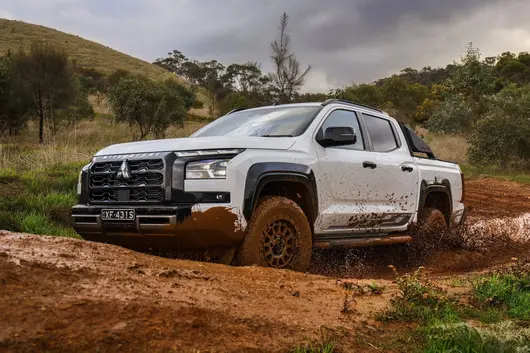
The electrification transformation of mainstream Japanese pickups has finally taken a substantial step. Recently, according to foreign media reports, Mitsubishi Motors has confirmed the launch of a hybrid version of the Triton pickup, this model will go into mass production along with the new Pajero hybrid SUV through the electrification upgrade of its Thailand production base. For this, Mitsubishi plans to add a 16 billion baht investment in the Thailand factory, aiming to build it into a global export hub for electrified pickups and rugged SUVs by 2030.

The first mass-produced version will be the HEV (Hybrid Electric Vehicle) version of the Triton, subsequently, further progress will be made on the R&D of PHEV (Plug-in Hybrid Electric Vehicle) and even fully electric pickups based on battery technology iterations and global market demand. Mitsubishi Global Engineering and Product Strategy Head previously clearly stated, the hybrid solution can be directly compatible with the existing body-on-frame platform, requiring no large-scale modifications to the chassis or underframe structure, resulting in lower short-term implementation costs, and better ensuring the heavy-load capacity and off-road reliability of the pickup models, making it the most pragmatic technical path at present.

Notably, Mitsubishi did not adopt the e-Power extended-range technology from alliance partner Nissan, instead choosing to independently develop a hybrid system exclusive to pickups, the core purpose is to retain the core performance attributes of rugged pickups, avoiding sacrificing load capacity, towing capability, and off-pavement adaptability due to electrification.

Mitsubishi's acceleration of pickup electrification is essentially a market choice forced by the wave of Chinese new energy pickups going overseas. Taking Australia, a global core pickup market, as an example, in 2025 the Mitsubishi Triton sales ranked 17th; while the BYD Shark 6 plug-in hybrid pickup caught up in just one year, ranking 18th. Apart from BYD, the Great Wall Cannon Alpha plug-in version has also landed in the Australian market, combined with the entry of the Ford Ranger plug-in version, the Australian pickup market originally monopolized by diesel power has seen electrification competition fully start.

Unlike Chinese brands that generally prioritize layouts of plug-in hybrids and pure electric routes, Mitsubishi chooses to enter the pickup track from hybrid electric, which fits the core demands of traditional pickup users for reliability and low operating costs, and also avoids the pain points of insufficient charging infrastructure in remote mining areas and off-road scenarios. However, this conservative route also faces challenges: current Chinese brand plug-in hybrid pickups have already achieved technical advantages of all-electric range over 100 km and combined range exceeding 1,000 km, price ranges continue to drop, further squeezing the survival space of traditional diesel pickups.

Conclusion: For Mitsubishi, electrification upgrades are not only a mandatory choice to respond to global emission regulations but also a core layout to resist the overseas expansion of Chinese pickups. With the promotion of the Triton hybrid version, the global mid-size pickup market will welcome a direct confrontation between Japanese hybrids and Chinese plug-in hybrids. The debate on pickup electrification technical routes will also extend from sales competition at the market end to the long-term game of technical paths.




© 2024 Bitauto.com. All Rights Reserved.
Bitauto (www.yiche.com and www.bitauto.com) is one of the most visited automotive websites in China. We provide detailed info on Chinese car brands available in your area. Please note that the information provided on this website is based on publicly available data and is for reference only. It may not be fully updated or accurate at all times.

Help us improve our website


