

HomeSeagull

Search History
Popular Searches
Dealer Login / Sign Up

On the evening of October 29, BYD released its 2026 Q3 report: Third quarter revenue was 221.488 billion yuan, up 13.59% year-on-year; net profit attributable to the parent company was 10.02 billion yuan, up 28.08% year-on-year, with single-quarter profit returning to the 10-billion yuan mark. Looking at the longer term, it is even more obvious: global sales for the first three quarters were 3.1316 million vehicles, of which overseas passenger cars and pickups sold 1.338 million, a surge of 92% year-on-year, with the overseas sales ratio rising to 42.7% — roughly one out of every two cars sold is exported overseas.

Three Numbers Behind the 10 Billion
Looking solely at the third quarter, the profit growth rate (28.08%) clearly outpaced the revenue growth rate (13.59%), indicating that the ability to generate revenue per vehicle is strengthening. September single-month sales surged to 463,600 vehicles, breaking the annual record, up about 17% year-on-year; overseas sales for that month were 179,900, surging 153.9% year-on-year, with the export ratio nearing 40%. Among them, September new energy exports exceeded 180,000 vehicles, up about 154% year-on-year, making it the single automaker with the fastest overseas expansion pace in the entire industry.
The profit structure is also optimizing simultaneously. Fang Cheng Bao, Denza, and Yangwang, the three high-end brands, had a combined sales volume of 410,000 vehicles for the first three quarters, up 75% year-on-year, accounting for over 13% of total sales. The proportion of high-end vehicles rising, combined with overseas market per-vehicle profit generally being better than domestic, jointly pushed the third-quarter gross margin up. Institutional research reports generally believe that overseas sales volume continues to expand, and profit elasticity is still ahead.
European Factory Starts Operations
Supporting overseas growth is not just the export fleet, but also local manufacturing. The Szeged, Hungary factory officially entered the mass production phase in October; this is BYD's first new energy passenger vehicle base in Europe, with Phase I having an annual capacity of 150,000 vehicles, the first models coming off the line being Dolphin Surf (Seagull) and others. Against the backdrop of the EU levying additional tariffs on imported electric vehicles, local production means tariff costs go directly to zero, and cars bought by European users will be cheaper and delivered faster.
Tailwinds from the broader environment are also blowing. Market research institution data shows that in the first half of 2026, sales volume of Chinese brands in Europe was 531,900 vehicles, up 90.6% year-on-year, with growth far exceeding the overall European auto market, and BYD's cumulative registrations in Europe have caught up with Tesla. Overseas factories in Thailand, Brazil, Uzbekistan, and Indonesia had previously commenced production successively. Adding this key move in Hungary, "Chinese Export" is turning into "Global Manufacturing".
Overseas Markets are the Deciding Factor in the Second Half
Wang Chuanfu's previously set overseas annual sales target of 1.5 million vehicles, judging by the pace of 1.338 million in the first three quarters, will likely be exceeded. For an automaker selling millions of vehicles annually, the overseas proportion climbing from over 20% to over 40% means revenue structure, risk resistance ability, and brand premium have all changed a level of magnitude. The quality of this 10-billion-yuan profit report from the third quarter mainly comes from here.

Conclusion
To measure the globalization quality of an automaker, export volume is just the pass line, and overseas capacity landing is the bonus item. The highlight of BYD this quarter is not just single-quarter net profit breaking 10 billion, but the sound of machines turning at the Hungary factory — when overseas sales account for over 40% and European production lines start ramping up, this company earns not just the money from "China manufacturing cost advantage", but the money from the global market in the true sense. This path from selling cars to making cars is being verified with real money.
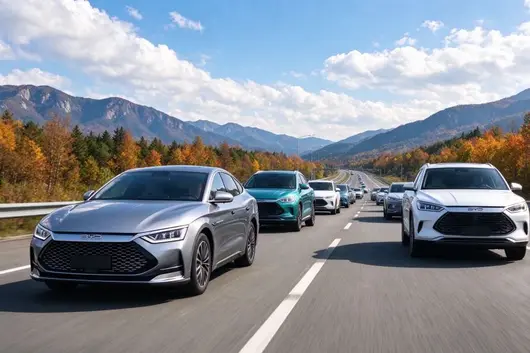

Which domestic cars are truly accepted abroad? For many brands there might be candidates, but my own answer is actually BYD.

BYD sold 4.6 million cars last year, ranking 6th globally, cumulative EV sales of 15 million units, the car manufacturer selling the most EVs worldwide is BYD.
In the UK, Brazil, Thailand, BYD has long been the top seller, even now, BYD has become official fleet vehicles for many countries, such as Pakistan, Cape Verde, Mexico, Philippines. Domestically, BYD has long also been ranked first in new energy vehicle procurement for official use.
So it's not just domestic consumers, foreign consumers also like BYD, Seagull, Yuan, Song, are all BYD models that sell very well. Many people ask me "why support BYD", I say it's still because it has good products at every price point. Seagull, Qin, Song, these price-friendly ones, BYD sells well, the mid-to-high end Denza D9 and Fang Cheng Bao Ti 7 also make a strong presence, D9 sold 100,000 in a year, Ti 7 sold extremely well within a few months of launch.

However, even so, many people online still criticize BYD, what does that prove? Nothing. Essentially, BYD is no different from Tesla, Toyota, or Apple; they are commodities, not currency, it's impossible to please everyone, but that's okay, sales can explain a lot, choices by consumers and the government sector can also explain a lot.

Some brands are hyped to the skies online, but not many are willing to support with real money, BYD's treatment is completely different, I think the only one who might truly defeat BYD is BYD itself.
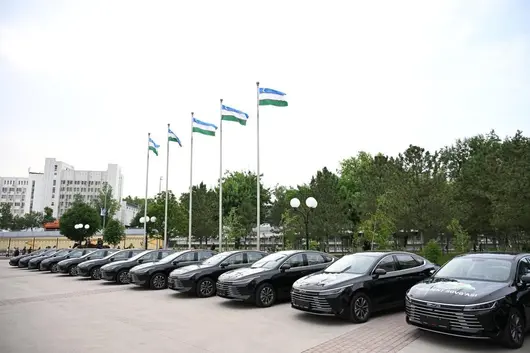

According to BYD's 2026 first-half financial report, its overseas passenger car and pickup sales reached nearly 790,000 units in the first half of the year, surging 67.9% year-on-year. Its business covers more than 120 countries and regions worldwide, securing sales leadership in new energy vehicles in core markets such as the UK, Brazil, and Thailand. Building on the high growth of the overall overseas market, BYD is gradually joining official rosters overseas, and the new energy government vehicle business is launching a "flourishing at multiple points" development pattern both domestically and internationally: there is national-level authoritative recognition in Uzbekistan, as well as bulk implementation in markets like Pakistan and Mexico; there is centralized procurement by domestic capital government agencies, and the police vehicle product matrix is continuously being perfected. The government vehicle expansion path of "overseas benchmarking leading, domestic continuous expansion" is becoming increasingly clear.
In my opinion, government and police vehicles represent the highest standards of quality, safety, and reliability for automotive products at the official level of a country. Being able to enter the government procurement systems of various countries is a greater test of a car company's comprehensive strength than selling well in the ordinary civilian market. Recently, President of the Republic of Uzbekistan Shavkat Mirziyoyev signed a presidential decree to award the BYD team the country's national-level medal—the "Medal of Friendship". This honor is the best evidence of BYD's deep cultivation of the Central Asian market. Following the start of production of the local new energy factory and the selection of BYD models for presidential fleet vehicles, this is another high-level recognition given to BYD by the Uzbekistan official, and a vivid example of Chinese new energy vehicles gaining trust in overseas government markets with hard power.

The recognition from Uzbekistan is not an isolated case; BYD's overseas government vehicle layout is extending from benchmark markets to broader regions. Nearly 100 BYD pure electric government vehicles have been delivered and put into use in Pakistan. This is the first time Pakistan has purchased new energy government vehicles on a large scale, making Pakistan a benchmark market for BYD's overseas police vehicle cooperation. At the same time, Cape Verde government fleet has been fully replaced with BYD models, and Hungary, Austria and other countries have also included BYD models in official vehicle systems such as foreign affairs reception.

For the professional niche of police vehicles, working conditions are complex, usage intensity is high, and rigorous requirements are placed on the comprehensive performance of vehicles. BYD's overseas implementation pace continues to accelerate, which is enough to show that the acceptance of domestic new energy products by overseas officials is improving substantially. In September, a batch of Dolphin police cars were delivered to the Philippine police, helping to advance the electrification of local official vehicles. Recently, dozens of Destroyer 05 units officially went into service with the Mexican police force. As of now, multiple models such as BYD SHARK pickups, Seal, Yuan UP, and Seagull have been delivered to police forces in many places in Mexico, adapting to various duty work. The consecutive landing of projects in the Philippines and Mexico marks that BYD new energy police vehicles have moved from single-point demonstration to the stage of scale and normalized application.

In terms of the domestic market, BYD continues to hold the first tier of new energy government vehicle procurement. Information published on the China Government Procurement Network shows that in the second half of the year, government agencies in many places across the country have successively completed bulk procurement of BYD government vehicles. In the first half of the year, BYD secured the first place in domestic new energy government vehicle government procurement sales with a market share of over 22%. The continued procurement in the second half of the year once again reflects the domestic government market's affirmation of the brand.
In the field of police vehicles, police vehicles such as Explorer Ti 7 have been delivered and put into service in many places across the country. BYD has built a full-category product matrix covering sedans, SUVs, and pickups, which can fully adapt to diverse police scenarios such as security patrol, traffic police law enforcement, and emergency response, empowering the electrification upgrade of police travel.

For a long period of time in the past, the global government vehicle track was basically firmly held by overseas joint venture brands; now the situation is changing. I always feel that breaking through the government vehicle market is the important signal for the Chinese automotive industry to truly go global and enter the high-end market. Once long monopolized by joint venture brands, BYD has now become the representative of the Chinese solution for global government electrification. Relying on solid technical strength and good brand credibility, BYD continues to write a new chapter of Chinese intelligent manufacturing, and continues to accelerate the layout pace of Chinese new energy vehicles in the global government market.
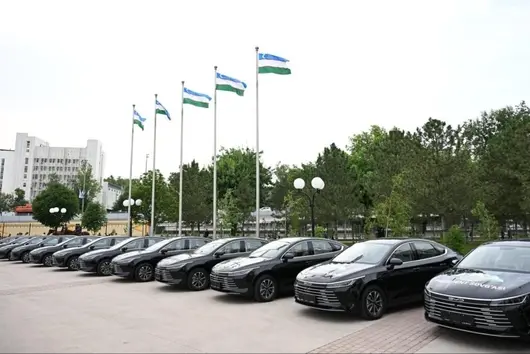


October 1st, BYD released the Production and Sales Bulletin for September 2026. Data shows that the company's global cumulative sales from January to September reached 3.1316 million units, a 3.94% year-on-year decline, but September's single-month sales rebounded strongly to 463,600 units, a 16.98% year-on-year increase, and a month-on-month increase of approximately 11%, showing a trend of "low beginning, high ending, monthly recovery". The overseas market became the biggest incremental engine, with overseas sales of passenger cars and pickups reaching 179,900 units in September, a 153.9% year-on-year increase, accounting for 38.8% of total overseas sales. Against the backdrop of intensifying industry competition and a 20.8% year-on-year drop in overall domestic passenger car retail sales, this performance report presents structural changes of "leading overseas, pushing high-end, expanding flash charge volume".

Brand Structure: High-end brand share surpasses 12%, Fang Cheng Bao stands on the 40,000-unit mark for two consecutive months
Individually, Dynasty Network and Ocean Network sold 394,900 units in September combined, up 11.01% year-on-year, continuing to bear the sales basic platform. Regarding high-end brands, Fang Cheng Bao sold 43,200 units in September, up 79.02% year-on-year; Denza sold 18,200 units, up 46.68% year-on-year; Yangwang sold 389 units, accounting for 13.32% of the group.
From a cumulative data perspective, the combined sales of Fang Cheng Bao, Denza, and Yangwang from January to September 2026 reached 408,400 units, up 56.3% year-on-year, with the share of total group sales rising to 13.04%, as the upsaling strategy continues to deepen. Fang Cheng Bao's performance was particularly outstanding, with 285,400 units delivered cumulatively from January to September, standing steadily on the 40,000-unit mark for July, August, and September, officially entering the "40,000 monthly sales tier".
The significance of upsaling lies not only in sales figures, but also in the reshaping of brand perception. When the combined share of the three high-end brands rose from about 9% in the same period of 2025 to 13.04%, BYD is proving itself capable of achieving extreme cost-performance in the mainstream market of 100,000-200,000 yuan, while also establishing product definition rights and brand premium power in the price range above 200,000 yuan.

Overseas Market: From "Incremental Engine" to "Half the Share"
The explosion of the overseas market is the most significant structural change for BYD in 2026. From January to September, overseas cumulative sales of passenger cars and pickups reached 1.3378 million units, up 90.7% year-on-year. Overall, overseas sales share has exceeded 40%. Earlier data shows that BYD's overseas revenue in the first half of 2026 reached 181.3 billion yuan, accounting for 52.57% of total revenue, surpassing domestic revenue for the first time in history. This is a landmark turning point, meaning BYD is no longer just a Chinese automaker, but a global one.
The strategic significance of the overseas market is reflected in three levels. Firstly, optimization of profit structure. The overseas average unit price is about 190,000 yuan, nearly 50% higher than domestic, directly driving the improvement of the overall gross margin level. In the first half of 2026, the gross margin of BYD's auto business was 22.33%. Secondly, the switch of growth engine. In an environment where the domestic price war continues and the industry's total retail volume shrinks, the overseas market provides incremental space independent of domestic competition. Citi gave BYD HK shares a target price of 142 HKD, with a potential increase of about 71%, and the capital market has given explicit recognition to the globalization logic. Thirdly, the deepening of localization operations. Factories in Thailand, Uzbekistan, and Brazil have been completed and put into production, with the Hungary factory to follow soon. The Brazil factory has an annual capacity of about 250,000 units. BYD's new energy vehicles have entered 121 countries and regions globally, with 8 self-owned RoRo ships put into operation. The overseas strategy is accelerating its shift from "product export" to "local manufacturing".

Annual Outlook: 5 Million Unit Target Difficult to Achieve, Steady with 2025's 4.6 Million Units Hopeful, Flash Charge Strategy Builds Systematic Barriers
Based on the cumulative sales of 3.13 million units from January to September, BYD needs to complete approximately 1.5 million units in the fourth quarter to match 2025 levels, corresponding to an average of about 500,000 units per month in Q4. Considering Q4 is the traditional peak season and the delivery pace of flash charge models continues to accelerate, this goal has a foundation for realization. It is estimated that 2026 will have about 1.9 million units, with growth expected to be 90%, domestic sales about 2.7 million units, down about 24% year-on-year, with growth contributed by going overseas.
Supporting this expectation is BYD's systematic layout at the product, technology, and infrastructure levels.
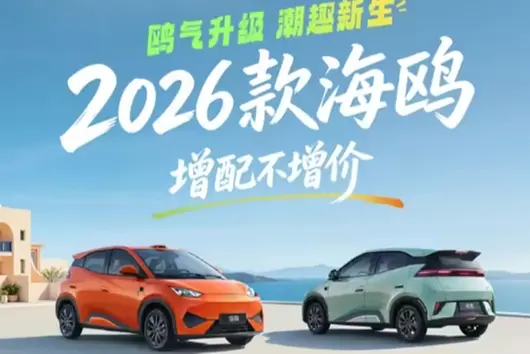
New products are being launched intensively. The Dynasty Network flagship sedan "BYD Grand Han" officially launched on October 13th, with a pre-sale price of 249,900-299,900 yuan, the pure electric version's highest CLTC range reaching 1008km, equipped with Yunjian-A dual-chamber air suspension, positioned as a key product for brand upward breakthrough. The Fang Cheng Bao S Series, first equipped with BYD Smart Ecosystem 2.0, launched on September 16th, exploring the personalized high-end market with the cabin concept of "customizable, evolvable, growable". Regarding the Ocean Network, Seal 08 debuted at the Chengdu Auto Show, and the Song Ultra EV, equipped with the second-generation Blade Battery and flash charge technology across the series, officially launched. The second-generation Seagull ("Seagull General") size significantly lengthened, motor power increased from 55kW to 95kW, expected to launch before year-end, expected to further push flash charge and smart driving capabilities down to the 70,000 yuan level market.

The flash charge strategy is accelerating. As of September 24th, BYD has cumulatively built 11,586 flash charge stations, covering 341 cities nationwide and 278 expressways, with the "11 vertical, 11 horizontal" expressway mainline flash charge network basically formed. The 2,000th flash charge expressway station was completed in September at the Baoying Service Area on the Beijing-Shanghai Expressway, completing the annual expressway station construction goal ahead of schedule. The company plans to complete the construction of 20,000 flash charge stations nationwide by the end of 2026, while steadily promoting the global layout of 6,000 overseas flash charge stations. The refueling experience of "5 minutes to fully charge, 9 minutes to be full, only 3 minutes more at -30°C" is transforming charging efficiency from a user pain point into BYD's systematic competitive advantage.

Tech inclusivity continues to deepen. Divine Eye 5.0 integrates reinforcement learning capabilities on the basis of full closed-loop end-to-end, implemented in Song Ultra EV and other models, providing high-order smart driving experience at the 150,000 yuan price level. The second-generation Blade Battery passed the 10x new national standard bottom impact test and 4x new national standard thermal diffusion verification, with cell lifetime warranties, further raising the technical threshold at the safety and lifespan levels. From smart driving inclusivity to flash charge rollout, BYD is injecting frontier technologies into mainstream price bracket products in a scaled manner, forming a positive cycle of "Technology Leading - Scale Diluting - Price Inclusivity - Sales Feedback".
From "Domestic Led" to "Global Dual Wheels", from "Cost-Performance Label" to "Upscaling Realization", from "Product Competition" to "Flash Charge Ecosystem Barriers", the sales structure changes in BYD's first three quarters of 2026 reveal the deep transformation an automaker is undergoing after reaching peak scale. When overseas revenue first surpassed domestic, high-end brand share broke through 12.8%, and the flash charge network grew from zero to over 10,000 stations, BYD's growth logic is no longer relying on price competition in a single market, but is built upon three pillars: globalized capacity, tech inclusivity, and infrastructure ecosystem. The Q4 peak season performance will be the key window to test whether this logic can fulfill the annual goals.
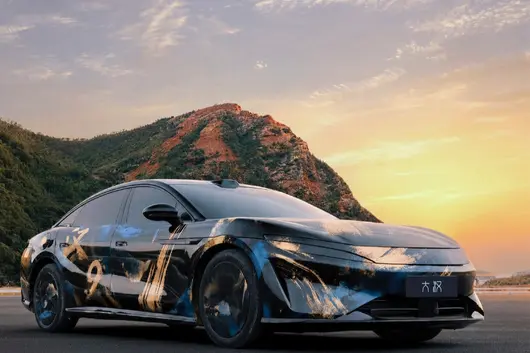

Pada 1 Oktober, BYD melancarkan laporan pengeluaran dan jualan pantas untuk September 2026. Data menunjukkan, pengumpulan jualan global syarikat pada Januari hingga September sebanyak 3,131,600 unit, menurun 3.94% tahun-ke-tahun, namun jualan tunggal bulan September bangkit dengan kuat ke 463,600 unit, meningkat 16.98% tahun-ke-tahun, meningkat kira-kira 11% bulan-ke-bulan, menunjukkan keadaan "awal rendah akhir tinggi, pemulihan bulanan". Pasaran luar negara menjadi enjin penambahan terbesar, jualan luar negara kenderaan penumpang dan pikap pada September mencapai 179,900 unit, meningkat 153.9% tahun-ke-tahun, nisbah jualan luar negara mencapai 38.8%. Dalam persaingan industri yang semakin ketara dan jualan eceran keseluruhan kenderaan penumpang domestik menurun 20.8% tahun-ke-tahun, keputusan ini menunjukkan perubahan struktur "luar negara memimpin, kelas atas naik, cas pantas lonjakan".
Struktur Jenama: Keperluan jenama premium melebihi 12%, Fang Cheng Bao terus berdiri di tangga 40,000 selama dua bulan berturut-turut
Dari segi jenama, gabungan Jaringan Dinasti dan Jaringan Lautan pada September menjual 394,900 unit, meningkat 11.01% tahun-ke-tahun, terus担当 pangkalan jualan. Dari segi jenama premium, Fang Cheng Bao menjual 43,200 unit pada September, meningkat 79.02% tahun-ke-tahun; Denza menjual 18,200 unit, meningkat 46.68% tahun-ke-tahun; Yangwang menjual 389 unit, mencapai 13.32% daripada kumpulan syarikat.
Dari data terkumpul, pengumpulan jualan tiga jenama Fang Cheng Bao, Denza dan Yangwang pada Januari hingga September 2026 sebanyak 408,400 unit, meningkat 56.3% tahun-ke-tahun, nisbah kepada jualan kumpulan keseluruhan meningkat kepada 13.04%, strategi premiumisasi terus diperdalam. Prestasi Fang Cheng Bao sangat menonjol, pengumpulan serahan pada Januari hingga September sebanyak 285,400 unit, Julai, Ogos, September stabil berdiri di tangga 40,000, secara rasmi memasuki "kelompok jualan bulanan 40,000".
Makna premiumisasi bukan hanya pada angka jualan, tetapi pada pembinaan semula pengiktirafan jenama. Apabila nisbah gabungan tiga jenama premium meningkat daripada kira-kira 9% pada tempoh yang sama 2025 kepada 13.04%, BYD sedang membuktikan dirinya bukan sahaja mampu mencapai kos efektiviti tertinggi di pasaran utama 100,000 sehingga 200,000 Yuan, tetapi juga mampu membina hak definisi produk dan kemampuan premium jenama pada jalur harga di atas 200,000 Yuan.
Pasaran Luar Negara: Dari "Enjin Tambahan" kepada "Setengah Pasaran"
Letupan pasaran luar negara adalah perubahan struktur paling ketara pada 2026 BYD. Januari hingga September, pengumpulan jualan luar negara kenderaan penumpang dan pikap sebanyak 1,337,800 unit, meningkat 90.7% tahun-ke-tahun, keseluruhannya, nisbah jualan luar negara sudah melebihi 40%. Data lebih awal menunjukkan, pendapatan operasi BYD luar negara pada separuh pertama 2026 mencapai 181.3 bilion Yuan, 52.57% daripada jumlah pendapatan operasi, untuk pertama kalinya melebihi pendapatan domestik - ini adalah titik penting yang menandakan, BYD tidak lagi hanya sebuah syarikat automotif China, tetapi sebuah syarikat automotif global.
Kepentingan strategik pasaran luar negara tercermin dalam tiga lapisan. Pertama, penyesuaian struktur keuntungan. Purata harga setiap kenderaan luar negara kira-kira 190,000 Yuan, hampir 50% lebih tinggi daripada domestik, terus membawa kepada pengubahan tahap marjin kasar keseluruhan. Pada separuh pertama 2026, marjin kasar perniagaan automotif BYD 22.33%. Kedua, peralihan enjin pertumbuhan. Dalam persekitaran perang harga domestik yang berterusan dan jumlah eceran industri mengecut, pasaran luar negara menyediakan ruang tambahan yang bebas daripada persaingan domestik. Citi memberikan harga sasaran saham BYD HKD 142, kenaikan berpotensi kira-kira 71%, pasaran modal memberikan pengiktirafan jelas kepada logik globalisasi. Ketiga, pendalaman operasi tempatan. Kilang Thailand, Uzbekistan, Brazil sudah siap dibina dan beroperasi, kilang Hungary akan beroperasi, kapasiti tahunan kilang Brazil kira-kira 250,000 unit. Kenderaan baharu BYD sudah masuk ke 121 negara dan wilayah di seluruh dunia, 8 kapal Roll-on/Roll-off sendiri telah beroperasi, strategi luar negara semakin beralih dari "ekspor produk" kepada "pengeluaran tempatan".
Pandangan Setahun: Sasaran 5 juta unit sukar dicapai, setara dengan 4.6 juta pada 2025 ada harapan, strategi cas pantas membina pagar sistemik
Berdasarkan pengumpulan jualan 3.13 juta Januari hingga September, BYD perlu mencapai kira-kira 1.5 juta unit pada suku keempat untuk setara dengan 2025, sepadan purata bulanan suku keempat kira-kira 500,000 unit. Mengikut pertimbangan suku keempat merupakan musim puncak tradisional, dan irama serahan model cas pantas terus bertambah laju, sasaran ini mempunyai asas untuk dicapai. Dianggarkan 2026 kira-kira 1.9 juta unit, pertumbuhan dijangkakan 90%, jualan domestik kira-kira 2.7 juta unit, menurun kira-kira 24% tahun-ke-tahun, pertumbuhan disumbangkan oleh ke luar negara.
Menyokong jangkaan ini, adalah susun atur sistemik BYD di peringkat produk, teknologi dan infrastruktur.
Pelancaran produk baharu yang padat. Kereta flagship Jaringan Dinasti "BYD Han" secara rasmi dilancarkan pada 13 Oktober, harga pra-pelancaran 249,900-299,900 Yuan, versi elektrik penuh jarak CLTC tertinggi mencapai 1008km, dilengkapi suspension udara DiSus-A double chamber, memposisikan sebagai produk penting untuk terobosan kelas atas jenama. Siri Fang Cheng S pertama kali dilancarkan BYD Smart Ecological 2.0, dilancarkan pada 16 September, membuka pasaran premium personal dengan konsep kabin "boleh menyesuaikan, boleh berkembang, boleh berkembang". Dari segi Jaringan Lautan, Sea Lion 08 pertama kali dilihat pada Pameran Automotif Chengdu, Song Ultra EV keseluruhan siri dilancarkan dengan Bateri Pisau Generasi Kedua dan teknologi cas pantas. Generasi Kedua Seagull (Seagull General) saiz semakin panjang, kuasa motor meningkat daripada 55kW kepada 95kW, dijangka dilancarkan sebelum hujung tahun, berpotensi membawa keupayaan cas pantas dan pandu automatik ke pasaran tahap 70,000 Yuan lebih jauh.
Strategi cas pantas dipercepat. Sehingga 24 September, BYD telah membina kumulatif 11,586 stesen cas pantas, meliputi 341 bandar di seluruh negara dan 278 lebuh raya, rangkaian utama lebuh raya "11 Menegak 11 Melintang" cas pantas hampir lengkap. Stesen cas pantas lebuh raya ke-2000 sudah dibina di Pusat Servis Baoying Lebuh Raya Beijing-Shanghai pada September, sasaran pembinaan stesen lebuh raya tahunan selesai lebih awal. Syarikat merancang pada hujung 2026 siap membina 20,000 stesen cas pantas di seluruh negara, secara stabil memajukan pelan globalisasi 6,000 stesen cas pantas di luar negara. Pengalaman pengisian tenaga "5 minit cukup, 9 minit penuh, -30℃ hanya tambah 3 minit", sedang mengubah kecekapan pengecasan daripada kesakitan pengguna kepada kelebihan sistemik BYD.
Demokratisasi teknologi terus diperdalam. Sky-Eye 5.0 pada asas hujung ke hujung tertutup penuh dimasukkan keupayaan pembelajaran penguatan, model seperti Song Ultra EV sudah dilengkapi, memberikan pengalaman pandu automatik tinggi pada harga 150,000 Yuan. Bateri Pisau Generasi Kedua lulus ujian hentakan dasar 10 kali piawaian negara baharu dan pengesahan penyebaran haba 4 kali piawaian negara baharu, sel bateri memberi jaminan seumur hidup, pada tahap keselamatan dan hayat lagi menarik tinggi ambang teknologi. Dari pandu automatik merata ke cas pantas turun, BYD sedang memasukkan teknologi terbaharu ke produk jalur harga utama secara berskala, membentuk kitaran positif "kepemimpinan teknologi - kos berskala - harga merata - jualan memulihara".
Dari "Domestik Utama" kepada "Dua Roda Global", dari "Label Kos Efektif" kepada "Realisasi Premiumisasi", dari "Persaingan Produk" kepada "Pagar Ekosistem Cas Pantas", perubahan struktur jualan BYD tiga suku pertama 2026, mendedahkan transformasi mendalam yang sedang dialami oleh sebuah syarikat automotif selepas pencapaian puncak skala. Apabila pendapatan operasi luar negara pertama kali melebihi domestik, nisbah jenama premium melebihi 12.8%, rangkaian cas pantas dibina lebih 10,000 buah dari sifar, logik pertumbuhan BYD sudah tidak lagi bergantung pada persaingan harga pasaran tunggal, tetapi dibina di atas tiga tiang产能 globalisasi, demokratisasi teknologi dan ekosistem infrastruktur. Prestasi musim puncak suku keempat, akan menjadi tetingkap penting untuk menguji sama ada logik ini boleh realisasikan sasaran tahunan.


The narrative of "cool domestically and hot internationally" has become the main theme of China's automotive market.
According to the latest data from CPCA, July domestic passenger car retail sales reached 1.461 million units, a 20.9% year-over-year decline. Year-to-date cumulative retail sales stand at 10.173 million units, down 20.3% from last year.
Meanwhile, July passenger car exports hit 918,000 units, surging 87.8% year-over-year, with the proportion of export volume to total manufacturer sales climbing to 41% (37% last month, 21% in the same period of 2025).

Regarding the "cool domestic market," CPCA analysis suggests this is due to the resonance of multiple factors, including oil price rebounds, weakening macroeconomics, seasonal slumps, prior demand exhaustion, and policy shifts.
Conversely, the contraction of domestic demand has accelerated the pace of Chinese car companies "going global"—since the domestic market is overcrowded, they go overseas to find blue oceans.
On this rising export curve, BYD's performance has been the most striking.
Data released by BYD shows that overseas sales reached 179,800 units in July, a 124.3% year-over-year increase. Even according to CPCA's statistical standards, BYD's 174,000 unit NEV export sales in July exceeded the combined total of the second-ranked (Chery, 83,000 units) and third-ranked (Tesla, 66,000 units) exporters, establishing a fractured leading advantage.

More importantly, BYD's export proportion of total sales in July rose to 43.1%. It is worth noting that just two years ago in 2024, this proportion was only a little over 10%.
This means BYD is no longer a Chinese brand simply relying on the domestic market, but a truly global car company. This has prompted the outside world to re-examine the strategic vision previously proposed by Wang Chuanfu of "achieving the largest scale globally in five years."
If BYD wants to "achieve the #1 global scale," it will face Toyota, this "giant."
Toyota's strength lies in its global production and sales network and extreme cost control in the fuel vehicle era. What BYD currently demonstrates is the ability to reconstruct the global market on the new energy track.
CPCA data shows that July NEV passenger car exports reached 540,000 units, up 147.8% year-over-year, accounting for 58.8% of total exports, an increase of 14 percentage points compared to the same period last year.
According to CPCA Secretary-General Cui Dongshu's statistics, from January to June 2026, China's NEV passenger car world share reached 62%, and the share in the plug-in hybrid field was as high as 71%.

The share of Chinese NEVs worldwide is rising rapidly. As the global NEV sales champion, BYD is actually standing at the forefront of the global output of China's supply chain.
Data shows that in the first half of 2026, Toyota's global sales were 5.0089 million units, ranking first globally for seven consecutive years; BYD's first-half global sales were 1.8085 million units, ranking sixth. The difference between the two was 3.62 million units, but the speed of narrowing the gap is accelerating—the gap was 13.4 times in 2021, narrowed to 2.7 times in 2023, and by the first half of 2026, the gap between the two is less than 1.7 times.
It took BYD less than two years to increase the export proportion from 10% to 40%. If the overseas market can maintain this growth rate, and Toyota continues to struggle in the quagmire of electrification transformation, then "surpassing" will no longer be a "whether possible" question, but a "when it happens" question.
But sales figures are just the most superficial things. What is truly worth thinking about is, what does BYD rely on to fill this gap of over 3 million units?
Toyota's foundation is a global fuel vehicle system that has been operating for decades; from supply chain to channels to brand perception, it is all stacked up by time.
BYD's opportunity lies in the fact that the technical logic and cost structure of NEVs are completely different from fuel vehicles. It does not need to fight position warfare in Toyota's home field, but uses a new product logic to find its entry point in every regional market.
BYD's overseas strategy can be summarized as "precise entry" and "deep localization." This strategy shows highly flexible adaptability in different regional markets. A highly representative case is the launch of BYD's K-Car in the Japanese market.

On July 28, BYD's pure electric K-Car "Sea Otter Racco," built specifically for the Japanese market, was launched. As of August 9, in less than two weeks, orders broke 1,000 units, with 80% coming from the top-spec version. For any car company wanting to penetrate the Japanese market, this is a capital worth "boasting" about.
It is worth noting that the Japanese market has long been a solid fortress of the global auto industry, with local brands holding absolute dominance. Even "giants" like Volkswagen and Hyundai find it difficult to open the Japanese market. Especially the K-Car market, which has an annual retail volume exceeding 1.6 million units and is known as the totem of Japanese auto culture, has been monopolized for over thirty years by three local giants: Suzuki, Daihatsu, and Honda.
More importantly, due to the adoption of Chinese self-developed parts, the Sea Otter can only receive a subsidy of 150,000 yen in Japan, while local competitors like Nissan Sakura can receive 580,000 yen. Under the subsidy disadvantage of three times that of competitors, orders still exceeded expectations. This directly shows that BYD has already possessed the strength to directly confront Japanese car companies in manufacturing processes and cost control.

An earlier example is BYD's Shark Pickup launched for the Americas, Australia, and other markets. It accurately hit the pain point of combining commercial and home use in the local market, becoming one of the best-selling Chinese brand models. CPCA data shows that BYD Shark Pickup overseas market monthly average sales are about 3,000 units, with sales in some months even exceeding 4,500 units.
Data released by BYD shows that under the boost of the Shark Pickup and subsequent imported Seagull and other NEV models, Brazil has become BYD's largest overseas market, with cumulative export volume reaching 194,700 units in the first half. Meanwhile, just on July 16, the 100,000th car of BYD Brazil factory officially rolled off the production line.
From Japan's exquisite K-Car to America's tough Pickup, BYD is no longer exporting "global products," but providing "regional customization." This transformation allows it to quickly fill the market void left by traditional brands.
Orient Securities forecasts that BYD's 2026 full-year sales will exceed 5 million units, with overseas sales between 1.8 million and 1.9 million units, a year-over-year growth of 75%.
Morgan Stanley predicts that BYD overseas sales will reach 1.6 million to 1.8 million units, with a year-over-year growth of 68% to 89%. It estimates that the company's passenger car share in markets like Brazil, Thailand, and Australia has exceeded 5%, and NEV sales share in multiple regions exceeds 20%.
Under the dual drive of "involution" and "going overseas," Chinese car companies represented by BYD are gradually transforming "surpassing Toyota" from a vision into reality through differentiated product strategies and deep localization layout. Whether it is the K-Car in the Japanese market or the Shark Pickup in the Americas, it proves that China's automotive industry has the ability to compete in the global diverse market.
In the future, with more companies like BYD digging deep in the overseas market, China's automotive industry's global share is expected to further increase, and the industry trend of "East Rising, West Declining" will be irreversible.
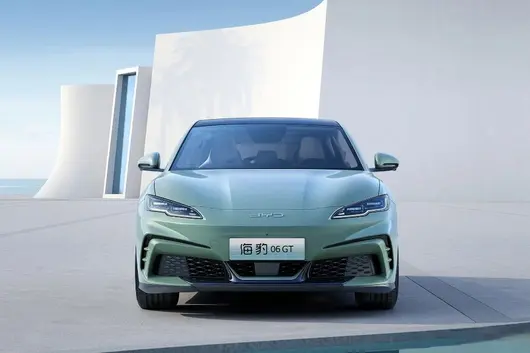


As usual, BYD submitted a May sales performance report that left the industry speechless. Not only did domestic new energy vehicle sales reach 383,453 units, ranking first in domestic new energy sales for 60 consecutive months; overseas volume surged 80.7% unexpectedly, sales breaking 160,000 units for the first time. Rumors say BYD's eight roll-on/roll-off ships were not enough, and recently they even rented one to urgently help transport finished cars;
In the domestic market where NEV penetration has exceeded 40%, everyone is extremely sensitive to prices, and the elimination round has been accelerated. Yet BYD still maintains double-digit year-over-year growth. Now with the overseas market gradually becoming the second growth engine, what does this mean? Although this month set a new historical record, it can be confirmed that BYD's "ceiling" in the following period will likely be far higher than most people imagine.

Domestic Foundation: Dynasty and Ocean Stable as Rock, How Thick is the Base with 330,000 Monthly Sales?
Let's look at the domestic foundation first. BYD Dynasty and Ocean Network combined sales 330,215 units, contributing over 86% of sales. This number itself is a watershed because relying solely on these two product sequences, BYD is already a strong contender for Chinese automaker sales champion. Have you noticed this year Dynasty and Ocean models feature technology trickling down, combined with economies of scale suddenly pulling out a virtuous cycle. Sales matching technology lets everyone feel good product experience, naturally reputation spreads, friends' introductions dispel concerns about EVs, even concerns about BYD, naturally people walk into the stores.
Results found: Fifth Gen DM, e-Platform 3.0, Second Gen Blade Battery these core technologies, already downgraded from high-end models to 100,000-level products,实质上 means making technology affordable. Monthly 330,000 volume, means single car R&D cost, mold cost, supply chain cost are maximally spread thin. Opponents want to fight BYD price war, will find their costs cannot hold up. More critically, these two product sequences still continue iteration. 3rd Gen Yuan PLUS, Seal 08, Sea Lion 08 etc new cars launching soon, flash charging technology also accelerating popularization. Foundation not aging, but constantly refreshing.
May Fang Cheng Bao sales 30,186 units, YoY growth 139.7%, Denza sales 16,303 units, Yangwang sales 286 units, YoY growth 105.8%. Actually Fang Cheng Bao explosion not accidental, Leopard 5, Leopard 8 plus flash charging tech, Fang Cheng Bao in hardcore off-road + NEV niche track, usage experience almost no opponents, more people starting to understand, turning is inevitable.

Overseas Explosion: Single Month 160,000 Units, Globalization from "Story" to "Numbers"
Let's compare 2025 full year first, BYD overseas sales about 800,000 units. But 2026 first 5 months, overseas cumulative sales already quickly approaching 600,000 units. If maintaining current growth rate, full year overseas sales breaking 1.2-1.5 million units not impossible.
Look at a few key regions: Seagull, Song PLUS, Yuan Series in Southeast Asia, Europe, Latin America recognition getting higher and higher. SHARK pickup trucks for two consecutive months break 4,000 units. Domestic pickups one year only 400,000 units. If these single regions can sell one-tenth of domestic, later globally rebuild one much larger than domestic pickup consumption market volume, not what is difficult.
Objectively speaking, past overseas consumers to Chinese cars cognition is "cheap but unsafe", BYD with Blade Battery abroad alone strength gradually reverse this impression, especially in Thailand, Brazil etc, BYD already become EV symbol. Plus BYD already in Brazil, Hungary, Thailand build factories producing, localization is a very good marketing way, more local people understand BYD, understand Chinese cars.

BYD Leadership: Intelligent Driving Safety Net
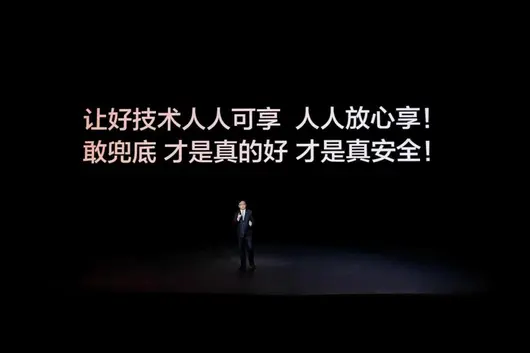
Wang Chuanfu personally announced BYD as City Pilot Safety Net Guarantee Service, his sentence "Dare to Underwrite, is True Safety" is what worth thinking.
Why "Underwrite" so important? Because in intelligent driving popularization today, most auto companies intelligent driving functions are "User Responsibility", system had accident, responsibility on driver. BYD's "Underwrite" means, in specific scenarios, if system failed to respond timely, manufacturer bear corresponding safety responsibility, users can in driving time no need to think whether turn on assist driving, instead get on car press "Intelligent Driving Paddle", user activity high, data model build accelerate, everyone dare use, BYD dare adjust data feedback to serve people, second virtuous cycle again establish.
Data won't lie: BYD this safety net launched after, function usage rate from 21% to over 90%.

Summary:
So BYD's "Ceiling" where? This if-no-if ceiling, BYD through tech R&D and strategy layout, already pushed up or "removed", this group data for BYD tell is like "the light boat has passed ten thousand mountains", and from Panda Speed see: BYD growth not eating NEV dividend, but NEV market eating BYD dividend.
If future every month BYD sales data all climbing, then BYD will from own dividend beneficiary, gradually become rule maker, behind BYD will face ceiling, only own production capacity and delivery capability, but from current situation see, BYD is running faster and faster.

 Auto-First|Li Dezhe
May sales and export performance topped the charts again, so what's next?
Reviewing the monthly performance of current leading domestic automakers, new energy vehicles improving quality and increasing volume, high-speed expansion of overseas exports, and stable protection by mainstay models have become the "New Three Major Components" for industry sales interpretation. Unlike the single-point breakthrough trend of most domestic automakers, BYD achieved comprehensive strength in three dimensions this May, significantly increasing the gold content of overall sales, fully displaying the top strength of the global new energy leader.
Latest sales data shows, BYD's May total vehicle sales reached 383,453 units, a 20% month-on-month surge, with performance strongly recovering.

Overall, BYD passenger vehicle sales reached 376,990 units. Among them, pure electric vehicle sales were 198,674 units, firmly holding the basic market share; Plug-in hybrid DM model sales were 178,316 units, continuing to strengthen year-on-year. Relying on the advantages of oil and electric versatility, low consumption and worry-free operation, it precisely matches the core needs of home users, becoming the key support for stable sales.
Against the backdrop of industry competitors' mainstream new energy models frequently losing momentum and lacking growth, BYD relies on a layered layout of the five major brands: Dynasty, Ocean, Denza, Fang Cheng Bao, and Yangwang, covering the full price range market to achieve stable growth across all areas. However, it needs to be pointed out that the problem of slower iteration of BYD's mid-to-large flagship models and lack of growth in some sub-models has also become a small shortcoming of the brand.
Looking specifically at the May report card, BYD delivered three major core highs, achieving a key transformation from scale growth to structural quality improvement.

The first new high is high-speed growth in overseas exports.In May, BYD's overseas exports reached 160,177 units, an 80.7% year-on-year surge, breaking the record for Chinese new energy vehicle companies' single-month overseas exports. The export sales proportion broke through 42%, meaning that for every ten new cars sold by the brand, more than four are sold to overseas markets.
Since the beginning of this year, BYD's globalization pace has continued to accelerate. Production capacity at overseas factories in Thailand and Brazil is steadily ramping up. The Seagull officially entered the markets of multiple European countries. Yuan PLUS and Song PLUS have deepened cultivation in Southeast Asian and Latin American core markets. The SHARK pickup continues to sell well. Sedans, SUVs, and pickups of all categories have landed for overseas exports. The brand's cumulative overseas sales from January to May exceeded 620,000 units. The overseas market has completely shed its supplementary attribute, becoming a second growth curve comparable to the domestic market, confirming its thorough transformation from a Chinese brand to a global automotive enterprise.
The second new high is simultaneous increase in volume and price of the premium matrix.In May, BYD's premium brands went all out. Fang Cheng Bao single-month sales reached 30,186 units, surging 139.7% year-on-year, creating an annual peak. The Titanium 7 and Leopard 5 models worked together, successfully breaking through the gap in the 200,000-400,000 yuan domestic hard-core off-road market, breaking the monopoly pattern of joint venture models. Denza brand sold 16,303 units. The D9 and Z9 models worked in synergy, escaping reliance on single models, firmly staying in the core tracks of high-end MPVs and sedans. The Yangwang brand steadily ramped up, delivering 286 units per month, a 105.8% year-on-year surge, continuously stabilizing in the million-level luxury new energy track.
The collective rise of premium brands also marks that BYD has thoroughly broken through the price ceiling. The 300,000+ premium market has achieved normalized volume sales, and brand premium ability continues to be implemented.
The third new high is the solid and strong performance of the mainstream basic market.In May, sales of the two major mainstays, Dynasty and Ocean, reached 330,215 units, rising sharply nearly 20% month-on-month, becoming the ballast stone for brand sales. Among them, the Yuan Family and Song Family two-car single-month sales broke 50,000, continuing to lead the domestic compact car market; The Seagull, Dolphin, Seal, Sea Lion and other models sales broke 20,000, covering the 50,000-level commuting to the 250,000-level home market, dominating the sub-segment tracks. The two platforms have clear division of labor and complement each other. The Dynasty network deepens cultivation of fuel replacement users, the Ocean network focuses on young pure electric rigid demand groups, covering domestic mainstream consumer groups in all dimensions, and solidifying the brand's basic market.

It can be seen that under the guidance of the "All-Categories BYD" strategy, the five major brands achieve precise differentiated division of labor and synergistic effort. The Dynasty network stabilizes the home basic market, relying on mature DM-i hybrid technology to cultivate the lower-tier market deeply; The Ocean network carries the banner of pure electric volume increase, youth-oriented products meet domestic rigid demand and also become the main force for overseas exports; Denza takes root in the high-end home track, filling the gap in the high-end passenger market; Fang Cheng Bao opens a new track for domestic hard-core off-road; Yangwang is based on the top luxury market, solidifying the brand's technology and value ceiling, forming a product layout with full coverage and no shortfalls.
Looking back at the first half of this year, the three-wheel drive of technology iteration, product renewal, and global market expansion laid the groundwork for the surge in BYD sales in May again. On the technology end, the Super e Platform and Megawatt Flash Charging technology are fully implemented. Self-developed vehicle-grade intelligent driving chips are equipped on a large scale, and the popularity of high-level intelligent driving continues to improve, thoroughly solving user charging, range, and smart experience pain points. At the same time, on the product end, production capacity of multiple modified models is released, new high-end models are launched successively, and the sub-product matrix is perfected. On the globalization end, overseas production capacity, channels, and models landing have accelerated comprehensively, supporting monthly increases in export sales.

Auto-First View: The standout May sales performance is also a concentrated reflection of BYD's systematic layout in the first half of the year. Today's BYD has achieved the simultaneous rise of three growth curves: domestic stability, premium quality improvement, and overseas volume increase, getting rid of the industrial involution predicament. In the current hyper-competitive domestic new energy market, BYD continues to consolidate its leading position relying on the advantages of whole-indchain self-research, full-price product matrix, and global layout. From deep cultivation domestically to leading globally, BYD not only defined the development benchmark for Chinese new energy vehicle enterprises but also firmly grasped the core discourse power of smart electrification in the global automotive industry transformation.

June 1, BYD released May production and sales data. 383,453 vehicles, this is BYD's May report card. This number means BYD continues to firmly hold the top spot in China's automotive sales, and it also means that in the first 5 months of this year, BYD has cumulatively sold over 1.4 million vehicles. With this pace, hitting 4 million vehicles annually is not a dream.

Domestic market stabilized, overseas market surged
By brand, the Dynasty and Ocean series sold 330,215 vehicles, absolute mainstays. Fang Cheng Bao 30,186, Denza 16,303, each established a foothold. Regarding specific models, in May 8 BYD models sold over 20,000 units monthly, this lineup depth, globally speaking, you won't find a second car company.

Regarding star models, Seal 5 sold 42,615 in May, momentum is fierce. Seagull approached 40,000, still the king of the small pure electric market. Song PLUS sold about 28,000, Song Family and Yuan Family both monthly sales exceeded 50,000. Qin Family 28,360, Titanium 7 series 18,280, Denza Z9 series approaching 6,000. From Seagulls worth tens of thousands to Denzas worth hundreds of thousands, BYD's product line covers almost all price bands, and every sub-market has a blockbuster. This is not luck, but a reflection of systemic capability.

Clearly, BYD hasn't lost its domestic base. But the growth rate has indeed slowed. This is not surprising — domestic market penetration has already surpassed 50%, and the incremental space is getting narrower.
Then where does the growth come from?
The answer lies overseas.
Overseas share exceeds 40%, not accidental
In May, BYD exported 160,600 vehicles, up 80.7% year-on-year, setting a historic high. A more critical number is, export share of total sales broke 40% for the first time.
That is to say, for every 10 cars BYD sells, more than 4 are sold overseas. This proportion, a year ago, was less than 30%. The rapid rise in overseas sales share is the most valuable information in BYD's May sales data.
Why did overseas sales surge so sharply?
There are three reasons.
Another easily overlooked factor: Brand awareness. Two years ago, overseas consumers were still very unfamiliar with BYD. But nowadays, from Thailand to Brazil, from Australia to Europe, BYD stores and ads are visible everywhere. Sales are the best advertising, 160,000 monthly overseas sales volume is itself the strongest brand endorsement.

Compared to Chery and Geely, what level is BYD's overseas push?
Talking about overseas sales, can't just look at BYD alone. In May, Chery exported 181,871 vehicles, up 80.5% YoY, breaking China's single-month export record for three consecutive months. Chery's total sales that month were 247,823 vehicles, export share up to 73.4%. For every 4 cars sold, 3 go overseas, Chery is the undisputed export king.
Additionally, Geely's May overseas sales 85,144 vehicles, up 184%, doubling growth, momentum also fierce. SAIC May export and overseas base sales 129,541 vehicles, up 32.46%, volume still huge.
From absolute numbers, Chery May export 182,000 vehicles, 20,000 more than BYD, still the leader of China's auto export. Chery has farmed overseas for many years, channel network mature, especially in Russia, Middle East, South America markets, roots deep.
SAIC's overseas layout is earlier, has formed 1 300,000 vehicle level (Europe) and 5 50,000 vehicle level regional markets, covering 170+ countries and regions. Discussing the breadth of overseas territory, SAIC is temporarily leading.
However, BYD's biggest advantage is growth rate. May overseas YoY up 80.7%, this growth rate is above SAIC and Chery, second only to Geely's 184%. But Geely's overseas base is small, doubling growth is relatively easy.
More crucially, BYD's overseas sales product structure is better. Chery and SAIC's export main forces, many are fuel cars. While BYD's exports are almost all new energy vehicles, unit price higher, brand premium stronger, future impact from tariff barriers and policy changes is smaller.
Another hidden advantage: Industrial chain. BYD from battery to motor to electronic control, core parts all self-research and self-production. When building factories overseas, BYD can take the whole supply chain with it. Other car companies assemble overseas, parts still need import from domestic, cost and efficiency both discounted. BYD's vertical integration model, in overseas expansion instead became a moat.
So summarizing: on export total volume, Chery is leader; on new energy export, BYD is leader; on export growth speed, Geely surges hardest. Three companies each have their own cards, but BYD's card table is most complete.
Watching BYD's overseas push is actually watching China's automotive overseas push
Let's widen the perspective a bit.
160,000 vehicle overseas export number, not just a single enterprise matter. It illustrates one thing: China's auto overseas push, finally starting to move from 'selling products' to 'building systems'.
Ten years ago, China's auto export was still stuck in the low price volume stage. Sold overseas, mostly cheap fuel cars worth tens of thousands, sticking other's labels, earning some hard money. Back then, Chinese car companies overseas had no brand, no channel, no voice. But today, the situation is completely different. BYD, Chery, Geely, SAIC, China top car companies' overseas monthly sales total exceeded 500,000 vehicles. This is not dumping low prices, but a market won by product capability.
BYD's role in this is very special. It is the global champion of new energy track, consecutive 60 months domestic new energy sales champion, cumulatively sold 16.5 million new energy vehicles. More importantly, it proves one thing: Chinese brands in new energy era, can be sold worldwide, and can sell at brand premium.
Of course, challenges also truly exist. EU tariffs, US blockades, different market regulation differences, brand building long time etc., these are hard battles. Overseas market is never a banquet, every 10,000 vehicle growth involves real money and hard-fought battles.
But this May report card at least illustrates one thing: direction is correct, gas pedal is pressed down.
BYD May 380,000 vehicle sales, domestic market is base, overseas market is growth pole. 160,000 vehicle overseas sales, is BYD's milestone, also drives China auto overseas to a new starting point. This road is still long, but direction is already very clear.
© 2024 Bitauto.com. All Rights Reserved.
Bitauto (www.yiche.com and www.bitauto.com) is one of the most visited automotive websites in China. We provide detailed info on Chinese car brands available in your area. Please note that the information provided on this website is based on publicly available data and is for reference only. It may not be fully updated or accurate at all times.

Help us improve our website


