

HomeSong Plus

Search History
Popular Searches
Dealer Login / Sign Up

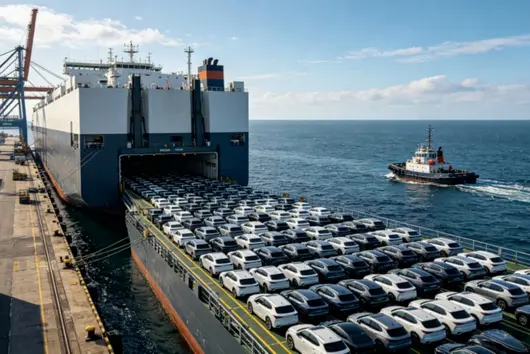
The pace of the Chinese automotive industry going global has been faster than anyone anticipated.
On July 9, the China Association of Automobile Manufacturers revealed H1 data: In June alone, Chinese auto exports reached 1.037 million units, a 75.1% year-on-year increase, achieving single-month exports over 1 million for the first time; from January to June, cumulative exports hit 5.096 million units, a 65.3% year-on-year increase, and semi-annual exports broke through 5 million units for the first time.
The full-year export target of 7.4 million units set at the beginning of the year now appears too conservative. Based on current growth rates, achieving 10 million units in full-year exports has become a high-probability event. However, beyond the breakthrough in sales figures, the structural changes behind them are worth more attention. Domestic car sales for the first half of the year were only 9.921 million units, a 21.1% year-on-year decrease, while exports accounted for nearly 40% of passenger car production.

In this magnificent wave of going global, which companies are leading the pack? Which models are selling the best? Which markets are the main drivers for growth? Where is the next trend?
Overview of Company Exports
With the continuous surge in the scale of going global, the overseas layout of domestic automakers has differentiated into clear tiers, with the top tier forming a pattern of "one dominant leader and multiple strong contenders".
Chery Group sat firmly in the top spot with a H1 export figure of 943,800 units, up 71.5% year-on-year. Notably, Chery's exports accounted for 69.5% of its total sales, and for three consecutive months from April to June, overseas sales share exceeded 70%. June single-month overseas sales reached an all-time high of 191,000 units. For every car sold domestically, Chery sold nearly three overseas, showing that exports have become Chery's absolute primary growth pole.

Following closely, BYD delivered a H1 export performance of 789,000 units, up 71% year-on-year, with June single-month exports reaching 170,900 units alone. Especially in the new energy export niche, BYD's advantage is more obvious. In the first half of the year, new energy exports reached 769,300 units, with a market share as high as 34.5%. In other words, for every three exported new energy vehicles, nearly one was a BYD.
Geely Automobile was the most eye-catching dark horse in terms of growth rate: Exporting 474,200 units in the first half of the year, up 158% year-on-year, with a growth rate leading among top automakers; June overseas sales broke 100,000 units for the first time, reaching 102,900 units. In terms of new energy exports, Geely's increase was even more stunning, with H1 new energy exports reaching 275,400 units, surging 601.4% year-on-year.
SAIC, relying on its well-perfect multi-brand globalization matrix, also remains firmly in the first tier. Overseas wholesale sales in the first half of the year reached 735,000 units. Its MG brand has cultivated the European market for many years and has ranked first in Chinese brand sales in Europe for 11 consecutive years. Great Wall Motor has steadily progressed overseas pacing, with H1 exports of 291,400 units, up 47.4% year-on-year, and the overseas market maintained stable expansion.

From the perspective of niche sectors, the competition landscape of new energy exports reflects the strength of each company more. In the top 10 list of new energy export manufacturers in the first half of the year, BYD firmly stayed in the first place, with Chery and Geely in second and third place, corresponding new energy export volumes of 290,300 units and 275,400 units respectively. Following them were Tesla China, SAIC Passenger Car, Leapmotor, Dongfeng, SAIC-GM-Wuling, Changan, and XPeng. Among them, Leapmotor's overseas breakthrough was particularly eye-catching. H1 overseas sales neared 100,000 units, exceeding its own total overseas sales for all of 2025 in just half a year.
Another worth mentioning is that in May 2026, across 31 European markets, BYD, SAIC, Geely, Chery, and Leapmotor, these five Chinese automakers sold a total of 138,400 new cars, up 65% year-on-year. Total sales for the first time exceeded the sum of six Japanese automakers such as Toyota and Nissan. The market share of Chinese brands locally jumped from 5.6% in May of the previous year to 10.7%. This was the first time Chinese automakers hit it out head-on against Japanese rivals in Europe, the world's third-largest automotive market.
Model Breakthrough and Market Map
The success or failure of going global ultimately depends on market acceptance. Focusing eyes from automaker tiers to specific models, from the disclosed market model performance, the outline of hit models is already very clear.
BYD Song Plus is the undisputed star model in the current export camp. In the first half of 2025, it topped the export model list with 134,000 units, a year-on-year increase of 184%; entering 2026, its overseas deployment pace accelerated further, continuously stocking from Southeast Asia to Western Europe, opening the situation with balanced design, extremely low usage costs, and accessible pricing, and is very likely to become the first true "Global Car" among Chinese brands.

From the technology route perspective, emerging markets such as Latin America and Southeast Asia focus on price-performance ratio, with 100,000 yuan range compact pure electric vehicles being the most popular; mature markets such as Europe are more accepting of plug-in hybrid SUVs in the 150,000-200,000 yuan price range under the influence of policies and usage habits. The pattern of pure electric and plug-in hybrid double line breakthrough is very clear.
Meanwhile, the more critical change is in price and technology. China's automotive export is accelerating from the old model of "low-price volume sales" to a leap of "value-based globalization". Zeekr's average export price per vehicle in the first half of the year approached 350,000 yuan, and there are plans to launch high-end models with a starting price exceeding 460,000 yuan overseas; Denza, Yangwang, and other high-end brands have also achieved simultaneous volume and price increases overseas. Intelligence is becoming the "new business card" for China's automotive export—Chery was the first to pass the EU UN/ECE R171 safety management system audit, equivalent to obtaining a "technical pass" for high-level intelligent driving export.

Turning eyes to the overall market map again, according to data from Gasgoo Automotive Research Institute, from January to May 2026, Brazil topped the list of China's passenger car export markets for the first time with an export volume of 372,000 units and a 178.7% year-on-year growth rate; Russia followed closely with 351,000 units and a 139.8% growth rate. These two markets alone contributed more than 40% of the top ten total.
Among them, Brazil's explosive growth was behind a special background: starting July 1, 2026, local new energy vehicle import tariffs will rise from 25% to 35%, causing dealers to focus on抢运 in the first half of the year, pushing up shipment volumes. However, even if the short-term window closes, as the largest economy in Latin America, Brazil's long-term consumption potential remains solid.

The European market showed a situation of multiple points blooming: The UK ranked third with 189,000 units and 82% growth, Belgium, Italy, and Spain recorded export volumes of 156,000, 123,000, and 94,000 units respectively, with Italy's year-on-year increase reaching 140.7%. If Russia is included, the entire Europe has occupied half of China's passenger car exports.
However, under high growth, hidden worries are also showing: UAE export volume decreased by 32.6% year-on-year, and Mexico's drop reached 40%. The former is an adjustment period after high-speed growth, and the latter is directly impacted by the tariff hike in January this year. This also means that going global is no longer a blue ocean with everywhere growth. Tariff policy fluctuations and market cycle rotation shocks will always be normal variables the industry needs to face directly.
Where is the Next Trend?
In the market map of hot and cold differentiation, combined with H1 data trends and policy movements, there are three markets most likely to become the incremental core for the next stage of China's automotive exports.
The first worth mentioning is Brazil. Although new energy vehicle tariffs rose to 35% from July 1st and the short-term rush window is closed, this does not mean the end of market dividends. As the largest economy in Latin America, Brazil's automotive electrification has just started, and Chinese brands have laid the initial user perception with price-performance ratio and product power.
More critically, automakers like Chery have already established production capacity layout locally. Localized production can become a handle to bypass tariff barriers and deeply penetrate the market. Next, competition in the Brazil market will no longer be a simple comparison of export volumes, but a contest of localized operation depth.

The second trend belongs to Europe, which is the most contradictory yet most certain battlefield. The EU's anti-subsidy tariffs on Chinese pure electric vehicles have been in effect for nearly two years. Some automakers' comprehensive tax rates have exceeded 45%. At the moment, they are also brewing to include plug-in hybrid models into the tax scope, and the tariff wall seems to be getting higher and higher. But the actual trend is exactly the opposite: In May 2026, the market share of Chinese brands in Europe had surpassed Japanese automakers.
The more control, the more growth. The logic behind this is: The comprehensive advantages formed by Chinese new energy vehicles in 800V high-voltage platforms, integrated die-casting, self-developed batteries, and other technologies, just filled the supply gap during the global electrification transition period.
Tariffs will temporarily raise costs and compress profits, but cannot reverse product-side advantages. That is why top automakers are accelerating to respond to tariff barriers with localization: BYD's Hungary factory is expected to start whole vehicle assembly in the fourth quarter of 2026. Chery's joint venture factory in Barcelona, Spain achieved mass production by the end of 2025. The new M1 production line officially started production in June this year. "Trading localization for market" is the strategy currently consensus among automakers on the European battlefield.

And the third potential trend is Southeast Asia, traditionally regarded as the "backyard" of Japanese brands. From January to May, Malaysia ranked tenth in export destination countries with 78,599 units of export volume. This volume is not particularly outstanding, but the signal revealed behind is extremely strong: The Southeast Asian market has long been monopolized by Japanese brands. Now Chinese brands have torn a gap here.
SAIC MG has cultivated Thailand for many years and laid the foundation. Leapmotor plans to land European local production through Stellantis's Spain factory. As RCEP tariff dividends continue to be released, this region is very likely to become the next explosive growth point following Europe. Especially countries that have launched new energy vehicle incentive policies such as Thailand, Indonesia, Malaysia, etc.

Overall, the H1 export figure of 5.096 million units marks that China's automotive export has moved from testing the waters to the stage of harvest. But a clearer signal is that the competitive logic of the second half of the game has changed. Tariff barriers, geopolitical fluctuations, localized operations, every level is a hard battle.
As Chen Shihua, Secretary-General of the China Association of Automobile Manufacturers, said, export for the second half of the year should be maintained with "cautious optimism". But without a doubt, Chinese car brands have already stood at the center of the global stage. From "going out" to "going in" and then to "going up", this industry's deep reform has just opened the curtain.

Pergerakan eksport industri automotif China lebih pantas daripada jangkaan semua orang.
9 Julai, Persatuan Automotif China mendedahkan data bagi setengah tahun pertama: bulan Jun sahaja, eksport kereta automotif China mencapai 1.037 juta unit, meningkat 75.1% berbanding tahun lalu, kali pertama mencatatkan lebih satu juta unit sebulan; Januari hingga Jun, jumlah kumulatif eksport 5.096 juta unit, meningkat 65.3% berbanding tahun lalu, eksport setengah tahun pertama kali melebihi 5 juta unit.
Matlamat eksport keseluruhan tahun pada awal tahun iaitu 7.4 juta unit, kini nampak terlalu konservatif. Mengikut kadar pertumbuhan semasa, mencapai 10 juta unit eksport keseluruhan tahun juga merupakan perkara yang sangat mungkin. Tetapi berbanding lapanan angka jualan, perubahan struktur di sebaliknya lebih menarik perhatian. Setengah tahun pertama, jualan domestik kereta hanya 9.921 juta unit, menurun 21.1% secara tahunan, manakala peratusan eksport dalam pengeluaran kenderaan persendirian sudah hampir empat bahagian daripada 10 bahagian.
Dalam ombak eksport yang hebat ini, syarikat mana yang memimpin? Model mana yang paling laris? Pasaran manakah yang menjadi utama bagi penambahan? Di manakah tiang angin seterusnya?
Peta Keseluruhan Eksport Syarikat
Dengan perkembangan skala eksport yang berterusan, susunan antarabangsa pengeluar kereta domestik telah membentuk corak berbeza, kelompok teratas membentuk corak "satu dominasi banyak yang kuat".
Kumpulan Chery dengan prestasi eksport setengah tahun 943,800 unit kekal di tempat teratas, meningkat 71.5%. Yang perlu diperhatikan, kuantiti eksport Chery mewakili 69.5% daripada jumlah jualan, April hingga Jun, tiga bulan berturutan peratusan jualan luar negara melebihi 70%. Jualan luar negara bulan Jun sahaja mencecah 191,000 unit, satu rekod baharu. Apabila setiap kereta terjual di dalam negara, Chery menjual hampir tiga kereta di luar negara, jelas eksport sudah menjadi kutub pertumbuhan utama Chery.
BYD yang mengikuti di belakang menyerahkan prestasi eksport setengah tahun 789,000 unit, meningkat 71%, eksport bulan Jun sahaja sudah mencecah 170,900 unit. Terutama dalam laluan berspesifik eksort kenderaan baharu, kelebihan BYD lebih jelas, setengah tahun pertama eksport kenderaan baharu 769,300 unit, bahagian pasaran tinggi hingga 34.5%. Dengan kata lain, daripada setiap tiga kenderaan baharu yang dieksport, hampir satu adalah BYD.
Geely adalah kuda hitam paling cemerlang dari segi pertumbuhan: setengah tahun pertama eksport 474,200 unit, meningkat melonjak 158%, kadar pertumbuhan berada di hadapan dalam semua syarikat automotif teratas; jualan luar negara bulan Jun sekali lagi memecahkan 100,000 unit, mencecah 102,900 unit. Dalam aspek eksport kenderaan baharu, kenaikan Geely lebih menakjubkan, setengah tahun pertama eksport kenderaan baharu 275,400 unit, meningkat melonjak 601.4%.
Dengan matriks globalisasi pelan jenama yang lengkap, SAIC juga kekal dalam kelas teratas, setengah tahun pertama jualan kenderaan luar negara 735,000 unit, jenama MG di bawahnya telah membina pasaran Eropah bertahun-tahun, sehingga kini telah menduduki tempat pertama jualan jenama China di Eropah selama 11 tahun berturutan; Great Wall mengekalkan节奏 eksport luar negara, setengah tahun pertama eksport 291,400 unit, meningkat 47.4%, pasaran luar negara mengekalkan pengembangan stabil.
Dari sudut laluan berspesifik, corak persaingan eksport kenderaan baharu lebih mencerminkan kekuatan setiap syarikat. Dalam senarai TOP10 pengeluar eksport kenderaan baharu setengah tahun pertama, BYD kekal di tempat pertama, Chery dan Geely masing-masing di tempat kedua dan ketiga, kuantiti eksport kenderaan baharu masing-masing 290,300 unit dan 275,400 unit, selepas itu masing-masing Tesla China, SAIC Passengern, Leapmotor, Dongfeng, SAIC General Wuling, Changan dan Xpeng. Di mana突破 Leapmotor di luar negara sangat cemerlang, setengah tahun pertama jualan luar negara menghampiri 100,000 unit, hanya setengah tahun sahaja telah melebihi jumlah jualan luar negara keseluruhan tahun 2025 sendiri.
Perlu disebutkan lagi, Mei 2026, di 31 pasaran negara Eropah, BYD, SAIC, Geely, Chery, Leapmotor lima syarikat automotif China bersama-sama menjual 138,400 kenderaan baharu, meningkat 65%, jumlah jualan keseluruhan kali pertama melebihi jumlah enam syarikat automotif Jepun seperti Toyota dan Nissan. Bahagian pasaran jenama China di kawasan tersebut dari Mei tahun lalu 5.6% melonjak kepada 10.7%, ini juga pertama kali syarikat automotif China di pasaran automotif terbesar ketiga dunia Eropah, bertembung serta merta mengatasi lawan Jepun.
Penembusan Model dan Peta Pasaran
Kemenangan eksport, pada akhirnya akan jatuh pada penerimaan pasaran. Beralih pandangan dari kumpulan syarikat automotif kepada model khusus, dari prestasi model pasaran yang sudah dibeberkan, corak model laris sudah sangat jelas.
BYD Song Plus adalah model bintang tanpa tandingan dalam kempen eksport semasa, 2025 setengah tahun pertama telah menduduki tempat pertama model eksport dengan prestasi 134,000 unit, peningkatan tahunan 184%; memasuki 2026,节奏 pelepasan luar negara lebih dipercepat, dari Asia Tenggara ke Eropah Barat terus menghantar barang, bergantung pada reka bentuk yang seimbang, kos penggunaan yang sangat rendah dan penetapan harga yang mesra rakyat membuka局面, kemungkinan besar menjadi "kereta global" sebenar pertama dalam jenama China.
Dari sudut laluan teknologi, pasaran baharu seperti Amerika Latin dan Asia Tenggara mementingkan nisbah harga dan prestasi, kenderaan elektrik tulen kecil kelas 100,000 yuan paling diminati; pasaran matang seperti Eropah受 dasar dan kebiasaan penggunaan mempengaruhi, harga 150,000 hingga 200,000 yuan SUV hibrid bersambung ke elektrik penerimaan lebih tinggi. Corak penembusan dua garis elektrik tulen dan hibrid bersambung sudah sangat jelas.
Seterusnya, perubahan lebih penting dalam harga dan teknologi, eksport automotif China sedang dari model lama "harga rendah volumen tinggi", mempercepat ke "eksport bernilai". Zeekr setengah tahun pertama harga purata setiap kenderaan eksport menghampiri 350,000 yuan, juga merancang ke luar negara pelepasan model kelas tinggi dengan harga permulaan melebihi 460,000 yuan; jenama kelas tinggi seperti Denza dan Yangwang di luar negara juga mencapai kenaikan kuantiti dan harga. Kepintaran cerdas sedang menjadi "kad perkenalan baru" eksport automotif China - Chery pertama kali lulus semakan sistem pengurusan keselamatan EU UN/ECE R171, seumpama mendapatkan "pasport teknologi" untuk eksport kepintaran cerdas tahap tinggi.
Seterusnya beralih pandangan ke peta pasaran keseluruhan, mengikut data Institut Automotif Gasgoo, Januari hingga Mei 2026, Brazil dengan 372,000 unit eksport, peningkatan tahunan 178.7%, kali pertama menduduki tempat pertama pasaran eksport kenderaan persendirian China; Rusia dengan 351,000 unit, peningkatan 139.8% mengikuti di belakang, hanya dua pasaran ini yang menyumbang lebih empat bahagian daripada jumlah sepuluh teratas.
Dalam kalangan itu, pertumbuhan melonjak Brazil di belakang terdapat latar khusus: kawasan itu dari 1 Julai 2026 akan menaikkan cukai import kenderaan baharu dari 25% kepada 35%, menyebabkan pengedaran terkumpul di pertengahan tahun mengangkut, menaikkan jumlah penghantaran. Walau bagaimanapun, walaupun tetingkap jangka pendek ditutup, sebagai ekonomi terbesar Amerika Latin, potensi konsumsi jangka panjang Brazil masih kukuh.
Pasaran Eropah telah menulis corak mekar di beberapa tempat: United Kingdom dengan 189,000 unit, peningkatan 82% menduduki tempat ketiga, Belgium, Itali, Sepanyol masing-masing mencatat 156,000, 123,000, 94,000 unit skala eksport,其中 Itali peningkatan tahunan tinggi hingga 140.7%. Jika dikira Rusia, seluruh Eropah sudah menyumbang separuh daripada eksport kenderaan persendirian China.
Tetapi di bawah pertumbuhan tinggi, kebimbangan sama juga muncul: UAE eksport menurun 32.6% secara tahunan, Mexico penurunan mencapai 40%. Yang pertama adalah tempoh penyesuaian selepas pertumbuhan tinggi, yang kedua secara langsung受 kenaikan cukai Januari tahun ini. Ini juga bermaksud, eksport sudah tidak lagi biru samudera kawasan penambahan, fluktuasi dasar cukai, penggantian kitaran pasaran yang dibawa guncangan, akan sentiasa menjadi pemboleh ubah biasa yang perlu dihadapi oleh industri.
Di Mana Titik Angin Seterusnya?
Dalam peta pasaran yang berbeza suhu dan sejuk, gabungan arah data setengah tahun pertama dengan pergerakan dasar, tiga pasaran paling mungkin menjadi teras penambahan eksport automotif China fasa seterusnya.
Yang pertama perlu diberi perhatian adalah Brazil. Walaupun 1 Julai cukai import kenderaan baharu dinaikkan kepada 35%, tetingkap pengangkutan jangka pendek sudah ditutup, tetapi ini tidak bermaksud pengakhiran kelebihan pasaran. Sebagai ekonomi terbesar Amerika Latin, elektrifikasi automotif Brazil baru bermula, jenama China bergantung pada nisbah harga dan prestasi serta kekuatan produk sudah meletakkan pengakuan pengguna awal.
Lebih penting lagi, syarikat seperti Chery sudah lama meletakkan布局 keupayaan pengeluaran di sana, pengeluaran tempatan boleh menjadi pemegang untuk mengelakkan halangan cukai, menembusi pasaran secara mendalam. Seterusnya persaingan pasaran Brazil, bukan lagi perbandingan eksport secara mudah, tetapi perbandingan kedalaman operasi tempatan.
Kedua tiang angin sebenarnya Eropah, adalah medan paling kontradiktif tetapi paling pasti. Tarifa komplementari Eropah terhadap kenderaan elektrik tulen China sudah berkuat kuasa hampir dua tahun, sebahagian syarikat automotif kadar cukai gabungan melebihi 45%, kini masih sedang mencadangkan akan memasukkan model hibrid bersambung ke elektrik juga ke dalam bidang cukai, dinding cukai nampaknya semakin tinggi. Tetapi trend nyata sebaliknya: Mei 2026 bahagian pasaran jenama China di Eropah sudah melebihi syarikat automotif Jepun.
Lebih dikawal lebih tumbuh, logik di sebalik ini adalah: kenderaan baharu China dalam 800V platform voltan tinggi, pengecaman tuangan satu badan, teknologi bateri sendiri terhasil kelebihan gabungan, tepat mengisi kekosongan bekalan tempoh transformasi elektrifikasi global.
Cukai jangka pendek akan menaikkan kos, mampatkan keuntungan, tidak boleh memintas kelebihan produk. Juga kerana itu, syarikat automotif teratas sedang mempercepat menggunakan tempatan untuk menghadapi halangan cukai: kilang BYD Hungary dijangka Suku Keempat 2026 memulakan pemasangan kenderaan, kilang kongsi Chery di Barcelona, Sepanyol akhir 2025 sudah mencapai pengeluaran, garisan pengeluaran M1 baharu juga pada Jun tahun ini secara rasmi bermula, "tukar tempatan ganti pasaran" adalah cara yang dipersetujui oleh syarikat automotif di medan Eropah sekarang.
Sedangkan potensi ketiga, adalah Asia Tenggara yang selama ini dianggap sebagai "taman belakang" Jepun. Januari hingga Mei Malaysia dengan 78,599 unit eksport menduduki tempat sepuluh negara tujuan eksport. Kuantiti ini walaupun tidak menonjol, tetapi isyarat yang dibawanya sangat kuat: pasaran Asia Tenggara lama didominasi jenama Jepun, kini jenama China sudah merosakkan celah di sini.
SAIC MG di Thailand sudah membina asas bertahun-tahun, meletakkan asas; Leapmotor merancang melalui kilang SAIC di Sepanyol meletakkan pengeluaran tempatan Eropah. Apabila bonus cukai RCEP terus dilepaskan, kawasan ini kemungkinan besar menjadi titik pertumbuhan letup seterusnya selepas Eropah. Terutama negara-negara seperti Thailand, Indonesia, Malaysia yang mengeluarkan dasar insentif kenderaan baharu.
Secara keseluruhannya, prestasi eksport setengah tahun 5.096 juta unit, menandakan eksport automotif China sudah dari cuba menguji jalan, berjalan ke fasa hasil. Tetapi isyarat lebih jelas, logik persaingan separuh kedua sudah berubah. Halangan cukai, fluktuasi geografi, operasi tempatan, setiap pintu adalah perang keras.
Seperti Timbalan Setiausaha Agung Persatuan Automotif China Chen Shihua berkata, eksport separuh kedua harus mengekalkan "optimis berhati-hati". Tetapi tanpa ragu, jenama automotif China sudah berdiri di tengah pentas global, dari "keluar ke luar" ke "masuk ke dalam" sehingga "naik ke atas", perubahan mendalam industri ini, baru sahaja mula terbuka tirai.
© 2024 Bitauto.com. All Rights Reserved.
Bitauto (www.yiche.com and www.bitauto.com) is one of the most visited automotive websites in China. We provide detailed info on Chinese car brands available in your area. Please note that the information provided on this website is based on publicly available data and is for reference only. It may not be fully updated or accurate at all times.

Help us improve our website


